AFP

South Korean truckers end week-long strike

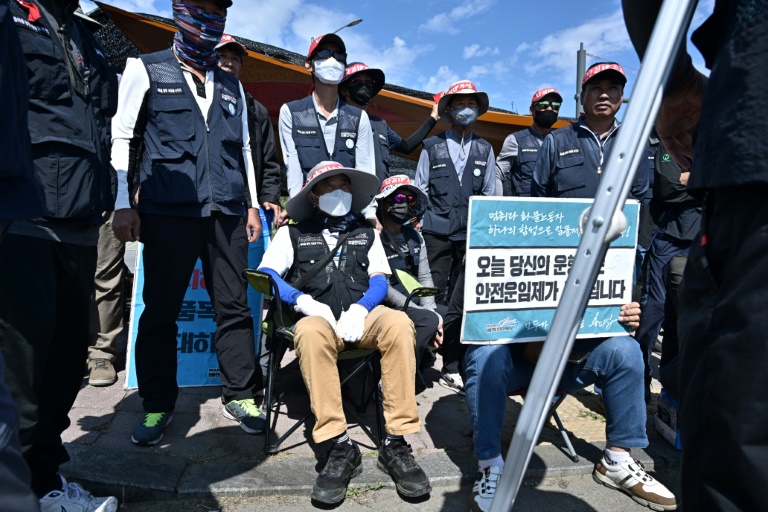
South Korean truck drivers will return to work Wednesday after reaching an agreement with Seoul to end an eight-day protest over wages and fuel costs that had snarled global supply chains.

The truckers’ industrial action had disrupted production and shipments for the crucial steel, petrochemical and automobile sectors, in an early test for new President Yoon Suk-yeol who has vowed to deal with labour disputes “strictly”.

The Cargo Truckers Solidarity Union reached an agreement with the transport ministry late Tuesday and truckers will return to work from Wednesday, the ministry said in a statement.

The ministry said is “relieved” that the union decided to end their strike, adding “we are very sorry for causing concern for the people due to discruptions in logistics and production”.

The truckers called the strike to protest over sharp rises in fuel prices — with inflation at its highest level in more than a decade — and the ending of a minimum wage guarantee.

The Safe Trucking Freight Rates System was due to expire later this year but the two sides reportedly agreed to keep it in place.

The policy was designed to help prevent dangerous driving by truckers and guarantee minimum freight rates.

“All we are asking for is to remove the uncertainty in our lives,” union member Cho Jeong-jae told AFP Tuesday at a protest in Incheon, a city bordering Seoul.

“Our livelihood is at stake.”

Cho said the rising cost of fuel had not been reflected in the fees businesses pay to transport their goods.

“When fuel prices drop, it’s reflected very quickly by lowering freight fees,” Cho said. “But that’s not the case when fuel prices rise.”

The strike in Asia’s fourth-largest economy was the latest blow to international supply chains that are already strained by Covid-19 lockdowns in China, and Russia’s invasion of Ukraine.

South Korea is the world’s largest memory chip exporter and home to global chip powerhouse Samsung Electronics, as well as large car companies including Kia and Hyundai Motors.

The country’s trade ministry said Tuesday that the action had resulted in losses for businesses of about 1.6 trillion won ($1.2 billion).

Prime Minister Han Duck-soo had called for an end to the strike at a cabinet meeting on Tuesday, saying “it’s causing a major setback to the logistics network.”

On the campaign trail, President Yoon — a political novice — had vowed to be strict on labour disputes and indicated he was more pro-business on issues such as minimum working hours.

At least 23 members of the Cargo Truckers Solidarity Union have been arrested for “illegal activities” at the protests, according to the transport ministry.
How Brazil's Javari Valley became a criminal haven

The far-flung Amazon region where a British journalist and a Brazilian Indigenous expert disappeared has become a haven for drug trafficking and environmental crimes because of increasing lawlessness and an absent state, experts say.

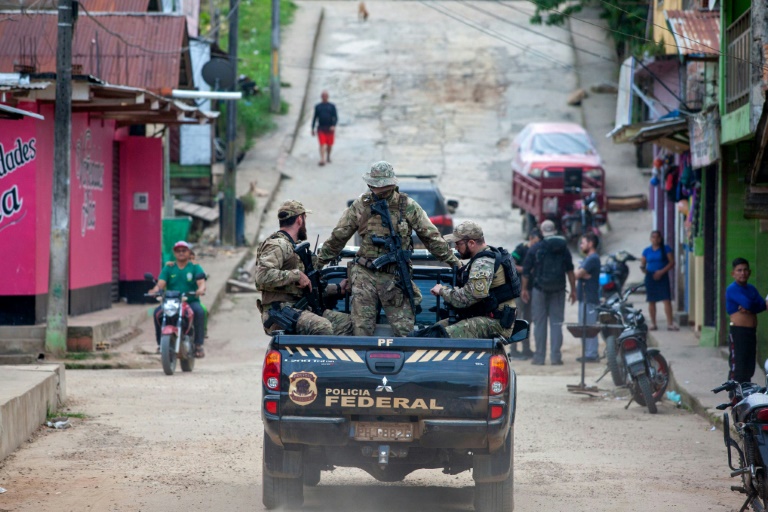
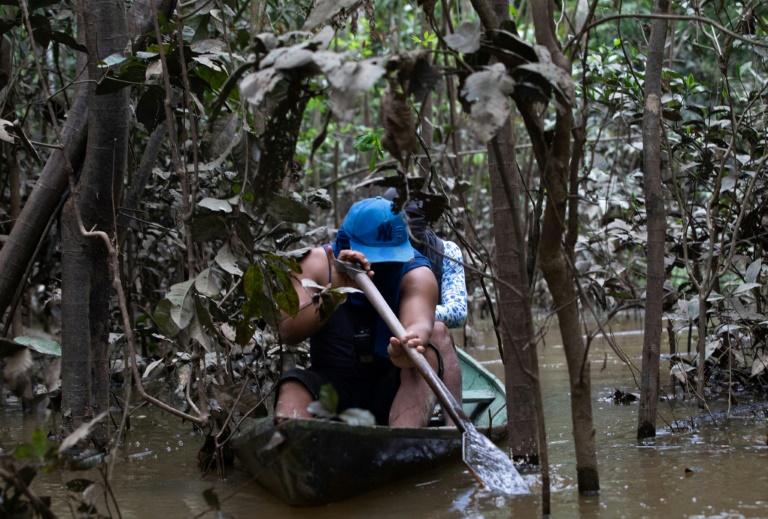
The Javari Valley, where veteran correspondent Dom Phillips and respected indigenous specialist Bruno Pereira went missing on June 5, is one of the remotest places on Earth, a vast expanse of thick jungle in northwestern Brazil near the Peruvian and Colombian borders.

Phillips, 57, and Pereira, 41, were last seen boating up the Itaquai river just outside the Javari Valley Indigenous Reservation, a territory bigger than Austria that is home to an estimated 6,300 Indigenous inhabitants, including 19 uncontacted tribes.

The region is suffering from a surge of illicit activity, blamed on drug gangs with links to other crimes including illegal fishing on Indigenous lands — something Pereira had long fought, making him a target of death threats.

The men’s disappearance remains unsolved, but investigators have found their belongings and are analyzing suspected human remains, fueling fears they were murdered.

Two suspects have been arrested.

Experts on the Javari Valley told AFP drug gangs and illegal mining, logging and poaching rings have capitalized on weaker enforcement by Brazilian authorities in recent years to expand their presence.

“What happened to Bruno and Dom is the result of an increase in organized crime, which is in turn explained by the absence of the state,” said Antenor Vaz, head of Brazilian Indigenous affairs agency FUNAI’s operations in the region from 2006 to 2009.

– Attractive base –

The very things complicating the investigation are what make the region an attractive base for criminal operations.

The region is hard to reach, and harder to patrol: huge, remote, densely forested and criss-crossed by meandering rivers that flood the surrounding area for several months a year.

“By its very nature, the forest has always been an attractive space for drug traffickers, since they can camouflage drugs so easily,” said Aiala Colares, a geographer and Amazon expert at the Federal University of Para.

Since the 1990s, drug gangs have used the region’s rivers to ship cocaine and other drugs from Peru and Colombia, for both the Brazilian and international markets, he said.

That traffic has increased substantially over the past decade.

Drug gangs in the region are “multidimensional” outfits, with operations that also include illegal logging and fishing, Colares said.

The main group, “Os Crias,” emerged in 2021 as a splinter from the Northern Family, one of the biggest criminal organizations in the Amazon basin.

They now dominate the triple border on the Brazilian side and the Javari trafficking routes, Colares said.

– Poverty, impunity –

The gangs feed off a long history of poverty and impunity in the region, now exacerbated by a power vacuum left by the state, said anthropologist Barbara Arisi of Vrije Universiteit in Amsterdam, a specialist in the indigenous peoples of the Javari Valley.

“A growing number of criminals, more and more organized and better-armed, are taking advantage of the lack of state structure,” she said.

The gangs have even penetrated some Indigenous groups, such as the Tikuna, she said.

Just like in big-city slums, “drug trafficking offers lots of young people a life they could never attain otherwise,” she said.

Poverty has helped the gangs thrive.

The small city of Atalaia do Norte, the local outpost Phillips and Pereira were returning to, has the third-worst human development index in Brazil.

Enforcement operations by environmental authorities have meanwhile been reduced since President Jair Bolsonaro took office in 2019.

The far-right president, who has pushed to develop the Amazon — “rich lands” with “poor Indians,” in his words — has also brought upheaval at FUNAI.

Since he replaced the agency’s leadership, many veteran officers have been forced out or quit.

That includes Pereira, the one-time head of FUNAI’s Javari operations and its programs for isolated tribes, who was placed on administrative leave.

FUNAI’s base in the area has meanwhile been a target of several shooting attacks in recent years.

In 2019, FUNAI’s anti-logging and anti-poaching chief for the Javari Valley was shot dead in the city of Tabatinga.

The case remains unsolved.

China factory output, retail sales weak as Covid shadow persists

China’s factory output and retail sales remained weak in May, official data showed Wednesday, with tepid demand and lingering Covid restrictions putting a damper on growth in the world’s second-largest economy.

The government is persisting with a zero-Covid strategy to stamp out clusters as they emerge, but this has placed companies and consumers at the mercy of snap, economically damaging lockdowns.

Retail sales sank 6.7 percent on-year in May, the National Bureau of Statistics (NBS) said, though that was an improvement from April’s 11.1 percent drop.

The figure was also slightly better than forecasts from analysts polled by Bloomberg.

“In May, our economy gradually overcame the adverse impact of the pandemic,” NBS spokesman Fu Linghui said at a news briefing.

“But we also have to see that the international environment has become more complex and severe, and the domestic economic recovery still faces many difficulties and challenges.”

It was the third straight month of contraction in retail sales, according to official data, suggesting nervous consumers are tightening their purse strings with the persistent threat of lockdowns.

Industrial production was up 0.7 percent after falling 2.9 percent in April, while the urban unemployment rate ticked down to 5.9 percent.

Shanghai, China’s most populous city, started emerging from a gruelling two-month lockdown in June, providing a boost to economic sentiment.

But observers remain cautious in part due to a sharp contraction in the property sector and the Chinese government’s reluctance to transition away from zero-Covid.

“We would view this as only a respite, rather than a turning point,” Nomura analysts said in a recent report.

Asian markets enjoy post-rout calm as traders await Fed hike

Asian equities were mixed Wednesday with investors nervously awaiting a Federal Reserve interest rate decision that has taken on greater significance since a forecast-busting inflation report sent shockwaves through world markets.

Trading floors saw a sea of red at the start of the week after data showed US consumer prices soared at their fastest pace in four decades last month, confounding hopes they were stabilising and putting pressure on officials to act.

The news ramped up bets that the central bank would hike interest rates at a steeper and faster pace than expected as it struggles to retain credibility.

Before Friday’s data, the Fed had been tipped to lift borrowing costs by half a point when its policy meeting ends Wednesday but investors are now widely anticipating a three-quarter point increase, with some even suggesting one percentage point.

The moves fuelled worries that the tighter monetary conditions will deal a blow to the US economy and potentially send it into recession next year.

Still, many observers say acting now is the only option available to policymakers if they want to rein in prices and prevent stagflation.

“The sooner they are going to be clear about how quickly they are going to raise rates and what is an acceptable rate of inflation for them, the sooner markets will calm down,” Wincrest Capital’s Barbara Ann Bernard told Bloomberg Television.

And StoneX Financial’s Matt Simpson added: “A bullish outcome for risk-appetite is the well-telegraphed 75-basis-point hike, conviction from the Fed that they’ll manage a soft landing, alongside a downwardly revised CPI forecast for good measure”.

But he warned that a half-point increase “could inadvertently weigh on sentiment as markets are concerned the Fed aren’t taking inflation seriously enough”.

While most of Wall Street and Europe ended down, they saw less turbulent action than Friday and Monday.

Asia was mixed, with some markets enjoying a bargain-buying.

Hong Kong, Shanghai, Singapore, Wellington, Taipei and Jakarta were all in positive territory, while Tokyo, Sydney, Seoul and Manila slipped.

While there is a little calm ahead of the Fed announcement, commentators warn that uncertainty will continue to course through trading floors for some time.

Strategist Louis Navellier said markets could go one of two ways after the meeting.

“The big unknown is will the market have a relief rally thinking that inflation is finally being seriously addressed and will therefore be tamed sooner than feared?

“Or will the move create new sellers from fears that the Fed is panicking and may hasten a recession by overshooting as it chases inflation?

“Either way, rates will be rising in an attempt to slow demand in order to slow inflation and further volatility is almost guaranteed.”

In company news, the management agency of K-pop supergroup BTS plunged by a quarter in Seoul after the band announced they were taking an indefinite break.

The seven members, who have generated billions of dollars for South Korea’s economy, made the shock announcement on Tuesday.

On Wednesday morning the band’s label HYBE collapsed about 27 percent, wiping $1.6 billion off its market valuation.

– Key figures at around 0230 GMT –

Tokyo – Nikkei 225: DOWN 0.7 percent at 26,435.01 (break)

Hong Kong – Hang Seng Index: UP 1.0 percent at 21,281.78

Shanghai – Composite: UP 1.0 percent at 3,320.70

Euro/dollar: UP at $1.0445 from $1.0420 late Tuesday

Pound/dollar: UP at $1.2040 from $1.1993

Dollar/yen: DOWN at 135.17 yen from 135.33 yen 

Euro/pound: DOWN at 86.77 pence from 86.84 pence

Brent North Sea crude: UP 0.3 percent at $121.47 per barrel

West Texas Intermediate: UP 0.3 percent at $119.24 per barrel

New York – Dow: DOWN 0.5 percent at 30,364.83 (close)

London – FTSE 100: DOWN 0.3 percent at 7,187.46 (close)

Ultra-fast delivery firms face post-pandemic hangover

Prathamesh Jathar is one of many brightly dressed riders zipping through the streets of Berlin, dropping off groceries just minutes after the orders come in.

The 25-year-old Master’s student from Mumbai could be a poster-child for the multibillion-dollar “quick commerce” sector, but instead he symbolises the malaise. 

“Working conditions are terrible,” he said, complaining that his employer, Turkish start-up Getir, fails to supply safety equipment or managerial support and did not tolerate unionisation — claims the firm denies.

Worker discontent, a drop-off in investment and reduced demand all suggest a hard landing from the stellar growth of the pandemic era.

Millions turned to grocery delivery firms during pandemic lockdowns, and the firms gobbled up billions in venture capital and other investment.

But Getir recently announced “with a heavy heart” it was letting go 14 percent of its global workforce — several thousand staff. 

German-based outfit Gorillas fired 300 people, with its boss in France, Pierre Guionin, telling AFP it was a necessary step “to be stronger and more profitable in the long term”.

The path to profitability, though, is beset by potential pitfalls. 

– Capital flight –

“Some of these companies raised too much money and the valuations at which they raised make absolutely no sense,” said Hendrik Laubscher, an analyst at Blue Cape Ventures in South Africa.

Getir achieved a valuation of almost $12 billion earlier this year, US start-up Gopuff was valued at $15 billion.

But rising inflation and slowing economic growth have sent investors fleeing from riskier tech investments and left many consumers facing a cost of living crisis.

Smaller firms like Fridge No More and Buyk have gone to the wall, and analysts say some of the remaining platforms have burnt through cash in pursuit of customers and could face a tricky future.

The rapid growth in customer numbers seems likely to end — almost one quarter of Europeans using ultra-fast delivery intend to reduce or end their use of such apps, according to a recent survey by McKinsey consulting firm.

As competition intensifies and firms look for margins, online message boards are abuzz with complaints from staff with all the main platforms, and workers collectives have begun to spring up.

Prathamesh Jahar said the way he was treated amounted to exploitation. Other Getir workers in Berlin said they had similar experiences.

“We reject all allegations,” a Getir spokesman told AFP, listing all the equipment and support it offers workers.

He also rebuffed the anti-union label, saying: “The opposite is true: Getir Germany supports the efforts of employees to form a works council.”

Getir and Gorillas have made a point of offering workers contracts and moving away from the casual labour associated with the gig economy.

– Dark stores –

Another difficulty that has beset the industry is a backlash against so-called dark stores –- the city centre warehouses the firms use as delivery hubs.

The companies were able to buy shops cheaply during the pandemic but the prospect of shuttered warehouses taking over shopping streets has gone down badly with local authorities in the United States and Europe. 

The industry is looking for solutions. 

Gopuff, for example, has started to open some of its hubs to shoppers in New York.  

So the combative start-ups have essentially become the thing they wanted to destroy. 

“If they are just a convenience store that delivers, what is the difference,” said Insider Intelligence analyst Blake Droesch. 

Also several firms have started to make deals with large supermarket chains, embedding themselves further into the existing ecosystem. 

– ‘Marketing gimmicks’ –

The future of the industry hinges on whether people are willing to pay for ultra-fast delivery. 

Analysts and industry figures reckon there is definitely a future for the business.

“The way people get ahead is by offering faster delivery,” said Droesch, describing himself as “bullish”. 

“That is how Amazon got where it is now, they figured out ways to get people products they needed way faster than the other guys.” 

But some of the claims of disruption and revolution were “marketing gimmicks”, said Laubscher, and the future was likely to be slower and less dramatic than promised. 

“I don’t think it really matters if you get the item delivered in 10 to 20 minutes,” he said, describing 60 minutes as perfectly adequate. 

Bearing out his analysis, South Korean firm Coupang has nine million customers and runs a profitable business operating a same-day service.

With bigger baskets and smaller promises, Coupang’s strategy could show the way for its more unruly Western cousins.

“I can’t imagine my life without Coupang anymore,” said 35-year-old Lee Seung-yeon, an office worker from Seoul. 

“I don’t have to walk back home with heavy groceries and it’s cheaper.”

Shanghai lockdown sees quarter of US firms cut investment plans: poll

Shanghai’s lengthy Covid-19 lockdown pushed a quarter of US firms in the city to cut investment plans and nearly all to drop revenue forecasts, a business group said Wednesday.

The downbeat findings of the American Chamber of Commerce (AmCham) Shanghai survey were the latest sign of the impact of virus controls in China — the only major economy still pursuing a zero-Covid strategy, using lockdowns and mass testing to eliminate all outbreaks.

But such measures left its biggest city Shanghai sealed off for around two months, with a shortage of truckers leaving goods piled up at its port and business closures battering firms.

Over 90 percent of US companies in the metropolis surveyed by AmCham Shanghai have cut their revenue projections for the year, the group said in a report on Wednesday.

The survey of 133 companies also found a quarter were expecting revenues to be more than 20 percent lower than projected.

Nearly 25 percent of companies surveyed have cut investment plans, AmCham Shanghai said.

The commercial hub of 25 million people was closed in sections from late March, when the Omicron variant fuelled China’s worst Covid outbreak in two years.

Signs of resentment and anger emerged throughout the lockdown, with some residents struggling to receive fresh produce or access non-Covid medical care.

Although authorities drew up a “white list” of companies that could continue production, this was generally with limitations to minimise virus spread and many smaller firms continued to grapple with restrictions.

AmCham said around a quarter of manufacturers surveyed were speeding the localisation of their China supply chains while moving production of global goods out of the country.

As of early June, only 35 percent of the manufacturers polled were operating at full capacity and close to three-quarters of all firms surveyed had yet to enjoy economic support measures since Shanghai’s lockdown.

AmCham Shanghai president Eric Zheng said the lockdown’s impact on businesses has been “profound”.

“The Shanghai government must act quickly to ensure unhindered supply chains, logistics and worker mobility and to accelerate the provision of financial support to businesses,” Zheng said.

This week, analysts at Fitch ratings downgraded China’s growth predictions for the year to 3.7 percent based on “the cautious pace at which pandemic-related restrictions have been eased”.

This would be far below China’s target of around 5.5 percent full-year growth.

Shanghai lockdown sees quarter of US firms cut investment plans: poll

Shanghai’s lengthy Covid-19 lockdown pushed a quarter of US firms in the city to cut investment plans and nearly all to drop revenue forecasts, a business group said Wednesday.

The downbeat findings of the American Chamber of Commerce (AmCham) Shanghai survey were the latest sign of the impact of virus controls in China — the only major economy still pursuing a zero-Covid strategy, using lockdowns and mass testing to eliminate all outbreaks.

But such measures left its biggest city Shanghai sealed off for around two months, with a shortage of truckers leaving goods piled up at its port and business closures battering firms.

Over 90 percent of US companies in the metropolis surveyed by AmCham Shanghai have cut their revenue projections for the year, the group said in a report on Wednesday.

The survey of 133 companies also found a quarter were expecting revenues to be more than 20 percent lower than projected.

Nearly 25 percent of companies surveyed have cut investment plans, AmCham Shanghai said.

The commercial hub of 25 million people was closed in sections from late March, when the Omicron variant fuelled China’s worst Covid outbreak in two years.

Signs of resentment and anger emerged throughout the lockdown, with some residents struggling to receive fresh produce or access non-Covid medical care.

Although authorities drew up a “white list” of companies that could continue production, this was generally with limitations to minimise virus spread and many smaller firms continued to grapple with restrictions.

AmCham said around a quarter of manufacturers surveyed were speeding the localisation of their China supply chains while moving production of global goods out of the country.

As of early June, only 35 percent of the manufacturers polled were operating at full capacity and close to three-quarters of all firms surveyed had yet to enjoy economic support measures since Shanghai’s lockdown.

AmCham Shanghai president Eric Zheng said the lockdown’s impact on businesses has been “profound”.

“The Shanghai government must act quickly to ensure unhindered supply chains, logistics and worker mobility and to accelerate the provision of financial support to businesses,” Zheng said.

This week, analysts at Fitch ratings downgraded China’s growth predictions for the year to 3.7 percent based on “the cautious pace at which pandemic-related restrictions have been eased”.

This would be far below China’s target of around 5.5 percent full-year growth.

Second arrest over missing British journalist, indigenous expert in Brazil

Police in Brazil said Tuesday they had arrested a second suspect in the disappearance earlier this month of British journalist Dom Phillips and Brazilian indigenous specialist Bruno Pereira.

The federal police said in a statement they had arrested a 41-year-old man identified as Oseney da Costa Oliveira, whom they said was “suspected of participating in the affair.”

Brazilian media said he was the brother of the first suspect to be detained in the case, fisherman Amarildo da Costa Oliveira, also 41 and nicknamed “Pelado.”

Witnesses said they saw Amarildo pass at high speed onboard a boat going in the same direction as the boat in which Phillips and Pereira were traveling before their disappearance. 

Traces of blood on his boat are being analyzed, and personal effects of the two missing men were found underwater near the home of “Pelado,” who was arrested on June 7 and has denied any involvement. 

Police said Tuesday they had also seized firearm cartridges and an oar, without specifying whether the objects were found in the same place where the latest suspect was arrested.

Veteran freelance journalist Phillips, 57, has worked in Brazil for the past 15 years.

Pereira, 41, is an expert who was on leave from his job with the Brazilian government’s Indigenous affairs agency Funai, and a well-known advocate for these communities. 

He was accompanying the Briton as a guide on Phillips’ second trip to the region since 2018 when they disappeared June 5.

Germany races to stockpile gas before winter

Germany’s race to wean itself off Russian energy and stockpile enough gas before winter is playing out largely hidden from view, some 1,600 metres (one mile) below ground in the foothills of the Bavarian Alps.

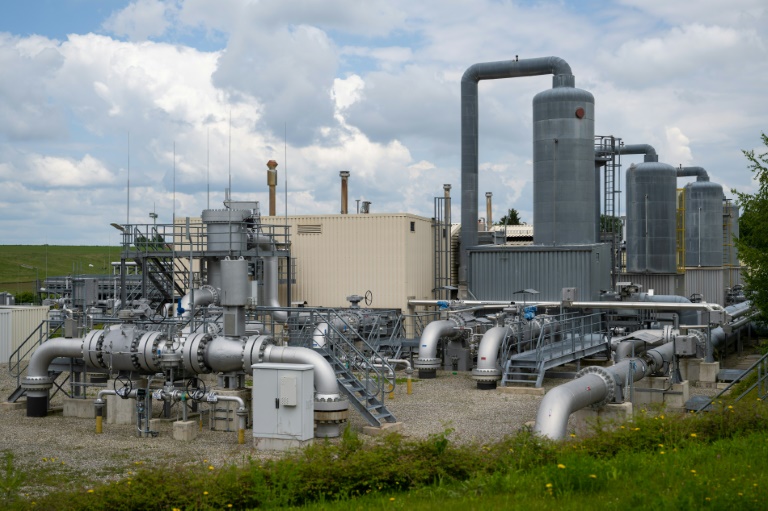
Surrounded by rolling farmland near the banks of the river Inn, the former Bierwang natural gas field in Unterreit serves as one of Germany’s largest underground gas storage facilities.

Run by German operator Uniper, Bierwang can hold more than 800 million cubic metres of gas — enough to power the nearby city of Munich for eight months.

Like other storage sites, Bierwang replenishes its stocks between winters, to keep homes heated and Germany’s energy-hungry industry humming during the cold months when demand is highest.

But this year, the stakes are higher than ever. 

With the war in Ukraine raging and Moscow increasingly seen as an unreliable supplier, governments across Europe are scrambling to store supplies before Moscow decides to reduce the flow of gas, or close the taps altogether.

“The security of supply this winter will depend on two factors: how full the storage facilities are and how much new gas keeps arriving” from abroad, said Sebastian Herold, a professor of energy economics at the Darmstadt University of Applied Sciences.

Russian deliveries will play a “decisive role” in this, Herold said.

Efforts by successive German governments to build closer economic ties with Moscow have left the country hooked on Russian energy imports, a policy now widely seen as misguided.

– Injected into rock –

Fears that a sudden shortage of Russian gas could bring Europe’s biggest economy to its knees recently prompted the German government to adopt legislation requiring all of the nation’s gas reservoirs to be 90 percent full by November. 

Altogether, the above and underground sites have enough capacity to cover 25 percent of Germany’s natural gas consumption. They act as a kind of buffer in times of strain on the gas market or if demand spikes during unusually cold weather.

As part of Western sanctions against Moscow, Germany has already agreed to phase out Russian oil and coal. But becoming independent of Russian gas will take longer — and it won’t come cheap as the war in Ukraine sends energy prices soaring.

So far, Berlin has managed to reduce the share of its natural gas supplied by Russia from 55 percent before the invasion, to 35 percent now thanks to increased deliveries from countries like Norway and the Netherlands, and through liquefied natural gas contracts (LNG).

In Bierwang, a network of long-distance pipelines delivers gas to the storage facility. The gas is then compressed before being injected into porous sandstone and stored in natural reservoirs deep below ground.

This method allows vast quantities of natural gas to be stockpiled, but the filling and emptying takes longer than with a second type of underground storage that relies on large caverns in rock salt formations, more commonly found in northern Germany.

“We’re on a good way to hopefully deliver the security supply this winter,” said Doug Waters, managing director of Uniper Energy Storage, which operates nine storage facilities in Germany.

– Ex-Gazprom unit –

Germany’s gas storage sites were 55 percent full on Tuesday, according to the German Federal Network Agency, which posts daily updates online.

The current fill rate is “better than in previous years, but still not sufficient,” said the agency’s head, Klaus Mueller. 

Complicating Germany’s challenge to get ready for winter is the situation at the crucial Rehden gas storage facility in the north, the largest in the country.

The German state temporarily took control of the site’s owner, Gazprom Germania, in April, a move Berlin said was necessary to ensure energy security as ties with Russia worsened.

Berlin suspects that the unit’s former owner, Russia’s state-owned Gazprom, deliberately kept supplies low before the invasion of Ukraine to give it leverage over Germany.

Russia last month cut off supplies to Gazprom Germania in retaliation for Berlin’s move.

The Rehden facility, with a gas storage capacity of four billion cubic metres, was just 7.95 percent full on Tuesday.

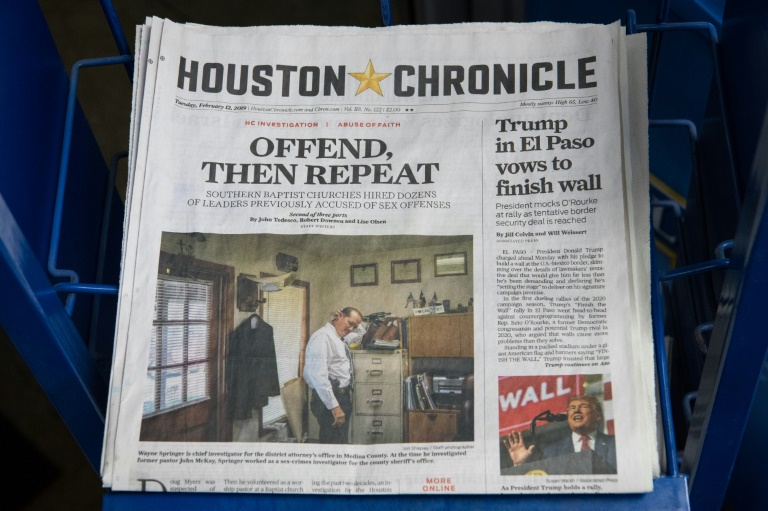
Southern Baptists agree to create abuser database: US media

Members of the Southern Baptist Convention voted overwhelmingly Tuesday to maintain a list of pastors and other church staff credibly accused of sexual abuse, US media reported, addressing a scandal that has rocked the country’s largest Protestant denomination.

Thousands of Southern Baptists gathered for their annual meeting in Anaheim, California where they passed a recommendation that creates a database to track sex abusers and sets up a group to formally handle abuse accusations, The Washington Post reported.

Last month in a shocking move, SBC leaders released a 205-page list of hundreds of ministers and other church workers who have been accused of sexual abuse, days after an independent investigation said the church had for years suppressed reports of abuse against priests and other staff.

The scandal is the latest shudder in a church churning with debate over issues including the role of women pastors, racial justice and abortion.

“Make no mistake, we’re in… a seminal moment right now,” pastor Bruce Frank, who has chaired the abuse task force, said as he opened the session, according to the Post. “Today we’ll choose between humility and hubris.”

On Tuesday, the church’s website prominently displayed a message encouraging members to “report an instance of abuse in a Southern Baptist Church or entity,” along with a telephone number and email where people can report the wrongdoing.

One pastor who identified himself as a sex abuse survivor, Brad Eubank of Petal First Baptist Church in Mississippi, addressed the meeting Tuesday and urged the gathered faithful to adopt the recommendations. 

“The world is watching,” he reportedly said. “This is not everything that needs to be done, but it is a starting spot. And I plead with you on behalf of survivors that I speak on behalf of, who love our convention and love our churches. Please, let’s start the healing process today.”

Investigative firm Guidepost’s probe, published last month, found that for nearly two decades, survivors and advocates who sounded the alarm over sexual misconduct faced “resistance, stonewalling, and even outright hostility” from members of the church’s executive committee. 

The SBC said in response that it hoped “that churches will utilize this list proactively to protect and care for the most vulnerable among us.”

Close Bitnami banner
Bitnami