AFP

Yen slides to 24-year low against dollar

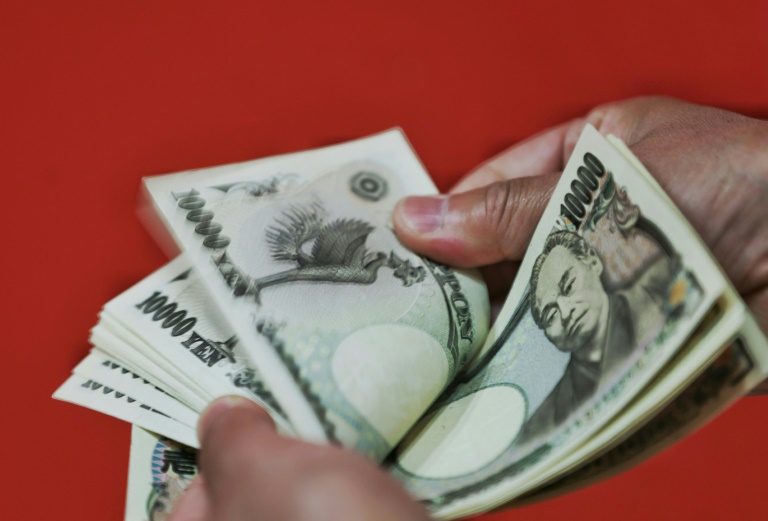
The yen plunged to its lowest level against the dollar since 1998 on Monday as sky-high US inflation fuels a widening monetary policy gap between Japan and the world’s largest economy.

Japan’s currency has been weakening for months, accelerated by the US Federal Reserve’s aggressive monetary tightening to tackle soaring inflation caused by the war in Ukraine and other factors.

But unlike the Fed, the Bank of Japan has said it will stick with its long-standing monetary easing programme which it hopes will lead to stable growth.

The increasingly polar policies have strengthened the greenback, and on Monday one dollar bought 135.19 yen.

It’s a level not seen since October 1998 during the Asian currency crisis, and marks a dramatic drop from January rates of around 115 yen per dollar.

“The ongoing backdrop to the yen’s fall is the growing gap between long-term interest rates in Japan and the United States,” Takahide Kinouchi, executive economist at Nomura Research Institute, said in a recent commentary.

And as higher oil prices fuel US inflation, “expectations are growing stronger that aggressive US monetary tightening will continue for the time being, causing US yields to rise further.”

US consumer prices for May hit a new four-decade high, rising 8.6 percent and topping what economists thought was the peak in March.

In Japan however, inflation has only just hit the central bank’s long-term target of two percent.

And while the figure represents a seven-year high, the BoJ sees current inflationary pressures as temporary, and believes its monetary policy is necessary to produce more long-lasting growth.

– Benefits for tourism, exporters –

As the war in Ukraine pressures global fuel and food prices, household brands from Uniqlo to 7-Eleven have anounced price hikes, with budget sushi chain Sushiro causing shock when it said it would no longer offer plates for 100 yen ($0.75).

But BoJ governor Haruhiko Kuroda said last week that “monetary tightening is not at all a suitable measure” for Japan, whose economy is still recovering from the pandemic, according to Kyodo News.

He also pointed to the benefits of a weaker yen for Japanese exporters, whose overseas profits are inflated when they are repatriated and have seen their stock prices rise in recent months.

The weaker yen could also be a boon for the tourism sector, with Japan cautiously reopening to foreign visitors now allowed in on group tours.

“The weak yen helps to support Japan’s export sector directly, and a weaker exchange rate also contributes to looser monetary conditions domestically,” said Alvin Tan, head of Asia forex strategy at RBC Capital Markets in Singapore.

“These will help drive the economic recovery further,” he told AFP.

Although “higher import prices will negatively affect consumers” and the weaker yen will contribute to inflation, particularly given Japan’s reliance on energy imports, this could also be “seen as a positive”, he said.

“It could help to deepen more persistent inflation expectations in a country that has suffered under deflation for so many years.”

The yen’s trajectory may depend on how the US Fed acts in its September meeting, with worse-than-expected inflation figures for May raising expectations of further rate hikes.

But “there is still a lot of time left until then,” said Kinouchi, and other factors may also be at play including energy prices rising further after a European Union ban on most Russian oil imports.


Ukrainian, Russian forces fight for 'every metre' in Severodonetsk

Ukrainian and Russian forces were fighting for “literally every metre” in Severodonetsk, President Volodymyr Zelensky said, as fighting intensified in an eastern region where the country’s top commander said the land “is covered in blood”.

Severodonetsk and nearby Lysychansk have been targeted for weeks as the last areas in the Lugansk region still under Ukrainian control.

Russia’s massed artillery in that region gave it a tenfold advantage, said Valeriy Zaluzhny, commander-in-chief of the Ukrainian military. 

But, “despite everything, we continue to hold positions”, he said. 

“Every metre of Ukrainian land there is covered in blood — but not only ours, but also the occupier’s.”

In his nightly video address, Zelensky said the latest fighting in Severodonetsk was “very fierce”, adding that Russia was deploying undertrained troops and using its young men as “cannon fodder”.

By attacking Severodonetsk’s last remaining bridges, the Russians were aiming to cut the key industrial city off completely from the rest of the country, said regional governor Sergiy Gaiday. 

“Most likely (in the next two days), they will throw all the reserves to capture the city,” Gaiday said.

He also accused Russia of shelling the Azot chemical plant in Severodonetsk, where hundreds of civilians have reportedly taken refuge.

But Leonid Pasechnik, leader of Lugansk’s pro-Russian separatists, pointed the finger at the Ukrainian battalions, saying they were the ones shelling Severodonetsk from the plant.

He told reporters that pro-Russian forces were not pressing aggressively “because it is a chemical industry facility”, warning of the risk of “an environmental catastrophe”.

– ‘War crimes’ –

Amnesty International on Monday accused Russia of war crimes in Ukraine, saying that attacks on the northeastern city of Kharkiv — many using banned cluster bombs — had killed hundreds of civilians. 

“The repeated bombardments of residential neighbourhoods in Kharkiv are indiscriminate attacks which killed and injured hundreds of civilians, and as such constitute war crimes,” the rights group said in a report on Ukraine’s second biggest city.

Away from the battlefield, World Trade Organization members gathered in Geneva Sunday, and at the top of the agenda was the issue of tackling global food security threatened by Russia’s invasion of wheat-producing Ukraine.

Tensions ran high during a closed-door session, where several delegates took the floor to condemn Russia’s war, including Kyiv’s envoy who was met with a standing ovation, WTO spokesman Dan Pruzin told journalists.

Then, just before Russian Minister of Economic Development Maxim Reshetnikov spoke, around three dozen delegates “walked out”, the spokesman said.

That came a day after the head of the European Commission promised Ukraine would receive a clear signal within a week on its bid to join the European Union.

EU leaders are expected to approve the bid at an upcoming summit, although with strict conditions attached. 

In Brussels, demonstrators brandishing blue and yellow Ukrainian flags circled European Commission headquarters Sunday in a show of support.

– Chortkiv strike –

The war has prompted Finland and Sweden to give up decades of military non-alignment and seek to join the NATO alliance.

But Turkey is blocking their bids and NATO chief Jens Stoltenberg said Sunday the issue may not be resolved by an alliance summit later this month.

The United States and Europe have sent weapons and cash to help Ukraine blunt Russia’s advance, alongside punishing Moscow with unprecedented economic sanctions.

Russian forces said Sunday they had struck a site in the town of Chortkiv in western Ukraine storing US- and EU-supplied weapons.

Russia’s defence ministry said the strike destroyed a “large depot of anti-tank missile systems, portable air defence systems and shells provided to the Kyiv regime by the US and European countries”.

The strike — a rare attack by Russia in the relatively calm west of Ukraine — left 22 people injured, regional governor Volodymyr Trush said.

He added that four missiles fired Saturday evening from the Black Sea had partially destroyed a military installation in the town, about 140 kilometres (85 miles) from the border with Romania.

Concerns eased Sunday over Ukraine’s largest nuclear power plant in Zaporizhzhia. Captured months ago by Russian forces but still operated by Ukrainians, the station had ceased transmitting vital safeguards data two weeks ago.

But plant officials working with the International Atomic Energy Agency have succeeded in restoring transmission, the IAEA said. 

Rafael Grossi, director general of the UN agency, said it still wanted to send inspectors to the plant “as soon as possible”.

– Sentences defended –

Alongside the physical fighting, the war is being played out through the courts.

Pro-Moscow separatist authorities in the Donetsk region this week sentenced to death two Britons and a Moroccan for fighting with the Ukrainian army.

The sentences sparked outrage in Western countries, but separatist Donetsk leader Denis Pushilin said Sunday he would not alter them.

“They came to Ukraine to kill civilians for money,” he told reporters, calling the punishment “perfectly fair”.

The families of Britons Aiden Aslin and Shaun Pinner say they have been living in Ukraine since 2018.

Ukrainian courts have handed three Russian soldiers long prison sentences at war crimes trials.

burs-ar/har/bbk/dva/dhc

Google pays $118 mn to settle gender discrimination suit

Google said on Sunday that it was “very pleased” to be settling, without admission of wrongdoing, a class-action lawsuit that argued it underpaid female employees and assigned them lower-ranking positions.

The $118 million settlement covers about 15,500 female employees who have worked for the company in California since September 2013, the law firms Lieff Cabraser Heimann & Bernstein LLP and Altshuler Berzon LLP said in a statement released Friday night.

The company also agreed for a third party to analyze its hiring and compensation practices as part of the settlement.

In a statement to AFP, Google said that “while we strongly believe in the equity of our policies and practices, after nearly five years of litigation, both sides agreed that resolution of the matter, without any admission or findings, was in the best interest of everyone, and we’re very pleased to reach this agreement.”

In 2017, several former Google employees sued the company in a San Francisco court, accusing it of paying women less than men for equivalent positions and assigning women lower positions than men with similar experiences because they had previously earned smaller salaries.

According to a copy of the agreement released by the law firms, “Google denies all of the allegations in the lawsuit and maintains that it has fully complied with all applicable laws, rules and regulations at all times.”

A judge must still approve the agreement, the two law firms for the plaintiffs said.

Google previously agreed in 2021 to pay $3.8 million to the US Department of Labor over accusations it had discriminated against women and Asians.

Google pays $118 mn to settle gender discrimination suit

Google said on Sunday that it was “very pleased” to be settling, without admission of wrongdoing, a class-action lawsuit that argued it underpaid female employees and assigned them lower-ranking positions.

The $118 million settlement covers about 15,500 female employees who have worked for the company in California since September 2013, the law firms Lieff Cabraser Heimann & Bernstein LLP and Altshuler Berzon LLP said in a statement released Friday night.

The company also agreed for a third party to analyze its hiring and compensation practices as part of the settlement.

In a statement to AFP, Google said that “while we strongly believe in the equity of our policies and practices, after nearly five years of litigation, both sides agreed that resolution of the matter, without any admission or findings, was in the best interest of everyone, and we’re very pleased to reach this agreement.”

In 2017, several former Google employees sued the company in a San Francisco court, accusing it of paying women less than men for equivalent positions and assigning women lower positions than men with similar experiences because they had previously earned smaller salaries.

According to a copy of the agreement released by the law firms, “Google denies all of the allegations in the lawsuit and maintains that it has fully complied with all applicable laws, rules and regulations at all times.”

A judge must still approve the agreement, the two law firms for the plaintiffs said.

Google previously agreed in 2021 to pay $3.8 million to the US Department of Labor over accusations it had discriminated against women and Asians.

Asian markets follow Wall St plunge on inflation woes

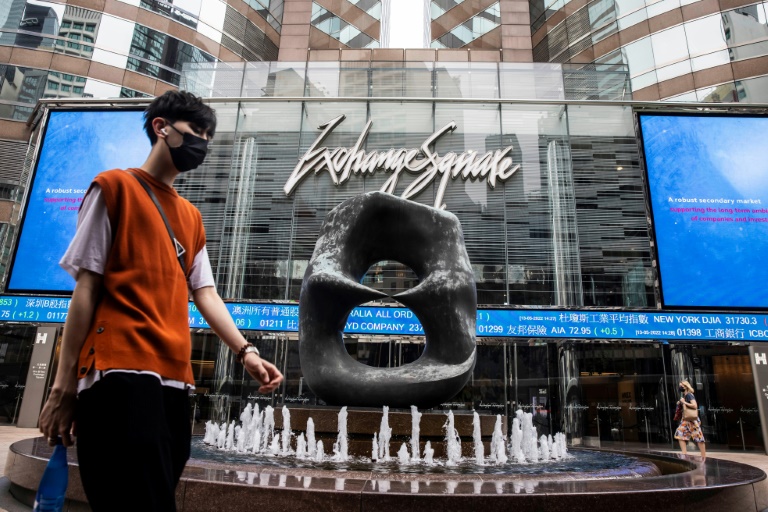
Markets tumbled in Asia on Monday and the dollar rallied as part of a global rout fuelled by a forecast-beating US inflation print that ramped up bets on a more aggressive campaign of Federal Reserve interest rate hikes.

Fresh Covid outbreaks in Shanghai and Beijing have also seen authorities reimpose containment measures soon after lifting them, leading to fears about the world’s number two economy.

The possibility of more restrictions in China’s biggest cities also weighed on oil prices, with concerns about a possible US recession and the stronger dollar adding to downward pressure on the black gold.

Investors were left surprised Friday when data showed US inflation jumped 8.6 percent in May, the fastest pace since December 1981, as the Ukraine war and China’s lockdowns pushed energy and food prices.

The reading has led to fervent speculation that the Fed will now be contemplating a 75 basis point lift in interest rates at some point, though it is still expected to stick to a flagged half-point hike when it meets this week.

With the central bank forced to be more aggressive, there is a concern that the US economy could be sent into recession next year.

“For the last few weeks, there has been a cautious calm in markets — rates not pricing anything unforeseen, and equities able to make small gains,” said SPI Asset Management’s Stephen Innes.

“But the strength of (US consumer prices) completely upended that apple cart.

“The market is now thinking much more about the Fed driving rates sharply higher to get on top of inflation and then having to cut back as growth drops.”

And Bank of Singapore chief economist Mansoor Mohi-uddin added that officials would likely lift borrowing costs 50 basis points for the next four meetings and eventually push the overall rate to 4.0 percent in 2023. 

Wall Street’s three main indexes tanked, with the Nasdaq taking the heaviest blow as tech firms — which are susceptible to higher rates — were battered, while European markets were also hammered.

Asia followed suit, with Hong Kong, Tokyo, Seoul, Taipei and Wellington off more than two percent, while Shanghai, Singapore, Manila and Jakarta fared almost as badly.

Goldman Sachs analysts said in a note: “At some point financial conditions will tighten enough and/or growth will weaken enough such that the Fed can pause from hiking.

“But we still seem far from that point, which suggests upside risks to bond yields, ongoing pressure on risky assets, and likely broad US dollar strength for now.”

The dollar continued to push higher on expectations for a sharp increase in US rates, hitting multi-year highs against its peers and flirting with a 24-year peak versus the yen.

“The yen is, sooner rather than later, going to come under renewed selling pressure” if the Bank of Japan does not change its loose monetary policy, Rob Carnell at ING Groep told Bloomberg Television.

“I think it’s a question of when rather than if with them.”

Oil prices sank, extending Friday’s retreat, on demand concerns China sticks to an economically damaging zero-Covid policy to fight a fresh outbreak of the disease.

Parts of Shanghai were put back into lockdown and officials carried out mass testing on millions of people, just weeks after lifting strict measures in the country’s biggest city.

– Key figures at around 0230 GMT –

Tokyo – Nikkei 225: DOWN 2.6 percent at 27,088.86 (break)

Hong Kong – Hang Seng Index: DOWN 2.8 percent at 21,195.77

Shanghai – Composite: DOWN 1.2 percent at 3,245.71

Dollar/yen: UP at 134.82 yen from 134.42 yen late Friday

Euro/dollar: DOWN at $1.0485 from $1.0526

Euro/pound: UP at 85.44 pence from 85.39 pence

Pound/dollar: DOWN at $1.2270 from $1.2309

Brent North Sea crude: DOWN 1.8 percent at $119.80 per barrel

West Texas Intermediate: DOWN 1.8 percent at $118.55 per barrel

New York – Dow: DOWN 2.7 percent at 31,392.79 (close)

London – FTSE 100: DOWN 2.1 percent at 7,317.52 (close)

Hope fades as belongings of two men missing in Amazon found

Brazilian authorities say they have found a backpack and personal effects of a British journalist and an Indigenous expert who disappeared in the Amazon last week, with the Briton’s mother-in-law saying she has lost hope that they will emerge alive.

Fears have been mounting over the fate of Dom Phillips, 57, a veteran contributor to The Guardian newspaper, and 41-year-old Bruno Pereira, an expert with Brazil’s government agency for Indigenous affairs (Funai), since they disappeared last Sunday after receiving threats during a research trip to Brazil’s Javari Valley.

After a slow start, the Brazilian federal police and the army have intensified the search for the two men, who were last seen in the town of Sao Gabriel, not far from their destination, Atalaia do Norte.

“Objects belonging to the two missing persons have been found: a health card, black pants, a black sandal and a pair of boots belonging to Bruno Pereira, and a pair of boots and a backpack belonging to Dom Phillips containing personal clothing,” the Federal Police in Amazonas state said Sunday in a statement.

The Amazonas Fire Department had previously told local media that personal effects possibly belonging to the missing men had been found “near the house” of Amarildo Costa de Oliveira, the only person arrested so far in the case and who witnesses say pursued the men upriver.

Police said search teams on Sunday covered about 25 square kilometers (10 square miles) with “thorough searches through the jungle, roads in the region and flooded vegetation,” especially in the area where a boat belonging to Oliveira was found.

Earlier, authorities described 41-year-old Oliveira as a “suspect,” and said they were analyzing traces of blood found on his boat.

The finding of the men’s belongings came just hours after friends and relatives of the pair held a vigil on a beach in Rio de Janeiro.

– ‘We want an answer’ –

“At first we had a crazy faith that they had noticed some danger and had hidden in the jungle,” said Maria Lucia Farias, 78.

“Now, not anymore.”

In a statement posted online and reported by The Guardian, a British newspaper to which Phillips contributed, his mother-in-law said: “They are no longer with us. Mother Nature has snatched them away with a grateful embrace.”

She added: “Their souls have joined those of so many others who gave their lives in defence of the rainforest and Indigenous peoples.”

Few of those gathered at the beach expressed much hope in the men’s survival, especially after authorities said they had found a second boat with blood marks, and had located possible human remains, still being analyzed.

One who did voice hope was Phillips’s 13-year-old nephew, Mateus Duarte.

“I used to come for walks on this beach with my uncle,” he said.

Phillips, who has contributed dozens of reports on the Amazon to The Guardian, had traveled to the Javari Valley while working on a book on environmental protection. Pereira went along as a guide.

“We have to know what happened,” said Fabiana Castilho, 47, a friend of Phillips, who wore a T-shirt bearing a photo of the two together.

“We want an answer.”

Others in attendance said they hoped the men’s disappearance would not be in vain.

“It should serve to raise awareness” about the environmental destruction of the Amazon, said Zeca Azevedo, Phillips’s brother-in-law and Mateus Duarte’s father.

“We have to honor their work.”

'My apartment vibrates': New Yorkers fight noisy helicopter rides

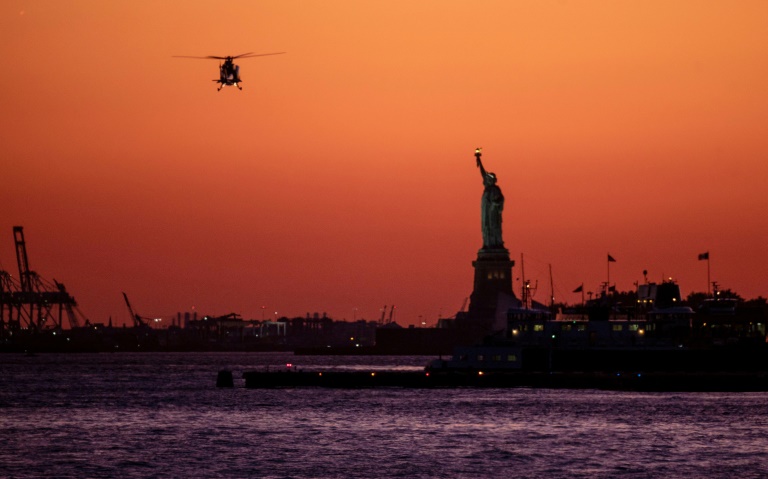
After a period of blissful silence overhead due to the Covid-19 pandemic, New Yorkers are dealing again with a familiar problem: noisy helicopters.

“With the bigger helicopters, my apartment vibrates,” said Melissa Elstein, who campaigns to ban non-essential chopper flights.

“They pollute our air, creating noise pollution which has negative health impacts,” the 56-year-old told AFP.

New York regularly hums with the whirr of helicopters circling the skies as tourists eye the city from above during short, pricey, sightseeing tours.

They also transport wealthy residents keen to avoid traffic jams on their way to holiday homes by the beach in the plush Hamptons.

Elstein is far from the only New Yorker unhappy at the near-constant din caused by the tens of thousands of flights every year.

Last year, the city received 25,821 calls to its hotline complaining about helicopter noise, an increase from 10,359 in 2020.

The vast majority of complaints — 21,620 — came from Manhattan.

Some respite may be in the offing.

Earlier this month, the New York state legislature approved a bill that could see companies fined $10,000 a day for generating “unreasonable” noise levels.

If Governor Kathy Hochul signs it into law, it would be the first piece of state legislation to tackle noise pollution from the helicopters.

Senator Brad Hoylman, who sponsored the bill, said that “many New Yorkers can no longer work from home comfortably, enjoy a walk along the waterfront, or keep a napping child asleep because of the incessant noise and vibrations from non-essential helicopter use.”

He noted that one helicopter produces 43 times more carbon dioxide per hour than an average car.

“Helicopter noise is not just annoying, it’s detrimental to our health and our environment,” Hoylman said in a statement.

For Andy Rosenthal — president of Stop the Chop, an organization of volunteers seeking to ban non-essential helicopter flights — the legislation does not go far enough.

“It’s a good first step. (But) it is not what we had hoped for. The fight continues,” he said.

– ‘Background noise’ –

New York City has three active heliports: two in Midtown on the Hudson and East rivers, used for corporate and chartered flights, and another near Wall Street in lower Manhattan, from which tourist flights depart.

A 15-20 minute aerial view of New York costs a minimum of about $200 per tourist.

Amid complaints, the administration of then-mayor Bill de Blasio agreed with the industry to reduce the number of tourist flights per year from 60,000 to 30,000, starting in 2017.

They also restricted tourist rides departing New York City to airspace over the rivers surrounding Manhattan, banning them from soaring above land.

Sightseeing helicopters taking off from New Jersey are allowed to fly above Manhattan though, including Central Park.

Commuter flights leaving New York City are also permitted to fly directly over buildings.

“This is an industry that doesn’t have to exist, shouldn’t exist. (Just) for the convenience of the very few,” said Elstein.

Some residents, though, have become used to the sound and accept it as a fact of living in America’s bustling financial, cultural and tourism capital.

“It’s a background noise,” said Mark Roberge, who lives near the heliport at the southern tip of Manhattan.

“It seems to be part of the experience.”

'My apartment vibrates': New Yorkers fight noisy helicopter rides

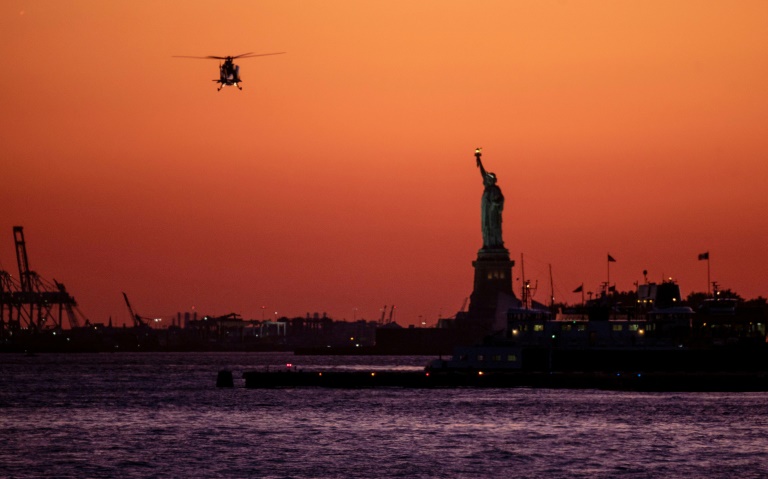
After a period of blissful silence overhead due to the Covid-19 pandemic, New Yorkers are dealing again with a familiar problem: noisy helicopters.

“With the bigger helicopters, my apartment vibrates,” said Melissa Elstein, who campaigns to ban non-essential chopper flights.

“They pollute our air, creating noise pollution which has negative health impacts,” the 56-year-old told AFP.

New York regularly hums with the whirr of helicopters circling the skies as tourists eye the city from above during short, pricey, sightseeing tours.

They also transport wealthy residents keen to avoid traffic jams on their way to holiday homes by the beach in the plush Hamptons.

Elstein is far from the only New Yorker unhappy at the near-constant din caused by the tens of thousands of flights every year.

Last year, the city received 25,821 calls to its hotline complaining about helicopter noise, an increase from 10,359 in 2020.

The vast majority of complaints — 21,620 — came from Manhattan.

Some respite may be in the offing.

Earlier this month, the New York state legislature approved a bill that could see companies fined $10,000 a day for generating “unreasonable” noise levels.

If Governor Kathy Hochul signs it into law, it would be the first piece of state legislation to tackle noise pollution from the helicopters.

Senator Brad Hoylman, who sponsored the bill, said that “many New Yorkers can no longer work from home comfortably, enjoy a walk along the waterfront, or keep a napping child asleep because of the incessant noise and vibrations from non-essential helicopter use.”

He noted that one helicopter produces 43 times more carbon dioxide per hour than an average car.

“Helicopter noise is not just annoying, it’s detrimental to our health and our environment,” Hoylman said in a statement.

For Andy Rosenthal — president of Stop the Chop, an organization of volunteers seeking to ban non-essential helicopter flights — the legislation does not go far enough.

“It’s a good first step. (But) it is not what we had hoped for. The fight continues,” he said.

– ‘Background noise’ –

New York City has three active heliports: two in Midtown on the Hudson and East rivers, used for corporate and chartered flights, and another near Wall Street in lower Manhattan, from which tourist flights depart.

A 15-20 minute aerial view of New York costs a minimum of about $200 per tourist.

Amid complaints, the administration of then-mayor Bill de Blasio agreed with the industry to reduce the number of tourist flights per year from 60,000 to 30,000, starting in 2017.

They also restricted tourist rides departing New York City to airspace over the rivers surrounding Manhattan, banning them from soaring above land.

Sightseeing helicopters taking off from New Jersey are allowed to fly above Manhattan though, including Central Park.

Commuter flights leaving New York City are also permitted to fly directly over buildings.

“This is an industry that doesn’t have to exist, shouldn’t exist. (Just) for the convenience of the very few,” said Elstein.

Some residents, though, have become used to the sound and accept it as a fact of living in America’s bustling financial, cultural and tourism capital.

“It’s a background noise,” said Mark Roberge, who lives near the heliport at the southern tip of Manhattan.

“It seems to be part of the experience.”

Texas death row inmate 'optimistic' after 27 years

Hank Skinner, who has been on death row in Texas for nearly three decades, says he still remains hopeful.

“I am optimistic I won’t end up here. I should have never been here to start with. And it’s been a long journey,” he told AFP during an interview.

Incarcerated in Livingston, a town some 80 miles (130 kilometers) north of Houston, Skinner has always maintained his innocence.

He spoke to AFP via telephone from behind a glass window at the Allan B. Polunsky prison, wearing a white prisoner’s uniform.

In 1995, Skinner was sentenced to death for the murder of his girlfriend and her two adult sons in Pampa, a small town in the Texas panhandle.

He did not deny having been in the house where the three died, but said he had passed out from a combination of drugs and liquor. Skinner was found in a nearby house with blood on his clothing, but insists that DNA testing would prove his innocence.

The father of three, who recently turned 60 and has a salt-and-pepper beard, Skinner has now been waiting for more than three years for a decision from the state’s highest criminal court.

The Texas Court of Appeals will weigh in on whether it believes the jury that sentenced him would have made a different choice had it had access to DNA tests that are available today.

Texas has 197 death row inmates. In 2020 and 2021, six were executed but 11 were taken off the list after their sentences were reviewed.

Some of those are still behind bars. One of them is Raymond Riles, who had his death sentence commuted to life in prison due to a history of mental illness.

Others are free; Cesar Fierro was returned to Mexico after 40 years on death row.

If the court agrees with Skinner, he will remain in prison but will be able to appeal in an attempt to prove his innocence.

– Five execution dates –

On five different occasions Skinner’s execution date was set.

In March 2010, the US Supreme Court spared him 23 minutes before he was scheduled to receive a lethal injection, just after what was supposed to have been his last meal.

It was his lawyer who told him the good news.

“I dropped the phone and I just slid down the wall. And I didn’t realize it but I had tears running out of both eyes,” he said.

“I felt like somebody had picked up a 1,000-pound weight off of my chest. I felt so light. I thought I was gonna float away.”

Once the euphoria and shock wore off, he suffered a terrible low as he came to terms with the fact that he would have to return to death row and “all the suffering here.”

Seeing fellow prisoners die, he said, is harder than being locked up in a small cell 22 to 23 hours a day, without television or physical contact with others except when guards handcuff or uncuff him.

A total of 127 inmates have been put to death since 2010 in Texas, the state that executes the most people.

Living in the detention center means Skinner’s days are filled with noise, morning to evening.

“You have some people here who are mentally disturbed. They beat on the walls, they kick the doors, they scream and holler to the top of their lungs,” he said.

Others shout conversations with imaginary people. Still others engage in real dialogue, but noisily.

“It’s cacophonous all the time. But you learn to just tune it out,” Skinner said.

Because there is no daylight, and also because breakfast is served at approximately 3:00 am, he says it is difficult to maintain any sort of life rhythm.

He sleeps when he collapses from fatigue and takes advantage of the quieter periods of night to read, often perusing other convicts’ files.

Having worked in a law firm before his conviction, he is happy to share his expertise with them.

– French wife –

“I help anybody with their appeals except baby rapers, people who kill and mutilate children. That, I can’t do it,” he said into the phone handset.

“I have a reputation — I’ve walked 11 people out of here. That’s better than practically any death penalty lawyer can say, except my lawyer.”

In 2008, Skinner married a French anti-death penalty activist, who is also convinced he was the victim of a miscarriage of justice.

If he is released “we will find a little house in a forest where we can both spend time together,” his wife Sandrine Ageorges-Skinner said in French.

As for his remaining years of life, “I’d like to spend every minute of that with my wife,” Skinner said.

He also has another project in mind: “I’m gonna end the death penalty worldwide.”

“I think if people knew what it was really like, they wouldn’t vote for the death penalty. I’ve always believed that,” he said.

Cautious optimism at high-stakes WTO meet

The World Trade Organization chief voiced cautious optimism Sunday as global trade ministers gathered to tackle food security threatened by Russia’s invasion of Ukraine, overfishing and equitable access to Covid vaccines.

Opening the WTO’s first ministerial meeting in nearly five years, Ngozi Okonjo-Iweala said to “expect a rocky, bumpy road with a few landmines along the way”.

But she told journalists she was “cautiously optimistic” that the more than 100 attending ministers would manage to agree on at least one or two of a long line of pressing issues, and that would be “a success”.

The WTO faces pressure to eke out long-sought trade deals on a range of issues and show unity amid the still raging pandemic and an impending global hunger crisis.

But since the global trade body only makes decisions by consensus, it can be more than tricky to reach agreements.

Top of the agenda at the four-day meeting is the toll Russia’s war in Ukraine, traditionally a breadbasket that feeds hundreds of millions of people, is having on food security. 

– Walkout –

Tensions ran high during a closed-door session, where a number of delegates took the floor to condemn Russia’s war in Ukraine, including Kyiv’s envoy, who was met with a standing ovation, WTO spokesman Dan Pruzin told journalists.

Then, right before Russian Minister of Economic Development Maxim Reshetnikov spoke, around three dozen delegates “walked out”, he said.

Even before the conference began, the European Union gathered representatives from 57 countries for a show solidarity with Ukraine, with EU trade commissioner Valdis Dombrovskis slamming Russia’s “illegal and barbaric aggression”

Despite the contentious atmosphere, ministers are expected to agree on a joint declaration on strengthening food security, in which they will “commit to take concrete steps to facilitate trade and improve the functioning and longterm resilience of global markets for food and agriculture”.

According to the draft text, countries would vow that “particular consideration will be given to the specific needs and circumstances of developing country Members”.

“I hope you will collectively do the right thing,” Ngozi told the delegates.

– Fisheries deal in sight? –

The WTO hopes to keep criticism of Russia’s war in Ukraine to the  first day of talks, allowing ministers to focus in the following days on nailing down trade deals, after nearly a decade with no major agreements. 

There is some optimism that countries could finally agree on banning subsidies that contribute to illegal and unregulated fishing, after more than two decades of negotiations.

“Will our children forgive us… if we allow our oceans to be depleted?” Okonjo-Iweala said. 

One of the main sticking points has been so-called special and differential treatment (SDT) for developing countries, including major fishing nation India, which can request exemptions.

The duration of exemptions remains undefined, with environmental groups warning anything beyond 10 years would be catastrophic.

– India blocking  –

India has demanded a 25-year exemption, and is so far refusing to budge.

Indian Commerce and Industry Minister Piyush Goyal insisted in a video address that most fishing in India is vital for survival, and that fishermen use “sustainable methods”.

“Their right to life and livelihood cannot be curtailed in any manner.”

Angered by lacking follow-through on promises made at a WTO ministerial meeting nearly a decade ago for food policy measures, India is proving intransigent on other issues as well, jeopardising the chances of locking down deals.

“There is not a single issue that India is not blocking,” a Geneva-based ambassador said, singling out WTO reform and agriculture.

– Patent waiver? –

India has also struck a harsh tone on another key issue on the table: WTO response to the Covid crisis.

“The rich countries need to introspect. We need to bow our heads in shame for our inability to respond to the pandemic in time,” he said.

India and South Africa began in October 2020 pushing for the WTO to temporarily lift intellectual property rights on Covid-19 medical tools like vaccines to help ensure more equitable access in poorer nations.

After multiple rounds of talks, the EU, the United States, India and South Africa hammered out a compromise.

The text, which would allow most developing countries, although not China, to produce Covid vaccines without authorisation from patent holders, still faces opposition from both sides.

The pharmaceutical industry insists the waiver would undermine investment in innovation, while public interest groups charge the text falls far short of what is needed, by limiting and complicating the vaccine waiver and not covering Covid treatments and diagnostics.

Close Bitnami banner
Bitnami