AFP

US Capitol riot hearings to link Trump election plots to insurrection

The congressional panel probing the 2021 assault on the US Capitol begins outlining its findings Thursday, promising explosive new revelations that will tie the deadly violence to Donald Trump’s attempts to overturn his election defeat.

The first hearing — an evening prime-time presentation 11 months into the investigation — will serve as an “opening statement” on the January 6 insurrection, according to aides of the House committee charged with laying out for the American public the causes of one of the darkest days in the history of US democracy. 

It will also aim to demonstrate that the violence was part of a broader conspiracy by Trump and his inner circle to illegitimately cling to power, tearing up the Constitution and more than two centuries of peaceful transitions from one administration to the next.

“We will be revealing new details showing that the violence of January 6 was the result of a coordinated multi-step effort to overturn the results of the 2020 election and stop the transfer of power from Donald Trump to Joe Biden,” a select committee aide said.

“And indeed that former president Donald Trump was at the center of that effort.”

A slickly-produced 90-plus minutes of television — and five subsequent hearings over the coming weeks — will focus on Trump’s role in the multi-pronged effort to return him to the Oval Office as an unelected president by disenfranchising millions of voters. 

Trump has defiantly dismissed the probe as a baseless “witch hunt” — but the public hearings were clearly on his mind Thursday as he launched into a largely false tirade on his social media platform, defending the insurrection as “the greatest movement in the history of our Country to Make America Great Again.”   

The case the committee plans to make is that Trump laid the groundwork for the insurrection through months of lies about fraud in an election described by his own administration as the most secure ever.

His White House is accused of involvement in several potentially illegal schemes to aid the effort, including a plot to seize voting machines and another to appoint fake “alternative electors” from swing states who would ignore the will of their voters and hand victory to Trump. 

– ‘Chilling’ conspiracy –

The select committee’s Republican vice-chairwoman Liz Cheney said on Sunday that the assault on the Capitol was part of a “chilling” conspiracy.

“It is extremely broad. It’s extremely well organized,” she told CBS.

The committee is planning to present live testimony Thursday from two people who interacted with members of the neofascist organization the Proud Boys on January 6 and in the days leading to the violence.

Cheney and chairman Bennie Thompson will make opening arguments before explaining how each of the six hearings, organized by theme, is expected to play out.

They will feature previously unseen video clips of the violence itself and excerpts from a trove of 1,000 interviews, including a “meaningful portion” of discussions with Trump’s senior White House and campaign officials — as well as members of his family.

Trump’s daughter Ivanka and her husband Jared Kushner, as well as the former president’s eldest son Don Jr., have all cooperated voluntarily with the committee.

British documentary filmmaker Nick Quested will testify Thursday about his experience shadowing members of the Proud Boys in the days leading up to January 6 and his interactions with them on the day itself.

The Emmy Award-winning director’s evidence is seen as crucial, said a committee aide, because he was on the scene during the first moments of violence against the Capitol Police and “all the chaos that ensued.”

– ‘Ongoing threats’ –

Capitol Police Officer Caroline Edwards, who was present at the breach of the first barricade, will describe sustaining head injuries in clashes with the far-right group, which saw its leader and four lieutenants charged on Monday with seditious conspiracy.

The hearings will differ from Trump’s two impeachments, however, in that he will not be represented in the room as he is not on trial — except perhaps in the court of public opinion.

Nevertheless, a number of his most loyal counter-punchers are expected to circle the wagons on Capitol Hill, questioning any damning testimony and challenging the validity of the investigation in TV appearances. 

“It is the most political and least legitimate committee in American history,” the leader of the House Republican minority, Kevin McCarthy, told reporters at the Capitol.

In fact, Congress has wide-ranging oversight powers, and a Trump-appointed federal judge last month emphatically rejected Republicans’ arguments that the committee is illegitimate, overtly partisan and has no real legislative or oversight purpose.

AFP asked Trump spokesman Taylor Budowich for details of the plan for Trump’s defense, but there was no response.

The committee has not confirmed its plans for after the initial slate of hearings, but at least one more presentation and a final report are expected in the fall.
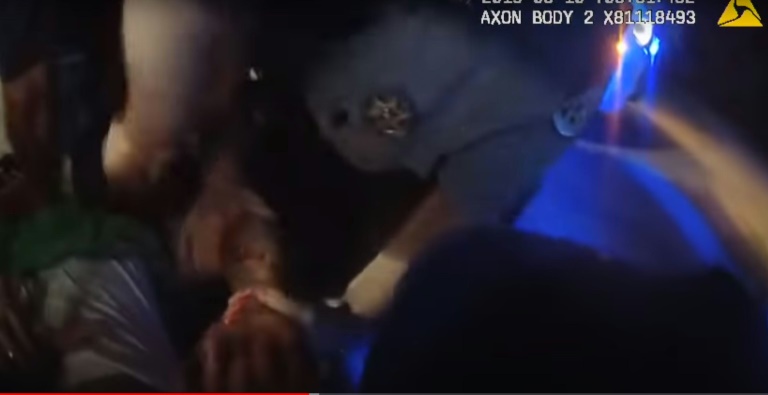

US Justice Department probes Louisiana State Police's conduct

The US Justice Department announced Thursday that it was opening an investigation into whether the Louisiana State Police uses excessive force and engages in racially discriminatory policing.

“Every American, regardless of race, has the right to constitutional policing,” Assistant Attorney General Kristen Clarke said in a statement.

“We find significant justification to investigate whether Louisiana State Police engages in excessive force and engages in racially discriminatory policing against Black residents and other people of color,” Clarke said.

The Justice Department said the investigation of troopers in the southern US state will include a review of policies, training and supervision.

It will also look at how investigations were conducted into incidents involving the use of force by state police.

The department has received reports of repeated use of excessive force against individuals suspected of minor traffic offenses or who were already handcuffed and not resisting, Clarke said.

“Some of the reports include disturbing information about the use of racial slurs and racially derogatory terms” by state troopers, she added.

The Justice Department probe in Louisiana is the first statewide “pattern or practice” investigation of a law enforcement agency in more than two decades.

It comes three years after the death in northern Louisiana of Ronald Greene, a 49-year-old Black man who police initially said had died of crash-related injuries after a high-speed car chase.

Dash-cam and body-cam video that was later released undercut that version of events, however, and showed state troopers, all of them white, Tasing, dragging, choking and beating Greene.

Greene’s family has filed a wrongful death suit, arguing that a police beating left Greene “bloodied and in cardiac arrest.”

Police-involved deaths have received intense scrutiny since the May 2020 murder of George Floyd in Minneapolis, and there have been several federal investigations into police departments in major American cities.

Foreign fighters in Ukraine sentenced to death by pro-Russians

Pro-Russian rebels sentenced to death two British fighters and a Moroccan who were captured while fighting for Ukraine, as a Ukrainian governor called for western arms on Thursday to win the battle for a crucial eastern city.

The death sentences come as Moscow concentrates its firepower on the strategic industrial hub of Severodonetsk, where Ukrainian President Volodymyr Zelensky says the fierce fighting could determine the fate of the entire Donbas area.

Separatist authorities in the Donetsk region, which is part of the Donbas, ordered the death penalty for Aiden Aslin, Shaun Pinner and Saadun Brahim after they were accused of acting as mercenaries for Kyiv, Russian media reported.

Britain said it was “deeply concerned” by the sentences.

“Under the Geneva Convention, prisoners of war are entitled to combatant immunity,” said a spokesman for Prime Minister Boris Johnson.

The two Britons surrendered in April in Mariupol, the southern port city that was captured by Russian troops after a weeks-long siege. They later appeared on Russian TV calling on Johnson to negotiate their release.

Brahim surrendered in March in the eastern town of Volnovakha.

During a trial that lasted three days, the men pleaded guilty to committing “actions aimed at seizing power and overthrowing the constitutional order of the Donetsk People’s Republic”, Russian news agency Interfax said.

A lawyer representing one of them told the TASS news agency that they would appeal.

– ‘Fate of Donbas’ –

Western countries have provided weapons and aid for Ukraine since the February 24 invasion, while a number of people from abroad have come to fight against Russian forces.

The fiercest fighting is now focused on Severodonetsk in the Lugansk region, where Ukrainian officials say their outgunned forces are still holding out amid street battles despite the city being mostly under Russian control. 

The regional governor of Lugansk — also part of the Donbas — said Western artillery would quickly help secure a Ukrainian victory for the bombarded city.

“As soon as we have long-range artillery to be able to conduct duels with Russian artillery, our special forces can clean up the city in two to three days,” governor Sergiy Gaiday said.

In his evening address to the Ukrainian people on Wednesday, Zelensky said the battle for the city was “probably one of the most difficult throughout this war.

“In many ways, the fate of our Donbas is being decided there.”

Up to 100 Ukrainian soldiers were being killed every day in frontline fighting and as many as 500 wounded, Defence Minister Oleksiy Reznikov said.

The city of Lysychansk, which is separated from Severodonetsk by a river, is still in Ukrainian hands but under fierce Russian bombardment.

– ‘Foreign mercenaries’ –

After being repelled from Kyiv following their February 24 invasion, Russian President Vladimir Putin’s troops have refocused their offensive on the Donbas. 

Pro-Russian separatists have held part of that region since 2014.

Moscow, which has repeatedly warned the West against getting involved in the conflict, said it had targeted a Ukrainian training centre for “foreign mercenaries” in the Zhytomyr region, west of Kyiv.

The Ukrainian presidency said four people were killed in a Russian air strike on Toshkivka, a village around 25 kilometres (14 miles) south of Severodonetsk.

Four more people were killed in fighting in Donetsk and shelling took the lives of two in the northeastern city of Kharkiv, it said. Another person was killed in the Mykolayiv region in the south. 

In Kyiv, Ukraine’s Interior Minister Denys Monastyrsky said the capital was in no immediate danger more than 100 days into the war, but troops were keeping up a line of defence around the city all the same.

Putin, meanwhile, compared his actions to Peter the Great’s conquest of the Baltic coast during his 18th-century war against Sweden.

“By fighting Sweden he was grabbing something… He was taking it back,” he told young entrepreneurs in Moscow.

“It is our responsibility also to take back and strengthen,” Putin said, in an apparent reference to Russia’s invasion of Ukraine.

The war’s shockwaves are spreading around the world. At the United Nations, Secretary-General Antonio Guterres added his voice to increasingly dire warnings. 

“For people around the world, the war is threatening to unleash an unprecedented wave of hunger and destitution, leaving social and economic chaos in its wake,” he said.

Zelensky on Thursday called for Russia to be expelled from the UN’s Food and Agriculture Organization (FAO), blaming Moscow for “causing hunger” and spurring the global grain crisis by invading his country.

– ‘Nobody to help’ –

Ukraine’s Black Sea ports usually export millions of tonnes of grain each year but have been blocked since the invasion, while western sanctions on Russia have prevented Moscow selling much of its grain abroad, sending food prices soaring.

The FAO warned that poor countries will suffer the most from the crisis as they were “paying more but receiving less food.”

Russia and Turkey made little headway during talks on Wednesday in striking a deal to secure safe passage for grain exports stuck in Ukraine.

The situation on the ground is increasingly desperate. 

In Severodonetsk’s twin city Lysychansk, residents who had chosen to stay were facing fierce Russian bombardments. 

“Every day there are bombings and every day something burns. A house, a flat,” 70-year-old Yuriy Krasnikov told AFP.

“I tried to go to the city authorities, but nobody’s there, everyone has run away.”

burs-dk/ah/

Styrofoam-munching superworms could hold key to plastic upcycling

Packing material, disposable cutlery, CD cases: Polystyrene is among the most common forms of plastic, but recycling it isn’t easy and the vast majority ends up in landfills or finds its way to the oceans where it threatens marine life.

Scientists at Australia’s University of Queensland have now discovered that superworms — the larvae of Zophobas morio darkling beetles — are eager to dine on the substance, and their gut enzymes could hold the key to higher recycling rates.

Chris Rinke, who led a study that was published in the journal Microbial Genomics on Thursday, told AFP previous reports had shown that tiny waxworms and mealworms (which are also beetle larvae) had a good track record when it came to eating plastic, “so we hypothesized that the much larger superworms can eat even more.”

Superworms grow up to two inches (five centimeters) and are bred as a food source for reptiles and birds, or even for humans in countries such as Thailand and Mexico.

Rinke and his team fed superworms different diets over a three week period, with some given polystyrene foam, commonly known as styrofoam, some bran, and others not fed at all.

“We confirmed that superworms can survive on a sole polystyrene diet, and even gain a small amount of weight — compared to a starvation control group — which suggests that the worms can gain energy from eating polystyrene,” he said.

Although the polystyrene-reared superworms completed their life cycle, becoming pupae and then fully developed adult beetles, tests revealed a loss of microbial diversity in their guts and potential pathogens. 

These findings suggested that while the bugs can survive on polystyrene, it is not a nutritious diet and impacts their health.

Next, the team used a technique called metagenomics to analyze the microbial gut community and find which gene-encoded enzymes were involved in degrading the plastic.

– Bio-upcycling – 

One way to put the findings to use would be to provide superworms with food waste or agricultural bioproducts to consume alongside polystyrene. 

“This could be a way to improve the health of the worms and to deal with the large amount of food waste in Western countries,” said Rinke.

But while breeding more worms for this purpose is possible, he envisages another route: creating recycling plants that mimic what the larvae do, which is to first shred the plastic in their mouths then digest it through bacterial enzymes.

“Ultimately, we want to take the superworms out of the equation,” he said, and he now plans more research aimed at finding the most efficient enzymes, then enhancing them further through enzyme engineering.

The breakdown products from that reaction could then be fed to other microbes to create high-value compounds, such as bioplastics, in what he hopes would become an economically viable “upcycling” approach.

Styrofoam-munching superworms could hold key to plastic upcycling

Packing material, disposable cutlery, CD cases: Polystyrene is among the most common forms of plastic, but recycling it isn’t easy and the vast majority ends up in landfills or finds its way to the oceans where it threatens marine life.

Scientists at Australia’s University of Queensland have now discovered that superworms — the larvae of Zophobas morio darkling beetles — are eager to dine on the substance, and their gut enzymes could hold the key to higher recycling rates.

Chris Rinke, who led a study that was published in the journal Microbial Genomics on Thursday, told AFP previous reports had shown that tiny waxworms and mealworms (which are also beetle larvae) had a good track record when it came to eating plastic, “so we hypothesized that the much larger superworms can eat even more.”

Superworms grow up to two inches (five centimeters) and are bred as a food source for reptiles and birds, or even for humans in countries such as Thailand and Mexico.

Rinke and his team fed superworms different diets over a three week period, with some given polystyrene foam, commonly known as styrofoam, some bran, and others not fed at all.

“We confirmed that superworms can survive on a sole polystyrene diet, and even gain a small amount of weight — compared to a starvation control group — which suggests that the worms can gain energy from eating polystyrene,” he said.

Although the polystyrene-reared superworms completed their life cycle, becoming pupae and then fully developed adult beetles, tests revealed a loss of microbial diversity in their guts and potential pathogens. 

These findings suggested that while the bugs can survive on polystyrene, it is not a nutritious diet and impacts their health.

Next, the team used a technique called metagenomics to analyze the microbial gut community and find which gene-encoded enzymes were involved in degrading the plastic.

– Bio-upcycling – 

One way to put the findings to use would be to provide superworms with food waste or agricultural bioproducts to consume alongside polystyrene. 

“This could be a way to improve the health of the worms and to deal with the large amount of food waste in Western countries,” said Rinke.

But while breeding more worms for this purpose is possible, he envisages another route: creating recycling plants that mimic what the larvae do, which is to first shred the plastic in their mouths then digest it through bacterial enzymes.

“Ultimately, we want to take the superworms out of the equation,” he said, and he now plans more research aimed at finding the most efficient enzymes, then enhancing them further through enzyme engineering.

The breakdown products from that reaction could then be fed to other microbes to create high-value compounds, such as bioplastics, in what he hopes would become an economically viable “upcycling” approach.

Styrofoam-munching superworms could hold key to plastic upcycling

Packing material, disposable cutlery, CD cases: Polystyrene is among the most common forms of plastic, but recycling it isn’t easy and the vast majority ends up in landfills or finds its way to the oceans where it threatens marine life.

Scientists at Australia’s University of Queensland have now discovered that superworms — the larvae of Zophobas morio darkling beetles — are eager to dine on the substance, and their gut enzymes could hold the key to higher recycling rates.

Chris Rinke, who led a study that was published in the journal Microbial Genomics on Thursday, told AFP previous reports had shown that tiny waxworms and mealworms (which are also beetle larvae) had a good track record when it came to eating plastic, “so we hypothesized that the much larger superworms can eat even more.”

Superworms grow up to two inches (five centimeters) and are bred as a food source for reptiles and birds, or even for humans in countries such as Thailand and Mexico.

Rinke and his team fed superworms different diets over a three week period, with some given polystyrene foam, commonly known as styrofoam, some bran, and others not fed at all.

“We confirmed that superworms can survive on a sole polystyrene diet, and even gain a small amount of weight — compared to a starvation control group — which suggests that the worms can gain energy from eating polystyrene,” he said.

Although the polystyrene-reared superworms completed their life cycle, becoming pupae and then fully developed adult beetles, tests revealed a loss of microbial diversity in their guts and potential pathogens. 

These findings suggested that while the bugs can survive on polystyrene, it is not a nutritious diet and impacts their health.

Next, the team used a technique called metagenomics to analyze the microbial gut community and find which gene-encoded enzymes were involved in degrading the plastic.

– Bio-upcycling – 

One way to put the findings to use would be to provide superworms with food waste or agricultural bioproducts to consume alongside polystyrene. 

“This could be a way to improve the health of the worms and to deal with the large amount of food waste in Western countries,” said Rinke.

But while breeding more worms for this purpose is possible, he envisages another route: creating recycling plants that mimic what the larvae do, which is to first shred the plastic in their mouths then digest it through bacterial enzymes.

“Ultimately, we want to take the superworms out of the equation,” he said, and he now plans more research aimed at finding the most efficient enzymes, then enhancing them further through enzyme engineering.

The breakdown products from that reaction could then be fed to other microbes to create high-value compounds, such as bioplastics, in what he hopes would become an economically viable “upcycling” approach.

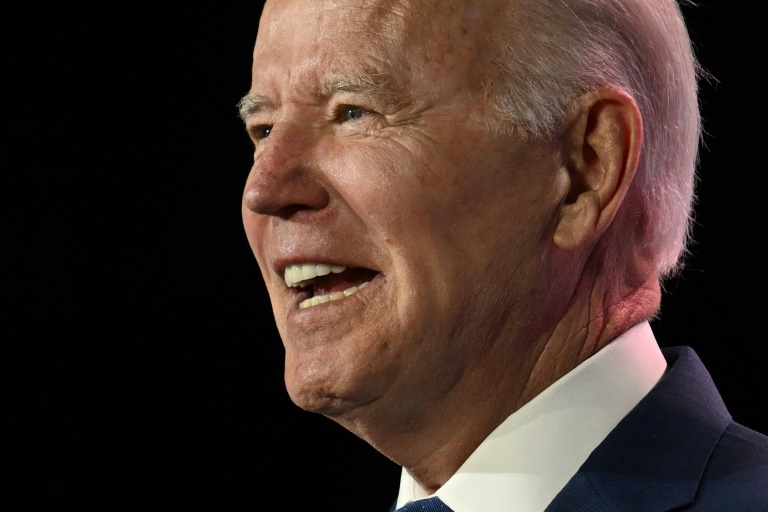
Biden urges climate progress as Brazil leader joins Americas summit

Joe Biden sought Thursday to step up action on climate at an Americas summit with hopes for at least small progress with Brazil, whose far-right leader will hold a potentially tense meeting with the US president.

Some two dozen leaders have descended on Los Angeles for the Summit of the Americas, where Biden urged both governments and the private sector to show that democracy can work.

The summit comes as China makes rapid inroads in Latin America, long viewed by Washington as its turf, although Biden has steered clear of big-dollar pledges and has instead sought cooperation in targeted areas.

“We stand at an inflection point. More is going to change in the next 10 years than has changed in the last 30 years in the world,” Biden told business leaders Thursday on the sidelines of the summit.

“I find no reason why the Western Hemisphere over the next 10 years is not developed into the most democratic region in the world,” he said.

Biden urged the hemisphere to make efforts on promoting more equitable growth and “kicking our action on climate change into high gear and speeding our clean-energy transition.”

Biden and Vice President Kamala Harris will later Thursday meet leaders of Caribbean nations that are particularly vulnerable to rising sea levels.

One outlier from the international chorus to battle climate change has been Brazilian President Jair Bolsonaro, a champion of agribusiness.

As such he has horrified environmentalists, who warn that further erosion of the Amazon rainforest will disrupt a vital natural sink for the planet’s carbon emissions.

Ahead of Biden’s first meeting with Bolsonaro on Thursday, the White House said Brazil, Colombia and Peru would join a US-backed initiative to explore ways to reduce Amazon deforestation motivated by commodities industries.

The White House also said that Brazil and four other nations were joining a renewable energy initiative launched at last year’s UN climate summit in Copenhagen.

In the pact, countries promise to work toward a goal of 70 percent renewables in their energy mix by 2030. 

Despite coming under criticism over the Amazon, Brazil — the sixth most populous nation — has one of the least carbon-intensive economies for a major economy and already meets the goal on renewables, mostly through hydropower.

– The ‘Tropical Trump’ –

The meeting with Bolsonaro could be awkward due to more than climate. Bolsonaro was an ally of Biden’s predecessor Donald Trump and has appeared to follow the former president’s playbook by alleging that Brazil’s October elections are threatened by fraud.

On the eve of his trip, Bolsonaro went further by backing Trump’s claims of irregularities in the 2020 US election won by Biden. There has been no evidence of widespread fraud.

Jake Sullivan, Biden’s national security advisor, said the president would not shy away from discussing the Brazilian election.

“I do anticipate that the president will discuss open, free, fair, transparent democratic elections,” Sullivan told reporters Wednesday.

Bolsonaro has trailed in early polls against his likely challenger, former president Luiz Inacio Lula da Silva, a leftist icon who was jailed on controversial corruption charges.

A victory by Lula would mark a further swing to the left in Latin America. Colombia, one of the closest US allies, could see a historic shift on June 19 if there is a victory by leftist Gustavo Petro, who topped the first round of voting.

While promising to work with leaders across ideology, Biden has held firm against inviting the leftist leaders of Cuba, Nicaragua and Venezuela on the grounds that they are autocrats.

His stance led to a boycott of the summit by Mexican President Andres Manuel Lopez Obrador, a crucial partner on addressing rising migration into the United States.

Harris started the week-long summit by announcing commitments of $1.9 billion by businesses in El Salvador, Guatemala and Honduras in hopes of creating jobs and discouraging migration — an issue seized upon by Trump’s Republican Party.

Also at the summit, the Biden administration announced a plan to help train 500,000 health workers in Latin America and a $300 million project to improve food security, with Russia’s invasion of Ukraine disrupting grain exports.

Biden also declared what he called a new economic partnership for the Americas, although there were few concrete details and no promises of funding or greater market access.

US expands safety probe into Tesla Autopilot

US regulators expanded a probe into Tesla’s “Autopilot” system, moving the investigation closer to a potential recall of a controversial feature in Elon Musk’s electric vehicles.

The National Highway Traffic Safety Administration is investigating whether “Autopilot and associated Tesla systems may exacerbate human factors or behavioral safety risks by undermining the effectiveness of the driver’s supervision,” according to a summary statement.

The agency now considers the probe an “engineering analysis” — which in NHTSA parlance upgrades the status from a “preliminary evaluation” — to determine “whether a safety recall should be initiated or the investigation should be closed.”

Tesla did not immediately respond to a request for comment.

NHTSA opened the probe in August 2021 after identifying 11 crashes involving a first responder vehicle and a Tesla in which Autopilot or Traffic Aware Cruise Control was engaged, and five additional cases were later found that fit into this group. 

Additional forensic data on 11 of the incidents showed the drivers took no action to avert a crash between two and five seconds prior to impact, although they had their hands on the steering wheel.

The agency also probed more than 100 crashes not involving an emergency vehicle in which Tesla Autopilot or another driver-assistance system was engaged.

In about half of these cases, evidence suggests the driver was “insufficiently responsive” to driving conditions, NHTSA said.

Looking at a subset of 43 of those crashes that yielded more detailed data, NHTSA determined that in 37, the driver’s hands were on the steering wheel in the last second prior to the collision.

The automaker has defended the safety of the Autopilot feature, and say when used correctly it reduces the chance of an accident.

But NHTSA said, “A driver’s use or misuse of vehicle components … does not necessarily preclude a system defect” particularly “if the driver behavior in question is foreseeable in light of the system’s design.”

US expands safety probe into Tesla Autopilot

US regulators expanded a probe into Tesla’s “Autopilot” system, moving the investigation closer to a potential recall of a controversial feature in Elon Musk’s electric vehicles.

The National Highway Traffic Safety Administration is investigating whether “Autopilot and associated Tesla systems may exacerbate human factors or behavioral safety risks by undermining the effectiveness of the driver’s supervision,” according to a summary statement.

The agency now considers the probe an “engineering analysis” — which in NHTSA parlance upgrades the status from a “preliminary evaluation” — to determine “whether a safety recall should be initiated or the investigation should be closed.”

Tesla did not immediately respond to a request for comment.

NHTSA opened the probe in August 2021 after identifying 11 crashes involving a first responder vehicle and a Tesla in which Autopilot or Traffic Aware Cruise Control was engaged, and five additional cases were later found that fit into this group. 

Additional forensic data on 11 of the incidents showed the drivers took no action to avert a crash between two and five seconds prior to impact, although they had their hands on the steering wheel.

The agency also probed more than 100 crashes not involving an emergency vehicle in which Tesla Autopilot or another driver-assistance system was engaged.

In about half of these cases, evidence suggests the driver was “insufficiently responsive” to driving conditions, NHTSA said.

Looking at a subset of 43 of those crashes that yielded more detailed data, NHTSA determined that in 37, the driver’s hands were on the steering wheel in the last second prior to the collision.

The automaker has defended the safety of the Autopilot feature, and say when used correctly it reduces the chance of an accident.

But NHTSA said, “A driver’s use or misuse of vehicle components … does not necessarily preclude a system defect” particularly “if the driver behavior in question is foreseeable in light of the system’s design.”

James Webb telescope hit by micrometeoroid: NASA

A mirror on the James Webb Space Telescope was struck by a micrometeoroid last month but is expected to continue to function normally, NASA said Thursday.

“After initial assessments, the team found the telescope is still performing at a level that exceeds all mission requirements despite a marginally detectable effect in the data,” the US space agency said.

“Webb’s beginning-of-life performance is still well above expectations, and the observatory is fully capable of performing the science it was designed to achieve,” it added.

One of the space observatory’s primary mirror segments suffered an impact from a micrometeoroid, which tend to be smaller than a grain of sand, between May 23 and 25.

The telescope, which is expected to cost NASA nearly $10 billion, is among the most expensive scientific platforms ever built, comparable to its predecessor Hubble, and the Large Hadron Collider at CERN.

Webb’s mission includes the study of distant planets, known as exoplanets, to determine their origin, evolution and habitability, and it is expected to produce “spectacular color images” of the cosmos in mid-July.

The telescope has spent the past few months aligning its instruments in preparation for the big reveal.

NASA said micrometeoroid strikes are an “unavoidable aspect of operating any spacecraft” and “were anticipated when building and testing the mirror.”

“This most recent impact was larger than was modeled, and beyond what the team could have tested on the ground,” it said.

Lee Feinberg, Webb optical telescope element manager at NASA Goddard, said that “with Webb’s mirrors exposed to space, we expected that occasional micrometeoroid impacts would gracefully degrade telescope performance over time.

“Since launch, we have had four smaller measurable micrometeoroid strikes that were consistent with expectations,” Feinberg said.

NASA said that to protect Webb, flight teams can turn the optics away from known meteor showers.

It said the May micrometeoroid strike was not the result of a meteor shower but an “unavoidable chance event.”

Close Bitnami banner
Bitnami