AFP

Man charged with plotting murder of US Supreme Court justice

A California man upset about mass shootings and the looming Supreme Court rulings on abortion and gun rights was charged Wednesday with attempting to murder conservative Justice Brett Kavanaugh.

Nicholas John Roske was arrested in the early morning hours outside Kavanaugh’s house in the Washington suburb of Chevy Chase, Maryland carrying a semi-automatic Glock 17 pistol, a knife and tactical vest, according to documents filed in federal court.

Roske was spotted outside Kavanaugh’s house by two US Marshals standing guard. He walked away and called emergency services, telling them he was feeling suicidal and had come from California to kill Kavanaugh, according to the documents. 

The 26-year-old was arrested without incident by local police while he was still on the phone.

He later told police “that he was upset about the leak of a recent Supreme Court draft decision regarding the right to abortion, as well as the recent school shooting in Uvalde, Texas,” an FBI affidavit said.

“Roske indicated that he believed the justice that he intended to kill would side with Second Amendment decisions that would loosen gun control laws,” it added.

President Joe Biden condemned the threat against Kavanaugh “in the strongest terms,” the White House said.

– Heightened security –

The arrest came as the court prepares to release potentially landmark judgements on politically charged cases on gun rights and abortion by the end of June.

A draft opinion in the abortion case that was leaked at the beginning of May, written by conservative Justice Samuel Alito, suggested that the court was poised to overturn the five-decade-old Roe v Wade ruling that said women had a constitutional right to obtain abortions.

If Alito’s draft opinion goes through with support from a majority of the justices, it will likely allow many states to immediately implement full or near-full bans on the procedure.

The prospect has sparked anger and dismay among advocates of abortion rights, and led to protests at the homes of Kavanaugh, Alito and Chief Justice John Roberts.

After the leak and the protests, security was increased for the justices and barriers were raised around the court itself to prevent protestors from nearing the building.

“Threats of violence and actual violence against the justices of course strike at the heart of our democracy,” Attorney General Merrick Garland said Wednesday. “For that reason last month, I accelerated the protection of all the justices’ residences, 24/7.”

-Swing vote? –

Kavanaugh is one of six justices in the court’s conservative wing, against three progressives, but he is not viewed as being as hardline as Alito or some of the others on the bench.

A Catholic native of Washington, his nomination in 2018 to the high court drew particularly heated debates over his views toward women and abortion rights.

His confirmation gave conservatives a 5-4 majority on the court, which grew further when Catholic, stridently anti-abortion Justice Amy Coney Barrett joined in October 2020.

The leak of the Alito draft opinion sparked speculation that someone was hoping to push the court in one direction or another in its final ruling on the abortion case.

Some analysts believe that Roberts and Kavanaugh could occupy a moderating position on the final judgement to partially sustain the abortion protections in the original 1973 Roe v Wade decision.

– Guns case –

The court is also expected to rule before the end of the month on a New York firearms case that could see it effectively loosen gun control laws.

That decision is also in focus following recent mass shootings, including the murder by a teenage racist of 10 African Americans in Buffalo, New York, and the separate killing of 19 schoolchildren and two teachers in Uvalde, Texas.

Those shootings have heightened calls for tighter controls on firearms, leading to sharp pushback from gun owners seeking less regulation.
Man convicted of 1984 murder of girl executed in Arizona

A 66-year-old man convicted of the 1984 murder of an eight-year-old girl was executed by lethal injection in the US state of Arizona on Wednesday.

Frank Atwood was put to death at 10:16 am (1716 GMT) at Arizona State Prison in Florence, Attorney General Mark Brnovich said in a statement.

Atwood was convicted in 1987 of kidnapping Vicki Lynne Hoskinson while she was riding her bicycle in Tucson, Arizona.

Her body was found in the desert seven months later.

Atwood had a choice between lethal injection and the gas chamber but declined to make a selection.

Lethal injection is the default method of execution in the state in the event an inmate does not choose.

Atwood’s execution was the second conducted in the past month in Arizona.

Clarence Dixon, also 66, was executed on May 11 for the 1978 murder of a college student.

Dixon’s execution was the first in the southwestern state since 2014.

There have been seven executions in the United States this year, according to the non-profit Death Penalty Information Center.

Twitter to share data at heart of Musk deal dispute: report

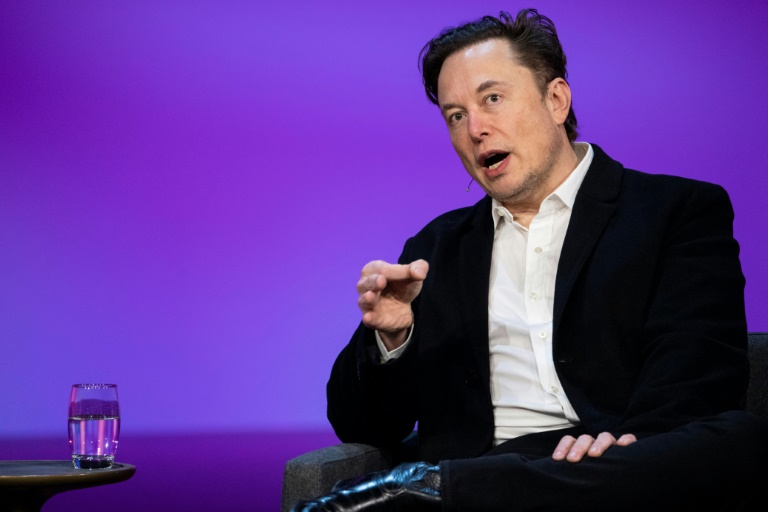
Twitter will yield to Elon Musk’s demand for internal data central to a standoff over his troubled $44 billion bid to buy the social media platform, the  Washington Post reported on Wednesday.

The news comes just days after the Tesla chief threatened to back out of his deal to purchase Twitter, accusing it of failing to provide data on fake accounts.

The Post cited an unnamed source familiar with the negotiations as saying Twitter’s board decided to let Musk access its full “firehose” of internal data associated with the hundreds of millions of tweets posted daily at the service.

“This would end the major standoff between Musk and the board on this hot button issue which has paused the deal,” Wedbush analyst Dan Ives said in a tweet.

Twitter chief executive Parag Agrawal has said that fewer than five percent of accounts active on any given day at Twitter are bots, but that analysis cannot be replicated externally due to the need to keep user data private.

About two dozen companies already pay to access the massive trove of internal Twitter data, which includes records of tweets along with information about accounts and devices used to fire them off, according to the Post.

Twitter declined to comment on the Washington Post report but has defended its responsiveness to Musk’s requests, and vowed to complete the deal on the original terms.

The mercurial Musk agreed to buy Twitter in a $44 billion deal in late April.

He began making significant noise about fake accounts in mid-May, saying on Twitter he could walk away from the transaction if his concerns were not addressed.

Some observers have seen Musk’s questioning of Twitter bots as a means to end the takeover process, or to pressure Twitter into lowering the price.

The potential for Musk to take Twitter private has stoked protest from critics who warn his stewardship will embolden hate groups and disinformation campaigns.

US securities regulators have also pressed Musk for an explanation of an apparent delay in reporting his Twitter stock buys.

Twitter to share data at heart of Musk deal dispute: report

Twitter will yield to Elon Musk’s demand for internal data central to a standoff over his troubled $44 billion bid to buy the social media platform, the  Washington Post reported on Wednesday.

The news comes just days after the Tesla chief threatened to back out of his deal to purchase Twitter, accusing it of failing to provide data on fake accounts.

The Post cited an unnamed source familiar with the negotiations as saying Twitter’s board decided to let Musk access its full “firehose” of internal data associated with the hundreds of millions of tweets posted daily at the service.

“This would end the major standoff between Musk and the board on this hot button issue which has paused the deal,” Wedbush analyst Dan Ives said in a tweet.

Twitter chief executive Parag Agrawal has said that fewer than five percent of accounts active on any given day at Twitter are bots, but that analysis cannot be replicated externally due to the need to keep user data private.

About two dozen companies already pay to access the massive trove of internal Twitter data, which includes records of tweets along with information about accounts and devices used to fire them off, according to the Post.

Twitter declined to comment on the Washington Post report but has defended its responsiveness to Musk’s requests, and vowed to complete the deal on the original terms.

The mercurial Musk agreed to buy Twitter in a $44 billion deal in late April.

He began making significant noise about fake accounts in mid-May, saying on Twitter he could walk away from the transaction if his concerns were not addressed.

Some observers have seen Musk’s questioning of Twitter bots as a means to end the takeover process, or to pressure Twitter into lowering the price.

The potential for Musk to take Twitter private has stoked protest from critics who warn his stewardship will embolden hate groups and disinformation campaigns.

US securities regulators have also pressed Musk for an explanation of an apparent delay in reporting his Twitter stock buys.

Amazon's indigenous leaders make plea at Americas summit

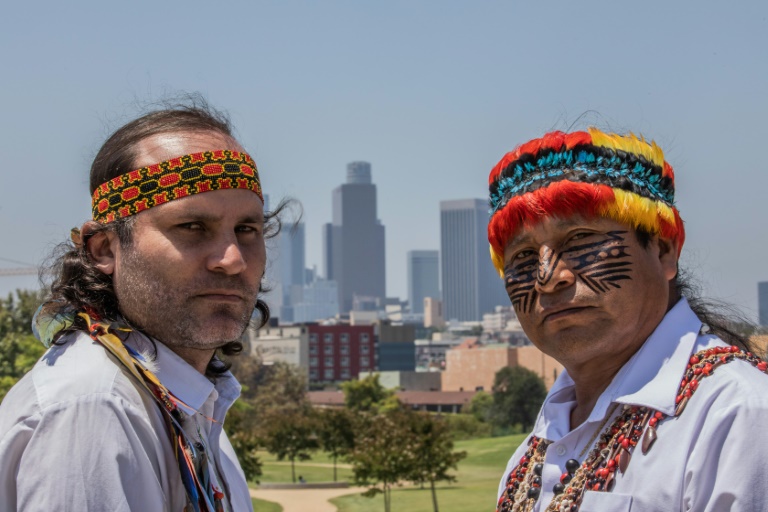
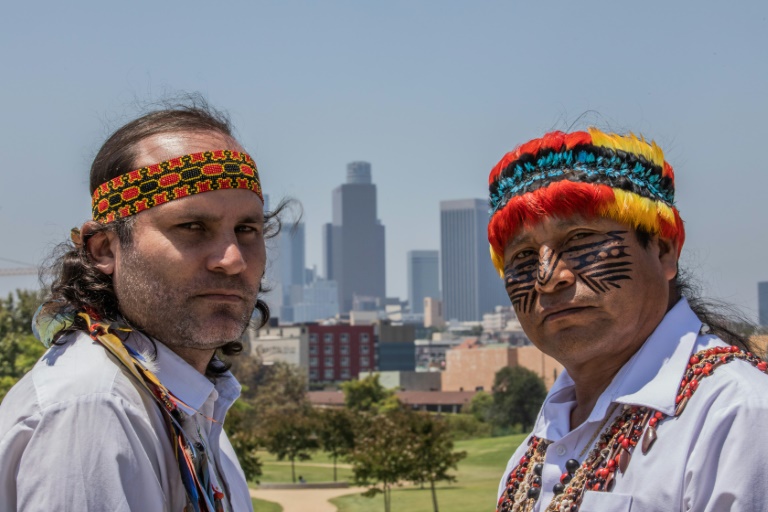
The custodians of the primal forests that stretch across eight Latin American countries said national leaders gathering in Los Angeles this week had to listen to them if they wanted to save the Amazon.

Indigenous leaders from across South America are in the United States for the Summit of the Americas, a semi-regular gathering of heads of state from the Western Hemisphere.

But, they say, many are not being allowed into the meetings where the land their people have called home for centuries is being discussed.

“In these important events, where there are governments in power, we should be hearing from indigenous people from different countries,” said Domingo Peas, from the Achuar community in the Ecuadorian Amazon.

Peas, a member of the Confederation of Indigenous Nations of the Ecuadoran Amazon, traveled by boat, car, bus and plane over more than two days to get from his remote community of some 100 families to Los Angeles.

But when he arrived, he was told he would not be able to participate in the event, despite its having climate change as a major topic.

“Indigenous voices are not being heard at the summit, indigenous delegates are being denied entry,” said Atossa Soltani, founder and president of the NGO Amazon Watch.

Not hearing what they have to say would be a huge mistake, she told AFP.

“Indigenous peoples not only have the solutions to our climate and  biodiversity crisis, they are the original inhabitants. 

“The reason we have these incredibly intact forests in Latin America, is because indigenous peoples for centuries and millennia have been taking care of the forests.

“They need to be at the table. They have something to teach the modern world.”

The Summit of the Americas is being held in the United States for the first time since its inaugural edition in 1994.

The gathering, which was intended to showcase US President Joe Biden’s engagement with the vast continent to the south, has floundered because a number of significant figures are not here.

Most conspicuously, Mexico’s President Andres Manuel Lopez Obrador, whose co-operation is key if the Biden administration wants to get a handle on immigration, said he would stay away because leaders from Venezuela, Nicaragua and Cuba had not been invited.

Brazil’s President Jair Bolsonaro, however, is expected to attend. 

Soltani said Bolsonaro, whose country contains the lion’s share of the Amazon needs to rein in the rampant commercial exploitation of the forest.

“The fate of the Amazon is in the hands of these world leaders who are gathering here this week. That is the fate of all of us. This is the future for our children, it’s the future for life on this planet,” she said.

Amazon's indigenous leaders make plea at Americas summit

The custodians of the primal forests that stretch across eight Latin American countries said national leaders gathering in Los Angeles this week had to listen to them if they wanted to save the Amazon.

Indigenous leaders from across South America are in the United States for the Summit of the Americas, a semi-regular gathering of heads of state from the Western Hemisphere.

But, they say, many are not being allowed into the meetings where the land their people have called home for centuries is being discussed.

“In these important events, where there are governments in power, we should be hearing from indigenous people from different countries,” said Domingo Peas, from the Achuar community in the Ecuadorian Amazon.

Peas, a member of the Confederation of Indigenous Nations of the Ecuadoran Amazon, traveled by boat, car, bus and plane over more than two days to get from his remote community of some 100 families to Los Angeles.

But when he arrived, he was told he would not be able to participate in the event, despite its having climate change as a major topic.

“Indigenous voices are not being heard at the summit, indigenous delegates are being denied entry,” said Atossa Soltani, founder and president of the NGO Amazon Watch.

Not hearing what they have to say would be a huge mistake, she told AFP.

“Indigenous peoples not only have the solutions to our climate and  biodiversity crisis, they are the original inhabitants. 

“The reason we have these incredibly intact forests in Latin America, is because indigenous peoples for centuries and millennia have been taking care of the forests.

“They need to be at the table. They have something to teach the modern world.”

The Summit of the Americas is being held in the United States for the first time since its inaugural edition in 1994.

The gathering, which was intended to showcase US President Joe Biden’s engagement with the vast continent to the south, has floundered because a number of significant figures are not here.

Most conspicuously, Mexico’s President Andres Manuel Lopez Obrador, whose co-operation is key if the Biden administration wants to get a handle on immigration, said he would stay away because leaders from Venezuela, Nicaragua and Cuba had not been invited.

Brazil’s President Jair Bolsonaro, however, is expected to attend. 

Soltani said Bolsonaro, whose country contains the lion’s share of the Amazon needs to rein in the rampant commercial exploitation of the forest.

“The fate of the Amazon is in the hands of these world leaders who are gathering here this week. That is the fate of all of us. This is the future for our children, it’s the future for life on this planet,” she said.

US lays out pledges as Biden woos Latin American leaders

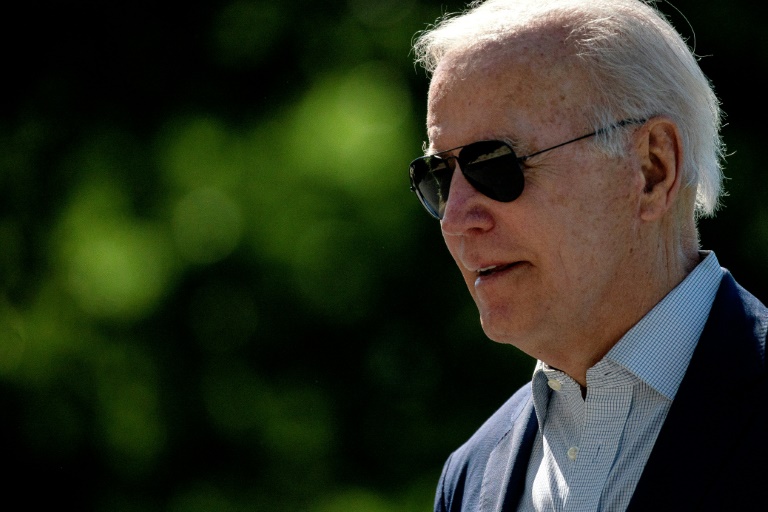
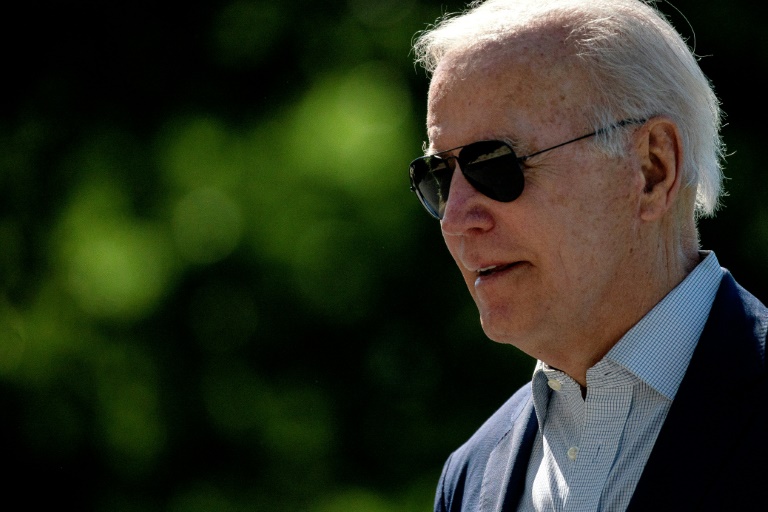
US President Joe Biden heads Wednesday to a Latin America summit on a mission to woo back the region as his administration pledged greater economic cooperation, investment and a program to train half a million health workers.

Biden is hoping to cement ties with a region long seen by Washington as its turf but where China has quickly emerged as a leading investor, although the administration has focused on modest progress rather than sweeping proposals.

“We need to demonstrate,” Secretary of State Antony Blinken said Tuesday at the weeklong summit, “that democracies can really effectively deliver for their citizens.”

Hours before Biden was to arrive, the White House announced a new Americas Health Corps that aims to improve the skills of 500,000 health workers across the region, building on the lessons from Covid-19, which hit the Western Hemisphere especially hard.

The health training will cost $100 million, although the United States will not contribute it all and will seek to raise funds, including through the Pan American Health Organization, an administration official said.

China has stepped up its role in Latin America during the pandemic, moving early to supply vaccines, and US nemesis Cuba has long exported its state-employed doctors. 

Biden will separately announce plans for a hemisphere-wide “economic partnership,” although there were few concrete commitments as part of it.

The announcements comes a day after Vice President Kamala Harris detailed $1.9 billion in private-sector investment in impoverished and violence-ravaged El Salvador, Guatemala and Honduras.

The troubles in the so-called Northern Triangle, as well as Haiti, have generated a soaring number of migrants to the United States, setting off a domestic furor as Donald Trump’s Republican Party demands efforts to stop them.

– Trade deals lite –

The Summit of the Americas is the first in the United States since the inaugural edition in 1994 was held in Miami under Bill Clinton, who proposed a free-trade zone that would span the hemisphere other than communist Cuba.

The White House billed Biden’s summit as an update to Clinton’s vision. But the US political mood has since dramatically soured on free trade, with Biden’s predecessor Trump rising to power denouncing liberalization as harmful to US workers. 

The Americas Partnership for Economic Prosperity, to be announced by Biden, will look at coordinating on standards and supply chains but will not offer new market access — a key incentive offered to the region by China, with its billion-plus consumer market.

Stronger supply chains will help “our hemisphere reduce overdependence and concentration on certain countries,” another administration official said.

Biden last month similarly unveiled an Asian partnership on setting economic standards as he visited Tokyo.

But unlike in Asia, the United States already has free-trade deals with a number of major Latin American nations including Mexico, Chile, Colombia and Peru.

The official said the new partnership would start with “like-minded countries,” without naming them.

While hesitant on free trade, Biden has stood firm on another core principle of the original Summit of the Americas — democracy — even as he considers going next month to Saudi Arabia, a critical oil supplier.

Draining US diplomatic energy ahead of the summit, Mexican President Andres Manuel Lopez Obrador refused to attend as he insisted that Biden invite the leftist leaders of Cuba, Nicaragua and Venezuela, shunned on the grounds that they are autocrats.

Biden is separately expected to meet President Jair Bolsonaro of Brazil, Latin America’s most populous nation, despite rising fears that the Trump ally will not accept the legitimacy of upcoming elections.

– ‘Nearshoring’ –

Mauricio Claver-Carone, the president of the Inter-American Development Bank, said that Latin America can increasingly be seen as a “sea of peace” for investors amid the global turbulence from Russia’s invasion of Ukraine and rising risks associated with China.

The head of the bank, which provides development funding in Latin America, said he saw a rise of “nearshoring,” with businesses moving closer to markets instead of to China.

Since the first Summit of the Americas, “each dollar that went to China was one dollar, one investment, one job less for Latin America and the Caribbean,” he told AFP in an interview in Los Angeles.

In Latin America, “whether they are governments of the left or the right, they all want foreign investment, they all want nearshoring, they all want economic growth,” he said.

US lays out pledges as Biden woos Latin American leaders

US President Joe Biden heads Wednesday to a Latin America summit on a mission to woo back the region as his administration pledged greater economic cooperation, investment and a program to train half a million health workers.

Biden is hoping to cement ties with a region long seen by Washington as its turf but where China has quickly emerged as a leading investor, although the administration has focused on modest progress rather than sweeping proposals.

“We need to demonstrate,” Secretary of State Antony Blinken said Tuesday at the weeklong summit, “that democracies can really effectively deliver for their citizens.”

Hours before Biden was to arrive, the White House announced a new Americas Health Corps that aims to improve the skills of 500,000 health workers across the region, building on the lessons from Covid-19, which hit the Western Hemisphere especially hard.

The health training will cost $100 million, although the United States will not contribute it all and will seek to raise funds, including through the Pan American Health Organization, an administration official said.

China has stepped up its role in Latin America during the pandemic, moving early to supply vaccines, and US nemesis Cuba has long exported its state-employed doctors. 

Biden will separately announce plans for a hemisphere-wide “economic partnership,” although there were few concrete commitments as part of it.

The announcements comes a day after Vice President Kamala Harris detailed $1.9 billion in private-sector investment in impoverished and violence-ravaged El Salvador, Guatemala and Honduras.

The troubles in the so-called Northern Triangle, as well as Haiti, have generated a soaring number of migrants to the United States, setting off a domestic furor as Donald Trump’s Republican Party demands efforts to stop them.

– Trade deals lite –

The Summit of the Americas is the first in the United States since the inaugural edition in 1994 was held in Miami under Bill Clinton, who proposed a free-trade zone that would span the hemisphere other than communist Cuba.

The White House billed Biden’s summit as an update to Clinton’s vision. But the US political mood has since dramatically soured on free trade, with Biden’s predecessor Trump rising to power denouncing liberalization as harmful to US workers. 

The Americas Partnership for Economic Prosperity, to be announced by Biden, will look at coordinating on standards and supply chains but will not offer new market access — a key incentive offered to the region by China, with its billion-plus consumer market.

Stronger supply chains will help “our hemisphere reduce overdependence and concentration on certain countries,” another administration official said.

Biden last month similarly unveiled an Asian partnership on setting economic standards as he visited Tokyo.

But unlike in Asia, the United States already has free-trade deals with a number of major Latin American nations including Mexico, Chile, Colombia and Peru.

The official said the new partnership would start with “like-minded countries,” without naming them.

While hesitant on free trade, Biden has stood firm on another core principle of the original Summit of the Americas — democracy — even as he considers going next month to Saudi Arabia, a critical oil supplier.

Draining US diplomatic energy ahead of the summit, Mexican President Andres Manuel Lopez Obrador refused to attend as he insisted that Biden invite the leftist leaders of Cuba, Nicaragua and Venezuela, shunned on the grounds that they are autocrats.

Biden is separately expected to meet President Jair Bolsonaro of Brazil, Latin America’s most populous nation, despite rising fears that the Trump ally will not accept the legitimacy of upcoming elections.

– ‘Nearshoring’ –

Mauricio Claver-Carone, the president of the Inter-American Development Bank, said that Latin America can increasingly be seen as a “sea of peace” for investors amid the global turbulence from Russia’s invasion of Ukraine and rising risks associated with China.

The head of the bank, which provides development funding in Latin America, said he saw a rise of “nearshoring,” with businesses moving closer to markets instead of to China.

Since the first Summit of the Americas, “each dollar that went to China was one dollar, one investment, one job less for Latin America and the Caribbean,” he told AFP in an interview in Los Angeles.

In Latin America, “whether they are governments of the left or the right, they all want foreign investment, they all want nearshoring, they all want economic growth,” he said.

Moderna announces positive results for Omicron vaccine

US biotech company Moderna on Wednesday announced positive results for a new vaccine that targets both the original Covid strain and Omicron, and sees the shot as its “lead candidate” for a booster this fall.

The so-called “bivalent” vaccine was tested in a trial of 814 adults and shown to produce 1.75 times more Omicron-specific neutralizing antibodies, which have the power to prevent infection, compared to Moderna’s original Spikevax vaccine.

All of the participants previously received three doses of Spikevax, and then slightly more than half went on to get a fourth dose of the bivalent shot while the rest got another dose of Spikevax. Antibody levels were tested one month later.

The group that got the new shot also received slightly superior protection to the ancestral strain of Covid compared to Spikevax — though original Covid has long since disappeared from circulation.

“We are thrilled,”  said Stephane Bancel, CEO of Moderna in a statement, adding he anticipated this vaccine would be the company’s lead candidate for authorization as a booster this fall.

“We want to be as ready as early as August for shipping,” he added to investors in a call.

The results were broadly welcomed by experts, who agreed Moderna’s vaccine is now the front runner as a booster, though some gave a note of caution. 

“We won’t know about clinical outcomes until later this year,” tweeted Eric Topol, a physician and scientist at Scripps Research Translational Institute. The study concerns only antibody levels, which are thought to serve as a useful proxy for how a vaccine will perform, but can’t make precise predictions.

Breakthrough infections have risen since Omicron became dominant in late 2021, with vaccine makers hoping to restore efficacy to previous levels, even as first generation vaccines continue to protect well against severe disease and death.

– Omicron subvariants challenge –

Moderna officials did concede during the investor call that antibody levels would be lower against Omicron’s subvariants that are now in circulation, but said it believed it was still a superior booster than repeating Spikevax. 

The BA.2.12.12 variant is currently dominant, followed by BA.2, with BA.4 and BA.5 rising, according to Centers for Disease Control and Prevention (CDC) data. Each successive Omicron subvariant appears to have a transmission advantage over those that came before it.

Moderna also doesn’t yet have data on durability — how the new vaccine booster will fare three months and six months out.

The problem of an ever-evolving virus poses a challenge for health authorities.  A panel of Food and Drug Administration experts will meet June 28 to discuss considerations and strategies for boosters in fall and winter.

“Society is moving toward a new normal that may well include annual Covid-19 vaccination alongside seasonal influenza vaccination,” top FDA officials wrote in a letter to the Journal of the American Medical Association in May.

President Joe Biden’s government has said it has enough funds to deliver additional boosters for those at highest risk this fall — including the elderly and those with immune compromised conditions. 

But whether these vaccines will be made widely available to the general public for free could depend on whether Congress authorizes $22.5 billion in funding the White House is seeking.

Moderna announces positive results for Omicron vaccine

US biotech company Moderna on Wednesday announced positive results for a new vaccine that targets both the original Covid strain and Omicron, and sees the shot as its “lead candidate” for a booster this fall.

The so-called “bivalent” vaccine was tested in a trial of 814 adults and shown to produce 1.75 times more Omicron-specific neutralizing antibodies, which have the power to prevent infection, compared to Moderna’s original Spikevax vaccine.

All of the participants previously received three doses of Spikevax, and then slightly more than half went on to get a fourth dose of the bivalent shot while the rest got another dose of Spikevax. Antibody levels were tested one month later.

The group that got the new shot also received slightly superior protection to the ancestral strain of Covid compared to Spikevax — though original Covid has long since disappeared from circulation.

“We are thrilled,”  said Stephane Bancel, CEO of Moderna in a statement, adding he anticipated this vaccine would be the company’s lead candidate for authorization as a booster this fall.

“We want to be as ready as early as August for shipping,” he added to investors in a call.

The results were broadly welcomed by experts, who agreed Moderna’s vaccine is now the front runner as a booster, though some gave a note of caution. 

“We won’t know about clinical outcomes until later this year,” tweeted Eric Topol, a physician and scientist at Scripps Research Translational Institute. The study concerns only antibody levels, which are thought to serve as a useful proxy for how a vaccine will perform, but can’t make precise predictions.

Breakthrough infections have risen since Omicron became dominant in late 2021, with vaccine makers hoping to restore efficacy to previous levels, even as first generation vaccines continue to protect well against severe disease and death.

– Omicron subvariants challenge –

Moderna officials did concede during the investor call that antibody levels would be lower against Omicron’s subvariants that are now in circulation, but said it believed it was still a superior booster than repeating Spikevax. 

The BA.2.12.12 variant is currently dominant, followed by BA.2, with BA.4 and BA.5 rising, according to Centers for Disease Control and Prevention (CDC) data. Each successive Omicron subvariant appears to have a transmission advantage over those that came before it.

Moderna also doesn’t yet have data on durability — how the new vaccine booster will fare three months and six months out.

The problem of an ever-evolving virus poses a challenge for health authorities.  A panel of Food and Drug Administration experts will meet June 28 to discuss considerations and strategies for boosters in fall and winter.

“Society is moving toward a new normal that may well include annual Covid-19 vaccination alongside seasonal influenza vaccination,” top FDA officials wrote in a letter to the Journal of the American Medical Association in May.

President Joe Biden’s government has said it has enough funds to deliver additional boosters for those at highest risk this fall — including the elderly and those with immune compromised conditions. 

But whether these vaccines will be made widely available to the general public for free could depend on whether Congress authorizes $22.5 billion in funding the White House is seeking.

Close Bitnami banner
Bitnami