AFP

'Stagflation' risk as Ukraine war chokes global growth: World Bank

The global economy risks falling into a harmful period of 1970s-style “stagflation,” sparked chiefly by Russia’s invasion of Ukraine, the World Bank warned Tuesday as it slashed its annual growth forecast.

The toxic combination of weak growth and rising prices could trigger widespread suffering in dozens of poorer countries still struggling to recover from the upheaval of the Covid-19 pandemic.

The stark forecast came as the international development lender cut its global growth estimate to 2.9 percent, 1.2 percentage points below the January forecast, due to the severe downturn caused by the war.

“The risk from stagflation is considerable with potentially destabilizing consequences for low and middle income economies,” World Bank President David Malpass told reporters.

“For many countries recession will be hard to avoid.”

And if risks to the outlook materialize, global growth could slow even more sharply — triggering a worldwide recession, Malpass warned.

The bank’s Global Economic Prospects report said the Ukraine war is compounding the damage from the pandemic and magnifying the slowdown in the global economy, “which is entering what could become a protracted period of feeble growth and elevated inflation.” 

The slump comes after growth recovered to 5.7 percent in 2021 following the pandemic downturn — marking the “sharpest deceleration following an initial recovery from global recession in more than 80 years.”

The report notes similarities to the 1970s when growth stalled and inflation skyrocketed with supply factors fueling price hikes and following a long period of low interest rates.

But in contrast to that period, the US dollar is strong, and major financial institutions are in solid position.

– Global recession risk –

The Russian invasion and Western sanctions on Moscow have sent grain and oil prices soaring, threatening to worsen hunger in poor countries and causing drivers around the world to face eye-popping prices at the pump.

The World Bank chief stressed the need to increase production to combat rising prices, especially for energy, as short supplies of natural gas and fertilizer are harming food production.

Malpass also said it was “crucial” to avoid export restrictions and subsidies that “magnify the rise in prices and distort markets.” 

Likewise, the bank warned against trying to resolve the inflation spike with price controls or export restrictions which would only worsen the damage.

Given the widespread uncertainty, the situation could deteriorate further due to a series of “interlinked” risks, including the possibility of further geopolitical tensions, steep interest rates hikes to contain inflation and rising wages, and the potential for Covid-19 to reassert itself, according to the forecast.

The US Federal Reserve has embarked on an aggressive drive to raise borrowing rates to cool demand and combat rising prices, and the World Bank notes that higher rates have played a prominent role in previous financial crises in emerging market and developing economies (EMDEs), straining resources and causing outflows of cash from those countries.

The simultaneous materialization of these risks could result in a much sharper and more prolonged global slowdown.

If faster US rate hikes were to cause “acute financial stress” in EMDEs, the European Union were to face a sudden ban on energy imports, and China were to experience renewed pandemic-related lockdowns, “global growth could fall more sharply in 2022 and nearly halve in 2023 — declining to 2.1 percent and 1.5 percent, respectively,” the report said.

Malpass said that would cause per capita income growth to fall to zero, and “that certainly would qualify as a global recession.”

Even without that dire outcome, per capita income in developing economies this year will be nearly five percent below its pre-pandemic trend.

The report cut the US growth estimate by 1.2 points to 2.5 percent, and the forecast for China was lowered 0.8 point to an unusually low 4.3 percent.

Meanwhile the euro area forecast was cut to 2.5 percent, and Japan to 1.7 percent.

Russia’s economy is expected to contract this year by 11.3 percent.
Yellen says new Biden investments can counter inflation

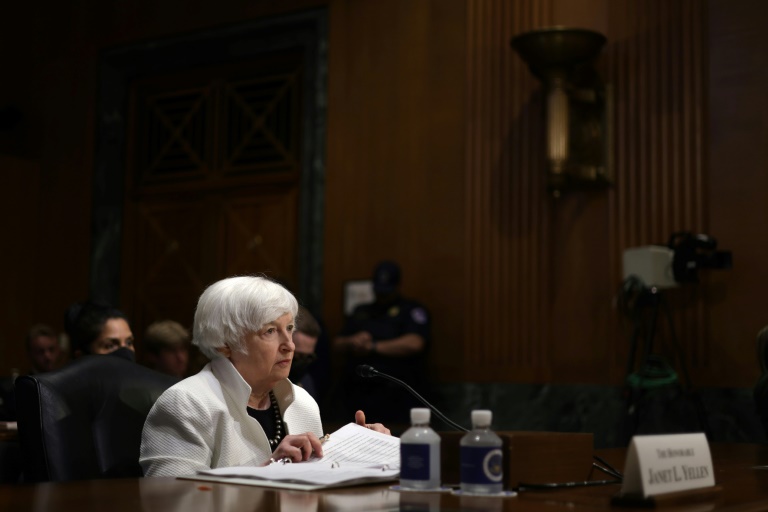
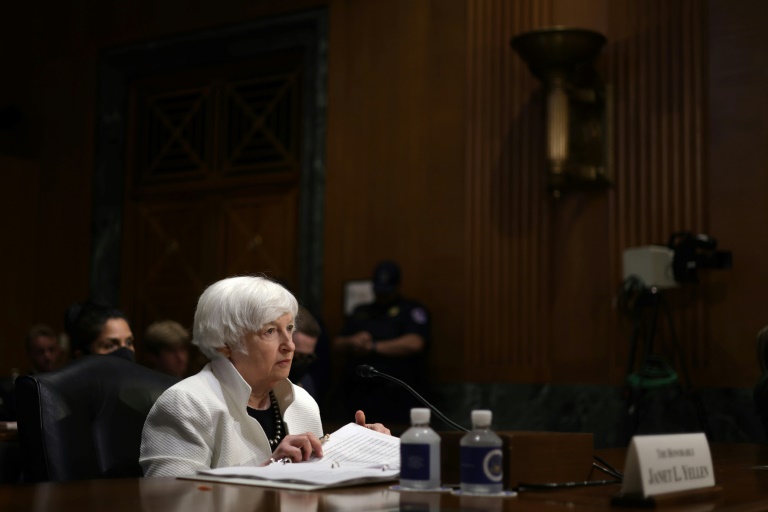
US Treasury Secretary Janet Yellen urged lawmakers to approve additional investments in renewable energy and higher taxes on the wealthy on Tuesday, as she defended the administration’s efforts to blunt the impact of inflation.

“I believe there’s lot that Congress can do to ease the cost burdens that households are experiencing,” Yellen told the Senate Finance Committee in the first of two days of testimony on President Joe Biden’s budget for the 2023 fiscal year.

Besides renewable energy investments — which Yellen said could help address high gasoline prices — the Treasury secretary backed more spending on affordable housing and efforts to rein in pharmaceutical prices.

She also highlighted the Biden administration’s historically large release of oil from the Strategic Petroleum Reserve to ease prices drivers are facing at the pump, which have skyrocketed since the Russian invasion of Ukraine, hitting new records daily, with the national average at $4.92 a gallon Tuesday.

“Gas prices, while very high … would be higher without that,” Yellen said.

The hearings come as Biden contends with a low favorability rating ahead of key midterm elections, with the pain from higher gasoline and food prices outweighing a strong job market and 3.6 percent unemployment.

Yellen was warmly received by Senate Democrats, but Republicans pointed to the Biden administration’s energy and climate policies as a reason for the energy crunch and characterized the Biden administration’s 2021 American Rescue Plan as a main reason for inflation.

“What I heard you say is that it is okay to raise taxes right now and that it is proper to have more stimulus spending to deal with this crisis,” said Senator Mike Crapo, a Republican representing Idaho.

“I just have to say I disagree with you on that.”

Yellen defended the American Rescue Plan, saying the administration took action in response to forecasts that unemployment could top nine percent given the headwinds amid the Covid-19 upheaval.

At the time, she said, “The overwhelming risk was that Americans would be scarred by a deep and long recession.”

Yellen says new Biden investments can counter inflation

US Treasury Secretary Janet Yellen urged lawmakers to approve additional investments in renewable energy and higher taxes on the wealthy on Tuesday, as she defended the administration’s efforts to blunt the impact of inflation.

“I believe there’s lot that Congress can do to ease the cost burdens that households are experiencing,” Yellen told the Senate Finance Committee in the first of two days of testimony on President Joe Biden’s budget for the 2023 fiscal year.

Besides renewable energy investments — which Yellen said could help address high gasoline prices — the Treasury secretary backed more spending on affordable housing and efforts to rein in pharmaceutical prices.

She also highlighted the Biden administration’s historically large release of oil from the Strategic Petroleum Reserve to ease prices drivers are facing at the pump, which have skyrocketed since the Russian invasion of Ukraine, hitting new records daily, with the national average at $4.92 a gallon Tuesday.

“Gas prices, while very high … would be higher without that,” Yellen said.

The hearings come as Biden contends with a low favorability rating ahead of key midterm elections, with the pain from higher gasoline and food prices outweighing a strong job market and 3.6 percent unemployment.

Yellen was warmly received by Senate Democrats, but Republicans pointed to the Biden administration’s energy and climate policies as a reason for the energy crunch and characterized the Biden administration’s 2021 American Rescue Plan as a main reason for inflation.

“What I heard you say is that it is okay to raise taxes right now and that it is proper to have more stimulus spending to deal with this crisis,” said Senator Mike Crapo, a Republican representing Idaho.

“I just have to say I disagree with you on that.”

Yellen defended the American Rescue Plan, saying the administration took action in response to forecasts that unemployment could top nine percent given the headwinds amid the Covid-19 upheaval.

At the time, she said, “The overwhelming risk was that Americans would be scarred by a deep and long recession.”

Dustin Johnson quits PGA Tour to play in Saudi-funded breakaway series

Former world number one Dustin Johnson confirmed on Tuesday he has resigned from the US PGA Tour to play in the Saudi-funded breakaway LIV Golf Invitational Series.

The decision effectively rules the American two-time major winner out of participating in the Ryder Cup, which pits the United States against Europe every two years.

Johnson was speaking at a press conference at Centurion Club, near London, ahead of the inaugural event in the series, which starts on Thursday.

The world number 15 had said in February he was committed to playing on the PGA Tour, which has refused releases for members to play in the LIV Golf opener — scheduled to clash with the Canadian Open.

But Johnson has now quit, following a similar decision by veteran US golfer Kevin Na, who is also in the field for the event in St Albans.

The 37-year-old, who has won more than $74 million on the PGA Tour, said: “Right now, I’ve resigned my membership from the Tour.”

Johnson, who is reportedly receiving $150 million in appearance fees to play in the new series, said it was difficult to predict the consequences of his decision.

When asked whether he had opted for money over his country, he said he had chosen “what’s best for me and my family”.

“The Ryder Cup is unbelievable and it’s something that has definitely meant a lot to me,” added Johnson, who won all five of his matches in the United States’ record 19-9 win over Europe at Whistling Straits last year.

“I’m proud to say that I’ve represented my country and hopefully I will get a chance to do that again, but I don’t make the rules.”

The former Masters and US Open champion can still play in the four majors, which are not run by the PGA Tour, due to his record.

Ranking points are currently not on offer at LIV events but US veteran Na said he was confident that would change, offering players a pathway into the major championships.

“I think this has the potential to have the best players in the world and to be maybe the best tour in the world,” said the world number 34.

– Mickelson entry –

It has also been reported that Spain’s Sergio Garcia and South Africans Louis Oosthuizen, Charl Schwartzel and Branden Grace, who are in the 48-man field for the LIV event, have also resigned from the PGA Tour.

Six-time major winner Phil Mickelson confirmed on Monday he would play in St Albans in a major coup for the organisers.

Mickelson has not played since the publication of comments in February, in which he criticised the PGA Tour and LIV Golf’s Saudi backers.

The PGA Tour has warned of disciplinary action for players who play in the LIV Series but the DP World Tour, formerly the European Tour, has been more opaque, saying it was “evaluating each request on a case-by-case basis”.

The new series, which comprises eight tournaments this year, is bankrolled by Saudi Arabia’s sovereign wealth fund.

Players will compete as individuals and teams for eye-watering purses of $25 million in all seven regular-season events, played over 54 holes with no cut.

The eighth and final event will be a team championship, with a total prize fund of $50 million.

Amnesty International has said the series is an example of Saudi Arabia attempting to “sportswash” its human rights record.

The golfers were questioned on the human rights issue on Tuesday, including the 2018 murder of journalist Jamal Khashoggi.

A US intelligence assessment found that the Gulf kingdom’s de facto ruler, Crown Prince Mohammed bin Salman, “approved” an operation to capture or kill Khashoggi, a columnist who was critical of Saudi’s rulers.

Saudi officials deny this and say that his killing in the kingdom’s Istanbul consulate — which sparked worldwide outrage — was a “rogue” operation.

“The Khashoggi situation, we all agree that was reprehensible,” 2010 US Open champion Graeme McDowell told reporters on Tuesday.

“No-one’s going to argue that fact but we’re golfers. We are not politicians. I know you guys hate that expression, but we are really not, unfortunately. We are professional golfers.

“If Saudi Arabia wanted to use the game of golf as a way for them to get to where they want to be and they have the resources to accelerate that experience, I think we are proud to help them on that journey using the game of golf.”

Stocks lower as World Bank slashes global growth forecast

Major stock markets fell Tuesday as investors fretted over central bank moves to rein in inflation and the World Bank cut its global economic growth forecast following Russia’s invasion of Ukraine.

The World Bank slashed its growth estimate from 4.1 percent to 2.9 percent, warning that “recession will be hard to avoid” in many countries.

“The world economy is expected to experience its sharpest deceleration following an initial recovery from global recession in more than 80 years,” the Washington-based institution said in its Global Economic Prospects report.

Craig Erlam, analyst at online trading platform OANDA, said the markets had given back most of the gains seen on Monday “in a sign of ongoing uncertainty as to the direction of equity markets and the economy”. 

Stock markets in London, Paris and Frankfurt, all ended the day in negative territory. And Wall Street was also in the red at around mid-session.

Forex.com analyst Fawad Razaqzada warned that markets would continue on their downward trend for some time to come as central banks wind down easy money policies in efforts to combat soaring inflation.

“We are still in a bear market and with central banks ending (quantitative easing) and reducing their balance sheets, the good days of the stock markets may well be behind us,” he said. 

“Keep your seat belts fastened because there will be more turbulence ahead, as central banks are forced to withdraw support.”

Earlier in Asia, Sydney’s stock market had closed down more than one percent after the Australian central bank announced a bigger-than-forecast rate hike to quell inflation.

– UK PM’s no confidence vote –

Elsewhere, the pound fell against both the dollar and euro, even though British Prime Minister Boris Johnson survived a vote of no confidence from his own Conservative MPs.

“Although the leader came out victorious, the triggering of the confidence vote itself along with the fact that 41 percent of Tory MPs failed to back him are both politically corrosive, leaving the prime minister wounded,” said Victoria Scholar, head of investment at Interactive Investor.

“History suggests that this could mark the beginning of the end of his time as prime minister.”

Johnson has been under fire for months after a string of scandals, including the so-called “Partygate” controversy over Covid lockdown-breaking events at Downing Street, where the prime minister was found to have broken the law.

His Conservative government is also under pressure over its handling of a cost-of-living crisis in the UK after the country’s inflation rate soared to the highest level in four decades.

An easing of Covid lockdown measures in China is helping to offset some of the worries over inflation, which is being fuelled by high oil prices following the invasion of Ukraine by key crude producer Russia.

– Key figures at around 1540 GMT –

New York – Dow: DOWN 0.1 percent to 32,882.21 points 

London – FTSE 100: DOWN 0.1 percent at 7,598.93 (close)

Frankfurt – DAX: DOWN 0.7 percent at 14,556.62 (close)

Paris – CAC 40: DOWN 0.7 percent at 6,500.35 (close)

EURO STOXX 50: DOWN 0.8 percent at 3,806.74

Tokyo – Nikkei 225: UP 0.1 percent at 27,943.95 (close)

Hong Kong – Hang Seng Index: DOWN 0.6 percent at 21,531.67 (close)

Shanghai – Composite: UP 0.2 percent at 3,241.76 (close)

Dollar/yen: UP at 132.58 yen from 131.88 yen late Monday

Euro/dollar: DOWN at $1.0696 from $1.0699 

Pound/dollar: UP at $1.2584 from $1.2528

Euro/pound: DOWN at 85.03 pence from 85.37 pence

Brent North Sea crude: UP 0.5 percent at $120.09 per barrel

West Texas Intermediate: UP 0.4 percent at $118.99 per barrel

burs/spm/jj

Cambodia, China deny naval base reports as Australia voices concern

Cambodia and Beijing on Tuesday denied a report that they are building a secret naval facility for the Chinese fleet, as Australia’s new prime minister voiced concern and called for transparency.

The Washington Post, citing unnamed Western officials, said a new facility at Cambodia’s Ream base — strategically located on the Gulf of Thailand — was being built for the “exclusive” use of the Chinese navy.

The base has been a running sore spot in US-Cambodian relations for years, with Washington long suspecting it is being converted for use by China as it seeks to buttress its international influence with a network of military outposts.

Cambodia’s Deputy Prime Minister Prak Sokhonn rejected the report as “groundless accusations” in a call with Australia’s foreign minister Penny Wong, according to a statement released late Tuesday by Phnom Penh.

Earlier a spokesman had said the base’s development was “not a secret”.

“Cambodia won’t allow the Chinese military to use it exclusively or to develop the site as its military base,” government spokesman Phay Siphan told AFP.

The Cambodian defence minister and China’s ambassador will be attending a ground-breaking ceremony Wednesday for new facilities at Ream, including a boat repair shop and a pier.

But Australia’s new Prime Minister Anthony Albanese, in Indonesia for a visit to shore up diplomatic ties to counter growing Chinese assertiveness in the region, labelled the reports “concerning”.

“We encourage Beijing to be transparent about its intent and to ensure that its activities support regional security and stability,” he told reporters, saying Cambodia had assured Canberra that no foreign military would be given exclusive access to the Ream base.

Australia has grown increasingly worried about Beijing’s growing influence in the Pacific region.

A leaked draft of a Soloman Islands-China pact in April raised concerns that it would allow Chinese naval deployments to the Pacific island nation — less than 2,000 kilometres (1,200 miles) from Australia.

– Denials from China, Cambodia –

Prime Minister Hun Sen has repeatedly insisted the work is nothing more than modernising the base with a new boat maintenance facility developed with Chinese aid.

“Cambodia doesn’t need the presence of a foreign military on its territory,” he said in a speech last month.

China also denied that the base would be solely for their navy’s use.

“The transformation of Ream Naval Base is only to strengthen Cambodian naval forces’ capabilities to uphold maritime territorial sovereignty and crack down on sea crimes,” foreign ministry spokesman Zhao Lijian told reporters in Beijing Tuesday.

He added that Washington’s criticisms were “malicious conjectures to attack and smear” Cambodia.

Concerns about the base go back as far as 2019, when the Wall Street Journal reported a secret draft deal allowing Beijing to dock warships there.

Cambodia has since dismantled facilities at the base that were built partly with American money and played host to US exercises.

Fears mount for British journalist missing in Amazon

Brazil’s government vowed Tuesday to make every effort to find a British journalist and Brazilian indigenous expert who went missing deep in the Amazon after receiving threats, as distraught relatives warned that every minute counts.

Veteran freelance journalist Dom Phillips, 57, and respected indigenous specialist Bruno Pereira, 41, were last seen early Sunday traveling by boat in the remote Javari Valley, an indigenous reservation near Brazil’s border with Peru, where Phillips was researching a book.

They were expected back in the small city of Atalaia do Norte by around 9:00 am Sunday, but never arrived — leading the authorities to open an investigation and the military to deploy a search operation.

The Brazilian government expressed its “grave concern” in a statement.

“Federal police were immediately mobilized and are taking all possible measures to find (the men) as quickly as possible,” it said.

“The Brazilian government will continue supporting the search operation with the urgency the case demands… If the disappearance turns out to be the result of criminal activity, all steps will be taken to bring those responsible to justice.”

Investigators brought two people in for questioning Monday, believed to be among the last to have been in contact with the missing men, police said in a statement.

Neither was detained, it said.

Indigenous rights groups working in the area say the men had received threats last week.

Pereira, an expert currently on leave from Brazil’s indigenous affairs agency, FUNAI, who knows the region well, has regularly received threats from poachers, loggers and miners trying to invade isolated indigenous groups’ land.

As the 48-hour mark passed with no news, the men’s families urged the authorities to act quickly.

“Time is a key factor in rescue operations, particularly if they are injured,” Pereira’s family said in a statement

It said his partner, three children and other relatives were in “anguish.”

Phillips’s sister Sian posted a video message online, fighting back tears.

“We are really worried about him and urge the authorities in Brazil to do all they can to search the route he was following,” she said.

“Every minute counts.”

FDA experts weigh authorizing Novavax Covid-19 vaccine in US

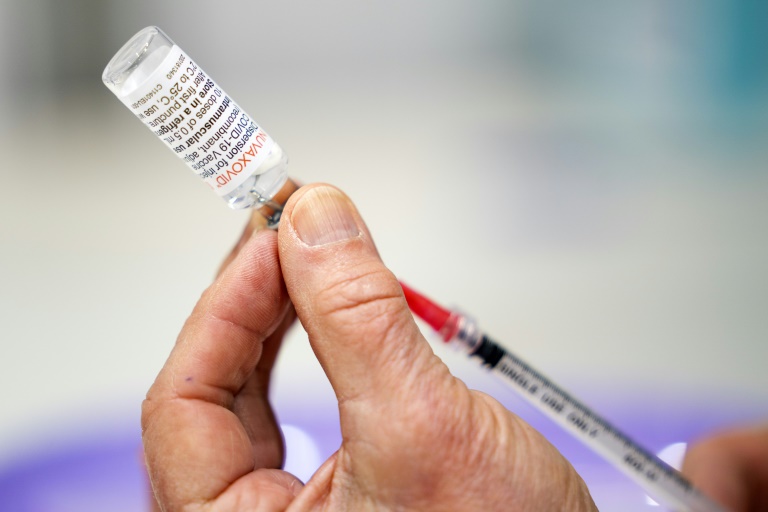
A panel of experts convened by the US drug regulator was meeting Tuesday to consider authorizing the Novavax Covid-19 shot, a late runner in the fight against the virus that could nonetheless play a role in overcoming vaccine hesitancy.

Three vaccines are currently approved in the United States: Pfizer and Moderna, which are based on messenger RNA, and Johnson and Johnson, an adenovirus vector vaccine.

But the last of these, the J&J vaccine, was recently restricted in the US after being linked to a rare but serious clotting condition, especially in women of reproductive age.

It is now only recommended for adults who cannot access Pfizer or Moderna for medical or other serious reasons.

The Novavax vaccine was an early frontrunner in the vaccine race, but fell behind after being hit by manufacturing and regulatory delays.

Though the company is American, the US is one of the few major markets where it hasn’t yet received authorization — the EU, UK, Canada, Australia are among many that have already given it the green light.

Officials hope that the shot, which is based on synthetic proteins, could provide an alternative to the mRNA vaccines for people still hesitant.

“We do have a problem with vaccine uptake that is very serious in the United States,” Peter Marks, a senior scientist for the Food and Drug administration, said at the start of the meeting. 

“And anything we can do to get people more comfortable to be able to accept these potentially life saving medical products, is something that we feel we are compelled to do.”

Of the various vaccine technologies, mRNA has been subject to the most misinformation efforts.

Novavax’s vaccine was found to be 90 percent effective against symptomatic cases of the disease, in trials conducted before the appearance of the Omicron variant, according to the FDA. 

But six cases of myocarditis, an inflammation of the heart muscle, were detected in the group that received the vaccine, against one case in the placebo group, in a trial of around 40,000 people.

Novavax says there is insufficient evidence to establish a causal relationship between the cases of myocarditis and the vaccine. 

The FDA voiced concern over the myocarditis link on Friday, sending Novavax shares to drop 20 percent on the New York Stock Exchange. And trading of Novavax stock was halted on Monday pending news from the FDA panel.

Known as a protein subunit vaccine, Novavax is administered in two doses. 

It uses a synthetic version of the virus’ spike protein to evoke an immune response. 

The same technique is used in vaccines against whooping cough, meningococcal meningitis and hepatitis B.

US warns of copycat attacks after Texas school shooting

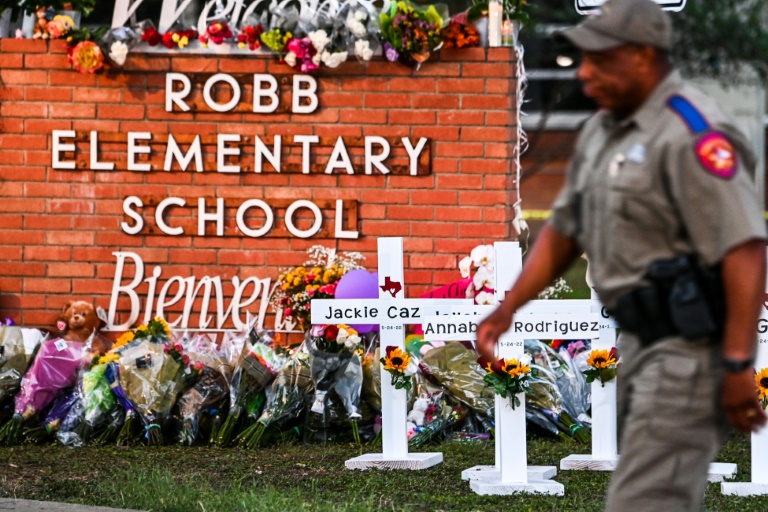
US authorities warned Tuesday of possible copycat mass shootings after an 18-year-old gunman slaughtered 19 children and two teachers at a primary school in Texas, two weeks ago.

In an updated advisory, the Department of Homeland Security also highlighted the risk of violence tied to upcoming events including a Supreme Court ruling on abortion rights, the loosening of border controls, and the November Congressional elections.

“The United States remains in a heightened threat environment,” DHS said.

“In the coming months, we expect the threat environment to become more dynamic as several high-profile events could be exploited to justify acts of violence against a range of possible targets.”

It said targets of attack could include public gatherings, religious institutions, minority groups and ideological opponents.

It said recent attacks by men acting alone demonstrated the challenge of protecting vulnerable targets and also outlined the possibilities to potential attackers.

“Individuals in online forums that routinely promulgate domestic violent extremist and conspiracy theory-related content have praised the May 2022 mass shooting at an elementary school in Uvalde, Texas and encouraged copycat attacks,” the DHS advisory said.

“Others have seized on the event to attempt to spread disinformation and incite grievances, including claims it was a government-staged event meant to advance gun control measures.”

DHS also mentioned the attack in Buffalo, New York, in which a racist 18-year-old with an assault rifle murdered 10 African-Americans, and a 2019 attack in El Paso, Texas that targeted Hispanics.

“Both the Buffalo and El Paso attackers indicated they were inspired by the 2019 attacker of two mosques in Christchurch, New Zealand,” DHS said.

The warning also said foreign groups like Al-Qaeda and the Islamic State Group, and people backed by the Chinese, Iranian and Russian government, could encourage and amplify violence and conspiracy theories to deepen divisions in US society.

“As the US 2022 mid-term elections approach, malign foreign actors could bolster their messaging to sow discord and influence US audiences in keeping with practices during previous election cycles,” DHS said.

Horsemeat traffickers on trial in France in new industry scandal

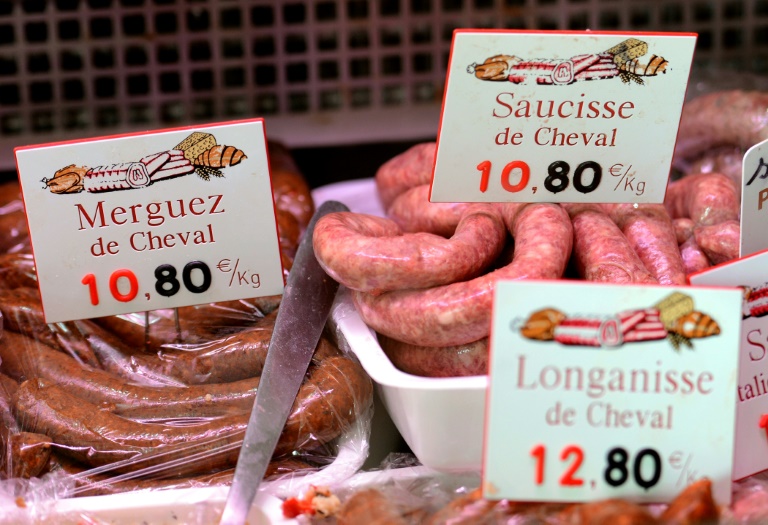
Eighteen people went on trial in France on Tuesday accused of running a Europe-wide giant horsemeat trading network involving produce not cleared for human consumption.

Mostly shunned by consumers in the United States and Britain, horsemeat — typically cheaper than beef — has long been part of culinary habits across European countries, including France, but its production and distribution are strictly regulated.

The case coming to trial in the southern port city of Marseille is the biggest horsemeat scandal since 2013, when millions of ready meals were withdrawn from stores across Europe after they were found to contain horsemeat instead of only beef as indicated on the label.

Standing trial are French, Belgian and Dutch nationals charged with violating EU sanitary rules governing the horsemeat trade, and with forging official documents between 2010 and 2015.

They are also accused of duping the owners of ageing horses into believing that their beloved animals would live out their days in the countryside when in reality they were taken straight to the slaughterhouse.

The specific charges in the trial, which is set to last for three weeks, are fraud, conspiracy to commit fraud, and misleading consumers and endangering their health.

– ‘They tricked everybody’ –

The members of the group, which includes licenced horse meat traders and veterinary surgeons, are believed to have violated a number of EU rules about the import of horses, including by forging certificates of origin.

The main suspect is 58-year-old Belgian Jean-Marc Decker, who prosecutors say supplied the network with horses whose meat was unfit for consumption.

In addition to the accused individuals, mostly in the 50s or 60s, a horsemeat wholesale company based in southern France is also in the dock for distributing the meat, falsely claiming that it was French.

The company, according to prosecutors, “was indifferent to the health imperatives governing the sector”.

Court proceedings were to start with the testimony of the top veterinary official at the municipal abattoir in Ales, southern France, where the investigation started in 2013.

Former horse owner Aline Oudin, due to testify Wednesday, told AFP she had handed her horse over to one of the defendants in 2013 in exchange for a promise of a “happy retirement” for the animal. Two weeks later she found out that the horse had been slaughtered and its meat sold.

“They tricked owners, they tricked consumers, they tricked everybody,” she said.

Plaintiffs also include France’s veterinary association, the cattle and meatpacking association ANBV and the Ales municipality.

Close Bitnami banner
Bitnami