Mexico snub throws Americas' summit into disarray
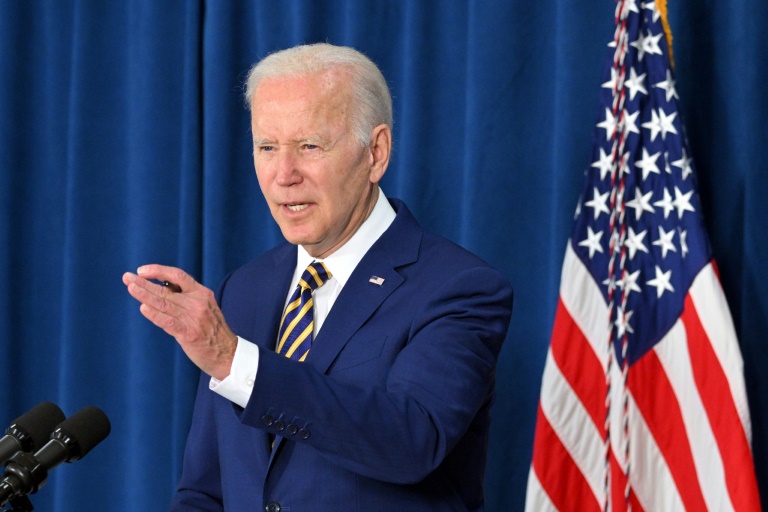
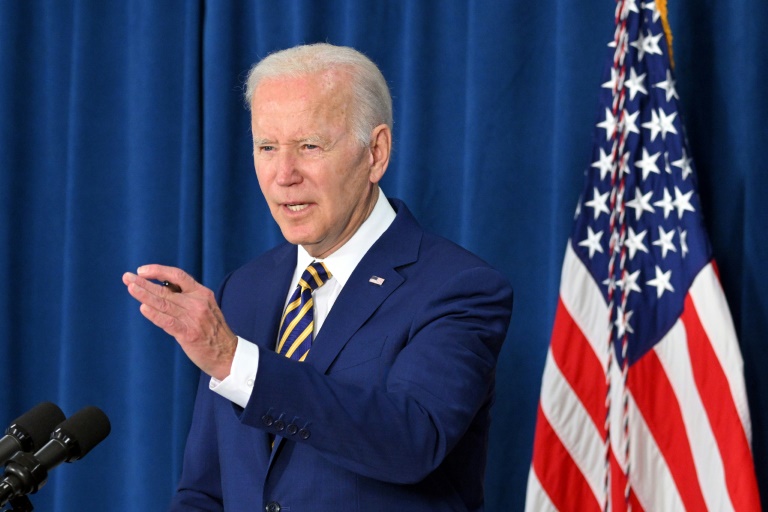
President Joe Biden’s plans to reboot US engagement with Latin America — especially on critical topics like migration — took a major hit after key partner Mexico snubbed a regional summit opening Monday in Los Angeles to protest Washington’s exclusion of three far-left countries.
What was meant to be a week-long showcase of cooperation looks more likely to become a display of division that reflects diminishing clout over a region where long-time US economic and diplomatic influence faces a growing Chinese challenge.
Confirming it was not inviting Cuba, Nicaragua and Venezuela to the Summit of the Americas, a senior White House official cited “reservations regarding the lack of democratic space and the human rights situations.”
In response, Mexican President Andres Manuel Lopez Obrador said he would stay away.
“You cannot have a Summit of the Americas if you do not have all the countries of the Americas attending,” Lopez Obrador announced, complaining of US “hegemony” and “lack of respect for nations.”
Foreign Minister Marcelo Ebrard will represent Mexico instead, but the leftist populist leader’s absence will diminish the impact of a summit where US-Mexico relations are at the heart of major immigration and trade issues.
The senior US official did not directly respond to Lopez Obrador’s boycott, saying only that “the United States recognizes and respects the position of allies in support of inclusive dialogue.” The official also said non-governmental representatives from Cuba, Nicaragua and Venezuela would be present.
In Havana, the communist Cuban government issued a statement calling Biden’s decision “anti-democratic and arbitrary.”
Biden is expected to make announcements at the summit on economic cooperation and fighting Covid-19 and climate change, said Juan Gonzalez, the top White House adviser on Latin America.
The US president, who flies to Los Angeles on Wednesday, also hopes to secure an agreement to help regulate surges of migration from the region’s poorer and violent countries to the United States — a major concern for US voters and an area where Republican opponents see Biden as vulnerable in upcoming midterm elections.
– Playing down Mexico spat –
State Department spokesman Ned Price played down the seriousness of the spat with Lopez Obrador, saying “we understand his position” and that the US-Mexican relationship is “broad and deep.”
“Mexico is an important hemispheric player. We are very gratified that… Foreign Secretary Ebrard will be in attendance. We will have a number of opportunities to engage with our Mexican counterparts.”
The Biden administration also notes it has secured the presence of other key regional players, including Argentina’s left-leaning Alberto Fernandez and Brazil’s far-right Jair Bolsonaro.
Benjamin Gedan, who heads the Latin America program at the Woodrow Wilson International Center for Scholars, said Lopez Obrador’s absence would mark a “significant void” and said Mexico’s leader seemed more focused on domestic political gain.
The boycott has been “a really unfortunate subplot in the run-up to the summit because it has drained an enormous amount of US diplomatic energy for a bizarre cause celebre,” Gedan said.
Biden has crafted a positive agenda, avoiding simply summoning Latin American leaders to lecture them on democracy, corruption and China, he said.
But, he added, it was unclear whether Biden will bring substantial resources to the table, in contrast to China’s lavish infrastructure spending and trade privileges.
“I think, inevitably, the United States will disappoint,” Gedan said.
– ‘Progressively less ambitious’ –
The Summit of the Americas is the first held by the United States since the inaugural 1994 meeting in Miami, where then-US president Bill Clinton sought the creation of a trade area to cover the whole continent except communist Cuba.
The United States has since soured on free trade, with Biden following the lead of his predecessor Donald Trump, who said such pacts hurt US workers.
Trump championed a hard line on Venezuela and Cuba, and did not attend the last Summit of the Americas, in Peru in 2018.
Eric Farnsworth, vice president of the Council of the Americas, recently told a congressional hearing that each summit has become “progressively less ambitious.”
Los Angeles, he said, “offers the perfect opportunity for Washington to announce a commitment to regional growth and recovery.”
Michael Shifter, a senior fellow at the Inter-American Dialogue, said the drama over summit attendance showed Washington’s waning hold over the region as China muscles in.
The United States “still has a lot of soft power,” Shifter said. “As for political and diplomatic influence, it is diminishing by the day.”