AFP

Sri Lanka's new PM wins support for 'economic war cabinet'

Sri Lanka’s new prime minister won crucial support from two main opposition parties on Monday, easing the pressure on the ruling Rajapaksa clan in the face of the island’s worsening economic crisis.

But highlighting the dire situation still facing Sri Lanka’s 22 million people, Ranil Wickremesinghe said the country had run out of petrol and that the “next couple of months will be the most difficult ones of our lives”.

“I have no desire to hide the truth and to lie to the public,” Wickremesinghe said in an address to the nation. 

The main opposition SJB party appeared to drop its demands that President Gotabaya Rajapaksa should step down before backing a coalition to manage the crumbling economy.

The SJB, or Samagi Jana Balawegaya, declined to join a unity government led by Wickremesinghe, but said it would “unconditionally support the positive efforts to revive the economy”.

“It is important to save the country from the grave economic crisis,” it said in a brief statement.

And the second-largest opposition party, the Sri Lanka Freedom Party (SLFP), said it would join the cabinet.

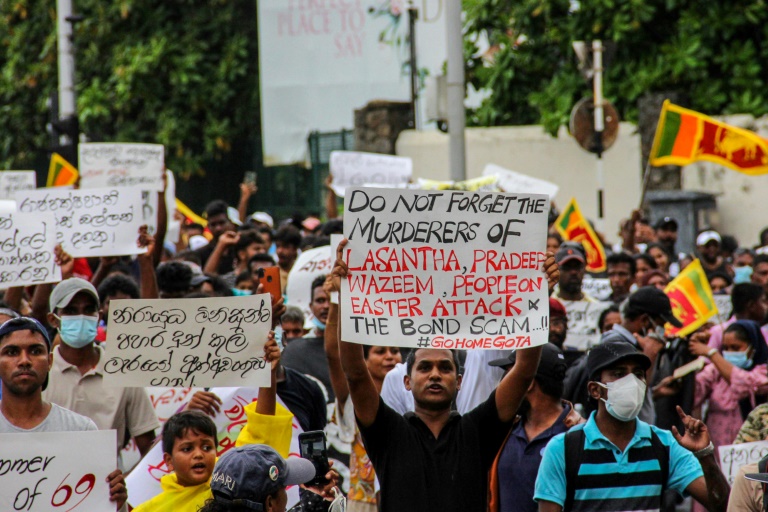
Even so, thousands of protestors remained camped outside the sea-front office of 73-year-old President Gotabaya Rajapaksa, whose brother Mahinda quit as premier last week after political violence killed at least nine people.

Shortages of food, fuel and medicines, along with record inflation and lengthy blackouts, have brought severe hardships to Sri Lankans, in the worst financial crisis since independence from Britain in 1948.

Wickremesinghe’s appointment last week — his sixth turn as prime minister — has so far failed to quell public anger at the government for bringing Sri Lanka to the brink of economic collapse.

Troops patrolled the streets as consumers queued up for scarce supplies and the government announced that a six-hour night curfew will be reimposed from Monday after a 24-hour break for a religious holiday.

– Dollar shortage –

Wickremesinghe said on Monday that Sri Lanka had no dollars to finance essential imports with three oil tankers were waiting off Colombo to be paid before they would unload.

He added that the country has run out of 14 essential drugs, including anti-rabies vaccines. The state’s health ministry has not paid its suppliers of medicines for four months and has now been blacklisted, he added.

He also warned that fuel and electricity tariffs will be raised substantially and his government will also sell off its loss-making national airline.

However, he urged people to “patiently bear the next couple of months” and vowed he could overcome the crisis.

– Unity government –

Wickremesinghe has struggled to form a “unity government” and a cabinet swearing-in scheduled for Monday afternoon was pushed back as talks continued on sharing portfolios. 

Four ministers were sworn in on Saturday, all from Rajapaksa’s Sri Lanka Podu Jana Peramuna (SLPP) party.

But there is no finance minister yet, and it is widely expected that Wickremesinghe will retain the crucial portfolio to lead ongoing negotiations with the IMF for an urgent bailout.

The new prime minister held talks Sunday with World Bank and Asian Development Bank representatives in Colombo on medicine, food, fuel and fertiliser supplies, his office said in a statement.

Long queues stretched outside the few fuel stations that were still open on Monday as motorists waited for rationed petrol. 

Heavily armed troops were patrolling the streets with a state of emergency still in effect after at least nine people were killed in violence last week.

Police said over 350 people have been arrested in connection with last week’s mob violence.
Wheat prices hit record high after Indian export ban

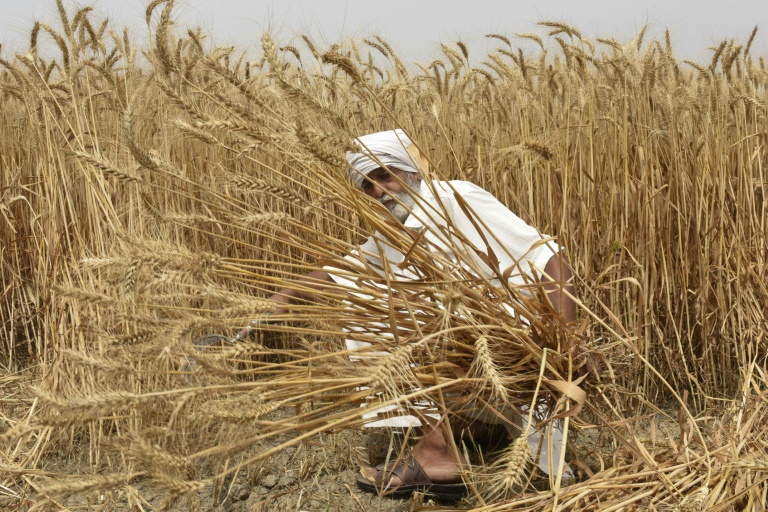
Wheat prices surged to a new record high in European trading on Monday after India decided to ban exports of the commodity as a heatwave hit production.

The price jumped to 435 euros ($453) per tonne as the Euronext market opened, up from the previous record of 422 euros reached on Friday.

On the Chicago Board of Trade, just before trading opened the price of the SRW wheat futures contract hit $12.35 a bushel, an increase of 4.9 percent.

Global wheat prices have soared 40 percent on supply fears since Russia’s February invasion of agricultural powerhouse Ukraine, which previously accounted for 12 percent of global exports.

The spike, exacerbated by fertiliser shortages and poor harvests, has fuelled inflation globally and raised fears of famine and social unrest in poorer countries.

India, the world’s second-largest wheat producer, said on Saturday that it was banning exports after its hottest March on record, with traders needing express government approval to enter into new deals.

New Delhi said the move was needed to protect the food security of its own 1.4 billion people in the face of lower production and sharply higher global prices.

Some parts of India have seen prices in wheat and flour jump 20 to 40 percent in recent weeks, Commerce Secretary BVR Subrahmanyam said on Sunday.

Because of the sharp rise in global prices, some farmers were selling to traders and not to the government.

This got the government worried about its buffer stock of almost 20 million tonnes — depleted by the pandemic  — needed for handouts to millions of poor families and to avert any possible famine.

“Contrary to Russia which has had an export quota and tax system in place for years, India no doubt has more difficulty in controlling exports,” said Damien Vercambre at grains brokerage Inter-Courtage.

The export ban drew sharp criticism from the Group of Seven industrialised nations, which said that such measures “would worsen the crisis” of rising commodity prices.

– ‘Worsen the crisis’ –

Export deals agreed before the directive issued on May 13 could still be honoured but future shipments needed government approval, it said.

However, exports could also take place if New Delhi approved requests from other governments “to meet their food security needs”.

India, which possesses major buffer stocks, previously said it was ready to help fill some of the supply shortages caused by the Ukraine war.

Only last week India said it would send delegations to Egypt, Turkey and elsewhere to discuss boosting wheat exports. It was unclear whether these visits will now go ahead.

India recorded its warmest March on record — blamed on climate change — and in recent weeks has seen a scorching heatwave with temperatures upwards of 45 degrees Celsius (113 Fahrenheit).

This hit farmers in wheat-producing northern India, prompting the government to predict output would fall at least five percent this year from 109 million tonnes in 2021.  

The downturn could not come at a worse time as Ukraine, which was in line to become the world’s number three wheat exporter, will see its output cut by a third due to the fighting there, according to forecasts by the US Department of Agriculture. 

The USDA expects Ukraine to export around 10 million tonnes of wheat this year, down from 19 million tonnes last year. Dry weather in the United States and western Europe has added to supply concerns.

Indian PM skips opening of Nepal's Chinese-built airport

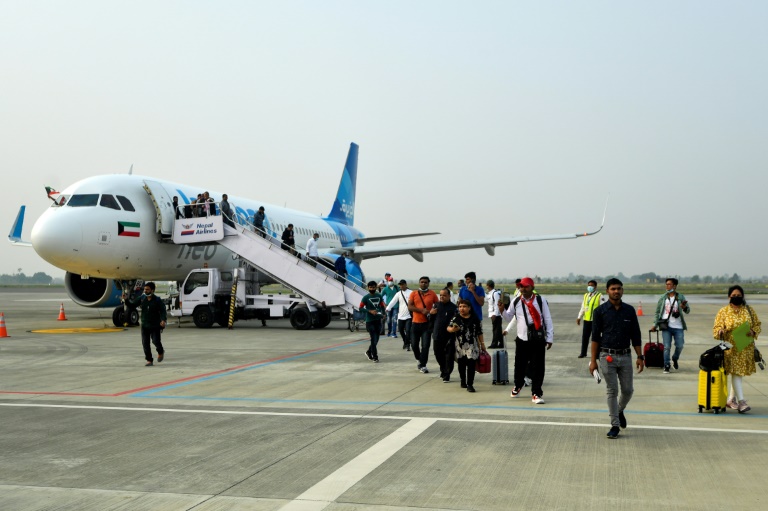
Nepal on Monday opened a Chinese-built airport intended to capitalise on Buddhist tourism, as India’s prime minister landed a few kilometres away to mark the birth, enlightenment and death of the religion’s founder.

But Narendra Modi flew by helicopter directly from a nearby Indian airport to the Buddha’s birthplace at Lumbini, bypassing the new facility as his Nepali counterpart Sher Bahadur Deuba inaugurated it.

The sequence of events illustrates the competition for influence in the landlocked Himalayan country by its two giant neighbours.

Nepal has traditionally done a balancing act between New Delhi and Beijing, but analysts believe Indian influence over Kathmandu has been dwindling as China pours heavy investment into the landlocked Himalayan nation.

The $76 million airport project in Bhairahawa, the closest city to Lumbini, is funded by the Asian Development Bank and OPEC Fund for International Development but built by China’s Northwest Civil Aviation Airport Construction Group.

After Nepal’s Deuba opened it alone — only the country’s second international airport — the two prime ministers offered prayers together at Lumbini’s Mayadevi temple, dedicated to Buddha’s mother. 

“The immense devotion to Lord Buddha in both our nations binds us together, makes us members of one family,” Modi said in a speech, while Deuba said the Indian leader’s visit would “contribute to give worldwide visibility to Lumbini”. 

Pradeep Adhikari, the chief of Nepal’s Civil Aviation Authority, told AFP that the existing Kathmandu airport was at capacity.

“Nepal’s air passengers are growing every day… we cannot add more flights in Kathmandu,” he said. “So, we hope this new airport will be able to cater those flights and passengers.” 

It has a capacity of two million passengers a year and is expected to ease travel for pilgrims to one of the holiest sites in Buddhism.

Lumbini, a UNESCO world heritage site, is visited by thousands of pilgrims every year and plans to establish direct air links to countries with significant Buddhist communities, such as Cambodia, Thailand, Laos, Sri Lanka, Myanmar and India.

Saudi expects 13 million bpd oil capacity by 2027: minister

Saudi Arabia expects to ramp up its daily oil production capacity by more than one million barrels to exceed 13 million barrels by early 2027, the kingdom’s energy minister announced Monday. 

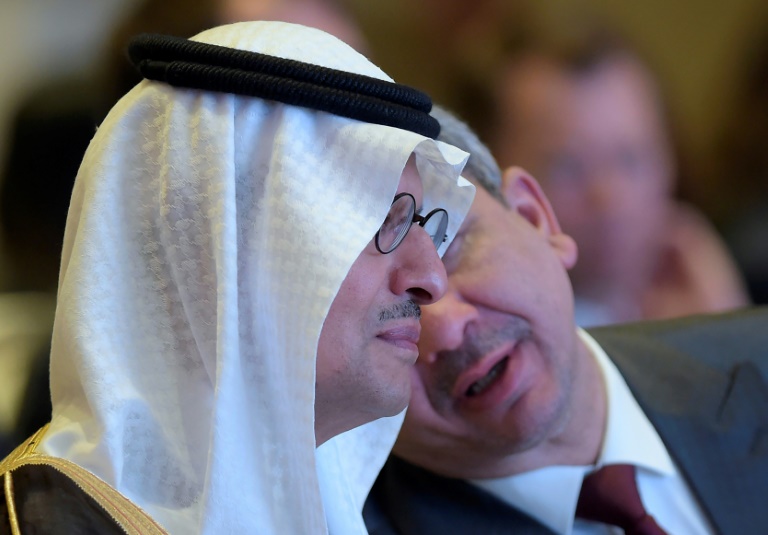
“Most likely it will be 13.2 to 13.4 (million barrels per day, bpd), but that would be (reached) at the end of 2026, beginning 2027,” Prince Abdulaziz bin Salman told an energy conference in Bahrain.

Production at that level would be maintained “if the market allows it”, he said.  

Energy giant Saudi Aramco announced in March 2020 it had been directed by the energy ministry to increase its maximum sustainable capacity from 12 million to 13 million bpd.  

No timeline was given then for the new target.  

Monday’s announcement came one day after Saudi energy giant Aramco posted an 82-percent jump in first quarter profits, buoyed by a global surge in oil prices stemming from the Ukraine war. 

Those results helped Aramco dethrone Apple last week as the world’s most valuable company by market capitalisation. 

They continued a string of positive economic news for Saudi Arabia, which in early May reported that growth in the first quarter had risen 9.6 percent over the same period in 2021.

Yet Aramco has faced security challenges stemming from the war pitting a Saudi-led military coalition against Yemen’s Huthi rebels who have repeatedly targeted the kingdom, including Aramco sites.

– ‘They still believe in oil’ –

Saudi Arabia, the world’s biggest oil exporter, has resisted US entreaties to raise output in an attempt to rein in prices that have spiked since the Ukraine war broke out on February 24. 

As the war got underway, Saudi Arabia and the United Arab Emirates stressed their commitment to the OPEC+ oil alliance, which Riyadh and Moscow lead, underscoring Riyadh’s and Abu Dhabi’s increasing independence from long-standing ally Washington. 

Last year, ahead of the COP26 climate-change summit, Saudi Arabia pledged to achieve net zero carbon emissions by 2060, sparking scepticism from environmental campaign group Greenpeace. 

With increasing global urgency to limit global warming, experts warn of the urgent need to reduce fossil fuel use. 

But Saudi officials’ stated targets indicate “they still believe in oil as a source of energy for the coming decade”, Mazen Alsudairi, head of research for Al Rajhi Capital, a financial services firm in Riyadh, told AFP.

“They are not following the global trend by reducing exposure to hydrocarbons.” 

Also at Monday’s conference in Bahrain, Iraqi Oil Minister Ihsan Abdul-Jabbar Ismail said his country was accelerating its production capacity goals, targeting six million bpd in 2027 and eight million bpd in 2029. 

Iraq’s current daily production is just under 3.5 million. 

It reported $11 billion in oil revenues in March, Iraq’s highest in half a century. 

Latest sandstorm brings Iraq to standstill

Another sandstorm that descended Monday on Iraq sent at least 2,000 people to hospital with breathing problems and led to the closure of airports, schools and public offices across the country.

It is the eighth duststorm since mid-April to hit Iraq, which has been battered by soil degradation, intense droughts and low rainfall linked to climate change.

The last one earlier this month led to the death of one person while 5,000 others had to be hospitalised for respiratory problems.

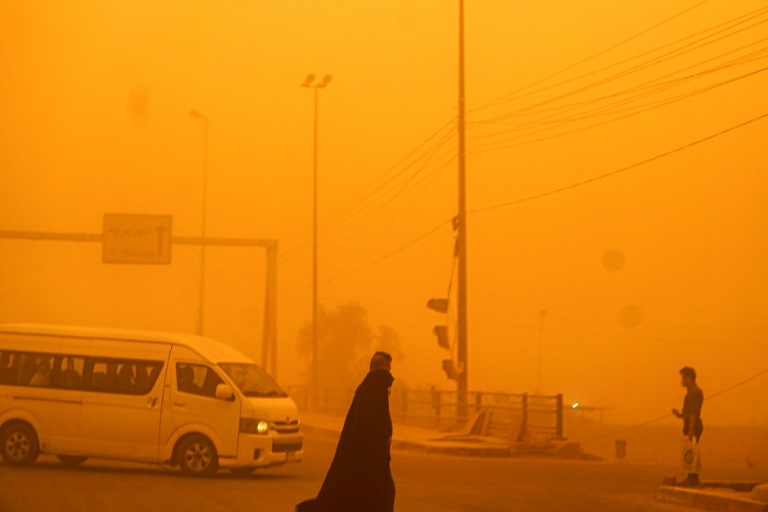
On Monday a thick cloud of dust enveloped the capital Baghdad in an orange glow and blanketed many other cities including the Shiite shrine city of Najaf to the south, and Sulaimaniyah, in the northern Kurdish autonomous region, AFP correspondents said.

Yellow and orange sand covered building roofs, cars and even crept into homes.

Authorities in seven of Iraq’s 18 provinces, including Baghdad, ordered government offices to shut.

But health facilities remained open to assist those most at risk, including the elderly and people suffering from chronic respiratory diseases and heart ailments.

By midday at least 2,000 people were admitted to hospitals across Iraq in need of oxygen, said health ministry spokesman Seif al-Badr.

AFP correspondents saw around 20 patients, most of them elderly men, at Baghdad’s Sheikh Zayed Hospital.

One of them was Hadi Saada, 70, lying on his side on a bed in the intensive care unit hooked to a respirator. He struggled to breathe.

– ‘Suffocating from dust’ –

“It is his third time in hospital” since the sandstorms began in April, said his son Mohammed Saada, adding that his father had a heart condition.

Another patient, Khaled Jassem, 70, was also hooked to an oxygen tank.

“We’ve been here since 8:00 am… My father has a heart ailment, diabetes, hypertension and is suffocating on the dust,” said his son Walid Jassem.

At least 75 people struggling to breathe were admitted Monday to Sheikh Zayed, said Talib Abdelmoneim Nejm, one of the ICU officials.

The sandstorm drastically reduced visibility to just 300 metres (yards) at Baghdad airport, prompting authorities to close airspace and halt flights, state-run INA news agency reported.

Airports in Najaf and Sulaimaniyah were also closed for the day, the agency said.

Schools nationwide were also shuttered and end of year exams postponed to Tuesday. Universities also delayed exams.

The latest sandstorm was expected to gradually dissipate by Monday evening, weather services said.

The Middle East has always been battered by dust and sandstorms but they have become more frequent and intense in recent years.

The trend has been associated with overuse of river water, more dams, overgrazing and deforestation.

Iraq is rich in oil and is known in Arabic as the land of the two rivers — in reference to the legendary Tigris and Euphrates rivers.

But the supply of water has been declining for years and Iraq is classified as one of the world’s five countries most vulnerable to climate change and desertification.

In April, an environment ministry official warned that Iraq could face “272 days of dust” a year over the next two decades.

tgg/hkb/it


Extreme temperatures compound poverty in Pakistan's hottest city

By the time Pakistani schoolboy Saeed Ali arrived at hospital in one of the world’s hottest cities, his body was shutting down from heatstroke.

The 12-year-old collapsed after walking home from school under the burning sun, his day spent sweltering in a classroom with no fans.

“A rickshaw driver had to carry my son here. He couldn’t even walk,” the boy’s mother Shaheela Jamali told AFP from his bedside.

Jacobabad in Pakistan’s arid Sindh province is in the grip of the latest heatwave to hit South Asia -– peaking at 51 degrees Celsius (124 Fahrenheit) at the weekend.

Canals in the city — a vital source of irrigation for nearby farms — have run dry, with a smattering of stagnant water barely visible around strewn rubbish.

Experts say the searing weather is in line with projections for global warming.

The city is on the “front line of climate change”, said its deputy commissioner Abdul Hafeez Siyal. “The overall quality of life here is suffering.”

Most of the one million people in Jacobabad and surrounding villages live in acute poverty, with water shortages and power cuts compromising their ability to beat the heat.

It leaves residents facing desperate dilemmas.  

Doctors said Saeed was in a critical condition, but his mother –- driven by a desire to escape poverty –- said he would return to school next week.

“We don’t want them to grow up to be labourers,” Jamali told AFP, her son listless and tearful at her side.

Heatstroke –- when the body becomes so overheated it can no longer cool itself –- can cause symptoms from lightheadedness and nausea to organ swelling, unconsciousness, and even death.

Nurse Bashir Ahmed, who treated Saeed at a new heatstroke clinic run by local NGO Community Development Foundation, said the number of patients arriving in a serious condition was rising.

“Previously, the heat would be at its peak in June and July, but now it’s arriving in May,” Ahmed said.

Labourers forced to toil in the sun are among the most vulnerable.

Brick kiln workers ply their trade alongside furnaces that can reach up to 1,000 degrees Celsius.

“The severe heat makes us feel like throwing up sometimes, but if I can’t work, I can’t earn,” said Rasheed Rind, who started on the site as a child.

– ‘Water mafias’ –

Life in Jacobabad is dominated by attempts to cope with the heat.

“It’s like fire burning all around. What we need the most is electricity and water,” said blacksmith Shafi Mohammad.

Power shortages mean only six hours of electricity a day in rural areas and 12 in the city.

Access to drinking water is unreliable and unaffordable due to scarcity across Pakistan and major infrastructure problems.

Khairun Nissa gave birth during the heatwave, her last days of pregnancy spent wilting under a single ceiling fan shared between her family of 13.

Her two-day-old son now occupies her spot under its feeble breeze.

“Of course I’m worried about him in this heat, but I know God will provide for us,” said Nissa. 

Outside their three-room brick home, where the stench of rotting rubbish and stagnant water hangs in the air, a government-installed water tap runs dry.

But local “water mafias” are filling the supply gap.

They have tapped into government reserves to funnel water to their own distribution points where cans are filled and transported by donkey cart to be sold at 20 rupees (25 cents) per 20 litres.

“If our water plants weren’t here, there would be major difficulties for the people of Jacobabad,” said Zafar Ullah Lashari, who operates an unlicensed, unregulated water supply.

– ‘Nothing we can do’ –

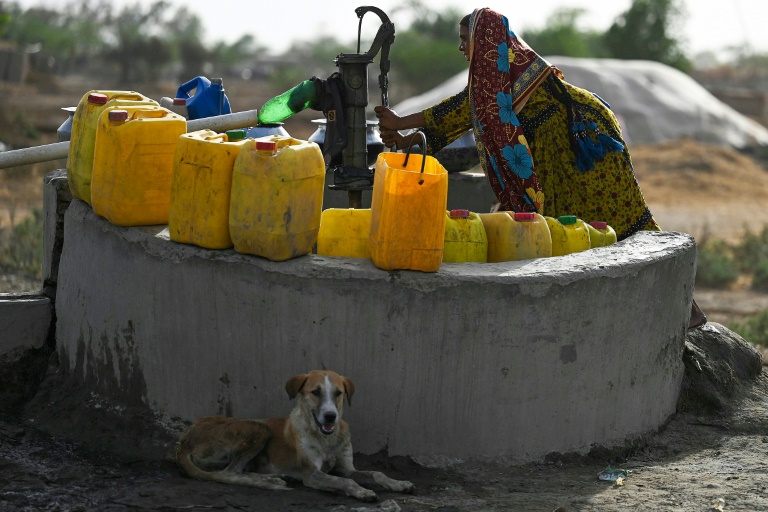
In a farming village on the outskirts of the city, women wake up at 3am to pump drinking water all day from a well –- but it is never enough.

“We prefer our cattle to have clean drinking water first, because our livelihood depends on them,” said Abdul Sattar, who raises buffaloes for milk and sale at market.

There is no compromise on this, even when children suffer skin conditions and diarrhoea.

“It is a difficult choice but if the cattle die, how would the children eat?” he said.

Pakistan is the eighth most vulnerable country to extreme weather caused by climate change, according to the Global Climate Risk Index compiled by environmental NGO Germanwatch.

Floods, droughts and cyclones in recent years have killed and displaced thousands, destroyed livelihoods and damaged infrastructure. 

Many people choose to leave Jacobabad in the hottest months, leaving some villages half empty.

Sharaf Khatoon shares a makeshift camp in the city with up to 100 people surviving on a few meagre rupees that male family members earn through menial labour.

They usually relocate the camp in the hottest months, 300 kilometres away to Quetta, where temperatures are up to 20 degrees Celsius cooler. 

But this year they will leave late, struggling to save the money for the journey. 

“We have headaches, unusual heartbeats, skin problems, but there is nothing we can do about it,” said Khatoon.

Professor Nausheen H. Anwar, who studies urban planning in hot cities, said authorities need to look beyond emergency responses and think long term.

“Taking heatwaves seriously is important, but sustained chronic heat exposure is particularly critical,” she said.

“It’s exacerbated in places like Jacobabad by the degradation of infrastructure and access to water and electricity which compromises people’s capacity to cope.”

– ‘Battlefield’ –

Along a dried up canal filled with rubbish, hundreds of boys and a handful of girls in Jacobabad pour into a school for their end-of-year exams.

They gather around a hand pump to gulp down water, exhausted even before the day begins.

“The biggest issue we face is not having basic facilities — that’s why we experience more difficulties,” said headteacher Rashid Ahmed Khalhoro.

“We try to keep the children’s morale high but the heat impacts their mental and physical health.”

With extreme temperatures arriving earlier in the year, he appealed to the government to bring forward summer vacations, which normally begin in June.

A few classrooms have fans, though most do not. When the electricity is cut just an hour into the school day, everyone swelters in semi-darkness.

Some rooms become so unbearable that children are moved into corridors, with youngsters frequently fainting.

“We suffocate in the heat. We sweat profusely and our clothes get drenched,” said 15-year-old Ali Raza.

The boys told AFP they suffered from headaches and frequent diarrhoea but refused to skip lessons.

Khalhoro said his students are determined to break out of poverty and find jobs where they can escape the heat. 

“They are prepared as though they are on a battlefield, with the motivation that they must achieve something.”

Dirty liberal pipe-dream: 3 myths about electric cars

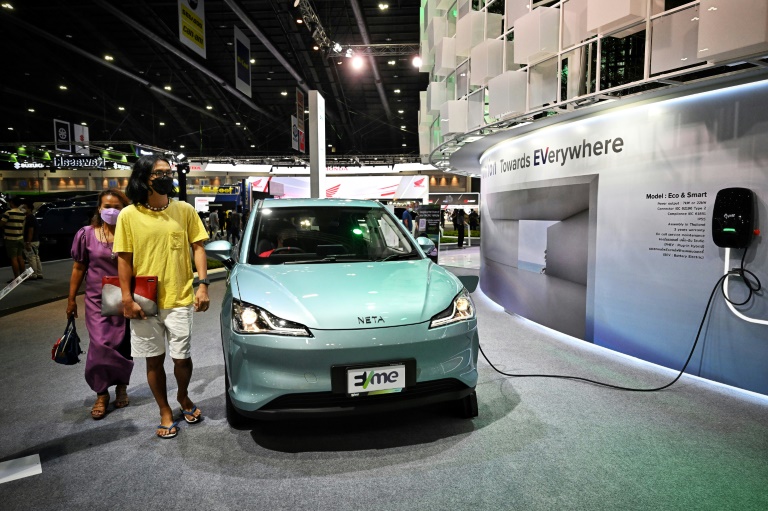
Sceptics say that far from helping save the planet, electric cars are a liberal pipe-dream whose environmental benefits are exaggerated.

But even if there is no such thing as an all-green car, studies show that battery-powered ones cause fewer harmful greenhouse gas overall than their petrol-driven ancestors.

AFP Fact Check examined three common claims about them.

‘Coal-powered’

“Coal Powered Electric Cars…. Helping liberals pretend they are solving a make-believe crisis,” reads a text shared on Facebook, with a photo of cars plugged in at a charging station.

The humorous meme implies that electric cars do not help lower climate-changing greenhouse gas emissions because coal is burned to feed the electricity grid.

The US Environmental Protection Agency has a calculator tool on its website to compare a petrol car’s emissions with those of an electric one depending on where it is charged.

It calculates that an electric car charged in St Louis, Missouri -– part of the subregion that relies the most on coal –- on average will produce 247 grams of carbon dioxide per mile, lower than the average 381 grams of a gasoline vehicle.

Experts at Carbon Brief agree an electric car’s emissions depend on what region or country it is charged in.

They would be higher in Poland or in an Asian country where more coal is burned than in France, where most electricity comes from nuclear power.

Overall, the International Council on Clean Transportation (ICCT) found electric cars are lower-emitting than their petrol-driven equivalents across their life cycle, from mining components to recycling.

An electric car is also much more efficient in its use of energy than a petrol-powered one, according to the US Department of Energy and other sources.

‘200 tonnes of earth’

Making the vehicles’ batteries is an energy-intensive process that includes mining and trucking raw materials, assembly in factories, and shipping worldwide. Recycling them is costly.

Another viral text shared on Facebook claimed that 500,000 pounds (227 metric tonnes) of earth are dug up to extract the metals for one electric car battery.

The estimate appeared to originate from a 2020 analysis by the Manhattan Institute, a climate-sceptic research group.

Several experts consulted by AFP said the figures were misleading. Peter Newman, professor of sustainability at Australia’s Curtin University, judged it a “gross exaggeration” and said the quantity mined would vary depending on geography and the type of battery.

Mining has other impacts not immediately related to the global climate. About 70 percent of cobalt — a battery ingredient — comes from the Democratic Republic of Congo, where use of child labour in mines has been documented.

Access to the ingredients also raises strategic supply concerns, with many of the raw materials held by China, according to the International Energy Agency.

Georg Bieker, a Berlin-based researcher at the ICCT, said the environmental damage from oil-drilling made gasoline production no better.

The risk of devastation driven by greenhouse gas emissions, projected in recent reports by the UN Intergovernmental Panel on Climate Change, would be even worse.

“It is correct to demand improvements, e.g. as considered by voluntary standards in the industry and by mandatory due diligence requirements that are foreseen in the upcoming EU battery regulation,” he said.

“In any case, it’s clear that the social and environmental impact of global warming is catastrophic, at a different scale than the mining of battery raw materials.”

‘Stuck in snow’

After a snowstorm stranded hundreds of motorists in Virginia in January, users on Facebook shared posts warning that electric vehicles would run out of power and make the traffic jam even worse.

“All those people would be stuck in freezing temperatures without a heated vehicle. And all the cars would be stuck unable to move because you can’t bring a charging station to them,” read the text.

“All those electric cars would become roadblocks to the gasoline powered vehicles.”

Several fact-checking organisations scrutinised the claim. They found there was no evidence that electric cars would fare worse in a storm.

Studies such as one published in 2015 by the American Chemical Society have found that electric vehicles do consume energy less efficiently when driving in the cold.

However various experts said that if stuck in a storm, an electric vehicle would consume less power than a gasoline one, which would have to keep its engine running to power the heating.

British consumer affairs magazine Which? tested an electric SUV by simulating a traffic jam, with the car’s radio, air conditioning, seat-heating and headlights on, plus a tablet device plugged in playing a film.

That used up a negligible two percent of the battery, or eight miles’ worth of range, in an hour and a quarter – admittedly in summer conditions.

China's retail sales slump as lockdowns cause chaos

China’s retail sales and factory output slumped to their lowest levels in around two years, official data showed Monday, capturing the dismal economic fallout from Beijing’s zero-Covid policy.

The world’s second-largest economy has persisted with strict virus measures, choking up global supply chains as dozens of Chinese cities — including key business hub Shanghai — grapple with restrictions. 

Although officials have said they plan to gradually reopen the city, there is no sign of Beijing shifting from the strict zero-Covid approach which analysts warn is severely hitting the economy.

The latest cut came Monday when the National Bureau of Statistics (NBS) announced data showing that retail sales shrank 11.1 percent on-year in April.

It is the biggest slump since March 2020, as consumers remained cooped up at home or jittery over restrictions as China battles its worst Covid outbreak since the early days of the pandemic.

“In April, the epidemic had a big impact on economic operations,” NBS spokesman Fu Linghui told reporters Monday, adding that the outbreak had a “significantly larger-than-expected” effect.

But he stressed that the hit would be “short-term”.

Industrial production growth sank 2.9 percent on-year, reflecting damage from shuttered factories and transportation woes as officials ramped up Covid restrictions last month.

This is down from 5.0 percent growth in March.

“The prolonged Shanghai lockdown and its ripple effect through China, as well as logistics delays resulting from highway controls…have severely affected domestic supply chains,” said Tommy Wu of Oxford Economics.

He added that household consumption was “hit even harder” and disruptions could extend into June.

Home sales dropped 32 percent on-year in the first four months, NBS data showed, reflecting weakness in the key property sector which was struggling even before the latest lockdowns.

Several Chinese developers have sagged under the weight of massive borrowing and defaulted on million-dollar debt repayments.

– Shanghai shutdowns –

Shanghai came under heavy restrictions in early April with some 25 million ordered to stay home in what was originally portrayed as an eight-day lockdown across two halves of the city.

But the shutdowns have dragged for weeks and wreaked havoc on supply chains, spreading frustration among residents.

Officials promised over the weekend to start reopening the city in phases in the next month, while Xinhua news agency said US electric car giant Tesla had made its second overseas shipment after suspending production for nearly three weeks.

But small business owners remain sceptical.

“I don’t have even the slightest expectation about (being able to reopen soon),” one restaurant owner told AFP, asking to remain anonymous.

“Why are people still believing them?”

The urban unemployment rate also climbed in April to 6.1 percent — the highest in more than two years.

Beijing has announced measures to help young people find jobs, including social insurance subsidies for smaller firms that hire more graduates, and officials have lowered the mortgage rate for first-time homebuyers.

But there is fear that stifling restrictions will hamper growth plans.

Financial services firm Gavekal said in a recent note that previous suggestions that “meaningful policy easing is on the horizon have not played out.”

“As Shanghai and Beijing struggle to reopen…officials may yet be forced to crank up stimulus sooner,” Gavekal added.

Economic experts urged support for businesses and consumers at a forum on Saturday, with a top university professor saying the industrial chain cannot be forgotten while reducing infections.

But China cannot “rely on expanding investment and launching large projects,” or on handouts to boost consumption, Premier Li Keqiang said in a speech published by state media Saturday.

Instead, he said, practice has proved that tax and fee reductions are “effective, fair and inclusive”.

Afghan money exchangers reopen after strike: brokers

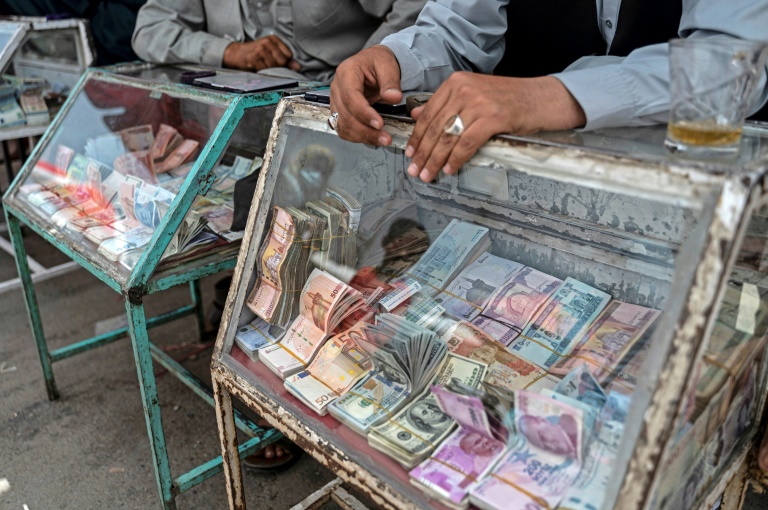
Thousands of money exchangers in Afghanistan ended their strike on Monday, the brokers commission said, a day after they shut their shops to protest a steep hike in licence fees imposed by Taliban authorities.

Afghanistan’s formal banking system collapsed when the Taliban swept back to power in August last year, ending two decades of US-led military intervention in the deeply impoverished nation.

Since then money exchangers — who swap currencies, make informal cash transfers and even give loans — have played a key role in meeting the financial needs of many of Afghanistan’s 38 million citizens mired in humanitarian crisis. 

“Today, the money exchange markets across Afghanistan are open,” Abdul Rahman Zeerak, spokesman for Afghanistan’s Money Exchange Commission, told AFP.

“They (Taliban leaders) requested that we should open the markets and that they will resolve our problems fully.” 

Money exchangers in Kabul and other cities, including Herat and Kunduz, went on strike on Sunday after the central bank raised their licence fees to five million Afghanis ($56,000) from 300,000.

Zeerak said the central bank had also told currency traders to conduct transactions online, and that they must have a minimum of 50 million Afghanis to operate.

On Tuesday the commission will have a meeting with the finance ministry and the governor of Afghanistan’s central bank, he said.

Experts said the central bank’s new directives were motivated by the Taliban’s desire to cut off funding paths to militant groups. 

Many foreign nations have made assistance to Afghanistan conditional on the Taliban regime guaranteeing human rights and preventing international terror groups from operating in the country.

Afghanistan’s money market had been volatile for several months after the US seized billions of dollars in Afghan assets during its hasty withdrawal when the Taliban seized power.

Since then there has been a shortage of dollars as international donors also suspended the massive aid inflows that had propped up the Afghan economy for two decades during the US presence in the country.

Adani in $10.5bn deal for Holcim India cement business

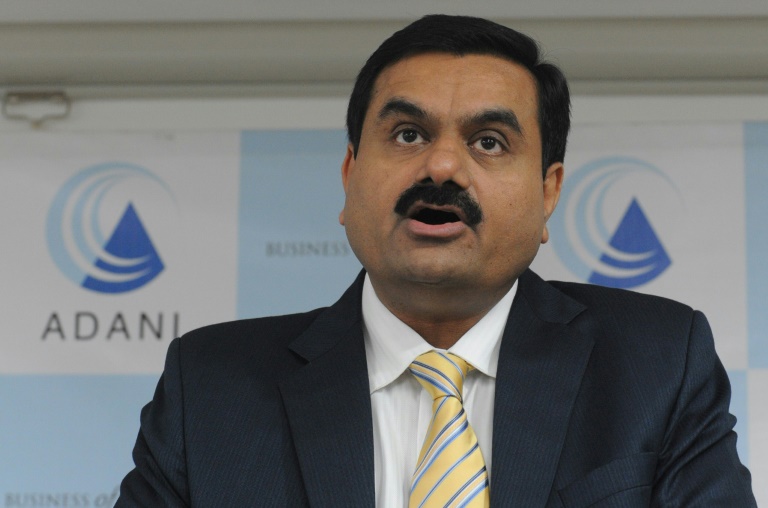
Indian billionaire Gautam Adani struck a $10.5 billion deal to buy Swiss cement giant Holcim’s local business, the companies said, betting on a construction boom predicted in coming decades.

In his biggest acquisition to date, the deal will give coal-to-ports magnate Adani — who vies with fellow Indian Mukesh Ambani for the title of Asia’s richest person — a controlling stake in India’s second-largest cement manufacturer.

“Our move into the cement business is yet another validation of our belief in our nation’s growth story,” Adani, 59, said in a statement late Sunday.

“Not only is India expected to remain one of the world’s largest demand-driven economies for several decades, India also continues to be the world’s second largest cement market,” he added.

The deal marks Holcim’s exit from the Indian market after 17 years and is a part of a global restructuring strategy after the Swiss cement giant’s 2015 merger with France’s Lafarge.

Once approved by regulators and shareholders, the firm will acquire Holcim’s stakes in local producers Ambuja Cements and ACC.

The acquisitions will make Adani the country’s second-biggest cement maker with a capacity of 70 million tonnes per year.

India, already home to 1.4 billion people, is projected by the United Nations to become the planet’s most populous nation by the middle of the decade.

The International Energy Agency said in a report last year that an estimated 270 million people will be added to India’s urban population by 2040 — the equivalent of adding a new city the size of Los Angeles each year.

This will also likely increase emissions in the world’s third-biggest polluter, since the manufacture of cement produces carbon dioxide.

Shares in Ambuja Cements were up 3.80 percent, while shares in ACC Ltd rose six percent in Mumbai following the announcement.

Close Bitnami banner
Bitnami