AFP

US eyes trade deal-lite as Southeast Asian leaders gather

The United States is preparing a scaled-back version of a trade pact as Southeast Asian nations gather in Washington, where President Joe Biden is seeking to show solid commitment in the face of a rising China.

Leaders from the Association of Southeast Asian Nations will meet Biden for dinner Thursday at the start of a two-day summit, part of a renewed US focus on Asia after months of intense effort on Ukraine.

Before Russia’s invasion of Ukraine, the Biden administration had made clear that its top priority was competition with China due to its rapid technological advances and rising assertiveness both at home and abroad.

Kurt Campbell, the top White House official on Asia, said the United States would raise areas of cooperation with ASEAN leaders including fighting the Covid pandemic and disaster relief.

He also said he expected “substantial interest” by Southeast Asian nations in the Indo-Pacific Economic Framework, or IPEF, the latest acronym-branded US trade initiative, which was mentioned late last year by Secretary of State Antony Blinken in Indonesia.

“We’re quite confident that we’re going to be able to have a substantial launch with a very broad range of potential players,” Campbell said at the US Institute of Peace.

Koji Tomita, Japan’s ambassador to Washington, told a separate event that he expected IPEF to be unveiled formally a week later when Biden visits Tokyo and Seoul.

Former president Barack Obama had proposed the Trans-Pacific Partnership, billing it as a high-standards deal that would let the United States lead the emerging trade order in Asia.

His successor Donald Trump trashed the deal, calling free trade unfair to US workers. Biden, seeing the shifting US political mood, has made clear he is in no rush for trade deals — and China is now seeking to enter the Trans-Pacific Partnership’s successor.

– Not seeking ‘new Cold War’ –

Experts briefed on IPEF said it would formally commit the United States to work with partners on key economic priorities including ensuring smooth supply chains, fighting corruption and promoting green energy.

Unlike traditional trade deals, it would not guarantee market access to the United States, the world’s largest economy — the usual sweetener to persuade nations to make concessions.

Campbell said Biden knew that any initiative needed to be “fundamentally based on the needs and desires of the people of Southeast Asia.”

“He does not want to descend Southeast Asia or Asia into a new Cold War,” he said.

“I think we recognize quite clearly that any initiative that is simply designed for competition is likely to have difficulty gaining altitude in Asia.”

China for more than a decade has been ASEAN’s largest trading partner, despite widespread territorial rifts between Beijing and members of the bloc, especially Vietnam and the Philippines.

Evan Feigenbaum, a former senior State Department official, told a recent congressional hearing that the United States has historically enjoyed its privileged place in Asia due to both its security and economic leadership, only one of which remains.

“Even though America’s economic role is growing in absolute terms, it is receding in relative terms, which means that, to lead, we should be leaning harder on the other pillar of our economic leadership, which was to be a rule writer and standard setter,” said Feigenbaum, now at the Carnegie Endowment for International Peace.

Labor advocacy group Trade Justice has already voiced alarm at IPEF, saying many Southeast Asian nations did not have adequate treatment of workers.

Trade diplomacy has long been at the forefront of US interactions with Southeast Asia, often seen as a victim of its own success given its perceived stability.

But the Washington summit also comes after a year of intense US pressure on Myanmar, once hailed as a model of democratic transition, following its military coup.

US officials say they will seek to show support for democratic forces in Myanmar and may represent the country with an empty chair during the summit.

Solomons PM dismisses concerns over China maritime deal

The Solomon Islands’ prime minister dismissed criticism of a new maritime investment deal with China on Wednesday, saying there was nothing “sinister” in the draft agreement.

The new agreement, a copy of which has been leaked to the media, comes after a controversial security pact was signed last month.

The pact sparked alarm in Australia and the United States, which feared it could lead to Beijing securing a military foothold in the South Pacific. Honiara has ruled out hosting a Chinese military base.

On Wednesday, Solomon Islands Prime Minister Manasseh Sogavare shrugged off criticism of the separate leaked memorandum of understanding on maritime investment, describing it as a “normal bilateral development initiative” that is yet to be formalised.

“There is nothing sinister nor trivial about the Blue Economy Memorandum of Understanding,” his office said in a statement.

A day earlier, Australian Prime Minister Scott Morrison had expressed concern regarding the memorandum, which covers undersea cables, port wharves, shipbuilding and other areas.

Morrison said he was “very concerned, as many other Pacific leaders are, about the interference and intrusion of the Chinese Government into these types of arrangements”.

The Solomons’ warming ties with China have been a key issue in Australia’s election campaign since a draft of the security agreement with China was first leaked on social media in March.

That draft allowed for Chinese naval deployments in the Solomon Islands, eliciting a warning from the United States that it would “respond accordingly” if China installed a military base in the Pacific archipelago. 

In April, Solomon Islands PM Sogavare said that his government would not allow a Chinese military base to be built in his country “under its watch”. 

The latest leaked maritime investment deal, dated just “2022”, covered investment in wharves, shipbuilding and ship repair, offshore gas and oil exploration and other “blue economy” industries.

Sogavare’s Wednesday statement said the memorandum of understanding was a broad document, which would be followed by a more detailed agreement.

Baby formula shortage sends US parents into panic

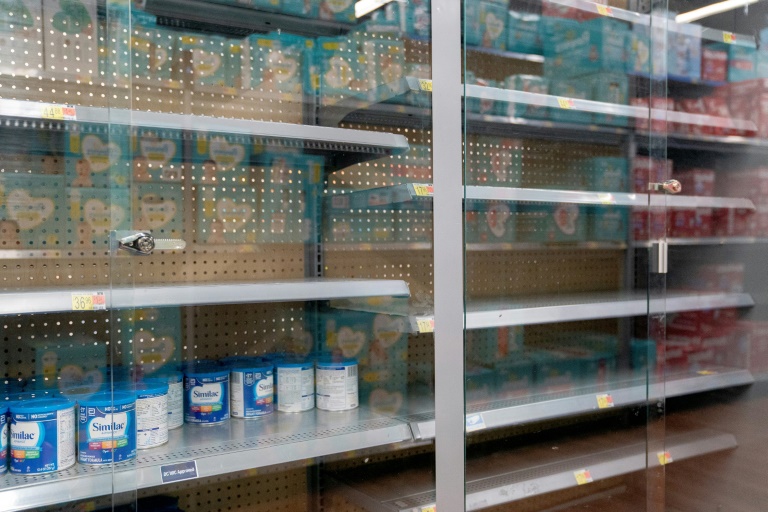
It’s a nightmare for parents. The United States is in the grip of a severe shortage of baby formula — with a mass product recall aggravating pandemic supply chain woes — sending families on sometimes desperate hunts for the vital supplies.

And it has been going on for months, according to Sara Khan, the mother of three children aged 10, seven and six months.

“I’ve known about this issue for almost seven months,” she told AFP. “This did not happen overnight.”

Khan described the struggle to find just a few bottles of formula, and the distress at being faced with empty shelves at pharmacy chains CVS and Walgreens or supermarket Target, whether in Washington or the surrounding area.

She has gotten by thanks to family and friends, who send her bottles of formula from Boston, New York and Baltimore when they find them.

“It’s horrible, terrifying,” she said, adding that she even ordered formula from Germany.

The situation took a major turn for the worse on February 17 when, after the death of two infants, manufacturer Abbott announced a “voluntary recall” for formula made at its factory in Michigan — including Similac, a brand used by millions of American families.

A subsequent investigation cleared the formula, but production has yet to resume, exacerbating already ongoing scarcity caused by supply chain problems and labor shortages.

According to the data collection agency Datasembly, 43 percent of the usual formula supply was out of stock, up 10 percent from the April average.

– Few alternatives –

San Diego, California resident Olivia Espinosa said: “There’s nothing on the shelves.”

Espinosa and her husband Steve Hohman have two young children. One of them, Maya, is only three weeks old and is lactose intolerant.

“We have to go just with a plant-based formula because we can’t try anything else,” said Hohman.

Normally, hospitals and pediatricians give parents formula samples to figure out which one works best for their child.

But few have any left to give.

Hohman said it was frustrating that his daughter cannot try other formulas that might be more nutritious for her.

Espinosa said the shortage has been “extremely frustrating and especially with a newborn, somebody who is requiring… very specific food right now.”

She explained she has difficulty breastfeeding and producing enough milk.

According to Khan, it is difficult even for babies who do not have special food needs.

– Surging costs –

People have suggested she try other brands, but “that’s not how it works,” Khan said. The formula has to taste good and not cause any problems such as constipation to the individual children.

And in addition to supply issues, parents are struggling to keep up with costs, as online sellers have doubled or even tripled their prices.

Robert Califf, head of the US Food and Drug Administration (FDA), highlighted the problem in a statement released Tuesday evening.

“We recognize that many consumers have been unable to access infant formula and critical medical foods they are accustomed to using,” he said. “We are doing everything in our power to ensure there is adequate product available where and when they need it.”

On Wednesday, Abbott said it “deeply” regrets the situation.

“Since the recall, we’ve been working to increase supply at our other FDA-registered facilities, including bringing in Similac from our site in Cootehill, Ireland, by air and producing more liquid Similac and Alimentum,” the group said in a statement.

And the shortage has been politicized, too.

“I called for action on (President Joe) Biden’s baby formula shortage months ago,” Republican congresswoman Elise Stefanik charged on Twitter.

Her extreme-right colleague Marjorie Taylor Greene accused the US Congress of wanting “to send nearly $40 billion to Ukraine while American mothers can’t find baby formula.”

But White House Spokeswoman Jen Psaki said Monday on CNN that the Biden administration is “working around the clock” to address the shortage.

Disney profit slips but streaming TV subscribers jump

Disney on Wednesday said its profit slipped in the recently ended quarter but its television streaming service and parks were booming.

The entertainment giant reported net income of $470 million, just over half of the $912 million profit it made in the same period a year earlier.

But park attendance that had fallen due to the pandemic rebounded and the Disney+ television streaming service gained 7.9 million subscribers to 137.7 million.

When adding in subscriptions to Disney’s streaming services Hulu and ESPN, the overall number tops 205 million.

“Our strong results in the second quarter, including fantastic performance at our domestic parks and continued growth of our streaming services once again proved that we are in a league of our own,” said Walt Disney Company chief executive Bob Chapek.

He told analysts Disney is open to raising its streaming service subscription price in the future, but has no specific plans. Disney+ is pursuing a version of the service that would be supported by advertising, Chapek said.

Disney+ gained more subscribers than analysts had expected, in stark contrast to a dive in subscriber numbers reported by rival Netflix in the first quarter of this year.

A drop of just 200,000 users — less than 0.1 percent of the total Netflix customer base — caused shares in the Silicon Valley firm to plunge and prompted a shareholder to file a lawsuit accusing the streaming television titan of not making it clear that subscriber numbers were in peril.

“Disney+ has been taking Netflix out at the knees,” tech analyst Rob Enderle of Enderle Group told AFP.

“Kids have always chased their content, and for parents it has been a no-brainer to get their service.”

About half of Disney+ subscribers are families with children, executives said on the earnings call.

Disney stopped licensing its coveted content to Netflix to make it exclusive to its own streaming service, and said it planned to stick with the tactic when it comes to rivals in the market.

– Parks and politics –

Disney said that as its streaming television service continues to grow strongly, its resorts and parks are generally operating without any of the significant Covid-19 related restrictions on capacity that were in place last year.

The pandemic does continue to vex film and television show production, Disney said, but it has been able to release films in theaters so far this year.

“Our slate for the remainder of this year is incredibly strong,” Chapek told analysts while discussing the company’s line-up of shows for streaming and theaters.

Chapek acknowledged challenges getting Disney films released in China, saying the situation there is “very complicated” from political and business standpoints.

He said he was encouraged by the fact that a freshly released “Dr. Strange” film based on a Marvel comics character took in more than $500 million in its first week, even without being shown in China.

Disney has run into political turbulence closer to home, with the Florida governor recently signing a law that eliminates a statute that has for decades allowed the entertainment giant to act as a local government in Orlando, where it has a theme park.

The move was the latest episode in a dispute between the state’s Republican administration and Disney, after the company criticized the passage in March of a law banning school lessons on sexual orientation.

“From a financial standpoint, Disney will come out ahead with the plug pulled,” analyst Enderle said.

“It’s almost like Florida gave them a monetary favor; Disney was covering all the costs of the municipality they are in.”

The Reedy Creek Improvement District was an area created by Florida’s congress in 1967 to facilitate the construction of Disney World in Orlando.

Under that agreement, Disney runs the district as if the entertainment juggernaut were a local government, including collecting taxes and guaranteeing essential public services such as garbage collection and water treatment.

Under Florida law, if the special district is dissolved, its assets and debts would be transferred to local governments that surround the area.

“Removing district could transfer $2 Billion debt from Disney to taxpayers,” state Democratic senator Linda Stewart warned after the bill was signed.

Disney profit slips but streaming TV subscribers jump

Disney on Wednesday said its profit slipped in the recently ended quarter but its television streaming service and parks were booming.

The entertainment giant reported net income of $470 million, just over half of the $912 million profit it made in the same period a year earlier.

Park attendance that had fallen due to the pandemic, however, rebounded and the Disney+ television streaming service gained 7.9 million subscribers to top 205 million total, the company said.

“Our strong results in the second quarter, including fantastic performance at our domestic parks and continued growth of our streaming services once again proved that we are in a league of our own,” said Walt Disney Company chief executive Bob Chapek.

Disney+ gained more subscribers than analysts had expected, in stark contrast to a dive in subscriber numbers reported by rival Netflix in the first quarter of this year.

A drop of just 200,000 users — less than 0.1 percent of the total Netflix customer base — caused shares in the Silicon Valley firm to plunge and prompted a shareholder to file a lawsuit accusing the streaming television titan of not making it clear that subscriber numbers were in peril.

Competition in the streaming television market has intensified, particularly from Disney+, with the cost of producing coveted original shows climbing as well. 

Disney said that as its streaming television service continues to grow strongly, its resorts and parks are generally operating without any of the significant Covid-19 related restrictions on capacity that were in place last year.

The pandemic does continue to vex film and television show production, Disney said, but it has been able to release films in theaters so far this year.

“Our slate for the remainder of this year is incredibly strong,” Chapek told analysts while discussing the company’s line-up of shows for streaming and theaters.

Disney shares were up more than three percent in after-market trade that followed release of the earnings figures.

Paris plans green makeover of Champs-Elysees for Olympics

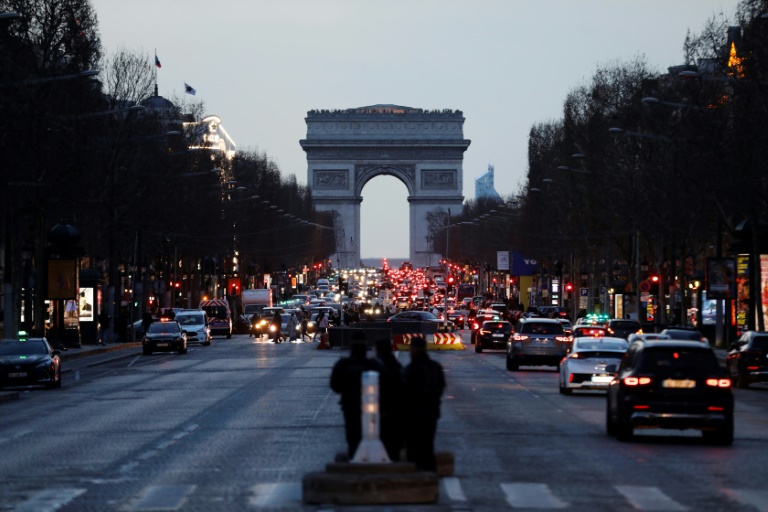
Paris will give the famed Champs-Elysees a makeover ahead of the 2024 Olympic Games by planting trees and increasing pedestrian areas, the French capital’s officials said on Wednesday.  

The French often call it “the most beautiful avenue in the world” but activists complain that traffic and luxury retail have turned it into a noisy and elitist area shunned by ordinary Parisians.

“We need to re-enchant the capital’s most famous avenue, which has lost a lot of its splendour in the past 30 years,” the mayor of the capital’s 8th district Jeanne d’Hauteserre told reporters. 

“It’s a reduction of the space for cars, to be clear, because that’s how we need to envision the city of the future,” socialist Paris mayor Anne Hidalgo said. 

The plan is in keeping with other efforts by the city leader to squeeze cars out of Paris and make the city more green, a push that has divided residents with critics saying her policies go too far too fast.  

Later Wednesday, the Paris police gave a less than enthusiastic response to Hidalgo’s plans, stressing that the Champs-Elysees is a transport route, which falls under the purview of the French state.

In a tweet, the prefect of police said he would “carefully examine” the proposals from the mayor’s office.

His team pointed out that their boss had not received the proposals, adding that he “must be involved in the project”.

But supporters have lauded the former presidential candidate Hidalgo’s efforts to reduce pollution and increase green areas in the densely populated city that can become unbearable when increasingly frequent summer heatwaves hit.

Around the Arc de Triomphe, which perches atop the Champs-Elysees, the plan is to widen the pedestrian ring surrounding the monument. 

And at the bottom of the two kilometre-(1.2 mile) long avenue next to the Place de la Concorde, the “Re-enchant the Champs-Elysees” plan will revamp the gardens.

“We will create a hectare and a half of green spaces and plant over a hundred trees,” deputy mayor Emmanuel Gregoire said. 

Paris will spend 26 million euros ($27.5 million) in the lead up to the Olympics on the works set to begin within weeks. 

The terraces near the top of the avenue favoured by tourists will also be reworked by Belgian designer Ramy Fischler, who will strive to “preserve the identity and personality” of the area, he said.

The Champs-Elysees was first laid out in 1670 but was given a revamp by Baron Haussmann, the architect behind the transformation of Paris under Napoleon III in the mid-19th century.

Over the centuries, the avenue has been the stage for the high and low moments in French history, hosting celebrations and commemorations as well as protests, notably the violent Yellow Vest movement.

It is also used as the route for the Bastille Day military parade, which celebrates the French republic and its armed forces on July 14, as well as the finishing point for the annual Tour de France cycle race. 

Google making smartwatch in 'ambient' computing push

Google on Wednesday said it is strapping a smartwatch onto its Pixel hardware line as part of an “ambient computing” vision to make its services available anywhere at any time.

The Alphabet-owned internet titan used its annual developers conference to showcase a Pixel line expanding to include a smartwatch and tablet as well as upgraded earbuds and a more affordable version of its flagship smartphone.

Backed up by artificial intelligence, cloud computing and sophisticated custom mobile chips, the family of gadgets is intended to work seamlessly together, Google senior vice president of hardware and services Rick Osterloh said during a briefing.

“All these things work in concert on our vision of ambient computing,” Osterloh said. “Providing the help people need, whenever they need it.”

The Pixel Watch will be released late this year, along with a new premium Pixel 7 smartphone, with pricing and other details to be disclosed closer to launch, Google said. 

The first Pixel smartwatch designed and built by Google will integrate health features from Fitbit, which Alphabet bought in a $2.1 billion deal that closed last year, and take on market leading Apple Watch.

“It just takes time to integrate a company with all the technology and people that Fitbit has,” Osterloh said of the Pixel smartwatch timing.

There will be a version of the Pixel Watch that synchs to Android-powered smartphones and one that has its own wireless internet connectivity, the internet giant said.

Google is also working on a Pixel tablet computer expected to be released next year, figuring there is an interest in large screen mobile devices even if that overall market has been lackluster.

“We’ve got a lot going on in the Pixel pipeline and it represents investments across all different kinds of technologies,” Osterloh said.

A smaller version of the Pixel 6 smartphone released by Google late last year will hit shelves on July 28 at a price of $449, along with new Pixel Buds Pro ear pieces priced at $199.

While smartphones powered by Google’s free Android operating software dominate the global market, the Silicon Valley company’s Pixel models have amassed scant share.

“We’re really investing a lot and expanding the mobile part of our vision,” Osterloh said.

“It’s like an iceberg and that you didn’t see a lot of what was happening underneath but now you can really see all these things coming to the surface.”

– Software smarts –

Alphabet chief Sundar Pichai provided a peek of augmented reality glasses that Google is working on, providing few details but demonstrating how they could translate conversations in real time, showing wearers transcriptions.

“All of this work is in service of a timeless mission to organize the world’s information and make it universally accessible and useful,” Pichai said of what Google shared during a 2-hour presentation before a live audience in a concert venue near the company’s Silicon Valley headquarters.

Google’s hardware announcements were backed by a slew of enhancements to software powering its core search service, artificial intelligence capabilities, and Android mobile devices.

Improvements included enabling artificial intelligence to converse with people more naturally, and to “read” through pages of documents or messages and provide people with insightful, terse summaries of their contents.

An enhancement to search lets images captured by smartphone cameras and queries uttered by users be combined to allow, for example, someone to ask Google to scan a market shelf to find a top-rated brand of nutless chocolate, demonstrations showed.

And a new Google Wallet being rolled out in the weeks ahead is being designed to one day replace real-world billfolds, right down to holding digital versions of driver licenses.

US inflation slowed in April but prices for many goods rising

US inflation slowed in April, according to new data released Wednesday, but Americans are still seeing their wallets empty faster than before when they buy groceries and pay rent.

President Joe Biden has gone on the offensive, blaming the price spike on Russian leader Vladimir Putin’s invasion of Ukraine, and announcing a series of steps he hopes will ease the pain.

The conflict and the sanctions imposed on Russia have driven up prices around the world for fuel, grain and fertilizer, raising costs for farmers who in turn are forced to raise prices.

Biden, whose popularity has taken a hit from the highest inflation in four decades, has labeled the recent surge “Putin’s price hike.”

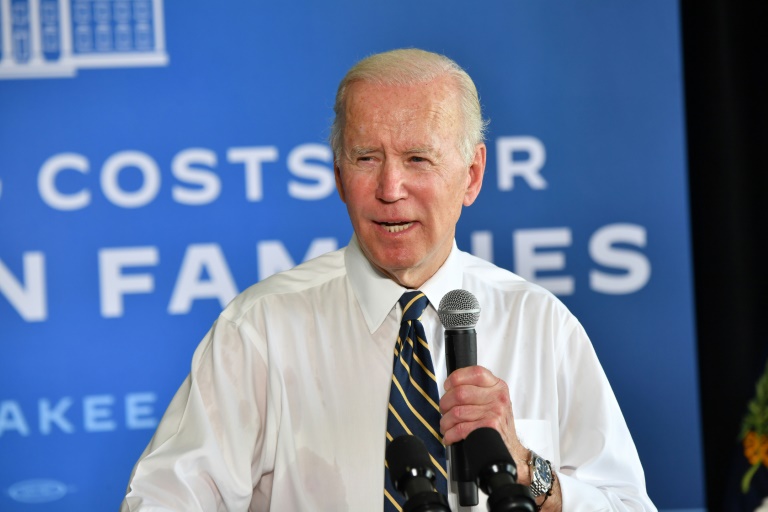
While visiting a farm in Illinois on Wednesday, he laid out the White House strategy to help food producers, including boosting domestic fertilizer production to combat a nationwide shortage.

“My administration has been working to drive down the cost of farmers… and prices to consumers,” he told reporters.

That includes a $500 million federal investment in fertilizer production and working with the G7 to increase global fertilizer supplies, as well as to “prevent export restrictions on food and agricultural inputs, and bring more global production to market, which will stabilize prices.”

The latest inflation data offered some good news, as the consumer price index (CPI) slowed slightly last month, jumping 8.3 percent compared to April 2021, after peaking in March at 8.5 percent, according to a Labor Department report.

Biden called the slow-down “heartening” in a statement earlier Wednesday, but acknowledged inflation is still a major challenge, and said “bringing it down is my top economic priority.”

The dip was helped by easing energy costs, as gasoline fell 6.1 percent in April compared to March after an 18.3 percent surge in the previous month.

But gasoline prices at the pump hit a new record on Tuesday, so the news from April may be of little comfort to drivers.

Biden noted during his speech that to offset this, he had signed an emergency waiver last month to allow the nationwide sale of e-15 gasoline — a blend of ethanol and gasoline — during the summer, when fuel sales tend to go up as more Americans travel for vacation.

Prices continued to rise last month for a range of goods, including housing, groceries, airline fares and new vehicles, and annual inflation remains at its highest rate since early 1982.

– Groceries more expensive –

CPI rose just 0.3 percent compared to March, after the 1.2 percent surge in the prior month, but excluding volatile food and energy goods, the “core” index last month increased at double the March rate, the Labor Department report said.

A large driver was food at home, which jumped 10.8 percent over the last 12 months — the largest annual increase since November 1980, it said.

The index for meat, poultry, fish and eggs surged 14.3 percent in the biggest gain since May 1979.

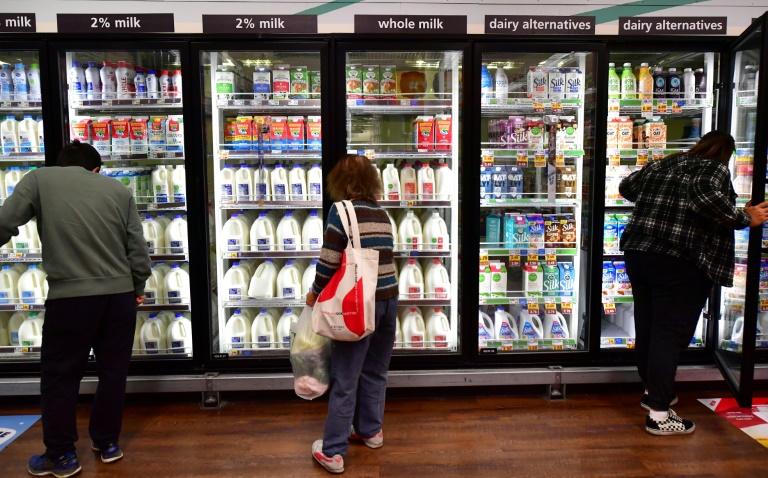
Americans saw big increases in the month for dairy and cereal products, even as fruit and vegetable costs fell last month.

Even with the decline in gasoline, energy costs have surged 30.3 percent over the past 12 months, with gasoline up 43.6 percent compared to a year ago.

Economists expect inflation to continue to slow gradually, but see no sign the Federal Reserve will ease up on what it said will be rapid interest rate increases to try to tamp down the price pressures and cool demand.

The Fed last week announced its largest rate hike since 2000, and signaled similar increases were likely in the coming months.

Despite the “modest reprieve” in the data suggesting inflation peaked in March, “the renewed rise in gasoline prices towards a record $4.50 nationally and increase in diesel prices signals that there is still upward risk to the inflation outlook,” Kathy Bostjancic of Oxford Economics said in an analysis.

“Further, the Covid-related China lockdowns and the continued Russia-Ukraine war places further stress on already strained supply chains.”

Biggest white diamond ever auctioned fetches $21.9 million

The Rock, the biggest white diamond ever auctioned, sold for 21.7 million Swiss francs ($21.9 million) on Wednesday, far short of the record for such a jewel.

The 228.31-carat stone, larger than a golf ball, was sold in Geneva by Christie’s auction house.

There had been high hopes that The Rock would smash the world record for a white diamond, which stands at $33.7 million, a sum fetched in Geneva in 2017 for a 163.41-carat gem.

But the bidding, which started at 14 million Swiss francs, ground to a halt after two minutes at 18.6 million, with the price rising to 21.7 million once the buyer’s premium was added on.

The pre-sale estimate had been 19-30 million Swiss francs.

The Rock, a perfectly symmetrical pear-shaped diamond, was sold by an unnamed owner from North America. It was bought by a private collector bidding by telephone.

Rahul Kadakia, Christie’s international head of jewellery, brought down the hammer to applause in the sale room in the plush Hotel des Bergues.

Diamonds are graded in colour from D to Z and Kadakia told AFP that despite falling short of the overall record, The Rock had set a new world record price per carat for a G-colour diamond.

“When you look at the price per carat — 100,000 per carat — this is the level of a D colour diamond, and we achieved that for a G colour diamond. So in fact, we’re very pleased as are the sellers, as is the buyer.”

Max Fawcett, head of the jewels department at Christie’s auction house in Geneva, said there were only a handful of diamonds of similar size and quality to The Rock.

The large diamond was extracted from a mine in South Africa in the early 2000s and has been shown in Dubai, Taipei and New York ahead of the sale in Geneva.

– Red Cross gem –

The Rock was up for grabs alongside a historic intense yellow diamond associated for more than a century with the Red Cross.

A seven-figure chunk of the proceeds will be donated to the International Committee of the Red Cross, headquartered in Geneva, at a time when war is once again stalking the European continent.

The Red Cross Diamond, a cushion-shaped, 205.07-carat canary yellow jewel, sold for 14.2 million Swiss francs including the buyer’s premium — well above its price estimate of seven to 10 million francs.

Multiple bidders fought fiercely over the gem for 10 minutes, ending in a duel in increments of 50,000 francs before one private collector won through.

The original rough stone was found in 1901 in a De Beers company mine in South Africa and is said to have weighed around 375 carats.

As well as ranking among the largest diamonds in the world, a striking feature is its pavilion, which naturally bears the shape of a Maltese cross.

The stone was first put up for sale on April 10, 1918 at Christie’s in London. It was offered by the Diamond Syndicate in aid of the British Red Cross Society and the Order of St John.

The Red Cross Diamond fetched £10,000 — approximately £600,000 ($740,000) in today’s money. It was bought by the London jewellers S.J. Phillips.

It was sold again by Christie’s in Geneva in 1973, fetching 1.8 million Swiss francs, before being offered by the auction house for a third time.

“A 104-year history of the diamond with Christie’s; we’re very pleased that we were able to locate it, and we’re very pleased that we were able to secure it in another private collection,” said Kadakia.

Also sold was a tiara that belonged to Princess Irma of Fuerstenberg (1867-1948), a member of one of the most pre-eminent aristocratic families in the Habsburg Empire.

It was estimated at 400,000 to 600,000 Swiss francs. However, it sold for way more: 2.4 million francs, having caught the eye in a prominent spot at the pre-sale exhibition.

Google making smartwatch in 'ambient' computing push

Google on Wednesday said it is strapping a smartwatch onto its Pixel hardware line as part of an “ambient computing” vision to make its services available anywhere at any time.

The Alphabet-owned internet titan used its annual developers conference to showcase a Pixel line expanding to include a smartwatch and tablet as well as upgraded earbuds and a more affordable version of its flagship smartphone.

Backed up by artificial intelligence, cloud computing, and sophisticated custom mobile chips, the family of gadgets is intended to work seamlessly together to be conveniently available when desired, Google senior vice president of hardware and services Rick Osterloh said during a briefing.

“All these things work in concert on our vision of ambient computing,” Osterloh said.

“Providing the help people need, whenever they need it.”

The Pixel Watch will be released late this year, along with a new premium Pixel 7 smartphone, with pricing and other details to be disclosed closer to launch, Google said. 

The first Pixel smartwatch designed and built by Google will integrate health features from Fitbit, which Alphabet bought in a $2.1 billion deal that closed last year, and take on market leading Apple Watch.

“It just takes time to integrate a company with all the technology and people that Fitbit has,” Osterloh said of the Pixel smartwatch timing.

There will be a version of the Pixel Watch that synchs to Android-powered and one that has its own wireless internet connectivity, the internet giant said.

Google is also working on a Pixel tablet computer expected to be released next year, figuring their is an interest in large screen mobile devices even if that overall market has been lackluster.

“We’ve got a lot going on in the Pixel pipeline and it represents investments across all different kinds of technologies,” Osterloh said.

A smaller version of the Pixel 6 smartphone released by Google late last year will hit shelves on July 28 at a price of $449, along with new Pixel Buds Pro ear pieces priced at $199.

While smartphones powered by Google’s free Android operating software dominate the global market, the Silicon Valley company’s Pixel models have amassed scant share.

“We’re really investing a lot and expanding the mobile part of our vision,” Osterloh said.

“It’s like an iceberg and that you didn’t see a lot of what was happening underneath but now you can really see all these things coming to the surface.”

Close Bitnami banner
Bitnami