
AFP

Asian stocks fall on Wall Street rout, oil prices tumble

Asian equities mostly sank Tuesday and oil prices tumbled following a rout on Wall Street as anxieties were fanned over rising US interest rates, surging inflation and the impact of China’s prolonged Covid lockdowns.

Stock markets have been on a tempestuous ride this year, with Wall Street suffering another hit on Monday as the tech-rich Nasdaq slumped more than four percent, while the S&P 500 ended below 4,000 points for the first time since March 2021. 

Steep declines in China’s April exports — due to Beijing’s staunch adherence to a zero-Covid policy that has placed millions under lockdown — and volatility in crude partly due to Russia’s war in Ukraine have also hastened selling.

“This rather precipitous drop in equity markets has been building for several months,” said Clifford Bennett, chief economist at ACY Securities.

“The fundamentals of war, inflation, rate hikes and supply-chain disruption are all individually significant headwinds. When combined, equity markets have no way through.”

US stock markets took a dive late last week after the Federal Reserve raised interest rates by a half-percentage point and flagged more aggressive hikes ahead to tackle decades-high inflation.

Stoking global inflationary pressures are lockdowns in dozens of locations across China — from the manufacturing hubs of Shenzhen and Shanghai to the breadbasket province of Jilin — wreaking havoc on supply chains over recent months.

By Tuesday afternoon, the equities plunge in Asia had eased, and European stocks in Frankfurt, Paris and London rebounded as dip buyers sent markets rallying after the wreckage from Monday’s rout. 

“For now, investors need to be prepared for continued volatility,” Americas chief investment officer at UBS Global Wealth Management Solita Marcelli wrote in a note, according to Bloomberg.

Tokyo on Tuesday closed down 0.6 percent and Hong Kong slumped 1.84 percent as traders fretted over US monetary tightening. Drops seen in Seoul, Wellington, Singapore and Jakarta also eased on the close of day. 

“Risk markets remain on shaky ground,” said Stephen Innes of SPI Asset Management. 

– Bitcoin woes –

Bitcoin also slumped to as low as $29,764. The digital currency has lost more than half its value since a November surge saw it hit a record of nearly $69,000.

Such a drastic drop in its value has not been seen since July 2021. By the afternoon, it saw a rebound as markets calmed.

Analysts say traditional investors tend to view bitcoin as a riskier asset and have been offloading it along with other digital tokens in response to growing fears of market volatility.

Crude — once considered a relative safe haven — also took a beating Monday when it plunged more than five percent, with the European benchmark Brent North Sea crude dropping to $106.77 per barrel, while the main US contract WTI was at $103.87.

By Tuesday, the drop-off had eased — though crude was still lower, with Brent trading at around $105.72 and WTI at $102.97.

“There is nowhere to hide right now. If you are looking for green on the screen, it is very minimal, especially in the tech sector,” Victoria Greene, chief investment officer at G Squared Private Wealth, told Bloomberg.

– Key figures at around 0830 GMT –

Hong Kong – Hang Seng Index: DOWN 1.8 percent at 19,633.69 (close)  

Shanghai – Composite: UP 1.1 percent at 3,035.84 (close)

London – FTSE 100: UP 0.9 percent at 7,278.64

Tokyo – Nikkei 225: DOWN 0.6 percent at 26,167.10 (close)

Brent North Sea crude: UP 0.6 percent at $103.86 per barrel

West Texas Intermediate: UP 0.7 percent at $103.86 per barrel

Euro/dollar: UP at $1.0565 from $1.0563 on Monday 

Pound/dollar: UP at $1.2336 from $1.2331

Euro/pound: FLAT at 85.64 pence from 85.64 pence

Dollar/yen: DOWN at 130.10 yen from 130.26 yen

New York – Dow: DOWN 2.0 percent at 32,245.70 (close)
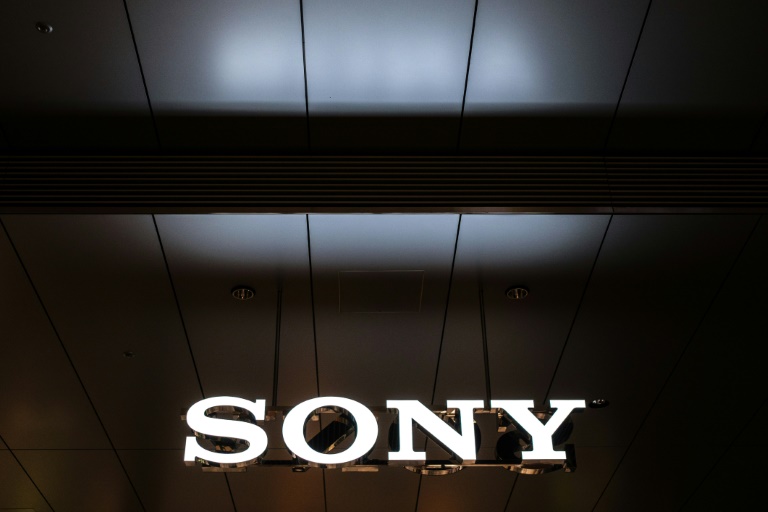
Sony logs record full-year sales but keeps forecast cautious

Sony on Tuesday reported its best-ever sales in the financial year to March thanks to strong results in movies, electronics and music, but offered a cautious forecast as supply chain disruption continues.

A lockdown-fuelled gaming boom has slowed, and the Japanese giant saw net profit dip 14 percent from the previous year’s record high.

But that was offset in part by strong showings from other entertainment sectors, with “Spider-Man: No Way Home” overtaking “Avatar” as North America’s third-highest-grossing film ever.

Demand for sensors used in smartphone cameras has also continued to soar, and Sony Music scored a winner with Adele’s latest album “30”.

The conglomerate reported full-year sales for 2021-22 of 9.9 trillion yen ($76 billion) and net profit of 882 billion yen.

In 2020-21, Sony logged a record net profit of more than a trillion yen, partly thanks to tax gains and the explosion of gaming during Covid-19 lockdowns.

The 10 percent increase in sales from 8.99 trillion yen in 2020-21 “was mainly due to significant increases in sales in the pictures, electronics products and solutions and music segments”, Sony said.

Sony has benefited from a recent slide in the yen against the dollar, with the Japanese currency hitting 20-year lows against the greenback this year.

“Sony has sizable international sales, which expand when the yen depreciates,” Hideki Yasuda, senior analyst at Toyo Securities, told AFP before the earnings release.

It also saw favourable business environments for sectors including music and movies balance out weaker performances elsewhere.

“Sony is really turning into a content company now, from its previous status as an electronics manufacturer,” said Yasuda.

For the year to March 2023, Sony offered cautious forecasts, with net profit projected to slip six percent to 830 billion yen, though sales are expected to rise 15 percent to 11.4 trillion yen.

– PlayStation 5 woes –

The company also announced a share buyback of up to 200 billion yen ($1.5 billion) as tech stocks take a beating.

“In the current fiscal year, the demand environment is expected to be more severe than in recent years due to the situation in Ukraine and Russia and the slowdown in the global economy caused by rapid inflation,” warned Sony chief financial officer Hiroki Totoki.

Sony has faced challenges rolling out its PlayStation 5 console, which remains difficult to get hold of 18 months after its launch — in part due to supply chain disruption including the global chip shortage.

“Inventory levels are at a very low level,” acknowledged Totoki, saying demand is higher than the production projection of 18 million units for the current financial year.

Serkan Toto, an analyst at Kantan Games in Tokyo, said he does not “see any kind of problem for Sony in the gaming world or in the gaming market, except for the supply chain issues”.

“It’s impossible to get a PlayStation 5. It’s ridiculous,” he added.

Sony sold 11.5 million PS5s last year, and Totoki said the firm was adapting to weather ongoing supply chain issues, including Covid lockdowns in China. 

“We have changed our source of procurements and design. We are getting used to these kinds of changes,” he said.

But he said the firm expects it to take three months for the lockdown situation in Shanghai to normalise and it remains “difficult to predict” how virus measures will evolve in China.

Sony is locked in a battle for gaming supremacy with US rival Microsoft, which is seeking regulatory approval for its landmark $69 billion deal to buy “Call of Duty” and “Candy Crush” maker Activision Blizzard.

The merger will make Microsoft the third-largest gaming company by revenue, behind Tencent and Sony — marking a major shift in the booming industry.

Sony has sought to keep up through its own acquisitions, including Montreal-based game company Haven Entertainment Studios and a $3.6 billion deal for Bungie, creator of hits such as “Halo” and “Destiny”.

Nintendo annual net profit solid but outlook cautious

Nintendo on Tuesday reported a solid net profit for the financial year to March on the strong performance of its blockbuster Switch console, but issued a cautious forecast.

Uncertainties linked to the global chip shortage and potential production and transport delays caused by Covid-19 lockdowns could hit future profits, the Japanese gaming giant warned.

The company, which has benefited from a string of popular titles including “Pokemon Legends: Arceus”, posted a 2021-22 net profit of 477.7 billion yen ($3.7 billion), down just 0.6 percent on-year.

But it expects net profit for the current financial year of 340 billion yen, a yearly drop of around 29 percent.

Nintendo’s profits were sent soaring by a boom in demand for video games during the pandemic and the runaway popularity of the Switch, which was launched in March 2017.

It also released the Switch Lite in 2019 and the Switch OLED, with upgraded graphics and memory, in October 2021.

Growth in sales of these consoles “demonstrated a good balance between each of the three individual models”, Nintendo said.

“As a result of stable performance among the overall hardware lineup, final sales totaled 23.06 million units” in the last financial year, it added.

Nintendo said software sales also grew 1.8 percent on-year to 235 million units, “making it the highest annual software sales figure ever posted for a Nintendo platform to date”.

Highlights included “Mario Party Superstars” and its three Pokemon titles. The most popular was “Pokemon Legends: Arceus”, which sold 12.6 million units in the last financial year, it said.

– Supply chain woes –

Hideki Yasuda, senior analyst at Toyo Securities, told AFP Nintendo is “doing very well”, calling the weaker yen and the strong performance of Arceus a “double benefit”.

But he warned that the company may find itself “unable to make hardware and unable to move products” as cargo ships wait in waters off Shanghai, which is under lockdown as China tries to stamp out Covid-19.

Nintendo said that “if Covid-19 interferes with production or transportation in the future, this might impact the supply of products”, warning that production may also be affected by the chip shortage.

Serkan Toto, an analyst at Kantan Games in Tokyo, said the Switch has been key to Nintendo’s success.

“For the first time in over 30 years, Nintendo is only focusing on one system,” instead of dividing its resources between different businesses such as TV consoles and handheld gaming devices, he said.

US extradition dropped after Megaupload co-defendants strike deal

Two former colleagues of tech entrepreneur Kim Dotcom have agreed to face online piracy charges in a New Zealand court in exchange for US extradition proceedings being dropped, authorities and the defendants said on Tuesday.

Dotcom, founder of the Megaupload file-sharing system, is still being pursued by the United States on fraud, money laundering and racketeering charges punishable with up to 20 years in jail.

The website — an early prototype of cloud storage — was shut down when New Zealand police raided Dotcom’s Auckland mansion in January 2012 at the behest of the FBI, triggering numerous court hearings and appeals.

Former coders Mathias Ortmann and Bram van der Kolk said in a statement issued by their lawyer that they have agreed to face equivalent charges in New Zealand.

“We have reached an agreement with the New Zealand Government and the United States of America under which we have agreed to be charged in New Zealand for offences similar to those we face in the United States,” the two men said.

They emphasised that the case has taken a “heavy toll on our lives” and that neither wants to leave New Zealand, where they have residency.

New Zealand’s Crown Law Office confirmed the deal in a statement, saying the charges filed in Auckland District Court on Tuesday morning were the equivalent of what the pair would have faced in the United States.

US prosecutors allege the Megaupload service facilitated widespread piracy of films and publications, costing rights holders more than US$500 million. 

Dotcom is now the last remaining person charged in the case to still be facing extradition.

A fourth defendant, former Megaupload marketing manager Finn Batato, had extradition charges dropped last year after developing a life-threatening medical condition.

All four men have maintained their innocence, questioning why Megaupload was targeted.

Dotcom responded on social media on Tuesday, posting a defiant photograph accompanied by a message: “Keep fighting!”.

He denies any wrongdoing and is living in Queenstown, New Zealand while on bail as he fights extradition proceedings.

Sony logs record full-year sales but net profit dips

Sony on Tuesday reported its best-ever sales in the financial year to March thanks to strong results in movies, electronics and music, while net profit dipped 14 percent from the previous year’s record high.

A lockdown-fuelled gaming boom has slowed, but the Japanese giant has seen success in other entertainment sectors, with “Spider-Man: No Way Home” overtaking “Avatar” as North America’s third-highest-grossing film.

Demand for sensors used in smartphone cameras has continued to soar, and Sony Music also scored a winner with Adele’s latest album “30” and strong licence revenue in its popular anime business.

The conglomerate reported full-year sales for 2021-22 of 9.9 trillion yen ($76 billion) and net profit of 882 billion yen.

In 2020-21, Sony logged a record net profit of more than a trillion yen, partly thanks to tax gains and the explosion in popularity of video games during Covid-19 lockdowns.

The 10 percent increase in sales from 8.99 trillion yen in 2020-21 “was mainly due to significant increases in sales in the pictures, electronics products and solutions and music segments”, Sony said.

Hideki Yasuda, senior analyst at Toyo Securities, said Sony would likely benefit from the fall of the yen, which has hit 20-year lows against the dollar this year.

He said the conglomerate is now succeeding in a broader range of sectors with favourable business environments, such as music and movies.

“Sony is really turning into a content company now, from its previous status as an electronics manufacturer.”

– PlayStation 5 supply woes –

For the current financial year to March 2023, Sony predicts sales will rise 15 percent to 11.4 trillion yen, while net profit is projected to slip six percent to 830 billion yen.

Sony has faced challenges rolling out its PlayStation 5 console, which remains difficult to get hold of 18 months after its November 2021 launch — in part due to supply chain disruption including the global chip shortage.

The company “could have sold so many more PS5s if they were able to produce more”, according to Serkan Toto, an analyst at Kantan Games in Tokyo.

“I don’t see any kind of problem for Sony in the gaming world or in the gaming market, except for the supply chain issues: it’s impossible to get a PlayStation 5. It’s ridiculous,” he told AFP.

Even then, Sony has released a stream of popular games from “Ratchet and Clank” to “Gran Turismo 7”, Toto said.

Asian stocks fall on Wall Street rout, oil prices tumble

Asian equities mostly sank Tuesday and oil prices tumbled following a rout on Wall Street as anxieties were fanned over rising US interest rates, surging inflation and the impact of China’s prolonged Covid lockdowns.

The global stock markets have been on a tempestuous ride this year, with Wall Street suffering another rout on Monday as tech-rich Nasdaq slumped more than four percent while the S&P 500 ended below 4,000 points for the first time since March 2021. 

Steep declines in China’s April exports — due to Beijing’s staunch adherence to a zero-Covid policy that has shunted millions indoors — and volatility in crude partly due to Russia’s war in Ukraine have also hastened the bloodletting. 

“We don’t normally pay too much attention to short-term market movements, but there’s some concern brewing in markets that we might be on the cusp of a significant event,” said Peter Esho, co-founder at Wealthi, an investment property platform.

“Ultimately, our view is that each and every time the US Federal Reserve seeks to raise rates, the economy and growth will break and send us back to square one.”

US stock markets dived late last week after the Federal Reserve raised interest rates by a half-percentage point and flagged more aggressive hikes ahead to tackle decades-high inflation. 

Further stoking global inflationary pressures were lockdowns across dozens of Chinese cities — from the manufacturing hubs of Shenzhen and Shanghai to the breadbasket of Jilin — which has wreaked havoc on supply chains over recent months.

The equities plunge persisted Monday on Wall Street, while Frankfurt, London and Paris all fell more than two percent. 

Tokyo on Tuesday opened down 0.7 percent, with Japanese traders fretting over US monetary tightening. Seoul, Wellington, Singapore, and even Jakarta — the lone bright spot over the past couple days — also slumped. 

“The market is becoming increasingly non-investable,” said Stephen Innes of SPI Asset Management. 

“We could be nearing the capitulatory ‘sell-everything mode’ as it is virtually impossible to construct a bullish argument for the broader market.”

– Bitcoin woes –

In the realm of digital currency, bitcoin also slumped as low as $29,764 — more than half its value since a November surge saw the token hit a record of nearly $69,000.

Such a drastic drop in value has not been seen since July 2021. 

Analysts say traditional investors tend to view it as a riskier asset and have been offloading bitcoin and other digital tokens in response to the growing fears of market volatility. 

Crude — once considered a somewhat safe haven — also took a beating Monday when it plunged more than five percent, with the European benchmark Brent North Sea crude dropping to $106.77 per barrel, while the main US contract WTI was $103.87. 

By Tuesday, the drop-off appeared to ease up — though it was still lower, with Brent trading at around $104.70 and WTI at $101.91.

“There is nowhere to hide right now. If you are looking for green on the screen, it is very minimal, especially in the tech sector,” Victoria Greene, chief investment officer at G Squared Private Wealth, told Bloomberg.

– Key figures at around 0230 GMT –

Hong Kong – Hang Seng Index: DOWN 2.3 percent at 19,541.24  

Shanghai – Composite: UP 0.4 percent at 3,016.26

Tokyo – Nikkei 225: DOWN 0.9 percent at 26,074.53 (break)

Brent North Sea crude: DOWN 1.2 percent at $104.58 per barrel

West Texas Intermediate: DOWN 1.26 percent at $101.79 per barrel

Euro/dollar: UP at $1.0574 from $1.0563 on Monday 

Pound/dollar: UP at $1.2367 from $1.2331

Euro/pound: DOWN at 85.50 pence from 85.64 pence

Dollar/yen: UP at 130.36 yen from 130.26 yen

New York – Dow: DOWN 2.0 percent at 32,245.70 (close)

London – FTSE 100: DOWN 2.3 percent at 7,216.58 (close)

Bitcoin falls below $30,000, lowest since July 2021

Bitcoin slumped below $30,000 for the first time since July 2021 on Tuesday as cryptocurrencies track sinking markets with investors spooked by aggressive US monetary tightening and surging inflation.

The world’s largest cryptocurrency by market value fell as low as $29,764 in Tuesday trade, before recovering above $30,000, extending a recent collapse in price as investors desert assets viewed as risky.

Bitcoin’s value has more than halved since a November surge that saw the token hit a record of nearly $69,000.

While crypto enthusiasts view bitcoin as a hedge against inflation, an influx of more traditional investors tend to view it as a riskier asset.

They have been offloading bitcoin and other digital tokens along with other volatile assets like tech stocks as the US Federal Reserve moves to hike interest rates to tackle decades-high inflation.

“Bitcoin is breaking below some key technical levels as the never-ending selloff on Wall Street continues,” said Edward Moya, senior market analyst for the Americas at Oanda.

“The institutional investor is paying close attention to bitcoin as many who got in last year are now losing money on their investment,” he added.

While the token’s “long-term fundamentals have not changed in months”, concerns about growth and a possible recession are creating “a very difficult environment for cryptos”, Moya said.

“No one is looking to buy the crypto dip just yet and that leaves bitcoin vulnerable here.”

The slump in crypto follows dives on US equities and other markets, with the tech-rich Nasdaq closing down 4.3 percent on Monday, the S&P 500 declining 3.2 percent and the Dow ending off 2.0 percent.

Match Group takes Google app store war to court in US

Tinder parent Match Group on Monday filed a lawsuit in a federal court in San Francisco accusing Google of abusing monopoly power at its Play Store that sells digital content for Android-powered phones.

The litigation comes as part of an ongoing battle by Match, Epic Games and others to force Google-parent Alphabet and iPhone maker Apple to loosen their grips on their respective app stores.

Match’s filing came after Google modified Play Store rules to require its family of apps to use the internet giant’s payment system, which collects fees of up to 30 percent on transactions, court paperwork explained.

Google has made it clear that it will remove Match apps from the Play store if they don’t comply with the rule, Match said in the filing, saying such punishment would be a “death knell.”

“This is a case about the strategic manipulation of markets, broken promises, and abuse of power,” Match said in the suit.

Google did not respond to a request for comment, but has previously defended its Play Store fees as in line with industry norms and reasonable for running a secure, global platform for digital content.

While the App Store is the only gateway for content to get onto Apple mobile devices, users of Android-powered smartphones or tablets can download apps at their own risk from online venues other than Google’s Play Store.

Match’s lawsuit contended that despite having options, users get content for Android devices from the Play Store more than 90 percent of the time.

Match called on the court to order Google to let it sidestep the Play Store billing system while keeping its apps on the virtual shelves.

Match is also asking for unspecified monetary damages and legal fees.

Match apps include OkCupid, PlentyofFish, and Tinder.

Match, Epic Games and other companies have banded together in the Coalition for App Fairness to lobby for just marpetplaces.

Apple has clashed in court with Fortnite creator Epic Games, which has sought to break Apple’s grip on the App Store, accusing the iPhone maker of operating a monopoly in its shop for digital goods or services.

A federal judge in November ordered Apple to loosen control of its App Store payment options, but said Epic had failed to prove that antitrust violations had taken place.

Apple head Tim Cook in April attacked moves to regulate his company’s App Store in a rare speech in Washington, arguing that new rules could threaten iPhone users’ privacy.

“We are deeply concerned about regulations that would undermine privacy and security in service of some other aim,” Cook told an International Association of Privacy Professionals gathering.

Social network Grindr going public at $2.1 bn value

Social network Grindr on Monday said it has hooked up with a special purpose acquisition company to become a publicly traded company valued, out of the gate, at $2.1 billion.

Los Angeles-based Grindr expected to raise $384 million when it combines with Tiga Acquisition Corp and becomes Grindr Inc.

“Grindr is the leading platform focused on the LGBTQ+ community for digital connection and engagement,” said chief executive Jeff Bonforte.

“Grindr is well positioned to be a public company and will continue to expand the ways it serves the LGBTQ+ community.”

Grindr had an average of 10.8 million users monthly last year, most of whom are age 35 or younger, the company said in a release.

The startup founded in 2009 said it is profitable.

Grindr’s union with the SPAC pends regulatory approval and is expected to be consummated in the second half of this year, the company said.

“This transaction is a milestone event,” said Grindr board chair James Lu.

The Grindr app early this year disappeared from multiple app stores in China as authorities tightened control of the country’s already heavily policed internet and purged online behavior the ruling Communist Party disapproves of.

The country’s cyber authority conducted a campaign to root out illegal and sensitive content during the Lunar New Year holiday and February’s Winter Olympics.

Although the world’s most populous nation decriminalized homosexuality in 1997, same-sex marriage is illegal and LGBTQ issues remain taboo.

The Chinese former owner of Grindr, Beijing Kunlun Tech, sold the app to investors in 2020 under pressure from US authorities concerned that the potential misuse of its data could present national security risks.

Norwegian authorities in December said that they were fining Grindr more than six million euros for illegally sharing users’ personal data with third parties.

“Our conclusion is that Grindr has disclosed user data to third parties for behavioral advertisement without a legal basis,” said Tobias Judin, head of the Norwegian Data Protection Authority’s (DPA) international department.

Grindr, which bills itself as “the world’s largest social networking app for gay, bi, trans, and queer people,” is accused of sharing GPS coordinates, elements of its users’ profiles such as age or sex and the very fact that they use the app, thus giving indications of their sexual orientation.

The lack of clear information about this practice given to users and lack of explicit approval on this point from them violates the General Data Protection Regulation (GDPR) adopted by the European Union in 2018, according to the Norwegian DPA.

Grindr has appealed the fine, the Norwegian regulatory authority said in an online post in February.

Death toll rises to 40 in Havana hotel blast

The death toll from an explosion at a luxury hotel in the old quarter of Havana has risen to 40, the health ministry said Monday.

It said 54 people were injured in the blast last week, including six that are still in critical condition. The death toll Monday morning had been 35.

Crews continued to comb through the rubble of the Saratoga five-star hotel, which was being renovated and had no guests at the time of the blast, seemingly caused by a gas leak.

The search is now focused on the basement and sub-basement of the building.

“It is at a very dangerous stage because of the concentration of the rubble and the danger of collapse,” fire department head Luis Carlos Guzman told state television Monday, updating the confirmed death toll.

The tourism ministry said that at the time of the blast there were 51 workers inside the hotel, which was readying for its post-refurbishment reopening this week.

The ACN state news agency said four bodies found overnight were those of hotel workers.

“According to family members, it is estimated that there are about 12 or 13 people still trapped,” the news agency added.

The first four floors of the hotel were gutted in the late-morning blast that sent smoke billowing into the air and rubble tumbling to the ground.

The explosion, which an official said happened while a gas tank was being refilled by a tanker truck, tore off large parts of the facade, blew out windows and destroyed cars parked outside the hotel.

The luxury property is known for having hosted celebrities such as Madonna, Beyonce, Mick Jagger and Rihanna.

Close Bitnami banner
Bitnami