AFP

Twitter, analysts wary of Musk takeover bid

As tempting as access to Elon Musk’s wealth may be, Twitter is not eager to be ruled by a billionaire known for shooting from the hip with little regard for the consequences.

The global one-to-many messaging platform is moving to prevent the Tesla boss from getting his hands on all of Twitter’s outstanding shares, signaling that worries about where he would lead the company outweigh the proffered payoff.

“It’s management, the board, that feels something is wrong,” said Endpoint Technologies analyst Roger Kay.

“Musk is essentially an autocrat; his form of libertarianism has a twinge of far right politics to it.”

Earlier this month Musk, the world’s richest person and a controversial and frequent user of Twitter himself, made an unsolicited bid of $43 million for the social media network, citing better freedom of speech as a motivation. 

The offer, which he said was final, values Twitter at $54.20 per share — above the closing price ahead of his bid, but below a high of $77.06 hit in February of last year.

Twitter’s board opted to swallow a “poison pill,” saying any acquisition of over 15 percent of the firm’s stock without its OK would trigger a plan to flood the market with shares and thus make a buyout much harder. 

Musk already owns more than nine percent of the company, making him its largest stakeholder.

The billionaire went on to tweet “Love me tender,” an Elvis Presley song title that some took to hint he is mulling whether to sidestep the board and take his “tender” directly to shareholders.

“I think he is running with scissors,” said analyst Rob Enderle of Enderle Group.

“Poor impulse control and too much money are not a good combination.”

– Right-wing Twitter? –

Musk has said he’d like to lift the veil on the algorithm that runs on the platform, even allowing people to look through it and suggest changes.

He advocates a hands-off approach to policing content, a thorny matter particularly in high-profile cases such as that of former US president Donald Trump, who was banned after the assault on the Capitol by his supporters as they sought to overturn the US election result last year.

“Musk says he is going to turn Twitter into a social media platform with no moderation; there have been several of those and they don’t work,” said analyst Rob Enderle of Enderle Group.

“The trolls take over, they get too hostile and drive people away from the platform.”

Attempts to make “right-wing Twitters” have failed to gain traction, the analyst told AFP, giving examples such as Parler and Trump’s own social network.

Musk has said that he is averse to banning people from Twitter due to misbehavior, prompting many to believe that if he owned the platform he would allow Trump to return.

Despite his free speech talk, Musk’s actions include mocking a Tesla whistleblower, and calling a rescue worker who pointed out flaws in the Tesla chief’s idea to save children from a flooded cave in Thailand several years ago “a pedo guy.”

“Musk is not exactly a free speech advocate,” Enderle said.

“I think he just doesn’t like to be told ‘no’.”

Business specifics of Musk’s vision for Twitter are lean, noted Creative Strategies analyst Carolina Milanesi.

“I don’t think anybody would argue that everything Elon Musk does he does for himself,” Milanesi said.

“You hear at Tesla of racism, lack of unions, and the way workers are treated and it doesn’t seem to me that his priorities are in the right place.”

– Regulatory ire –

The Twitter board is likely also concerned about how Musk taking over the company might intensify pressure to fight misinformation on social media platforms.

“Twitter might be thinking about what regulators are going to do if Musk takes over,” Milanesi said.

“Twitter has already had enough scrutiny, and they will have more if Musk buys it.”

While the serial entrepreneur’s net worth is estimated at $265 billion by Forbes, much of Musk’s wealth coming from shares of electric car maker Tesla, which he runs.

Moody’s estimated it would cost Musk $39 billion to buy all the outstanding Twitter shares, and that there would be “a strong chance” he would have to repay or refinance the San Francisco-based company’s billions of dollars of existing debt.

Rumors circulating include talk that Musk is looking into teaming up with a deep-pocketed partner.

Not all analysts were pessimistic, with some pointing to Musk’s record as a trailblazer as a positive in his Twitter bid. 

“You cannot deny what Musk’s accomplished,” said RiskSmith investing chief executive Richard Smith.

“I think he could probably transform Twitter.”
QR codes and cranes: Japan embraces modern cemeteries

Masayo Isurugi settles into a booth on the sixth floor of a sleek Tokyo building, scans an ID card and waits for an automated system to deliver her late husband’s ashes.

More and more people in Japan are breaking with traditions on burial and mourning, swapping hometown graveyards for modern takes on cemeteries.

As the 60-year-old waits in one of ten mourning booths on the floor, cranes behind the walls move almost silently and retrieve the “zushi” box with the urn containing her late husband Go’s ashes.

Chic wooden doors inside the booth quietly part like an elevator at a luxurious hotel and a gleaming, dark-stone altar emerges with Go’s zushi box as its centrepiece, while a photo of him appears on a monitor.

“Initially, I thought maybe these facilities might feel cold and that I might prefer a traditional grave on soil,” Isurugi told AFP.

“Now I feel it’s better to have a place where I can visit whenever I want and offer prayers, rather than having a family grave that I could rarely visit.”

Her family considered a traditional cemetery, but it was a two-hour train ride away. The Kuramae-ryoen facility is only brief bus ride from Isurugi’s house and she can visit after work.

Traditionally in Japan, cremated remains are placed in family tombs used over many generations and tended by the family’s eldest sons.

But Japan’s disproportionately greying population makes for an imbalance between the number of new graves needing tending and the young people willing and able to do it.

Families are increasingly moving to urban areas far from ancestral graveyards, and many elderly don’t have sons who can take on the traditional responsibility.

– ‘A new style’ –

Tomohiro Hirose, resident monk at the temple that supervises the Kuramae-ryoen facility, has a traditional cemetery with some 300 graves.

“But about half of the graves no longer have anyone in the family to look after them,” he told AFP.

To address the problem, a crop of modern, indoor cemetery facilities have emerged, offering to store remains for a set period, often up to three decades.

The ashes are eventually transferred to collective memorials, but individual names or QR codes are engraved on plaques to provide some personalisation, and monks pledge to continue offering prayers for the souls of the departed.

Facing a busy boulevard in the Japanese capital, Kuramae-ryoen features warehouse-style industrial stacking racks that can store 7,000 zushi boxes, each of which can hold two urns or the bagged ashes of up to eight people.

Hirose decided to build the site after the temple’s old building was badly damaged in the 2011 earthquake. 

He felt the new building, which includes a temple, his living quarters, and the cemetery facility, would revitalise a site that dates back to 1608.

“This offers a new style. Many families find it easy to visit their graves,” Hirose said.

The cemetery uses machinery developed by Daifuku, a firm that produces storage, transport and collection systems for factories and warehouses.

“Our company has built systems for around 60 (cemetery) facilities across the country,” said Hidenobu Shinnaka, a senior official at Daifuku.

The first order came in the 1990s, and more recently there has been interest from other Asian markets too, he said.

– ‘A warm-hearted manner’ – 

Modern cemetery sites are not only often more convenient, but cheaper.

An average spot costs around $7,100, roughly half a traditional gravesite, according to Kamakura Shinsho, a company that helps connect customers with cemeteries.

Other modern cemeteries are not big enough to need machinery, but incorporate other novel features.

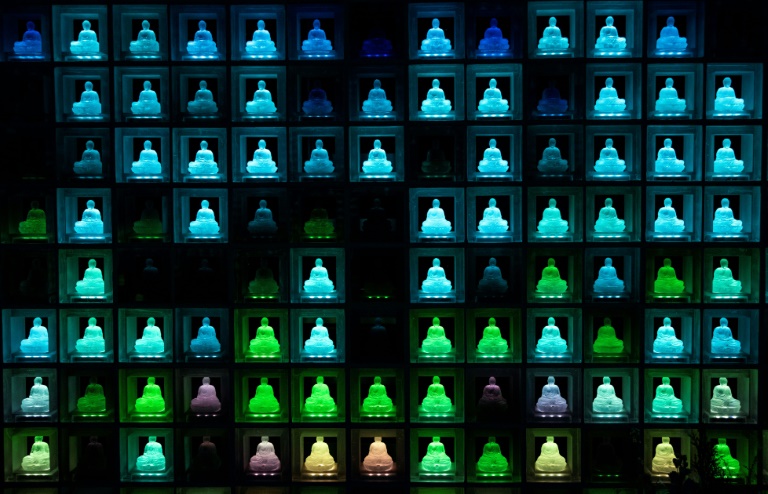
Kokokuji temple, founded in Tokyo in 1630, has created a unique octagon-shaped space with walls of floor-to-ceiling displays of individual glass Buddha statuettes.

Each of the statues — over 2,000 in all — symbolises an individual whose ashes are stored there. When visitors scan an ID or enter a family name, the Buddha assigned to their loved one is illuminated.

The entire display can also be lit, and the system can produce various mosaic patterns with different statues illuminated in a variety of colours to produce a calming ambience in the dim sanctuary.

The display is meant to show that each of us is surrounded by many more, and all will join Buddha in the after-life, said resident monk Taijun Yajima, who built the Ruriden facility with artists and engineers.

He says mourning remains the same even in modern cemeteries.

“Children should look after the graves and the souls of parents… But in some people’s reality, it is simply not possible,” he said.

“I thought about how those people can be laid to rest in a warm-hearted manner, and this is the answer.”

Oil prices up as traders weigh demand and supply issues

Oil began inching upward on Thursday after a day of losses over demand concerns linked to the Covid-19 lockdown in China.

Ongoing restrictions in the country, including in the economic hub of Shanghai where tens of millions are confined to their homes, have hit transport networks but traders are balancing the demand shock alongside threats to supply caused by the war in Ukraine with European Union countries mulling bans on Russian crude. 

The United States has said it will release a substantial portion of its oil reserves to cushion the shortfall. 

“Oil is still trading mixed after Tuesday’s sharp pullback but is opening in Asia near the midpoint of yesterday’s trading range – the US inventory draws lean helpful. Still, there is not much incremental news overnight, with a trajectory from here really hinging on whether other nations join the UK/US in banning Russian oil imports,” Stephen Innes of SPI Asset Management said.

Markets in Asia were largely up, with Japan’s Nikkei 225 gaining over a percent in early trade, with brokers staying optimistic over a falling yen for a third straight day. 

But Hong Kong’s Hang Seng Index continued its downward spiral and Shanghai also opened lower as news from China around Covid-19 restrictions, interest rate cuts, and curbs on tech companies remained a cause of concern. 

Seoul, Jakarta, Taipei, and Sydney were all marginally higher. 

European markets pushed ahead yesterday aided by news of a return to growth in eurozone industrial output in February.

But mixed results on Wall Street, where losses linked to dwindling subscriptions at streaming behemoth Netflix, also weighed on Asian trade with tech stocks down in Hong Kong.

Players will likely remain cautious ahead of Federal Reserve Chair Jerome Powell’s remarks before the US central bank meets next, with concerns high about rate hikes.  

“Fed Chair Powell and ECB President Lagarde speak at an IMF Panel, while BoE Governor Bailey speaks at a separate event later Thursday,” Innes said. 

“These central bankers, notably Powell, are unlikely to push back against market pricing, suggesting that the recent global bond market rally is a respite on the way to higher yields.”

– Key figures around 0300 GMT –

Tokyo – Nikkei 225: UP 1.21 percent at 27,547.24 

Shanghai – Composite: DOWN 0.93 percent at 3,121.67

Hong Kong – Hang Seng Index: DOWN 1.14 percent at 20,705.48 

Euro/dollar: DOWN at $1.0828 from $1.0850 

Dollar/yen: UP at 128.47 yen from 127.84 yen

Pound/dollar: DOWN at $1.3049 from $1.3065

Euro/pound: DOWN at 82.96 pence from 83.03 pence

West Texas Intermediate: UP 1.22 at $103.43 per barrel

Brent North Sea crude: UP 1.28 percent at $108.17 per barrel

New York – Dow: UP 0.7 percent at 35,160.79 (close)

London – FTSE 100: UP 0.4 percent at 7,629.22 (close) 

burs-ssy/je

End of an era as Netflix faces stagnation challenges

Having lost subscribers for the first time in more than a decade, Netflix faces the new challenge of stagnation from a position of strength.

A drop of just 200,000 users — less than 0.1 percent of its total customer base — was enough to send Wall Street panicking, with shares plunging more than 30 percent on Wednesday.

The loss of subscribers and the company’s various plans to revive business “change the historically simple story” of Netflix’s solid success, said Wells Fargo analysts, who cut its price target in half.

“The new outlook is clear as mud,” they said.

If the Q1 loss of subscribers might seem a blip at first blush, Netflix is signaling otherwise: The company anticipates a much larger drop in its second quarter — of around two million net subscribers.

“I’m not sure that’s a turning point” for Netflix, said Scott Zari of S&P Global Ratings.

“But I think it is indicative of maybe a new phase of slower growth,” he said.

Bank of America analysts said in a note that Netflix “made it clear that we can expect very low subscriber growth in ’22 and ’23 with no margin expansion.”

The shift was felt even in the tone of the company’s results presentation on Tuesday evening.

The affair focused less on the streamer’s mega hits such as “Bridgerton” and “Ozark” and more on combating the 100 million households who watch Netflix for free thanks to shared passwords.

“When we were growing fast, it wasn’t the high priority to work on,” co-founder Reed Hastings admitted. “And now we’re working super hard on it.”

Chief operating officer Gregory Peters said Netflix wasn’t trying to shut down sharing, “but we’re going to ask you to pay a bit more to be able to share.”

According to Zari, “future growth will be dependent on how can they monetize those households.”

– Advertising is coming –

To attract viewers, Netflix is preparing cheaper subscriptions with advertising — which it expects to roll out in the next couple years.

The Los Gatos, California-based company has long defended its no-ads model, which set it apart from competitors such as Disney+, HBO Max and Apple.

For Pivotal analyst Jeff Wlodarczak, streaming “appears nearly fully penetrated globally post-Covid,” and the companies now must set their sights on converting pirates into subscribers, gaining greater market share from each other and driving up prices.”

Increasing prices won’t help Netflix in the short term, though it raised its fees in January to the extent that it is now the most expensive among the major streamers.

“I think they’ll have to adjust their business,” said Paul Hardart, a professor at New York University, including “on the cost side, investing in content.”

For University of Richmond professor Joel Mier, Netflix’s price increases and axing of password sharing are “peripheral but meaningful” short-term solutions, while its long-term strategy remains “investing in local-content creation and establishing its gaming presence.”

With 221 million subscribers, “Netflix is by far the market leader in the streaming space,” Zari said.

“They’re very far ahead, particularly in the global marketplace,” said Hardart. “I think it will give them a lot of advantages.”

The problems Netflix faces are “not good news” for the company, he emphasized.

But as the global leader, whatever Netflix goes through, the other streamers are also likely to face eventually.

It’s “probably worse news for the other services that are starting to try to build themselves,” he said.

Tesla reports record profits, bullish on 2022 output

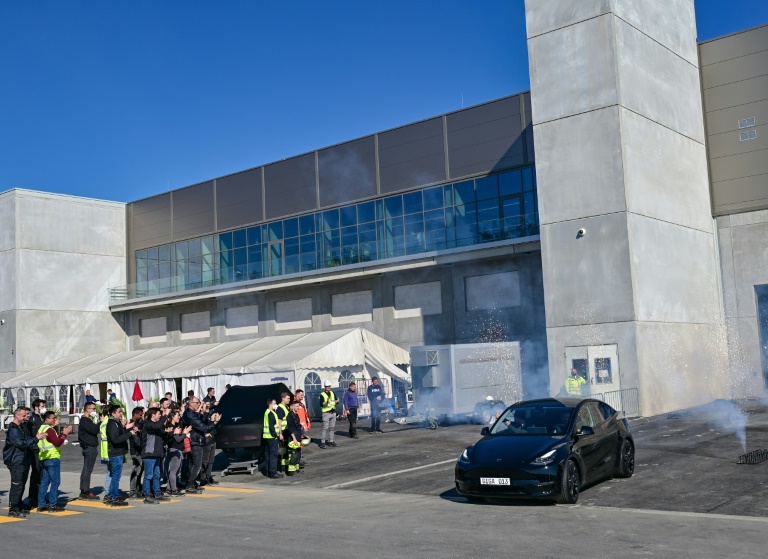
Tesla reported another banner quarter of profit growth Wednesday on pricier vehicles and said its 2022 output plan was on track despite ongoing supply chain problems and a hit from recent Covid-19 lockdown measures in China.

Elon Musk’s high-flying electric vehicle company notched a new record in quarterly profits of $3.3 billion following the unveiling of new factories in Germany and the US state of Texas that have begun commercial deliveries.

Headwinds facing the company include increasing raw material costs, as well as a weeks-long outage at the Shanghai plant following the Chinese government’s latest Covid-19 restrictions.

“Our own factories have been running below capacity for several quarters as supply chain became the main limiting factor, which is likely to continue through the rest of 2022,” Tesla said in its earnings press release.

Still Musk said it “seems likely” the company will produce more than one and a half million vehicles in 2022, which would be above the company’s long-term target of at least 50 percent output growth.

“We are growing very rapidly year over year and remain confident of exceeding 50 percent growth fore forseeable future,” Musk said on a conference call with investors and analysts. “The future is very exciting.”

But the Model 3 Tesla currently lists for a starting price of $42,690, putting it beyond reach for many households.

Musk, who has long spoken of the need to make electric vehicles affordable for the masses to combat climate change, insisted “we absolutely want to make EVs as affordable as possible.”

“It’s been very difficult when inflation is at a 40-or 50-year high” said Musk, who noted how suppliers have sought 20 to 30 percent price increases for parts.

– Struggle for affordability –

For the latest quarter, Tesla reported profits of $3.3 billion, up 658 percent from the year-ago period on an 81 percent jump in revenues to $18.8 billion.

The company produced 305,407 autos in the period, slightly below the level in the prior quarter, but enough to push output above one million over the last 12 months.

Chief Financial Officer Zach Kirkhorn said Tesla’s Shanghai plant “lost about a month of built volume” due to the lockdown, but that manufacturing “is resuming at limited levels working to get back to full production as quickly as possible.”

Kirkhorn said cost inflation on raw materials had accelerated during the first quarter, and second-quarter costs are trending “slightly higher” than that.

As supply chain problems have persisted, auto analysts have cautioned that the EV build-out could be constrained by limited raw materials.

ISeeCars analyst Karl Brauer cited rising costs for lithium, palladium and nickel as a challenge for Tesla and the auto industry more generally.

“Cost and supply concerns around various battery components isn’t going away, and will likely grow as global EV production and demand grows,” Brauer said.

“Electric vehicles have always struggled to be as cost effective as internal combustion cars. And there’s every indication that struggle will continue.”

Musk acknowledged some of these challenges for EVs, calling for entrepreneurs to focus on building lithium supply.

“Can more people please get into the lithium business?” Musk quipped. “Do you like minting money? The lithium business is for you!”

The results are the latest in a series of strong earnings that has brought glory to Musk, who has most recently launched an unsolicited bid to acquire Twitter.

The social media platform is fighting the effort, unveiling a “poison pill” plan that would make it harder for the billionaire to get a controlling stake. The matter did not come up during the Tesla conference call.

Tesla shares rose 5.0 percent to $1,026.99 in after-hours trading.

US leads G20 boycott of Russian finance officials

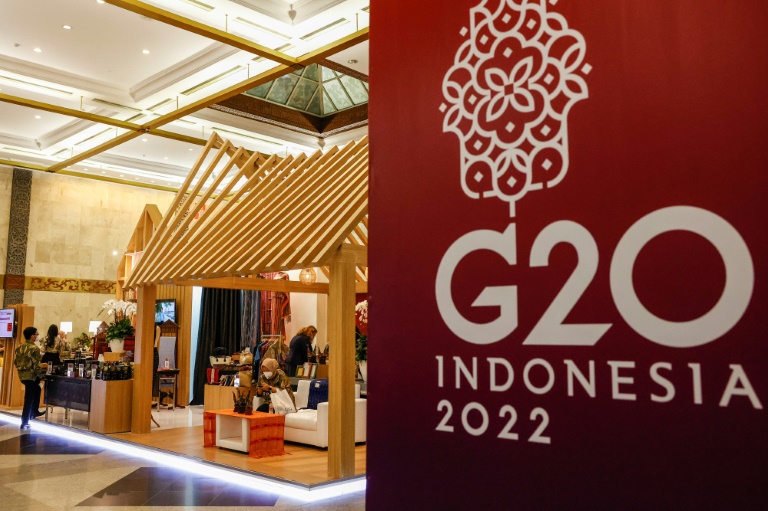
US Treasury Secretary Janet Yellen led a multinational group of finance chiefs on a walkout Wednesday as Russian officials spoke during a meeting of the G20, in the latest protest by Western nations over Moscow’s invasion of Ukraine.

Russia’s attack on its neighbor loomed over the meeting of finance ministers and central bank governors from the world’s most developed countries, the first since President Vladimir Putin ordered the invasion in late February.

British and Canadian officials also took part in the boycott, officials confirmed, underscoring the boiling tensions at the gathering convened to address global challenges like rising debt and a possible food crisis.

“Multiple finance ministers and central bank governors including Ukraine Finance Minister (Sergiy Marchenko) and Secretary Yellen walked out when Russia started talking at the G20 meeting,” a source familiar with the event told AFP. 

“Some finance ministers and central bank governors who were virtual turned their cameras off when Russia spoke.”

Canadian Deputy Prime Minister Chrystia Freeland tweeted a photograph of the officials who left the meeting, saying, “The world’s democracies will not stand idly by in the face of continued Russian aggression and war crimes.”

During the gathering, French Finance Minister Bruno Le Maire called on Russian delegates to refrain from attending the sessions, saying “war is not compatible with international cooperation.”

The Group of 20, chaired by Indonesia this year, includes major economies like the United States, China, India, Brazil, Japan and several countries in Europe, including Russia. 

– ‘Very important forum’ –

Indonesian Finance Minister Sri Mulyani Indrawati, who led the meeting said, the walkout was done “without disrupting… our discussion” on the substance of the agenda.

“All members see the G20 as a very important forum,” she told reporters. “So I’m confident that this will not erode the cooperation as well as the role of the G20.”

Prior to the meeting, German Finance Minister Christian Lindner said the country, which chairs the G7 group of liberal democracies, would try to find common ground, but ruled out providing “a stage for Russia to spread propaganda and lies.” He did not join the walkout.

Russian Finance Minister Anton Siluanov attended the meeting virtually, and “called on the partners to avoid politicizing the dialogue and stressed that the G20 has always been and remains primarily an economic format,” his ministry said in a statement.

The finance officials are gathering on the sidelines of the World Bank and IMF’s spring meetings in Washington. 

Despite the friction, IMF Managing Director Kristalina Georgieva said global cooperation “must and will continue,” pointing to multiple issues that “no country can solve on its own.”

Georgieva, who heads an institution with 189 members, told reporters, “I can vouch for the fact that it is more difficult when there are tensions, but it is not impossible.”

– Debt woes –

The meetings in Washington are focused on how to help the global economy recover from the new shock caused by Russia’s invasion, which has driven prices for food and fuel higher and caused the IMF to lower its global growth outlook to 3.6 percent for this year.

Western nations have retaliated for the bloody incursion with sanctions meant to harm Russia’s economy and turn it into a pariah state.

US President Joe Biden has proposed ejecting Russia from the G20.

But Mark Sobel, a former Treasury official who is now US chairman of the Official Monetary and Financial Institutions Forum, told AFP there was no obvious mechanism for booting Moscow, which is to varying degrees supported by China and India.

“I think that it really does raise a fundamental question about how are you going to manage global governance,” he said of the tensions.

The divide also bodes ill for the G20 Common Framework created during the pandemic to help heavily indebted countries find a path to restructure their obligations, which Sobel said is “flailing” as China and private-sector creditors drag their feet on participating.

United Airlines bullish on Q2 as it reports another loss

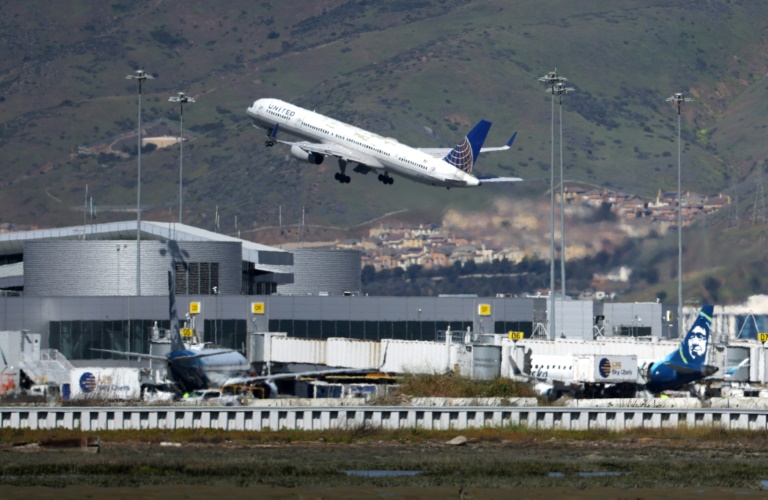
United Airlines reported another quarterly loss Wednesday on the lingering drag from Covid-19 but offered a bullish outlook based on surging travel demand.

Chief Executive Scott Kirby described the current demand environment as “the strongest it’s been in my 30 years in the industry,” echoing commentary from other airline CEOs eager for the pandemic to finally recede.

Shares soared in after-hours trading.

Airlines have struggled for more than two years, downsizing staff and surviving a cash-burning period with help from US government support programs and the private debt market.

In the most recent quarter, United reported a $1.4 billion loss, roughly the same shortfall as in the year-ago period. Revenues more than doubled to $7.6 billion.

But Kirby and other airline executives have vowed a robust post-pandemic turnaround — with the second quarter of 2022 potentially the start of a much better period.

For the second quarter, United is projecting a 17 percent jump from the 2019 period in the closely watched benchmark of revenue per available seat mile, constituting what United called “the strongest second quarter revenue guidance in company history.”

But one concern facing the industry is the drag from higher jet fuel prices. United projected costs of $3.43 per gallon in the second quarter, which would be more than 74 percent above the 2021 level.

Shares of United jumped 8.1 percent to $50.27 in after-hours trading.

Italy signs gas deal with Angola seeking to end dependence on Russia

Italy on Wednesday penned a deal with Angola to ramp up gas supplies from the southern African country as it urgently scrambles to break away from Russian gas over the Ukraine war.

A declaration of intent was signed to develop “new” natural gas ventures and to increase exports to Italy, a statement from the Italian foreign minister announced.

“Today we have reached another important agreement with Angola to increase gas supplies,” Foreign Minister Luigi Di Maio said in the statement.

“Italy’s commitment to differentiate energy supply sources is confirmed,” said Di Maio at the end of a two-and-half-hour long visit to Luanda. 

Prime Minister Mario Draghi wants to add Angola and Congo-Brazzaville to a portfolio of suppliers to substitute Russia, which provides about 45 percent of Italian gas.

“We do not want to depend on Russian gas any longer, because economic dependence must not become political subjection,” he said in an interview with the Corriere della Sera daily published on Sunday.

“Diversification is possible and can be implemented in a relatively short amount of time — quicker than we imagined just a month ago,” he said.

Draghi was due to go himself but after testing positive for Covid-19 sent Di Maio and Ecological Transition Minister Roberto Cingolani in his place.

Cingolani described the deal as “an important agreement that gives impetus to the partnership between Italy and Angola in the fields of renewables, biofuels, LNG (liquefied natural gas) and training in technology and environment”.

The two ministers, accompanied by Claudio Descalzi, chief executive of Italian energy giant ENI, also met President Joao Lourenco. They were later headed to neighbouring Congo-Brazzaville where they are expected to meet President Denis Sassou Nguesso on Thursday.

“This is a race against time to make sure we stock gas and oil for the next winter season,” said Francesco Galietti, head of Rome-based consultancy Policy Sonar.

Angola’s Foreign minister Tete Antonio described the signature as “very important”.

A similar declaration will be signed in the Republic of Congo.

The foray follows the clinching of agreements with Algeria and Egypt in recent weeks.

Algeria is currently Italy’s second-largest supplier, providing around 30 percent of its consumption.

ENI said the deal with Algeria’s Sonatrach would boost deliveries of gas through the Transmed undersea pipeline by “up to nine billion cubic metres per year” by 2023-24.

Transmed only had spare pipeline capacity of 7.8 billion cubic metres per year in 2021 — though it has said it is ready to expand.

Italy has also been in talks with Azerbaijan over the expansion of the Trans-Adriatic Pipeline (TAP).

– ‘Fanciful’ –

The Egypt accord could result in up to three billion cubic metres of liquefied natural gas (LNG) being bound for Europe and Italy in particular this year, ENI said.

Italy is looking into buying or renting two floating storage and regasification units (FSRU) to allow it to import more LNG.

Diversification will not be cheap, warn experts, who foresee extra taxes passed on to businesses and families.

Davide Tabarelli, head of energy think tank Nomisma Energia, said Rome was rightly exploiting the “excellent relationships” that ENI has built up over 69 years in Africa, where it is the sector leader in terms of production and reserves.

But the idea of replacing Russian gas “in the short term” was “fanciful”, he told AFP. “It will take at least two or three years.”

The government said it expects to get the floating regasification units into place within 18 months.

It has also talked of kick-starting stalled projects for two onshore regasification plants, which would take some four years to build.

– ‘Operation thermostat’ –

Italy is one of Europe’s biggest guzzlers of gas, which currently represents 42 percent of its energy consumption, and it imports 95 percent of the gas it uses.

The government hopes to reduce that by accelerating the investment in renewables and has vowed to cut red tape on wind and solar farms.

Draghi has called for a collective sacrifice, asking Italians this month: “Do we want to have peace or do we want to have the air conditioning on?”

His rallying cry was met with some grumbling in a country feeling the effects of global heating, which science shows is driven by humans burning fossil fuels.

Undeterred, the government is readying so-called “operation thermostat”, which could see the public sector turn down heating in schools and offices by one degree, and the equivalent for air conditioning in the summer.

The rule would apply to private households and companies too, though it would be difficult to police.

It could save some four billion cubic metres of natural gas a year — or around 14 percent of the total gas imported from Russia, according to La Stampa newspaper.

Europe stocks shine but US mixed as Netflix plunges

European stocks rose Wednesday as investors tracked corporate earnings and developments in the Ukraine conflict, while US stocks ended mixed and Netflix shares tumbled after the streaming giant reported a drop in subscribers.

Oil prices slid further after having slumped the previous day on demand concerns.

“The upbeat market mood, which helped Wall Street close firmly higher yesterday, has followed through into Europe,” City Index senior market analyst Fiona Cincotta told AFP.

Frankfurt won 1.5 percent and Paris rose 1.4 percent, aided by news of a return to growth in eurozone industrial output in February.

London added 0.4 percent, held back by mining shares that were penalized following disappointing performance by Rio Tinto due to the pandemic and production issues.

Europe equities and oil had dropped Tuesday as Moscow launched its eastern offensive in Ukraine and after the IMF slashed its 2022 global economic growth forecasts by 0.8 percentage points, largely over inflationary concerns linked to the war and the pandemic.

“Whilst the Russian war remains a key driver in the markets, the bad news has been priced in for now,” Cincotta said.

“Instead, some areas of optimism are arising with banks outperforming after the ECB (European Central Bank) soothed nerves with news that all big banks in the eurozone can withstand Russian write-offs,” she added.

– Netflix ‘shocker’ –

Across the Atlantic, Wall Street had a mixed session, with the Dow seeing a decent gain but the Nasdaq dropping more than a point thanks to Netflix, which had released disappointing earnings following the close Tuesday.

The streaming giant plunged just over 35 percent after it announced its first drop in quarterly subscriptions in a decade, blaming the erosion to the suspension of its service in Russia due to Moscow’s invasion of Ukraine.

“There (are) no two ways to look at it, Netflix was a shocker and is likely to take the wind out of the Nasdaq’s recent rally, or at least put it on pause,” Cincotta said.

The tech-rich index closed 1.2 percent lower.

“That said, broadly speaking earnings season has been reasonably solid so far, economic data hasn’t revealed any major cracks either, which is helping to keep risk sentiment buoyant,” she added.

Michael Hewson at CMC Markets said that the slump in Netflix shares “appears to be prompting a significant de-risking in the more highly valued areas of the US market.”

In Asia trading, concerns about China’s economy hit trading in Shanghai and Hong Kong.

Shanghai’s main stock index was Asia’s biggest faller, losing 1.4 percent as the People’s Bank of China (PBoC) kept key lending rates unchanged amid uncertainty over the impact of ongoing Chinese Covid restrictions.

Hong Kong — which plummeted on Tuesday over concerns about Beijing’s ongoing tech-sector crackdown — also ended down.

“PBoC policymakers realize the futility of cutting rates during a lockdown as policies incentivizing lending will have a minimal short-term positive impact on activity so long as mobility restrictions remain in place,” noted independent analyst Stephen Innes.

– Key figures around 2055 GMT –

New York – Dow: UP 0.7 percent at 35,160.79 (close)

New York – S&P 500: DOWN 0.1 percent at 4,459.45 (close)

New York – Nasdaq: DOWN 1.2 percent at 13,453.07 (close)

EURO STOXX 50: UP 1.7 percent at 3,896.81 (close)

London – FTSE 100: UP 0.4 percent at 7,629.22 (close) 

Frankfurt – DAX: UP 1.5 percent at 14,362.03 (close)

Paris – CAC 40: UP 1.4 percent at 6,624.91 (close)

Tokyo – Nikkei 225: UP 0.86 percent at 27,217.85 (close)

Shanghai – Composite: DOWN 1.4 percent at 3,151.05 (close) 

Hong Kong – Hang Seng Index: DOWN 0.4 percent at 20,944.67 (close)

Euro/dollar: UP at $1.0850 from $1.0788 late on Tuesday

Dollar/yen: DOWN at 127.84 yen from 128.91 yen

Pound/dollar: UP at $1.3065 from $1.2998

Euro/pound: UP at 83.03 pence from 82.99 pence

Brent North Sea crude: UP 0.1 percent at $107.32 per barrel

West Texas Intermediate: FLAT at $102.56 per barrel

burs-rl/rlp/cs/caw

Italy signs gas deal with Angola seeking to end dependence on Russia

Italian ministers on Wednesday signed a deal with Angola to ramp up gas supplies from the southern African country as Italy urgently scrambles to break away from Russian gas over the Ukraine war.

A declaration of intent was signed to develop “new” natural gas ventures and to increase exports to Italy, a statement from the Italian foreign minister announced.

“Today we have reached another important agreement with Angola to increase gas supplies,” Foreign Minister Luigi Di Maio said in the statement.

“Italy’s commitment to differentiate energy supply sources is confirmed,” said Di Maio at the end of a two-and-half-hour long visit to Luanda. 

Prime Minister Mario Draghi wants to add Angola and the Congo Republic to a portfolio of suppliers to substitute Russia, which provides about 45 percent of Italian gas.

“We do not want to depend on Russian gas any longer, because economic dependence must not become political subjection,” he said in an interview with the Corriere della Sera daily published on Sunday.

“Diversification is possible and can be implemented in a relatively short amount of time — quicker than we imagined just a month ago,” he said.

Draghi was due to go himself but after testing positive for Covid-19, sent Di Maio and Ecological Transition Minister Roberto Cingolani in his place.

Cingolani described the deal as “an important agreement that gives impetus to the partnership between Italy and Angola in the fields of renewables, biofuels, LNG and training in technology and environment”.

The two ministers, accompanied by Claudio Descalzi, chief executive of Italian energy giant ENI, also met President Joao Lourenco. They were headed to neighbouring Brazzaville where they are expected to meet President Denis Sassou Nguesso on Thursday.

“This is a race against time to make sure we stock gas and oil for the next winter season,” said Francesco Galietti, head of Rome-based consultancy Policy Sonar.

A similar declaration will be signed in the Republic of Congo.

The foray follows the signing of agreements with Algeria and Egypt in recent weeks.

Algeria is currently Italy’s second-largest supplier, providing around 30 percent of its consumption.

ENI said the deal with Algeria’s Sonatrach would boost deliveries of gas through the Transmed undersea pipeline by “up to nine billion cubic metres per year” by 2023-24.

Transmed only had spare pipeline capacity of 7.8 billion cubic metres per year in 2021 — though it has said it is ready to expand.

Italy has also been in talks with Azerbaijan over the expansion of the Trans-Adriatic Pipeline (TAP).

– ‘Fanciful’ –

The Egypt accord could result in up to three billion cubic meters of liquefied natural gas (LNG) bound to Europe and Italy in particular this year, ENI said.

Italy is looking into buying or renting two floating storage and regasification units (FSRU) to allow it to import more LNG.

Diversification will not be cheap, warn experts, who foresee extra taxes passed on to businesses and families.

Davide Tabarelli, head of energy think tank Nomisma Energia, said Rome was rightly exploiting the “excellent relationships” that ENI has built up over 69 years in Africa, where it is the sector leader in terms of production and reserves.

But the idea of replacing Russian gas “in the short term” was “fanciful”, he told AFP. “It will take at least two or three years.”

The government said it expects to get the floating regasification units into place within 18 months.

It has also talked of kick-starting stalled projects for two onshore regasification plants, which would take some four years to build.

– ‘Operation thermostat’ –

Italy is one of Europe’s biggest guzzlers of gas, which currently represents 42 percent of its energy consumption, and it imports 95 percent of the gas it uses.

The government hopes to reduce that by accelerating the investment in renewables and has vowed to cut red tape on wind and solar farms.

Draghi has called for a collective sacrifice, asking Italians this month: “Do we want to have peace or do we want to have the air conditioning on?”

His rallying cry was met with some grumbling in a country feeling the effects of global heating, which science shows is driven by human burning of fossil fuels.

Undeterred, the government is readying so-called “operation thermostat”, which could see the public sector turn down heating in schools and offices by one degree, and the equivalent for air conditioning in the summer.

The rule would apply to private households and companies too, though it would be difficult to police.

It could save some four billion metric cubes of natural gas a year — or around 14 percent of the total gas imported from Russia, according to La Stampa newspaper.

Close Bitnami banner
Bitnami