AFP

Global stocks dip on Fed tightening, China prices

Asian stocks posted losses on Monday as unease lingered over tightening monetary policy by the Fed and rising prices in China.

The drop followed a negative lead from Wall Street. The S&P 500 and the Nasdaq retreated as the yield on the 10-year US Treasury note climbed above 2.7 percent — a signal markets are preparing for more tightening as the Federal Reserve battles inflation.

In Tokyo, the Nikkei closed 0.6 percent lower, while Hong Kong and Shanghai lost more than three percent and two percent respectively.

Taipei and Seoul were also down, while Sydney and Jakarta posted slight gains.

In early European trade, the Paris CAC 40 shed 0.6 percent and Frankfurt’s DAX slid 1.2 percent. London’s FTSE 100 index slid 0.6 percent on news that the UK economy had ground to a near halt.

“Stocks are soft at the Monday (Asian) open on increasing evidence the Federal Reserve will take a more committed approach to its monetary policy inflation-fighting stance,” said Stephen Innes at SPI Asset Management.

“However, markets have been surprisingly resilient as discussions under the surface debated whether this week’s US March CPI data will hint at the peak of the inflation cycle and help the Fed’s chance to better engineer a soft landing, however narrow that path may seem.”

The US central bank has recently taken a hawkish tone as it embarks on an aggressive tightening path, prompting traders to fret over the prospect of higher interest rates.

“Today, the mantra for many investors is ‘Don’t fight the Fed when it is fighting inflation’,” Ed Yardeni, president of Yardeni Research, wrote in a note.

In China, factory-gate inflation was higher than expected in March, official data showed, as Russia’s war on Ukraine pushes up oil prices while a domestic Covid-19 resurgence strains food supplies and consumer costs.

The producer price index — measuring the cost of goods at the factory gate — grew 8.3 percent on-year, National Bureau of Statistics (NBS) figures showed.

“It is China’s Covid situation that is making Asia nervous,” said Jeffrey Halley, senior market analyst with OANDA. “The weekend press was full of stories of locked down Shanghai residents unable to secure food supplies, with cases rising to 27,000 yesterday.”

“With China’s government doggedly sticking to its Covid-zero policy, fears are increasing that an extended lockdown in China, which may spread to other major industrial cities will darken an already cloudy outlook for China’s growth.”

– Indonesia’s GoTo soars on debut –

In Jakarta, Indonesia’s biggest tech firm soared on its debut after a billion-dollar IPO — the world’s fifth-biggest this year.

GoTo’s shares jumped by up to 23 percent in initial trading and hovered around 15 percent at 388 rupiah during the session.

“Despite global market volatility, investor interest has been strong, reflecting the rapidly growing demand in Southeast Asia for our on-demand, e-commerce and financial technology services, as well as confidence in GoTo’s position as the largest digital ecosystem in Indonesia,” CEO Andre Soelistyo said in a press release.

The euro climbed against the dollar over the course of the day, suggesting some relief over the French election.

Investors had fretted about the implications of a victory for President Emmanuel Macron’s nationalist rival Marine Le Pen in the midst of the war in Ukraine, given her long-standing sympathies for Russia.

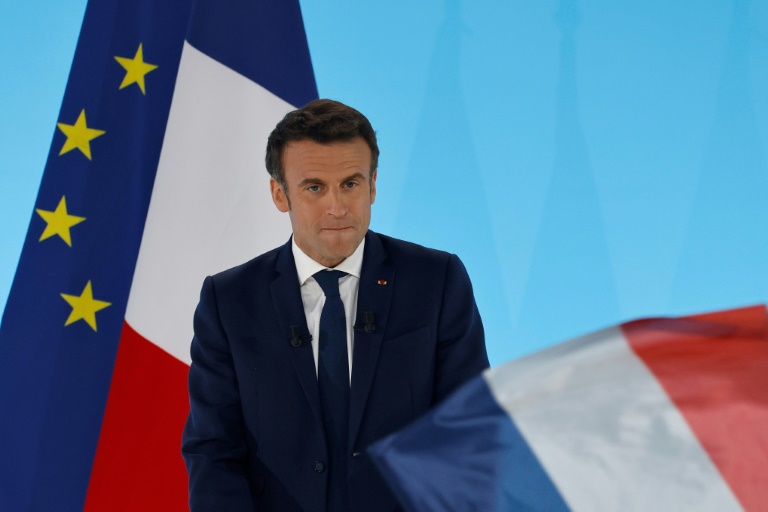
Macron was set to beat Le Pen in the first round of elections Sunday by a larger-than-expected margin, the two candidates advancing to a run-off later this month.

“Make no mistake: nothing is decided,” Macron told supporters.

– Key figures around 0810 GMT –

Tokyo – Nikkei 225: DOWN 0.61 percent at 26,821.52 (close)

Hong Kong – Hang Seng Index: DOWN 3.03 percent at 21,208.30 (close)

Shanghai – Composite: DOWN 2.61 percent at 3,167.13 (close)

Brent North Sea crude: DOWN 1.61 percent at $101.05 per barrel

West Texas Intermediate: DOWN 1.91 percent at $96.38 per barrel

Euro/dollar: UP at $1.0882 from $1.0877

Pound/dollar: DOWN at $1.3002 from $1.3025

Euro/pound: UP at 83.69 pence from 83.51 pence

Dollar/yen: UP at 125.35 yen from 124.34 yen

New York – Dow: UP 0.4 percent at 34,721.12 (close)

— Bloomberg News contributed to this report —
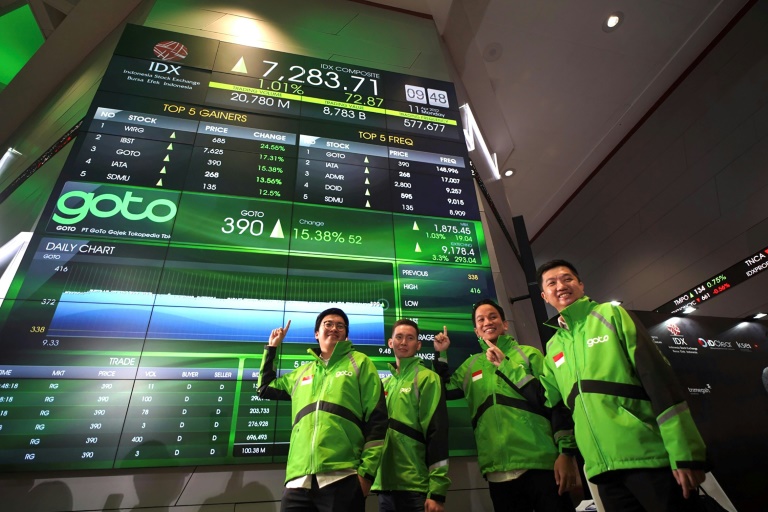
Indonesia tech giant GoTo soars on market debut

Indonesia’s biggest tech firm soared in Jakarta trade Monday after a billion-dollar IPO that was the world’s fifth-biggest this year, defying recent heavy weather for Asian tech stocks.

GoTo, the largest digital ecosystem in the archipelago nation of 270 million people, was formed by the merger of ride-hailing company Gojek and e-commerce platform Tokopedia in May 2021.

Clad in the signature black-and-green jacket of a Gojek driver, GoTo CEO Andre Soelistyo pressed the 9 am opening bell at the Jakarta stock exchange.

“Despite global market volatility, investor interest has been strong, reflecting the rapidly growing demand in Southeast Asia for our on-demand, e-commerce and financial technology services, as well as confidence in GoTo’s position as the largest digital ecosystem in Indonesia,” he said in a press release.

His company’s shares jumped by up to 23 percent in the first exchanges and fluctuated around 15 percent at 388 rupiah during the trading session.

The company raised about $1.1 billion in its IPO that concluded last week, priced at 338 rupiah per share, representing a market value of about $28 billion, it announced Monday.

It has sold shares for $954.7 million (13.7 trillion rupiah) plus $146.3 million from treasury shares for the purpose of over-allotment.

Based on the total funds raised, GoTo’s IPO is the third-largest in Asia and fifth-largest in the world this year, it said.

The company announced last week it would distribute shares worth about $21.6 million to hundreds of thousands of its drivers.

One of the lucky drivers was Ryan Supriandi, who has been a Gojek driver for nearly seven years. 

Supriandi was pleasantly surprised to receive a mobile notification saying the company had granted him 4,000 shares, worth about $90.

“I was happy and confused at the same time — what am I going to do with it? Many drivers don’t understand shares or markets,” the 34-year-old told AFP. 

President Joko Widodo congratulated GoTo on its debut.

“I hope GoTo IPO will motivate Indonesian youth to give new energy for the leap of our country’s economic development,” Widodo said.

But Reza Priyambada, a stock market analyst from CSA Research Institute, said that while it was still too early to judge how GoTo would perform, investors should proceed cautiously.

“While they do claim to be the biggest marketplace in Indonesia, they are still suffering losses at the moment,” Priyambada said.

“Right now investors are still under a euphoria, but we don’t know if they really understand how GoTo works, what are their prospects and how the management is run.”

GoTo has not published profits yet. The exchange reported that from January to July 2021 the company posted more than $556 million in net losses.

Last year, another Indonesian unicorn, Bukalapak, launched the biggest initial offering in the history of the country’s stock market, raising more than $1.5 billion.

However, shares in the online marketplace have since dropped by around 60 percent, instilling doubts in the Southeast Asian tech sector.

A successful IPO for GoTo could open the door to a string of listings in the country as several tech firms — including Traveloka, LinkAja, J&T Express, Tiket and Blibli — are also set to make their market debut, according to local media.

GoTo, whose main competitors in the region are SEA and Grab, has said previously that it was also planning a US listing.

In November it said it had raised $1.3 billion from various investors including Google, Singapore’s Temasek and China’s Tencent.

Future in balance for German refinery fed on Russian oil

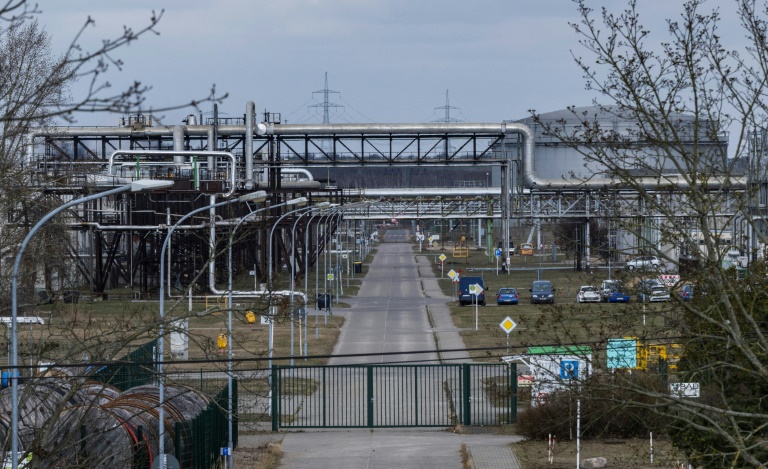
The PCK refinery in the German town of Schwedt has been processing crude oil from Russia since before reunification, but with a ban on Russian oil looming its future could be in doubt.

The mass of metal tubes and canisters in the former East Germany near the border with Poland employs 1,200 people, and many local businesses depend on the custom it brings to the area.

“The sense of not knowing what will happen tomorrow is very similar to how it felt after the fall of the Wall,” said Buckhard Opitz, 60, who has worked at the plant since 1977 and is a member of the local energy workers’ union.

Opitz has not forgotten the economic turbulence that came with reunification in 1990 — the dismantled industrial sites and painful wave of privatisations.

The Schwedt refinery survived, after a drastic restructuring, because “it was one of the most modern, because we were always on top”, Opitz said.

But since Russia invaded Ukraine on February 24, uncertainty has once again descended on the plant.

Although the PCK refinery supplies around 90 percent of the oil consumed in Berlin and the surrounding region, including Berlin Brandenburg airport, doubts still remain.

And the situation is complicated by the fact that Russian oil giant Rosneft, controlled by the Kremlin, is a majority shareholder in the site.

– ‘Friendship’ –

Though the EU’s latest package of sanctions agreed on Thursday was focused on coal, European Council President Charles Michel has said that the EU will have to impose oil and gas sanctions “sooner or later”.

Germany has ruled out an immediate embargo on all Russian energy, especially gas. But it aims to end Russian oil imports by the end of this year.

Oil pumped in from Russia is the lifeblood of the Schwedt refinery, which is serviced by a branch of the Druzhba pipeline, the world’s longest oil pipeline. 

The Druzhba project was commissioned in the 1960s to transport oil from the Soviet Union to Eastern Europe and remains a vital source of crude for many central European refineries. 

“Druzhba” means “friendship” in Russian.

In late 2021, Rosneft announced plans to increase its stake in the PCK refinery from 54 to 92 percent by buying shares from Shell.

Germany’s Federal Cartel Office approved the transaction a few days before the outbreak of the war but the Economy Ministry is examining whether it can still be stopped. 

Rosneft is chaired by Igor Sechin, an oligarch close to President Vladimir Putin and who has been the target of Western sanctions.

“The world was still normal then. There was no reason to refuse Russian involvement, just as there was German involvement in Russia,” Alexander von Gersdorff, a spokesman for the German oil industry association En2x, told AFP.

– ‘Pure speculation’ –

But Von Gersdorff now has a stark prediction: “Without oil from Russia, the Schwedt refinery would have to be shut down. There would be no petrol or diesel for Berlin, the surrounding region and western Poland.”

A spokeswoman for the refinery told AFP it was still examining the “feasibility of different logistical and technological scenarios as well as their operational feasibility”. 

Some media reports have proposed that Berlin temporarily take control of the plant —  a measure applied recently to Russian gas giant Gazprom’s German subsidiary.

But Opitz is convinced that alternatives to Russian oil can be found to keep the refinery alive.

Another pipeline ending in the German port city of Rostock could receive crude oil from other parts of the world, he said, and Poland could supply more via the port of Gdansk.

Von Gerstoff believes this is “unrealistic”.

Rostock cannot accommodate large enough tankers, he said, while Poland needs all its capacity to service its own energy needs. Plus the refineries in eastern Germany were specifically designed to operate with Russian crude oil.

But Opitz still has hope. “All this is pure speculation,” he said. “The final decision will be political.”

Elon Musk no longer joining Twitter board: CEO

Elon Musk is no longer joining the board of Twitter, the CEO of the social media company said late Sunday, in a reversal less than a week after announcing the Tesla and SpaceX chief would be appointed.

Musk was named to join the Twitter board after buying a major stake in the firm and becoming its largest shareholder.

“Elon has decided not to join our board,” Twitter CEO Parag Agrawal tweeted.

“Elon’s appointment to the board was to become officially effective 4/9, but Elon shared that same morning he will no longer be joining the board,” Agrawal said.

“I believe this is for the best.”

Currently the world’s richest man and with more than 80 million followers on the microblogging platform, Musk last week disclosed a purchase of 73.5 million shares — or 9.2 percent — of Twitter’s common stock. His announcement sent Twitter shares soaring more than 25 percent.

Agrawal had announced on Tuesday that Musk would be joining the board, describing him as “a passionate believer and intense critic of the service which is exactly what we need”.

Musk himself tweeted that he was “Looking forward to working with Parag & Twitter board to make significant improvements to Twitter in coming months!”

In his announcement Sunday, Agrawal shared a note he sent to Twitter, which said Musk’s appointment to the board would be contingent on a background check and that he would have to act in the best interests of the company once appointed.

“We have and will always value input from our shareholders, whether they are on our board or not,” he said.

“Elon is our biggest shareholder and we will remain open to his input,” Agrawal added.

Musk had agreed to limit his Twitter stake to a maximum of 14.9 percent while serving on the board but could now in theory increase his holding beyond that.

– Polarizing figure –

In an apparent reaction to the news, Musk tweeted a smirking emoji, without any other comment.

The billionaire tech entrepreneur is a frequent Twitter user, regularly mixing in inflammatory and controversial statements about issues or other public figures with remarks that are whimsical or business-focused. 

He has also sparred repeatedly with federal securities regulators, who cracked down on his social media use after a purported effort to take Tesla private in 2018 fell apart.

Musk’s decision not to take a seat on the Twitter board came after he tweeted Saturday asking whether the social media network was “dying” and to call out users such as singer Justin Bieber, who are highly followed but rarely post.

“Most of these ‘top’ accounts tweet rarely and post very little content,” the Tesla boss wrote, captioning a list of the 10 profiles with the most followers — a list which includes himself at number eight, with 81 million followers.

“Is Twitter dying?” he asked.

In other weekend tweets, Musk posted joke polls on whether to drop the “w” from Twitter’s name and on converting its San Franciso headquarters to a homeless shelter since no one shows up anyway”.

He also suggested removing ads, Twitter’s main source of revenue.

An outspoken and polarizing figure, the announcement of his appointment to the board had sparked misgiving among some Twitter employees, according to a Washington Post report.

Workers at the California-based social media company cited worries about Musk’s statements on transgender issues and his reputation as a difficult and driven leader, according to statements on Slack reviewed by the Post.

A California agency has sued Tesla, alleging discrimination and harassment against Black workers. The electric carmaker has rejected the charges, saying it opposes discrimination.

Ukraine crisis, inflation risks loom over ECB meeting

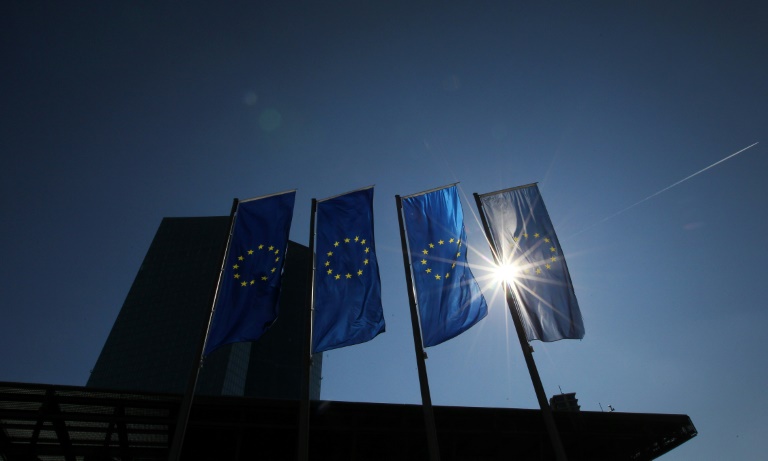
European Central Bank governors meet Thursday to ponder record-high inflation and fresh economic uncertainty caused by the war in Ukraine, with policymakers signalling a willingness to take action sooner rather than later.

At its last meeting in March, the ECB said it would accelerate the winding down of its bond-buying stimulus, with a view to ending the scheme in the third quarter.

An interest rate hike — the ECB’s first in over a decade — would follow “some time” after that, it said.

But since then prices have continued to spiral, with costs for energy, commodities and food surging in the wake of the war in Ukraine, adding to fears that the conflict will stunt a post-Covid recovery.

The US Federal Reserve and the Bank of England have already announced their first rate hikes to combat price pressures, leaving the ECB looking out of step.

Inflation jumped to a record 7.5 percent in the euro area last month, well beyond the ECB’s two-percent target.

Although no major policy changes are expected on Thursday, ECB chief Christine Lagarde’s press conference will be scoured for clues of the bank shifting into more aggressive inflation-fighting mode.

“In our view, policymakers are likely to bring forward their plans to raise interest rates,” said Capital Economics in a client note, “as inflation continues to surprise to the upside”.

Lagarde tested positive for Covid-19 last week but is still set to chair the meeting and take part in the virtual press conference afterwards.

– ‘Too late’ –

Central bankers use interest rate rises as a tool to tame inflation, but pulling the trigger too soon risks hurting economic growth.

The ECB’s dilemma has been complicated by Russia’s invasion of Ukraine and Western sanctions against Moscow, as the fallout from the upheaval to international trade and energy markets remains difficult to predict.

Minutes from the last ECB meeting revealed that many members of the 25-member governing council wanted “immediate further steps” to tackle inflation despite the darkening economic picture.

Some governors called for ending the bond purchases in the summer, opening the door to a rate hike in the third quarter.

The minutes showed that the ECB “has become more hawkish”, said ING bank economist Carsten Brzeski, describing those advocating for a tightening of monetary policy.

Joachim Nagel, the head of Germany’s powerful Bundesbank central bank, is among several ECB members who have said they expect the first rate rises this year.

He has cautioned against “acting too late”.

– Gloomy consumers –

The ECB has for years maintained an ultra-loose monetary policy, pushing interest rates to historic lows to stoke growth and drive up below-target inflation. 

It even set a negative deposit rate of minus 0.5 percent, meaning banks pay to park excess cash at the ECB.

It has also hoovered up billions of euros in government and corporate bonds each month to keep credit flowing in the 19-nation currency club. The massive stimulus is now being phased out, a move the ECB always said would come before any interest rate changes.

Capital Economics analysts said they now expect the ECB to raise the deposit rate as early as July, followed by two more hikes before the end of the year.

Lagarde recently warned that higher energy costs as a result of Europe’s reliance on Russian oil and gas would worsen Europe’s cost-of-living squeeze.

Households were becoming more pessimistic, she said, and could cut back further on spending.

“The longer the war lasts, the higher the economic costs will be and the greater the likelihood we end up in more adverse scenarios,” she said.

Lagarde, a former French finance minister, has urged European governments to help cushion the blow through fiscal policy.

France, Spain, Germany and other countries have already moved to ease the burden on households and companies, including through fuel tax cuts or subsidies for heating.

Elon Musk no longer joining Twitter board: CEO

Elon Musk is no longer joining the board of Twitter, the CEO of the social media company said late Sunday, in a reversal less than a week after announcing the Tesla chief would be appointed.

Musk was named to join the Twitter board after buying a major stake in the firm and becoming its largest shareholder.

“Elon has decided not to join our board,” Twitter CEO Parag Agrawal tweeted.

“Elon’s appointment to the board was to become officially effective 4/9, but Elon shared that same morning he will no longer be joining the board,” Agrawal said.

“I believe this is for the best.”

Currently the world’s richest man and with more than 80 million followers on the microblogging platform, Musk last week disclosed a purchase of 73.5 million shares — or 9.2 percent — of Twitter’s common stock.

Agrawal had announced on Tuesday that Musk would be joining the board, describing him as “a passionate believer and intense critic of the service which is exactly what we need”.

Musk himself tweeted that he was “Looking forward to working with Parag & Twitter board to make significant improvements to Twitter in coming months!”

In his announcement Sunday, Agrawal shared a note he sent to Twitter, which said Musk’s appointment to the board would be contingent on a background check and that he would have to act in the best interests of the company once appointed.

“Elon is our biggest shareholder and we will remain open to his input,” Agrawal added.

– Polarizing figure –

In an apparent reaction to the news, Musk tweeted a smirking emoji, without any other comment.

The billionaire tech entrepreneur is a frequent Twitter user, regularly mixing in inflammatory and controversial statements about issues or other public figures with remarks that are whimsical or business-focused. 

He has also sparred repeatedly with federal securities regulators, who cracked down on his social media use after a purported effort to take Tesla private in 2018 fell apart.

Musk’s decision not to take a seat on the Twitter board came after he tweeted Saturday asking whether the social media network was “dying” and to call out users such as singer Justin Bieber, who are highly followed but rarely post.

“Most of these ‘top’ accounts tweet rarely and post very little content,” the Tesla boss wrote, captioning a list of the 10 profiles with the most followers — a list which includes himself at number eight, with 81 million followers.

“Is Twitter dying?” he asked.

An outspoken and polarizing figure, the announcement of his appointment to the board had sparked misgiving among some Twitter employees, according to a Washington Post report.

Workers at the California-based social media company cited worries about Musk’s statements on transgender issues and his reputation as a difficult and driven leader, according to statements on Slack reviewed by the Post.

A California agency has sued Tesla, alleging discrimination and harassment against Black workers. The electric carmaker has rejected the charges, saying it opposes discrimination.

Asia tracks Wall St losses on Fed tightening concerns

Asian stocks opened with losses on Monday, as unease lingered over tightening monetary policy by the Fed and investors awaited earnings reports by retailers due this week.

Wall Street stocks mostly fell Friday. Both the S&P 500 and the Nasdaq retreated as the yield on the 10-year US Treasury note climbed above 2.7 percent, a signal markets are preparing for more tightening as the Federal Reserve battles inflation.

The losses continued Monday in Tokyo, as well as in Hong Kong and Shanghai where the main indexes lost more than two percent.

Taipei and Seoul were also down, while Sydney and Jakarta posted slight gains.

“Stocks are soft at the Monday open on increasing evidence the Federal Reserve will take a more committed approach to its monetary policy inflation-fighting stance,” said Stephen Innes at SPI Asset Management.

“However, markets have been surprisingly resilient as discussions under the surface debated whether this week’s US March CPI data will hint at the peak of the inflation cycle and help the Fed’s chance to better engineer a soft landing, however narrow that path may seem.”

And Takashi Hiroki, chief strategist of Monex, added: “Focus this week is on the US and Chinese consumer price indexes for March,” among other data, to glean clues on the Fed’s monetary policy and that of other central banks.

The US central bank has recently taken a hawkish tone as it embarks on an aggressive tightening path, prompting traders to fret over the prospect of higher interest rates.

The euro climbed as much as 0.7 percent against the dollar before paring the gain, suggesting some relief over the French election but ongoing wariness.

Investors had fretted about the implications of a victory for President Emmanuel Macron’s nationalist rival Marine Le Pen in the midst of the war in Ukraine, given her long-standing sympathies for Russia.

Macron was set to beat Le Pen in the first round of elections Sunday by a larger-than-expected margin, the two candidates advancing to a run-off later this month.

“Make no mistake: nothing is decided,” Macron told supporters.

– Key figures around 0230 GMT –

Tokyo – Nikkei 225: DOWN 0.71 percent at 26,793.46 (break)

Hong Kong – Hang Seng Index: DOWN 2.59 percent at 21,305.79

Shanghai – Composite: DOWN 2.38 percent at 4,129.91

Brent North Sea crude: DOWN 2.87 percent at $99.91 per barrel

West Texas Intermediate: DOWN 2.91 percent at $95.35 per barrel

Euro/dollar: DOWN at $1.0877 from $1.0910 Friday

Pound/dollar: DOWN at $1.3025 from $1.3081

Euro/pound: UP at 83.51 pence from 83.41 pence

Dollar/yen: UP at 124.34 yen from 123.63 yen

New York – Dow: UP 0.4 percent at 34,721.12 (close)

London – FTSE 100: UP 1.6 percent at 7,669.56 (close)

— Bloomberg News contributed to this report —
Indian sari weavers toil to keep tradition alive

In a dim room near the banks of India’s Ganges river, arms glide over a creaking loom as another silken fibre is guided into place with the rhythmic clack of a wooden beam.

Mohammad Sirajuddin’s cramped studio is typical of Varanasi’s dwindling community of artisans painstakingly working by hand to produce silk saris, uniquely cherished among their wearers as the epitome of traditional Indian sartorial style.

The city he calls home is revered among devout Hindus, who believe that cremation on the banks of its sacred waterway offers the chance to escape the infinite cycle of death and rebirth. 

But Sirajuddin’s own reflections on mortality are centred on his craft, with competition from more cost-efficient mechanised alternatives and cheap imports from China leaving his livelihood hanging by a thread. 

“If you walk around this whole neighbourhood, you’ll see that this is the only house with a handloom,” the 65-year-old tells AFP.

“Even this will be here only as long as I am alive. After that, nobody in this house will continue.”

Varanasi’s hand-weavers have cultivated a reputation for excellence over centuries, specialising in intricate patterns, floral designs and radiant golden brocades. 

The Banarasi saris — so-called in reference to the city’s ancient name — they produce are widely sought after by Indian brides and are often passed on from one generation to the next as family heirlooms.

The elegant garments fetch handsome prices — Sirajuddin’s current work will go on sale for 30,000 rupees ($390) — but the cost of inputs and cuts taken by middlemen leave little left for weavers. 

“Compared to the hard work that goes into making the sari, the profit is negligible,” Sirajuddin says.

His neighbours have all switched to electric looms for their garments, which lack the subtleties of hand-woven textiles and sell for just a third of the price but take a fraction of the time to finish. 

– ‘Thriving industries got killed’ – 

The fortunes of India’s textile trade — historically a cottage industry — have long been subject to sudden and devastating upheavals from abroad.

Its delicate fabrics were prized by the 18th century European elite but British colonisation and England’s industrial-era factories flooded India with much cheaper textiles, decimating the market for hand-woven garments. 

Decades of socialist-inspired central planning after independence bought some reprieve by shielding local handicrafts from the international market.

But economic reforms in the early 1990s opened the country up to cheap goods just as the country’s northern neighbour was establishing itself as the globalised world’s workshop.

“Chinese yarn and fabric came in everywhere,” said author and former politician Jaya Jaitly, who has written a book on Varanasi’s woven textiles, adding that sari factories there had for years been emulating the city’s unique patterns and detail.

“All of these thriving industries got killed… through Chinese competition, and their ability to produce huge quantities at very low prices.” 

– ‘Tradition to be proud of’ –

Jaitly said local weavers needed urgent protection from government to preserve a wealth of artisanal traditions that otherwise risked disappearing. 

“We have the largest number of varieties of handloom, techniques, skills… more than anywhere else in the world,” she said. 

“I think that’s truly a tradition to be proud of.”

Demand for Banarasi saris, already limited to a select Indian clientele able to justify spending at a premium, has also suffered in the wake of the Covid-19 pandemic. 

The virus threat may have receded in India, but job losses and a big dent to the economy have taken their toll.

“The weavers are suffering a lot. They are not getting the right price for their products, payments are also coming late,” said local sari merchant Mohammad Shahid, his store empty but for sales assistants stacking silk garments on the shelves.

Shahid was nonetheless hopeful that well-heeled and discerning customers would return.

“Those who know the value of handloom will continue to buy and cherish our saris. The handlooms can dwindle but they will never go away,” Shahid, 33, told AFP.

Crisis-hit Sri Lanka nearly out of medicine, doctors warn

Sri Lanka’s doctors warned on Sunday they were nearly out of life-saving medicines and said the island nation’s economic crisis threatened a worse death toll than the coronavirus pandemic.

Weeks of power blackouts and severe shortages of food, fuel and pharmaceuticals have brought widespread misery to Sri Lanka, which is suffering its worst downturn since independence in 1948.

The Sri Lanka Medical Association (SLMA) said that all hospitals in the country no longer had access to imported medical tools and vital drugs.

Several facilities have already suspended routine surgeries since last month because they were dangerously low on anaesthetics, but the SLMA said that even emergency procedures may not be possible very soon.

“We are made to make very difficult choices. We have to decide who gets treatment and who will not,” the group said Sunday, after releasing a letter they had sent President Gotabaya Rajapaksa days earlier to warn him of the situation.

“If supplies are not restored within days, the casualties will be far worse than from the pandemic.”

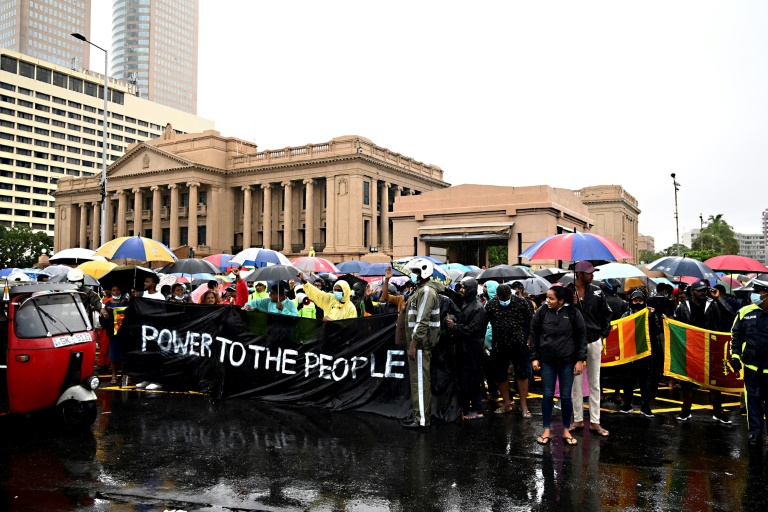
Mounting public anger over the crisis has seen large protests calling for Rajapaksa’s resignation.

Thousands of people braved heavy rains to keep up a demonstration outside the leader’s seafront office in the capital Colombo for a second day.

Business leaders joined calls for the president to step down on Saturday and said the island’s chronic fuel shortages had seen their operations haemorrhage cash.

Rajapaksa’s government is seeking an IMF bailout to help extricate Sri Lanka from the crisis, which has seen skyrocketing food prices and the local currency collapse in value by a third in the past month. 

Finance ministry officials have said sovereign bond-holders and other creditors may have to take a haircut as Colombo seeks to restructure its debt.

New finance minister Ali Sabry told parliament on Friday that he expects $3 billion from the IMF to support the island’s balance of payments in the next three years.

A critical lack of foreign currency has left Sri Lanka struggling to service its ballooning $51 billion foreign debt, with the pandemic torpedoing vital revenue from tourism and remittances.

Economists say Sri Lanka’s crisis has been exacerbated by government mismanagement, years of accumulated borrowing and ill-advised tax cuts.

Spain seizes hundreds of stuffed endangered animals

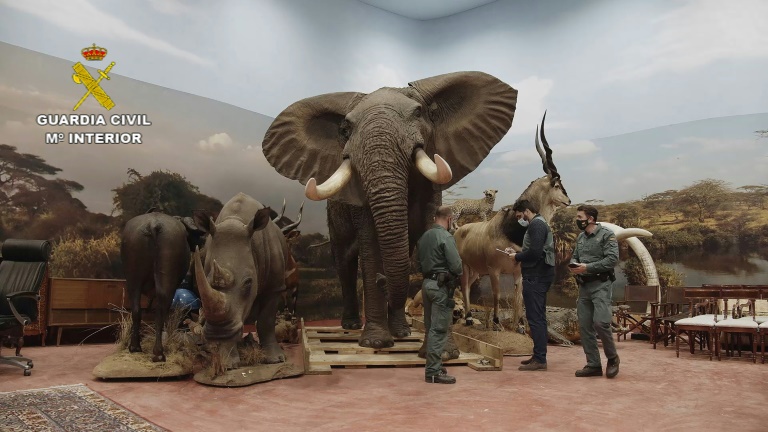
Spain said on Sunday it seized over 1,000 taxidermied animals, including hundreds of endangered or extinct species, in one of the largest hauls of its kind. 

The Civil Guard said the private collection, estimated to be worth nearly 29 million euros ($32 million), was discovered in a shed in Betera, near Valencia in eastern Spain.

Among the 1,090 animals seized, 405 are classified as protected, endangered or extinct, including the scimitar-horned oryx once found in parts of Africa. 

A stuffed Bengal tiger, considered near extinction, was also found, along with cheetahs, lynxes, polar bears, white rhinos and 198 elephant tusks. 

The Civil Guard said on Sunday it was the country’s “largest haul of nationally-protected taxidermied animals and one of the largest in Europe”. 

The owner of the collection is under investigation for smuggling and several environmental crimes.

Close Bitnami banner
Bitnami