AFP

Iraqis clean up river as first green projects take root

Garbage clogs the banks of Iraq’s Tigris River in Baghdad but an army of young volunteers is cleaning it, a rare environmental project in the war-battered country.

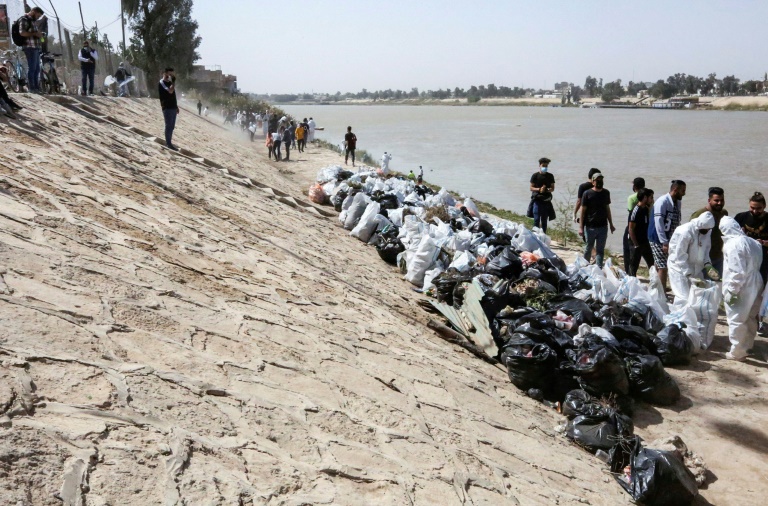
With boots and gloves, they pick up soggy trash, water bottles, aluminium cans and muddy styrofoam boxes, part of a green activist campaign called the Cleanup Ambassadors. 

“This is the first time this area has been cleaned since 2003,” shouts a passer-by about the years of conflict since a US-led invasion toppled dictator Saddam Hussein.

The war is over but Iraq faces another huge threat: a host of interrelated environmental problems from climate change and rampant pollution to dust storms and water scarcity.

The 200 volunteers at work in Baghdad want to be part of the solution, removing garbage from a stretch of one of the mighty rivers that gave birth to the ancient civilisations of Mesopotamia.

“It breaks my heart to see the banks of the Tigris in this state,” said one 19-year-old volunteer, who gave only her first name, Rassel, working under Baghdad’s Imams Bridge. 

“We want to change this reality. I want to make my city more beautiful.”

The task is Herculean in a country where it remains common for people to drop their trash on the ground.

The green banks of the Tigris, popular for picnics by families and groups of friends, are usually littered with waste, from single-use plastic bags to the disposable tips of hookah pipes, especially after public holidays.

– Rubbish chokes wildlife –

“There is a lot of plastic, nylon bags and corks,” said Ali, also 19 and an organiser of the cleanup event.

The group then handed their collected waste to the Baghdad City Council which took it away, bound for a landfill. 

More often the garbage ends up directly in the Tigris. It is one of Iraq’s two major waterways, along with the Euphrates, that face a host of environmental pressures.

The rivers or their tributaries are dammed upstream in Turkey and Iran, over-used along the way, and polluted with domestic, industrial and agricultural waste.

The trash that flows downriver clogs riverbanks and wetlands and poses a threat to wildlife, both terrestrial and aquatic.

When the water empties into the Gulf, plastic bags are often ingested by turtles and dolphins and block the airways and stomachs of many other species, says a United Nations paper. 

In Iraq — which has suffered four decades of conflict and years of political and economic turmoil — separating and recycling waste has yet to become a priority for most people.

The country also lacks proper infrastructure for waste collection and disposal, said Azzam Alwash, head of the non-governmental group Nature Iraq.

“There are no environmentally friendly landfills and plastic recycling is not economically viable,” he said. 

– Plumes of smoke –

Most garbage ends up in open dumps where it is burned, sending plumes of acrid smoke into the air.

This happens in Iraq’s southern Mesopotamian Marshes, one of the world’s largest inland deltas, which Saddam once had largely drained. They were named a UNESCO World Heritage site in 2016, both for their biodiversity and ancient history.

Today a round-the-clock fire outside the town of Souq al-Shuyukh, which is the gateway to the marshes, burns thousands of tonnes of garbage under the open sky, sending white smoke drifting many kilometres away. 

“Open burning of waste is a source of air pollution, and the real cost is the shortening of Iraqi lives,” said Alwash. “But the state has no money to build recycling facilities.”

Even worse is the air pollution caused by flaring — burning off the gas that escapes during oil extraction. 

This toxic cocktail has contributed to a rise in respiratory illnesses and greenhouse gas emissions, a phenomenon the UN’s climate experts have voiced alarm about. 

Environment Minister Jassem al-Falahi admitted in comments to the official news agency INA that waste incineration’s “toxic gases affect people’s lives and health”.

But so far there have been few government initiatives to tackle Iraq’s environmental woes, and so projects like the Tigris cleanup are leading the way for now.

Ali, the volunteer, hopes that their effort will have a more long-term effect by helping to change attitudes.

“Some people have stopped throwing their waste on the street,” he said, “and some have even joined us.”

Crypto-curious corporations struggle to find right recipe

Four years ago, fried-chicken chain KFC tweeted from its Canadian account that it would accept bitcoin as payment for its “buckets”.

The company told AFP its tongue-in-cheek campaign — “digital tender for chicken tenders” — sold out in an hour and the chain has not taken crypto payments since, but online articles regularly recycle the claim that KFC “accepts” bitcoin.

Many other companies have tried to harness crypto payments before abandoning their efforts, Tesla and Dell among them.

Bitcoin will almost certainly never be practical for everyday purchases because its value fluctuates wildly, and each transaction is expensive, energy-hungry and takes at least half an hour.

“No one’s going to walk into a KFC to buy a chicken burger and then have to wait 30 minutes for a payment,” South African developer and crypto expert Andre Cronje told AFP.

But there are now thousands of smaller cryptocurrencies with faster processing times and more stable prices.

Analysts say the total market value of cryptocurrencies has now topped $2 trillion, roughly half of which is bitcoin.

Companies are gagging to get in on the act and developers like Cronje are building the infrastructure to enable the virtual coins to be used to pay for everyday items.

But public buy-in is crucial, and corporations seem to be struggling to find the perfect formula.

– ‘Watch the jockeying’ –

Microsoft typifies the emerging pattern of big companies dabbling in crypto.

The first rule: keep it at arm’s length from the core business.

The tech giant has stressed that shareholders will not be exposed to the ups and downs of crypto prices.

PayPal and Apple, two other crypto-curious corporations, have made similar pledges to their shareholders.

To keep crypto off its balance sheet, Microsoft partnered with a firm called Bakkt that allows clients to convert crypto assets into products like gift cards for Xbox, or charge their Starbucks payment card.

Bakkt, which has received investments from Microsoft’s venture capital fund M12, went public last year and a flurry of big partnership announcements with the likes of Mastercard sent its share price soaring.

But then came the nose-dive as it reported widening losses and its business came under scrutiny.

The firm had said it expected to have nine million customers by the end of 2021, yet its executives gave a figure of 1.7 million transacting accounts late last year.

PayPal, meanwhile, garnered a lot of publicity for a “checkout with crypto” feature launched in the US and UK last year.

PayPal’s system converts users’ cryptoassets into money before passing on payment to the vendors.

But it is unclear how popular any of these services are — none of these companies responded to AFP requests for details of the uptake.

Market watchers say it is too early to tell how these forays into crypto will play out.

“My view is to not get too excited yet but just watch the jockeying,” said analyst John Freeman of CFRA research, accepting the hot air made it difficult to predict what would happen next.

– ‘When, not if’ –

The barriers to widespread adoption of direct crypto payments for everyday items are considerable — perhaps even unsurmountable.

Developer Cronje said he functioned largely without the need for regular cash or banks by using services like BitPay and BitRefill, which allow crypto to be spent anywhere from Amazon to Uber.

But he accepted his less tech-savvy friends “would be broke very quickly” if they tried to rely on the blockchain, the technology that underpins cryptocurrencies.

Instead, he envisages a future where people will continue to use credit cards and banks but back-end tasks will be largely automated on the blockchain.

“This is a technology that conservatively is going to save them between 20 percent and 25 percent of their overheads and their costs,” he said. 

“So it’s not a matter of if, it’s a matter of when.”

Meanwhile, non-financial businesses will continue to throw themselves into the crypto space, often to emerge slightly wiser but no richer.

The Pavilions hotel chain, for example, partnered with a payments firm last year to allow customers to use crypto but found it made little difference to its business.

“It turns out no one likes to spend their bitcoins, even on holidays!” Pavilions spokesman Tim Sargeant told AFP in an email.

“It has shown us that bitcoin is more an investment tool than something people wish to part with for payment.”

Favourable breezes boost Spain's wind power sector

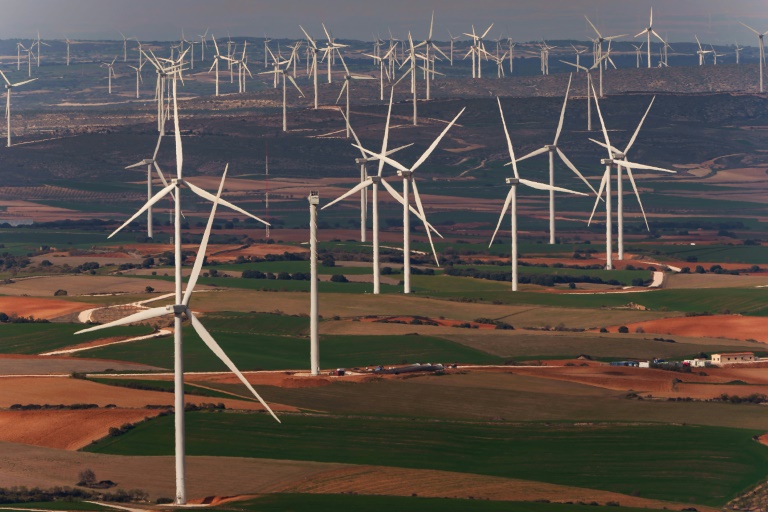
Buoyed by a surge in investment and new projects, wind power has become Spain’s main source of electricity generation just as Europe seeks to curb its energy imports from Russia.

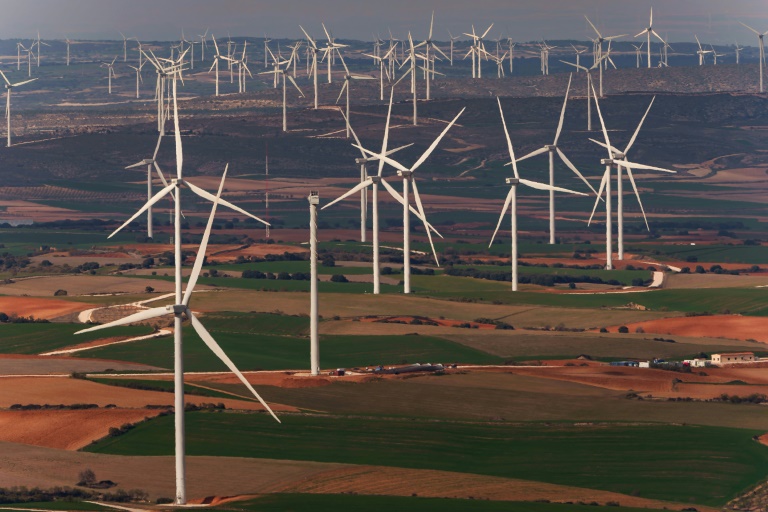
“We are on suitable ground here,” said Joaquin Garcia Latorre, project director at Enel Green Power Espana, pointing to gigantic masts erected on the heights of the tiny northeastern village of Villar de los Navarros.

The Spanish-Italian firm picked this spot, which is well exposed to the wind, to set up a 180-megawatt wind farm, one of the country’s biggest.

Dubbed Tico Wind, its 43 wind turbines started producing power in November, said Latorre while workers around him tended to the turbines, which are over 100 metres (328 feet) high.

“There are between 2,500 and 3,000 hours of wind here per year,” he added.

The wind farm will be able to produce 471 gigawatt hours per year — enough to meet the demands of 148,000 households — after it becomes fully operational in a month.

These types of projects have popped up across Spain in recent years, making it Europe’s second-biggest wind power producer after Germany for installed capacity and the world’s fifth biggest.

Wind power became the main source of electricity production in Spain last year, accounting for 23 percent, ahead of nuclear (21 percent) and gas (17 percent), according to national grid operator REE.

The sector “benefits from a favourable situation” although “brakes” remain on its development, such as a dependency on government auctions, said Francisco Valverde Sanchez, renewables specialist at electricity consultants Menta Energia.

– Investor interest –

Following a boom in the 2000s thanks to generous public financial aid, the sector suffered a sudden halt when subsidies were slashed in 2013 during Spain’s economic crisis.

It has since charged ahead. Spain, which has a total of 1,265 wind farms, had an installed wind power capacity of 28.1 gigawatts in 2021, up from 23.4 gigawatts in 2018, according to industry group AEE.

With large swathes of sparsely populated land, a favourable legal framework and cutting edge wind turbine makers, Spain is one of the most “interesting” markets for wind power investors, said AEE director general Juan Virgilio Marquez.

Spain is home to several sector heavyweights such as Iberdrola and Naturgay, making it a top exporter of wind power equipment. “This explains the dynamism of the sector,” said Marquez.

Investor interest has even come from outside of the energy sector.

In November Spain’s Amancio Ortega, the founder of fast fashion giant Zara and one of the world’s richest men, injected 245 million euros ($268 million) in a wind farm in the northeastern region of Aragon.

– Energy ‘breadbasket’ –

Spain in 2020 pledged to generate 74 percent of its electricity from renewable sources by 2030, up from 47 percent.

To meet this target, Spain is counting on the development of offshore wind power, a sector that is in its infancy.

But since Spain has thousands of kilometres of coastline, offshore wind has lots of room to grow.

“This is an ambitious goal,” said Valverde Sanchez, arguing that government bureaucracy around wind farm projects must be reduced for it to be met.

Nearly 600 wind power projects are currently under study by the government, according to AEE.

As part of its plan to respond to the economic fallout from Russia’s invasion of Ukraine, Spain has pledged to speed up the approval of wind power projects of less than 75 megawatts.

“Our country had enough natural resources to become Europe’s leading producer and exporter of renewable energy,” Prime Minister Pedro Sanchez said Wednesday, adding this could be key to help the European Union meet its goal of “energy independence”.

Since Russia invaded Ukraine on February 24, Brussels has declared a mission to cut the EU’s Russian gas imports by two thirds this year and to end the use of Russian gas by 2027.

Spain “could become the energy ‘breadbasket’ of Europe,” said Virgilio Marquez.

Favourable breezes boost Spain's wind power sector

Buoyed by a surge in investment and new projects, wind power has become Spain’s main source of electricity generation just as Europe seeks to curb its energy imports from Russia.

“We are on suitable ground here,” said Joaquin Garcia Latorre, project director at Enel Green Power Espana, pointing to gigantic masts erected on the heights of the tiny northeastern village of Villar de los Navarros.

The Spanish-Italian firm picked this spot, which is well exposed to the wind, to set up a 180-megawatt wind farm, one of the country’s biggest.

Dubbed Tico Wind, its 43 wind turbines started producing power in November, said Latorre while workers around him tended to the turbines, which are over 100 metres (328 feet) high.

“There are between 2,500 and 3,000 hours of wind here per year,” he added.

The wind farm will be able to produce 471 gigawatt hours per year — enough to meet the demands of 148,000 households — after it becomes fully operational in a month.

These types of projects have popped up across Spain in recent years, making it Europe’s second-biggest wind power producer after Germany for installed capacity and the world’s fifth biggest.

Wind power became the main source of electricity production in Spain last year, accounting for 23 percent, ahead of nuclear (21 percent) and gas (17 percent), according to national grid operator REE.

The sector “benefits from a favourable situation” although “brakes” remain on its development, such as a dependency on government auctions, said Francisco Valverde Sanchez, renewables specialist at electricity consultants Menta Energia.

– Investor interest –

Following a boom in the 2000s thanks to generous public financial aid, the sector suffered a sudden halt when subsidies were slashed in 2013 during Spain’s economic crisis.

It has since charged ahead. Spain, which has a total of 1,265 wind farms, had an installed wind power capacity of 28.1 gigawatts in 2021, up from 23.4 gigawatts in 2018, according to industry group AEE.

With large swathes of sparsely populated land, a favourable legal framework and cutting edge wind turbine makers, Spain is one of the most “interesting” markets for wind power investors, said AEE director general Juan Virgilio Marquez.

Spain is home to several sector heavyweights such as Iberdrola and Naturgay, making it a top exporter of wind power equipment. “This explains the dynamism of the sector,” said Marquez.

Investor interest has even come from outside of the energy sector.

In November Spain’s Amancio Ortega, the founder of fast fashion giant Zara and one of the world’s richest men, injected 245 million euros ($268 million) in a wind farm in the northeastern region of Aragon.

– Energy ‘breadbasket’ –

Spain in 2020 pledged to generate 74 percent of its electricity from renewable sources by 2030, up from 47 percent.

To meet this target, Spain is counting on the development of offshore wind power, a sector that is in its infancy.

But since Spain has thousands of kilometres of coastline, offshore wind has lots of room to grow.

“This is an ambitious goal,” said Valverde Sanchez, arguing that government bureaucracy around wind farm projects must be reduced for it to be met.

Nearly 600 wind power projects are currently under study by the government, according to AEE.

As part of its plan to respond to the economic fallout from Russia’s invasion of Ukraine, Spain has pledged to speed up the approval of wind power projects of less than 75 megawatts.

“Our country had enough natural resources to become Europe’s leading producer and exporter of renewable energy,” Prime Minister Pedro Sanchez said Wednesday, adding this could be key to help the European Union meet its goal of “energy independence”.

Since Russia invaded Ukraine on February 24, Brussels has declared a mission to cut the EU’s Russian gas imports by two thirds this year and to end the use of Russian gas by 2027.

Spain “could become the energy ‘breadbasket’ of Europe,” said Virgilio Marquez.

After Covid blues, French saxophone maker hits the right note

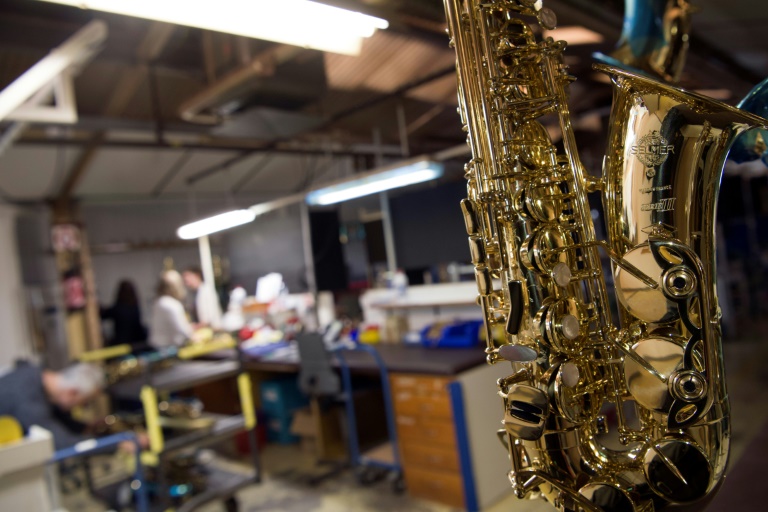
After the financial blues of the Covid pandemic, the French saxophone maker favoured by American jazz greats celebrates its 100th birthday looking to expand further in Asia and the United States.

Selmer experienced two difficult years after the pandemic began in 2020, the company’s executive chairman Thierry Oriez tells AFP.

“The Covid crisis affected us together with our customers” because “the world of music stopped”, whether that meant shows or conservatory classes.

But now Oriez looks to the future, with sales brimming once more.

“(I’m) convinced we could do more in the United States.”

Around 90 percent of sales are international, with China accounting for one-fifth of them ahead of Japan, South Korea and the United States. The company did not provide any sales figures.

While order books are full, Selmer, like many other companies, faces recruitment difficulties while Covid-19 continues to pose absenteeism problems.

The company was founded by clarinet player Henri Selmer in 1885 but produced its first saxophone in 1922.

Selmer’s instruments have been played by jazz legends including John Coltrane, Stan Getz and Sonny Rollins.

– ‘Musical evolution’ –

The family business was sold in 2018 by its heirs to European private equity group Argos Soditec. A delivery subsidiary for Asia was established in 2020.

Oriez took over the business in July from Jerome Selmer, a great-grandson of Henri Selmer.

The instruments are made at a factory in Mantes-La-Ville, just west of Paris. The company also owns a laboratory that works with musicians to develop new models.

Finishing touches and assembly of Selmer’s Axos series, a new collection less expensive than the company’s other instruments, are completed in China. An alto saxophone costs 3,150 euros ($3,430) while a tenor is worth 4,150 euros ($4,500).

Oriez says the new collection “allows us to be more aggressive in the Chinese market”.

While the Mantes-La-Ville factory has motorised precision machinery to craft some of the 700 pieces that make up each instrument, a large part of the work is still carried out by hand.

Artisans cut sheets of brass, use blowtorches to bend them into shape, mount the keys on the tube, polish the instrument and engrave Selmer’s logo on it.

Engraver Morgane Duhamel spots an imperfection and adds by hand “a small engraving that will be personalised and will offer the customer a unique instrument”.

Eric Bruel, who makes the saxophones’ horns by turning the brass tubes on a mandrel, said the search for new tones “has an influence on the treatment of the metal: the reheating temperature with the blowtorch, it will be more or less strong, more or less long”.

“Selmer has always walked the line between modernity regarding tools and the other slightly Amish side: we still do the forging, the welding and polishing by hand,” Bruel said.

“In almost 30 years at the company, I’ve seen many changes in tools, the families of instruments, the musical evolution with young saxophone players who do not necessarily have the same sounds as their elders,” he said.

Global ambitions drive Algerian tech start-up Yassir

It’s the Algerian start-up that made good: despite the country’s notoriously complex business climate, taxi and home-delivery firm Yassir has millions of users and is expanding across Africa.

“We made it our mission to create a model of success that was genuinely, 100-percent Algerian, to develop local talent and show that it’s possible to create added value in Algeria,” said co-founder Noureddine Tayebi.

Patience has been key as they navigate the country’s archaic bureaucracy, the bugbear of investors and one that creates particularly tough terrain for new entrants.

“Bureaucracy is one obstacle that we have to overcome. I can’t say it’s easy, but you have to deal with it and move forward,” Tayebi told AFP.

It’s a sign of changing times in Algeria, which in 2020 passed a law on start-ups and created a ministry to promote them.

Since he launched Yassir five years ago with fellow engineer Mehdi Yettou, the company has rolled out across the Maghreb region and beyond.

Late last year they raised some $30 million from American investors, cash they plan to pump into an ambitious expansion plan.

The firm has indirectly created more than 40,000 driver and delivery jobs and its revenue is skyrocketing at up to 40 percent a month.

Tayebi studied in Algiers before earning his doctorate in electronic engineering at the United States’s prestigious Stanford University.

That led to a job with chip manufacturer Intel — but after eight years in Silicon Valley, he decided to return home and set up Yassir along with Yettou.

– Expanding in Africa –

The name is a play on the words for “easy” and “drive” in Algerian Arabic.

The pair launched their taxi app in 2017 in Algiers, a capital with a population of four million and desperately lacking public transport.

The firm has since branched out into deliveries of fast food and groceries, with sister app Yassir Express.

Today Yassir has some four million subscribers in 25 cities across Algeria, neighbouring Morocco and Tunisia, as well as Canada and France.

Tayebi says he now has his sights set on West Africa — the app already works in Senegal — and other major markets on the continent such as South Africa, Nigeria and Egypt.

While its growth has been explosive, the business faces tough competition from Uber, Heetch and others.

To succeed, it will need to hire hundreds of highly skilled technicians.

It is already the biggest tech employer in the Maghreb region with some 600 engineers, a figure it wants to triple or even quadruple.

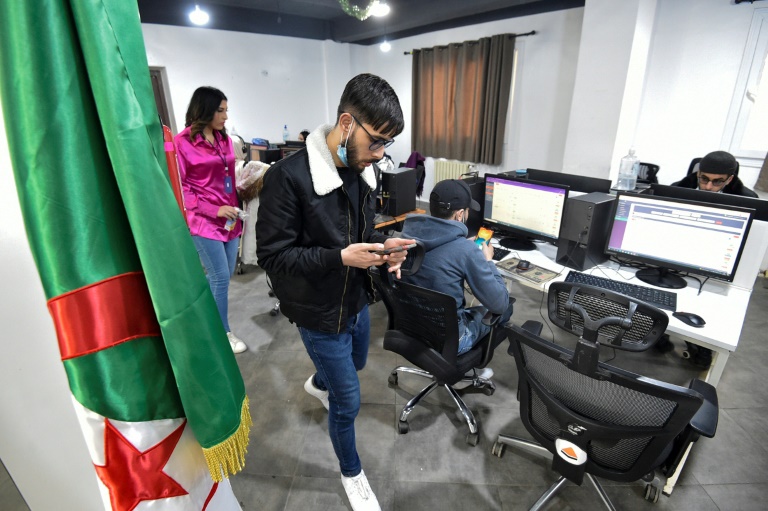
In Algiers, 30 or so young call centre operators are on hand to deal with around 6,000 orders a day.

“The average delivery time for meals is 30 minutes,” said Wissem, who runs the call centre.

– Big ambitions –

Tayebi also wants to provide an online payment system — a rarity in Algeria, where customers pay cash on delivery.

“Most of the population in Algeria and across Africa don’t have bank accounts — not because there’s no banking system, but because people don’t trust it,” Tayebi said.

He hopes to change that by capitalising on the trust the company has among its growing customer base.

“That’s the strength of our model and what sets us apart, particularly from Uber,” he said.

It also means the firm needs to keep a squeaky-clean image.

One Yassir taxi driver told AFP he had been given training in communication before being hired.

Tayebi said there was “a rigorous process for selecting drivers”. 

“We verify their police records, training and education. There’s even a psychological interview.”

It’s all part of a business for which he has set ambitious targets.

“The goal is to create the biggest tech company not just in Africa but in the world,” Tayebi said. 

“To get there, you need to be in lots of markets.”

Twitter stakeholder Elon Musk tweets 'Is Twitter dying?'

Twitter’s newest board member and largest stakeholder Elon Musk tweeted Saturday to ask if the social media network was “dying” and to call out users such as singer Justin Bieber, who are highly followed but rarely post.

“Most of these ‘top’ accounts tweet rarely and post very little content,” the Tesla boss wrote, captioning a list of the 10 profiles with the most followers — a list which includes himself at number eight, with 81 million followers.

“Is Twitter dying?” he wrote. 

Former US President Barack Obama appears at the top with 131 million followers, followed by stars such as Bieber, Katy Perry, Rihanna and Taylor Swift, as well as Indian prime minister Narendra Modi and football star Cristiano Ronaldo, among others. 

“For example, @taylorswift13 hasn’t posted anything in 3 months,” Musk continued.

“And @justinbieber only posted once this entire year.”

The social media company named Musk to the board on Tuesday after the outspoken and polarizing executive disclosed he had acquired a more than nine percent stake in the company, making him Twitter’s largest shareholder.

Musk said he looked forward to soon making “significant improvements to Twitter,” and began polling his followers on whether to add an “edit” button to the service, a long-discussed tweak.

Twitter has now said that it will start experimenting with one.

On Thursday, Musk tweeted a photo of himself smoking marijuana on a Joe Rogan podcast in 2018, with the caption, “Twitter’s next board meeting is gonna be lit.”

His antics often raise eyebrows and occasionally draw condemnation, as when Jewish groups blasted his tweet comparing Canadian leader Justin Trudeau to Adolf Hitler over Covid-19 vaccine mandates. Musk later deleted the tweet without apologizing.

The appointment has sparked misgivings among some employees, according to a Washington Post report.

Workers at the California-based social media company cited worries about Musk’s statements on transgender issues and his reputation as a difficult and driven leader, according to statements on Slack reviewed by the Post.

A California agency has sued Tesla, alleging discrimination and harassment against Black workers. The electric carmaker has rejected the charges, saying it opposes discrimination.

Dozens hospitalised as Iraq gripped by dust storm

A dust storm that has swept through much of Iraq has left dozens of people in hospital with  respiratory problems, a health ministry spokesman said Saturday.

The storm erupted in the north of the country on Thursday, prompting the cancellation of flights serving Arbil, capital of the autonomous Kurdistan region.

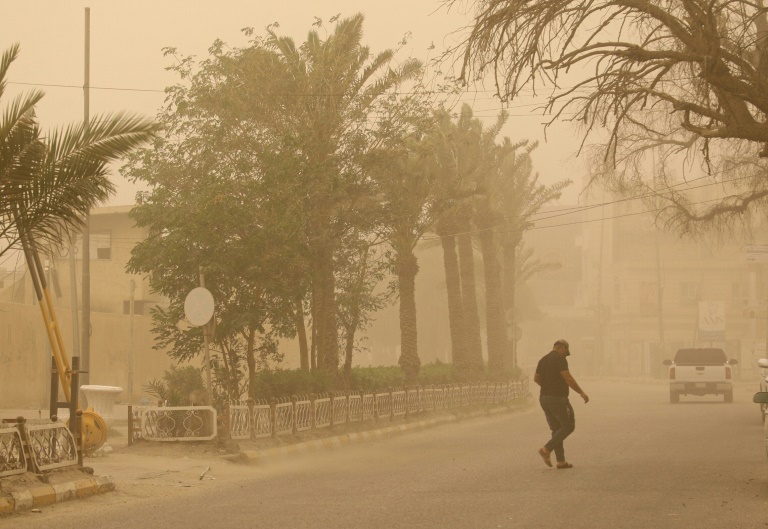
As the storm swept south, it shrouded Baghdad and cities as far south as Nasiriyah in a ghostly orange.

In the capital, buildings and vehicles were covered in ochre-coloured dust, AFP journalists reported.

The storm has caused “dozens of hospitalisations across Iraq due to respiratory problems”, health ministry spokesman Saif al-Badr told AFP.

The director of Iraq’s meteorological office, Amer al-Jabri, said that while dust storms were not uncommon in Iraq, they are becoming more frequent “due to drought, desertification and declining rainfall”.

Iraq is particularly vulnerable to climate change, having already witnessed record low rainfall and high temperatures in recent years.

Experts have said these factors threaten social and economic disaster in the war-scarred country.

In November, the World Bank warned that Iraq could suffer a 20 percent drop in water resources by 2050 due to climate change.

First private mission reaches International Space Station

The first fully private mission reached the International Space Station early Saturday with a four-member crew from startup company Axiom Space.

NASA has hailed the three-way partnership with Axiom and SpaceX as a key step towards commercializing the region of space known as “Low Earth Orbit,” leaving the agency to focus on more ambitious voyages deeper into the cosmos.

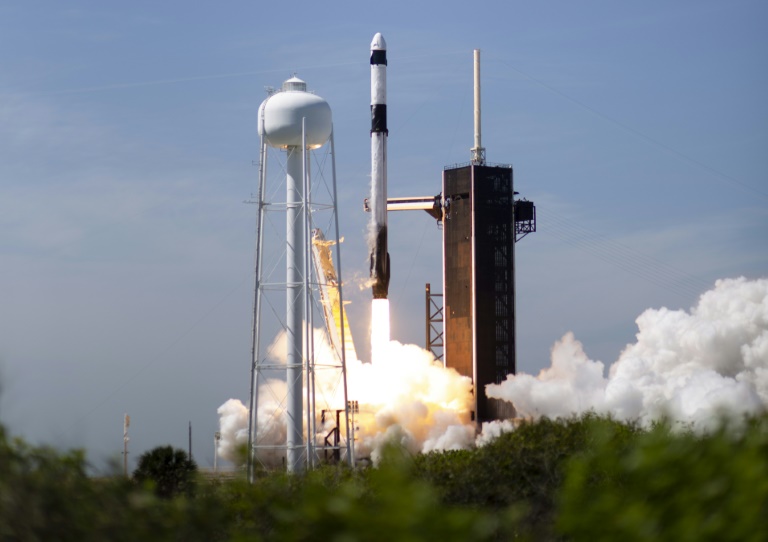
A SpaceX Falcon 9 rocket with the Crew Dragon capsule Endeavor docked at 1229 GMT Saturday and the crew entered the space station nearly two hours later, after launching from the Kennedy Space Center in Florida on Friday.

Commanding the Axiom Mission 1 (Ax-1) is former NASA astronaut Michael Lopez-Alegria, a dual citizen of the United States and Spain, who flew to space four times over his 20-year-career, and last visited the ISS in 2007.

He is joined by three paying crewmates: American real estate investor Larry Connor, Canadian investor and philanthropist Mark Pathy, and Israeli former fighter pilot, investor and philanthropist Eytan Stibbe.

“We’re here to experience this but we understand there’s a responsibility,” Connor said in comments shown on NASA’s live feed.

As the first civilian crew, he said, they “need to get it right.”

The widely reported price for tickets — which includes eight days on the outpost, before eventual splashdown in the Atlantic — is $55 million. 

While wealthy private citizens have visited the ISS before, Ax-1 is the first mission featuring an all-private crew flying a private spacecraft to the outpost. 

Houston-based Axiom pays SpaceX for transportation, and NASA also charges Axiom for use of the ISS.

– Research projects –

On board the ISS, which orbits 250 miles (400 kilometers) above sea level, the quartet will carry out 25 research projects, including an MIT technology demonstration of smart tiles that form a robotic swarm and self-assemble into space architecture.

Another experiment involves using cancer stem cells to grow mini tumors, and then leveraging the accelerated aging environment of microgravity to identify biomarkers for early detection of cancers.

“Our guys aren’t going up there and floating around for eight days taking pictures and looking out of the cupola,” Derek Hassmann, operations director of Axiom Space, told reporters at a pre-launch briefing.

In addition, crewmember Stibbe plans to pay tribute to his late friend Ilan Ramon, Israel’s first astronaut, who died in the 2003 Space Shuttle Columbia disaster when the spaceship disintegrated upon reentry.

Surviving pages from Ramon’s space diary, as well as mementos from his children, will be brought to the station by Stibbe.

The Axiom crew will live and work alongside the station’s regular crew: currently three Americans and a German on the US side, and three Russians on the Russian side.

The company has partnered for a total of four missions with SpaceX, and NASA has already approved in principle the second, Ax-2. 

Axiom sees the voyages as the first steps of a grander goal: to build its own private space station. The first module is due to launch in 2024.

The plan is for the station to initially be attached to the ISS, before eventually flying autonomously when the latter retires and is deorbited sometime after 2030.

Sri Lanka's embattled leader faces biggest street protest

Tens of thousands marched on beleaguered Sri Lankan President Gotabaya Rajapaksa’s office on Saturday, in the biggest protest to date over the country’s dire economic and political crisis.

Sri Lanka’s 22 million people have seen weeks of power blackouts and severe shortages of food, fuel and other essentials in the country’s worst downturn since independence in 1948.

Saturday’s social-media organised protest drew the largest numbers since the crisis blew up last month according to AFP reporters. And pressure on Rajapaksa intensified further as the country’s powerful business community also began withdrawing support for the president. 

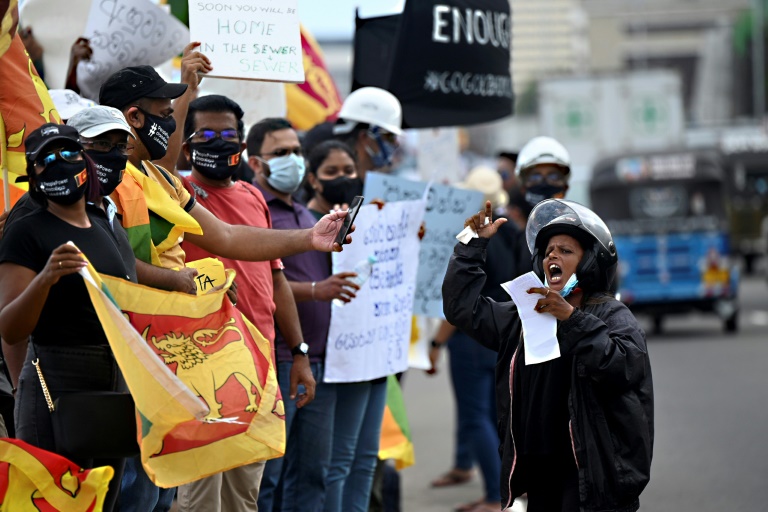
Men and women poured onto Colombo’s seafront promenade and laid siege to the colonial-era Presidential Secretariat, chanting “Go home Gota” and waving the national lion flag. 

Others carried handwritten placards that read “It’s time for you to leave” and “enough is enough.”

Barricades blocked the entrance to the president’s office with police in riot gear taking up positions inside the tightly guarded compound.

“These are innocent people here. we are all struggling to live. The government must go and allow a capable person to lead the country,” one man told the crowd.

The protests appeared to be peaceful, but a police official said teargas and water cannon were at the ready if needed. On Friday security forces fired water cannon at demonstrating students.

Residents said there were widespread protests in the suburbs of the capital too while the Catholic and Anglican churches also brought their followers onto the streets.

The head of the Catholic Church, Cardinal Malcolm Ranjith led a protest in the town of Negombo, just north of Colombo, urging people to continue protesting till the Rajapaksa administration resigned. 

“Everyone must get on the streets till the government leave, these leaders must go. You must go. You have destroyed this country.”

– Fuelling losses –

Sri Lanka’s business community, which largely funded Rajapaksa’s election campaign, also appeared to ditch the president on Saturday. 

“The current political and economic impasse simply cannot continue any further, we need a cabinet and interim government within a week at most,” said Rohan Masakorala, head of Sri Lanka Association of Manufacturers and Exporters of Rubber products.

His association joined 22 other business and industry organisations, seeking a change of government, saying daily losses had reached around $50 million due to the fuel shortage alone.

In a joint statement, they said that they were responsible for generating nearly a quarter of the country’s $80.17 billion gross domestic product and warned millions of jobs would be in jeopardy.

Newly appointed central bank governor Nandalal Weerasinghe said a series of monetary policy blunders had led to the current crisis with no dollars to finance many imports.

In a desperate attempt to shore up the free-falling rupee, Weerasinghe on Friday implemented the country’s biggest-ever interest rate hike of 700 basis points.

“We are now in damage control mode,” he said. 

Weerasinghe added he expected the rupee to stabilise and dollar inflows to improve as he relaxes his predecessor’s tight foreign exchange restrictions which he described as counter-productive.

The government is preparing for bailout negotiations with the International Monetary Fund next week, with finance ministry officials saying that sovereign bond-holders and other creditors may have to take a haircut.

New finance minister Ali Sabry told parliament on Friday that he expects $3 billion from the IMF to support the island’s balance of payments in the next three years.

“We hope to get about a billion dollars a year in the next three years totalling a support of three billion,” he said adding that Colombo will also seek a debt moratorium.

Close Bitnami banner
Bitnami