AFP

From coal to ports, Western sanctions target Russian economy

From a coal embargo to new restrictions on investments and European ports closed to Russian ships, the list of Western sanctions imposed on Russia’s economy since it invaded Ukraine keeps getting longer.

Here is an overview: 

– Energy –

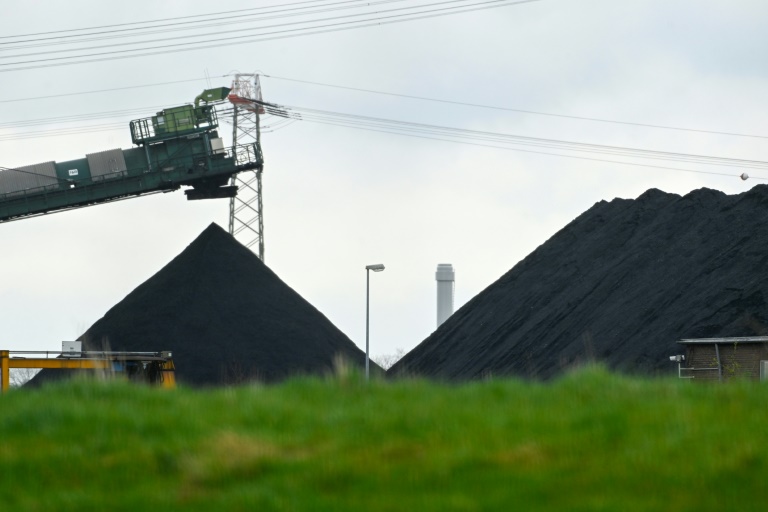
The European Union decided Thursday to forgo from August purchases of Russian coal, which accounts for about 45 percent of its total imports.

EU nations have already announced their intention to cut their imports of Russian gas by two thirds by the end of the year, as well as ban European companies from making new investments in the sector critical for the Russian economy.

In another highly symbolic decision, Germany has suspended the entry into service of the Nord Stream 2 pipeline which was due to have allowed a significant increase in imports.

But the bloc has been reluctant to impose a ban on Russian gas and oil so far, as member states such as Germany are heavily dependent on Moscow’s fossil fuel exports.

The United States and Canada have imposed their own embargoes of Russian oil and gas.

Britain plans to end imports of Russian coal by the end of the year, as it has already pledged to do for Russian crude oil and petroleum products.

– Transportation – 

The EU announced Thursday it is closing its ports to Russian ships. Russian truckers are also banned from operating in the bloc.

EU and NATO members have blocked their airspace to Russian aircraft and many Western airlines have halted flights to Russia.

The wider aerospace industry is concerned as the export of aircraft, parts and equipment has been banned, as has maintenance work on Russian-registered Airbus and Boeing aircraft. Western insurers cannot provide coverage.

– Trade –

The fifth EU sanctions package adopted Thursday includes a 10-billion-euro ($10.9 billion) ban on exports to Russia, including high-tech goods.

The list of Russian products banned from the EU is also being extended to include certain “critical raw materials and equipment” worth an estimated 5.5 billion euros a year to stop the financing of Moscow’s war effort in Ukraine.

Shortly before the EU adopted its latest sanctions package, US lawmakers voted to revoke most favoured nation status for Russia and its ally Belarus, which will result on goods from them facing high US import tariffs. Imports of Russian seafood, vodka and diamonds have been banned outright. 

The United States on Wednesday also banned any new investment in Russia, and Britain has as well.

– Financial sector –

The US Treasury has blocked Russia from using dollars held in US banks to make payments on its foreign debt, forcing Moscow to settle in rubles which sets up a likely default.

The White House also declared “full blocking” sanctions on Russia’s largest public and private financial institutions, Sberbank and Alfa Bank.

The United States, EU and Britain have frozen foreign currency held by the Russian central bank and banned all transactions with the institution.

Most Russian banks were earlier cut from the SWIFT messaging system, which allows banks to communicate rapidly and securely about transactions.

US credit card giants Visa, Mastercard and American Express have blocked Russian banks from their payment networks.

– Key individuals –

Hundreds of Russian individuals have been hit by US and EU sanctions, including the adult daughters of Russian President Vladimir Putin.

The EU added 18 Russian entities and 200 people to its black list on Thursday alone.

Putin and his Belarusian counterpart Alexander Lukashenko have been sanctioned, as has Igor Sechin, the head of Russian oil firm Rosneft.

Britain has sanctioned 82 Russian oligarchs with 172 billion pounds (200 billion euros, $220 billion) in assets, and 18 banks with 940 billion pounds in assets.
Climate activists shut London's Tower Bridge

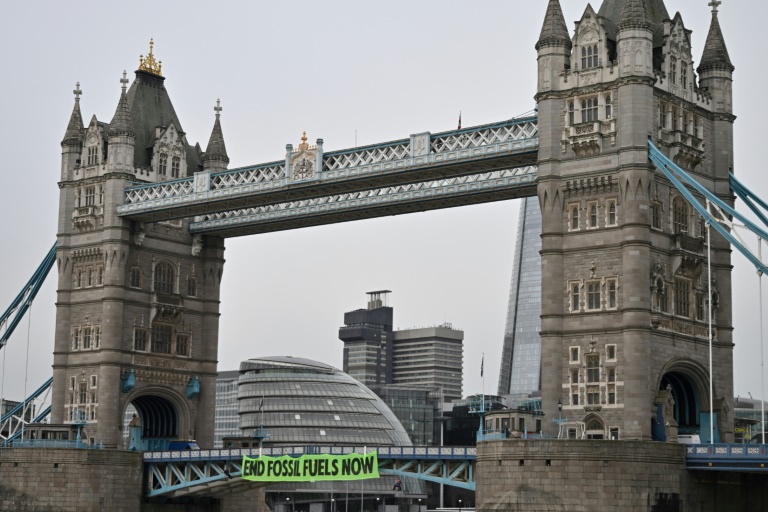
UK climate activist group Extinction Rebellion shut down London’s iconic Tower Bridge on Friday after two of its protesters abseiled over its sides.

The activists were hanging from the bridge by suspension cords after unfurling a banner reading “End fossil fuels now” and letting off red flares.

Tower Bridge was chosen as “the gateway to the City of London — the root source of fossil fuel funding in the UK”, Extinction Rebellion said in a statement, adding it ushered in a week of protests.

The Metropolitan Police were on site but said they had made no arrests.

Demonstrator Amy Rugg-Easey said she had “tremendous hope and optimism in humanity’s ability to fight the climate crisis — but there are certain people who continue to prevent that for their own profit”.

The group has recently staged several protests at oil terminals and refineries across Britain, holding a large demonstration at one facility near Heathrow Airport.

India under fresh scrutiny as UN panel calls for shunning coal

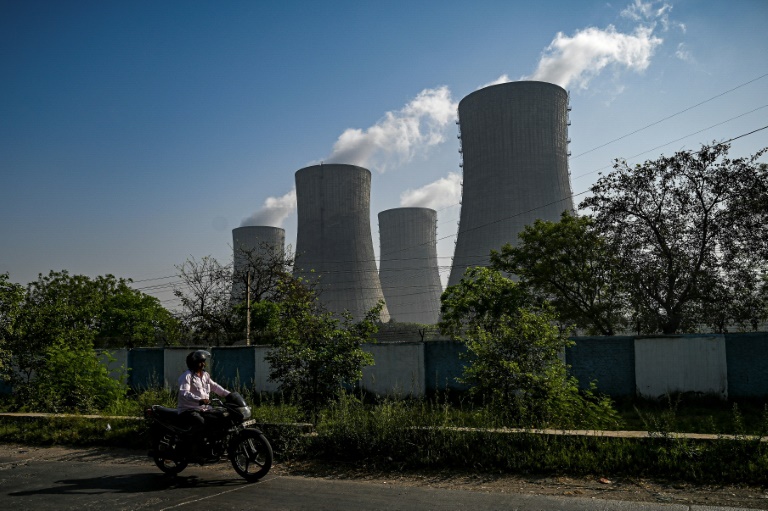
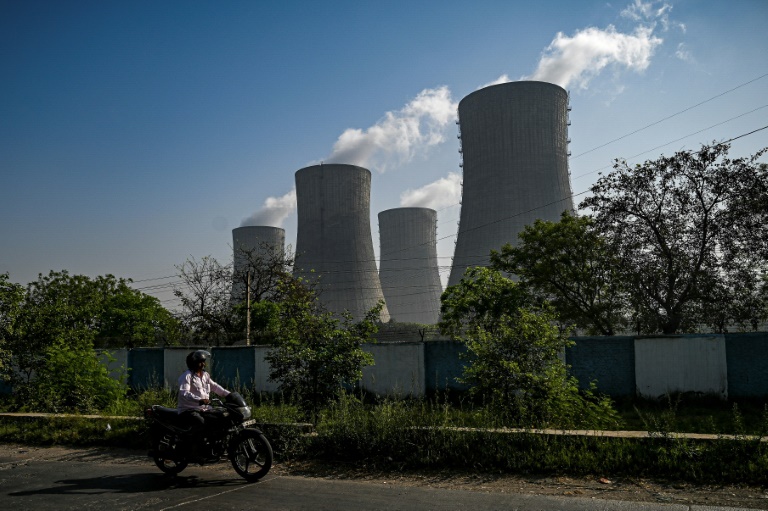
The mounds of jet-black coal shimmering under the afternoon sun at the Dadri power plant are a raw illustration of India’s coal dependence — a habit that despite increasing pressure, the country is finding hard to kick.

Coal is vital for providing electricity to India’s 1.4 billion citizens, making up 70 percent of the country’s energy needs. 

That reliance is in the spotlight after a warning by UN experts this week that to ensure a “liveable future”, countries must move to greener energy sources much faster to reduce emissions. 

Coal-based plants like the sprawling Dadri facility are attempting to make themselves cleaner, but their efforts are mostly in their infancy, and pale in comparison to their overall emission rate. 

Prime Minister Narendra Modi has set ambitious goals for renewable energy development, aiming to increase non-fossil energy capacity to over double the current coal capacity by 2030.

But Harjeet Singh of the Fossil Fuel Non-proliferation Treaty Initiative said that while the cost of renewable energy has come down by up to 90 percent in the last decade, India still requires hundreds of billions of dollars upfront to make the transition.

“That kind of international support in terms of investments or concessional loans or grants is not coming through,” he said. 

Experts say coal will remain the dominant fuel in India for a long time to come, with its energy needs over the next 20 years set to rise faster than any other country in the world. 

– Crossroads –

The UN report, released Monday, said current policies are leading the planet towards catastrophic temperature rises and that the world was at a “crossroads”. 

If the world’s current oil, gas and coal infrastructure operate for their designed lifetime — without technology to capture and store carbon — capping global warming at the target of 1.5 degrees Celsius will be impossible, it said. 

India, which with China reportedly led opposition to a commitment to “phase out” coal at the COP26 summit last year, currently has about 211 gigawatts of operational coal capacity, according to the Central Electricity Authority, with another 55GW under various phases of construction.

None of India’s power stations yet has the technology the UN report mentions as a mitigation option.

“Carbon-trapping technology is being used on an experimental basis at one of our plants,” said B. Srinivasa Rao, chief general manager of the Dadri plant. “If it is successful it will be done at all the plants.”

With six coal-fired units supplying megacity Delhi and elsewhere, the plant — run by India’s biggest power producer, the National Thermal Power Corporation (NTPC) — is spread across some 3,000 acres (1,200 hectares) in the northern state of Uttar Pradesh. 

It has taken some steps to reduce emissions, including burning pellets made from agricultural waste along with coal.

Like several other NTPC units, it has installed a solar thermal power plant with and output of 5 megawatts — though the plant as a whole generates 2500 MW.

Rao said the plant has also achieved 100 percent recycling of fly ash, a main byproduct of burning coal, and implemented a zero liquid discharge system.

But locals living in the vicinity complained about coal dust spilling from trucks and affecting their health.

“It burns our eyes and hurts our lungs,” said Rinku Rana, who runs a confectionery shop close by.

“But if the plant closes down we will be robbed of our livelihoods. So in a way it’s a necessary evil that we have to live with,” 29-year-old Rana said, wiping off a thick layer of ash-grey dust that had settled on biscuit and sweet packets at his shop.

– Climate equity –

Singh, the environmental campaigner, said India cannot continue to rely on fossil fuels, especially in view of severe air pollution.

At the same time, it needs cheap fuel to power its economy and help millions out of poverty.

Levies on coal are an important source of employment and government revenue, especially for states like Jharkhand and Odisha, among the poorest in the country.

Modi has said India will cut its emissions to net-zero only by 2070 — missing a key goal of the COP26 summit for countries to commit to doing so by 2050.

The government argues that although the country is the world’s third-largest emitter in total, its per capita emissions are far lower than the American average.

Singh said New Delhi was “well within its right” to talk about equity and climate justice.

“The current climate crisis is not because of India’s industrialisation. It’s because of the Western industrialisation that has happened over the last 150 years,” he told AFP. 

“Rich countries need to reduce their emissions far more earlier than what they have planned right now… and at the same time provide support to developing countries to move away from fossil fuels.”

India under fresh scrutiny as UN panel calls for shunning coal

The mounds of jet-black coal shimmering under the afternoon sun at the Dadri power plant are a raw illustration of India’s coal dependence — a habit that despite increasing pressure, the country is finding hard to kick.

Coal is vital for providing electricity to India’s 1.4 billion citizens, making up 70 percent of the country’s energy needs. 

That reliance is in the spotlight after a warning by UN experts this week that to ensure a “liveable future”, countries must move to greener energy sources much faster to reduce emissions. 

Coal-based plants like the sprawling Dadri facility are attempting to make themselves cleaner, but their efforts are mostly in their infancy, and pale in comparison to their overall emission rate. 

Prime Minister Narendra Modi has set ambitious goals for renewable energy development, aiming to increase non-fossil energy capacity to over double the current coal capacity by 2030.

But Harjeet Singh of the Fossil Fuel Non-proliferation Treaty Initiative said that while the cost of renewable energy has come down by up to 90 percent in the last decade, India still requires hundreds of billions of dollars upfront to make the transition.

“That kind of international support in terms of investments or concessional loans or grants is not coming through,” he said. 

Experts say coal will remain the dominant fuel in India for a long time to come, with its energy needs over the next 20 years set to rise faster than any other country in the world. 

– Crossroads –

The UN report, released Monday, said current policies are leading the planet towards catastrophic temperature rises and that the world was at a “crossroads”. 

If the world’s current oil, gas and coal infrastructure operate for their designed lifetime — without technology to capture and store carbon — capping global warming at the target of 1.5 degrees Celsius will be impossible, it said. 

India, which with China reportedly led opposition to a commitment to “phase out” coal at the COP26 summit last year, currently has about 211 gigawatts of operational coal capacity, according to the Central Electricity Authority, with another 55GW under various phases of construction.

None of India’s power stations yet has the technology the UN report mentions as a mitigation option.

“Carbon-trapping technology is being used on an experimental basis at one of our plants,” said B. Srinivasa Rao, chief general manager of the Dadri plant. “If it is successful it will be done at all the plants.”

With six coal-fired units supplying megacity Delhi and elsewhere, the plant — run by India’s biggest power producer, the National Thermal Power Corporation (NTPC) — is spread across some 3,000 acres (1,200 hectares) in the northern state of Uttar Pradesh. 

It has taken some steps to reduce emissions, including burning pellets made from agricultural waste along with coal.

Like several other NTPC units, it has installed a solar thermal power plant with and output of 5 megawatts — though the plant as a whole generates 2500 MW.

Rao said the plant has also achieved 100 percent recycling of fly ash, a main byproduct of burning coal, and implemented a zero liquid discharge system.

But locals living in the vicinity complained about coal dust spilling from trucks and affecting their health.

“It burns our eyes and hurts our lungs,” said Rinku Rana, who runs a confectionery shop close by.

“But if the plant closes down we will be robbed of our livelihoods. So in a way it’s a necessary evil that we have to live with,” 29-year-old Rana said, wiping off a thick layer of ash-grey dust that had settled on biscuit and sweet packets at his shop.

– Climate equity –

Singh, the environmental campaigner, said India cannot continue to rely on fossil fuels, especially in view of severe air pollution.

At the same time, it needs cheap fuel to power its economy and help millions out of poverty.

Levies on coal are an important source of employment and government revenue, especially for states like Jharkhand and Odisha, among the poorest in the country.

Modi has said India will cut its emissions to net-zero only by 2070 — missing a key goal of the COP26 summit for countries to commit to doing so by 2050.

The government argues that although the country is the world’s third-largest emitter in total, its per capita emissions are far lower than the American average.

Singh said New Delhi was “well within its right” to talk about equity and climate justice.

“The current climate crisis is not because of India’s industrialisation. It’s because of the Western industrialisation that has happened over the last 150 years,” he told AFP. 

“Rich countries need to reduce their emissions far more earlier than what they have planned right now… and at the same time provide support to developing countries to move away from fossil fuels.”

Japan ends Russian coal imports, expels diplomats

Japan said Friday it will end imports of Russian coal and announced the expulsion of eight of Moscow’s diplomats over “war crimes” in Ukraine.

The move comes as Ukraine’s allies step up pressure on Moscow after allegations that Russian troops killed civilians in areas around Kyiv.

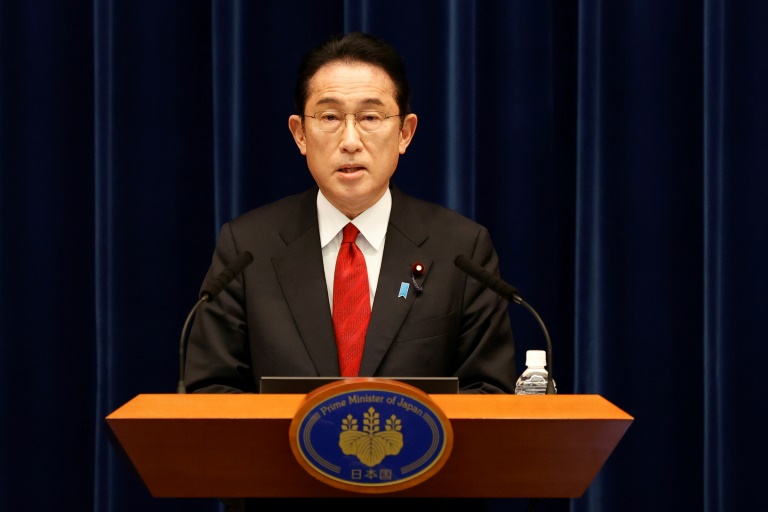
“Russian troops have killed civilians and have attacked nuclear facilities, gravely violating international humanitarian law. These are war crimes that can never be forgiven,” Japanese Prime Minister Fumio Kishida told reporters.

“We will ban imports of Russian coal,” he added, pledging to find alternatives and asking Japanese citizens for their “understanding and cooperation.”

Japan imports around 11 percent of its coal from Russia, and the fuel remains a key plank of the country’s power generation.

Kishida said Japan would, in line with other Group of Seven developed nations, work to decrease its reliance on other energy imports from Russia, which include oil and gas, but he gave no specific timeframe.

He also outlined fresh sanctions, including new asset freezes and a ban on imports from Russia, including machinery and vodka, and said Tokyo would back efforts to investigate Moscow’s actions at the International Criminal Court.

Earlier, Japan’s foreign ministry announced the expulsion of eight Russian diplomats from the embassy and trade office.

The decision does not affect Russia’s ambassador Mikhail Yurievich Galuzin.

Japan has marched in lockstep with Western allies on sanctions against Russia, and has even welcomed several hundred Ukrainians fleeing the conflict despite generally accepting very few refugees.

Tokyo had complex relations with Moscow before the Ukrainian invasion and the two sides have yet to sign a post-World War II peace treaty.

Attempts to do so have been hampered by a long-running dispute over islands controlled by Russia, which calls them the Kurils.

Japan calls the islands the Northern Territories and has long sought to have them under Tokyo’s control.

India under fresh scrutiny as UN panel calls for shunning coal

The mounds of jet-black coal shimmering under the afternoon sun at the Dadri power plant are a raw illustration of India’s coal dependence — a habit that despite increasing pressure, the country is finding hard to kick.

Coal is vital for providing electricity to India’s 1.4 billion citizens, making up 70 percent of the country’s energy needs. 

That reliance is in the spotlight after a warning by UN experts this week that to ensure a “liveable future”, countries must move to greener energy sources much faster to reduce emissions. 

Coal-based plants like the sprawling Dadri facility are attempting to make themselves cleaner, but their efforts are mostly in their infancy, and pale in comparison to their overall emission rate. 

Prime Minister Narendra Modi has set ambitious goals for renewable energy development, aiming to increase non-fossil energy capacity to over double the current coal capacity by 2030.

But Harjeet Singh of the Fossil Fuel Non-proliferation Treaty Initiative said that while the cost of renewable energy has come down by up to 90 percent in the last decade, India still requires hundreds of billions of dollars upfront to make the transition.

“That kind of international support in terms of investments or concessional loans or grants is not coming through,” he said. 

Experts say coal will remain the dominant fuel in India for a long time to come, with its energy needs over the next 20 years set to rise faster than any other country in the world. 

– Crossroads –

The UN report, released Monday, said current policies are leading the planet towards catastrophic temperature rises and that the world was at a “crossroads”. 

If the world’s current oil, gas and coal infrastructure operate for their designed lifetime — without technology to capture and store carbon — capping global warming at the target of 1.5 degrees Celsius will be impossible, it said. 

India, which with China reportedly led opposition to a commitment to “phase out” coal at the COP26 summit last year, currently has about 211 gigawatts of operational coal capacity, according to the Central Electricity Authority, with another 55GW under various phases of construction.

None of India’s power stations yet has the technology the UN report mentions as a mitigation option.

“Carbon-trapping technology is being used on an experimental basis at one of our plants,” said B. Srinivasa Rao, chief general manager of the Dadri plant. “If it is successful it will be done at all the plants.”

With six coal-fired units supplying megacity Delhi and elsewhere, the plant — run by India’s biggest power producer, the National Thermal Power Corporation (NTPC) — is spread across some 3,000 acres (1,200 hectares) in the northern state of Uttar Pradesh. 

It has taken some steps to reduce emissions, including burning pellets made from agricultural waste along with coal.

Like several other NTPC units, it has installed a solar thermal power plant with and output of 5 megawatts — though the plant as a whole generates 2500 MW.

Rao said the plant has also achieved 100 percent recycling of fly ash, a main byproduct of burning coal, and implemented a zero liquid discharge system.

But locals living in the vicinity complained about coal dust spilling from trucks and affecting their health.

“It burns our eyes and hurts our lungs,” said Rinku Rana, who runs a confectionery shop close by.

“But if the plant closes down we will be robbed of our livelihoods. So in a way it’s a necessary evil that we have to live with,” 29-year-old Rana said, wiping off a thick layer of ash-grey dust that had settled on biscuit and sweet packets at his shop.

– Climate equity –

Singh, the environmental campaigner, said India cannot continue to rely on fossil fuels, especially in view of severe air pollution.

At the same time, it needs cheap fuel to power its economy and help millions out of poverty.

Levies on coal are an important source of employment and government revenue, especially for states like Jharkhand and Odisha, among the poorest in the country.

Modi has said India will cut its emissions to net-zero only by 2070 — missing a key goal of the COP26 summit for countries to commit to doing so by 2050.

The government argues that although the country is the world’s third-largest emitter in total, its per capita emissions are far lower than the American average.

Singh said New Delhi was “well within its right” to talk about equity and climate justice.

“The current climate crisis is not because of India’s industrialisation. It’s because of the Western industrialisation that has happened over the last 150 years,” he told AFP. 

“Rich countries need to reduce their emissions far more earlier than what they have planned right now… and at the same time provide support to developing countries to move away from fossil fuels.”

India under fresh scrutiny as UN panel calls for shunning coal

The mounds of jet-black coal shimmering under the afternoon sun at the Dadri power plant are a raw illustration of India’s coal dependence — a habit that despite increasing pressure, the country is finding hard to kick.

Coal is vital for providing electricity to India’s 1.4 billion citizens, making up 70 percent of the country’s energy needs. 

That reliance is in the spotlight after a warning by UN experts this week that to ensure a “liveable future”, countries must move to greener energy sources much faster to reduce emissions. 

Coal-based plants like the sprawling Dadri facility are attempting to make themselves cleaner, but their efforts are mostly in their infancy, and pale in comparison to their overall emission rate. 

Prime Minister Narendra Modi has set ambitious goals for renewable energy development, aiming to increase non-fossil energy capacity to over double the current coal capacity by 2030.

But Harjeet Singh of the Fossil Fuel Non-proliferation Treaty Initiative said that while the cost of renewable energy has come down by up to 90 percent in the last decade, India still requires hundreds of billions of dollars upfront to make the transition.

“That kind of international support in terms of investments or concessional loans or grants is not coming through,” he said. 

Experts say coal will remain the dominant fuel in India for a long time to come, with its energy needs over the next 20 years set to rise faster than any other country in the world. 

– Crossroads –

The UN report, released Monday, said current policies are leading the planet towards catastrophic temperature rises and that the world was at a “crossroads”. 

If the world’s current oil, gas and coal infrastructure operate for their designed lifetime — without technology to capture and store carbon — capping global warming at the target of 1.5 degrees Celsius will be impossible, it said. 

India, which with China reportedly led opposition to a commitment to “phase out” coal at the COP26 summit last year, currently has about 211 gigawatts of operational coal capacity, according to the Central Electricity Authority, with another 55GW under various phases of construction.

None of India’s power stations yet has the technology the UN report mentions as a mitigation option.

“Carbon-trapping technology is being used on an experimental basis at one of our plants,” said B. Srinivasa Rao, chief general manager of the Dadri plant. “If it is successful it will be done at all the plants.”

With six coal-fired units supplying megacity Delhi and elsewhere, the plant — run by India’s biggest power producer, the National Thermal Power Corporation (NTPC) — is spread across some 3,000 acres (1,200 hectares) in the northern state of Uttar Pradesh. 

It has taken some steps to reduce emissions, including burning pellets made from agricultural waste along with coal.

Like several other NTPC units, it has installed a solar thermal power plant with and output of 5 megawatts — though the plant as a whole generates 2500 MW.

Rao said the plant has also achieved 100 percent recycling of fly ash, a main byproduct of burning coal, and implemented a zero liquid discharge system.

But locals living in the vicinity complained about coal dust spilling from trucks and affecting their health.

“It burns our eyes and hurts our lungs,” said Rinku Rana, who runs a confectionery shop close by.

“But if the plant closes down we will be robbed of our livelihoods. So in a way it’s a necessary evil that we have to live with,” 29-year-old Rana said, wiping off a thick layer of ash-grey dust that had settled on biscuit and sweet packets at his shop.

– Climate equity –

Singh, the environmental campaigner, said India cannot continue to rely on fossil fuels, especially in view of severe air pollution.

At the same time, it needs cheap fuel to power its economy and help millions out of poverty.

Levies on coal are an important source of employment and government revenue, especially for states like Jharkhand and Odisha, among the poorest in the country.

Modi has said India will cut its emissions to net-zero only by 2070 — missing a key goal of the COP26 summit for countries to commit to doing so by 2050.

The government argues that although the country is the world’s third-largest emitter in total, its per capita emissions are far lower than the American average.

Singh said New Delhi was “well within its right” to talk about equity and climate justice.

“The current climate crisis is not because of India’s industrialisation. It’s because of the Western industrialisation that has happened over the last 150 years,” he told AFP. 

“Rich countries need to reduce their emissions far more earlier than what they have planned right now… and at the same time provide support to developing countries to move away from fossil fuels.”

Asian markets track Wall St gains, traders wary of hawkish Fed

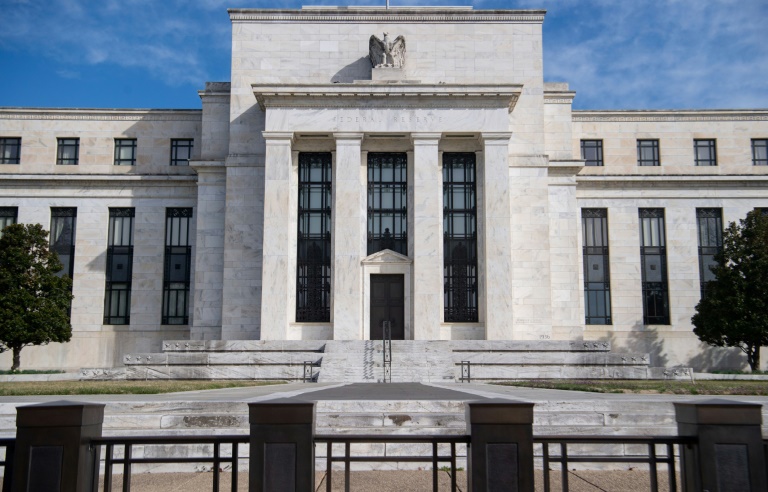
Asian markets mostly rose Friday after a tough week dominated by the US Federal Reserve’s hawkish tone that has set it on an aggressive tightening path, while oil ticked higher after another series of losses.

After a slow start, the region managed to take the lead from Wall Street, which recovered from steep intra-day losses to end on a positive note, having plunged in previous sessions as traders fretted over the prospect of higher interest rates.

While the Fed has made clear it intends to act more decisively to rein in 40-year-high inflation by ramping up borrowing costs and offloading bond holdings, analysts suggested that better clarity on policy was welcome.

The Fed’s desire to tighten has sent the dollar rallying against most other major currencies, particularly the euro, which has been weighed by European officials’ reticence to move as aggressively on prices. The euro is sitting around a one-month low.

Markets have come under huge pressure this year as the end of ultra-cheap central bank cash, a Covid-fuelled slowdown in China’s economic activity, the war in Ukraine and soaring inflation come together in a perfect storm.

Highlighting the difficult task central banks will have in fighting inflation, the UN’s Food and Agriculture Organization said Friday that world food prices hit their “highest levels ever” in March as Russia’s invasion of Ukraine disrupted wheat and coarse grain exports.

Still, all three indexes on Wall Street ended slightly higher, having bounced back from heavy losses thanks to bargain-buying, while some observers suggested recent selling may have gone too far.

Asia saw a tepid start but most markets enjoyed mild gains towards the end of the day.

Tokyo, Hong Kong, Shanghai, Sydney, Seoul, Taipei, Mumbai, Manila, Jakarta and Bangkok all rose, though Singapore and Wellington were lower.

London, Paris and Frankfurt rallied in the morning, while US futures were also well up.

– Crude concerns –

Still, OANDA’s Jeffrey Halley warned traders were “growing warier about China as the Shanghai lockdown drags on” owing to the fast-spreading Omicron virus variant.

“China’s Covid-zero policy continues to be its Achilles heel, although there are plenty of other reasons to be a little cautious,” he said in a note.

“A serious spread outside of its finance and commercial centre to other large cities will be a big headwind for China’s growth, China stocks, and by default eventually, much of Asia.”

Crude prices edged up having also endured a downcast week after the United States and allies pledged to release more than 200 million barrels over the coming months to offset the loss of Russian supplies.

The decision comes on top of concerns about demand from China owing to the lockdowns.

Still, there is a feeling that the war in Ukraine, and any possible further sanctions on Russia, could send the oil market higher again.

“I still think… the sentiment-driven sell-off will give way, and fundamentals will reassert themselves, especially as more market participants start fretting about how will the US administration replenish the SPR drawdown,” said SPI Asset Management’s Stephen Innes.

“Oil prices remain volatile amid concerns over Russian supply against the backdrop of slowing demand in China and a likely depressed US summer driving season due to higher prices at the pump.”

He added that “deficits are likely to persist but only moderated by the accelerated strategic stock release from May to November and weaker demand growth”.

– Key figures around 0810 GMT –

Tokyo – Nikkei 225: UP 0.4 percent at 26,985.80 (close)

Hong Kong – Hang Seng Index: UP 0.3 percent at 21,872.01 (close)

Shanghai – Composite: UP 0.5 percent at 3,251.85 (close)

London – FTSE 100: UP 1.0 percent at 7,625.18

Brent North Sea crude: UP 0.1 at $100.71 per barrel

West Texas Intermediate: UP 0.2 percent at $96.26 per barrel

Euro/dollar: DOWN at $1.0858 from $1.0880 late Thursday

Pound/dollar: DOWN at $1.3035 from $1.3071

Euro/pound: UP at 83.29 pence from 83.17 pence

Dollar/yen: UP at 124.11 yen from 123.95 yen

New York – Dow: UP 0.3 percent at 34,583.57 (close)

Asian markets struggle to track Wall St on hawkish Fed

Asian markets mostly rose Friday after a tough week dominated by the Federal Reserve’s hawkish tone that has set it on an aggressive tightening path, while oil bounced back after another series of losses.

After a slow start, the region managed to take the lead from Wall Street, which recovered from steep intra-day losses to end on a positive note, having plunged in previous sessions as traders fretted over the prospect of higher interest rates.

While the Fed has made clear it intends to act more decisively to rein in 40-year-high inflation by ramping up borrowing costs and offloading bond holdings, analysts suggested that better clarity on policy was welcome.

The Fed’s desire to tighten up has sent the dollar rallying against most other major currencies and particularly the euro, which has been weighed by European officials’ reticence to move as aggressively on prices. The single currency is sitting around a one-month low.

Markets have come under huge pressure this year as the end of ultra-cheap central bank cash, a Covid-fuelled slowdown in China’s economic activity, the war in Ukraine and soaring inflation come together in a perfect storm.

Still, all three indexes on Wall Street ended slightly higher, having bounced back from heavy losses earlier in the day thanks to bargain-buying, while some observers suggested recent selling may have gone too far.

Asia saw a tepid start but most markets enjoyed mild gains towards the end of the day.

Tokyo, Shanghai, Sydney, Seoul, Taipei, Mumbai, Manila, Jakarta and Bangkok all rose, though Hong Kong was weighed by losses in the tech sector while Singapore and Wellington were also lower.

London, Paris and Frankfurt rallied at the open, while US futures were also up.

Still, OANDA’s Jeffrey Halley warned traders were “growing warier about China as the Shanghai lockdown drags on” owing to the fast-spreading Omicron virus variant.

“China’s Covid-zero policy continues to be its Achilles heel, although there are plenty of other reasons to be a little cautious,” he said in a note.

“A serious spread outside of its finance and commercial centre to other large cities will be a big headwind for China’s growth, China stocks, and by default eventually, much of Asia.”

Crude prices climbed nearly one percent having also endured a downcast week after the United States and allies pledged to release more than 200 million barrels over the coming months to offset the loss of Russian supplies.

The decision comes on top of concerns about demand from China owing to the lockdowns.

Still, there is a feeling that the war in Ukraine, and any possible further sanctions on Russia, could send the oil market higher again.

“I still think… the sentiment-driven sell-off will give way, and fundamentals will reassert themselves, especially as more market participants start fretting about how will the US administration replenish the SPR drawdown,” said SPI Asset Management’s Stephen Innes.

“Oil prices remain volatile amid concerns over Russian supply against the backdrop of slowing demand in China and a likely depressed US summer driving season due to higher prices at the pump.”

He added that “deficits are likely to persist but only moderated by the accelerated strategic stock release from May to November and weaker demand growth”.

– Key figures around 0720 GMT –

Tokyo – Nikkei 225: UP 0.4 percent at 26,985.80 (close)

Hong Kong – Hang Seng Index: DOWN 0.1 percent at 21,797.11

Shanghai – Composite: UP 0.5 percent at 3,251.85 (close)

London – FTSE 100: UP 0.8 percent at 7,615.04

Brent North Sea crude: UP 0.9 at $101.48 per barrel

West Texas Intermediate: UP 0.9 percent at $96.89 per barrel

Euro/dollar: DOWN at $1.0859 from $1.0880 late Thursday

Pound/dollar: DOWN at $1.3044 from $1.3071

Euro/pound: UP at 83.24 pence from 83.17 pence

Dollar/yen: DOWN at 124.10 yen from 123.95 yen

New York – Dow: UP 0.3 percent at 34,583.57 (close)

Shanghai lockdown snarls world's busiest port and China supply chains

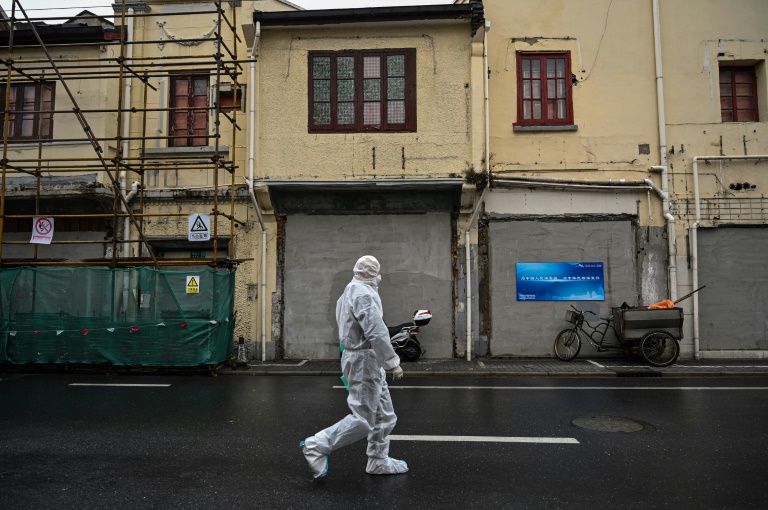
Shanghai’s grinding coronavirus lockdown is slowly clogging China’s supply chains, as delays hit the world’s busiest container port where staff are tangled in a morass of Covid controls.

Beijing has refused to tack away from its strict zero-Covid strategy that has protected its public health system through the pandemic but at a mounting economic cost.

China’s financial hub Shanghai — home to multinational firms and its busiest port — has been sealed off almost entirely for a week following an outbreak fuelled by the Omicron virus variant.

That has forced many companies to halt production and slow new projects, factories told AFP, while those still operating are struggling with a shortage of truck drivers on top of onerous permit and Covid testing requirements.

At Shanghai’s port, the lack of drivers and other workers means getting goods in and out is increasingly hard.

The docks are working normally with a “single-digit” number of vessels waiting to berth, Shanghai International Port Group said this week.

“But the fact is… due to restrictions caused for truck drivers, it is not really operating,” Bettina Schoen-Behanzin, vice president of the EU Chamber of Commerce’s Shanghai Chapter, told AFP.

“The figure I heard is that… week-on-week volumes at the Shanghai port are down by 40 percent. So that’s really enormous.”

Shortages are starting to bite across China’s vast consumer economy, where online shopping platforms such as Taobao face delivery delays, especially of imported goods.

Covid curbs in a number of cities have forced factories to find new suppliers.

But the impact may soon also be felt outside China if lockdowns persist.

Shanghai is the world’s number one container port, a spinal point in the global supply chain and a key gateway for foreign trade.

It handles around 17 percent of China’s total port volume and shipped 47 million TEU — the standard measurement for cargo, meaning Twenty-foot Equivalent Unit — in 2021.

– Factories can’t work from home  –

Chinese manufacturers say lockdowns, no matter how flexible or targeted, pile pressure on their business.

“Not many roles allow working from home,” said Jason Lee, founder of wheelchair producer Megalicht Tech, whose factory in Shanghai’s Puxi area has suspended production.

“People can’t enter the factory… and because our raw materials come from other provinces or cities, these can’t enter Shanghai either,” he said.

A Shanghai-based clothing exporter surnamed Zheng said his biggest problem was that he could not send samples to clients.

“Deliveries can neither leave nor enter,” he said

Experts say the outbreak is currently nibbling at growth, but could soon take a big bite.

Nomura economists estimate that 23 cities accounting for 22 percent of China’s GDP have rolled out full or partial lockdowns.

“The costs of the zero-Covid strategy will rise significantly as its benefits decline, especially as exports are hit by the ongoing lockdowns,” Nomura chief China economist Lu Ting told AFP.

That will challenge Beijing’s 2022 GDP growth target of around 5.5 percent, he added.

– Adapting to survive –

For now, companies are adapting to try and handle the restrictions.

“Our main business activity is down by over 50 percent,” said Gao Yongkang, general manager of Qifeng Technology in eastern China’s Quanzhou city.

The company has been unable to transport textile materials to regular clients because of the Covid curbs, and has instead pivoted to supplying the booming market for protective gear.

Meanwhile, those who cannot reach their original suppliers are scouring for new ones.

“The costs are a little higher and it’s slightly less efficient but we can fulfil our regular needs,” said Shen Shengyuan, deputy general manager of diaper-producer New Yifa Group.

In a nod to struggling industries, Premier Li Keqiang this week announced a temporary deferment of old-age insurance premiums for sectors such as catering, retail and civil aviation.

But industry groups say hard lockdowns on major cities such as Shanghai are unsustainable, especially with many Omicron cases presenting light or no symptoms.

“Does the zero-Covid strategy still work in the current environment,” said Eric Zheng, American Chamber of Commerce president in Shanghai. 

“That’s a big question, particularly when you try to balance the economic cost.”

Close Bitnami banner