AFP

Elon Musk buys large stake in Twitter, sending stock soaring

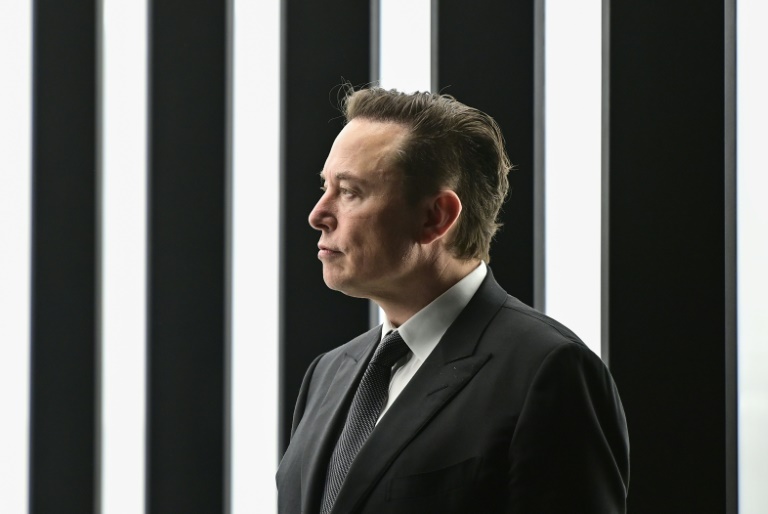
Tesla CEO Elon Musk, who has expressed concern over protecting freedom of speech in the “de facto public town square” of Twitter, disclosed Monday a large stake in the social media company, sending shares soaring.

Musk, who has more than 80 million followers on the microblogging platform, became its largest shareholder following the purchase of 73.5 million shares or 9.2 percent of common stock, according to a securities filing.

The investment is worth about $2.9 billion based on Friday’s share price. Musk is currently the world’s richest man, with a net worth of $287.6 billion, according to Forbes.

The billionaire is a frequent Twitter user, regularly mixing in inflammatory and controversial statements about issues or other public figures with remarks that are whimsical or business-focused. 

He has also sparred repeatedly with federal securities regulators, who cracked down on his social media use after a purported effort to take Tesla private in 2018 fell apart.

Twitter shares rocketed higher on the announcement, surging more than 20 percent to $47.86 in mid-morning trading. 

“We would expect this passive stake as just the start of broader conversations with the Twitter board (and) management that could ultimately lead to an active stake and a (potentially) more aggressive ownership role of Twitter,” analysts Daniel Ives and John Katsingris of Wedbush wrote in a note.

– ‘Just buy Twitter’ –

Disclosure of Musk’s stake follows a recent poll launched by the billionaire to his followers.

Saying “free speech is essential to a functioning democracy,” Musk on March 25 launched a survey on Twitter that asked: “Do you believe Twitter rigorously adheres to this principle?” 

More than two million people voted in the poll, with over 70 percent saying “no.”

“Given that Twitter serves as the de facto public town square, failing to adhere to free speech principles fundamentally undermines democracy. What should be done?” he continued the next day. “Is a new platform needed?”

“Just buy twitter,” was one of the first responses from tens of thousands of users.

US political conservatives have long complained that the platform censors right-wing voices, an assertion the company denies.

Its critics in particular cite Twitter’s decision to ban Donald Trump over the former US president’s role in fomenting the January 6, 2021 attack on the US Capitol. 

Twitter has also at times punished Representative Marjorie Taylor Greene, a far right Georgia congresswoman who has repeatedly posted misinformation about Covid-19 and vaccines against it.

Greene welcomed Musk’s investment on Twitter, tweeting “freedom of speech restored will enable us all to defeat them.”

– SEC deal –

Musk has cited the right to freedom of speech as a driver of his efforts to undo a agreement with the Securities and Exchange Commission (SEC) that tightened his use of the social media platform after he tweeted in August 2018 that funding was “secured” to take Tesla private.

The following month, Musk agreed to pay $20 million to settle SEC charges of securities fraud over the claim, and to institute new controls and procedures to oversee his communications.

But Musk’s attorneys have asked a federal court to cancel the agreement, saying the agency has pursed “endless unfounded investigations” into the Tesla boss and his company because Musk “remains an outspoken critic of the government.”

Musk has also used Twitter to court controversy away from the business world: in March he challenged Russian President Vladimir Putin to a fight following the invasion of Ukraine, and in February, Musk drew condemnation for a tweet comparing Canadian leader Justin Trudeau to Adolf Hitler.

The billionaire famously sparred with a British caver who belittled Musk’s offer to help rescue young soccer players trapped in a cave in Thailand in the summer of 2018.

Musk called the caver, Vernon Unsworth, “pedo guy” on Twitter.

Unsworth sued Musk for defamation, but a Los Angeles jury sided with the billionaire in December 2019 following a trial.
Nearly entire global population breathing polluted air: WHO

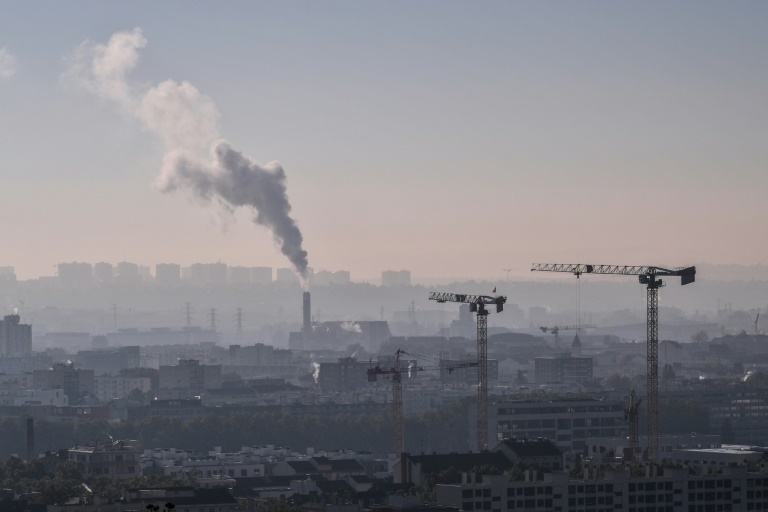
A full 99 percent of people on Earth breathe air containing too many pollutants, the World Health Organization said Monday, blaming poor air quality for millions of deaths each year.

Fresh data from the UN health agency showed that every corner of the globe is dealing with air pollution, although the problem is much worse in poorer countries.

“Almost 100 percent of the global population is still breathing air that exceeds the standards recommended by the World Health Organization,” the agency’s environment, climate change and health director Maria Neira told reporters.

“This is a major public health issue.”

In its previous report four years ago, WHO had already found that over 90 percent of the global population was affected, but it has since tightened its limits, it said.

“The evidence base for the harm caused by air pollution has been growing rapidly and points to significant harm caused by even low levels of many air pollutants,” WHO said. 

While UN data last year indicated that pandemic lockdowns and travel restrictions caused short-lived improvements in air quality, WHO said air pollution remains a towering problem.

“After surviving a pandemic, it is unacceptable to still have seven million preventable deaths and countless preventable lost years of good health due to air pollution,” Neira said.

– ‘Healthier energy systems’ –

WHO’s study provides air quality data from more than 6,000 cities and other settlements across 117 countries — representing around 80 percent of urban settings. 

In addition, Neira said WHO used satellite data and mathematical models to determine that air quality is falling short basically everywhere.

The poorest air quality was found in the eastern Mediterranean and Southeast Asia regions, and Africa, she said.

The findings were alarming, the organisation said, and highlighted the importance of rapidly curbing fossil fuel use.  

WHO chief Tedros Adhanom Ghebreyesus stressed that worries over soaring energy prices, due in part to Russia’s invasion of Ukraine, should help propel change.

“Current energy concerns highlight the importance of speeding up the transition to cleaner, healthier energy systems,” he said in a statement.

“High fossil fuel prices, energy security, and the urgency of addressing the twin health challenges of air pollution and climate change, underscore the pressing need to move faster towards a world that is much less dependent on fossil fuels.”

– Worse in poorer countries –

The report provides data on concentrations of dangerous particulate matter with a diameter of between 2.5 and 10 micrometres (PM10), and particles with a diameter of less than 2.5 micrometres (PM2.5).

PM2.5 includes toxins like sulfate and black carbon, which pose the greatest health risks since they can penetrate deep into the lungs or cardiovascular system.

And for the first time, the report also provides ground measurements of annual mean concentrations of nitrogen dioxide (NO2), a common urban pollutant, which is associated with respiratory diseases, particularly asthma.

The report found problems related to particulate pollution were far worse in poorer countries, but that most cities had trouble with nitrogen dioxide.

While the air in 17 percent of cities in high-income countries fell below WHO’s air quality guidelines for PM2.5 or PM10, less than one percent of cities in low and middle-income countries complied with the recommended thresholds, the report said.

Out of the around 4,000 cities across 74 countries that collected NO2 data, measurements meanwhile showed only 23 percent of people breathed annual average concentrations of the gas that met levels in WHO’s recently updated guidelines.

Elon Musk buys large stake in Twitter, sending stock soaring

Elon Musk has taken a major stake in Twitter, regulatory filings showed Monday, sending the social media network’s stock soaring and igniting speculation he could seek an active role in its operations.

Musk, the world’s richest man and CEO of electric vehicle company Tesla, is a frequent Twitter user who often posts controversial messages and announcements, and has long been critical of social media companies.

In one recent post he questioned Twitter’s adherence to free speech and hinted at launching his own platform. 

According to a document filed with the US Securities and Exchange Commission (SEC), the South African-born billionaire acquired nearly 73.5 million Twitter shares — a 9.2 percent stake in the company.

Based on Friday’s closing price of the company’s stock, his investment amounts to nearly $2.9 billion.

Investors responded quickly. At 7.15 am in New York (1115 GMT) Twitter’s stock was trading at about $49, up by around 26 percent.

“We would expect this passive stake as just the start of broader conversations with the Twitter board/management that could ultimately lead to an active stake and a potential more aggressive ownership role of Twitter,” analysts Daniel Ives and John Katsingris of Wedbush wrote in a note.

Musk launched a poll on Twitter on March 25, saying “free speech is essential to a functioning democracy. Do you believe Twitter rigorously adheres to this principle?” 

More than two million people voted in the poll, with over 70 percent saying “no.”

“Given that Twitter serves as the de facto public town square, failing to adhere to free speech principles fundamentally undermines democracy. What should be done?” he continued the next day.

“Is a new platform needed?”

“Just buy twitter,” was one of the first responses from tens of thousands of users.

– Musk, Twitter and controversy –

Musk has wielded Twitter polls to conduct business before: in November last year he offloaded $5 billion in Tesla shares days after asking fellow social media users if he should sell 10 percent of his stake.

In summer 2018 Musk published a tweet where he claimed that he had the appropriate funding to take Tesla private, without providing proof.

The tweet caused a brief spike in Tesla’s share price but the SEC said the statements on Twitter were “false and misleading.”

The mogul then agreed that any tweets capable of moving Tesla’s share price would be screened by lawyers, as part of a deal that saw him pay $20 million to settle a fraud case brought by the SEC.

Then in early March, Musk asked a New York judge to overturn the agreement with the stock market watchdog on his tweets. 

His lawyer said the dispute with the SEC was “yet another attempt to harass Tesla and silence Mr Musk.”

Musk has also used Twitter to court controversy away from the business world: in March he challenged Russian President Vladimir Putin to a fight, with the fate of Ukraine at stake; and in February he drew condemnation for a tweet comparing Canadian leader Justin Trudeau to Adolf Hitler.

Stocks up, oil steady on easing supply, inflation concerns

Stock markets climbed and oil prices steadied Monday on easing concerns over tight crude supplies and decades-high inflation, traders said.

Turkey’s lira was stable against the dollar and euro after official data showed the country’s inflation had soared to a fresh record high.

Elsewhere, trading was halted on Sri Lanka’s stock exchange seconds after opening Monday as the island nation’s president offered to share power with the opposition.

Protests demanding the resignation of Gotabaya Rajapaksa grew over unprecedented food and fuel shortages along with record inflation and crippling power cuts in the South Asian country.

Sri Lanka’s stock market slid more than the five percent in value — the threshold needed to trigger an automatic stop.

On the corporate front, Twitter’s stock soared by more than 25 percent in pre-market trade after Tesla boss Elon Musk took a major stake in the social media giant.

According to a document filed with the US Securities and Exchange Commission, Musk acquired nearly 73.5 million Twitter shares — a 9.2-percent stake in the company. 

Ahead of Wall Street’s reopening, other major stock markets “continued their cautious grind higher, as investors took solace from a US economy which is showing increasing signs of being able to withstand the likely onslaught of interest rate rises to come”, noted Richard Hunter, head of markets at Interactive Investor.

The world’s top economy added 431,000 jobs in March while the US unemployment rate fell to just slightly above pre-pandemic levels, official data showed Friday. 

Economists viewed the figures as reinforcing the Federal Reserve’s commitment to forcefully raising interest rates, perhaps by half a percentage point at its meeting next month, which would be double the increase it announced when it began hiking in March.

Stock markets Monday were helped by steadier oil prices after recent surges triggered by tight supply concerns, notably owing to the invasion of Ukraine by major crude producer Russia.

The 31-nation International Energy Agency on Friday agreed to tap its vast reserves to offset the removal of Russian exports.

There was some cheer also from news of a 60-day ceasefire in Yemen’s six-year civil war that has seen several attacks on Saudi facilities, in turn hitting output from the world’s biggest oil producer.

– Key figures around 1100 GMT –

London – FTSE 100: UP 0.2 percent at 7,555.73 points

Frankfurt – DAX: FLAT at 14,450.49

Paris – CAC 40: UP 0.2 percent at 6,700.38

EURO STOXX 50: UP 0.1 percent at 3,924.35

Tokyo – Nikkei 225: UP 0.3 percent at 27,736.47 (close)

Hong Kong – Hang Seng Index: UP 2.1 percent at 22,502.31 (close)

Shanghai – Composite: Closed for a holiday

New York – Dow: UP 0.4 percent at 34,818.27 (close)

Brent North Sea crude: FLAT at $104.37 per barrel

West Texas Intermediate: FLAT at $99.31 per barrel

Euro/dollar: DOWN at $1.1002 from $1.1049 late Friday

Pound/dollar: DOWN at $1.3098 from $1.3118

Euro/pound: DOWN at 84.00 pence from 84.24 pence 

Dollar/yen: UP at 122.76 yen from 122.49 yen

Turkish inflation hits fresh record at 61.1 percent

Turkey’s inflation has soared to a new record, official data showed Monday, as analysts see an impact from Russia’s invasion of Ukraine and President Recep Tayyip Erdogan’s unorthodox interest rate policy.

Exacerbating a cost of living crisis, consumer prices accelerated to 61.14 percent at an annual rate, up from 54.4 percent in February, according to the statistics agency.

The weakening lira and runaway inflation have become major sources of public discontent in Turkey as President Recep Tayyip Erdogan faces an election next year.

Turkey has recorded double digit inflation since early 2017 but the latest figure is the highest since the ruling Justice and Development Party (AKP) came to power in 2002.

The currency was stable following the latest inflation data, trading at 14.7 lira against the dollar and 16.2 lira against euro.

The war in Turkey’s Black Sea neighbourhood has had a major impact on the country as Russia is a key supplier of energy while Ukraine ships wheat. Turkish tourism industry also mainly relies on Russian tourists. 

On Friday, S&P global rating agency kept a negative outlook on Turkey and cut its credit rating. 

“The fallout of the Russia-Ukraine military conflict, including rising food and energy prices, will further weaken Turkey’s already tenuous balance of payments and exacerbate inflation,” it said.

The biggest price increases in March were in transportation and food prices, according to the statistics agency.

-‘Be patient’-

While countries around the world are facing rising inflation as energy prices have soared while economies emerge Covid restrictions, Turkey’s problems have also been affected by Erdogan’s unorthodox economic approach. 

The Turkish leader rejects the idea that inflation should be fought by hiking the main interest rate, which he believes causes prices to grow even higher — the exact opposite of conventional economic thinking.

Turkish central bank “policies are just not working in countering inflation,” said Timothy Ash, emerging markets strategist at BlueBay Asset Management. 

“Indeed, I think the overwhelming consensus is that the unorthodox policy settings of the CBRT (central bank) are a major cause of inflation,” he said in a note to clients.

“The war in Ukraine is just making things that much worse.”

On Saturday, Erdogan said increase in food and energy prices triggered by the war in Ukraine “is affecting us too.”

“We are fighting against those who are charging unreasonably high prices,” he said. 

“There are problems we need to address … I ask you to be patient and trust us,” in reference to people squeezed by the biting inflation. 

In January, Erdogan changed the head of the state statistics agency.

Turkish media reported that he was unhappy with the inflation figures it published while the opposition believes that the official figures grossly underestimate the reality.

Jason Tuvey, senior emerging markets economist at the London-based Capital Economics, said inflation was likely to rise further over the coming months and stay close to the current high rates for much of this year.

“But there is still little sign that the central bank and, crucially, President Erdogan are about to shift tack and hike interest rates,” he said. 

Markets mostly up on US jobs data but rate worries linger

Asian markets mostly rose Monday as another strong jobs report provided some reassurance that the recovery in the US economy remained on track, though it also solidified expectations for more aggressive Federal Reserve interest rate hikes.

The gains were helped by another recent drop in oil prices after the 31-nation International Energy Agency agreed to tap its vast reserves to offset the removal of Russian exports, while the start of a ceasefire in Yemen eased concerns over supplies from the region.

Officials said Friday that the world’s top economy added 431,000 positions in March while the unemployment rate fell to just slightly above pre-pandemic levels. 

The figures showed that while inflation has surged to a 40-year high and the Ukraine war has fanned uncertainty, the recovery continues.

The economy’s resilience will be taken as further evidence that it could withstand a sharper rise in interest rates to bring prices under control, with many observers now predicting a half-point hike in May.

However, expectations that rates will continue to go up have seen Treasury yields surge, with commentators saying there were warning signs that growth will slow as the year progresses.

“It would not be surprising to see yields rise further from here and it is very hard to know where they will land,” Angela Ashton, of Evergreen Consultants, noted.

“Markets are volatile and there is every chance they will overshoot.”

A positive close on Wall Street was followed by a broadly upbeat start to the week in Asia.

Hong Kong led gains, jumping more than two percent thanks to a rally in tech firms after Beijing removed a rule preventing US authorities from inspecting the audits of Chinese companies listed in New York.

The announcement came after a drawn-out row between the two countries with Washington saying Chinese firms could be delisted by 2024 if they do not comply with audit requirements. 

The demand put at risk more than 200 companies, including e-commerce titans Alibaba and JD.com and Tencent.

Tokyo, Singapore, Sydney, Mumbai, Seoul, Manila, Jakarta and Bangkok also rose, though Wellington struggled.

London rose at the open, though Paris and Frankfurt dipped.

Shanghai and Taipei were closed for a holiday.

Crude bounced after Friday’s losses, responding to the IEA pledge to dip into stockpiles to shore up tight supplies caused by Russia’s invasion of Ukraine.

The grouping made the promise at an emergency ministerial meeting, having already announced last week a plan to release more than 60 million barrels.

That came a day after US President Joe Biden said he would release a record 180 million barrels onto the market over six months.

Meanwhile, there was also some cheer from news of a 60-day ceasefire in Yemen’s six-year civil war, which has seen several attacks on Saudi facilities that have hit output from the world’s biggest producer.

Still, analysts said that while markets equity and crude markets have shown some stability after the wild swings seen at the start of the Ukraine war, uncertainty continued to act as a drag and traders remained nervous.

“Risk sentiment over the past week has been inconsistent,” said SPI Asset Management’s Stephen Innes.

“Market signals could be characterised by a repetitive cat-and-mouse game whereby headlines initially emerge around the progress in ceasefire talks before being typically walked down by Russian officials who deny the odds of any close peace deal.”

– Key figures around 0810 GMT –

Tokyo – Nikkei 225: UP 0.3 percent at 27,736.47 (close)

Hong Kong – Hang Seng Index: UP 2.1 percent at 22,502.31 (close)

Shanghai – Composite: Closed for a holiday

London – FTSE 100: UP 0.3 percent at 7,557.60

Brent North Sea crude: UP 1.1 percent at $105.51 per barrel

West Texas Intermediate: UP 1.1 percent at $100.33 per barrel

Euro/dollar: DOWN at $1.1028 from $1.1049 late Friday

Pound/dollar: UP at $1.3125 from $1.3118

Euro/pound: DOWN at 84.02 pence from 84.24 pence 

Dollar/yen: UP at 122.58 yen from 122.49 yen

New York – Dow: UP 0.4 percent at 34,818.27 (close)

Markets mostly up on US jobs data but rate worries linger

Asian markets mostly rose Monday as another strong jobs report provided some reassurance that the recovery in the US economy remained on track, though it also solidified expectations for more aggressive Federal Reserve interest rate hikes.

The gains were helped by another recent drop in oil prices after the 31-nation International Energy Agency agreed to tap its vast reserves to offset the removal of Russian exports, while the start of a ceasefire in Yemen eased concerns over supplies from the region.

Officials said Friday that the world’s top economy added 431,000 positions in March while the unemployment rate fell to just slightly above pre-pandemic levels. 

The figures showed that while inflation has surged to a 40-year high and the Ukraine war has fanned uncertainty, the recovery continues.

The economy’s resilience will be taken as further evidence that it could withstand a sharper rise in interest rates to bring prices under control, with many observers now predicting a half-point hike in May.

However, expectations that rates will continue to go up have seen Treasury yields surge with commentators saying there were warning signs that growth will slow as the year progresses.

“It would not be surprising to see yields rise further from here and it is very hard to know where they will land,” Angela Ashton, of Evergreen Consultants, noted.

“Markets are volatile and there is every chance they will overshoot.”

A positive close on Wall Street was followed by a broadly upbeat start to the week in Asia.

Hong Kong led gains thanks to a rally in tech firms after Beijing removed a rule preventing US authorities from inspecting the audits of Chinese companies listed in New York.

The announcement came after a drawn-out row between the two countries with Washington saying Chinese firms could be delisted by 2024 if they do not comply with audit requirements. 

The demand put at risk more than 200 companies, including e-commerce titans Alibaba and JD.com and Tencent.

Tokyo, Singapore, Sydney, Mumbai, Seoul, Manila, Jakarta and Bangkok also rose, though Wellington struggled.

London, Paris and Frankfurt all rose at the open.

Shanghai and Taipei were closed for a holiday.

Crude bounced after Friday’s losses, responding to the IEA pledge to dip into stockpiles to shore up tight supplies caused by Russia’s invasion of Ukraine.

The grouping made the promise at an emergency ministerial meeting, having already announced last week a plan to release more than 60 million barrels.

That came a day after US President Joe Biden said he would release a record 180 million barrels onto the market over six months.

Meanwhile, there was also some cheer from news of a 60-day ceasefire in Yemen’s six-year civil war, which has seen several attacks on Saudi facilities that have hit output from the world’s biggest producer.

Still, analysts said that while markets equity and crude markets have shown some stability after the wild swings seen at the start of the Ukraine war, uncertainty continued to act as a drag and traders remained nervous.

“Risk sentiment over the past week has been inconsistent,” said SPI Asset Management’s Stephen Innes.

“Market signals could be characterised by a repetitive cat-and-mouse game whereby headlines initially emerge around the progress in ceasefire talks before being typically walked down by Russian officials who deny the odds of any close peace deal.

– Key figures around 0720 GMT –

Tokyo – Nikkei 225: UP 0.3 percent at 27,736.47 (close)

Hong Kong – Hang Seng Index: UP 1.8 percent at 22,443.36

Shanghai – Composite: Closed for a holiday

London – FTSE 100: UP 0.4 percent at 7,566.36

Brent North Sea crude: UP 0.9 percent at $105.37 per barrel

West Texas Intermediate: UP 0.9 percent at $100.20 per barrel

Euro/dollar: DOWN at $1.1039 from $1.1049 late Friday

Pound/dollar: UP at $1.3129 from $1.3118

Euro/pound: DOWN at 84.08 pence from 84.24 pence 

Dollar/yen: UP at 122.67 yen from 122.49 yen

New York – Dow: UP 0.4 percent at 34,818.27 (close)

Viruses that could save millions of lives

It may seem strange after a pandemic that has killed millions and turned the world upside down, but viruses could save just as many lives.

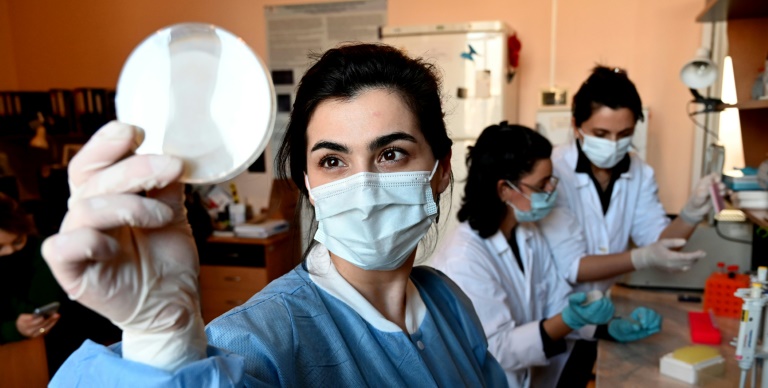
In a petri dish in a laboratory in the Georgian capital Tbilisi, a battle is going on between antibiotic resistant bacteria and “friendly” viruses.

This small nation in the Caucasus has pioneered research on a groundbreaking way to tackle the looming nightmare of bacteria becoming resistant to the antibiotics on which the world depends.

Long overlooked in the West, bacteriophages or bacteria-eating viruses are now being used on some of the most difficult medical cases, including a Belgian woman who developed a life-threatening infection after being injured in the 2016 Brussels airport bombing.

After two years of unsuccessful antibiotic treatment, bacteriophages sent from Tbilisi cured her infection in three months.

“We use those phages that kill harmful bacteria” to cure patients when antibiotics fail, Mzia Kutateladze of the Eliava Institute of Bacteriophages told AFP. 

Even a banal infection can “kill a patient because the pathogen has developed resistance to antibiotics,” Kutateladze said.

In such cases, phagotherapy “is one of the best alternatives”, she added.

Phages have been known about for a century, but were largely forgotten and dismissed after antibiotics revolutionised medicine in the 1930s.

– Stalin’s henchman –

It didn’t help that the man who did most to develop them, Georgian scientist Giorgi Eliava, was executed in 1937 on the orders of another Georgian, Lavrentiy Beria, Stalin’s most notorious henchman and the head of his secret police.

Eliava had worked in the Pasteur Institute in Paris with French-Canadian microbiologist Felix d’Herelle, one of the two men credited with discovering phages, and persuaded Stalin to invite him to Tbilisi in 1934. 

But their collaboration was cut short when Beria had Eliava killed, although his motive still remains a mystery. 

With the World Health Organization now declaring antimicrobial resistance a global health crisis, phages are making a comeback, especially as they can target bacteria while leaving human cells intact.

A recent study warned that superbugs could kill as many as 10 million people a year when antimicrobial resistance due to overuse of antibiotics reaches a tipping point. That could come within three decades.

– ‘Training’ viruses –

While phages-based medicines cannot completely replace antibiotics, researchers say they have major pluses in being cheap, not having side-effects nor damaging organs or gut flora.

“We produce six standard phages that are of wide spectrum and can heal multiple infectious diseases,” said Eliava Institute physician Lia Nadareishvili.

In some 10 to 15 percent of patients, however, standard phages don’t work and “we have to find ones capable of killing the particular bacterial strain,” she added.

Tailored phages to target rare infections can be selected from the institute’s massive collection — the world’s richest — or be found in sewage or polluted water or soil, Kutateladze said.

The institute can even “train” phages so that “they can kill more and more different harmful bacteria.”

“It is a cheap and easily accessible therapy,” she added.

– Last-resort treatment –

A 34-year-old American mechanical engineer suffering from a chronic bacterial disease for six years told AFP he “already felt improvement” after two weeks at the Tbilisi institute.

“I’ve tried every possible treatment in the United States,” said Andrew, who would only give his first name.

He is one of the hundreds of patients from around the globe who arrive in Georgia every year for last-resort treatment, said Nadareishvili.

With the traditional antimicrobial armoury depleting rapidly, more clinical studies are needed so that phagotherapy can be more widely approved, Kutateladze argued.

In 2019, the United States Food and Drug Administration (FDA) authorised a clinical study on the use of bacteriophages to cure secondary infections in Covid patients.

Beyond medicine, phages are already being used to stop food going off, and they “can be used in agriculture to protect crops and animals from harmful bacteria,” Kutateladze said. 

The institute has already conducted research on bacteria targeting cotton and rice.

Bacteriophages also have potential to counter biological weapons and combat bioterrorism, with Canadian researchers publishing a 2017 study on using them to counter an anthrax attack on crowded public places.

UN to release handbook of climate change solutions

UN climate experts are set to release what is expected to be the definitive guide to halting global warming on Monday, in a report that lays out how societies and economies must transform to ensure a “liveable” future.

With war in Ukraine spurring an urgent energy rethink in the West, analysts say the latest report from the UN’s Intergovernmental Panel on Climate Change will also be an important resource for nations seeking a rapid transition away from Russian oil and gas.

In recent months the IPCC has published the first two instalments in a trilogy of mammoth scientific assessments covering how greenhouse gas pollution is heating the planet and what that means for life on Earth.

This third report will outline what to do about it.

But that answer has sweeping political ramifications as climate solutions touch on virtually all aspects of modern life — and require significant investment. 

Two weeks of gruelling negotiations have seen nearly 200 nations struggling to thrash out line-by-line a high-level “summary for policymakers” that distils the hundreds of pages of underlying assessment. 

That meeting was supposed to wrap up on Friday, but dragged on through the weekend. The IPCC assessment was originally due to be published publicly on Monday at 0900 GMT, but will now be released at 1500GMT. 

“Everybody has something to lose and everybody has something to gain,” said one person close to the process.

Easy answers are unlikely, with the IPCC expected to detail the need for transformational changes to energy generation and industry, as well as to cities, transportation and food systems. 

To save the world from the worst ravages of climate change, the report is also expected to warn that slashing carbon dioxide pollution is no longer enough. 

And technologies that are not yet operating to scale will need to be ramped up enormously to suck CO2 out of the atmosphere.

A 1.5C cap on global warming — the aspirational goal of the 2015 Paris climate accord — has been embraced as a target by most of the world’s nations.

Barely 1.1C of warming so far has ushered in a devastating surge of deadly extreme weather across the globe.

– Fossil fuels –

UN chief Antonio Guterres warned last month that major economies are allowing carbon pollution to increase when drastic cuts are needed.

“We are sleepwalking to climate catastrophe,” he said.

In February, the IPCC report on past, present and future climate change impacts and vulnerabilities detailed what Guterres called an “atlas of human suffering”. 

The report concluded that further delays in cutting carbon pollution and preparing for impacts already in the pipeline “will miss a brief and rapidly closing window of opportunity to secure a liveable and sustainable future for all”.

Current national carbon-cutting commitments still put the world on a catastrophic path toward 2.7C of warming by 2100.

“How much more destruction must we witness, and how many more scientific reports will it take, before governments finally acknowledge fossil fuels as the real culprits behind the human suffering being felt across the globe?”, said Namrata Chowdhary of 350.org. 

The main focus of the report is on weaning the global economy off fossil fuels and moving to low- or zero-carbon sources of energy, from solar and wind to nuclear, hydro and hydrogen.

Helping that transition is the fact that renewable energy is now cheaper than energy generated by fossil fuels in most markets.

The IPCC also details ways to reduce demand for oil, gas and coal, whether by making buildings more energy-efficient or encouraging shifts in lifestyle, such as eating less beef and not flying half-way around the world for a holiday or business meeting.

With intense political wrangling over the high-level policy summary, some fear the message will have been watered down.  

“The climate crisis is accelerating and fossil fuels are the overwhelming cause. Any report on mitigation that fails to emphasise that fact is denying the very science to which the IPCC is committed,” said Nikki Reisch of the Center for International Environmental Law. 

The report’s finding will feed into UN political negotiations, which resume in November in Egypt at COP 27.   

UN to release handbook of climate change solutions

UN climate experts are set to release what is expected to be the definitive guide to halting global warming on Monday, in a report that lays out how societies and economies must transform to ensure a “liveable” future.

With war in Ukraine spurring an urgent energy rethink in the West, analysts say the latest report from the UN’s Intergovernmental Panel on Climate Change will also be an important resource for nations seeking a rapid transition away from Russian oil and gas.

In recent months the IPCC has published the first two instalments in a trilogy of mammoth scientific assessments covering how greenhouse gas pollution is heating the planet and what that means for life on Earth.

This third report will outline what to do about it.

But that answer has sweeping political ramifications as climate solutions touch on virtually all aspects of modern life — and require significant investment. 

Two weeks of gruelling negotiations have seen nearly 200 nations struggling to thrash out line-by-line a high-level “summary for policymakers” that distils the hundreds of pages of underlying assessment. 

That meeting was supposed to wrap up on Friday, but dragged on through the weekend. The IPCC assessment was originally due to be published publicly on Monday at 0900 GMT, but that is now likely to be delayed until later in the day. 

“Everybody has something to lose and everybody has something to gain,” said one person close to the process.

Easy answers are unlikely, with the IPCC expected to detail the need for transformational changes to energy generation and industry, as well as to cities, transportation and food systems. 

To save the world from the worst ravages of climate change, the report is also expected to warn that slashing carbon dioxide pollution is no longer enough. 

And technologies that are not yet operating to scale will need to be ramped up enormously to suck CO2 out of the atmosphere.

A 1.5C cap on global warming — the aspirational goal of the 2015 Paris climate accord — has been embraced as a target by most of the world’s nations.

Barely 1.1C of warming so far has ushered in a devastating surge of deadly extreme weather across the globe.

– Fossil fuels –

UN chief Antonio Guterres warned last month that major economies are allowing carbon pollution to increase when drastic cuts are needed.

“We are sleepwalking to climate catastrophe,” he said.

In February, the IPCC report on past, present and future climate change impacts and vulnerabilities detailed what Guterres called an “atlas of human suffering”. 

The report concluded that further delays in cutting carbon pollution and preparing for impacts already in the pipeline “will miss a brief and rapidly closing window of opportunity to secure a liveable and sustainable future for all”.

Current national carbon-cutting commitments still put the world on a catastrophic path toward 2.7C of warming by 2100.

“How much more destruction must we witness, and how many more scientific reports will it take, before governments finally acknowledge fossil fuels as the real culprits behind the human suffering being felt across the globe?”, said Namrata Chowdhary of 350.org. 

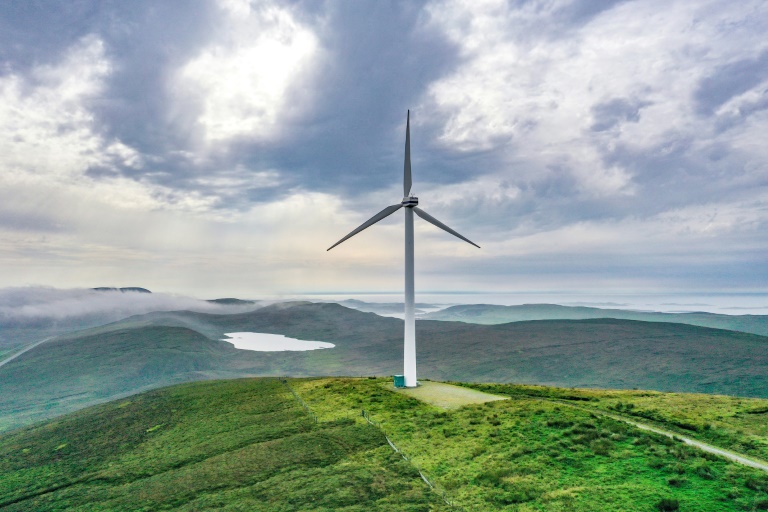
The main focus of the report is on weaning the global economy off fossil fuels and moving to low- or zero-carbon sources of energy, from solar and wind to nuclear, hydro and hydrogen.

Helping that transition is the fact that renewable energy is now cheaper than energy generated by fossil fuels in most markets.

The IPCC also details ways to reduce demand for oil, gas and coal, whether by making buildings more energy-efficient or encouraging shifts in lifestyle, such as eating less beef and not flying half-way around the world for a holiday or business meeting.

With intense political wrangling over the high level policy summary, some fear the message will have been watered down.  

“The climate crisis is accelerating and fossil fuels are the overwhelming cause. Any report on mitigation that fails to emphasise that fact is denying the very science to which the IPCC is committed,” said Nikki Reisch of the Center for International Environmental Law. 

The report’s finding will feed into UN political negotiations, which resume in November in Egypt at COP 27.   

Close Bitnami banner
Bitnami