AFP

From Beirut to Baghdad: Lebanese flee crisis seeking jobs in Iraq

Iraq, once synonymous with conflict and chaos, is becoming a land of opportunity for Lebanese job-seekers fleeing a deep economic crisis back home.

Akram Johari is one of thousands who fled Lebanon’s tumbling currency and skyrocketing poverty rates.

Last year, he packed his bags and boarded a plane from Beirut to Baghdad, using social media to search for opportunities.

“I didn’t have enough time to look for a job in the Gulf,” the 42-year-old said, explaining why he eschewed the more traditional path for those seeking economic opportunities in the region.

With its relative proximity and visas on arrival for Lebanese, the Iraqi capital seemed a good option.

“I had to take quick action, and so I came to Baghdad and began searching for work on Instagram,” Johari said, speaking in a restaurant he has run for about a month.

Lebanon is grappling with an unprecedented financial crisis that the World Bank says is of a scale usually associated with war.

Beirut’s crisis, driven by years of endemic corruption, has seen Lebanon’s currency lose more than 90 percent of its value against the dollar.

Lebanon’s 675,000-pound monthly minimum wage now fetches around $30 on the black market, and about 80 percent of the population now lives in poverty, according to the UN.

When he left Beirut, Johari was earning the equivalent of about $100 per month. In Iraq, he earns enough to support his family back home, he said.

– Thousands flock to Iraq –

More than 20,000 Lebanese citizens arrived in Iraq between June 2021 and February 2022, excluding pilgrims visiting the Shiite holy cities of Najaf and Karbala, according to the Iraqi authorities.

Lebanon’s ambassador in Baghdad, Ali Habhab, said that movement from Lebanon to Iraq “has recently multiplied”.

There are more than 900 Lebanese businesses now operating in Iraq, the majority of them in the restaurant trade, tourism and health, Habhab said. 

In particular, there have been “dozens of Lebanese doctors who offer their services” in Iraqi hospitals, he said.

Iraq’s decades of conflict — from the Iran-Iraq war of the 1980s, to the US-led invasion of 2003 and  subsequent sectarian conflict, and on to the rise of the Islamic State group in 2014 — means that Baghdad might appear to be an unlikely magnet for those seeking to build a new life.

But since the country declared victory over IS in 2017, Iraq has slowly begun to recover its stability.

Today, streets in Baghdad that once witnessed atrocities are buzzing with shops lining main thoroughfares and cafes open late into the night.

According to Iraqi economic expert Ali al-Rawi, many Lebanese companies came to Iraq because they “know the investment environment well”, while many foreign companies from other countries “fear investing” because of its violent past.

“There is a lot of space for Lebanese enterprises in the Iraqi economy,” he said.

But Iraqis themselves have seen their fair share of economic hardship.

In a country where 90 percent of revenues come from oil sales, roughly a third of the population lives in poverty, according to the World Bank. 

In 2019, nationwide protests erupted across Iraq, driven by anger over rampant corruption, the absence of basic services and unemployment — similar factors behind protests in Lebanon that erupted around the same time.

– Lebanese firms flourish –

Lebanon was once a prime destination for medical tourism, as Iraqis flocked to better equipped medical centres in Beirut and other cities.

But, as with other sectors, Lebanon’s economic crisis has hit healthcare.

The Beirut Eye & ENT Specialist Hospital was once popular with Iraqi patients, but an official at the hospital, Michael Cherfan, said that “many doctors had left Lebanon”.

The hospital responded to the crisis in the way many Lebanese have — by opening a branch in Baghdad, sparing Iraqis the trip to Beirut.

“Our doctors come on a rotating basis,” Cherfan said. “Every week, one or two doctors come and do consultations and surgeries, earn some money and then return to Lebanon, which helps offset some of their losses.”

For Johari, while the money he earns in Iraq supports his family, it comes with a bitter taste. He flies home once a month, but he misses his family.

“It saddens me a lot that I can’t watch my two-month-old daughter grow up”, he said.

Clock ticking on Swiss watches' raw materials from Russia

Diamonds shine brightly at this year’s Geneva watch fair but the sanctions slapped on Russia could soon force the Swiss watch industry to produce more subdued designs.

Russia is a major supplier of diamonds, gold and other precious metals to the luxury watchmakers exhibiting at Watches and Wonders, one of the world’s top salons for the prestige industry.

The Russian group Alrosa — the world’s largest diamond mining company — was hit by US sanctions within hours of the Kremlin-ordered invasion of Ukraine on February 24.

According to US Treasury figures, it accounts for 90 percent of Russia’s diamond mining capacity, and 28 percent globally.

And while trade between Switzerland and Russia is modest, gold is the chief import, ahead of precious metals such as platinum followed by diamonds not mounted or set, according to the Swiss customs office.

Compared to other sectors of the Swiss economy, “watchmaking was a branch that was less affected than others by supply problems in 2021”, Jean-Daniel Pasche, president of the Federation of the Swiss Watch Industry, told AFP.

But that may no longer be the case, he acknowledged, adding that it was hard to assess the repercussions for the watch industry at this stage.

“There are obviously reserves. Afterwards, we will have to see, depending on how long the conflict lasts,” Pasche said.

– Recycled gold and palladium –

The Swiss luxury giant Richemont owns the Cartier and Van Cleef & Arpels jewellery firms, plus eight prestigious watch brands, including Piaget and IWC.

The group took the lead on Wednesday, saying all its brands have stopped sourcing diamonds from Russia.

The move will create a lot of work on the supply chain to find responsibly-sourced, quality diamonds from elsewhere, Richemont chief executive Jerome Lambert told a press conference.

Gold supply is of less concern. For a decade or so, Richemont has been sourcing recycled gold for watchmaking, bought from industry and the electronics sector.

For palladium, used for instance for wedding and engagement rings, the group decided “ahead of the sanctions” to switch to suppliers specialising in recycled palladium, Lambert said.

– Draining the stocks –

At Patek Philippe, one of the most prestigious Swiss brands, the firm’s president is counting on his stockpile to ride out the storm.

“Luckily I produce in small quantities,” said Thierry Stern, who represents the fourth generation of his family at the company helm.

“So I don’t feel any difference yet,” he told AFP. For 2022, Patek Philippe plans to manufacture 66,000 timepieces.

“And if I can’t find certain stones, I can always do engraving,” said the head of the  brand, which relies on a wide range of disciplines including ceramics, marquetry and enamel.

H. Moser, a niche brand producing 2,000 watches a year for wealthy collectors, struck much the same tone.

“Purchases are made in advance. For example, for the casings that I want to make in 2023, I have already bought all the gold I need,” said boss Edouard Meylan.

“But maybe in six months’ time some of our suppliers will call to push back the deadlines because they haven’t received the materials,” he admitted.

Concerns over raw materials “will drive up prices, of course”, said Jon Cox, an industry analyst with the Kepler Cheuvreux financial services company.

However, compared to other sectors, luxury firms have more leeway to pass on costs to customers, he added.

At the Watches and Wonders salon in Geneva, where 38 brands are exhibiting until Tuesday, the displays are brimming with diamonds, reflecting the “generally upbeat mood” of the industry this year after a prosperous 2021.

However, given the war and its repercussions, “I imagine product development will move to more subdued luxury goods”, Cox said.

Torrential rains kill 14 in Brazil

Torrential downpours triggered flash floods and landslides across Brazil’s Rio de Janeiro state, killing at least 14 people including eight children, and leaving five missing, authorities said Saturday.

Two days of heavy rain have battered a broad swathe of the southeastern state’s Atlantic coast, the latest in a series of deadly storms in Brazil that experts say are being aggravated by climate change. 

More rain is forecast for the region in the coming days.

The victims included a mother and six of her children, who were buried when a landslide swept away their home, officials said.

President Jair Bolsonaro said on Facebook the federal government had sent military aircraft to help the rescue effort and dispatched national disaster response secretary Alexandre Lucas to the state of 17.5 million people.

The new incidents come six weeks after flash floods and landslides killed 233 people in the scenic city of Petropolis, the Brazilian empire’s 19th-century summer capital, also in Rio state.

This time, the areas hit hardest included the tourist town of Paraty, a seaside colonial city known for its picturesque cobblestone streets and colorful houses.

Officials there said a landslide in the Ponta Negra neighborhood had killed a mother and six of her children, ages two, five, eight, 10, 15 and 17.

A seventh child was rescued alive and taken to the hospital, where he was in stable condition, they said.

Another four people were injured.

Six more victims, including at least two children, were killed in the city of Angra dos Reis, where officials declared a “maximum alert” and state of emergency after landslides devastated the Monsuaba neighborhood.

Several people were rescued alive, while another five remain missing, they said.

Mayor Fernando Jordao said emergency workers were installing floodlights to continue the search-and-rescue operation through the night if necessary.

“Residents have been working side-by-side with us on the search,” he told a press conference.

“We’ll continue working hard.”

In Mesquita, 40 kilometers (25 miles) northwest of Rio de Janeiro city, a 38-year-old man was electrocuted trying to help another person escape the flooding, officials and media reports said.

– Record rains –

The storms turned streets into rivers Friday night in several cities including Rio, the state capital, sweeping up cars and triggering landslides — a frequent tragedy in the rainy season, especially in poor hillside communities.

TV channel Globo News carried images of a family evacuating two young children through the floodwaters in a styrofoam cooler in the Rio suburb of Belford Roxo, while residents posted videos on social media of small alligators swimming through flooded streets.

A hospital in the suburb of Nova Iguacu was badly flooded, turning the corridors of its intensive care unit into streams.

Officials in Angra said the city had received up to 800 millimeters (31 inches) of rain in 48 hours in some areas, “levels never before registered in the municipality.”

Experts say rainy season downpours in Brazil are being augmented by La Nina — the cyclical cooling of the Pacific Ocean — and by climate change.

Because a hotter atmosphere holds more water, global warming increases the risk and intensity of flooding from extreme rainfall.

In December, storms killed 24 people in the northeastern state of Bahia, and in January, floods and landslides claimed at least 28 lives in southeastern Brazil, mostly in Sao Paulo state.

Tesla delivers over 1 million electric cars over past year

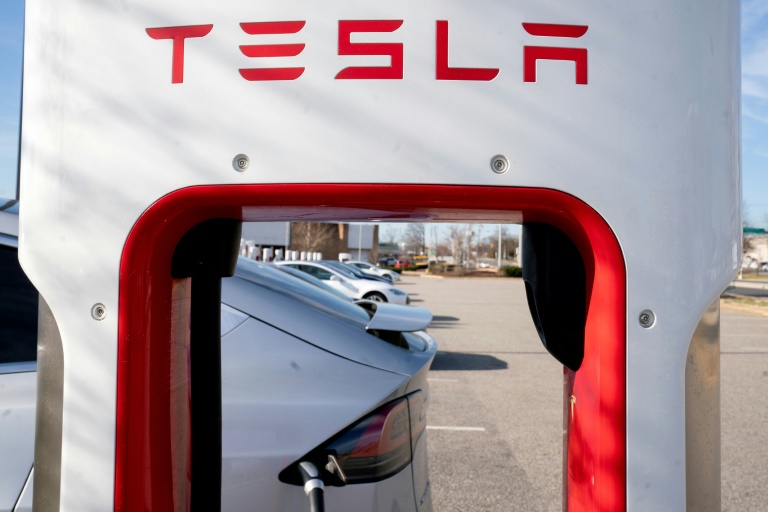
US electric car manufacturer Tesla shipped a record number of more than one million cars over the past year, according to figures published Saturday. 

The company delivered 1.06 million cars from April 2021 to March 2022, including more than 310,000 cars in the first quarter of this year alone, which is 67 percent higher than over the same period last year.

Still, the figure fell short of analysts’ expectations of 317,000 cars, according to data compiled by FactSet.

Deliveries are considered similar to sales figures published by other manufacturers.

Growth, however, slowed sharply in recent months for the Austin, Texas-based company, with deliveries rising a minuscule 0.4 percent since the fourth quarter of last year.

The number of vehicles produced is also slightly down against the previous quarter (-0.1 percent).

“This was an exceptionally difficult quarter due to supply chain interruptions & China zero Covid policy,” Tesla CEO Elon Musk said on Twitter, referring to China’s strict health restrictions. “Outstanding work by Tesla team & key suppliers saved the day.”

However, Tesla is still faring better than its competitors, with the entire automobile industry affected by supply chains snarls.

Toyota saw its sales in North America fall 23.5 percent in volume in the first quarter of 2022, compared to the same period last year, and 26.3 percent in value.

General Motors earned a profit of $1.7 billion for the quarter ending December 31, down 38.7 percent from the final three months of 2020 as revenues dropped 10.5 percent to $33.6 billion.

Iraq oil exports $11.07 bn in March, highest for 50 years

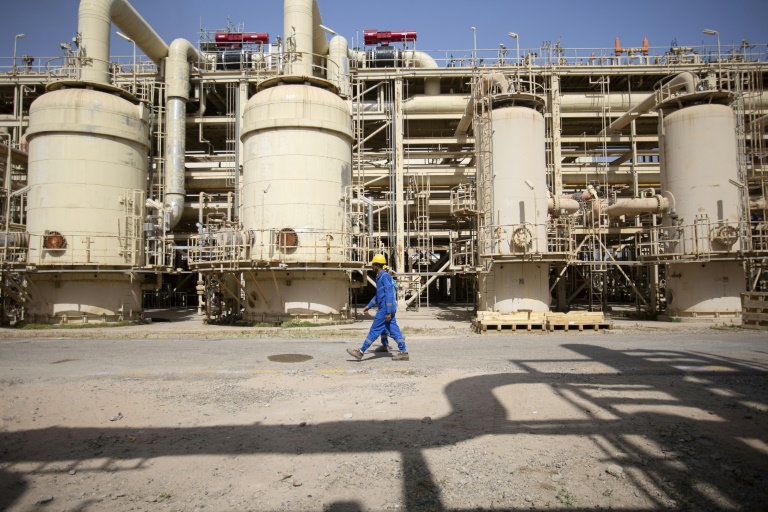
Iraq exported $11.07 billion of oil last month, the highest level for half a century, as crude prices soared amid shortfall fears following Russia’s invasion of Ukraine, the oil ministry said.

The second largest producer in the Organization of the Petroleum Exporting Countries (OPEC), Iraq exported “100,563,999 barrels for revenues of $11.07 billion, the highest revenue since 1972”, the ministry said.

The figures published late Friday are preliminary data but final data “generally does not vary” much, a ministry official said, speaking on condition of anonymity.

In February, oil revenues reached an eight-year high of $8.5 billion dollars, with daily exports of 3.3 million barrels of oil.

Oil exports account for more than 90 percent of Iraq’s income.

Crude prices spiked over fears of a major supply shortfall after Moscow invaded Ukraine on February 24. Russia is the world’s second biggest exporter of oil after Saudi Arabia.

On Thursday, the OPEC group of oil producing countries and its Russia-led allies agreed on another modest oil output increase, ignoring Western pressure to significantly boost production as the Ukraine conflict has rocked prices.

The 13 members of the Saudi-led OPEC and 10 countries spearheaded by Russia — a group known as OPEC+ — backed an increase of 432,000 barrels per day in May, marginally higher than in previous months.

– ‘Two-edged sword’ –

The United States has urged OPEC+ to boost production as high energy prices have contributed to soaring inflation across the world, which has threatened to severely derail the recovery from the Covid pandemic.

While OPEC refused to budge, Washington said it would tap its strategic stockpile by a record amount in a bid to cool soaring prices.

The international benchmark contract, Brent North Sea crude, flirted with a record high in early March as it soared to almost $140 per barrel, but has retreated since then.

On Friday, oil was around $100 a barrel.

Oil revenues are critical for Iraq’s government, with the country mired in a financial crisis and needing funds to rebuild infrastructure after decades of devastating war.

Iraq, with a population of some 41 million people, is also grappling with a major energy crisis and suffers regular power cuts.

Despite its immense oil and gas reserves, Iraq remains dependent on imports to meet its energy needs.

Neighbouring Iran currently provides a third of Iraq’s gas and electricity needs, but supplies are regularly cut or reduced, aggravating daily load shedding.

“Overall, a windfall in oil revenues is positive for Iraq,” said Yesar al-Maleki, an analyst at Middle East Economic Survey.

“But is a two-edged sword, since it may dampen government efforts to implement economic reforms needed to diversify it’s sources of income beyond oil.”

Many ordinary Iraqis are frustrated that they see little impact of the higher oil revenues trickle down to them, in a country where nearly a third live below the poverty line, according to the UN.

“With the new parliament bringing a more populist flavour of MPs, it is expected that this windfall will lead to greater calls by politicians and the public alike to increase public sector wages and employment,” Maleki added.

India, Australia ink interim trade deal

India and Australia signed an interim free trade deal on Saturday that cuts tariffs on billions of dollars of commerce as the two Quad partners bolster their economic ties.

Both signatories are members of the Quad alliance with the United States and Japan, which is seen as a counterweight to an increasingly assertive China.

But while they both border the Indian Ocean, Canberra says India was only Australia’s seventh-largest trading partner in 2020, and accounted for just over four percent of its exports last year. 

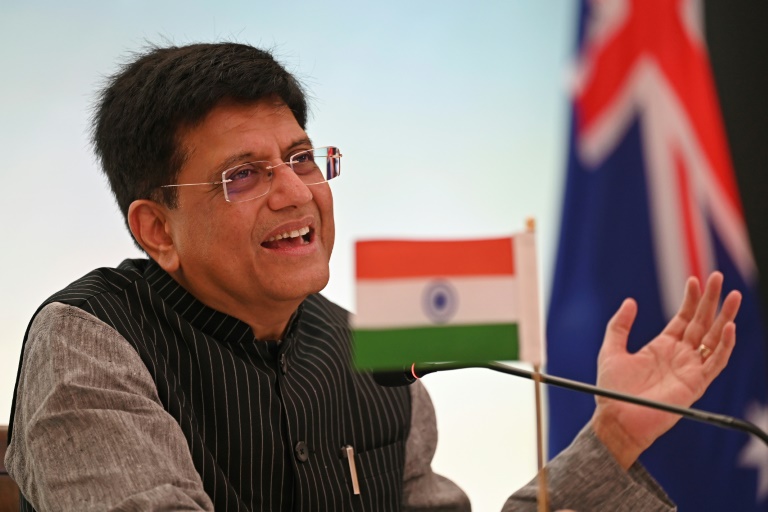
The Economic Cooperation and Trade Agreement was signed simultaneously in New Delhi and Canberra by India’s commerce minister Piyush Goyal and his Australian counterpart Dan Tehan in a joint ceremony.

India and Australia are “natural partners, connected by shared values of democracy, rule of law and transparency”, Goyal said. 

“Our relationship rests on the pillars of trust and reliability aptly reflected in our deepening geo-strategic engagement through the QUAD and the supply chain resilience initiative.”

Two-way trade reached around $27.5 billion last year according to New Delhi, with resource-rich Australia exporting coal and other commodities, along with sheep meat, and India largely supplying finished goods and services.

At the same time Canberra’s relations with its biggest trading partner China are at their lowest point in a generation, with many Australian goods hit with punitive sanctions and ministerial relations frozen.

Beijing has been angered at Australia’s willingness to legislate against overseas influence operations, to bar Huawei from 5G contracts and to call for an independent investigation into the origins of the coronavirus pandemic.

India and China have also seen a sharp deterioration in ties after a high-altitude clash in 2020 left 20 Indian soldiers and at least four Chinese soldiers dead.

The agreement “delivers a clear message that democracies are working together and ensuring the security and resilience of our supply chains”, Australian Prime Minister Scott Morrison said at Saturday’s signing.

India’s Prime Minister Narendra Modi added it would “contribute to increasing supply chain resilience and to the stability of the Indo-Pacific region”.

Negotiations on a comprehensive deal between India and Australia were launched more than a decade ago but stalled in 2015.

A full trade pact is now being negotiated and Morrison, who called Modi a “dear and trusted friend”, said he hoped it would be signed by the end of the year.

Saturday’s agreement cuts tariffs on more than 85 percent of Australian exports to India. 

In an accompanying statement, Morrison highlighted several products hit hard by the Chinese trade dispute — including coal, wine and rock lobsters — which will benefit under the Indian deal, calling it “a big door into the world’s fastest-growing major economy”.

His conservative government is trailing in the polls ahead of an election in May, and the tensions with China are a key issue.

India, Australia ink interim trade deal

India and Australia signed an interim free trade deal on Saturday that cuts tariffs on billions of dollars of commerce as the two Quad partners bolster their economic ties.

Both signatories are members of the Quad alliance with the United States and Japan, which is seen as a counterweight to an increasingly assertive China.

But while they both border the Indian Ocean, India was only Australia’s seventh-largest trading partner in 2020, and accounted for just over four percent of exports last year. 

The Economic Cooperation and Trade Agreement was signed simultaneously in New Delhi and Canberra by India’s commerce minister Piyush Goyal and his Australian counterpart Dan Tehan in a joint ceremony.

India and Australia are “natural partners, connected by shared values of democracy, rule of law and transparency”, Goyal said. 

“Our relationship rests on the pillars of trust and reliability aptly reflected in our deepening geo-strategic engagement through the QUAD and the supply chain resilience initiative.”

Two-way trade reached around $17 billion last year, with resource-rich Australia exporting sheep meat, coal and other commodities, and India largely supplying services.

At the same time Canberra’s relations with its biggest trading partner China are at their lowest point in a generation, with many Australian goods hit with punitive sanctions and ministerial relations frozen.

Beijing has been angered at Australia’s willingness to legislate against overseas influence operations, to bar Huawei from 5G contracts and to call for an independent investigation into the origins of the coronavirus pandemic.

India and China have also seen a sharp deterioration in ties after a high-altitude clash in 2020 left 20 Indian soldiers and at least four Chinese soldiers dead.

The agreement “delivers a clear message that democracies are working together and ensuring the security and resilience of our supply chains”, Australian Prime Minister Scott Morrison said at Saturday’s signing.

India’s Prime Minister Narendra Modi added it would “contribute to increasing supply chain resilience and to the stability of the Indo-Pacific region”.

Negotiations on a comprehensive deal between India and Australia were launched more than a decade ago but stalled in 2015.

A full trade pact is now being negotiated and Morrison, who called Modi a “dear and trusted friend”, said he hoped it would be signed by the end of the year.

Saturday’s agreement cuts tariffs on more than 85 percent of Australian exports to India. 

In an accompanying statement, Morrison highlighted several products hit hard by the Chinese trade dispute — like coal, wine and rock lobsters — which will benefit under the Indian deal, calling it “a big door into the world’s fastest-growing major economy”.

His conservative government is trailing in the polls ahead of an election in May, and the tensions with China are a key issue.

NASA begins critical final test on mega Moon rocket

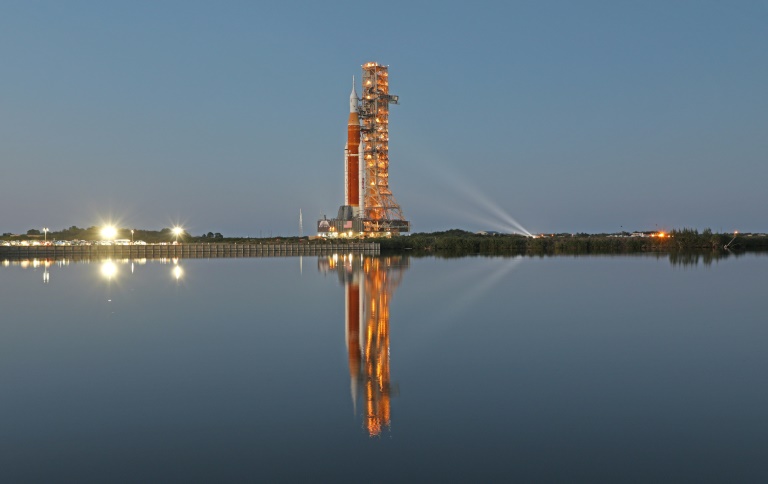
NASA on Friday began a critical two-day-long test of its giant Space Launch System (SLS) rocket complete with a simulated countdown, as the agency gears up to return humans to the Moon.

Known as the “wet dress rehearsal,” it is the final major test before the Artemis-1 mission this summer: an uncrewed lunar flight that will eventually be followed by boots on the ground, likely no sooner than 2026.

“The countdown is now underway,” NASA said in its Artemis blog at 5:00 pm Eastern Time (2100 GMT), confirming members of the launch control team had been issued their “call to stations.”

Data from the test, which ends Sunday mid-afternoon, will be used to finalize a launch date for Artemis 1. NASA had said May could be the first window, but later now seems likely.

It is called a “wet” dress rehearsal because supercooled liquid hydrogen and liquid oxygen will be loaded into SLS from ground systems, just as they would be in a real launch.

The 322-foot (98-meter) rocket — expected to be the most powerful in history at the time it is operational — was rolled out to Launch Complex 39B at the Kennedy Space Center in Florida around two weeks ago.

Teams are now filling up a sound suppression system with water that is used to dampen acoustic energy during lift-off. They will continue to practice every operation that would be carried out in a real launch. 

Come Sunday morning, with the SLS rocket and Orion crew capsule fixed atop both powered on, they will load up 700,000 gallons (2.6 million liters) of propellant.

They won’t actually ignite the rocket’s RS-25 engines, which were tested previously. Instead they will halt the countdown about 10 seconds before liftoff, in order to simulate a “scrub,” when launch is aborted due to technical or weather related issues.

The fuel will be drained, and a few days later SLS and Orion will be rolled back to the vehicle assembly building to carry out checks on how everything went.

Test milestones will be posted on NASA’s blog for the Artemis mission, and the public might be able to glimpse the rocket venting vapor on the launch pad on April 3, during tanking operations, on the agency’s YouTube channel. 

On Monday, agency officials plan to hold a press conference to give further information.

NASA won’t however let the public listen to live internal audio.

Senior NASA official Tom Whitmeyer explained this was because certain key information, including timing sequences, could assist other countries looking to develop long range missiles, and fall foul of export control regulations called International Traffic in Arms Regulations (ITAR). 

“We’re really, really super sensitive to cryogenic launch vehicles that are of this size and capability, (and) are very analogous to ballistic type capabilities that other countries are very interested in,” he said, but added that the agency could re-evaluate the position in future.

The decision has caused some confusion, as commercial launch companies routinely make their countdown audio available, while most intercontinental ballistic missiles run on solid fuel, not liquid propellants.

Stocks edge higher on solid US jobs data, oil prices retreat

Wall Street stocks finished modestly higher Friday as solid US jobs data boosted expectations for more Federal Reserve interest rate hikes, while oil prices retreated after US allies agreed to tap their emergency stockpiles.

The government jobs report for March showed US employers adding 431,000 positions and the unemployment rate falling to 3.6 percent, a hair above where it was before the pandemic. 

The data showed progress in the US economic recovery, but also raised expectations of an aggressive Federal Reserve interest rate hike to tame runaway inflation.

“Given the strength of the labor market and inflation well above target, the probability that the Fed raises rates by 50 (basis points) at its next meeting in May — which is our baseline — is rising,” Daniel Vernazza of UniCredit Bank said in a note.

However, the Institute for Supply Management reported the US manufacturing sector’s expansion slowed last month amid a spike in energy prices following Russia’s invasion of Ukraine.

After a choppy session, all three major US indices finished modestly higher with the S&P 500 up 0.3 percent, lifting the index narrowly into positive territory for the week.

European equities also climbed, despite data showing eurozone inflation surged by a record 7.5 percent last month.

Analysts said soaring inflation will pressure the European Central Bank, which has thus far been reluctant to follow the Federal Reserve’s lead and lift interest rates.

“With euro-zone inflation rising even further above the ECB’s forecast, and likely to remain very high for the rest of the year, we think it won’t be long before the Bank starts raising interest rates,” said Jack Allen-Reynolds at Capital Economics.

Oil prices, meanwhile, retreated, with the US benchmark WTI contract dipping under $100 a barrel.

In a bid to ease oil prices, the 31-nation International Energy Agency agreed to tap emergency oil reserves again at an emergency ministerial meeting following a pledge to release over 60 million barrels.

The IEA, whose members include the United States, European countries, Japan and other nations allied to Washington, said it would make the new amount public early next week.

The move came a day after Biden announced a record release of oil onto the market — one million barrels of US government oil every day for six months in a bid to ease prices.

Biden described the move as a “wartime” measure that will defuse Russia’s leverage as an energy power.

Washington has pressed the OPEC+ group of oil producing countries, led by Saudi Arabia and Russia, to boost its output but the group on Thursday agreed on another modest increase instead.

The war has driven oil prices to near record heights over concerns about supplies as Russia is the world’s second biggest exporter of crude after Saudi Arabia.

– Key figures around 2100 GMT –

New York – Dow: UP 0.4 percent at 34,818.27 (close)

New York – S&P 500: UP 0.3 percent at 4,545.86 (close)

New York – Nasdaq: UP 0.3 percent at 14,261.50 (close)

London – FTSE 100: UP 0.3 percent at 7,537.90 (close)

Frankfurt – DAX: UP 0.2 percent at 14,446.48 (close)

Paris – CAC 40: UP 0.4 percent at 6,684.31 (close)

EURO STOXX 50: UP 0.4 percent at 3,918.68 (close)

Tokyo – Nikkei 225: DOWN 0.6 percent at 27,665.98 (close)

Hong Kong – Hang Seng Index: UP 0.2 percent at 22,039.55 (close)

Shanghai – Composite: UP 0.9 percent at 3,282.72 (close)

Brent North Sea crude: DOWN 0.3 percent at $104.39 per barrel

West Texas Intermediate: DOWN 1.0 percent at $99.27 per barrel

Euro/dollar: DOWN at $1.1049 from $1.1067 late Thursday

Pound/dollar: DOWN at $1.3118 from $1.3138

Euro/pound: FLAT at 84.24 pence 

Dollar/yen: UP at 122.49 yen from 121.70 yen

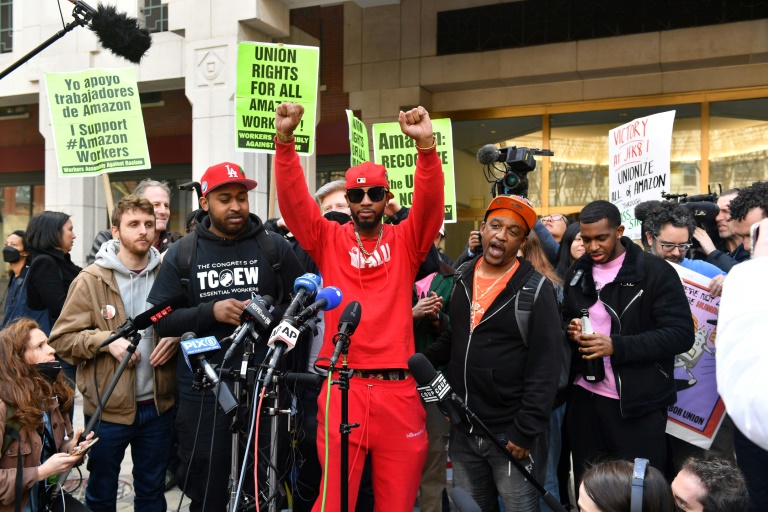
Amazon workers in New York vote to unionize in US first

Amazon workers in New York voted Friday to launch the first US union at the e-commerce giant, an underdog upset against a company that has steadfastly opposed organized labor in its massive workforce. 

Dozens of supporters greeted the result with cheers and applause, while union organizer Christian Smalls popped a champagne cork in front of bank of TV cameras and photographers.

“We want to thank (Amazon founder) Jeff Bezos for going to space because while he was up there we were signing people up,” Smalls joked after workers at the Staten Island JFK8 warehouse backed the union 2,654 to 2,131 votes. 

Analysts said the Amazon outcome — likened to a David vs Goliath upset and winning plaudits from President Joe Biden — could spur other unionization effort at America’s second larget private employer. 

Amazon noted “disappointment” over the results, and said it was evaluating its options, including “filing objections based on the inappropriate and undue influence” of the National Labor Relations Board, which oversaw the vote.

At stake was Amazon’s ability to remain union-free in its home market, a status it has guarded fiercely since the company was set up in the 1990s by Bezos, who has since started a space tourism venture.

During a contentious campaign, Amazon argued that forming a union would mar the company’s direct relationship with workers and represent a jump into the unknown, with no guarantee employees will wind up with better wages or job security.

But union leaders, composed of current and former Staten Island employees, spoke constantly with employees, pitching the ability of a union to improve working conditions and ensure more employee-friendly work schedules without risk of being fired.

Smalls, 33, launched the drive soon after being fired from the Amazon site in Staten Island in March 2020 after organizing a protest for personal protective equipment amid the surge of the first major Covid-19 outbreak in New York.

“It’s a truly historic day, it really is,” said Eric Milner, who represented the union organizers during the process. “I think it’s going to start a chain reaction — warehouse to warehouse.”

Also cheering was Biden, a self-professed “union guy.” 

“The president was glad to see workers ensure their voices are heard with respect to important workplace decisions,” Press Secretary Jen Psaki said.

– Chain reaction? –

The union victory in New York came as a second election remained up in the air in the southern state of Alabama.

The vote is a redo of a 2021 ballot thrown out by federal officials, with 993 workers casting ballots against the labor group, compared with 875 employees in favor. 

But there were 416 “challenged” ballots, according to the National Labor Relations Board, meaning the number of votes still to be settled is big enough to potentially decide the final result.

The Alabama campaign had garnered support from the Retail, Wholesale and Department Store Union, a national union, and enjoyed visits by high-profile politicians such as progressive Senator Bernie Saunders. 

By contrast, the New York campaign, while based in a part of the United States historically favorable to unions, was a grass roots effort with a hardscrabble budget. 

Ruth Milkman, a sociologist of labor movements at City University of New York, said she was “stunned but delighted” by the outcome, which will “inspire” other campaigns.”

Despite recent unionization victories at Starbucks, the general picture for organized labor in the United States is mixed, with overall unionization levels falling steadily.

“It seems that most of the attention has been focused on Alabama and people kind of dismissed this one because it wasn’t an established union,” Milkman said. “And yet it turned out to be the success story.”

Neil Saunders, an analyst at GlobalData Retail, agreed that the New York victory will embolden others to unionize.

“It becomes much more difficult for Amazon to operate if they have to deal with a union,” said Saunders. “They’re not going to necessarily have to spend a lot more. It’s just that they don’t like the interference of unions.”

In the immediate near-term, Staten Island organizers were already mobilizing for their next battle: the LDJ5 sorting center across the street from the JFK8 warehouse, with a vote will be held there at the end of the month.

Also ahead, Smalls and other labor leaders will begin to focus on establishing a contract with Amazon, an objective that is expected to be challenging.

“There is still a lot of hard work ahead,” said Milkman. “Many times people win election and never get a contract.” 

Achieving a contract “will require a continued, if not expanded, campaign,” said Larry Mishel, a fellow at the Economic Policy Institute, a labor-backed think tank.

Close Bitnami banner
Bitnami