AFP

Australians flee floods as toll rises to 12, Sydney on alert

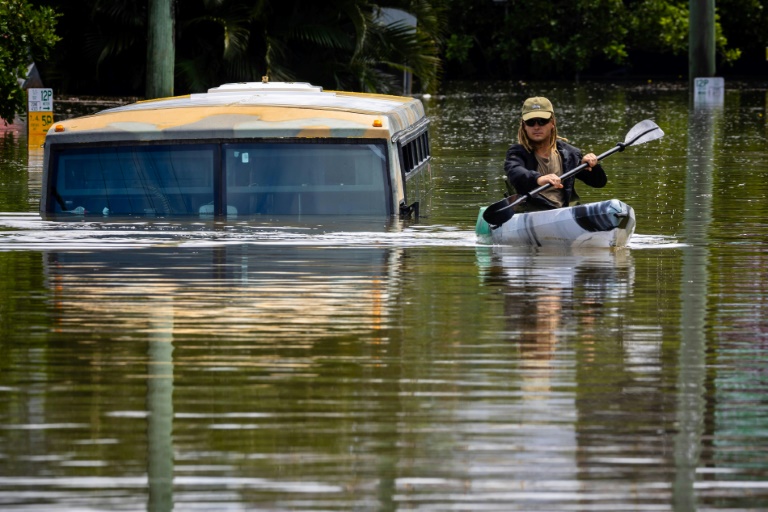
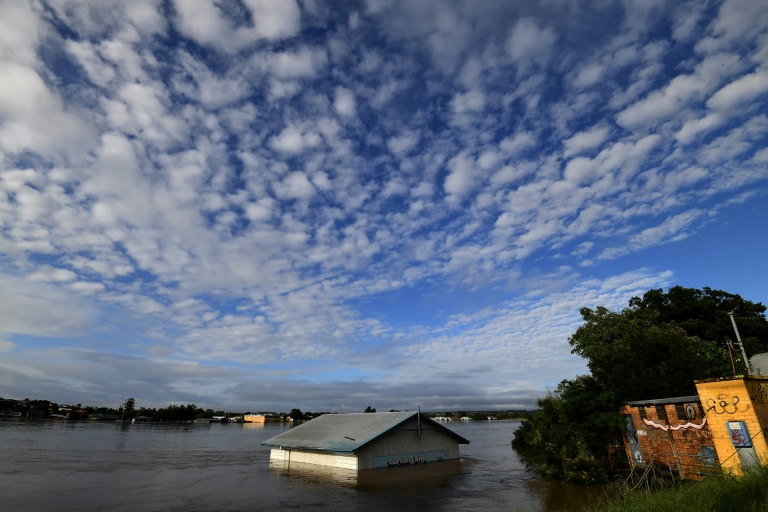
Floodwaters crashed into more towns on Australia’s east coast as a deadly storm front barrelled south on Wednesday towards Sydney, where the main dam began to spill water.

The death toll rose to 12 in a week-long disaster that has washed cars from roads and forced tens of thousands of people to evacuate their homes as waters lapped at balconies and roofs.

“This is terrible. This is terrible. One life lost is too many,” said New South Wales deputy premier Paul Toole after confirming a third death in the flood-hit town of Lismore.

After bringing havoc to Queensland, the storm front moved southwards, dumping vast quantities of water and sparking a string of flood alerts in New South Wales including Sydney, Australia’s largest city.

“Today, the focus is on Sydney. We are expecting heavy rainfall over the afternoon into the night and into tomorrow,” Toole warned in a news conference.

Sydney’s main Warragamba dam, lying southwest of the city, had reached capacity and started spilling water in the early hours of Wednesday morning, Toole said.

He told residents at risk to flee if they are told to do so.

“If you are getting a knock on the door, if you are asked to leave, please leave,” Toole told a news conference.

“We are looking at substantial rainfall over the coming days. We don’t want to see those images where people were standing on the roofs of their houses, not leaving and then having to be rescued.”

In the coastal town of Ballina in New South Wales, some 55 hospital patients were evacuated overnight — hours before a high tide from the sea combined with waters overflowing the banks of Richmond River.

A “makeshift emergency department” was set up in a Catholic college for urgent cases, regional health officials said.

– ‘Eerie’ –

An hour inland from the coast, water levels in Lismore were falling but resident Tom Wolff prepared to head out for rescues.

“It all feels kind of eerie now, is how I would describe it,” he said.

The hardest part was trying to navigate around power lines and other hazards in a boat, Wolff said.

“We know the streets of Lismore, but it’s just totally different when you’re 10-12 metres above them,” he said. 

“There are signs around town for the ’74 flood levels, but they were underwater.”

At one house, they rescued a sausage dog that had been left at the highest point of the house. 

“She must have just been treading water for god knows how long, maybe hours. Her heart rate was through the roof when we found her,” he said.

In an airfield in Grafton — where residents saw buildings submerged almost to roof level this week — flight club president Bob King rowed out in a metal dingy to check on his aircraft as the smell of fuel hung in the air. 

Most of the 25 aircraft at the field were now underwater, he said. 

Flight instructor Peter Clement surveyed the damage done to his planes — four light aircraft each worth Aus$100,000 ($73,000) — sitting half-submerged in a hangar where the mud-brown waters came up to his waist. 

“I’m hoping it’s not a total loss,” he said.

“This is the biggest flood I’ve ever seen and I’ve been here 20 years.”

Australia has been on the sharp end of climate change.

Droughts, deadly bushfires, bleaching events on the Great Barrier Reef and floods have become more common and intense.

Because a warmer atmosphere holds more water, scientists say climate change increases the risk and intensity of flooding from extreme rainfall.
UN to take first step towards 'historic' plastic treaty

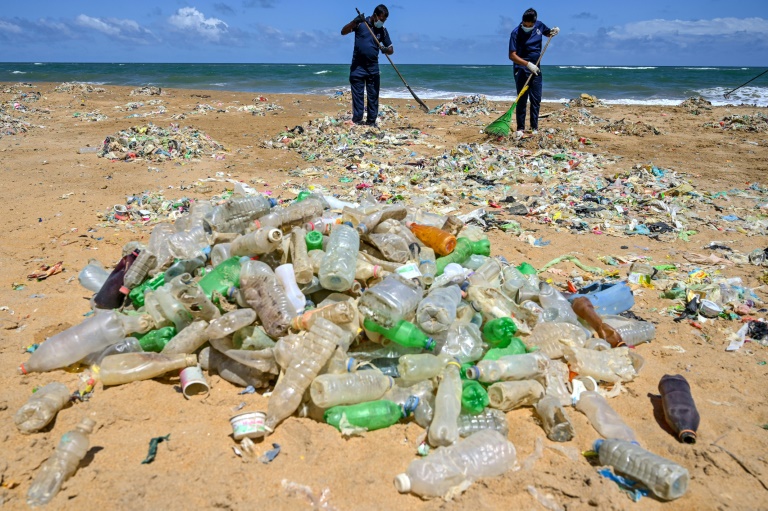
The United Nations is to launch formal negotiations on Wednesday for a global treaty to address a plastic trash “epidemic” that supporters say is a historic moment for the planet.

The UN Environment Assembly (UNEA), convening in Nairobi, is poised to adopt a resolution creating an intergovernmental committee to negotiate and finalise a legally binding agreement by 2024.

The amount of plastic trash entering the oceans is forecast to triple by 2040, and governments have been under pressure to unite behind a global response to the crisis.

The framework for a comprehensive treaty has been approved by UN member states, including major plastic producers like the US and China, according to sources close to the negotiations.

Officials say it gives negotiators a broad and robust mandate to consider new rules that target plastic pollution from its birth as a raw material to its design, use and safe disposal.

This could include limits on making new plastic, which is derived from oil and gas, though policy specifics will only be determined during later talks.

The mandate provides for the negotiation of binding global targets with monitoring mechanisms, the development of national plans and financing for poorer countries. 

Negotiators also have the scope to consider all aspects of pollution — not just plastic in the ocean but tiny particles in the air, soil and food chain — a key demand of many countries.

– ‘One for the history books’ –

“We are 100-percent happy with the outcome,” said Ana Teresa Lecaros, director of environment in the foreign ministry of Peru, a country that co-signed one of the draft resolutions.

Inger Andersen, the head of the UN Environment Programme, said a plastics treaty would be “one for the history books” and the most important pact for the planet since the Paris climate agreement. 

The rate of plastic production has grown faster than any other material and is expected to double within two decades, the UN says.

But less than 10 percent is recycled, with most winding up in landfill or oceans.

By some estimates, a garbage truck’s worth of plastic is dumped into the sea every minute.

“Plastic pollution has grown into an epidemic of its own,” said Norway’s climate and environment minister, Espen Barth Eide, who chairs UNEA.

He said he was “quite optimistic” about bringing down the gavel on a strong resolution in Nairobi.

Environment groups are also buoyed by the outcome of the talks but like officials and diplomats, caution that the strength of any treaty will only be determined by rigorous negotiations to come.

The first round of discussions is set for May, according to sources involved in the process. 

Big corporations have expressed support for a treaty that creates a common set of rules around plastic and a level playing field for competition.

Big plastic makers have underscored the importance of plastic in construction, medicine and other vital industries and warned that banning certain materials would cause supply chain disruptions.

Honduras bans open-pit mining

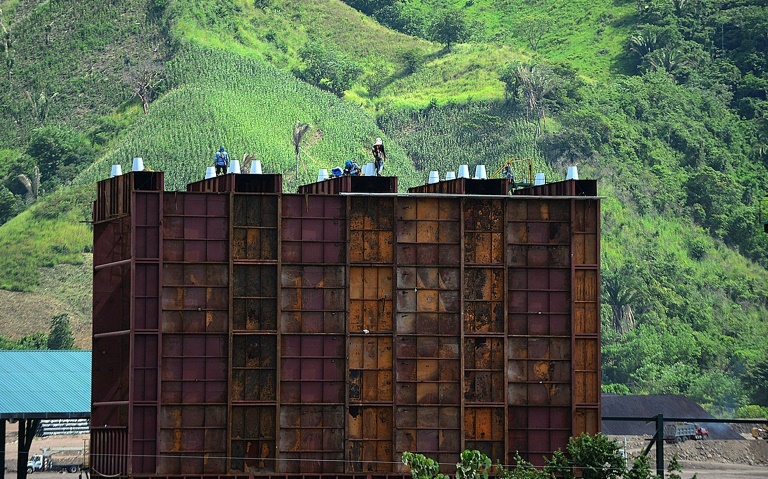
The government of newly elected Honduran President Xiomara Castro has banned open-pit mining, declaring it harmful to the environment and to people, and said it would scrap permits for such operations.

The move, announced Monday by the leftist leader, was met with joy by rights defenders and environmentalists but brought uncertainty to the industry.

“All Honduran territory is declared free of open-pit mining,” a statement from the Ministry for Mining and the Environment said.

“The approval of extractive exploitation permits is canceled because they… threaten natural resources and public health and limit access to water as a human right,” it added.

The statement did not specify whether this applied to new as well as existing permits for open-pit, or surface mining.

Taking office on January 27, Castro announced that banning open-pit mining was one of her priorities, along with fighting crime, poverty and corruption that she said was rife under her predecessor Juan Orlando Hernandez.

The ministry also vowed to intervene “immediately” to conserve areas of “high ecological value” and secure their benefit to the population.

The office of the UN High Commissioner for Human Rights in Honduras welcomed the ban in line with “the principle of climate justice and the protection of natural resources, public health and access to water as a human right.” 

But Santos Gabino Carvajal of the National Association of Miners described the announcement as “ambiguous” and potentially in violation of mining legislation.

It “prohibits even the extraction of stone and sand for construction,” he said, adding the move would “kill the possibility of development.”

The association will seek talks with the government.

– ‘An encouragement’ –

According to the Central Bank, Honduran mining exports amounted to $293 million in 2021.

Carvajal said that, if artisanal miners are included in the count, some 80,000 people would lose their jobs under the new measure.

Multinational Aura Minerals extracts gold at an open-pit mine in San Andres in the northwest of Honduras.

Last year, it was forced to suspend mining after saying its operations were “illegally interrupted” by individuals who, according to rights groups, were protesting damage to an indigenous cemetery.

Environmentalists have also been fighting against an iron oxide mine in Tocoa in the northeast which they accuse of damaging a forest reserve.

Eight people jailed in 2018 for protesting that project were released only this year.

Tocoa environmental committee member Juan Lopez told AFP the government’s announcement was “an encouragement” to communities that have been “pitted against the state and large companies because the government of Juan Orlando Hernandez was placed at the service of big companies.”

Hernandez is wanted on drug trafficking charges in the United States, which has requested his extradition.

Environmental lawyer Victor Fernandez said it was hoped the mining companies “will be brought to justice, that they will pay reparations to victims.”

The Fosdeh NGO in a recent report said mineral and hydrocarbon extraction and energy generation were “changing the geography” of Honduras.

It said that with pending mining concessions, the area earmarked for extraction could increase by 330 percent to cover more than 1,383,500 acres (560,000 hectares) or five percent of the national territory.

Elsewhere in Central America, El Salvador was the first country in the world to ban metal mining, in 2018, while Costa Rica banned open-pit mining in 2010.

Climate crisis: Indigenous groups both victims and saviours

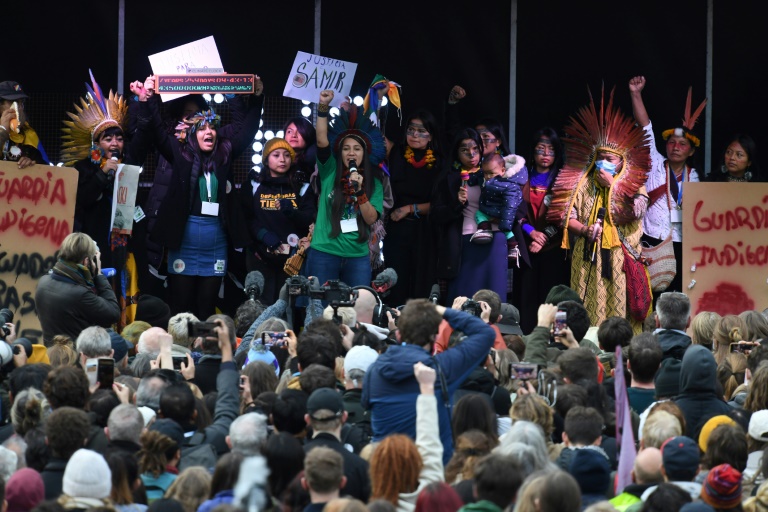
Long portrayed as victims of climate change, indigenous peoples who have struggled for years to protect ancestral lands and ways of life from destruction are finally being recognised as playing an important role in defending precious environments. 

“In the face of climatic, economic and health catastrophes, reality forces the recognition of indigenous peoples’ knowledge, and a new relationship of respect,” said Gregorio Mirabal, head of the COICA indigenous organisation. 

“Now we are not victims, we are the solution!”

That message was reinforced in a sweeping report by UN climate experts on the impacts and adaptation to global warming, released on Monday, that outlined in harrowing detail the challenges facing humanity and the planet they depend upon for survival. 

It highlights that many indigenous peoples are on the frontlines of global warming, such as those in the Arctic whose communities and traditions are threatened by melting sea ice and rising waters.

But it also underscores what these communities and their intimate knowledge of nature — transmitted from generation to generation — can bring to the fight against climate change, in particular to limiting its impacts. 

That is crucial since indigenous communities, who number less than half a billion people worldwide, steward land home to 80 percent of Earth’s remaining biodiversity, notes the IPCC. 

From the Amazon to Siberia, these communities have been forced to develop methods of coping with external challenges “for centuries and have developed strategies for resilience in changing environments that can enrich and strengthen other adaptation efforts”, it said.

A major cause of their vulnerability acknowledged for the first time by the IPCC in this report is colonialism. 

“I think it’s a huge advancement,” said Sherilee Harper, of the University of Alberta, Canada, adding that this is a crucial context that helps not only understand the problems facing indigenous groups, but also to frame solutions.   

Harper was among the authors of the IPCC report, which also included indigenous contributors and peer reviewers for the first time.  

Previously, she told AFP, “there was a tendency to paint them as victims of climate change” without the agency to act.

“Of course, that is not true.”

– ‘Arrogance’ – 

Indigenous groups have welcomed the IPCC’s recognition of ancestral knowledge, but say the situation requires more than words. 

“We need to come up with some kind of action-oriented strategy,” said Rodion Sulyandziga, of the International Indigenous Peoples Forum on Climate Change. 

“We need to combine all our efforts. We can bring to the table indigenous knowledge not just on prevention, but on new technology too.”

Crucially, leveraging traditional knowledge for adapting to climate change depends on restoring rights to ancestral lands, said Sulyandziga, who represents the Indigenous Udege People of Russia — Udege means “forest people”. 

“Without our land, we cannot adapt,” he said.  

IPCC scientists also stress the importance of “self-determination” and recognising indigenous rights. 

Chapter after chapter, region after region, the thousands of pages of the report give multiple examples of adaptation practices that could serve as inspiration for the climate threats that scientists warn are already starting to have a severe impact across the world. 

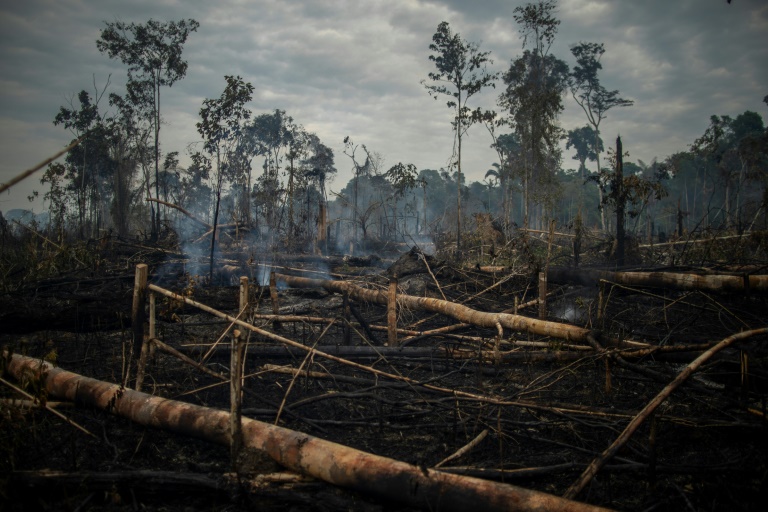
Take wildfires. Indigenous communities know how to fight fire with fire, burning certain plots at specific times of the year to prevent blazes from getting out of control later. 

IPCC experts also mention the attention paid to the diversification of crops, like in the agroforestry system of the Kichwas of Ecuador who grow food crops and medicinal plants under the canopy of the Amazon rainforest. 

Or even the use of traditional knowledge in Fiji to identify endemic plant species that can help limit coastal erosion. 

Harper said everyone can benefit from learning this wisdom, once people — especially in the West — set aside their “arrogance”. 

“We have understood for thousands of years when there is balance and imbalance; it is our home and we recognise the limits,” said COICA’s Mirabal. 

“Our bond with mother nature allows us to take care of what really matters — water, earth, life.”

But the IPCC warned that given the scale of climate change impacts, there are hard limits to adaptation. 

While some communities may have to leave their homes, others have seen climate change fundamentally alter the land around them such that what was once familiar becomes strange. 

Like the Inuit communities in and around the Arctic, where warming is faster than almost anywhere on Earth and the once-dependable snow and sea ice are now fragile and fleeting.  

Ashlee Cunsolo, another author of the IPCC report, said colonialist regimes inflicted terrible injuries over generations — from the erosion of language and culture to forced relocation.  

People said they had “finally entered into this period of indigenous self-determination,” said Cunsolo. They were “reclaiming culture” and lands. 

“And then climate change comes in.”

Russian-European Mars rover 'very unlikely' to launch this year

A Russian-European mission to land a rover on Mars is “very unlikely” to launch this year due to sanctions over Moscow’s invasion of Ukraine, the European Space Agency said.

The launch of the Rosalind Franklin rover, whose mission is to drill into Martian soil to seek out signs of life, was originally planned for 2020 but postponed due to Covid-19 and technical delays.

In January the ESA declared the ExoMars mission was ready to launch this September, with Russia providing the launcher, descent module and landing platform.

However after Russia shocked the world by invading Ukraine last week and the European Union responded by targeting Moscow with a massive package of economic punishments, the ESA said “the sanctions and the wider context make a launch in 2022 very unlikely”.

“We are fully implementing sanctions imposed on Russia by our member states,” the ESA said in a statement on Monday.

“We deplore the human casualties and tragic consequences of the war in Ukraine. We are giving absolute priority to taking proper decisions, not only for the sake of our workforce involved in the programmes, but in full respect of our European values.”

The ESA also said it took note of the Russian space agency Roscosmos’ decision over the weekend to suspend launches and withdraw its workers from Europe’s spaceport in Kourou, French Guiana, over the EU sanctions.

It will “consequently assess” future planned operations using Russian launchers, including the deployment of two satellites for Europe’s Galileo GPS system planned for this year.

The invasion of Ukraine and responding Western sanctions have raised a question mark over joint space programmes with Russia, most notably for the International Space Station, where astronauts and cosmonauts work side-by-side.

After Moscow raised the prospect of withdrawing from the ISS over US sanctions, NASA said Monday it was exploring ways to keep the space station in orbit without Russian help.

Poorer nations need $60 bn a year to protect nature: NGOs

Wealthy countries should provide at least $60 billion every year to the world’s poorest nations to combat biodiversity loss, an alliance of environment groups said Tuesday.

The appeal by WWF, the International Union for Conservation of Nature (IUCN) and other green groups was launched on the sidelines of a major UN environment meeting in Nairobi.

It comes ahead of key talks for a UN biodiversity summit to be held in China that will see nations hammer out conservation targets for the next decade.

The $60 billion (53.67 billion euros) would address “the disproportionate impact of wealthy country consumption habits on biodiversity,” the signatories said in a joint statement.

“Wealthy nations are driving much of the loss of nature in developing countries through imported goods and have a responsibility to address this impact,” said Brian O’Donnell, director of Campaign for Nature.  

Some $844 billion annually is needed to address the loss of biodiversity and nature — some $711 billion more than is being spent today, the NGOs said.

An boost in financial assistance should go hand in glove with an end to public and private investment that damages the environment, said Marco Lambertini from WWF.

“It is feasible. It requires political will to make it happen,” Lambertini said of the $60 billion target.

“It is not a tax for biodiversity. This is an investment” and made clear business sense, he added.

A pledge by wealthy nations to provide the developing world with $100 billion annually to deal with the climate crisis has not been fulfilled.

A major UN report on climate change released Monday stressed the protection of biodiversity and ecosystems in the fight against global warming and its impacts.

“Ending the biodiversity crisis is as important to the future of humanity as stopping climate change,” said Patricia Zurita from Birdlife International, a signatory of the funding appeal.

Australia tells tens of thousands to flee floods

Deadly floods swept Australia’s east coast Tuesday, stranding people on bridges and rooftops and forcing tens of thousands to flee their homes.

Dozens of emergency warnings are in effect across the states of Queensland and New South Wales, where a week-long “rain bomb” has dumped a metre (3.2 feet) of water on some areas.

Several waterways have burst their banks or broken through levees, inundating towns and forcing residents to evacuate or seek safety on higher ground.

Nine people have died and more than a thousand people have been rescued. Authorities have warned that more fatalities are likely.

The latest victim was a woman in her 80s whose body was found by police inside a home in the country town of Lismore. 

“She is yet to be formally identified,” said New South Wales Police. 

In the usually laid back surf town of Byron Bay, Hannah Leser had enjoyed the weekend celebrating her wedding with 150 guests.

But the new bride and groom are now rescuing friends stranded in the nearby towns of Ballina and Mullumbimby in a borrowed four-wheel-drive.

About 30 people are camped at a house where the couple were to spend their honeymoon.

“It’s chaos but all of our friends and family are safe,” she told AFP. “This is not quite the honeymoon I expected but it is what it is.”

Australia’s military has deployed two MRH-90 Taipan helicopters to aid the rescue effort.

In one daring aerial rescue, the crew plucked two people to safety as muddy waters lapped at the corrugated metal roofing of their home.

Live television images on public broadcaster ABC showed a rescuer sitting on the roof with the pair, preparing to strap them to the chopper’s winch.

“We’ve seen people stranded on roofs for hours, we’ve seen children being rescued, we’re seeing people stranded on bridges,” said New South Wales Premier Dominic Perrottet.

– Sailing past roofs –

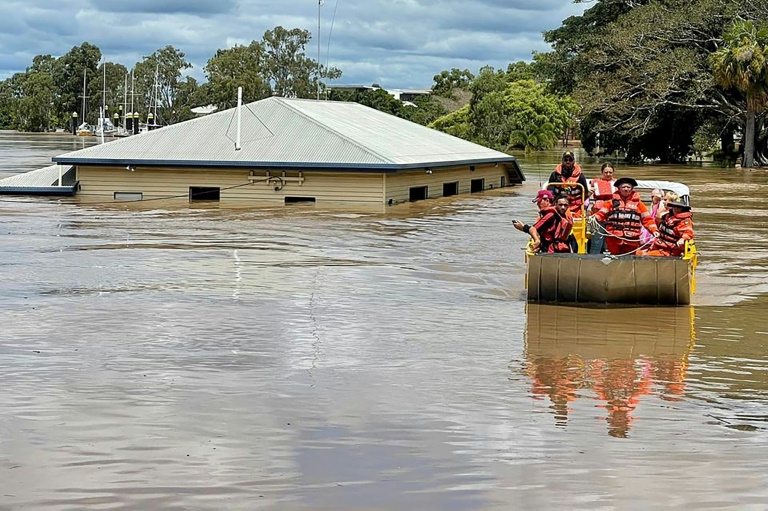
Emergency services were overwhelmed by calls for help and flotillas of makeshift rescue boats fanned out across towns as people tried to ferry their neighbours to safety.

In Lismore, local member of parliament Janelle Saffin had to swim to safety after she was stranded in the floodwaters.

“We went to the verandah, hanging on to the rafters,” she told Nine Newspapers.

Local resident Danika Hardiman was rescued Monday after she woke up to find floodwaters had reached the balcony of her second-floor apartment in the town’s main street.

She and her partner managed to climb up to the roof and were eventually rescued by “two guys in a boat, two locals”, she told AFP, describing the scenes in Lismore as “horrific”.

“Imagine you’re in a boat sailing past people’s roofs,” she said.

Makeshift evacuation centres have been set up in primary schools, recreation centres and retired service members’ clubs.

Travis Lavdaras headed for Ballina Airport, where the departure lounge was filled with families, holidaymakers and the elderly trying to escape.

“There were big lakes’ worth of water on either side of the highway” on the way to the terminal, he said, with many flights cancelled and an evacuation ordered for the area nearby.

Near the town of Grafton, the scale of the disaster was thrown into stark relief by the sight of buildings submerged almost to roof level, roads washed away and cattle roaming abandoned.

Further south in Sydney, residents endured another day of torrential downpours and were warned to brace for “major flooding”.

Australia has been on the sharp end of climate change, with droughts, deadly bushfires, bleaching events on the Great Barrier Reef and floods becoming more common and intense as global climate patterns change.

Australia tells tens of thousands to flee floods

Deadly floods swept Australia’s east coast Tuesday, stranding residents on bridges and rooftops and forcing tens of thousands to flee their homes.

Flood warnings were in effect for dozens of areas across the states of Queensland and New South Wales, where a week-long “rain bomb” has dumped a metre (3.2 feet) of water on some areas in a week.

Several waterways have already burst their banks or broken through levees, inundating towns and forcing residents to flee or seek safety on higher ground.

Nine people have died and more than a thousand people have been rescued. Authorities have warned that more fatalities are likely.

The latest victim was a woman in her 80s, whose body was found by police inside a home in the country town of Lismore. 

“She is yet to be formally identified,” said New South Wales Police. 

In the usually laid back surf town of Byron Bay, Hannah Leser spent the weekend celebrating her wedding with 150 guests.

But the new bride and groom are now spending their honeymoon rescuing friends stranded in the nearby towns of Ballina and Mullumbimby in a borrowed four-wheel-drive.

Some 30 people are camped at the house where they were to spend their honeymoon.

“It’s chaos but all of our friends and family are safe,” she told AFP. “This is not quite the honeymoon I expected but it is what it is.”

Elsewhere, a military helicopter performed a daring aerial rescue, plucking two people to safety as muddy waters lapped at the corrugated metal roofing of their home.

Live television images on public broadcaster ABC showed a rescuer sitting on the roof with the pair, preparing to strap them to the chopper’s winch.

“We’ve seen people stranded on roofs for hours, we’ve seen children being rescued, we’re seeing people stranded on bridges,” said New South Wales Premier Dominic Perrottet.

– Sailing past roofs –

Emergency services were overwhelmed by calls for help and flotillas of makeshift rescue boats fanned out across the town as people tried to ferry their neighbours to safety.

In the town of Lismore, local member of parliament Janelle Saffin had to swim to safety after she was stranded in the floodwaters.

“We went to the verandah, hanging on to the rafters,” she told Nine Newspapers.

Local resident Danika Hardiman was rescued Monday after she woke up to find floodwaters had reached the balcony of her second-floor apartment in the town’s main street.

She and her partner managed to climb up to the roof and were eventually rescued by “two guys in a boat, two locals”, she told AFP, describing the scenes in Lismore as “horrific”.

“Imagine you’re in a boat sailing past people’s roofs,” she said.

Makeshift evacuation centres have been set up in primary schools, recreation centres and retired service members’ clubs.

Near the town of Grafton, buildings were submerged almost to roof level, roads were washed away and cattle roamed abandoned.

Further south in Sydney, residents endured another day of torrential downpours, and were warned to brace for “major flooding”.

Australia has been on the sharp end of climate change, with droughts, deadly bushfires, bleaching events on the Great Barrier Reef and floods becoming more common and more intense as global climate patterns change.

China backpedals on climate promises as economy slows

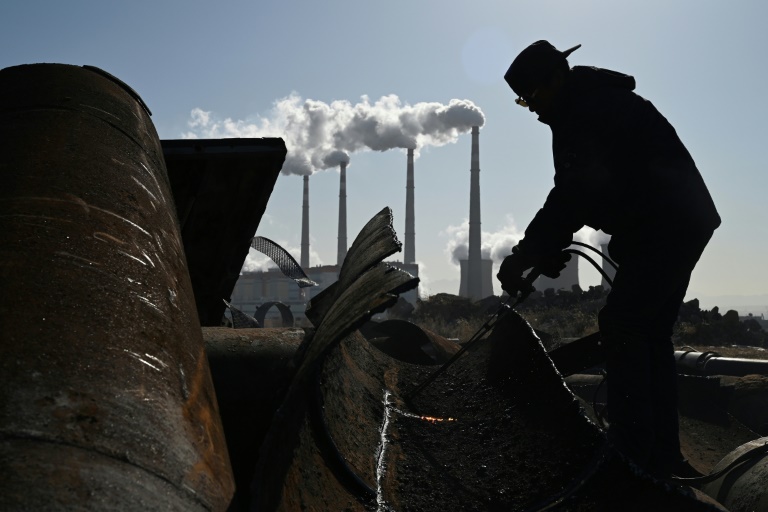
When China’s President Xi Jinping issued his traditional Lunar New Year wishes from the country’s coal heartland in January, the subtext was clear: Beijing is not ready to kick its coal addiction, despite promises to slash emissions.

The ink had barely dried on the hard-fought deal struck at last year’s United Nations climate conference in Glasgow when Beijing’s backslide on pledges began. 

The country’s central economic planner has watered down a roadmap to slash emissions, greenlighted giant coal-fired power plants, and told mines to produce “as much coal as possible” after power shortages paralysed swathes of the economy last year. 

Environmentalists are concerned this would mean China would continue to pollute beyond the 2030 deadline by which it has promised to have reached peak emissions.

Xi’s trip to mining towns in Shanxi –- China’s biggest coal producing province — saw him making crispy noodle snacks with families “recently lifted out of poverty”.

“We are not pursuing carbon neutrality because others are forcing us, it’s something we must do. But it can’t be rushed,” he said later, while inspecting a thermal power plant.

“We can’t delay action, but we must find the right rhythm.”

Days earlier, Xi told Communist Party officials in Beijing that low-carbon goals should not come at the expense of “normal life” — a major change in rhetoric from his 2020 announcement at a UN assembly that China would be carbon neutral by 2060.

– Dependent on coal –

The Glasgow pact encourages countries to slash their emissions targets, with the aim of limiting warming to well below 2 degrees Celsius (36 degrees Fahrenheit) ideally to 1.5 degrees.

Experts have warned that global emissions must be halved within a decade to have a chance of achieving that goal.  

A report issued by the UN’s climate science advisors on Monday said that warming beyond 1.5C would wreak permanent damage to the planet and that nearly half the world’s population is already “highly vulnerable” to the accelerating impacts of climate change.

“The world’s biggest polluters are guilty of arson of our only home,” UN chief Antonio Guterres said in response to this most compelling scientific overview of climate change impacts to date.

China generates an estimated 29 percent of the world’s greenhouse gas emissions — double the US share and three times that of the European Union. 

Environmentalists had hoped that post-Glasgow, Beijing might announce a maximum carbon cap for the whole country but Li Shuo, a campaigner for Greenpeace China, told AFP that is now “off the table”. 

Policymakers in Beijing have long walked a tightrope balancing climate objectives with domestic growth. 

Beijing has pledged to curb coal consumption after 2025 — but last year, half of China’s economy was fuelled by it. 

Now as growth slows, authorities are resorting to an old formula of propping up smokestack industries to juice the economy. 

In late 2021 China began construction on 33 gigawatts of coal-fired power plants — the most since 2016 — that will emit as much carbon dioxide annually as Florida, according to data from Global Energy Monitor.

Even more new plants are being built in the first few months of 2022 as well, all of which can operate for 40 years on average.  

– ‘Ambition in jeopardy’ –

During the Glasgow talks the Chinese delegation — like many others — promised a detailed roadmap to peak emissions for different industries and regions over the next decade.  

Existing guidelines issued just before the talks only include vague targets for increasing energy efficiency and say renewables will supply a quarter of China’s electricity by 2030. 

They have not yet been updated.

This “suggests that the politics are tough, ambition is in jeopardy, and the regulators are reserving as much wiggle room (to pollute) as possible for the next few years,” Greenpeace’s Li said. 

Earlier last month, Beijing pushed back the deadline for slashing emissions from the steel sector — China’s biggest carbon emitter — five years to 2030. 

“Steel and cement need to peak earlier than the country as a whole to ensure China’s targets are on track,” said Lauri Myllyvirta, lead analyst at the Centre for Research on Energy and Clean Air.

Meanwhile, China’s investments in overseas oil and gas projects tripled to $10.9 billion last year, according to a Fudan University report in January. 

– Renewable bottlenecks –

Another of China’s key pledges — to increase wind and solar capacity to three times the current level over the next decade — has been blown off-course as well by supply chain disruptions and soaring raw material costs.

The price of polysilicon, used to make solar panels, jumped 174 percent in December from the previous year.

Analysts fear more fossil fuels will be burnt to meet China’s growing energy needs as the rollout of renewables slows.

“The political signals are much more cautious (than before), saying the transition will be slow, and coal would remain a mainstay of China’s energy supply for a long time,” said Myllyvirta.

Australia tells tens of thousands to flee floods

Deadly floods spread down Australia’s east coast Tuesday, stranding residents on rooftops and bridges and prompting authorities to order tens of thousands of people to flee their homes.

Flood warnings were in effect for dozens of rivers across the states of Queensland and New South Wales, where a days-long “rain bomb” has dumped a metre (3.2 feet) of rain on some areas in a week.

Several waterways have already burst their banks or broken through levees, inundating towns and forcing residents to flee or seek safety on higher ground.

“We’ve seen people stranded on roofs for hours, we’ve seen children being rescued, we’re seeing people stranded on bridges,” said New South Wales premier Dominic Perrottet.

Eight people have died and more than a thousand people have been rescued. Authorities have warned that more fatalities are likely.

In one spectacular rescue, a helicopter crew flew in to pluck two people to safety as muddy waters lapped at the corrugated metal roof of their home.

Live television images on national broadcaster ABC showed a rescuer sitting on the roof with the pair, preparing to strap them to the chopper’s winch.

In the town of Lismore, nine people were missing amid the worst floods on record.

The local member of parliament for Lismore, Janelle Saffin, had to swim to safety after she was stranded in the floodwaters.

“We went to the verandah, hanging on to the rafters,” she told the Nine Newspapers.

– Sailing past roofs –

Emergency services were overwhelmed by calls for help and flotillas of makeshift rescue boats fanned out across the town as people tried to ferry their neighbours to safety.

Lismore resident Danika Hardiman was rescued Monday after she woke up to find floodwaters had reached the balcony of her second-floor apartment in the town’s main street.

She and her partner managed to climb up to the roof and were eventually rescued by “two guys in a boat, two locals”, she told AFP Monday, describing the scenes in Lismore as “horrific”.

“Imagine you’re in a boat sailing past people’s roofs,” she said.

In total, more than 150,000 people are subject to evacuation orders, according to an AFP tally.

Makeshift evacuation centres have been set up in primary schools, recreation centres and retired service members’ clubs.

Near the town of Grafton, buildings were submerged almost to roof level, roads were washed away and cattle roamed abandoned.

Further south in Sydney, residents endured another day of torrential downpours, and were warned to brace for “major flooding”.

Australia has been on the sharp end of climate change, with droughts, deadly bushfires, bleaching events on the Great Barrier Reef and floods becoming more common and more intense as global climate patterns change.

Close Bitnami banner
Bitnami