AFP

Robot plant grows, wilts on fate of UN nature talks

It’s not always easy to make sense of the complex environmental diplomacy taking place at a UN summit billed as humanity’s last hope to save nature.

That’s why a scientist and artist have teamed up to build a large, data-driven robotic plant that withers or flourishes depending on countries’ policy commitments: a tangible demonstration of how human actions will impact the world’s threatened species.

Called “ECONARIO,” the 5.5-meter (18-foot) tall artwork took a year to build from recycled steel and is currently on display in Montreal Convention Centre, keeping policymakers at the COP15 meeting on their toes as they attempt to hammer out a deal to protect ecosystems.

Its creator, Dutch artist Thijs Biersteker, told AFP the idea behind it is simple: “If the research does not reach us, then how can the research teach us?”

“Art reflects the time we’re in, and it should reflect these important issues.”

The plant feeds on data from the Biodiversity Intactness Index (BII) — an estimated percentage of the original number of species that remain, and their abundance in any given area, despite human impacts.

Data scientist Adriana De Palma of London’s Natural History Museum, who serves as research lead for the BII, told AFP it is based on a robust, peer-reviewed and open access methodology.

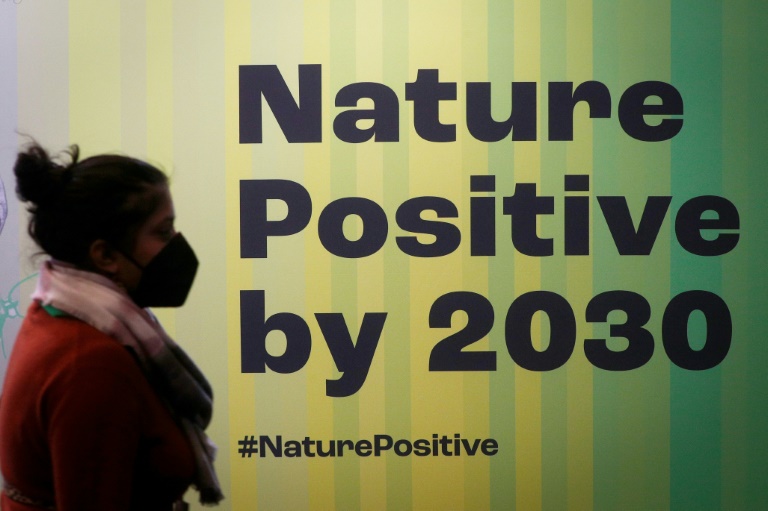
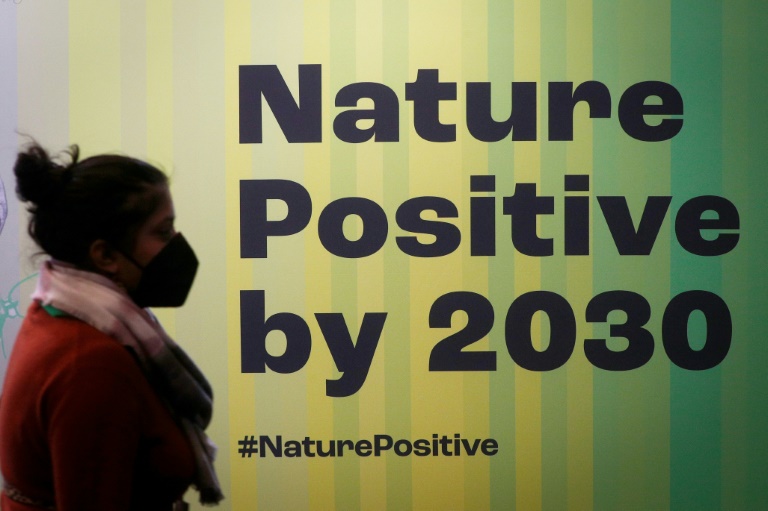
As negotiations happen, the team behind BII input, for example, how many countries have committed to implement a cornerstone pledge of protecting 30 percent of lands and oceans by 2030.

“We can then predict what that is going to mean for biodiversity in 20, 50 or 100 years,” she said.

– Rooting for success –

New funding pledges by wealthy countries to assist lower income nations in protecting their biodiversity have helped to nudge up slightly the predicted global average of BII to 70.7 percent by 2050 — meaning the average ecosystem will have that percentage of its natural ecological community left.

The current figure is 68.5 percent, set to drop to 66.4 percent if “business as usual” continues but rise to 76.4 percent in case of “real action” which the UN summit was meant to deliver.

For now, ECONARIO is cycling between the pessimistic and optimistic scenarios in order to show what could be possible — but if policymakers fail to achieve an ambitious target, that will be reflected in a very sorry looking robotic plant.

“We shouldn’t shy away from the hard numbers, it’s not time to sugarcoat anymore,” said Biersteker.

De Palma added they were in talks with North American museums to loan the artwork out after the UN summit concludes, and it will eventually return to Europe. 

“Using a piece of art like this to really connect with people so they see the damage that individual choices, company choices and government choices are having on the world, is incredibly valuable,” she said.

Robot plant grows, wilts on fate of UN nature talks

It’s not always easy to make sense of the complex environmental diplomacy taking place at a UN summit billed as humanity’s last hope to save nature.

That’s why a scientist and artist have teamed up to build a large, data-driven robotic plant that withers or flourishes depending on countries’ policy commitments: a tangible demonstration of how human actions will impact the world’s threatened species.

Called “ECONARIO,” the 5.5-meter (18-foot) tall artwork took a year to build from recycled steel and is currently on display in Montreal Convention Centre, keeping policymakers at the COP15 meeting on their toes as they attempt to hammer out a deal to protect ecosystems.

Its creator, Dutch artist Thijs Biersteker, told AFP the idea behind it is simple: “If the research does not reach us, then how can the research teach us?”

“Art reflects the time we’re in, and it should reflect these important issues.”

The plant feeds on data from the Biodiversity Intactness Index (BII) — an estimated percentage of the original number of species that remain, and their abundance in any given area, despite human impacts.

Data scientist Adriana De Palma of London’s Natural History Museum, who serves as research lead for the BII, told AFP it is based on a robust, peer-reviewed and open access methodology.

As negotiations happen, the team behind BII input, for example, how many countries have committed to implement a cornerstone pledge of protecting 30 percent of lands and oceans by 2030.

“We can then predict what that is going to mean for biodiversity in 20, 50 or 100 years,” she said.

– Rooting for success –

New funding pledges by wealthy countries to assist lower income nations in protecting their biodiversity have helped to nudge up slightly the predicted global average of BII to 70.7 percent by 2050 — meaning the average ecosystem will have that percentage of its natural ecological community left.

The current figure is 68.5 percent, set to drop to 66.4 percent if “business as usual” continues but rise to 76.4 percent in case of “real action” which the UN summit was meant to deliver.

For now, ECONARIO is cycling between the pessimistic and optimistic scenarios in order to show what could be possible — but if policymakers fail to achieve an ambitious target, that will be reflected in a very sorry looking robotic plant.

“We shouldn’t shy away from the hard numbers, it’s not time to sugarcoat anymore,” said Biersteker.

De Palma added they were in talks with North American museums to loan the artwork out after the UN summit concludes, and it will eventually return to Europe. 

“Using a piece of art like this to really connect with people so they see the damage that individual choices, company choices and government choices are having on the world, is incredibly valuable,” she said.
At COP15, businesses urged to act for nature

Widely blamed for ravaging Earth’s ecosystems, big businesses are nevertheless being turned to as key players in a deal to save nature at the COP15 biodiversity conference.

With hundreds of billions of dollars needed for the task, public funds can only fill part of the gap. Campaigners and experts at the talks are demanding companies act to reduce their impact — and firms in turn are asking for clear rules of engagement.

Ministers at the meeting in Montreal are thrashing out a global agreement for the next decade to curb damage to Earth’s forests, oceans and species — with conservation and finance top of the agenda.

“One of the other things at stake in this COP is getting businesses involved,” said Pierre Cannet of the Worldwide Fund for Nature, on the sidelines of the talks.

“Whatever the outcome of the summit, they will have to ask themselves how they can curb the fall in biodiversity.”

Elizabeth Mrema, the head of the UN Convention on Biological Diversity that underpins COP15, said a record number of private-sector parties registered for this year’s summit, where delegates are working on a new Global Biodiversity Framework.

“Clearly they’ve listened,” she told AFP.

“They have understood or they are getting there now, understanding also the impact of their operations on nature, the nature biodiversity which we all depend on and (they) also depend (on) for their businesses,” she added.

“If they are not part of the framework, their businesses will also suffer.”

– Invest in nature –

Some $900 billion a year is needed to move from “an economy that devours nature to a neutral and then a positive economy,” says Gilles Kleitz of the French state development agency AFD.

For this, “the role of businesses is fundamental,” said Didier Babin, a researcher at Cirad, an institute that focuses on sustainable agriculture.

“More businesses have to be brought on board” to help fund the targets, he added. “They depend on biodiversity and they must invest more in the capital of nature. Nature needs to be thought of as an asset.”

One of the targets in the framework under discussion at COP15 is a section aimed at obliging big companies and financial groups to measure and publish their impacts on the natural world and their exposure to it.

The World Economic Forum said in a 2020 report that more than half of global production depends heavily (15 percent) or moderately (37 percent) on nature and services related to it. 

It calculated the value of businesses’ exposure to degraded ecosystems at $44 trillion.

The report found that the construction sector was the most exposed with $4 trillion, followed by agriculture with $2.5 trillion and the food and drink industry with $1.4 trillion.

– Measuring biodiversity impact –

At COP15, a grouping of 330 businesses called Business for Nature is pushing for a uniform framework for all corporations to report their impacts and exposure.

With collective turnover of more than $1.5 trillion, they include big names such as Unilever, Ikea, Danone, BNP Paribas and Tata Steel.

“There will be no economy, there will be no business on a dead planet,” said the grouping’s executive director, Eva Zabey.

“And so now we need governments to adopt an ambitious global biodiversity framework that will provide the political certainty and it will require businesses to contribute.”

Brune Poirson, director of sustainable development at the hotel group Accor, said COP15 “must be a key milestone” in this process.

“We need a framework with all the actors in the sector,” she said.

Efforts are gaining pace to make companies disclose their contribution to the carbon emissions that drive climate change — but relatively few companies currently declare their impact on the ecosystems that support all life.

“This summit needs to be a turning point in humanity’s relationship with nature and to do so it needs to kick off fundamental changes in the way the economy works,” said Eliot Whittington of the Cambridge Institute for Sustainability Leadership.

“More and more businesses and financial institutions are realizing how essential action on nature and biodiversity is, but they need governments to provide the right rules and incentives to solve market failures and make change possible.”

At COP15, businesses urged to act for nature

Widely blamed for ravaging Earth’s ecosystems, big businesses are nevertheless being turned to as key players in a deal to save nature at the COP15 biodiversity conference.

With hundreds of billions of dollars needed for the task, public funds can only fill part of the gap. Campaigners and experts at the talks are demanding companies act to reduce their impact — and firms in turn are asking for clear rules of engagement.

Ministers at the meeting in Montreal are thrashing out a global agreement for the next decade to curb damage to Earth’s forests, oceans and species — with conservation and finance top of the agenda.

“One of the other things at stake in this COP is getting businesses involved,” said Pierre Cannet of the Worldwide Fund for Nature, on the sidelines of the talks.

“Whatever the outcome of the summit, they will have to ask themselves how they can curb the fall in biodiversity.”

Elizabeth Mrema, the head of the UN Convention on Biological Diversity that underpins COP15, said a record number of private-sector parties registered for this year’s summit, where delegates are working on a new Global Biodiversity Framework.

“Clearly they’ve listened,” she told AFP.

“They have understood or they are getting there now, understanding also the impact of their operations on nature, the nature biodiversity which we all depend on and (they) also depend (on) for their businesses,” she added.

“If they are not part of the framework, their businesses will also suffer.”

– Invest in nature –

Some $900 billion a year is needed to move from “an economy that devours nature to a neutral and then a positive economy,” says Gilles Kleitz of the French state development agency AFD.

For this, “the role of businesses is fundamental,” said Didier Babin, a researcher at Cirad, an institute that focuses on sustainable agriculture.

“More businesses have to be brought on board” to help fund the targets, he added. “They depend on biodiversity and they must invest more in the capital of nature. Nature needs to be thought of as an asset.”

One of the targets in the framework under discussion at COP15 is a section aimed at obliging big companies and financial groups to measure and publish their impacts on the natural world and their exposure to it.

The World Economic Forum said in a 2020 report that more than half of global production depends heavily (15 percent) or moderately (37 percent) on nature and services related to it. 

It calculated the value of businesses’ exposure to degraded ecosystems at $44 trillion.

The report found that the construction sector was the most exposed with $4 trillion, followed by agriculture with $2.5 trillion and the food and drink industry with $1.4 trillion.

– Measuring biodiversity impact –

At COP15, a grouping of 330 businesses called Business for Nature is pushing for a uniform framework for all corporations to report their impacts and exposure.

With collective turnover of more than $1.5 trillion, they include big names such as Unilever, Ikea, Danone, BNP Paribas and Tata Steel.

“There will be no economy, there will be no business on a dead planet,” said the grouping’s executive director, Eva Zabey.

“And so now we need governments to adopt an ambitious global biodiversity framework that will provide the political certainty and it will require businesses to contribute.”

Brune Poirson, director of sustainable development at the hotel group Accor, said COP15 “must be a key milestone” in this process.

“We need a framework with all the actors in the sector,” she said.

Efforts are gaining pace to make companies disclose their contribution to the carbon emissions that drive climate change — but relatively few companies currently declare their impact on the ecosystems that support all life.

“This summit needs to be a turning point in humanity’s relationship with nature and to do so it needs to kick off fundamental changes in the way the economy works,” said Eliot Whittington of the Cambridge Institute for Sustainability Leadership.

“More and more businesses and financial institutions are realizing how essential action on nature and biodiversity is, but they need governments to provide the right rules and incentives to solve market failures and make change possible.”

Canada increases biodiversity funding in crunch UN talks

Canada said Friday it was ramping up its international biodiversity funding, an overture to developing countries during difficult UN talks aimed at sealing a “peace pact with nature.”

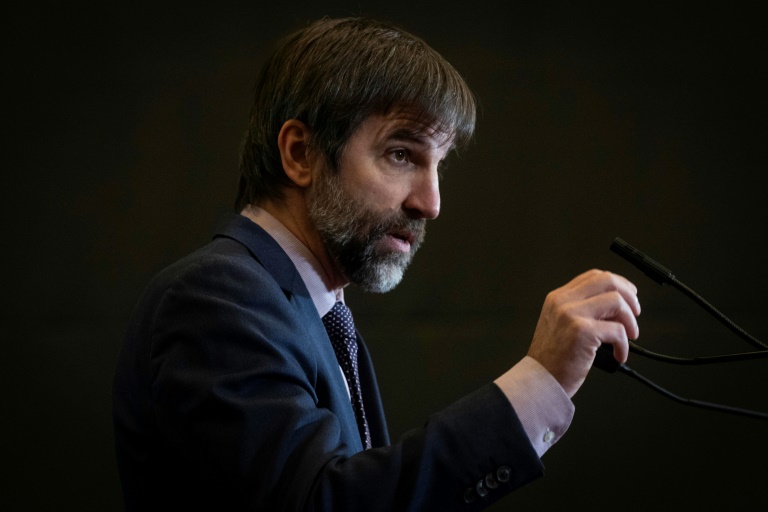
Environment minister Steven Guilbeault announced an increase of 255 million Canadian dollars (US$186 million) in the aid it will send to lower income countries to help them protect their ecosystems, bringing the total figure to 1.5 billion Canadian dollars annually.

It comes as the world’s environment ministers have converged on Montreal for the final phase of the summit, called COP15.

The talks’ success hinges on an agreement regarding the mobilization of funds to help developing countries meet the draft agreement’s more than 20 targets, including protecting 30 percent of lands and oceans by 2030.

Brazil — one of the most prominent voices at the summit — is seeking at least $100 billion from the Global North, a demand shared by India, Indonesia and African countries.

That is about ten times more than current flows, and about as much as has been pledged for adaptation against climate change (though not delivered).

When the ministers arrived on Thursday, a dozen developed countries touted new or recently increased commitments to biodiversity funding, in a move welcomed by observers and nonprofits.

The ambition remains to seal an agreement for biodiversity that is as historic as the Paris accord for climate was in 2015. 

At stake is the future of the planet and whether humanity can roll back habitat destruction, pollution and the climate crisis, which are threatening an estimated million plant and animal species with extinction.

Beyond the moral implications, there is the question of self-interest: $44 trillion of economic value generation — more than half the world’s total GDP — is dependent on nature and its services.

Stocks, oil prices extend losses on recession fears

Stock markets dropped further Friday on prospects of more aggressive rises in interest rates to fight inflation, renewing concerns over the global economy entering recession next year.

After a healthy rally in recent weeks fueled by signs that price rises were slowing, the US Federal Reserve, European Central Bank and Bank of England this week dampened the holiday cheer by hiking borrowing costs again by sizable amounts and warning of more pain.

While inflation in many leading economies has started coming down — helped by a drop in energy costs — it still remains at or near multi-decade highs.

Observers have warned that economies could be heading for a period of stagflation where prices keep rising but growth stalls.

“In a nutshell, it is all about fears over a sharper economic slowdown in 2023 than previously expected,” noted Fawad Razaqzada, market analyst at City Index trading group.

“While macro data have been weak of late, there was still hope that the downturn might be short-lived and that a recession might be avoided in some regions altogether, amid signs of inflation peaking in some regions like the US.”

The latest rate hikes came as data showed US and UK retail sales dropping in November as consumers — key drivers of growth — feel the pinch from high prices and rate hikes.

– Recession on horizon? –

Eurozone and London shares all closed firmly in the red.  

Wall Street stocks meanwhile extended losses too, with major indices ending about one percent lower.

OANDA analyst Craig Erlam said the prospect of a “Santa rally” was fading.

“Going into December, there was growing optimism that policymakers could be a source of optimism going into the new year but instead, they’ve taken on the role of grinch, bringing a swift end to the celebrations,” he added.

Earlier, Asia had also seen losses, with Tokyo closing down 1.9 percent.

On the upside, Hong Kong rose on progress in talks over allowing US officials to audit Chinese firms listed in New York, easing concerns about a possible delisting of some big names such as Alibaba and Tencent.

The news provided a little more help to Hong Kong traders, whose sentiment has been lifted also by China’s shift away from the economically damaging zero-Covid policy as well as moves to open the city further to overseas visitors.

And a report in Hong Kong’s South China Morning Post said the border with mainland China would be fully reopened next month, providing another much-needed boost to the beleaguered economy.

However, the mood was soured a little by a US decision to put 36 Chinese companies including top producers of advanced computer chips on a trade blacklist, severely restricting their access to any US technology.

– Key figures around 2230 GMT –

New York – Dow: DOWN 0.9 percent at 32,920.46 (close)

New York – S&P 500: DOWN 1.1 percent at 3,852.36 (close)

New York – Nasdaq: DOWN 1.0 percent at 10,705.41 (close)

London – FTSE 100: DOWN 1.3 percent at 7,332.12 (closing)

Frankfurt – DAX: DOWN 0.7 percent at 13,893.07 (closing)

Paris – CAC 40: DOWN 1.1 percent at 6,452.63 (closing)

EURO STOXX 50: DOWN 0.8 percent at 3,804.02 (close)

Tokyo – Nikkei 225: DOWN 1.9 percent at 27,527.12 (close)

Hong Kong – Hang Seng Index: UP 0.4 percent at 19,450.67 (close)

Shanghai – Composite: FLAT at 3,167.86 (close)

West Texas Intermediate: DOWN 2.4 percent at $74.29 per barrel

Brent North Sea crude: DOWN 2.7 percent at $79.04 per barrel

Euro/dollar: DOWN at $1.0589 from $1.0628 on Thursday

Pound/dollar: DOWN at $1.2140 from $1.2178

Euro/pound: DOWN at 87.22 pence from 87.27 pence

Dollar/yen: DOWN at 136.68 yen from 137.78 yen

Stocks, oil prices extend losses on recession fears

Stock markets dropped further Friday on prospects of more aggressive rises in interest rates to fight inflation, renewing concerns over the global economy entering recession next year.

After a healthy rally in recent weeks fueled by signs that price rises were slowing, the US Federal Reserve, European Central Bank and Bank of England this week dampened the holiday cheer by hiking borrowing costs again by sizable amounts and warning of more pain.

While inflation in many leading economies has started coming down — helped by a drop in energy costs — it still remains at or near multi-decade highs.

Observers have warned that economies could be heading for a period of stagflation where prices keep rising but growth stalls.

“In a nutshell, it is all about fears over a sharper economic slowdown in 2023 than previously expected,” noted Fawad Razaqzada, market analyst at City Index trading group.

“While macro data have been weak of late, there was still hope that the downturn might be short-lived and that a recession might be avoided in some regions altogether, amid signs of inflation peaking in some regions like the US.”

The latest rate hikes came as data showed US and UK retail sales dropping in November as consumers — key drivers of growth — feel the pinch from high prices and rate hikes.

– Recession on horizon? –

Eurozone and London shares all closed firmly in the red.  

Wall Street stocks meanwhile extended losses too, with major indices ending about one percent lower.

OANDA analyst Craig Erlam said the prospect of a “Santa rally” was fading.

“Going into December, there was growing optimism that policymakers could be a source of optimism going into the new year but instead, they’ve taken on the role of grinch, bringing a swift end to the celebrations,” he added.

Earlier, Asia had also seen losses, with Tokyo closing down 1.9 percent.

On the upside, Hong Kong rose on progress in talks over allowing US officials to audit Chinese firms listed in New York, easing concerns about a possible delisting of some big names such as Alibaba and Tencent.

The news provided a little more help to Hong Kong traders, whose sentiment has been lifted also by China’s shift away from the economically damaging zero-Covid policy as well as moves to open the city further to overseas visitors.

And a report in Hong Kong’s South China Morning Post said the border with mainland China would be fully reopened next month, providing another much-needed boost to the beleaguered economy.

However, the mood was soured a little by a US decision to put 36 Chinese companies including top producers of advanced computer chips on a trade blacklist, severely restricting their access to any US technology.

– Key figures around 2230 GMT –

New York – Dow: DOWN 0.9 percent at 32,920.46 (close)

New York – S&P 500: DOWN 1.1 percent at 3,852.36 (close)

New York – Nasdaq: DOWN 1.0 percent at 10,705.41 (close)

London – FTSE 100: DOWN 1.3 percent at 7,332.12 (closing)

Frankfurt – DAX: DOWN 0.7 percent at 13,893.07 (closing)

Paris – CAC 40: DOWN 1.1 percent at 6,452.63 (closing)

EURO STOXX 50: DOWN 0.8 percent at 3,804.02 (close)

Tokyo – Nikkei 225: DOWN 1.9 percent at 27,527.12 (close)

Hong Kong – Hang Seng Index: UP 0.4 percent at 19,450.67 (close)

Shanghai – Composite: FLAT at 3,167.86 (close)

West Texas Intermediate: DOWN 2.4 percent at $74.29 per barrel

Brent North Sea crude: DOWN 2.7 percent at $79.04 per barrel

Euro/dollar: DOWN at $1.0589 from $1.0628 on Thursday

Pound/dollar: DOWN at $1.2140 from $1.2178

Euro/pound: DOWN at 87.22 pence from 87.27 pence

Dollar/yen: DOWN at 136.68 yen from 137.78 yen

Stocks, oil prices extend losses on recession fears

Stock markets dropped further Friday on prospects of more aggressive rises in interest rates to fight inflation, renewing concerns over the global economy entering recession next year.

After a healthy rally in recent weeks fueled by signs that price rises were slowing, the US Federal Reserve, European Central Bank and Bank of England this week dampened the holiday cheer by hiking borrowing costs again by sizable amounts and warning of more pain.

While inflation in many leading economies has started coming down — helped by a drop in energy costs — it still remains at or near multi-decade highs.

Observers have warned that economies could be heading for a period of stagflation where prices keep rising but growth stalls.

“In a nutshell, it is all about fears over a sharper economic slowdown in 2023 than previously expected,” noted Fawad Razaqzada, market analyst at City Index trading group.

“While macro data have been weak of late, there was still hope that the downturn might be short-lived and that a recession might be avoided in some regions altogether, amid signs of inflation peaking in some regions like the US.”

The latest rate hikes came as data showed US and UK retail sales dropping in November as consumers — key drivers of growth — feel the pinch from high prices and rate hikes.

– Recession on horizon? –

Eurozone and London shares all closed firmly in the red.  

Wall Street stocks meanwhile extended losses too, with major indices ending about one percent lower.

OANDA analyst Craig Erlam said the prospect of a “Santa rally” was fading.

“Going into December, there was growing optimism that policymakers could be a source of optimism going into the new year but instead, they’ve taken on the role of grinch, bringing a swift end to the celebrations,” he added.

Earlier, Asia had also seen losses, with Tokyo closing down 1.9 percent.

On the upside, Hong Kong rose on progress in talks over allowing US officials to audit Chinese firms listed in New York, easing concerns about a possible delisting of some big names such as Alibaba and Tencent.

The news provided a little more help to Hong Kong traders, whose sentiment has been lifted also by China’s shift away from the economically damaging zero-Covid policy as well as moves to open the city further to overseas visitors.

And a report in Hong Kong’s South China Morning Post said the border with mainland China would be fully reopened next month, providing another much-needed boost to the beleaguered economy.

However, the mood was soured a little by a US decision to put 36 Chinese companies including top producers of advanced computer chips on a trade blacklist, severely restricting their access to any US technology.

– Key figures around 2230 GMT –

New York – Dow: DOWN 0.9 percent at 32,920.46 (close)

New York – S&P 500: DOWN 1.1 percent at 3,852.36 (close)

New York – Nasdaq: DOWN 1.0 percent at 10,705.41 (close)

London – FTSE 100: DOWN 1.3 percent at 7,332.12 (closing)

Frankfurt – DAX: DOWN 0.7 percent at 13,893.07 (closing)

Paris – CAC 40: DOWN 1.1 percent at 6,452.63 (closing)

EURO STOXX 50: DOWN 0.8 percent at 3,804.02 (close)

Tokyo – Nikkei 225: DOWN 1.9 percent at 27,527.12 (close)

Hong Kong – Hang Seng Index: UP 0.4 percent at 19,450.67 (close)

Shanghai – Composite: FLAT at 3,167.86 (close)

West Texas Intermediate: DOWN 2.4 percent at $74.29 per barrel

Brent North Sea crude: DOWN 2.7 percent at $79.04 per barrel

Euro/dollar: DOWN at $1.0589 from $1.0628 on Thursday

Pound/dollar: DOWN at $1.2140 from $1.2178

Euro/pound: DOWN at 87.22 pence from 87.27 pence

Dollar/yen: DOWN at 136.68 yen from 137.78 yen

US to begin refilling oil reserve after huge Biden release

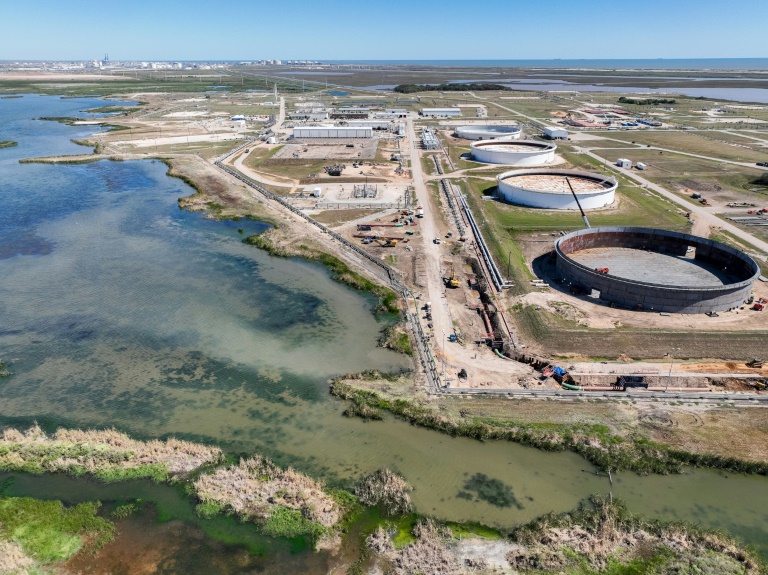
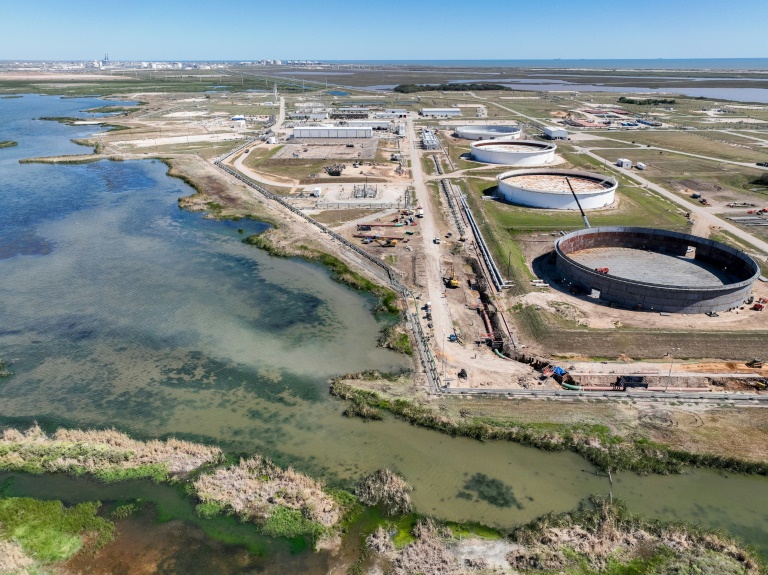
The US Energy Department announced Friday a plan to add oil back to the Strategic Petroleum Reserve (SPR) after a historically large release undertaken by the Biden administration.

The policy marks a significant shift after President Biden authorized the biggest-ever release earlier this year following Russia’s invasion of Ukraine, which sent oil prices to $120 a barrel.

The plan represents “an opportunity to secure a good deal for American taxpayers by repurchasing oil at a lower price than the $96 per barrel average price it was sold for, as well as to strengthen energy security,” the Department of Energy (DOE) said in a news release. 

The agency said it will buy up to three million barrels of oil under a pilot program designed to attract sellers who can lock in prices.

The SPR currently holds 382 million barrels of crude, down some 216 million barrels from its level before September 2021.

A Biden official said in October that the administration planned to purchase oil to refill the reserve as soon as prices hit around $67-72 a barrel.

Crude prices have fallen significantly from their peak levels earlier in the year. On Friday, US benchmark West Texas Intermedia dropped 2.4 percent to $74.29 a barrel.

The DOE announcement noted that gasoline prices have dropped by more than $1.80 a gallon from their June 2022 apex and now stand at the cheapest level since September 2021.

US to begin refilling oil reserve after huge Biden release

The US Energy Department announced Friday a plan to add oil back to the Strategic Petroleum Reserve (SPR) after a historically large release undertaken by the Biden administration.

The policy marks a significant shift after President Biden authorized the biggest-ever release earlier this year following Russia’s invasion of Ukraine, which sent oil prices to $120 a barrel.

The plan represents “an opportunity to secure a good deal for American taxpayers by repurchasing oil at a lower price than the $96 per barrel average price it was sold for, as well as to strengthen energy security,” the Department of Energy (DOE) said in a news release. 

The agency said it will buy up to three million barrels of oil under a pilot program designed to attract sellers who can lock in prices.

The SPR currently holds 382 million barrels of crude, down some 216 million barrels from its level before September 2021.

A Biden official said in October that the administration planned to purchase oil to refill the reserve as soon as prices hit around $67-72 a barrel.

Crude prices have fallen significantly from their peak levels earlier in the year. On Friday, US benchmark West Texas Intermedia dropped 2.4 percent to $74.29 a barrel.

The DOE announcement noted that gasoline prices have dropped by more than $1.80 a gallon from their June 2022 apex and now stand at the cheapest level since September 2021.

Close Bitnami banner
Bitnami