AFP

Timeline: Twitter mayhem since Musk takeover

Since buying Twitter, Elon Musk has made radical changes that have sparked fears for the future of the platform, from firing half the staff to restoring ex-president Donald Trump’s account and suspending those of several journalists.

AFP looks back at a rollercoaster two months at the Silicon Valley giant.

– Enter Elon –

Musk, the world’s second-richest richest man and CEO of Tesla and SpaceX, buys Twitter in late October for $44 billion after months of on-off negotiations.

“Let the good times roll,” he tweets after the deal is sealed on October 28. He becomes the sole director of the company after dissolving its corporate board.

– ‘Content moderation council’ –

In one of his first moves, the self-declared free speech absolutist announces he will form a “content moderation council”, in a nod to concerns that Twitter could become a free-for-all platform for disinformation and hate speech.

– Monthly charge –

On November 1, Musk announces the site will charge $8 per month to verify the accounts of celebrities and companies — a service that used to be free. But the November 6 launch of the Twitter Blue subscription plan goes awry. Musk is forced to suspend the move after an embarrassing rash of fake accounts alarm advertisers.

– Brands step back –

Top global companies, including General Mills and Volkswagen, suspend their advertising on Twitter on November 3 as they monitor the new direction the company will take.

– Massive layoffs –

On November 4, half of Twitter’s 7,500-strong staff are made redundant, sending shockwaves through Silicon Valley.

Musk tweets that “unfortunately there is no choice when the company is losing over $4M/day”.

– Regulator’s ‘concern’-

The chaos draws a rare warning on November 10 from the Federal Trade Commission (FTC), the US authority that oversees consumer safety.

“We are tracking recent developments at Twitter with deep concern,” says an FTC spokesperson.

– Ultimatum to staff –

Musk delivers an ultimatum to Twitter staff on November 16, asking them to choose between being “extremely hardcore” and working long hours, or losing their jobs. He gives them a day to decide.

Large numbers of staff quit.

– Trump reinstated –

Musk reinstates the account of banned former president Donald Trump after conducting a poll of users, a narrow majority of whom support the move. 

A few days later he announces an “amnesty” for all banned Twitter accounts.

– ‘War’ with Apple – 

On November 29, Musk tweets that he is going “to war’ with Apple, claiming it has threatened to oust Twitter from its App Store. After meeting with Apple boss Tim Cook he later says the clash was a misunderstanding.

– Covid controversy  –

In late November, Twitter says it is no longer enforcing a policy of combatting Covid-19 disinformation. Musk had fiercely opposed Covid restrictions. Days later he is rapped by the White House for calling for President Joe Biden’s chief Covid adviser Anthony Fauci to be prosecuted.

– Kanye suspended –

Musk revises his promises of unfettered free speech after rapper Kanye West tweets a picture that appears to show a swastika interlaced with a Star of David. His account is suspended for “incitement to violence”.

– Twitter Blue take two –

In mid-December Musk relaunches Twitter Blue. This time, Twitter conducts a review of the account before giving it the coveted blue check mark.

– Journalists’ accounts suspended –

On December 15, Twitter suspends the accounts of more than a half-dozen journalists, including reporters from CNN, The New York Times, and The Washington Post.

Musk accuses them of endangering his family through their reporting on Twitter’s shutdown of an account that tracked flights of his private jet. 

Media outlets criticise the move and says they are re-evaluating their use of Twitter.

EU threatens to sanction Twitter.
NASA launches satellite for landmark study of Earth's water

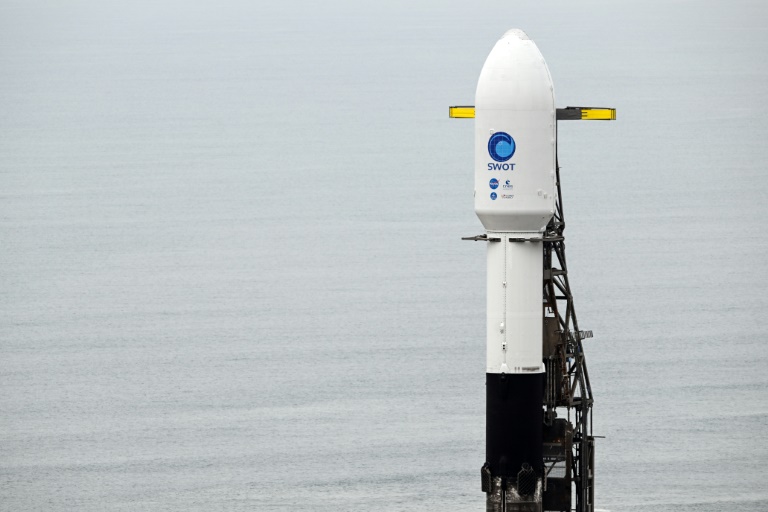
A satellite lifted off Friday from California on a mission to survey nearly all bodies of water on Earth, offering key insights on how they influence or are impacted by climate change.

The Surface Water and Ocean Topography (SWOT) satellite, a billion-dollar project jointly developed by NASA and France’s space agency CNES, took off at 1146 GMT atop a SpaceX rocket from the Vandenberg Space Force Base.

According to a statement from NASA, it will start collecting scientific data in about six months after undergoing checks and calibrations.

“SWOT will bring us a revolutionary advance in our understanding of how water moves around our planet,” said Karen St. Germain, NASA’s Earth Science Division director, ahead of the launch.

“We will be able to see detail in eddies and currents and circulation in the oceans that we have never been able to see before.”

She said this would help predict floods in areas with too much water, and manage water in regions prone to drought.

Selma Cherchali, of the French space agency CNES, told a press conference on Tuesday that the satellite represents a “revolution in hydrology. We are aiming to provide fine-scale observations ten times better than the current technology.”

From a height of 890 kilometers (550 miles), SWOT will have the clearest view yet of the world’s oceans, allowing it to track the rise in sea levels, as well as rivers and lakes.

The satellite will measure the height of water in freshwater bodies and the ocean on more than 90 percent of Earth’s surface — which it will track in its entirety at least once every 21 days.

Researchers will be able to get data on millions of lakes, rather than the few thousands currently visible from space.

NASA is currently operating some 25 space missions observing Earth, and SWOT will be like “putting on glasses. We will have a crisp picture,” said St. Germain.

– Understanding climate change –

The satellite will help scientists better understand climate change, and factors such as how much more heat and carbon dioxide oceans can absorb.

“We know with climate change that Earth’s water cycle is accelerating. What this means is that some locations have too much water, others don’t have enough,” said Benjamin Hamlington, a NASA research scientist.

“We’re seeing more extreme droughts, more extreme floods, precipitation patterns are changing, becoming more volatile. So it’s really important that we try to understand exactly what is happening.”

The mission is meant to last for three and a half years, but could be extended until five years, or even more, said SWOT’s project head at CNES, Thierry Lafon.

The breakthrough technology at the heart of the satellite mission is called KaRin, a Ka-band radar interferometer, which Lafon described as “the flagship for a new generation of altimeters in space.”

The radar sends down a signal which is reflected back by the water surface. This echo is received by two antennas, resulting in two sets of data providing high accuracy for water detection and resolution.

The US and French space agencies have worked together in the field for more than 30 years. A previous satellite developed by the partners, TOPEX/Poseidon, improved understanding of ocean circulation and its effect on global climate.

It also aided the forecast of the 1997-1998 El Nino weather phenomenon.

NASA launches satellite for landmark study of Earth's water

A satellite lifted off Friday from California on a mission to survey nearly all bodies of water on Earth, offering key insights on how they influence or are impacted by climate change.

The Surface Water and Ocean Topography (SWOT) satellite, a billion-dollar project jointly developed by NASA and France’s space agency CNES, took off at 1146 GMT atop a SpaceX rocket from the Vandenberg Space Force Base.

According to a statement from NASA, it will start collecting scientific data in about six months after undergoing checks and calibrations.

“SWOT will bring us a revolutionary advance in our understanding of how water moves around our planet,” said Karen St. Germain, NASA’s Earth Science Division director, ahead of the launch.

“We will be able to see detail in eddies and currents and circulation in the oceans that we have never been able to see before.”

She said this would help predict floods in areas with too much water, and manage water in regions prone to drought.

Selma Cherchali, of the French space agency CNES, told a press conference on Tuesday that the satellite represents a “revolution in hydrology. We are aiming to provide fine-scale observations ten times better than the current technology.”

From a height of 890 kilometers (550 miles), SWOT will have the clearest view yet of the world’s oceans, allowing it to track the rise in sea levels, as well as rivers and lakes.

The satellite will measure the height of water in freshwater bodies and the ocean on more than 90 percent of Earth’s surface — which it will track in its entirety at least once every 21 days.

Researchers will be able to get data on millions of lakes, rather than the few thousands currently visible from space.

NASA is currently operating some 25 space missions observing Earth, and SWOT will be like “putting on glasses. We will have a crisp picture,” said St. Germain.

– Understanding climate change –

The satellite will help scientists better understand climate change, and factors such as how much more heat and carbon dioxide oceans can absorb.

“We know with climate change that Earth’s water cycle is accelerating. What this means is that some locations have too much water, others don’t have enough,” said Benjamin Hamlington, a NASA research scientist.

“We’re seeing more extreme droughts, more extreme floods, precipitation patterns are changing, becoming more volatile. So it’s really important that we try to understand exactly what is happening.”

The mission is meant to last for three and a half years, but could be extended until five years, or even more, said SWOT’s project head at CNES, Thierry Lafon.

The breakthrough technology at the heart of the satellite mission is called KaRin, a Ka-band radar interferometer, which Lafon described as “the flagship for a new generation of altimeters in space.”

The radar sends down a signal which is reflected back by the water surface. This echo is received by two antennas, resulting in two sets of data providing high accuracy for water detection and resolution.

The US and French space agencies have worked together in the field for more than 30 years. A previous satellite developed by the partners, TOPEX/Poseidon, improved understanding of ocean circulation and its effect on global climate.

It also aided the forecast of the 1997-1998 El Nino weather phenomenon.

Stocks, oil prices extend losses on recession fears

Stock markets dropped further Friday on prospects of more aggressive rises to interest rates to fight sky-high inflation, renewing concerns over the global economy entering recession next year.

After a healthy rally in recent weeks fuelled by signs that price rises were slowing, the US Federal Reserve, European Central Bank and Bank of England this week crushed any Christmas spirit by hiking borrowing costs again by sizeable amounts and warning of more pain.

While inflation in most countries has started coming down — helped by a drop in energy costs — it remains at multi-decade highs.

Observers have warned that economies could be heading for a period of stagflation where prices keep rising but growth stalls.

“In a nutshell, it is all about fears over a sharper economic slowdown in 2023 than previously expected,” noted Fawad Razaqzada, market analyst at City Index trading group.

“While macro data have been weak of late, there was still hope that the downturn might be short-lived and that a recession might be avoided in some regions altogether, amid signs of inflation peaking in some regions like the US.”

The latest rate hikes came as data showed US and UK retail sales dropping in November as consumers — key drivers of growth — feel the pinch from high prices and rate hikes.

– Recession on horizon? –

“With central banks on both sides of the pond suggesting they have more work to tame inflation, hiking interest rates into a dimming macro environment will undoubtedly trigger a recession,” said SPI Asset Management’s Stephen Innes.

“The question is just how profound. Forget inflation; Asia traders are now worried about a global recession.”

Eurozone and London shares dropped in mid-afternoon trading, while Wall Street stocks also fell shortly after opening.

Earlier, Asia had also seen losses, with Tokyo closing down 1.9 percent.

On the upside, Hong Kong rose on progress in talks over allowing US officials to audit Chinese firms listed in New York, easing concerns about a possible delisting of some big names such as Alibaba and Tencent.

The news provided a little more help to Hong Kong traders, whose sentiment has been lifted also by China’s shift away from the economically damaging zero-Covid policy as well as moves to open the city further to overseas visitors.

And a report in the city’s South China Morning Post said the border with mainland China would be fully reopened next month, providing another much-needed boost to the beleaguered economy.

However, the mood was soured a little by a US decision to put 36 Chinese companies including top producers of advanced computer chips on a trade blacklist, severely restricting their access to any US technology.

– Key figures around 1445 GMT –

London – FTSE 100: DOWN 1.2 percent at 7,337.14 points

Frankfurt – DAX: DOWN 0.4 percent at 13,932.71

Paris – CAC 40: DOWN 1.0 percent at 6,456.45

EURO STOXX 50: DOWN 0.6 percent at 3,812.40 

New York – Dow: DOWN 0.6 percent at 33,005.58 

Tokyo – Nikkei 225: DOWN 1.9 percent at 27,527.12 (close)

Hong Kong – Hang Seng Index: UP 0.4 percent at 19,450.67 (close)

Shanghai – Composite: FLAT at 3,167.86 (close)

West Texas Intermediate: DOWN 3.2 percent at $73.65 per barrel

Brent North Sea crude: DOWN 3.1 percent at $78.73 per barrel

Euro/dollar: UP at $1.0645 from $1.0627 on Thursday

Pound/dollar: UP at $1.2216 from $1.2175

Euro/pound: DOWN at 87.15 pence from 87.26 pence

Dollar/yen: DOWN at 136.90 yen from 137.80 yen

Stocks, oil prices extend losses on recession fears

Stock markets dropped further Friday on prospects of more aggressive rises to interest rates to fight sky-high inflation, renewing concerns over the global economy entering recession next year.

After a healthy rally in recent weeks fuelled by signs that price rises were slowing, the US Federal Reserve, European Central Bank and Bank of England this week crushed any Christmas spirit by hiking borrowing costs again by sizeable amounts and warning of more pain.

While inflation in most countries has started coming down — helped by a drop in energy costs — it remains at multi-decade highs.

Observers have warned that economies could be heading for a period of stagflation where prices keep rising but growth stalls.

“In a nutshell, it is all about fears over a sharper economic slowdown in 2023 than previously expected,” noted Fawad Razaqzada, market analyst at City Index trading group.

“While macro data have been weak of late, there was still hope that the downturn might be short-lived and that a recession might be avoided in some regions altogether, amid signs of inflation peaking in some regions like the US.”

The latest rate hikes came as data showed US and UK retail sales dropping in November as consumers — key drivers of growth — feel the pinch from high prices and rate hikes.

– Recession on horizon? –

“With central banks on both sides of the pond suggesting they have more work to tame inflation, hiking interest rates into a dimming macro environment will undoubtedly trigger a recession,” said SPI Asset Management’s Stephen Innes.

“The question is just how profound. Forget inflation; Asia traders are now worried about a global recession.”

Eurozone and London shares dropped in mid-afternoon trading, while Wall Street stocks also fell shortly after opening.

Earlier, Asia had also seen losses, with Tokyo closing down 1.9 percent.

On the upside, Hong Kong rose on progress in talks over allowing US officials to audit Chinese firms listed in New York, easing concerns about a possible delisting of some big names such as Alibaba and Tencent.

The news provided a little more help to Hong Kong traders, whose sentiment has been lifted also by China’s shift away from the economically damaging zero-Covid policy as well as moves to open the city further to overseas visitors.

And a report in the city’s South China Morning Post said the border with mainland China would be fully reopened next month, providing another much-needed boost to the beleaguered economy.

However, the mood was soured a little by a US decision to put 36 Chinese companies including top producers of advanced computer chips on a trade blacklist, severely restricting their access to any US technology.

– Key figures around 1445 GMT –

London – FTSE 100: DOWN 1.2 percent at 7,337.14 points

Frankfurt – DAX: DOWN 0.4 percent at 13,932.71

Paris – CAC 40: DOWN 1.0 percent at 6,456.45

EURO STOXX 50: DOWN 0.6 percent at 3,812.40 

New York – Dow: DOWN 0.6 percent at 33,005.58 

Tokyo – Nikkei 225: DOWN 1.9 percent at 27,527.12 (close)

Hong Kong – Hang Seng Index: UP 0.4 percent at 19,450.67 (close)

Shanghai – Composite: FLAT at 3,167.86 (close)

West Texas Intermediate: DOWN 3.2 percent at $73.65 per barrel

Brent North Sea crude: DOWN 3.1 percent at $78.73 per barrel

Euro/dollar: UP at $1.0645 from $1.0627 on Thursday

Pound/dollar: UP at $1.2216 from $1.2175

Euro/pound: DOWN at 87.15 pence from 87.26 pence

Dollar/yen: DOWN at 136.90 yen from 137.80 yen

Musk under fire as Twitter suspends journalists

Twitter-owner Elon Musk drew anger and stern warnings from regulators on Friday after suspending the accounts of half a dozen prominent journalists — accusing them of endangering his family.

Journalists from CNN, the New York Times and the Washington Post were cut off from the platform without warning on Friday, provoking the newest controversy since Musk took over the company on October 27.

“News about arbitrary suspension of journalists on Twitter is worrying,” EU commissioner Vera Jourova posted on Twitter, warning the influential platform could face hefty fines through European laws.

“Elon Musk should be aware of that. There are red lines. And sanctions, soon,” she added.

The latest controversy began when Musk on Wednesday suspended @elonjet, an account that tracked flights of his private jet.

Musk said the move was necessary after a car in Los Angeles carrying one of his children was followed by “a crazy stalker” and seemed to blame the tracking of his jet for this incident.

Some of the journalists had reported on the affair, including tweets linking to the suspended account, which Musk said amounted to “assassination coordinates” against he and his family.

In a chat hosted live on Twitter, Musk provided no evidence for his claim but told some of the suspended reporters that on Twitter “everyone’s going to be treated the same… they’re not special because you’re a journalist.”

Pressed further on his allegations, Musk ended the conversation. Twitter Spaces, the feature where the chat took place, was then suspended.

Media organizations criticized the move sharply and opened the door to re-evaluating their relationship with Twitter, which has become an essential tool for journalism in the past decade.

“The impulsive and unjustified suspension of a number of reporters, including CNN’s Donie O’Sullivan, is concerning but not surprising,” the news organization said in a tweet.

“Twitter’s increasing instability and volatility should be of incredible concern for everyone who uses the platform.”

The New York Times said in a statement it also wanted answers from Twitter regarding the “questionable” suspension of journalists.

– Twitter exodus? –

Twitter has lurched from one controversy to the next since Musk took control after paying $44 billion, mainly by selling shares in Tesla, his successful electric car company. 

The billionaire’s talk of unfettered speech has scared off major advertisers and caught the attention of regulators.

Musk has reinstated the account of former US president Donald Trump and lashed out against the outgoing key advisor for the US response to the Covid-19 pandemic, Anthony Fauci, a frequent target of vitriol on right-wing media.

CNN has reported that Twitter’s former head of trust and safety fled his home after baseless attacks on Twitter content moderation, endorsed by Musk.

Meanwhile, a purge initiated by Musk at Twitter left more than half of its 7,500 employees on the sidelines and now many of them are taking the SpaceX and Tesla tycoon to court.

Musk at one point signaled he was going to war with Apple over the App Store, only to later tweet that it was a “misunderstanding.”

Market tracker Insider Intelligence forecast that Twitter will experience an exodus of users.

“There won’t be one catastrophic event that ends Twitter,” said Insider Intelligence analyst Jasmine Enberg.

“Instead, users will start to leave the platform next year as they grow frustrated with technical issues and the proliferation of hateful or other unsavory content.”

Musk under fire as Twitter suspends journalists

Twitter-owner Elon Musk drew anger and stern warnings from regulators on Friday after suspending the accounts of half a dozen prominent journalists — accusing them of endangering his family.

Journalists from CNN, the New York Times and the Washington Post were cut off from the platform without warning on Friday, provoking the newest controversy since Musk took over the company on October 27.

“News about arbitrary suspension of journalists on Twitter is worrying,” EU commissioner Vera Jourova posted on Twitter, warning the influential platform could face hefty fines through European laws.

“Elon Musk should be aware of that. There are red lines. And sanctions, soon,” she added.

The latest controversy began when Musk on Wednesday suspended @elonjet, an account that tracked flights of his private jet.

Musk said the move was necessary after a car in Los Angeles carrying one of his children was followed by “a crazy stalker” and seemed to blame the tracking of his jet for this incident.

Some of the journalists had reported on the affair, including tweets linking to the suspended account, which Musk said amounted to “assassination coordinates” against he and his family.

In a chat hosted live on Twitter, Musk provided no evidence for his claim but told some of the suspended reporters that on Twitter “everyone’s going to be treated the same… they’re not special because you’re a journalist.”

Pressed further on his allegations, Musk ended the conversation. Twitter Spaces, the feature where the chat took place, was then suspended.

Media organizations criticized the move sharply and opened the door to re-evaluating their relationship with Twitter, which has become an essential tool for journalism in the past decade.

“The impulsive and unjustified suspension of a number of reporters, including CNN’s Donie O’Sullivan, is concerning but not surprising,” the news organization said in a tweet.

“Twitter’s increasing instability and volatility should be of incredible concern for everyone who uses the platform.”

The New York Times said in a statement it also wanted answers from Twitter regarding the “questionable” suspension of journalists.

– Twitter exodus? –

Twitter has lurched from one controversy to the next since Musk took control after paying $44 billion, mainly by selling shares in Tesla, his successful electric car company. 

The billionaire’s talk of unfettered speech has scared off major advertisers and caught the attention of regulators.

Musk has reinstated the account of former US president Donald Trump and lashed out against the outgoing key advisor for the US response to the Covid-19 pandemic, Anthony Fauci, a frequent target of vitriol on right-wing media.

CNN has reported that Twitter’s former head of trust and safety fled his home after baseless attacks on Twitter content moderation, endorsed by Musk.

Meanwhile, a purge initiated by Musk at Twitter left more than half of its 7,500 employees on the sidelines and now many of them are taking the SpaceX and Tesla tycoon to court.

Musk at one point signaled he was going to war with Apple over the App Store, only to later tweet that it was a “misunderstanding.”

Market tracker Insider Intelligence forecast that Twitter will experience an exodus of users.

“There won’t be one catastrophic event that ends Twitter,” said Insider Intelligence analyst Jasmine Enberg.

“Instead, users will start to leave the platform next year as they grow frustrated with technical issues and the proliferation of hateful or other unsavory content.”

UK working 'flat out' for deal in N.Ireland: Sunak

UK Prime Minister Rishi Sunak said on Friday his government was working “flat out” to settle post-Brexit trading problems in Northern Ireland to end political paralysis in Belfast.

On his first visit to Northern Ireland as premier, Sunak said he was “really committed to resolving some of the issues with the protocol” and “protecting Northern Ireland’s place in the union”.

The UK and the EU have been working this year to resolve their differences over post-Brexit trade rules known as the Northern Ireland Protocol.

The deal keeps Northern Ireland in the European single market and customs union, mandating checks on goods heading to the province from the rest of the UK.

It has proven deeply unpopular with pro-British unionists who have said the arrangements drive a wedge between it and the three other UK nations.

Sunak said by working though the problems, Northern Ireland’s lawmakers should be able to restore power-sharing at the region’s devolved government.

“That is what the people in Northern Ireland need and deserve,” he added.

Northern Ireland’s government has been out of action since February because of a boycott by the Democratic Unionist Party (DUP).

The party withdrew its first minister from the executive at Stormont in February in protest over the protocol.

It has refused to return until the rules are overhauled or scrapped entirely.

Sunak said he would not put a “strict deadline” on talks between London and Brussels but vowed to “work as hard and as fast as I can to find a resolution”.

“I want to do that as soon as practically possible,” he added.

Sunak met the leaders of Northern Ireland’s five main political parties on Thursday evening.

DUP leader Jeffrey Donaldson said he was told by the prime minister there would likely be an “intensification at the political level” of negotiations over coming weeks.

Sunak also toured Belfast’s shipyards to highlight the revival of shipbuilding in the historic area where doomed liner the Titanic was built and launched over 100 years ago. 

Under a £1.6-billion ($1.9-billion) government contract, three new British naval vessels will be completed at the shipyards by a consortium led by Belfast shipbuilders Harland and Wolff.

NASA launches satellite for landmark study of Earth's water

A satellite lifted off Friday from California on a mission to survey nearly all bodies of water on Earth, offering key insights on how they influence or are impacted by climate change.

The Surface Water and Ocean Topography (SWOT) satellite, a billion-dollar project jointly developed by NASA and France’s space agency CNES, took off at 1146 GMT atop a SpaceX rocket from the Vandenberg Space Force Base.

According to a statement from NASA, it will start collecting scientific data in about six months after undergoing checks and calibrations.

“SWOT will bring us a revolutionary advance in our understanding of how water moves around our planet,” said Karen St. Germain, NASA’s Earth Science Division director, ahead of the launch.

“We will be able to see detail in eddies and currents and circulation in the oceans that we have never been able to see before.”

She said this would help predict floods in areas with too much water, and manage water in regions prone to drought.

Selma Cherchali, of the French space agency CNES, told a press conference on Tuesday that the satellite represents a “revolution in hydrology. We are aiming to provide fine-scale observations ten times better than the current technology.”

From a height of 890 kilometers (550 miles), SWOT will have the clearest view yet of the world’s oceans, allowing it to track the rise in sea levels, as well as rivers and lakes.

Researchers will be able to get data on millions of lakes, rather than the few thousands currently visible from space.

“We know with climate change that Earth’s water cycle is accelerating. What this means is that some locations have too much water, others don’t have enough,” said Benjamin Hamlington, a NASA research scientist.

“We’re seeing more extreme droughts, more extreme floods, precipitation patterns are changing, becoming more volatile. So it’s really important that we try to understand exactly what is happening.”

The mission is meant to last for three and a half years, but could be extended until five years, or even more, said SWOT’s project head at CNES, Thierry Lafon.

The US and French space agencies have worked together in the field for more than 30 years. A previous satellite developed by the partners, TOPEX/Poseidon, improved understanding of ocean circulation and its effect on global climate.

NASA launches satellite for landmark study of Earth's water

A satellite lifted off Friday from California on a mission to survey nearly all bodies of water on Earth, offering key insights on how they influence or are impacted by climate change.

The Surface Water and Ocean Topography (SWOT) satellite, a billion-dollar project jointly developed by NASA and France’s space agency CNES, took off at 1146 GMT atop a SpaceX rocket from the Vandenberg Space Force Base.

According to a statement from NASA, it will start collecting scientific data in about six months after undergoing checks and calibrations.

“SWOT will bring us a revolutionary advance in our understanding of how water moves around our planet,” said Karen St. Germain, NASA’s Earth Science Division director, ahead of the launch.

“We will be able to see detail in eddies and currents and circulation in the oceans that we have never been able to see before.”

She said this would help predict floods in areas with too much water, and manage water in regions prone to drought.

Selma Cherchali, of the French space agency CNES, told a press conference on Tuesday that the satellite represents a “revolution in hydrology. We are aiming to provide fine-scale observations ten times better than the current technology.”

From a height of 890 kilometers (550 miles), SWOT will have the clearest view yet of the world’s oceans, allowing it to track the rise in sea levels, as well as rivers and lakes.

Researchers will be able to get data on millions of lakes, rather than the few thousands currently visible from space.

“We know with climate change that Earth’s water cycle is accelerating. What this means is that some locations have too much water, others don’t have enough,” said Benjamin Hamlington, a NASA research scientist.

“We’re seeing more extreme droughts, more extreme floods, precipitation patterns are changing, becoming more volatile. So it’s really important that we try to understand exactly what is happening.”

The mission is meant to last for three and a half years, but could be extended until five years, or even more, said SWOT’s project head at CNES, Thierry Lafon.

The US and French space agencies have worked together in the field for more than 30 years. A previous satellite developed by the partners, TOPEX/Poseidon, improved understanding of ocean circulation and its effect on global climate.

Close Bitnami banner
Bitnami