AFP

Panama shuts down huge copper mine in contract dispute

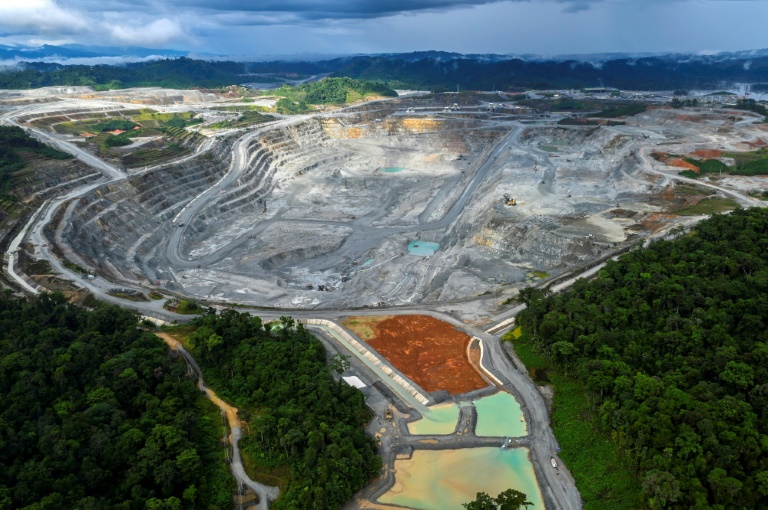
Panama ordered a halt Thursday to work at a copper pit that is the largest mine in Central America, after a deadline for a new contract with its Canadian operators expired.

President Laurentino Cortizo said he had ordered that only maintenance work continue at the huge mine operated by First Quantum Minerals.

This mining project is considered the largest private investment in Panama’s history, contributing four percent of its GDP and accounting for 75 percent of its export revenues.

Panama had given the company until Wednesday to agree to a new contract under which the amount it pays Panama for this mining concession would rise by a factor of 10, to $375 million a year.

Minera Panama, the local unit of First Quantum, “has not lived up to its commitment” to sign that new agreement, the president said.

“This is not acceptable for me as president, nor for the government, nor for the people of Panama,” Cortizo said in a televised speech.

First Quantum’s manager in Panama, Keith Green, who is Scottish, did not immediately respond to the announcement.

First Quantum, one of the largest copper miners in the world, began commercial copper production at the site in Donoso in 2019, through Minera Panama.

It has spent $10 billion on earthworks, construction buildings to house more than 7,000 employees, the purchase of heavy machinery, a power plant, a port for deep-draft merchant ships, access roads, and re-forestation plans.

Cortizo in January announced plans to toughen the terms of the mining contract.

“Panama has the inalienable right to receive fair income from the extraction of its mineral resources, because the copper is Panamanian,” he said then.

The deposit, discovered in 1968, lies on the Caribbean coast, 240 kilometers (150 miles) by road from the capital Panama City.

The mine is the biggest in Central America, producing 300,000 tons of copper concentrate per year, according to Green.

A week ago Green told AFP, “we intend to reach an agreement, but negotiations are a bit deadlocked.”

The company ran into trouble in 2017 when Panama’s Supreme Court, acting on a suit filed by environmental groups, said the mining contract it had was unconstitutional.

$858 bn US defense bill scraps military vaccine mandate

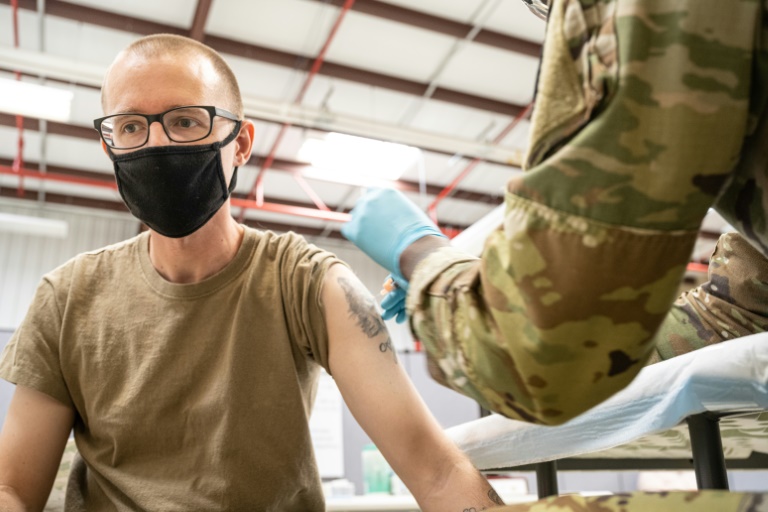
US lawmakers directed the Pentagon to rescind its Covid-19 vaccine mandate as part of the $858 billion 2023 defense spending bill passed by the Senate on Thursday.

The mandate — under which the Pentagon says more than 8,000 military personnel have been discharged for refusal to comply — was scrapped over the objections of US President Joe Biden and Defense Secretary Lloyd Austin, in a victory for Republicans who sought to end it.

While various other US measures aimed at curbing the spread of Covid-19 have previously been relaxed or removed, the Pentagon’s vaccine requirement remained on the basis that it protected the health and readiness of military personnel.

But the National Defense Authorization Act (NDAA) for fiscal year 2023 — which was previously passed by the House of Representatives, and still must be signed by Biden — now requires the defense secretary to end the mandate.

The White House supported Austin’s opposition to repealing the mandate, but that was not enough to carry the day in Congress.

Republicans, who have insisted that various Covid-19 prevention measures infringe on personal freedom, pushed for the mandate’s removal and had threatened to hold up the bill if it did not lift the shot requirement.

A group of Republican senators called in a late November letter for the mandate to be scrapped and for the reinstatement of those who were removed from the armed forces as a result.

The mandate has “ruined the livelihoods of men and women who have honorably served our country,” they wrote, also arguing that removing troops from the military at a time when it is struggling with recruiting is detrimental.

– ‘Myths and misbeliefs’ –

A proposal by Republican senators — which would have prohibited the imposition of a new Pentagon mandate without congressional approval and required the reinstatement with back pay of personnel dismissed under the current one — failed to pass earlier on Thursday.

The NDAA leaves the decision on potential reinstatement of servicemembers discharged under the mandate up to the Pentagon, which declined to comment on the legislation prior to its passage.

“The military departments have the ability to consider applications for reinstatement of servicemembers who were previously separated for refusing the vaccine,” an explanatory statement accompanying the NDAA said.

Republican Representative Kevin McCarthy, who is seeking to become speaker of the House, has argued that the mandate has affected recruiting — an assertion the Pentagon has questioned.

Austin said that he has “not seen any hard data that directly links the Covid mandate to an effect on our recruiting.”

Deputy Pentagon Press Secretary Sabrina Singh said the mandate “appears to have very minimal impact on recruiting,” and that doing away with it “would impact the readiness of the force.”

Singh also said that the majority of respondents to a survey spanning from January to September 2022 said the mandate did not change the likelihood they would consider joining the military.

But General David Berger, the commandant of the US Marine Corps, said it had affected recruiting in some areas of the country, putting the blame on “myths and misbeliefs” and defending the mandate as “critical to make sure we can do our job.”

'Progress destroying nature': Brazil dam fuels fears for river

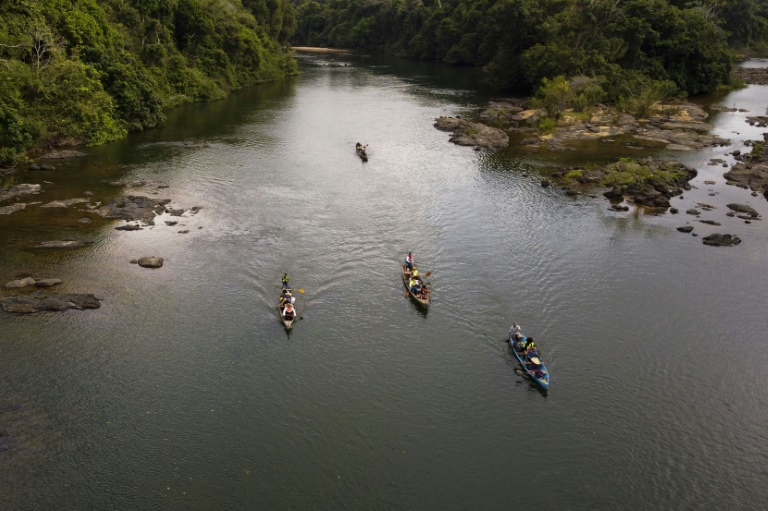
Holding a dead fish, Junior Pereira looks grimly at a puddle that used to be part of Brazil’s Xingu river, a mighty Amazon tributary that has been desiccated here by the massive Belo Monte hydroelectric dam.

Pereira, a member of the Pupekuri Indigenous group, chokes up talking about the impact of Belo Monte, the world’s fourth-biggest hydroelectric complex, which locals say is killing one of the most biodiverse regions on Earth and forcing them to abandon their way of life.

“Our culture is fishing, it’s the river. We’ve always lived on what the river provides,” says Pereira, 39, who looks like a man trapped between two worlds, wearing a traditional Indigenous necklace and a red baseball cap.

He gazes at the once-flooded landscape, which Belo Monte’s water diversion has made a patchwork of puddles dotted with stranded fish.

“We’ve lost our river,” he says.

“Now we have to buy food in the city.”

– ‘Like a permanent drought’ –

Stretching nearly 2,000 kilometers (1,250 miles), the Xingu ebbs and flows with the rainy season, creating vast “igapos,” or flooded forests, that are crucial to huge numbers of species.

They are also crucial to an estimated 25,000 Indigenous people and others who live along the river.

Belo Monte diverts a 100-kilometer stretch of the Xingu’s “Volta Grande,” or Big Bend, in the northern county of Altamira to power a hydroelectric dam with a capacity of 11,233 megawatts — 6.2 percent of the total electricity capacity of Latin America’s biggest economy.

Built for an estimated 40 billion reais ($7.5 billion) and inaugurated in 2016, the dam diverts up to 80 percent of the river’s water, which scientists, environmentalists and residents say is disastrous for this unique ecosystem.

“The dam broke the river’s flood pulse. Upstream, it’s like it’s always flooded. Downstream, it’s like a permanent drought,” says Andre Oliveira Sawakuchi, a geoscientist at the University of Sao Paulo.

That is devastating fish and turtle populations whose feeding and reproduction cycles depend on the igapos, he says.

Sitting by the Xingu’s breathtaking Jericoa waterfalls, which the Juruna people consider sacred, Indigenous leader Giliarde Juruna describes the situation as a clash of worldviews.

“Progress for us is having the forest, the animals, the rivers the way God made them. The progress white people believe in is totally different,” says Juruna, 40.

“They think they’re doing good with this project, but they’re destroying nature and hurting people, including themselves.”

– Lula under scrutiny –

Proposed in the 1970s, Belo Monte was authorized under ex-president Luiz Inacio Lula da Silva (2003-2010) — who just won a new term in Brazil’s October elections.

As Lula, 77, prepares to take office again on January 1, the project is drawing fresh scrutiny from those hoping the veteran leftist will fulfill his promise to do a better job protecting the Amazon than outgoing President Jair Bolsonaro, who presided over a surge in deforestation.

Touted as a clean-energy source and engine of economic development, Belo Monte has not exactly lived up to expectations.

According to the company that operates it, Norte Energia, the dam’s average output this year has been 4,212 megawatts — less than half its capacity.

A recent study meanwhile found its operations tripled the region’s greenhouse gas emissions — mainly methane released by decomposing forest that was killed by the flooding of the dam reservoir.

– A new plan –

In 2015, researchers from the Socio-Environmental Institute (ISA) conservation group teamed up with the Juruna to document the devastation.

They have devised a new, less-disruptive way for Belo Monte to manage water, the “Piracema” plan — named for the period when fish swim upriver to spawn.

Researchers say the plan is a relatively small tweak to the dam’s current water usage, adapting it to the natural flood cycles. 

Brazil’s environmental regulator is due to rule soon whether to order Norte Energia to adopt it.

The company declined to comment on the proposal, saying in a statement to AFP that it instead “recognizes the plan established in the plant’s environmental licensing.”

The decision is vital, says biologist Camila Ribas of the federal government’s National Institute for Amazon Research.

“When you completely alter the flood cycle, forests die,” she says.

“These are incredibly intricate, interlinked systems. If Belo Monte and other hydroelectric projects disrupt them too much, it could spell the end of the Amazon.”

Harrison Ford swaps movies for TV with '1923'

Harrison Ford has rarely bothered with television since “Star Wars” propelled him to A-list movie fame nearly half a century ago — but that is about to change with small-screen Western “1923.”

Spun off from “Yellowstone,” a modern-day cowboy saga that has become a rare cable TV ratings juggernaut in the United States, Ford’s prequel series traces the ancestors of the wealthy, ruthless Dutton clan and their sprawling Montana ranch.

“It’s a very complicated and ambitious — epic, even — undertaking, this story,” Ford told AFP at the Los Angeles premiere for the show, which will stream on Paramount+ from Sunday.

With the show shot largely on location in Montana, Ford joked that he was lured to “1923” by the prospect of “outdoor work.”

But Ford, who spent years working repetitive television jobs in Los Angeles before he was cast as Han Solo and Indiana Jones, is not the only Hollywood film giant to sign up for the TV series.

He and Oscar winner Helen Mirren co-star as Jacob and Cara Dutton, a long-married couple working to protect their land and cattle from bears, wolves and jealous neighboring ranchers. Former James Bond actor Timothy Dalton is cast as a villain.

Their presence in “1923” is part of a broader trend in the entertainment industry. Movie stars from Al Pacino to Meryl Streep have flocked to the small screen to be part of the so-called “golden age of television.” 

The entry of deep-pocketed streaming giants Netflix, Amazon Prime and Apple TV+ has created a highly competitive and lucrative marketplace, forcing other networks to up their game.

“It’s just following the good writing,” said Ford.

“The writing can be found in movies and in television, and I just found some great writing in television. That’s what made me want to do it.”

Ford is still set to appear on the silver screen in next year’s “Indiana Jones and the Dial of Destiny” as well as several Marvel superhero films in a minor recurring role.

– ‘American history’ –

Of course, few recent series can boast the success of “Yellowstone.”

Its season five premiere last month broke ratings records, luring more than 12 million viewers to Paramount’s relatively small cable network — a number higher than “Game of Thrones” at the same stage.

The show, which appeals to America’s conservative heartland, has already launched a separate Dutton family prequel spin-off called “1883,” starring Sam Elliott, Tim McGraw and Faith Hill.

But “this particular Duttons saga has a different kind of character to the other two,” said Ford, about “1923.”

“Each of them has an individual character which I think is really interesting and powerful.”

For Mirren, “1923” is a “wonderful observation and essay on American history” that feels like “a sprawling Russian novel.”

Dalton said the truth about pioneers in the West has “not ever really been told honestly, has it?”

“It’s been dressed-up in idealism… people aren’t very nice when they’re in bad circumstances.”

– ‘Love of the land’ –

In the show, Ford is regularly seen riding a horse through the stunning mountains of Montana — just a few hours’ drive from the remote ranch in Wyoming that the actor has called home for decades.

During the first episode, his character is confronted by a sheep rancher who claims the size of Dutton’s enormous and closely guarded property is unfair, given that his neighbors are scrabbling to keep their flocks alive on the sparse surrounding lands.

The question of who owns America’s majestic West is a common theme across the “Yellowstone” shows, which portray Native Americans as well as ranchers.

It hits close to home for Ford, who moved from California to Wyoming seeking privacy in the 1980s, and is an active environmentalist who has donated hundreds of acres of his own land for conservation.

So, does “1923” have any lessons for solving America’s never-ending debate over its most precious resource?

“Well, there are perceptions, that are not mine, about the land,” said Ford.

“But it’s a complicated issue, love of the land — what it means, in a particular place, in a particular time, to a particular kind of person.”

New funding announcements at high-stakes UN nature summit

The world’s environment ministers began the final phase of crunch talks at a UN summit in Montreal on Thursday aimed at sealing a historic “peace pact with nature.” 

New international funding commitments from some wealthy donor countries could help lift the mood after negotiations appeared to be in trouble, though significant work is still needed to drag the deal across the finish line.

At stake is the future of the planet and whether humanity can roll back habitat destruction, pollution and the climate crisis, which are threatening an estimated million plant and animal species with extinction.

The thorny issue of how much money the rich nations will pay lower income countries to preserve their ecosystems is perhaps the biggest sticking point.

But the matter received a boost Thursday after Australia, Japan, the Netherlands, Norway, Spain and the United States all announced increased pledges, joining Germany, France, the EU, the United Kingdom and Canada who previously revised upward their commitments.

“This step forward is extremely important,” European Commissioner for the Environment Virginijus Sinkevicius told AFP.

“These new announcements and reminder of existing commitments are a good signal of the much-needed political will in Montreal,” said Claire Blanchard, head of global advocacy at WWF International.

– Long way to go –

But it isn’t clear the new promises will be enough to satisfy countries of the Global South, home to most of the world’s remaining biodiversity.

Dozens of nations, including Brazil, India, Indonesia and many African countries are seeking much more ambitious funding of $100 billion yearly, or one percent of global GDP, until 2030 — compared to the current figure of around $10 billion.

Developing countries also want a new global biodiversity fund (GBF) to help them meet their goals, for example by setting up protected areas.

But rich countries are opposed — and propose instead making existing financial mechanisms more accessible. The disagreement triggered a temporary walkout earlier.

“Funding proposals put forth by developing countries to generate new and additional funding dedicated specifically to biodiversity-related initiatives need to be taken seriously,” Jorge Viana, representing Brazilian president-elect Luiz Inacio Lula da Silva, wrote in a letter.

He added the impasse could yet tank a possible deal.

“The idea, which is quite condescending, is the Global North thinking that they are doing the Global South a favor by providing money,” Joseph Onoja of the Nigerian Conservation Foundation told AFP.

– 30 by 30 –

Other draft targets include a cornerstone pledge to protect 30 percent of the world’s land and seas by 2030, reducing environmentally destructive subsidies, and how poor countries should be compensated for the exploitation of their natural resources, whose genetic information is stored in digital libraries.

“We must work together to promote harmonious coexistence between man and nature,” Chinese President Xi Jinping said in a video message that opened the high-level segment involving 200 ministerial-level delegates.

China is chairing the summit, known as COP15, but is not hosting because of its strict Covid rules, leaving Canada to step in and hold the meeting in Montreal, one of North America’s coldest cities, in deep winter.

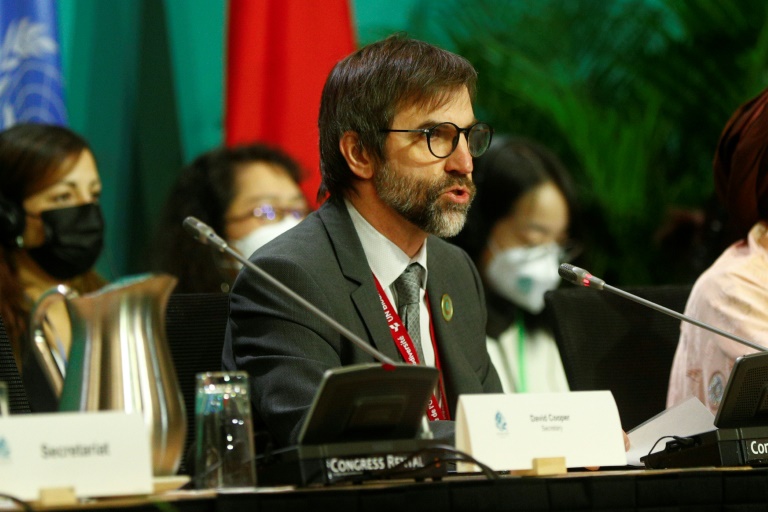
“A brilliant Canadian artist, Joni Mitchell, sent us a message in a song — that we have ‘Paved paradise and put up a parking lot,'” said Canada’s environment minister, Steven Guilbeault, who was nicknamed “Green Jesus” during his days as an activist.

“We listened to her music and sang along but didn’t really understand her message. We must live in harmony with nature, not try and dominate it,” he added.

Beyond the moral implications, there is the question of self-interest: $44 trillion of economic value generation — more than half the world’s total GDP — is dependent on nature and its services.

EU studies ways to rival vast new US subsidies on greener tech

EU leaders on Thursday tasked the European Commission with coming up with ways to vie with huge US subsidies on greener tech such as electric vehicles to protect the bloc’s industrial base.

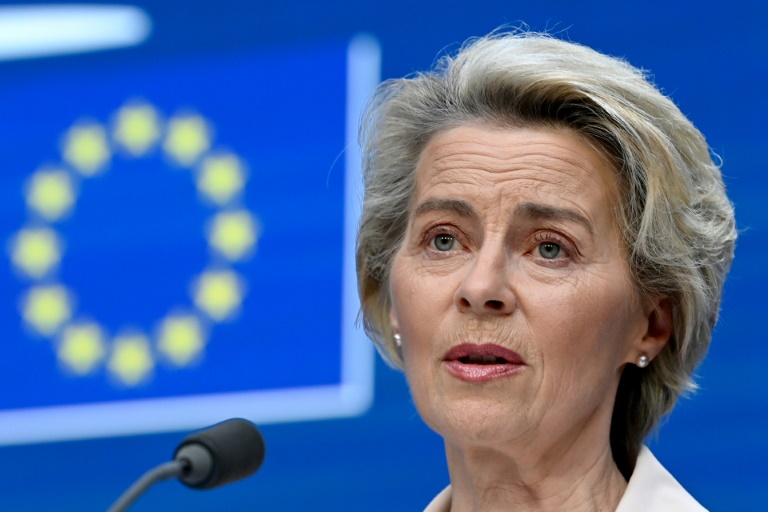
“We will come forward in January with a state aid proposal that is not only faster and simpler, but even more predictable,” commission chief Ursula von der Leyen said after a summit.

The European bloc is unsettled by parts of the multi-billion-dollar US Inflation Reduction Act (IRA) which lavishes subsidies and tax cuts for US purchasers of electric vehicles — if they “Buy American”.

The bloc views the act as discriminatory against European car manufacturers, a breach of World Trade Organization rules, and a threat to investment in Europe.

To compete — and keep big industrial companies on its shores — many EU countries want rules around national subsidies loosened and public investment in cleaner energy boosted.

European companies “need subsidies in the same way as those in the United States, and of the same magnitude, if you want to avoid a fragmentation of the European market,” French President Emmanuel Macron said.

The EU leaders, in their summit conclusion text, stressed the need to safeguard “Europe’s economic, industrial and technological base and of preserving the global level playing field”.

The commission’s upcoming proposals, it said, should look at “mobilising all relevant national and EU tools as well as to improving framework conditions for investment, including through streamlined administrative procedures.”

– Some unconvinced –

Some EU countries, though, were not convinced that a big-gun response was needed.

“Finland is not ready for new instruments,” Prime Minister Sanna Marin said, adding that Europe needed to ensure that “we do not get into an unnecessary trade war with the US”.

German Chancellor Olaf Scholz said he believed the EU had a possibility of winning status like Canada within the United States’ application of its subsidies — despite it not being part of the North American Free Trade Agreement.

“In the next few weeks, we will have to agree on a fair framework with the US and then we will have to make regulations to defend our own industrial development,” Scholz said.

Macron and the commission have tried to persuade US President Joe Biden to change the contentious parts of the IRA, to no avail apart from receiving promises of some “tweaks”. 

Biden and his administration believe the EU is free to come up with its own subsidy arrangement for electric vehicles — a sector in which China has advantages when it comes to batteries and rare-earth supplies.  

While positions were being worked out on that issue, the European Union on Thursday adopted a plan to sign a global minimum 15 percent tax on multinational businesses, after months of wrangling. 

The landmark agreement between nearly 140 countries is intended to stop governments racing to cut taxes to lure the world’s richest firms to their territory.

“Today the European Union has taken a crucial step towards tax fairness and social justice,” EU economy commissioner Paolo Gentiloni said.

“Minimum taxation is key to addressing the challenges a globalised economy creates.”

The plan was drawn up under the guidance of the Organisation for Economic Cooperation and Development and already had the backing of Washington and several major EU economies.

Deadly Russian shelling cuts off Kherson power

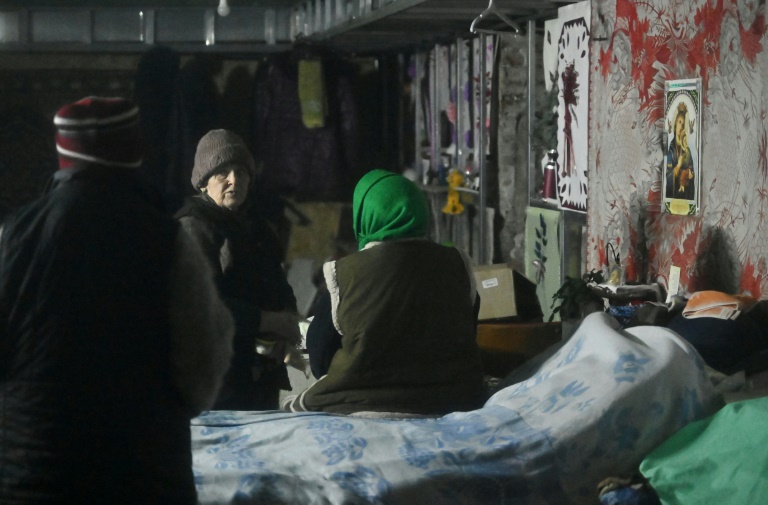
Russian shelling killed two people including a Red Cross worker in Kherson on Thursday and completely cut power in the southern city, Ukrainian officials said, with temperatures near freezing.

Moscow-allied officials in the Russian-occupied city of Donetsk, meanwhile said they had come under some of the heaviest shelling in years from Ukrainian forces, leaving one person dead.

The UN’s human rights chief also set out evidence of what he said was Russian killings of hundreds of Ukrainian civilians in the first months of the war.

Despite Russia’s humiliating retreat from Kherson in November, the city remains within the reach of Moscow’s weaponry and under constant threat.

The city was left “completely without power” after a series of strikes, regional governor Yaroslav Yanushevych said.

Mirjana Spoljaric, head of the International Committee of the Red Cross, said a worker with the Ukrainian Red Cross was one of those killed.

“Red Cross works close to the frontlines helping people wounded and those no longer taking part in hostilities,” she wrote on Twitter.

“It is imperative that its personnel and property are spared.”

– Summary killings –

UN rights chief Volker Turk said his office had documented the summary executions and direct killings of 441 civilians across just three regions of Ukraine from the start of Russia’s invasion on February 24 until April 6.

The “actual figures are likely to be considerably higher” he said, adding “there are strong indications that the executions… may constitute the war crime of wilful killing.”

Beyond that initial period, Turk said his team had continued to document gross rights violations affecting both civilians and combatants, including arbitrary detention, enforced disappearances, torture and sexual violence.

So far, he added, “accountability remains sorely lacking.”

– Kyiv expected to be targeted again –

Intense fighting continued along the front lines in the east, especially in the Bakhmut area targeted for capture by Russian forces in October.

Much of Ukraine continues to struggle with power supplies after the Russian air campaign targeted electricity and water systems starting nearly two months ago.

Ukraine’s commander-in-chief General Valeriy Zaluzhny told British weekly The Economist they expected a fresh Russian assault on Kyiv in the early months of 2023.

Kyiv was the primary target when the Russians first invaded on February 24, but their northern campaign, launched from Belarus, was rebuffed by a gritty Ukrainian counter-offensive that preserved the seat of government.

“The Russians are preparing some 200,000 fresh troops. I have no doubt they will have another go at Kyiv,” Zaluzhny said.

Russia has appeared to pump up its presence anew in Belarus in recent weeks, according to US-based conflict monitor, the Institute for the Study of War.

But it said exercises and deployments do not likely indicate plans by Belarus forces themselves to attack northern Ukraine.

Instead, the actions “are likely part of ongoing Russian information operations” to keep Kyiv nervous and forced to maintain significant force levels in the north, far from the active front lines, according to ISW.

– Blasts in Donetsk –

Having retreated from parts of southern Ukraine, Moscow’s forces were engaged in fierce battles in the east, particularly in the Donetsk region.

The region has been partly controlled by Moscow-backed separatists since 2014.

On Thursday, local Russia-aligned authorities reported “the most massive shelling since 2014” in the regional capital, Donetsk city.

At least one person was killed and nine more injured in the strikes, they said.

In Donetsk, “the epicentre of the fighting remains the Bakhmut and Avdiivka directions,” Ukraine deputy defence minister Ganna Malyar told a briefing. 

“The enemy is hard to beat,” Petro, a Ukrainian military unit chief in the area, told AFP.

“Staying on the frontline is very difficult. They sustain heavy losses, but so do we.”

– US support –

In Washington the Pentagon announced it will expand training for Ukrainian forces in Germany to about 500 persons per month focused on larger-scale maneuvers and specific weapons systems.

The new effort will “include joint maneuver and combined arms operations training, while building upon the specialized equipment training that we’re already providing,” Pentagon Press Secretary Pat Ryder said.

Ryder would not confirm expectations that the United States will provide advanced Patriot air defense batteries to Ukraine, which would bring  added protection against Russian cruise missiles as well as tactical ballistic missiles Moscow is believed seeking from Iran.

The European Union also cleared the way to giving Ukraine another 18 billion euros ($19 billion) in aid following an impassioned plea from Ukraine President Volodymyr Zelensky.

Tiny meteorite may have caused leak from Soyuz capsule

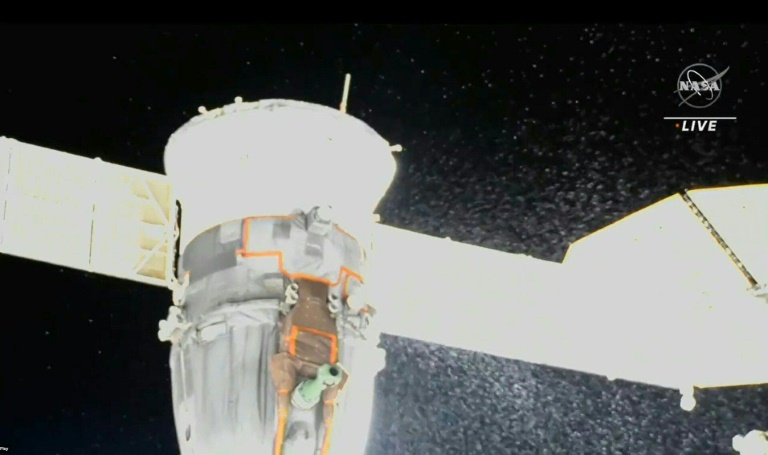
Russian and NASA engineers were assessing a coolant leak on Thursday from a Soyuz crew capsule docked with the International Space Station (ISS) that may have been caused by a micrometeorite strike.

Dramatic NASA TV images showed white particles resembling snowflakes streaming out of the rear of the vessel for hours.

The coolant leak forced the last-minute cancellation of a spacewalk by two Russian cosmonauts on Wednesday and could potentially impact a return flight to Earth by three crew members.

Russia’s space corporation Roscosmos and the US space agency said the leak on the Soyuz MS-22 spacecraft did not pose any danger to the astronauts and cosmonauts aboard the ISS.

“The crew members aboard the space station are safe, and were not in any danger during the leak,” NASA said.

It said ground teams were evaluating “potential impacts to the integrity of the Soyuz spacecraft.”

“NASA and Roscosmos will continue to work together to determine the next course of action,” NASA said.

The TASS news agency quoted Sergei Krikalev, a former cosmonaut who heads the crewed space flight program for Roscosmos, as saying that the leak may have been caused by a tiny meteorite striking Soyuz MS-22.

“The cause of the leak may be a micrometeorite entering the radiator,” TASS quoted Krikalev as saying. “Possible consequences are changes in the temperature regime.”

“No other changes in the telemetric parameters of either the Soyuz spacecraft or the (ISS) station on the Russian or American segments have been detected,” Krikalev said.

– Coolant pressure drop –

NASA later added that the crew on the station “completed normal operations Thursday, including… configuring tools ahead of a planned US spacewalk on Monday.”

Soyuz MS-22 flew Russian cosmonauts Sergei Prokopyev and Dmitry Petelin and NASA astronaut Frank Rubio to the ISS in September.

It is scheduled to bring them back to Earth in March and another vessel would have to be sent to the ISS if Soyuz MS-22 is unavailable.

Prokopyev and Petelin had been making preparations for a spacewalk on Wednesday when the leak was discovered.

“The crew reported the warning device of the ship’s diagnostic system went off, indicating a pressure drop in the cooling system,” Roscosmos said. “At the moment, all systems of the ISS and the ship are operating normally, the crew is safe.”

NASA said the leak had occurred on the “aft end” of Soyuz MS-22, which is secured to the space station.

There are currently four other astronauts and cosmonauts aboard the space station in addition to Rubio, Prokopyev and Petelin.

NASA astronauts Josh Cassada and Nicole Mann, Japanese astronaut Koichi Wakata and Russian cosmonaut Anna Kikina were flown to the ISS in October aboard a SpaceX spacecraft.

Space has been a rare avenue of cooperation between Moscow and Washington since the start of Moscow’s assault on Ukraine in February, and ensuing Western sanctions on Russia that shredded ties between the two countries.

The ISS was launched in 1998 at a time of increased US-Russia cooperation following their Space Race competition during the Cold War.

Tiny meteorite may have caused leak from Soyuz capsule

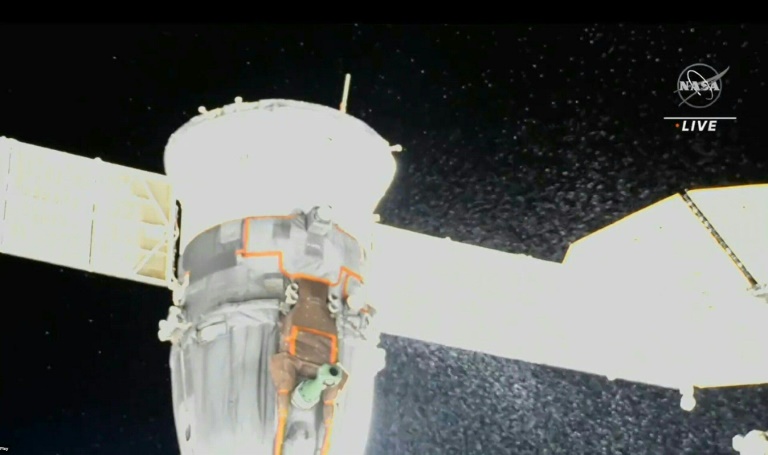
Russian and NASA engineers were assessing a coolant leak on Thursday from a Soyuz crew capsule docked with the International Space Station (ISS) that may have been caused by a micrometeorite strike.

Dramatic NASA TV images showed white particles resembling snowflakes streaming out of the rear of the vessel for hours.

The coolant leak forced the last-minute cancellation of a spacewalk by two Russian cosmonauts on Wednesday and could potentially impact a return flight to Earth by three crew members.

Russia’s space corporation Roscosmos and the US space agency said the leak on the Soyuz MS-22 spacecraft did not pose any danger to the astronauts and cosmonauts aboard the ISS.

“The crew members aboard the space station are safe, and were not in any danger during the leak,” NASA said.

It said ground teams were evaluating “potential impacts to the integrity of the Soyuz spacecraft.”

“NASA and Roscosmos will continue to work together to determine the next course of action,” NASA said.

The TASS news agency quoted Sergei Krikalev, a former cosmonaut who heads the crewed space flight program for Roscosmos, as saying that the leak may have been caused by a tiny meteorite striking Soyuz MS-22.

“The cause of the leak may be a micrometeorite entering the radiator,” TASS quoted Krikalev as saying. “Possible consequences are changes in the temperature regime.”

“No other changes in the telemetric parameters of either the Soyuz spacecraft or the (ISS) station on the Russian or American segments have been detected,” Krikalev said.

– Coolant pressure drop –

NASA later added that the crew on the station “completed normal operations Thursday, including… configuring tools ahead of a planned US spacewalk on Monday.”

Soyuz MS-22 flew Russian cosmonauts Sergei Prokopyev and Dmitry Petelin and NASA astronaut Frank Rubio to the ISS in September.

It is scheduled to bring them back to Earth in March and another vessel would have to be sent to the ISS if Soyuz MS-22 is unavailable.

Prokopyev and Petelin had been making preparations for a spacewalk on Wednesday when the leak was discovered.

“The crew reported the warning device of the ship’s diagnostic system went off, indicating a pressure drop in the cooling system,” Roscosmos said. “At the moment, all systems of the ISS and the ship are operating normally, the crew is safe.”

NASA said the leak had occurred on the “aft end” of Soyuz MS-22, which is secured to the space station.

There are currently four other astronauts and cosmonauts aboard the space station in addition to Rubio, Prokopyev and Petelin.

NASA astronauts Josh Cassada and Nicole Mann, Japanese astronaut Koichi Wakata and Russian cosmonaut Anna Kikina were flown to the ISS in October aboard a SpaceX spacecraft.

Space has been a rare avenue of cooperation between Moscow and Washington since the start of Moscow’s assault on Ukraine in February, and ensuing Western sanctions on Russia that shredded ties between the two countries.

The ISS was launched in 1998 at a time of increased US-Russia cooperation following their Space Race competition during the Cold War.

New trove of secret Kennedy assassination files made public

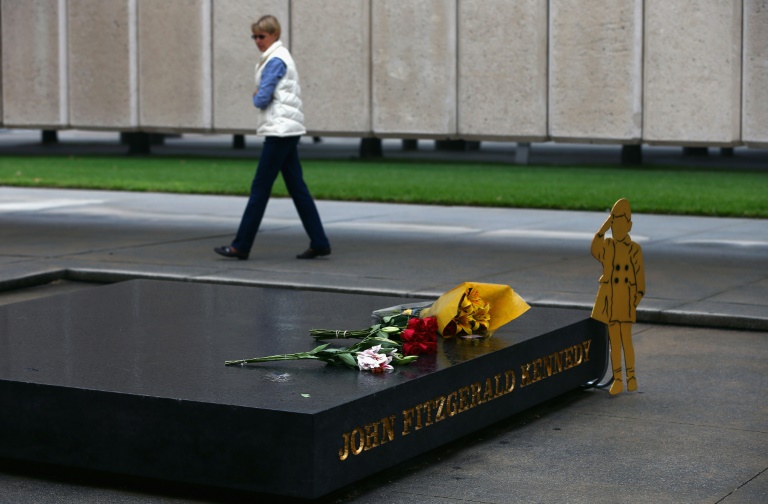
A new trove of secret files related to the November 1963 assassination of US president John F. Kennedy was released on Thursday, but the White House held thousands of documents back, citing national security concerns.

The Warren Commission that investigated the shooting of the charismatic 46-year-old president determined that it was carried out by a former Marine sharpshooter, Lee Harvey Oswald, acting alone.

That formal conclusion has done little, however, to quell speculation that a more sinister plot was behind Kennedy’s November 22, 1963 murder in Dallas, Texas, and the painstaking release of the government files has added fuel to various conspiracy theories.

The National Archives said a total of 13,173 documents had been made public on Thursday in the latest release, and that 97 percent of the Kennedy records — which total approximately five million pages — have now been made public.

President Joe Biden said in a memorandum that a “limited” number of documents would continue to be held back at the request of unspecified “agencies.”

Previous requests to withhold documents have come from the Central Intelligence Agency and the Federal Bureau of Investigation.

“Temporary continued postponement of public disclosure of such information is necessary to protect against an identifiable harm to the military defense, intelligence operations, law enforcement, or the conduct of foreign relations,” Biden said.

Kennedy scholars have said the documents still held by the archives are unlikely to contain any bombshell revelations or put to rest the rampant conspiracy theories about the assassination of the 35th US president.

Oswald was shot to death two days after killing Kennedy by a nightclub owner, Jack Ruby, as he was being transferred from the city jail.

– Oswald and the KGB –

A significant number of the files released on Thursday related to Oswald, his international travel and contacts in the weeks, months and years ahead of the Kennedy assassination.

Oswald defected to the Soviet Union in 1959 but returned to the United States in 1962.

Among the documents released on Thursday was one from 1990 that recounts the debriefing of a former KGB officer who said Oswald was recruited by the KGB after defecting, but he was considered “a bit crazy and unpredictable.”

The officer said the KGB had no further contact with Oswald after he returned to the United States suffering from depression and homesickness, and the KGB “never tasked him to kill President Kennedy.”

Another document, from 1991, cites a different KGB source as saying that Oswald was “at no time an agent controlled by the KGB” although the KGB “watched him closely and constantly while he was in the USSR.”

Hundreds of books and movies such as the 1991 Oliver Stone film “JFK” have fueled the conspiracy industry, pointing the finger at Cold War rivals the Soviet Union or Cuba, the Mafia and even Kennedy’s vice president, Lyndon Johnson.

The release of the documents is in compliance with an October 26, 1992 act of Congress which required that the unredacted assassination records held in the National Archives be released in full 25 years later.

Thousands of Kennedy assassination-related documents from the National Archives were also released while Donald Trump was in office, but the former president also held some back on national security grounds.

Close Bitnami banner
Bitnami