AFP

Trump's Christmas gift idea? $99 NFTs of himself

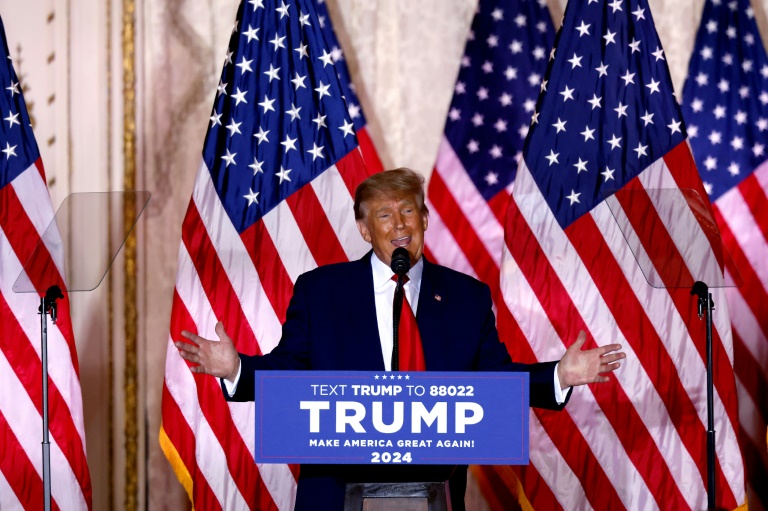
It could be the perfect Christmas present for the Donald Trump fan in your life — a $99 digital trading card showing the former president in guises including a cowboy, astronaut and fighter pilot.

Trump — who is bidding to win back the White House in 2024 — had hyped for days that he would be making a “major announcement.”

But his unveiling of the collection of NFT (non-fungible token) cards — timed to tap into the lucrative festive shopping season — attracted widespread ridicule.

In a promotional video showing him in a Superman-style costume with laser-beam eyes, Trump gave the cards his classic hard sell.

“These cards feature some of the really incredible artwork pertaining to my life and my career. It has been very exciting,” he said.

“Buy one and you will join a very exclusive community — it is my community.

“Buy your Trump Digital Trading Cards right now before they are all gone, and they will be gone!”

“Remember Christmas is coming and this makes a great Christmas gift,” he added.

Buyers are also entered into a sweepstake to win prizes such as dinner or a round of golf with Trump, as well as autographs and Zoom meetings.

Trump’s last “major announcement” was in November when he declared he would run again for the White House.

But he has since suffered heavy setbacks including the defeat of many candidates he backed in midterm elections, mounting public criticism from Republican former allies and multiple legal cases against him.

Tiny meteorite may have caused coolant leak from Soyuz capsule

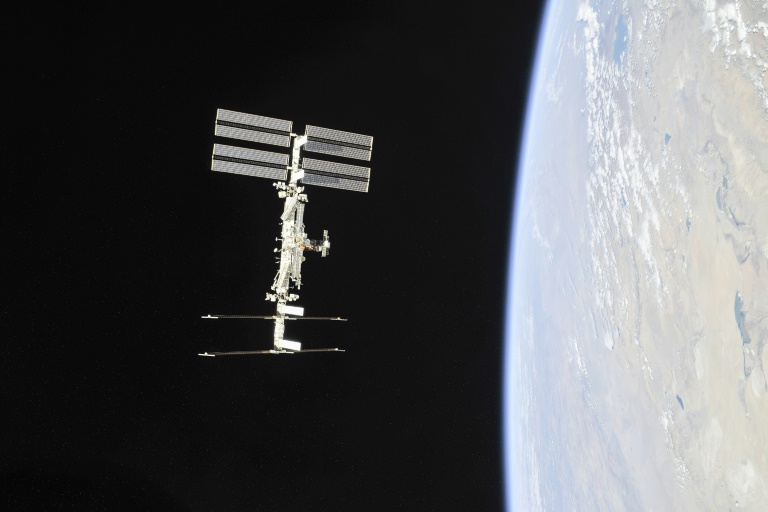
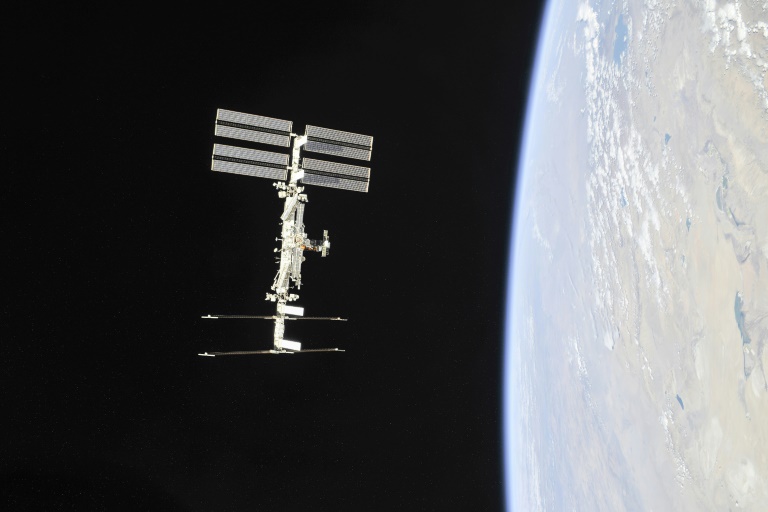
Russian and NASA engineers were assessing a coolant leak on Thursday from a Soyuz crew capsule docked with the International Space Station (ISS) that may have been caused by a micrometeorite strike.

The coolant leak forced the last-minute cancellation of a spacewalk by two Russian cosmonauts on Wednesday and could potentially impact a return flight to Earth by three crew members.

Russia’s space corporation Roscosmos and the US space agency said the leak on the Soyuz MS-22 spacecraft did not pose any danger to the astronauts and cosmonauts aboard the ISS.

“The crew members aboard the space station are safe, and were not in any danger during the leak,” NASA said.

It said ground teams were evaluating “the fluid and potential impacts to the integrity of the Soyuz spacecraft.”

“NASA and Roscosmos will continue to work together to determine the next course of action following the ongoing analysis,” NASA said.

The TASS news agency quoted Sergei Krikalev, a former cosmonaut who heads the crewed space flight program for Roscosmos, as saying that the leak may have been caused by a micrometeorite striking Soyuz MS-22.

“The cause of the leak may be a micrometeorite entering the radiator,” TASS quoted Krikalev as saying. “Possible consequences are changes in the temperature regime.”

“No other changes in the telemetric parameters of either the Soyuz spacecraft or the (ISS) station on the Russian or American segments have been detected,” Krikalev said.

Soyuz MS-22 flew Russian cosmonauts Sergei Prokopyev and Dmitry Petelin and NASA astronaut Frank Rubio to the ISS in September.

It is scheduled to bring them back to Earth in March and another vessel would have to be sent to the ISS if Soyuz MS-22 is unavailable.

Prokopyev and Petelin had been making preparations for a spacewalk on Wednesday when the leak was discovered.

“The crew reported the warning device of the ship’s diagnostic system went off, indicating a pressure drop in the cooling system,” Roscosmos said. “At the moment, all systems of the ISS and the ship are operating normally, the crew is safe.”

– White particles –

NASA said the leak had occurred on the “aft end” of Soyuz MS-22, which is secured to the ISS.

Dramatic NASA TV images showed white particles resembling snowflakes streaming out of the rear of the vessel for hours.

There are currently four other astronauts and cosmonauts aboard the space station in addition to Rubio, Prokopyev and Petelin.

NASA astronauts Josh Cassada and Nicole Mann, Japanese astronaut Koichi Wakata and Russian cosmonaut Anna Kikina were flown to the ISS in October aboard a SpaceX spacecraft.

Space has been a rare avenue of cooperation between Moscow and Washington since the start of Moscow’s assault on Ukraine in February, and ensuing Western sanctions on Russia that shredded ties between the two countries.

The ISS was launched in 1998 at a time of increased US-Russia cooperation following their Space Race competition during the Cold War.

Tiny meteorite may have caused coolant leak from Soyuz capsule

Russian and NASA engineers were assessing a coolant leak on Thursday from a Soyuz crew capsule docked with the International Space Station (ISS) that may have been caused by a micrometeorite strike.

The coolant leak forced the last-minute cancellation of a spacewalk by two Russian cosmonauts on Wednesday and could potentially impact a return flight to Earth by three crew members.

Russia’s space corporation Roscosmos and the US space agency said the leak on the Soyuz MS-22 spacecraft did not pose any danger to the astronauts and cosmonauts aboard the ISS.

“The crew members aboard the space station are safe, and were not in any danger during the leak,” NASA said.

It said ground teams were evaluating “the fluid and potential impacts to the integrity of the Soyuz spacecraft.”

“NASA and Roscosmos will continue to work together to determine the next course of action following the ongoing analysis,” NASA said.

The TASS news agency quoted Sergei Krikalev, a former cosmonaut who heads the crewed space flight program for Roscosmos, as saying that the leak may have been caused by a micrometeorite striking Soyuz MS-22.

“The cause of the leak may be a micrometeorite entering the radiator,” TASS quoted Krikalev as saying. “Possible consequences are changes in the temperature regime.”

“No other changes in the telemetric parameters of either the Soyuz spacecraft or the (ISS) station on the Russian or American segments have been detected,” Krikalev said.

Soyuz MS-22 flew Russian cosmonauts Sergei Prokopyev and Dmitry Petelin and NASA astronaut Frank Rubio to the ISS in September.

It is scheduled to bring them back to Earth in March and another vessel would have to be sent to the ISS if Soyuz MS-22 is unavailable.

Prokopyev and Petelin had been making preparations for a spacewalk on Wednesday when the leak was discovered.

“The crew reported the warning device of the ship’s diagnostic system went off, indicating a pressure drop in the cooling system,” Roscosmos said. “At the moment, all systems of the ISS and the ship are operating normally, the crew is safe.”

– White particles –

NASA said the leak had occurred on the “aft end” of Soyuz MS-22, which is secured to the ISS.

Dramatic NASA TV images showed white particles resembling snowflakes streaming out of the rear of the vessel for hours.

There are currently four other astronauts and cosmonauts aboard the space station in addition to Rubio, Prokopyev and Petelin.

NASA astronauts Josh Cassada and Nicole Mann, Japanese astronaut Koichi Wakata and Russian cosmonaut Anna Kikina were flown to the ISS in October aboard a SpaceX spacecraft.

Space has been a rare avenue of cooperation between Moscow and Washington since the start of Moscow’s assault on Ukraine in February, and ensuing Western sanctions on Russia that shredded ties between the two countries.

The ISS was launched in 1998 at a time of increased US-Russia cooperation following their Space Race competition during the Cold War.

US industrial output slips in November

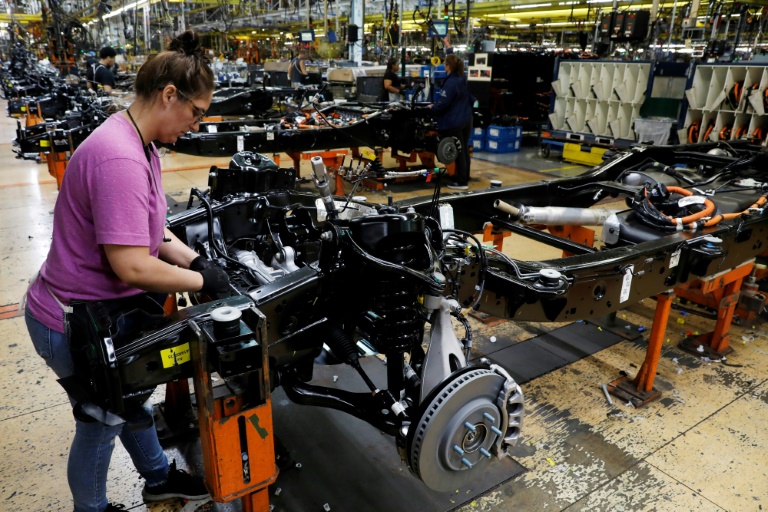
Industrial production in the United States slumped in November with “broad based” decreases, the Federal Reserve said Thursday, as output for bigger-ticket consumer products and manufacturing fell.

While tangled supply chains and surging costs which weighed on businesses are easing, in a boost to production, firms are now contending with weakening demand as interest rates rise.

The Fed has raised its benchmark lending rate seven times this year in an effort to cool the world’s biggest economy, making borrowing more expensive with policy effects rippling across sectors.

Total output dropped 0.2 percent in November, defying analysts’ expectations of an uptick, according to Fed data.

“Decreases were broad based across market groups,” the report said.

It added that the output of consumer durables fell about two percent, referring to products that do not have to be purchased very often. The decline was led by automotive goods.

Manufacturing output dropped 0.6 percent as well, while that of mining fell 0.7 percent, only partly offset by a rebound in utilities, the Fed added.

“Headline production was flattered by a weather-related… jump in utilities output, which is hugely volatile,” said economist Kieran Clancy of Pantheon Macroeconomics in a note.

The main factor bogging down manufacturing output is likely “softening capital spending, in the wake of higher borrowing costs,” he added.

“The next few months will be rough; the downturn in manufacturing output has further to run,” he said.

On Thursday, the New York Federal Reserve Bank’s Empire survey also saw a plunge in readings, with shipments and new orders worsening, analysts noted.

“Manufacturing conditions in the US are deteriorating as central banks continue to raise rates and the global economy weakens,” said economist Gurleen Chadha of Oxford Economics.

US industrial output slips in November

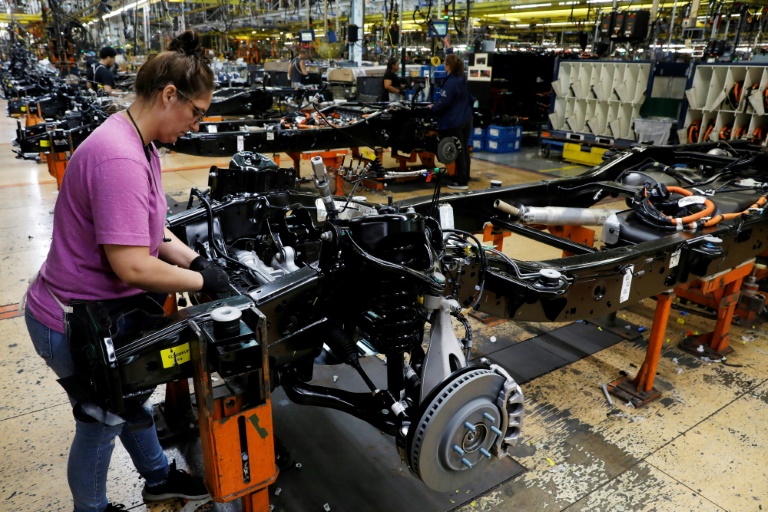
Industrial production in the United States slumped in November with “broad based” decreases, the Federal Reserve said Thursday, as output for bigger-ticket consumer products and manufacturing fell.

While tangled supply chains and surging costs which weighed on businesses are easing, in a boost to production, firms are now contending with weakening demand as interest rates rise.

The Fed has raised its benchmark lending rate seven times this year in an effort to cool the world’s biggest economy, making borrowing more expensive with policy effects rippling across sectors.

Total output dropped 0.2 percent in November, defying analysts’ expectations of an uptick, according to Fed data.

“Decreases were broad based across market groups,” the report said.

It added that the output of consumer durables fell about two percent, referring to products that do not have to be purchased very often. The decline was led by automotive goods.

Manufacturing output dropped 0.6 percent as well, while that of mining fell 0.7 percent, only partly offset by a rebound in utilities, the Fed added.

“Headline production was flattered by a weather-related… jump in utilities output, which is hugely volatile,” said economist Kieran Clancy of Pantheon Macroeconomics in a note.

The main factor bogging down manufacturing output is likely “softening capital spending, in the wake of higher borrowing costs,” he added.

“The next few months will be rough; the downturn in manufacturing output has further to run,” he said.

On Thursday, the New York Federal Reserve Bank’s Empire survey also saw a plunge in readings, with shipments and new orders worsening, analysts noted.

“Manufacturing conditions in the US are deteriorating as central banks continue to raise rates and the global economy weakens,” said economist Gurleen Chadha of Oxford Economics.

Heathrow ground handling staff suspend strike set for Friday

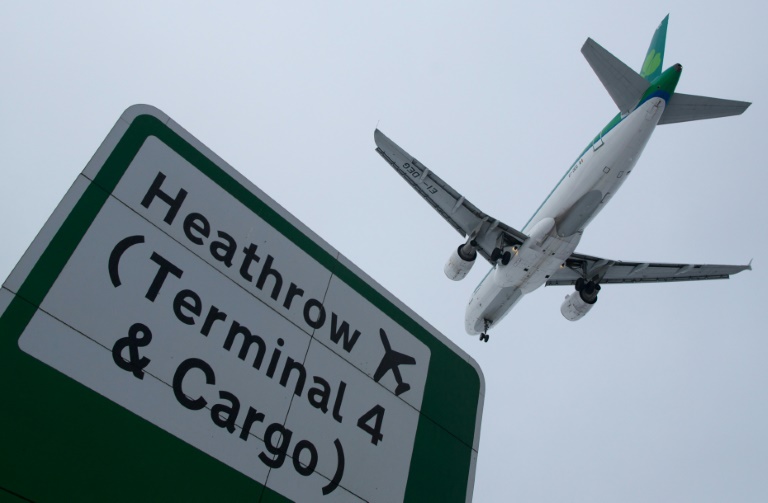
Heathrow Airport baggage handlers have suspended a planned strike, their union said on Thursday, as industrial action continues across the UK.

Around 400 members of the Unite union employed by private contractors Menzies had been due to walk out for 72 hours from 4:00 am (0400 GMT) on Friday in a months-long dispute over pay.

But the stoppage was halted as a “gesture of goodwill” after Menzies made an improved pay offer during talks held Thursday between Unite and Menzies, according to the union.

It will now ballot its members on the revised pay offer.

“Unite has been adamant that Menzies was able to offer an improved pay offer and that has proved to be the case,” the union’s regional officer Kevin Hall said in a statement.

Miguel Gomez Sjunnesson, of Menzies, said the firm was “hopeful” that the revised offer would be accepted.

He added the deal would allow the company “to give our employees their well-deserved pay increase and we can focus on delivering the best service during this busy holiday period”.

However, strike action scheduled to begin on December 29 remains in place pending the outcome of the ballot of members.

Britain has seen a growing number of public and private sector workers striking, amid decades-high inflation.

Nurses on Thursday staged an unprecedented walkout across England, Wales and Northern Ireland, while railway workers have this week started a series of 48-hour walk-outs.

Border Force staff checking passports at major airports including Heathrow and Gatwick are set to strike over Christmas.

Security guards employed by the contractor Mitie on the cross-Channel rail link Eurostar were due to strike on Friday and Sunday.

But they called off the walk-out late on Wednesday. Further planned action on December 22 and 23 was still due to go ahead.

Rafael Nadal launches hotel brand with Spain's Melia Group

Spanish tennis star Rafael Nadal on Thursday announced the launch of a new hotel brand with Spain’s Melia group that is planning to open some 20 hotels across the globe in the next five years. 

Inspired by the “Mediterranean lifestyle”, the new “Zel” chain is expected to open its first hotel in 2023 in Mallorca in the Balearic Islands where 36-year-old Nadal was born and where Melia Hotels International was founded in 1956.

Nadal, one of the world’s two top-ranked tennis players, and Melia, Spain’s leading hotel group which operates more than 400 establishments across the globe, will jointly own the company. 

They did not specify who would hold what percentage of the shares. 

The aim is that “over the next five years”, the chain will open “more than 20 hotels across the world”, Nadal told reporters in Madrid. 

Melia said the new chain would establish hotels “in destinations with a clear focus on premium leisure tourism”, such as Spain, France, Italy or Croatia but also the Caribbean, southeast Asia and the Middle East

It would also be present in the main tourist capitals with openings already planned in London, Paris and Madrid. 

Initially, 80 percent of the hotels will be set up in existing structures “which will undergo a radical transformation” to adapt them to Zel’s “Mediterranean character”, said Melia chairman Gabriel Escarrer.

The ultimate objective is that most hotels will be specially built for Zel, which means “sky” in the dialect of Catalan that is spoken in Mallorca, said Escarrer, who is also from the Balearic Islands. 

The idea, he said, was to put the emphasis on Mediterranean culture with “its good life, gastronomy and parties” — an idea which customers found “very appealing”. 

Nadal said his involvement in the hotel chain did not mean he was ending his sporting career. 

“I’m trying to make sure that my retirement is put off for as long as possible,” he told reporters. 

Stocks sink as central banks hike rates, data fan recession fears

Global stocks sank Thursday as central banks hiked interest rates again and signalled they needed to go higher to tame inflation.

Meanwhile, downbeat economic data out of China and the United States fanned recession fears. 

Both the Bank of England and the European Central Bank mirrored the Fed’s half-point hike on Wednesday to tackle soaring inflation, with Norway and Switzerland raising rates as well.

Sentiment was already hammered on Wednesday after the Fed suggested that it saw US rates topping out next year at 5.1 percent, higher than markets had predicted. 

Meanwhile the BoE, which lifted its key rate to the highest level in 14 years, warned that labour market tightness and inflationary pressures justified “a further forceful monetary policy response”.

The ECB delivered a similar message.

ECB president Christine Lagarde warned that inflation in the 19-nation eurozone was still “far too high” and more action needed to be taken. 

The world’s major central banks are seeking to dampen red-hot inflation, which has been fuelled partly by fallout from Russia’s invasion of Ukraine.

“We have more ground to cover, we have longer to go and we are in for a long game,” Lagarde told reporters. 

Share prices headed south after the rate decisions and kept falling.

Wall Street’s main indices were all down more than two percent in late morning trading.

In Europe, both Frankfurt suffered losses of more than three percent.

“The collapse in equity valuations comes as traders face up to an impending economic collapse where central banks seem to exacerbate rather than remedy the situation,” said Joshua Mahony, senior market analyst at online trading platform IG.

– Fresh recession fears –

Rising rates fan recession concerns because they push up loan repayments for consumers and companies, denting expenditure, investment and economic activity.

Market analyst Patrick O’Hare at Briefing.com said “these (central bank) policy moves were expected, but that still hasn’t helped matters given the understanding that higher rates will inevitably weigh on economic activity.” 

Economic data released Thursday fed recession fears.

China’s retail sales plunged last month as Covid restrictions and a property market crisis hammered the world’s second-largest economy.

In the United States, retail sales slid by 0.6 percent in November from October, with industrial output dropping as well.

The Fed warned Wednesday that the world’s biggest economy would grow less than expected next year.

The ECB said Thursday the eurozone was likely in a shallow recession, as Britain’s economy is expected to continue contracting through next year.

Oil prices slid on the dimmer economic prospects.

“The raising of inflation forecasts and downgrading of growth forecasts with interest rates remaining higher for longer appear to be re-rating market expectations of the demand outlook over the course of the next few months,” said Michael Hewson at CMC Markets.

– Key figures around 1630 GMT –

New York – Dow: DOWN 2.2 percent at 33,207.78 points

EURO STOXX 50: DOWN 3. percent at 3,8

London – FTSE 100: DOWN 0.9 percent at 7,426.17 (close)

Frankfurt – DAX: DOWN 3.3 percent at 13,986.23 (close)

Paris – CAC 40: DOWN 3.1 percent at 6,522.77 (close)

Tokyo – Nikkei 225: DOWN 0.4 percent at 28,051.70 (close)

Hong Kong – Hang Seng Index: DOWN 1.6 percent at 19,368.59 (close)

Shanghai – Composite: DOWN 0.3 percent at 3,168.65 (close)

Euro/dollar: DOWN at $1.0648 from $1.0684 on Wednesday

Dollar/yen: UP at 137.65 yen from 135.45 yen

Pound/dollar: DOWN at $1.2221 from $1.2424

Euro/pound: UP at 87.13 pence from 85.96 pence

Brent North Sea crude: DOWN 2.0 percent at $81.02 per barrel

West Texas Intermediate: DOWN 2.3 percent at $75.49 per barrel

burs-rl/rox

Stocks sink as central banks hike rates, data fan recession fears

Global stocks sank Thursday as central banks hiked interest rates again and signalled they needed to go higher to tame inflation.

Meanwhile, downbeat economic data out of China and the United States fanned recession fears. 

Both the Bank of England and the European Central Bank mirrored the Fed’s half-point hike on Wednesday to tackle soaring inflation, with Norway and Switzerland raising rates as well.

Sentiment was already hammered on Wednesday after the Fed suggested that it saw US rates topping out next year at 5.1 percent, higher than markets had predicted. 

Meanwhile the BoE, which lifted its key rate to the highest level in 14 years, warned that labour market tightness and inflationary pressures justified “a further forceful monetary policy response”.

The ECB delivered a similar message.

ECB president Christine Lagarde warned that inflation in the 19-nation eurozone was still “far too high” and more action needed to be taken. 

The world’s major central banks are seeking to dampen red-hot inflation, which has been fuelled partly by fallout from Russia’s invasion of Ukraine.

“We have more ground to cover, we have longer to go and we are in for a long game,” Lagarde told reporters. 

Share prices headed south after the rate decisions and kept falling.

Wall Street’s main indices were all down more than two percent in late morning trading.

In Europe, both Frankfurt suffered losses of more than three percent.

“The collapse in equity valuations comes as traders face up to an impending economic collapse where central banks seem to exacerbate rather than remedy the situation,” said Joshua Mahony, senior market analyst at online trading platform IG.

– Fresh recession fears –

Rising rates fan recession concerns because they push up loan repayments for consumers and companies, denting expenditure, investment and economic activity.

Market analyst Patrick O’Hare at Briefing.com said “these (central bank) policy moves were expected, but that still hasn’t helped matters given the understanding that higher rates will inevitably weigh on economic activity.” 

Economic data released Thursday fed recession fears.

China’s retail sales plunged last month as Covid restrictions and a property market crisis hammered the world’s second-largest economy.

In the United States, retail sales slid by 0.6 percent in November from October, with industrial output dropping as well.

The Fed warned Wednesday that the world’s biggest economy would grow less than expected next year.

The ECB said Thursday the eurozone was likely in a shallow recession, as Britain’s economy is expected to continue contracting through next year.

Oil prices slid on the dimmer economic prospects.

“The raising of inflation forecasts and downgrading of growth forecasts with interest rates remaining higher for longer appear to be re-rating market expectations of the demand outlook over the course of the next few months,” said Michael Hewson at CMC Markets.

– Key figures around 1630 GMT –

New York – Dow: DOWN 2.2 percent at 33,207.78 points

EURO STOXX 50: DOWN 3. percent at 3,8

London – FTSE 100: DOWN 0.9 percent at 7,426.17 (close)

Frankfurt – DAX: DOWN 3.3 percent at 13,986.23 (close)

Paris – CAC 40: DOWN 3.1 percent at 6,522.77 (close)

Tokyo – Nikkei 225: DOWN 0.4 percent at 28,051.70 (close)

Hong Kong – Hang Seng Index: DOWN 1.6 percent at 19,368.59 (close)

Shanghai – Composite: DOWN 0.3 percent at 3,168.65 (close)

Euro/dollar: DOWN at $1.0648 from $1.0684 on Wednesday

Dollar/yen: UP at 137.65 yen from 135.45 yen

Pound/dollar: DOWN at $1.2221 from $1.2424

Euro/pound: UP at 87.13 pence from 85.96 pence

Brent North Sea crude: DOWN 2.0 percent at $81.02 per barrel

West Texas Intermediate: DOWN 2.3 percent at $75.49 per barrel

burs-rl/rox
UN nature talks teeter on brink as ministers arrive for home stretch

Hopes of sealing a historic “peace pact with nature” at a United Nations biodiversity summit hang in the balance as the world’s environment ministers began the final phase of high-stakes talks on Thursday.

Stark divisions remain to be bridged, foremost among them the subject of how much developed countries will pay developing nations to help them save ecosystems, and whether there should be a new, dedicated fund for this purpose. 

At stake is the future of the planet and whether humanity can roll back habitat destruction, pollution and the climate crisis, which are threatening an estimated million species with extinction.

The draft agreement contains more than 20 targets, including a cornerstone pledge to protect 30 percent of the world’s land and seas by 2030, as well as goals to eliminate harmful fishing and agricultural subsidies, tackle invasive species and reduce pesticides.

“A sound ecosystem is essential for the prosperity of civilization,” Chinese President Xi Jinping said in a video message that opened the high-level segment.

“We must work together to promote harmonious coexistence between man and nature.”

China is chairing the summit but is not hosting because of its strict Covid rules, leaving Canada to step in and hold the meeting in Montreal, one of North America’s coldest cities, in deep winter.

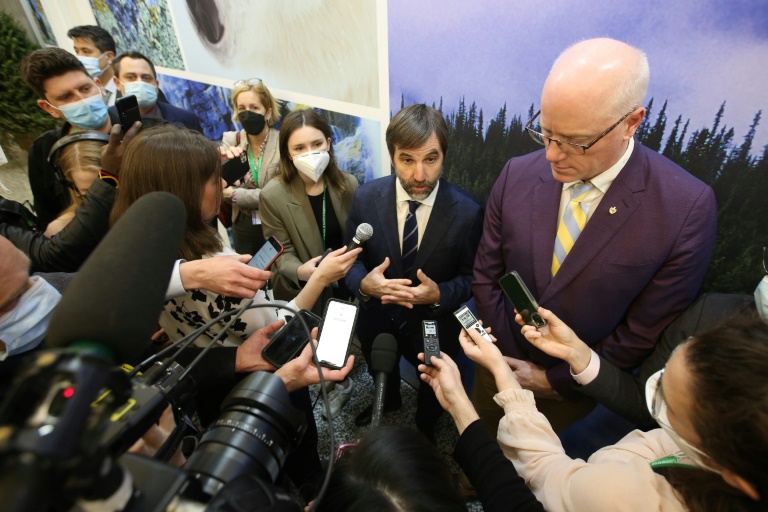
“A brilliant Canadian artist, Joni Mitchell, sent us a message in a song — that we have ‘paved paradise and put up a parking lot,'” said Canada’s environment minister, Steven Guilbeault, who was once a radical activist nicknamed “Green Jesus.”

“We listened to her music and sang along but didn’t really understand her message. We must live in harmony with nature, not try and dominate it,” he added.

In the absence of heads of state and government, more than a hundred ministers will have to drag the text, four years in the making, over the finish line.

But its success is still far from assured after disagreements over the thorny issue of biodiversity financing led to a walkout by negotiators from developing nations overnight Tuesday and a temporary pause in talks.

– New fund sought –

The Global South, home to most of the world’s biological diversity, wants a new global biodiversity fund (GBF) to help them meet goals, for example by setting up protected areas.

But rich countries are opposed — and propose instead making existing financial mechanisms more accessible. 

This debate mirrors a similar disagreement during recent UN climate talks in Egypt on creating a “loss and damages” fund for the most climate-vulnerable nations — though that demand was eventually met.

Dozens of nations, including Brazil, India, Indonesia and many African countries are also seeking funding of $100 billion yearly, or one percent of global GDP, until 2030. 

Current financial flows from high-income countries to lower income ones are in the order of $10 billion per year.

A crisis meeting of heads of delegations, organized on Wednesday by China, which is chairing the meeting, brought negotiators back to the table following the breakdown.

A Western negotiator who declined to be named told AFP: “The African group wants to reach an agreement with money in front, other developing countries too, but Brazil is using the financial question to derail the process.”

The source said the Brazilian delegation is still following the policies of outgoing far-right president Jair Bolsonaro, who is very close to the agricultural industry, which is hostile to reducing pesticide use.

Nevertheless, developing countries are angered by what they see as a lack of ambition.

“This has led to the negotiations now being on the edge of a full breakdown,” said Innocent Maloba of WWF International.

Beyond the moral implications, there is the question of self-interest: $44 trillion of economic value generation — more than half the world’s total GDP — is dependent on nature and its services.

Close Bitnami banner
Bitnami