AFP

EU vows investment in push to boost SE Asia ties

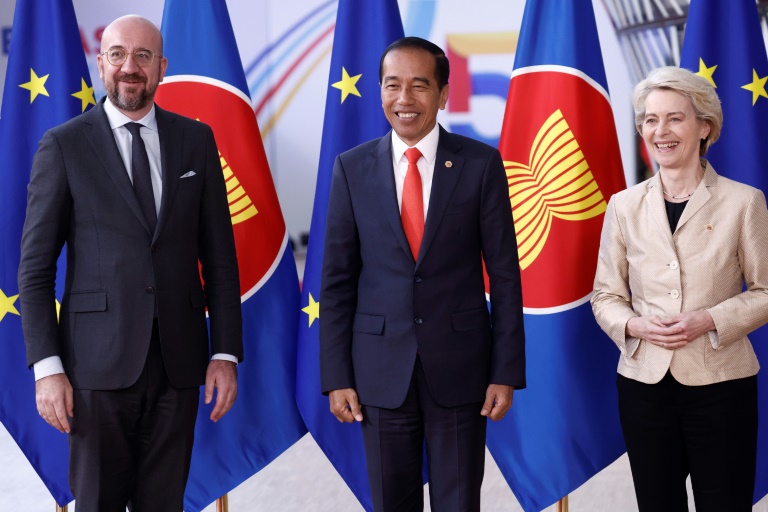
The EU vowed billions of dollars of investment in southeast Asia Wednesday, as leaders looked to bolster ties at a summit in the face of the Ukraine war and challenges from China. 

The European Union billed its first full summit with the Association of Southeast Asian Nations (ASEAN) in Brussels as a chance to push trade relations with the region’s fast-growing economies. 

“There might be many, many miles that divide us, but there are much more values that unite us,” European Commission President Ursula von der Leyen told the gathered leaders.

But different opinions over Russia’s war in Ukraine and concerns about tensions with China over a key shipping route for global trade loomed over the meeting. 

The EU has been on a diplomatic push to galvanise a global front against Moscow as its invasion has sent economic and political shock waves around the world. 

ASEAN’s 10 nations — nine of which were represented, after Myanmar’s junta was not invited — have been divided in their response to the Kremlin’s war on Ukraine.

Singapore has gone along with Western sanctions on Russia, while Vietnam and Laos, which have close military ties to Moscow, have remained more neutral. 

Along with Thailand, they abstained from a United Nations vote in October condemning Russia’s attempted annexation of regions of Ukraine seized since February.    

The diverging views led to intense wrangling over a final declaration from the summit as the EU pushed for stronger language to condemn Moscow.

A draft of the final statement said “most members” decried Russia’s war, but conceded there were also “other views and different assessments”. 

– China looms –

While Europe pressed for a tougher response to Russia, another global giant figured prominently at the summit. 

Chinese claims over the South China Sea have set it against some neighbours and sparked fears in Europe over trade flows through the key global thoroughfare. 

But China remains the biggest trade partner for ASEAN and many in the region are wary of distancing themselves from their giant neighbour.

The EU is keen to pitch itself as a reliable partner for southeast Asia’s dynamic economies amid the growing rivalry between Beijing and Washington. 

The EU and ASEAN are each other’s third-largest trading partner and Europe sees the region as a key source for raw materials and wants to increase access to its booming markets.

EU nations are pushing to diversify key supply chains away from China as the war in Ukraine has highlighted Europe’s vulnerabilities. 

Von der Leyen offered an investment package over the next five years worth 10 billion euros ($10.6 billion) under the EU’s Global Gateway strategy designed as a counterweight to China’s largesse.

“There is a battle of offers today in the geopolitical arena, not only a battle of narrative,” said EU foreign policy chief Josep Borrell. “We have to offer more.”

– Sex law furore –

ASEAN and the EU suspended their push for a joint trade deal over a decade ago — but the bloc’s top officials said they hoped to relaunch efforts for a broad agreement. 

So far deals with Vietnam and Singapore are in place, and the EU is looking now to make progress with ASEAN’s largest economy Indonesia and to resume talks with Malaysia, Philippines and Thailand.

One issue that risked clouding discussions was a new law in Indonesia criminalising sex outside marriage that has sparked fears for foreign visitors to country.

Indonesia’s President Joko Widodo insisted though that the EU-ASEAN relationship needed to be based more on “equality”. 

“There must be no imposition of views,” he said.  

“There must not be one who dictates over the other and thinks that my standard is better than yours.”
HSBC bank says to stop funding new oil and gas fields

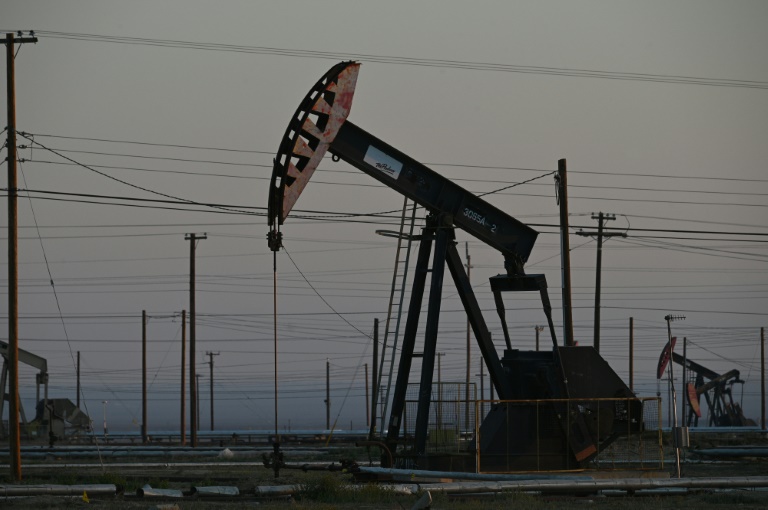
Banking giant HSBC on Wednesday said it would end financing for new oil and gas fields, a decision welcomed by environmentalists who nevertheless urged greater action from banks and government.

In an annual update of its climate transition plans, the London-headquartered bank said it “will no longer provide new lending or capital markets finance for the specific purpose of projects pertaining to new oil and gas fields and related infrastructure”.    

HSBC added in a statement that it was “committed to supporting and financing the transition to a secure net zero future”.

Responding, Greenpeace UK’s senior climate campaigner Charlie Kronick called the announcement “long overdue”.

He added in a statement: “Banks have been funding climate chaos to the tune of billions of pounds. Now one of the UK’s biggest banks has realised that there’s no place for new oil and gas in a world that is trying to tackle the climate crisis.”

Kronick called the announcement “an embarrassment for the UK government”, which is “pressing on with new oil and gas licences” as it looks to beef up energy security following the invasion of Ukraine by major fossil fuel producer Russia.

HSBC meanwhile said it would continue to provide finance and advisory services to energy sector clients at the corporate level, as long as their plans were in line with the bank’s targets to cut emissions.

– ‘Strong signal’ –

“HSBC’s announcement sends a strong signal to fossil fuel giants and governments that banks’ appetite for financing new oil and gas fields is diminishing,” said Jeanne Martin, head of banking programme at ShareAction.

“It sets a new minimum level of ambition for all banks committed to net zero. We urge major banks like Barclays and BNP Paribas to follow suit.”

Martin meanwhile stressed that “HSBC’s announcement only applies to asset financing, and doesn’t deal with the much larger proportion of finance it still provides to companies that have oil and gas expansion plans”.

Citing the International Energy Agency, the bank said “an orderly transition requires continued financing and investment in existing oil and gas fields to maintain the necessary output”.

HSBC “will therefore continue to provide finance to maintain supplies of oil and gas in line with current and future declining global oil and gas demand”.

The bank on Wednesday added it would “accelerate” activities in renewable energy and clean infrastructure following a previous announcement to provide between $750 billion and $1 trillion in sustainable finance and investment by 2030.

A year ago, the lender published a plan to stop financing thermal coal activities.

Ukraine downs swarm of attack drones over Kyiv

Ukraine said Wednesday it had shot down multiple Iranian-made drones launched at the capital by Russian troops in their latest attack on Kyiv. 

The Kremlin meanwhile said there no would be no let up in fighting over Christmas and the New Year while Ukraine President Volodymyr Zelensky urged European leaders to back a court to try Russian officials.

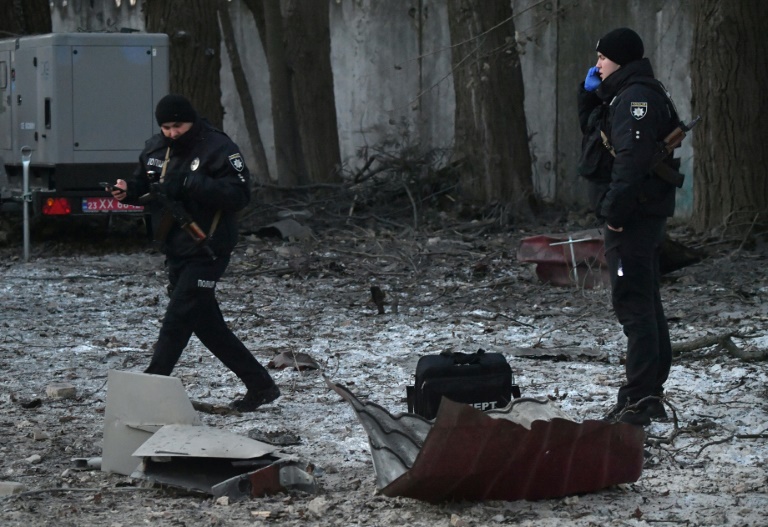
Explosions rang out over a central neighbourhood in Kyiv in the early hours and AFP journalists later saw law enforcement and emergency service workers inspecting metal fragments at a snow-covered impact site.

“The terrorists started this morning with 13 Shaheds,” Ukrainian President Volodymyr Zelensky said, referring to the Iran-made weapons.

“All 13 were shot down” he added, urging residents to heed air raid sirens.

Kyiv has been subjected to nearly ten months of air raid sirens and frequent aerial attacks since Russia invaded Ukraine in February and tried to capture the capital. 

But the attacks have increased up since October when Russia began systematically targeting critical infrastructure in Ukraine in attacks that have disrupted electricity, water and heat to millions in Ukraine.

Kyiv’s Western allies have been supplying Ukraine with more advanced air defence systems in response.

Ukrenergo, the national energy provider, said no energy infrastructure facilities were damaged in Wednesday’s drone attack, crediting Ukrainian air defences for their “brilliant” work.

– Civilian ‘suffering’ –

US ambassador in Ukraine Bridget Brink said on social media that Kyiv could continue to rely on Washington’s backing and that “more support is on the way”.

“It’s obvious that these attacks have just one aim: to increase the suffering of civilian population,” said Peter Stano, a spokesman for EU foreign policy chief Josep Borrel.

Mayor Vitali Klitschko announced that explosions were heard in the central district of Shevchenkivsky and city officials said debris from the downed drones had damaged residential homes and an local administrative building.

No one was reported injured or killed.

Since a series of key battlefield setbacks this summer and autumn, Russia has been pummelling critical infrastructure across Ukraine with missiles and drones.

Moscow most recently targeted Ukrainian energy infrastructure last week piling pressure on the country’s power grid, whose operators have for weeks been forced to implement rolling blackouts.

Prime Minister Denys Shmygal said this week that between 40 and 50 percent of the country’s grid was out of action because of Russia’s strikes.

The latest round of attacks on Wednesday came one day after Zelensky issued urgent appeals to around 70 countries and international organisations at a Paris conference to help Ukraine withstand Russian attacks this winter.

In a video message from Kyiv, Zelensky said Tuesday that Ukraine needed assistance worth around 800 million euros in the short term for its battered energy sector.

– ‘Fight through winter’ –

He also said that his country needs spare parts for repairs, high-capacity generators, extra gas and increased electricity imports.

Foreign Minister Dmytro Kuleba called on Ukraine’s allies to provide his country with more weapons to help it “fight through the winter” and sustain Kyiv’s military advances.

The Kremlin meanwhile said it had not received any proposals from Kyiv to pause fighting in Ukraine during the upcoming holiday period and that a ceasefire was not on Moscow’s agenda.

“No, no proposals have been received from anyone and no topic of this kind is on the agenda,” the Kremlin’s spokesman Dmitry Peskov. 

In nearly 10 months of fighting, Russia has yet to fulfil any of its stated key goals in what it refers to as its “special military operation” in Ukraine, including seizing the capital or the eastern Donbas region.

The Moscow-installed leader of Ukraine’s Donetsk region on Wednesday however called for Russia to widen its goals and annex two more areas of Ukraine, the Black Sea region of Odessa and Chernigiv in the north.

Separately, Ukraine’s SBU security service said it was carrying out raids at churches and monasteries across the country in its most recent searches on religious sites of the Russia-linked Ukrainian Orthodox Church.

Microsoft seeks to bring internet to millions in Africa by satellite

Microsoft announced plans Wednesday to bring internet access via satellite to 10 million people, half of them in Africa, as part of efforts to bridge a digital divide with the developing world.

At a summit with African leaders in Washington led by President Joe Biden, the technology leader said it would start the satellite project immediately with a priority on bringing internet for the first time to parts of Egypt, Senegal and Angola.

Microsoft president Brad Smith said that the company has been impressed by its engineers in Nairobi and Lagos.

In Africa, “there is no shortage of talent, but there is a huge shortage of opportunity,” Smith told AFP.

In the partnership with satellite provider Viasat, Microsoft said it would also provide internet in Guatemala, Mexico and more remote parts of the United States and also step up efforts in Nigeria and the Democratic Republic of Congo.

Smith said the biggest holdup to internet access has been the lack of electricity, which is not reliable for around half of Africans.

“For people who don’t go there or don’t spend time thinking about Africa, it’s hard for them to even to imagine that because electricity in my view is the greatest invention of the 19th century,” Smith said.

“When you think about broadband, you cannot have access to the internet at any speed without access to electricity,” he said.

He said Microsoft was focused on finding low-cost solutions in areas where both the internet and electricity are absent.

Smith said he saw wide support in Africa for bringing internet access, saying many governments have leapfrogged over their Western counterparts in ease of regulation as the continent did not have the same “extraordinary web of licensing regimes” in place from the past.

Ministries are often led by Africans with industry experience, “so they know how business works and they know how government works,” Smith said.

“Even in countries where we may find more authoritarian challenges, I think it’s more likely that governments are going to want to control what’s available on the internet rather than its availability,” he said.

The latest effort is part of Microsoft’s Airband Initiative, which aims to provide internet access to 250 million people, 100 million of them in Africa, by the end of 2025.

Despite rapid strides in the internet in developed nations and some major emerging economies, 2.9 billion people, or more than one-third of the world, have never gone online, according to the UN’s International Telecommunication Union.

Stocks diverge before expected US rate hike

Global stock markets diverged Wednesday, with Asia rising and Europe falling before an expected interest rate hike from the Federal Reserve, with inflation around the highest levels in decades despite moderate slowdowns.

London losses nearing the half-way mark were cushioned by news that UK inflation nudged lower in November.

Frankfurt and Paris also fell despite the Ifo research institute’s forecast that Germany’s recession could be milder than previously predicted.

Asian indices closed higher following Tuesday’s softer-than-expected US inflation data that could allow the Federal Reserve to slow its pace of interest rate hikes.

The Fed is forecast to increase borrowing costs 50 basis points Wednesday after four 75-point rises in a row.

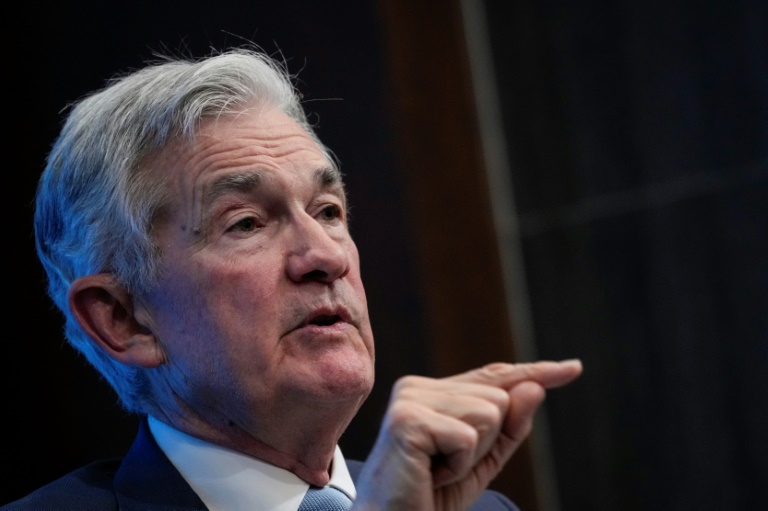
The US central bank’s post-meeting statement and boss Jerome Powell’s comments are the main focus for traders, along with the Fed’s infamous “dot plot” chart of the rate outlook.

“At the end of the day, it’s Jerome Powell, and the Fed, who will either give a green light for a modest Santa rally (for equities), or tell investors that Santa is stuck in a snow storm this year,” noted SwissQuote analyst Ipek Ozkardeskaya.

It’s the turn of Europe on Thursday, with the Bank of England and European Central Bank expected to announce less aggressive rate hikes compared with their recent monetary policy decisions.

Wall Street rebounded Tuesday in reaction to data showing US consumer prices rose 7.1 percent last month, less than forecast and the slowest pace since December 2021.

The reading followed an October slowdown and fuelled hopes that inflation in the world’s biggest economy has finally peaked, after several months of Fed rate hikes.

Markets are also eyeing developments in China, which is continuing to roll back its strict zero-Covid strategy that has battered the world’s number two economy, though fears of a sharp surge in infections are causing some unease among dealers.

Oil extended recent gains as traders awaited the weekly US inventories report for clues on demand in the world’s top crude consuming nation.

– Key figures around 1200 GMT –

London – FTSE 100: DOWN 0.3 percent at 7,479.69 points

Frankfurt – DAX: DOWN 0.7 percent at 14,391.94

Paris – CAC 40: DOWN 0.6 percent at 6,702.55

EURO STOXX 50: DOWN 0.8 percent at 3,956.14

Tokyo – Nikkei 225: UP 0.7 percent at 28,156.21 (close)

Hong Kong – Hang Seng Index: UP 0.4 percent at 19,673.45 (close)

Shanghai – Composite: FLAT at 3,176.53 (close)

New York – Dow: UP 0.3 percent at 34,108.64 (close)

Euro/dollar: UP at $1.0653 from $1.0635 on Tuesday

Dollar/yen: DOWN at 134.96 yen from 135.59 yen

Pound/dollar: UP at $1.2377 from $1.2366

Euro/pound: UP at 86.04 pence from 85.96 pence

Brent North Sea crude: UP 0.9 percent at $81.40 per barrel

West Texas Intermediate: UP 1.0 percent at $76.15 per barrel

Stocks diverge before expected US rate hike

Global stock markets diverged Wednesday, with Asia rising and Europe falling before an expected interest rate hike from the Federal Reserve, with inflation around the highest levels in decades despite moderate slowdowns.

London losses nearing the half-way mark were cushioned by news that UK inflation nudged lower in November.

Frankfurt and Paris also fell despite the Ifo research institute’s forecast that Germany’s recession could be milder than previously predicted.

Asian indices closed higher following Tuesday’s softer-than-expected US inflation data that could allow the Federal Reserve to slow its pace of interest rate hikes.

The Fed is forecast to increase borrowing costs 50 basis points Wednesday after four 75-point rises in a row.

The US central bank’s post-meeting statement and boss Jerome Powell’s comments are the main focus for traders, along with the Fed’s infamous “dot plot” chart of the rate outlook.

“At the end of the day, it’s Jerome Powell, and the Fed, who will either give a green light for a modest Santa rally (for equities), or tell investors that Santa is stuck in a snow storm this year,” noted SwissQuote analyst Ipek Ozkardeskaya.

It’s the turn of Europe on Thursday, with the Bank of England and European Central Bank expected to announce less aggressive rate hikes compared with their recent monetary policy decisions.

Wall Street rebounded Tuesday in reaction to data showing US consumer prices rose 7.1 percent last month, less than forecast and the slowest pace since December 2021.

The reading followed an October slowdown and fuelled hopes that inflation in the world’s biggest economy has finally peaked, after several months of Fed rate hikes.

Markets are also eyeing developments in China, which is continuing to roll back its strict zero-Covid strategy that has battered the world’s number two economy, though fears of a sharp surge in infections are causing some unease among dealers.

Oil extended recent gains as traders awaited the weekly US inventories report for clues on demand in the world’s top crude consuming nation.

– Key figures around 1200 GMT –

London – FTSE 100: DOWN 0.3 percent at 7,479.69 points

Frankfurt – DAX: DOWN 0.7 percent at 14,391.94

Paris – CAC 40: DOWN 0.6 percent at 6,702.55

EURO STOXX 50: DOWN 0.8 percent at 3,956.14

Tokyo – Nikkei 225: UP 0.7 percent at 28,156.21 (close)

Hong Kong – Hang Seng Index: UP 0.4 percent at 19,673.45 (close)

Shanghai – Composite: FLAT at 3,176.53 (close)

New York – Dow: UP 0.3 percent at 34,108.64 (close)

Euro/dollar: UP at $1.0653 from $1.0635 on Tuesday

Dollar/yen: DOWN at 134.96 yen from 135.59 yen

Pound/dollar: UP at $1.2377 from $1.2366

Euro/pound: UP at 86.04 pence from 85.96 pence

Brent North Sea crude: UP 0.9 percent at $81.40 per barrel

West Texas Intermediate: UP 1.0 percent at $76.15 per barrel

UK inflation slows, remains close to 11 percent

British inflation slowed more than expected in November but remained near the highest level in more than 40 years, official data showed Wednesday, as a cost-of-living crisis sparks fresh UK strikes.

The consumer prices index eased to 10.7 percent last month, the Office for National Statistics (ONS) said in a statement, against expectations of a drop to 10.9 percent.

The ONS said motor fuel prices had risen at a slower pace than a year earlier.

October’s annual inflation rate had stood at 11.1 percent, the highest level since 1981, after energy prices and food bills soared across the world this year on supply constraints caused by Russia’s invasion of Ukraine and the lifting of pandemic lockdowns.

Wednesday’s data comes amid crippling UK industrial action by public and private sector workers demanding higher wages.

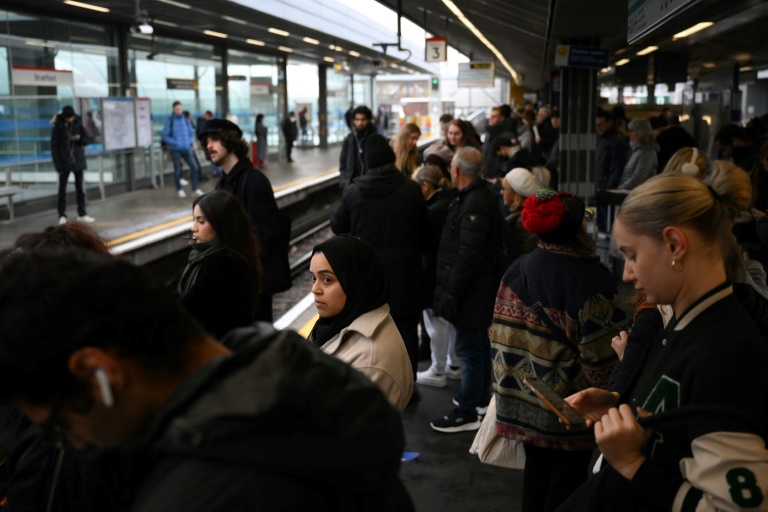
Railway staff were staging a two-day national strike due to end Wednesday, kicking off a month of walkouts involving professions from nurses to passport control and postal workers that spells Christmas misery for millions of Britons.

November’s inflation data was meanwhile published on the eve of an interest rate decision from the Bank of England, which is widely expected to deliver its ninth hike in a row as policymakers try to tackle rampant prices.

Economists expect the BoE will lift its key lending rate to 3.5 percent from 3.0 percent on Thursday, further squeezing Britons’ disposable incomes with rising loan costs.

Inflation is still running at more than five times the central bank’s official target level of two percent.

– ‘Historically high’ –

“Although still at historically high levels, annual inflation eased slightly in November,” noted ONS chief economist Grant Fitzner.

“Prices are still rising, but by less than this time last year, with the most notable example of this being motor fuels.”

Reacting to the data, finance minister Jeremy Hunt said “getting inflation down so people’s wages go further” was his “top priority”.

Prime Minister Rishi Sunak’s Conservative government insists that inflation-busting pay hikes would worsen inflation.

Nurses meanwhile are set to walk out for the first time in their union’s 106-year history on Thursday.

– Inflation peak? –

Britain remains on course for a long-lasting recession on fallout from the highest inflation in decades, despite this week’s news that the country’s economy grew in October.

The government and BoE have each said they believe Britain is already in a recession that the bank expects to last all next year.

While Wednesday’s data “doesn’t constitute a new trend, it is a move in the right direction and comes as inflation in the US, and the eurozone shows signs of cooling”, said Fawad Razaqzada, market analyst at City Index trading group.

The Federal Reserve and European Central Bank are both expected to announce less aggressive interest rate hikes in the next 24 hours compared with their recent monetary policy decisions.

“Inflation may be past the peak but given that prices for UK consumers have scaled a mountain, there is still a vertiginous descent to navigate before it’s back down to less dangerous levels,” said Susannah Streeter, senior investment and markets analyst at stockbroker Hargreaves Lansdown.

The ONS added Wednesday that the retail prices index — the inflation measure that includes mortgage interest payments and is used by trade unions and employers when negotiating wage increases — eased to 14 percent in November.

Once a star, Ghana battles economic crisis

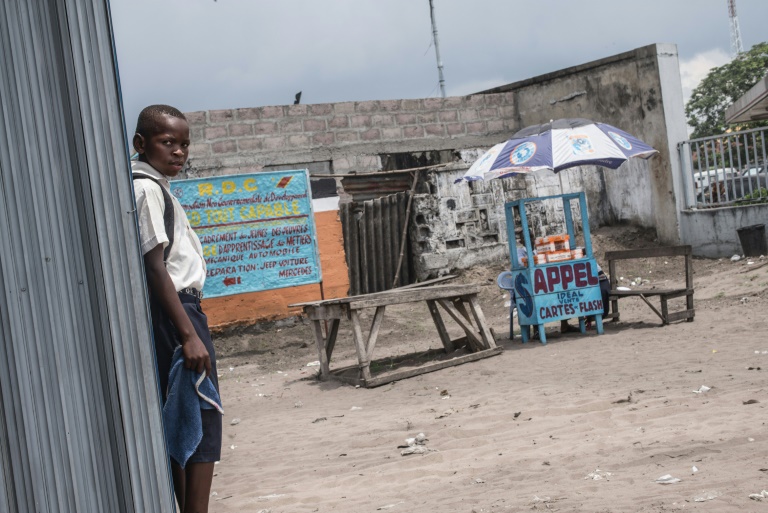
The packing machine at Nakobs’ Pac factory in the outskirts of Ghana’s capital Accra is running at full pace, churning out sachets of treated drinking water.

But all is not well at Nakobs’. Like other small businesses in Ghana these days, owner Daniel Tekyi is struggling.

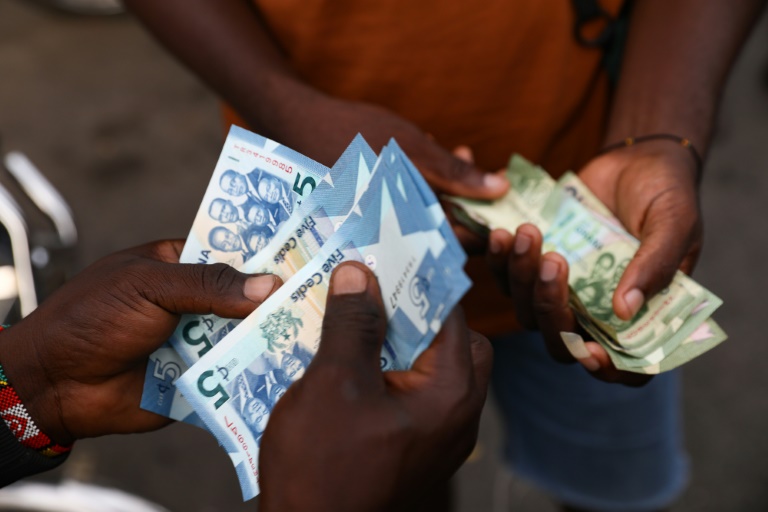
With inflation at over 50 percent, the currency worth half what it was last year, fuel prices doubling and debt payments gobbling up more than half the government’s revenues, Ghana is battling its worst economic crisis in decades.

Ghana signed a $3 billion bailout deal with the International Monetary Fund on Tuesday in a bid to shore up public finances, but economic stability is still a way off.

“It would be better for us to close the factory,” said Tekyi. “We really don’t know when this crisis is going to end.”

Once applauded as a rock of economic stability and security in a region plagued by coups and jihadist wars, Ghana has steadily lost investor confidence.   

Like much of the continent, Ghana slowly emerged from the pandemic only to face the fallout of the war in Ukraine and the surge in fuel and food costs.

Facing a crunch in payments, President Nana Akufo-Addo this year reversed course from his “Ghana Beyond Aid” concept and entered talks with the IMF for a bailout.

Already, the government has announced a 2.5 percent increase in VAT and a freeze on public worker hires to help cut costs and hike revenues. A debt restructuring is underway.

With an IMF team in Accra, Finance Minister Kenneth Ofori-Atta promised the credit deal, debt swap and a reform package would restore investor confidence and steer the economy out of “grave times”.

But many Ghanaians are bracing for potential austerity before any stability returns, with the impact of new taxes and spending cuts.

How Ghana’s government emerges may also have political fallout. Elections are two years away with Akufo-Addo stepping aside and ruling New Patriotic Party or NPP allies already jostling for position for primaries in early 2023.

The government has to find ways to mitigate any impact from reforms, especially on public sector employment and high taxes, economist Daniel Anim Amarteye said. 

“If that is not done, it could be politically fatal,” he said.

– Dimmed star –

Ghana’s economic story was brighter a few years ago. Before the pandemic, the West African state was a star with fast growth rates, growing oil production and strong investor interest.

But its high level of debt was a looming problem. 

Since the start of the year, its cedi currency has lost half its value, which has helped increase its debt burden by $6 billion, with warnings Ghana risked a default.

A major part of the IMF agreement is bringing the country back to debt sustainability through a restructuring, calling on investors to exchange bonds for new ones maturing later. 

IMF approval of the $3 billion loan will depend on its success. Officials say they have the means to help offset any impact on local banks or pension funds — major holders of domestic bonds.

But Ghana’s major labour movement, the Trades Union Congress, is already rumbling over the deal’s potential impact on workers’ pensions. 

Opposition National Democratic Congress has been quick to blame Akufo-Addo’s government for ballooning debt, even trying and failing to censure the finance minister.  

“No matter how the IMF programme turns out and how they can turn the corner, the records will show that they took us to 40 percent inflation, the records will show the market was closed to us, the markets will show the cedi depreciated 54 percent,” said NDC lawmaker Isaac Adongo.

Akufo-Addo’s government spent heavily on social programmes such as free high schools. But his ruling New Patriotic Party says the crisis is all about external shocks — Covid and Russia’s war in Ukraine.

“Assuming Covid didn’t happen, what would our story be?” NPP communications director Richard Ahiagbah told AFP.

– Daily struggle –

Testifying before parliament last month, Ofori-Atta apologised to Ghanaians for their pain, but officials dismissed NDC charges of mismanagement.

But political calculations are not a luxury Patience Tesonkeh can afford. 

Stung by the soaring price of cooking gas, the single mother switched to cheaper charcoal to cook. Her usual weekly shopping budget no longer stretches to all her family’s needs.

“I withdrew 300 cedis ($20) thinking I would get everything I needed but I couldn’t,” she said on a recent trip to buy rice, fish and yams at a market in her Accra neighbourhood.

Unionised traders and shopkeepers in the capital also closed their businesses last month in a three-day protest over rising living costs.

For factory owner Tekyi the numbers just don’t add up. Production and transport now total 5.8 cedis per water bag. But he can only sell them for five. 

“We planned closing our factory because we are not making any profit,” he said.

“But we had a second thought that if we close and we lay off our workers, how can they also survive? So for now, we are producing and making a loss.”

Zara owner's profits rise despite inflation

Zara owner Inditex reported Wednesday a jump in profits in the third quarter of its fiscal year despite soaring inflation and the war in Ukraine impacting business costs.

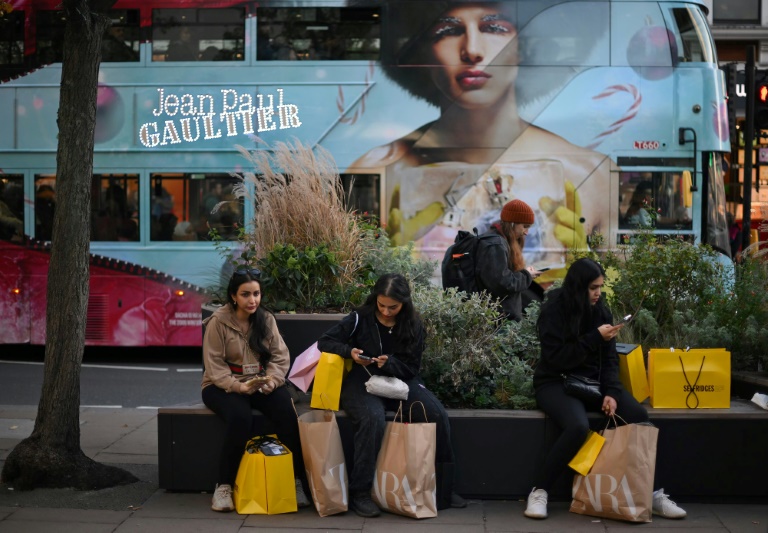
The group, which also owns Massimo Dutti, said it pulled in a net profit of 1.3 billion euros ($1.4 billion), between August 1 and October 31, compared to 1.23 billion euros in the same period last year.

Analysts surveyed by financial information service Factset had expected a net profit of 1.3 billion euros.

Between February 1 and October 31, the ready-to-wear giant said net income rose by 3.1 billion euros, up 24 percent from the same period in 2021.

Sales were also up 19 percent to reach 23 billion euros, thanks to a strong showing in stores and online.

The results come despite “the current challenging context”, Inditex CEO Oscar Garcia Maceiras said, referring to red-hot inflation and the conflict in Ukraine.

The company has seen manufacturing and transport costs rise, along with other businesses impacted by supply chain bottlenecks after Covid lockdowns and Russia’s invasion of Ukraine.

It said operating costs rose by 17 percent between August 1 and October 31 compared to the same period in 2021.

Inditex decided in March to shut 502 stores in Russia and stop online sales in the country, which had been one of its biggest markets after Spain, accounting for 10 percent of company sales.

The retailer in October said the Russian stores would be bought by United Arab Emirates-based Daher group, Inditex’s franchisee in the Middle East.

Inditex said global online and in-store sales rose by 12 percent at current exchange rates between November 1 and December 8, compared to the same period in 2021.

UK inflation slows but remains elevated

British inflation slowed in November but sat near the highest level in more than 40 years, data showed Wednesday, as a cost-of-living crisis sparks fresh strikes.

The Consumer Prices Index eased somewhat to 10.7 percent last month, the Office for National Statistics (ONS) said in a statement, against expectations of 10.9 percent.

That marked a modest improvement from October’s 11.1 percent, the highest level since 1981, but pressures remain high due to soaring domestic energy and food bills after Russia’s war on Ukraine.

The news comes amid crippling industrial action by public and private sector workers demanding higher wages, which have been dramatically eroded by rising living costs this year.

Railway staff are currently staging their second day of a two-day national strike, kicking off a month of walkouts involving professions from nurses to passport control and postal workers that spells Christmas misery for millions.

November’s inflation data was also published on the eve of an interest rate decision from the Bank of England, which is widely expected to deliver the ninth hike in a row as policymakers try to tackle rampant prices.

– Historically high –

“Although still at historically high levels, annual inflation eased slightly in November,” noted ONS chief economist Grant Fitzner.

“Prices are still rising, but by less than this time last year, with the most notable example of this being motor fuels.”

British finance minister Jeremy Hunt blames Russian President Vladimir Putin’s war in Ukraine for fuelling sky-high energy prices, as well as the economic reopening from Covid restrictions.

“The aftershocks of Covid-19 and Putin’s weaponisation of gas mean high inflation is plaguing economies across Europe, and I know families and businesses are struggling here in the UK,” Hunt said.

“Getting inflation down so people’s wages go further is my top priority.”

“I know it is tough for many right now, but it is vital that we take the tough decisions needed to tackle inflation — the number one enemy that makes everyone poorer.”

Prime Minister Rishi Sunak’s Conservative government insists that inflation-busting pay hikes would further worsen the situation.

Nurses are set to walk out for the first time in their union’s 106-year history on Thursday.

Economists meanwhile expect the BoE will lift its key lending rate from 3.0 percent to 3.5 percent on Thursday, further squeezing Britons’ disposable incomes with rising loan costs.

Inflation is still running at more than five times the BoE’s official target level of just two percent.

– Inflation past peak? –

Britain remains on course for a long-lasting recession on fallout from the highest inflation in decades, despite this week’s news of economic growth in October.

The government and BoE have each said they believe Britain is already in a recession that the bank expects to last all next year.

Wednesday’s data nevertheless stoked hope that inflation may have peaked in October, but analysts warn more hefty interest rate hikes could further darken the outlook.

“Inflation may be past the peak but given that prices for UK consumers have scaled a mountain, there is still a vertiginous descent to navigate before it’s back down to less dangerous levels,” said Susannah Streeter, senior investment and markets analyst at stockbroker Hargreaves Lansdown.

Yet the ONS was quick to dampen talk of a peak.

“Some may be calling this a peak. It is, I think, too early. We’ve only seen one fall from a 40-year high, so let’s wait a few months,” Fitzner told BBC radio.

Close Bitnami banner
Bitnami