AFP

Turkey ends tanker dispute linked to Russian price cap

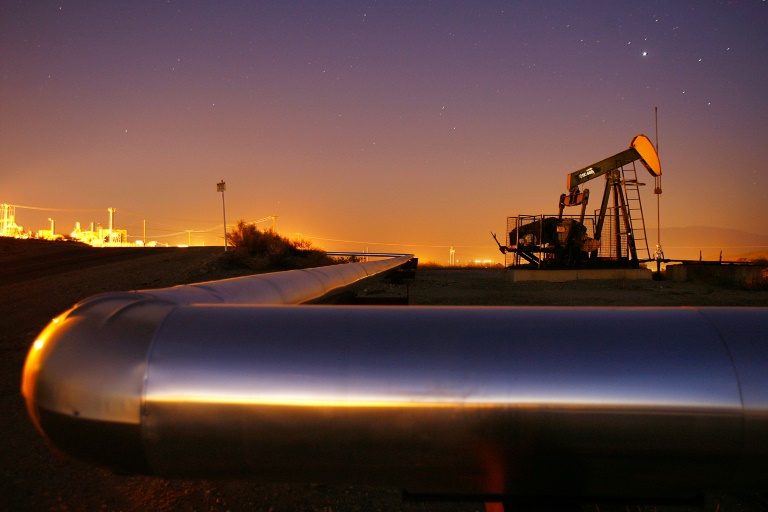
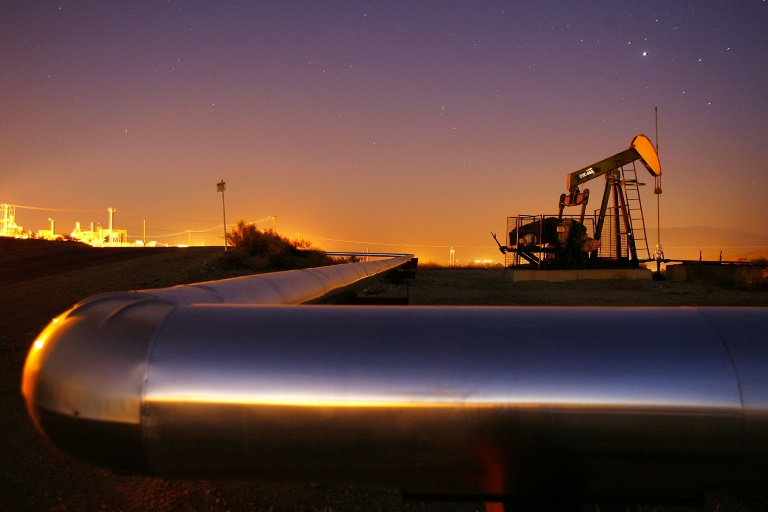
Turkey said Tuesday it has cleared up a dispute linked to a Western price cap on Russian crude that had stalled the passage of tankers through the Bosphorus and Dardanelle straits.

A queue of around 20 oil ships had been waiting to sail through the straits for much of the past week in a spat over Turkey’s demand for physical proof of insurance.

The European Union and the Group of Seven leading industrialised nations agreed earlier this month to block Western firms from servicing ships that sell Russian oil for more than $60 a barrel.

The decision was part of a US-led drive to punish Russia for its war on Ukraine by stripping away its main source of income while avoiding major disruptions to the global crude market.

The plan hit a snag when Turkey voiced alarm over the possibility of uninsured ships passing through the Bosphorus — a strait running through the heart of the 16-million-strong city of Istanbul.

Turkish coast guards began to demand letters proving ships had so-called “protection and indemnity” insurance against spills and other accidents.

Western insurance companies balked at the demand because it made them liable for the possible breach of the new sanctions.

European diplomats have been meeting with insurers and Turkish officials in a bid to agree on a compromise text that could suit all parties.

Turkey’s transport ministry said tankers have now started to produce a “confirmation letter” that guaranteed their passage from Russian ports to world markets.

“There are no tankers loaded with crude waiting for passage,” the ministry said in a statement.

The bottleneck in the Turkish straits had made little impact on the global oil market because most Western countries no longer purchase Russian crude.

An analysis by Bloomberg showed that Bulgaria was the only European country to have imported Russian oil this month.

It showed most of the Russian tankers now headed for Asian markets through the Suez Canal.

EU energy ministers seek compromise on gas price cap

EU ministers meeting in Brussels on Tuesday struggled to bridge differences over a proposed cap on natural gas prices, a challenge stymying other measures designed to mitigate Europe’s energy crunch.

The continent has entered a bitingly cold winter with fewer energy options because Russia has reduced gas supplies in retaliation for EU sanctions imposed over its war in Ukraine.

Gas prices are high, albeit lower than during the middle of the year, spurring worries that European homes and businesses could face blackouts or unpayable bills, if not this winter than in the next.

Several energy ministers going into the talks doubted a compromise could be reached. They said discussions could roll over to another meeting scheduled for next Monday.

“I’m viewing this meeting today with a bit of scepticism because there has been too little movement in the last days,” Austrian Energy Minister Leonore Gewessler said.

She said two other measures, joint gas purchases and speeded-up authorisations for renewable energy sources, could find agreement but they were “being held hostage” by countries intent on securing a gas price cap.

Several EU countries, including France, Poland and Spain, want a price cap lower than the one proposed by the European Commission, with fewer conditions attached.

The commission has suggested a price ceiling of 275 euros per megawatt hour, but only if the price remains above that level for at least two weeks, and then only if the price for liquified natural gas (LNG) goes above 58 euros for 10 days within that same two-week period.

Some EU countries including Germany, the Netherlands and Austria, view a too-rigid price cap as a threat to supplies, comporting the risk that deliveries could be diverted from Europe to more lucrative markets in Asia.

“The time for consultation has run out,” the Italian minister for European affairs, Raffaele Fitto, said.

“European citizens are in agony, European businesses are closing… All of us must heed to our responsibilities and agree without delay on the market correction mechanism and energy solidarity.”

Czech Industry Minister Jozef Sikela, who was chairing the meeting under his country’s EU presidency, said he understood the concerns of both camps but believed a “feasible proposal” was on the table.

“The citizens and businesses of Europe, they expect from us that we will come up with a clear solution,” he said.

Decade on, wife of missing Laos activist says no closer to finding answers

The wife of a missing Laos activist said Tuesday that a decade on she was still no closer to finding answers over his disappearance as more than 60 human rights groups condemned Vientiane’s inaction.

Sombath Somphone, an award-winning campaigner for sustainable development, vanished on December 15, 2012 after police pulled over his vehicle at a checkpoint in the capital.

The case shone a spotlight on the reclusive communist nation’s poor human rights record, but campaigners condemned on Tuesday the lack of significant progress on the case.

“I may not even get any answers by the end of my life,” his wife Shui-Meng Ng said, adding she last received an official update in 2017.

“But I just hope the memory of Sombath, especially what he has done, who he is, continues to live on,” the 76-year-old said, speaking in Bangkok on the 10th anniversary of his disappearance.

“I don’t want to keep dwelling on the sadness of what happened,” said Ng.

She recalled how her “farm boy” husband would bring her fruit freshly picked from their garden, telling her: “See what I found, let’s have some mango for breakfast.”

Ng, who worked for the UN children’s agency UNICEF in Laos and East Timor before publishing a book on Sombath’s life last year, said her husband’s mentorship of thousands was his most important legacy.

“This is what sustains me,” she said.

But she said in Laos, “you don’t hear his name being spoken much. People don’t want to talk about it because they are afraid they will invite the unnecessary attention of the government.”

Also speaking in Bangkok, Andrea Giorgetta, head of the International Federation for Human Rights’s Asia desk, said the Laotian government “has in fact engaged very actively in suppression of public discussion of Sombath.”

In a joint statement, 66 international rights groups characterised Vientiane’s lack of response as “a catalogue of apparent inaction, negligence, cover-ups, and misleading statements”.

They said there was “an overall lack of political will to effectively address Sombath’s enforced disappearance”.

Ng added that she hoped European leaders would raise the case with their Southeast Asian counterparts at a Brussels summit this week.

Laos has denied any connection to the case, raised directly with the government during United Nations human rights reviews in 2015 and 2020.

Vientiane did not respond to AFP’s requests for comment.

China launches WTO dispute over US chip sanctions

China has filed a dispute with the World Trade Organization over US restrictions on chip exports, Beijing’s commerce ministry said in a statement late Monday, accusing Washington of threatening global supply chains.

The United States in October announced new export controls aimed at restricting China’s ability to buy and manufacture high-end chips with military applications, complicating Beijing’s push to further its own semiconductor industry and develop advanced military systems.

The moves include export restrictions on some chips used in supercomputing as well as stricter requirements on the sale of semiconductor equipment.

The aim is to prevent “sensitive technologies with military applications” from being acquired by China’s military, intelligence and security services, the US Commerce Department said in October.

However, China’s foreign ministry claimed Tuesday that the United States has “repeatedly used national security as an excuse to interfere in the normal operation of international trade”.

“All countries should stand up and not let Washington’s unilateralism and protectionism go unchecked,” foreign ministry spokesman Wang Wenbin said at a routine briefing.

“This concerns the stability of the global trade system and more importantly, international justice.”

China’s Ministry of Commerce on Monday had accused the United States of “obstructing normal international trade in products including chips and threatening the stability of the global industrial supply chain”, as well as violating international trade rules and engaging in “protectionist practices”.

The WTO dispute is intended to defend China’s “legitimate rights and interests”, the ministry said in its statement, urging Washington to “give up zero-sum thinking”.

The two superpowers have long faced off over a range of issues including technology, trade, Hong Kong, Taiwan and human rights.

Chinese leader Xi Jinping and US President Joe Biden pledged to repair frayed relations at a summit in Bali, Indonesia last month.

Days before the latest chip controls, the Pentagon added 13 more Chinese firms including drone manufacturer DJI and surveillance firm Zhejiang Dahua Technology to a blacklist of military-linked entities.

China launches WTO dispute over US chip sanctions

China has filed a dispute with the World Trade Organization over US restrictions on chip exports, Beijing’s commerce ministry said in a statement late Monday, accusing Washington of threatening global supply chains.

The United States in October announced new export controls aimed at restricting China’s ability to buy and manufacture high-end chips with military applications, complicating Beijing’s push to further its own semiconductor industry and develop advanced military systems.

The moves include export restrictions on some chips used in supercomputing as well as stricter requirements on the sale of semiconductor equipment.

The aim is to prevent “sensitive technologies with military applications” from being acquired by China’s military, intelligence and security services, the US Commerce Department said in October.

However, China’s foreign ministry claimed Tuesday that the United States has “repeatedly used national security as an excuse to interfere in the normal operation of international trade”.

“All countries should stand up and not let Washington’s unilateralism and protectionism go unchecked,” foreign ministry spokesman Wang Wenbin said at a routine briefing.

“This concerns the stability of the global trade system and more importantly, international justice.”

China’s Ministry of Commerce on Monday had accused the United States of “obstructing normal international trade in products including chips and threatening the stability of the global industrial supply chain”, as well as violating international trade rules and engaging in “protectionist practices”.

The WTO dispute is intended to defend China’s “legitimate rights and interests”, the ministry said in its statement, urging Washington to “give up zero-sum thinking”.

The two superpowers have long faced off over a range of issues including technology, trade, Hong Kong, Taiwan and human rights.

Chinese leader Xi Jinping and US President Joe Biden pledged to repair frayed relations at a summit in Bali, Indonesia last month.

Days before the latest chip controls, the Pentagon added 13 more Chinese firms including drone manufacturer DJI and surveillance firm Zhejiang Dahua Technology to a blacklist of military-linked entities.

Markets mixed ahead of inflation, Fed decision

Markets were mixed Tuesday as nervous investors sat tight ahead of key US inflation data and a Federal Reserve policy decision but fresh pledges by China to open up from zero-Covid offered support.

The region was given a positive lead after Wall Street’s three main indexes raced out of the traps Monday, with analysts citing a survey by the central bank that showed inflation expectations falling.

The November consumer price index figures later in the day follow Friday’s forecast-beating print on wholesale inflation, which dented hopes the Fed could take a more dovish tilt in its monetary-tightening campaign.

The central bank is then widely expected to lift interest rates 50 basis points on Wednesday — a slowdown from the previous four 75-point hikes — but its post-meeting statement and comments from boss Jerome Powell will be closely followed.

While the general view is that policymakers will stop increasing borrowing costs next year, there is debate about how high they will peak and when they will start to come down.

“I think CPI will be important but not necessarily for this meeting, for which a 50 basis point hike is well flagged, but rather it will help determine the extent of further tightening and give clues to the terminal rate,” Mitul Kotecha, of TD Securities, said.

“However, we think the risks are asymmetric in that a higher CPI print will likely have a bigger impact than a lower print.”

But the Wall Street Journal reported that there were disagreements within the policy board about the way forward, with doves trying to limit the economic pain as they bring inflation down, while hawks want a tougher line on fighting prices by weakening the jobs market.

“In this light, don’t expect clearcut signals from the Fed… on what they expect to be doing at early 2023 (policy) meetings after a widely expected 50 basis points fund rate hike this week,” said National Australia Bank’s Ray Attrill.

Hong Kong rose after authorities announced a further easing of the city’s Covid rules, while Tokyo, Sydney, Singapore, Wellington, Bangkok and Jakarta were all well up.

However, Shanghai dipped along with Seoul, Taipei, Manila and Mumbai.

London, Paris and Frankfurt edged up at the open.

“It’s been a do-nothing day as investors take stock before the onslaught of a series of high-risk events,” said SPI Asset Management’s Stephen Innes.

China’s shift away from its economically damaging zero-Covid policy continued to support sentiment as the world’s number two economy opens up.

Meanwhile, top Chinese officials are meeting this week to draw up their economic blueprint for re-emerging from Covid, with observers predicting more stimulus measures and pledges of support for the troubled property sector.

But there is also a worry among investors that the quick relaxation of containment measures such as mass testing and lockdowns might lead to a massive surge in infections that could overwhelm the healthcare system and weigh on the economy.

Still, the expected pick-up in demand in China boosted oil prices further, with both main contracts extending Monday’s strong gains.

“China’s reopening is coming, it won’t happen overnight, but it will provide a major boost to demand in the outlook next quarter,” said OANDA’s Edward Moya. 

– Key figures around 0820 GMT –

Tokyo – Nikkei 225: UP 0.4 percent at 27,954.85 (close)

Hong Kong – Hang Seng Index: UP 0.7 percent at 19,596.20 (close)

Shanghai – Composite: DOWN 0.1 percent at 3,176.33 (close)

London – FTSE 100: UP 0.1 percent at 7455.50

Euro/dollar: UP at $1.0551 from $1.0539 on Monday

Dollar/yen: DOWN at 137.46 yen from 137.66 yen

Pound/dollar: UP at $1.2274 from $1.2268

Euro/pound: UP at 85.96 pence from 85.87 pence

West Texas Intermediate: UP 1.4 percent at $74.21 per barrel

Brent North Sea crude: UP 1.6 percent at $79.21 per barrel

New York – Dow: UP 1.6 percent at 34,005.04 (close)

Markets mixed ahead of inflation, Fed decision

Markets were mixed Tuesday as nervous investors sat tight ahead of key US inflation data and a Federal Reserve policy decision but fresh pledges by China to open up from zero-Covid offered support.

The region was given a positive lead after Wall Street’s three main indexes raced out of the traps Monday, with analysts citing a survey by the central bank that showed inflation expectations falling.

The November consumer price index figures later in the day follow Friday’s forecast-beating print on wholesale inflation, which dented hopes the Fed could take a more dovish tilt in its monetary-tightening campaign.

The central bank is then widely expected to lift interest rates 50 basis points on Wednesday — a slowdown from the previous four 75-point hikes — but its post-meeting statement and comments from boss Jerome Powell will be closely followed.

While the general view is that policymakers will stop increasing borrowing costs next year, there is debate about how high they will peak and when they will start to come down.

“I think CPI will be important but not necessarily for this meeting, for which a 50 basis point hike is well flagged, but rather it will help determine the extent of further tightening and give clues to the terminal rate,” Mitul Kotecha, of TD Securities, said.

“However, we think the risks are asymmetric in that a higher CPI print will likely have a bigger impact than a lower print.”

But the Wall Street Journal reported that there were disagreements within the policy board about the way forward, with doves trying to limit the economic pain as they bring inflation down, while hawks want a tougher line on fighting prices by weakening the jobs market.

“In this light, don’t expect clearcut signals from the Fed… on what they expect to be doing at early 2023 (policy) meetings after a widely expected 50 basis points fund rate hike this week,” said National Australia Bank’s Ray Attrill.

Hong Kong rose after authorities announced a further easing of the city’s Covid rules, while Tokyo, Sydney, Singapore, Wellington, Bangkok and Jakarta were all well up.

However, Shanghai dipped along with Seoul, Taipei, Manila and Mumbai.

London, Paris and Frankfurt edged up at the open.

“It’s been a do-nothing day as investors take stock before the onslaught of a series of high-risk events,” said SPI Asset Management’s Stephen Innes.

China’s shift away from its economically damaging zero-Covid policy continued to support sentiment as the world’s number two economy opens up.

Meanwhile, top Chinese officials are meeting this week to draw up their economic blueprint for re-emerging from Covid, with observers predicting more stimulus measures and pledges of support for the troubled property sector.

But there is also a worry among investors that the quick relaxation of containment measures such as mass testing and lockdowns might lead to a massive surge in infections that could overwhelm the healthcare system and weigh on the economy.

Still, the expected pick-up in demand in China boosted oil prices further, with both main contracts extending Monday’s strong gains.

“China’s reopening is coming, it won’t happen overnight, but it will provide a major boost to demand in the outlook next quarter,” said OANDA’s Edward Moya. 

– Key figures around 0820 GMT –

Tokyo – Nikkei 225: UP 0.4 percent at 27,954.85 (close)

Hong Kong – Hang Seng Index: UP 0.7 percent at 19,596.20 (close)

Shanghai – Composite: DOWN 0.1 percent at 3,176.33 (close)

London – FTSE 100: UP 0.1 percent at 7455.50

Euro/dollar: UP at $1.0551 from $1.0539 on Monday

Dollar/yen: DOWN at 137.46 yen from 137.66 yen

Pound/dollar: UP at $1.2274 from $1.2268

Euro/pound: UP at 85.96 pence from 85.87 pence

West Texas Intermediate: UP 1.4 percent at $74.21 per barrel

Brent North Sea crude: UP 1.6 percent at $79.21 per barrel

New York – Dow: UP 1.6 percent at 34,005.04 (close)

US set to announce nuclear fusion breakthrough

The US Department of Energy is expected to announce Tuesday that its researchers have achieved a “major scientific breakthrough” regarding nuclear fusion, a technology seen as a possible revolutionary alternative power source.

Scientists have been working for decades to develop nuclear fusion — touted by its supporters as a clean, abundant and safe source of energy that could eventually allow humanity to break its dependence on the fossil fuels driving a global climate crisis.

The Energy Department has refused to give any specific details about what it will announce Tuesday, but a Financial Times report over the weekend has set the scientific community abuzz.

According to the UK-based outlet, researchers at the Lawrence Livermore National Laboratory (LLNL) in California have succeeded for the first time in producing a “net energy gain” from nuclear fusion, meaning more energy was produced in the reaction than was used to activate it.

If the achievement is confirmed, “that is a true breakthrough moment which is tremendously exciting,” said physicist Jeremy Chittenden with Imperial College London.

“It proves that the long sought-after goal, the ‘holy grail’ of fusion, can indeed be achieved.”

Nuclear power plants around the world currently use fission — the splitting of a heavy atom’s nucleus — to produce energy.

Fusion on the other hand combines two light hydrogen atoms to form one heavier helium atom, releasing a large amount of energy in the process.

That’s the process that occurs inside stars, including our sun.

On Earth, fusion reactions can be provoked by heating hydrogen to extreme temperatures inside specialized devices.

Researchers at the LLNL use the massive National Ignition Facility — 192 ultra-powerful lasers all pointed into a thimble-sized cylinder filled with hydrogen.

According to the Financial Times, LLNL scientists recently produced about 2.5 megajoules of energy in a nuclear fusion reaction, or about 120 percent of the 2.1 megajoules used by the lasers to initiate it.

– Decades to achieve –

That result would finally provide proof for the physical principles outlined decades ago by fusion researchers. It would be a “a success of the science,” said Tony Roulstone, a lecturer at Cambridge University.

Like fission, fusion is carbon-free during operation, but has many more advantages: it poses no risk of nuclear disaster and produces much less radioactive waste.

However, there is still a long way to go before fusion is viable on an industrial scale.

“To turn fusion into a power source we’ll need to boost the energy gain still further,” cautions Chittenden.

“We’ll also need to find a way to reproduce the same effect much more frequently and much more cheaply before we can realistically turn this into a power plant,” he added.

That could take yet another 20 or 30 years, Erik Lefebvre, project manager at the French Atomic Energy Commission, told AFP.

Climate experts however warn that the world cannot wait that long to reduce its greenhouse gas emissions, and limit the worst effects of global warming.

Other nuclear fusion projects are also in development around the world, including the major international project known as ITER, which is currently under construction in France.

Instead of lasers, ITER will use a technique known as magnetic confinement, containing a swirling mass of fusing hydrogen plasma within a massive donut-shaped chamber.

US set to announce nuclear fusion breakthrough

The US Department of Energy is expected to announce Tuesday that its researchers have achieved a “major scientific breakthrough” regarding nuclear fusion, a technology seen as a possible revolutionary alternative power source.

Scientists have been working for decades to develop nuclear fusion — touted by its supporters as a clean, abundant and safe source of energy that could eventually allow humanity to break its dependence on the fossil fuels driving a global climate crisis.

The Energy Department has refused to give any specific details about what it will announce Tuesday, but a Financial Times report over the weekend has set the scientific community abuzz.

According to the UK-based outlet, researchers at the Lawrence Livermore National Laboratory (LLNL) in California have succeeded for the first time in producing a “net energy gain” from nuclear fusion, meaning more energy was produced in the reaction than was used to activate it.

If the achievement is confirmed, “that is a true breakthrough moment which is tremendously exciting,” said physicist Jeremy Chittenden with Imperial College London.

“It proves that the long sought-after goal, the ‘holy grail’ of fusion, can indeed be achieved.”

Nuclear power plants around the world currently use fission — the splitting of a heavy atom’s nucleus — to produce energy.

Fusion on the other hand combines two light hydrogen atoms to form one heavier helium atom, releasing a large amount of energy in the process.

That’s the process that occurs inside stars, including our sun.

On Earth, fusion reactions can be provoked by heating hydrogen to extreme temperatures inside specialized devices.

Researchers at the LLNL use the massive National Ignition Facility — 192 ultra-powerful lasers all pointed into a thimble-sized cylinder filled with hydrogen.

According to the Financial Times, LLNL scientists recently produced about 2.5 megajoules of energy in a nuclear fusion reaction, or about 120 percent of the 2.1 megajoules used by the lasers to initiate it.

– Decades to achieve –

That result would finally provide proof for the physical principles outlined decades ago by fusion researchers. It would be a “a success of the science,” said Tony Roulstone, a lecturer at Cambridge University.

Like fission, fusion is carbon-free during operation, but has many more advantages: it poses no risk of nuclear disaster and produces much less radioactive waste.

However, there is still a long way to go before fusion is viable on an industrial scale.

“To turn fusion into a power source we’ll need to boost the energy gain still further,” cautions Chittenden.

“We’ll also need to find a way to reproduce the same effect much more frequently and much more cheaply before we can realistically turn this into a power plant,” he added.

That could take yet another 20 or 30 years, Erik Lefebvre, project manager at the French Atomic Energy Commission, told AFP.

Climate experts however warn that the world cannot wait that long to reduce its greenhouse gas emissions, and limit the worst effects of global warming.

Other nuclear fusion projects are also in development around the world, including the major international project known as ITER, which is currently under construction in France.

Instead of lasers, ITER will use a technique known as magnetic confinement, containing a swirling mass of fusing hydrogen plasma within a massive donut-shaped chamber.

US set to announce nuclear fusion breakthrough

The US Department of Energy is expected to announce Tuesday that its researchers have achieved a “major scientific breakthrough” regarding nuclear fusion, a technology seen as a possible revolutionary alternative power source.

Scientists have been working for decades to develop nuclear fusion — touted by its supporters as a clean, abundant and safe source of energy that could eventually allow humanity to break its dependence on the fossil fuels driving a global climate crisis.

The Energy Department has refused to give any specific details about what it will announce Tuesday, but a Financial Times report over the weekend has set the scientific community abuzz.

According to the UK-based outlet, researchers at the Lawrence Livermore National Laboratory (LLNL) in California have succeeded for the first time in producing a “net energy gain” from nuclear fusion, meaning more energy was produced in the reaction than was used to activate it.

If the achievement is confirmed, “that is a true breakthrough moment which is tremendously exciting,” said physicist Jeremy Chittenden with Imperial College London.

“It proves that the long sought-after goal, the ‘holy grail’ of fusion, can indeed be achieved.”

Nuclear power plants around the world currently use fission — the splitting of a heavy atom’s nucleus — to produce energy.

Fusion on the other hand combines two light hydrogen atoms to form one heavier helium atom, releasing a large amount of energy in the process.

That’s the process that occurs inside stars, including our sun.

On Earth, fusion reactions can be provoked by heating hydrogen to extreme temperatures inside specialized devices.

Researchers at the LLNL use the massive National Ignition Facility — 192 ultra-powerful lasers all pointed into a thimble-sized cylinder filled with hydrogen.

According to the Financial Times, LLNL scientists recently produced about 2.5 megajoules of energy in a nuclear fusion reaction, or about 120 percent of the 2.1 megajoules used by the lasers to initiate it.

– Decades to achieve –

That result would finally provide proof for the physical principles outlined decades ago by fusion researchers. It would be a “a success of the science,” said Tony Roulstone, a lecturer at Cambridge University.

Like fission, fusion is carbon-free during operation, but has many more advantages: it poses no risk of nuclear disaster and produces much less radioactive waste.

However, there is still a long way to go before fusion is viable on an industrial scale.

“To turn fusion into a power source we’ll need to boost the energy gain still further,” cautions Chittenden.

“We’ll also need to find a way to reproduce the same effect much more frequently and much more cheaply before we can realistically turn this into a power plant,” he added.

That could take yet another 20 or 30 years, Erik Lefebvre, project manager at the French Atomic Energy Commission, told AFP.

Climate experts however warn that the world cannot wait that long to reduce its greenhouse gas emissions, and limit the worst effects of global warming.

Other nuclear fusion projects are also in development around the world, including the major international project known as ITER, which is currently under construction in France.

Instead of lasers, ITER will use a technique known as magnetic confinement, containing a swirling mass of fusing hydrogen plasma within a massive donut-shaped chamber.

Close Bitnami banner
Bitnami