AFP

Brazil's Lula appoints former mayor as finance minister

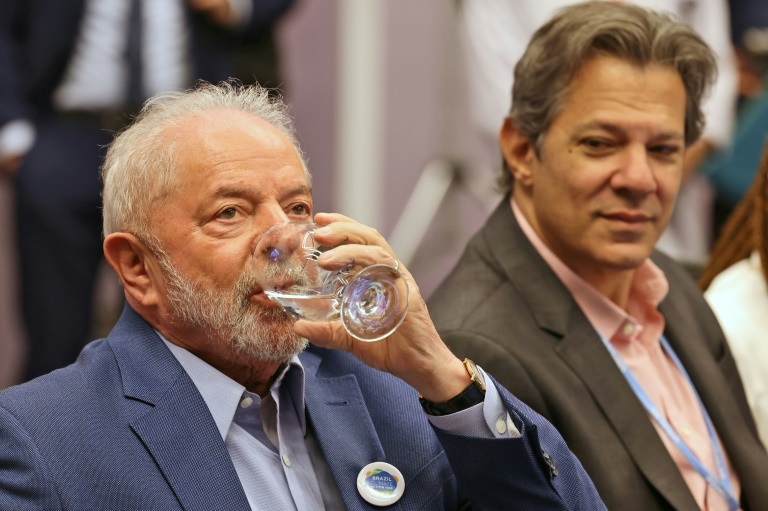
Brazil’s president-elect Luiz Inacio Lula da Silva on Friday named former Sao Paulo mayor Fernando Haddad, viewed unfavorably by many in the business community, as his finance minister.

Lula da Silva, who narrowly defeated incumbent Jair Bolsonaro in October elections, unveiled ministers in the key posts of foreign affairs, justice, defense, and chief of staff.

However, all eyes were on his pick for finance minister, with markets nervous over the incoming government’s commitment to fiscal discipline and the inflation-hit economy in fragile recovery.

“(I chose) comrade Fernando Haddad as Minister of Finance,” Lula said during a press conference in the capital Brasilia.

Haddad, 59, who served as education minister from 2005 to 2012, succeeds powerful liberal economy minister Paulo Guedes, an ally of far-right President Jair Bolsonaro.

After Lula’s new government takes office following his January 1 inauguration, the economy ministry will be dissolved and transformed into finance, industry and planning agencies.

When Haddad’s name started circulating for the role, markets reacted with unease, viewing him as too much on the left and fearing he would jeopardize the budgetary balance.

“He represents the heterodox economic policy” that Lula’s Workers’ Party (PT) defends, said Antonio Madeira of the MCM consultancy firm.

Madeira said that with Haddad in the finance ministry, he expects “an increase in spending” and “a more assertive state giving a significant role to public companies.”

Despite some of the reluctance towards Haddad, the Sao Paulo Stock Exchange’s Ibovespa index was up Friday by 0.5% after the names of the future ministers were announced.

Haddad said that in 2023 he will prioritize tax reform, a new fiscal framework, as well as “recover the international agreements that are stopped,” such as Mercosur-European Union.

Lula also tapped Mauro Vieira as foreign minister. 

Vieira is a 71-year-old career diplomat who has already served as foreign minister as well as ambassador to Argentina, the United States and the United Nations.

He is currently serving as ambassador to Croatia, which on Friday knocked Brazil out of the World Cup.

For the justice ministry, Lula appointed Flavio Dino, a former governor of the northeastern state of Maranhao.

Rui Costa, governor of the province of Bahia, was named to a ministry that falls between the roles of prime minister and chief of staff.

Jose Mucio Monteiro, a civilian, was named defense minister.

After appointing five white men to the key ministries, Lula promised that “in time, you will see more women than men here… as well as a number of Afro-Brazilians.”

“We will try and form a government in the image of Brazilian society.”

Lula, a former union leader who already served two terms as president between 2003 and 2010, said that he would announce the names of more ministers next week and he has “not yet decided the total number of ministers” he would have in his government.

One of the most highly anticipated posts is that of the environmental minister, who will play a crucial role as Brazil seeks to tackle deforestation in the Amazon.
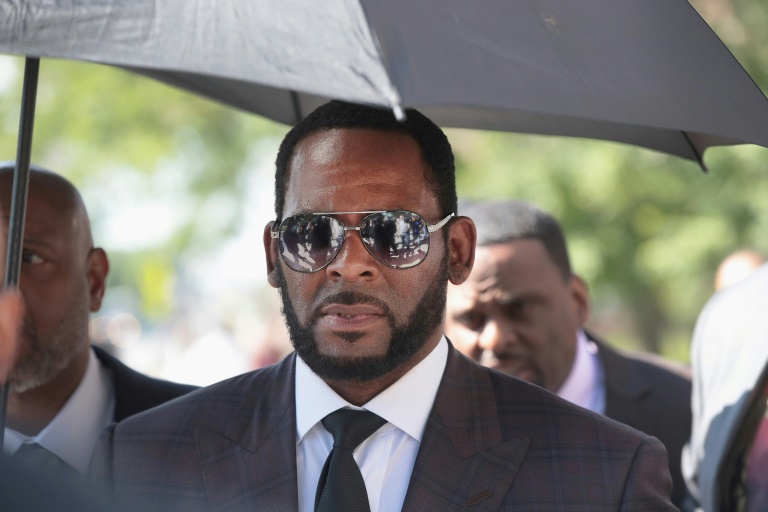
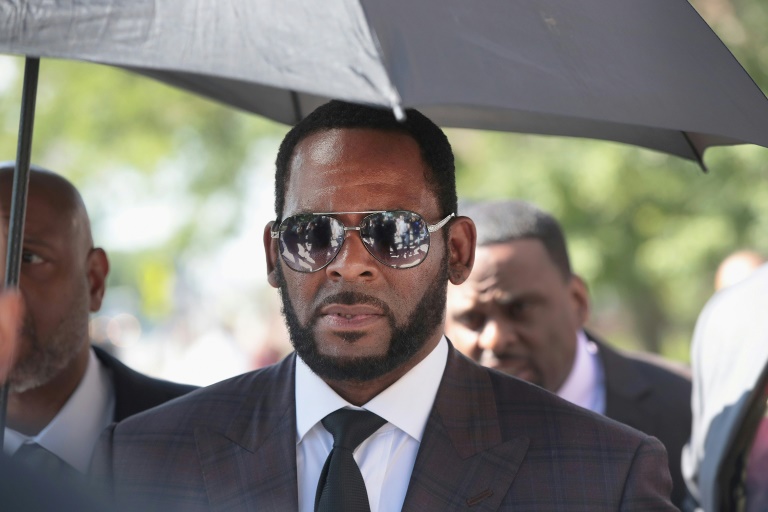
Bootleg album of jailed R&B star R. Kelly surfaces on Spotify and Apple Music: media

A previously unreleased album by disgraced US R&B singer R. Kelly, who is serving a 30-year sentence for sex offenses, dropped Friday on the Spotify and Apple Music platforms, a recording that the music press described as a bootleg. 

The release of the album, called “I Admit It,” was first reported by the celebrity entertainment site TMZ. It featured 13 tracks, including the 19-minute title song, which had been published on SoundCloud in 2018 before Kelly was convicted of sex crimes against teenage girls and producing child pornography. 

Spotify did not respond to an AFP request for comment and a few hours after the initial reports by TMZ and the Hollywood Reporter, the disc was no longer available on either music platform. 

Questioned by Variety, a representative for Sony Music, which owns Kelly’s musical rights, said the album had been briefly and unofficially made public, which, according to Variety, meant it had been a bootleg copy. 

A lawyer for Kelly, Jennifer Bonjean, told Variety the singer and his entourage were not behind this release and that her client “is having intellectual property stolen from him.” 

The singer, known worldwide for his hit “I Believe I Can Fly” and who sold 75 million records, was found guilty in September 2021 in a New York court of having masterminded a “system” of sexual exploitation of young women for three decades, including teenage girls. 

For these sexual crimes, the federal court in Brooklyn sentenced him to 30 years in prison. 

Last September, a court in Chicago, Illinois, found him guilty of production of child pornography and embezzlement from a minor. 

He could face a sentence of 10 to 90 years in prison, according to federal prosecutors in Illinois. 

The lawsuits against Kelly were seen as a major milestone in the #MeToo movement, as the majority of plaintiffs in the case were Black women. 

For decades, Kelly’s stellar career had been dogged by rumors and suspicions of sexual violence. He had long managed to silence them with financial agreements that included confidentiality clauses.

Bootleg album of jailed R&B star R. Kelly surfaces on Spotify and Apple Music: media

A previously unreleased album by disgraced US R&B singer R. Kelly, who is serving a 30-year sentence for sex offenses, dropped Friday on the Spotify and Apple Music platforms, a recording that the music press described as a bootleg. 

The release of the album, called “I Admit It,” was first reported by the celebrity entertainment site TMZ. It featured 13 tracks, including the 19-minute title song, which had been published on SoundCloud in 2018 before Kelly was convicted of sex crimes against teenage girls and producing child pornography. 

Spotify did not respond to an AFP request for comment and a few hours after the initial reports by TMZ and the Hollywood Reporter, the disc was no longer available on either music platform. 

Questioned by Variety, a representative for Sony Music, which owns Kelly’s musical rights, said the album had been briefly and unofficially made public, which, according to Variety, meant it had been a bootleg copy. 

A lawyer for Kelly, Jennifer Bonjean, told Variety the singer and his entourage were not behind this release and that her client “is having intellectual property stolen from him.” 

The singer, known worldwide for his hit “I Believe I Can Fly” and who sold 75 million records, was found guilty in September 2021 in a New York court of having masterminded a “system” of sexual exploitation of young women for three decades, including teenage girls. 

For these sexual crimes, the federal court in Brooklyn sentenced him to 30 years in prison. 

Last September, a court in Chicago, Illinois, found him guilty of production of child pornography and embezzlement from a minor. 

He could face a sentence of 10 to 90 years in prison, according to federal prosecutors in Illinois. 

The lawsuits against Kelly were seen as a major milestone in the #MeToo movement, as the majority of plaintiffs in the case were Black women. 

For decades, Kelly’s stellar career had been dogged by rumors and suspicions of sexual violence. He had long managed to silence them with financial agreements that included confidentiality clauses.

US basketball star Griner back home after Russia prisoner swap

American basketball star Brittney Griner was taken to a US Army base in Texas for a medical checkup on Friday after being released from a Russian prison in exchange for a notorious arms dealer known as the “Merchant of Death.”

Griner, who was arrested in Russia in February on drug charges, arrived overnight in San Antonio from Abu Dhabi, where the prisoner swap took place, and did not make any public statements.

Robert Whetstone, a spokesman for the Brooke Army Medical Center at Joint Base San Antonio-Fort Sam Houston, said the 32-year-old Griner, who is from Texas, was taken to the facility “as is standard protocol.”

“The US government is focused on ensuring that Brittney Griner and her family’s well-being are prioritized and that all assistance available be offered in an appropriate manner,” Whetstone said.

White House national security spokesman John Kirby told NBC that Griner was in “very good spirits when she got off the plane and appeared to be obviously in good health.”

Kirby said she would be given “all the access she needs to health care workers just to make sure that she is OK.”

Griner was exchanged in Abu Dhabi on Thursday for Viktor Bout, a 55-year-old Russian national who was serving a 25-year sentence in a US prison.

In footage released by Russian state media, Griner, shorn of her distinctive dreadlocks, and a relaxed and animated Bout crossed paths on the airport tarmac and headed towards the planes that would take them home.

Griner, a two-time Olympic gold medalist, WNBA champion and LGBTQ trailblazer, was arrested at a Moscow airport against a backdrop of soaring tensions over Ukraine.

– Putin says ‘compromises’ found –

Griner was accused of possessing vape cartridges with a small quantity of cannabis oil and sentenced in August to nine years in prison.

Bout, who was accused of arming rebels in some of the world’s bloodiest conflicts, was detained in a US sting operation in Thailand in 2008, sent to the United States and sentenced in 2012 to 25 years behind bars.

Bout told Kremlin-run media on Friday that Western countries were seeking to “destroy” Russia.

“The West believes that they did not finish us off in 1990, when the Soviet Union began to disintegrate,” Bout told state-run channel RT. “They think that they can just destroy us again and divide Russia.”

While Griner’s family and friends celebrated her release, another American held in Russia, former US Marine Paul Whelan, detained since 2018 and accused of spying, expressed disappointment he was not part of the swap.

The Griner family expressed solidarity with Whelan, saying in a statement: “We pray for Paul and for the swift and safe return of all wrongfully-detained Americans.” 

Russia President Vladimir Putin said Friday that other prisoner swaps with Washington were possible.

“This is the result of negotiations and the search for compromises,” Putin said. “In this case, compromises were found and we aren’t refusing to continue this work in the future.”

– ‘Joy and relief’ –

President Joe Biden announced Griner’s release on Thursday flanked by her wife, Cherelle Griner, and thanked the UAE for helping “facilitate” it.

WNBA commissioner Cathy Engelbert said there was a “collective wave of joy and relief” in the women’s professional league where Griner has been a star for a decade with the Phoenix Mercury.

At the time of her arrest, Griner had been playing for a professional team in Russia, as a number of WNBA players do in the off-season.

She pleaded guilty to the charges against her, but said she did not intend to break the law or use the banned substance in Russia.

Griner testified that she had permission from a US doctor to use medicinal cannabis to relieve pain from her many injuries.

The use of medical marijuana is not allowed in Russia.

The 2005 film “Lord of War” starring Nicolas Cage was based in part on Bout’s arms trafficking exploits, and he has been the subject of several books and TV shows.

Speaking to MSNBC, Kirby acknowledged concerns Bout could return to criminal activity.

“We’re going to make sure now that he’s a free man that we’re looking after our national security interests and we’re as vigilant as we can be,” he said.

US presses UN on Israeli settlement business blacklist

The United States said Friday it was pressing the United Nations not to update a blacklist of companies doing business in Israeli settlements, despite Washington’s calls on its ally to stop expansion in occupied Palestinian territory.

The State Department confirmed that it had approached the UN human rights office with concerns about the list, whose first publication in 2020 infuriated Israel.

The United States “continues to oppose any work to update it” and has raised concerns “directly with the Office of the High Commissioner” for rights, State Department spokesman Vedant Patel told reporters.

“Our view is that this database only serves to reinforce an anti-Israel bias that too often finds traction in UN venues,” he said.

“Also, this database poses a genuine threat to companies doing business or considering business operations in the region.”

The initial publication — which listed US companies including Airbnb, Expedia and TripAdvisor — was denounced by the then administration of Donald Trump, which had reversed longstanding US opposition to settlements in the West Bank.

Secretary of State Antony Blinken in a speech Sunday warned the incoming right-wing government of Benjamin Netanyahu that the United States would oppose settlement expansion as well as any bid to annex the West Bank.

Axios, quoting Israeli sources, said that the new UN rights chief, Volker Turk, faced an upcoming choice on whether to update the list and may do quietly without announcing it.

The UN report comes in response to a 2016 UN Human Rights Council resolution calling for a “database for all businesses engaged in specific activities related to Israeli settlements in the occupied Palestinian territory.”

After the list’s publication, Airbnb said it would stop advertising in settlements but it backtracked after a backlash in the United States and Israel.

In Norway, the list led the sovereign wealth fund to dump companies involved in settlements, citing concern over human rights violations.

Stock markets mixed on renewed US Fed rate fears

Global stocks had a mixed showing Friday, with hotter-than-expected US wholesale prices renewing concerns that the Federal Reserve will push on with aggressive policies against inflation.

Investors have been poring over economic data as they try to anticipate if the US central bank will shift to a softer approach to interest rate hikes at a regular meeting next week.

While inflation has shown signs of easing, government data released Friday showed that producer prices still remained elevated, sending key US indices into the red.

Meanwhile, markets welcomed China’s easing of its zero-Covid restrictions, which have hammered the world’s second biggest economy.

China’s consumer inflation slowed further in November as well, falling below two percent and giving authorities room to unveil fresh stimulus measures.

Hong Kong shares closed sharply higher Friday, building on big gains for the week while Chinese mainland markets were also higher.

European markets also ended the day higher.

Wall Street stocks finished lower, with the S&P 500 and Nasdaq Composite Index both shedding 0.7 percent, while the Dow Jones Industrial Average fell 0.9 percent.

This came after the producer price index — a gauge of inflation — rose by 0.3 percent in November, more than analysts expected.

“Wall Street had a somewhat mixed day of economic data,” said Edward Moya of the OANDA trading platform.

“A hot PPI report was then countered by a University of Michigan report that showed inflation expectations are coming down quickly,” he added in a note.

For now, markets are keeping a close eye on consumer price data due next week, which in turn could have a bearing on the Fed’s monetary policy path.

The Fed has raised rates by 0.75 percentage points in each of its last four meetings, but is widely expected to slow the pace after central bankers gather next week.

However, investors are concerned that a strong jobs market and other data might convince the Fed to tighten monetary policy longer than hoped.

The European Central Bank and the Bank of England also have rate decisions due next week after hiking their rates sharply this year.

“The hotter-than-expected PPI print called into question the ‘peak inflation’ narrative, although traders know that it is too late for the Fed to change its mind about a 50 (basis points) hike next week,” said Fawad Razaqzada, market analyst at Forex.com and City Index.

Elsewhere, oil prices jumped by more than one percent as Russian President Vladimir Putin threatened to cut production after Western nations imposed a $60 price cap on Russian crude.

“Today’s modest rebound however doesn’t change the fact that oil prices are now well below the levels they were at the time of the Russian invasion of Ukraine,” noted market analyst Michael Hewson at CMC Markets.

– Key figures around 2130 GMT –

New York – Dow: DOWN 0.9 percent at 33,476.46 (close)

New York – S&P 500: DOWN 0.7 percent at 3,934.38 (close)

New York – Nasdaq: DOWN 0.7 percent at 11,004.61 (close)

EURO STOXX 50: UP 0.5 percent at 3,942.62 (close)

London – FTSE 100: UP less than 0.1 percent at 7,476.63 (close)

Frankfurt – DAX: UP 0.7 percent at 14,370.72 (close)

Paris – CAC 40: UP 0.5 percent at 6,677.64 (close)

Tokyo – Nikkei 225: UP 1.2 percent at 27,901.01 (close)

Hong Kong – Hang Seng Index: UP 2.3 percent at 19,900.87 (close)

Shanghai – Composite: UP 0.3 percent at 3,206.95 (close)

Euro/dollar: DOWN at $1.0534 from $1.0560 on Thursday

Dollar/yen: DOWN at 136.57 yen from 136.61 yen

Pound/dollar: UP at $1.2262 from $1.2239

Euro/pound: DOWN at 85.90 pence from 86.24 pence

Brent North Sea crude: DOWN 0.1 percent at $76.10 per barrel

West Texas Intermediate: DOWN 0.6 percent at $71.02 per barrel

Stock markets mixed on renewed US Fed rate fears

Global stocks had a mixed showing Friday, with hotter-than-expected US wholesale prices renewing concerns that the Federal Reserve will push on with aggressive policies against inflation.

Investors have been poring over economic data as they try to anticipate if the US central bank will shift to a softer approach to interest rate hikes at a regular meeting next week.

While inflation has shown signs of easing, government data released Friday showed that producer prices still remained elevated, sending key US indices into the red.

Meanwhile, markets welcomed China’s easing of its zero-Covid restrictions, which have hammered the world’s second biggest economy.

China’s consumer inflation slowed further in November as well, falling below two percent and giving authorities room to unveil fresh stimulus measures.

Hong Kong shares closed sharply higher Friday, building on big gains for the week while Chinese mainland markets were also higher.

European markets also ended the day higher.

Wall Street stocks finished lower, with the S&P 500 and Nasdaq Composite Index both shedding 0.7 percent, while the Dow Jones Industrial Average fell 0.9 percent.

This came after the producer price index — a gauge of inflation — rose by 0.3 percent in November, more than analysts expected.

“Wall Street had a somewhat mixed day of economic data,” said Edward Moya of the OANDA trading platform.

“A hot PPI report was then countered by a University of Michigan report that showed inflation expectations are coming down quickly,” he added in a note.

For now, markets are keeping a close eye on consumer price data due next week, which in turn could have a bearing on the Fed’s monetary policy path.

The Fed has raised rates by 0.75 percentage points in each of its last four meetings, but is widely expected to slow the pace after central bankers gather next week.

However, investors are concerned that a strong jobs market and other data might convince the Fed to tighten monetary policy longer than hoped.

The European Central Bank and the Bank of England also have rate decisions due next week after hiking their rates sharply this year.

“The hotter-than-expected PPI print called into question the ‘peak inflation’ narrative, although traders know that it is too late for the Fed to change its mind about a 50 (basis points) hike next week,” said Fawad Razaqzada, market analyst at Forex.com and City Index.

Elsewhere, oil prices jumped by more than one percent as Russian President Vladimir Putin threatened to cut production after Western nations imposed a $60 price cap on Russian crude.

“Today’s modest rebound however doesn’t change the fact that oil prices are now well below the levels they were at the time of the Russian invasion of Ukraine,” noted market analyst Michael Hewson at CMC Markets.

– Key figures around 2130 GMT –

New York – Dow: DOWN 0.9 percent at 33,476.46 (close)

New York – S&P 500: DOWN 0.7 percent at 3,934.38 (close)

New York – Nasdaq: DOWN 0.7 percent at 11,004.61 (close)

EURO STOXX 50: UP 0.5 percent at 3,942.62 (close)

London – FTSE 100: UP less than 0.1 percent at 7,476.63 (close)

Frankfurt – DAX: UP 0.7 percent at 14,370.72 (close)

Paris – CAC 40: UP 0.5 percent at 6,677.64 (close)

Tokyo – Nikkei 225: UP 1.2 percent at 27,901.01 (close)

Hong Kong – Hang Seng Index: UP 2.3 percent at 19,900.87 (close)

Shanghai – Composite: UP 0.3 percent at 3,206.95 (close)

Euro/dollar: DOWN at $1.0534 from $1.0560 on Thursday

Dollar/yen: DOWN at 136.57 yen from 136.61 yen

Pound/dollar: UP at $1.2262 from $1.2239

Euro/pound: DOWN at 85.90 pence from 86.24 pence

Brent North Sea crude: DOWN 0.1 percent at $76.10 per barrel

West Texas Intermediate: DOWN 0.6 percent at $71.02 per barrel

US and Russia again make deal but broader diplomacy on ice

The United States and Russia again showed they can do business with their second prisoner exchange this year but, despite some suggestions by Moscow, few expect broader diplomacy over the Ukraine war.

Working-level US and Russian diplomats met Friday, a day after the swap, in Istanbul but a US official said they discussed a “narrow set of bilateral issues” and not the Ukraine war.

In a scene whose choreography if not personalities were reminiscent of the Cold War, basketball star Brittney Griner, arrested on minor drug charges, walked on the tarmac in Abu Dhabi on Thursday to a plane that took her back to the United States.

Walking in the other direction was Viktor Bout, an arms dealer arrested in a 2008 US sting operation in Thailand, who triumphantly returned home and declared that the West wants to “destroy” Russia.

Still in prison was Paul Whelan, an American accused by Russia of espionage. The former Marine’s detention sparked criticism of President Joe Biden by his Republican rivals, although the administration insisted it was still working to free him.

The Biden administration said that Russia did not budge. But President Vladimir Putin one day later dangled the possibility, saying that further swaps were “possible” with the United States, sparking speculation on which Russians he seeks to free.

“This is the result of negotiations and the search for compromises,” Putin told reporters on a visit to Kyrgyzstan.

He also said on Ukraine that “ultimately, in the end, an agreement will have to be reached” in Ukraine — which he invaded in February, prompting a furious defense backed by Western weapons that has driven back Russian forces.

– ‘Nothing more’ –

The United States and Russia arranged the prisoner exchange through quiet back channels with assistance from the United Arab Emirates.

In April, the two countries carried out a similar deal, swapping Trevor Reed, a former Marine who got into a drunken brawl, for drug-smuggling pilot Konstantin Yaroshenko, with the two swapped in Istanbul.

Turkey, the scene of Friday’s closed-door talks, and the United Arab Emirates both have complicated alliances with the United States and have balked at efforts to isolate Moscow, serving as hubs for Russian expatriates. 

Secretary of State Antony Blinken had proposed the prisoner swap involving Griner to his counterpart, Russian Foreign Minister Sergei Lavrov, in a July telephone call, their only known direct conversation since the war.

Blinken said after Griner’s release that the United States was also willing to work with Russia on narrow issues such as arms control but that the swap indicated no wider diplomatic opening.

“This is about getting unjustly detained Americans back to their families,” Blinken told CBS News. 

“That was the focus. It’s nothing more. It’s also nothing less.”

Western diplomats privately say it is crucial not to let back-channel diplomacy play into the hands of Putin by making Russia an issue of the United States versus Russia.

Russia alleges it faced a threat from Ukraine’s NATO aspirations. The United States insists that any peace initiative is up to Ukraine, the country that was invaded, and that it will not negotiate over Kyiv’s head.

Will Pomeranz, director of the Wilson Center’s Kennan Institute, said the swap was purely focused on the desires to free prisoners.

“I don’t think this will have any impact really on US-Russia relations. They are in such a terrible, terrible state and I don’t think this really changes the dynamic,” he said.

US sounds alarm over 'harmful' Iran-Russia military partnership

The United States on Friday expressed alarm over a “full-scale defense partnership” between Moscow and Tehran, describing it as “harmful” to Ukraine, Iran’s neighbors and the world.

Iran stands accused by Western powers of supplying drones to Russia — which rejected the US allegations — as Moscow batters Ukraine’s energy infrastructure in search of an advantage in the bloody conflict.

Washington has previously condemned Iran-Russia security cooperation, but on Friday described an extensive relationship involving equipment such as helicopters and fighter jets as well as drones, with the latter items resulting in new US sanctions.

“Russia is seeking to collaborate with Iran in areas like weapons development, training,” White House national security spokesman John Kirby told reporters.

Moscow “is offering Iran an unprecedented level of military and technical support — that is transforming their relationship into a fully fledged defense partnership,” he said.

“We have also seen reports that Moscow and Tehran are considering the establishment of a joint production line for lethal drones in Russia. We urge Iran to reverse course (and) not to take these steps.”

Moscow’s UN envoy Vassily Nebenzia pushed back later in the day, telling a Security Council meeting that “the military industrial complex in Russia can work perfectly fine and doesn’t need anyone’s assistance.”

The drone allegations, he said, were “already refuted” multiple times before.

Earlier, Kirby announced that the United States would sanction three Russian-based entities active in “the acquisition and use of Iranian drones.”

The sanctions target the Russian Aerospace Forces, the 924th State Center for Unmanned Aviation, and the Command of the Military Transport Aviation.

“The United States will continue to use every tool at our disposal to disrupt these transfers and impose consequences on those engaged in this activity,” Secretary of State Antony Blinken said in a statement on the sanctions.

Last month, Tehran admitted it had sent drones to Russia, but insisted they were supplied before the invasion of Ukraine.

– ‘Sordid deals’ –

Kirby said the United States is also concerned that Russia “intends to provide Iran with advanced military components,” including helicopters and air defense systems.

Iranian pilots have reportedly been learning to fly advanced Sukhoi Su-35 warplanes in Russia, and Tehran may receive the aircraft within the next year, which would “significantly strengthen Iran’s air force relative to its regional neighbors,” Kirby said.

The United States also believes that Iran is considering the sale of “hundreds of ballistic missiles” to Russia, he said.

Britain’s Foreign Secretary James Cleverly took aim Friday at the “sordid deals” between Moscow and Tehran, saying in a statement that Iran had sent drones to Russia in exchange for “military and technical support” from Moscow.

This “will increase the risk it poses to our partners in the Middle East and to international security,” Cleverly said, vowing that “the UK will continue to expose this desperate alliance and hold both countries to account.”

Kirby on Friday announced a new $275 million aid package to help boost Ukraine’s air defenses, against Russian drones in particular.

He said the aid “will soon be on its way to provide Ukraine with new capabilities to boost its air defenses and counter the threats that Ukraine is facing from drones.”

The Pentagon released details on the package, saying it includes counter-drone equipment, as well as ammunition for Himars precision rocket systems, 80,000 155mm artillery rounds, some 150 generators, and other equipment.

The United States has previously said that generators were being provided to Kyiv to help Ukraine with its electricity needs amid repeated Russian strikes on energy infrastructure.

The latest package — which is made up of equipment taken from existing US stocks — brings Washington’s military assistance to Ukraine since Russia’s February 24 invasion to more than $19.3 billion.

Guyana opens bidding for offshore oil blocks

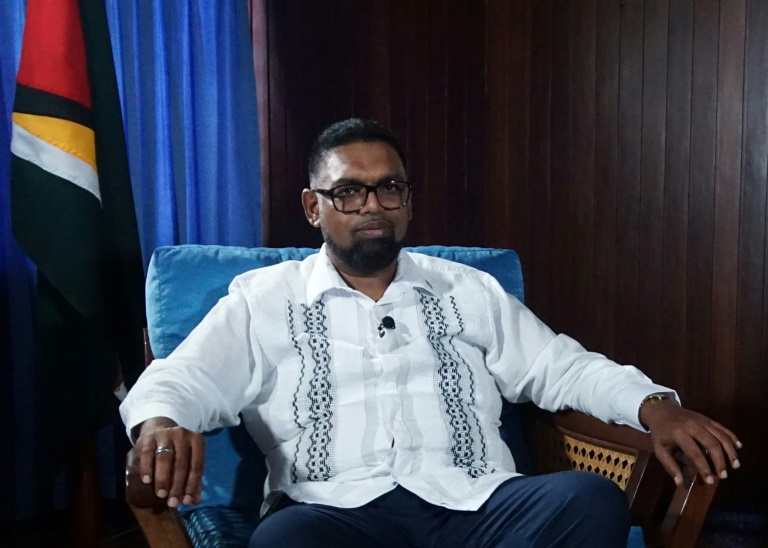
Guyana’s President Irfaan Ali on Friday opened bidding for the exploitation of offshore oil blocks in the tiny country, which has the world’s highest reserves of crude oil per capita.

Ali said the government hoped to award 11 blocks in shallow waters and three in deep waters by May 31, 2023.

Winning bidders would pay a “signature bonus” of $20 million for the right to exploit deep water oil blocks and $10 million for oil-rich areas in shallow waters.

“What we are seeking to do is to have the best possible outcome for Guyana, given the lessons we have learned,” said Ali. 

In September, activist and lawyer Christopher Ram told AFP that different governments had sold the country’s “sovereignty” by signing “bad and unbalanced” contracts in favor of oil companies, such as ExxonMobil, which operates the prolific Stabroek Block.

“The oil curse seems inevitable,” he said, in reference to the trend in which poor nations with valuable resources fail to turn them into social and economic progress.

The heavily-forested Guyana, one of South America’s poorest and smallest countries, was recently found to have proven reserves of at least 10 billion barrels of oil, likely much more according to experts.

Ali said companies would have to pay $20,000 to take part in the bidding process, and would have until April 14, 2023 to submit their proposals.

He added that under the new licenses to be issued, companies would not be allowed to hold onto the oil blocks for a long time without doing the seismic work and drilling they commit to in their work plan.

“Once the bidders do not fulfill their obligations, the process of relinquishment — that is where they will have to hand back the block to the government — is made stronger and more expeditious,” said Ali.

Guyana, a country of 800,000 people, currently produces 360,000 barrels of oil a day.

Close Bitnami banner
Bitnami