AFP

Griner heads home after release from Russia in prisoner swap

American basketball star Brittney Griner was headed back to the United States on Thursday after being released from a Russian prison in exchange for an arms dealer known as the “Merchant of Death.”

Griner, 32, who was arrested in Russia in February on drug charges, and Viktor Bout, 55, who was serving a 25-year sentence in a US prison, were exchanged at an airport in Abu Dhabi.

In footage released by Russian state media, Griner, shorn of her distinctive dreadlocks, and a relaxed and animated Bout could be seen crossing paths on the airport tarmac and heading towards the planes that would take them home.

President Joe Biden announced Griner’s release early Thursday in an address to the nation at the White House. “She is safe. She is on a plane. She is on her way home,” he said.

The president said he had spoken to her and she was in “good spirits” after suffering “needless trauma.”

Griner, a two-time Olympic gold medalist, WNBA champion and LGBT trailblazer, was arrested at a Moscow airport nine months ago against a backdrop of soaring tensions over Ukraine.

She was accused of possession of vape cartridges with a small quantity of cannabis oil and sentenced in August to nine years in prison.

Bout, who was accused of arming rebels in some of the world’s bloodiest conflicts, was detained in a US sting operation in Thailand in 2008, extradited to the United States and sentenced in 2012 to 25 years behind bars.

He landed in Russia Thursday, state television said. “Don’t worry, everything is OK, I love you very much,” he told his mother Raisa.

While Griner’s family and friends celebrated her release, another American held in Russia, Paul Whelan, a former US Marine detained since 2018 and accused of spying, was not part of Thursday’s exchange and he told CNN he was “greatly disappointed.”

“I don’t understand why I’m still sitting here,” Whelan told the US television network in a phone call from the Russian penal colony where he is imprisoned.

Biden pledged to obtain Whelan’s freedom, saying “we will never give up.”

“Sadly, for totally illegitimate reasons, Russia is treating Paul’s case different than Brittney’s,” he said.

As for Griner’s release, Biden said “this is a day we’ve worked toward for a long time. It took painstaking and intense negotiations.”

– ‘Family is whole’ –

Biden made the announcement flanked by Griner’s wife, Cherelle Griner, Vice President Kamala Harris and Secretary of State Antony Blinken.

“I’m just standing here, overwhelmed with emotions,” Cherelle Griner said.

She acknowledged Whelan’s fate, saying: “Today my family is whole, but as you all are aware there’s so many other families who are not whole.”

In a statement late Thursday, the Griner family thanked President Biden and his administration again, and said they “pray for Paul and for the swift and safe return of all wrongfully-detained Americans.”

“We ask that you respect our privacy as we embark on this road to healing,” they added. 

WNBA commissioner Cathy Engelbert said there was a “collective wave of joy and relief” in the women’s professional league where the 6’9″ (2.06 meter) Griner has been a star for a decade with the Phoenix Mercury.

Biden thanked the United Arab Emirates for helping “facilitate” Griner’s release and the UAE issued a joint statement with Saudi Arabia saying it was the result of “mediation efforts” by leaders of the two Arab nations.

White House Press Secretary Karine Jean-Pierre said, however, there was “no mediation involved” and “the only countries that negotiated this deal were the United States and Russia.”

– ‘Rescue our compatriot’ –

At the time of her arrest, Griner had been playing for a professional team in Russia, as a number of WNBA players do in the off-season.

She pleaded guilty to the charges against her, but said she did not intend to break the law or use the banned substance in Russia.

Griner testified that she had permission from a US doctor to use medicinal cannabis to relieve pain from her many injuries.

The use of medical marijuana is not allowed in Russia.

The Russian foreign ministry said it had been negotiating with Washington to secure Bout’s release “for a long time” and that initially the United States had “refused dialogue” on including him in any swap.

“Nevertheless, the Russian Federation continued to actively work to rescue our compatriot,” it said. “The Russian citizen has been returned to his homeland.”

The 2005 film “Lord of War” starring Nicolas Cage was based in part on Bout’s arms trafficking exploits and he has been the subject of several books and TV shows.

Russia’s ambassador to the United States, Anatoly Antonov, told Bout in a video message that he was aware that the arms dealer had been subjected to “powerful physical and moral pressure” while in prison, Russian news agency TASS reported.

“And you endured it with dignity,” the ambassador added, saying Moscow was “genuinely delighted by the fact that Russia’s efforts for your release have eventually succeeded.”

Asked about Bout’s release, a senior US defense official said “there is a concern that he would return to doing the same kind of work that he’s done in the past.”
Asian markets mixed with focus on US inflation data, Fed meeting

Asian markets were mixed Friday as optimism about China’s economic reopening continues to face off against concerns about rising interest rates and a possible recession.

With few Thursday catalysts to work with, traders were setting their sights on the release of two key US inflation reports — on Friday and Monday — and the Federal Reserve’s final policy meeting of the year.

In light of data signalling almost a year of interest rate hikes was beginning to impact prices, the US central bank is widely expected to announce a 50 basis point lift at the gathering, compared with the previous four straight 75-point increases.

But there remains some concern that the world’s top economy remains resilient and the jobs market too strong, meaning the Fed might have to keep tightening monetary policy longer than had been hoped.

That uncertainty has weighed on US markets, which have endured a tough December so far, and analysts warned of further pain.

“We think the worst is yet to come,” Gary Schlossberg, at Wells Fargo Investment Institute, told Bloomberg Television.

“We’re looking for a moderate recession next year, which means a moderate decline in corporate profits is our target for the year.”

The mood was slightly better in Asia, particularly Hong Kong, where investor sentiment has been buoyed by China’s decision to shift away from its nearly three-year zero-Covid strategy of lockdowns and mass testing that has battered the economy.

After widespread protests across the country, leaders have decided to loosen their grip, fanning excitement that growth will pick up as activity returns to normal.

A pledge to help the embattled property sector, which accounts for a huge part of the economy, was also providing a lift.

“The process will likely be gradual and bumpy over the year ahead, due to low immunisation of the population and unpreparedness of the health system to deal with a possible further surge in cases,” Silvia Dall’Angelo, at Federated Hermes, said in a note.

“Reopening should gain traction in the second half of next year. At that stage, the Chinese recovery will likely accelerate, as the removal of restrictions will allow fiscal and monetary stimulus to be effective.”

And JPMorgan strategist Marko Kolanovic added that he “remains positive on China, due to favorable monetary conditions as well as an eventual full reopening and end of Covid”.

Hong Kong rose in early trade, along with Tokyo, Sydney, Seoul, Singapore and Taipei, though Shanghai, Wellington, Manila and Jakarta edged down.

Oil prices rose after another big drop, with both main contracts down more than 10 percent this week as expectations for a recession in the United States and elsewhere weighed on demand expectations.

– Key figures around 0230 GMT –

Tokyo – Nikkei 225: UP 1.4 percent at 27,946.21 (break)

Hong Kong – Hang Seng Index: UP 0.3 percent at 19,498.04

Shanghai – Composite: DOWN 0.2 percent at 3,189.58

Euro/dollar: UP at $1.0570 from $1.0560 on Thursday

Dollar/yen: DOWN at 136.29 yen from 136.61 yen

Pound/dollar: UP at $1.2255 from $1.2239

Euro/pound: DOWN at 86.22 pence from 86.24 pence

West Texas Intermediate: UP 1.0 percent at $72.16 per barrel

Brent North Sea crude: UP 0.9 percent at $76.82 per barrel

Asian markets mixed with focus on US inflation data, Fed meeting

Asian markets were mixed Friday as optimism about China’s economic reopening continues to face off against concerns about rising interest rates and a possible recession.

With few Thursday catalysts to work with, traders were setting their sights on the release of two key US inflation reports — on Friday and Monday — and the Federal Reserve’s final policy meeting of the year.

In light of data signalling almost a year of interest rate hikes was beginning to impact prices, the US central bank is widely expected to announce a 50 basis point lift at the gathering, compared with the previous four straight 75-point increases.

But there remains some concern that the world’s top economy remains resilient and the jobs market too strong, meaning the Fed might have to keep tightening monetary policy longer than had been hoped.

That uncertainty has weighed on US markets, which have endured a tough December so far, and analysts warned of further pain.

“We think the worst is yet to come,” Gary Schlossberg, at Wells Fargo Investment Institute, told Bloomberg Television.

“We’re looking for a moderate recession next year, which means a moderate decline in corporate profits is our target for the year.”

The mood was slightly better in Asia, particularly Hong Kong, where investor sentiment has been buoyed by China’s decision to shift away from its nearly three-year zero-Covid strategy of lockdowns and mass testing that has battered the economy.

After widespread protests across the country, leaders have decided to loosen their grip, fanning excitement that growth will pick up as activity returns to normal.

A pledge to help the embattled property sector, which accounts for a huge part of the economy, was also providing a lift.

“The process will likely be gradual and bumpy over the year ahead, due to low immunisation of the population and unpreparedness of the health system to deal with a possible further surge in cases,” Silvia Dall’Angelo, at Federated Hermes, said in a note.

“Reopening should gain traction in the second half of next year. At that stage, the Chinese recovery will likely accelerate, as the removal of restrictions will allow fiscal and monetary stimulus to be effective.”

And JPMorgan strategist Marko Kolanovic added that he “remains positive on China, due to favorable monetary conditions as well as an eventual full reopening and end of Covid”.

Hong Kong rose in early trade, along with Tokyo, Sydney, Seoul, Singapore and Taipei, though Shanghai, Wellington, Manila and Jakarta edged down.

Oil prices rose after another big drop, with both main contracts down more than 10 percent this week as expectations for a recession in the United States and elsewhere weighed on demand expectations.

– Key figures around 0230 GMT –

Tokyo – Nikkei 225: UP 1.4 percent at 27,946.21 (break)

Hong Kong – Hang Seng Index: UP 0.3 percent at 19,498.04

Shanghai – Composite: DOWN 0.2 percent at 3,189.58

Euro/dollar: UP at $1.0570 from $1.0560 on Thursday

Dollar/yen: DOWN at 136.29 yen from 136.61 yen

Pound/dollar: UP at $1.2255 from $1.2239

Euro/pound: DOWN at 86.22 pence from 86.24 pence

West Texas Intermediate: UP 1.0 percent at $72.16 per barrel

Brent North Sea crude: UP 0.9 percent at $76.82 per barrel

Private prayers: US pastor describes Supreme Court influence effort

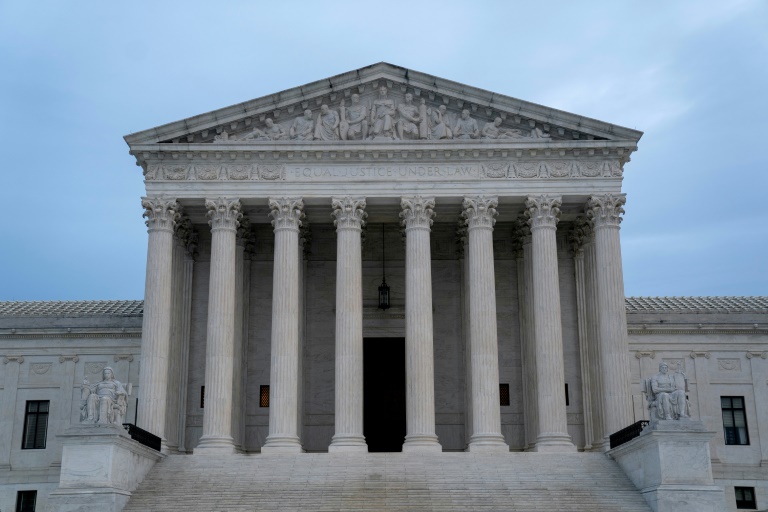
A former activist from the US religious right told Congress Thursday how he took advantage of the US Supreme Court’s lack of a code of ethics to conduct an intense lobbying campaign aimed at its conservative judges.

Pastor Robert Schenck, 64, detailed his efforts — which included prayers, dinners and trips — during a hearing of the House Judiciary Committee focused on the ethics rules, or lack thereof, for Supreme Court justices. 

Unlike their colleagues in federal courts, or elected members of Congress, the nine Supreme Court justices do not have to disclose gifts given to them nor any meetings with lobbyists, and are not legally required to recuse themselves in the event of a conflict of interest.

Pastor Schenck said he took advantage of this vacuum to run a 20-year influence campaign called “Operation Higher Court.”

The stealth campaign “involved my recruitment of wealthy donors, as stealth missionaries, who befriended justices that shared our conservative social and religious sensibilities,” Schenk said, mentioning conservative Justices Samuel Alito and the late Antonin Scalia by name. 

The aim was “to shore up their resolve to render solid, unapologetic opinions, particularly against abortion.”

Some of his “stealth missionaries” prayed with the judges, others invited them to dinner with their wives, even to their homes, and were invited back in turn by the justices, he said. 

Unlike Congress, where the dollar value of gifts are limited, “we knew that there was a great deal of liberty and latitude there…it made our operation…much easier,” Schenck said.

He alleged that in 2014, during one of these dinners, Alito “leaked” to a couple the content of an upcoming decision on contraception.

Schenck had written over the summer to the court’s chief justice about the Alito incident, but the letter was not reported by US media until late November.

Alito and the dinner attendees have all denied the charge. During the hearing, Republican lawmakers accused Schenck of lying.

He insisted that he discovered late in life that politics corrupts religion, and now wanted to tell “the truth.”

Alito was the author of the June ruling that overturned the US nationwide right to abortion.

In a highly uncommon occurrence, that decision was leaked before its publication, causing shockwaves across the country.

A bill has passed a House committee that would increase the transparency requirements for US Supreme Court justices, but it is not expected to advance before Republicans take over control of the House in January, when it will likely be thrown out.

Central America's biggest mine faces closure over tax spat

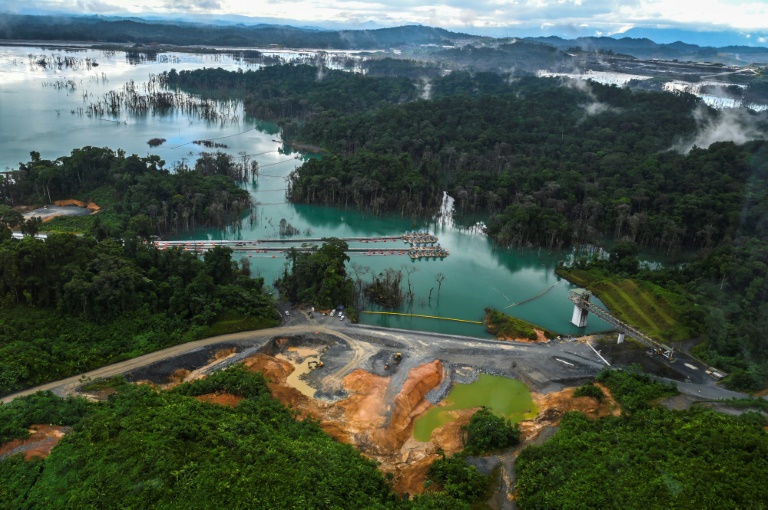
Rising up through the lush vegetation of Panama’s Caribbean coast, a 125-meter chimney serves as a beacon for helicopters approaching the largest mine in Central America, which faces closure next week over a contract dispute.

Gigantic 400-tonne trucks slowly wind around the stepped slopes of a massive gash in the earth one kilometer wide, the ochre and grey of the copper mine standing in stark contrast to the verdant jungle surrounding it.

The activity could grind to an expensive halt in a matter of days.

Canadian mining giant First Quantum Minerals has until next Wednesday to sign a new contract with the government, which is demanding the company multiply the taxes it pays by 10.

If the parties do not agree, the disagreement could halt the work of a mining project considered the largest private investment in Panama’s history, contributing four percent of the country’s GDP and 75 percent of export revenues.

“We have been given a deadline to sign the new contract by December 14, to accept the new terms,” First Quantum’s manager in Panama, Keith Green, who is Scottish, told AFP.

“We intend to reach an agreement, but negotiations are a bit deadlocked,” he added.

First Quantum, one of the largest copper miners in the world, began commercial copper production at the site in Donoso in 2019, through its subsidiary Minera Panama.

It has spent $10 billion on earthworks, construction buildings to house more than 7,000 employees, the purchase of heavy machinery, a power plant, a port for deep-draft merchant ships, access roads, and re-forestation plans.

– ‘Fair income’ –

President Laurentino Cortizo in January announced plans to toughen the conditions of the mining license, with a new contract that would oblige the mining company to pay “at least” $375 million to Panama annually — ten times what it is currently paying.

“Panama has the inalienable right to receive fair income from the extraction of its mineral resources, because the copper is Panamanian,” he said.

This mine is “the biggest in Central America,” producing 300,000 tons of copper concentrate per year, said Green.

The deposit, discovered in 1968, lies on the Caribbean coast, 240 kilometers by road from the capital Panama City.

The company, listed on the Toronto Stock Exchange, built the Punta Rincon International Port next to the mine to transport the copper by ship, due to a lack of roads connecting the Colon port, 40 kilometers (25 miles) away.

Despite the uncertainty over the mine’s future, activity has not slowed and the company has continued to invest in the site.

A new 200-tonne drilling rig — as tall as a three-story building — was inaugurated in a ceremony on Tuesday, causing heavy air traffic.

Helicopter pilot Oldemar Arauz explains that most officials visiting the mine prefer the one-hour air trip to the four-hour drive on a narrow road from the capital.

The drilling rig, made in the United States by the Swedish company Epiroc, cost $6 million, and was transported to the mine in 10 trucks. 

“Latin America has 200 of these drills, 50 in Chile and now three in Panama,” said Epiroc’s Latin America manager Hans Traub.

The drill was assembled by Chilean engineer Alex Gonzalez, who previously worked in Chuquicamata, the world’s largest open pit copper mine, situated in the Atacama desert, which has been operating since 1915.

Central America does not have the same mining tradition seen further south. Mining is illegal in Costa Rica and El Salvador, and while there is much potential for growth in Panama, the industry’s future is now hanging in the balance.

Japanese billionaire Maezawa announces crew of artists for lunar voyage

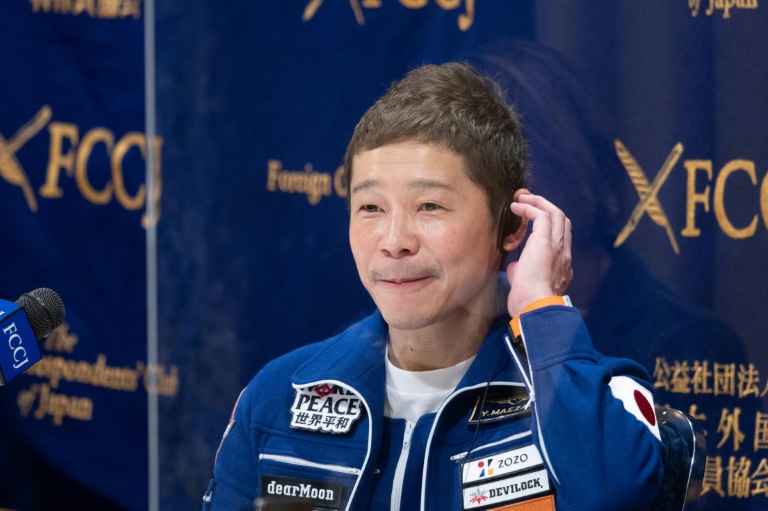
Japanese billionaire Yusaku Maezawa announced Thursday eight crew members who will join him for a journey around the Moon planned for 2023 on a SpaceX rocket that is still under development.

The mission, known as dearMoon, was first announced in 2018. Maezawa initially said he would invite a crew of six-to-eight artists, but later changed the entry requirements to a competition which applicants could apply for online.

The eight people chosen were DJ and producer Steve Aoki of the United States; Tim Dodd, an American YouTuber; Czech artist Yemi AD; Rhiannon Adam, an Irish photographer; British photographer Karim Iliya; American filmmaker Brendan Hall; and Indian actor Dev Joshi, and K-pop musician TOP of South Korea.

There were also two backup crew members: snowboarder Kaitlyn Farrington of the US and dancer Miyu of Japan.

“I hope each and every one will recognize the responsibility that comes with leaving the Earth, traveling to the Moon and back,” Maezawa said in an announcement video on YouTube.

“They will gain a lot from this experience, and I hope they will use that to contribute to the planet, to humanity.”

According to a mission profile graphic on the dearMoon website, the round trip would last almost six days and circumnavigate the Moon without landing.

When completed, SpaceX’s Starship will be the most powerful rocket ever built.

Although its upper stage has succeeded in test flights within the atmosphere and successfully landed, SpaceX has yet to carry out an orbital test flight — something founder Elon Musk has repeatedly promised will happen by the end of 2022.

Maezawa, the mega-rich founder of Japan’s largest online fashion mall, flew last year to the International Space Station aboard a Russian Soyuz rocket, paying a reported 10 billion yen ($73 million on current conversion rates).

Recession in US 'not inevitable': Yellen

A recession in the US is “not inevitable,” Treasury Secretary Janet Yellen said Thursday, adding that she believes the world’s biggest economy is on the right track in lowering inflation.

Her comments come on the heels of a forceful campaign by the US central bank to cool demand this year, walking a tightrope between lowering consumer costs while trying not to tip the economy into a downturn.

For now, many economists expect the US could experience a downturn next year.

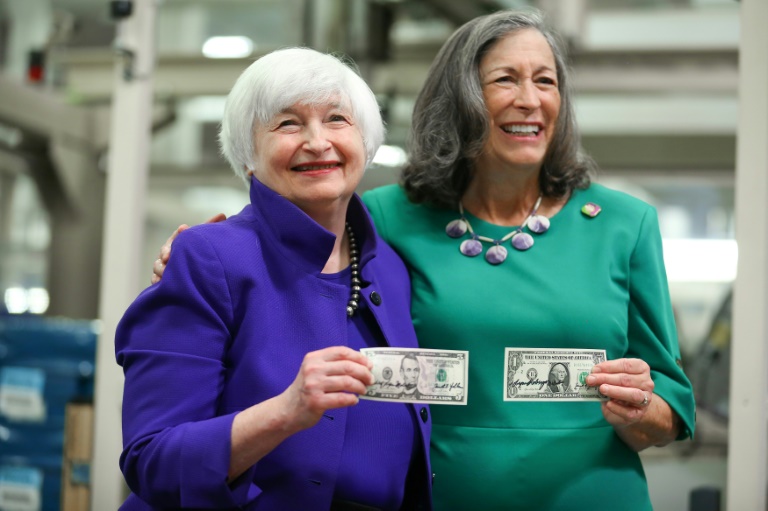
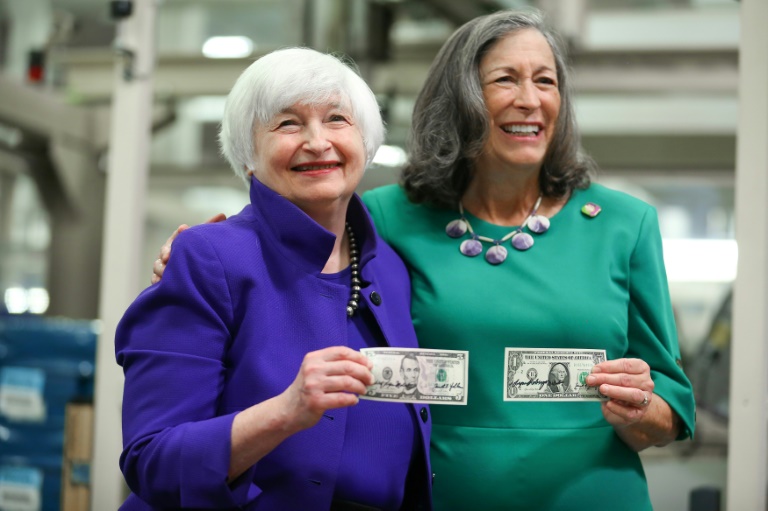
On “whether or not we can avoid a recession, I believe the answer is yes,” she told reporters during a visit to the Bureau of Engraving and Printing’s currency facility in Fort Worth, Texas.

Supply chain bottlenecks are starting to ease and new apartment rents have “essentially peaked,” with the labor market cooling slightly as well, Yellen said.

“Without seeing significant net nationwide layoffs, I believe we’re on the right track in terms of lowering inflation and a recession’s not inevitable,” she added.

As businesses tone down their growth expectations and hiring plans, the number of people leaving their jobs has also dipped a little, she said.

Last week, Federal Reserve Chair Jerome Powell added it remains “very plausible” for the US to reach a soft landing, referring to a scenario where unemployment rises but the economy avoids a severe recession.

On Thursday, Yellen said that the United States has been “listening very carefully” to allies and trying to understand their concerns on Washington’s push to spur climate-friendly technologies in America.

“I think the objective that Congress had was to make sure we have supply chains that are secure, and to try to include our allies in them,” she said.

Asked if she had plans to visit China following President Joe Biden’s meeting with his Chinese counterpart Xi Jinping, Yellen said she had no definite plans yet but was “certainly open to it.”

Recession in US 'not inevitable': Yellen

A recession in the US is “not inevitable,” Treasury Secretary Janet Yellen said Thursday, adding that she believes the world’s biggest economy is on the right track in lowering inflation.

Her comments come on the heels of a forceful campaign by the US central bank to cool demand this year, walking a tightrope between lowering consumer costs while trying not to tip the economy into a downturn.

For now, many economists expect the US could experience a downturn next year.

On “whether or not we can avoid a recession, I believe the answer is yes,” she told reporters during a visit to the Bureau of Engraving and Printing’s currency facility in Fort Worth, Texas.

Supply chain bottlenecks are starting to ease and new apartment rents have “essentially peaked,” with the labor market cooling slightly as well, Yellen said.

“Without seeing significant net nationwide layoffs, I believe we’re on the right track in terms of lowering inflation and a recession’s not inevitable,” she added.

As businesses tone down their growth expectations and hiring plans, the number of people leaving their jobs has also dipped a little, she said.

Last week, Federal Reserve Chair Jerome Powell added it remains “very plausible” for the US to reach a soft landing, referring to a scenario where unemployment rises but the economy avoids a severe recession.

On Thursday, Yellen said that the United States has been “listening very carefully” to allies and trying to understand their concerns on Washington’s push to spur climate-friendly technologies in America.

“I think the objective that Congress had was to make sure we have supply chains that are secure, and to try to include our allies in them,” she said.

Asked if she had plans to visit China following President Joe Biden’s meeting with his Chinese counterpart Xi Jinping, Yellen said she had no definite plans yet but was “certainly open to it.”

New York Times workers stage first strike in 40 years

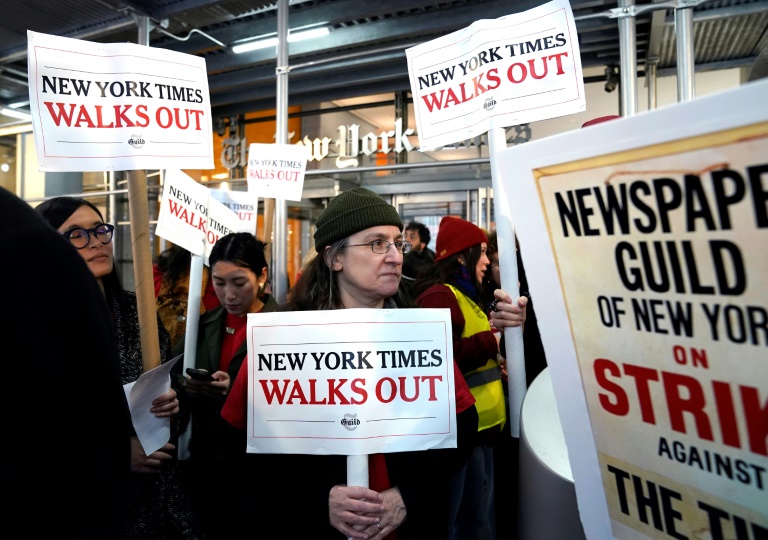
More than 1,000 New York Times employees went on strike Thursday in the first industrial action of its kind at the newspaper in more than 40 years.

Journalists and other workers at the storied media outlet, often referred to as America’s paper of record, walked out at midnight for 24 hours after failing to reach an agreement with the company on a new round of contract negotiations.

The NewsGuild of New York, a union representing the striking workers, had said that a key sticking point was the management’s refusal to raise wages in line with surging inflation.

Health and retirement benefits as well as return-to-work policies following the coronavirus pandemic were also an issue.

“Over 1,100 New York Times workers are now officially on work stoppage, the first of this scale at the company in 4 decades,” the union tweeted early Thursday morning.

New York Times spokeswoman Danielle Rhoades Ha told US media in a statement that negotiations had not broken down and “it is disappointing that they are taking such an extreme action when we are not at an impasse.”

Phoebe Lett, a podcast producer at the media outlet, tweeted: “It is heartbreaking to have to stand with nearly 1,200 colleagues who sacrifice everything for the good of this place, hat in hand, asking @nytimes to show us they value us. But here we are.”

The union said its members were “willing to do what it takes to win a better newsroom for all.”

The Times said in an article about the strike that nonunion newsroom employees would produce news on Thursday.

More than 1,800 people work in The Times’s newsroom in total.

“We will produce a robust report on Thursday… But it will be harder than usual,” executive editor Joe Kahn said in an email to staff.

The contract between The Times and The New York Times Guild expired in March 2021, according to the article on the strike, which added that roughly 40 bargaining sessions have been held since.

The Times has offered union members a 5.5 percent raise upon ratifying the contract, 3 percent raises in 2023 and 2024, and a 4 percent retroactive bonus to compensate for a lack of raises since the contract expired.

The union has proposed a 10 percent raise upon ratification, 5.5 percent raises in 2023 and 2024, and an 8.5 percent retroactive bonus.

“The company is doing very well now on our work and the raises they are offering us and the contract are very low, well below inflation,” 34-year-old graphics editor Albert Sun told AFP during a protest by the striking workers outside the paper’s headquarters in Midtown Manhattan.

Markets jostled by recession fears, China optimism

Wall Street stocks staged a relief rally and Hong Kong soared on Thursday, but recession fears held back equity trading elsewhere.

Oil prices, meanwhile, added to recent sharp losses.

Equity markets had been rising ahead of US jobs figures last week, boosted by a surprise drop in inflation and comments from Federal Reserve boss Jerome Powell that the central bank was likely to raise rates at a slower pace soon.

But robust employment data and a jump in wages, plus figures on Monday showing a forecast-busting pickup in the US services sector last month, raised the prospect that the Fed will not back down from sharp rate increases when it meets next week.

That sent stocks slumping, with even China’s relaxing of Covid testing and quarantine restrictions — setting up the prospect of a rebound in activity in the world’s second-largest economy — unable to turn sentiment.

But following five straight declines, the S&P 500 climbed 0.8 percent.

“What we have today, then, is a little rebound spirit — an assumption that the stock market is due for a bounce after behaving so poorly in more recent action,” said market analyst Patrick O’Hare at Briefing.com.

European stocks spent the afternoon wobbling between gains and losses. Frankfurt ended the day flat, while London and Paris shed 0.2 percent.

“The risk-off sentiment… remains hard to kick into touch as concerns about recession stay front and center,” noted Susannah Streeter, senior investment and markets analyst at Hargreaves Lansdown.

“The evil twins of recession and persistently higher inflation are lurking, keeping investors on edge.”

Analysts pointed out that two-year US Treasury yields were much higher than those of 10-year bonds, which is usually considered a clear indication of a looming downturn.

This week also saw the heads of some of Wall Street’s biggest banks warn of a slowdown.

– China Covid shift –

The fear of a US recession is playing off against China’s shift away from its zero-Covid strategy of snap lockdowns and mass testing.

After widespread protests last month against the strict measures and calls for more political freedoms, authorities have scaled back many rules and on Wednesday announced a nationwide loosening of restrictions.

While there are worries that the more liberal approach will spark a surge in infections, it has helped fan a rally in Hong Kong where Chinese tech firms and property developers are listed.

The Hang Seng Index closed up more than three percent Thursday.

“Developments in China have a big role to play, although as we’re seeing once again, Covid-related moves are almost exclusively impacting stocks in domestic markets,” said Craig Erlam, senior analyst at OANDA trading group. 

Joshua Mahony, senior market analyst at online trading platform IG, added that “to a large extent this week highlights how traders have to somehow weigh up the benefits of a gradual Chinese reopening with the fears of an impending economic contraction in the year ahead.”

– Key figures around 2130 GMT –

New York – Dow: UP 0.6 percent at 33,781.48 (close)

New York – S&P 500: UP 0.8 percent at 3,963.51 (close)

New York – Nasdaq: UP 1.1 percent at 11,082.00 (close)

London – FTSE 100: DOWN 0.2 percent at 7,472.17 (close)

Frankfurt – DAX: FLAT at 14,264.56 (close)

Paris – CAC 40: DOWN 0.2 percent at 6,647.31 (close)

EURO STOXX 50: FLAT at 3,921.27 (close)

Tokyo – Nikkei 225: DOWN 0.4 percent at 27,574.43 (close)

Hong Kong – Hang Seng Index: UP 3.4 percent at 19,450.23 (close)

Shanghai – Composite: DOWN 0.1 percent at 3,197.35 (close)

Euro/dollar: UP at $1.0560 from $1.0506 on Wednesday

Dollar/yen: DOWN at 136.61 yen from 136.62 yen

Pound/dollar: UP at $1.2239 from $1.2203

Euro/pound: UP at 86.24 pence from 86.09 pence

Brent North Sea crude: DOWN 1.3 percent at $76.15 per barrel

West Texas Intermediate: DOWN 0.8 percent at $71.46 per barrel

Close Bitnami banner
Bitnami