AFP

Greenback to bear signatures of two women for first time

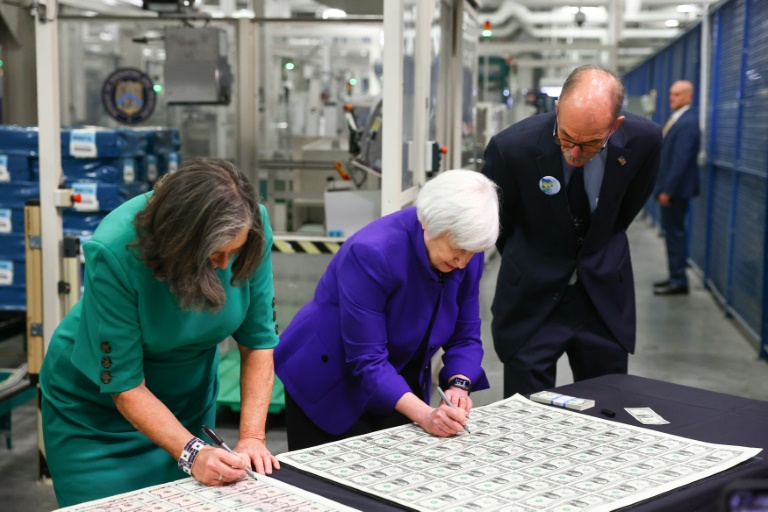
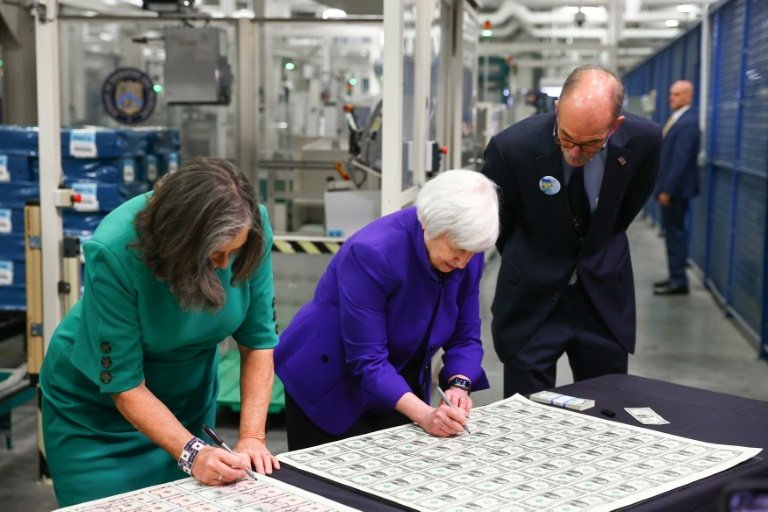
The US dollar will bear two women’s signatures for the first time, belonging to Treasury Secretary Janet Yellen and US Treasurer Lynn Malerba, officials said Thursday as they unveiled the banknotes.

The notes are set for delivery to the Federal Reserve this month and will be in circulation starting 2023, according to the Treasury Department.

“This is the first time the signature of a woman Treasury Secretary will be on a US banknote. And the first time the signatures of two women will be on our currency,” said Yellen in a speech at the Bureau of Engraving and Printing’s facility in Fort Worth, Texas.

“Today is not about me or a new signature on our currency. It’s about our collective work to create a stronger and more inclusive economy,” she added.

Currently, women represent about 62 percent of the Treasury workforce and hold positions of power, she said.

But much more needs to be done, Yellen added.

“I hope that today is a reminder of the road we’ve traveled on equity and inclusion. And I hope it motivates us to continue to move forward,” she said.

Malerba’s signature also marks the first time US currency will feature the signature of a Native American woman.

“This moment is history,” said Malerba.

The first such notes coming into circulation will be $1 and $5 bills.

“I’ll admit: I spent some quality time practicing my signature before submitting it,” Yellen said.

Former president Barack Obama’s Treasury Secretary Tim Geithner “famously had to change his signature in order to make it legible,” she added.

Apart from the site in Texas, the only other greenback printing facility is in US capital Washington.

Greenback to bear signatures of two women for first time

The US dollar will bear two women’s signatures for the first time, belonging to Treasury Secretary Janet Yellen and US Treasurer Lynn Malerba, officials said Thursday as they unveiled the banknotes.

The notes are set for delivery to the Federal Reserve this month and will be in circulation starting 2023, according to the Treasury Department.

“This is the first time the signature of a woman Treasury Secretary will be on a US banknote. And the first time the signatures of two women will be on our currency,” said Yellen in a speech at the Bureau of Engraving and Printing’s facility in Fort Worth, Texas.

“Today is not about me or a new signature on our currency. It’s about our collective work to create a stronger and more inclusive economy,” she added.

Currently, women represent about 62 percent of the Treasury workforce and hold positions of power, she said.

But much more needs to be done, Yellen added.

“I hope that today is a reminder of the road we’ve traveled on equity and inclusion. And I hope it motivates us to continue to move forward,” she said.

Malerba’s signature also marks the first time US currency will feature the signature of a Native American woman.

“This moment is history,” said Malerba.

The first such notes coming into circulation will be $1 and $5 bills.

“I’ll admit: I spent some quality time practicing my signature before submitting it,” Yellen said.

Former president Barack Obama’s Treasury Secretary Tim Geithner “famously had to change his signature in order to make it legible,” she added.

Apart from the site in Texas, the only other greenback printing facility is in US capital Washington.

In Netflix series, Harry slams press, family, over 'feeding frenzy'

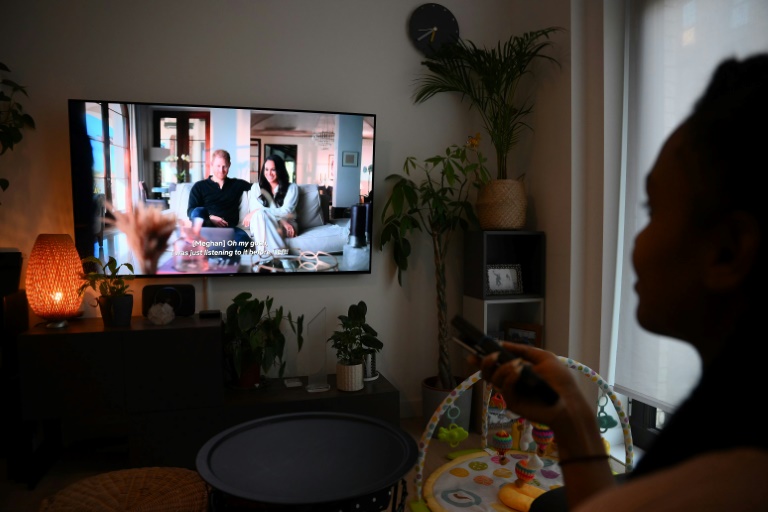
Prince Harry slammed the media “feeding frenzy” over his relationship with Meghan in an explosive Netflix docuseries aired Thursday and criticised Britain’s royal family for failing to protect her and his mother Diana.

The family has been braced for the first three episodes of the six-part series “Meghan & Harry”.

It was largely spared during the first episodes but was still on the end of accusations of “unconscious” racial bias and that it did not help Meghan or Diana after her 1992 separation from Harry’s father Charles, who is now king.

“To see another woman in my life who I love go through this feeding frenzy, that’s hard,” said Harry. “It is basically the hunter versus the prey.”

“The moment that she divorced, the moment she left the institution, then she was by herself… she was completely exposed to this,” Harry, 38, said of his mother, who died in a Paris car crash in 1997.

Meghan also took aim at the family for failing to counter negative press reports about her, saying “it was horrible, but I continued to hold the line, like say nothing”.

Her husband said the family ignored racist undertones in the reports.

“As far as a lot of the family were concerned, everything that she was being put through, they’d been put through as well. So it was almost like a rite of passage,” he said.

“I said the difference here is the race element.”

Harry went on to claim there was a “huge level of unconscious bias” within the family, with the documentary referencing a racist brooch worn by Princess Michael of Kent to an event that Meghan attended in 2017.

Harry reiterated feeling “ashamed” about being photographed wearing a Nazi uniform to a fancy-dress party in 2005, calling it “probably one of the biggest mistakes of my life”.

– ‘War’ –

The documentary is lifting the lid on events that prompted the pair to quit royal life and move to the United States in 2020.

Several British newspapers said the couple had declared “war” on the royal family, which said Thursday that no family members had been approached to comment for the docuseries.

The first parts trace the couple’s budding love story and their attempts to keep it a secret.

“When I got to meet ‘M’ I was terrified of her being driven away by the media, the same media that had driven so many other people away from me,” said Harry.

“I knew that the only way that this could possibly work is by keeping it quiet for as long as possible.”

The early episodes also focus on Harry’s childhood and difficult teen years, often with paparazzi in tow.

He describes how he found refuge in frequent trips to Africa, and in an apparent barb at his blood family, said: “I have a second family out there, a group of friends that literally brought me up.”

In another seeming dig at his older brother Prince William and wife Catherine, he said: “with many people in the family, especially the men, there can be a temptation or an urge to marry someone who would fit in the mould.”

The final three parts are due to be released on December 15. 

Royal fans outside Buckingham Palace were divided on the need for Harry and Meghan to make the series.

“It’s just not the right thing to do. He (Harry) was so close to his brother at one time and now he’s alienated himself from his family,” said Mary Rose, 68, from Worksop in north east England.

But Fflur Jones, a 26-year-old nurse from Wales, said: “I think they’re really brave for what they’ve done.”

“Speaking out, especially against family, is really difficult. So fair play to them for doing that.”

– Racism claims –

Netflix showcased the first trailer last week just as William made his first trip to the United States as heir to the throne, prompting accusations of sabotage.

The timing could barely have been worse for William after Buckingham Palace sacked one of his godmothers as a courtier for using racially charged language to a black British woman at a reception.

For some, the incident reinforced incendiary claims by mixed-race Meghan, 41, that racism within the royal household was one of the reasons for leaving.

The docuseries airs three months exactly since the death of Harry’s grandmother Queen Elizabeth II, and a month before the long-awaited publication of his memoirs, “Spare”.

Industry lobbies against biodiversity goals: research

Lobbyists for pesticide and fertiliser producers are pushing “behind the scenes” against stronger protection for species and ecosystems at the COP15 biodiversity conference, research showed Thursday.

Delegates in Montreal for the meeting, which started this week and runs until December 19, aim to finalise a new framework for “living in harmony with nature”, with key goals to preserve Earth’s forests, oceans and species.

InfluenceMap, a think tank that monitors communications by companies and industry associations, said it “tracked lobbying between 2020 and 2022 that has sought to weaken both the targets themselves and steps toward their implementation in the EU and the US.

“As COP15 gets underway to finalise new biodiversity goals, major industry lobbyists are working behind the scenes to try to water down policy ambition,” said the author of the research, InfluenceMap program manager Rebecca Vaughan.

“We’ve tracked efforts from industry associations representing some of the world’s biggest pesticide and fertiliser producers… strongly resisting global and EU targets for reducing the use of biodiversity-harming agrichemicals.”

It tracked submissions they made to the secretariat of the Convention on Biological Diversity (CBD) and communications obtained through Freedom of Information requests.

Examples included the International Fertilizer Industry Association (IFA), which the report said opposed targets for reducing losses of nutrients linked to crop production.

– ‘Constructive dialogues’ –

The director general of the IFA, Alzbeta Klein, said: “This report misrepresents the activities of the fertiliser industry in the area of biodiversity and in particular, the adoption of global targets.

“The industry recognizes the critical importance of biodiversity protection for the well-being of people and the future of the planet, and is mindful of its role and responsibility in helping to avoid and reverse global biodiversity losses,” she told AFP.

The IFA said in a separate statement that it was “actively involved” in the CBD negotiations by providing expertise and information on agricultural practices to set a “realistic, achievable” target on sustainable resource management.

One of the companies named in the report, German chemicals giant BASF, said it took part in “constructive dialogues” at the request of policymakers, advising on ways to limit environmental impact and aid biodiversity.

“BASF supports the preservation of ecosystems and promotes the sustainable use of natural resources,” a BASF communications executive, Christian Zeintl, told AFP.

“We believe that crop protection can go hand in hand with biodiversity in agriculture.”

– ‘Corporate capture’ –

The InfluenceMap report also pointed to fishery lobby groups that oppose one of COP15’s headline initiatives: to protect 30 percent of the world’s land and oceans by 2030.

A previous InfluenceMap study in October documented cases of oil associations lobbying against protection for threatened species such as some bees, seals and polar bears.

The head of the CBD Elizabeth Mrema said at a briefing in November that the majority of people registering for COP15 were non-government “stakeholders, including the business and financial institutions.

“This clearly indicates the awareness of the private sector of their role of also contributing to actions to reduce the loss of biodiversity,” she said.

Friends of the Earth issued a report on “corporate capture” at COP15, arguing that “the participation of big business in the CBD reveals a fundamental conflict of interest.

“The impact of corporate influence on the CBD COP15 can already be seen in the draft Global Biodiversity Framework,” it said.

“Far from being transformative, it fails to address unsustainable production methods and allows for ‘business as usual'”.

Industry lobbies against biodiversity goals: research

Lobbyists for pesticide and fertiliser producers are pushing “behind the scenes” against stronger protection for species and ecosystems at the COP15 biodiversity conference, research showed Thursday.

Delegates in Montreal for the meeting, which started this week and runs until December 19, aim to finalise a new framework for “living in harmony with nature”, with key goals to preserve Earth’s forests, oceans and species.

InfluenceMap, a think tank that monitors communications by companies and industry associations, said it “tracked lobbying between 2020 and 2022 that has sought to weaken both the targets themselves and steps toward their implementation in the EU and the US.

“As COP15 gets underway to finalise new biodiversity goals, major industry lobbyists are working behind the scenes to try to water down policy ambition,” said the author of the research, InfluenceMap program manager Rebecca Vaughan.

“We’ve tracked efforts from industry associations representing some of the world’s biggest pesticide and fertiliser producers… strongly resisting global and EU targets for reducing the use of biodiversity-harming agrichemicals.”

It tracked submissions they made to the secretariat of the Convention on Biological Diversity (CBD) and communications obtained through Freedom of Information requests.

Examples included the International Fertilizer Industry Association (IFA), which the report said opposed targets for reducing losses of nutrients linked to crop production.

– ‘Constructive dialogues’ –

The director general of the IFA, Alzbeta Klein, said: “This report misrepresents the activities of the fertiliser industry in the area of biodiversity and in particular, the adoption of global targets.

“The industry recognizes the critical importance of biodiversity protection for the well-being of people and the future of the planet, and is mindful of its role and responsibility in helping to avoid and reverse global biodiversity losses,” she told AFP.

The IFA said in a separate statement that it was “actively involved” in the CBD negotiations by providing expertise and information on agricultural practices to set a “realistic, achievable” target on sustainable resource management.

One of the companies named in the report, German chemicals giant BASF, said it took part in “constructive dialogues” at the request of policymakers, advising on ways to limit environmental impact and aid biodiversity.

“BASF supports the preservation of ecosystems and promotes the sustainable use of natural resources,” a BASF communications executive, Christian Zeintl, told AFP.

“We believe that crop protection can go hand in hand with biodiversity in agriculture.”

– ‘Corporate capture’ –

The InfluenceMap report also pointed to fishery lobby groups that oppose one of COP15’s headline initiatives: to protect 30 percent of the world’s land and oceans by 2030.

A previous InfluenceMap study in October documented cases of oil associations lobbying against protection for threatened species such as some bees, seals and polar bears.

The head of the CBD Elizabeth Mrema said at a briefing in November that the majority of people registering for COP15 were non-government “stakeholders, including the business and financial institutions.

“This clearly indicates the awareness of the private sector of their role of also contributing to actions to reduce the loss of biodiversity,” she said.

Friends of the Earth issued a report on “corporate capture” at COP15, arguing that “the participation of big business in the CBD reveals a fundamental conflict of interest.

“The impact of corporate influence on the CBD COP15 can already be seen in the draft Global Biodiversity Framework,” it said.

“Far from being transformative, it fails to address unsustainable production methods and allows for ‘business as usual'”.

US basketball star Griner swapped for Russian arms dealer

American basketball star Brittney Griner was headed home on Thursday after being freed from a Russian prison in a swap for Viktor Bout, the notorious arms dealer known as the “Merchant of Death.”

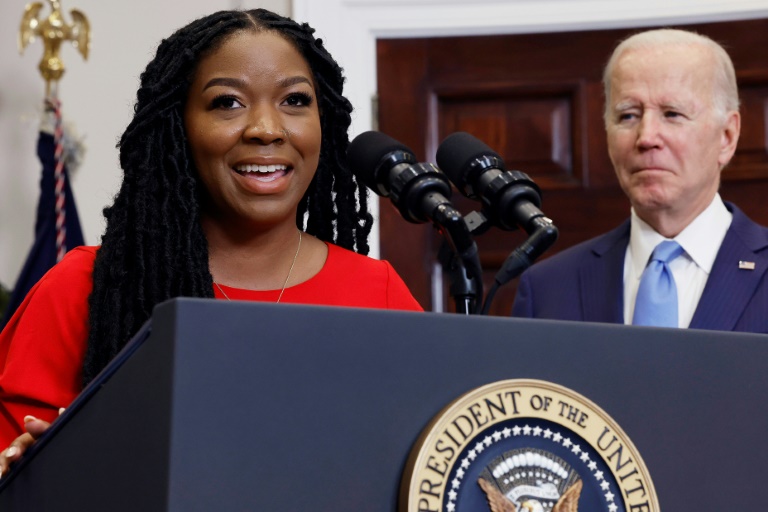
President Joe Biden announced Griner’s release in an address to the nation and Moscow confirmed she had been exchanged in Abu Dhabi for Bout, who was serving a 25-year prison sentence in the United States.

“She is safe. She is on a plane. She is on her way home,” Biden said, adding that he had spoken to Griner and she was in “good spirits” after a “terrible ordeal.”

The 32-year-old Griner, a two-time Olympic gold medalist, WNBA champion and LGBT trailblazer, was arrested on drug charges at a Moscow airport in February against a backdrop of soaring tensions over Ukraine.

Another American held in Russia, Paul Whelan, a former US Marine detained in 2018 and accused of spying, was not part of the prisoner exchange and he told CNN he was “greatly disappointed.”

“I don’t understand why I’m still sitting here,” Whelan told the US television network in a phone call from the Russian penal colony where he is imprisoned.

Biden pledged to continue to seek Whelan’s freedom, saying “we will never give up.”

“Sadly, for totally illegitimate reasons, Russia is treating Paul’s case different than Brittney’s,” he said.

Griner was accused of possession of vape cartridges with a small quantity of cannabis oil and sentenced in August to nine years in prison.

Biden said Griner’s release was the result of “painstaking and intense negotiations” and she would need time to recover from “needless trauma” after being “wrongfully detained.”

– ‘Family is whole’ –

Biden made the announcement at the White House flanked by Griner’s wife, Cherelle Griner, Vice President Kamala Harris and Secretary of State Antony Blinken.

“I’m just standing here, overwhelmed with emotions,” Cherelle Griner said, describing her wife’s imprisonment as “one of the darkest moments of my life.”

She also acknowledged Whelan’s fate, saying: “Today my family is whole, but as you all are aware there’s so many other families who are not whole.”

WNBA commissioner Cathy Engelbert welcomed Griner’s freedom saying there was a “collective wave of joy and relief” in the women’s professional league where the 6’9″ (2.06 meter) Griner has been a star for a decade.

Former president Barack Obama tweeted “kudos to @POTUS and his administration for the difficult diplomatic work involved to make it happen.”

Biden publicly thanked the United Arab Emirates for helping “facilitate” Griner’s release and the UAE issued a joint statement with Saudi Arabia saying it was the result of “mediation efforts” by leaders of the two Arab nations.

Griner and Bout were flown to Abu Dhabi by private planes, the statement said, and were exchanged “in the presence of specialists from the United Arab Emirates and Saudi Arabia.”

Biden said Griner was expected back in the United States within 24 hours.

– ‘Rescue our compatriot’ –

At the time of her arrest, Griner had been in Russia to play for the professional Yekaterinburg team, during her off-season from the Phoenix Mercury.

She pleaded guilty to the charges against her, but said she did not intend to break the law or use the banned substance in Russia.

Griner testified that she had permission from a US doctor to use medicinal cannabis to relieve pain from her many injuries.

The use of medical marijuana is not allowed in Russia.

The Russian foreign ministry said it had been negotiating with Washington to secure Bout’s release “for a long time” and that initially the United States had “refused dialogue” on including him in any swap.

“Nevertheless, the Russian Federation continued to actively work to rescue our compatriot,” it said. “The Russian citizen has been returned to his homeland.”

The 55-year-old Bout, who was accused of arming rebels in some of the world’s bloodiest conflicts, was arrested in a US sting operation in Thailand in 2008, extradited to the United States and sentenced in 2012 to 25 years in prison.

The 2005 film “Lord of War” starring Nicolas Cage was based in part on Bout’s arms trafficking exploits and he has been the subject of several books and TV shows.

Asked about Bout’s release, a senior US defense official said “there is a concern that he would return to doing the same kind of work that he’s done in the past.”

New York Times workers stage first strike in 40 years

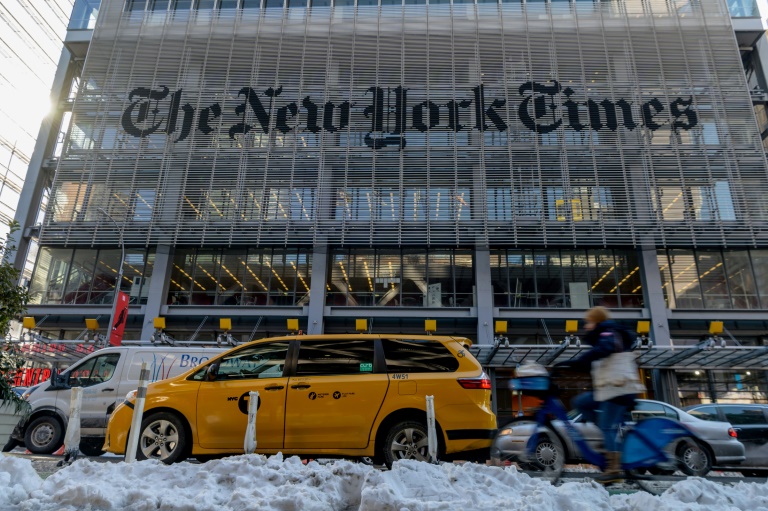
More than 1,000 New York Times employees went on strike Thursday in the first industrial action of its kind at the newspaper in more than 40 years.

Journalists and other workers at the storied media outlet, often referred to as America’s paper of record, walked out at midnight for 24 hours after failing to reach an agreement with the company on a new round of contract negotiations.

The NewsGuild of New York, a union representing the striking workers, had said that a key sticking point was the management’s refusal to raise wages in line with surging inflation.

Health and retirement benefits as well as return-to-work policies following the coronavirus pandemic were also an issue.

“Over 1,100 New York Times workers are now officially on work stoppage, the first of this scale at the company in 4 decades,” the union tweeted early Thursday morning.

New York Times spokeswoman Danielle Rhoades Ha told US media in a statement that negotiations had not broken down and “it is disappointing that they are taking such an extreme action when we are not at an impasse.”

Phoebe Lett, a podcast producer at the media outlet, tweeted: “It is heartbreaking to have to stand with nearly 1,200 colleagues who sacrifice everything for the good of this place, hat in hand, asking @nytimes to show us they value us. But here we are.”

The union said its members were “willing to do what it takes to win a better newsroom for all.”

The Times said in an article about the strike that nonunion newsroom employees would produce news on Thursday.

More than 1,800 people work in The Times’s newsroom in total.

“We will produce a robust report on Thursday. “But it will be harder than usual,” the Times’s executive editor Joe Kahn said in an email to staff.

The contract between The Times and The New York Times Guild expired in March 2021. Roughly 40 bargaining sessions have been held since.

burs-pdh/bfm

Kazakhstan moves to reel in crypto mining

Kazakhstan, one of the world’s leading locations for cryptocurrency mining, has moved to reel in the power-hungry industry that has often burdened the ageing energy grid of the Central Asian country.

The ex-Soviet country’s lower house of parliament on Wednesday passed legislation which introduced a tax and a mandatory license for companies mining cryptocurrencies among other measures, state news agency Kazinform reported. 

In recent months, Kazakhstan, the region’s largest economy, has looked to promote the expansion of cryptocurrency mining while cracking down on illegal mining farms.

“The goal of the bill is to eliminate illegal mining and create an adequate legal environment for legal entrepreneurs,” lawmaker Yekaterina Smyshlyayeva, who introduced the bill, told AFP on Thursday. 

She added that this activity is a “capital intensive business and the risks are very high”.

“Miners will only be able to buy electricity from the general electricity network in the event of a surplus,” she said Wednesday as quoted by Kazinform. 

According to data from the University of Cambridge, Kazakhstan was the world’s third-largest miner of cryptocurrency as of January 2022, behind the United States and China. 

Mining for cryptocurrency, such as bitcoin, requires powerful computers to solve complex mathematical puzzles, resulting in the consumption of huge amounts of electricity.

Kazakhstan has many benefits for the industry, including some of the cheapest electricity in the world and a cold climate favourable for cooling computers. 

It has also seen an influx of miners from neighbouring China, where the mining of cryptocurrency is officially banned. 

Kazakhstan’s energy system dates back to the Soviet era and, despite investments, remains dilapidated and regularly experiences energy deficits.

In March, the Kazakh government announced the closure of some 100 illegal mining farms, including those belonging to the brother of the former president Nursultan Nazarbayev. 

US diplomat's wife gets suspended sentence for fatal UK crash

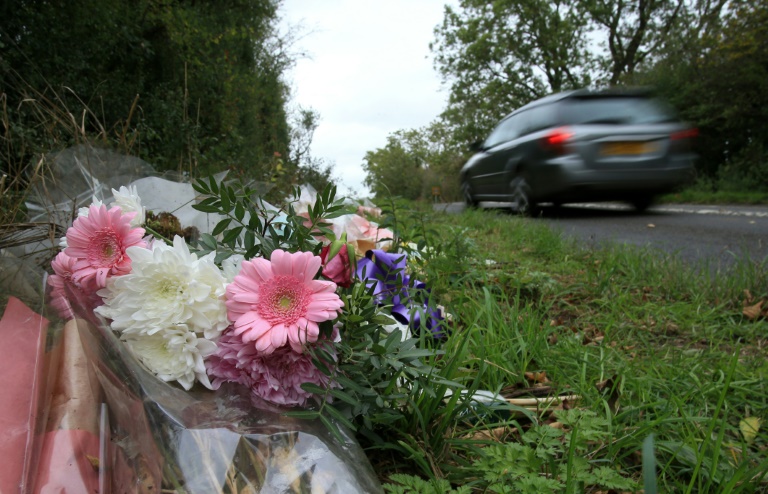
A US diplomat’s wife on Thursday narrowly avoided jail in Britain for killing a teenage motorcyclist by driving on the wrong side of the road and then fleeing the country.

Anne Sacoolas was given an eight-month prison sentence suspended for 12 months, during which period she faces jail if she commits another offence. 

She did not attend the sentencing hearing in London in person and followed proceedings by video-link.

Harry Dunn, 19, died in August 2019 when his motorbike collided with Sacoolas’s car that she was driving on the wrong side of the road near a US airbase in southern England.

She left Britain after the accident and the US government claimed she had immunity from criminal prosecution because she was at the base as a dependent of her husband. 

A request for her extradition was denied, turning the case into a high-profile diplomatic spat between London and Washington.

Sacoolas was originally charged with causing death by dangerous driving but pleaded guilty to a lesser charge of careless driving which carries a maximum jail term of five years.

Sacoolas had declined to attend court in person on the advice of the US government, her employer, which claimed her presence could “place significant US interests at risk”.

“I’m deeply sorry for the pain I’ve caused,” she said in a statement read by her lawyer ahead of the sentencing at the Old Bailey court in central London.

– ‘Job done’ –

Judge Bobbie Cheema-Grubb told Sacoolas that her behaviour “was not far short of deliberately dangerous driving” and passed the threshold for a custodial sentence.

“You drove along the wrong side of the road for much more than a moment and you did not realise what you were doing even when you were approaching a bend,” she told her.

But the judge cited mitigating factors including the fact that Sacoolas is the mother of young children “who would suffer disproportionate harm” if she were imprisoned.

She had also pleaded guilty and shown “genuine remorse”.

Outside court, Dunn’s mother Charlotte Charles, who has mounted a three-year campaign to get Sacoolas to be held accountable, hailed the sentence as “job done”.

“Anne Sacoolas has a criminal record for the rest of her life — that was something she never thought she would see, the US government never thought it would see.”

Since the accident, Dunn’s parents had been leading a high-profile fight to achieve justice for their son while US authorities stonewalled requests for extradition.

The judge praised Dunn’s parents’ “calm and dignified persistence” in pushing for justice since the crash, saying they had gone through “three years of heartbreak and effort”.

Foreign minister James Cleverly said he hoped the sentence “provides some closure” to the family. 

China's Xi, Saudi royals ink deals during high-stakes visit

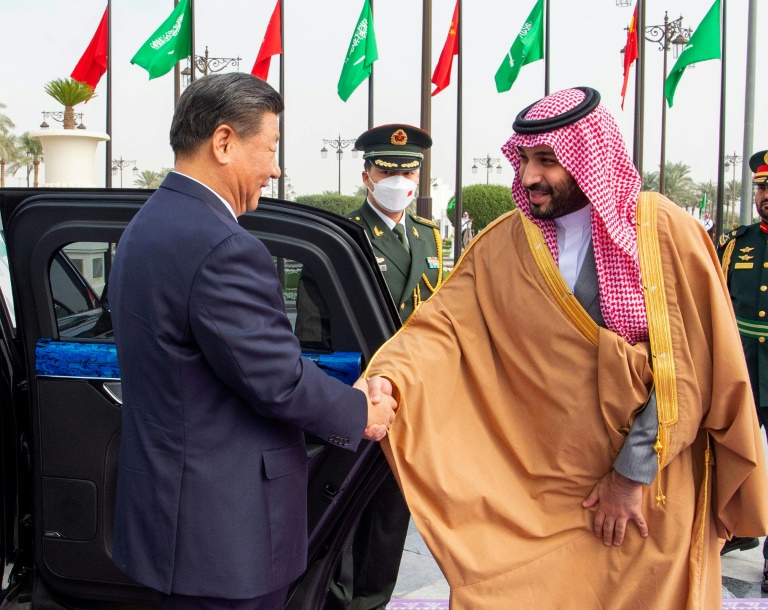
Chinese President Xi Jinping and Saudi Arabia’s powerful crown prince met Thursday on an Arab outreach visit that has earned a rebuke from Washington, reaching deals in areas including energy and infrastructure. 

Agreements worth about $30 billion were to be signed, Saudi state media said, as China seeks to shore up its Covid-hit economy and as the Saudis, long-term US allies, push to diversify their economic and political alliances.

Xi and Crown Prince Mohammed bin Salman, the 37-year-old de facto ruler of the world’s biggest oil exporter, met at Yamamah Palace in Riyadh, flanked by high-ranking officials wearing face masks, footage aired on state television showed.

They oversaw the signing of energy agreements on hydrogen as well as a plan to “harmonise” Saudi Arabia’s ambitious economic reform agenda, Vision 2030, with China’s trillion-dollar Belt and Road Initiative, the official Saudi Press Agency said. 

The signed deals also covered a petrochemicals project, housing development and the teaching of the Chinese language, SPA said, though it did not detail their substance or monetary value.

Earlier, state television showed Xi being greeted by Prince Mohammed before the two men stood side-by-side as a brass band played their countries’ national anthems. 

They then chatted while walking into the palace, which is the king’s official residence and seat of the royal court. 

Xi also met with Prince Mohammed’s father, 86-year-old King Salman, signing a comprehensive strategic partnership agreement first reached during Xi’s last visit in 2016, state media reported. 

They “agreed to hold a heads of state meeting between the two countries in turn every two years”, Chinese state media said.

“I am very pleased to visit Saudi Arabia again after six years. I still remember the scenes from my last visit,” Xi said in remarks carried by Chinese state broadcaster CCTV.

“The Chinese side views the Saudi side as an important force in a multipolar world and attaches high importance to developing a comprehensive strategic partnership with Saudi Arabia.”

He said Beijing was ready to expand its crude oil trade with Riyadh and would “list Saudi Arabia as a destination country for outbound tourism organised by Chinese citizens”.

– ‘Raising pace’ of cooperation –

Upon his arrival on Wednesday, Xi said bilateral ties with Saudi Arabia had grown “by leaps and bounds” in recent years. 

This “has not only enriched both countries’ peoples but promoted regional peace, security, prosperity and development,” Xi said, according to CCTV.

The crown prince sees China as a critical partner in his sweeping Vision 2030 agenda, seeking the involvement of Chinese firms in ambitious mega-projects meant to diversify the economy away from fossil fuels.

Saudi investment minister Khalid al-Falih said this week’s visit “will contribute to raising the pace of economic and investment cooperation between the two countries”, offering Chinese companies and investors “rewarding returns”, according to SPA.

Earlier on Thursday, Saudi state media announced 34 investment agreements in sectors including green hydrogen, information technology, transport and construction.

State broadcaster Al-Ekhbariya said another 20 agreements worth 110 billion riyals ($29.3 billion) were due to be signed.

– Arab outreach –

Arab leaders began Thursday to converge on the Saudi capital ahead of summit meetings with Xi, who will hold separate talks with the six-member Gulf Cooperation Council before leaving on Friday.

China, the top consumer of Saudi oil, has been strengthening ties with a region that has long relied on the United States for military protection but which has voiced concerns the American presence could be downgraded.

Egyptian President Abdel Fattah al-Sisi, Palestinian president Mahmud Abbas and Sudan’s de facto leader Abdel Fattah al-Burhan had all arrived by Thursday afternoon, according to the Saudi foreign ministry.

Qatari Emir Sheikh Tamim bin Hamad Al-Thani, Tunisian President Kais Saied, Iraqi Prime Minister Mohammed Shia al-Sudani, Moroccan Prime Minister Aziz Akhannouch and Lebanese caretaker Prime Minister Najib Mikati have also confirmed their attendance.

Beijing’s foreign ministry this week described Xi’s trip as the “largest-scale diplomatic activity between China and the Arab world” since the People’s Republic of China was founded.

It has not escaped the attention of the White House, which warned of “the influence that China is trying to grow around the world”, calling its objectives “not conducive to preserving the international rules based order”. 

Washington has long been a close partner of Riyadh, but the relationship is currently roiled by disagreements on energy policy, US security guarantees and human rights. 

Xi is making his third journey overseas since the Covid pandemic prompted China to shut its borders and embark on a series of lockdowns, putting the brakes on its giant economy.

His visit follows US President Joe Biden’s trip in July, when he greeted Prince Mohammed with a fist-bump at the start of a vain attempt to convince the Saudis to raise oil production.

Close Bitnami banner
Bitnami