AFP

US, EU meet with little progress on green plan tensions

US and European Union officials met for trade and technology talks Monday, but hanging in the balance were heightened tensions over American subsidies for its green industry that Europe considers anti-competitive.

Officials touched on issues such as fallout from Russia’s invasion of Ukraine and questions over economic coercion, but all eyes were on Washington’s landmark Inflation Reduction Act (IRA) during a meeting of the US-EU Trade and Technology Council, held just outside Washington.

The act, designed to accelerate the US transition to a low-carbon economy, contains around $370 billion in subsidies for green energy, as well as tax breaks for US-made electric cars and batteries.

EU countries have poured criticism on the IRA, seeing it as a threat to European jobs, especially in the energy and auto sectors.

Monday’s talks, the third of their kind, are part of a push “to grow the bilateral trade and investment relationship,” according to a National Security Council statement.

Both sides took stock of a dedicated task force’s work on the IRA, noting “preliminary progress made,” said a joint US-EU statement released Monday.

“We acknowledge the EU’s concerns and underline our commitment to address them constructively,” the statement added.

– ‘More solid response’ –

“Clearly they are trying to set out our concerns in a non-confrontational manner,” a European official involved in the talks told reporters Monday.

“It was flagged as a dispute, obviously, to which I think we’re still waiting for a more solid response,” he added.

Asked about “tweaks” mentioned last week by US President Joe Biden — so that European companies would not be unfairly treated — the official said the “assessment is that this will be extremely difficult.”

But officials struck a conciliatory note at a press briefing after their meeting, with the EU’s trade commissioner Valdis Dombrovskis saying, “Today we are leaving this meeting a slightly more optimistic than we were entering (it).”

US Secretary of State Antony Blinken, a co-chair of the council, added: “The bottom line is this: We are committed to moving forward together not at the expense of each other, but to the benefit of each other.”

Both sides found agreement on a host of other issues, including an information-sharing system on public support for the semiconductor sector to increase transparency.

They also entered a deal to implement an early warning mechanism to mitigate semiconductor supply chain disruptions “in a cooperative way.”

Both parties launched a “transatlantic initiative on sustainable trade” as well, with an aim to decarbonize energy-intensive industries and help with the transition to more circular economies, the statement said.

– Insufficient space –

But EU Internal Market Commissioner Thierry Breton had decided not to take part in the meetings, his office earlier said, finding that they no longer give enough space to issues of concern to many European industry ministers and businesses.

Last month, Breton threatened to appeal to the World Trade Organization and consider retaliatory measures if the United States did not reverse its subsidies.

The plan was also a subject of discussions between President Biden and his French counterpart Emmanuel Macron at a state visit last week.

Biden said both sides have agreed to discuss practical steps to coordinate and align their approaches, though he added that he would not apologize for the act, which he maintains was never intended to disadvantage US allies.

The Trade and Technology Council is co-chaired by Blinken, Secretary of Commerce Gina Raimondo and Trade Representative Katherine Tai, as well as European Commission Executive Vice Presidents Margrethe Vestager and trade commissioner Dombrovskis.

US, EU meet with little progress on green plan tensions

US and European Union officials met for trade and technology talks Monday, but hanging in the balance were heightened tensions over American subsidies for its green industry that Europe considers anti-competitive.

Officials touched on issues such as fallout from Russia’s invasion of Ukraine and questions over economic coercion, but all eyes were on Washington’s landmark Inflation Reduction Act (IRA) during a meeting of the US-EU Trade and Technology Council, held just outside Washington.

The act, designed to accelerate the US transition to a low-carbon economy, contains around $370 billion in subsidies for green energy, as well as tax breaks for US-made electric cars and batteries.

EU countries have poured criticism on the IRA, seeing it as a threat to European jobs, especially in the energy and auto sectors.

Monday’s talks, the third of their kind, are part of a push “to grow the bilateral trade and investment relationship,” according to a National Security Council statement.

Both sides took stock of a dedicated task force’s work on the IRA, noting “preliminary progress made,” said a joint US-EU statement released Monday.

“We acknowledge the EU’s concerns and underline our commitment to address them constructively,” the statement added.

– ‘More solid response’ –

“Clearly they are trying to set out our concerns in a non-confrontational manner,” a European official involved in the talks told reporters Monday.

“It was flagged as a dispute, obviously, to which I think we’re still waiting for a more solid response,” he added.

Asked about “tweaks” mentioned last week by US President Joe Biden — so that European companies would not be unfairly treated — the official said the “assessment is that this will be extremely difficult.”

But officials struck a conciliatory note at a press briefing after their meeting, with the EU’s trade commissioner Valdis Dombrovskis saying, “Today we are leaving this meeting a slightly more optimistic than we were entering (it).”

US Secretary of State Antony Blinken, a co-chair of the council, added: “The bottom line is this: We are committed to moving forward together not at the expense of each other, but to the benefit of each other.”

Both sides found agreement on a host of other issues, including an information-sharing system on public support for the semiconductor sector to increase transparency.

They also entered a deal to implement an early warning mechanism to mitigate semiconductor supply chain disruptions “in a cooperative way.”

Both parties launched a “transatlantic initiative on sustainable trade” as well, with an aim to decarbonize energy-intensive industries and help with the transition to more circular economies, the statement said.

– Insufficient space –

But EU Internal Market Commissioner Thierry Breton had decided not to take part in the meetings, his office earlier said, finding that they no longer give enough space to issues of concern to many European industry ministers and businesses.

Last month, Breton threatened to appeal to the World Trade Organization and consider retaliatory measures if the United States did not reverse its subsidies.

The plan was also a subject of discussions between President Biden and his French counterpart Emmanuel Macron at a state visit last week.

Biden said both sides have agreed to discuss practical steps to coordinate and align their approaches, though he added that he would not apologize for the act, which he maintains was never intended to disadvantage US allies.

The Trade and Technology Council is co-chaired by Blinken, Secretary of Commerce Gina Raimondo and Trade Representative Katherine Tai, as well as European Commission Executive Vice Presidents Margrethe Vestager and trade commissioner Dombrovskis.
How tackling invasive species on land can spark 'stunning' improvements at sea

Restoring islands devastated by invasive species and helping coastal “connectors” like seabirds boosts nature on land and at sea — and may be a new way to increase resilience to climate change, researchers said Monday. 

A group of experts and scientists from across the world reviewed thousands of studies to build a picture of island health to map out new strategies for protecting their often unique and threatened species. 

They found that removing invasive species and restoring island ecosystems on land can also have significant benefits to underwater environments.

That is largely thanks to the role played by “connector species” such as seabirds, seals and land crabs, which transfer nutrients from oceans to islands and vice versa, said the paper, published in Proceedings of the National Academy of Sciences. 

The report comes as delegates for nearly 200 countries prepare to tease out a new blueprint to save nature from destruction wrought by humans, including key proposals for preserving 30 percent of land and sea, and bringing indigenous rights to the centre of conservation. 

Paper co-author Penny Becker of Island Conservation said that while indigenous island communities have known for generations the intricate links between healthy ecosystems on land and in the sea, Western conservation was “just catching up”.  

“Carefully chosen conservation actions on islands can lead to really stunning changes in the neighbouring ocean ecosystem, because everything is connected,” she said. 

For example, seabirds catch their prey in the seas and then deposit nutrients back on the islands in the form of guano. 

Evidence shows islands with high seabird populations usually have larger populations of fish, as well as faster-growing and more climate-resilient coral reefs, the researchers said.  

But seabird populations across the world have plummeted, with the introduction on islands of non-native mammals — like rats that plunder nests to eat eggs and hatchlings — by human activity driving some bird species to local or global extinction. 

Loss of these connector species populations “often results in ecosystem collapse–both on land and in the sea”, the authors said. 

– ‘Profound’ impacts –

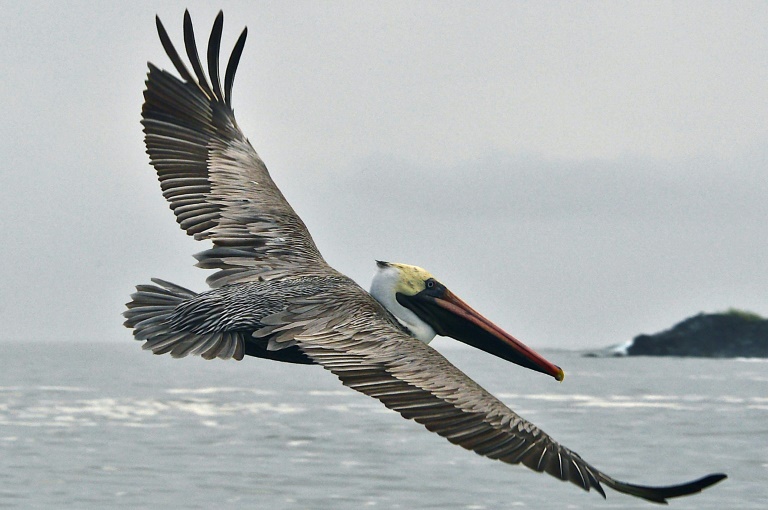
On Floreana island in the Galapagos, invasive species have devastated not just bird and plant species, but also livelihoods, with farmers losing up to 100 percent of their crops due to invasive rats that started to spread on the island, according to Karl Campbell from Re:Wild, which was also involved in the paper. 

Some 13 species have gone locally extinct on the main island, he said, while 54 species are critically endangered, endangered or threatened.

The island, which is almost entirely a national park, eradicated invasive pigs in the 1980s in a bid to save the critically endangered seabird the Galapagos petrel, and then in 2019 non-native goats were removed, leading to a regrowth in local vegetation. 

The 10-year battle to rid the island of rats continues, Campbell said in a briefing. 

Once they are gone, at least a dozen species that went locally extinct largely because of invasive species will be returned to the island, including giant tortoises and mockingbirds. 

The island is part of a new environmental campaign called the Island-Ocean Connection Challenge, which aims to restore and rewild at least 40 globally significant island ecosystems to benefit islands, oceans and communities by 2030. 

“With the current triple crisis of climate change, biodiversity loss, and human wellbeing, we need to be using all the tools in the toolbox,” Campbell said. 

This approach could also boost climate change resilience in the Galapagos, where increasingly intense El Nino events cause warm waters to replace cold nutrient-rich waters — starving species like penguins, marine iguanas and seabirds and causing corals to bleach. 

Restoration and rewilding could have “extremely profound” impacts, Campbell said, with healthy populations of connector species able to transfer some of the lost nutrients to the water and encouraging plankton growth, potentially easing the effects of the El Ninos.  

“What we may have here is an overlooked tool for maximising ocean health and resilience,” he added. 

Russia hits Ukraine grid in latest fatal barrage

Ukraine was targeted on Monday by a new wave of fatal Russian missiles, the latest attack to cause massive power disruptions across the country and pile pressure on its embattled critical infrastructure as temperatures plunge.

Moscow in turn blamed Ukraine for drone attacks which caused explosions at two of its airfields, killing three soldiers.

The attacks came just after Russia shrugged off a Western-imposed price cap on its oil exports, warning the move would not disrupt its military campaign in Ukraine.

While the drone attacks on Russia’s Saratov and Ryazan regions were intercepted, the defence ministry said falling debris had caused the explosions.

At the same time, it claimed a “massive attack on Ukrainian military command systems and related defence, communications, energy and military facilities”.

Fresh power cuts were announced in all regions of Ukraine due to the heavy strikes.

“Due to the consequences of shelling… a regime of emergency shutdowns will be introduced in all regions of Ukraine,” national electricity provider Ukrenergo said on Telegram.  

The head of the central Zaporizhzhia region, Oleksandr Starukh, said Russian missiles on Monday had left two people dead.

Ukrainian President Volodymyr Zelensky said his country’s military had shot down a majority of Russian missiles fired earlier in the day, and engineers had already begun working to restore electricity.

“Our people never give up,” Zelensky said in a video-statement on social media.

Nearly half of Ukraine’s energy system has already been damaged after months of systemic strikes on power infrastructure. 

Ukrainians have frequently been left in the cold and dark for hours at a time when the outdoor temperature has dropped below zero. 

Officials told residents to charge power banks and prepare reserves of water. 

The UN rights chief Volker Turk, who arrived Sunday in Ukraine on a four-day visit, had to move his meetings with activists into an underground shelter in the capital Kyiv as missiles rained down.

– Moscow vows to keep fighting –

As Russia shrugged off the oil price cap, state-run media released footage of President Vladimir Putin driving a Mercedes car across the Crimea bridge that connects the annexed peninsula to the Russian mainland, and was damaged in a blast last month.

The $60-per-barrel price cap agreed by the European Union, G7 and Australia aims to restrict Russia’s revenue while making sure Moscow keeps supplying the global market.

“Russia’s economy has all the necessary potential to fully meet the needs and requirements of the special military operation,” Kremlin spokesman Dmitry Peskov told reporters, using Moscow’s term for the Ukraine offensive.

“These measures will not affect this,” he said.

Russia “will not recognise” the measures, which amounted to “a step towards destabilising the global energy markets”, he added.

The cap is the latest in a number of measures spearheaded by Western countries and introduced against Russia — the world’s second-largest crude oil exporter — after Moscow sent troops into Ukraine over nine months ago.

The measure comes on top of an EU embargo on seaborne deliveries of Russian crude oil that came into force on Monday.

The embargo will prevent maritime shipments of Russian crude to the European Union, which account for two thirds of the bloc’s oil imports from Russia, potentially depriving Moscow of billions of euros.

The oil price cap aims to ensure that when Russia sells its crude to non-EU countries it is not sold for more than $60 a barrel.

The market price of a barrel of Russian Urals crude is currently around $65 dollars, just slightly higher than the cap, suggesting the measure may have only a limited impact in the short term.

Kyiv, after initially welcoming the price ceiling, later said it would not do enough damage to Russia’s economy. 

– ‘Impossible to prepare’ –

The G7 nations — Britain, Canada, France, Germany, Italy, Japan and the United States — along with Australia have said they are prepared to adjust the price ceiling if necessary.

In recent months, gas prices have skyrocketed since Moscow halted deliveries to the EU in suspected retaliation for Western sanctions and the bloc struggled to find alternative energy suppliers.

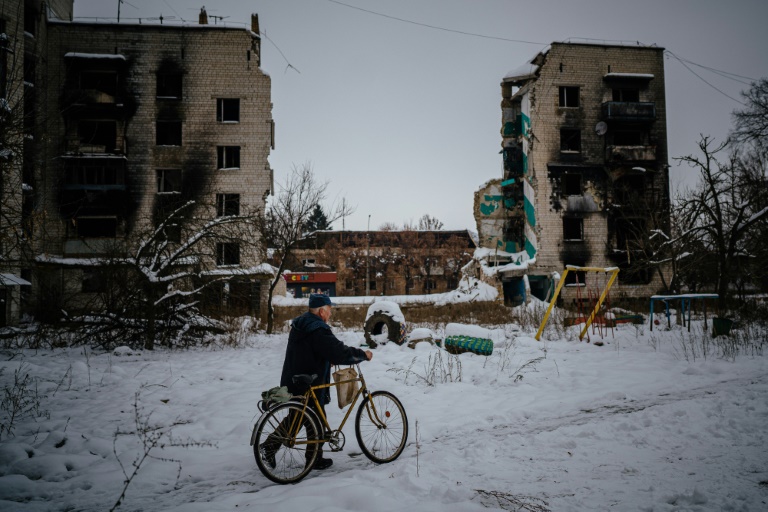
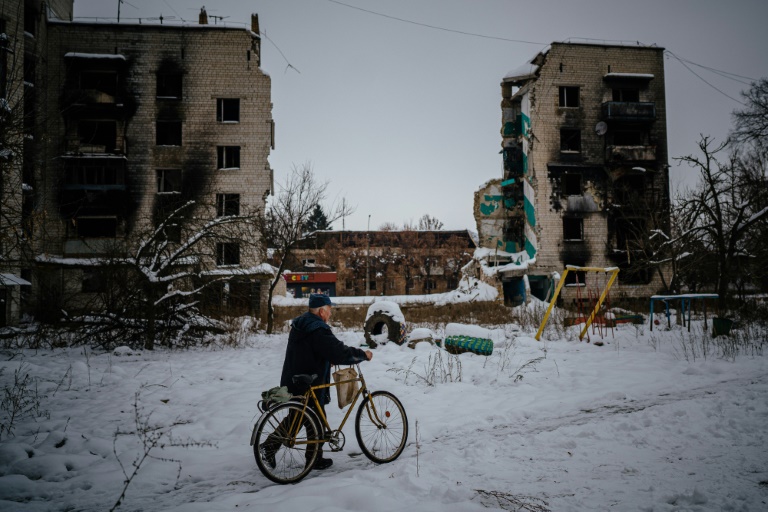
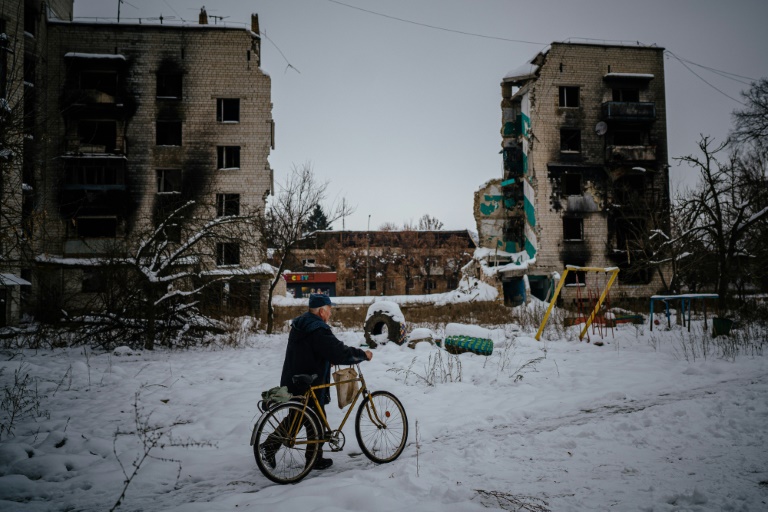
In the Ukrainian town of Borodianka, outside Kyiv, where snow has already coated the ground, locals recently gathered around old wood-fired stoves inside tents to keep warm and cook food during the blackouts. 

“We are totally dependent on electricity… One day we had no electricity for 16 hours,” Irina, who had come to the tent with her child, told AFP. 

Volunteer Oleg said it was hard to say how Ukraine would manage in the coming winter months. 

“It is impossible to prepare for this winter because no-one has lived in these conditions before,” he said. 

Russia hits Ukraine grid in latest fatal barrage

Ukraine was targeted on Monday by a new wave of fatal Russian missiles, the latest attack to cause massive power disruptions across the country and pile pressure on its embattled critical infrastructure as temperatures plunge.

Moscow in turn blamed Ukraine for drone attacks which caused explosions at two of its airfields, killing three soldiers.

The attacks came just after Russia shrugged off a Western-imposed price cap on its oil exports, warning the move would not disrupt its military campaign in Ukraine.

While the drone attacks on Russia’s Saratov and Ryazan regions were intercepted, the defence ministry said falling debris had caused the explosions.

At the same time, it claimed a “massive attack on Ukrainian military command systems and related defence, communications, energy and military facilities”.

Fresh power cuts were announced in all regions of Ukraine due to the heavy strikes.

“Due to the consequences of shelling… a regime of emergency shutdowns will be introduced in all regions of Ukraine,” national electricity provider Ukrenergo said on Telegram.  

The head of the central Zaporizhzhia region, Oleksandr Starukh, said Russian missiles on Monday had left two people dead.

Ukrainian President Volodymyr Zelensky said his country’s military had shot down a majority of Russian missiles fired earlier in the day, and engineers had already begun working to restore electricity.

“Our people never give up,” Zelensky said in a video-statement on social media.

Nearly half of Ukraine’s energy system has already been damaged after months of systemic strikes on power infrastructure. 

Ukrainians have frequently been left in the cold and dark for hours at a time when the outdoor temperature has dropped below zero. 

Officials told residents to charge power banks and prepare reserves of water. 

The UN rights chief Volker Turk, who arrived Sunday in Ukraine on a four-day visit, had to move his meetings with activists into an underground shelter in the capital Kyiv as missiles rained down.

– Moscow vows to keep fighting –

As Russia shrugged off the oil price cap, state-run media released footage of President Vladimir Putin driving a Mercedes car across the Crimea bridge that connects the annexed peninsula to the Russian mainland, and was damaged in a blast last month.

The $60-per-barrel price cap agreed by the European Union, G7 and Australia aims to restrict Russia’s revenue while making sure Moscow keeps supplying the global market.

“Russia’s economy has all the necessary potential to fully meet the needs and requirements of the special military operation,” Kremlin spokesman Dmitry Peskov told reporters, using Moscow’s term for the Ukraine offensive.

“These measures will not affect this,” he said.

Russia “will not recognise” the measures, which amounted to “a step towards destabilising the global energy markets”, he added.

The cap is the latest in a number of measures spearheaded by Western countries and introduced against Russia — the world’s second-largest crude oil exporter — after Moscow sent troops into Ukraine over nine months ago.

The measure comes on top of an EU embargo on seaborne deliveries of Russian crude oil that came into force on Monday.

The embargo will prevent maritime shipments of Russian crude to the European Union, which account for two thirds of the bloc’s oil imports from Russia, potentially depriving Moscow of billions of euros.

The oil price cap aims to ensure that when Russia sells its crude to non-EU countries it is not sold for more than $60 a barrel.

The market price of a barrel of Russian Urals crude is currently around $65 dollars, just slightly higher than the cap, suggesting the measure may have only a limited impact in the short term.

Kyiv, after initially welcoming the price ceiling, later said it would not do enough damage to Russia’s economy. 

– ‘Impossible to prepare’ –

The G7 nations — Britain, Canada, France, Germany, Italy, Japan and the United States — along with Australia have said they are prepared to adjust the price ceiling if necessary.

In recent months, gas prices have skyrocketed since Moscow halted deliveries to the EU in suspected retaliation for Western sanctions and the bloc struggled to find alternative energy suppliers.

In the Ukrainian town of Borodianka, outside Kyiv, where snow has already coated the ground, locals recently gathered around old wood-fired stoves inside tents to keep warm and cook food during the blackouts. 

“We are totally dependent on electricity… One day we had no electricity for 16 hours,” Irina, who had come to the tent with her child, told AFP. 

Volunteer Oleg said it was hard to say how Ukraine would manage in the coming winter months. 

“It is impossible to prepare for this winter because no-one has lived in these conditions before,” he said. 

Russia hits Ukraine grid in latest fatal barrage

Ukraine was targeted on Monday by a new wave of fatal Russian missiles, the latest attack to cause massive power disruptions across the country and pile pressure on its embattled critical infrastructure as temperatures plunge.

Moscow in turn blamed Ukraine for drone attacks which caused explosions at two of its airfields, killing three soldiers.

The attacks came just after Russia shrugged off a Western-imposed price cap on its oil exports, warning the move would not disrupt its military campaign in Ukraine.

While the drone attacks on Russia’s Saratov and Ryazan regions were intercepted, the defence ministry said falling debris had caused the explosions.

At the same time, it claimed a “massive attack on Ukrainian military command systems and related defence, communications, energy and military facilities”.

Fresh power cuts were announced in all regions of Ukraine due to the heavy strikes.

“Due to the consequences of shelling… a regime of emergency shutdowns will be introduced in all regions of Ukraine,” national electricity provider Ukrenergo said on Telegram.  

The head of the central Zaporizhzhia region, Oleksandr Starukh, said Russian missiles on Monday had left two people dead.

Ukrainian President Volodymyr Zelensky said his country’s military had shot down a majority of Russian missiles fired earlier in the day, and engineers had already begun working to restore electricity.

“Our people never give up,” Zelensky said in a video-statement on social media.

Nearly half of Ukraine’s energy system has already been damaged after months of systemic strikes on power infrastructure. 

Ukrainians have frequently been left in the cold and dark for hours at a time when the outdoor temperature has dropped below zero. 

Officials told residents to charge power banks and prepare reserves of water. 

The UN rights chief Volker Turk, who arrived Sunday in Ukraine on a four-day visit, had to move his meetings with activists into an underground shelter in the capital Kyiv as missiles rained down.

– Moscow vows to keep fighting –

As Russia shrugged off the oil price cap, state-run media released footage of President Vladimir Putin driving a Mercedes car across the Crimea bridge that connects the annexed peninsula to the Russian mainland, and was damaged in a blast last month.

The $60-per-barrel price cap agreed by the European Union, G7 and Australia aims to restrict Russia’s revenue while making sure Moscow keeps supplying the global market.

“Russia’s economy has all the necessary potential to fully meet the needs and requirements of the special military operation,” Kremlin spokesman Dmitry Peskov told reporters, using Moscow’s term for the Ukraine offensive.

“These measures will not affect this,” he said.

Russia “will not recognise” the measures, which amounted to “a step towards destabilising the global energy markets”, he added.

The cap is the latest in a number of measures spearheaded by Western countries and introduced against Russia — the world’s second-largest crude oil exporter — after Moscow sent troops into Ukraine over nine months ago.

The measure comes on top of an EU embargo on seaborne deliveries of Russian crude oil that came into force on Monday.

The embargo will prevent maritime shipments of Russian crude to the European Union, which account for two thirds of the bloc’s oil imports from Russia, potentially depriving Moscow of billions of euros.

The oil price cap aims to ensure that when Russia sells its crude to non-EU countries it is not sold for more than $60 a barrel.

The market price of a barrel of Russian Urals crude is currently around $65 dollars, just slightly higher than the cap, suggesting the measure may have only a limited impact in the short term.

Kyiv, after initially welcoming the price ceiling, later said it would not do enough damage to Russia’s economy. 

– ‘Impossible to prepare’ –

The G7 nations — Britain, Canada, France, Germany, Italy, Japan and the United States — along with Australia have said they are prepared to adjust the price ceiling if necessary.

In recent months, gas prices have skyrocketed since Moscow halted deliveries to the EU in suspected retaliation for Western sanctions and the bloc struggled to find alternative energy suppliers.

In the Ukrainian town of Borodianka, outside Kyiv, where snow has already coated the ground, locals recently gathered around old wood-fired stoves inside tents to keep warm and cook food during the blackouts. 

“We are totally dependent on electricity… One day we had no electricity for 16 hours,” Irina, who had come to the tent with her child, told AFP. 

Volunteer Oleg said it was hard to say how Ukraine would manage in the coming winter months. 

“It is impossible to prepare for this winter because no-one has lived in these conditions before,” he said. 

Elizabeth Holmes appeals Theranos fraud conviction

Fallen US biotech star Elizabeth Holmes has asked an appeals court to overturn her conviction in the Theranos fraud trial that saw her sentenced to more than 11 years in prison.

Holmes and her legal team have until March 3 of next year to file briefs and trial transcripts backing their petition, according to a notice posted to the docket on Monday by the Ninth Circuit Court of Appeals in California.

Holmes’s appeal said she is challenging the prison sentence handed down in November, as well as “any and all adverse rulings incorporated in, antecedent to, or ancillary to the judgment.”

Holmes was sentenced to just over 11 years in prison for defrauding investors with her Silicon Valley start-up Theranos. 

She was convicted on four felony fraud counts in January for persuading investors that she had developed a revolutionary medical device before the company flamed out after an investigation by The Wall Street Journal.

The closely watched case became an indictment of Silicon Valley, and US federal prosecutors had sought a 15-year jail term for Holmes. She was sentenced to 135 months.

Holmes, who is pregnant, will not have to surrender herself until April next year, ordered US District Judge Edward Davila in a courtroom in San Jose, California. 

The 38-year-old became a star of Silicon Valley when she said her start-up was perfecting an easy-to-use test kit that could carry out a wide range of medical diagnostics with just a few drops of blood.

Stocks retreat on interest rate worries

US stocks fell on Monday as resilient economic data fuelled concerns that the Federal Reserve may not be able to relent on interest rate hikes.

Meanwhile, world oil prices rallied more than three percent at one point on more easing of strict Covid containment measures in China which should boost demand, before turning lower as the US dollar pushed higher.

Optimism about the world’s second largest economy reopening for business didn’t carry over to European and US equity markets, where investors remain concerned that the US economy is continuing to overheat.

Friday’s jobs figures showing that the labour market is continuing to create new jobs at a strong pace was joined Monday by data showing that growth in the dominant services sector picked up last month.

That means the Fed still had plenty of work to do to get inflation down to its two-percent target, and upended investors hopes that it might be able to soon stop raising interest rates.

“If incoming data continues to remain favourable, then inflation is likely to persist longer and that may encourage the Fed to be even more reluctant to pause its hiking early in the first half of 2023,” said market analyst Fawad Razaqzada at City Index and FOREX.com.

Investors expect the Fed to hike interest rates 0.5 percentage points next week and had been hoping it might wait a bit to evaluate the impact.

The Dow was down 0.8 percent in late morning trading. 

In Europe, both Frankfurt and Paris ended the day lower, while London squeaked out a marginal gain as metals and mining firms were boosted by the China news.

– Oil jumps, then slides  –

Oil prices jumped as higher demand is expected from China after businesses reopened and testing requirements were relaxed in Beijing and other cities as the country tentatively eases out of a strict zero-Covid policy that sparked nationwide protests.

The entry into force of a price cap on Russian crude agreed by the EU, G7 and Australia came into force and the weekend decision by OPEC and its Russia-led allies to maintain oil output levels also supported prices.

“Uncertainty is coming in waves in energy markets as the choppy tides of supply and demand push up the oil price but keep a lid on big gains,” noted Susannah Streeter, senior investment and markets analyst at Hargreaves Lansdown.

The $60-per-barrel price cap aims to restrict Russia’s revenue while making sure Moscow keeps supplying the global market.

“There are expectations that there will be less crude available to buy as the $60 cap on Russia oil takes effect,” Streeter added.

The Kremlin on Monday insisted the cap would not affect Moscow’s military campaign in Ukraine.

“From the OPEC+ perspective, it can’t be easy to make reliable forecasts against that (Russia) backdrop and the constantly evolving Covid situation in China, which currently looks far more promising from a demand perspective,” said Craig Erlam, senior market analyst at OANDA trading group. 

The uncertainty was highlighted as crude gave up its gains as the day wore on and then turned lower. 

But those gains faded as the dollar rose against its main rivals, making purchases of dollar-denominated oil more expensive for consumers.

– Key figures around 1630 GMT –

New York – Dow: DOWN 0.8 percent at 34,161.25 points

EURO STOXX 50: DOWN 0.5 percent at 3,956.53

London – FTSE 100: UP 0.2 percent at 7,567.54 (close)

Frankfurt – DAX: DOWN 0.6 percent at 14,447.61 (close)

Paris – CAC 40: DOWN 0.7 percent at 6,696.96 (close)

Tokyo – Nikkei 225: UP 0.2 percent at 27,820.40 (close)

Hong Kong – Hang Seng Index: UP 4.5 percent at 19,518.29 (close)

Shanghai – Composite: UP 1.8 percent at 3,211.81 (close)

Euro/dollar: DOWN at $1.0514 from $1.0531 on Friday

Dollar/yen: UP at 136.43 yen from 134.27 yen

Pound/dollar: DOWN at $1.2188 from $1.2296

Euro/pound: UP at 86.24 pence from 85.73 pence

Brent North Sea crude: DOWN 0.7 percent at $85.01 per barrel

West Texas Intermediate: DOWN 0.9 percent at $79.26 per barrel

burs-rl/kjm

Stocks retreat on interest rate worries

US stocks fell on Monday as resilient economic data fuelled concerns that the Federal Reserve may not be able to relent on interest rate hikes.

Meanwhile, world oil prices rallied more than three percent at one point on more easing of strict Covid containment measures in China which should boost demand, before turning lower as the US dollar pushed higher.

Optimism about the world’s second largest economy reopening for business didn’t carry over to European and US equity markets, where investors remain concerned that the US economy is continuing to overheat.

Friday’s jobs figures showing that the labour market is continuing to create new jobs at a strong pace was joined Monday by data showing that growth in the dominant services sector picked up last month.

That means the Fed still had plenty of work to do to get inflation down to its two-percent target, and upended investors hopes that it might be able to soon stop raising interest rates.

“If incoming data continues to remain favourable, then inflation is likely to persist longer and that may encourage the Fed to be even more reluctant to pause its hiking early in the first half of 2023,” said market analyst Fawad Razaqzada at City Index and FOREX.com.

Investors expect the Fed to hike interest rates 0.5 percentage points next week and had been hoping it might wait a bit to evaluate the impact.

The Dow was down 0.8 percent in late morning trading. 

In Europe, both Frankfurt and Paris ended the day lower, while London squeaked out a marginal gain as metals and mining firms were boosted by the China news.

– Oil jumps, then slides  –

Oil prices jumped as higher demand is expected from China after businesses reopened and testing requirements were relaxed in Beijing and other cities as the country tentatively eases out of a strict zero-Covid policy that sparked nationwide protests.

The entry into force of a price cap on Russian crude agreed by the EU, G7 and Australia came into force and the weekend decision by OPEC and its Russia-led allies to maintain oil output levels also supported prices.

“Uncertainty is coming in waves in energy markets as the choppy tides of supply and demand push up the oil price but keep a lid on big gains,” noted Susannah Streeter, senior investment and markets analyst at Hargreaves Lansdown.

The $60-per-barrel price cap aims to restrict Russia’s revenue while making sure Moscow keeps supplying the global market.

“There are expectations that there will be less crude available to buy as the $60 cap on Russia oil takes effect,” Streeter added.

The Kremlin on Monday insisted the cap would not affect Moscow’s military campaign in Ukraine.

“From the OPEC+ perspective, it can’t be easy to make reliable forecasts against that (Russia) backdrop and the constantly evolving Covid situation in China, which currently looks far more promising from a demand perspective,” said Craig Erlam, senior market analyst at OANDA trading group. 

The uncertainty was highlighted as crude gave up its gains as the day wore on and then turned lower. 

But those gains faded as the dollar rose against its main rivals, making purchases of dollar-denominated oil more expensive for consumers.

– Key figures around 1630 GMT –

New York – Dow: DOWN 0.8 percent at 34,161.25 points

EURO STOXX 50: DOWN 0.5 percent at 3,956.53

London – FTSE 100: UP 0.2 percent at 7,567.54 (close)

Frankfurt – DAX: DOWN 0.6 percent at 14,447.61 (close)

Paris – CAC 40: DOWN 0.7 percent at 6,696.96 (close)

Tokyo – Nikkei 225: UP 0.2 percent at 27,820.40 (close)

Hong Kong – Hang Seng Index: UP 4.5 percent at 19,518.29 (close)

Shanghai – Composite: UP 1.8 percent at 3,211.81 (close)

Euro/dollar: DOWN at $1.0514 from $1.0531 on Friday

Dollar/yen: UP at 136.43 yen from 134.27 yen

Pound/dollar: DOWN at $1.2188 from $1.2296

Euro/pound: UP at 86.24 pence from 85.73 pence

Brent North Sea crude: DOWN 0.7 percent at $85.01 per barrel

West Texas Intermediate: DOWN 0.9 percent at $79.26 per barrel

burs-rl/kjm

Russia hits Ukraine grid in latest fatal barrage

Ukraine was targeted on Monday by a new wave of fatal Russian missiles, the latest attack to disrupt power across the country and pile pressure on its embattled critical infrastructure as temperatures plunge.

The attacks came just after Moscow shrugged off a Western-imposed price cap on its oil exports, warning that the move would not disrupt its military campaign in Ukraine.

Russian state-run media at the same time released footage of President Vladimir Putin driving a Mercedes car across the Crimea bridge that connects the annexed peninsula to the Russian mainland and was damaged in blast last month.

The head of the central Zaporizhzhia region, Oleksandr Starukh, said that Russian missiles had left two people dead. Officials in regions in the east and south announced disruptions to water, electrical and heating services.

“There are already strikes on energy infrastructure facilities and subsequently emergency power outages,” the national electricity provider Ukrenergo said in a statement.

Officials in the eastern region of Sumy and the southern regions of Odessa and Mykolaiv said residents were being subjected to disruptions in water, power or heating supplies as a result of the strikes.

Nearly half the country’s energy system has been damaged after months of systemic strikes on power infrastructure. Ukrainians have frequently been left in the cold and dark for hours at a time when the outdoor temperature has dropped below zero. 

“Charge power banks. Prepare reserves of water. And heads of enterprises of all forms of ownership: let people go home,” said the head of Kryvyi Rig military administration, Oleksandr Vilkul.

– Moscow vows to keep fighting –

The $60-per-barrel price cap agreed by the European Union, G7 and Australia aims to restrict Russia’s revenue while making sure Moscow keeps supplying the global market.

“Russia’s economy has all the necessary potential to fully meet the needs and requirements of the special military operation,” Kremlin spokesman Dmitry Peskov told reporters, using Moscow’s term for the Ukraine offensive.

“These measures will not affect this,” he said.

Russia “will not recognise” the measures, which amounted to “a step towards destabilising the global energy markets” and would “change” oil prices, he added.

The cap is the latest in a number of measures spearheaded by Western countries and introduced against Russia — the world’s second-largest crude oil exporter — after Moscow sent troops into Ukraine over nine months ago.

The measure comes on top of an EU embargo on seaborne deliveries of Russian crude oil that came into force on Monday.

The embargo will prevent maritime shipments of Russian crude to the European Union, which account for two thirds of the bloc’s oil imports from Russia, potentially depriving Moscow of billions of euros.

The oil price cap aims to ensure that when Russia sells its crude to non-EU countries, who are not bound by the embargo, it is not sold at a price higher than $60 a barrel.

The market price of a barrel of Russian Urals crude is currently around $65 dollars, just slightly higher than the $60 cap agreed, suggesting the measure may have only a limited impact in the short term.

Kyiv, after initially welcoming the price ceiling, later said it would not do enough damage to Russia’s economy. 

– ‘Impossible to prepare’ –

Ukraine’s President Volodymyr Zelensky this weekend described the move as “weak”.

He added that Russia had already caused “huge losses” by “deliberately destabilising” the global energy market.

The G7 nations — Britain, Canada, France, Germany, Italy, Japan and the United States — along with Australia have already said they are prepared to adjust the price ceiling if necessary.

In recent months, gas prices have skyrocketed since Moscow halted deliveries to the EU in suspected retaliation for Western sanctions and the bloc struggled to find alternative energy suppliers. 

In the Ukrainian town of Borodianka outside the capital, Kyiv, where snow has already coated the ground, locals recently gathered around old wood-fired stoves inside tents to keep warm and cook food during the blackouts.

“We are totally dependent on electricity… One day we had no electricity for 16 hours,” Irina, who had come to the tent with her child, told AFP. 

Volunteer Oleg said it was hard to say how Ukraine would manage in the coming winter months. 

“It is impossible to prepare for this winter because no-one has lived in these conditions before,” he said. 

Close Bitnami banner
Bitnami