AFP

Peru slaughters more than 37,000 poultry after bird flu outbreak

Peruvian authorities have culled at least 37,000 birds on a chicken farm due to bird flu, officials said Thursday.

After previously affecting wildlife in several areas nationwide, this outbreak took place at a farm in Huacho, north of Lima, the national agricultural health agency SENASA said Thursday. 

“They have all been slaughtered; this infectious focus has already ended on a small farm in Huacho (north of Lima), with a population of approximately 37,000 birds,” said Jorge Mantilla, head of SENASA’s disease control, quoted by state news agency Andina. 

Killing infected birds is part of the protocol to control avian flu outbreaks. 

“The aim is to prevent the disease, which is highly lethal in birds, from spreading to other locations,” said veterinarian Mantilla.

Some 14,000 seabirds, mostly pelicans, have died from bird flu in the country in recent weeks. 

In addition to the slaughter of the poultry in Huacho, another cull took place in the city of Lambayeque, in northern Peru, where some 700 birds were slaughtered to prevent the spread of the virus. 

The Peruvian Poultry Association ruled out that the outbreak puts “the consumption of birds and eggs” in the country at risk.   

Peru declared a 90-day national health emergency on Wednesday after confirming cases of H5N1 avian influenza in farm-raised poultry. 

According to SENASA, the disease is being transmitted from “wild birds that come from North America” and reach Patagonia. 

The first outbreak of avian influenza in the Americas occurred in Canada last year, and in January 2022 the virus was detected in the United States, affecting poultry production, according to Peruvian authorities. 

Avian flu is a disease that has no cure or treatment and causes high mortality in wild and domestic birds such as ducks, chickens and turkeys, among others.   

US company turns air pollution into fuel, bottles and dresses

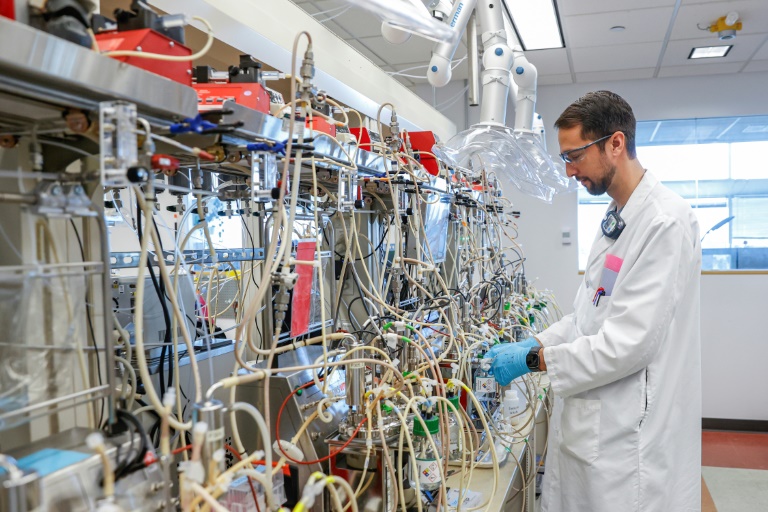
At LanzaTech’s lab in the Chicago suburbs, a beige liquid bubbles away in dozens of glass vats.

The concoction includes billions of hungry bacteria, specialized to feed on polluted air — the first step in a recycling system that converts greenhouse gases into usable products.

Thanks to licensing agreements, LanzaTech’s novel microorganisms are already being put to commercial use by three Chinese factories, converting waste emissions into ethanol.

That ethanol is then used as a chemical building block for consumer items such as plastic bottles, athletic wear and even dresses, via tie-ins with major brands such as Zara and L’Oreal.

“I wouldn’t have thought that 14 years later, we would have a cocktail dress on the market that’s made out of steel emissions,” said microbiologist Michael Kopke, who joined LanzaTech a year after its founding.

LanzaTech is the only American company among 15 finalists for the Earthshot Prize, an award for contributions to environmentalism launched by Britain’s Prince William and broadcaster David Attenborough. Five winners will be announced Friday.

To date, LanzaTech says it has kept 200,000 metric tons of carbon dioxide out of the atmosphere, while producing 50 million gallons (190 million liters) of ethanol.

That’s a small drop in the bucket when it comes to the actual quantities needed to combat climate change, Kopke concedes.

But having spent 15 years developing the methodology and proving its large-scale feasibility, the company is now seeking to ramp up its ambition and multiply the number of participating factories.

“We really want to get to a point where we only use above ground carbon, and keep that in circulation,” says Kopke — in other words, avoid extracting new oil and gas.

– Industry partnerships –

LanzaTech, which employs about 200 people, compares its carbon recycling technology to a brewery — but instead of taking sugar and yeast to make beer, it uses carbon pollution and bacteria to make ethanol.

The bacteria used in their process was identified decades ago in rabbit droppings.

The company placed it in industrial conditions to optimize it in those settings, “almost like an athlete that we trained,” said Kopke.

Bacteria are sent out in the form of a freeze-dried powder to corporate clients in China, which have giant versions of the vats back in Chicago, several meters high.

The corporate clients that built these facilities will then reap the rewards of the sale of ethanol — as well as the positive PR from offsetting pollution from their main businesses.

The clients in China are a steel plant and two ferroalloy plants. Six other sites are under construction, including one in Belgium for an ArcelorMittal plant, and in India with the Indian Oil Company.

Because the bacteria can ingest CO2, carbon monoxide and hydrogen, the process is extremely flexible, explains Zara Summers, LanzaTech’s vice president of science.

“We can take garbage, we can take biomass, we can take off gas from an industrial plant,” said Summers, who spent ten years working for ExxonMobil.

Products already on the shelves include a line of dresses at Zara. Sold at around $90, they are made of polyester, 20 percent of which comes from captured gas.

“In the future, I think the vision is there is no such thing as waste, because carbon can be reused again,” said Summers.

– Sustainable aviation fuel –

LanzaTech has also founded a separate company, LanzaJet, to use the ethanol to create “sustainable aviation fuel” or SAF.

Increasing global SAF production is a huge challenge for the fuel-heavy aviation sector, which is seeking to green itself.

LanzaJet is aiming to achieve one billion gallons of SAF production in the United States per year by 2030.

Unlike bioethanol produced from wheat, beets or corn, fuel created from greenhouse gas emissions doesn’t require the use of agricultural land.

For LanzaTech, the next challenge is to commercialize bacteria that will produce chemicals other than ethanol. 

In particular, they have their sights set on directly producing ethylene, “one of the most widely used chemicals in the world,” per Kopke — thus saving energy associated with having to first convert ethanol into ethylene.


'I like Hitler': Kanye doubles down in wild Infowars stream

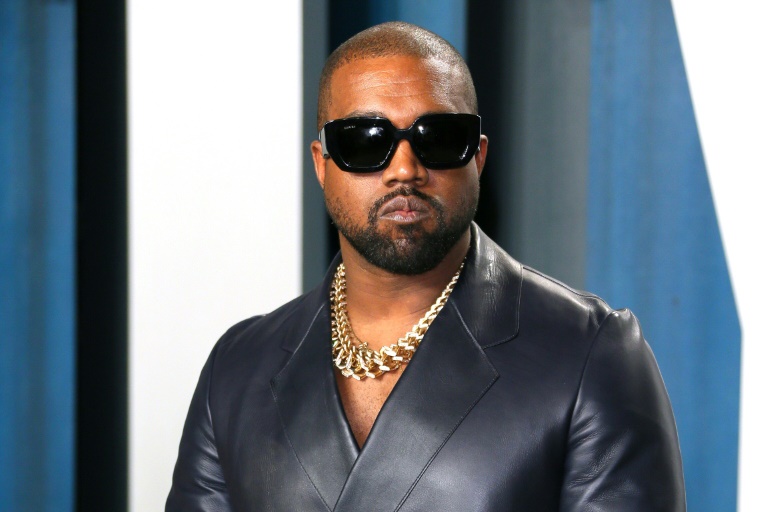
Kanye West declared his “love” of Nazis and admiration for Adolf Hitler on Thursday, sparking outrage as another commercial partner announced it was splitting from the troubled superstar.

In an extraordinary hours-long appearance on Infowars, the show fronted by conspiracy theorist Alex Jones, West — now known as Ye — wore a black mask completely covering his face, as he ranted about sin, pornography and the devil.

“I like Hitler,” West said several times.

Even though West hid his face — the mask had neither eye nor mouth slits — there seemed no doubt it was him. Jones addressed him as West as they spoke, Infowars billed the interview as being with West, and at one point Jones took West’s cellphone and posted a tweet on his account that appeared in real time.

West, who has hinted he is running for US president in 2024, has spoken openly about his struggles with mental illness, but his erratic behavior has continued to raise concerns.

The rapper-businessman has seen his commercial relationships crumble after a series of anti-Semitic comments, as the one-time titan of fashion and music appears to have entered a disturbing spiral.

In his lengthy appearance on the Infowars livestream, West opened the throttle, drawing shocked laughter and even disagreement from far-right host Jones.

“I see good things about Hitler also,” he told Jones.

“This guy… invented highways, invented the very microphone that I used as a musician, you can’t say out loud that this person ever did anything good, and I’m done with that.”

Hitler did not invent either of those things.

“I’m done with the classification, every human being has something of value that they brought to the table, especially Hitler.

“I like Hitler.”

– ‘I love Nazis’ –

Jones, a serial provocateur who has been ordered to pay hundreds of millions of dollars in damages for claiming one of America’s deadliest school shootings was a “hoax,” interjected that “the Nazis were thugs and did really bad things.”

West did not back down.

“But they did good things too. We gotta stop dissing the Nazis all the time… I love Nazis,” West said.

Hours after the astonishing performance, social media platform Parler, a favorite of conservatives for its hands-off approach to moderation, said a deal for West to buy the outfit was off.

“Parlement Technologies would like to confirm that the company has mutually agreed with Ye to terminate the intent of sale of Parler,” the network said on Twitter. 

“This decision was made in the interest of both parties in mid-November.”

In October, German sportswear giant Adidas severed its lucrative tie-up with West after the star made anti-Semitic statements, including threatening to “go death con 3 on JEWISH PEOPLE,” using a misspelled reference to US military readiness.

Paris fashion house Balenciaga and US clothing retailer Gap have also ended ties with West, who appeared at a Paris fashion show wearing a shirt with the slogan “White Lives Matter,” a rebuke to the Black Lives Matter racial equality movement.

– Fuentes –

West appeared on the Jones program with Nick Fuentes, the same white supremacist with whom West had dinner last week with Donald Trump at the former president’s Florida estate, in a meeting that provoked outrage.

Thursday’s livestream sparked immediate condemnation from the Republican Jewish Coalition, which dubbed the three men “a disgusting triumvirate of conspiracy theorists, Holocaust deniers, and anti-Semites.”

“Given his praise of Hitler, it can’t be overstated that Kanye West is a vile, repellent bigot who has targeted the Jewish community with threats and Nazi-style defamation,” a statement from the group said.

“Conservatives who have mistakenly indulged Kanye West must make it clear that he is a pariah. Enough is enough.”

'I like Hitler': Kanye doubles down in wild Infowars stream

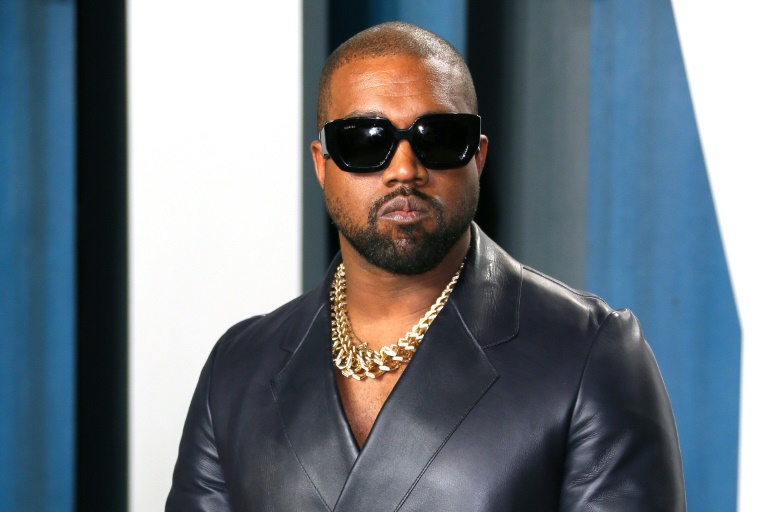
Kanye West declared his “love” of Nazis and admiration for Adolf Hitler on Thursday, sparking outrage as another commercial partner announced it was splitting from the troubled superstar.

In an extraordinary hours-long appearance on Infowars, the show fronted by conspiracy theorist Alex Jones, West — now known as Ye — wore a black mask completely covering his face, as he ranted about sin, pornography and the devil.

“I like Hitler,” West said several times.

Even though West hid his face — the mask had neither eye nor mouth slits — there seemed no doubt it was him. Jones addressed him as West as they spoke, Infowars billed the interview as being with West, and at one point Jones took West’s cellphone and posted a tweet on his account that appeared in real time.

West, who has hinted he is running for US president in 2024, has spoken openly about his struggles with mental illness, but his erratic behavior has continued to raise concerns.

The rapper-businessman has seen his commercial relationships crumble after a series of anti-Semitic comments, as the one-time titan of fashion and music appears to have entered a disturbing spiral.

In his lengthy appearance on the Infowars livestream, West opened the throttle, drawing shocked laughter and even disagreement from far-right host Jones.

“I see good things about Hitler also,” he told Jones.

“This guy… invented highways, invented the very microphone that I used as a musician, you can’t say out loud that this person ever did anything good, and I’m done with that.”

Hitler did not invent either of those things.

“I’m done with the classification, every human being has something of value that they brought to the table, especially Hitler.

“I like Hitler.”

– ‘I love Nazis’ –

Jones, a serial provocateur who has been ordered to pay hundreds of millions of dollars in damages for claiming one of America’s deadliest school shootings was a “hoax,” interjected that “the Nazis were thugs and did really bad things.”

West did not back down.

“But they did good things too. We gotta stop dissing the Nazis all the time… I love Nazis,” West said.

Hours after the astonishing performance, social media platform Parler, a favorite of conservatives for its hands-off approach to moderation, said a deal for West to buy the outfit was off.

“Parlement Technologies would like to confirm that the company has mutually agreed with Ye to terminate the intent of sale of Parler,” the network said on Twitter. 

“This decision was made in the interest of both parties in mid-November.”

In October, German sportswear giant Adidas severed its lucrative tie-up with West after the star made anti-Semitic statements, including threatening to “go death con 3 on JEWISH PEOPLE,” using a misspelled reference to US military readiness.

Paris fashion house Balenciaga and US clothing retailer Gap have also ended ties with West, who appeared at a Paris fashion show wearing a shirt with the slogan “White Lives Matter,” a rebuke to the Black Lives Matter racial equality movement.

– Fuentes –

West appeared on the Jones program with Nick Fuentes, the same white supremacist with whom West had dinner last week with Donald Trump at the former president’s Florida estate, in a meeting that provoked outrage.

Thursday’s livestream sparked immediate condemnation from the Republican Jewish Coalition, which dubbed the three men “a disgusting triumvirate of conspiracy theorists, Holocaust deniers, and anti-Semites.”

“Given his praise of Hitler, it can’t be overstated that Kanye West is a vile, repellent bigot who has targeted the Jewish community with threats and Nazi-style defamation,” a statement from the group said.

“Conservatives who have mistakenly indulged Kanye West must make it clear that he is a pariah. Enough is enough.”

Supreme Court to rule on Biden's student debt cancellation

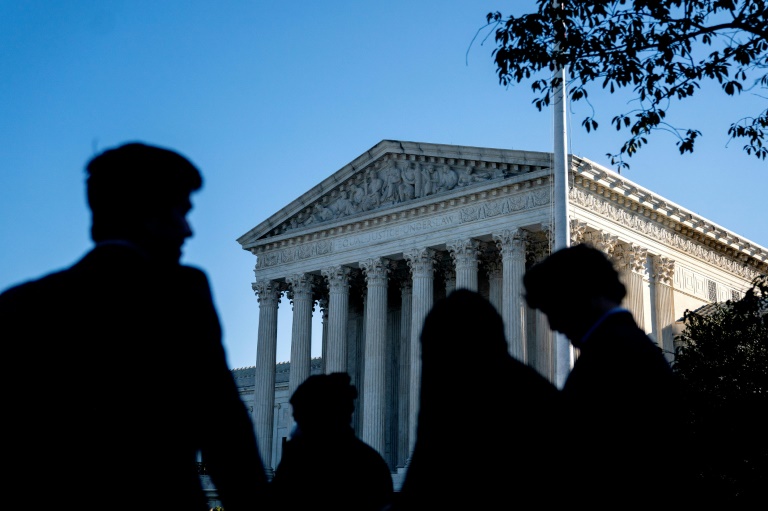
The Supreme Court agreed Thursday to rule on the legality of President Joe Biden’s landmark effort to cancel hundreds of millions of dollars in US student debt.

The court will hear the case in February or March, according to a short statement it posted online. 

In the meantime, it declined to lift a lower court ruling that has put the policy on hold for now. 

The Democratic president, who has posed the measure as a boost for the middle class, announced in August that the federal government would forgive a huge portion of the often-crushing student debt held by Americans, erasing up to $20,000 per person. 

In total, some 45 million borrowers nationwide owe a collective $1.6 trillion, according to the White House.

The plan, which would cost an estimated $400 million, was immediately challenged in court by several conservative states, which called the move an abuse of power ahead of the midterm elections.

Last month, a federal appeals court blocked the measure, and current and former college and university students who had already begun to apply for the relief were told their claims were on hold pending legal action. 

The White House then asked the Supreme Court to take up the case, in hopes it would overturn the previous decision. 

At the same time, the administration once again extended until June a moratorium on student debt payments, which was originally implemented at the start of the Covid-19 pandemic.

The White House welcomed the court’s decision to take up the case.

“This program is necessary to help over 40 million eligible Americans struggling under the burden of student loan debt recover from the pandemic and move forward with their lives,” press secretary Karine Jean-Pierre said.

“President Biden will keep fighting against efforts to rob middle class families of the relief they need and deserve,” she said.

Dollar falls after Federal Reserve shift in tone, stocks mixed

The dollar continued to retreat Thursday on shifting expectations for US monetary policy, while global stocks finished mixed after digesting data showing record low eurozone unemployment and a moderation in US inflation.

The greenback fell decisively against the euro and other major currencies, a day after Federal Reserve Chair Jerome Powell signaled a pivot in monetary policy away from ultra-aggressive interest rate hikes to counter inflation.

Powell said Wednesday the US central bank could slow the pace of interest rate increases as soon as at its December meeting. 

“Still-too-hot inflation has the Fed on track to further raise rates. But the pace of increases could slow as soon as this month,” said Convera’s Joe Manimbo.

“A less hawkish outlook for Fed policy has left the dollar increasingly vulnerable as its big rate increases helped fuel its surge to two-decade highs.”

A day after Powell’s remarks spurred a dramatic rally on Wall Street, US indices finished mixed, with the Dow declining and the Nasdaq eking out a gain.

The personal consumption expenditures price index — a closely-watched inflation benchmark — rose 6.0 percent from a year ago in October, down from a larger jump the month before, Commerce Department figures showed. 

But a survey of US manufacturers showed the sector contracted in November for the first time since mid-2020.

The manufacturing report adds to “festering growth concerns,” said Briefing.com analyst Patrick O’Hare, who nonetheless was encouraged by the market’s steady performance after Wednesday’s big rally.

Investors are looking ahead to Friday’s employment report, which analysts expect will show the US economy added 200,000 jobs in November and that unemployment held steady at 3.7 percent.

– Record-low eurozone unemployment –

Earlier, bourses in Paris and Frankfurt both advanced after the EU’s Eurostat office estimated eurozone unemployment at a record low of 6.5 percent in October.

Recession expectations remain high in Europe. 

Inflation is running hot, despite falling back in the latest reading on Wednesday at 10 percent — above the European Central Bank’s two-percent target — largely because of high energy prices spurred by the fallout of Russia’s war in Ukraine.

The European Central Bank will pore over the latest indicators as it walks a tightrope between raising interest rates to combat inflation and the risk of tipping the economy into a deep recession.

An analysis note from ING bank said the unemployment data showed “the labor market remains resilient despite the slowing economy.”

It added that it expected the ECB to remain “on high alert in its fight against inflation.”

In Asia, Hong Kong extended gains into a third day, with tech giants including Alibaba and Tencent tracking massive increases in their US-listed stock, while Shanghai was also up.

Equities were helped by signs that China is edging towards a more pragmatic approach to fighting the coronavirus, having hammered the economy with its strict zero-Covid strategy of snap lockdowns and mass testing.

After widespread unrest against the measures — and calls for more political freedoms — authorities announced moves aimed at loosening some restrictions.

– Key figures around 2145 GMT –

New York – Dow: DOWN 0.6 percent at 34,395.01 (close)

New York – S&P 500: DOWN 0.1 percent at 4,076.57 (close)

New York – Nasdaq: UP 0.1 percent at 11,482.45 (close)

London – FTSE 100: DOWN 0.2 percent at 7,558.49 (close)

Frankfurt – DAX: UP 0.7 percent at 14,490.30 (close)

Paris – CAC 40: UP 0.2 percent at 6,753.97 (close)

EURO STOXX 50: UP 0.5 percent at 3,984.50 (close)

Tokyo – Nikkei 225: UP 0.9 percent at 28,226.08 (close)

Hong Kong – Hang Seng Index: UP 0.8 percent at 18,736.44 (close)

Shanghai – Composite: UP 0.5 percent at 3,165.47 (close)

Euro/dollar: UP at $1.0529 from $1.0406 on Wednesday

Dollar/yen: DOWN at 135.34 yen from 138.07 yen

Pound/dollar: UP at $1.2251 from $1.2058

Euro/pound: DOWN at 85.91 pence from 86.30 pence

Brent North Sea crude: DOWN 0.1 percent at $86.88 per barrel

West Texas Intermediate: UP 0.8 percent at $81.22 per barrel

burs-jmb/bys

US Congress approves bill to avert major freight rail strike

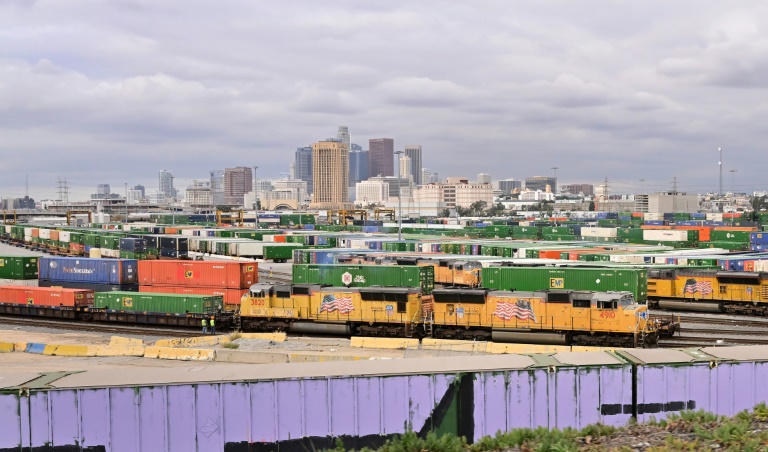
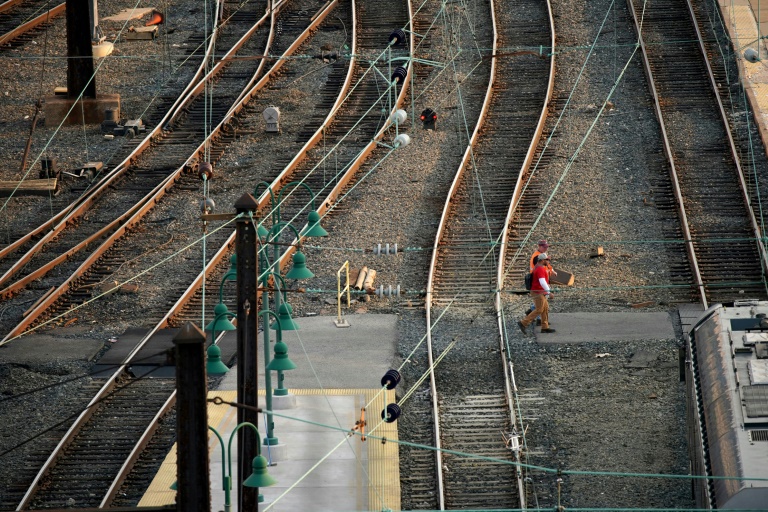
The US Congress passed legislation Thursday to avert a freight rail strike that could have been devastating for the economy, intervening to break an impasse between workers and management as the holiday season approaches.

The bill, overwhelmingly approved by the Senate Thursday after passing with a bipartisan majority in the House of Representatives a day earlier, effectively forces hold-out unions to accept a deal on higher wages, to which a majority of unions already agreed.

After the 80-15 Senate vote, the measure now heads to President Joe Biden for his signature.

Under a 1926 law, Congress is empowered to resolve disputes between railroads and labor unions as part of its power to regulate commerce.

“Working together, we have spared this country a Christmas catastrophe in our grocery stores, in our workplaces, and in our communities,” said Biden in a statement after the vote.

While he expressed “reluctance” to override union ratification procedures, “in this case, the consequences of a shutdown were just too great,” he added.

A strike would have seen almost 7,000 freight trains come to a halt, costing more than $2 billion a day, according to the American Association of Railroads.

Biden’s administration had taken a hands-on approach to the long-running deadlock over a contract between organized labor and railroads, with cabinet secretaries in September taking part in all-night negotiations alongside union leaders and rail executives.

After the lengthy session, leaders from both sides announced a tentative agreement.

But since then, members of eight of the 12 rail unions approved the deal, while four voted it down.

While the House earlier backed a separate measure to add mandated paid sick time to the agreement, addressing a major sticking point identified by unions, this did not pass in the Senate on Thursday.

The Senate also failed to approve an amendment for a cooling-off period between workers and management.

But Biden told reporters Thursday that he “negotiated a contract no one else could negotiate.”

“We’re going to avoid the rail strike, keep the rails running, keep things moving,” he added, at a news conference with French President Emmanuel Macron.

– ‘Horrific’ –

But Sean O’Brien, general president of the Teamsters union, said in a tweet that it was “horrific” there were not 60 senators willing to fight for rail workers’ basic rights, referring to the outcome on the sick days measure.

Meanwhile, the Brotherhood of Railroad Signalmen added that “the actions of many today demonstrated they are for the corporate class,” despite elected members of Congress campaigning on supporting workers.

“The dereliction of duty and inability to hold corporations accountable for a lack of good faith to their employees will not be forgotten,” the union said in a statement.

The agreement includes a 24 percent pay increase for workers. However, critics in organized labor had slammed a lack of guaranteed paid sick leave, an omission seen as evidence of “unchecked corporate greed,” as one leading union put it.

The failure of the agreement to win universal approval among unions had set the stage for a potential strike on December 9.

And the prospect of rail paralysis presented a major political risk for Biden, whose administration is already grappling with decades-high inflation and risks of a slowing economy.

A freight freeze would also have impacted passenger service because some passenger trains run on tracks owned by freight companies.

“I made it really clear. I’m going to continue to fight for paid leave for not only rail workers, but for all American workers,” Biden said Thursday.

While noting “significant” gains in the agreement, the Association of American Railroads conceded in a statement that there remains “more to be done” to address workers’ work-life balance concerns.

The National Retail Federation said it was “grateful for the swift action in Congress this week” to implement the tentative agreement, and that a nationwide rail strike would have had “devastating” economic consequences.

US Congress approves bill to avert major freight rail strike

The US Congress passed legislation Thursday to avert a freight rail strike that could have been devastating for the economy, intervening to break an impasse between workers and management as the holiday season approaches.

The bill, overwhelmingly approved by the Senate Thursday after passing with a bipartisan majority in the House of Representatives a day earlier, effectively forces hold-out unions to accept a deal on higher wages, to which a majority of unions already agreed.

After the 80-15 Senate vote, the measure now heads to President Joe Biden for his signature.

Under a 1926 law, Congress is empowered to resolve disputes between railroads and labor unions as part of its power to regulate commerce.

“Working together, we have spared this country a Christmas catastrophe in our grocery stores, in our workplaces, and in our communities,” said Biden in a statement after the vote.

While he expressed “reluctance” to override union ratification procedures, “in this case, the consequences of a shutdown were just too great,” he added.

A strike would have seen almost 7,000 freight trains come to a halt, costing more than $2 billion a day, according to the American Association of Railroads.

Biden’s administration had taken a hands-on approach to the long-running deadlock over a contract between organized labor and railroads, with cabinet secretaries in September taking part in all-night negotiations alongside union leaders and rail executives.

After the lengthy session, leaders from both sides announced a tentative agreement.

But since then, members of eight of the 12 rail unions approved the deal, while four voted it down.

While the House earlier backed a separate measure to add mandated paid sick time to the agreement, addressing a major sticking point identified by unions, this did not pass in the Senate on Thursday.

The Senate also failed to approve an amendment for a cooling-off period between workers and management.

But Biden told reporters Thursday that he “negotiated a contract no one else could negotiate.”

“We’re going to avoid the rail strike, keep the rails running, keep things moving,” he added, at a news conference with French President Emmanuel Macron.

– ‘Horrific’ –

But Sean O’Brien, general president of the Teamsters union, said in a tweet that it was “horrific” there were not 60 senators willing to fight for rail workers’ basic rights, referring to the outcome on the sick days measure.

Meanwhile, the Brotherhood of Railroad Signalmen added that “the actions of many today demonstrated they are for the corporate class,” despite elected members of Congress campaigning on supporting workers.

“The dereliction of duty and inability to hold corporations accountable for a lack of good faith to their employees will not be forgotten,” the union said in a statement.

The agreement includes a 24 percent pay increase for workers. However, critics in organized labor had slammed a lack of guaranteed paid sick leave, an omission seen as evidence of “unchecked corporate greed,” as one leading union put it.

The failure of the agreement to win universal approval among unions had set the stage for a potential strike on December 9.

And the prospect of rail paralysis presented a major political risk for Biden, whose administration is already grappling with decades-high inflation and risks of a slowing economy.

A freight freeze would also have impacted passenger service because some passenger trains run on tracks owned by freight companies.

“I made it really clear. I’m going to continue to fight for paid leave for not only rail workers, but for all American workers,” Biden said Thursday.

While noting “significant” gains in the agreement, the Association of American Railroads conceded in a statement that there remains “more to be done” to address workers’ work-life balance concerns.

The National Retail Federation said it was “grateful for the swift action in Congress this week” to implement the tentative agreement, and that a nationwide rail strike would have had “devastating” economic consequences.

US Congress approves bill to avert major freight rail strike

The US Congress passed legislation Thursday to avert a freight rail strike that could have been devastating for the economy, intervening to break an impasse between workers and management as the holiday season approaches.

The bill, overwhelmingly approved by the Senate Thursday after passing with a bipartisan majority in the House of Representatives a day earlier, effectively forces hold-out unions to accept a deal on higher wages, to which a majority of unions already agreed.

After the 80-15 Senate vote, the measure now heads to President Joe Biden for his signature.

Under a 1926 law, Congress is empowered to resolve disputes between railroads and labor unions as part of its power to regulate commerce.

“Working together, we have spared this country a Christmas catastrophe in our grocery stores, in our workplaces, and in our communities,” said Biden in a statement after the vote.

While he expressed “reluctance” to override union ratification procedures, “in this case, the consequences of a shutdown were just too great,” he added.

A strike would have seen almost 7,000 freight trains come to a halt, costing more than $2 billion a day, according to the American Association of Railroads.

Biden’s administration had taken a hands-on approach to the long-running deadlock over a contract between organized labor and railroads, with cabinet secretaries in September taking part in all-night negotiations alongside union leaders and rail executives.

After the lengthy session, leaders from both sides announced a tentative agreement.

But since then, members of eight of the 12 rail unions approved the deal, while four voted it down.

While the House earlier backed a separate measure to add mandated paid sick time to the agreement, addressing a major sticking point identified by unions, this did not pass in the Senate on Thursday.

The Senate also failed to approve an amendment for a cooling-off period between workers and management.

But Biden told reporters Thursday that he “negotiated a contract no one else could negotiate.”

“We’re going to avoid the rail strike, keep the rails running, keep things moving,” he added, at a news conference with French President Emmanuel Macron.

– ‘Horrific’ –

But Sean O’Brien, general president of the Teamsters union, said in a tweet that it was “horrific” there were not 60 senators willing to fight for rail workers’ basic rights, referring to the outcome on the sick days measure.

Meanwhile, the Brotherhood of Railroad Signalmen added that “the actions of many today demonstrated they are for the corporate class,” despite elected members of Congress campaigning on supporting workers.

“The dereliction of duty and inability to hold corporations accountable for a lack of good faith to their employees will not be forgotten,” the union said in a statement.

The agreement includes a 24 percent pay increase for workers. However, critics in organized labor had slammed a lack of guaranteed paid sick leave, an omission seen as evidence of “unchecked corporate greed,” as one leading union put it.

The failure of the agreement to win universal approval among unions had set the stage for a potential strike on December 9.

And the prospect of rail paralysis presented a major political risk for Biden, whose administration is already grappling with decades-high inflation and risks of a slowing economy.

A freight freeze would also have impacted passenger service because some passenger trains run on tracks owned by freight companies.

“I made it really clear. I’m going to continue to fight for paid leave for not only rail workers, but for all American workers,” Biden said Thursday.

While noting “significant” gains in the agreement, the Association of American Railroads conceded in a statement that there remains “more to be done” to address workers’ work-life balance concerns.

The National Retail Federation said it was “grateful for the swift action in Congress this week” to implement the tentative agreement, and that a nationwide rail strike would have had “devastating” economic consequences.

Le bromance breaks out at Biden-Macron state visit

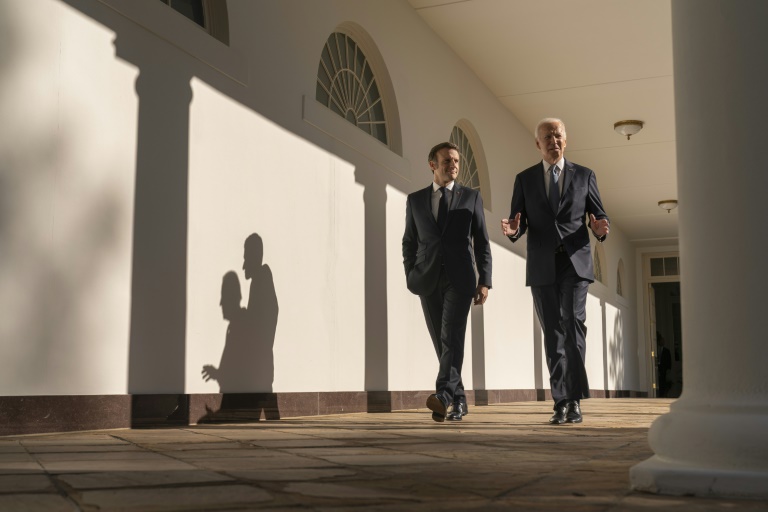
Between the hugs, hand clasps, compliments and musings over love, it’s safe to say that Joe Biden and Emmanuel Macron cemented le bromance Thursday.

This was a state visit with all the pomp and ceremony that the White House can muster.

Soldiers, airmen, more soldiers but wearing 18th century uniforms, complicated exchanges of presidential gifts, red carpets, and 200 live lobsters making the voyage from Maine to be eaten at a sumptuous dinner — they all played their roles.

But at the heart of the diplomatic razzmatazz were just two men in dark suits: 80-year-old Biden and his French guest, 44-year-old Macron.

And the clear verdict after hours together, including nearly two hours sitting by the cozy fireplace in the Oval Office, was that this duo really appreciate each other.

First, the body language.

Presidential handshakes in front of the media at the start of summits are a staple of news photography — the “grip-and-grin” shot.

But Biden and Macron didn’t just shake hands.

They hugged. They took turns putting a hand on each other’s shoulder or in the small of the back while walking along. Throughout one especially prolonged hand clasp, Macron gazed right at his host, while Biden looked out sideways, over the arrayed journalists.

Their words were no less warm.

Asked why he’d invited Macron before any other foreign leader for the first state visit of his presidency, Biden answered without hesitation: “Because he’s my friend.”

Macron, a short while later, echoed: “Joe Biden has also become a friend.”

And Biden made clear that his admiration goes well beyond the personal, saying “Emmanuel is not just the leader of France — he’s one of the leaders of Europe.” Macron, he said, is “very, very commanding in Europe.”

Not to be outdone, Macron took a compliment from the elder US statesman and batted it right back.

“Dear Joe, you elegantly thanked France for the role we played in the historical agreement between Israel and Lebanon,” Macron said, referring to a recent deal to demarcate the sea border between the two countries.

“Let me be honest: I think most of the work was yours.”

But Biden batted the same compliment back yet again.

“Well, thank you Emmanuel. I began to refer to you in private as my ‘closer,’ of that deal with Lebanon and Israel. We did negotiate, but we needed a closer to get the job done, and you did it.”

The joint press conference saw Macron slipping seamlessly, while talking in French, from the stiffly formal “vous” to the familiar, friendly “tu” to say “you” to Biden.

Caught up in the atmosphere, a French journalist got right to the point, framing the day’s complex geopolitical and trade issues in terms more appropriate to a romantic movie set in Paris.

“In French, President Biden, we say there is no love, there is only proof of love,” the reporter said. “Do you feel that your French friend will go home very much reassured?”

Macron answered, at length, saying “we’re not here simply, really, to ask for proof of love. We came here to agree on the strategy, to clarify.”

“I’m going home confident, as well as lucid, as to what remains to be done on the European side.”

And Biden said just: “I’m confident.”

Laughter rippled through the room. Smiling, Biden followed up:

“That’s my answer.”

Close Bitnami banner
Bitnami