AFP

World equities extend gains on Fed rate optimism

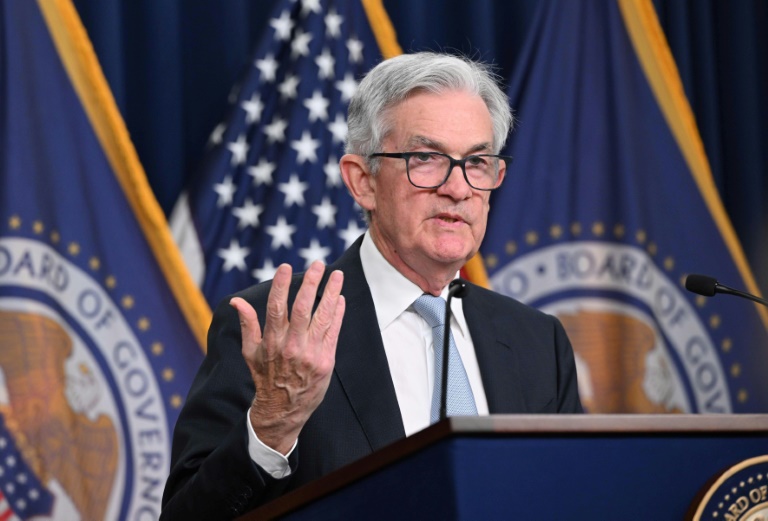
Global stocks rose further Thursday as Federal Reserve boss Jerome Powell flagged a moderation in interest rate hikes, while China signalled a softer approach to fighting Covid.

Asian and European equities tacked higher as investors also eyed news that eurozone unemployment plumbed to a record-low 6.5 percent in October.

Oil prices climbed before this weekend’s OPEC output meeting of key crude producing nations.

– ‘Positive news’ –

“Powell … signalled a potential slowing of interest rate hikes,” noted equity analyst Matt Britzman at UK stockbroker Hargreaves Lansdown.

“Markets have been clinging to every scrap of positive news lately and this was a continuation of that trend.”

In a much-anticipated speech Wednesday, Powell said the full effects of the Fed’s belt-tightening had yet to be felt but that it “makes sense to moderate the pace of our rate increases as we approach the level of restraint that will be sufficient to bring inflation down”.

He signalled the US central bank’s December gathering would likely see officials lift borrowing costs by 50 basis points.

The Fed has yanked up rates by a bumper 75 points at each of the last four meetings.

However, Powell did say policy would need to remain tight “for some time” to restore price stability, echoing comments from other Fed officials who suggested there might not be any cuts until 2024.

Analysts said the reaction to Powell’s remarks — which had been expected to be his most dovish in some time — highlighted a sense of relief among investors that a long-hoped-for pivot was on the cards.

– Santa Rally on cards? –

“For the first time in an age it feels like Powell is telling markets what they want to hear,” said AJ Bell investment director Russ Mould.

“The message that an easing in the pace of rate hikes could come before the end of the year was just what investors were looking for and raises the prospect of a Santa Rally heading into Christmas.”

All three main indexes on Wall Street surged in response on Wednesday, with the Nasdaq leading the way as rate-sensitive tech firms rocketed.

Hong Kong extended gains into a third day, with tech giants including Alibaba and Tencent tracking massive gains in their US-listed stock, while Shanghai was also up.

Equities were also helped by signs that China is edging towards a more pragmatic approach to fighting the coronavirus, having hammered the economy this year with its strict zero-Covid strategy of lockdowns and mass testing.

After widespread unrest against the measures — and calls for more political freedoms — authorities have announced moves aimed at loosening some restrictions.

The dollar sank, having soared across the board this year as Fed monetary policy diverged more and more from other central banks.

– Key figures around 1115 GMT –

London – FTSE 100: UP 0.1 percent at 7,578.14 points

Frankfurt – DAX: UP 0.7 percent at 14,496.76

Paris – CAC 40: UP 0.2 percent at 6,748.44

EURO STOXX 50: UP 0.6 percent at 3,986.56

Tokyo – Nikkei 225: UP 0.9 percent at 28,226.08 (close)

Hong Kong – Hang Seng Index: UP 0.8 percent at 18,736.44 (close)

Shanghai – Composite: UP 0.5 percent at 3,165.47 (close)

New York – Dow: UP 2.2 percent at 34,589.77 (close)

Euro/dollar: UP at $1.0442 from $1.0406 on Wednesday

Dollar/yen: DOWN at 136.34 yen from 138.07 yen

Pound/dollar: UP at $1.2150 from $1.2058

Euro/pound: DOWN at 85.94 pence from 86.30 pence

Brent North Sea crude: UP 0.6 percent at $87.45 per barrel

West Texas Intermediate: UP 0.7 percent at $81.11 per barrel

burs-rfj/lth
World equities extend gains on Fed rate optimism

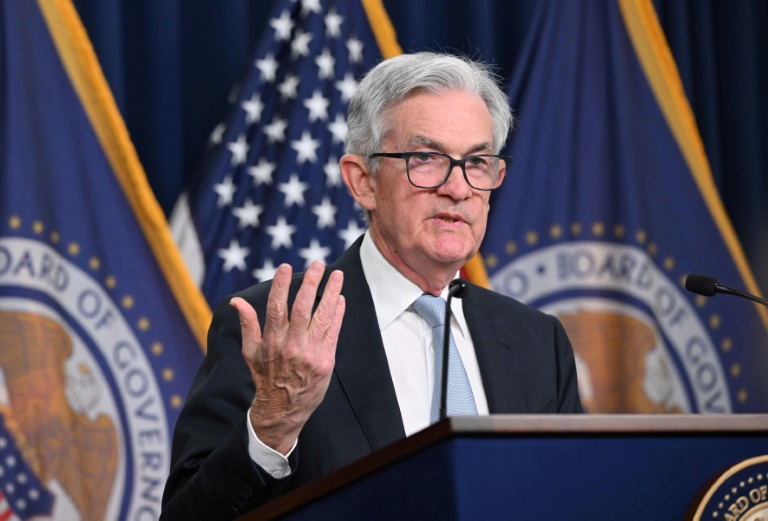
Global stocks rose further Thursday as Federal Reserve boss Jerome Powell flagged a moderation in interest rate hikes, while China signalled a softer approach to fighting Covid.

Asian and European equities tacked higher as investors also eyed news that eurozone unemployment plumbed to a record-low 6.5 percent in October.

Oil prices climbed before this weekend’s OPEC output meeting of key crude producing nations.

– ‘Positive news’ –

“Powell … signalled a potential slowing of interest rate hikes,” noted equity analyst Matt Britzman at UK stockbroker Hargreaves Lansdown.

“Markets have been clinging to every scrap of positive news lately and this was a continuation of that trend.”

In a much-anticipated speech Wednesday, Powell said the full effects of the Fed’s belt-tightening had yet to be felt but that it “makes sense to moderate the pace of our rate increases as we approach the level of restraint that will be sufficient to bring inflation down”.

He signalled the US central bank’s December gathering would likely see officials lift borrowing costs by 50 basis points.

The Fed has yanked up rates by a bumper 75 points at each of the last four meetings.

However, Powell did say policy would need to remain tight “for some time” to restore price stability, echoing comments from other Fed officials who suggested there might not be any cuts until 2024.

Analysts said the reaction to Powell’s remarks — which had been expected to be his most dovish in some time — highlighted a sense of relief among investors that a long-hoped-for pivot was on the cards.

– Santa Rally on cards? –

“For the first time in an age it feels like Powell is telling markets what they want to hear,” said AJ Bell investment director Russ Mould.

“The message that an easing in the pace of rate hikes could come before the end of the year was just what investors were looking for and raises the prospect of a Santa Rally heading into Christmas.”

All three main indexes on Wall Street surged in response on Wednesday, with the Nasdaq leading the way as rate-sensitive tech firms rocketed.

Hong Kong extended gains into a third day, with tech giants including Alibaba and Tencent tracking massive gains in their US-listed stock, while Shanghai was also up.

Equities were also helped by signs that China is edging towards a more pragmatic approach to fighting the coronavirus, having hammered the economy this year with its strict zero-Covid strategy of lockdowns and mass testing.

After widespread unrest against the measures — and calls for more political freedoms — authorities have announced moves aimed at loosening some restrictions.

The dollar sank, having soared across the board this year as Fed monetary policy diverged more and more from other central banks.

– Key figures around 1115 GMT –

London – FTSE 100: UP 0.1 percent at 7,578.14 points

Frankfurt – DAX: UP 0.7 percent at 14,496.76

Paris – CAC 40: UP 0.2 percent at 6,748.44

EURO STOXX 50: UP 0.6 percent at 3,986.56

Tokyo – Nikkei 225: UP 0.9 percent at 28,226.08 (close)

Hong Kong – Hang Seng Index: UP 0.8 percent at 18,736.44 (close)

Shanghai – Composite: UP 0.5 percent at 3,165.47 (close)

New York – Dow: UP 2.2 percent at 34,589.77 (close)

Euro/dollar: UP at $1.0442 from $1.0406 on Wednesday

Dollar/yen: DOWN at 136.34 yen from 138.07 yen

Pound/dollar: UP at $1.2150 from $1.2058

Euro/pound: DOWN at 85.94 pence from 86.30 pence

Brent North Sea crude: UP 0.6 percent at $87.45 per barrel

West Texas Intermediate: UP 0.7 percent at $81.11 per barrel

burs-rfj/lth
UK royals show ruthlessness in latest race row

The timing could not have been worse for Britain’s royal family, not long after one racial reckoning involving Prince Harry and ahead of a new publicity blitz from the maverick “spare heir”.

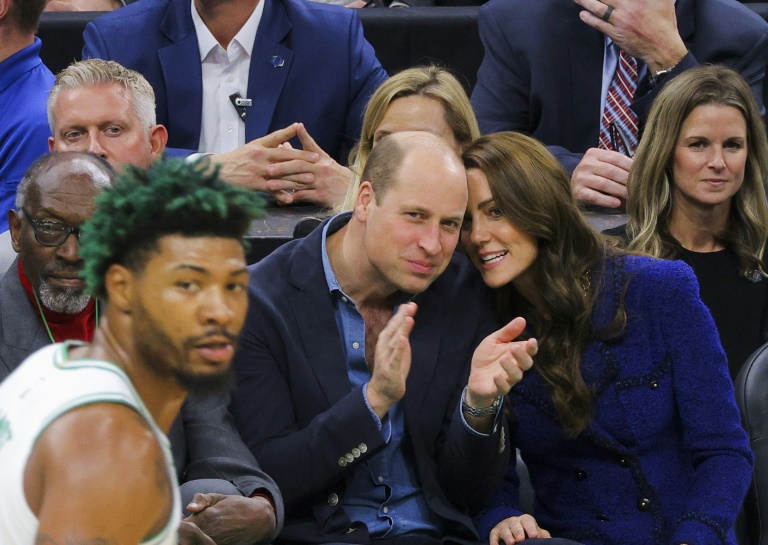
Harry’s elder brother Prince William — the heir to the throne — has been forced to part ways with one of his godmothers after she used racially charged language to a black British woman at a palace reception on Tuesday.

King Charles III moved rapidly to evict Lady Susan Hussey from the royal household after the hurtful exchange was revealed on Twitter by Ngozi Fulani — while William and his wife Kate were flying to Boston.

When Hussey started to quiz her about her origins, the UK-born Fulani said she tried to give the 83-year-old courtier the benefit of the doubt.

“But it soon dawned on me very quickly that this was nothing to do with her capacity to understand,” the charity campaigner, who works with survivors of domestic abuse, told BBC radio on Thursday.

Hussey repeatedly asked Fulani where she was “really” from, refusing to accept her explanation that she was British.

“But this is her trying to make me really denounce my British citizenship,” Fulani said, as many other Britons of colour shared similarly demeaning experiences on social and traditional media.

It is the most serious controversy yet since Charles succeeded his mother in September. Hussey was not just any courtier — she was at Queen Elizabeth II’s side for six decades.

But she was unceremoniously dumped as Charles and William moved rapidly to draw a line under the row, earning plaudits from some black commentators.

– ‘Shocking’ –

Labour MP Diane Abbott, the first black woman to sit in the House of Commons when she was elected in the 1980s, said it was “really shocking” that a black Briton’s identity could be interrogated in this way.

But she told Times Radio that Buckingham Palace had made “progress” on race issues in the past 10 years.

Back then, “they would have said she (Fulani) was oversensitive and just dismissed it”, said Abbott.

The palace appears to have taken lessons on board particularly since last year, when Harry and his mixed-race wife Meghan accused an unidentified royal of racism with regard to their unborn baby.

Then, William retorted: “We are very much not a racist family.” But the family said the matter would be dealt with “privately”.

The royal household has also begun publishing data on the ethnic breakdown of its staff, admitting it has more to do to ensure due representation. 

Yet from their new lives in California, the duke and duchess of Sussex have been portraying themselves as modernising outsiders who tried to take on a reactionary establishment.

Ironies abound as the feuding brothers both find themselves on the US East Coast — with no plans to meet. 

William is set to award an environmental prize in Boston inspired by former president John F. Kennedy’s “Moonshot” ambition in the 1960s.

Next week, Harry and Meghan are due to attend an awards gala in New York held by the human rights foundation of Kennedy’s brother Robert. 

– Meghan vindicated? –

His daughter Kerry Kennedy says the couple will be recognised for taking a “heroic stand” against “structural racism” within the British monarchy.

But for their critics, Harry and Meghan are cashing in after quitting royal duties. A new Netflix documentary is imminent, and the prince’s autobiography “Spare” is due out in January.

UK public opinion had been turning against them, at least until the row over Hussey erupted. 

When Meghan entered the family, the lady-in-waiting was assigned to educate her in royal protocol, a role that Hussey also served for William and Harry’s mother Diana. 

Meghan rejected the offer, according to one biographer.

“The stifled horse laugh you can hear emanating from California is the noise of a duchess trying not to guffaw ‘I told you so’,” commentator Trevor Phillips — a former head of the Commission for Racial Equality — wrote in The Times.

There is further irony in the row erupting in the week that saw new data from the 2021 census confirm that Britain is more racially diverse — and less Christian — than ever before.

Charles himself has a lifelong commitment to multi-culturalism and religious diversity while the government is led by the country’s first prime minister of colour, Rishi Sunak.

Phillips added: “A mindset that colour codes British identity is not just distasteful and anachronistic, it is unambiguously racist.” 

Engineering giant to repay S.Africa over 'criminal conduct' at utility

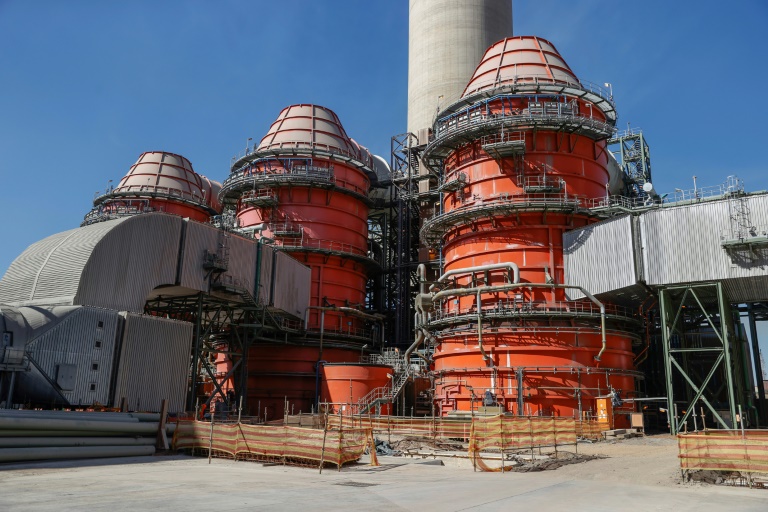
Swedish-Swiss engineering giant ABB, which helped construct a huge power plant near Johannesburg, will pay reparations to South Africa over “criminal conduct” at the struggling power utility Eskom, prosecutors said Thursday.

“ABB has acknowledged liability and taken responsibility for the alleged criminal conduct of its employees involving contracts with Eskom,” the National Prosecuting Authority (NPA) said in a statement.

It said it had finalised a settlement agreement with Asea Brown Boveri (ABB) to pay over more 2.5 billion rand ($144,000) in “punitive reparations” to South Africa.

In 2020, ABB returned 1.6 million rand ($92,000) it received for the construction of the coal-fired Kusile power station, commissioned by Eskom in 2007. 

Construction of the plant, the fourth largest coal-fired generator in the world, has been fraught with allegations of graft. 

The NPA said the latest development showed its determination to “deal with corruption through prosecuting perpetrators and recovering the stolen money.”

“This settlement represents a bold and innovative step towards accountability… particularly in the form of restitution for the serious crimes committed at Eskom, during the state capture (corruption) period,” said the NPA.

The deal was negotiated with partner countries including Italy, Germany, the United States and Switzerland.

In October eight people, including the former CEO of Eskom, Matshela Koko, were arrested on corruption charges linked to a multi-million-dollar contract with the Swedish-Swiss firm.

Eurozone unemployment drops to record low

Unemployment in the eurozone has dropped to a record low, at 6.5 percent in October, the EU’s Eurostat statistics office said Thursday.

The reading — the lowest since Eurostat started compiling jobless figures in April 1998 — was an indicator that the economies of the 19 EU nations using the euro had bounced back after the Covid pandemic.

The seasonally adjusted unemployment rate was markedly less than the 7.3 percent recorded a year ago.

Eurostat estimated that, for the entire 27-nation European Union, 12.95 million adults were unemployed in October — or 6.0 percent of the active population — with 10.87 million of them in the eurozone. 

While all OECD economies, with the exception of former EU member Britain, have recovered to their pre-pandemic size, global headwinds are stalling the recovery.

The eurozone is likely to tip towards recession within weeks, according to the European Commission.

Inflation is running hot, despite falling back in the latest reading on Wednesday, at 10 percent — above the European Central Bank’s two-percent target — largely because of high energy prices spurred by the fallout of Russia’s war in Ukraine.

Business activity has been declining for five straight months, according to a PMI survey published by S&P Global, although the rate of decline slowed in November.

The ECB will pore over the latest indicators as it walks a tight rope between raising interest rates to combat inflation and the risk of tipping the economy into a deep recession.

An analysis note from ING bank said the unemployment data showed “the labour market remains resilient despite the slowing economy”.

It added that it expected the ECB to remain “on high alert in its fight against inflation”.

Younger people had the highest unemployment rate in the EU and its eurozone, at 15.1 percent and 15.0 percent respectively, according to Eurostat. That was an increase over a year ago.

In the eurozone’s biggest economy, Germany, the unemployment rate was 3.0 percent, down from 3.3 percent in October 2021.

In the second biggest, France, it was 7.1 percent, down from 7.6 percent a year earlier.

The Czech Republic, which is not in the eurozone, had the lowest unemployment rate in the EU, at 2.1 percent, while eurozone member Spain was the highest, with 12.5 percent.

Crunch UN biodiversity meeting seeks to save 'planet in crisis'

Delegates from nearly 200 countries meet in Montreal next week to hammer out a new global biodiversity deal to protect ecosystems and species from further human destruction.

The meeting follows crucial climate change talks in Egypt in November, where leaders failed to forge any breakthroughs on scaling down fossil fuels and slashing planet-warming emissions.

Observers are hoping the COP15 biodiversity talks in Montreal will deliver a landmark deal to protect nature and reverse the damage humans have done to forests, wetlands, waterways and the millions of species that live in them.

Around 50 percent of the global economy is dependent on nature, but scientists warn that humanity needs to drastically — and urgently — rethink its relationship with the natural world as fears of a sixth era of mass extinction grow. 

“Our planet is in crisis,” said Elizabeth Maruma Mrema, the head of the UN Convention on Biological Diversity (CBD), at a briefing ahead of the talks, adding that a global agreement on biodiversity was “crucial to ensure that the future of humankind on planet Earth is sustained”. 

So far, humanity has proven woeful at this, with one million species at risk of extinction. 

The so-called post-2020 biodiversity framework, delayed by two years because of the pandemic, will map out an official plan for nature until mid-century for most countries, with the exception of the United States, which has not signed up. 

It will include key targets to be met by 2030. 

But it comes after countries failed to meet a single one of the targets set for the previous decade. 

With new rules affecting key economic sectors — including agriculture, forestry and fishing — and covering everything from intellectual property to pollution and pesticides, delegates are grappling with an array of sticking points.   

So far, only two out of the 22 targets in the new deal have been agreed upon.

“We have to admit that success is not guaranteed,” an EU source close to the talks said. “We have a very difficult situation ahead of us.”

– Finance fight – 

While China currently chairs COP15, it is not hosting this year’s meeting because of the ongoing pandemic. 

Instead, it will be held from December 7 to 19 in Montreal, home of the CBD, which oversees the negotiations. 

Canada’s Prime Minister Justin Trudeau is the only world leader attending. Chinese President Xi Jinping has not said he will join, and neither side has invited other leaders to come, with time quickly running out. 

Observers fear the leaders’ absence sucks the momentum out of the negotiations and could scupper an ambitious final deal. 

Divisions have already emerged on the key issue of financing, with wealthy countries under pressure to funnel more money to developing nations for conservation.

A group of developing nations, including Brazil, South Africa and Indonesia, this year called for rich countries to provide at least $100 billion annually –- rising to $700 billion a year by 2030 — for biodiversity.

But many Western nations are reluctant to create a distinct fund for nature.

Currently, most biodiversity funds for the developing world come from existing funding mechanisms, which often also include climate finance. 

On Thursday, the UN Environment Programme said investments for nature-based solutions must increase to $384 billion per year by 2025, more than double the current figure of $154 billion per year.

Another fight is brewing over the issue of “biopiracy”, with many mainly African countries accusing wealthy nations of pillaging the natural world for ingredients and formulas used in cosmetics and medicines, without sharing the benefits with the communities from which they came. 

– Indigenous rights – 

One cornerstone target that has received broad support is the 30 by 30 target — a pledge to protect 30 percent of land and seas by 2030. Only 17 percent of land and about seven percent of oceans were protected in 2020.

So far, more than 100 countries formally support the goal, according to the EU-backed High Ambition Coalition which tracks the target.

The new goal will rely heavily on the involvement of indigenous peoples, who steward land that is home to around 80 percent of Earth’s remaining biodiversity, according to a landmark UN report on climate change impacts this year.

“It’s not going to work if indigenous peoples are not fully included,” Jennifer Tauli Corpuz of the non-profit Nia Tero told AFP. 

“We completely lose the integrity of the document”, added Corpuz, who is part of the indigenous caucus to the talks. 

Other items in the framework: elimination or redirection of hundreds of millions of dollars in harmful government subsidies; promoting sustainable farming and fishing, reducing pesticides; tackling invasive species and reforestation.

But implementation is perhaps the most crucial agenda item to ensure the pledges made are actually carried out by governments.  

“We need goals and targets that are measurable and they need to be related to clear indicators,” the EU source said, calling for “robust monitoring, planning, reporting and review”. 

Musk vows interface implants in human brains within six months

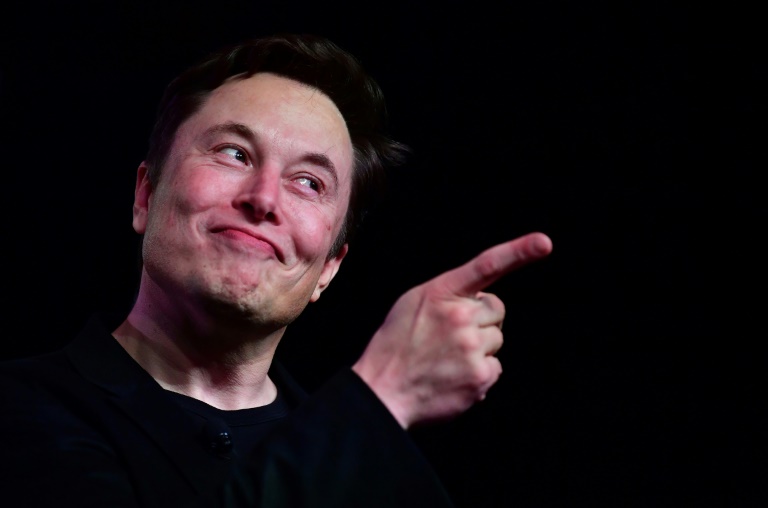
Tech billionaire Elon Musk said on Wednesday one of his companies would in six months be able to implant a device into a human brain that would allow communication with a computer.

The interface, produced by Musk’s start-up Neuralink, would allow the user to communicate directly with computers through their thoughts, he said.

“We’ve submitted I think most of our paperwork to the FDA (US Food and Drug Administration) and we think probably in about six months we should be able to have our first Neuralink in a human,” he said in a company presentation.

“We’ve been working hard to be ready for our first human (implant), and obviously we want to be extremely careful and certain that it will work well before putting a device in a human,” he said.

Musk — who bought Twitter last month and also owns SpaceX, Tesla and several other companies — has been known to make ambitious predictions about his companies, with several not becoming reality.

In July 2019, he vowed that Neuralink would be able to perform its first tests on humans in 2020.

The prototypes, which are the size of a coin, have been implanted in the skulls of monkeys.

At the Neuralink presentation, the company showed several monkeys “playing” basic video games or moving a cursor on a screen through their Neuralink implant.

Musk said the company would try to use the implants to restore vision and mobility in humans.

“We would initially enable someone who has almost no ability to operate their muscles… and enable them to operate their phone faster than someone who has working hands,” he said.

“As miraculous as it may sound, we are confident that it is possible to restore full body functionality to someone who has a severed spinal cord,” he said.

Beyond the potential to treat neurological diseases, Musk’s ultimate goal is to ensure that humans are not intellectually overwhelmed by artificial intelligence, he said.

Other companies working on similar systems include Synchron, which announced in July that it had implanted the first brain-machine interface in the United States. 

Asia extends stocks rally as dollar drops on Fed rate optimism

Asian stocks extended a global rally Thursday and the dollar sank after Federal Reserve boss Jerome Powell flagged a rate hike slowdown and China signalled a softer approach to fighting Covid.

A growing sense of hope that months of sharp monetary tightening around the world is finally reining inflation back from its decades-long highs sent equities surging in November, even as policymakers warned more work had to be done.

And in a much-anticipated speech Wednesday, Powell said the full effects of the Fed’s belt-tightening had yet to be felt but that it “makes sense to moderate the pace of our rate increases as we approach the level of restraint that will be sufficient to bring inflation down”.

He signalled the US central bank’s December gathering would likely see officials lift borrowing costs by 50 basis points, having pushed them up by a bumper 75 points at the past four meetings.

However, Powell did say policy would need to remain tight “for some time” to restore price stability, echoing comments from other Fed officials who suggested there might not be any cuts until 2024.

Analysts said the reaction to Powell’s remarks — which had been expected to be his most dovish in some time — highlighted a sense of relief among investors that a long-hoped-for pivot was on the cards.

All three main indexes on Wall Street surged, with the Nasdaq leading the way as rate-sensitive tech firms rocketed.

The gains extended November’s rally and helped claw back more of the hefty losses suffered for much of 2022.

Investors were “putting those nasty thoughts of a bear market to bed as the December Santa Rally springs alive”, said Stephen Innes at SPI Asset Management.

“Indeed investors are revelling in the afterglow of moderating Fed signals. And with the Fed done with jumbo hikes, it’s seemingly enough to mark the bottom in the bear market and could lead to a sustainable rally.”

He added that bets on rates topping five percent were fading and the advance in markets could push into the new year, with another slowdown in November inflation potentially fuelling a bull rally — when a market rises 20 percent from its recent low. 

“Still,” he warned, “inflation will need to play along.”

– China Covid hope –

In another sign of hope, data earlier showed that eurozone inflation eased for the first time in 17 months in November.

Hong Kong extended its rally into a third day, with tech giants including Alibaba and Tencent tracking massive gains in their US-listed stock, while Shanghai was also up.

Those rallies were also helped by signs that China is edging towards a more pragmatic approach to fighting the coronavirus, having hammered the economy this year with its strict zero-Covid strategy of lockdowns and mass testing.

After widespread unrest against the measures — and calls for more political freedoms — authorities have announced moves aimed at loosening some restrictions.

On Wednesday, Vice Premier Sun Chunlan, who heads China’s Covid campaign, told the National Health Commission that the fight was entering a new phase as Omicron weakens and more people are vaccinated.

Bloomberg News also noted that she did not refer to “dynamic Covid-zero”, the term used to explain Beijing’s strategy. 

“While we shouldn’t expect a dramatic shift in policy from the leadership, particularly before the March Congress, any modest softening in its Covid-zero policy will and should be welcomed,” said OANDA’s Craig Erlam. 

“The approach has been extremely damaging to growth and confidence and the protests highlight how public opinion towards it is changing.”

Among other markets, Tokyo, Sydney and Taipei added more than one percent while Singapore, Seoul, Wellington, Mumbai and Bangkok were also in positive territory.

London, Paris and Frankfurt rose at the open.

The dollar suffered another sell-off, tanking more than one percent to briefly hit as low as 135.84 yen Thursday, a level not seen since August.

The greenback’s losses come after it soared across the board this year as Fed monetary policy diverged more and more from other central banks.

– Key figures around 0820 GMT –

Tokyo – Nikkei 225: UP 0.9 percent at 28,226.08 (close)

Hong Kong – Hang Seng Index: UP 0.8 percent at 18,736.44 (close)

Shanghai – Composite: UP 0.5 percent at 3,165.47 (close)

London – FTSE 100: Up 0.3 percent at 7,598.35

Dollar/yen: DOWN at 136.28 yen from 138.03 yen on Wednesday

Euro/dollar: UP at $1.0424 from $1.0408 on Wednesday

Pound/dollar: UP at $1.2100 from $1.2052

Euro/pound: DOWN at 86.20 pence from 86.34 pence

West Texas Intermediate: DOWN 0.6 percent at $80.05 per barrel

Brent North Sea crude: DOWN 0.6 percent at $86.46 per barrel

New York – Dow: UP 2.2 percent at 34,589.77 (close)

Asia extends stocks rally as dollar drops on Fed rate optimism

Asian stocks extended a global rally Thursday and the dollar sank after Federal Reserve boss Jerome Powell flagged a rate hike slowdown and China signalled a softer approach to fighting Covid.

A growing sense of hope that months of sharp monetary tightening around the world is finally reining inflation back from its decades-long highs sent equities surging in November, even as policymakers warned more work had to be done.

And in a much-anticipated speech Wednesday, Powell said the full effects of the Fed’s belt-tightening had yet to be felt but that it “makes sense to moderate the pace of our rate increases as we approach the level of restraint that will be sufficient to bring inflation down”.

He signalled the US central bank’s December gathering would likely see officials lift borrowing costs by 50 basis points, having pushed them up by a bumper 75 points at the past four meetings.

However, Powell did say policy would need to remain tight “for some time” to restore price stability, echoing comments from other Fed officials who suggested there might not be any cuts until 2024.

Analysts said the reaction to Powell’s remarks — which had been expected to be his most dovish in some time — highlighted a sense of relief among investors that a long-hoped-for pivot was on the cards.

All three main indexes on Wall Street surged, with the Nasdaq leading the way as rate-sensitive tech firms rocketed.

The gains extended November’s rally and helped claw back more of the hefty losses suffered for much of 2022.

Investors were “putting those nasty thoughts of a bear market to bed as the December Santa Rally springs alive”, said Stephen Innes at SPI Asset Management.

“Indeed investors are revelling in the afterglow of moderating Fed signals. And with the Fed done with jumbo hikes, it’s seemingly enough to mark the bottom in the bear market and could lead to a sustainable rally.”

He added that bets on rates topping five percent were fading and the advance in markets could push into the new year, with another slowdown in November inflation potentially fuelling a bull rally — when a market rises 20 percent from its recent low. 

“Still,” he warned, “inflation will need to play along.”

– China Covid hope –

In another sign of hope, data earlier showed that eurozone inflation eased for the first time in 17 months in November.

Hong Kong extended its rally into a third day, with tech giants including Alibaba and Tencent tracking massive gains in their US-listed stock, while Shanghai was also up.

Those rallies were also helped by signs that China is edging towards a more pragmatic approach to fighting the coronavirus, having hammered the economy this year with its strict zero-Covid strategy of lockdowns and mass testing.

After widespread unrest against the measures — and calls for more political freedoms — authorities have announced moves aimed at loosening some restrictions.

On Wednesday, Vice Premier Sun Chunlan, who heads China’s Covid campaign, told the National Health Commission that the fight was entering a new phase as Omicron weakens and more people are vaccinated.

Bloomberg News also noted that she did not refer to “dynamic Covid-zero”, the term used to explain Beijing’s strategy. 

“While we shouldn’t expect a dramatic shift in policy from the leadership, particularly before the March Congress, any modest softening in its Covid-zero policy will and should be welcomed,” said OANDA’s Craig Erlam. 

“The approach has been extremely damaging to growth and confidence and the protests highlight how public opinion towards it is changing.”

Among other markets, Tokyo, Sydney and Taipei added more than one percent while Singapore, Seoul, Wellington, Mumbai and Bangkok were also in positive territory.

London, Paris and Frankfurt rose at the open.

The dollar suffered another sell-off, tanking more than one percent to briefly hit as low as 135.84 yen Thursday, a level not seen since August.

The greenback’s losses come after it soared across the board this year as Fed monetary policy diverged more and more from other central banks.

– Key figures around 0820 GMT –

Tokyo – Nikkei 225: UP 0.9 percent at 28,226.08 (close)

Hong Kong – Hang Seng Index: UP 0.8 percent at 18,736.44 (close)

Shanghai – Composite: UP 0.5 percent at 3,165.47 (close)

London – FTSE 100: Up 0.3 percent at 7,598.35

Dollar/yen: DOWN at 136.28 yen from 138.03 yen on Wednesday

Euro/dollar: UP at $1.0424 from $1.0408 on Wednesday

Pound/dollar: UP at $1.2100 from $1.2052

Euro/pound: DOWN at 86.20 pence from 86.34 pence

West Texas Intermediate: DOWN 0.6 percent at $80.05 per barrel

Brent North Sea crude: DOWN 0.6 percent at $86.46 per barrel

New York – Dow: UP 2.2 percent at 34,589.77 (close)

Sri Lanka ends resort blackouts to woo back tourists

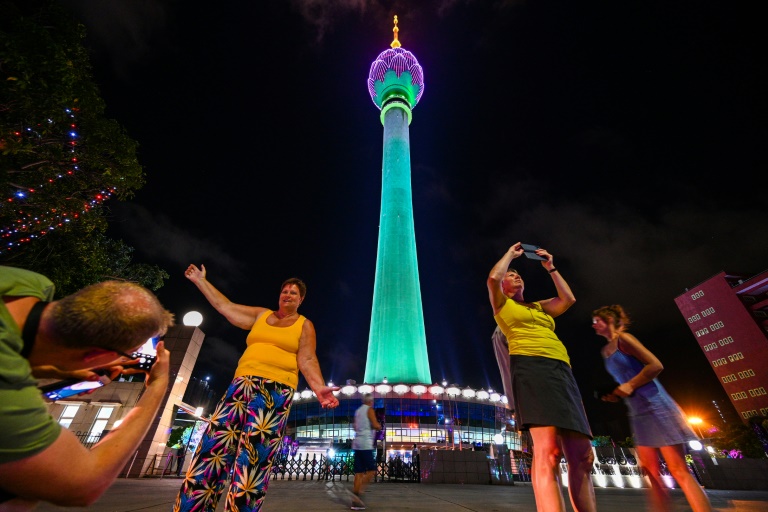
Sri Lanka said Thursday it was reorganising its blackout-prone electricity grid to guarantee power to tourist resorts, in an effort to lure back foreign travellers after a bruising economic crisis.

Months of food, petrol and pharmaceutical shortages brought widespread misery to the island nation this year, along with power cuts that reached 13 hours a day at their worst.

The unprecedented financial shock sparked months of angry protests, culminating in July when a crowd stormed the compound of then-president Gotabaya Rajapaksa and forced him to flee the country.

But the crisis has since eased and the government that took charge after his departure is eager to jumpstart the tourism industry, a crucial source of revenue.

“We will have a good winter season,” tourism minister Harin Fernando told reporters in Colombo. “The situation has improved and it is safe for holiday-makers.”

The energy ministry announced that designated tourist areas would be exempt from national blackouts still in force for 2.5 hours each night.

Those areas include Sri Lanka’s lush southern coastal beaches and the hill region around Ella, home to nature reserves famed for their elephant herds.

Sri Lanka has been unable to meet its energy demand after struggling to pay for imported fuel for power plants.

But the ministry said recent rains had filled dam reservoirs for hydroelectricity and eased pressure on the grid.

Sri Lanka’s worst economic crisis since independence from Britain in 1948 began when the country ran out of foreign exchange to pay for vital imports.

The Covid pandemic dealt a hammer blow to tourism and foreign remittances from Sri Lankans working abroad, both crucial sources of income.

Rajapaksa’s government was also blamed for worsening the crisis through excessive spending and mismanagement.

Sri Lanka defaulted on its $46 billion foreign debt in April. 

His successor has hiked taxes and tried to bring prices under control, with inflation easing to 61 percent in November from an eye-watering 69.8 percent peak two months earlier.

Sri Lanka is now in talks with international creditors to restructure its borrowings and secure an International Monetary Fund bailout.

The tourism industry has bounced back strongly despite the downturn and political unrest.

Nearly 570,000 foreign travellers visited Sri Lanka in the first 10 months of the year, up from 200,000 the year before.

Close Bitnami banner
Bitnami