AFP

US Senate votes to protect same-sex marriage

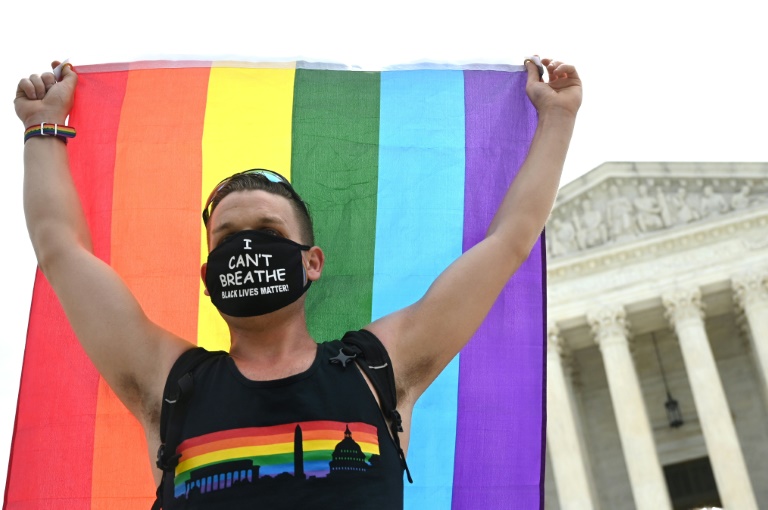
The US Senate passed a landmark bill Tuesday protecting same-sex marriage, as lawmakers from both parties moved to forestall the possibility of the conservative-led Supreme Court taking away this right as it did with abortion.

“With today’s bipartisan Senate passage of the Respect for Marriage Act, the United States is on the brink of reaffirming a fundamental truth: love is love, and Americans should have the right to marry the person they love,” President Joe Biden said in a statement released after the 61-36 vote.

The Senate vote sends the bill back to the House of Representatives, which Speaker Nancy Pelosi said would approve it next week before sending it to Biden to sign.

Senate majority leader Chuck Schumer hailed a “momentous step forward for greater justice for LGBTQ Americans.”

Twelve Republicans joined Democrats to pass the legislation on what had for decades been a deeply divisive issue in America.

In the United States, same-sex unions have been guaranteed by the Supreme Court since 2015. But after the court’s historic overturning of a longstanding ruling protecting the right to abortion in June, many progressives feared that same-sex marriage may also be under threat.  

Democrats have worked with urgency to get the bill passed while they still control Congress. 

They held on to the Senate in this month’s mid-term elections but lost the House to the Republicans, although the latter eked out a much thinner majority than they had expected. So when the new Congress takes power in January, gridlock is expected.

The bill passed Tuesday does not require states to legalize same-sex marriage. 

But it repeals previous legislation defining marriage as a union between a man and a woman, and does require states to recognize same-sex marriages from other states.

So if the Supreme Court were to overturn the 2015 ruling that legalized same-sex marriages, a state that bans them will still have to recognize such unions carried out in other states. The bill also applies to inter-racial marriages.

“Today’s vote is deeply personal for many of us in this chamber,” said Schumer, who wore the same tie he had on at his lesbian daughter’s wedding.

A similar bill was already passed in June by the House of Representatives. All the chamber’s Democrats voted in favor, along with 47 Republicans. 

The new vote in the House is needed to reconcile the two bills but this is seen as a formality.

The powerful American Civil Liberties Union hailed the “historic step forward” but denounced the rise of laws attacking the right of transgender people in several states.  

“While we welcome the historic vote on this measure, members of Congress must also fight like trans lives depend on their efforts because trans lives do,” James Esseks, director of the ACLU’s LGBTQ & HIV Rights Project, said in a statement.

Polls show a strong majority of Americans back same-sex marriage but it is still contentious. Thirty-six Republicans voted ‘no’ on Tuesday and the religious right remains mostly opposed to such unions.
Trade tensions overshadow Macron's showy White House visit

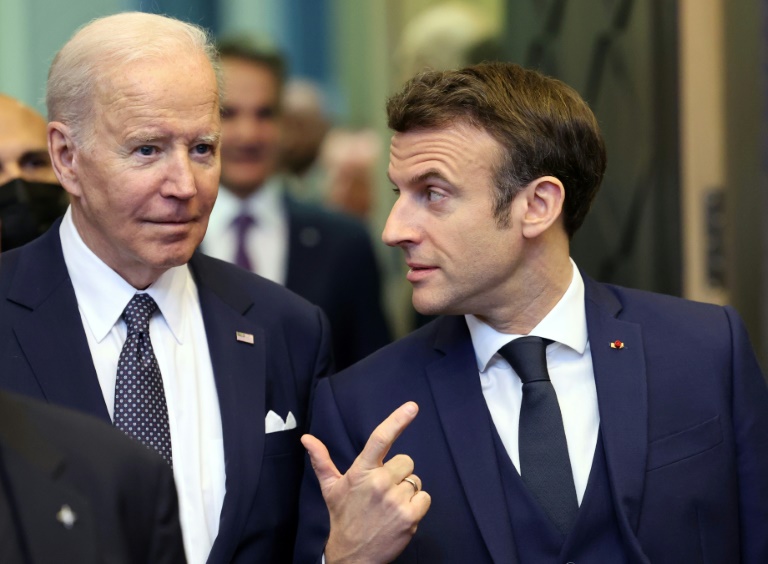
French President Emmanuel Macron arrived in Washington late Tuesday for a state visit hosted by President Joe Biden where hard-nosed disagreements about US-EU trade will overshadow the White House pomp and ceremony.

Due to Covid delays, this is the first formal state visit of Biden’s presidency and US officials say the choice of France for the honor reflects both deep historical ties and their intense current partnership in confronting Russia over its war in Ukraine.

Macron touched down at Joint Base Andrews, the air force facility used by Biden outside Washington.

While in the capital, the French leader will be given a full ceremonial military welcome to the White House, an Oval Office sit down with Biden and a state banquet on Thursday, where Grammy-award winning American musician Jon Batiste will perform.

Compared to Macron’s edgy first experience of a state visit as the guest of Donald Trump in 2018, this trip — concluding with a stop Friday to the once-French city of New Orleans — will be a carefully choreographed display of transatlantic friendship.

Certainly the diplomatic furor that erupted last year when Australia canceled a deal for French submarines and instead signed up for US nuclear subs is now buried.

But even with little risk of Trump-style fireworks, Macron has major grievances to air.

– Trade war? –

Top of these is tension over Biden’s signature green industry policy, the Inflation Reduction Act, or IRA, which will pump billions of dollars into climate-friendly technologies, with strong backing for American-made products. Similar effort is being put into microchip manufacturing.

Europeans fear an unfair US advantage in the sectors just as they are reeling from the economic consequences of the Ukraine war and Western attempts to end reliance on Russian energy supplies.

Talk in Europe is now increasingly on whether the bloc should respond with its own subsidies and championing of homegrown products, effectively starting a trade war.

“China favors its own products, America favors its own products. It might be time for Europe to favor its own products,” French Finance Minister Bruno Le Maire told France 3 radio on Sunday.

Biden was certainly in no mood to apologize, saying in a speech at a microchip factory in Michigan on Tuesday that the push for a revitalized US-based industrial base is “a game changer.”

“Companies began moving jobs overseas rather than moving product overseas,” he said. “We’re not going to be held hostage anymore.”

Another gripe in Europe is the high cost for US liquid natural gas exports — surged to try and replace canceled Russian deliveries.

Responding to accusations that the United States is effectively profiteering from the Ukraine war, a senior US administration official said this was a “false claim.”

The official also played down IRA-related tensions, saying a “very constructive set of conversations” is underway on how to prevent European companies from being shut out.

To underline the importance of the issue for Paris, Macron met with dozens of business executives ahead of his departure to Washington, urging them to keep investing in France. These included representatives from US giants Goldman Sachs and McDonald’s.

– Strategizing on China, Ukraine –

The breadth of Macron’s entourage — including the foreign, defense and finance ministers, as well as business leaders and astronauts — illustrates the importance Paris has put on the visit.

However, at the White House, a senior official said the main goal is to nurture the “personal relationship, the alliance relationship” with France — and between Biden and Macron.

That more modest sounding goal will include improving coordination on helping Ukraine to repel Russia and the even more vexing question of how to manage the rise of the Chinese superpower.

“We are not allies on the same page,” one adviser to Macron told AFP, forecasting “challenging” talks with Biden.

Despite his strong support for Kyiv, Macron’s insistence on continuing to maintain dialogue with Russian President Vladimir Putin has irked American diplomats.

The China question — with Washington pursuing a more hawkish tone and EU powers trying to find a middle ground — is unlikely to see much progress.

“Europe has since 2018 its own, unique strategy for relations with China,” tweeted French embassy spokesman Pascal Confavreux in Washington.

A senior US official said even if their approaches were “not identical,” they should be at least “speaking from a common script.”

Hawaii volcano shoots lava fountains 200 feet high: USGS

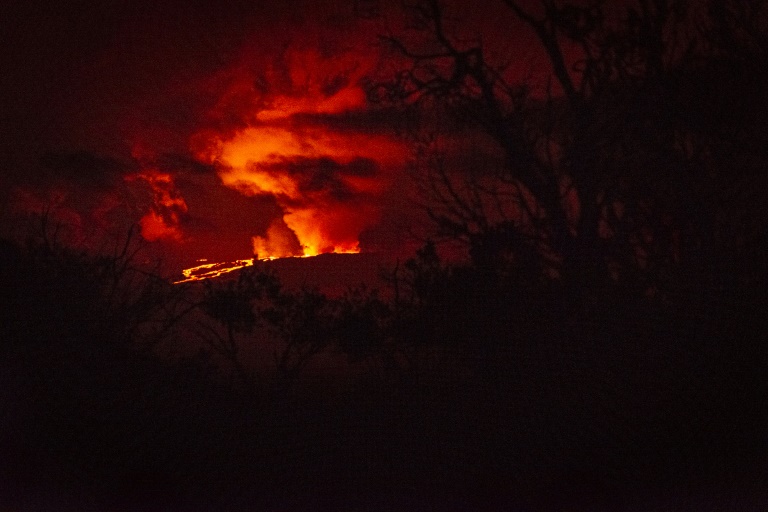
Fountains of lava up to 200 feet (60 meters) high have been fired into the air from Hawaii’s Mauna Loa, geologists say, generating rivers of molten rock from the world’s largest active volcano.

Four fissures have now opened up on the mammoth mountain, which burst into life on Sunday for the first time in almost 40 years.

Vast clouds of steam and smoke were billowing into the sky from the volcano, which makes up half of Hawaii’s Big Island.

“Estimates of the tallest fountain heights are between 100–200 feet” but most are much smaller, the United States Geological Survey said in an update Monday.

“There is a visible gas plume from the erupting fissure fountains and lava flows, with the plume primarily being blown to the Northwest.”

Geologists say there is currently no risk to people and property below the eruption.

“The longest and largest lava flow is issuing from fissure three,” the USGS said Tuesday.

“This lava flow crossed the Mauna Loa Weather Observatory Road… and the flow front was located approximately six miles (10 kilometers) from Saddle Road (the main road at the foot of the northern flank).”

The lava fountain from the newest fissure was up to 33 feet high, the agency said.

Everything is currently contained in the Northeast Rift Zone, the USGS said, but warned Mauna Loa is a dynamic volcano.

“Additional fissures could open along the Northeast Rift Zone below the current location, and lava flows can continue to travel downslope.”

Pressure has been building at Mauna Loa for years, the USGS said, and the eruption — which lit up the night sky — could be seen 45 miles (72 kilometers) away, in the west coast town of Kona.

While lava is not presently a risk to populations, scientists have said winds could carry volcanic gas and fine ash downslope, as well as Pele’s Hair — fine strands of volcanic glass formed when lava skeins cool quickly in the air.

Named after Pele, the Hawaiian goddess of volcanoes, the strands can be very sharp and pose potential danger to skin and eyes.

– ‘Long Mountain’ –

Authorities in Hawaii have not issued any evacuation orders, although the summit area and several roads in the region were closed, and two shelters have been opened as a precaution.

The largest volcano on Earth by volume, Mauna Loa, whose name means “Long Mountain,” is larger than the rest of the Hawaiian islands combined.

The volcano’s submarine flanks stretch for miles to an ocean floor that is in turn depressed by Mauna Loa’s great mass — making its summit some 11 miles above its base, according to the USGS. 

One of six active volcanoes on the Hawaiian islands, Mauna Loa has erupted 33 times since 1843.

Its most recent eruption, in 1984, lasted 22 days and produced lava flows reached to within about four miles of Hilo.

Kilauea, a volcano on the southeastern flank of Mauna Loa, erupted almost continuously between 1983 and 2019, and a minor eruption there has been ongoing for months.

'It's complicated': Mixed emotions for fans as Iran and US meet

It was — mostly — about the football for fans watching the Iran-USA game in the United States on Tuesday, a match played against the backdrop of soaring geopolitical tensions, which occasionally poked their way through the sport.

Scores of supporters packed a restaurant in a part of Los Angeles known locally as “Tehrangeles” because of the large number of Iranians and Iranian-Americans in the area, cheering their way through a lively meet-up happening half a world away.

Chants of “USA, USA” erupted periodically as the US men’s team dominated action on the pitch in Qatar, bagging their first win of the tournament by a score of 1-0 and securing a spot in the knock-out stage.

For some Iranian-Americans, either outcome would have worked.

“I support both,” said a woman who gave her name only as Shirin.

Iran’s team have been under intense scrutiny in Qatar, their players watched for signs that they are — or are not — showing support for mass anti-government demonstrations back home, sparked by the death of 22-year-old Mahsa Amini while in custody of the notorious morality police on September 16.

Players opted not to sing their national anthem before Iran’s 6-2 defeat to England, in an apparent sign of support for the demonstrators at home, but did sing ahead of their 2-0 win against Wales.

As the anthem struck up ahead of Tuesday’s kick-off, some Iranian fans in Los Angeles raised their middle fingers to the screen as players mouthed the words.

Others were more reserved.

“Honestly, considering the situation in Iran I found myself torn, so I felt good about the game either way honestly,” said Aubteen Maroufi, an Iranian-American in his 20s.

In a bar in Washington DC, one Iranian-American who gave his name as Mike said he had mixed feelings about the game, but had been rooting for the United States.

“I didn’t want it to give another joy to the Iranian government,” he said. “My heart is with the Iranian people, not with the government.”

Iranian-American student Darius, 23, said Iran’s players were in a difficult position.

“With all that what’s going on in the country, they’re playing for more than just themselves, more than just a team,” he told AFP.

“They’re playing for the people back home.”

US fans in Los Angeles, basking in victory as “Born in the USA” by Bruce Springsteen reverberated over the restaurant’s sound system, said the game and the politics were separate.

“I don’t think supporting the Iran players means you are supporting the regime. It’s two different things,” said supporter Max Spear. 

“I know some people used the game to show support to the revolution by booing the national anthem, but I don’t think this game is a West versus East thing.”

There was some animosity, with one group of younger men wearing Iranian jerseys making rude gestures every time a US player appeared on screen — although whether this was because of diplomatic tensions or good old-fashioned footballing rivalry was difficult to tell.

“We played hard,” said one of the men, kissing his jersey.

One Iranian-American, who gave her name as Rachel, said she was firmly in the US camp.

“I’ve been living here for so long, 30 years,” she told AFP.

But asked about the politics of her adopted homeland meeting its biggest international foe in metaphorical battle, she demurred.

“It’s a really complicated question, I don’t want to answer it,” she said.

burs-hg/dw

NYC to start forced hospitalization of mentally ill homeless people

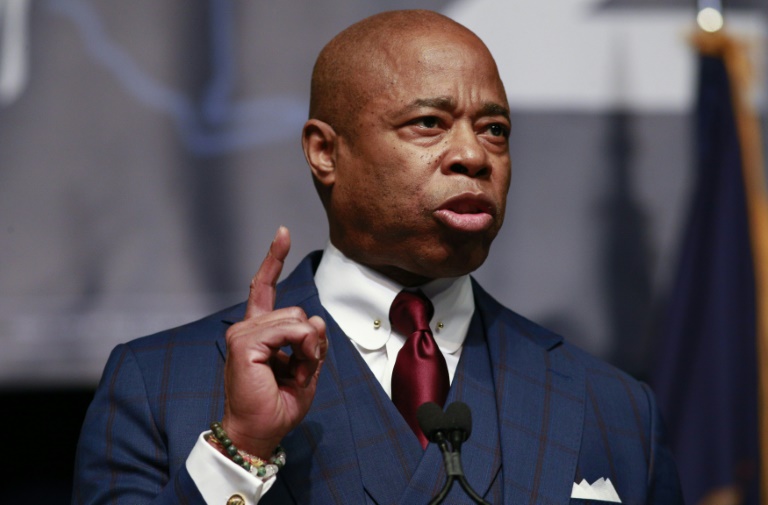
New York will start involuntarily hospitalizing mentally ill people who live in the street or on the subway, Mayor Eric Adams said Tuesday in a new push to fight growing crime.

“If severe mental illness is causing someone to be unsheltered and a danger to themselves, we have a moral obligation to help them get the treatment and care they need,” said Adams, a moderate Democrat and former police officer who is making the battle against violent crime the centerpiece of his work running America’s largest city.

Next year the state legislature and executive branch will consider a bill allowing police, health care professionals and social workers to intervene and seek to hospitalize by force if necessary homeless people deemed to have psychiatric problems.

“A common misunderstanding persists that we cannot provide involuntary assistance unless the person is violent, suicidal, or presenting a risk of imminent harm,” the mayor said.

“This myth must be put to rest. Going forward, we will make every effort to assist those who are suffering from mental illness and whose illness is endangering them by preventing them from meeting their basic human needs,” he added.

After taking office in January, Adams quickly pledged to remove the many homeless people who live in the city’s vast subway system.

This came after a young Asian-American woman was pushed to her death in front of an oncoming train by a man with mental health issues who was known to police and hospital officials.

New York City has an estimated 50,000 homeless people.

Crime rose in New York in 2021 as the pandemic started to ease, and people’s sense of not being safe on the streets grew this year in some areas of the city after a number of shooting and stabbing deaths.

A total of 391 people have been killed in New York as of November 27, compared to 440 in all of 2021, according to New York Police Department statistics that are updated weekly.

Global stocks mixed as markets monitor China, await Powell remarks

Stocks diverged Tuesday after big rallies in Asian markets failed to trigger a similar reaction in Europe and on Wall Street, as investors remained cautious before key US data and speeches this week.

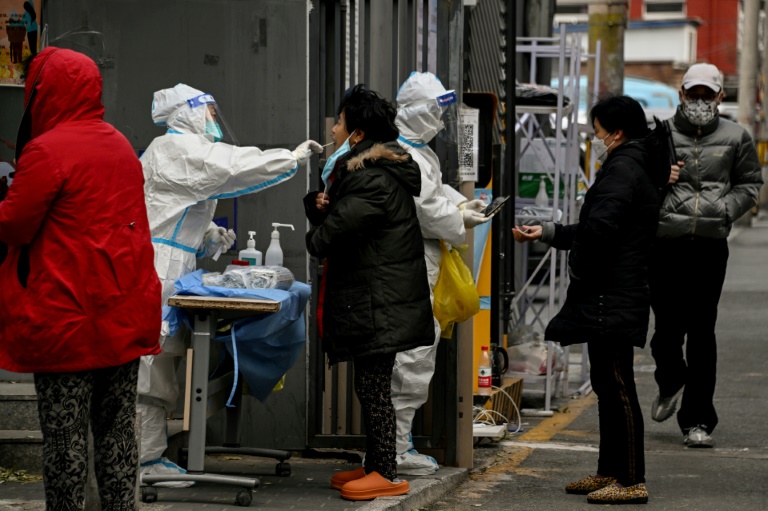
Sentiment was boosted in Asia after China avoided another night of protests, following a weekend of unrest sparked by the country’s harsh anti-Covid policies.

The return of some calm helped Hong Kong stocks rally more than five percent and Shanghai more than two percent, with rumbling that the demonstrations could help push leaders to ease some of the strict containment measures. 

But Europe’s main stock markets were mixed at the end of the day’s trading, while two of the three major New York indices retreated.

US investors were in a cautious mood ahead of Wednesday’s appearance by Federal Reserve Chair Jerome Powell.

Powell’s address at the Brookings Institution comes as markets expect the central bank to soon moderate its policy of aggressive interest rate hikes to counter surging inflation.

Investors were “hesitant” Tuesday as they waited to see if Powell would indeed confirm such a shift, said LBBW’s Karl Haeling.

“Markets have a chance to trade higher tomorrow as long as he doesn’t deliver any surprise,” Haeling said.

Consumer confidence in the United States slipped for a second straight month in November, likely due to a rise in gas prices, according to a survey released by the Conference Board.

Meanwhile, the National Retail Federation estimated that 196.7 million Americans shopped in stores and online in the five-day stretch between last Thursday’s Thanksgiving and “Cyber Monday,” a better-than-expected result highlighting the resilience of US consumers despite elevated consumer prices.

In Europe, German inflation unexpectedly slowed in November to 10 percent from a record high of 10.4 percent in October, preliminary data showed Tuesday.

Economists however cautioned against assuming inflation was now on a downhill path as households will likely face higher energy costs from January.

“Investors will need to be made of stern stuff going into the new year,” Danni Hewson, AJ Bell financial analyst, said in a note.

“Volatility has been a hallmark of 2022 and the word looks set to remain an analyst favorite into the New Year and beyond.”

This week’s calendar also includes Friday’s release of key US jobs data, which could influence the central bank’s plans for monetary policy.

– Key figures around 2130 GMT –

New York – Dow: FLAT at 33,852.53 (close)

New York – S&P 500: DOWN 0.2 percent at 3,957.63 (close)

New York – Nasdaq: DOWN 0.6 percent at 10,983.78 (close)

London – FTSE 100: UP 0.5 percent at 7,512.00 (close)

Frankfurt – DAX: DOWN 0.2 percent at 14,355.45 (close)

Paris – CAC 40: UP 0.1 percent at 6,668.97 (close)

EURO STOXX 50: FLAT at 3,934.44 (close)

Tokyo – Nikkei 225: DOWN 0.5 percent at 28,027.84 (close)

Hong Kong – Hang Seng Index: UP 5.2 percent at 18,204.68 (close)

Shanghai – Composite: UP 2.3 percent at 3,149.75 (close)

Brent North Sea crude: DOWN 0.2 percent at $83.03 per barrel

West Texas Intermediate: UP 1.2 percent at $78.20 per barrel

Euro/dollar: DOWN at $1.0332 from $1.0340 on Monday

Dollar/yen: DOWN at 138.67 yen from 138.95 yen

Pound/dollar: DOWN at $1.1952 from $1.1959

Euro/pound: DOWN at 86.42 pence from 86.45 pence

burs-jmb/bys

Global stocks mixed as markets monitor China, await Powell remarks

Stocks diverged Tuesday after big rallies in Asian markets failed to trigger a similar reaction in Europe and on Wall Street, as investors remained cautious before key US data and speeches this week.

Sentiment was boosted in Asia after China avoided another night of protests, following a weekend of unrest sparked by the country’s harsh anti-Covid policies.

The return of some calm helped Hong Kong stocks rally more than five percent and Shanghai more than two percent, with rumbling that the demonstrations could help push leaders to ease some of the strict containment measures. 

But Europe’s main stock markets were mixed at the end of the day’s trading, while two of the three major New York indices retreated.

US investors were in a cautious mood ahead of Wednesday’s appearance by Federal Reserve Chair Jerome Powell.

Powell’s address at the Brookings Institution comes as markets expect the central bank to soon moderate its policy of aggressive interest rate hikes to counter surging inflation.

Investors were “hesitant” Tuesday as they waited to see if Powell would indeed confirm such a shift, said LBBW’s Karl Haeling.

“Markets have a chance to trade higher tomorrow as long as he doesn’t deliver any surprise,” Haeling said.

Consumer confidence in the United States slipped for a second straight month in November, likely due to a rise in gas prices, according to a survey released by the Conference Board.

Meanwhile, the National Retail Federation estimated that 196.7 million Americans shopped in stores and online in the five-day stretch between last Thursday’s Thanksgiving and “Cyber Monday,” a better-than-expected result highlighting the resilience of US consumers despite elevated consumer prices.

In Europe, German inflation unexpectedly slowed in November to 10 percent from a record high of 10.4 percent in October, preliminary data showed Tuesday.

Economists however cautioned against assuming inflation was now on a downhill path as households will likely face higher energy costs from January.

“Investors will need to be made of stern stuff going into the new year,” Danni Hewson, AJ Bell financial analyst, said in a note.

“Volatility has been a hallmark of 2022 and the word looks set to remain an analyst favorite into the New Year and beyond.”

This week’s calendar also includes Friday’s release of key US jobs data, which could influence the central bank’s plans for monetary policy.

– Key figures around 2130 GMT –

New York – Dow: FLAT at 33,852.53 (close)

New York – S&P 500: DOWN 0.2 percent at 3,957.63 (close)

New York – Nasdaq: DOWN 0.6 percent at 10,983.78 (close)

London – FTSE 100: UP 0.5 percent at 7,512.00 (close)

Frankfurt – DAX: DOWN 0.2 percent at 14,355.45 (close)

Paris – CAC 40: UP 0.1 percent at 6,668.97 (close)

EURO STOXX 50: FLAT at 3,934.44 (close)

Tokyo – Nikkei 225: DOWN 0.5 percent at 28,027.84 (close)

Hong Kong – Hang Seng Index: UP 5.2 percent at 18,204.68 (close)

Shanghai – Composite: UP 2.3 percent at 3,149.75 (close)

Brent North Sea crude: DOWN 0.2 percent at $83.03 per barrel

West Texas Intermediate: UP 1.2 percent at $78.20 per barrel

Euro/dollar: DOWN at $1.0332 from $1.0340 on Monday

Dollar/yen: DOWN at 138.67 yen from 138.95 yen

Pound/dollar: DOWN at $1.1952 from $1.1959

Euro/pound: DOWN at 86.42 pence from 86.45 pence

burs-jmb/bys

IMF may have to lower China growth forecasts: director

The International Monetary Fund may have to slash its growth forecasts for China, managing director Kristalina Georgieva warned Tuesday, after protests erupted opposing Beijing’s strict policies to combat Covid.

“There is indeed the possibility that, in this time of very high uncertainty, we might have to revise these projections down,” Georgieva said, referring to the fund’s forecasts for China.

In October, the IMF cut its projection for the world’s number two economy to 3.2 percent this year as it is weighed down by Covid-zero policies, as well as a slowdown in the property sector.

It projected China’s growth would rise to 4.4 percent next year. 

Beijing’s tough approach involves compelling local governments to impose snap lockdowns and quarantine orders, and limit freedom of movement in response to minor outbreaks.

Demonstrations not seen in decades erupted in major cities at the weekend opposing Covid lockdowns and demanding greater political freedoms.

Georgieva, speaking in Berlin after meeting Chancellor Olaf Scholz and heads of other international financial organisations, said China was “looking into its zero-Covid policy with a perspective to shift to more targeted response to Covid cases”.

This was aimed at ensuring “less interruptions to the Chinese economy, and less negative spillover for the rest of the world,” she said.

“We have been supportive of looking into what China can do to make its Covid policy more effective for China itself and for its role in the world economy.”

IMF may have to lower China growth forecasts: director

The International Monetary Fund may have to slash its growth forecasts for China, managing director Kristalina Georgieva warned Tuesday, after protests erupted opposing Beijing’s strict policies to combat Covid.

“There is indeed the possibility that, in this time of very high uncertainty, we might have to revise these projections down,” Georgieva said, referring to the fund’s forecasts for China.

In October, the IMF cut its projection for the world’s number two economy to 3.2 percent this year as it is weighed down by Covid-zero policies, as well as a slowdown in the property sector.

It projected China’s growth would rise to 4.4 percent next year. 

Beijing’s tough approach involves compelling local governments to impose snap lockdowns and quarantine orders, and limit freedom of movement in response to minor outbreaks.

Demonstrations not seen in decades erupted in major cities at the weekend opposing Covid lockdowns and demanding greater political freedoms.

Georgieva, speaking in Berlin after meeting Chancellor Olaf Scholz and heads of other international financial organisations, said China was “looking into its zero-Covid policy with a perspective to shift to more targeted response to Covid cases”.

This was aimed at ensuring “less interruptions to the Chinese economy, and less negative spillover for the rest of the world,” she said.

“We have been supportive of looking into what China can do to make its Covid policy more effective for China itself and for its role in the world economy.”

HSBC bank sells Canadian ops for over US$10 bn

HSBC has agreed to sell its Canadian division to Royal Bank of Canada for US$10.1 billion, the Asia-focused banking giant announced Tuesday.

The large sale comes after UK-listed HSBC faced calls from biggest shareholder Ping An Insurance Group to cut costs and shift more resources to Asia.

HSBC added in a statement that it would use the funds to invest in its core business and return cash to investors.

“We decided to sell following a thorough review of the business… and concluded that there was a material value upside from selling,” said chief executive Noel Quinn.

The divestment is expected to be completed in late 2023.

“HSBC Canada offers the opportunity to add a complementary business and client base in the market we know best and where we can deliver strong returns and client value,” RBC president and CEO Dave McKay said in a separate statement.

“This also positions us as the bank of choice for commercial clients with international needs, newcomers to Canada and affluent clients who need global banking and wealth management capabilities.”

China’s Ping An has urged HSBC to spin off its Asian operations in a bid to unlock shareholder value amid tensions between Beijing and the West.

Shares rose 4.4 percent to 510.10 pence in late afternoon deals on London’s rising stock market.

“HSBC’s policy for some time has been to pivot toward Asia and the sale of the Canadian business is the latest step in that mix shift,” said AJ Bell investment director Russ Mould.

“Pressure from Ping An could be accelerating the changes, especially if HSBC’s board remains keen to avoid a full break-up.”

Close Bitnami banner
Bitnami