AFP

Turkey launches air raids against Kurdish militants in Syria, Iraq

Turkey announced on Sunday it had carried out air strikes against the bases of outlawed Kurdish militants across northern Syria and Iraq, which it said were being used to launch “terrorist” attacks on Turkish soil.

The offensive, codenamed Operation Claw-Sword, comes a week after a blast in central Istanbul that killed six people and wounded 81.

Turkey blamed the attack on the Kurdistan Workers’ Party (PKK), which has waged a bloody insurgency there for decades and is designated a terror group by Ankara and its Western allies. The PKK has denied involvement in the Istanbul explosion.

“Air Operation Claw-Sword was successfully carried out, within the scope of our strategy to eradicate terrorism at its source and eliminate terror attacks against our people and security forces from northern Iraq and Syria,” the defence ministry said in a statement. 

The raids targeted PKK bases in northern Iraq’s mountainous regions of Kandil, Asos and Hakurk, as well as bases of the Kurdish People’s Protection Units (YPG), in Ayn al-Arab (called Kobane in Kurdish), Tal Rifaat, Jazira and Derik regions in Syria, the ministry said. Ankara considers the YPG an extension of the PKK. 

Of all, 89 targets including shelters, bunkers, caves, tunnels, ammunition depots, so-called headquarters and training camps belonging to the militants “were destroyed”, the ministry said, adding “many terrorists were neutralised”, including the militant groups’ leaders. 

“All our planes safely returned to their bases after the operation,” it added. 

Defence Minister Hulusi Akar was seen in a video image briefing President Recep Tayyip Erdogan, who gave the order for the latest operation, which the Syrian defence ministry said killed a number of its soldiers. 

The Istanbul bombing was the deadliest in five years and evoked bitter memories of a wave of nationwide attacks from 2015 to 2017 that were attributed mostly to Kurdish militants or Islamic State (IS) group jihadists.

No individual or group has claimed responsibility.

– ‘Hour of reckoning’ –

After the explosion, Turkish authorities arrested more than a dozen people, including chief suspect Alham Albashir — a Syrian woman who is said to have been working for Kurdish militants.  

Bulgaria has also detained five people accused of having helped one of the suspects. 

“The hour of reckoning has come,” the Turkish defence ministry tweeted early on Sunday, along with a photo of a plane taking off for a night operation.

“Terrorist hotbeds razed by precision strikes,” the ministry said in another post, which was accompanied by a video showing a target being selected from the air followed by an explosion.

In its first comment on the Turkish strikes, the Syrian defence ministry said “a number of soldiers” were killed due to “Turkish aggressions in northern Aleppo and Hassakeh provinces at dawn”. 

The raids killed at least 11 members of the Kurdish-led Syrian Democratic Forces (SDF) and 10 Syrian regime soldiers, said the Syrian Observatory for Human Rights (SOHR), a Britain-based monitoring group that has an extensive network of contacts across the country.

The SOHR said the strikes killed only fighters while the SDF said that 11 civilians died. 

Turkey’s military has in the past denied claims that its strikes target civilians.

– ‘Bombing threatens whole region’ –

Turkey’s latest military push could create problems for Ankara’s complex relations with its Western allies — particularly the United States, which has relied mostly on Syrian Kurdish militia forces in its fight against IS jihadists.

But Turkey considers the YPG a terror group linked to the PKK and has often accused Washington of supplying arms to the Kurdish militias in Syria. 

Interior Minister Suleyman Soylu rejected the United States’ message of condolences after the Istanbul attack, even though Erdogan accepted them during a meeting on Tuesday with President Joe Biden on the margins of the G20 summit in Indonesia.  

Soylu has said Ankara believes the order for the Istanbul attack was given from Kobane, controlled by Syrian Kurdish militia forces, which have also denied any role. 

Kobane, a Kurdish-majority town near the Turkish border, was captured by IS in late 2014 before Syrian Kurdish forces drove them out early the following year.

“Turkish bombing of our safe areas threatens the whole region,” Mazloum Abdi, the chief commander of the US-allied SDF, tweeted.

Turkey has launched waves of attacks on Syria since 2016 targeting Kurdish militias as well as IS jihadists, and Ankara and forces backed by it have seized territory along the Syrian border.

Since May, Erdogan has threatened to launch a new operation in northern Syria.

burs-fo/gil

COP27 summit strikes historic deal to fund climate damages

A fraught UN climate summit wrapped up Sunday with a landmark deal on funding to help vulnerable countries cope with devastating impacts of global warming — but also anger over a failure to push further ambition on cutting emissions.

The two-week talks in Egypt’s Red Sea resort of Sharm el-Sheikh, which at times appeared to teeter on the brink of collapse, delivered a major breakthrough on a fund for climate “loss and damage”.

Pakistani climate minister Sherry Rehman said COP27 “responded to the voices of the vulnerable, the damaged and the lost of the whole world”.

“We have struggled for 30 years on this path, and today in Sharm el-Sheikh this journey has achieved its first positive milestone,” she told the summit.

Tired delegates applauded when the loss and damage fund was adopted as the sun came up Sunday following almost two extra days of negotiations that went round-the-clock.

But jubilation over that achievement was countered by stern warnings.

UN chief Antonio Guterres said the UN climate talks had “taken an important step towards justice” with the loss and damage fund, but fell short in pushing for the urgent carbon-cutting needed to tackle global warming.

“Our planet is still in the emergency room,” Guterres said. “We need to drastically reduce emissions now and this is an issue this COP did not address.”

– ‘Stonewalled by emitters’ –

A final COP27 statement covering the broad array of the world’s efforts to grapple with a warming planet held the line on the aspirational goal of limiting global warming to 1.5 degrees Celsius from pre-industrial levels.

It also included language on renewable energy for the first time, while reiterating previous calls to accelerate “efforts towards the phasedown of unabated coal power and phase-out of inefficient fossil fuel subsidies”.

But that failed to go much further than a similar decision from last year’s COP26 meeting in Glasgow on key issues around cutting planet-heating pollution.

European Commission Vice President Frans Timmermans said the EU was “disappointed”, adding that more than 80 nations had backed a stronger emissions pledge.

“What we have in front of us is not enough of a step forward for people and planet,” he said.

“It doesn’t bring enough added efforts from major emitters to increase and accelerate their emission cuts,” said Timmermans, who 24 hours earlier had threatened to walk out of the talks rather than getting a “bad result”.

Britain’s Alok Sharma, who chaired COP26 in Glasgow, said a passage on energy had been “weakened, in the final minutes”.

Germany Foreign Minister Annalena Baerbock said she was frustrated that the emissions cut and fossil fuel phase-out were “stonewalled by a number of large emitters and oil producers”.

Criticised by some delegations for a lack of transparency during negotiations, Egyptian Foreign Minister Sameh Shoukry, the COP27 chair, said any missteps were “certainly not intentional”.

“I believe I succeeded in avoiding that any of the parties were to backslide,” he said.

– ‘Loss and damage’ –

The deal on loss and damage — which had only barely made it onto the negotiation agenda — gathered critical momentum during the talks.

Developing nations relentlessly pushed for the fund, finally succeeding in getting the backing of wealthy polluters long fearful of open-ended liability.

A statement from the Alliance of Small Island States, comprised of islands whose very existence is threatened by sea level rise, said the loss and damage deal was “historic”.

“The agreements made at COP27 are a win for our entire world,” said Molwyn Joseph, of Antigua and Barbuda and chair of AOSIS.

“We have shown those who have felt neglected that we hear you, we see you, and we are giving you the respect and care you deserve.”

With around 1.2C of warming so far, the world has seen a cascade of climate-driven extremes, shining a spotlight on the plight of developing countries faced with escalating disasters, as well as an energy and food price crisis and ballooning debt.

The World Bank estimated that devastating floods in Pakistan this year caused $30 billion in damage and economic loss.

The fund will be geared towards developing nations “that are particularly vulnerable to the adverse effects of climate change” — language that had been requested by the EU.

– ‘On the brink’ –

The Europeans had also wanted to broaden the funder base to cough up cash — code for China and other better-off emerging countries. 

The final loss and damage text left many of the thornier questions to be dealt with by a transitional committee, which will report to next year’s climate meeting in Dubai to get the funding operational.

Scientists say limiting warming to 1.5C is a far safer guardrail against catastrophic climate impacts, with the world currently way off track and heading for around 2.5C under current commitments and plans.

“The historic outcome on loss and damage at COP27 shows international cooperation is possible,” said Mary Robinson, former president of Ireland and Chair of The Elders.

“Equally, the renewed commitment on the 1.5C global warming limit was a source of relief. However, none of this changes the fact that the world remains on the brink of climate catastrophe.”  

COP27 summit strikes historic deal to fund climate damages

A fraught UN climate summit wrapped up Sunday with a landmark deal on funding to help vulnerable countries cope with devastating impacts of global warming — but also anger over a failure to push further ambition on cutting emissions.

The two-week talks in Egypt’s Red Sea resort of Sharm el-Sheikh, which at times appeared to teeter on the brink of collapse, delivered a major breakthrough on a fund for climate “loss and damage”.

Pakistani climate minister Sherry Rehman said COP27 “responded to the voices of the vulnerable, the damaged and the lost of the whole world”.

“We have struggled for 30 years on this path, and today in Sharm el-Sheikh this journey has achieved its first positive milestone,” she told the summit.

Tired delegates applauded when the loss and damage fund was adopted as the sun came up Sunday following almost two extra days of negotiations that went round-the-clock.

But jubilation over that achievement was countered by stern warnings.

UN chief Antonio Guterres said the UN climate talks had “taken an important step towards justice” with the loss and damage fund, but fell short in pushing for the urgent carbon-cutting needed to tackle global warming.

“Our planet is still in the emergency room,” Guterres said. “We need to drastically reduce emissions now and this is an issue this COP did not address.”

– ‘Stonewalled by emitters’ –

A final COP27 statement covering the broad array of the world’s efforts to grapple with a warming planet held the line on the aspirational goal of limiting global warming to 1.5 degrees Celsius from pre-industrial levels.

It also included language on renewable energy for the first time, while reiterating previous calls to accelerate “efforts towards the phasedown of unabated coal power and phase-out of inefficient fossil fuel subsidies”.

But that failed to go much further than a similar decision from last year’s COP26 meeting in Glasgow on key issues around cutting planet-heating pollution.

European Commission Vice President Frans Timmermans said the EU was “disappointed”, adding that more than 80 nations had backed a stronger emissions pledge.

“What we have in front of us is not enough of a step forward for people and planet,” he said.

“It doesn’t bring enough added efforts from major emitters to increase and accelerate their emission cuts,” said Timmermans, who 24 hours earlier had threatened to walk out of the talks rather than getting a “bad result”.

Britain’s Alok Sharma, who chaired COP26 in Glasgow, said a passage on energy had been “weakened, in the final minutes”.

Germany Foreign Minister Annalena Baerbock said she was frustrated that the emissions cut and fossil fuel phase-out were “stonewalled by a number of large emitters and oil producers”.

Criticised by some delegations for a lack of transparency during negotiations, Egyptian Foreign Minister Sameh Shoukry, the COP27 chair, said any missteps were “certainly not intentional”.

“I believe I succeeded in avoiding that any of the parties were to backslide,” he said.

– ‘Loss and damage’ –

The deal on loss and damage — which had only barely made it onto the negotiation agenda — gathered critical momentum during the talks.

Developing nations relentlessly pushed for the fund, finally succeeding in getting the backing of wealthy polluters long fearful of open-ended liability.

A statement from the Alliance of Small Island States, comprised of islands whose very existence is threatened by sea level rise, said the loss and damage deal was “historic”.

“The agreements made at COP27 are a win for our entire world,” said Molwyn Joseph, of Antigua and Barbuda and chair of AOSIS.

“We have shown those who have felt neglected that we hear you, we see you, and we are giving you the respect and care you deserve.”

With around 1.2C of warming so far, the world has seen a cascade of climate-driven extremes, shining a spotlight on the plight of developing countries faced with escalating disasters, as well as an energy and food price crisis and ballooning debt.

The World Bank estimated that devastating floods in Pakistan this year caused $30 billion in damage and economic loss.

The fund will be geared towards developing nations “that are particularly vulnerable to the adverse effects of climate change” — language that had been requested by the EU.

– ‘On the brink’ –

The Europeans had also wanted to broaden the funder base to cough up cash — code for China and other better-off emerging countries. 

The final loss and damage text left many of the thornier questions to be dealt with by a transitional committee, which will report to next year’s climate meeting in Dubai to get the funding operational.

Scientists say limiting warming to 1.5C is a far safer guardrail against catastrophic climate impacts, with the world currently way off track and heading for around 2.5C under current commitments and plans.

“The historic outcome on loss and damage at COP27 shows international cooperation is possible,” said Mary Robinson, former president of Ireland and Chair of The Elders.

“Equally, the renewed commitment on the 1.5C global warming limit was a source of relief. However, none of this changes the fact that the world remains on the brink of climate catastrophe.”  

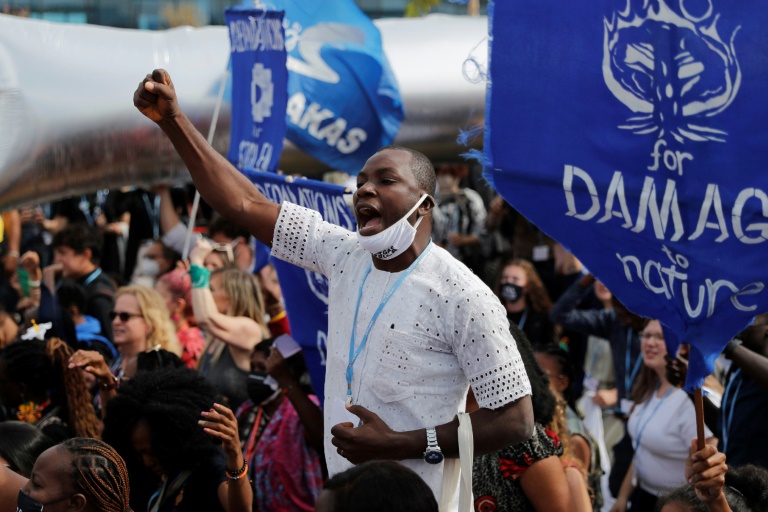
Joy, relief at 'historic' climate damages deal

Vulnerable nations least responsible for planet-heating emissions have been battling for three decades to get wealthy polluters to pay for climate damages.

Their final push took barely two weeks.

The “loss and damage” inflicted by climate-induced disasters was not even officially up for discussion when UN talks in Egypt began.

But a concerted effort among developing countries to make it the defining issue of the conference melted the resistance of wealthy polluters long fearful of open-ended liability, and gathered unstoppable momentum as the talks progressed.

In the end a decision to create a loss and damage fund was the first item confirmed on Sunday morning after fraught negotiations went overnight with nations clashing over a range of issues around curbing planet-heating emissions.

“At the beginning of these talks loss and damage was not even on the agenda and now we are making history,” said Mohamed Adow, executive director of Power Shift Africa.  

“It just shows that this UN process can achieve results, and that the world can recognise the plight of the vulnerable must not be treated as a political football.”

Loss and damage covers a broad sweep of climate impacts, from bridges and homes washed away in flash flooding, to the threatened disappearance of cultures and whole island nations to the creeping rise of sea levels.

Observers say that the failure of rich polluters both to curb emissions and to meet their promise of funding to help countries boost climate resilience means that losses and damages are inevitably growing as the planet warms.

Event attribution science now makes it possible to measure how much global warming increases the likelihood or intensity of an individual cyclone, heat wave, drought or heavy rain event.

This year, an onslaught of climate-induced disasters — from catastrophic floods in Pakistan to severe drought threatening famine in Somalia — battered countries already struggling with the economic effects of the Covid-19 pandemic and soaring food and energy costs. 

“The establishment of a fund is not about dispensing charity,” said Pakistani climate minister Sherry Rehman.

“It is clearly a down payment on the longer investment in our joint futures, in the down payment and an investment in climate justice.” 

– Who pays? –

The agreement was a balancing act, over seemingly unbridgeable differences. 

On the one hand the G77 and China bloc of 134 developing countries called for the immediate creation of a fund at COP27, with operational details to be agreed later.

Richer nations like the United States and European Union accepted that countries in the crosshairs of climate-driven disasters need money, but favoured a “mosaic” of funding arrangements.

They also wanted money to be focused on the most climate-vulnerable countries and for there to be a broader set of donors.

That is code for countries including China and Saudi Arabia that have become wealthier since they were listed as developing nations in 1992.

After last-minute tussles over wording, the final loss and damage document decided to create a fund, as part of a broad array of funding arrangements for developing countries “that are particularly vulnerable to the adverse effects of climate change”.

Other key points of contention were left ambiguous, or put into the remit of a new transitional committee that will be tasked with coming up with a plan for making the decisions a reality for the 2023 UN climate summit in Dubai. 

A reference to expanding sources of funding, “is vague enough to pass”, said Ines Benomar, researcher at think tank E3G.

But she said debates about whether China — the world’s biggest emitter — among others should maintain its status as “developing” was likely to reemerge next year. 

“The discussion is postponed, but now there is more attention to it,” she said. 

For his part, China’s envoy Xie Zhenhua told reporters on Saturday that the fund should be for all developing countries. 

However, he added: “I hope that it could be provided to the fragile countries first.”

– ‘Empty bucket’ –

Harjeet Singh, head of global political strategy at Climate Action Network International, said other innovative sources of finance — like levies on fossil fuel extraction or air passengers — could raise “hundreds of billions of dollars”. 

Pledges for loss and damage so far are miniscule in comparison to the scale of the damages. 

They include $50 million from Austria, $13 million from Denmark and $8 million from Scotland. 

About $200 million has also been pledged — mainly from Germany — to the “Global Shield” project launched by the G7 group of developed economies and climate vulnerable nations.   

The World Bank has estimated the Pakistan floods alone caused $30 billion in damages and economic loss.

Depending on how deeply the world slashes carbon pollution, loss and damage from climate change could cost developing countries $290 billion to $580 billion a year by 2030, reaching $1 trillion to $1.8 trillion in 2050, according to 2018 research.

Adow said that a loss and damage fund was just the first step.  

“What we have is an empty bucket,” he said. 

“Now we need to fill it so that support can flow to the most impacted people who are suffering right now at the hands of the climate crisis.”

'Back to the Future' star and Parkinson's activist Fox gets honorary Oscar

Michael J. Fox was awarded an honorary Oscar Saturday for his campaign to fund Parkinson’s research since being diagnosed with the neurodegenerative disease at the peak of his acting career.

Fox received the Academy of Motion Picture Arts and Sciences’ annual statuette for humanitarian work by a film industry figure at a black-tie gala crammed with Hollywood’s biggest stars in Los Angeles.

“You’re making me shake, stop it,” joked Fox as he received a standing ovation, before describing his award as “a wholly unexpected honor.”

Canadian actor Fox, 61, shot to stardom in the “Back to the Future” films while portraying time-traveling high-school student Marty McFly.

The trilogy between 1985 and 1990 thrust DeLorean time machines and gravity-defying hoverboards into the popular imagination.

In 1991, at the age of 29, Fox was diagnosed with Parkinson’s and told he had 10 years left to work. 

About 10 million people worldwide have Parkinson’s, which erodes motor functions.

Woody Harrelson, who starred alongside Fox in the film “Doc Hollywood” at the time of his diagnosis, told the audience Saturday: “I just couldn’t believe it because there’s such an invincible, superhuman quality about Mike.

“Well, he never missed a step, never wallowed in self-pity… instead he turned a chilling diagnosis into a courageous mission,” he added.

Fox, who first achieved fame on NBC’s 1980s sitcom “Family Ties,” publicly disclosed his illness in 1998, during the run of his second hit TV series “Spin City.”

He semi-retired a few years later, dedicating himself to his Parkinson’s foundation and raising more than $1 billion for research.

“It was clear that an aging, under-served patient base could use some help,” he said.

“There was nothing heroic about what I did,” said Fox.

Fox, who permanently retired from acting in 2020, has suffered multiple broken bones and injuries from falls in recent months, requiring surgery on his shoulder.

But he walked to and from the stage Saturday, asking his wife and former “Family Ties” co-star Tracy Pollan to help carry his statuette off.

– ‘Thank the Academy’ –

The honorary Oscars are handed out every year to recognize lifetime achievement, and were spun off into a separate event in 2009 to declutter the main show’s packed schedule.

Previous winners of Fox’s Jean Hersholt Humanitarian Award — handed out by the Academy most years since 1957 — include Angelina Jolie, Oprah Winfrey and Elizabeth Taylor.

Also awarded a golden statuette for career achievement on Saturday was Diane Warren, the songwriter behind hits such as Aerosmith’s “I Don’t Want to Miss a Thing,” who has been nominated for 13 competitive Oscars without winning.

“I’ve waited 34 years to say this — I’d like to thank the Academy,” Warren said to raucous applause.

“I’ve had a lot of speeches that got crumpled up in my pocket,” she joked.

Peter Weir, the Australian director who made global smash hits such as “Witness,” “Dead Poets Society” and The Truman Show,” made a rare return to Hollywood to collect his Oscar.

Euzhan Palcy, a filmmaker from the French-speaking Caribbean island of Martinique, received a statuette for a career including “A Dry White Season” — her 1989 film about South African apartheid that lured Marlon Brando out of retirement.

Palcy, who has largely stopped making films, said she became “so tired of being told I was a pioneer” and “hearing praise for being the first of too many firsts but denied the chance to make the movies” she wanted to make.

“My stories are not black, my stories are not white — they are universal, they are colorful,” she said.

Trump gets warm reception at Republican gathering as rivals lash out

Donald Trump received a standing ovation at a Republican Party gathering Saturday, even as several possible White House rivals lashed out at his election denialism and insisted it was time to move on from the former US president.

In his first major appearance since announcing his intention to run again in 2024, Trump told the Republican Jewish Coalition in Las Vegas that the party had grown under his leadership.

The 76-year-old falsely insisted once again that the 2020 presidential election — which he lost — was rigged, and rejected responsibility for the GOP’s poor performance in the November midterms.

In 2020 “we had a really disgraceful election, many millions of votes more than we had in 2016… and the result was, in my opinion, an absolute sham,” he told the audience by video link.

“The election was rigged, and it’s too bad it was.”

Asked about how he could improve the party’s appeal to suburban voters, among whom it did badly in this month’s midterms, Trump insisted he had a record of picking winners.

“In the midterms, as you’ve probably heard, I was 222 wins and 16 losses, the press doesn’t want to mention that, and the Republican Party got five million more votes than the Democrats,” he said, despite the final vote tallies not yet being finalized. 

“The Republican Party is a much bigger and more powerful party than it was before I got there,” he said.

With the midterms in the rear-view mirror, the Las Vegas event served as a catwalk for potential Trump rivals ahead of the Republican Party primaries to decide who will fight for the presidency in 2024. 

Florida Governor Ron DeSantis, who is emerging as one of Trump’s main rivals, closed the meeting with a speech praising his midterms performance. 

“We dominated with independent voters, we secured record margins with Hispanic voters. We swept the suburbs all across the state of Florida,” said the 44-year-old who was loudly applauded by attendees, several of whom approached the stage to shake his hand.

The crowd also heard from former South Carolina Governor Nikki Haley, who said she will think “in a serious way” about whether to launch a bid for the White House. 

“I’ve been the underdog every single time when people underestimate me, it’s always fun,” she said. “But I’ve never lost an election. And I’m not going to start now.”

– ‘Joy and a smile’ –

Many rivals hit out at Trump’s grievance-laden style of politicking, which Republican Party operatives have said was to blame for their tepid showing on November 8.

New Jersey’s former governor and one-time Trump confidante Chris Christie said candidate quality had been the issue.

“Donald Trump picked candidates with one criteria. Not electability, not experience, not wisdom, not charisma, not the ability to govern, but ‘do you believe the 2020 election was stolen or not?’ If you do I endorse you. If you don’t I reject you,” he said.

“The fact of the matter is the reason we’re losing is because Donald Trump has put himself before everybody else.”

Chris Sununu, governor of New Hampshire, agreed.

“I got a great policy for the Republican Party. Let’s stop supporting crazy unelectable candidates in our primaries,” he said.

On Friday evening, Trump’s former secretary of state, Mike Pompeo, who is also understood to be mulling a run at the White House, urged fellow Republicans to be more forward-looking and more positive.

While he did not mention his old boss by name, Pompeo made none-too-subtle digs about the need to be doers, rather than complainers.

“As we present the conservative case, as we make the argument… we do so with joy, and a smile,” he said.

“We don’t simply rail against the machine… we don’t simply go on Fox News or send tweets, we actually do the hard work.”

Trump did not address the potential rivals in his appearance on Saturday, but has already begun his customary bomb-throwing about potential presidential competitors, dubbing DeSantis “Ron DeSanctimonious” and saying Virginia Governor Glenn Youngkin’s name “sounds Chinese.”

The gathering, which also featured an address by Israel’s prime minister-designate Benjamin Netanyahu, runs until Sunday.

COP27 summit strikes historic deal to fund climate damages

A fraught UN COP27 summit wrapped up Sunday with a landmark deal on funding to help vulnerable countries cope with devastating climate impacts — and deep disappointment over a failure to push further ambition on cutting emissions.

The two-week talks, which at times appeared to teeter on the brink of collapse, delivered a major breakthrough on a fund for climate “loss and damage”.

Pakistani climate minister Sherry Rehman said COP27 “responded to the voices of the vulnerable, the damaged and the lost of the whole world”.

“We have struggled for 30 years on this path, and today in Sharm el-Sheikh this journey has achieved its first positive milestone,” she said.

Tired delegates applauded when the loss and damage fund was adopted as the sun came up Sunday following days of marathon negotiations over the proposal.

But jubilation over that achievement was countered by stern warnings.

UN chief Antonio Guterres said the UN climate talks had “taken an important step towards justice” with the loss and damage fund, but fallen short in pushing for the urgent carbon-cutting needed to tackle global warming.

“Our planet is still in the emergency room. We need to drastically reduce emissions now and this is an issue this COP did not address,” Guterres said.

A final COP27 statement covering the broad array of the world’s efforts to grapple with a warming planet held the line on the aspirational goal of limiting global warming to 1.5 degrees Celsius from pre-industrial levels.

It also included language on renewable energy for the first time, while reiterating previous calls to accelerate “efforts towards the phasedown of unabated coal power and phase-out of inefficient fossil fuel subsidies”.

But that failed to go much further than a similar decision from last year’s meeting in Glasgow on key issues around cutting planet-heating pollution.

In a scolding intervention as the talks went into Sunday morning, European Commission Vice President Frans Timmermans said the EU was “disappointed” with a lack of ambition on reducing emissions.

“What we have in front of us is not enough of a step forward for people and planet,” he said. 

“It doesn’t bring enough added efforts from major emitters to increase and accelerate their emission cuts.”

– ‘Historic’ deal –

The deal on loss and damage — which barely made it onto the negotiation agenda — gathered critical momentum during the talks.

Developing nations relentlessly pushed for the fund during the summit, finally succeeding in getting the backing of wealthy polluters long fearful of open-ended liability.

A statement from the Alliance of Small Island States, comprised of islands whose very existence is threatened by sea level rise, said loss and damage deal was a “historic” deal 30 years in the making.

“The agreements made at COP27 are a win for our entire world,” said Molwyn Joseph, of Antigua and Barbuda and chair of AOSIS.

“We have shown those who have felt neglected that we hear you, we see you, and we are giving you the respect and care you deserve.”

With around 1.2C of warming so far, the world has seen a cascade of climate-driven extremes in recent months, shining a spotlight on the plight of developing countries faced with escalating disasters, as well as an energy and food price crisis and ballooning debt.

The World Bank estimated that devastating floods in Pakistan this year caused $30 billion in damage and economic loss.

The fund will be geared towards developing nations “that are particularly vulnerable to the adverse effects of climate change” — language that had been requested by the EU.

– ‘On the brink’ –

The Europeans had also wanted to broaden the funder base to cough up cash — code for China and other better-off emerging countries. 

The final loss and damage text left many of the thornier questions to be dealt with by a transitional committee, which will report to next year’s climate meeting in Dubai to get the funding operational.

On Saturday morning, with the talks already in overtime, the European Union said it was prepared to have “no result” rather than a bad one over concerns around ambition on emissions cuts.

Scientists say limiting warming to 1.5C is a far safer guardrail against catastrophic climate impacts, with the world currently far off track and heading for around 2.5C under current commitments and plans.

“The historic outcome on loss and damage at COP27 shows international cooperation is possible,” said Mary Robinson, former president of Ireland and Chair of The Elders.

“Equally, the renewed commitment on the 1.5C global warming limit was a source of relief. However, none of this changes the fact that the world remains on the brink of climate catastrophe.”  

Trump Twitter account reappears after Musk poll

Donald Trump’s Twitter account was reinstated Saturday after the platform’s new owner Elon Musk ran a poll in which a narrow majority of voters supported the move, days after the former US president announced another White House bid.

Trump was banned from the platform early last year for his role in the January 6 attack on the US Capitol by a mob of his supporters seeking to overturn the results of the 2020 election.

“The people have spoken. Trump will be reinstated,” Musk tweeted, shortly after the 24-hour poll ended.

“Vox Populi, Vox Dei,” he added, repeating a Latin adage he posted Friday meaning “the voice of the people is the voice of God.”

More than 15 million people — out of 237 million daily Twitter users — voted on whether to reinstate the controversial profile, with 51.8 percent in favor and 48.2 percent against.

Trump, who had more than 88 million users when his account was suspended, reveled in using Twitter as a mouthpiece during his presidency, posting policy announcements, attacking political rivals and communicating with supporters.

Musk’s poll asked for a simple “yes” or “no” response to the statement “Reinstate former President Trump,” which the billionaire Twitter boss posted Friday.

“Fascinating to watch Twitter Trump poll!” Musk mused Saturday morning in a blast of tweets from the controversial and hard-charging new owner of the one-to-many messaging platform.

He has posed similar polls in the past, asking followers last year if he should sell stock in his electric car company Tesla. Following that poll, he sold more than $1 billion in shares.

– ‘I have Truth Social’

Trump said Saturday he would not return to the popular platform but instead remain on his own network, Truth Social, launched after he was banned from Twitter.

Appearing via video at a gathering of the Republican Jewish Coalition in Las Vegas, Trump said he welcomed the poll and was a fan of Musk, but appeared to reject any return.

“He did put up a poll and it was very overwhelming… but I have something called… Truth Social.”

As to whether he would return to the platform, he said: “I don’t see it because I don’t see any reason for it.”

Trump had not posted to Twitter by late Saturday, though he did share a series of unrelated messages on his Truth Social account, including opinion articles criticizing the US Justice Department’s appointment of a special counsel this week to investigate his role in the Capitol attack. 

But several of his political allies were highlighting his return.

“Welcome back, @realdonaldtrump!” tweeted House Republican Paul Gosar.

Prominent Trump-backer Congresswoman Marjorie Taylor Greene, whose personal account is also suspended, re-tweeted several of his previous posts from her official government account, including some tweets that were still marked with fact-checking badges refuting his claims about 2020 election fraud. 

“Anyone who thinks President Trump isn’t going to win the 2024 primary is fooling themselves,” she tweeted.

Anti-Trump Republican Liz Cheney, co-chair of the congressional committee investigating the Capitol attack who lost her re-election bid, responded to the news by directing Twitter users to a link with a video of one of the committee’s hearings.

“With Trump back on Twitter, it’s a good time to watch this Jan 6 hearing,” she tweeted. 

“It covers each of Trump’s tweets that day, including those that have been deleted, and features multiple Trump WH staff describing his inexcusable conduct during the violence.”

Musk has reinstated other banned accounts, including that of comedian Kathy Griffin, which had been taken down after she impersonated him on the site.

– Twitter chaos –

Musk, also the CEO of Tesla and SpaceX, has come under fire for radical changes at California-based Twitter, which he bought less than a month ago for $44 billion.

Since then, he has fired half of Twitter’s 7,500 staff and scrapped a work-from-home policy, all while his attempts to overhaul the company faced backlash and delays.

Hundreds of employees quit rather than yield to Musk’s demands that they resign themselves to working long, grueling days at the new Twitter.

His stumbling attempts to revamp user verification with a controversial subscription service led to a slew of fake accounts and pranks, and prompted major advertisers to step away from the platform.

Trump Twitter account reappears after Musk poll

Donald Trump’s Twitter account was reinstated Saturday after the platform’s new owner Elon Musk ran a poll in which a narrow majority of voters supported the move, days after the former US president announced another White House bid.

Trump was banned from the platform early last year for his role in the January 6 attack on the US Capitol by a mob of his supporters seeking to overturn the results of the 2020 election.

“The people have spoken. Trump will be reinstated,” Musk tweeted, shortly after the 24-hour poll ended.

“Vox Populi, Vox Dei,” he added, repeating a Latin adage he posted Friday meaning “the voice of the people is the voice of God.”

More than 15 million people — out of 237 million daily Twitter users — voted on whether to reinstate the controversial profile, with 51.8 percent in favor and 48.2 percent against.

Trump, who had more than 88 million users when his account was suspended, reveled in using Twitter as a mouthpiece during his presidency, posting policy announcements, attacking political rivals and communicating with supporters.

Musk’s poll asked for a simple “yes” or “no” response to the statement “Reinstate former President Trump,” which the billionaire Twitter boss posted Friday.

“Fascinating to watch Twitter Trump poll!” Musk mused Saturday morning in a blast of tweets from the controversial and hard-charging new owner of the one-to-many messaging platform.

He has posed similar polls in the past, asking followers last year if he should sell stock in his electric car company Tesla. Following that poll, he sold more than $1 billion in shares.

– ‘I have Truth Social’

Trump said Saturday he would not return to the popular platform but instead remain on his own network, Truth Social, launched after he was banned from Twitter.

Appearing via video at a gathering of the Republican Jewish Coalition in Las Vegas, Trump said he welcomed the poll and was a fan of Musk, but appeared to reject any return.

“He did put up a poll and it was very overwhelming… but I have something called… Truth Social.”

As to whether he would return to the platform, he said: “I don’t see it because I don’t see any reason for it.”

Trump had not posted to Twitter by late Saturday, though he did share a series of unrelated messages on his Truth Social account, including opinion articles criticizing the US Justice Department’s appointment of a special counsel this week to investigate his role in the Capitol attack. 

But several of his political allies were highlighting his return.

“Welcome back, @realdonaldtrump!” tweeted House Republican Paul Gosar.

Prominent Trump-backer Congresswoman Marjorie Taylor Greene, whose personal account is also suspended, re-tweeted several of his previous posts from her official government account, including some tweets that were still marked with fact-checking badges refuting his claims about 2020 election fraud. 

“Anyone who thinks President Trump isn’t going to win the 2024 primary is fooling themselves,” she tweeted.

Anti-Trump Republican Liz Cheney, co-chair of the congressional committee investigating the Capitol attack who lost her re-election bid, responded to the news by directing Twitter users to a link with a video of one of the committee’s hearings.

“With Trump back on Twitter, it’s a good time to watch this Jan 6 hearing,” she tweeted. 

“It covers each of Trump’s tweets that day, including those that have been deleted, and features multiple Trump WH staff describing his inexcusable conduct during the violence.”

Musk has reinstated other banned accounts, including that of comedian Kathy Griffin, which had been taken down after she impersonated him on the site.

– Twitter chaos –

Musk, also the CEO of Tesla and SpaceX, has come under fire for radical changes at California-based Twitter, which he bought less than a month ago for $44 billion.

Since then, he has fired half of Twitter’s 7,500 staff and scrapped a work-from-home policy, all while his attempts to overhaul the company faced backlash and delays.

Hundreds of employees quit rather than yield to Musk’s demands that they resign themselves to working long, grueling days at the new Twitter.

His stumbling attempts to revamp user verification with a controversial subscription service led to a slew of fake accounts and pranks, and prompted major advertisers to step away from the platform.

UN climate summit adopts 'loss and damage' fund

The UN’s COP27 climate summit approved on Sunday the creation of a special fund to cover the damages suffered by vulnerable nations battered by the impacts of global warming.

The two-week talks have whiplashed between fears the process could collapse, to hopes of a major breakthrough on a fund for climate “loss and damage”.

Delegates applauded after the fund was adopted in the middle of the night following days of marathon negotiations over the proposal.

Collins Nzovu, Zambia’s minister of green economy and environment, said he was “excited. Very, very excited.”

“This is a very positive result from 1.3 billion Africans,” he told AFP.

“Very exciting because for us, success in Egypt was going to be based on what we get from loss and damage.”

The plenary, however, still has to approve a range of decisions and the final COP27 statement covering a host of other contentious issues, including a call for a “rapid” reduction in emissions in order to meet the aspirational goal of limiting global warming to 1.5 degrees Celsius from pre-industrial levels.

The session took a break as Switzerland requested more time to review the text.

An informal coalition of “high ambition” countries called for strong language on cutting emissions, moving away from planet-heating fossil fuels and to reaffirm the 1.5C goal.

The European Union even threatened Saturday to walk out rather than having a “bad” decision.

An adviser to Papua New Guinea, Kevin Conrad, said late Saturday that the “usual suspects” were attempting to remove all reference to fossil fuels. In the past, Saudi Arabia in particular has sought to block such language.

The latest draft calls for “accelerating efforts towards the phasedown of unabated coal power and phase-out of inefficient fossil fuel subsidies”.

– ‘Historic’ deal –

Conversely the deal on loss and damage — which barely made it onto the negotiation agenda — gathered critical momentum during the talks.

Developing nations relentlessly pushed for the fund during the summit, finally succeeding in getting the backing of wealthy polluters long fearful of open-ended liability.

With around 1.2C of warming so far, the world has seen a cascade of climate-driven extremes in recent months, shining a spotlight on the plight of developing countries faced with escalating disasters, as well as an energy and food price crisis and ballooning debt. 

The World Bank estimated that devastating floods in Pakistan this year caused $30 billion in damage and economic loss. 

Pakistan’s Climate Minister Sherry Rehman said prior to the fund’s approval that its creation would be “a historic reminder to vulnerable people all over the world that they have a voice and that if they unite… we can actually start breaking down barriers that we thought were impossible”.

The fund will be geared towards developing nations “that are particularly vulnerable to the adverse effects of climate change” — language that had been requested by the EU.

The EU demanded the wording with the aim of ensuring that wealthier developing countries such as China, which has grown into the world’s second biggest economy, are not beneficiaries of the fund.

The Europeans had also wanted a broad funder base to cough up cash — code for China and other better-off emerging countries. 

The final decision text left many of the thornier questions to be dealt with by a transitional committee, which will report to next year’s climate meeting in Dubai to get the funding operational.

– ‘Keep 1.5C alive’ –

Now attention turns on whether the summit will agree on the final statement.

Scientists say limiting warming to 1.5C is a far safer guardrail against catastrophic climate impacts, with the world currently far off track and heading for around 2.5C under current commitments and plans.

Earlier, Colombian Environment Minister Susana Muhamad said to be “viable” the climate talks would need both a loss and damage fund and a commitment to 1.5C.  

European Commission Vice President Frans Timmermans warned that if not enough was done to slash emissions and keep 1.5C alive, “there is no amount of money on this planet that will be able to address the misery that will occur through natural disasters, etc. that we’re already seeing”.

Close Bitnami banner
Bitnami