AFP

Xi, Harris call for open channels in latest US-China meeting

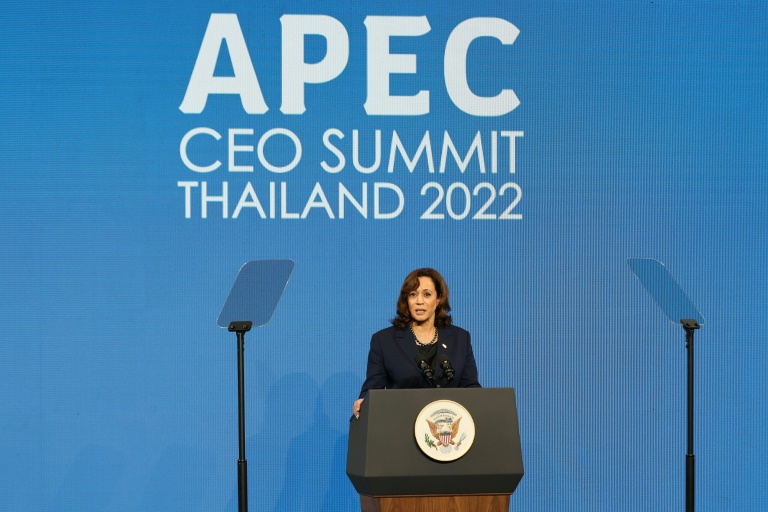
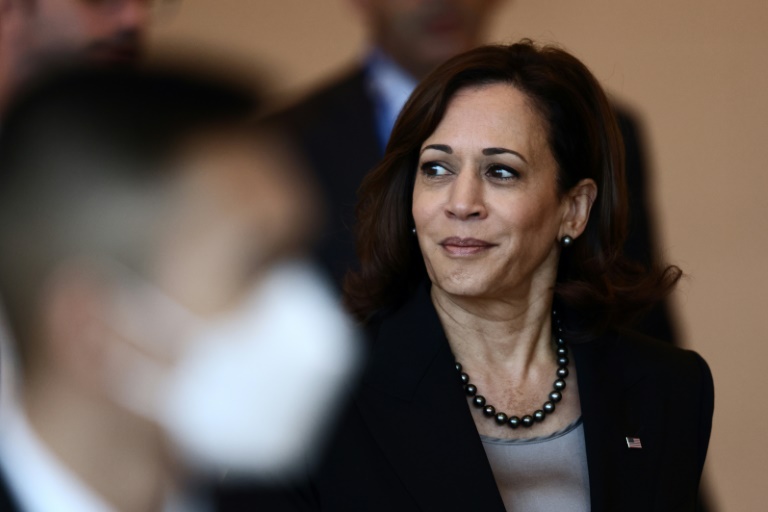
Chinese President Xi Jinping and US Vice President Kamala Harris called for open communication during a brief meeting on Saturday, days after his extensive talks with President Joe Biden aimed at keeping tensions in check.

Harris and Xi met during an Asia-Pacific summit in Bangkok where another US rival, Russia, saw itself isolated, with no top leader attending and a statement issued showing wide condemnation of its war in Ukraine.

Speaking to Xi on the sidelines of the Asia-Pacific Economic Cooperation (APEC) forum, Harris reinforced Biden’s message that “we must maintain open lines of communication to responsibly manage the competition between our countries”, a White House official said.

On Monday, Biden and Xi met for three hours at a Group of 20 summit in Bali, the first in-person talks between the leaders of the world’s two largest economies since they each became president.

Chinese state media quoted Xi as telling Harris that his meeting with Biden was “strategic and constructive, and has important guiding significance for China-US relations in the next stage”.

“It is hoped that the two sides will further enhance mutual understanding, reduce misunderstanding and misjudgement, and jointly promote the return of China-US relations to a healthy and stable track,” added Xi, who is on only his second overseas trip since the pandemic.

US and Chinese officials have both put a positive spin on the renewal of diplomacy, while stopping short of predicting any substantive resolution of issues dividing them — notably Taiwan, the self-governing democracy claimed by Beijing.

Xi and Biden agreed that Secretary of State Antony Blinken will visit China early next year, the first visit by a top US diplomat since 2018.

Blinken told reporters in Bangkok that the contacts aimed at making sure that competition “does not veer into conflict” and examining areas of cooperation on global challenges such as climate change.

The United States said it was also looking for China to do more to rein in its ally North Korea, which on Friday test-fired a ballistic missile that US and Japanese officials said was likely capable of hitting the US mainland.

China should use its influence to persuade North Korea “not to go in this provocative direction, which only destabilises the region and the world”, said a US official travelling with Harris.

– Pressure on Russia –

If relations remain unchanged, Xi could see Biden in a year’s time when the United States hosts the APEC summit in San Francisco.

Xi last visited the United States in 2017, meeting then president Donald Trump at his Florida estate, but relations between the two countries later sharply deteriorated over trade, Taiwan, human rights and Covid-19.

APEC, which groups 21 economies, focuses on trade rather than political matters. But after US insistence, APEC followed the formula of this week’s G20 summit to take up the invasion of Ukraine by Russia, a member of both organisations.

“Most members strongly condemned the war in Ukraine and stressed it is causing immense human suffering and exacerbating existing fragilities in the global economy,” an APEC joint declaration said.

“There were other views and different assessments of the situation and sanctions.” 

The United States has been cautiously upbeat about China taking a distance from nominal ally Russia, including by rejecting requests to send military supplies.

While engaging Xi, the United States has vowed to shun Russian President Vladimir Putin who skipped this week’s Asian summits and is virtually certain not to receive an invitation to San Francisco.

Harris, who is originally from the San Francisco Bay Area, told leaders in Bangkok that the United States would focus next year’s summit on raising climate ambitions.

She asked leaders to prepare new targets in time for the 2023 summit on reducing emissions from the power sector, hoping to flesh out longer-term commitments by most APEC members on zeroing out carbon.

Xi, Harris call for open channels in latest US-China meeting

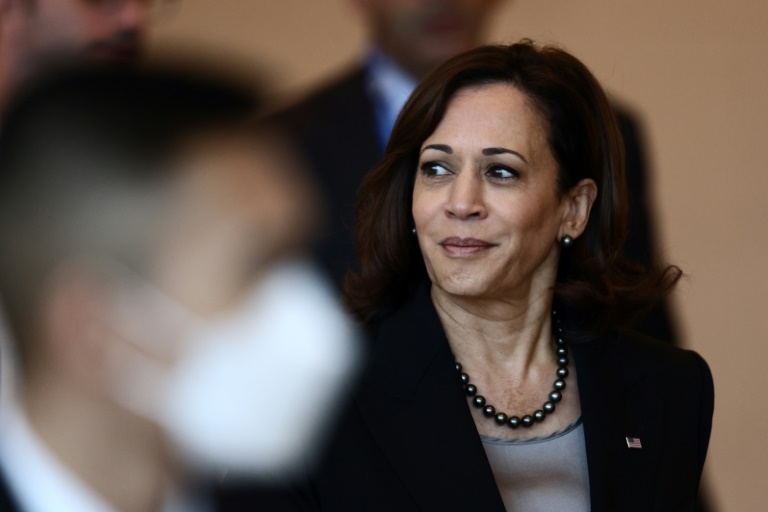
Chinese President Xi Jinping and US Vice President Kamala Harris called for open communication during a brief meeting on Saturday, days after his extensive talks with President Joe Biden aimed at keeping tensions in check.

Harris and Xi met during an Asia-Pacific summit in Bangkok where another US rival, Russia, saw itself isolated, with no top leader attending and a statement issued showing wide condemnation of its war in Ukraine.

Speaking to Xi on the sidelines of the Asia-Pacific Economic Cooperation (APEC) forum, Harris reinforced Biden’s message that “we must maintain open lines of communication to responsibly manage the competition between our countries”, a White House official said.

On Monday, Biden and Xi met for three hours at a Group of 20 summit in Bali, the first in-person talks between the leaders of the world’s two largest economies since they each became president.

Chinese state media quoted Xi as telling Harris that his meeting with Biden was “strategic and constructive, and has important guiding significance for China-US relations in the next stage”.

“It is hoped that the two sides will further enhance mutual understanding, reduce misunderstanding and misjudgement, and jointly promote the return of China-US relations to a healthy and stable track,” added Xi, who is on only his second overseas trip since the pandemic.

US and Chinese officials have both put a positive spin on the renewal of diplomacy, while stopping short of predicting any substantive resolution of issues dividing them — notably Taiwan, the self-governing democracy claimed by Beijing.

Xi and Biden agreed that Secretary of State Antony Blinken will visit China early next year, the first visit by a top US diplomat since 2018.

Blinken told reporters in Bangkok that the contacts aimed at making sure that competition “does not veer into conflict” and examining areas of cooperation on global challenges such as climate change.

The United States said it was also looking for China to do more to rein in its ally North Korea, which on Friday test-fired a ballistic missile that US and Japanese officials said was likely capable of hitting the US mainland.

China should use its influence to persuade North Korea “not to go in this provocative direction, which only destabilises the region and the world”, said a US official travelling with Harris.

– Pressure on Russia –

If relations remain unchanged, Xi could see Biden in a year’s time when the United States hosts the APEC summit in San Francisco.

Xi last visited the United States in 2017, meeting then president Donald Trump at his Florida estate, but relations between the two countries later sharply deteriorated over trade, Taiwan, human rights and Covid-19.

APEC, which groups 21 economies, focuses on trade rather than political matters. But after US insistence, APEC followed the formula of this week’s G20 summit to take up the invasion of Ukraine by Russia, a member of both organisations.

“Most members strongly condemned the war in Ukraine and stressed it is causing immense human suffering and exacerbating existing fragilities in the global economy,” an APEC joint declaration said.

“There were other views and different assessments of the situation and sanctions.” 

The United States has been cautiously upbeat about China taking a distance from nominal ally Russia, including by rejecting requests to send military supplies.

While engaging Xi, the United States has vowed to shun Russian President Vladimir Putin who skipped this week’s Asian summits and is virtually certain not to receive an invitation to San Francisco.

Harris, who is originally from the San Francisco Bay Area, told leaders in Bangkok that the United States would focus next year’s summit on raising climate ambitions.

She asked leaders to prepare new targets in time for the 2023 summit on reducing emissions from the power sector, hoping to flesh out longer-term commitments by most APEC members on zeroing out carbon.

Trump on playbill as top Republicans meet

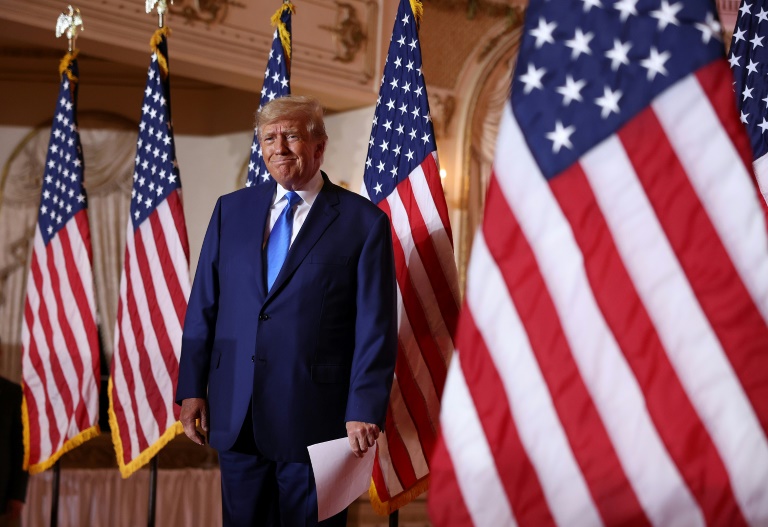
Donald Trump will address a gathering of senior Republican Party figures this weekend, including potential rivals for the White House, in his first speech since announcing a plan to run in 2024.

The former US president was a late addition to the guest list for the annual leadership meeting of the Republican Jewish Coalition in Las Vegas, which began Friday.

Trump, dialing in by video on Saturday, will join a slate of top GOP speakers, including some who are thought to be mulling a bid for the party’s presidential nomination, like Florida Governor Ron DeSantis, former vice president Mike Pence and ex-secretary of state Mike Pompeo.

It will be his first public address since the hour-long announcement at his Mar-a-Lago home that he wanted his old job back.

That speech came a week after the Republican Party’s disappointing showing in the midterm elections, which senior party figures have blamed on the property tycoon and his grievance-laden denials of his own election defeat.

The high-profile candidates he endorsed did worse than mainstream Republicans in the poll, including his pick for Pennsylvania senator, leaving the upper chamber in the hands of the Democratic Party.

In the run-up to the poll, pundits and party leaders predicted a “red wave” that would sweep President Joe Biden’s party from the leadership of both houses.

Instead, the Republican Party only managed to eke out a slim majority in the House of Representatives.

After a celebratory dinner on Friday, Pompeo took the microphone to urge Republicans forward.

While he did not mention his old boss by name, he made none-too-subtle digs about the need to be doers, rather than complainers.

“As we present the conservative case, as we make the argument… we do so with joy, and a smile,” he said.

“We don’t simply rail against the machine… we don’t simply go on Fox News or send tweets, we actually do the hard work.”

Trump, who has denied he is to blame for the Republican’s poor electoral performance, has already begun his customary bomb-throwing about potential presidential rivals, dubbing DeSantis “Ron DeSanctimonious” and saying Virginia Governor Glenn Youngkin’s name “sounds Chinese.”

Saturday’s appearance will also come after the US Justice Department named an independent prosecutor to oversee criminal investigations into Trump, including into his stashing of top secret documents and his involvement in the mob attack on the US Capitol in January 2021.

The gathering, which also features Israel’s prime minister-designate Benjamin Netanyahu, runs until Sunday.

Twitter fate in doubt as employees defy Musk ultimatum

The future of Twitter seemed to hang in the balance Friday after its offices were locked down and key employees announced their departures in defiance of an ultimatum from new owner Elon Musk.

Fears grew that a fresh exodus would threaten the very existence of one of the world’s most influential internet platforms, which serves as a key communication tool for the world’s media, politicians, companies, activists and celebrities.

According to ex-employees and US media, hundreds of employees chose “no” to Musk’s demand that they either be “extremely hardcore” or leave the company.

“So my friends are gone, the vision is murky, there is a storm coming and no financial upside. What would you do?” tweeted Peter Clowes, who refused Musk’s final warning.

Musk, also the CEO of Tesla and SpaceX, has come under fire for radical changes at the California-based firm, which he bought less than a month ago for $44 billion.

He had already fired half of Twitter’s 7,500 staff, scrapped a work-from-home policy and imposed long hours, all while his attempts to overhaul the company faced backlash and delays.

His stumbling attempts to revamp user verification with a controversial subscription service led to a slew of fake accounts and pranks, and prompted major advertisers to step away from the platform.

On Friday, Musk appeared to be pressing on with his plans and reinstated previously banned accounts, including that of comedian Kathy Griffin, which had been taken down after she impersonated him on the site.

Musk did not immediately welcome back former US president Donald Trump, saying the “decision has not yet been made” on the return of the ex-leader. 

Trump was banned for inciting last year’s attack on the Capitol by a mob seeking to overturn the results of the 2020 US election.

But hours later, Musk posted a poll to Twitter asking users to vote “yes” or “no” on whether to “Reinstate former President Trump,” though there was no clear indication that he would adhere to the results of the ad hoc survey.

Musk has done similar polls in the past, asking followers last year if he should sell stock in his electric car company Tesla. 

– ‘Not super worried’ –

Fevered talk of the site’s imminent demise was driving record-high engagement on Twitter, according to Musk.

In a tweet, the South African-born billionaire said: “Record numbers of users are logging in to see if Twitter is dead, ironically making it more alive than ever!”

Musk added that the “best people are staying, so I’m not super worried.”

Despite Musk’s assurances, entry to Twitter’s offices was temporarily closed until Monday, even with a badge, according to an internal message seen on US media.

In leaked emails reported in The New York Times, Musk asked engineers critical to the site’s functioning to make their way to Twitter’s headquarters in San Francisco on Friday to meet him in person.

Twitter did not respond to AFP requests for comment on the new measure.

In the ultimatum sent Wednesday, Musk had asked staff to follow a link to affirm their commitment to “the new Twitter” by 5:00 pm New York time (2200 GMT) on Thursday.

If they did not do so, they would have lost their jobs, receiving three months of severance pay.

Signs that government regulators were becoming impatient with Musk’s handling of Twitter also grew on Friday, especially over the platform’s ability to moderate content with a severely reduced headcount.

A group of US senators on Thursday said Musk’s plans for the site “undermined the integrity and safety of the platform… despite clear warnings those changes would be abused for fraud, scams, and dangerous impersonation.”

A top regulator for the European Union, meanwhile, said that Musk should be increasing the number of moderators in Europe, not reducing them.

Musk “knows perfectly well what the conditions are for Twitter to continue operating in Europe,” EU commissioner Thierry Breton told French radio.

A spokesman for German Chancellor Olaf Scholz said his government was watching developments at Twitter “with growing concern” and reviewing its presence on the platform.

NASA Moon mission 'exceeding' expectaions

On the third day after lifting off from Florida bound for the Moon, the Orion spacecraft is “exceeding performance expectations,” NASA officials said on Friday. 

The spacecraft is to take astronauts to the Moon in the coming years — the first to set foot on its surface since the last Apollo mission in 1972. 

This first test flight, without a crew on board, aims to ensure that the vehicle is safe.

“Today we met to review the Orion spacecraft performance… it is exceeding performance expectations,” said Mike Sarafin, head of the Artemis 1 mission. 

The spacecraft’s four solar panels, about 13 feet (four meters) long, deployed correctly and are providing more energy than expected, said Jim Geffre, the Orion manager at the Johnson Space Center in Houston. 

It is from that control center in Texas that the spacecraft is being piloted. 

Orion is already some 200,000 miles (320,000 kilometers) from Earth and preparing to perform the first of four main thrusts scheduled during the mission using its engines. 

This maneuver, which will take place early Monday morning, will bring the spacecraft as close as 80 miles (130 kilometers) from the lunar surface, in order to take advantage of the Moon’s gravitational force. 

Since this will take place on the far side of the Moon, NASA is expected to lose contact with the spacecraft for approximately 35 minutes.

“We will be passing over some of the Apollo landing sites,” said  flight director Jeff Radigan, although they will be in darkness. Footage of the flyover will be released by NASA.

Four days later, a second thrust from the engines will place Orion in a distant orbit around the Moon. 

The ship will go up to 40,000 miles beyond the Moon, a record for a habitable capsule. 

It will then begin the journey back to Earth, with a landing in the Pacific Ocean scheduled for December 11, after just over 25 days of flight. 

The success of this mission will determine the future of the Artemis 2 mission, which will take astronauts around the Moon without landing, then Artemis 3, which will finally mark the return of humans to the lunar surface. 

Those missions are scheduled to take place in 2024 and 2025, respectively. 

Sarafin also said Friday that 10 scientific micro-satellites had been deployed when the rocket took off, but that half of them were experiencing technical or communication problems. 

Those experiments, carried out separately by independent teams, will have no impact on the main mission, however.

NASA Moon mission 'exceeding' expectaions

On the third day after lifting off from Florida bound for the Moon, the Orion spacecraft is “exceeding performance expectations,” NASA officials said on Friday. 

The spacecraft is to take astronauts to the Moon in the coming years — the first to set foot on its surface since the last Apollo mission in 1972. 

This first test flight, without a crew on board, aims to ensure that the vehicle is safe.

“Today we met to review the Orion spacecraft performance… it is exceeding performance expectations,” said Mike Sarafin, head of the Artemis 1 mission. 

The spacecraft’s four solar panels, about 13 feet (four meters) long, deployed correctly and are providing more energy than expected, said Jim Geffre, the Orion manager at the Johnson Space Center in Houston. 

It is from that control center in Texas that the spacecraft is being piloted. 

Orion is already some 200,000 miles (320,000 kilometers) from Earth and preparing to perform the first of four main thrusts scheduled during the mission using its engines. 

This maneuver, which will take place early Monday morning, will bring the spacecraft as close as 80 miles (130 kilometers) from the lunar surface, in order to take advantage of the Moon’s gravitational force. 

Since this will take place on the far side of the Moon, NASA is expected to lose contact with the spacecraft for approximately 35 minutes.

“We will be passing over some of the Apollo landing sites,” said  flight director Jeff Radigan, although they will be in darkness. Footage of the flyover will be released by NASA.

Four days later, a second thrust from the engines will place Orion in a distant orbit around the Moon. 

The ship will go up to 40,000 miles beyond the Moon, a record for a habitable capsule. 

It will then begin the journey back to Earth, with a landing in the Pacific Ocean scheduled for December 11, after just over 25 days of flight. 

The success of this mission will determine the future of the Artemis 2 mission, which will take astronauts around the Moon without landing, then Artemis 3, which will finally mark the return of humans to the lunar surface. 

Those missions are scheduled to take place in 2024 and 2025, respectively. 

Sarafin also said Friday that 10 scientific micro-satellites had been deployed when the rocket took off, but that half of them were experiencing technical or communication problems. 

Those experiments, carried out separately by independent teams, will have no impact on the main mission, however.

Australia aims to host 2026 UN climate summit

Australia hopes to host the 2026 COP summit, Prime Minister Anthony Albanese said Saturday, seeking to overhaul his country’s reputation for foot-dragging on climate change.

“It is a good opportunity, I believe, for Australia to show and to host what is a major global event,” Albanese said during a visit to Bangkok.

Centre-left Albanese was swept to power this year on a wave of popular anger about the pro-fossil fuel stance of Australia’s decade-old conservative government.  

He has since introduced a 2050 net zero emissions target — not ambitious by world standards, but a near-revolution for Australia, one of the world’s largest gas and coal producers.

He has also vowed to co-host a COP summit with Pacific Island allies — who are under serious threat from rising sea levels and who have long criticised Australia’s climate change scepticism.

Albanese may have hoped to host the event before he faces reelection in 2025, but diplomatic horse-trading means 2026 is now more likely. 

The United Arab Emirates is slated to host the talks in 2023, a European country is hoping for the 2024 event and Brazil is bidding for the 2025 talks, leaving 2026 as the most likely option for Australia. 

“I’ve had a very positive response from all of the nations that I have raised it with,” Albanese said.

If the summit materialises, it would be symbolic of a dramatic shift for Australia.

At successive COP talks, the country’s delegation has been a thorn in the side of negotiators, refusing to compromise and winning deep carve-outs that significantly weakened overall agreements. 

The Climate Council’s Wesley Morgan — an expert on Australia and Pacific policy — described Australia’s COP bid as a “very big deal”.

It would, he argued, confirm Australia’s shift away from fossil fuels, improve sometimes fraught relations with the Pacific Islands and may force even Canberra to adopt more ambitious targets.

“Hopefully (it) means Australia will commit serious policy for deeper emissions cuts this decade,” he said.

Australia remains a large fossil fuel producer and coal mining provides thousands of jobs in key electoral districts. 

But simmering public anger at devastating bushfires and two years of massive flooding have boosted domestic support for change.

Albanese has vowed to turn the sun-kissed island-continent into what he calls a “renewable energy superpower”.

US to help Thailand develop small nuclear reactors

The United States will help Thailand develop nuclear power through a new class of small reactors, part of a programme aimed at fighting climate change, Vice President Kamala Harris announced on a visit Saturday.

The White House said the assistance was part of its Net Zero World Initiative, a project launched at last year’s Glasgow climate summit in which the US partners with the private sector and philanthropists to promote clean energy.

Thailand does not have nuclear power, with the public mood on the issue souring after the 2011 Fukushima disaster in Japan.

The White House said it would offer technical assistance to the Southeast Asian country to deploy the developing technology of small modular reactors, which are factory-built and portable. Such reactors are generally considered safer as they do not need human intervention to shut down in emergencies.

“We really look forward to working with Thailand to take advantage of the benefits of small modular reactors and reliable clean energy sources,” said a senior US official travelling with Harris, speaking on condition of anonymity.

A White House statement said that US experts would work with Thailand on deploying the reactors, which will have the “highest standards of safety, security and nonproliferation” and boast a smaller land footprint than alternatives.

US rivals China and Russia, as well as Argentina, are also developing small modular reactors, the prototypes of which are in the design phase.

The White House did not give a timeline but said it would support Thailand, which is highly vulnerable to climate change, in its goal of going carbon neutral by 2065.

Harris, who is visiting the US ally for an Asia-Pacific Economic Cooperation summit, will discuss the nuclear power initiative in a meeting later Saturday with Thai Prime Minister Prayut Chan-O-Cha.

The White House also announced an initiative with Thailand to boost the safety of fifth-generation internet and a project to build a “world-class” cancer treatment centre in eastern Chonburi province.

US Justice Dept taps independent prosecutor for Trump probes

The US Justice Department on Friday named a former war crimes investigator as a special counsel to oversee criminal probes into Donald Trump, three days after the former president announced a new White House run in 2024.

Trump — who claims to be the target of a “witch hunt” — slammed the dramatic move as “unfair” and “the worst politicization of justice in our country.”

The White House strongly denied any political interference, but the unprecedented special counsel investigation of a former president — and current presidential candidate — sets the stage for a drawn-out legal battle.

At a press conference, Attorney General Merrick Garland announced the appointment of Jack Smith, until recently a chief prosecutor in The Hague charged with probing Kosovo war crimes, to take over the two ongoing federal probes into Trump.

One is focused on the former president’s efforts to overturn the results of the 2020 election and the January 6, 2021, attack on the US Capitol by his supporters.

The other is an investigation into a cache of classified government documents seized in an FBI raid on Trump’s Mar-a-Lago residence in Florida in August.

Garland said naming a special counsel was in the public interest because both the Republican Trump and his Democratic successor Joe Biden have stated their intention to run in 2024, although only Trump has officially declared for now.

“Appointing a special counsel at this time is the right thing to do,” Garland said. “The extraordinary circumstances presented here demand it.”

At the White House, Press Secretary Karine Jean-Pierre said Biden had no advance notice of Garland’s plans to name a special counsel.

– ‘So unfair’ –

Trump claimed in an interview with Fox News Digital that he was being targeted by the Biden administration to prevent him winning back the presidency.

“This is a disgrace and only happening because I am leading in every poll in both parties,” he said. “It is not acceptable. It is so unfair. It is so political.”

“This will not be a fair investigation,” Trump told guests later at his Mar-a-Lago home.

“The horrendous abuse of power is the latest in a long series of witch hunts,” he said, to applause.

In a statement, Smith, who previously headed the Justice Department’s Public Integrity section, said the “pace of the investigations will not pause or flag under my watch.”

“I will exercise independent judgement and will move the investigations forward expeditiously and thoroughly to whatever outcome the facts and the law dictate,” he said.

Trump’s entry into the White House race on Tuesday makes indicting him a much more delicate matter.

The appointment of an independent prosecutor to oversee the twin investigations could serve to help insulate Garland, a Biden appointee, from charges that the probe is politically motivated.

The special counsel will determine whether the former president should face any charges but the attorney general will have the ultimate say on whether charges should be filed.

Even if charged, the 76-year-old Trump can still run for president — nothing in US law bars a person charged with or convicted of a crime from doing so.

While in office, Trump was investigated by special counsel Robert Mueller over obstruction of justice and possible 2016 election collusion with Russia, but no charges were brought against him.

– Other legal woes –

In addition to the federal investigations, Trump faces other legal woes.

New York state’s attorney general Letitia James has filed a civil suit against Trump and three of his children, accusing them of business fraud.

And Trump is being investigated for pressuring officials in the southern swing state of Georgia to overturn Biden’s 2020 victory — including a now-infamous taped phone call in which he asked the secretary of state to “find” enough votes to reverse the result.

Trump’s unusually early announcement that he was running for president in 2024 was seen by some analysts in Washington as an attempt to stave off potential criminal charges.

Trump was impeached by the Democratic-majority House of Representatives in 2019 for seeking political dirt on Biden from Ukraine, and again after the January 6 attack on the Capitol, but was acquitted by the Senate both times.

Off Florida, underwater burial ground offers aquatic lifeline

Divers swim near brightly colored fish and a stingray as they ride warm currents to the seafloor off Florida’s coast, where an underwater burial site for ocean lovers doubles as a marine sanctuary brimming with aquatic life.

With its graceful concrete arches, columns, plaques and other monuments and artwork covered in sea anemones, coral and algae, the Neptune Memorial Reef has transformed a non-descript patch into an elegant columbarium that is an example of a growing worldwide trend.

Construction of the unlikely burial site began in 2007 in shallow waters some five kilometers (three miles) east of Miami. The initial plan was to install an artificial reef that would serve as a refuge for aquatic fauna of the area.

However the ashes of famed international chef Julia Child had been interred in the reef three years earlier, and it began evolving into an underwater mausoleum of sorts.

In search of funding for its project, the company creators landed on an idea: market the prospect of an environmentally friendly, undersea final resting place.

With communities around the world seeking greener burial options than traditional cemeteries, underwater memorial gardens have surged in popularity.

Similar projects are operating or in the planning stages in several locations worldwide, including off the coasts of the US states of Florida, New Jersey, North Carolina, Texas and Virginia.

The process at Neptune involves mixing the ashes of the dead in with the concrete of the columns, statues or other monument structures.

Fifteen years on, the remains of some 1,500 people are interred in the underwater memorial, with another 1,500 having reserved spots for when they die.

Prices range from $7,995 to $29,995, depending on the location and support chosen.

At about 12 meters (40 feet) deep, divers swim between columns, under arches and past statues of lions, starfish, turtles and other marine animals.

On this sunny afternoon some are fixing copper tombstones where several sets of ashes have been placed. One diver checks the coordinates and upon reaching an indicated location, glues the plaque to a concrete beam using epoxy resin.

“Our tagline is creating life after life,” Neptune Memorial Reef operations manager Jim Hustler tells AFP after a dive, stressing the environmental aspect of the project.

“We wanted to build a reef that was sustainable, would help replace the reefs that are dying all over the world.”

His goal at least in part is being met. More than 190 coral colonies have been installed at Neptune over the space of an acre (0.4 hectares), which is home to 56 species of fish, as well as crabs and other crustaceans, sea urchins and sponges.

“Every texture, shape, profile and depth is all designed to encourage animals to come,” explains Hustler, who notes that his project has only just begun.

His company has permission to build on some 16 acres which, once completed, will contain a sprawling series of reefs serving as the final resting place for the ashes of more than 250,000 people.

Close Bitnami banner
Bitnami