AFP

China's Tencent wins first game licence in 18 months

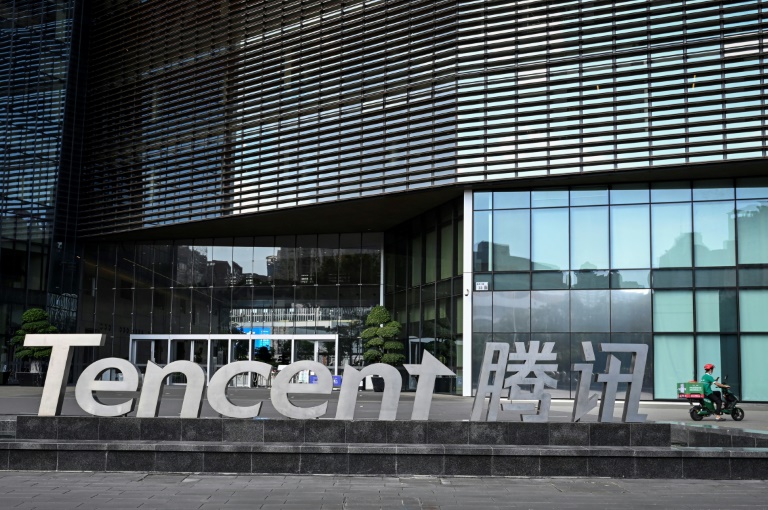
China has granted tech giant Tencent its first licence for a video game in 18 months, ending a dry spell that had threatened its position as the world’s top game maker.

Beijing moved against the country’s vibrant gaming sector last year as part of a sprawling crackdown on big tech companies, including a cap on the amount of time children could spend playing games.

Officials also froze approvals of new titles for nine months until April.

China’s gaming regulator, the National Press and Publication Administration, on Thursday said it had approved 70 new titles in November including Tencent’s action game “Metal Slug: Awakening” and a role-playing game “Journey to the West: Return” by rival NetEase.

Licences are mandatory for video games to be published and sold in the Chinese market.

The last time Tencent obtained a major licence was in May 2021.

A Tencent subsidiary received a licence in September but it was for a free educational game.

Shares in the Hong Kong-listed company closed up more than 0.5 percent on Friday after the licensing announcement, while NetEase gained more than 3.6 percent.

The approval signals a relaxing of China’s strict attitude towards tech companies.

During the crackdown, hundreds of game makers pledged to scrub “politically harmful” content from their products and enforce curbs on underage players to comply with government demands.

Restrictions announced last year allow players under the age of 18 to play for three hours a week.

Sweden confirms Nord Stream pipeline sabotage: prosecutor

Swedish officials confirmed Friday that the September blasts which destroyed sections of the Nord Stream pipelines carrying natural gas from Russia to Germany under the Baltic Sea were acts of sabotage.

“The analyses conducted found traces of explosives on several foreign objects” found at the sites of the blasts, prosecutor Mats Ljungqvist who is leading the preliminary investigation said in a statement.

Ljungqvist added that technical analyses were continuing in order to “draw more reliable conclusions regarding the incident.”

Sweden’s Prosecution Authority said that the “continued investigation will show if anyone can be formally suspected of a crime.”

Four large gas leaks were discovered on Nord Stream’s two pipelines off the Danish island of Bornholm at the end of September, with seismic institutes recording two underwater explosions just prior.

Investigators had already said that preliminary inspections had reinforced suspicions of sabotage.

While the leaks were in international waters, two of them were in the Danish exclusive economic zone and two of them in Sweden’s.

At the end of October, Nord Stream sent a Russian-flagged civilian vessel to inspect the damage in the Swedish zone.

The pipelines, which connect Russia to Germany, have been at the centre of geopolitical tensions as Russia cut gas supplies to Europe in suspected retaliation to Western sanctions over Moscow’s invasion of Ukraine.

Although the pipelines were not in operation when the leaks occurred, they both still contained gas which spewed up through the water and into the atmosphere.

Washington and Moscow have both denied any involvement and each has pointed the finger at the other.

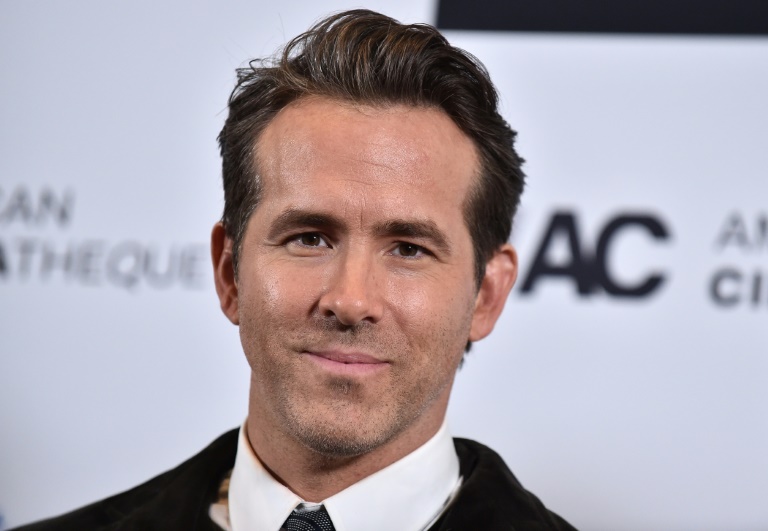
Superhero turned soccer club owner Ryan Reynolds honored by Hollywood

From subversive superheroes to sports documentaries, Hollywood A-lister Ryan Reynolds said he is focused on exploring new forms of storytelling, as he received a prestigious film industry honor.

The star of comic-book movies such as “Deadpool” and “Green Lantern” made headlines last year when he bought lowly Welsh soccer team Wrexham, along with fellow actor Rob McElhenney.

Their takeover and the fifth-tier team’s subsequent bid for promotion was the subject of hit docuseries “Welcome to Wrexham,” the latest in a booming trend of behind-the-scenes sports documentaries.

Sport “is storytelling happening in real time. So I love applying that to Wrexham,” said Reynolds at a Beverly Hills gala Thursday.

“I’ve fallen in love with not just Wrexham but the people of Wales. I knew I’d be entrenched in the town, I just didn’t know that it would go this deep this quickly.

“It’s been amazing. It’s been truly one of the great privileges of my life.”

While “Welcome to Wrexham” is unusual because its stars and producers took ownership of the club — despite admitting to knowing almost nothing about soccer — sports documentaries more generally have soared in popularity in recent times.

Netflix scored hits with basketball series “The Last Dance” and “Formula 1: Drive to Survive,” while Amazon Prime’s popular “All Or Nothing” franchise offers fans glimpses of what goes on inside elite teams.

“We live in a world that moves incredibly fast. If you can move at the speed of what people are talking about, when they’re talking about it, you can move mountains — and sports is that,” said Reynolds.

Reynolds last week told late-night host Jimmy Fallon he is interested in buying a much larger franchise — the Ottawa Senators of the National Hockey League (NHL).

Asked about the bid at Thursday’s gala, Reynolds teased: “We’ll see.”

– ‘Superheroes and horror’ –

Reynolds received the American Cinematheque Award, a “mid-career achievement” prize given to one star at the event each year. Previous honorees have included Al Pacino, Tom Cruise, and Steven Spielberg.

The actor, who also has extensive business dealings including stakes in a gin brand and a cellphone company, is working on “Deadpool 3,” another installment in his smash-hit, R-rated movie series about a potty-mouthed superhero.

“I think what made ‘Deadpool’ special and the reason I loved it is it subverts the genre,” he said.

“When you can subvert a genre like that, particularly one that is as robust as the superhero genre, you jump at the chance.”

Guests at the glitzy event included Oscar-winning director Ron Howard (“A Beautiful Mind”) who said Reynolds is “proving himself to be a really great all-around storyteller and producer as well as movie star.”

Actor and Wrexham co-owner McElhenney said Reynolds is “incredibly entrepreneurial” and “just looks at the world and business, and our particular business, in a completely different way.”

Jason Blum, the leading horror producer behind hits such as “Get Out” and “Paranormal Activity,” was also honored with a Power of Cinema Award.

Like superhero films, the horror genre has continued to thrive, drawing huge audiences to movie theaters in the age of streaming.

“Superheroes and horror. We’ve got theaters covered!” joked Blum about his fellow honoree.

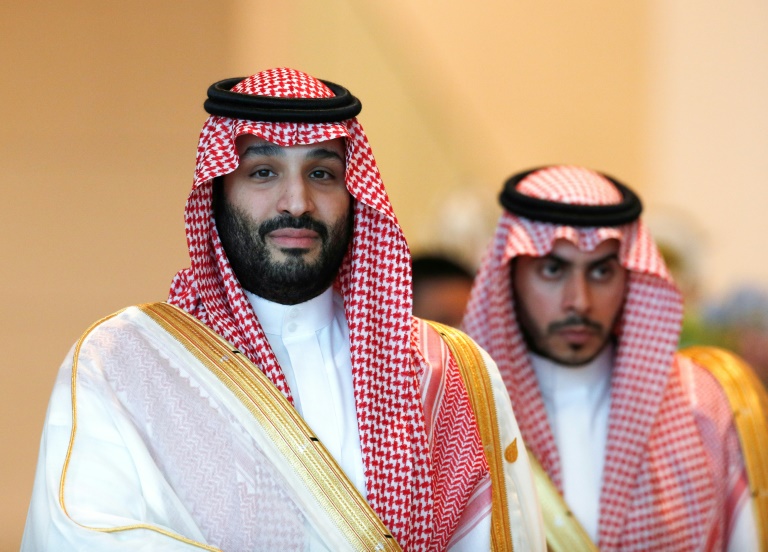
Saudi crown prince immune from Khashoggi suit: US govt

The US government recommended on Thursday that Saudi Crown Prince Mohammed bin Salman was immune from legal action over the 2018 murder of a dissident journalist, according to court documents. 

Prince Mohammed was named prime minister by royal decree in late September, sparking suggestions he was looking to skirt exposure in cases filed in foreign courts — including a civil action brought in the US by Hatice Cengiz, fiancee of slain columnist Jamal Khashoggi.

The killing four years ago of Khashoggi, a Saudi insider-turned-critic, in the kingdom’s Istanbul consulate temporarily turned Prince Mohammed — widely known as MBS — into a pariah in the West.

His lawyers previously argued that he “sits at the apex of Saudi Arabia’s government” and thus qualifies for the kind of immunity US courts afford foreign heads of state and other high-ranking officials.

The US government had until Thursday to offer an opinion on that matter, if it chose to offer one at all. Its recommendation is not binding on the court.

“The United States respectfully informs the Court that Defendant Mohammed bin Salman, the Prime Minister of the Kingdom of Saudi Arabia, is the sitting head of government and, accordingly, is immune from this suit,” read the submission to the US District Court for the District of Columbia, from the administration of President Joe Biden.

But it added that “the Department of State takes no view on the merits of the present suit and reiterates its unequivocal condemnation of the heinous murder of Jamal Khashoggi.”

The recommendation sparked fury among supporters of Cengiz’s action, including representatives of Democracy for the Arab World Now (DAWN), the US-based NGO that Khashoggi founded.

“The Biden admin went out of its way to recommend immunity for MBS and shield him from accountability,” said DAWN’s executive director Sarah Leah Whitson.

“Now that Biden has declared he’s got total impunity, we can expect MBS’s attacks against people in our country to escalate even further.”

Agnes Callamard, secretary general of Amnesty International, called the recommendation a “deep betrayal.”

Prince Mohammed, who has been the kingdom’s de facto ruler for several years, previously served as deputy prime minister as well as defence minister under his father King Salman.

After a period of relative isolation following the Khashoggi killing, he was welcomed back on the world stage this year, notably by President Biden, who travelled to Saudi Arabia in July despite an earlier pledge to make the kingdom a “pariah”.

Thursday’s recommendation gave the leader “a license to kill,” said Khalid al-Jabri, son of Saad al-Jabri, a former Saudi spymaster who has accused the prince of sending a hit squad to try to kill him in Canada.

“After breaking its pledge to punish MBS for Khashoggi’s assassination, the Biden administration has not only shielded MBS from accountability in US courts, but rendered him more dangerous than ever with a license to kill more detractors without consequences,” he said.

Last year, Biden declassified an intelligence report that found Prince Mohammed had approved the operation against Khashoggi, an assertion Saudi authorities deny.

In the civil case, brought by Cengiz and DAWN, the plaintiffs allege that Prince Mohammed and more than 20 co-defendants, “acting in a conspiracy and with premeditation, kidnapped, bound, drugged, tortured, and assassinated” Khashoggi, a columnist with the Washington Post.

They seek punitive monetary damages, as well as to prove that the killing was ordered by “the top of the Saudi leadership hierarchy.”

Asian markets mixed as caution over rate outlook dulls sentiment

Asian markets were mixed Friday as caution permeated trading floors and investors tried to gauge the outlook for Federal Reserve monetary policy after several officials tried to temper optimism over signs that inflation is slowing.

While the week has been broadly positive for equities following softer-than-expected US consumer and wholesale price figures, a strong reading on retail sales and jobless claims showed plenty of resilience to higher interest rates.

With that in mind, St Louis Fed President James Bullard warned more hikes were needed to bring inflation down from four-decade highs, adding that they might need to go as high as seven percent.

That was followed by Minneapolis Fed boss Neel Kaskari saying he had not witnessed much evidence that underlying demand was cooling and did not want to forecast when the tightening would end.

The comments came after a similar message from other policymakers, who have sought to calm markets, which soared in the wake of last Thursday’s consumer prices reading.

They also fuelled fears among traders that the sharp tightening campaign — including four straight bumper 0.75-point increases in a row — would tip the world’s top economy into recession.

On Wednesday, Kansas City Fed chief Esther George said it was unclear how the bank can douse inflation “without having some real slowing” or even a contraction.

“Bullard’s comments are all the more surprising given that there is clear evidence that inflationary pressure is starting to slow more than expected,” said CMC Markets analyst Michael Hewson.

“Consequently, Bullard’’s views may well be a minority view at this point, but it still shows how sensitive markets can be when it comes to the eventual destination of the terminal rate.”

– ‘Fundamental disconnect’ –

Wall Street’s three main indexes ended in the red, and Asia struggled to hold on to the morning’s momentum.

Hong Kong turned negative after a strong start, even as tech firms rallied and after China indicated it would ease back on some of its strict Covid restrictions and help its troubled property sector.

Tokyo, Shanghai, Singapore, Taipei and Mumbai were also down, though Sydney, Seoul, Wellington, Manila, Bangkok and Jakarta edged up.

London, Paris and Frankfurt all rose at the open.

There was a fear among analysts that the recent rally may have run a little ahead of itself.

“The market believes that inflation is on the downtrend. We also believe that, but the fact of inflation having peaked is not a reason for the Fed to turn and cut rates,” Paul Christopher, at Wells Fargo Investment Institute, told Bloomberg Radio.

“That’s the fundamental disconnect that still exists between the Fed and the market.”

And SPI Asset Management’s Stephen Innes added: “Things can turn on a dime, primarily when the fear of missing (out) drives sentiment.

“However, the odds of a pre-Thanksgiving rally are giving way to the hawkish Fed drumbeat and pushback on China reopening plays.”

The pound clawed back some of the losses suffered Thursday after Britain unveiled a budget with 55 billion pounds ($65 billion) of tax hikes and spending cuts that traders fear will deepen a cost-of-living crisis and a recession that could last two years.

– Key figures around 0810 GMT –

Tokyo – Nikkei 225: DOWN 0.1 percent at 27,899.77 (close)

Hong Kong – Hang Seng Index: DOWN 0.3 percent at 17,992.54 (close)

Shanghai – Composite: DOWN 0.6 percent at 3,097.24 (close)

London – FTSE 100: UP 0.4 percent at 7,372.20

Pound/dollar: UP at $1.1910 from $1.1867 on Thursday

Euro/dollar: UP at $1.0373 from $1.0370

Dollar/yen: DOWN at 140.00 yen from 140.20 yen

Euro/pound: DOWN at 87.08 from 87.34 pence

West Texas Intermediate: UP 0.5 percent at $82.01 per barrel

Brent North Sea crude: UP 0.3 percent at $90.01 per barrel

New York – Dow: FLAT at 33,546.32 points (close)

Asian markets mixed as caution over rate outlook dulls sentiment

Asian markets were mixed Friday as caution permeated trading floors and investors tried to gauge the outlook for Federal Reserve monetary policy after several officials tried to temper optimism over signs that inflation is slowing.

While the week has been broadly positive for equities following softer-than-expected US consumer and wholesale price figures, a strong reading on retail sales and jobless claims showed plenty of resilience to higher interest rates.

With that in mind, St Louis Fed President James Bullard warned more hikes were needed to bring inflation down from four-decade highs, adding that they might need to go as high as seven percent.

That was followed by Minneapolis Fed boss Neel Kaskari saying he had not witnessed much evidence that underlying demand was cooling and did not want to forecast when the tightening would end.

The comments came after a similar message from other policymakers, who have sought to calm markets, which soared in the wake of last Thursday’s consumer prices reading.

They also fuelled fears among traders that the sharp tightening campaign — including four straight bumper 0.75-point increases in a row — would tip the world’s top economy into recession.

On Wednesday, Kansas City Fed chief Esther George said it was unclear how the bank can douse inflation “without having some real slowing” or even a contraction.

“Bullard’s comments are all the more surprising given that there is clear evidence that inflationary pressure is starting to slow more than expected,” said CMC Markets analyst Michael Hewson.

“Consequently, Bullard’’s views may well be a minority view at this point, but it still shows how sensitive markets can be when it comes to the eventual destination of the terminal rate.”

– ‘Fundamental disconnect’ –

Wall Street’s three main indexes ended in the red, and Asia struggled to hold on to the morning’s momentum.

Hong Kong turned negative after a strong start, even as tech firms rallied and after China indicated it would ease back on some of its strict Covid restrictions and help its troubled property sector.

Tokyo, Shanghai, Singapore, Taipei and Mumbai were also down, though Sydney, Seoul, Wellington, Manila, Bangkok and Jakarta edged up.

London, Paris and Frankfurt all rose at the open.

There was a fear among analysts that the recent rally may have run a little ahead of itself.

“The market believes that inflation is on the downtrend. We also believe that, but the fact of inflation having peaked is not a reason for the Fed to turn and cut rates,” Paul Christopher, at Wells Fargo Investment Institute, told Bloomberg Radio.

“That’s the fundamental disconnect that still exists between the Fed and the market.”

And SPI Asset Management’s Stephen Innes added: “Things can turn on a dime, primarily when the fear of missing (out) drives sentiment.

“However, the odds of a pre-Thanksgiving rally are giving way to the hawkish Fed drumbeat and pushback on China reopening plays.”

The pound clawed back some of the losses suffered Thursday after Britain unveiled a budget with 55 billion pounds ($65 billion) of tax hikes and spending cuts that traders fear will deepen a cost-of-living crisis and a recession that could last two years.

– Key figures around 0810 GMT –

Tokyo – Nikkei 225: DOWN 0.1 percent at 27,899.77 (close)

Hong Kong – Hang Seng Index: DOWN 0.3 percent at 17,992.54 (close)

Shanghai – Composite: DOWN 0.6 percent at 3,097.24 (close)

London – FTSE 100: UP 0.4 percent at 7,372.20

Pound/dollar: UP at $1.1910 from $1.1867 on Thursday

Euro/dollar: UP at $1.0373 from $1.0370

Dollar/yen: DOWN at 140.00 yen from 140.20 yen

Euro/pound: DOWN at 87.08 from 87.34 pence

West Texas Intermediate: UP 0.5 percent at $82.01 per barrel

Brent North Sea crude: UP 0.3 percent at $90.01 per barrel

New York – Dow: FLAT at 33,546.32 points (close)
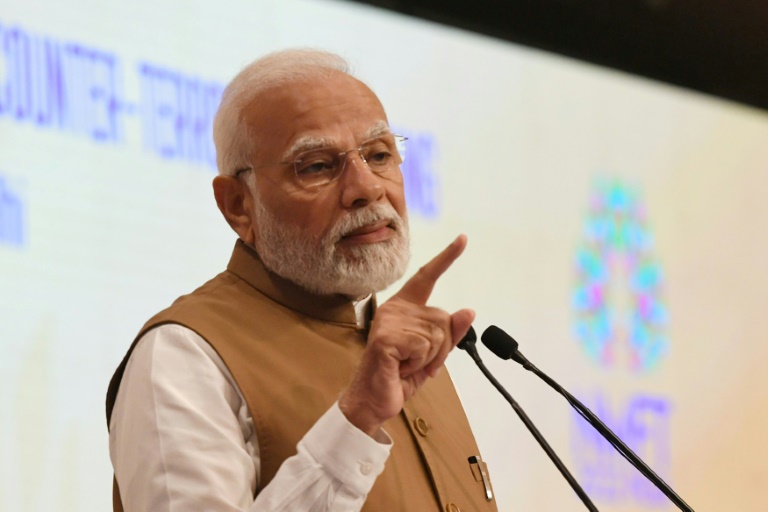
India's Modi says digital currencies being used to fund terror

Digital currencies need more regulation to stamp out funding for terror operations, India’s Prime Minister Narendra Modi said Friday at a major international forum to combat financing of extremist groups.

India has laboured to rein in cryptocurrency transactions after years of phenomenal growth, backed by burgeoning local trading platforms and glitzy celebrity endorsements.

Modi last year said that bitcoin presented a risk to younger generations and could “spoil our youth” if it ended up “in the wrong hands”.

On Friday, he went further and told delegates at the Conference on Countering Financing of Terrorism that “private currencies” posed a grave security risk. 

“New kinds of technology are being used for terror funding and recruitment. Challenges from the dark net, private currencies and more are emerging,” Modi said. 

“There is a need for a uniform understanding for new finance technologies,” he added. 

“From a uniform understanding, a unified system of checks and balances and regulation can emerge.”

Delegates from dozens of countries are in the capital New Delhi for the two-day conference, which follows a special session of the UN’s Counter Terrorism Committee held in India last month.

Cryptocurrencies have been under the scrutiny of Indian regulators since first entering the local market nearly a decade ago, with a surge in fraudulent transactions leading to a central bank ban in 2018.

India’s Supreme Court lifted the restrictions two years later and the market surged, growing by nearly 650 percent in the year to June 2021 — second only to Vietnam, according to research by Chainalysis.

The government also proposed banning “all private cryptocurrencies”, but ultimately held back and later taxed profits from “private currencies” at 30 percent.

Globally, the crypto market has been thrown into upheaval by this month’s collapse of FTX, a major exchange used for digital transactions. 

Once valued at $32 billion, FTX filed for bankruptcy last week.

Its downfall sent major cryptocurrencies plunging and further undermined investor confidence in the young and turbulent sector.

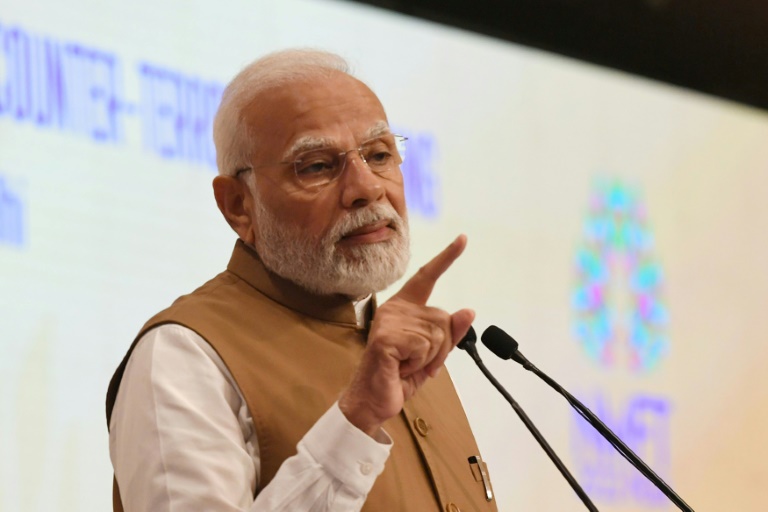
India's Modi says digital currencies being used to fund terror

Digital currencies need more regulation to stamp out funding for terror operations, India’s Prime Minister Narendra Modi said Friday at a major international forum to combat financing of extremist groups.

India has laboured to rein in cryptocurrency transactions after years of phenomenal growth, backed by burgeoning local trading platforms and glitzy celebrity endorsements.

Modi last year said that bitcoin presented a risk to younger generations and could “spoil our youth” if it ended up “in the wrong hands”.

On Friday, he went further and told delegates at the Conference on Countering Financing of Terrorism that “private currencies” posed a grave security risk. 

“New kinds of technology are being used for terror funding and recruitment. Challenges from the dark net, private currencies and more are emerging,” Modi said. 

“There is a need for a uniform understanding for new finance technologies,” he added. 

“From a uniform understanding, a unified system of checks and balances and regulation can emerge.”

Delegates from dozens of countries are in the capital New Delhi for the two-day conference, which follows a special session of the UN’s Counter Terrorism Committee held in India last month.

Cryptocurrencies have been under the scrutiny of Indian regulators since first entering the local market nearly a decade ago, with a surge in fraudulent transactions leading to a central bank ban in 2018.

India’s Supreme Court lifted the restrictions two years later and the market surged, growing by nearly 650 percent in the year to June 2021 — second only to Vietnam, according to research by Chainalysis.

The government also proposed banning “all private cryptocurrencies”, but ultimately held back and later taxed profits from “private currencies” at 30 percent.

Globally, the crypto market has been thrown into upheaval by this month’s collapse of FTX, a major exchange used for digital transactions. 

Once valued at $32 billion, FTX filed for bankruptcy last week.

Its downfall sent major cryptocurrencies plunging and further undermined investor confidence in the young and turbulent sector.

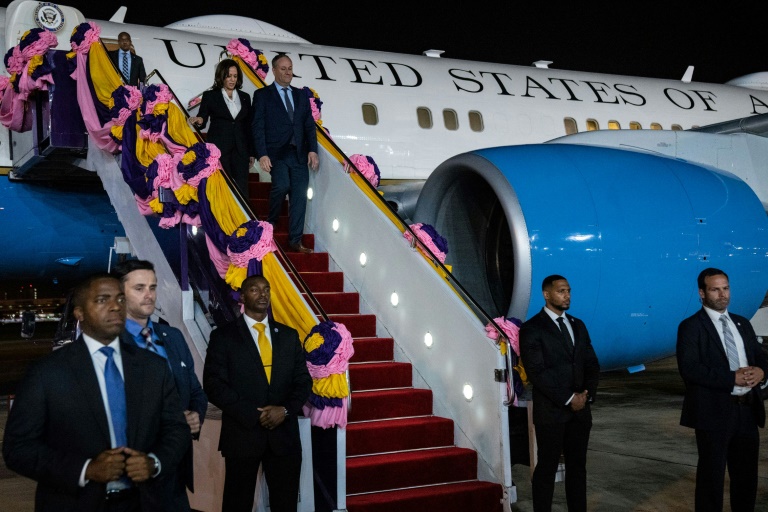
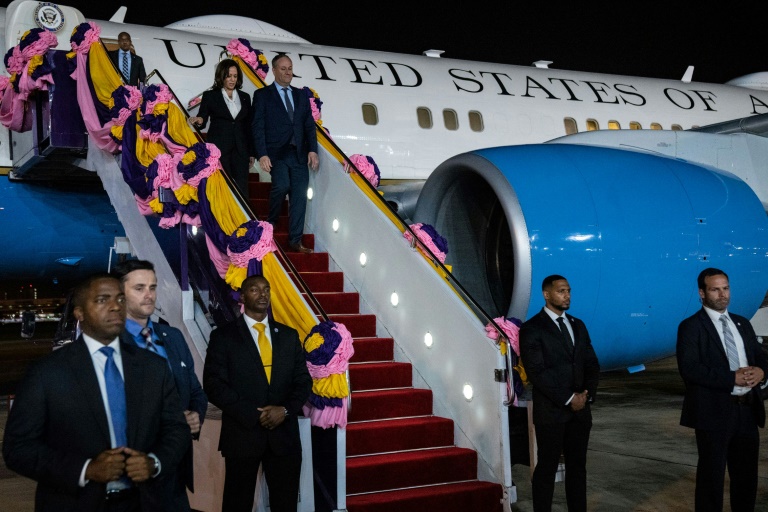
VP Harris tells Asia the US is 'here to stay'

Vice President Kamala Harris told Asian leaders on Friday that the United States is committed to the region for the long haul, rejecting doubts about its engagement as China expands its clout.

Addressing a summit in Bangkok, Harris called the United States a “proud Pacific power” and said that the longstanding US network of security alliances has allowed Asia to prosper.

“The United States is here to stay,” Harris told business leaders on the sidelines of the Asia-Pacific Economic Cooperation (APEC) summit, also attended by Chinese President Xi Jinping.

“Our message is clear: The United States has an enduring economic commitment to the Indo-Pacific, one that is measured not in years, but in decades and generations,” she said, using the preferred US term for the Asia-Pacific region.

President Joe Biden’s administration has focused on rallying behind allies and Harris will head from Thailand to the Philippines, where she will visit an island near waters increasingly contested by Beijing.

While the United States has taken a firm tone on China, some Asian officials have questioned the level of US economic engagement.

Biden has largely followed his predecessor Donald Trump in turning the page on the era of free-trade agreements, seeing them as unpopular among working-class US voters.

Harris insisted that economic partnerships in Asia were “a top priority” for the Biden administration and pointed out that the US private sector invests around $1 trillion a year in the region.

“America is a strong partner to the economies and companies of this region because America is and will remain a major engine of global growth, reinforced by our administration’s approach,” she said.

She said that goal had bipartisan support, with Washington set for greater gridlock after the rival Republican Party won control of the House of Representatives in elections last week.

Biden on a trip to Tokyo earlier this year launched the Indo-Pacific Economic Framework, which brings together countries to set common standards on technology and trade in the face of China’s rapid advances but stops short of lifting tariffs like a traditional free-trade deal.

“We are all feeling the discomfort and the anxiety of the global economy today,” US Trade Representative Katherine Tai told reporters Thursday.

“We need different outcomes, and that means that we also need to be innovating in how we engage each other in trade and economics and across the board,” she said.

Despite US vows of engagement, Biden skipped the APEC summit to attend his granddaughter’s wedding at the White House on Saturday.

He attended two other summits in Asia over the past week, however, in Cambodia and Indonesia.

VP Harris tells Asia the US is 'here to stay'

Vice President Kamala Harris told Asian leaders on Friday that the United States is committed to the region for the long haul, rejecting doubts about its engagement as China expands its clout.

Addressing a summit in Bangkok, Harris called the United States a “proud Pacific power” and said that the longstanding US network of security alliances has allowed Asia to prosper.

“The United States is here to stay,” Harris told business leaders on the sidelines of the Asia-Pacific Economic Cooperation (APEC) summit, also attended by Chinese President Xi Jinping.

“Our message is clear: The United States has an enduring economic commitment to the Indo-Pacific, one that is measured not in years, but in decades and generations,” she said, using the preferred US term for the Asia-Pacific region.

President Joe Biden’s administration has focused on rallying behind allies and Harris will head from Thailand to the Philippines, where she will visit an island near waters increasingly contested by Beijing.

While the United States has taken a firm tone on China, some Asian officials have questioned the level of US economic engagement.

Biden has largely followed his predecessor Donald Trump in turning the page on the era of free-trade agreements, seeing them as unpopular among working-class US voters.

Harris insisted that economic partnerships in Asia were “a top priority” for the Biden administration and pointed out that the US private sector invests around $1 trillion a year in the region.

“America is a strong partner to the economies and companies of this region because America is and will remain a major engine of global growth, reinforced by our administration’s approach,” she said.

She said that goal had bipartisan support, with Washington set for greater gridlock after the rival Republican Party won control of the House of Representatives in elections last week.

Biden on a trip to Tokyo earlier this year launched the Indo-Pacific Economic Framework, which brings together countries to set common standards on technology and trade in the face of China’s rapid advances but stops short of lifting tariffs like a traditional free-trade deal.

“We are all feeling the discomfort and the anxiety of the global economy today,” US Trade Representative Katherine Tai told reporters Thursday.

“We need different outcomes, and that means that we also need to be innovating in how we engage each other in trade and economics and across the board,” she said.

Despite US vows of engagement, Biden skipped the APEC summit to attend his granddaughter’s wedding at the White House on Saturday.

He attended two other summits in Asia over the past week, however, in Cambodia and Indonesia.

Close Bitnami banner
Bitnami