AFP

Trump poised to launch 2024 comeback bid

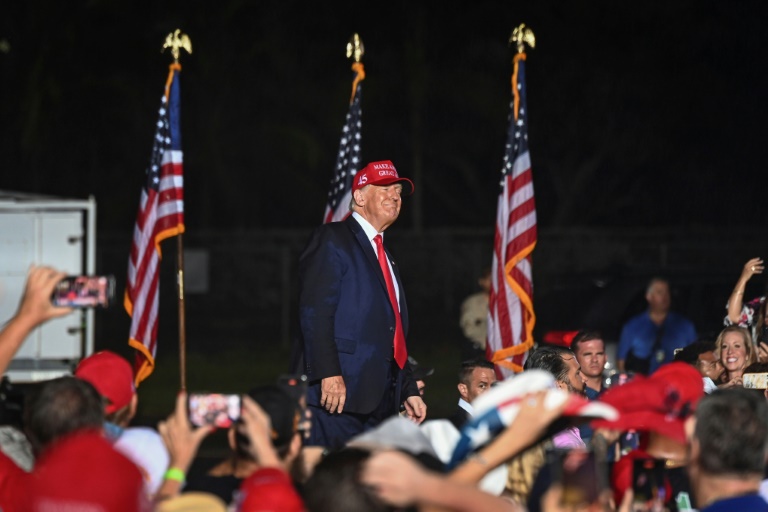
Former US president Donald Trump is expected to officially launch another White House bid on Tuesday, refusing calls from within his own Republican party to fade away after his loyalists underperformed in this year’s midterm elections.

The 76-year-old billionaire, whose 2016 win shocked America and the world, has summoned the press to his Florida mansion for a “very big announcement” at 9:00 pm Tuesday (0200 GMT Wednesday).

“President Trump is going to announce on Tuesday that he’s running for president,” said one of his advisors, Jason Miller, who predicts the speech will be “very professional, very buttoned up.”

Known for his unpredictability, Trump could still change his mind at the last minute, but for months he has barely hidden his desire to vie for the presidency again in 2024.

And delaying the announcement now, as some of his advisors have reportedly suggested to him, would be highly awkward considering Trump’s boast that it would “perhaps be the most important speech given in the history of the USA.”

– ‘Red wave’ crashes –

A 2024 White House bid would be Trump’s third presidential campaign and — if he wins his party’s nomination — the fifth national election with him as the Republican Party standard-bearer.

In 2016, Trump and the Republicans swept into power, taking control of the White House and maintaining their majorities in both chambers of Congress.

But Democrats won back the House of Representatives in a 2018 landslide after campaigning largely against Trump’s caustic style.

Trump then lost reelection in 2020 to Democrat Joe Biden — Trump still refuses to accept defeat — while Democrats won control of the 100-seat Senate with a de-facto majority due to Vice President Kamala Harris’s tie-breaking vote in the chamber split 50-50.

After leaving Washington in chaos shortly after his partisans stormed the US Capitol, Trump chose to remain in the political arena, continuing to fundraise and hold rallies around the country.

Leading up to the 2022 midterm vote, in which Biden’s Democrats had been expected to lose handily, Trump made denial of the 2020 election results a key litmus test for candidates to win his influential political endorsement.

But the predicted Republican “red wave” failed to materialize, and Democrats will maintain their control of the Senate. In the still-undecided House, Republicans seem likely to eke out only a razor-thin majority.

The results have emboldened Trump’s Republican detractors and sapped most of his political momentum heading into the Tuesday campaign launch.

– ‘Three strikes’ –

“It’s basically the third election in a row that Donald Trump has cost us the race, and it’s like, three strikes and you’re out,” said Maryland Governor Larry Hogan, a vocal Trump critic, Sunday on CNN.

Trump’s response has been to double down on unfounded claims of ballot rigging in the midterms, posting on his Truth Social platform that the results were a “scam” — and pointing a finger of blame at Senate Republican leader Mitch McConnell.

“It’s Mitch McConnell’s fault,” he posted, saying the Kentuckian had badly allocated campaign funds and pursued a flawed legislative agenda. 

“He blew the Midterms, and everyone despises him,” said Trump, who has long been at loggerheads with McConnell.

Tuesday’s announcement is widely seen as a way to take the wind out of the sails of potential Republican rivals, namely Ron DeSantis, the freshly-reelected Florida governor and rising star who has also won the backing of Rupert Murdoch’s conservative media empire.

The speech is also set for the day that another possible 2024 rival — former vice president Mike Pence — publishes his memoirs recounting the pressure Trump laid on him to overturn the last election. 

Trump’s new White House pursuit will be hampered by the multiple investigations into his conduct before, during and after the presidency — which could result in his disqualification.

Those include allegations of fraud by his family business, his role in last year’s January 6 attack on the US Capitol and his handling of classified documents at his private Florida home, which was raided by the FBI in August.

But the former president is no stranger to scandal and has even survived two impeachments due to his continued Republican support in Congress.

The 2024 election could yet prove to be a repeat of 2020, with Biden reaffirming on Wednesday that he intends to stand for reelection.

But despite the strong midterm results, some in Biden’s own camp would clearly prefer him to sit out, due to his age and unpopularity. Biden, 80, said he will make a final decision next year.

cjc/des/dw/ec
Seven killed as violence strikes two US universities

Seven university students were dead and at least one gunman was on the run Monday following weekend violence that struck two US campuses in the states of Idaho and Virginia, authorities said.

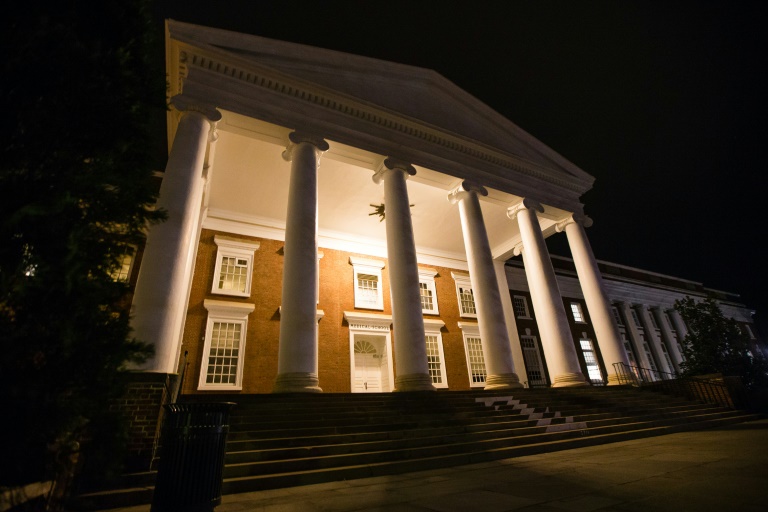
Police were hunting for the student suspect in a shooting that left three people dead and two others wounded at the University of Virginia about 100 miles (160 kilometers) southwest of the nation’s capital Washington.

The campus in Charlottesville, Virginia was locked down early Monday while helicopters and police searched for a man considered to be “armed and dangerous,” the UVA Office of Emergency Management tweeted.

A student at the university identified as Christopher Darnell Jones Jr was suspected to have carried out the shooting on campus Sunday night, UVA president Jim Ryan said in a statement.

“This is a traumatic incident for everyone in our community, and we have cancelled classes for today,” Ryan said.

Counseling and psychological support would be made available to students and faculty, he said.

Virginia Governor Glenn Youngkin said state officers were coordinating with the campus police department and local authorities.

“Please shelter in place while the authorities work to locate the suspect,” he wrote on Twitter.

More than 2,000 miles to the west in the Rocky Mountain state of Idaho, police were investigating a separate incident in which four students were found dead Sunday in a home near the University of Idaho campus, believed to be the “victims of homicide.”

Officers responded to a call in the town of Moscow, near the University of Idaho, about an unconscious individual.

“Upon arrival, officers discovered four individuals who were deceased,” police said in a statement.

“It is with deep sadness that I share with you that the university was notified today of the death of four University of Idaho students living off-campus believed to be victims of homicide,” University of Idaho president Scott Green said in a statement.

Meanwhile near Michigan’s largest city Detroit, police were scouring Oakland University early Monday “to pursue two armed suspects on campus,” the school said in a Twitter statement as they urged students and faculty to stay away.

School shootings are alarmingly common as part of a broader wave of gun violence in the United States, where the proliferation of firearms has skyrocketed in recent years.

In May an 18-year-old gunman in Uvalde, Texas burst into Robb Elementary School and killed 19 students and two teachers, in an attack that shocked the nation and renewed calls for gun reform.

In 2007, Virginia Tech became the scene of the worst school shooting on record in the United States when a 23-year-old student killed 32 students and faculty members before committing suicide.

After Sunday’s UVA shooting, US Senator Tim Kaine of Virginia said he was “heartbroken to hear of another Virginia community devastated by gun violence.”

Stocks mostly rise, dollar up with focus on China, US

Stock markets mostly rose Monday after last week’s global surge, helped by China’s loosening of Covid rules and plans to help its property sector.

The dollar advanced against major rivals as traders urged caution over expectations that the Federal Reserve would pull back from massive US interest hikes as inflation cools in the world’s biggest economy.

Presidents Joe Biden and Xi Jinping meanwhile voiced hope Monday that the United States and China can manage growing differences and avoid conflict as they met for the first time in more than three years.

“The burst of euphoria which erupted… at the end of last week is ebbing away after fresh warnings that the fight against inflation is still a hard slog yet to be won,” noted Susannah Streeter, senior investment and markets analyst at Hargreaves Lansdown.

Sentiment won a lift from China, which is relaxing some of its strict Covid-19 restrictions that have hammered growth in the world’s second largest economy.

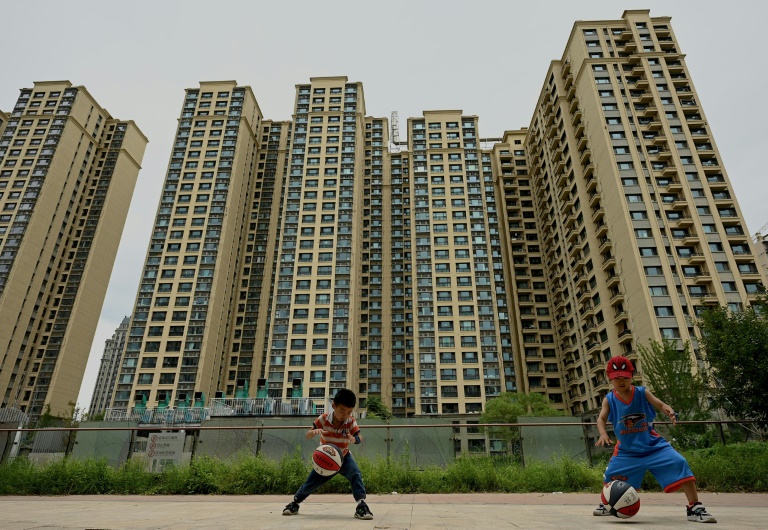
Authorities have also reportedly unveiled a 16-point plan to support the beleaguered property sector, a major component of the country’s economic engine.

The industry has come under immense pressure since China imposed a number of restrictions in 2020 aimed at reeling in debt as major developers teetered on the brink of collapse.

The latest moves indicate that China’s leadership is beginning to focus on supporting the economy, a crucial driver of global growth, according to analysts.

Nomura’s Lu Ting warned, however, that the “measures may have little direct impact on stimulating home purchases”.

Hong Kong’s stock exchange ended more than one percent higher Monday — having soared over seven percent Friday.

Property firms were the best performers with Country Garden leading the way with a massive 40-percent jump.

– Key figures around 1200 GMT –

London – FTSE 100: UP 0.3 percent at 7,336.45 points

Frankfurt – DAX: UP 0.4 percent at 14,279.75

Paris – CAC 40: UP 0.3 percent at 6,612.61

EURO STOXX 50: UP 0.3 percent at 3,880.51

Tokyo – Nikkei 225: DOWN 1.1 percent at 27,963.47 (close)

Hong Kong – Hang Seng Index: UP 1.7 percent at 17,619.71 (close)

Shanghai – Composite: DOWN 0.1 percent at 3,083.40 (close)

New York – Dow: UP 0.1 percent at 33,747.86 (close)

Euro/dollar: DOWN at $1.0280 from $1.0361 on Friday

Pound/dollar: DOWN at $1.1779 from $1.1839 

Dollar/yen: UP at 139.52 yen from 138.70 yen

Euro/pound: DOWN at 87.33 pence from 87.49 pence

West Texas Intermediate: DOWN 1.3 percent at $87.82 per barrel

Brent North Sea crude: DOWN 1.0 percent at $94.99 per barrel

Stocks mostly rise, dollar up with focus on China, US

Stock markets mostly rose Monday after last week’s global surge, helped by China’s loosening of Covid rules and plans to help its property sector.

The dollar advanced against major rivals as traders urged caution over expectations that the Federal Reserve would pull back from massive US interest hikes as inflation cools in the world’s biggest economy.

Presidents Joe Biden and Xi Jinping meanwhile voiced hope Monday that the United States and China can manage growing differences and avoid conflict as they met for the first time in more than three years.

“The burst of euphoria which erupted… at the end of last week is ebbing away after fresh warnings that the fight against inflation is still a hard slog yet to be won,” noted Susannah Streeter, senior investment and markets analyst at Hargreaves Lansdown.

Sentiment won a lift from China, which is relaxing some of its strict Covid-19 restrictions that have hammered growth in the world’s second largest economy.

Authorities have also reportedly unveiled a 16-point plan to support the beleaguered property sector, a major component of the country’s economic engine.

The industry has come under immense pressure since China imposed a number of restrictions in 2020 aimed at reeling in debt as major developers teetered on the brink of collapse.

The latest moves indicate that China’s leadership is beginning to focus on supporting the economy, a crucial driver of global growth, according to analysts.

Nomura’s Lu Ting warned, however, that the “measures may have little direct impact on stimulating home purchases”.

Hong Kong’s stock exchange ended more than one percent higher Monday — having soared over seven percent Friday.

Property firms were the best performers with Country Garden leading the way with a massive 40-percent jump.

– Key figures around 1200 GMT –

London – FTSE 100: UP 0.3 percent at 7,336.45 points

Frankfurt – DAX: UP 0.4 percent at 14,279.75

Paris – CAC 40: UP 0.3 percent at 6,612.61

EURO STOXX 50: UP 0.3 percent at 3,880.51

Tokyo – Nikkei 225: DOWN 1.1 percent at 27,963.47 (close)

Hong Kong – Hang Seng Index: UP 1.7 percent at 17,619.71 (close)

Shanghai – Composite: DOWN 0.1 percent at 3,083.40 (close)

New York – Dow: UP 0.1 percent at 33,747.86 (close)

Euro/dollar: DOWN at $1.0280 from $1.0361 on Friday

Pound/dollar: DOWN at $1.1779 from $1.1839 

Dollar/yen: UP at 139.52 yen from 138.70 yen

Euro/pound: DOWN at 87.33 pence from 87.49 pence

West Texas Intermediate: DOWN 1.3 percent at $87.82 per barrel

Brent North Sea crude: DOWN 1.0 percent at $94.99 per barrel

Sri Lanka govt takes over $1.7 bn in debt owed to China

Crisis-hit Sri Lanka said Monday it would take responsibility for $1.7 billion owed to China by state enterprises as it seeks to sell them off and restructure its foreign debt to secure an IMF bailout.

The government of President Ranil Wickremesinghe is in talks with the Washington-based lender as it seeks funding to enable the island to recover from its worst-ever financial crisis.

His predecessor Gotabaya Rajapaksa was forced to flee the country and resign after demonstrators overran his house following months of protests over the unprecedented economic hardships faced by the 22 million population.

Sri Lanka defaulted on its foreign debt in April and the IMF has said its borrowings must be “sustainable” to unlock any new external funding.

That will require its creditors to take a haircut on their loans, but China is its biggest lender and Beijing has given no indication it is willing to do so.

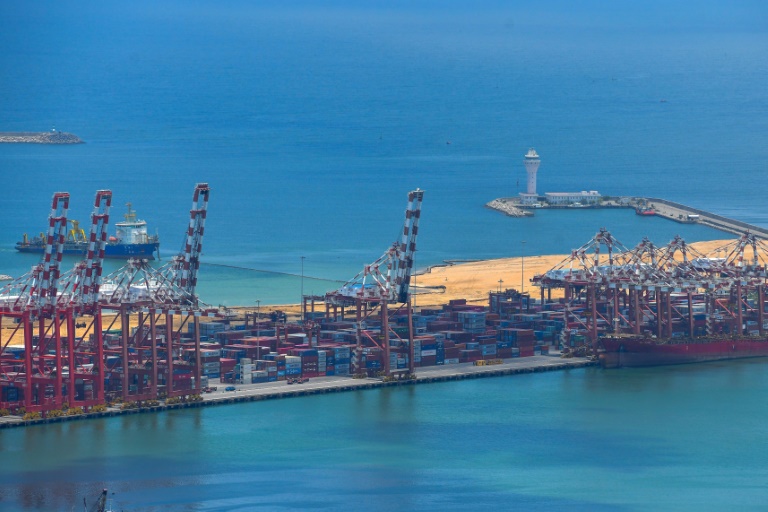
Wickremesinghe said $1.7 billion in loans taken from China’s Export-Import Bank by three key loss-making state-owned enterprises (SOE) — the electricity utility, Port Authority, and Airport and Aviation Services — would be considered government debt.

Taking the loans off their books will strengthen their balance sheets, which could make them more attractive to buyers or outside investors.

The IMF has said the country should also restructure its loss-making state enterprises.

Wickremesinghe, who is also the finance minister, signalled the selling-off of five state-owned companies, including the national carrier SriLankan Airlines — which has debts of more than $1 billion — to reduce the strain on the national budget.

Proceeds from the “restructure” of the companies will be used to boost the country’s depleted foreign reserves, he said, without giving estimates.

“A glimmer of hope on emerging from the economic abyss is currently visible,” Wickremesinghe told parliament as he presented his first full budget in the legislature.

“After the era of waiting in queues for days and protesting in various occupied places, our sufferings have been eased to some extent and we have reached an era where our peace of mind is much settled.”

He said bailout talks with the International Monetary Fund were on track and hoped for a deal with lenders.

“We are confident that these discussions will lead to positive outcomes,” he added.

The government revised its external debt figure down from $51 billion to $46 billion. 

Just over $14 billion of that is bilateral debt owed to foreign governments, of which China holds 52 percent.

Wickremesinghe, a six-times prime minister, has sharply raised taxes and increased fuel, water and electricity tariffs and rationed petrol and diesel since coming to power in July.

Sri Lanka govt takes over $1.7 bn in debt owed to China

Crisis-hit Sri Lanka said Monday it would take responsibility for $1.7 billion owed to China by state enterprises as it seeks to sell them off and restructure its foreign debt to secure an IMF bailout.

The government of President Ranil Wickremesinghe is in talks with the Washington-based lender as it seeks funding to enable the island to recover from its worst-ever financial crisis.

His predecessor Gotabaya Rajapaksa was forced to flee the country and resign after demonstrators overran his house following months of protests over the unprecedented economic hardships faced by the 22 million population.

Sri Lanka defaulted on its foreign debt in April and the IMF has said its borrowings must be “sustainable” to unlock any new external funding.

That will require its creditors to take a haircut on their loans, but China is its biggest lender and Beijing has given no indication it is willing to do so.

Wickremesinghe said $1.7 billion in loans taken from China’s Export-Import Bank by three key loss-making state-owned enterprises (SOE) — the electricity utility, Port Authority, and Airport and Aviation Services — would be considered government debt.

Taking the loans off their books will strengthen their balance sheets, which could make them more attractive to buyers or outside investors.

The IMF has said the country should also restructure its loss-making state enterprises.

Wickremesinghe, who is also the finance minister, signalled the selling-off of five state-owned companies, including the national carrier SriLankan Airlines — which has debts of more than $1 billion — to reduce the strain on the national budget.

Proceeds from the “restructure” of the companies will be used to boost the country’s depleted foreign reserves, he said, without giving estimates.

“A glimmer of hope on emerging from the economic abyss is currently visible,” Wickremesinghe told parliament as he presented his first full budget in the legislature.

“After the era of waiting in queues for days and protesting in various occupied places, our sufferings have been eased to some extent and we have reached an era where our peace of mind is much settled.”

He said bailout talks with the International Monetary Fund were on track and hoped for a deal with lenders.

“We are confident that these discussions will lead to positive outcomes,” he added.

The government revised its external debt figure down from $51 billion to $46 billion. 

Just over $14 billion of that is bilateral debt owed to foreign governments, of which China holds 52 percent.

Wickremesinghe, a six-times prime minister, has sharply raised taxes and increased fuel, water and electricity tariffs and rationed petrol and diesel since coming to power in July.

Vuitton heir's apartment burgled in Paris

The Paris home of an heir of the Louis Vuitton luxury empire was burgled at the weekend, sources close to the case said Monday, with thieves taking high-end watches, jewelry and bags.

Benoit-Louis Vuitton, a sixth generation descendant of the fashion house’s founder, lives in the swanky seventh district of the capital near the Invalides military museum.

The exact value of the pieces taken was still being evaluated, but they are worth at least several hundreds of thousands of euros (dollars), the sources said.

An investigation is underway, the Paris prosecutors’ office said, with the capital’s anti-gang unit handling the case.

The Actu17 website, which first broke the news, put the value of the bounty at several million euros.

The burglary happened overnight Sunday to Monday, when the apartment was empty, it said, adding that some of the bags taken were “hugely valuable prototypes”.

Louis Vuitton, who founded his namesake luxury house in 1854 by making trunks, died aged 70 in 1892.

In 1987, the company merged with champagne maker Moet et Chandon and cognac brand Hennessy to create LVMH, which is now the world’s biggest luxury company, grouping 75 brands and employing 175,000 people.

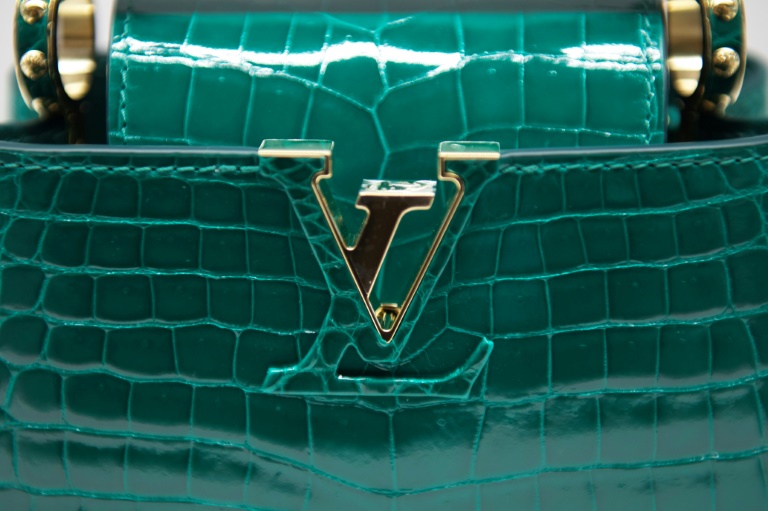
Louis Vuitton bags, with the famous “LV” monogram, are among the world’s most prestigious fashion items and often copied by counterfeiters.

Last week, fake Louis Vuitton bags were among nearly one million euros’ worth of knock-offs police found in a raid on a clandestine outlet near Paris.

In September, a group of armed robbers stole 300 Louis Vuitton bags from a sub-contractor working for the company, with their retail value estimated at several hundreds of thousands of euros. 

Zelensky visits Ukraine's Kherson after Russian retreat

President Volodymyr Zelensky on Monday visited the newly liberated city of Kherson in southern Ukraine after Russian forces retreated from the strategic hub near the Black Sea.

The Ukrainian presidency distributed images of him singing the national anthem, holding his hand over his chest as the country’s blue and yellow flag was hoisted next to the city’s main administrative building.

Russian President Vladimir Putin’s spokesman denied, however, that the Ukrainian leader’s visit had any impact on the status of the Kherson region, which Moscow formally annexed into Russia at a ceremony last month.

“It’s important to be here,” Zelensky told reporters in the city as his office released images of him meeting Kherson residents and military officials.

“We should speak here… support the people so that they feel that we are not just talking, not just making promises but really returning and really raising our flag,” he added.

Late Sunday, Zelensky said Ukrainian forces found evidence of hundreds of new “war crimes” carried out by Russian occupiers in Kherson.

His subsequent visit came just days after Ukrainian troops entered the city — the Kherson region’s administrative centre — after Russia pulled back its forces on Friday.

– Kremlin dismissive –

The takeover by Ukrainian troops is the latest in a string of setbacks for the Kremlin, which invaded Ukraine on February 24 hoping for a lightning takeover and to topple the government in days.

But Russian troops failed to capture the capital Kyiv and have since been pushed back from large portions of territory in the south and east.

Ukrainians in the liberated city expressed relief at the end of months of occupation.

“I am extremely happy we’re finally free,” Andriy, 33, a philosophy student, told AFP.

“We have no electricity in the city, no water, no central heating, no mobile signal, no internet connection — but we have no Russians,” he said.

The city of Kherson was the first major urban hub to fall to Russian forces and the only regional capital Moscow’s troops gained control over.

Its recapture opens a gateway for Ukraine to the entire Kherson region, with access to both the Black Sea in the west and the Sea of Azov in the east.

The region was one of four that the Kremlin announced in September were annexed and part of Russia. Russian President Vladimir Putin vowed to use all available means to defend them from Ukrainian forces. 

Kremlin spokesman Dmitry Peskov said Monday he would not comment on Zelensky’s visit to Kherson but added: “this territory is part of the Russian Federation.”

– ‘Very scared’ –

A self-described partisan in Kherson told AFP after the Russian withdrawal that he and his friends had spent months walking the streets observing the Russians’ every move.

“You watch closely and then come home and write it all down. And then you send the information and hide absolutely everything — phones, papers, clothes, everything,” 19-year-old aspiring musician named Volodymyr Timor said.

“We reported everything — where their equipment and ammunition sites were, where they slept and where they went out drinking,” Timor said.

Ukraine’s forces could then use the coordinates to target strikes during a counteroffensive that has seen Russia cede roughly half the land it seized in the first weeks of war.

“I was scared,” the imposing but soft-spoken guitarist said of the prospect of being caught and possibly killed.

“Believe me, I was very scared.”

Elsewhere, Ukraine’s forces were posting gains in the eastern region of Lugansk, the military and local officials said Monday.

The eastern industrial region has been held by Russian-supported separatists since 2014 but Kyiv’s forces have slowly been clawing back territory there.

“Twelve towns and villages have been liberated by the Armed Forces of Ukraine from the occupiers in the Lugansk region,” the regional governor announced on social media without specifying when the towns had been captured.

Biden, Xi seek to avoid conflict at first US-China summit in years

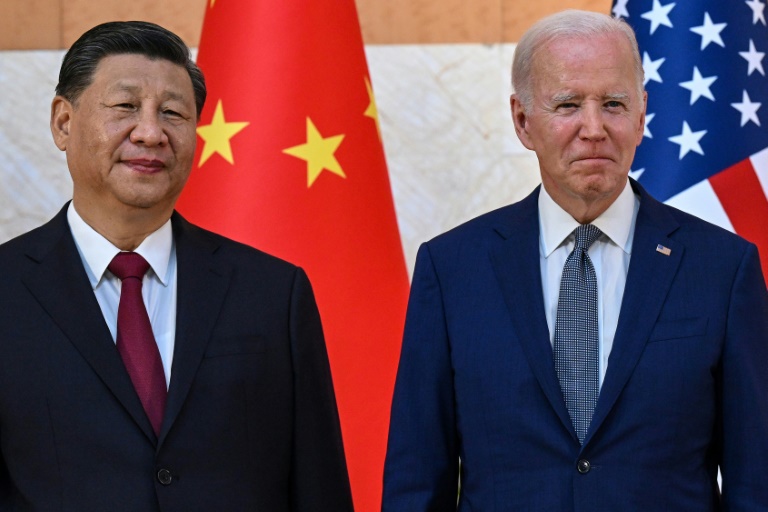
Presidents Joe Biden and Xi Jinping voiced hope Monday that the United States and China can manage growing differences and avoid conflict as they met for the first time in more than three years.

Xi and Biden shook hands in front of the two nations’ flags before starting a long-awaited sit down on the Indonesian resort of Bali ahead of a Group of 20 summit, following months of tension over Taiwan and other issues.

Biden, sitting across from Xi at facing tables, said that Beijing and Washington “share responsibility” to show the world that they can “manage our differences, prevent competition from becoming conflict.”

Xi, China’s most powerful leader in decades who is fresh from securing a norm-breaking third term, told Biden that the world has “come to a crossroads”.

“The world expects that China and the United States will properly handle the relationship,” Xi told him.

Despite the upbeat public statements, both nations are increasingly suspicious of each other, with the United States fearing that China has stepped up a timeline for seizing Taiwan.

US officials said ahead of the meeting that Biden hoped to set up “guardrails” in the relationship with China and to assess how to avoid “red lines” that could push the world’s two largest economies into conflict. 

The most sensitive issue is Taiwan, the self-governing democracy claimed by China.

The United States has been stepping up support for Taiwan, while China has ramped up its threats to seize control of the island. After House Speaker Nancy Pelosi visited Taipei in August, China reacted by staging unprecedented military drills.

On the eve of his talks with Xi, Biden met with Japanese Prime Minister Fumio Kishida and South Korean President Yoon Suk-yeol on the sidelines of a Southeast Asian summit in Cambodia, with the three leaders jointly calling for “peace and stability” on the Taiwan Strait. 

Biden is also expected to push China to rein in ally North Korea after a record-breaking spate of missile tests has raised fears that Pyongyang will soon carry out its seventh nuclear test.

– First in-person exchange –

Xi is paying only his second overseas visit since the start of the Covid-19 pandemic and will meet a number of key leaders.

He will hold the first formal sitdown with an Australian leader since 2017, Prime Minister Anthony Albanese announced, following a concerted pressure campaign by Beijing against the close US ally. 

Xi’s last in-person meeting with a US president was in 2019 with Donald Trump, who along with Biden identified China as a top international concern and the only potential challenger to US primacy on the world stage. 

And though the meeting is the first time Xi and Biden have met as presidents, the pair have an unusually long history together. 

By Biden’s estimation, he spent 67 hours as vice president in person with Xi including on a 2011 trip to China aimed at better understanding China’s then-leader-in-waiting, and a 2017 meeting in the final days of Barack Obama’s administration.

Since entering the White House, Biden has spoken virtually five times with Xi but told him Monday there was “no substitute” for face-to-face discussions.

– Absent Putin –

Though he is engaging Xi, Biden has refused since the invasion of Ukraine to deal directly with Russian President Vladimir Putin, who is conspicuously absent from the Bali summit.

The Kremlin cited scheduling issues and has instead sent longtime foreign minister, Sergei Lavrov, who arrived Sunday evening.

Lavrov, 72, denied reports that he was receiving treatment at a Bali hospital, telling Tass news agency that he was in his hotel preparing for the summit. The top diplomat underwent brief health checks on Sunday and Monday, according to an Indonesian health ministry official.

Lavrov’s presence has thrown into question a customary G20 group photo and joint statement, with Russia sure to reject any explicit calls to end its invasion of Ukraine.

Western leaders hope the G20 summit will step up pressure on Russia to renew a UN-backed deal expiring Saturday to allow grain shipments from Ukraine, a major food exporter to the developing world.

China, despite rhetorical support for Russia, has not supplied weapons for the war in Ukraine, with Moscow obliged to rely on Iran and North Korea, according to US officials.

“I think there is undeniably some discomfort in Beijing about what we’ve seen in terms of reckless rhetoric and activity on the part of Russia,” a US official said hours before the Xi-Biden talks.

Ukrainian President Volodymyr Zelensky — invited as a compromise with host Indonesia — will address the summit by videoconference, a day after a triumphant visit to Kherson, a key city taken back from Russian forces.

China unveils sweeping measures to rescue property sector

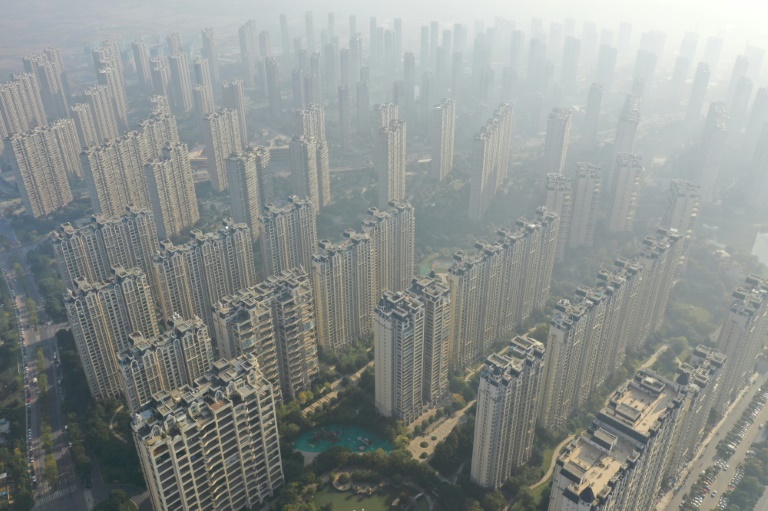
Chinese authorities have unveiled sweeping measures to rescue the country’s struggling property sector, as regulators seek to offset years of harsh pandemic curbs and a real estate crackdown that have stalled the world’s number-two economy.

The banking regulator and central bank on Friday issued a 16-point set of internal directives to promote the “stable and healthy development” of the industry, which were reported by Chinese state media on Monday.

The measures include credit support for debt-laden housing developers, financial support to ensure the completion and handover of projects to homeowners, and assistance for deferred-payment loans for homebuyers.

That came on the same day the National Health Commission issued 20 rules for “optimising” China’s zero-Covid policy, where certain restrictions were relaxed to limit its social and economic impact.

“We view this as the most crucial pivot since Beijing significantly tightened financing of the property sector,” Ting Lu, chief China economist at Nomura, said in a note.

“We believe these measures demonstrate that Beijing is willing to reverse most of its financial tightening measures.”

Hong Kong stocks surged more than three percent Monday after the measures were unveiled, extending Friday’s more than seven percent rally before paring gains to 1.7 percent at the close.

The Hong Kong-listed shares of China’s biggest developer by sales, Country Garden, closed up 45 percent while the shares of major competitor Greenland gained more than 35 percent.

– ‘Not a bailout’ –

Beijing imposed widespread lending curbs on property developers in 2020, which exacerbated their liquidity issues and caused several of the largest to default on bond payments.

The knock-on effects on the massive real estate sector were severe, with cash-strapped developer Evergrande — China’s largest — and others failing to complete projects, sparking mortgage boycotts and protests from homebuyers.

The measures emphasised “guaranteeing the handover of buildings”, and ordered development banks to provide “special loans” for the purpose, according to a copy circulating online.

The document ordered financial institutions to treat state-owned and private real estate enterprises equally, as well as “actively cooperating with distressed real estate enterprises in risk management”.

The measures also included “extending the transition period arrangements… of real estate loans” for distressed developers, and support for “high-quality real estate enterprises to issue bond financing”.

“The plan includes financial stability measures that aim to prevent massive defaults and hence provide a ‘soft landing’,” ANZ analysts wrote in a note.

But analysts cautioned that these changes — alongside the limited loosening of zero-Covid measures — would not cause an immediate recovery for the ailing sector.

“While not many are expecting a financial crisis caused by the current property downturn, the mainstream view is that the property sector would stay weaker for longer. Therefore, the worst is far from over for developers,” Macquarie economist Larry Hu said in a note.

“The package is not a bailout of property developers,” wrote Andrew Batson, an analyst at Gavekal Dragonomics.

“With the new policies, the government is trying harder to make its current approach to Covid containment and the property market work, rather than shifting to a different approach.”

New home prices have been falling for more than a year, while demand is struggling to pick up owing to ongoing strict pandemic controls that have dampened consumer confidence.

Close Bitnami banner
Bitnami