AFP

Alibaba keeps Singles Day sales tally under wraps for first time

Chinese e-commerce giant Alibaba has not released full sales figures for its annual Singles Day event for the first time ever, as a cooling economy dampened demand.

Launched in 2009, Singles Day is the world’s largest shopping festival, dwarfing similar US events such as Black Friday and Cyber Monday in terms of sales. 

Alibaba’s sales last year hit 540.3 billion yuan ($76.1 billion), and many were watching to see if the company and other retailers taking part could combine for a record one trillion yuan in sales.

In a statement Saturday, Alibaba said results for this year’s event were “in line with last year’s… despite macro challenges and Covid-related impact,” without offering details.

Some 290,000 brands participated in 2022, it added, with merchants offering varying levels of discounts starting as early as late October.

Research firm Syntun a day earlier estimated that platforms including Alibaba and JD.com had reached a combined 262 billion yuan between 8:00 pm Thursday and 2:00 pm (0600 GMT) Friday.

Once a festival of frenzied consumption led by Alibaba’s effervescent founder Jack Ma, Singles Day has been more muted in recent years amid a Beijing crackdown on online platforms and waning state media coverage.

In April, regulators fined Alibaba $2.8 billion for anti-competitive practices, and Ma’s public presence has been noticeably diminished over the past two years.

“In terms of communications from the platform companies around the festival, there’s been a shift away from celebrating excessive consumption and emphasizing gross merchandise value (GMV),” Jacob Cooke, CEO of e-commerce consultancy WPIC Marketing + Technologies said. 

“The shift has been going on for a few years now, and that’s related to common prosperity, the anti-monopoly drive,” he added, referring to President Xi Jinping’s ongoing drive to curb the influence of big tech. 

Consumers are also tightening their belts as Beijing persists with a zero-Covid strategy that has led to widespread pay cuts and disrupted supply chains.

Conceived by Alibaba, the event’s title riffs on a tongue-in-cheek celebration of singlehood inspired by the four ones — “11/11” — that denote its date of November 11.

Alibaba is scheduled to report its earnings to stakeholders next week. 

As Senate control teeters, Trump readies new presidential bid

President Joe Biden’s Democrats edged closer to retaining control of the US Senate on Friday, as Donald Trump prepared to declare his bid for the White House in 2024.

Democratic Senator Mark Kelly won re-election in Arizona, three television networks announced. His victory gives Democrats 49 Senate seats, one short of securing a majority, with Nevada still counting votes and Georgia’s contest headed to a December 6 runoff.

If the two parties split the remaining two seats, the Democrats retain control of the Senate because Vice President Kamala Harris will cast the tie-breaking vote.

Blake Masters, the Republican rival to Kelly, did not immediately concede defeat in Arizona, and late Friday Trump posted on his social media account that some voting machines in Arizona didn’t work and the result is “a scam and voter fraud… Do election over again!” 

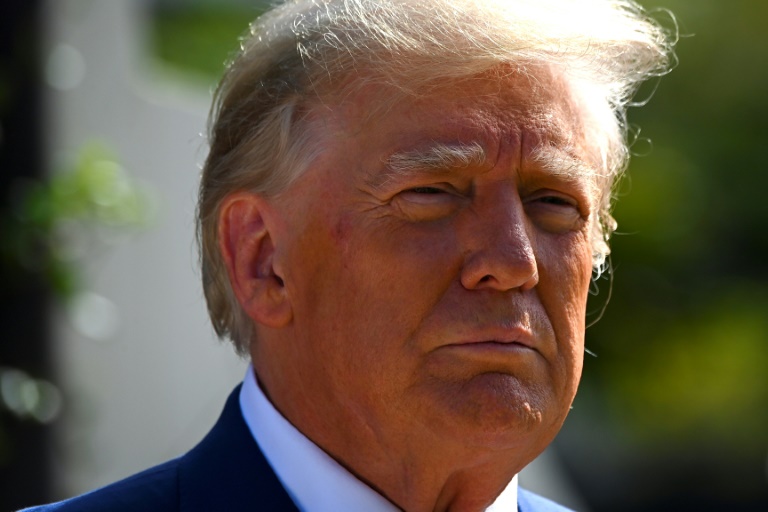
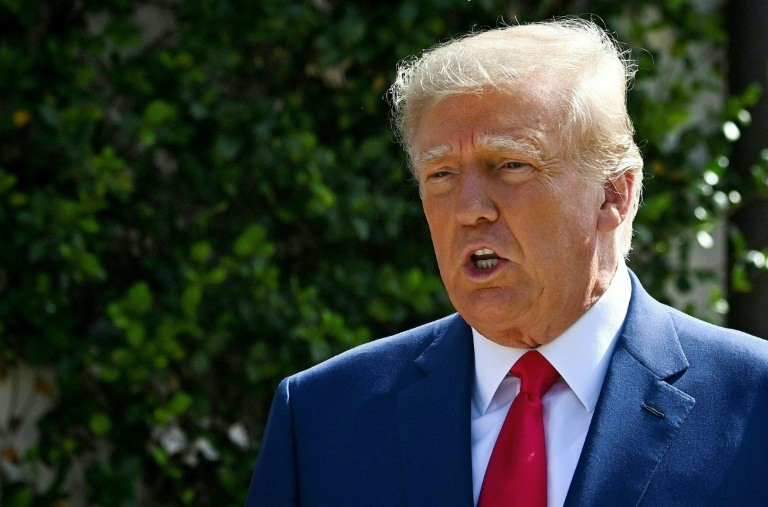
Trump will announce next week that he is taking another shot at the presidency with a White House run in 2024, his longtime advisor Jason Miller said Friday.

The divisive former president, who will be 78 when the next election is held, has been hinting at another presidential run while campaigning for Republican candidates ahead of this week’s midterm elections, and said he will make a “very big announcement” on Tuesday.

“President Trump is going to announce on Tuesday that he is running for president,” Miller told former Trump aide Steve Bannon on his popular “War Room” podcast.

“It’s gonna be a very professional, very buttoned-up announcement,” he added.

Miller said Trump told him, “there doesn’t need to be any question, of course, I am running.”

Trump’s candidacy will mark his third shot at the presidency, including his loss to Joe Biden in 2020. After that defeat, he promoted baseless claims of fraud, including those that led to an unprecedented riot at the US Capitol in Washington.

– Seats flipped –

Trump’s big announcement in Florida comes after a disappointing run for several candidates he backed in the midterms. 

Some of his hand-picked favorites even lost Republican-held seats to Democrats.

In Pennsylvania, Democrats flipped a highly-prized US Senate seat with constant attacks on Trump-endorsed celebrity doctor Mehmet Oz, who had never held public office before and lived mostly in New Jersey.

Trump had hoped to ride a Republican “red wave” that would prime him for another presidential run but the party achieved a much smaller victory than had been predicted.

With 211 seats so far, Republicans appear poised to secure a slim majority in the 435-seat House of Representatives. However, control of the Senate may come down to a December 6 runoff in the southeastern state of Georgia.

The former president’s major media ally — the powerful empire of conservative billionaire Rupert Murdoch — even turned on him in the wake of the polls.

Pointing to the party’s disappointing midterms showing, The Wall Street Journal, the flagship of Murdoch’s News Corp, declared in an editorial on Thursday that “Trump Is the Republican Party’s Biggest Loser.” 

The cover of the tabloid New York Post depicted Trump on a precarious wall as “Trumpty Dumpty” who “had a great fall.”

Nevertheless, more than 100 Republican candidates who challenged the 2020 presidential election results won their respective races.

Trump’s early entry into the race would appear designed in part to fend off possible criminal charges over taking top secret documents from the White House, his efforts to overturn the 2020 election and the attack on the US Capitol by his supporters on January 6 last year.

It may also be intended to undercut his chief potential rival for the Republican presidential nomination, Florida Governor Ron DeSantis, who emerged as one of the biggest winners in Tuesday’s midterms

Trump is still tangling with the congressional January 6 committee investigating the attack on the Capitol. Earlier Friday, his lawyers challenged a subpoena from the committee, saying Trump has “absolute immunity” and will not testify next week. 

The subpoena is “invalid, unlawful, and unenforceable,” the lawyers said in the lawsuit, because Trump “has absolute immunity from being compelled to testify before Congress… regarding his actions as head of a co-equal branch of government.” 

Trump sues to block subpoena by House January 6 committee

Former President Donald Trump filed a lawsuit on Friday challenging a subpoena from the House committee investigating the 2021 attack on the US Capitol, saying he has “absolute immunity” and will not testify next week. 

Trump’s lawyers described the subpoena as “invalid, unlawful and unenforceable,” arguing the former president still enjoys executive privilege nearly 22 months after leaving office, and cannot be compelled by Congress to appear.

The January 6 committee has ordered him to appear for a deposition in person by Monday, which includes providing an extensive list of documents and communications connected to the assault on the Capitol.

The stakes are high – and the clock ticking – for both the congressional committee and 76-year-old Trump, who is expected to announce on Tuesday that he will run again for president in 2024.

He does so even as it remains unclear whether the Republican Party can recapture control of the lower House. 

Balloting from last Tuesday’s midterm elections shows the Republicans holding 200 of the 218 seats needed to reclaim the majority, ahead of the Democrats.

But two dozen seats in the 435-member House of Representatives have still not been decided with vote counting underway.

If Republicans take control of the House, they are likely to disband the January 6 committee, which has amassed evidence that it says proves Trump incited the assault in an attempt to deny Joe Biden his electoral victory.

The committee held a series of hearings earlier this year that its chairman, Rep. Bennie Thompson, said “left no doubt – none – that Donald Trump led an effort to upend American democracy” by inciting the assault. 

Prosecutors have charged more than 900 people with crimes related to the assault on the Capitol, and the Justice Department said last month that 412 people have pleaded guilty to any of a variety of federal charges.

At least seven people lost their lives in connection with the January 6 attack.

In his lawsuit, filed in federal court in West Palm Beach Florida, Trump said sitting and former US presidents have voluntarily agreed to testify or turn over documents after receiving a congressional subpoena but none “has ever been compelled to do so.”

That is because, the suit argues, Congress is a co-equal branch of government and “lacks authority” to compel such action and “President Trump is not required to comply.”

In the filing, Trump argues the subpoena is broader than reasonably necessary, infringes on executive privilege and his personal rights, and the committee does not have authority.

UN, Russia grain, fertiliser exports talks end without breakthrough

United Nations chiefs held talks with Russian officials Friday on the Black Sea agreements on exporting grain and fertilisers, eight days before one of the deals is set to expire.

The discussions took place behind closed doors at the UN Palais des Nations headquarters in Geneva and wrapped up mid-afternoon. 

“The discussions updated on progress made in facilitating the unimpeded export of food and fertilisers, including ammonia, originating from the Russian Federation to global markets,” said a UN statement. 

The meeting between UN humanitarian chief Martin Griffiths, UN trade and development agency head Rebeca Grynspan and a Russian delegation led by deputy foreign minister Sergei Vershinin also focused on “steps taken to facilitate payments, shipping insurance, and access to EU ports for grains and fertiliser”. 

“The world cannot afford to let global fertiliser accessibility problems become a global food shortage,” the statement said. 

The UN also managed to unblock a shipment of 20,000 tons of fertiliser in the Netherlands, stuck in the Dutch port of Rotterdam due to EU-imposed sanctions on certain individuals and goods. 

The shipment will head for Malawi in the coming days under the auspices of the UN’s World Food Programme, according to the Netherlands’ Ministry of Foreign Affairs.

“The fertiliser in question was frozen because a sanctioned individual is involved with the Russian company that owns it,” it said, without naming the individual or company involved. 

“The decision to release the fertiliser was made on the understanding that the UN would ensure that it is delivered to the agreed location (Malawi) and that the Russian company and sanctioned individual will earn nothing from the transaction,” the Hague said.

– 10.2 million tonnes exported –

Two agreements brokered by the UN and Turkey were signed on July 22.

The first was to allow the export of Ukrainian grain blocked by Russia’s war in the country, while the second was on the export of Russian food and fertilisers despite Western sanctions imposed on Moscow following its invasion.

The 120-day Black Sea Grain Initiative runs out on November 19, and the United Nations is seeking to renew it for one year.

Moscow, however, has not yet said whether it will agree to that.

It has complained that the second agreement exempting its fertilisers from sanctions, which is due to run for three years, is not being respected.

“The UN calls on all actors to expedite the removal of any remaining impediments to the export and transportation of fertilisers to countries most in need,” the UN spokesperson added.

Ukraine is one of the world’s top grain producers, and the Russian invasion had blocked 20 million tonnes of grain in its ports until the safe passage deal was agreed to.

As of Thursday, 10.2 million tonnes of grains and other foodstuffs had been exported from Ukraine under the deal, relieving some fears over a deepening global food security crisis.

– ‘Very serious’ implications –

The UN’s Food and Agriculture Organization (FAO) said the implications could be very concerning for global food security if the deal is not renewed.

“We see it as an important initiative that has improved food availability,” said Boubaker Ben Belhassen, director of the FAO’s markets and trade division.

“However, should we be in a scenario that nobody wants to see, that there is a termination of the deal, I think the situation could be really difficult and the implications could be very serious,” he told reporters via video-link from Rome, where the FAO is based.

He pointed in particular to global food security, prices, availability and food staples.

Ben Belhassen said that in the short term, prices would increase, especially for wheat, maize and sunflower seed oil, while the availability of grains on the global market would go down.

There could be a heavy impact on countries that depend on Black Sea imports, notably in the Middle East and North Africa.

Ben Belhassen also warned of the impact within Ukraine if the deals are not renewed.

The grain agreement has until now allowed Ukraine to release stocks from the last winter harvest, easing storage capacity pressure, he said.

It has also given farmers in the war-torn country a revenue stream, allowing them to make decisions on future investments and planting the next crop, he added.

Zelensky proclaims strategic Kherson 'ours', as US hails Ukraine's victory

Ukrainian President Volodymyr Zelensky declared Kherson “ours” after Russia withdrew troops from the city, which the US hailed Saturday as an “extraordinary victory”.

“As of now, our defenders are on the outskirts of the city. But special units are already in the city,” Zelensky wrote on Telegram, posting footage in which Ukrainian troops appeared to gather with residents.

“We see children running to meet us and greeting us,” said Andriy Zholob, the commander of a medical unit currently about 50 kilometres (30 miles) from Kherson. 

“We see attractive, smiling faces, flowers, embroidered towels which we display on our vehicles,” he added.

Ukraine’s parliament published a video of the national anthem being played in a central Kherson square as a small crowd of people, huddled around a bonfire in the dark of night, sang along before the camera zoomed in on a Ukrainian flag flying from a government building.

“The Ukrainian anthem in the center of Kherson,” said the caption to the video, published on social media.

In nearby Mykolaiv province, which Russians have failed to capture but have subjected to months of attacks, governor Vitaliy Kim said the entire region, save for the Kinburn cape in the south, was returned to Ukrainian control.

“Now it’s official: the entire Mykolaiv region (except Kinburn) has been liberated,” Kim wrote on Telegram.

The US hailed Ukraine’s “extraordinary victory” in recapturing Kherson from the Russians on Saturday. 

“It’s a big moment and it’s due to the incredible tenacity and skill of the Ukrainians, backed by the relentless and united support of the United States and our allies,” US National Security Advisor Jake Sullivan said while travelling to Cambodia with President Joe Biden for a regional summit.

– Ukrainian television back on  –

In Kherson, Kyiv’s forces reconnected the local television network to Ukrainian broadcasters, after local media reported that retreating Russian forces blew up the television tower and energy facilities, leaving the city without power.

Kyiv’s defence ministry said earlier Friday that Kherson “is returning to Ukrainian control and units of the Armed Forces of Ukraine are entering the city.”

Ukrainian artillery teams had clear views over Russia’s routes of retreat and warned: “Any attempts to oppose the Armed Forces of Ukraine will be stopped.”

Russia’s defence ministry said “more than 30,000 Russian servicemen, about 5,000 pieces of hardware and military equipment and materiel have been withdrawn”.

Kherson was the first major urban hub to fall after President Vladimir Putin ordered Russian troops into Ukraine on February 24. 

Its full recapture by Kyiv would be a political and symbolic blow to Putin and open a gateway for Ukraine’s forces to the entire Kherson region, with access to both the Black Sea in the west and Sea of Azov in the east.

“Ukraine is gaining another important victory right now and proves that whatever Russia says or does, Ukraine will win,” Foreign Minister Dmytro Kuleba wrote on social media.

He posted an amateur video showing Ukrainians removing a billboard near Kherson that proclaimed: “Russia is here forever”.

– ‘In tears’ –

In Ukraine’s capital, the news was met with joy.

Wrapped in flags, popping champagne corks and belting out the Ukrainian national anthem, residents of Kherson living in Kyiv gathered in the city’s Maidan square to celebrate.

“I didn’t believe it at first, I thought it was going to take weeks and months, a few hundred metres at a time, and now we see them arrive in Kherson in one day, it’s the best surprise,” said Artem Lukiv, 41, a Kherson resident living in Kyiv.

While it would appear a major Russian setback, the Kremlin insisted that Kherson was still part of Russia and that it did not regret annexing the entire Kherson region at a lavish ceremony in late September.

“This is a subject of the Russian Federation. There are no changes in this and there cannot be changes,” Kremlin spokesman Dmitry Peskov told reporters.

A full Ukrainian recapture of the Kherson region would disrupt a vital land bridge for Russia between its mainland and the Crimean peninsula, which Moscow annexed from Ukraine in 2014.

– ‘Cynical’ attack –

Ukrainian officials were initially wary after Moscow announced this week that it would pull forces to defensive positions on the east bank of the river in the city.

Kherson was one of four regions in Ukraine that Putin claimed to have annexed during the September ceremony, vowing at the time to use all available methods to defend it.

Asked by reporters whether Russia regretted annexing Kherson, Peskov said the Kremlin had “no regrets” about the move.

Earlier on Friday, a Russian strike on a residential building in Mykolaiv killed seven people, regional governor Vitaliy Kim said on social media.

An AFP journalist at the scene saw a gaping hole gouged out of a Soviet-style residential building with emergency workers in yellow helmets on site clearing rubble.

Zelensky branded the strike a “cynical response to our successes at the front”.

Nomadic Latino migrant labor aids Florida hurricane recovery

Hour by hour, day by day, hurricane-devastated southwest Florida is starting to get back on its feet — and the workers doing the hard labor are largely undocumented migrants.

They have names like Jael, Juan and Francisco Antonio, and they flooded into Florida from other Gulf Coast states, and even from Mexico, to take on work.

Many are perpetual nomadic workers, traveling from one natural disaster to another, toiling by day and sleeping in cars and trucks at night. 

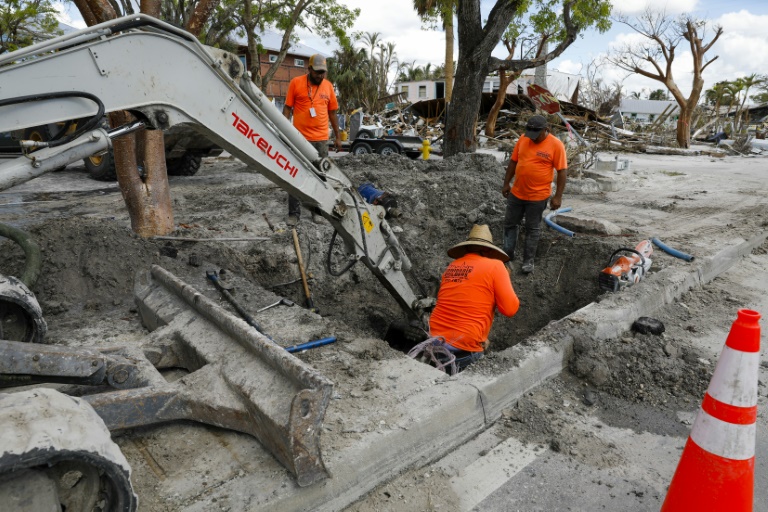
Since Hurricane Ian smashed into southwest Florida on September 28, killing some 125 people and leaving tens of billions of dollars in damage, the workers have been busily tearing down damaged homes, clearing wreckage, repairing roofing and beginning reconstruction.

Ian was a dangerous Category 4 monster of a storm, and the reconstruction work has been intense and vital to recovery in a state led by Governor Ron DeSantis, who has sought to make a national name for himself as a crusader against the very immigrants now doing the rebuilding.

Little more than a week before the storm hit, the Republican governor chartered two planes to carry migrants from Texas to Martha’s Vineyard, a quaint vacation destination in the Democratic stronghold of Massachusetts.

The flights captured headlines and underscored the discontent of DeSantis and many other Republican leaders at how President Joe Biden, a Democrat, is handling a migrant crisis at the Mexican border. 

Francisco Antonio Rivera, a 46-year-old Honduran, doesn’t like DeSantis’s policies. But that didn’t stop him from traveling to Fort Myers, epicenter of the hurricane-damaged area, to offer his services as a mason. 

“Latinos are the heart of the United States. Nonetheless, they arrest us on coming here and treat us any way they like,” he said, resignation in his voice.

Rivera is undocumented and has lived for 17 years in New Orleans, Louisiana. He’s experienced at disaster recovery. He worked in Panama City, in the Florida Panhandle, after Hurricane Michael hit in 2018, and labored in Louisiana in 2021 after Hurricane Ida struck.  

– Critical workforce –

On a recent Wednesday, Rivera is not having any luck. No one has hired him for the day. So he waits, a cap on his head to protect him from the sun, seated on the open trunk to his car.

Around him, a dozen other Latinos pass the time with him, waiting in the parking lot of a hardware store. Homeowners and contractors come most days to places like this to hire day labor.

There’s no lack of work in Fort Myers Beach. More than a month after the storm, rubble lines streets of the barrier island where the hurricane ripped off roofs, knocked down walls and flooded countless homes with storm surge.

Thousands of migrants toil in Southwest Florida these days, said Saket Soni, director of Resilience Force, a nonprofit that helps US cities recover from disaster. 

This nomadic workforce, comprising mostly Latinos, is what “makes recovery possible” after natural disasters, Soni said. “They rebuild homes, schools and hospitals. They sort of help all the broken infrastructure come back together.”

They work under the sun and in the rain. They climb on roofs, handle chemical products, and then at night sleep in their cars because they have nowhere else to go, Soni said.

“When we go to work, we do so with enthusiasm and hopes of getting ahead,” says Jael Cruz, 44, a Honduran who traveled from Texas to Fort Myers. 

“When you come from a country like ours, you come in search of the American dream, and the American dream is to work.” 

– Vulnerable laborers –

But the desire to work without papers leaves the laborers exposed to potential abuse by employers, and sometimes they are stiffed of wages, given less than promised, and subjected to threats that they’ll be turned over to immigration authorities if they complain, Soni said.

Juan Martínez, a Mexican who asked to use a pseudonym for fear of immigration authorities, got a friendly visit from Resilience Force workers a few days ago. 

Since then, he carries a card that reminds him to “ask for an advance of the work to be done” and take “before and after photos of the work.” 

The 50-year-old Mexican traveled from his homeland to Fort Myers when he heard of news of Ian’s devastation. He’d made the same trip to do labor after hurricanes Michael and Ida, and knew that Florida would need help from masons like him.

He’d found work at several jobsites, and said so far that homeowners had treated him fairly.

He only hopes that his work — and that of other laborers — may change the outlook of authorities and residents of the region. 

“We need them, and they need us,” Martinez said. “I would like them to realize that we are here to help.” 

Nomadic Latino migrant labor aids Florida hurricane recovery

Hour by hour, day by day, hurricane-devastated southwest Florida is starting to get back on its feet — and the workers doing the hard labor are largely undocumented migrants.

They have names like Jael, Juan and Francisco Antonio, and they flooded into Florida from other Gulf Coast states, and even from Mexico, to take on work.

Many are perpetual nomadic workers, traveling from one natural disaster to another, toiling by day and sleeping in cars and trucks at night. 

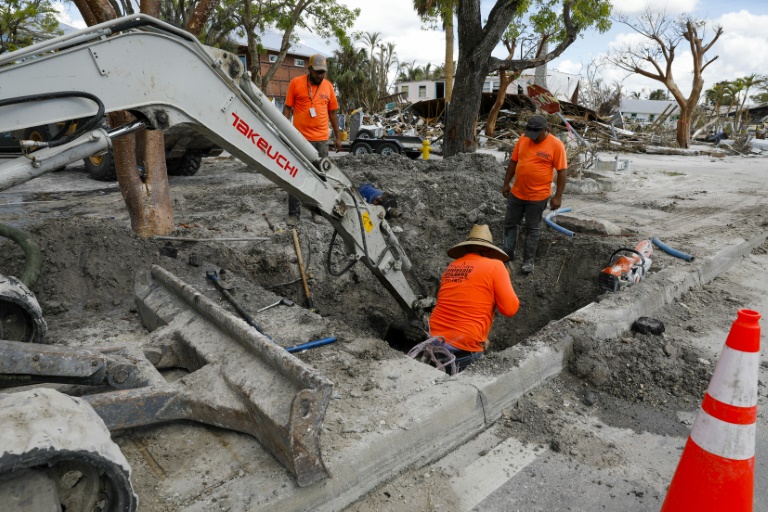
Since Hurricane Ian smashed into southwest Florida on September 28, killing some 125 people and leaving tens of billions of dollars in damage, the workers have been busily tearing down damaged homes, clearing wreckage, repairing roofing and beginning reconstruction.

Ian was a dangerous Category 4 monster of a storm, and the reconstruction work has been intense and vital to recovery in a state led by Governor Ron DeSantis, who has sought to make a national name for himself as a crusader against the very immigrants now doing the rebuilding.

Little more than a week before the storm hit, the Republican governor chartered two planes to carry migrants from Texas to Martha’s Vineyard, a quaint vacation destination in the Democratic stronghold of Massachusetts.

The flights captured headlines and underscored the discontent of DeSantis and many other Republican leaders at how President Joe Biden, a Democrat, is handling a migrant crisis at the Mexican border. 

Francisco Antonio Rivera, a 46-year-old Honduran, doesn’t like DeSantis’s policies. But that didn’t stop him from traveling to Fort Myers, epicenter of the hurricane-damaged area, to offer his services as a mason. 

“Latinos are the heart of the United States. Nonetheless, they arrest us on coming here and treat us any way they like,” he said, resignation in his voice.

Rivera is undocumented and has lived for 17 years in New Orleans, Louisiana. He’s experienced at disaster recovery. He worked in Panama City, in the Florida Panhandle, after Hurricane Michael hit in 2018, and labored in Louisiana in 2021 after Hurricane Ida struck.  

– Critical workforce –

On a recent Wednesday, Rivera is not having any luck. No one has hired him for the day. So he waits, a cap on his head to protect him from the sun, seated on the open trunk to his car.

Around him, a dozen other Latinos pass the time with him, waiting in the parking lot of a hardware store. Homeowners and contractors come most days to places like this to hire day labor.

There’s no lack of work in Fort Myers Beach. More than a month after the storm, rubble lines streets of the barrier island where the hurricane ripped off roofs, knocked down walls and flooded countless homes with storm surge.

Thousands of migrants toil in Southwest Florida these days, said Saket Soni, director of Resilience Force, a nonprofit that helps US cities recover from disaster. 

This nomadic workforce, comprising mostly Latinos, is what “makes recovery possible” after natural disasters, Soni said. “They rebuild homes, schools and hospitals. They sort of help all the broken infrastructure come back together.”

They work under the sun and in the rain. They climb on roofs, handle chemical products, and then at night sleep in their cars because they have nowhere else to go, Soni said.

“When we go to work, we do so with enthusiasm and hopes of getting ahead,” says Jael Cruz, 44, a Honduran who traveled from Texas to Fort Myers. 

“When you come from a country like ours, you come in search of the American dream, and the American dream is to work.” 

– Vulnerable laborers –

But the desire to work without papers leaves the laborers exposed to potential abuse by employers, and sometimes they are stiffed of wages, given less than promised, and subjected to threats that they’ll be turned over to immigration authorities if they complain, Soni said.

Juan Martínez, a Mexican who asked to use a pseudonym for fear of immigration authorities, got a friendly visit from Resilience Force workers a few days ago. 

Since then, he carries a card that reminds him to “ask for an advance of the work to be done” and take “before and after photos of the work.” 

The 50-year-old Mexican traveled from his homeland to Fort Myers when he heard of news of Ian’s devastation. He’d made the same trip to do labor after hurricanes Michael and Ida, and knew that Florida would need help from masons like him.

He’d found work at several jobsites, and said so far that homeowners had treated him fairly.

He only hopes that his work — and that of other laborers — may change the outlook of authorities and residents of the region. 

“We need them, and they need us,” Martinez said. “I would like them to realize that we are here to help.” 
Will robots replace humans at Amazon?

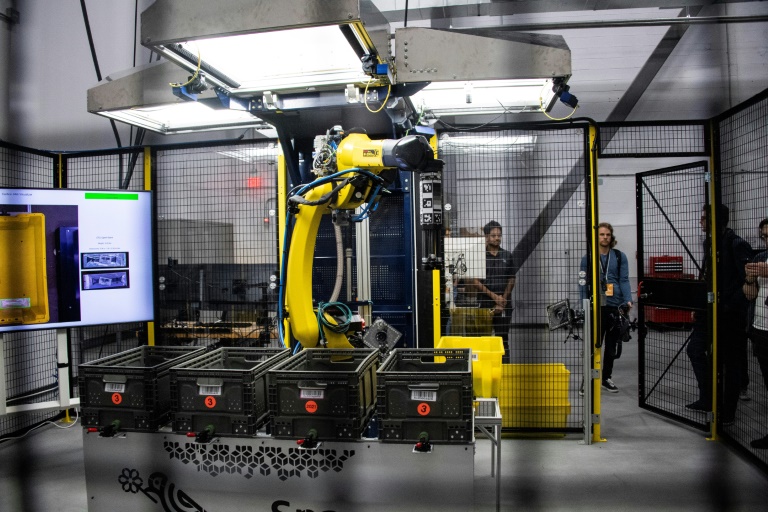
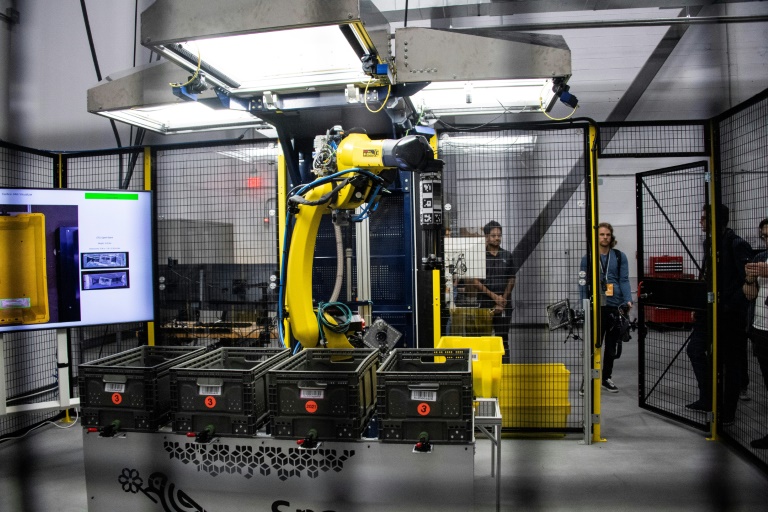
At Amazon’s robotics laboratory on the outskirts of Boston, Massachusetts, the company’s newest automaton “Sparrow” picks out items to be shipped to customers, displaying human hand-like dexterity.

It is the e-commerce giant’s most advanced robot yet and could soon do the job of the hundreds of thousands of Amazon employees who sort and send five billion packages annually.

The development of “Sparrow,” and other robots like “Robin” and “Cardinal,” are fueling fears that Amazon’s warehouses will one day be run by machines, leading to huge layoffs.

Amazon’s robotics chief Tye Brady plays down such concerns, which have been expressed by labor unions.

“It’s not machines replacing people,” he tells journalists during a tour of the laboratory, which opened in Westborough in October last year.

“It’s actually machines and people working together in order to collaborate to do a job.”

Equipped with cameras and cylindrical tubes, Sparrow can successfully detect and select an individual item from millions of products of different shapes and sizes.

It gently sucks up items that arrive on a conveyor belt and distributes them into the appropriate basket in front of it using its robotic arm.

Robin and Cardinal can only redirect entire packages, making Sparrow Amazon’s first robot to be able to handle individual products.

“Given the variety of materials we have in our warehouses, Sparrow is a significant accomplishment,” says Brady.

Working with the robotic trio is a small army of machines, including “Proteus,” which can carry hundreds of kilograms of items around warehouses.

The creations will free employees from repetitive tasks to focus on “more rewarding and interesting” activities while “improving safety,” Brady insists.

Amazon’s focus is ensuring that as little time as possible passes between the moment a customer orders an item and the moment it arrives at his or her door.

– Drones –

That goal has led some workers to accuse the company of treating them like “slaves” and of depriving them of food and toilet breaks.

In statements, Amazon has insisted it provides “a safe and positive workplace” for employees and, apart from one warehouse in New York, has resisted unionization.

Amazon’s desire to deliver items quicker is driving its investment in automation.

By the end of this year it will begin delivering packages weighing up to two kgs in less than an hour from warehouses in Lockeford, California and College Station, Texas.

The company aims to deliver 500 million packages by drone by the end of the decade, including in major US cities such as Boston, Atlanta and Seattle.

Around 75 percent of Amazon’s five billion annual orders is handled at some point by a robot, according to Joe Quinlivan, vice president of Amazon Robotics.

For decades the conventional wisdom was that increased automation destroys workforces.

Studies now suggest that moving towards robots in e-commerce will not lead to massive job losses in the short to medium term due to the huge growth in demand.

However, a 2019 study by the University of California’s Labor Center at Berkeley warned that while some technologies can alleviate arduous warehouse tasks, they could also contribute to increasing the “workload and pace of work.”

The researchers added that technological advancements might also contribute towards “new methods of monitoring workers,” and cited the Amazon’s MissionRacer video game “that pits workers against one another to assemble customer orders fastest.”

Amazon says its innovation has generated more than a million jobs and 700 new job categories, mainly in highly specialized engineering, but also as technicians and operators.

“I really think what we’re going to do in the next five years is going to dwarf anything we’ve done in the last ten years,” says Quinlivan.

Will robots replace humans at Amazon?

At Amazon’s robotics laboratory on the outskirts of Boston, Massachusetts, the company’s newest automaton “Sparrow” picks out items to be shipped to customers, displaying human hand-like dexterity.

It is the e-commerce giant’s most advanced robot yet and could soon do the job of the hundreds of thousands of Amazon employees who sort and send five billion packages annually.

The development of “Sparrow,” and other robots like “Robin” and “Cardinal,” are fueling fears that Amazon’s warehouses will one day be run by machines, leading to huge layoffs.

Amazon’s robotics chief Tye Brady plays down such concerns, which have been expressed by labor unions.

“It’s not machines replacing people,” he tells journalists during a tour of the laboratory, which opened in Westborough in October last year.

“It’s actually machines and people working together in order to collaborate to do a job.”

Equipped with cameras and cylindrical tubes, Sparrow can successfully detect and select an individual item from millions of products of different shapes and sizes.

It gently sucks up items that arrive on a conveyor belt and distributes them into the appropriate basket in front of it using its robotic arm.

Robin and Cardinal can only redirect entire packages, making Sparrow Amazon’s first robot to be able to handle individual products.

“Given the variety of materials we have in our warehouses, Sparrow is a significant accomplishment,” says Brady.

Working with the robotic trio is a small army of machines, including “Proteus,” which can carry hundreds of kilograms of items around warehouses.

The creations will free employees from repetitive tasks to focus on “more rewarding and interesting” activities while “improving safety,” Brady insists.

Amazon’s focus is ensuring that as little time as possible passes between the moment a customer orders an item and the moment it arrives at his or her door.

– Drones –

That goal has led some workers to accuse the company of treating them like “slaves” and of depriving them of food and toilet breaks.

In statements, Amazon has insisted it provides “a safe and positive workplace” for employees and, apart from one warehouse in New York, has resisted unionization.

Amazon’s desire to deliver items quicker is driving its investment in automation.

By the end of this year it will begin delivering packages weighing up to two kgs in less than an hour from warehouses in Lockeford, California and College Station, Texas.

The company aims to deliver 500 million packages by drone by the end of the decade, including in major US cities such as Boston, Atlanta and Seattle.

Around 75 percent of Amazon’s five billion annual orders is handled at some point by a robot, according to Joe Quinlivan, vice president of Amazon Robotics.

For decades the conventional wisdom was that increased automation destroys workforces.

Studies now suggest that moving towards robots in e-commerce will not lead to massive job losses in the short to medium term due to the huge growth in demand.

However, a 2019 study by the University of California’s Labor Center at Berkeley warned that while some technologies can alleviate arduous warehouse tasks, they could also contribute to increasing the “workload and pace of work.”

The researchers added that technological advancements might also contribute towards “new methods of monitoring workers,” and cited the Amazon’s MissionRacer video game “that pits workers against one another to assemble customer orders fastest.”

Amazon says its innovation has generated more than a million jobs and 700 new job categories, mainly in highly specialized engineering, but also as technicians and operators.

“I really think what we’re going to do in the next five years is going to dwarf anything we’ve done in the last ten years,” says Quinlivan.

Cryptocurrency platform FTX files for bankruptcy, boss resigns amid tumult

Crisis-struck cryptocurrency platform FTX has gone bankrupt in the United States and its chief executive Sam Bankman-Fried has resigned, it said Friday, the latest blow in a saga that has reverberated across the digital currency landscape.

The filing comes after the world’s biggest cryptocurrency platform Binance agreed to buy its rival earlier this week but backed out, leading market players to consider possible regulator responses.

FTX Group announced in a statement Friday that it filed for Chapter 11 bankruptcy proceedings, adding it has begun an “orderly process to review and monetize assets for the benefit of all global stakeholders.”

Chapter 11 is a US mechanism allowing a company to restructure its debts under court supervision while continuing to operate.

This week’s financial chaos at FTX has seen major cryptocurrencies, including bitcoin, plunge.

Bankman-Fried issued a “sincere” apology Thursday, adding FTX would do “everything we can to raise liquidity.”

The cash-strapped company added in its statement that it has appointed John J. Ray as chief executive with immediate effect.

“The immediate relief of Chapter 11 is appropriate to provide the FTX Group the opportunity to assess its situation,” said Ray in the statement.

“Stakeholders should understand that events have been fast-moving and the new team is engaged only recently.”

“Many employees of the FTX Group in various countries are expected to continue with the FTX Group and assist Mr. Ray and independent professionals in its operations during the Chapter 11 proceedings,” the statement said.

Binance agreed to buy FTX.com on Tuesday — before scrapping the takeover just a day later.

Binance chief executive Changpeng Zhao defended himself against accusations of any purposeful plot after the deal fell apart.

“FTX going down is not good for anyone in the industry. Do not view it as a win for us. User confidence is severely shaken,” he tweeted.

The platform’s collapse came as a shock even for an already turbulent industry.

Bankman-Fried, who worked as a broker on Wall Street before moving to Hong Kong in 2017, had cultivated friends in Washington and basked in glowing tributes when he stepped in to rescue other ailing crypto companies earlier in the year.

The turmoil at FTX, at one point valued at $32 billion, is a spectacular reversal of fortune for the founder and one-time cryptocurrency wunderkind.

“This is another black eye for the industry,” David Holt, a cryptocurrency industry expert at CFRA, said of FTX’s troubles.

The fall from grace even stretched to the world of sports where the Miami Heat announced its FTX Arena is set for a rename and the Mercedes Formula One team said it had suspended a sponsorship deal with FTX and removed the company’s logos from its cars ahead of this weekend’s Sao Paulo Grand Prix.

The Heat tweeted Friday that it and Miami-Dade County were “immediately taking action to terminate our business relationships with FTX,” including finding “a new naming rights partner for the arena.”

– Growing doubts –

Doubts had already been growing about the financial stability of FTX, despite Bankman-Fried’s good standing in Washington as a public face of crypto investing.

Attention had focused on the relationship between FTX and Alameda Research, a trading house also owned by Bankman-Fried that was taken down from the internet on Wednesday, reports said.

Specialist media site CoinDesk reported that 40 percent of Alameda’s balance sheet comprised FTX’s FTT tokens, raising concerns of a potential conflict of interest.

“We don’t know exactly what happened, but from all the reporting it looks like there was a lot of misconduct,” former US Securities and Exchange Commission (SEC) lawyer Howard Fischer said on the CNBC network Friday, predicting that some clients would sue in order to recover their investments.

The company is currently under investigation by the SEC, according to the New York Times, citing sources familiar with the matter.

The regulator, which does not usually comment on ongoing investigations, did not respond to AFP’s request for comment Friday, nor did the Department of Justice. 

Media reports suggest FTX had needed to find about $8 billion to plug a massive hole in its finances and escape bankruptcy.

Binance meanwhile axed its FTX takeover deal late on Wednesday and cited recent press reports about mismanagement of client funds and potential investigations.

Bankman-Fried, the son of Stanford Law School professors and a graduate of the elite Massachusetts Institute of Technology, has long been a vocal advocate for smoother access to the crypto market for the general public, particularly in the United States.

Kevin O’Leary, president of a venture capital firm and television personality who had invested in FTX, on Friday called for urgent regulations to safeguard the industry. 

“I lost money in the account, but I’m still going to invest on crypto,” he told CNBC. 

Close Bitnami banner
Bitnami