AFP

Apple limits file-sharing for Chinese iPhone users after anti-govt protest

Apple limited file-sharing for Chinese iPhone users Thursday, a month after reports that anti-government protesters were using the function to share digital leaflets with strangers.

Under the update to the AirDrop function, users of smartphones sold by Apple in China can only opt in to receive files from non-contacts for a 10-minute window before it automatically shuts off. The feature did not previously have a time limit.

The update, rolled out in the operating system released overnight, makes it virtually impossible to receive unexpected files from strangers.

The change follows widespread reports of people using AirDrop to spread leaflets critical of the Chinese Communist Party in crowded public spaces, partly inspired by a protest in Beijing in which a man hung banners calling for the removal of President Xi Jinping.

Chinese censors quickly scrubbed online videos and posts referring to the protest, while hundreds of users on the popular payment and chat app WeChat had their accounts blocked after speaking about the rare act of rebellion.

Apple did not respond immediately to AFP’s request for comment and did not give a reason for the specific change.

It said in its update description for users the operating system now “includes bug fixes and security updates”.

Apple phones sold outside mainland China did not appear to be affected by the update, while iPhones sold in China displayed the limit regardless of which country the user’s App Store account was based in.

The California-based tech giant, which touts security and privacy protections as key features of its devices, has previously faced criticism for alleged concessions to Beijing.

That included opening a data centre in China, as well as removing an app in 2019 that allowed Hong Kong pro-democracy protesters to keep track of police.

It has also faced boycott threats in China as it stands in the crossfire of US-China tensions, with Beijing warning in 2020 that it could turn its citizens against Apple if Washington blocked Chinese apps.

Some Chinese social media users on Thursday hailed the iPhone update as a positive step in preventing unsolicited messages from strangers. One Weibo user said the change would “greatly reduce the probability of iPhone users being harassed”.

A handful questioned why the function was only being rolled out on Chinese iPhones, with one Weibo commenter joking about Apple CEO Tim Cook’s friendliness with Beijing: “So is Tim Cook a Party member or not?”
Nicole weakens to Tropical Storm after Florida landfall

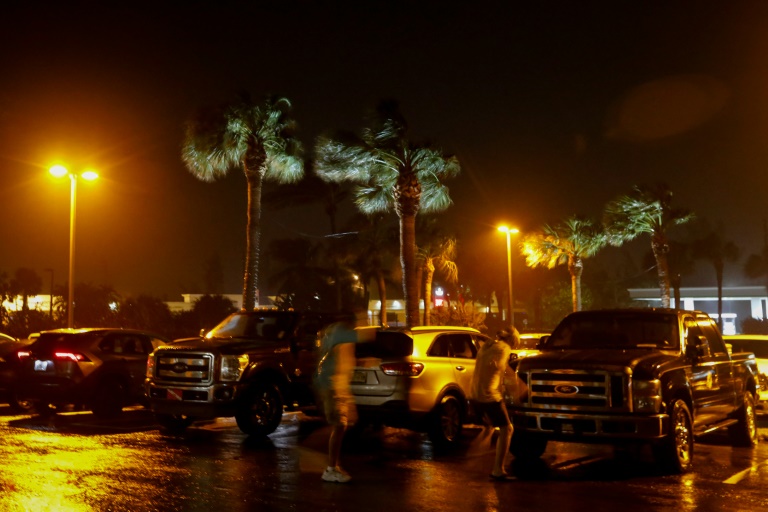
Tropical Storm Nicole slowed after making landfall in the US state of Florida, meteorologists said Thursday, with high winds raising concerns that a long-delayed NASA rocket launch could be disrupted.

The storm, a rare occurrence this late in the year, sparked mandatory evacuation orders just weeks after Florida was battered by Hurricane Ian.

But just an hour after Nicole made landfall as a Category 1 hurricane it was downgraded to a Tropical Storm, the US-based National Hurricane Center (NHC) said in a statement Thursday at 0900 GMT.

The NHC said Nicole was packing sustained maximum winds of up to 70 miles (110 kilometers) per hour.

The storm had passed over the Bahamas on Wednesday, with the level of destruction not immediately clear.

A tropical storm warning was issued for Florida’s eastern coast from the city of Boca Raton to the boundary between Flagler and Volusia counties, the NHC said.

“Strong winds, dangerous storm surge and waves, and heavy rains continue over a large area,” it said.

Forty-five of the state’s 67 counties were under a state of emergency, Governor Ron DeSantis said, while four counties were under mandatory evacuation orders, according to the state’s Division of Emergency Management.

At least 60,000 customers in the affected areas were without electricity, according to PowerOutage.us, with Brevard county being the worst hit

In preparation for the storm’s impact, DeSantis said 16,000 people had been recruited to respond to power outages and 600 national guardsmen had been activated.

The death toll from Ian, one of the most powerful storms ever to hit the United States, stands at more than 100 in Florida alone.

– NASA launch delay –

Nicole has raised concerns that a long-delayed NASA rocket launch could be disrupted again.

The storm is heading towards NASA’s Kennedy Space Center, located near Florida’s eastern city of Orlando, having already disrupted plans to launch the agency’s most powerful rocket next week.

The Artemis 1 mission had been due to launch on November 14, but NASA said on Tuesday it would be delayed to November 16.

A backup launch date has been set for November 19.

NASA said it would leave the giant 322-foot (98-meter) SLS rocket on the launch pad, where it had been placed several days before.

Some experts have voiced concern that the rocket, which is estimated to cost several billion dollars, could be damaged by debris from the hurricane if it remains exposed.

After two launch attempts were scrubbed this summer because of technical problems, the rocket had to be returned to the Vehicle Assembly Building to protect it from Hurricane Ian.

The uncrewed mission aims to bring the United States a step closer to returning astronauts to the Moon five decades after humans last walked on its surface.

Transit strikes snarl London, Paris as workers seek raises

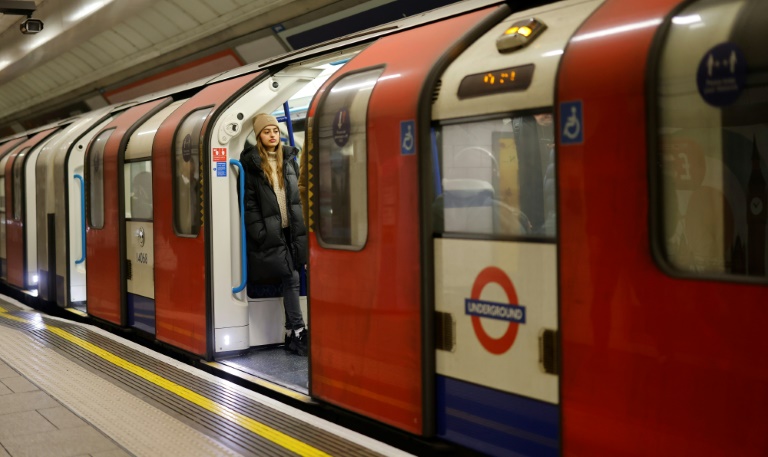
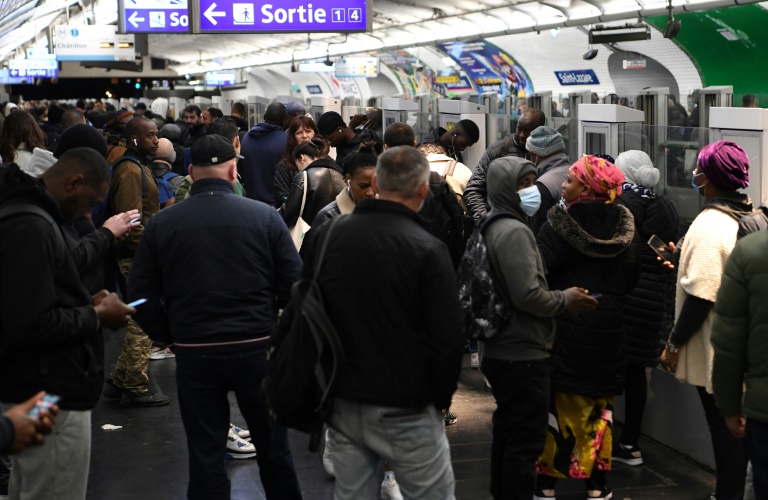
Commuters in London and Paris scrambled for alternatives Thursday — or simply stayed home — as public transport workers went on strike for higher pay, the latest industrial action seeking relief from soaring prices in Europe.

Spreading labour unrest poses a problem for governments which are already spending billions trying to blunt the worst effects of rising prices, at least for the most vulnerable.

“I am very deeply affected by the strike,” said 36-year-old Nicco Hogg in London. “I took my car, the train and now I have to cycle.”

The action in Britain, by members of the Rail, Maritime and Transport (RMT) and Unite unions, follows several prior walkouts this year amid a long-running dispute over job cuts, pensions and working conditions.

In France, the strike aims also to ratchet up pressure on President Emmanuel Macron before he brings a controversial pensions overhaul bill to parliament, which would require millions of people to work longer before retiring.

“It’s to show that if we want to take action, we know how to take action,” Frederic Souillot, head of France’s FO union, said ahead of the Paris strike.

The capital’s public transport operator RATP said nearly every Metro line would be shut down or operating with only limited rush-hour service, and urged people to work from home or postpone trips if possible.

Many commuters appeared to heed the call, with the morning crush less chaotic than many feared, and the city’s growing network of bike lanes saw a surge of cyclists under a bright autumn sky.

But the two main suburban rail lines called RER A and B, which connect central Paris with Disneyland Paris and the Charles de Gaulle and Orly airports, saw more severe disruptions.

Frequency of bus services were likely to drop by a third, while tram operations were expected at near-normal levels, the RATP said.

Authorities in London said the Underground system was “severely disrupted”, with limited or no services running, and advised people to avoid trying to use the network.

Reports said many buses were packed to capacity and unable to pick up hordes waiting at numerous stops, while roads were expected to be more congested than usual.

– New CEO awaited –

French unions have staged strikes across several sectors in recent weeks seeking pay hikes or increased hiring as spiralling energy costs feed into widespread inflation.

Thursday’s strike will also include a protest march in the capital in the afternoon that will shut down major traffic avenues.

But the Paris transport strike did not spill over into other sectors, with only the hard-line CGT union calling for general work stoppages that could match turnout of October 18, when authorities say 107,000 demonstrators turned out nationwide.

Unions representing the RATP’s nearly 70,000 employees say they are feeling the pinch of soaring prices, but are also overstretched because of insufficient hiring, resulting in increased sick leave.

That has led to more service delays or lower frequency on busy metro lines in recent months, causing headaches for the system’s roughly 12 million daily users.

The government is set to appoint former prime minister Jean Castex as RATP chief, with parliamentary panels giving their green light after questioning him this week.

“The most urgent issue… is the continuity and quality of service,” Castex told lawmakers. “The heart of our job is to meet the expectations of our users.”

Foxconn working 'at fastest speed' to restore vast China plant

Taiwanese tech giant Foxconn, a principal Apple subcontractor, said Thursday it was working quickly to resume full production at its giant factory in central China before the crucial holiday season. 

Foxconn, also known by its official name Hon Hai Precision Industry, is the world’s biggest contract electronics manufacturer assembling gadgets for many international brands.

Most of its factories are in China, particularly the eastern city of Zhengzhou where lockdowns were imposed last month, in line with Beijing’s zero-Covid policy, after a spike in infections.

The huge facility of some 200,000 workers — dubbed “iPhone City” — has been operating in a “closed loop” bubble. 

Apple said this week the facility was running at “significantly reduced capacity” and warned customers would face longer wait times for the flagship iPhone 14 Pro and iPhone 14 Pro Max iPhones built there.

“With the support of Henan provincial government, we will eliminate the infections at the fastest speed to resume full capacity for production,” Foxconn chairman Young Liu said in a call with investors.

The production delays have come just ahead of the crucial Christmas holiday season for Western markets and the lunar new year in late January. 

“The fourth quarter and next year are very important,” Liu said.

“We will make every effort to adjust our capacity and production to ensure that the demands for the two holidays will not be affected,” he said. 

Foxconn has already said it was revising down its outlook for the last quarter.

Announcing third quarter figures on Thursday, Foxconn said net income rose five percent to NT$38.8 billion ($1.22 billion), below earlier average estimates of NT$41 billion, according to Bloomberg News. 

China is sticking to its strict zero-Covid policy, with harsh lockdowns, quarantines and testing regimens imposed after even the smallest outbreaks.

The measures have kept infections low but injected persistent uncertainty for businesses in the world’s second-largest economy.

Foxconn is the largest private employer in China.

“To maintain the health of more than one million workers and safe production has been the biggest challenge for the management,” Liu said. 

Panicking workers fled the Zhengzhou site on foot last week in the wake of allegations of poor conditions at the facility. Foxconn offered bonuses to workers who stayed on. 

Liu, in his call with investors, blamed the walkouts on “edited false videos and information that sparked some panic”.

Zhengzhou authorities lifted a week-long lockdown of the city’s outlying airport district on Wednesday but they retained restrictions in several high-risk neighbourhoods, including where the Foxconn campus is located.

The city reported more than 1,200 new infections Thursday.

Morgan Stanley analysts wrote in a research note on Monday that Foxconn’s expected sales could drop as much as 20 percent in the fourth quarter in a worst-case scenario, partly due to a 36 percent drop in revenue from production of iPhones, Bloomberg News reported.

Latest London Underground strike paralyses network

Millions of Londoners faced travel misery on Thursday as another strike by Underground staff shut down most of the network, including almost all lines and city centre stations.

The latest industrial action, by members of the Rail, Maritime and Transport (RMT) and Unite unions, follows several prior walkouts this year amid a long-running dispute over job cuts, pensions and working conditions.

It mirrors strife across numerous UK sectors as pay fails to keep up with inflation at the highest level in decades, with the main nurses’ union announcing Wednesday that it will stage the first strike in its 106-year history.

Thursday’s walkout on the so-called London “tube” network left travellers struggling to catch buses or find alternative ways to get to work in the city of around 9 million people.

TfL said the tube system was “severely disrupted”, with limited or no services running, and advised people to avoid trying to use the network.

Reports said many buses were packed to capacity and unable to pick up hordes waiting at numerous stops, while roads were expected to be more congested than usual.

The RMT said a conditional offer to suspend the strike, made at last ditch talks Tuesday with Transport for London (TfL) bosses, failed amid disagreements over planned job cuts and other reforms.

The union — which has also been spearheading walkouts on the national rail network this year in a separate dispute — held pickets at numerous stations across London, including at the hub King’s Cross.

“TfL have missed a golden opportunity to make progress in these negotiations and avoid strike action,” RMT General secretary Mick Lynch said.

“Our members are resolute in their determination to see a just settlement to this dispute, and they will continue their industrial campaign for as long as it takes.”

Ahead of the walkout, TfL blamed the RMT and Unite for the stalemate. 

“No proposals to change pensions or conditions have been made,” TfL’s Chief Operating Officer Glynn Barton said in a statement following Tuesday’s failed talks.

“Unfortunately, no agreement could be reached but we remain open for discussions.”

Asian, European stocks down as US midterms worry markets

Asian stocks fell on Thursday after inconclusive US midterm election results and a cryptocurrency crisis hammered markets.

The uncertainty, especially about how the midterm results would impact inflation, transferred from Wall Street to Asia overnight.

Hong Kong dropped 1.7 percent while Tokyo shed nearly one percent and Shanghai also closed lower. Seoul, Sydney, Jakarta and Taipei also fell.

London, Paris, and Frankfurt all opened on Thursday in the red, continuing the slide in European markets.

“A purple dilemma might be the best way to describe the red-blue tangle that emerged Wednesday. It’ll be gridlock, that’s for sure,” Stephen Innes of SPI Asset Management said of the US midterms where the Democrats did better than expected, although Congress will likely be divided.

“Perhaps not the friendliest kind for market participants, many of whom were hoping for a more resounding rebuke of Democrats given inflation realities.”

All eyes are expected to turn to US inflation data, due later Thursday, to gauge the speed of future rate hikes by the Federal Reserve. 

“US growth looks still too strong to bring inflation down,” Tapas Strickland of National Australia Bank said in a note.

“The ongoing resilience in the (consumer prices) data and stickiness in inflation continue to point to the Fed hiking rates closer to 5.0 percent or higher.” 

Fed officials have raised their policy rate to a range of between 3.75 to 4.0 percent.

– ‘Crypto tumult’ –

Markets in Asia were already grappling with the impact of strict zero-Covid measures in China, with supply chains and activity slowed by harsh lockdowns and testing policies. 

“China’s domestic demand is weak and their key trading partners are entering recession territory,” said Edward Moya from Oanda. 

“China is also continuing to struggle with COVID as Guangzhou has to return to mass testing.”

The crypto world was also rocked by a surprise decision from Binance, the world’s biggest cryptocurrency platform, to scrap a possible acquisition of rival FTX.com a day after disclosing it had signed a non-binding letter of intent to buy it.

The near-collapse of FTX has plunged bitcoin to a two-year low.

“FTX’s slump from over a $32 bn valuation to zero in less than a few days raises numerous issues,” said Stephen Innes.

“This is far from fringe buyers taking a hit on the back of support from stimulus-check and crypto enthusiasts. Prominent investors are wearing eggs on their faces after diving in head first.”

He added that gold and silver will be the biggest beneficiaries of the crypto fallout with investors looking to the trusted precious metals for stability.

– Key figures around 0725 GMT –

London – FTSE 100: DOWN 0.17 percent at 7,284.15 

Frankfurt – DAX: DOWN 0.44 percent at 13,621.27 

Paris – CAC 40: DOWN 0.32 percent at 6,409.72 

Tokyo – Nikkei 225: DOWN 0.98 percent at 27,446.10 (close) 

Hong Kong – Hang Seng Index: DOWN 1.7 percent at 16,081.04 (close)

Shanghai – Composite: DOWN 0.39 percent at 3,036.13 (close)

Pound/dollar: UP at $1.1385 from $1.1352  

Euro/dollar: DOWN at $1.0001 from $1.0017 

Dollar/yen: DOWN at 146.26 yen from 146.37 yen 

Euro/pound: DOWN at 87.84 pence from 88.19 pence 

West Texas Intermediate: DOWN 0.55 percent at $85.36 per barrel

Brent North Sea crude: DOWN 0.36 percent at $92.32 per barrel

New York – Dow: DOWN 2.0 percent at 32,513.94 (close)

Asian, European stocks down as US midterms worry markets

Asian stocks fell on Thursday after inconclusive US midterm election results and a cryptocurrency crisis hammered markets.

The uncertainty, especially about how the midterm results would impact inflation, transferred from Wall Street to Asia overnight.

Hong Kong dropped 1.7 percent while Tokyo shed nearly one percent and Shanghai also closed lower. Seoul, Sydney, Jakarta and Taipei also fell.

London, Paris, and Frankfurt all opened on Thursday in the red, continuing the slide in European markets.

“A purple dilemma might be the best way to describe the red-blue tangle that emerged Wednesday. It’ll be gridlock, that’s for sure,” Stephen Innes of SPI Asset Management said of the US midterms where the Democrats did better than expected, although Congress will likely be divided.

“Perhaps not the friendliest kind for market participants, many of whom were hoping for a more resounding rebuke of Democrats given inflation realities.”

All eyes are expected to turn to US inflation data, due later Thursday, to gauge the speed of future rate hikes by the Federal Reserve. 

“US growth looks still too strong to bring inflation down,” Tapas Strickland of National Australia Bank said in a note.

“The ongoing resilience in the (consumer prices) data and stickiness in inflation continue to point to the Fed hiking rates closer to 5.0 percent or higher.” 

Fed officials have raised their policy rate to a range of between 3.75 to 4.0 percent.

– ‘Crypto tumult’ –

Markets in Asia were already grappling with the impact of strict zero-Covid measures in China, with supply chains and activity slowed by harsh lockdowns and testing policies. 

“China’s domestic demand is weak and their key trading partners are entering recession territory,” said Edward Moya from Oanda. 

“China is also continuing to struggle with COVID as Guangzhou has to return to mass testing.”

The crypto world was also rocked by a surprise decision from Binance, the world’s biggest cryptocurrency platform, to scrap a possible acquisition of rival FTX.com a day after disclosing it had signed a non-binding letter of intent to buy it.

The near-collapse of FTX has plunged bitcoin to a two-year low.

“FTX’s slump from over a $32 bn valuation to zero in less than a few days raises numerous issues,” said Stephen Innes.

“This is far from fringe buyers taking a hit on the back of support from stimulus-check and crypto enthusiasts. Prominent investors are wearing eggs on their faces after diving in head first.”

He added that gold and silver will be the biggest beneficiaries of the crypto fallout with investors looking to the trusted precious metals for stability.

– Key figures around 0725 GMT –

London – FTSE 100: DOWN 0.17 percent at 7,284.15 

Frankfurt – DAX: DOWN 0.44 percent at 13,621.27 

Paris – CAC 40: DOWN 0.32 percent at 6,409.72 

Tokyo – Nikkei 225: DOWN 0.98 percent at 27,446.10 (close) 

Hong Kong – Hang Seng Index: DOWN 1.7 percent at 16,081.04 (close)

Shanghai – Composite: DOWN 0.39 percent at 3,036.13 (close)

Pound/dollar: UP at $1.1385 from $1.1352  

Euro/dollar: DOWN at $1.0001 from $1.0017 

Dollar/yen: DOWN at 146.26 yen from 146.37 yen 

Euro/pound: DOWN at 87.84 pence from 88.19 pence 

West Texas Intermediate: DOWN 0.55 percent at $85.36 per barrel

Brent North Sea crude: DOWN 0.36 percent at $92.32 per barrel

New York – Dow: DOWN 2.0 percent at 32,513.94 (close)

Mongolia sells more coal to China as world shuns polluting fuel

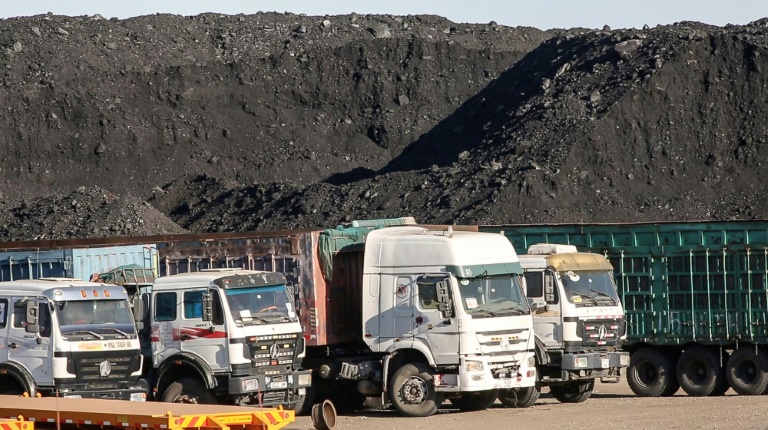
Mongolia is ramping up efforts to export coal to energy-hungry China, a government official told AFP, despite global efforts to end the use of the polluting fossil fuel.

World leaders are gathering at the COP27 conference in Sharm el-Sheikh to hash out the future of the planet, and China’s role in global carbon emissions has been front and centre.

Mongolia already sends 86 percent of its exports to China, with coal accounting for more than half the total, and is upgrading its infrastructure in the hopes of selling even more to its southern neighbour.

“We need to use this window of opportunity, use the next 10 years to be able to export as much coal as we can,” deputy mining minister Batnairamdal Otgonshar told AFP.

China is the world’s largest polluter and has pledged to achieve carbon neutrality by 2060. To that end, it is building out its renewable power grid to prepare for a move away from coal.

But its need for power far exceeds what renewable sources can supply. Chinese authorities ordered producers in spring to add 300 million tonnes of mining capacity this year — the equivalent of an extra month of coal production.

And Mongolia is keen to chip in, shipping 19 million metric tons of coal to China so far this year, according to the National Statistical Office, already exceeding 2021’s 16 million total.

Government officials want Mongolia to surpass the record 37 million tons sent in 2019 and to keep supplying China with a steady stream of coal well into the next decade, Batnairamdal said.

“Coking demand won’t decline in the next 10 years, but the technology may change,” he said. “The next 10 years remain an opportunity.”

Batnairamdal is pushing for Mongolia to invest heavily in coal, and new railways to connect to China’s ports and processing plants.

– ‘Window of opportunity’ –

Time is running out for Mongolia to sell off its thermal coal — used by power plants to make electricity — Batnairamdal said, as coal-fired plants are being phased out.

Soaring prices also mean there is little incentive for Ulaanbaatar to slow down. The value of Mongolia’s coal exports jumped to $4.5 billion in the first nine months of 2022, almost triple what they were over the same period last year.

An unofficial ban on Australian coal sparked by political disputes in 2020 has also opened the door wider to Mongolian exporters, analysts say.

“Without Australia, China’s appetite for low sulphur coking coal creates substantial demand for Mongolian miners,” said Simon Wu, a senior consultant at Wood Mackenzie, a research and consultancy group.

Mongolia missed their chance to export more coal to China after Australian imports fell off, Wu said, blaming a lack of railway connections.

Politicians in Ulaanbaatar are now working to fix that.

Ulaanbaatar finished a 233-kilometre (145 mile) rail line from the Tavan Tolgoi mine to the Gashuun Sukhait border in September, a project that took 14 years to complete.

Analysts also say relative political stability in Mongolia could help the government finish other long-delayed projects. 

– ‘Trade will open up’ –

Tumentsogt Tsevegmid, chairman of the Business Council of Mongolia, told AFP the infrastructure now in place, combined with projects already in progress, could allow Mongolia to push coal exports to 70 million tons annually, possibly by 2025.

“If China is willing to import more coal, and there is more work done to improve borders and railways lines, then trade will open up,” Tumentsogt said.

With a population of just 3.3 million, Mongolia has little heavy industry and does not by itself consume much coal compared to its southern neighbour. 

It accounts for just 0.11 percent of the world’s greenhouse gas emissions, according to the United Nations, but is already being severely affected by climate change.

Strong winter storms, along with drought and wildfires, have displaced communities, forcing nomadic families into the capital after losing their livestock. 

The United Nations says climate change is making these natural disasters more common in Mongolia, with overcrowding in unplanned areas of Ulaanbaatar leading to soil and air pollution — especially in winter, when raw coal is burned in residential stoves to fend off freezing temperatures.

“The contradiction will remain,” said Tumentsogt, when asked about Mongolia both producing coal for export while also investing in renewables.

“Mongolia has a dilemma, it needs short-term cash revenue to meet its fiscal needs and at the same time is trying to invest in costly renewables to reduce its carbon footprint, reduce air pollution and contribute to global sustainability efforts.”

Tumentsogt said Mongolia’s cash crunch has only one fix for now — sell more coal. 

“Coal deliveries and exports will remain as one of the major sources of revenue for the government and there are no other sources that can replace this fiscal need.”

Musk 'kills' new Twitter label, hours after launch

Twitter launched two new verification tools Wednesday but “killed” one of them hours later in a messy start to owner Elon Musk’s campaign to revamp the influential platform following his $44 billion buyout.

The social media platform unveiled its long-awaited Twitter Blue subscription service, which allows users to pay $7.99 per month for a coveted blue tick, as well as a separate gray “official” badge for some high-profile accounts.

But the new gray label was almost immediately scrapped, overshadowing the launch of Twitter Blue, which is currently only available on the mobile app on iPhones and in the United States.

“I just killed it,” Musk tweeted hours after the new tag was added to government accounts, big companies and major media outlets.

“Please note that Twitter will do lots of dumb things in coming months. We will keep what works & change what doesn’t,” the world’s richest man added.

The U-turn invited further scrutiny of Musk’s plans for Twitter a week after he laid off thousands of workers and drew a massive drop in spending by advertisers, who are wary of the site’s direction.

The blue tick has been a mark of an account’s authenticity and doubts emerged that public figures or media outlets would pay for it. The official gray tag was seen by observers as a workaround to solve that problem.

The launch of the new official label began Wednesday and was on the accounts of companies such as Apple and BMW, as well as public ones such as the White House and major media outlets.

But only hours later, it was gone for many of them.

Accounts that had received the “official” badge — including Agence France-Presse, BBC News, Pope Francis and Kanye West — saw the mention disappear.

– ‘A lot of work’ –

Esther Crawford, an executive who announced the gray tick on Tuesday, insisted that the official label was still going to be part of the relaunch, but that “we are just focusing on government and commercial entities to begin with.”

“There are no sacred cows in product at Twitter anymore. Elon is willing to try lots of things — many will fail, some will succeed,” she tweeted Wednesday.

“The goal is to find the right mix of successful changes to ensure the long-term health and growth of the business.”

During a panel for advertisers broadcast on Twitter, Musk exercised some damage control, admitting that a lot of work lay ahead to get the site to the place he wished to reach.

“We’ve got a lot to do on the software side. I can’t emphasize that enough,” he said.

Musk took control of Twitter after a drawn-out legal battle in which the mercurial tycoon tried to renege on a deal that many believe he overpaid for.

It emerged on Tuesday that Musk sold $4 billion worth of shares in Tesla to help pay for a transaction in which he took on billions of dollars in debt.

Twitter Blue is seen as one way to overcome the loss in advertisers since Musk took over.

Twitter last week fired half of its 7,500 employees, which Musk said was necessary as the company was losing $4 million a day.

Musk 'kills' new Twitter label, hours after launch

Twitter launched two new verification tools Wednesday but “killed” one of them hours later in a messy start to owner Elon Musk’s campaign to revamp the influential platform following his $44 billion buyout.

The social media platform unveiled its long-awaited Twitter Blue subscription service, which allows users to pay $7.99 per month for a coveted blue tick, as well as a separate gray “official” badge for some high-profile accounts.

But the new gray label was almost immediately scrapped, overshadowing the launch of Twitter Blue, which is currently only available on the mobile app on iPhones and in the United States.

“I just killed it,” Musk tweeted hours after the new tag was added to government accounts, big companies and major media outlets.

“Please note that Twitter will do lots of dumb things in coming months. We will keep what works & change what doesn’t,” the world’s richest man added.

The U-turn invited further scrutiny of Musk’s plans for Twitter a week after he laid off thousands of workers and drew a massive drop in spending by advertisers, who are wary of the site’s direction.

The blue tick has been a mark of an account’s authenticity and doubts emerged that public figures or media outlets would pay for it. The official gray tag was seen by observers as a workaround to solve that problem.

The launch of the new official label began Wednesday and was on the accounts of companies such as Apple and BMW, as well as public ones such as the White House and major media outlets.

But only hours later, it was gone for many of them.

Accounts that had received the “official” badge — including Agence France-Presse, BBC News, Pope Francis and Kanye West — saw the mention disappear.

– ‘A lot of work’ –

Esther Crawford, an executive who announced the gray tick on Tuesday, insisted that the official label was still going to be part of the relaunch, but that “we are just focusing on government and commercial entities to begin with.”

“There are no sacred cows in product at Twitter anymore. Elon is willing to try lots of things — many will fail, some will succeed,” she tweeted Wednesday.

“The goal is to find the right mix of successful changes to ensure the long-term health and growth of the business.”

During a panel for advertisers broadcast on Twitter, Musk exercised some damage control, admitting that a lot of work lay ahead to get the site to the place he wished to reach.

“We’ve got a lot to do on the software side. I can’t emphasize that enough,” he said.

Musk took control of Twitter after a drawn-out legal battle in which the mercurial tycoon tried to renege on a deal that many believe he overpaid for.

It emerged on Tuesday that Musk sold $4 billion worth of shares in Tesla to help pay for a transaction in which he took on billions of dollars in debt.

Twitter Blue is seen as one way to overcome the loss in advertisers since Musk took over.

Twitter last week fired half of its 7,500 employees, which Musk said was necessary as the company was losing $4 million a day.

Close Bitnami banner
Bitnami