AFP

China imposes Covid lockdown on 600,000 people around iPhone plant

Chinese authorities imposed lockdowns on 600,000 people in the area surrounding the world’s largest iPhone factory on Wednesday after workers fled to avoid a coronavirus outbreak and the resulting restrictions.

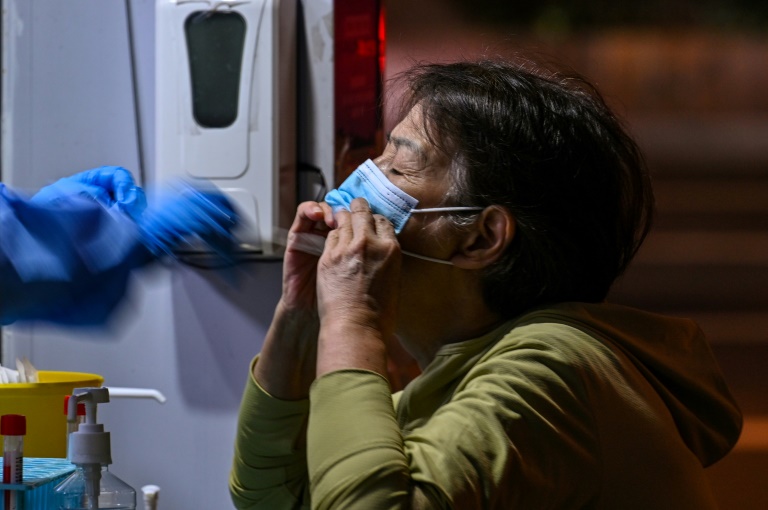
All people except Covid-prevention volunteers and essential workers “must not leave their residences except to receive Covid tests and emergency medical treatment”, officials from central China’s Zhengzhou Airport Economy Zone said.

The move comes after images emerged on Chinese social media last week showing people breaking out of the facility, which is run by Taiwanese tech giant Foxconn and makes products for Apple.

Some employees were complaining online of poor conditions, a lack of supplies and having to flee the factory on foot to avoid Covid transport curbs. Foxconn employs hundreds of thousands of workers in Zhengzhou.

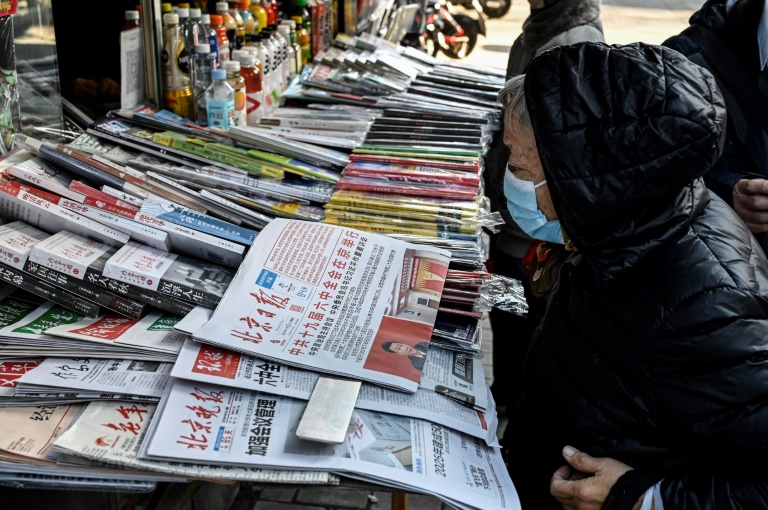
China is the last major economy committed to a zero-Covid strategy, persisting with snap lockdowns, mass testing and lengthy quarantines in a bid to stamp out emerging outbreaks.

But new variants have tested local officials’ ability to snuff out flare-ups faster than they can spread, causing much of the country to live under an ever-changing mosaic of Covid curbs.

The district in Zhengzhou city said Wednesday that all businesses would be required to work from home, with only “key enterprises” allowed to continue operating. It did not specify which businesses fell under that category.

Only medical vehicles and those delivering essentials are allowed on the streets.

The district’s more than 600,000 residents will have to take nucleic acid tests every day, the local government said, warning that it would “resolutely crack down on all kinds of violations”.

The Communist Party-run Dahe Daily said on Wednesday local authorities would “thoroughly disinfect” Foxconn’s facilities, including employee dormitories, over the next three days. Workers quarantining at the factory would need to show seven days of negative tests before leaving for their hometowns.

The paper also said the government had promised to provide timely meals and to set up a counselling hotline for workers.

– ‘Closed loop’-

Foxconn told AFP on Wednesday its Zhengzhou park “maintains closed-loop operation”, without providing details.

The company said at the weekend it was testing employees daily and offering transport to those who wanted to leave, after the videos on social media showed employees walking down motorways with their suitcases.

Apple did not immediately respond to an AFP request for comment.

Local governments in the area surrounding Zhengzhou city have asked Foxconn workers to register with authorities if they return home and to complete several days of quarantine upon arrival.

The company also said on Tuesday it would quadruple bonuses for employees willing to remain at the factory during the outbreak.

Chinese social media users accused Zhengzhou authorities on Wednesday of “performatively” lifting Covid restrictions after the city announced a day earlier it would “restore normal production and life”.

“In the morning you lift the lockdown, then at night you lock down again, what are you trying to do?” Weibo user Taodixing asked.

China reported more than 2,000 fresh domestic infections on Wednesday for the third day in a row.

Henan province, where Zhengzhou is located, officially reported 359 Covid-19 infections on Wednesday, a jump from Tuesday’s 104.

The southern Chinese manufacturing hub of Guangzhou also announced partial lockdowns in several districts this week in response to rising case numbers.

According to analysts Capital Economics, the number of people in quarantine in China is at its highest level since the Shanghai lockdown in spring, with outbreaks in more than 50 cities.

Fed poised for further US rate hike as political pressure mounts

US central bankers are expected to announce another steep interest rate hike Wednesday as they try to prevent soaring inflation from becoming ingrained, but politicians are piling on the pressure in the final days of the midterm elections.

The Federal Reserve has embarked on an aggressive campaign to cool the economy this year as inflation surged to its highest rate in decades, squeezing the budgets of American families and propelling economic issues to the top of voter priorities.

To raise borrowing costs and lower demand, the central bank has cranked up the benchmark lending rate five times this year, including three straight hikes of 0.75 percentage points.

Many analysts expect the Fed to adopt a fourth straight three-quarter point hike on Wednesday, and all eyes are on signs that it could shift to a less hawkish stance in the coming months.

“There’s a growing belief that the central bank will signal a desire to ease off the brake over the following few meetings,” said Oanda senior market analyst Craig Erlam in a note.

But it will be challenging for Fed Chair Jerome Powell to tell markets that the policy-setting Federal Open Market Committee (FOMC) has begun mulling a step-down from its current path.

“Markets will likely interpret any comments about a downshift in tightening as dovish, signaling the end of the rate hiking cycle,” said economist Rubeela Farooqi of High Frequency Economics in an analysis.

And if inflation continues to remain strong, the Fed could press on with “a series of half-point hikes, rather than further slowing the pace of increases,” she added.

With its deliberations ending at midday, the FOMC is expected to announce its decision at 1800 GMT Wednesday.

Powell’s press conference after the meeting will be closely watched for clues on how much further he thinks the Fed must go before declaring victory in the inflation fight.

– Political pressure –

As central bankers walk a tightrope fighting inflation while avoiding tipping the economy into a recession, politicians are ramping up pressure on Fed officials amid growing worries of a downturn.

Senator Sherrod Brown, the Democratic chair of the Senate Banking Committee, urged the Fed last month to show commitment to its multi-pronged legal mandate — of promoting maximum employment, stable prices, and moderate long-term interest rates in the economy.

“For working Americans who already feel the crush of inflation, job losses will make it much worse,” Brown said in a letter to Powell.

Democratic senators including Elizabeth Warren also expressed concern this week over the Fed’s rate hikes, as President Joe Biden’s party faces growing voter frustration over high inflation.

“It may come too late to avoid a recession but the Fed has been very clear from the start that while a soft landing is the desirable and attainable outcome, getting inflation under control is the primary focus,” said Oanda’s Erlam.

As higher rates take the heat out of economic momentum, there is likely to be “moderation in the labor market before a mild recession in (the first half of) 2023 brings about more marked change,” said economist Matthew Martin of Oxford Economics in an analysis.

'Law and order returned' Hong Kong's US-sanctioned leader tells bankers

Hong Kong’s US-sanctioned leader said political stability and business confidence have been restored following the crushing of democracy protests, as he opened a summit on Wednesday attended by global bankers including leading Wall Street executives.

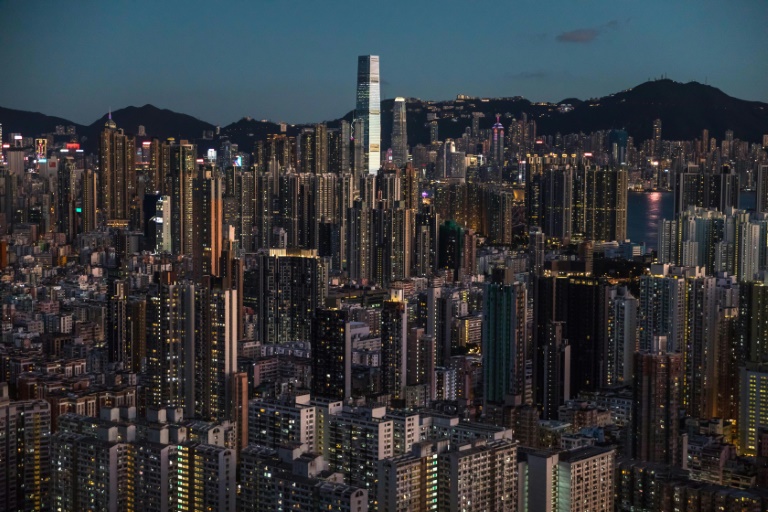
The Asian business hub is hosting a week of high-profile events after years of political unrest and pandemic travel curbs tarnished the city’s business-friendly reputation, sparked an exodus of talent and battered its economy.

The marquee event at the Four Seasons hotel was heralded by city leader John Lee as proof that the previously shuttered metropolis is back in business.

“We were, we are and we will remain one of the world’s leading financial centres. And you can take that to the bank,” Lee told delegates.

A former security chief who took office this year, Lee is among the Chinese officials sanctioned by Washington for cracking down on rights in Hong Kong after huge democracy protests. 

Most of the city’s political opposition are either behind bars or have fled overseas since those protests.

Blacklisted individuals are unable to hold accounts with the same banking giants attending the summit.

“Social disturbance is clearly in the past and has given way to stability, to growing business and community confidence in Hong Kong’s future,” Lee said in his summit speech. 

“Law and order has returned. The worst is behind us.”

– US criticism –

Among those speaking at the summit were Goldman Sachs head David Solomon, Morgan Stanley CEO James Gorman, Blackrock president Rob Kapito and JP Morgan Chase counterpart Daniel Pinto.

But their presence is not without controversy.

Last week, the leaders of the bipartisan US Congressional-Executive Commission on China called on Wall Street executives not to attend, accusing them of “whitewashing human rights violations” and giving political cover to Lee.

The row illustrates the tightrope faced by multinationals in Hong Kong, which is both a lucrative business gateway for China and a flashpoint in increasingly tense relations between Beijing and Western powers.

In his speech Lee said the city has an “irreplaceable connection” to mainland China for global businesses “as the centre of economic gravity in the world shifts eastward”.

The summit comes at a time of uncertainty over China’s economy under President Xi Jinping.

Xi, who secured a norm-breaking third term last month, has overseen regulatory crackdowns clipping the wings of some major Chinese companies and is still sticking to a strict zero-Covid strategy.

– ‘Don’t read international media’ –

Lee’s speech was followed by recorded interviews with three top officials involved in regulation, including Fang Xinghai, vice chairman of the China Securities Regulatory Commission, who criticised international press coverage of China.

“Don’t read too much of international media,” Fang said, sparking laughter from the audience.

Those comments received backing from both UBS chairman Colm Kelleher and Liu Jin, president of Bank of China.

“Like Vice Chairman Fang said we’re not reading the American press, we all buy the story,” Kelleher told delegates.

He added that while investors were closely watching Beijing for signs of reopening, international bankers were “very pro-China”.

Much of the discussion focused on the wider global economy where spiralling inflation rates and geopolitical uncertainty have hit sentiment.

“My gut is the central banks will, in aggregate, tame inflation,” Morgan Stanley chief Gorman told delegates in one of the more positive assessments.

Former governor of the Bank of England Mark Carney painted a more stark portrait.

“We’re headed very likely to a global recession,” he said, citing — among other things — China’s strict zero-Covid controls and the fallout in Europe of Russia’s invasion of Ukraine. 

The Hong Kong summit is being held in a bubble that keeps delegates away from residents. 

While Hong Kong scrapped mandatory quarantine in September — a key demand of businesses — it maintains layers of pandemic restrictions long since abandoned almost everywhere else.

Overseas arrivals must undergo frequent testing and are unable to go to bars and restaurants for their first three days in the city.

Restrictions on various gatherings remain and masks are compulsory, including outdoors.

Hong Kong’s leaders are keen to resuscitate the city’s fortunes. The city is headed for a full recession with gross domestic product plunging 4.5 percent in the third quarter of this year. 

Its stock exchange is among the world’s worst performers, down more than 50 percent this year to levels last seen in 2009.

China is the last major economy committed to a zero-Covid strategy, persisting with snap lockdowns, mass testing and lengthy quarantines that have stamped out outbreaks but created growing economic pain.

'Law and order returned' Hong Kong's US-sanctioned leader tells bankers

Hong Kong’s US-sanctioned leader said political stability and business confidence have been restored following the crushing of democracy protests, as he opened a summit on Wednesday attended by global bankers including leading Wall Street executives.

The Asian business hub is hosting a week of high-profile events after years of political unrest and pandemic travel curbs tarnished the city’s business-friendly reputation, sparked an exodus of talent and battered its economy.

The marquee event at the Four Seasons hotel was heralded by city leader John Lee as proof that the previously shuttered metropolis is back in business.

“We were, we are and we will remain one of the world’s leading financial centres. And you can take that to the bank,” Lee told delegates.

A former security chief who took office this year, Lee is among the Chinese officials sanctioned by Washington for cracking down on rights in Hong Kong after huge democracy protests. 

Most of the city’s political opposition are either behind bars or have fled overseas since those protests.

Blacklisted individuals are unable to hold accounts with the same banking giants attending the summit.

“Social disturbance is clearly in the past and has given way to stability, to growing business and community confidence in Hong Kong’s future,” Lee said in his summit speech. 

“Law and order has returned. The worst is behind us.”

– US criticism –

Among those speaking at the summit were Goldman Sachs head David Solomon, Morgan Stanley CEO James Gorman, Blackrock president Rob Kapito and JP Morgan Chase counterpart Daniel Pinto.

But their presence is not without controversy.

Last week, the leaders of the bipartisan US Congressional-Executive Commission on China called on Wall Street executives not to attend, accusing them of “whitewashing human rights violations” and giving political cover to Lee.

The row illustrates the tightrope faced by multinationals in Hong Kong, which is both a lucrative business gateway for China and a flashpoint in increasingly tense relations between Beijing and Western powers.

In his speech Lee said the city has an “irreplaceable connection” to mainland China for global businesses “as the centre of economic gravity in the world shifts eastward”.

The summit comes at a time of uncertainty over China’s economy under President Xi Jinping.

Xi, who secured a norm-breaking third term last month, has overseen regulatory crackdowns clipping the wings of some major Chinese companies and is still sticking to a strict zero-Covid strategy.

– ‘Don’t read international media’ –

Lee’s speech was followed by recorded interviews with three top officials involved in regulation, including Fang Xinghai, vice chairman of the China Securities Regulatory Commission, who criticised international press coverage of China.

“Don’t read too much of international media,” Fang said, sparking laughter from the audience.

Those comments received backing from both UBS chairman Colm Kelleher and Liu Jin, president of Bank of China.

“Like Vice Chairman Fang said we’re not reading the American press, we all buy the story,” Kelleher told delegates.

He added that while investors were closely watching Beijing for signs of reopening, international bankers were “very pro-China”.

Much of the discussion focused on the wider global economy where spiralling inflation rates and geopolitical uncertainty have hit sentiment.

“My gut is the central banks will, in aggregate, tame inflation,” Morgan Stanley chief Gorman told delegates in one of the more positive assessments.

Former governor of the Bank of England Mark Carney painted a more stark portrait.

“We’re headed very likely to a global recession,” he said, citing — among other things — China’s strict zero-Covid controls and the fallout in Europe of Russia’s invasion of Ukraine. 

The Hong Kong summit is being held in a bubble that keeps delegates away from residents. 

While Hong Kong scrapped mandatory quarantine in September — a key demand of businesses — it maintains layers of pandemic restrictions long since abandoned almost everywhere else.

Overseas arrivals must undergo frequent testing and are unable to go to bars and restaurants for their first three days in the city.

Restrictions on various gatherings remain and masks are compulsory, including outdoors.

Hong Kong’s leaders are keen to resuscitate the city’s fortunes. The city is headed for a full recession with gross domestic product plunging 4.5 percent in the third quarter of this year. 

Its stock exchange is among the world’s worst performers, down more than 50 percent this year to levels last seen in 2009.

China is the last major economy committed to a zero-Covid strategy, persisting with snap lockdowns, mass testing and lengthy quarantines that have stamped out outbreaks but created growing economic pain.

In Niagara Falls, bitcoin mining brings a new roar to town

In the US border town of Niagara Falls, residents accustomed to the soothing roar of the famous waterfalls recently discovered a much less pleasant sound: the “haunting hum” of bitcoin mining farms.

“I get four hours of sleep, maybe, because of that constant noise,” said Elizabeth Lundy, an 80-year-old retired hairdresser. “I can hear the noise even through the storm windows.” 

On a sunny October morning, a mechanical whirring could be heard clearly on Lundy’s front porch. The noise turned to a deafening din as one walked two blocks toward Buffalo Avenue where the US bitcoin miners operate.

Bitcoin mining farms have multiplied in the United States since China halted this activity in 2021. The United States is now emerging as a global leader in the industry.

Attracted by the cheap hydroelectric power available in Niagara Falls, Blockfusion took up residence at a former coal factory there in 2019, followed by US Bitcoin in 2020, which operates from a former sodium plant.

US Bitcoin installed hundreds of noisy fans outside, needed to cool the thousands of computer graphics cards that heat up as they solve the complex equations required to earn them cryptocurrency.

– ‘A 747 jet’ –

“It sounds like a 747 jet,” said Frank Peller, a 70-year-old resident who lives in a brownstone more than a mile from this crypto mining operation.

“It’s the loudest in the morning, at night and if there’s high humidity and a breeze,” he added.

He once could sit in his backyard and hear the roar of Niagara Falls more than two miles away. But now, “you can’t hear it at all” and you can’t avoid “the roar of bitcoin mining every day.” 

Bryan Maacks, who lives closer to Buffalo Avenue, described a “haunting, vibrating hum” — a vexing throb that has run through his house day and night since last winter. 

“It’s very mentally daunting. It’s like having a toothache for 24 hours a day every day,” Maacks, 65, said.

He said he wears headphones all the time and uses a fan to block out the noise to get to sleep. 

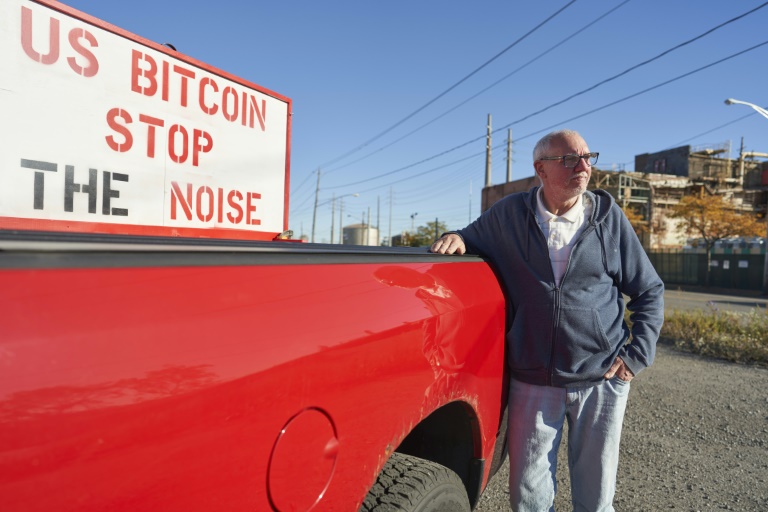
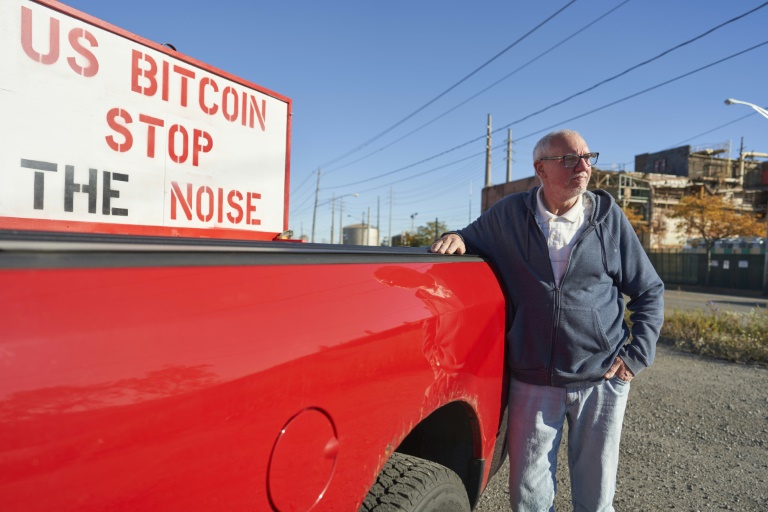
Maacks launched a petition and made a “US Bitcoin Stop the Noise” sign on the back of his red pickup truck, which he parked for several weeks in front of the company.

“The noise pollution of this industry is like nothing else that has been there,” said Niagara Falls Mayor Robert Restaino in his office decorated with paintings of the famous waterfalls.

That’s quite a statement in a city that embraced heavy industry for decades.

Faced with a flood of complaints, mainly regarding US Bitcoin, the mayor decreed a moratorium on any new mining activity in December 2021, then in early September set strict noise limits of 40 to 50 decibels near residential areas. 

– ‘Noise barrier’ –

US Bitcoin said it’s taking steps to address the problem.

“Immediately upon these concerns being flagged, we erected a plastic barrier,” the company said in a statement to AFP.

“We also conducted acoustic studies and had plans drawn for a larger noise abatement wall” that was prevented from being built by the moratorium, the company said.

In the nearby town of North Tonawanda, the Canadian mining company Digihost, is also facing the ire of local residents, and has undertaken the construction of a soundproofing wall more than six meters (20 feet) high, at an estimated cost of several hundred thousand dollars, Mayor Austin Tylec said.

In Niagara Falls, City Hall ordered the closure of the two bitcoin farms in early October until they comply with new local statutes.

While both companies say they are cooperating with the city, only Blockfusion had shut down its processors by the end of October and reduced the number of fans running, with US Bitcoin’s still running at full capacity, an AFP reporter found.

“If they continue to refuse to comply with our order to stop, then we’ll have to be in court,” Restaino said.

Such a legal battle already pits the bitcoin farm Red Dog Technologies against local authorities in Tennessee. Other complaints about noise pollution in the vicinity of computer centers have arisen from North Carolina to Pennsylvania.

“I’m going to be protesting till the hum is gone, basically, till I get the roar of the falls back because that’s what I used to hear,” Maacks said.   

In Niagara Falls, bitcoin mining brings a new roar to town

In the US border town of Niagara Falls, residents accustomed to the soothing roar of the famous waterfalls recently discovered a much less pleasant sound: the “haunting hum” of bitcoin mining farms.

“I get four hours of sleep, maybe, because of that constant noise,” said Elizabeth Lundy, an 80-year-old retired hairdresser. “I can hear the noise even through the storm windows.” 

On a sunny October morning, a mechanical whirring could be heard clearly on Lundy’s front porch. The noise turned to a deafening din as one walked two blocks toward Buffalo Avenue where the US bitcoin miners operate.

Bitcoin mining farms have multiplied in the United States since China halted this activity in 2021. The United States is now emerging as a global leader in the industry.

Attracted by the cheap hydroelectric power available in Niagara Falls, Blockfusion took up residence at a former coal factory there in 2019, followed by US Bitcoin in 2020, which operates from a former sodium plant.

US Bitcoin installed hundreds of noisy fans outside, needed to cool the thousands of computer graphics cards that heat up as they solve the complex equations required to earn them cryptocurrency.

– ‘A 747 jet’ –

“It sounds like a 747 jet,” said Frank Peller, a 70-year-old resident who lives in a brownstone more than a mile from this crypto mining operation.

“It’s the loudest in the morning, at night and if there’s high humidity and a breeze,” he added.

He once could sit in his backyard and hear the roar of Niagara Falls more than two miles away. But now, “you can’t hear it at all” and you can’t avoid “the roar of bitcoin mining every day.” 

Bryan Maacks, who lives closer to Buffalo Avenue, described a “haunting, vibrating hum” — a vexing throb that has run through his house day and night since last winter. 

“It’s very mentally daunting. It’s like having a toothache for 24 hours a day every day,” Maacks, 65, said.

He said he wears headphones all the time and uses a fan to block out the noise to get to sleep. 

Maacks launched a petition and made a “US Bitcoin Stop the Noise” sign on the back of his red pickup truck, which he parked for several weeks in front of the company.

“The noise pollution of this industry is like nothing else that has been there,” said Niagara Falls Mayor Robert Restaino in his office decorated with paintings of the famous waterfalls.

That’s quite a statement in a city that embraced heavy industry for decades.

Faced with a flood of complaints, mainly regarding US Bitcoin, the mayor decreed a moratorium on any new mining activity in December 2021, then in early September set strict noise limits of 40 to 50 decibels near residential areas. 

– ‘Noise barrier’ –

US Bitcoin said it’s taking steps to address the problem.

“Immediately upon these concerns being flagged, we erected a plastic barrier,” the company said in a statement to AFP.

“We also conducted acoustic studies and had plans drawn for a larger noise abatement wall” that was prevented from being built by the moratorium, the company said.

In the nearby town of North Tonawanda, the Canadian mining company Digihost, is also facing the ire of local residents, and has undertaken the construction of a soundproofing wall more than six meters (20 feet) high, at an estimated cost of several hundred thousand dollars, Mayor Austin Tylec said.

In Niagara Falls, City Hall ordered the closure of the two bitcoin farms in early October until they comply with new local statutes.

While both companies say they are cooperating with the city, only Blockfusion had shut down its processors by the end of October and reduced the number of fans running, with US Bitcoin’s still running at full capacity, an AFP reporter found.

“If they continue to refuse to comply with our order to stop, then we’ll have to be in court,” Restaino said.

Such a legal battle already pits the bitcoin farm Red Dog Technologies against local authorities in Tennessee. Other complaints about noise pollution in the vicinity of computer centers have arisen from North Carolina to Pennsylvania.

“I’m going to be protesting till the hum is gone, basically, till I get the roar of the falls back because that’s what I used to hear,” Maacks said.   

Punk poet Patti Smith says writing is her 'essential' art form

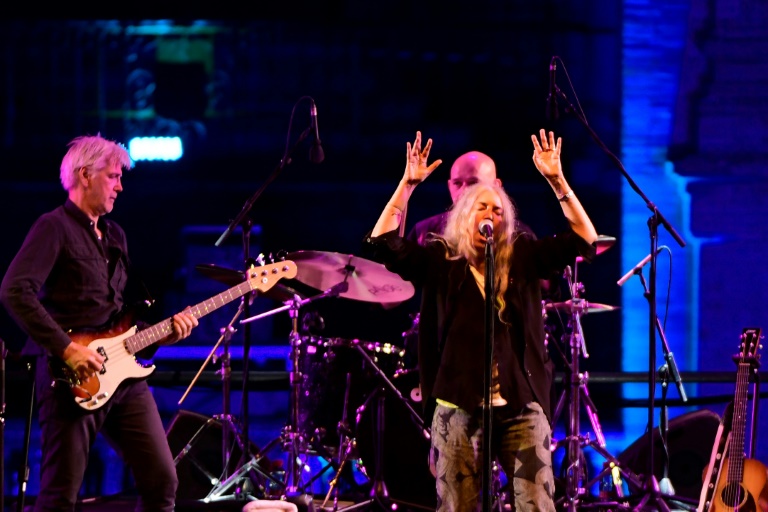
Her Godmother of Punk Rock icon status made her a household name, but for Patti Smith, it’s writing where she finds her true artistic voice.

Along with her musical performance and literary pursuits, Smith is a painter and photographer, but if she had to choose one form? 

“I’d pick writing.”

“Writing is my most essential form of expression,” the artist told AFP in Chicago, where she recently received the prestigious Ruth Lilly Poetry Prize.

Smith, who was inducted into the Rock and Roll Hall of Fame in 2007, is perhaps best known for her seminal punk album “Horses.”

But poetry was an earlier love, and “Horses” begins with lines from a poem that she penned.

“Performing poetry, reading poetry was very strong in New York in the late 1960s and early 1970s,” she said. 

But “I had so much energy and was really a child of rock and roll, so standing there reading a poem was never satisfying to me,” Smith continued. 

“I quickly merged my poems with a few chords as something to propel me to improvise more poetry, and it sort of evolved into a rock and roll band.”

While Smith’s album and her band went on to critical acclaim, writing always was at its backbone, she said, pointing to her song “Redondo Beach” which was initially a poem.

“Throughout all my albums and even the prose that I write, poetry is still a thread,” she said.

“Horses” is widely considered one of the best albums of all time, but for Smith it was her 2010 book “Just Kids” — a memoir she promised her best friend and muse Robert Mapplethorpe that she would write hours before he died — that became her life’s greatest success.

“I’d never written a book of nonfiction, but he asked me if I would write our story,” she recalled.

Mapplethorpe, a photographer, died at age 42. He and Smith shared a deep friendship, romance and lifelong creative bond.

“My greatest success in my life has been the book that he asked me to write and it almost makes me cry. Robert got his wish and I kept my vow and wrote the book as best I could.”

“Just Kids” won The National Book Award and introduced Smith to an entirely new generation of fans, while outselling all of her music albums along the way.

She said young people used to tell her “Horses” changed their lives — but “it was usurped by ‘Kids.'” 

“I think it’s really opened up many doors for me,” she continued. “Other books were examined and people read them and now when we have our concerts, it’s a wonderful thing to step on stage and see a sea of people under 30, even under 25.”

“To see all these young people who are interested in your work and giving of their energy, I’m so grateful for that.”

– People power –

Smith, who turns 76 this December, said she has no plans to slow her output.

She’s set to release “A Book of Days” later this month, a volume based on her Instagram account’s musings.

She’s also considering a serialized book entitled “The Melting,” based on her Substack account posts.

Smith has maintained her prolific output for years but she says “things don’t necessarily come easy.”

“I’ve had to plug away my whole life.”

She considers herself an optimist but she’s “deeply concerned and heartbroken” about the state of the world right now, citing environmental crises along with the rise of nationalism globally and the Russian invasion of Ukraine.

“There’s so many things happening simultaneously right now, it’s overwhelming,” she said. “But I have kids, so I’m always seeking in my mind ways to make the world better for them.”

Persevering means writing daily and trying her best to help others.

“We just have to keep doing our work and find a way to keep ourselves healthy and just help one another. It seems so elemental but it’s also required,” she said.

Smith said she’s working on writing a new song inspired by the women protesting in Iran, and still believes, like one of her famous songs, that people have the power.

“I absolutely believe it,” she said. “It’s just whether we choose to use it or not. That’s what the women of Iran are doing.”

“That’s the only tool we have.”

China imposes Covid lockdown on area around iPhone factory

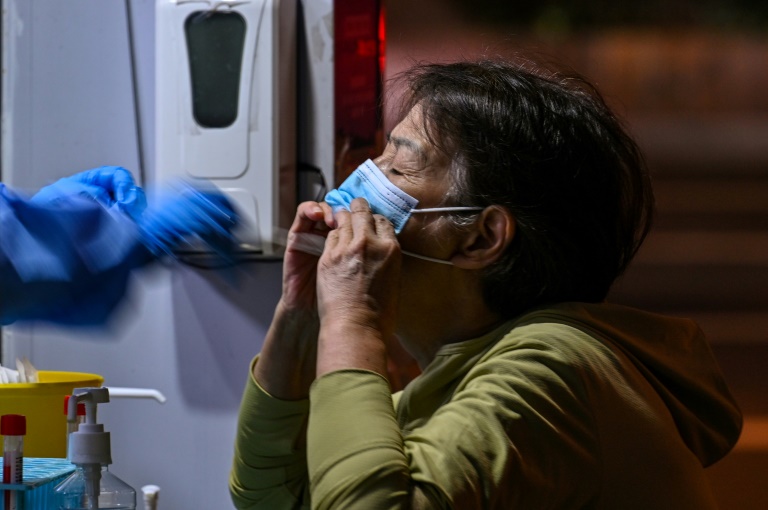
Chinese authorities on Wednesday locked down the area surrounding the world’s largest iPhone factory after workers fled the facility to avoid a virus outbreak and the resulting restrictions.

All people except Covid-prevention volunteers and essential workers “must not leave their residences except to receive Covid tests and emergency medical treatment”, officials from central China’s Zhengzhou Airport Economy Zone said Wednesday. 

The move comes after images emerged last week on Chinese social media showing people breaking out of the facility, which is run by Taiwanese tech giant Foxconn and employs hundreds of thousands of workers.

Employees were complaining online of poor conditions and having to flee the factory on foot to avoid Covid transport curbs.

China is the last major economy committed to a zero-Covid strategy, persisting with snap lockdowns, mass testing and lengthy quarantines in a bid to stamp out emerging outbreaks.

But new variants have tested local officials’ ability to snuff out flare-ups faster than they can spread, causing much of the country to live under an ever-changing mosaic of Covid curbs.

The district in Zhengzhou city said Wednesday that all businesses would be required to work from home, with only “key enterprises” in the district allowed to continue operating, without specifying which businesses fell under this category.

Only medical vehicles and those delivering essentials are allowed on the streets.

The district’s more than 600,000 residents will have to take nucleic acid tests every day, the local government said, warning that it would “resolutely crack down on all kinds of violations.”

– ‘Closed loop’-

Foxconn said over the weekend that it was testing employees daily and keeping them in a “closed loop” as well as offering transport to those who wanted to leave, after the videos on social media showed employees walking down motorways with their suitcases.

Local governments in the area surrounding Zhengzhou city have asked Foxconn workers to register with authorities if they return home and to complete several days of quarantine upon arrival.

The company added Tuesday that it would quadruple bonuses for employees willing to remain at the factory during the outbreak.

China reported more than 2,000 fresh domestic infections on Wednesday for the third day in a row.

Henan province, where Zhengzhou is located, officially reported 359 Covid-19 infections on Wednesday, a jump from Tuesday’s 104.

The southern Chinese manufacturing hub of Guangzhou also announced partial lockdowns in several districts this week in response to rising case numbers.

China imposes Covid lockdown on area around iPhone factory

Chinese authorities on Wednesday locked down the area surrounding the world’s largest iPhone factory after workers fled the facility to avoid a virus outbreak and the resulting restrictions.

All people except Covid-prevention volunteers and essential workers “must not leave their residences except to receive Covid tests and emergency medical treatment”, officials from central China’s Zhengzhou Airport Economy Zone said Wednesday. 

The move comes after images emerged last week on Chinese social media showing people breaking out of the facility, which is run by Taiwanese tech giant Foxconn and employs hundreds of thousands of workers.

Employees were complaining online of poor conditions and having to flee the factory on foot to avoid Covid transport curbs.

China is the last major economy committed to a zero-Covid strategy, persisting with snap lockdowns, mass testing and lengthy quarantines in a bid to stamp out emerging outbreaks.

But new variants have tested local officials’ ability to snuff out flare-ups faster than they can spread, causing much of the country to live under an ever-changing mosaic of Covid curbs.

The district in Zhengzhou city said Wednesday that all businesses would be required to work from home, with only “key enterprises” in the district allowed to continue operating, without specifying which businesses fell under this category.

Only medical vehicles and those delivering essentials are allowed on the streets.

The district’s more than 600,000 residents will have to take nucleic acid tests every day, the local government said, warning that it would “resolutely crack down on all kinds of violations.”

– ‘Closed loop’-

Foxconn said over the weekend that it was testing employees daily and keeping them in a “closed loop” as well as offering transport to those who wanted to leave, after the videos on social media showed employees walking down motorways with their suitcases.

Local governments in the area surrounding Zhengzhou city have asked Foxconn workers to register with authorities if they return home and to complete several days of quarantine upon arrival.

The company added Tuesday that it would quadruple bonuses for employees willing to remain at the factory during the outbreak.

China reported more than 2,000 fresh domestic infections on Wednesday for the third day in a row.

Henan province, where Zhengzhou is located, officially reported 359 Covid-19 infections on Wednesday, a jump from Tuesday’s 104.

The southern Chinese manufacturing hub of Guangzhou also announced partial lockdowns in several districts this week in response to rising case numbers.

Top Chinese regulator urges investors to avoid foreign news

Investors should avoid reading international press coverage of China’s economy, a top Chinese securities regulator told a summit of global bankers on Wednesday in comments that received endorsement from two senior executives.

The advice was made by Fang Xinghai, vice chairman of China Securities Regulatory Commission, in a pre-recorded interview that was broadcast to a summit being held in Hong Kong.

“I deal with international investors quite a lot in my daily work and I am afraid some of them have read too much the international media reports about events in China,” he said.

“A lot of media reports, let me put it this way, they really don’t understand China very well and they have a short term focus… Don’t read too much of international media,” he added.

Hong Kong is hosting a week of high-profile events after years of political unrest and pandemic travel curbs tarnished the city’s business-friendly reputation, sparked an exodus of talent and battered its economy.

Senior executives from banks such as Goldman Sachs, Morgan Stanley, Blackrock, JP Morgan Chase, UBS, HSBC and Standard Chartered are among those attending.

In a later panel discussion UBS chairman Colm Kelleher backed Fang’s comments.

“Like Vice Chairman Fang said we’re not reading the American press, we all buy the story,” he said.

Kelleher added that international bankers were “very pro-China” and watching closely as to whether the world’s second largest economy would re-open.

Liu Jin, president of Bank of China, also referenced Fang’s remarks in comments about China’s deeply indebted property market. 

“Don’t worry too much. As Mr Fang said, don’t read too much negative reports,” he told delegates. 

China is the last major economy committed to a zero-Covid strategy, persisting with snap lockdowns, mass testing and lengthy quarantines.

The measures have stamped out outbreaks but created growing economic pain for local and international businesses.

Huge defaults have hit China’s property sector in the last 18 months, much of it revelations that were first reported on by international media.

Domestic media is state-controlled in China and widespread censorship is used to suppress negative stories or critical coverage.

Foreign media face intense restrictions but have more leeway and are a conduit of information in a country where official economic data can be sometimes opaque.

In his comments Fang told investors to “find out what’s really going on in China, and what’s the real intention of our government, by themselves”.

However China has been largely cut off from the rest of the world for the last 2.5 years by pandemic travel controls.

President Xi Jinping, who secured a norm-breaking third term last month, has yet to signal any timeframe for whether and when China might move away from its zero-Covid controls.

Close Bitnami banner
Bitnami