AFP

Sony hikes net profit forecast as weak yen boosts business

Sony raised its annual net profit and sales forecasts on Tuesday, saying the weak yen had boosted its bottom line in sectors including gaming, music and movies.

The Japanese conglomerate said it now expects net profit to March 2023 to reach 840 billion yen ($5.7 billion), up from 800 billion yen previously forecast.

It also slightly increased its sales outlook to 11.6 trillion yen.

The yen has lost more than 20 percent of its value this year, inflating profits for Japanese companies that operate overseas.

Sony said its massive global entertainment businesses, from music streaming services to blockbuster films and the PlayStation, were enjoying the impact of the cheap yen.

Sales were expected to be higher than forecast in several sectors but “partially offset by lower-than-expected sales in the financial services segment”, the company said.

In the first half of the current financial year, net profit was 482.2 billion yen, up 13 percent on-year, while sales rose nine percent to five trillion yen.

Nearly two years since its launch, the company’s PlayStation 5 console remains notoriously difficult to find.

But “hardware shipments are expected to grow significantly” in the second half, while software sales will be “very tough”, said Hideki Yasuda, senior analyst at Toyo Securities.

“This year, software makers are postponing the sale of major titles, partly because production of the PS5 has been slow,” Yasuda told AFP ahead of the earnings release.

With most of the forex-related boost coming from software sales, if the situation does not change it could start to have a negative impact on Sony’s gaming earnings, the analyst warned.

“The PS5 is selling at a very high price, but it is well balanced cost-wise … if the dollar strengthens, it’s going to be tricky,” he said.

Behind the yen’s dramatic falls is the contrast between the monetary policies of the US and Japanese central banks.

While the US Federal Reserve is fighting inflation with aggressive rate hikes, the Bank of Japan has stuck to its longstanding monetary easing programme, designed to encourage sustainable growth.

Sony hikes net profit forecast as weak yen boosts business

Sony raised its annual net profit and sales forecasts on Tuesday, saying the weak yen had boosted its bottom line in sectors including gaming, music and movies.

The Japanese conglomerate said it now expects net profit to March 2023 to reach 840 billion yen ($5.7 billion), up from 800 billion yen previously forecast.

It also slightly increased its sales outlook to 11.6 trillion yen.

The yen has lost more than 20 percent of its value this year, inflating profits for Japanese companies that operate overseas.

Sony said its massive global entertainment businesses, from music streaming services to blockbuster films and the PlayStation, were enjoying the impact of the cheap yen.

Sales were expected to be higher than forecast in several sectors but “partially offset by lower-than-expected sales in the financial services segment”, the company said.

In the first half of the current financial year, net profit was 482.2 billion yen, up 13 percent on-year, while sales rose nine percent to five trillion yen.

Nearly two years since its launch, the company’s PlayStation 5 console remains notoriously difficult to find.

But “hardware shipments are expected to grow significantly” in the second half, while software sales will be “very tough”, said Hideki Yasuda, senior analyst at Toyo Securities.

“This year, software makers are postponing the sale of major titles, partly because production of the PS5 has been slow,” Yasuda told AFP ahead of the earnings release.

With most of the forex-related boost coming from software sales, if the situation does not change it could start to have a negative impact on Sony’s gaming earnings, the analyst warned.

“The PS5 is selling at a very high price, but it is well balanced cost-wise … if the dollar strengthens, it’s going to be tricky,” he said.

Behind the yen’s dramatic falls is the contrast between the monetary policies of the US and Japanese central banks.

While the US Federal Reserve is fighting inflation with aggressive rate hikes, the Bank of Japan has stuck to its longstanding monetary easing programme, designed to encourage sustainable growth.

China iPhone factory under lockdown boosts bonuses for workers who stay

The world’s largest iPhone factory in central China told staff Tuesday it would quadruple their bonuses if they remained at the plant after scores of workers fled a Covid outbreak at the facility.

China is the last major economy committed to a zero-Covid strategy, persisting with snap lockdowns, mass testing and lengthy quarantines in a bid to stamp out emerging outbreaks.

But new variants have tested local officials’ ability to snuff out flare-ups faster than they can spread, causing much of the country to live under an ever-changing mosaic of Covid curbs.

Taiwanese tech giant Foxconn’s plant in Zhengzhou has been under lockdown since mid-October, with the company saying it is testing employees daily and keeping them in a closed loop.

But complaints from workers circulating on Chinese social media have alleged poor working conditions and inadequate virus protection for employees who are not infected.

Videos shared online over the weekend showed Foxconn employees fleeing the company’s campus and returning to their hometowns on foot, in a bid to avoid Covid travel restrictions.

Foxconn’s Zhengzhou plant said on its official WeChat account that, starting from Tuesday, employees will receive a daily bonus of 400 yuan ($55) for showing up to work — quadruple the previous subsidy of 100 yuan a day.

Staff will also receive additional bonuses if they attend work for 15 days or longer in November, reaching 15,000 yuan if they record full attendance this month.

Foxconn — which supplies iPhones to US tech firm Apple — has promised to do more to help employees and organise buses to transport workers back to their hometowns should they wish to leave, in what it has called a “protracted battle” against the virus.

Local governments in the area surrounding the city asked fleeing workers to register with authorities if they returned home and to complete several days of quarantine upon arrival.

The southern semi-autonomous territory of Macau also announced mass testing of its 700,000 population Tuesday after a handful of cases were discovered, triggering a lockdown of one of its casinos.

It is a fresh blow for the city’s struggling gambling industry, which had been poised for recovery after plans to relax travel between mainland China and the former Portuguese colony this month.

China reported more than 2,000 fresh domestic infections Tuesday for the second straight day, as curbs ramped up in response to a wave of regional outbreaks. 

The southern Chinese manufacturing hub of Guangzhou also announced partial lockdowns in several districts Monday in response to rising case numbers.

Guangzhou reported more than 520 fresh infections on Tuesday.

New outbreaks have also emerged in northern cities near China’s border with Russia and North Korea as winter approaches.

China iPhone factory under lockdown boosts bonuses for workers who stay

The world’s largest iPhone factory in central China told staff Tuesday it would quadruple their bonuses if they remained at the plant after scores of workers fled a Covid outbreak at the facility.

China is the last major economy committed to a zero-Covid strategy, persisting with snap lockdowns, mass testing and lengthy quarantines in a bid to stamp out emerging outbreaks.

But new variants have tested local officials’ ability to snuff out flare-ups faster than they can spread, causing much of the country to live under an ever-changing mosaic of Covid curbs.

Taiwanese tech giant Foxconn’s plant in Zhengzhou has been under lockdown since mid-October, with the company saying it is testing employees daily and keeping them in a closed loop.

But complaints from workers circulating on Chinese social media have alleged poor working conditions and inadequate virus protection for employees who are not infected.

Videos shared online over the weekend showed Foxconn employees fleeing the company’s campus and returning to their hometowns on foot, in a bid to avoid Covid travel restrictions.

Foxconn’s Zhengzhou plant said on its official WeChat account that, starting from Tuesday, employees will receive a daily bonus of 400 yuan ($55) for showing up to work — quadruple the previous subsidy of 100 yuan a day.

Staff will also receive additional bonuses if they attend work for 15 days or longer in November, reaching 15,000 yuan if they record full attendance this month.

Foxconn — which supplies iPhones to US tech firm Apple — has promised to do more to help employees and organise buses to transport workers back to their hometowns should they wish to leave, in what it has called a “protracted battle” against the virus.

Local governments in the area surrounding the city asked fleeing workers to register with authorities if they returned home and to complete several days of quarantine upon arrival.

The southern semi-autonomous territory of Macau also announced mass testing of its 700,000 population Tuesday after a handful of cases were discovered, triggering a lockdown of one of its casinos.

It is a fresh blow for the city’s struggling gambling industry, which had been poised for recovery after plans to relax travel between mainland China and the former Portuguese colony this month.

China reported more than 2,000 fresh domestic infections Tuesday for the second straight day, as curbs ramped up in response to a wave of regional outbreaks. 

The southern Chinese manufacturing hub of Guangzhou also announced partial lockdowns in several districts Monday in response to rising case numbers.

Guangzhou reported more than 520 fresh infections on Tuesday.

New outbreaks have also emerged in northern cities near China’s border with Russia and North Korea as winter approaches.

Toyota keeps net profit forecast despite production woes

Toyota kept its annual net profit forecast unchanged on Tuesday as the weaker yen offsets supply-chain disruptions that have forced the Japanese car giant to slash production targets.

The world’s top-selling automaker said it now expects to sell half a million fewer vehicles than planned in the current financial year because of a global chip shortage and other supply problems.

Chief financial officer Kenta Kon warned that “headwinds are blowing” as he listed the uncertainties facing the company.

“Energy and material prices, as well as the global labour situation, are changing rapidly and significantly,” along with shifting monetary policies and forex rates, he told reporters.

“A number of changes are happening simultaneously, including the semiconductor situation — any one of which could have a major impact on the future of the automotive industry.”

Semiconductors are an essential component of modern cars, and the pandemic-triggered chip drought has pummelled Toyota and its rivals worldwide.

On Tuesday Toyota revised down its full-year production plan to 9.2 million units “due to risks such as procurement of semiconductors”.

The weak yen should help inflate revenues, however, and the carmaker now predicts annual sales worth 36 trillion yen ($240 billion), up from the previous forecast of 34.5 trillion yen.

Buoyed by the cheap yen — which has lost more than 20 percent of its value against the dollar this year — Toyota in August upgraded its full-year net profit forecast to 2.36 trillion yen, which it maintained on Tuesday.

– Production ‘bottleneck’ –

Net profit in the six months to September fell 23 percent year-on-year to 1.2 trillion yen.

Toyota said higher material costs pushed down its profits in North America in the first half, while business in Europe was affected by its decision to pull out of Russia.

The company announced in September its decision to end production in Russia, citing supply chain problems.

“It is hard to see six months ahead in the automotive industry, and it is really difficult to foresee Toyota’s earnings,” Kon said.

But the company can broadly maintain production levels “thanks to steady work over a long time, with many stakeholders, to improve financial health”, he added.

Some analysts say Toyota has been less affected by the chip shortage than its Japanese rivals, due in part to the stronger ties it cultivated with domestic suppliers after Japan’s 2011 earthquake and tsunami.

A key question will be how much longer Toyota is willing to keep up this approach, said Kohei Takahashi, an analyst at UBS Securities.

As the automaker readies to pivot toward new businesses and technologies, “there will come a moment Toyota will demand suppliers give something back,” he said.

Seiji Sugiura, an analyst at Tokai Tokyo Research Center, told AFP ahead of the earnings release that Toyota will face difficulties ahead.

“Domestic production issues are emerging as a bottleneck,” he warned, while “reduced exports could affect the extent to which (the forex rate) contributes to the company”.

Toyota said each drop of one yen per dollar is estimated to translate into a 45-billion yen increase in operating profit.

So “benefits from the yen’s depreciation will remain palpable”, Sugiura predicted.

Toyota keeps net profit forecast despite production woes

Toyota kept its annual net profit forecast unchanged on Tuesday as the weaker yen offsets supply-chain disruptions that have forced the Japanese car giant to slash production targets.

The world’s top-selling automaker said it now expects to sell half a million fewer vehicles than planned in the current financial year because of a global chip shortage and other supply problems.

Chief financial officer Kenta Kon warned that “headwinds are blowing” as he listed the uncertainties facing the company.

“Energy and material prices, as well as the global labour situation, are changing rapidly and significantly,” along with shifting monetary policies and forex rates, he told reporters.

“A number of changes are happening simultaneously, including the semiconductor situation — any one of which could have a major impact on the future of the automotive industry.”

Semiconductors are an essential component of modern cars, and the pandemic-triggered chip drought has pummelled Toyota and its rivals worldwide.

On Tuesday Toyota revised down its full-year production plan to 9.2 million units “due to risks such as procurement of semiconductors”.

The weak yen should help inflate revenues, however, and the carmaker now predicts annual sales worth 36 trillion yen ($240 billion), up from the previous forecast of 34.5 trillion yen.

Buoyed by the cheap yen — which has lost more than 20 percent of its value against the dollar this year — Toyota in August upgraded its full-year net profit forecast to 2.36 trillion yen, which it maintained on Tuesday.

– Production ‘bottleneck’ –

Net profit in the six months to September fell 23 percent year-on-year to 1.2 trillion yen.

Toyota said higher material costs pushed down its profits in North America in the first half, while business in Europe was affected by its decision to pull out of Russia.

The company announced in September its decision to end production in Russia, citing supply chain problems.

“It is hard to see six months ahead in the automotive industry, and it is really difficult to foresee Toyota’s earnings,” Kon said.

But the company can broadly maintain production levels “thanks to steady work over a long time, with many stakeholders, to improve financial health”, he added.

Some analysts say Toyota has been less affected by the chip shortage than its Japanese rivals, due in part to the stronger ties it cultivated with domestic suppliers after Japan’s 2011 earthquake and tsunami.

A key question will be how much longer Toyota is willing to keep up this approach, said Kohei Takahashi, an analyst at UBS Securities.

As the automaker readies to pivot toward new businesses and technologies, “there will come a moment Toyota will demand suppliers give something back,” he said.

Seiji Sugiura, an analyst at Tokai Tokyo Research Center, told AFP ahead of the earnings release that Toyota will face difficulties ahead.

“Domestic production issues are emerging as a bottleneck,” he warned, while “reduced exports could affect the extent to which (the forex rate) contributes to the company”.

Toyota said each drop of one yen per dollar is estimated to translate into a 45-billion yen increase in operating profit.

So “benefits from the yen’s depreciation will remain palpable”, Sugiura predicted.

Pacific nuclear legacy overshadows US talks in Marshall Islands

Marshall Islands officials say they are ready to resume talks with the United States this week on renewing a long-standing economic and security deal, provided Washington addresses grievances stemming from the testing of nuclear weapons on the Pacific archipelago more than 70 years ago. 

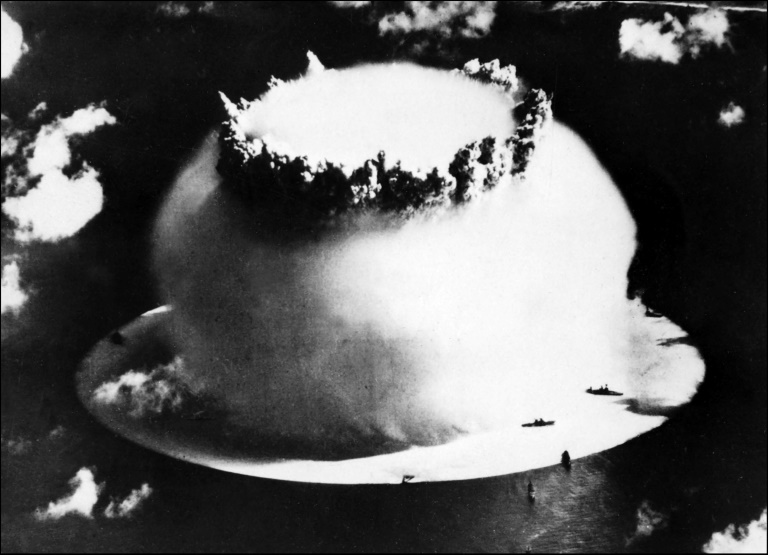
The United States detonated 67 nuclear bombs in the Marshall Islands between 1946-58, and the health and environmental impacts are still felt on the islands and atolls that lie between Hawaii and the Philippines.

US special envoy Joseph Yun is scheduled to land in the capital Majuro on Thursday to resume negotiations on extending the 20-year Compact of Free Association, part of which expires in 2023.

Marshall Islands negotiators first want the United States to pay more of the compensation awarded by the international Nuclear Claims Tribunal, totalling just over $3 billion, of which around $270 million has been paid so far.

Officials in Majuro broke off talks in September to renew the compact, a key international agreement between the United States, the Marshall Islands, Micronesia and Palau.

The Marshall Islands said it would also be ready to resume talks with Yun if Washington tackled health and environmental issues stemming from their nuclear testing.

“We are ready to sign (a Compact extension) tomorrow, once the key issues are addressed,” Parliament Speaker Kenneth Kedi told AFP.

“We need to come up with a dignified solution,” he said. Kedi represents Rongelap Atoll, which is still affected by nuclear testing.

He was encouraged by an agreement signed in late September by US President Joe Biden and Pacific island leaders, including Marshall Islands President David Kabua, that included references to the US commitment to addressing its nuclear past.

However, until that happens, “it casts a question mark on all the promises Washington has made,” Kedi said.

“If we can’t resolve issues from our past, how will it be going forward with other issues?”

Thousands of Marshall Islanders were engulfed in a radioactive fallout cloud following the 1954 Castle Bravo nuclear test by the US military, and many subsequently experienced health problems.

Tonnes of contaminated debris from the testing was dumped in a crater on the Enewetak Atoll and capped with concrete that has since cracked, sparking health concerns.

Hundreds of islanders from the Marshall’s Bikini, Enewetak, Rongelap and Utrik atolls have also had to relocate due to nuclear contamination. Many are still unable to return home.

A study issued by the US National Cancer Institute in 2004 estimated around 530 cancer cases had been caused by the nuclear testing.

“As Bikinians, we’ve done enough for the United States,” said Alson Kelen, chairman of the Marshall Islands’ National Nuclear Commission, who believes the United States should pay the full amount of the compensation awarded.

“We’re not asking to be rich. We’re asking for funding to solve our nuclear problems … really the funds are to mitigate and address the problems of our health, relocations and nuclear cleanups,” Kelen said.

Wall Street eyes chance of divided Washington after midterms

With polls suggesting Republicans will retake at least one congressional chamber in next week’s US elections, Wall Street is feeling hopeful about a likely return of a divided Washington.

A split government, while frustrating to partisans, acts as a brake on ambitious tax and spending programs. That’s a familiar dynamic to investors, and one that has historically proven benign.

“If you get Congress out of the way” because of gridlock, “then the market can pretty much act on its own,” said Sam Stovall, chief investment strategist at CFRA Research. “And that has traditionally been fairly positive for stocks.”

This expected stalemate scenario, based on polling showing Republicans poised to win the House of Representatives in light of public frustration with inflation, is one reason the Nov. 8 vote has generated so little buzz on Wall Street.

The election has high stakes for abortion rights, climate change and even the future of American Democracy itself, with backers of ex-president Donald Trump’s election conspiracies positioned for potential gains in key 2024 presidential battleground states.

But investors see little that is actionable from a trading perspective.

“The only time that politics really has an impact on the stock market is when they do something that impacts earnings, interest rates, or the dollar,” said Maris Ogg of Tower Bridge Advisors. “Most of the time it’s all sound and fury, and it doesn’t matter.”

The election takes place at a beleaguered moment in US politics, with far-right groups mobilizing vigilante-style armies of poll watchers and Friday’s attack on the husband of House Speaker Nancy Pelosi underscoring the threat of political violence.

But perhaps there is no better reflection of markets’ ability to shrug off US political upheaval than January 6 itself. On the day the US Capitol was besieged by Trump supporters who built a noose for former Vice President Mike Pence, the S&P 500 lost 0.1 percent and the dollar rose against the euro.

– Debt ceiling brinksmanship –

But some market experts warn of a downside to the gridlock scenario, particularly in make-or-break negotiations on raising the debt ceiling.

The rising political turmoil in the United States “is a bigger deal than people think,” said David Kotok, co-founder of Cumberland Advisors.

Kotok cited the ascendancy of Representative Marjorie Taylor Greene, a Georgia Republican who has championed Trump’s lies about the 2020 election, espoused the racist “great replacement” conspiracy theory and has had social media posts removed for inciting violence.

The Democratic-led House ousted Taylor Greene from her committee assignments in February 2021, but she is expected to have a prominent role if the Republicans win the House. Taylor Greene has said she would try to impeach Biden.

“The worst-case scenario is that the brinksmanship that’s played with the debt ceiling goes over the edge,” said Kotok.

The market “is ignoring that risk,” Kotok said of the possibility of a US default. “When you reconstitute the House with people who are nut cases, you invite trouble.”

But many market watchers say history suggests this risk is virtually zero.

Briefing.com analyst Patrick O’Hare said,”we’ve been down this road before,” he said. “The market would be hard pressed to believe the US is going to get into a default situation.

“Everyone agrees what a calamity it would be and I don’t think the market has that priced in, nor is it worried about it,” said O’Hare.

An Oct. 25 note from Pantheon Macroeconomics alluded to the risk of debt ceiling brinksmanship, describing a tense scenario.

“The ensuing stand-off would be a nightmare for markets, unless investors all fully believed that Republican threats are hollow,” said Pantheon.

“That’s not likely, because investors’ positions are skewed too; holders of US assets stand to a lose a lot more from a default than they would gain from an increase in the debt ceiling, which does nothing good for the economy but prevents something very bad.”

If the Democrats lose next week, party leaders could attempt to advance legislation to lift the debt ceiling in the lame-duck period in late 2022 before the Republicans take over, Pantheon said.

Notwithstanding the debt ceiling risk, a divided Congress probably dooms the prospects for significant new fiscal spending initiatives, pleasing investors who were chagrined by the plans of Liz Truss, who resigned as British prime minister earlier this month after her tax cut plan bombed on financial markets, in part because it clashed with monetary policy.

But one downside could be difficulty mobilizing Washington if there is another economic shock, whether because of a new Covid variant or something else unexpected.

“A divided Congress is going to be much slower to ride to the rescue, unless things are really, really severe,” said Carl Riccadonna, chief US economist at BNP Paribas.


Filipinos flock to cemeteries for All Saints' Day

Filipinos clutching flowers and umbrellas poured into cemeteries across the Catholic-majority Philippines Tuesday to pay tribute to their dead loved ones on All Saints’ Day for the first time since the start of the Covid-19 pandemic.

Rain fell as thousands walked or took free motorised tricycle services to tombs scattered across sprawling graveyards in the capital Manila where many poor families live alongside the dead in shanties or mausoleums.

Ahead of the “day of the dead”, a powerful tropical storm unleashed landslides and flooding across the archipelago nation, killing at least 110 people and leaving dozens missing.

Among the tens of thousands of visitors to Manila North Cemetery was Leonardo Filamor, 58, who was paying his respects to a friend who died in 2017.

“Even a typhoon would not have stopped me from coming here,” said Filamor, who left a card and a small bouquet of white flowers at the tomb.

Filamor said he lived on the streets and previously had not been able to afford the public transport fare to reach the cemetery. 

“I’m really happy I had the money this time and got to be with him again,” he said. 

It was the first time since the start of the pandemic that cemeteries were open on November 1 for the ancient Christian tradition, which honours all saints and martyrs who died for the faith. 

Millions of Filipinos normally go to cemeteries on the day to remember their dead relatives by praying, lighting candles and leaving flowers at the gravesites.

People began lining up before dawn to enter graveyards in Manila. 

Flower vendor Lucila Cleto said the weekend storm had dented sales and driven up the price of chrysanthemums and roses.

“I’m not expecting to earn much, just enough to get by,” the 52-year-old told AFP as she sat under a tent among buckets of bouquets and pots of flowers.

Cemeteries in the Philippines range from quiet fields of white crosses to dense “apartment” tombs stacked metres high.

While most people visit the graves of relatives or friends, others go to remember their beloved pets.

“My siblings and I have a huge age gap so I only had Tatsumi as my playmate growing up,” said a 29-year-old woman, referring to her Japanese spitz dog buried under a tree near her grandparents’ tomb.  

“I was devastated when he died.”

Mariz Amplayo, who brought her three children to visit the grave of her diabetic brother, said it was an important day for her family.

“Visiting dead loved ones every year keeps their memory alive,” Amplayo, 47, said as she left flowers, candles and food at his tomb. 

“We don’t want to ever forget.”

Asian markets extend rally as bargain-buyers boost Hong Kong

Asian markets rose again Tuesday, building on the strong start to the week as traders look ahead to the Federal Reserve’s policy decision, hoping it will signal a more dovish approach to fighting inflation.

While Wall Street suffered a pullback from a recent rally, the mood in Asia remained optimistic while bargain-buying also provided some much-needed support to Hong Kong and Shanghai.

The Fed is widely expected Wednesday to announce a fourth straight 75-basis-point rate hike as it tries to rein in runaway prices, which has led to worries it will tip the world’s top economy into recession, sending stocks tumbling.

But a report last month suggesting officials are looking to dial down the pace of increases has sparked a rally in risk assets over the past week, helped by signs other central banks are also trying to take a step back.

“Fifty basis points or 75 basis points in December is ultimately less important than the path (Fed boss Jerome) Powell lays out for next year,” said Stephen Innes at SPI Asset Management.

“If push comes to shove, the Fed probably does not want to see the market pricing cuts as soon as the hike cycle finishes, so I expect the rhetoric to be targeted here.”

Data showing eurozone inflation hit a record 10.7 percent last month — fanned by a 41.9 percent rise in energy costs — drove home the fine line banks must walk in battling rising prices while trying to cushion fragile economies.

That came as other figures showed manufacturing around the world is shrinking owing to the spike in prices and borrowing costs.

“A global manufacturing contraction is here,” said OANDA’s Edward Moya.

“Factory activity is taking a big hit as China struggles with Covid, Europe is headed towards a recession, and as the US economy finally feels the impact of inflation and Fed tightening.”

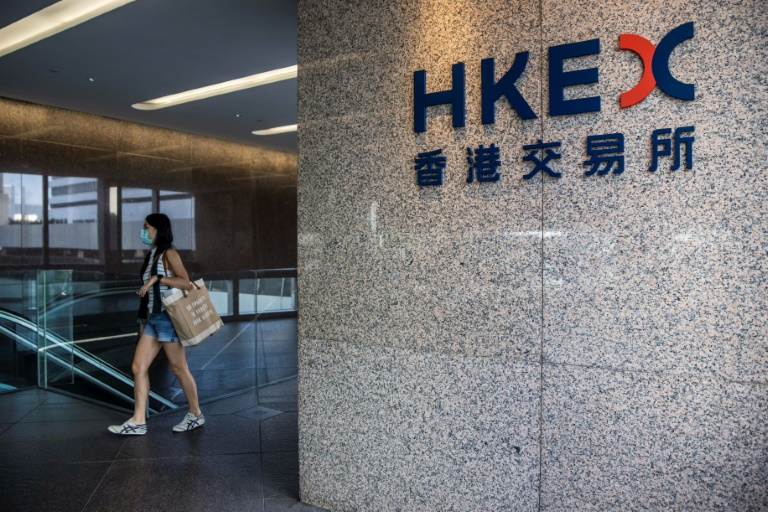
In early trade, Hong Kong led the gains, jumping more than three percent thanks to a bargain-buying surge in beaten-down tech giants including Alibaba and Tencent.

Shanghai climbed more than one percent, along with Singapore and Seoul, while Tokyo, Sydney, Taipei and Bangkok. However, Jakarta and Wellington edged lower.

Investors are also keeping tabs on the earnings season, with Japanese giants Toyota and Sony among the big-name firms reporting.

The announcements come after a number of US companies have surprised with better-than-expected results, suggesting they are holding up despite the tough trading environment.

– Key figures around 0300 GMT –

Tokyo – Nikkei 225: UP 0.2 percent at 27,646.34 (break)

Hong Kong – Hang Seng Index: UP 3.7 percent at 15,224.90

Shanghai – Composite: UP 1.5 percent at 2,935.46

Euro/dollar: UP at $0.9905 from $0.9885 on Monday

Pound/dollar: UP at $1.1514 from $1.1465 

Dollar/yen: DOWN at 148.20 yen from 148.72 yen

Euro/pound: DOWN at 86.04 pence from 86.20 pence

West Texas Intermediate: UP 0.8 percent at $87.18 per barrel

Brent North Sea crude: UP 0.8 percent at $93.59 per barrel

New York – Dow: DOWN 0.4 percent at 32,732.95 (close)

London – FTSE 100: UP 0.7 percent at 7,094.53 (close)

Close Bitnami banner
Bitnami