AFP

Pound bounds higher on new PM, stocks rise

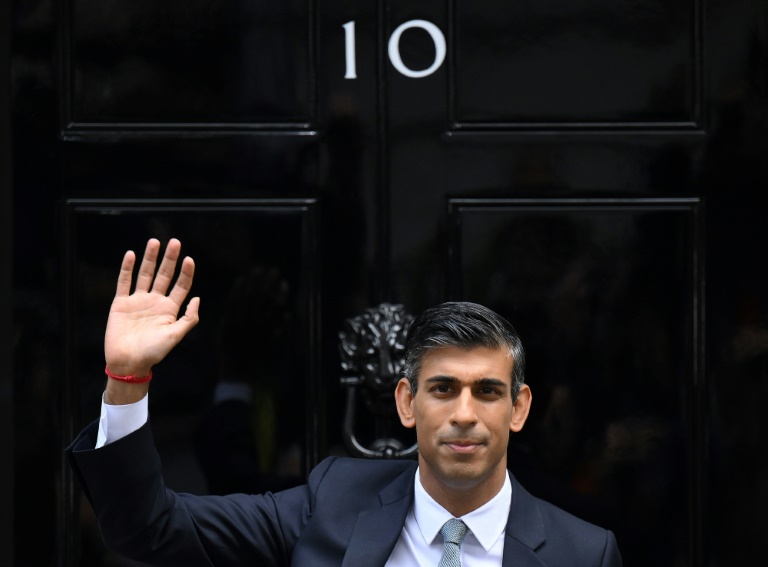
The pound shot higher Tuesday as former finance chief Rishi Sunak became Britain’s prime minister, while stocks mostly rose as bond yields slid.

Sunak on Tuesday promised to bring economic stability after the turmoil that forced predecessor Liz Truss out of Downing Street.

“Right now our country is facing a profound economic crisis,” he told the nation in a televised address.

He vowed to place “economic stability and confidence at the heart of this government’s agenda”, and kept Jeremy Hunt on as finance minister.

His reassuring message resonated on bond markets, where the yields on British government bonds, or gilts, fell. Rising bond yields had helped push Sunak’s predecessor Liz Truss out of office.

“UK gilt yields have continued to track lower, as Rishi Sunak’s journey to Downing Street further improves market sentiment after a tumultuous month,” said Joshua Mahony, senior market analyst at online trading platform IG.

“With yields falling into a one-month low, we are seeing markets provide a clear vote of confidence that Sunak will manage to avoid the kind of missteps taken by his predecessor,” he added.

The pound was up 1.9 percent at $1.489 in late European trading.

A strong pound is not good for many multinational firms listed on London’s blue-chip FTSE 100 index, which ended the day down half a point.

Frankfurt stocks rose 0.9 percent and Paris jumped 1.9 percent. 

Lower US bond yields also helped Wall Street, which was solidly higher in late morning trading.

Some market support also came from reports suggesting the Federal Reserve could slow its pace of interest rate hikes.

The central bank’s policy of ramping up US borrowing costs to fight decades-high inflation has hammered global markets this year as investors worry that they will send the economy into recession.

“Investors are getting more confident that inflation will soften as the consumer rethinks massive purchases,” said Edward Moya, analyst at Oanda trading group.

Consumer confidence in the United States weakened more than anticipated in October, reinforcing hopes that the Fed could slow down or pause its interest rate hikes.

“Fed rate hike expectations will remain volatile, but expectations are growing that a weaker economy will let the Fed pause their tightening after the February policy meeting,” said Moya.

Investors also had quarterly earnings reports to wade through, with better-than-expected quarterly numbers from Coca-Cola and GM helping boost sentiment.

General Motors climbed 3.3 percent as the US automaker confirmed its full-year financial forecast despite a “challenging environment”, saying that consumer demand remained strong.

Third-quarter profits rose 37 percent to $3.3 billion on soaring revenues.

Shares in Coca-Cola gained 1.6 percent as the drinks giant posted double-digit gains in revenue and profits.

Earlier Tuesday, US tech giant Meta resolved a major WhatsApp outage that prevented its popular service from connecting or sending messages.

Meta shares rose 4.1 percent.

In commodities trading meanwhile, European gas prices wobbled around 100 euros per megawatt hour, while the drop in the dollar helped global oil prices edge higher.

In Asian equities trading, Hong Kong steadied after the previous session’s rout triggered by China President Xi Jinping tightening his grip on power.

– Key figures around 1530 GMT –

New York – Dow: UP 0.8 percent at 31,742.28 points

EURO STOXX 50: UP 1.6 percent at 3,585.58

London – FTSE 100: FLAT at 7,013.48 (close) 

Frankfurt – DAX: UP 0.9 percent at 13,052.96 (close)

Paris – CAC 40: UP 1.9 percent at 6,250.55 (close)

Tokyo – Nikkei 225: UP 1.0 percent at 27,250.28 (close)

Hong Kong – Hang Seng Index: DOWN 0.1 percent at 15,165.59 (close)

Shanghai – Composite: FLAT at 2,976.28 (close)

Pound/dollar: UP at $1.1489 from $1.1281 on Monday

Dollar/yen: DOWN at 147.63 yen from 148.95 yen

Euro/dollar: UP at $0.9976 from $0.9876

Euro/pound: DOWN at 86.80 pence from 87.56 pence

West Texas Intermediate: UP 0.6 percent at $85.09 per barrel

Brent North Sea crude: UP 0.2 percent at $93.45 per barrel

burs-rl/cdw
Pound bounds higher on new PM, stocks rise

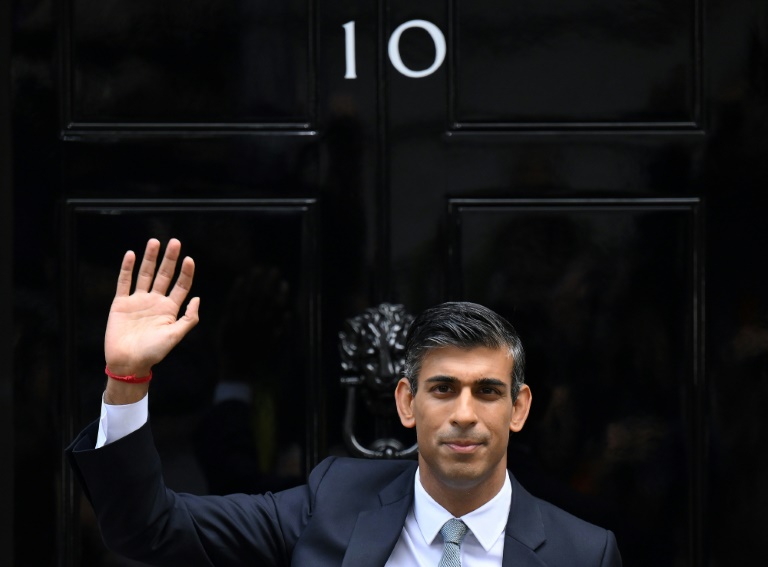
The pound shot higher Tuesday as former finance chief Rishi Sunak became Britain’s prime minister, while stocks mostly rose as bond yields slid.

Sunak on Tuesday promised to bring economic stability after the turmoil that forced predecessor Liz Truss out of Downing Street.

“Right now our country is facing a profound economic crisis,” he told the nation in a televised address.

He vowed to place “economic stability and confidence at the heart of this government’s agenda”, and kept Jeremy Hunt on as finance minister.

His reassuring message resonated on bond markets, where the yields on British government bonds, or gilts, fell. Rising bond yields had helped push Sunak’s predecessor Liz Truss out of office.

“UK gilt yields have continued to track lower, as Rishi Sunak’s journey to Downing Street further improves market sentiment after a tumultuous month,” said Joshua Mahony, senior market analyst at online trading platform IG.

“With yields falling into a one-month low, we are seeing markets provide a clear vote of confidence that Sunak will manage to avoid the kind of missteps taken by his predecessor,” he added.

The pound was up 1.9 percent at $1.489 in late European trading.

A strong pound is not good for many multinational firms listed on London’s blue-chip FTSE 100 index, which ended the day down half a point.

Frankfurt stocks rose 0.9 percent and Paris jumped 1.9 percent. 

Lower US bond yields also helped Wall Street, which was solidly higher in late morning trading.

Some market support also came from reports suggesting the Federal Reserve could slow its pace of interest rate hikes.

The central bank’s policy of ramping up US borrowing costs to fight decades-high inflation has hammered global markets this year as investors worry that they will send the economy into recession.

“Investors are getting more confident that inflation will soften as the consumer rethinks massive purchases,” said Edward Moya, analyst at Oanda trading group.

Consumer confidence in the United States weakened more than anticipated in October, reinforcing hopes that the Fed could slow down or pause its interest rate hikes.

“Fed rate hike expectations will remain volatile, but expectations are growing that a weaker economy will let the Fed pause their tightening after the February policy meeting,” said Moya.

Investors also had quarterly earnings reports to wade through, with better-than-expected quarterly numbers from Coca-Cola and GM helping boost sentiment.

General Motors climbed 3.3 percent as the US automaker confirmed its full-year financial forecast despite a “challenging environment”, saying that consumer demand remained strong.

Third-quarter profits rose 37 percent to $3.3 billion on soaring revenues.

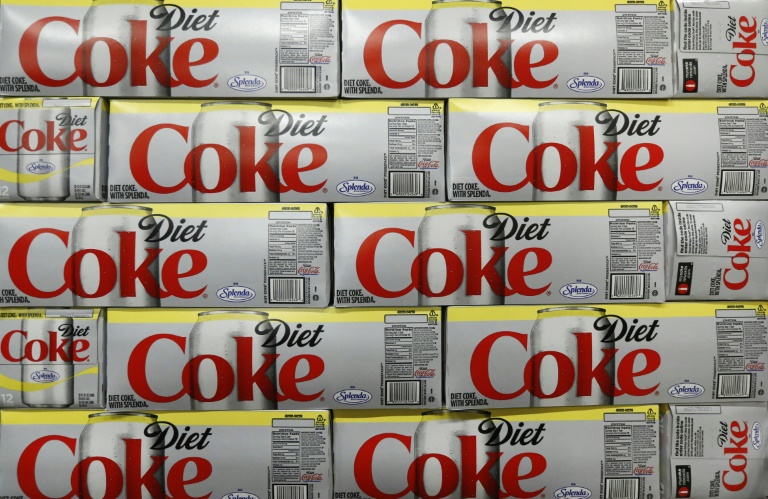
Shares in Coca-Cola gained 1.6 percent as the drinks giant posted double-digit gains in revenue and profits.

Earlier Tuesday, US tech giant Meta resolved a major WhatsApp outage that prevented its popular service from connecting or sending messages.

Meta shares rose 4.1 percent.

In commodities trading meanwhile, European gas prices wobbled around 100 euros per megawatt hour, while the drop in the dollar helped global oil prices edge higher.

In Asian equities trading, Hong Kong steadied after the previous session’s rout triggered by China President Xi Jinping tightening his grip on power.

– Key figures around 1530 GMT –

New York – Dow: UP 0.8 percent at 31,742.28 points

EURO STOXX 50: UP 1.6 percent at 3,585.58

London – FTSE 100: FLAT at 7,013.48 (close) 

Frankfurt – DAX: UP 0.9 percent at 13,052.96 (close)

Paris – CAC 40: UP 1.9 percent at 6,250.55 (close)

Tokyo – Nikkei 225: UP 1.0 percent at 27,250.28 (close)

Hong Kong – Hang Seng Index: DOWN 0.1 percent at 15,165.59 (close)

Shanghai – Composite: FLAT at 2,976.28 (close)

Pound/dollar: UP at $1.1489 from $1.1281 on Monday

Dollar/yen: DOWN at 147.63 yen from 148.95 yen

Euro/dollar: UP at $0.9976 from $0.9876

Euro/pound: DOWN at 86.80 pence from 87.56 pence

West Texas Intermediate: UP 0.6 percent at $85.09 per barrel

Brent North Sea crude: UP 0.2 percent at $93.45 per barrel

burs-rl/cdw
New UK PM Sunak unveils top team as historic tenure begins

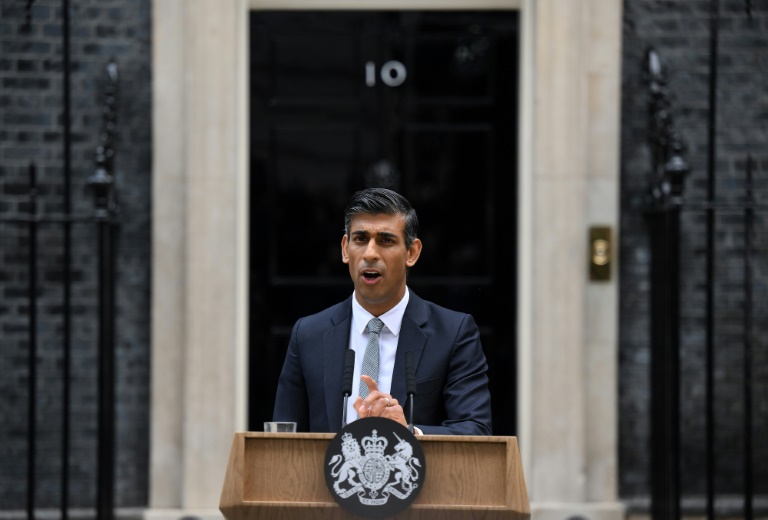
Rishi Sunak on Tuesday became Britain’s third prime minister this year and the first person of colour to lead the former imperial power, vowing to overcome economic crisis provoked by the “mistakes” of Liz Truss’s calamitous 49-day tenure.

In his first order of business, Sunak retained Jeremy Hunt as chancellor of the exchequer, bidding to keep financial markets on side after Truss’s budget plans shocked investors.

Sunak, a practising Hindu who at 42 is Britain’s youngest leader since 1812, became the ruling Conservatives’ new leader on Monday after a prior stint as chancellor himself.

Addressing the nation in Downing Street Tuesday shortly after his appointment by King Charles III, Sunak said the country faced “profound economic crisis”. 

“I will unite our country — not with words, but with action,” Sunak said, capping the latest extraordinary twist in UK politics following Boris Johnson’s demise in July.

– ‘Mistakes’ –

Departing shortly before, Truss wished him “every success” — and said she remained “more convinced than ever” that Britain needed to be “bold” in confronting the challenges it faced.

Sunak countered that though she was motivated by a well-intentioned desire to kick-start growth, her tax-cutting measures were “mistakes nonetheless”. 

“And I have been elected as leader of my party and your prime minister in part to fix them,” he said.

“And that work begins immediately. I will place economic stability and confidence at the heart of this government’s agenda,” he added, helping to drive the pound more than one percent higher against the dollar Tuesday.

Sunak’s appointment followed rival contender Penny Mordaunt failing to secure enough nominations from Tory MPs, and Johnson dramatically aborting a comeback attempt late on Sunday.

Breaking his silence, Johnson offered his “full and wholehearted support” to Sunak — having privately blamed his ex-minister for toppling him in July.

Sunak in turn praised Johnson, and vowed to build on the election-winning promises that earned the Conservatives a big victory in 2019, despite their dismal standing in polling today against the opposition Labour party.

But Sunak also issued a coded reminder of the many scandals that brought Johnson down, vowing his own premiership would offer “integrity, professionalism and accountability at every level”.

In other cabinet appointments, Sunak retained James Cleverly as foreign secretary, and brought close ally Dominic Raab back as deputy prime minister and justice secretary. He also retained Ben Wallace in the defence brief.

– ‘Groundbreaking’ –

In his Downing Street speech, Sunak pledged unstinting support for Ukraine even while warning of “difficult” budget choices ahead.

US President Joe Biden called the appointment of the first British-Indian prime minister “groundbreaking” and “pretty outstanding”.

“Together, I look forward to enhancing our cooperation on issues critical to global security and prosperity, including continuing our strong support for Ukraine,” Biden said in a tweet.

European leaders offered their own congratulations, while Irish premier Micheal Martin reminded Sunak of their “shared responsibility” to safeguard peace in Northern Ireland following tensions under Johnson and Truss.

Labour leader Keir Starmer praised Sunak on “making history as the first British-Asian PM”. 

But he added: “The Tories have crashed the economy, with low wages, high prices and a cost-of-living crisis. The public needs a fresh start and a say on Britain’s future.” 

Sunak has rebuffed opposition calls for a snap general election after becoming the latest leader who lacks a direct mandate from the electorate, but he promised to govern on the basis of the 2019 manifesto.

Pollster Ipsos said that 62 percent of British voters want an election by the end of the year.

– ‘Unite or die’ –

Britain’s Conservative-supporting media hailed the appointment of Sunak, a wealthy descendant of immigrants from India and East Africa. 

“The force is with you, Rishi,” ran The Sun’s headline, playing on his love of “Star Wars” films. 

But the left-leaning Guardian highlighted Sunak’s warning to Conservative MPs that the party must “unite or die”.

Truss left office as the UK’s shortest-serving premier in history, after her disastrous tax-slashing budget sparked economic and political turmoil.

The 47-year-old announced her resignation last Thursday, admitting she could not deliver her mandate from Conservative members — who had chosen her over Sunak in the summer to replace Johnson.

Iain Duncan Smith, a former Conservative leader, said MPs now understood the “existential threat” facing the Tories, and that they needed to unite or accept being “out of power for a long time”.

Coca-Cola sees more consumer shifts due to inflation as profits jump

Coca-Cola reported a jump in profits Tuesday due in part to price increases but said some consumers are beginning to pull back due to inflation.

The soda giant, which has benefited in recent quarters from the return of pro sports, movie theater sales and other outing-oriented sales as Covid-19 restrictions ebb, again cited this trend as a positive for its results, lifting some of its full-year projections following the better-than-expected results.

Profits rose 14 percent to $2.8 billion on a 10 percent jump in revenues to $11.1 billion.

The company’s unit case volumes rose by four percent, while pricing/mix jumped 12 percent. The “price/mix” category refers not only to retail prices, but also to the mix of goods sold and the geographic and distribution channels.

Compared with the year-ago period, price/mix rose 19 percent in Europe/Middle East/Africa, 15 percent in North America, four percent in Asia Pacific and 12 percent in Latin America.

Chief Executive James Quincey, who has previously described the negative impact on sales due to price hikes as modest compared with historic norms, said the latest batch of results suggested somewhat greater pain among consumers.

“We’re seeing some changes in consumer behavior,” Quincey said on a conference call with analysts.

“It would seem to us that Europe is probably the most obvious example,” with more consumers now buying at discount retailers, a trend seen to a lesser extent in the United States.

“Clearly the impact of inflation running ahead of wages is starting to come through now that the summer is over and back to school has happened,” he said.

Shares rose 0.9 percent to $58.06 in mid-morning trading.

Former US defense secretary Ashton Carter dies at 68

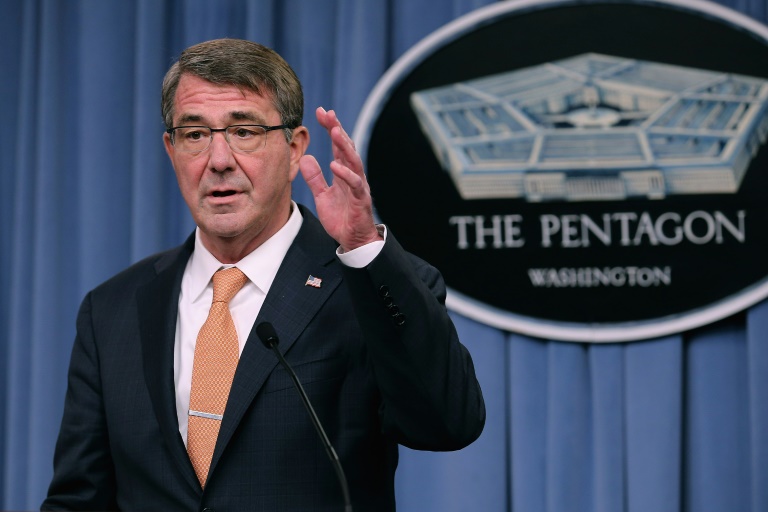
Ashton Carter, who served as US secretary of defense during Barack Obama’s administration, has died at age 68, his family said.

“It is with deep and profound sadness that the family of former Secretary of Defense Ashton B. Carter shares that Secretary Carter passed away Monday evening in Boston after a sudden cardiac event,” his family said in a statement.

“He was a beloved husband, father, mentor, and friend. His sudden loss will be felt by all who knew him.”

Carter held the top job at the Pentagon from 2015 to 2017 — a period that covered the height of the war against the Islamic State group, which lost swathes of territory it seized in Iraq and Syria to local ground forces backed by a US-led international coalition.

He also oversaw sweeping changes to the US military, including the opening of combat positions to women and the lifting of a ban on transgender personnel openly serving in the American armed forces.

Former president Donald Trump sought to reverse the latter move, but his administration’s restrictions on transgender personnel were overturned by Joe Biden when he took office in 2021.

After leaving the Pentagon, Carter became the director of the Belfer Center for Science and International Affairs at Harvard’s Kennedy School.

He is survived by his wife and two children.

Adidas cuts ties with Kanye West over anti-Semitic remarks

German sportswear giant Adidas said Tuesday it was ending its partnership with Kanye West after a series of anti-Semitic outbursts by the controversial rapper.

Recent comments by West — known formally as Ye — were “unacceptable, hateful and dangerous”, Adidas said in a statement. 

“After a thorough review, the company has taken the decision to terminate the partnership with Ye immediately.”

Adidas said it would “end production” of the highly successful “Yeezy” line designed together with West and “stop all payments to Ye and his companies”.

The abrupt end to the collaboration between the sports outfitter and rapper would slash Adidas’s net income in 2022 by “up to 250 million euros ($246 million)”, it estimated.

Adidas’s decision to dump the artist was “overdue”, said Josef Schuster of the Central Council of Jews in Germany.

“For weeks, West has caused worldwide furore with his anti-Semitic remarks,” Schuster said, adding that the rapper’s comments had become “intolerable”.

– T-shirt statement –

Adidas began a review of its relationship with West earlier this month after he appeared at a fashion show in Paris wearing a shirt with the slogan “White Lives Matter.”

The phrase is a dog whistle to right-wing groups in the United States and a reaction to the Black Lives Matter movement.

Days later he was locked out of Twitter and Instagram for threatening to “Go death con 3 on JEWISH PEOPLE.”

Comments made by West “violate the company’s values of diversity and inclusion, mutual respect and fairness”, Adidas said Tuesday.

The artist was associated with rival sportswear company Nike for years but broke away in 2013, lending his name to Adidas as they launched their first Yeezy shoe together in 2015 — a partnership that went on to make him a billionaire. 

Along with Beyonce, Stella McCartney and Pharrell Williams, West’s has been one of the top names used by Adidas to boost sales, especially online.

Adidas is the latest brand to part ways with West following his recent outbursts. Paris-based fashion house Balenciaga ended ties with the rapper last week, saying it “no longer (has) any relationship nor any plans for future projects related to this artist.”

One of Hollywood’s biggest talent agencies, CAA, also said Monday it was dropping West, while film and TV producer MRC said it was shelving an already-finished documentary about the artist.

– Inflammatory remarks –

Adidas’s decision would stop West from “using the company’s immense platform to amplify his hateful ideology about Jews”, the World Jewish Congress said in a statement.

The German group’s “delayed move” in response to the anti-Semitic comments had come after “massive public outcry heavily”, the WJC said.

Rights campaigners and entertainment world figures had heaped pressure on Adidas to stop working with the rapper.

“Those who continue to do business with West are giving his misguided hate an audience,” Ari Emanuel, CEO of entertainment agency Endeavor, wrote in the Financial Times. 

“There should be no tolerance anywhere for West’s anti-Semitism.”

West’s ex-wife Kim Kardashian also appeared to join the pile-on, without mentioning the father of her children by name.

“Hate speech is never OK or excusable,” she wrote on Twitter and Instagram on Monday.

“I stand together with the Jewish community and call on the terrible violence and hateful rhetoric towards them to come to an immediate end.”

Adidas fell sharply on the Frankfurt Stock Exchange following its announcement, with shares down almost eight percent at 95.88 euros in afternoon trading.

Stocks mixed on earnings; pound up on new PM

Stock markets were mixed Tuesday as traders reacted to earnings reports, while Hong Kong steadied after the previous session’s rout triggered by China President Xi Jinping tightening his grip on power.

The pound climbed more than one percent as markets welcomed the appointment of former finance chief Rishi Sunak as Britain’s prime minister.

Sunak on Tuesday promised to bring economic stability after the turmoil that forced predecessor Liz Truss out of Downing Street.

“Right now our country is facing a profound economic crisis,” he told the nation in a televised address.

He vowed to place “economic stability and confidence at the heart of this government’s agenda”.

“This will mean difficult decisions to come,” Sunak added.

Some market support came from reports suggesting the Federal Reserve could slow its pace of interest rate hikes.

The central bank’s policy of ramping up US borrowing costs to fight decades-high inflation has hammered global markets this year as investors worry that they will send the economy into recession.

“Investors are getting more confident that inflation will soften as the consumer rethinks massive purchases,” said Edward Moya, analyst at Oanda trading group.

“Fed rate hike expectations will remain volatile, but expectations are growing that a weaker economy will let the Fed pause their tightening after the February policy meeting.”

It comes as investors pore over earnings updates from some of the world’s biggest companies.

Shares in HSBC slumped 6.3 percent after the banking giant warned on bad loans owing to global economic headwinds.

Elsewhere, shares in General Motors climbed 2.0 percent as the US automaker confirmed its full-year financial forecast despite a “challenging environment”, saying that consumer demand remained strong.

Third-quarter profits rose 37 percent to $3.3 billion on soaring revenues.

Shares in UPS and Coca-Cola were also trading higher after releasing earnings reports.

“Their gains are generating some offsetting support, yet there is a big earnings shadow that is hanging over the market and likely keeping investor enthusiasm in check this morning after the market’s big run,” said market analyst Patrick O’Hare at Briefing.com.

“That shadow is the earnings reports that will be heard after today’s close from Microsoft, Alphabet, and Visa,” he added, companies which outweigh those that reported today by market capitalisation several times over.

The Dow dipped 0.2 percent as Wall Street opened for trading, but both the S&P 500 and tech-heavy Nasdaq Composite moved higher.

Earlier Tuesday, US tech giant Meta resolved a major WhatsApp outage that prevented its popular service from connecting or sending messages.

Meta shares rose 2.8 percent.

In commodities trading meanwhile, European gas prices nudged back above 100 euros per megawatt hour, and global oil prices also edged higher.

– Key figures around 1330 GMT –

London – FTSE 100: DOWN 0.6 percent at 6,971.91 points

Frankfurt – DAX: DOWN 0.3 percent at 12,896.77

Paris – CAC 40: UP 0.7 percent at 6,173.20

EURO STOXX 50: UP 0.3 percent at 3,536.88

New York – Dow: DOWN 0.2 percent at 31,450.92

Tokyo – Nikkei 225: UP 1.0 percent at 27,250.28 (close)

Hong Kong – Hang Seng Index: DOWN 0.1 percent at 15,165.59 (close)

Shanghai – Composite: FLAT at 2,976.28 (close)

Pound/dollar: UP at $1.1423 from $1.1281 on Monday

Dollar/yen: DOWN at 148.05 yen from 148.95 yen

Euro/dollar: UP at $0.9931 from $0.9876

Euro/pound: DOWN at 86.91 pence from 87.56 pence

West Texas Intermediate: UP 0.4 percent at $84.94 per barrel

Brent North Sea crude: UP less than 0.1 percent at $93.33. per barrel

burs-rl/gw

Stocks mixed on earnings; pound up on new PM

Stock markets were mixed Tuesday as traders reacted to earnings reports, while Hong Kong steadied after the previous session’s rout triggered by China President Xi Jinping tightening his grip on power.

The pound climbed more than one percent as markets welcomed the appointment of former finance chief Rishi Sunak as Britain’s prime minister.

Sunak on Tuesday promised to bring economic stability after the turmoil that forced predecessor Liz Truss out of Downing Street.

“Right now our country is facing a profound economic crisis,” he told the nation in a televised address.

He vowed to place “economic stability and confidence at the heart of this government’s agenda”.

“This will mean difficult decisions to come,” Sunak added.

Some market support came from reports suggesting the Federal Reserve could slow its pace of interest rate hikes.

The central bank’s policy of ramping up US borrowing costs to fight decades-high inflation has hammered global markets this year as investors worry that they will send the economy into recession.

“Investors are getting more confident that inflation will soften as the consumer rethinks massive purchases,” said Edward Moya, analyst at Oanda trading group.

“Fed rate hike expectations will remain volatile, but expectations are growing that a weaker economy will let the Fed pause their tightening after the February policy meeting.”

It comes as investors pore over earnings updates from some of the world’s biggest companies.

Shares in HSBC slumped 6.3 percent after the banking giant warned on bad loans owing to global economic headwinds.

Elsewhere, shares in General Motors climbed 2.0 percent as the US automaker confirmed its full-year financial forecast despite a “challenging environment”, saying that consumer demand remained strong.

Third-quarter profits rose 37 percent to $3.3 billion on soaring revenues.

Shares in UPS and Coca-Cola were also trading higher after releasing earnings reports.

“Their gains are generating some offsetting support, yet there is a big earnings shadow that is hanging over the market and likely keeping investor enthusiasm in check this morning after the market’s big run,” said market analyst Patrick O’Hare at Briefing.com.

“That shadow is the earnings reports that will be heard after today’s close from Microsoft, Alphabet, and Visa,” he added, companies which outweigh those that reported today by market capitalisation several times over.

The Dow dipped 0.2 percent as Wall Street opened for trading, but both the S&P 500 and tech-heavy Nasdaq Composite moved higher.

Earlier Tuesday, US tech giant Meta resolved a major WhatsApp outage that prevented its popular service from connecting or sending messages.

Meta shares rose 2.8 percent.

In commodities trading meanwhile, European gas prices nudged back above 100 euros per megawatt hour, and global oil prices also edged higher.

– Key figures around 1330 GMT –

London – FTSE 100: DOWN 0.6 percent at 6,971.91 points

Frankfurt – DAX: DOWN 0.3 percent at 12,896.77

Paris – CAC 40: UP 0.7 percent at 6,173.20

EURO STOXX 50: UP 0.3 percent at 3,536.88

New York – Dow: DOWN 0.2 percent at 31,450.92

Tokyo – Nikkei 225: UP 1.0 percent at 27,250.28 (close)

Hong Kong – Hang Seng Index: DOWN 0.1 percent at 15,165.59 (close)

Shanghai – Composite: FLAT at 2,976.28 (close)

Pound/dollar: UP at $1.1423 from $1.1281 on Monday

Dollar/yen: DOWN at 148.05 yen from 148.95 yen

Euro/dollar: UP at $0.9931 from $0.9876

Euro/pound: DOWN at 86.91 pence from 87.56 pence

West Texas Intermediate: UP 0.4 percent at $84.94 per barrel

Brent North Sea crude: UP less than 0.1 percent at $93.33. per barrel

burs-rl/gw

GM confirms profit forecast despite 'challenging' environment

General Motors confirmed its full-year financial forecast Tuesday, lifting shares as it reported strong consumer demand in spite of a “challenging” environment with grinding inflation.

The big US automaker scored a 37 percent jump in third-quarter profits to $3.3 billion, bolstered by strong vehicle pricing in a market with historically low auto inventories. 

Revenues jumped 56 percent to $41.9 billion, a quarterly record.

GM Chief Financial Officer Paul Jacobson acknowledged rising worries about the drag from inflation on economic growth, but said the company was still seeing robust demand for its products.

“We haven’t seen any direct impact on our products. Pricing remains strong, demand remains strong for our product,” Jacobson said on a conference call with reporters.

“I think we can’t ignore what others are saying out there and what others are seeing out there,” he said. “So we’re going to continue to be agile, with both our cost investments as well as  our production.

“But we continue to see that strong demand so the best we can do is be prepared for it.” 

GM benefited from increased auto deliveries worldwide, including in North America where it shipped around 75 percent of the partially-built autos from the prior quarter that had been suspended due to shortages of key materials.

Like other automakers, GM’s operations have been constrained by limits on components, especially semiconductors.

The Detroit-based company pointed to “improvements” in the supply chain and semiconductor availability, but said it still faced “commodity and logistic challenges,” according to its earnings presentation.

“I wouldn’t say we’re completely out of it yet,” GM Chief Executive Officer Mary Barra said of the semiconductor issue. “It’s more volatile than I would expect at this point. But we’re continuing to work through the different challenges and quarter by quarter, we’re seeing it improve.”

In an interview with CNBC, Barra said GM was better positioned for a potential recession than in the past because inventories — while elevated compared with a few months ago — remain lower than historical averages.

“We have the ability right now because inventories are so low to really monitor the situation,” Barra said, adding that “we’re much better prepared to manage if we do move into a recession or have challenges from a demand-side perspective.”

The results translated into higher-than-expected profits per share, but revenues slightly lagged analyst expectations.

Shares rose 3.1 percent to $37.04 in pre-market trading.

GM confirms profit forecast despite 'challenging' environment

General Motors confirmed its full-year financial forecast Tuesday, lifting shares as it reported strong consumer demand in spite of a “challenging” environment with grinding inflation.

The big US automaker scored a 37 percent jump in third-quarter profits to $3.3 billion, bolstered by strong vehicle pricing in a market with historically low auto inventories. 

Revenues jumped 56 percent to $41.9 billion, a quarterly record.

GM Chief Financial Officer Paul Jacobson acknowledged rising worries about the drag from inflation on economic growth, but said the company was still seeing robust demand for its products.

“We haven’t seen any direct impact on our products. Pricing remains strong, demand remains strong for our product,” Jacobson said on a conference call with reporters.

“I think we can’t ignore what others are saying out there and what others are seeing out there,” he said. “So we’re going to continue to be agile, with both our cost investments as well as  our production.

“But we continue to see that strong demand so the best we can do is be prepared for it.” 

GM benefited from increased auto deliveries worldwide, including in North America where it shipped around 75 percent of the partially-built autos from the prior quarter that had been suspended due to shortages of key materials.

Like other automakers, GM’s operations have been constrained by limits on components, especially semiconductors.

The Detroit-based company pointed to “improvements” in the supply chain and semiconductor availability, but said it still faced “commodity and logistic challenges,” according to its earnings presentation.

“I wouldn’t say we’re completely out of it yet,” GM Chief Executive Officer Mary Barra said of the semiconductor issue. “It’s more volatile than I would expect at this point. But we’re continuing to work through the different challenges and quarter by quarter, we’re seeing it improve.”

In an interview with CNBC, Barra said GM was better positioned for a potential recession than in the past because inventories — while elevated compared with a few months ago — remain lower than historical averages.

“We have the ability right now because inventories are so low to really monitor the situation,” Barra said, adding that “we’re much better prepared to manage if we do move into a recession or have challenges from a demand-side perspective.”

The results translated into higher-than-expected profits per share, but revenues slightly lagged analyst expectations.

Shares rose 3.1 percent to $37.04 in pre-market trading.

Close Bitnami banner
Bitnami