AFP

US extends battalion in Lithuania as Russia fears persist

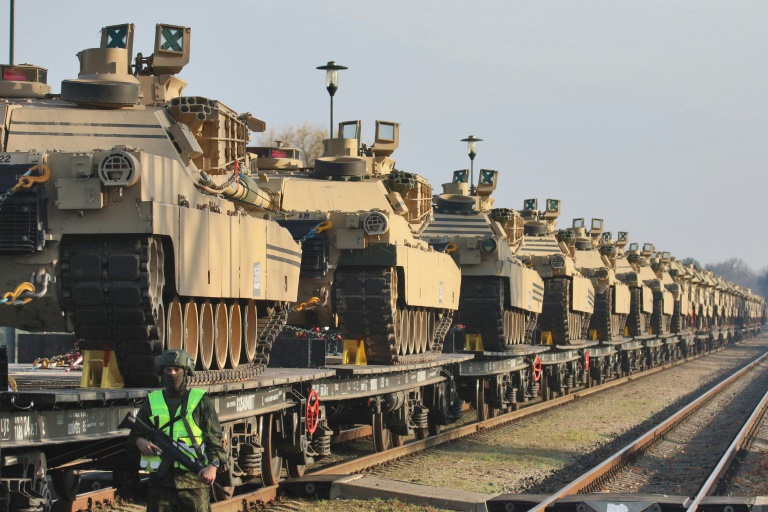
The United States will extend its rotation of a heavy tank battalion in Lithuania, which sees no reduction in the threat from Russia since Moscow’s invasion of Ukraine, Lithuanian officials said Friday.

Lithuanian Defense Minister Arvydas Anusauskas said that the battalion, in the town of Pabrade since 2019, will stay at least until the start of 2026.

In a statement after meeting US Defense Secretary Lloyd Austin in Brussels, Anusauskas said the decision implements “one of the most essential objectives put forward by the sitting government: we have a persistent military US presence in Lithuania.”

Lithuania, along with neighboring Poland and fellow Baltic states Latvia and Estonia, has been at the forefront of support to Ukraine since Russia attacked on February 24.

The invasion renewed fears in nations formerly under Moscow’s control. They have cheered on recent Ukrainian successes in taking back land.

But a senior Lithuanian official said that Russian forces still had the capacity to attack the Baltic states — all members of the NATO alliance, which he said had insufficient forces in the area before the Ukraine war.

“In our assessment, they are not as weakened as much as would change our assessment of the threat level to the alliance,” said Kestutis Budrys, national security advisor to Lithuania’s president, said of Russian forces.

Speaking to reporters in Washington after talks with President Joe Biden’s national security advisor, Jake Sullivan, Budrys said the probability remained low that Russia would attack NATO nations.

“But the actions that we see that were done in Ukraine and also the attempts to bring even more Belarus into the active military offensive against Ukraine shouldn’t make us more calm,” he said.

Belarus, whose authoritarian leader Alexander Lukashenko is one of the closest allies of Russian President Vladimir Putin, has let Moscow use its territory for the invasion.

Lukashenko said earlier this week that Belarusian forces would deploy together with Russian ones but did not specify where, and insisted the move was defensive.

Low water level on Mississippi River hurts US grain shipping

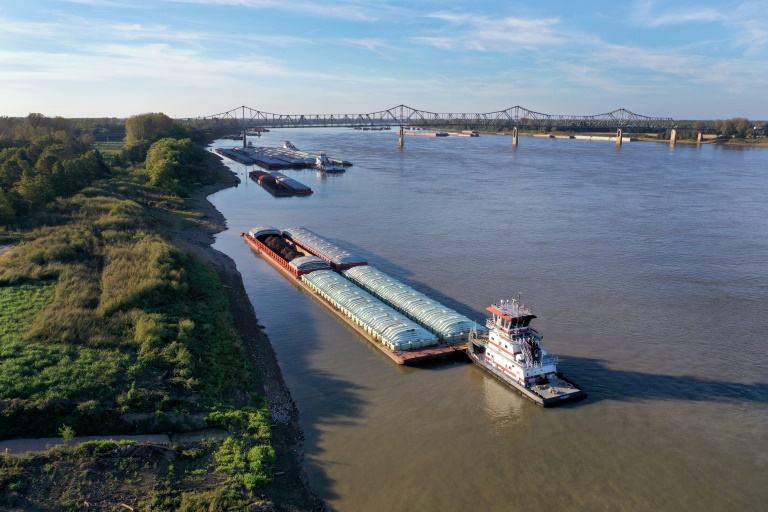
A lack of rainfall in the central United States has brought the mighty Mississippi River to its lowest depth in years, causing headaches for shippers and squeezing farmers who rely on the busy waterway to take their product to the Gulf of Mexico.

According to the US Geological Survey (USGS), the river’s depth at shipping hub Memphis, Tennessee, is at its lowest level since 2011.

“Normally at this time of year we would see 40-plus barges moving in a tow configuration pushed by (a) towboat,” said Deb Calhoun, senior vice president of Waterways Council, a US river infrastructure advocacy group.

“Now you you’re only seeing about 24, 25… moving at one time, sometimes less, depending on how shallow the river is at any point.”

This year’s low water level is largely due to a lack of rain in the upper plains states of Kansas, Nebraska, South Dakota and North Dakota, through which the Mississippi’s major tributary, the Missouri River, flows.

In some areas, the US Army Corps of Engineers has been forced to do emergency dredging so that barges can pass through.

“It’s a very difficult time with harvest occurring now — really the worst possible time for this severe low water situation to occur,” Calhoun said.

Though the winter wheat season was largely wrapped up by early August, corn and soy harvests are in full swing, increasing as usual demand as usual cargo space.

US Department of Agriculture (USDA) figures show that about two-thirds of US sea-based grain exports last year departed from the Gulf of Mexico, most often after being shipped by barge down the Mississippi River.

One barge can carry the equivalent volume of 15 rail cars and 60 semi-trucks, according to industry representatives American Waterways Operators.

“We’re seeing a lot of inefficiencies,” said Calhoun, explaining that barges are having to be filled with less grain so they float higher.

“At this point, we are just very hopeful that rain will come.”

Meteorologists predict some rain will fall over the weekend in the southern states of Arkansas, Tennessee and Mississippi.

– Producers squeezed –

The decreased barge capacity has translated into higher shipping costs, with the USDA recording a fourfold increase in barge prices since late August.

At those levels, “we are pricing ourselves out of the export market,” said Michael Zuzolo, of Global Commodity Analytics and Consulting.

He noted that corn has been particularly hard hit, with barge traffic cut in half.

The squeeze on agricultural shipping also comes as wheat, corn and soybean yields are expected to be lower than anticipated, according to the USDA.

“It is already starting to impact the up-river prices by weakening them for the farmers,” said Zuzolo.

And as commercial storage begins to get tighter and tighter, “it’s going to start spreading into the middle part of the country that is not right near a river,” he adds.

The low-water headaches are similar to those experienced in 2012, and for some evoke memories of a historic crisis in 1988.

In 2012, Calhoun says, rocks sticking up out of the water had to be blown up by the US Army Corps of Engineers.

“We’re not there yet,” she said, but in a worst case scenario, authorities would “look at the possibility of releasing water from the Missouri River or upstate reservoirs.”

Low water level on Mississippi River hurts US grain shipping

A lack of rainfall in the central United States has brought the mighty Mississippi River to its lowest depth in years, causing headaches for shippers and squeezing farmers who rely on the busy waterway to take their product to the Gulf of Mexico.

According to the US Geological Survey (USGS), the river’s depth at shipping hub Memphis, Tennessee, is at its lowest level since 2011.

“Normally at this time of year we would see 40-plus barges moving in a tow configuration pushed by (a) towboat,” said Deb Calhoun, senior vice president of Waterways Council, a US river infrastructure advocacy group.

“Now you you’re only seeing about 24, 25… moving at one time, sometimes less, depending on how shallow the river is at any point.”

This year’s low water level is largely due to a lack of rain in the upper plains states of Kansas, Nebraska, South Dakota and North Dakota, through which the Mississippi’s major tributary, the Missouri River, flows.

In some areas, the US Army Corps of Engineers has been forced to do emergency dredging so that barges can pass through.

“It’s a very difficult time with harvest occurring now — really the worst possible time for this severe low water situation to occur,” Calhoun said.

Though the winter wheat season was largely wrapped up by early August, corn and soy harvests are in full swing, increasing as usual demand as usual cargo space.

US Department of Agriculture (USDA) figures show that about two-thirds of US sea-based grain exports last year departed from the Gulf of Mexico, most often after being shipped by barge down the Mississippi River.

One barge can carry the equivalent volume of 15 rail cars and 60 semi-trucks, according to industry representatives American Waterways Operators.

“We’re seeing a lot of inefficiencies,” said Calhoun, explaining that barges are having to be filled with less grain so they float higher.

“At this point, we are just very hopeful that rain will come.”

Meteorologists predict some rain will fall over the weekend in the southern states of Arkansas, Tennessee and Mississippi.

– Producers squeezed –

The decreased barge capacity has translated into higher shipping costs, with the USDA recording a fourfold increase in barge prices since late August.

At those levels, “we are pricing ourselves out of the export market,” said Michael Zuzolo, of Global Commodity Analytics and Consulting.

He noted that corn has been particularly hard hit, with barge traffic cut in half.

The squeeze on agricultural shipping also comes as wheat, corn and soybean yields are expected to be lower than anticipated, according to the USDA.

“It is already starting to impact the up-river prices by weakening them for the farmers,” said Zuzolo.

And as commercial storage begins to get tighter and tighter, “it’s going to start spreading into the middle part of the country that is not right near a river,” he adds.

The low-water headaches are similar to those experienced in 2012, and for some evoke memories of a historic crisis in 1988.

In 2012, Calhoun says, rocks sticking up out of the water had to be blown up by the US Army Corps of Engineers.

“We’re not there yet,” she said, but in a worst case scenario, authorities would “look at the possibility of releasing water from the Missouri River or upstate reservoirs.”

Low water level on Mississippi River hurts US grain shipping

A lack of rainfall in the central United States has brought the mighty Mississippi River to its lowest depth in years, causing headaches for shippers and squeezing farmers who rely on the busy waterway to take their product to the Gulf of Mexico.

According to the US Geological Survey (USGS), the river’s depth at shipping hub Memphis, Tennessee, is at its lowest level since 2011.

“Normally at this time of year we would see 40-plus barges moving in a tow configuration pushed by (a) towboat,” said Deb Calhoun, senior vice president of Waterways Council, a US river infrastructure advocacy group.

“Now you you’re only seeing about 24, 25… moving at one time, sometimes less, depending on how shallow the river is at any point.”

This year’s low water level is largely due to a lack of rain in the upper plains states of Kansas, Nebraska, South Dakota and North Dakota, through which the Mississippi’s major tributary, the Missouri River, flows.

In some areas, the US Army Corps of Engineers has been forced to do emergency dredging so that barges can pass through.

“It’s a very difficult time with harvest occurring now — really the worst possible time for this severe low water situation to occur,” Calhoun said.

Though the winter wheat season was largely wrapped up by early August, corn and soy harvests are in full swing, increasing as usual demand as usual cargo space.

US Department of Agriculture (USDA) figures show that about two-thirds of US sea-based grain exports last year departed from the Gulf of Mexico, most often after being shipped by barge down the Mississippi River.

One barge can carry the equivalent volume of 15 rail cars and 60 semi-trucks, according to industry representatives American Waterways Operators.

“We’re seeing a lot of inefficiencies,” said Calhoun, explaining that barges are having to be filled with less grain so they float higher.

“At this point, we are just very hopeful that rain will come.”

Meteorologists predict some rain will fall over the weekend in the southern states of Arkansas, Tennessee and Mississippi.

– Producers squeezed –

The decreased barge capacity has translated into higher shipping costs, with the USDA recording a fourfold increase in barge prices since late August.

At those levels, “we are pricing ourselves out of the export market,” said Michael Zuzolo, of Global Commodity Analytics and Consulting.

He noted that corn has been particularly hard hit, with barge traffic cut in half.

The squeeze on agricultural shipping also comes as wheat, corn and soybean yields are expected to be lower than anticipated, according to the USDA.

“It is already starting to impact the up-river prices by weakening them for the farmers,” said Zuzolo.

And as commercial storage begins to get tighter and tighter, “it’s going to start spreading into the middle part of the country that is not right near a river,” he adds.

The low-water headaches are similar to those experienced in 2012, and for some evoke memories of a historic crisis in 1988.

In 2012, Calhoun says, rocks sticking up out of the water had to be blown up by the US Army Corps of Engineers.

“We’re not there yet,” she said, but in a worst case scenario, authorities would “look at the possibility of releasing water from the Missouri River or upstate reservoirs.”

Hacking revelations put Mexico military on defensive

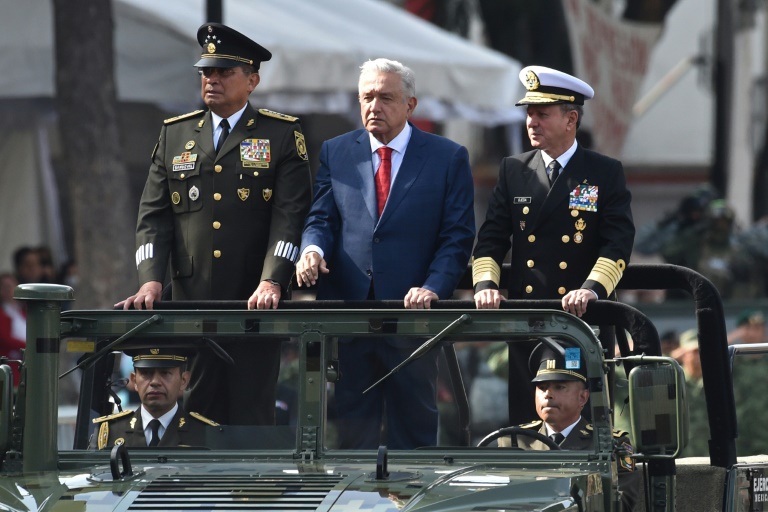
Leaks from a shadowy group of hackers targeting secret files held by the armed forces of several Latin American nations have fueled controversy in Mexico about the military’s growing power.

A trove of sensitive information was stolen from the Mexican defense ministry by the collective called Guacamaya, which has also claimed cyberattacks in Chile, Colombia and Peru.

“Their objectives are more political than economic,” said Diego Macor, a cyber-security expert at US technology giant IBM in Chile, who describes members of the network as “hacker-activists.”

The leaks revealed that the Mexican army continued to use Pegasus spyware developed by Israeli firm NSO Group after President Andres Manuel Lopez Obrador took office in 2018, according to an investigation by the Network in Defense of Digital Rights and its partners.

The targets included journalists and a human rights activist, according to the probe, which was assisted by the University of Toronto’s Citizen Lab.

The army insisted that it had only used spyware to fight organized crime.

The hack also left Mexico’s military facing allegations that some of its members have links to drug cartels, and that it engineered a contentious security reform giving it control of the National Guard, which was previously under civilian command.

Two soldiers sold grenades, other weapons and tactical equipment to drug cartel members, according to analysis of the files by the civil society group Mexicans Against Corruption and Impunity.

The Mexican and Peruvian militaries also allegedly monitored civil society organizations such as Amnesty International, which condemned their actions as “unacceptable.”

“The undue monitoring of civil society organizations identified in the Guacamaya collective leaks is an example of the hostile context in which we work as organizations defending human rights in the Americas,” said Amnesty regional director Erika Guevara-Rosas.

“Instead of monitoring the activities of civil society organizations, the military and other authorities in the region should be ensuring a favorable environment for the defense of rights and acknowledging the important role played by human rights defenders,” she added.

Mexican legislators on Wednesday summoned Defense Minister Luis Cresencio Sandoval to explain himself, but he refused, telling them to visit him in his office instead.

– President’s health –

The leaks revealed previously undisclosed information — subsequently confirmed by Lopez Obrador — that the 68-year-old president was taken by air ambulance in January from his ranch in southern Mexico to a hospital in the capital with heart problems. Lopez Obrador had already suffered a heart attack in 2013.

Before coming to power in 2018, Lopez Obrador had vowed to send the military back to the barracks.

But under his presidency, the armed forces have kept their role in tackling cartel-related violence and even gained more responsibility, including control of ports and customs and major infrastructure projects.

This week lawmakers approved an extension of the Mexican armed forces’ public security role until 2028.

In Colombia, Guacamaya claimed to have obtained more than 300,000 private emails from the military forces and the state prosecutor’s office, although the hack has yet to generate the same level of controversy there as in Mexico.

The Colombian army said it was “aware of the possible extraction of information from the general command.”

Guacamaya also released tens of thousands of emails from the National Hydrocarbons Agency and a private company, New Granada Energy Corp.

The records revealed 62 oil and chemical spills between 2015 and 2020.

Most of these “environmental incidents” were not reported to authorities, according to internal communications from New Granada Energy, which could not be reached for comment.

In Chile, hackers exploited flaws in the computer systems of the Joint Armed Forces Command. 

The vulnerability of the Chilean army’s servers had been known since August 2021, said Nicolas Boettcher, an expert at Diego Portales University in Santiago.

Even so, “there have been no calls for tenders for the review and repair of the servers,” he said.

burs-st-dr/tjj/caw

UK's Truss fires finance minister as budget plan in ruins

British Prime Minister Liz Truss on Friday fired her finance minister after prolonged market turmoil, but some Conservatives were plotting their new leader’s own demise as her right-wing economic agenda imploded.

Kwasi Kwarteng became the second shortest-lived chancellor of the exchequer in UK political history, paying the price after Truss’s crash programme of unfunded tax cuts terrified the financial markets.

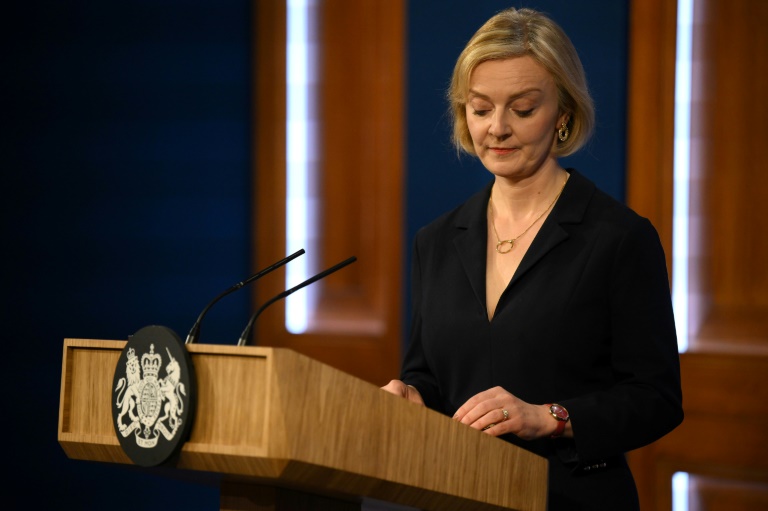
Truss did little to reassure investors and the UK electorate at a brief news conference — her first since succeeding Boris Johnson on September 6. 

She insisted she had acted “decisively” to bring about “economic stability” — but the pound resumed its slide on currency markets, falling under $1.12.

“We will get through this storm,” she said, taking only four questions, looking nervously around the room and delivering terse replies.

“I want to deliver a low-tax, high-wage, high-growth economy,” Truss added. “That mission remains.”

Kwarteng, who had rushed back early from international meetings in Washington, was replaced by the centrist former foreign secretary and former Tory leadership candidate Jeremy Hunt as Britain’s fourth chancellor this year.

Financial upheaval sparked by the new government’s September 23 plan to slash taxes — financed via billions in more borrowing — had subsided somewhat since the Bank of England (BoE) intervened in bond markets.

But the central bank was adamant it would end its bond-buying spree on Friday, and market analysts said only a bigger climbdown by Truss following Kwarteng’s disastrous budget announcement last month would avert fresh panic.

She duly delivered the U-turn by announcing she would retain the Johnson government’s plan to raise profits tax on companies — having already changed her mind about cutting income tax for the highest earners.

– Collapsing polls –

The promised tax reforms were the centrepiece of Truss’s successful pitch to Tory party members that she, rather than moderate rival Rishi Sunak, was the best candidate to replace Johnson. 

Almost two-thirds of the 2,000 voters polled by “Find Out Now” after Friday’s press conference believe she should now resign.

More than 60 percent also said there should be a general election, while only 8 percent said she should stay as leader.

Other polls show a mammoth lead up opening up for the main opposition Labour party, threatening electoral meltdown for the Tories. 

Labour leader Keir Starmer said that ditching Kwarteng would not “undo the damage made in Downing Street”.

“Liz Truss’ reckless approach has crashed the economy, causing mortgages to skyrocket and has undermined Britain’s standing on the world stage,” he said.

Tony Travers, from the London School of Economics, told AFP that Kwarteng had been made “the fall guy for the government’s mistakes” — but that the sacking had not taken the pressure off Truss or calmed the Tories.

“It’s very hard to see them coming back from this” by the next election, he added.

– ‘Rash talk’ –

Kwarteng had been due to stay in Washington this weekend to conclude annual meetings of the International Monetary Fund and World Bank.

He had already earned a rebuke from IMF chief Kristalina Georgieva, who had stressed the need for “coherent and consistent” policies.

Commenting on the tax U-turn, senior IMF official Alfred Kammer paid credit to the UK’s “strong institutions”, such as the BoE and the Office for Budget Responsibility — both of which were undermined by Truss and Kwarteng.

Also speaking in Washington, European Union economy commissioner Paolo Gentiloni said the upheaval in Britain showed “how prudent we should be also with our fiscal and monetary mix”.

In the US capital on Thursday, Kwarteng had insisted that his job was safe. “I’m not going anywhere,” he said.

But UK broadcasters showed live footage of Kwarteng’s British Airways plane landing at London’s Heathrow airport a day early, after Truss held hurried meetings with her own financial advisors in his absence.

Multiple reports said that senior Tory MPs were plotting to unseat Truss by installing a new leadership team under Sunak and Penny Mordaunt, who also ran to succeed Johnson.

Party grandees could move next week, senior BBC journalist Nick Watt tweeted.

“They said not tenable for PM to remain after sacking @KwasiKwarteng who was implementing the programme that won her the Tory leadership,” he wrote.

But Bernard Jenkin, a senior voice on the Tory right, called for “calm” after Hunt’s appointment.

“Rash talk of ditching the PM, or calls for a general election, will not calm the financial markets,” he tweeted.

UK's Truss fires finance minister as budget plan in ruins

British Prime Minister Liz Truss on Friday fired her finance minister after prolonged market turmoil, but some Conservatives were plotting their new leader’s own demise as her right-wing economic agenda imploded.

Kwasi Kwarteng became the second shortest-lived chancellor of the exchequer in UK political history, paying the price after Truss’s crash programme of unfunded tax cuts terrified the financial markets.

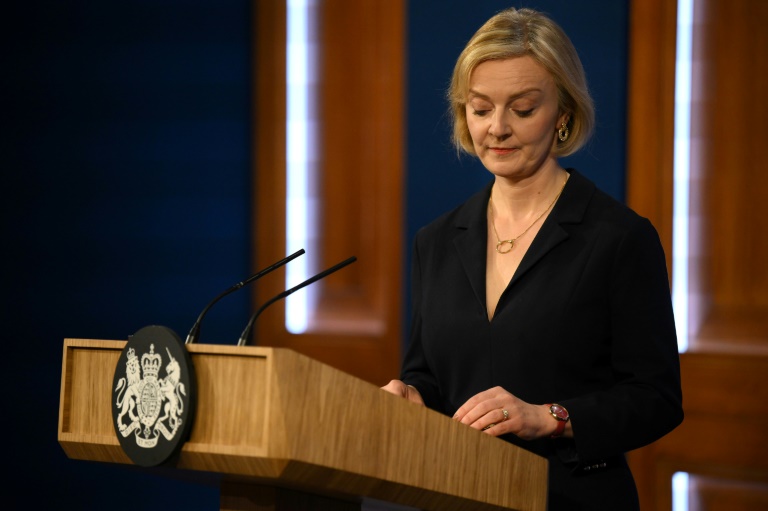
Truss did little to reassure investors and the UK electorate at a brief news conference — her first since succeeding Boris Johnson on September 6. 

She insisted she had acted “decisively” to bring about “economic stability” — but the pound resumed its slide on currency markets, falling under $1.12.

“We will get through this storm,” she said, taking only four questions, looking nervously around the room and delivering terse replies.

“I want to deliver a low-tax, high-wage, high-growth economy,” Truss added. “That mission remains.”

Kwarteng, who had rushed back early from international meetings in Washington, was replaced by the centrist former foreign secretary and former Tory leadership candidate Jeremy Hunt as Britain’s fourth chancellor this year.

Financial upheaval sparked by the new government’s September 23 plan to slash taxes — financed via billions in more borrowing — had subsided somewhat since the Bank of England (BoE) intervened in bond markets.

But the central bank was adamant it would end its bond-buying spree on Friday, and market analysts said only a bigger climbdown by Truss following Kwarteng’s disastrous budget announcement last month would avert fresh panic.

She duly delivered the U-turn by announcing she would retain the Johnson government’s plan to raise profits tax on companies — having already changed her mind about cutting income tax for the highest earners.

– Collapsing polls –

The promised tax reforms were the centrepiece of Truss’s successful pitch to Tory party members that she, rather than moderate rival Rishi Sunak, was the best candidate to replace Johnson. 

Almost two-thirds of the 2,000 voters polled by “Find Out Now” after Friday’s press conference believe she should now resign.

More than 60 percent also said there should be a general election, while only 8 percent said she should stay as leader.

Other polls show a mammoth lead up opening up for the main opposition Labour party, threatening electoral meltdown for the Tories. 

Labour leader Keir Starmer said that ditching Kwarteng would not “undo the damage made in Downing Street”.

“Liz Truss’ reckless approach has crashed the economy, causing mortgages to skyrocket and has undermined Britain’s standing on the world stage,” he said.

Tony Travers, from the London School of Economics, told AFP that Kwarteng had been made “the fall guy for the government’s mistakes” — but that the sacking had not taken the pressure off Truss or calmed the Tories.

“It’s very hard to see them coming back from this” by the next election, he added.

– ‘Rash talk’ –

Kwarteng had been due to stay in Washington this weekend to conclude annual meetings of the International Monetary Fund and World Bank.

He had already earned a rebuke from IMF chief Kristalina Georgieva, who had stressed the need for “coherent and consistent” policies.

Commenting on the tax U-turn, senior IMF official Alfred Kammer paid credit to the UK’s “strong institutions”, such as the BoE and the Office for Budget Responsibility — both of which were undermined by Truss and Kwarteng.

Also speaking in Washington, European Union economy commissioner Paolo Gentiloni said the upheaval in Britain showed “how prudent we should be also with our fiscal and monetary mix”.

In the US capital on Thursday, Kwarteng had insisted that his job was safe. “I’m not going anywhere,” he said.

But UK broadcasters showed live footage of Kwarteng’s British Airways plane landing at London’s Heathrow airport a day early, after Truss held hurried meetings with her own financial advisors in his absence.

Multiple reports said that senior Tory MPs were plotting to unseat Truss by installing a new leadership team under Sunak and Penny Mordaunt, who also ran to succeed Johnson.

Party grandees could move next week, senior BBC journalist Nick Watt tweeted.

“They said not tenable for PM to remain after sacking @KwasiKwarteng who was implementing the programme that won her the Tory leadership,” he wrote.

But Bernard Jenkin, a senior voice on the Tory right, called for “calm” after Hunt’s appointment.

“Rash talk of ditching the PM, or calls for a general election, will not calm the financial markets,” he tweeted.

French fuel shortages spark warnings as strike hardens

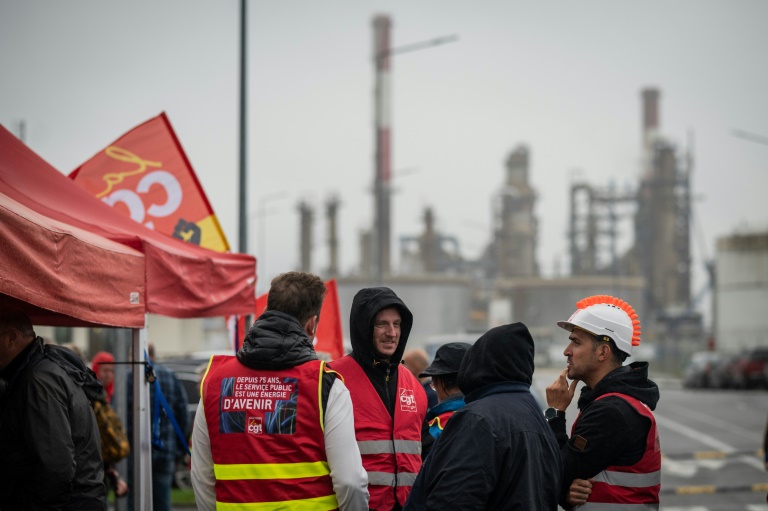
Striking French refinery workers vowed Friday to pursue blockades after spurning a pay offer from industry leader TotalEnergies, prompting alarm over spreading fuel shortages ahead of broader protests in the coming days.

The hard-left CGT union, which launched the industrial action three weeks ago, walked out of talks with Total late Thursday, even as other unions representing a majority of workers accepted a deal.

“We’re not blind, we know this is impacting daily life for all the French,” CGT chief Philippe Martinez told Franceinfo radio, calling on the government to put pressure on the company to renegotiate.

His union has called a strike for Tuesday that could disrupt public transport nationwide, on the heels of anti-inflation marches called for Sunday by left-wing opponents of President Emmanuel Macron.

Macron’s government forced some strikers back to work this week to open fuel depots, a move that infuriated unions but was upheld by a court on Friday, a judicial source told AFP.

“There are signs of improvement at certain sites, where fuel shipments to service stations have resumed,” Prime Minister Elisabeth Borne told regional officials in Agen, southwest France.

Her office late Friday said it hoped for the situation to normalise “in the coming week”.

But nationwide, 28.5 percent of stations are out of at least one type of fuel, only a slight decline from around 30 percent in recent days, Energy Transition Minister Agnes Pannier-Runacher told reporters in Lille, northern France.

And even though striking workers voted to lift the blockades at two sites owned by US energy major Esso-ExxonMobil, four of the seven refineries in France remain shut.

Esso-ExxonMobil said it will take two to three weeks for the situation to return to normal in the two refineries. 

At the TotalEnergies refinery near Saint-Nazaire, which supplies fuel for much of western France, strikers voted to prolong the strike but said some shipments would be allowed over the weekend.

“We’re a responsible union, so we will deliver some fuel to ease tensions, but certainly not every day,” a CGT official at the site, Fabien Prive Saint-Lanne, told reporters.

– ‘We’re worried’ –

France’s wholesale suppliers’ association warned that goods deliveries would be “severely compromised” beginning Friday, as motorists again faced long queues hoping to fill up before the weekend.

Farmers are also worried about compromised harvests as well as seed plantings for next year, in particular wheat and other grains.

“We’re worried because we have to plant now, when conditions are ideal, not 10 days or a month from now,” said Joel Limouzin, vice president of the FNSEA agriculture union.

Officials in the southeastern Auvergne-Rhone-Alpes region said it would make train and bus transport free until Sunday night because of the fuel shortages.

The standoff is putting new pressure on Macron as his left-wing opponents see a chance to spur a broader protest against his reform drive.

In their sights is a pensions overhaul that would push back the retirement age from 62, which Macron wants to get through parliament in the coming months.

“The time for a confrontation has arrived,” parliamentarian Clementine Autain from the France Unbowed party told France 2 television on Thursday.

– ‘In denial’ –

Until this week, the government had been reluctant to inflame the refineries dispute, prompting critics to say it was oblivious to the strike’s impact on everyday workers.

“For two weeks there was no management of this problem, they were in denial,” said Eric Ciotti of the right-wing Republicans party — whose support will be crucial for Macron after his centrist grouping lost its parliamentary majority this year.

The CGT is pushing for a 10 percent raise, citing TotalEnergies’ net profit of $5.7 billion in the April-June period as energy prices soared with the war in Ukraine, and its payout of billions of euros in dividends to shareholders. 

Finance Minister Bruno Le Maire told RTL radio Thursday that given its huge profits, the company had “the capacity… and therefore an obligation” to raise workers’ pay.

But the union risks stoking resentment in a country where three-fourths of workers rely on personal vehicles for their jobs, with public support for the strike at just 37 percent in a BVA poll released Friday.

“For the past four or five days, it has been catastrophic”, said Francoise Ernst, who works at a driving school in Paris. 

“And I think that if it goes on, we will have to stop working.”

burs-js/ach/pvh

Harry Potter's Hagrid, Robbie Coltrane, dies aged 72

Scottish actor Robbie Coltrane, who played Hagrid in the Harry Potter films, has died aged 72, his agent said on Friday.

He also played a former KGB agent-turned-Russian mafia boss in two James Bond films — “Goldeneye” (1995) and “The World Is Not Enough” (1999) — with Pierce Brosnan.

“My client and friend Robbie Coltrane OBE passed away on Friday October 14,” Belinda Wright said in a statement, calling him “a unique talent”.

Coltrane, who was born Anthony Robert McMillan on March 30, 1950, in Rutherglen, near Glasgow, forged a career as an actor, comedian and writer.

On television, he starred alongside Emma Thompson in the cult BAFTA-winning BBC mini-series “Tutti Frutti” in 1987.

He came to prominence and won more awards for his portrayal of the hard-drinking criminal psychologist Dr Eddie “Fitz” Fitzgerald in the ITV series “Cracker” (1993-2006).

He was the English author and lexicographer Samuel Johnson in the TV comedy series “Blackadder the Third” alongside “Mr Bean” star Rowan Atkinson and Hugh Laurie (“House”).

Frequent co-star Stephen Fry tweeted that he was “awe/terror/love struck all at the same time” when he first met Coltrane 40 years ago.

“Such depth, power & talent: funny enough to cause helpless hiccups & honking as we made our first TV show, ‘Alfresco’. Farewell, old fellow. You’ll be so dreadfully missed,” he wrote.

On the big screen, Coltrane had roles in the 1987 Neil Jordan crime drama “Mona Lisa” and teamed up with former Monty Python star Eric Idle in the 1990 comedy “Nuns on the Run”.

But he will best be remembered globally as Rubeus Hagrid, the half-giant half-human gamekeeper and Keeper of the Keys and Grounds of Hogwarts school in the film franchise of JK Rowling’s best-selling Harry Potter books.

The role “brought joy to children and adults alike all over the world, prompting a stream of fan letters every week for over 20 years”, said Wright.

“As well as being a wonderful actor, he was forensically intelligent, brilliantly witty”, she said.

Rowling tweeted that “I’ll never know anyone remotely like Robbie again. 

“He was an incredible talent, a complete one off, and I was beyond fortunate to know him, work with him and laugh my head off with him,” she wrote.

Coltrane is survived by his sister Annie Rae, his children Spencer and Alice and their mother Rhona Gemmell. 

No cause of death was given but Wright thanked medical staff at Forth Valley Royal Hospital in Larbert, central Scotland, “for their care and diplomacy”.

Suspect, 15, in custody over latest US mass shooting

The gunman believed to have killed five people in North Carolina in America’s latest mass shooting is a 15-year-old boy, in critical condition after being shot by police, officials said Friday.

Two more people were wounded in the Thursday night shooting, the motive of which remains under investigation, Raleigh police chief Estella Patterson told a news conference in the state capital.

She said the fatalities included a 29-year-old off-duty police officer who was on his way to work. The four other victims were a 16-year-old boy and three women aged 35, 49 and 52.

A 59-year-old woman also remained hospitalized in critical condition.

“The nightmare of every community has come to Raleigh,” Governor Roy Cooper said. “This is senseless, horrific and infuriating act of violence.”

President Joe Biden condemned the shooting and said gun violence in America is now so rampant that some killings no longer make the news.

“Enough. We’ve grieved and prayed with too many families who have had to bear the terrible burden of these mass shootings,” Biden said in a statement.

He renewed his appeal for a ban on high-power assault rifles commonly used in these massacres — a proposal that has repeatedly failed due to opposition from Republicans in Congress.

The shooter in this latest case opened fire in Raleigh on and near a popular walking trail called the Neuse River Greenway.

Patterson and other officials gave few details of how the mass shooting unfolded.

After an hours-long standoff in a house, the suspect was shot and taken into custody, police said.

“My heart is heavy because we don’t have answers as to why this tragedy occurred,” Patterson said.

Gun violence is an urgently pressing problem in the United States, where more than 34,000 people have been killed by firearms so far in 2022 alone, more than half of them from suicide, according to the Gun Violence Archive website.

The North Carolina shooting occurred after a jury earlier in the day rejected the death penalty and backed life imprisonment for Nikolas Cruz, who shot and killed 17 people at a Florida high school in 2018.

Mass shootings have repeatedly stunned the nation, reigniting debate on the divisive issue of gun control — but there has been little headway in Congress.

However, several of the most recent gun rampages, including a shooting at a school in Texas and a supermarket frequented by African Americans in New York state, prompted lawmakers to agree in June, for the first time in 30 years, to pass modest reform of gun control laws.

Nearly 400 million guns are in circulation among the civilian population in the United States, or 120 guns for every 100 people, according to the Small Arms Survey project.

Close Bitnami banner
Bitnami