AFP

IMF cuts 2023 global growth, warns major economies to stall

Global growth is expected to slow further next year, the IMF said Tuesday, downgrading its forecasts as countries grapple with the fallout from Russia’s invasion of Ukraine, spiraling cost-of-living and economic downturns.

The world economy has been dealt multiple blows, with the war in Ukraine driving up food and energy prices following the coronavirus outbreak, while soaring costs and rising interest rates threaten to reverberate around the globe.

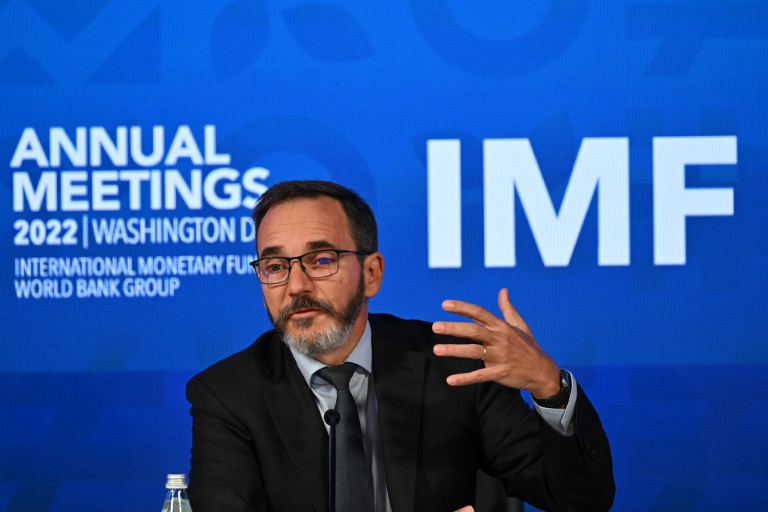
“This year’s shocks will re-open economic wounds that were only partially healed post-pandemic,” said International Monetary Fund economic counsellor Pierre-Olivier Gourinchas in a blog post accompanying the fund’s latest World Economic Outlook.

More than a third of the global economy is headed for contraction this year or next, and the three biggest economies –- the United States, European Union and China –- will continue to stall, he warned.

“The worst is yet to come and, for many people 2023 will feel like a recession,” said Gourinchas.

In its report, the IMF trimmed its 2023 global GDP growth forecast to 2.7 percent, 0.2 point down from July expectations.

Its world growth forecast for this year remains unchanged at 3.2 percent.

The global growth profile is its weakest since 2001, apart from during the global financial crisis and the worst of the pandemic, the IMF said.

This reflects slowdowns for the biggest economies, including a US GDP contraction in the first half of 2022 and continued lockdowns in China as it faces a property market crisis.

– Laser focus –

A key factor behind the slowdown is a shift in policy as central banks try to bring down soaring inflation, with higher interest rates starting to take the heat out of domestic demand.

Growing price pressures are the most immediate threat to prosperity, said Gourinchas in the report, adding that central banks are now “laser-focused on restoring price stability”.

Global inflation is expected to peak at 9.5 percent this year before dropping to 4.1 percent by 2024.

Misjudging the persistence of inflation could prove detrimental to future macroeconomic stability, he warned, “by gravely undermining the hard-won credibility of central banks.”

Asked about the Federal Reserve’s rate hikes, Gourinchas told a press briefing on Tuesday that the IMF is not calling for an acceleration, but this “doesn’t mean that they should pause on the path… that we’ve seen” either. 

This is because banks were starting from a point where rates were historically low as countries emerged from the pandemic, he said.

Current challenges do not mean a large downturn is inevitable, but the fund also warned many low-income countries are either in, or close to debt distress.

While the G20 has agreed on a “common framework” for debt restructuring for the poorest countries, only three have qualified and “more progress is needed,” Gourinchas told reporters.

“Time may soon be running out,” he said.

– Slowdown in major economies –

The IMF has also cut forecasts for the world’s two biggest economies, the United States and China.

US economic growth for this year is now pegged at 1.6 percent, 0.7 point below the fund’s July forecast, due to an “unexpected real GDP contraction in the second quarter,” the IMF said.

“Declining real disposable income continues to eat into consumer demand, and higher interest rates are taking an important toll on spending,” the report added.

The Federal Reserve has been raising interest rates aggressively to tamp down surging inflation, which is slowing economic activity. And the central bank has said more increases are likely to come.

China’s economy is expected to grow at 3.2 percent this year — its lowest rate in decades, apart from the initial coronavirus outbreak.

The fund cautioned that a worsening of China’s property sector slump could spill over to the domestic banking sector and weigh heavily on growth.

A slowdown in the Euro area is also expected to deepen next year, the IMF projected, with the German and Italian economies tumbling into recession due to their exposure to Russian gas cuts.

The energy crisis provoked by Russia’s invasion of Ukraine “is not a transitory shock,” the IMF said, describing the global shift in energy trade as “broad and permanent.”

It warned that winter this year will be “challenging for Europe,” while “winter 2023 will likely be worse.”
IMF cuts 2023 global growth, warns major economies to stall

Global growth is expected to slow further next year, the IMF said Tuesday, downgrading its forecasts as countries grapple with the fallout from Russia’s invasion of Ukraine, spiraling cost-of-living and economic downturns.

The world economy has been dealt multiple blows, with the war in Ukraine driving up food and energy prices following the coronavirus outbreak, while soaring costs and rising interest rates threaten to reverberate around the globe.

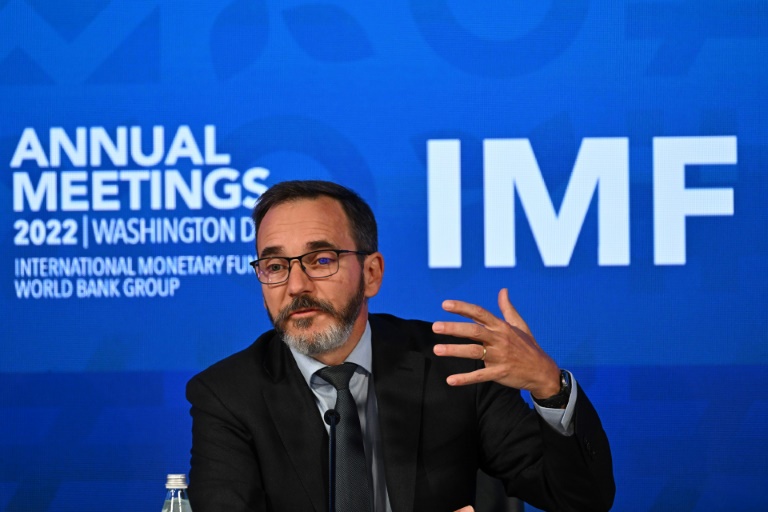
“This year’s shocks will re-open economic wounds that were only partially healed post-pandemic,” said International Monetary Fund economic counsellor Pierre-Olivier Gourinchas in a blog post accompanying the fund’s latest World Economic Outlook.

More than a third of the global economy is headed for contraction this year or next, and the three biggest economies –- the United States, European Union and China –- will continue to stall, he warned.

“The worst is yet to come and, for many people 2023 will feel like a recession,” said Gourinchas.

In its report, the IMF trimmed its 2023 global GDP growth forecast to 2.7 percent, 0.2 point down from July expectations.

Its world growth forecast for this year remains unchanged at 3.2 percent.

The global growth profile is its weakest since 2001, apart from during the global financial crisis and the worst of the pandemic, the IMF said.

This reflects slowdowns for the biggest economies, including a US GDP contraction in the first half of 2022 and continued lockdowns in China as it faces a property market crisis.

– Laser focus –

A key factor behind the slowdown is a shift in policy as central banks try to bring down soaring inflation, with higher interest rates starting to take the heat out of domestic demand.

Growing price pressures are the most immediate threat to prosperity, said Gourinchas in the report, adding that central banks are now “laser-focused on restoring price stability”.

Global inflation is expected to peak at 9.5 percent this year before dropping to 4.1 percent by 2024.

Misjudging the persistence of inflation could prove detrimental to future macroeconomic stability, he warned, “by gravely undermining the hard-won credibility of central banks.”

Asked about the Federal Reserve’s rate hikes, Gourinchas told a press briefing on Tuesday that the IMF is not calling for an acceleration, but this “doesn’t mean that they should pause on the path… that we’ve seen” either. 

This is because banks were starting from a point where rates were historically low as countries emerged from the pandemic, he said.

Current challenges do not mean a large downturn is inevitable, but the fund also warned many low-income countries are either in, or close to debt distress.

While the G20 has agreed on a “common framework” for debt restructuring for the poorest countries, only three have qualified and “more progress is needed,” Gourinchas told reporters.

“Time may soon be running out,” he said.

– Slowdown in major economies –

The IMF has also cut forecasts for the world’s two biggest economies, the United States and China.

US economic growth for this year is now pegged at 1.6 percent, 0.7 point below the fund’s July forecast, due to an “unexpected real GDP contraction in the second quarter,” the IMF said.

“Declining real disposable income continues to eat into consumer demand, and higher interest rates are taking an important toll on spending,” the report added.

The Federal Reserve has been raising interest rates aggressively to tamp down surging inflation, which is slowing economic activity. And the central bank has said more increases are likely to come.

China’s economy is expected to grow at 3.2 percent this year — its lowest rate in decades, apart from the initial coronavirus outbreak.

The fund cautioned that a worsening of China’s property sector slump could spill over to the domestic banking sector and weigh heavily on growth.

A slowdown in the Euro area is also expected to deepen next year, the IMF projected, with the German and Italian economies tumbling into recession due to their exposure to Russian gas cuts.

The energy crisis provoked by Russia’s invasion of Ukraine “is not a transitory shock,” the IMF said, describing the global shift in energy trade as “broad and permanent.”

It warned that winter this year will be “challenging for Europe,” while “winter 2023 will likely be worse.”
Hope fading in search for Venezuela landslide survivors

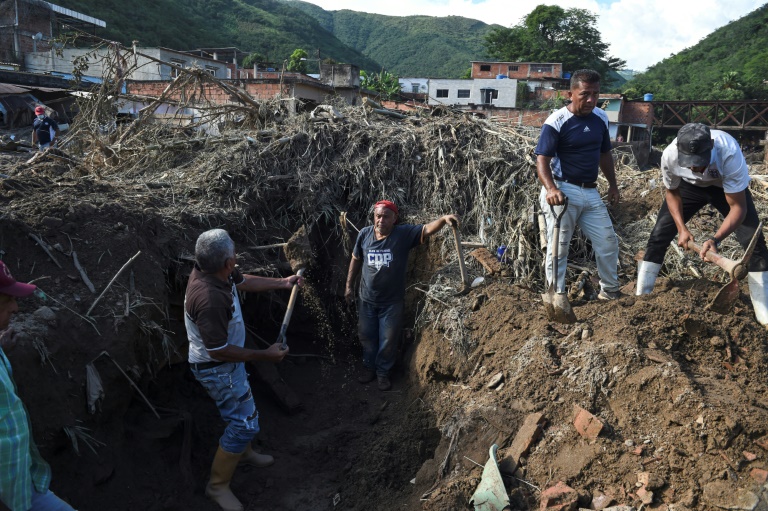
Hopes were fading Tuesday of finding alive any of the 56 people missing after a devastating landslide swept through a Venezuelan town with 36 confirmed deaths to date.

Neighbors and rescuers — some 3,000 police, soldiers and other professionals — were engaged in the ever-more desperate search among the fast-hardening mud, tree trunks and rocks dumped Saturday on the town of Las Tejerias. 

Rescuers told AFP it would be “difficult” to find any survivors in the town some 50 kilometers (31 miles) from the capital Caracas.

“I don’t know whether to scream, I don’t know whether to run… whether to cry,” Nathalie Matos, 34, told AFP of the frustrating wait for news on the fate of her 65-year-old mother, who she had on the phone as the deluge came.  

“She told me: ‘Daughter, I am drowning, the water got in, get me out, get me out… save me!” Matos recounted.

“I tried to call her back, she picked up, but there was just noise.”

A rescue team is at her mother’s mud-filled house.

“The dog gave signs here, in this area that was the living room and the kitchen,” said a firefighter, though all their digging so far had yielded nothing.

“I know she is there,” insisted Mato.  

A few meters away, another team examined a piece of land where a house stood until Saturday, when Las Tejerias became the site of Venezuela’s worst natural disaster in decades.  

Neighbors were helping to reconstruct what would have been the floor plan to get an idea of where to dig.

A civil protection official, who did not have permission to speak in an official capacity, told AFP most victims of the storm died after they were struck by tree trunks, large rocks or other objects swept along by the raging waters, others of hypothermia.  

Unusually heavy rains caused a major river and several streams to overflow on Saturday, causing a torrent of mud that washed away cars, parts of homes, businesses and telephone wires, and felled massive trees.

According to Vice President Delcy Rodriguez, a month’s worth of rain fell in the area in just eight hours.

The government has declared three days of mourning.

– Town ‘will be reborn’ –

Experts say the storm was aggravated by the seasonal La Nina weather system gripping the region, as well as the effects of Hurricane Julia which also claimed at least 26 lives in Central America and caused extensive damage.

Crisis-hit Venezuela is no stranger to seasonal storms, but this was the worst so far this year following historic rain levels that caused dozens of deaths in recent months. 

In 1999, about 10,000 people died in a massive landslide in the northern state of Vargas. 

President Nicolas Maduro visited Las Tejerias on Monday, vowing to rebuild “each and every” home and business destroyed by the freak storm.

“We take with us the pain, the clamor, the despair, the tears of the people, but they must know that Las Tejerias will rise like the phoenix, Las Tejerias will be reborn,” he said.

According to Rodriguez, 317 homes were “completely destroyed” and 757 damaged by the mudslide. 

The authorities have erected refuge centers in Maracay, the capital of the affected Aragua province, and announced the distribution of 300 tons of food. 

Zelensky pleads for Ukraine 'air shield' after Russian onslaught

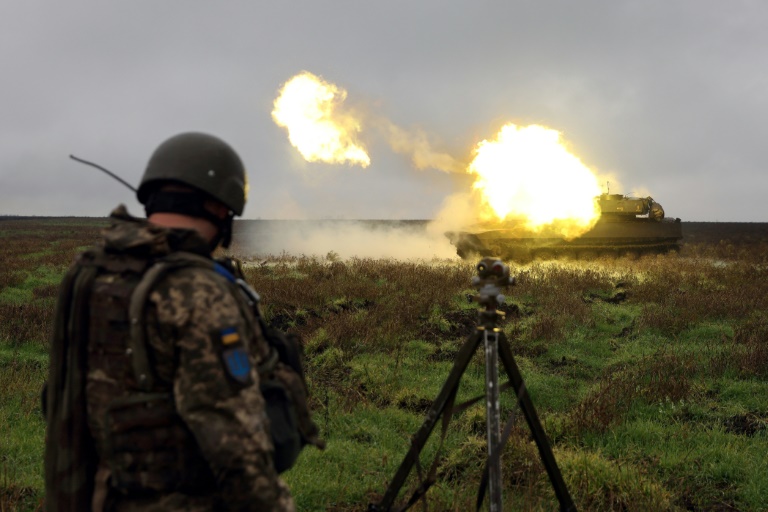
Ukrainian leader Volodymyr Zelensky called on Tuesday for wealthy Western nations to help Kyiv create an “air shield” after a rash of deadly Russian aerial attacks.

Zelensky, who told the G7 club of rich nations “millions of people would be grateful” for help fending off attacks from the sky, warned Russia “still has room for further escalation” after Monday’s bloody missile salvoes across Ukraine.

Following the attacks, Washington pledged to up shipments of air defences to Ukraine, while Germany promised delivery “in the coming days” of the first Iris-T missile shield reportedly capable of protecting a city.

In a week of marked escalation in the war, G7 leaders said that Belarus’s plan to deploy joint forces with Russia constituted a new instance of “complicity” with Moscow, warning Minsk to “stop enabling” Russia’s invasion.

Following talks with Zelensky, G7 leaders said they would hold Russian President Vladimir Putin to account for the attacks but did not say how. 

Before the G7 meeting, the Kremlin had already said it expected “confrontation” with the West to continue.

Russia followed up the missile launches at the start of the week with further aerial attacks on Tuesday.

Officials in Ukraine’s western region of Lviv said at least three Russian missiles fired Tuesday targeted energy infrastructure forcing Kyiv to ask people to cut their electricity usage and switch off appliances at night.

Russia’s defence ministry confirmed Tuesday’s renewed attacks, saying it had carried out massive strikes using long-range and high-precision weapons and that “all assigned targets were hit”.

In Lviv, the largest city in the region of the same name, the mayor said that one-third of homes were without power.

Monday’s attacks saw Russian missiles hit the Ukrainian capital Kyiv for the first time in months. 

The Ukrainian defence ministry said Monday that Russia had fired 83 missiles at Ukraine, of which its air defences shot down 52, among which were 43 cruise missiles.

Ukraine said 19 people died and more than 100 people were wounded in Monday’s more widespread strikes, while the UN said Russia’s bombardment may have violated the laws of war.

Residents across Ukraine expressed shock and rage after Monday’s onslaught.

Ksenia Ryazantseva’s suburb of Kyiv, a city of three million people that has largely been spared the violence seen on Ukraine’s southern and eastern fronts, was one of those targeted.

“We were sleeping and we heard the first explosion” by the crossroads, the language teacher, 39, told AFP.

“We woke up and went to check, then the second explosion occurred.”

Monday’s mass barrage came in apparent retaliation for an explosion at the weekend that damaged a key bridge linking Russia to Crimea, a peninsula Moscow annexed from Ukraine in 2014.

Putin blamed Ukraine for the bridge blast and warned of “severe” responses to any further attacks.

– ‘Just peace’ –

Ukrainian Foreign Minister Dmytro Kuleba said the strikes showed Moscow was “desperate” after a spate of embarrassing military setbacks, a sentiment echoed by NATO chief Jens Stoltenberg who said they were “a sign of weakness”.

Turkey on Tuesday called for a viable ceasefire between Russia and Ukraine “as soon as possible”, with Turkish President Recep Tayyip Erdogan expected to meet Putin in Kazakhstan this week.

Speaking in a televised interview, Turkish Foreign Minister Mevlut Cavusoglu also called for a “just peace” based on Ukraine’s territorial integrity. 

– ‘A profound change’ –

Ukraine’s allies have been united in their public pledges of unwavering support for Kyiv.

German government spokesman Steffen Hebestreit told reporters on Monday that Chancellor Olaf Scholz had spoken with Zelensky and assured him “of the solidarity of Germany and the other G7 states”.

French President Emmanuel Macron convened his defence and foreign affairs ministers over the strikes, which he said signalled “a profound change in the nature of this war”.

US President Joe Biden condemned Monday’s attacks in stark terms, saying they demonstrated “the utter brutality” of Putin’s “illegal war”.

Putin meanwhile told the head of the UN’s nuclear energy watchdog Rafael Grossi that he was “open to dialogue” on the future of the Russian-controlled nuclear plant in the Ukrainian region of Zaporizhzhia.

Fighting around the facility for months has raised fears of a nuclear accident.

Ukraine’s state nuclear energy agency on Tuesday accused Russian forces of detaining and mistreating another senior official at the Zaporizhzhia nuclear plant.

Death penalty 'appropriate sentence' for Parkland shooter: prosecutor

Nikolas Cruz, who shot and killed 17 people at a Florida high school in 2018, planned and carried out a “systematic massacre,” a prosecutor arguing for the death penalty said Tuesday.

“What he wanted to do, what his plan was, and what he did, was to murder children at school and their caretakers,” assistant state attorney Michael Satz said in closing arguments at the sentencing trial of 24-year-old Cruz.

“It was calculated. It was purposeful. And it was a systematic massacre,” Satz said.

“And he picked Valentine’s Day to do it,” he told a hushed courtroom packed with family members of those gunned down at Marjory Stoneman Douglas High School in Parkland, a town north of Miami.

The 80-year-old Satz ended his closing arguments by reciting the names of the 17 people killed by Cruz.

“The appropriate sentence for Nikolas Cruz is the death penalty,” he said.

Cruz pleaded guilty to the shooting and it is up to a jury to decide whether he receives the death penalty or life in prison.

Satz recounted the day of the massacre in harrowing detail as Cruz stared down at the table in front of him with his head in his hand.

Lawyers defending Cruz will present their final arguments after a lunch break.

If the jury of seven men and five women does not vote unanimously for capital punishment, Cruz will be sentenced to life in prison with no possibility of parole.

On February 14, 2018, the then 19-year-old Cruz walked into school carrying a high-powered AR-15 rifle. He had been expelled a year earlier for disciplinary reasons.

In a matter of nine minutes, he killed 14 students and three staff members, then fled by mixing in with people frantically escaping the gory scene.

Police arrested Cruz shortly thereafter as he walked along the street.

– ‘Poisoned in the womb’ –

Melisa McNeill, a lawyer representing Cruz, centered her defense on his traumatic childhood. She argued that he was born with fetal alcohol stress disorder because his mother, who was homeless, drank heavily while pregnant. She also used drugs.

“He was poisoned in the womb,” McNeill told the court back in August. “His brain was irretrievably broken, through no fault of his own.”

Cruz’s birth mother gave him up in a brokered private adoption, McNeill said, but his adoptive mother also became an alcoholic, and he grew up in a broken home.

Given the challenges he faced, she said, life in prison was a more appropriate punishment than execution.

The shooting stunned the nation and reignited debate on gun control since Cruz had legally purchased the gun he used despite his history of mental issues.

On March 24, 2018, nationwide marches inspired by school shooting survivors and parents of victims brought together 1.5 million people — the largest public turnout ever in defense of stricter gun control laws in America.

But the Parkland shooting prompted no significant reform and gun sales have continued to rise.

There have been more mass shootings, including one in May that left 19 young children and two adults dead at an elementary school in Uvalde, Texas.

After the latest shootings, Congress did pass legislation to increase funding for school security and mental health care.

Equities, oil prices slide on recession fears

Stock markets mostly slid and oil prices slumped Tuesday as investors grow increasingly fearful that more big interest rate hikes will tip economies into deep recessions.

The mood darkened also on the worsening Ukraine war, weaker demand expectations in China, and the IMF trimmed its growth forecast for next year.

With the focus on inflation, analysts said US consumer price index data released later this week will be crucial to the direction of risk assets. 

Another big reading could spark a fresh equity selloff and a surge in the dollar.

“There is growing pessimism in the markets now and with some big data points to come from the US this week, not to mention the start of earnings season,” noted Craig Erlam, analyst at OANDA trading group.

“Investors should probably brace for more volatility.”

Traders had hoped that bumper rate increases by the US Federal Reserve this year would begin to drag on the economy and slow runaway prices, allowing policymakers to reduce the pace of monetary tightening.

But a forecast-beating US jobs report on Friday highlighted the tough work the country’s central bank has slowing inflation from four-decade highs, and many observers warn recession is virtually inevitable.

– ‘Real danger’ –

World Bank chief David Malpass said Monday there was a “real danger” of a global contraction next year, adding that the surge in the dollar was weakening the developing nations’ currencies and pushing their debt to “burdensome” levels.

However, in its latest forecasts released on Tuesday, the IMF trimmed its 2023 global growth forecast to 2.7 percent. It left its world growth forecast for this year unchanged at 3.2 percent.

But the IMF’s economic counsellor Pierre-Olivier Gourinchas also warned that more than a third of the global economy is headed for contraction this year or next, and the three biggest economies –- the United States, European Union and China –- will continue to stall.

“The worst is yet to come and, for many people 2023 will feel like a recession,” said Gourinchas.

– Dollar dips –

Chip manufacturers globally took a pounding from new US export controls aimed at restricting China’s ability to buy and make high-end chips with military applications.

Taipei led the losses in Asia — diving more than four percent — as chip giant TSMC plunged 8.3 percent, while a hefty selloff in Samsung Electronics dragged Seoul down 1.6 percent. Tokyo was also sharply lower owing to a hit to tech firms.

All three markets had been closed Monday and were reacting to Friday’s US announcement for the first time.

Europe’s main equity markets closed lower, but Wall Street pushed into positive territory in late morning trading. 

On currency markets, the dollar dipped after recent strong gains as the United States heads the monetary tightening drive.

The pound rose, but nevertheless remained under pressure despite the Bank of England unveiling further measures to calm markets rocked by the government’s fiscal plans, saying it would increase purchases of government bonds.

“Investors fear that the UK government is borrowing too much and that it won’t be able to balance its books,” said City Index and FOREX.com analyst Fawad Razaqzada.

Oil prices fell, with concerns about Chinese demand front and centre.

“Covid cases are picking up in the country, and the Chinese Communist Party’s newspaper, the People’s Daily, ran a commentary saying the Covid Zero policy is ‘sustainable’, indicating that the country is likely to keep following it if not double down,” said Stephen Innes at SPI Asset Management. 

– Key figures around 1530 GMT –

New York – Dow: UP 0.5 percent at 29,358.39 points

EURO STOXX 50: DOWN 0.5 percent at 3,340.35 

London – FTSE 100: DOWN 1.1 percent at 6,885.23 (close)

Frankfurt – DAX: DOWN 0.4 percent at 12,220.25 (close)

Paris – CAC 40: DOWN 0.1 percent at 5,833.20 (close)

Tokyo – Nikkei 225: DOWN 2.6 percent at 26,401.25 (close)

Hong Kong – Hang Seng Index: DOWN 2.2 percent at 16,832.36 (close)

Shanghai – Composite: UP 0.2 percent at 2,979.79 (close)

Euro/dollar: UP at $0.9719 from $0.9708 on Monday

Pound/dollar: UP at $1.1108 from $1.1059

Euro/pound: DOWN at 87.51 pence from 87.76 pence

Dollar/yen: DOWN at 145.70 yen from 145.72 yen

West Texas Intermediate: DOWN 2.2 percent at $89.15 per barrel

Brent North Sea crude: DOWN 2.2 percent at $94.10 per barrel

burs-rl/cdw

Equities, oil prices slide on recession fears

Stock markets mostly slid and oil prices slumped Tuesday as investors grow increasingly fearful that more big interest rate hikes will tip economies into deep recessions.

The mood darkened also on the worsening Ukraine war, weaker demand expectations in China, and the IMF trimmed its growth forecast for next year.

With the focus on inflation, analysts said US consumer price index data released later this week will be crucial to the direction of risk assets. 

Another big reading could spark a fresh equity selloff and a surge in the dollar.

“There is growing pessimism in the markets now and with some big data points to come from the US this week, not to mention the start of earnings season,” noted Craig Erlam, analyst at OANDA trading group.

“Investors should probably brace for more volatility.”

Traders had hoped that bumper rate increases by the US Federal Reserve this year would begin to drag on the economy and slow runaway prices, allowing policymakers to reduce the pace of monetary tightening.

But a forecast-beating US jobs report on Friday highlighted the tough work the country’s central bank has slowing inflation from four-decade highs, and many observers warn recession is virtually inevitable.

– ‘Real danger’ –

World Bank chief David Malpass said Monday there was a “real danger” of a global contraction next year, adding that the surge in the dollar was weakening the developing nations’ currencies and pushing their debt to “burdensome” levels.

However, in its latest forecasts released on Tuesday, the IMF trimmed its 2023 global growth forecast to 2.7 percent. It left its world growth forecast for this year unchanged at 3.2 percent.

But the IMF’s economic counsellor Pierre-Olivier Gourinchas also warned that more than a third of the global economy is headed for contraction this year or next, and the three biggest economies –- the United States, European Union and China –- will continue to stall.

“The worst is yet to come and, for many people 2023 will feel like a recession,” said Gourinchas.

– Dollar dips –

Chip manufacturers globally took a pounding from new US export controls aimed at restricting China’s ability to buy and make high-end chips with military applications.

Taipei led the losses in Asia — diving more than four percent — as chip giant TSMC plunged 8.3 percent, while a hefty selloff in Samsung Electronics dragged Seoul down 1.6 percent. Tokyo was also sharply lower owing to a hit to tech firms.

All three markets had been closed Monday and were reacting to Friday’s US announcement for the first time.

Europe’s main equity markets closed lower, but Wall Street pushed into positive territory in late morning trading. 

On currency markets, the dollar dipped after recent strong gains as the United States heads the monetary tightening drive.

The pound rose, but nevertheless remained under pressure despite the Bank of England unveiling further measures to calm markets rocked by the government’s fiscal plans, saying it would increase purchases of government bonds.

“Investors fear that the UK government is borrowing too much and that it won’t be able to balance its books,” said City Index and FOREX.com analyst Fawad Razaqzada.

Oil prices fell, with concerns about Chinese demand front and centre.

“Covid cases are picking up in the country, and the Chinese Communist Party’s newspaper, the People’s Daily, ran a commentary saying the Covid Zero policy is ‘sustainable’, indicating that the country is likely to keep following it if not double down,” said Stephen Innes at SPI Asset Management. 

– Key figures around 1530 GMT –

New York – Dow: UP 0.5 percent at 29,358.39 points

EURO STOXX 50: DOWN 0.5 percent at 3,340.35 

London – FTSE 100: DOWN 1.1 percent at 6,885.23 (close)

Frankfurt – DAX: DOWN 0.4 percent at 12,220.25 (close)

Paris – CAC 40: DOWN 0.1 percent at 5,833.20 (close)

Tokyo – Nikkei 225: DOWN 2.6 percent at 26,401.25 (close)

Hong Kong – Hang Seng Index: DOWN 2.2 percent at 16,832.36 (close)

Shanghai – Composite: UP 0.2 percent at 2,979.79 (close)

Euro/dollar: UP at $0.9719 from $0.9708 on Monday

Pound/dollar: UP at $1.1108 from $1.1059

Euro/pound: DOWN at 87.51 pence from 87.76 pence

Dollar/yen: DOWN at 145.70 yen from 145.72 yen

West Texas Intermediate: DOWN 2.2 percent at $89.15 per barrel

Brent North Sea crude: DOWN 2.2 percent at $94.10 per barrel

burs-rl/cdw

Equities, oil prices slide on recession fears

Stock markets mostly slid and oil prices slumped Tuesday as investors grow increasingly fearful that more big interest rate hikes will tip economies into deep recessions.

The mood darkened also on the worsening Ukraine war, weaker demand expectations in China, and the IMF trimmed its growth forecast for next year.

With the focus on inflation, analysts said US consumer price index data released later this week will be crucial to the direction of risk assets. 

Another big reading could spark a fresh equity selloff and a surge in the dollar.

“There is growing pessimism in the markets now and with some big data points to come from the US this week, not to mention the start of earnings season,” noted Craig Erlam, analyst at OANDA trading group.

“Investors should probably brace for more volatility.”

Traders had hoped that bumper rate increases by the US Federal Reserve this year would begin to drag on the economy and slow runaway prices, allowing policymakers to reduce the pace of monetary tightening.

But a forecast-beating US jobs report on Friday highlighted the tough work the country’s central bank has slowing inflation from four-decade highs, and many observers warn recession is virtually inevitable.

– ‘Real danger’ –

World Bank chief David Malpass said Monday there was a “real danger” of a global contraction next year, adding that the surge in the dollar was weakening the developing nations’ currencies and pushing their debt to “burdensome” levels.

However, in its latest forecasts released on Tuesday, the IMF trimmed its 2023 global growth forecast to 2.7 percent. It left its world growth forecast for this year unchanged at 3.2 percent.

But the IMF’s economic counsellor Pierre-Olivier Gourinchas also warned that more than a third of the global economy is headed for contraction this year or next, and the three biggest economies –- the United States, European Union and China –- will continue to stall.

“The worst is yet to come and, for many people 2023 will feel like a recession,” said Gourinchas.

– Dollar dips –

Chip manufacturers globally took a pounding from new US export controls aimed at restricting China’s ability to buy and make high-end chips with military applications.

Taipei led the losses in Asia — diving more than four percent — as chip giant TSMC plunged 8.3 percent, while a hefty selloff in Samsung Electronics dragged Seoul down 1.6 percent. Tokyo was also sharply lower owing to a hit to tech firms.

All three markets had been closed Monday and were reacting to Friday’s US announcement for the first time.

Europe’s main equity markets closed lower, but Wall Street pushed into positive territory in late morning trading. 

On currency markets, the dollar dipped after recent strong gains as the United States heads the monetary tightening drive.

The pound rose, but nevertheless remained under pressure despite the Bank of England unveiling further measures to calm markets rocked by the government’s fiscal plans, saying it would increase purchases of government bonds.

“Investors fear that the UK government is borrowing too much and that it won’t be able to balance its books,” said City Index and FOREX.com analyst Fawad Razaqzada.

Oil prices fell, with concerns about Chinese demand front and centre.

“Covid cases are picking up in the country, and the Chinese Communist Party’s newspaper, the People’s Daily, ran a commentary saying the Covid Zero policy is ‘sustainable’, indicating that the country is likely to keep following it if not double down,” said Stephen Innes at SPI Asset Management. 

– Key figures around 1530 GMT –

New York – Dow: UP 0.5 percent at 29,358.39 points

EURO STOXX 50: DOWN 0.5 percent at 3,340.35 

London – FTSE 100: DOWN 1.1 percent at 6,885.23 (close)

Frankfurt – DAX: DOWN 0.4 percent at 12,220.25 (close)

Paris – CAC 40: DOWN 0.1 percent at 5,833.20 (close)

Tokyo – Nikkei 225: DOWN 2.6 percent at 26,401.25 (close)

Hong Kong – Hang Seng Index: DOWN 2.2 percent at 16,832.36 (close)

Shanghai – Composite: UP 0.2 percent at 2,979.79 (close)

Euro/dollar: UP at $0.9719 from $0.9708 on Monday

Pound/dollar: UP at $1.1108 from $1.1059

Euro/pound: DOWN at 87.51 pence from 87.76 pence

Dollar/yen: DOWN at 145.70 yen from 145.72 yen

West Texas Intermediate: DOWN 2.2 percent at $89.15 per barrel

Brent North Sea crude: DOWN 2.2 percent at $94.10 per barrel

burs-rl/cdw

IMF cuts 2023 global growth, warns major economies to stall

Global growth is expected to slow further next year, the IMF said Tuesday, downgrading its forecasts as countries grapple with the fallout from Russia’s invasion of Ukraine, spiraling cost-of-living and economic downturns.

The world economy has been dealt multiple blows, with the war in Ukraine driving up food and energy prices following the coronavirus outbreak, while soaring costs and rising interest rates threaten to reverberate around the globe.

“This year’s shocks will re-open economic wounds that were only partially healed post-pandemic,” said International Monetary Fund economic counsellor Pierre-Olivier Gourinchas in a blog post accompanying the fund’s latest World Economic Outlook.

More than a third of the global economy is headed for contraction this year or next, and the three biggest economies –- the United States, European Union and China –- will continue to stall, he warned.

“The worst is yet to come and, for many people 2023 will feel like a recession,” said Gourinchas.

In its report, the IMF trimmed its 2023 global GDP forecast to 2.7 percent, 0.2 points down from July expectations.

Its world growth forecast for this year remains unchanged at 3.2 percent.

The global growth profile is its “weakest” since 2001, apart from during the global financial crisis and the worst of the pandemic, the IMF said.

This reflects slowdowns for the biggest economies, including a US GDP contraction in the first half of 2022 and continued lockdowns in China as it faces a property market crisis.

– Laser focus –

A key factor behind the slowdown is a shift in policy as central banks try to bring down soaring inflation, with higher interest rates starting to take the heat out of domestic demand.

Growing price pressures are the most immediate threat to prosperity, said Gourinchas in the report, adding that central banks are now “laser-focused on restoring price stability”.

Global inflation is expected to peak at 9.5 percent this year before dropping to 4.1 percent by 2024.

Misjudging the persistence of inflation could prove detrimental to future macroeconomic stability, he warned, “by gravely undermining the hard-won credibility of central banks.”

Asked about the Federal Reserve’s rate hikes, Gourinchas told a press briefing on Tuesday that the IMF is not calling for an acceleration, but this “doesn’t mean that they should pause on the path… that we’ve seen” either. 

This is because banks were starting from a point where rates were historically low as countries emerged from the pandemic, he said.

Current challenges do not mean a large downturn is inevitable, but the fund also warned many low-income countries are either in, or close to debt distress.

Progress toward debt restructurings for the hardest-hit is needed to avoid a wave of sovereign debt crisis.

“Time may soon be running out,” said Gourinchas.

While the G20 has agreed on a “common framework” for debt restructuring for the poorest countries, only three have qualified and “more progress is needed,” he told reporters.

– US slowdown –

The IMF has also cut forecasts for the world’s two biggest economies, the United States and China.

US economic growth for this year is now pegged at 1.6 percent, 0.7 points below the fund’s July forecast, due to an “unexpected real GDP contraction in the second quarter,” the IMF said.

“Declining real disposable income continues to eat into consumer demand, and higher interest rates are taking an important toll on spending,” the report added.

The Federal Reserve has been raising interest rates aggressively to tamp down surging inflation, which is slowing economic activity. And the central bank has said more increases are likely to come.

A slowdown in the Euro area is expected to deepen next year, with the German and Italian economies slightly contracting, the IMF projects.

China’s economy is expected to grow at only 3.2 percent this year — its lowest rate in decades, apart from the initial coronavirus outbreak.

The fund cautioned that a worsening of China’s property sector slump could spill over to the domestic banking sector and weigh heavily on growth.

IMF cuts 2023 global growth, warns major economies to stall

Global growth is expected to slow further next year, the IMF said Tuesday, downgrading its forecasts as countries grapple with the fallout from Russia’s invasion of Ukraine, spiraling cost-of-living and economic downturns.

The world economy has been dealt multiple blows, with the war in Ukraine driving up food and energy prices following the coronavirus outbreak, while soaring costs and rising interest rates threaten to reverberate around the globe.

“This year’s shocks will re-open economic wounds that were only partially healed post-pandemic,” said International Monetary Fund economic counsellor Pierre-Olivier Gourinchas in a blog post accompanying the fund’s latest World Economic Outlook.

More than a third of the global economy is headed for contraction this year or next, and the three biggest economies –- the United States, European Union and China –- will continue to stall, he warned.

“The worst is yet to come and, for many people 2023 will feel like a recession,” said Gourinchas.

In its report, the IMF trimmed its 2023 global GDP forecast to 2.7 percent, 0.2 points down from July expectations.

Its world growth forecast for this year remains unchanged at 3.2 percent.

The global growth profile is its “weakest” since 2001, apart from during the global financial crisis and the worst of the pandemic, the IMF said.

This reflects slowdowns for the biggest economies, including a US GDP contraction in the first half of 2022 and continued lockdowns in China as it faces a property market crisis.

– Laser focus –

A key factor behind the slowdown is a shift in policy as central banks try to bring down soaring inflation, with higher interest rates starting to take the heat out of domestic demand.

Growing price pressures are the most immediate threat to prosperity, said Gourinchas in the report, adding that central banks are now “laser-focused on restoring price stability”.

Global inflation is expected to peak at 9.5 percent this year before dropping to 4.1 percent by 2024.

Misjudging the persistence of inflation could prove detrimental to future macroeconomic stability, he warned, “by gravely undermining the hard-won credibility of central banks.”

Asked about the Federal Reserve’s rate hikes, Gourinchas told a press briefing on Tuesday that the IMF is not calling for an acceleration, but this “doesn’t mean that they should pause on the path… that we’ve seen” either. 

This is because banks were starting from a point where rates were historically low as countries emerged from the pandemic, he said.

Current challenges do not mean a large downturn is inevitable, but the fund also warned many low-income countries are either in, or close to debt distress.

Progress toward debt restructurings for the hardest-hit is needed to avoid a wave of sovereign debt crisis.

“Time may soon be running out,” said Gourinchas.

While the G20 has agreed on a “common framework” for debt restructuring for the poorest countries, only three have qualified and “more progress is needed,” he told reporters.

– US slowdown –

The IMF has also cut forecasts for the world’s two biggest economies, the United States and China.

US economic growth for this year is now pegged at 1.6 percent, 0.7 points below the fund’s July forecast, due to an “unexpected real GDP contraction in the second quarter,” the IMF said.

“Declining real disposable income continues to eat into consumer demand, and higher interest rates are taking an important toll on spending,” the report added.

The Federal Reserve has been raising interest rates aggressively to tamp down surging inflation, which is slowing economic activity. And the central bank has said more increases are likely to come.

A slowdown in the Euro area is expected to deepen next year, with the German and Italian economies slightly contracting, the IMF projects.

China’s economy is expected to grow at only 3.2 percent this year — its lowest rate in decades, apart from the initial coronavirus outbreak.

The fund cautioned that a worsening of China’s property sector slump could spill over to the domestic banking sector and weigh heavily on growth.

Close Bitnami banner
Bitnami