AFP

'Transformation' beckons for embattled Credit Suisse

Battered by a series of scandals, rumours of financial trouble and plunging shares, Credit Suisse is preparing “transformation plans” to restore confidence in the Swiss banking giant.

Ulrich Koerner, who took over as chief executive in August, is due to present the strategic review on October 27.

With Switzerland’s second-biggest bank refraining from revealing its intentions, speculation about its incoming strategy has been swirling.

– Divest or raise capital? –

Andreas Venditti, an analyst at Swiss investment firm Vontobel, said “a capital increase appears increasingly likely” for Credit Suisse.

In a note to clients, Venditti estimates that amount needed at four billion Swiss francs ($4 billion).

Investors fear that such a move would dilute the value of bank shares.

Its stock price has shed 70 percent since the March 2021 collapse of British financial firm Greensill. Credit Suisse was heavily exposed to the group.

Carlo Lombardini, a lawyer and professor of banking law at the University of Lausanne, said a capital injection would leave a “bitter taste” for shareholders.

“But they probably don’t have a choice,” Lombardini told AFP.

The bank will have to raise funds from shareholders to finance layoffs and the cost of restructuring, he said.

Another option would be for the bank to sell assets.

“It’s a tough choice,” said David Benamou, investment director at Axiom Alternative Investments, noting that it would hurt the bank’s future revenues.

“Market conditions are tight and a seller who is forced to sell usually does not get a favourable price,” Benamou said.

Analysts at Jefferies, a financial services firm, said “asset sales alone are unlikely to be the solution to the potential capital shortfall problem”.

But, they added, it “could be a first step and buy time until shares recover and the outlook gets better, at which time a capital raise, if needed, would be a less dilutive and more acceptable option”.

– Is it a takeover target? –

Credit Suisse shares have rebounded after sinking to a record low of 3.518 Swiss francs on Monday, showing that markets are giving it “a chance to put together a solid plan”, said Ipek Ozkardeskaya, analyst at Swissquote bank.

With its market value melting by 10 billion Swiss francs earlier this week, Credit Suisse became “a very attractive target for banks that would like to buy a nice wealth management branch”, said Benamou.

But Credit Suisse has the means to remain independent, he said, and any bid could face political resistance.

“I think the Swiss want Credit Suisse to remain Swiss,” Benamou said. 

– Is it a ‘Lehman moment’? –

In addition to the $10 billion exposure to Greensill, the implosion of US fund Archegos cost Credit Suisse $5 billion.

On top of that, Credit Suisse was fined $475 million by US and British authorities in October over loans to state-owned companies in Mozambique.

Koerner, who took the reins in August with the mammoth task of revitalising the bank, sent an internal message to reassure staff last week, saying Credit Suisse had a “strong capital base and liquidity position”.

But investors concerns reached fever pitch last weekend with rumours on social media that the bank may be on the brink of a “Lehman moment” — a reference to the US investment firm whose disintegration precipitated the 2008 global financial crisis.

This triggered Monday’s stock plunge as well as an increase in the cost of buying insurance against Credit Suisse defaulting on its debt.

Analysts, however, have played down concerns that the Swiss bank could follow in the footsteps of Lehman Brothers, stressing that it was “too big to fail” and the government would not let it to collapse.

The Swiss government rescued Credit Suisse rival UBS in 2008 when it teamed up with the central bank to set up a fund that absorbed the group’s toxic assets.

Benamou said a state intervention for Credit Suisse was unlikely as banks have been required to put aside enough cash to withstand a new crisis following the 2008 financial shock.

In an effort to reassure markets, Credit Suisse announced plans on Friday to buy back up to $3 billion of debt.
Along US Gulf Coast, huge gas plants jostle for space

As war rages in Ukraine, and Europe thirsts for fuel, the liquified natural gas (LNG) industry along the US Gulf Coast is preparing to expand — a distressing development to some nearby neighbors.

“It’s our life they took here,” says Travis Dardar from the doorstep of his camper trailer.

An imposing LNG export terminal — a massive facility that receives and liquefies gas from pipelines, then transfers the LNG to ships for export — will soon loom next to his house, forcing him and his wife to move.

Another plant is also planned where he fishes, imperiling his shrimp and oyster business.

“This is way more catastrophic than any hurricane,” Dardar says, adding that people can rebuild after a hurricane.

In this marshy coastal region between Texas and Louisiana, the proliferation of LNG export terminal projects has unsettled residents, who consider the plants to be a threat to their coast, their serenity and their way of life. 

“We don’t know what they’re going to do next. We know one thing: We can’t live here,” Dardar says.

– The Ukraine fallout –

Last March, a few weeks after the first salvos of the Russian invasion of Ukraine, President Joe Biden pledged to increase LNG deliveries to Europe, which has traditionally been heavily dependent on Russian gas.

US suppliers have exported 1,574 billion cubic feet (44.6 billion cubic meters)of LNG to Europe so far in 2022, a sharp rise from the 917 billion cubic feet (26 billion cubic meters) in 2020, according to the Center for Liquefied Natural Gas, a Washington-based trade group that represents the sector.

The United States has become the world’s largest exporter of LNG, an industry centered around the energy-rich Gulf of Mexico, with its infrastructure and strategic location.

This area alone has five of the seven active US export terminals and 22 of the 24 projects submitted to the authorities for construction.

This activity, in turn, brings many jobs, promises Charlie Riedl, executive director of the Center for LNG. As long as the terminal construction projects meet environmental criteria, the government should “authorize them without delay,” he says.

– Noise, light and emissions –

But some residents see the coasts of Louisiana and Texas as “sacrifice zones,” says John Allaire, another resident.

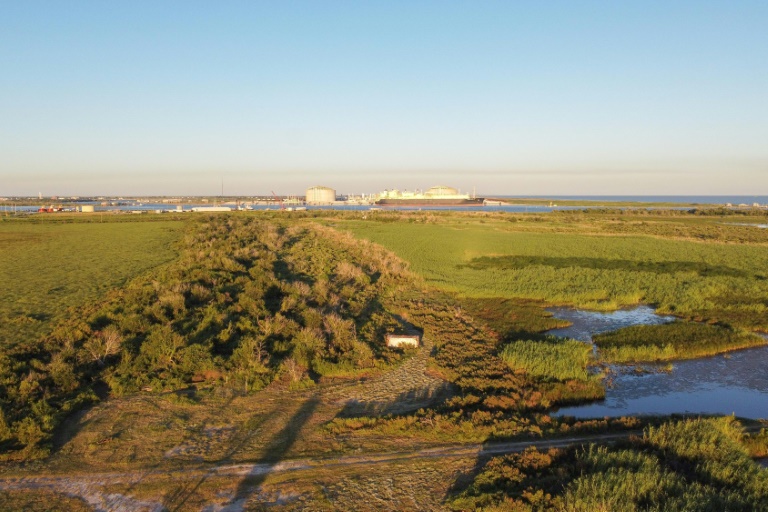
“You’ve got the noise, you’ve got the light, you’ve got the air pollution. And you got the fact that they converted several hundred acres of wetlands into a big concrete pad over there,” adds Allaire from his boat, pointing to the new LNG export terminal near his home.

Allaire dejectedly watches the waves caused by the huge LNG tankers that erode the shoreline. Sludge from dredging covers his beach.

He is also concerned about the consequences on wildlife. The project planned for the land along his property is located on a wetland that is home to a critically endangered bird, the black rail.

“It’s really horrifying to see this (Biden) administration that came in touting environmental justice and the climate crisis… to be approving these kinds of facilities,” says Kelsey Crane, in charge of public policy at the association Earthworks.

– High cancer rates –

Many petrochemical facilities are already visible across the Sabine River in Port Arthur, Texas.

Near the Cheniere Energy terminal — which last year paid nearly $1.5 million in fines for cracks in its tanks — activist John Beard leads a “toxic tour” of the area, joined by other environmentalists.

In June, an explosion caused the temporary closure of the Freeport LNG terminal further south, reminding residents of the immediate risks posed by the plants. 

But Beard, head of the Port Arthur Community Action Network, also denounces the long-term effects on the health of residents who are largely minorities.

In Port Arthur, the population is predominantly African-American or Hispanic, and a quarter of them live below the poverty line, according to the US Census Bureau.

The county has a 25 percent higher cancer death rate than the rest of the state, according to the Texas Cancer Registry.

Beard believes that the gas industry did not choose this area by chance: “They take the path of least resistance and that is with the poor and those who don’t have access to lawyers, and who are not as educated or knowledgeable.”

Along US Gulf Coast, huge gas plants jostle for space

As war rages in Ukraine, and Europe thirsts for fuel, the liquified natural gas (LNG) industry along the US Gulf Coast is preparing to expand — a distressing development to some nearby neighbors.

“It’s our life they took here,” says Travis Dardar from the doorstep of his camper trailer.

An imposing LNG export terminal — a massive facility that receives and liquefies gas from pipelines, then transfers the LNG to ships for export — will soon loom next to his house, forcing him and his wife to move.

Another plant is also planned where he fishes, imperiling his shrimp and oyster business.

“This is way more catastrophic than any hurricane,” Dardar says, adding that people can rebuild after a hurricane.

In this marshy coastal region between Texas and Louisiana, the proliferation of LNG export terminal projects has unsettled residents, who consider the plants to be a threat to their coast, their serenity and their way of life. 

“We don’t know what they’re going to do next. We know one thing: We can’t live here,” Dardar says.

– The Ukraine fallout –

Last March, a few weeks after the first salvos of the Russian invasion of Ukraine, President Joe Biden pledged to increase LNG deliveries to Europe, which has traditionally been heavily dependent on Russian gas.

US suppliers have exported 1,574 billion cubic feet (44.6 billion cubic meters)of LNG to Europe so far in 2022, a sharp rise from the 917 billion cubic feet (26 billion cubic meters) in 2020, according to the Center for Liquefied Natural Gas, a Washington-based trade group that represents the sector.

The United States has become the world’s largest exporter of LNG, an industry centered around the energy-rich Gulf of Mexico, with its infrastructure and strategic location.

This area alone has five of the seven active US export terminals and 22 of the 24 projects submitted to the authorities for construction.

This activity, in turn, brings many jobs, promises Charlie Riedl, executive director of the Center for LNG. As long as the terminal construction projects meet environmental criteria, the government should “authorize them without delay,” he says.

– Noise, light and emissions –

But some residents see the coasts of Louisiana and Texas as “sacrifice zones,” says John Allaire, another resident.

“You’ve got the noise, you’ve got the light, you’ve got the air pollution. And you got the fact that they converted several hundred acres of wetlands into a big concrete pad over there,” adds Allaire from his boat, pointing to the new LNG export terminal near his home.

Allaire dejectedly watches the waves caused by the huge LNG tankers that erode the shoreline. Sludge from dredging covers his beach.

He is also concerned about the consequences on wildlife. The project planned for the land along his property is located on a wetland that is home to a critically endangered bird, the black rail.

“It’s really horrifying to see this (Biden) administration that came in touting environmental justice and the climate crisis… to be approving these kinds of facilities,” says Kelsey Crane, in charge of public policy at the association Earthworks.

– High cancer rates –

Many petrochemical facilities are already visible across the Sabine River in Port Arthur, Texas.

Near the Cheniere Energy terminal — which last year paid nearly $1.5 million in fines for cracks in its tanks — activist John Beard leads a “toxic tour” of the area, joined by other environmentalists.

In June, an explosion caused the temporary closure of the Freeport LNG terminal further south, reminding residents of the immediate risks posed by the plants. 

But Beard, head of the Port Arthur Community Action Network, also denounces the long-term effects on the health of residents who are largely minorities.

In Port Arthur, the population is predominantly African-American or Hispanic, and a quarter of them live below the poverty line, according to the US Census Bureau.

The county has a 25 percent higher cancer death rate than the rest of the state, according to the Texas Cancer Registry.

Beard believes that the gas industry did not choose this area by chance: “They take the path of least resistance and that is with the poor and those who don’t have access to lawyers, and who are not as educated or knowledgeable.”

Sex-scene experts help reshape Hollywood power dynamics in #MeToo era

Since Hollywood sex abuse revelations ignited the #MeToo movement five years ago, demand for on-set “intimacy coordinators” has soared — but resistance, power imbalances and a fear of saying “no” to sex scenes are deeply rooted in showbusiness, experts say.

A fledgling industry of professionals who choreograph intimate scenes, provide equipment to safeguard actors’ privates and discuss consent with filmmakers has grown rapidly since a 2017 investigation into Harvey Weinstein forced a wider reckoning.

“It has been an amazing difference, in that when it was first introduced, there was a lot of resistance from the industry — from directors, some actors, producers,” said Claire Warden, a New York-based intimacy coordinator.

Warden estimates around 60-80 experts are now working on sets, and she is working with Intimacy Directors and Coordinators (IDC) to quickly train more.

“After years of yelling into the void and pushing as hard as we could in the industry to educate,” the industry has started listening, she said. 

Before 2017, intimacy directors existed primarily in theater, and were conspicuously absent in film and television, where actors were often isolated and reliant on wardrobe departments to improvise basic “modesty garments” to cover their genitalia in nude scenes.

One of the first major shifts came from HBO, which in the aftermath of the Weinstein allegations brought an intimacy expert onto the set of “The Deuce” — an explicit show about the porn industry in 1970s New York.

Since then, the network has expanded its policy to require intimacy coordinators on all its shows.

And at specialized equipment companies, strapless thongs, padded pouches and silicone “barriers,” as well as body tapes in various skin tones are all on offer.

In a recent Variety interview, 25-year-old “Euphoria” star Sydney Sweeney said she has “never felt uncomfortable” thanks to the constant presence of intimacy coordinators.

“It’s a very safe environment. I’m very fortunate that I am coming up during a time where there is so much thought in this process,” she said.

“Even if you have agreed to something, they ask you on the spot on the day, ‘Did you change your mind? Because you can.’ It’s really nice.”

– ‘Predators’ –

Like Warden, others in the industry argue the progress around consent is long-overdue, while recent events have shown that not all welcome the new roles.

In the same Variety interview, “Yellowjackets” actor Christina Ricci, 42, revealed that she once informed a movie set she was uncomfortable with an intimate scene, and “they threatened to sue me if I didn’t do it.”

“It’s not that actors suddenly started speaking up in 2017… We’ve been speaking for ages, just no one was listening,” said Warden.

“The industry was actively trying to silence those voices.”

Actors are often taught to ignore or forgo their right to consent, and that “no” is a “dangerous” word, she said.

“We are conditioned… that you will be called a diva. That you won’t get jobs, that no-one will work with you.” 

Intimacy coordinators also told AFP they are still overcoming fears that their presence could stifle creativity, or expose cast and crew to the perils of “cancel culture.”

“Because of the historical backdrop of Harvey Weinstein, a lot of people were afraid that they were being perceived as predators,” said Jessica Steinrock, who has amassed half-a-million followers discussing intimacy coordinator work on TikTok.

Rather than acting as an arm of human resources, intimacy coordinators exist to reduce risk and improve performances in the same way a stunt coordinator does, she said.

“I think the exponential growth in the last few years has been painful for many but really rewarding overall,” Steinrock said.

– ‘Toxic’ –

Still, there are high-profile hold-outs.

Earlier this year, actor Frank Langella was fired from Netflix’s “The Fall of the House of Usher” for alleged unacceptable conduct on set including sexual harassment of an actress.

In a column for Deadline, he blasted an intimacy coordinator’s instructions about where he could touch the actress on her leg during an intimate scene as “absurd” and “ludicrous.” 

“It undermines instinct and spontaneity,” he wrote.

But for Warden, reading that op-ed, “it is clear that his resistance does not come from lack of understanding.”

“That comes from a lack of willingness to consider other people’s consent. That comes from a toxic sense of entitlement.”

And, Steinrock said, intimacy coordinators alone cannot solve the type of harassment illustrated by Weinstein, whose abuses did not generally occur on film sets.

“The way we treat scenes of intimacy is going to have ripple effects in every other way, about how we talk consensually, how we prepare for things, how actors see their own bodily autonomy,” she said.

“But I think it’s important that we don’t treat intimacy coordinators as a panacea for all of the power and harassment and abuse of power that’s happened in the entertainment industry over the last century.”

US hurricane rebuilding rules must adapt to 'era of climate change': expert

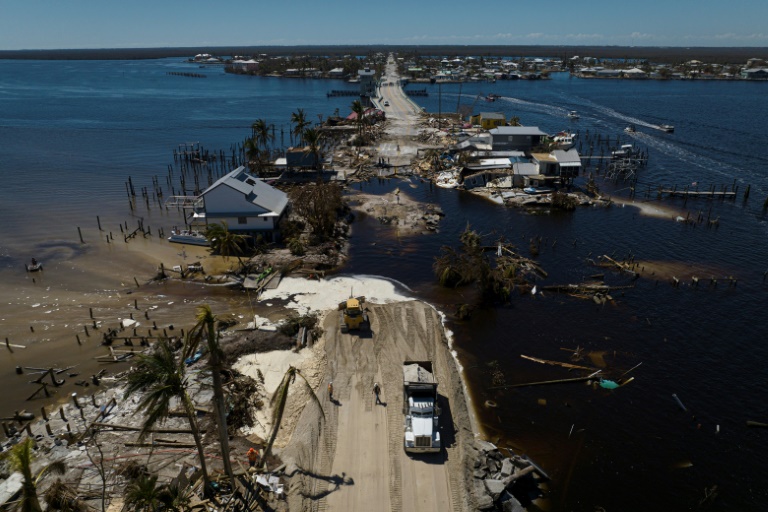
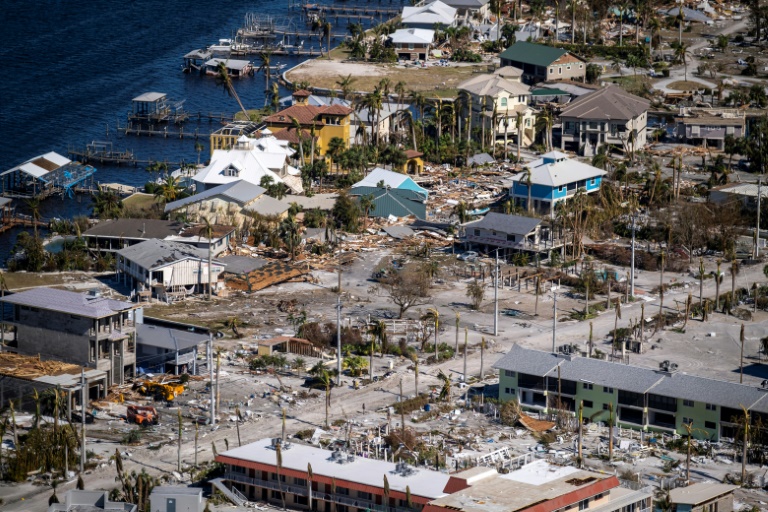
After an extreme weather event, such as Hurricane Ian which devastated parts of Florida last month, most Americans choose to rebuild rather than move to less hazardous areas.

But as climate change increases the frequency and scale of natural disasters, does US policy need to adapt?

Gavin Smith, a professor of environmental planning at the University of North Carolina, worked for several states following major hurricanes, including Katrina in Mississippi (2005) and Matthew in North Carolina (2016).

According to him, current reconstruction standards are not up to the challenges posed by climate change, but correcting them will require real “political will.”

Smith’s responses to AFP have been lightly edited and condensed for clarity.

– Current reconstruction rules –

Q: What are the rules for re-construction after a hurricane, and are they adapted to climate change?

A: Communities must comply with the local codes and standards in place in their jurisdiction before the storm struck.

In the US, we have the National Flood Insurance Program (NFIP), which has historically been subsidized by the federal government. 

For a community to join the program, it has to adopt certain flood risk reduction standards. They include building codes as well as land use plans. 

Then, if a home is damaged in the storm more than 50 percent of their value, it must be built back to the most recent code and standards in place.

Our standard for flood is rebuilding largely back to the “100 year flood,” more accurately termed the one percent annual chance flood event. But in an era of climate change, that “100 year” flood is happening more and more often.

Most risk reduction codes and standards often reflect a climate of the past.

For example, we spent $14 billion rebuilding the levee system in New Orleans after hurricane Katrina. That levee system was built back to the “100 year flood.” 

So you could make the argument that in the era of climate change, that levee system is already out of date. 

– Political will –

Q: What do you expect from government officials?

A: Disasters can present opportunities to rebuild communities safer.

What I’m suggesting is that if we’re going to spend hundreds of millions of dollars building these communities back, we need to require communities to adopt higher codes and standards. 

But that takes political will of both members of Congress and local elected officials.

These are really difficult trillion dollar questions.

You’ll also have builders and the private sector saying, “We should limit those kinds of regulations, as we need to quickly rebuild.”

It takes a lot of political will for a mayor or for a governor to say “No, we’ve got to do what’s right in the long run.:

Unfortunately, people don’t get elected by saying “I am going to require higher standards.”

That’s not a winning slogan. It takes political will to say, enough is enough, we need to adopt higher standards, it’s going to take time, cost more, and people may have to pay more to do it.

That said, we also need to make sure we include equity in processes adopted to develop those standards. 

The shrimpers and the crabbers that live in a very modest house on the water, if we make them adopt higher standards, can they afford it?

– Rules for resilience – 

Q: Concretely, what would be these better standards?

A: A really simple way to think about it is “where” and “how” you build in relation to natural hazards, including those exacerbated by climate change.

The “how” include elevating structures, more stringent standards for wind performance, like better roof shingles, hardening our infrastructure — communication systems, bridges, roads, levees… We can also do this by protecting natural systems like dunes and wetlands.

The “where” is what we would often refer to as land use planning.

Should we be putting a hospital, or a school, in an area subject to storm surge? Probably not. 

A community may choose to say, we’re not going to build a house within 200 meters of the beach. 

Or adopt a gradual disinvestment strategy in extremely risky areas (managed retreat). It’s very difficult to do politically, but it’s happening on a small scale.

Resilience is really about a series of protective measures or choices. It’s not just one. A levee, if that’s your only protection and it fails, to me that’s not resilience. 

US hurricane rebuilding rules must adapt to 'era of climate change': expert

After an extreme weather event, such as Hurricane Ian which devastated parts of Florida last month, most Americans choose to rebuild rather than move to less hazardous areas.

But as climate change increases the frequency and scale of natural disasters, does US policy need to adapt?

Gavin Smith, a professor of environmental planning at the University of North Carolina, worked for several states following major hurricanes, including Katrina in Mississippi (2005) and Matthew in North Carolina (2016).

According to him, current reconstruction standards are not up to the challenges posed by climate change, but correcting them will require real “political will.”

Smith’s responses to AFP have been lightly edited and condensed for clarity.

– Current reconstruction rules –

Q: What are the rules for re-construction after a hurricane, and are they adapted to climate change?

A: Communities must comply with the local codes and standards in place in their jurisdiction before the storm struck.

In the US, we have the National Flood Insurance Program (NFIP), which has historically been subsidized by the federal government. 

For a community to join the program, it has to adopt certain flood risk reduction standards. They include building codes as well as land use plans. 

Then, if a home is damaged in the storm more than 50 percent of their value, it must be built back to the most recent code and standards in place.

Our standard for flood is rebuilding largely back to the “100 year flood,” more accurately termed the one percent annual chance flood event. But in an era of climate change, that “100 year” flood is happening more and more often.

Most risk reduction codes and standards often reflect a climate of the past.

For example, we spent $14 billion rebuilding the levee system in New Orleans after hurricane Katrina. That levee system was built back to the “100 year flood.” 

So you could make the argument that in the era of climate change, that levee system is already out of date. 

– Political will –

Q: What do you expect from government officials?

A: Disasters can present opportunities to rebuild communities safer.

What I’m suggesting is that if we’re going to spend hundreds of millions of dollars building these communities back, we need to require communities to adopt higher codes and standards. 

But that takes political will of both members of Congress and local elected officials.

These are really difficult trillion dollar questions.

You’ll also have builders and the private sector saying, “We should limit those kinds of regulations, as we need to quickly rebuild.”

It takes a lot of political will for a mayor or for a governor to say “No, we’ve got to do what’s right in the long run.:

Unfortunately, people don’t get elected by saying “I am going to require higher standards.”

That’s not a winning slogan. It takes political will to say, enough is enough, we need to adopt higher standards, it’s going to take time, cost more, and people may have to pay more to do it.

That said, we also need to make sure we include equity in processes adopted to develop those standards. 

The shrimpers and the crabbers that live in a very modest house on the water, if we make them adopt higher standards, can they afford it?

– Rules for resilience – 

Q: Concretely, what would be these better standards?

A: A really simple way to think about it is “where” and “how” you build in relation to natural hazards, including those exacerbated by climate change.

The “how” include elevating structures, more stringent standards for wind performance, like better roof shingles, hardening our infrastructure — communication systems, bridges, roads, levees… We can also do this by protecting natural systems like dunes and wetlands.

The “where” is what we would often refer to as land use planning.

Should we be putting a hospital, or a school, in an area subject to storm surge? Probably not. 

A community may choose to say, we’re not going to build a house within 200 meters of the beach. 

Or adopt a gradual disinvestment strategy in extremely risky areas (managed retreat). It’s very difficult to do politically, but it’s happening on a small scale.

Resilience is really about a series of protective measures or choices. It’s not just one. A levee, if that’s your only protection and it fails, to me that’s not resilience. 

Why more Americans are flocking to Florida, even as hurricanes intensify

There’s nothing in the world that would convince Cape Coral resident Kenneth Lowe to leave — not even having to empty his home of flood water a week after Hurricane Ian pummeled the city.

“Southwest Florida is my heaven on earth and hurricanes come with South Florida. So you just have to take it,” the 28-year-old tells AFP, standing in a street strewn with debris.

“It’s my favorite place, it’s worth it.”

Experts warn the frequency of supercharged hurricanes and floods in this climate-prone region is only expected to increase over time — but the population of the southeastern United States continues to rise.

The paradox is especially striking in Cape Coral. 

Between 2010 and 2021, its population grew by 33 percent to 204,000 people, according to census data. Founded in 1958, it embodies the Florida dream that many come looking for.

Navigable canals criss-cross the region, connecting to the Caloosahatchee River, which gives way to the Gulf of Mexico. This affords many people the chance to enjoy a house on the water, and even space for a small boat.

But developing Cape Coral meant first draining the swamp it was built on — and destroying the mangroves and coral reefs that acted as natural defenses against waves and storm surges.

The city was pulverized by Ian, which intensified especially rapidly, fueled by warm waters and high humidity.

A study in Nature Communications earlier this year found that due to climate change, Atlantic hurricanes dump around 10 percent more water during their rainiest three-hours.

In the streets of Cape Coral, dozens of residents are now piling up their belongings in front of their homes: beds, cupboards, refrigerators that have become unusable.

“We will just rebuild and, hopefully, it will be another 100 years before the next big one,” said Tamara Lang, 56.

Lang moved from Chicago and bought her house in Cape Coral just a few months ago — and says she didn’t factor hurricanes into her decision. But she too has no intention of leaving. 

“We love it here,” she said. “This has been our happy place since we got it.”

– Rapid growth –

According to sociologist Mathew Hauer, who studies the impacts of climate change on society, people are not adequately informed about the risks they are taking on.

“If people really understood the flood risk of properties, we’d see changes in where people are purchasing homes and where they’re choosing to live,” said Hauer, an assistant professor at Florida State University.

Another problem: flood zone maps drawn up by the Federal Emergency Management Agency (FEMA) are out of date, says Gavin Smith, a professor of landscape architecture and environmental planning at North Carolina State University.

“It should be viewed as a minimum standard, but they’re often used to regulate the where and how of development,” he told AFP.

Census data reveals a population explosion in the coastal counties of North and South Carolina, as well as Georgia. Florida itself added 2.7 million residents between 2010 and 2020.

“It’s one of the fastest growing regions in the US,” said Hauer, adding: “I don’t see any sign yet that the trend toward migration down into the Sunbelt is going to turn.”

But according to a paper he published in Nature Climate Change, if sea levels rise around three feet (0.9 meters) between now and the end of the century, some 4.3 million people in the continental United States would be forced to move.

Coastal residents of Florida make up about half that figure.

– ‘Immobility paradox’ – 

Retirees from northern climes — including seasonal migrants known as snowbirds — have long been drawn to the “Sunshine State.”

In addition to their beauty, the state’s coastlines are a vital economic resource, supporting a massive tourism industry.

And once you’re settled, it’s not easy to relocate.

Sixty-seven percent of Americans would rather rebuild than leave an area impacted by a severe weather event, according to a 2021 Marist Poll.

“This is what we call the immobility paradox,” said Hauer. 

A psychological tendency against giving up surely factors into the decision-making — but there are also social dimensions like leaving loved ones, and the harsh economic constraint of having to find a new job, he added.

Smith notes that discounting the true risks one faces is a “universal human trait.”

“I don’t think we are going to leave because we have nowhere to go,” said Irene Giordano, 56, who moved south in 2019 from Virginia to Cape Coral.

During Ian, water rose a foot-and-a-half high in her house.

“I’m praying that this is the last one in my lifetime,” she said.

Why more Americans are flocking to Florida, even as hurricanes intensify

There’s nothing in the world that would convince Cape Coral resident Kenneth Lowe to leave — not even having to empty his home of flood water a week after Hurricane Ian pummeled the city.

“Southwest Florida is my heaven on earth and hurricanes come with South Florida. So you just have to take it,” the 28-year-old tells AFP, standing in a street strewn with debris.

“It’s my favorite place, it’s worth it.”

Experts warn the frequency of supercharged hurricanes and floods in this climate-prone region is only expected to increase over time — but the population of the southeastern United States continues to rise.

The paradox is especially striking in Cape Coral. 

Between 2010 and 2021, its population grew by 33 percent to 204,000 people, according to census data. Founded in 1958, it embodies the Florida dream that many come looking for.

Navigable canals criss-cross the region, connecting to the Caloosahatchee River, which gives way to the Gulf of Mexico. This affords many people the chance to enjoy a house on the water, and even space for a small boat.

But developing Cape Coral meant first draining the swamp it was built on — and destroying the mangroves and coral reefs that acted as natural defenses against waves and storm surges.

The city was pulverized by Ian, which intensified especially rapidly, fueled by warm waters and high humidity.

A study in Nature Communications earlier this year found that due to climate change, Atlantic hurricanes dump around 10 percent more water during their rainiest three-hours.

In the streets of Cape Coral, dozens of residents are now piling up their belongings in front of their homes: beds, cupboards, refrigerators that have become unusable.

“We will just rebuild and, hopefully, it will be another 100 years before the next big one,” said Tamara Lang, 56.

Lang moved from Chicago and bought her house in Cape Coral just a few months ago — and says she didn’t factor hurricanes into her decision. But she too has no intention of leaving. 

“We love it here,” she said. “This has been our happy place since we got it.”

– Rapid growth –

According to sociologist Mathew Hauer, who studies the impacts of climate change on society, people are not adequately informed about the risks they are taking on.

“If people really understood the flood risk of properties, we’d see changes in where people are purchasing homes and where they’re choosing to live,” said Hauer, an assistant professor at Florida State University.

Another problem: flood zone maps drawn up by the Federal Emergency Management Agency (FEMA) are out of date, says Gavin Smith, a professor of landscape architecture and environmental planning at North Carolina State University.

“It should be viewed as a minimum standard, but they’re often used to regulate the where and how of development,” he told AFP.

Census data reveals a population explosion in the coastal counties of North and South Carolina, as well as Georgia. Florida itself added 2.7 million residents between 2010 and 2020.

“It’s one of the fastest growing regions in the US,” said Hauer, adding: “I don’t see any sign yet that the trend toward migration down into the Sunbelt is going to turn.”

But according to a paper he published in Nature Climate Change, if sea levels rise around three feet (0.9 meters) between now and the end of the century, some 4.3 million people in the continental United States would be forced to move.

Coastal residents of Florida make up about half that figure.

– ‘Immobility paradox’ – 

Retirees from northern climes — including seasonal migrants known as snowbirds — have long been drawn to the “Sunshine State.”

In addition to their beauty, the state’s coastlines are a vital economic resource, supporting a massive tourism industry.

And once you’re settled, it’s not easy to relocate.

Sixty-seven percent of Americans would rather rebuild than leave an area impacted by a severe weather event, according to a 2021 Marist Poll.

“This is what we call the immobility paradox,” said Hauer. 

A psychological tendency against giving up surely factors into the decision-making — but there are also social dimensions like leaving loved ones, and the harsh economic constraint of having to find a new job, he added.

Smith notes that discounting the true risks one faces is a “universal human trait.”

“I don’t think we are going to leave because we have nowhere to go,” said Irene Giordano, 56, who moved south in 2019 from Virginia to Cape Coral.

During Ian, water rose a foot-and-a-half high in her house.

“I’m praying that this is the last one in my lifetime,” she said.

Thousands in US join abortion rights protests ahead of elections

Thousands marched in cities across the United States on Saturday to protest the Supreme Court’s overturning of the federal right to abortion and to urge voters to turn out in a Democratic “blue wave” in next month’s key midterm elections.

In Washington, a crowd of mostly women chanted “We won’t go back” as they marched.

They carried posters calling for a “feminist tsunami” and urging people to “vote to save women’s rights.”

“I don’t want to have to go back to a different time,” Emily Bobal, an 18-year-old student, told AFP.  

“It’s kind of ridiculous that we still have to do this in 2022,” she said, adding that she is concerned that the conservative-dominated high court might next target same-sex marriage.

“The majority of us are ready to get out and fight for democracy and fight for people’s bodily autonomy, women and men,” said Kimberly Allen, 70. 

With Democrats battling to maintain their narrow control of Congress, the midterm elections could have a decisive impact on the future of such rights, she said.

Several marchers wore armbands or scarves of green, a color symbolizing abortion rights.

Others wore blue — the color of the Democratic Party — and carried huge flags and banners calling for a symbolic “blue wave” of voters to go to the polls on November 8.

A few counter-protesters made their presence known, some of them urging the crowd to “find Jesus Christ,” while others shouted that “abortion is murder.” They were met with boos.

Similar rallies took place in cities including New York and Denver, Colorado.

“The #WomensWave is coming for EVERY anti-abortion politician, no matter where they live,” Rachel O’Leary Carmona, executive director of the nonprofit Women’s March organization, said on Twitter.  

She urged people to elect “more women” as well as male candidates who support abortion rights. 

Polls show Democrats only have a slim possibility of maintaining control of the House of Representatives, but their chances are better in the evenly-divided Senate, where Democratic Vice President Kamala Harris is the tie-breaking vote.

While Republicans have been campaigning largely on soaring prices, immigration concerns and urban crime, Democrats led by President Joe Biden want to shift the debate to abortion rights and the defense of American democracy.

The Supreme Court in June ended the decades-long federal protection of abortion rights, leaving it to individual states to set their own rules.

Since then, several Republican-led states have banned or severely curtailed access to the procedure, provoking a series of legal challenges.

In the latest development, an appeals court in the southwestern state of Arizona on Friday blocked — at least for now — a near-total ban on abortions.

US says Hong Kong risks reputation over yacht linked to Putin ally

Hong Kong could damage its reputation as a financial hub if it gives haven to sanctions dodgers, the United States cautioned Saturday, after the city said it would not act against a superyacht reportedly owned by a Kremlin ally.

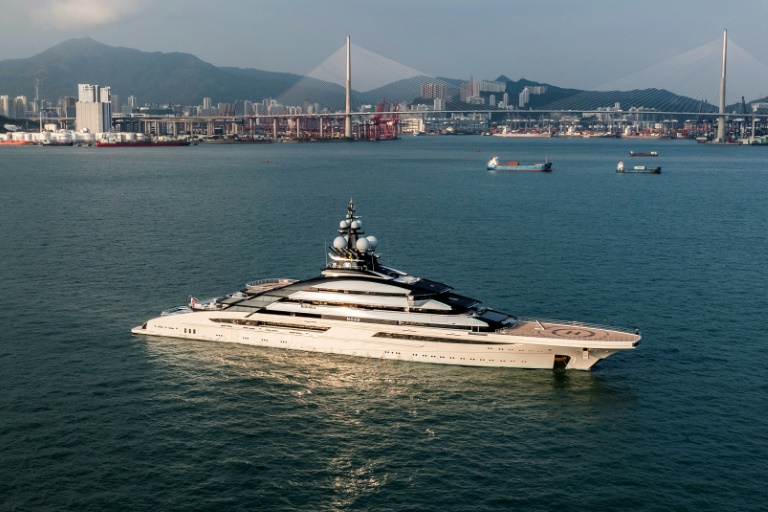
The Nord — a US$500 million, 142-metre (466-foot) luxury vessel linked to Russian billionaire Alexei Mordashov — arrived in the Chinese territory’s waters this week.

Mordashov is among the oligarchs who are close to Russian President Vladimir Putin and have been targeted by Western sanctions following Moscow’s invasion of Ukraine.

Some of them have had their luxury yachts seized in places such as Spain and Fiji, but Hong Kong said Friday that while it implements UN sanctions, it cannot enforce those imposed “unilaterally” by countries or blocs.

“The possible use of Hong Kong as a safe haven by individuals evading sanctions from multiple jurisdictions further calls into question the transparency of the business environment,” a US State Department spokesperson told AFP in response.

“Hong Kong’s reputation as a financial centre depends on adherence to international laws and standards.”

Yachts owned by those close to Putin have become targets for Ukraine’s Western allies, who are hunting for the assets of sanctioned figures as they seek to punish Moscow for the Ukraine invasion.

In March, Italy seized the Lady M, a yacht belonging to Mordashov, citing European Union sanctions.

China has conspicuously not condemned the invasion of Ukraine, and said it has a “no-limits” relationship with Russia.

A spokesperson for Mordashov told Bloomberg News this week that the billionaire was in Moscow and declined to comment on the yacht’s movements.

The Nord — which boasts two helipads, a cinema and more than a dozen luxury cabins — switched its flag from the Cayman Islands to Russia in June.

It was anchored in the eastern Russian port of Vladivostok before making its way to Hong Kong.

Close Bitnami banner
Bitnami