AFP

Stocks mostly retreat, pound drops

Global equity markets mostly fell Thursday and the pound retreated once more against the dollar on lingering recession fears despite hopes that the US Federal Reserve will tame the pace of aggressive interest rate hikes.

Oil prices held steady, failing to build on gains after OPEC and other major producers led by Russia decided to slash output by two million barrels per day.

OANDA market analyst Craig Erlam said markets erased early gains as “investors take a cautious approach” ahead of Friday’s release of a US jobs report that could influence the Fed’s next move.

Wall Street stocks dipped at the start of trading with the Dow shedding 0.4 percent while European markets were down in afternoon deals.

Stocks had snapped higher at the start of this week as disappointing US economic data fuelled hopes that the Federal Reserve may let up in its campaign of aggressive interest rate hikes to get soaring inflation under control.

“The narrative in recent days of weaker data being positive as it could be a precursor to slower tightening didn’t seem sustainable and it’s already proving to be the case,” added Erlam.

Instead, he said he believed the rally to be a response to the sharp drop in shares in the previous weeks as the Fed made clear it would keep raising rates until inflation is brought down, even if that triggers a recession.

Investors are now looking forward to the release Friday of US non-farm payroll jobs data for the latest glimpse at how the economy is handling rising interest rates.

Data showing tougher labour market conditions could trigger a new relief rally, while a resilient figure could send stocks lower as investors fret about further rate hikes.

Data out Thursday showed first time unemployment claims dropped to 219,000, but that was above expectations.  

“The key takeaway from the report is that initial claims — a leading indicator — have a lot more scope for deterioration before the Fed can be convinced that its rate hikes have induced a sufficient softening in the labor market to ease wage-based inflation pressures,” said Patrick O’Hare at Briefing.com.

– Oil prices steady –

Oil prices failed to advance further after a decision by OPEC+ nations to cut production by two million barrels per day, the biggest reduction in output since the Covid-19 pandemic.

Oil prices, which had slumped to pre-Ukraine war levels in recent weeks as global recession worries mount, had surged in the days ahead of the OPEC+ meeting.

The production cut should support crude prices, but as high oil prices have been stoking the inflation that is prompting central banks to raise interest rates, the move will further exacerbate the situation.

The pound was down about 0.8 percent against the dollar after Fitch ratings agency lowered the outlook for British debt to negative from stable.

This after the government of new Prime Minister Liz Truss recently announced a budget packed with debt-fuelled tax cuts.

Ahead of the downgrade Wednesday, sterling had plunged more than two percent after Truss failed to reassure investors with a speech at her Conservative party conference.

The pound, however, has recovered since reaching a record-low close to parity against the dollar at the end of September.

– Key figures around 1330 GMT –

London – FTSE 100: DOWN 1.0 percent at 6,984.45 points

Frankfurt – DAX: DOWN 0.2 percent at 12,487.60

Paris – CAC 40: DOWN 0.7 percent at 5,944.41

EURO STOXX 50: DOWN 0.3 percent at 3,437.26

New York – Dow: DOWN 0.4 percent at 30,156.75

Tokyo – Nikkei 225: UP 0.7 percent at 27,311.30 (close)

Hong Kong – Hang Seng Index: DOWN 0.4 percent at 18,012.15 (close)

Shanghai – Composite: Closed for a holiday

Pound/dollar: DOWN at $1.1223 from $1.1326 on Wednesday

Euro/dollar: DOWN at $0.9835 from $0.9889

Euro/pound: UP at 87.66 pence from 87.29 pence

Dollar/yen: UP at 144.79 yen from 144.59 yen

Brent North Sea crude: UP less than 0.1 percent at $93.41 per barrel

West Texas Intermediate: FLAT at $87.76 per barrel

burs-rl/lth

Kenya lobby groups protest lifting of ban on GM crops

Activists and agriculture lobby groups on Thursday urged Kenya’s government to reverse its decision to lift a long-standing ban on genetically modified crops as the country struggles with a crippling drought.

The government of newly elected President William Ruto on Monday allowed the open cultivation and import of GM crops, saying it was in response to the drought — the worst to hit the country in 40 years. 

But activists protested the move, raising concerns over the safety of GM foods in a joint statement signed by nearly a dozen groups, including Greenpeace Africa.

“Food security is not just (about) the amount of food but the quality and safety of food,” the statement said.

“Our cultural and indigenous food have proved to be safer, with diverse nutrients and with less harmful chemical inputs.”

Kenya, like many other African nations, banned GM crops over health and safety concerns and to protect smallholder farms, who account for the vast majority of rural agricultural producers in the country.

However, the East African powerhouse had faced criticism over the ban including from the United States which is a major producer of GM crops.

On Monday, a statement issued by Ruto’s office said the decision was “a progressive step towards significantly redefining agriculture in Kenya by adopting crops that are resistant to pests and disease.” 

It said the cabinet had considered expert views and technical reports, including by Kenya’s National Biosafety Authority, the World Health Organization and Food and Agriculture Organization, before arriving at a decision.

– ‘Curtails freedom’ –

But the activists said the move was made without public participation and that it “essentially curtails the freedom of Kenyans to choose what they want to eat, or not.”

“We demand that the ban be immediately reinstated and an inclusive participatory process be instituted to look into long-term and sustainable solutions to issues affecting food security,” they said.

They added that the lifting of the ban opened the market to US farmers using sophisticated technologies and highly subsidised farming that risked putting small-scale farmers in Kenya out of business. 

Agriculture is the backbone of Kenya’s economy, contributing over 20 percent to GDP.

Ruto, a former chicken seller turned millionaire businessman, was elected to the top job in August on a promise to turn around Kenya’s stuttering economy and tackle inflation.

Within weeks of taking office in September, he halved the price of fertilisers to improve crop yields in the midst of the drought that has affected 23 of 47 counties. 

Four consecutive rainy seasons have failed in Kenya, Somalia and Ethiopia, an unprecedented climatic event that has pushed millions across the Horn of Africa into extreme hunger.

Lebanon far from gas riches even if Israel deal agreed: analysts

Lebanon is grappling to strike a deal with Israel over contested maritime gas fields, but even with an agreement the cash-strapped country faces multiple hurdles before tapping potential hydrocarbon riches, analysts say.

“A deal would mark one step forward but it does not mean that Lebanon has become a gas- or oil-producing country,” said Marc Ayoub, an associate fellow at the American University of Beirut’s Issam Fares Institute.

“We are talking of a timeline of five to six years… before the first gas” if commercially viable reservoirs are in fact found, the energy expert told AFP, describing the timeframe as “optimistic”.

With the demand for gas rising worldwide because of an energy crisis sparked by Russia’s invasion of Ukraine, Lebanon hopes that an offshore discovery would ease its current unprecedented financial downturn.

But more than a decade since it declared its maritime boundaries and an Exclusive Economic Zone, it still has no proven natural gas reserves.

One well drilled in 2020 by a consortium of energy giants TotalEnergies, Eni and Novatek showed only traces but no commercially viable gas deposits.

Further test drilling, in a block near the border, has been hampered by the maritime border dispute between Lebanon and Israel, which are technically still at war.

Following years of US-mediated negotiations, a draft proposal from Washington at the weekend was welcomed by both sides.

But Israel on Thursday said it would reject amendments to the proposal requested by Lebanon this week, further prolonging a final agreement.

A final deal, however, would allow “offshore exploration activities to continue,” off Lebanon’s coast, Ayoub said.

“But that doesn’t mean that Lebanon has become rich… or that its crisis has been solved.” 

– ‘First gas’ –

A 2012 seismic study of a limited offshore area by the British firm Spectrum estimated recoverable gas reserves in Lebanon at 25.4 trillion cubic feet.

The authorities in Lebanon have announced higher estimates.

Block 9 near the border with Israel contains the so-called Qana field or Sidon reservoir, and will be a major zone for offshore exploration by TotalEnergies and Eni that were awarded a contract in 2018.

“This time next year, we should know if there is a commercial discovery in Qana or not,” Ayoub said.

“If we have a discovery, it will take… no less than three to five years after exploration” before production could start.

This time frame, according to Ayoub, assumes there are no delays by Lebanese authorities who are widely blamed for the corruption and mismanagement behind the country’s financial crash.

It took months for the Lebanese Petroleum Administration (LPA) regulatory body to name its board after it was formed in 2012, because of political disputes over nominations.

Several bidding rounds for offshore gas and oil licences have been hit by delays since they began in 2013.

Already, Lebanon lags far behind Israel which has been investing in the offshore Karish field for years and is expecting its first gas within weeks.

– Risky investment –

Roudi Baroudi, an energy consultant, said that gas or oil production could start within three years if commercially viable reservoirs are found.

But to attract energy firms and benefit from potential discoveries, Lebanon desperately needs to undergo changes, he told AFP.

“Lebanon is not a good investment unless the government implements reforms,” the energy expert said.

Reforms would provide “the basic assurances that international companies need to work with less risk”.

State institutions in Lebanon have collapsed under the weight of the crisis, with strikes by civil servants adding to the paralysis.

An economic recovery plan has yet to take off more than three years since the financial downturn began, despite mounting pressures from foreign donors and the International Monetary Fund.

And political gridlock has caused a months-long delay in forming a new government amid fears of a presidential vacuum after Michel Aoun’s mandate expires at the end of October.

With a bankrupt state unable to deliver more than an hour or two of mains electricity a day, energy firms may choose to work on their Lebanon projects out of Cyprus, according to Baroudi.

“With no rule of law, Lebanon is a jungle,” he said.  “It’s absolute chaos, whether judicially, financially or in terms of regulatory” bodies.

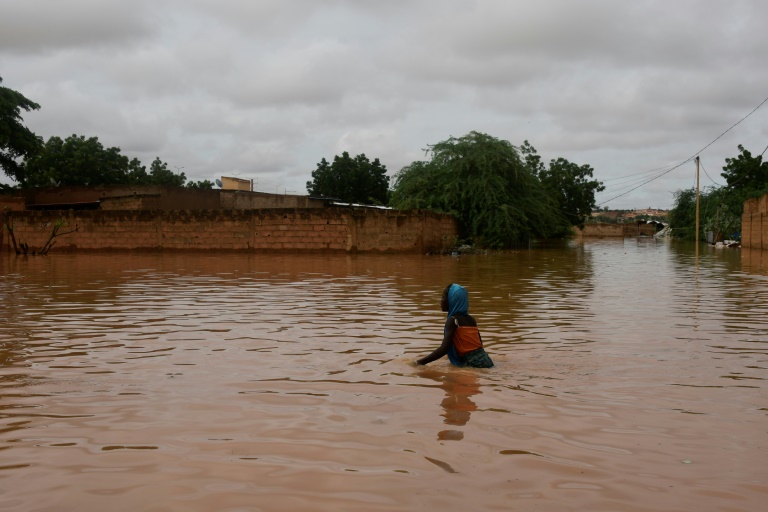
Nearly 200 dead in Niger floods

Flooding caused by heavy rains in the West African state of Niger has claimed nearly 200 lives and affected more than a quarter of a million people, the Civil Protection Service said on Thursday, describing the toll as one of the highest on record.

Rainy-season floods claimed 192 lives, affected more than 263,000 people and destroyed more than 30,000 homes, as well as classrooms, medical centres and grain stores, it said.

The worst-affected regions are Maradi and Zinder in the centre of the country, Dosso in the southwest and Tahoua in the west.

The rainy season in Niger, located in the heart of the arid Sahel, typically runs from June to September and routinely claims lives.

In 2021, 70 people were killed and 200,000 people were affected. The death toll in 2020 was 73.

Katiellou Gaptia Lawan, head of the national meteorological agency, said this year’s heavy rains were consistent with models of impacts from climate change.

Niger is the world’s poorest country, according to the benchmark of the 2020 Human Development Index devised by the United Nations Development Programme (UNDP).  

Over 4.4 million people — more than a fifth of the population — fall into the category of “severe” food insecurity, the International Red Cross and Red Crescent said in July.

Stocks mostly retreat, pound drops

Equity markets mostly fell Thursday and the pound retreated once more against the dollar on lingering recession fears despite hopes that the US Federal Reserve will tame the pace of aggressive interest rate hikes.

Oil prices also dropped, failing to power ahead after OPEC and other major producers led by Russia decided to slash output by two million barrels per day.

The cut, the biggest since the pandemic struck, was viewed by traders as an attempt to boost prices.

The Kremlin on Thursday said the OPEC+ decision was designed to stabilise global oil markets.

And Washington said it was a concession to Moscow. The United States has been lobbying to hold down fuel prices and isolate Russia over its Ukraine aggression.

The European Union has proposed introducing a price cap on Russian oil as part of new sanctions over Ukraine.

Moscow has said a price cap on its oil would have a “detrimental effect” on global markets and warned it would not supply crude to countries that introduce it.

Shares in Shell slid about 4.5 percent in Thursday trading after the British energy giant revealed that its third-quarter profit would be hit by a slump in refining margins.

“Shell enjoyed record profits in the first and second quarter spurred by a surge in underlying oil and gas prices following Russia’s invasion of Ukraine,” noted Victoria Scholar, head of investment at Interactive Investor.

“However, since June, oil has posted four consecutive months of declines, with Brent crude down by around 25 percent.”

Scholar said Shell was “grappling with a dysfunctional and volatile gas market as well as expectations of softening oil demand, particularly from China as the global economy cools”.

– Awaiting US jobs –

Markets remained on guard over the economic outlook awaiting the release of US non-farm payroll jobs Friday.

The pound was down about half-a-percent against the dollar after Fitch ratings agency lowered the outlook for British debt to negative from stable.

This after the government of new Prime Minister Liz Truss recently announced a budget packed with debt-fuelled tax cuts.

Ahead of the downgrade Wednesday, sterling had plunged more than two percent after Truss failed to reassure investors with a speech at her Conservative party conference.

The pound, however, has recovered since reaching a record-low close to parity against the dollar at the end of September.

– Key figures around 1100 GMT –

London – FTSE 100: DOWN 0.6 percent at 7,008.78 points

Frankfurt – DAX: DOWN 0.3 percent at 12,484.16

Paris – CAC 40: DOWN 0.5 percent at 5,957.14

EURO STOXX 50: DOWN 0.3 percent at 3,438.49

Tokyo – Nikkei 225: UP 0.7 percent at 27,311.30 (close)

Hong Kong – Hang Seng Index: DOWN 0.4 percent at 18,012.15 (close)

Shanghai – Composite: Closed for a holiday

New York – Dow: DOWN 0.1 percent at 30,273.87 (close)

Pound/dollar: DOWN at $1.1263 from $1.1326 on Wednesday

Euro/dollar: DOWN at $0.9887 from $0.9889

Euro/pound: UP at 87.72 pence from 87.29 pence

Dollar/yen: UP at 144.75 yen from 144.59 yen

Brent North Sea crude: DOWN 0.3 percent at $93.07 per barrel

West Texas Intermediate: DOWN 0.5 percent at $87.32 per barrel

Stocks mostly retreat, pound drops

Equity markets mostly fell Thursday and the pound retreated once more against the dollar on lingering recession fears despite hopes that the US Federal Reserve will tame the pace of aggressive interest rate hikes.

Oil prices also dropped, failing to power ahead after OPEC and other major producers led by Russia decided to slash output by two million barrels per day.

The cut, the biggest since the pandemic struck, was viewed by traders as an attempt to boost prices.

The Kremlin on Thursday said the OPEC+ decision was designed to stabilise global oil markets.

And Washington said it was a concession to Moscow. The United States has been lobbying to hold down fuel prices and isolate Russia over its Ukraine aggression.

The European Union has proposed introducing a price cap on Russian oil as part of new sanctions over Ukraine.

Moscow has said a price cap on its oil would have a “detrimental effect” on global markets and warned it would not supply crude to countries that introduce it.

Shares in Shell slid about 4.5 percent in Thursday trading after the British energy giant revealed that its third-quarter profit would be hit by a slump in refining margins.

“Shell enjoyed record profits in the first and second quarter spurred by a surge in underlying oil and gas prices following Russia’s invasion of Ukraine,” noted Victoria Scholar, head of investment at Interactive Investor.

“However, since June, oil has posted four consecutive months of declines, with Brent crude down by around 25 percent.”

Scholar said Shell was “grappling with a dysfunctional and volatile gas market as well as expectations of softening oil demand, particularly from China as the global economy cools”.

– Awaiting US jobs –

Markets remained on guard over the economic outlook awaiting the release of US non-farm payroll jobs Friday.

The pound was down about half-a-percent against the dollar after Fitch ratings agency lowered the outlook for British debt to negative from stable.

This after the government of new Prime Minister Liz Truss recently announced a budget packed with debt-fuelled tax cuts.

Ahead of the downgrade Wednesday, sterling had plunged more than two percent after Truss failed to reassure investors with a speech at her Conservative party conference.

The pound, however, has recovered since reaching a record-low close to parity against the dollar at the end of September.

– Key figures around 1100 GMT –

London – FTSE 100: DOWN 0.6 percent at 7,008.78 points

Frankfurt – DAX: DOWN 0.3 percent at 12,484.16

Paris – CAC 40: DOWN 0.5 percent at 5,957.14

EURO STOXX 50: DOWN 0.3 percent at 3,438.49

Tokyo – Nikkei 225: UP 0.7 percent at 27,311.30 (close)

Hong Kong – Hang Seng Index: DOWN 0.4 percent at 18,012.15 (close)

Shanghai – Composite: Closed for a holiday

New York – Dow: DOWN 0.1 percent at 30,273.87 (close)

Pound/dollar: DOWN at $1.1263 from $1.1326 on Wednesday

Euro/dollar: DOWN at $0.9887 from $0.9889

Euro/pound: UP at 87.72 pence from 87.29 pence

Dollar/yen: UP at 144.75 yen from 144.59 yen

Brent North Sea crude: DOWN 0.3 percent at $93.07 per barrel

West Texas Intermediate: DOWN 0.5 percent at $87.32 per barrel

Lebanon far from gas riches even if Israel deal agreed: analysts

Lebanon is grappling to strike a deal with Israel over contested maritime gas fields, but even with an agreement the cash-strapped country faces multiple hurdles before tapping potential hydrocarbon riches, analysts say.

“A deal would mark one step forward but it does not mean that Lebanon has become a gas- or oil-producing country,” said Marc Ayoub, an associate fellow at the American University of Beirut’s Issam Fares Institute.

“We are talking of a timeline of five to six years… before the first gas” if commercially viable reservoirs are in fact found, the energy expert told AFP, describing the timeframe as “optimistic”.

With the demand for gas rising worldwide because of an energy crisis sparked by Russia’s invasion of Ukraine, Lebanon hopes that an offshore discovery would ease its current unprecedented financial downturn.

But more than a decade since it declared its maritime boundaries and an Exclusive Economic Zone, it still has no proven natural gas reserves.

One well drilled in 2020 by a consortium of energy giants TotalEnergies, Eni and Novatek showed only traces but no commercially viable gas deposits.

Further test drilling, in a block near the border, has been hampered by the maritime border dispute between Lebanon and Israel, which are technically still at war.

Following years of US-mediated negotiations, a draft proposal from Washington at the weekend was welcomed by both sides.

But Israel on Thursday said it would reject amendments to the proposal requested by Lebanon this week, further prolonging a final agreement.

A final deal, however, would allow “offshore exploration activities to continue,” off Lebanon’s coast, Ayoub said.

“But that doesn’t mean that Lebanon has become rich… or that its crisis has been solved.” 

– ‘First gas’ –

A 2012 seismic study of a limited offshore area by the British firm Spectrum estimated recoverable gas reserves in Lebanon at 25.4 trillion cubic feet.

The authorities in Lebanon have announced higher estimates.

Block 9 near the border with Israel contains the so-called Qana field or Sidon reservoir, and will be a major zone for offshore exploration by TotalEnergies and Eni that were awarded a contract in 2018.

“This time next year, we should know if there is a commercial discovery in Qana or not,” Ayoub said.

“If we have a discovery, it will take… no less than three to five years after exploration” before production could start.

This time frame, according to Ayoub, assumes there are no delays by Lebanese authorities who are widely blamed for the corruption and mismanagement behind the country’s financial crash.

It took months for the Lebanese Petroleum Administration (LPA) regulatory body to name its board after it was formed in 2012, because of political disputes over nominations.

Several bidding rounds for offshore gas and oil licences have been hit by delays since they began in 2013.

Already, Lebanon lags far behind Israel which has been investing in the offshore Karish field for years and is expecting its first gas within weeks.

– Risky investment –

Roudi Baroudi, an energy consultant, said that gas or oil production could start within three years if commercially viable reservoirs are found.

But to attract energy firms and benefit from potential discoveries, Lebanon desperately needs to undergo changes, he told AFP.

“Lebanon is not a good investment unless the government implements reforms,” the energy expert said.

Reforms would provide “the basic assurances that international companies need to work with less risk”.

State institutions in Lebanon have collapsed under the weight of the crisis, with strikes by civil servants adding to the paralysis.

An economic recovery plan has yet to take off more than three years since the financial downturn began, despite mounting pressures from foreign donors and the International Monetary Fund.

And political gridlock has caused a months-long delay in forming a new government amid fears of a presidential vacuum after Michel Aoun’s mandate expires at the end of October.

With a bankrupt state unable to deliver more than an hour or two of mains electricity a day, energy firms may choose to work on their Lebanon projects out of Cyprus, according to Baroudi.

“With no rule of law, Lebanon is a jungle,” he said.  “It’s absolute chaos, whether judicially, financially or in terms of regulatory” bodies.

West bracing for defeat against China at UN rights vote

Western countries trying to pass an unprecedented resolution at the UN’s top rights body targeting China for widespread abuses were scrambling Thursday for votes and bracing for possible defeat.

Washington last month presented the first-ever draft resolution to the UN Human Rights Council seeking a “debate” on Xinjiang after allegations of crimes against humanity against Uyghurs and other Muslim minorities in the far-western region.

It was co-sponsored by Britain, Canada, Sweden, Denmark, Finland, Iceland, Norway, Australia and Lithuania and is expected to go to a council vote later Thursday in Geneva.

But after weeks of frenzied lobbying from both sides, Western diplomats appeared to be bracing that the resolution will not pass in the 47-member council.

“It’s going to be a very tight vote,” a Western diplomat acknowledged, stressing though that even if the resolution failed, the debate has put the spotlight on Xinjiang.

“The number one objective has been fulfilled,” the diplomat said.

China is under intense scrutiny after former UN rights chief Michelle Bachelet released her long-delayed Xinjiang report last month, citing possible crimes against humanity.

– ‘The fight goes on’ –

The report, which was published on August 31 minutes before Bachelet’s term ended, highlighted “credible” allegations of widespread torture, arbitrary detention and violations of religious and reproductive rights.

It brought UN endorsement to long-running allegations by campaigners and others, who accuse Beijing of detaining more than one million Uyghurs and other Muslims and forcibly sterilising women.

Beijing vehemently rejected the charges and accused the UN of becoming a “thug and accomplice of the US and the West”.

It insists it is running vocational training centres in the region to counter extremism.

While the draft resolution may look tepid, observers say it is highly significant to simply aim to put China on the council agenda.

“The issues don’t get more basic,” Human Rights Watch’s China director Sophie Richardson said in a tweet, urging countries to “vote yes today, and make history.”

China has launched an all-out offensive in Geneva and in country capitals to dismiss the report and to hammer home the “truth” about the rights situation in Xinjiang.

African countries, where China is the leading creditor after making massive infrastructure and other investments, have faced particularly heavy lobbying, observers say.

An analysis last month of voting patterns of the 13 African countries on the council indicated they traditionally abstain from any votes on country-specific resolutions.

But it showed that recently they have increasingly bowed to pressure from China and others to vote against the resolution, thereby torpedoing it.

“We know the amount of leverage that the Chinese have, particularly in Africa,” the Western diplomat said, adding that many nations are loathe to vote against a permanent member of the UN Security Council.

“It’s genuinely a difficult call for a lot of countries,” the diplomat acknowledged.

“The fight goes on, whatever happens today.”

Markets mostly up as focus turns to key US jobs report

Equity markets rose Thursday as traders fought to extend this week’s global rally, though concerns about the impact of a huge oil output cut on inflation tempered hopes that central banks could soon ease their rate hike campaigns.

The mood on trading floors has been a little lighter this week, sending equities surging and weighing on the dollar, after weak readings on US factory activity and job openings fed speculation that the Federal Reserve’s strict tightening drive was having an effect.

But confidence took a knock Wednesday from a better-than-expected read on private jobs hiring and a report showing the key services sector holding up more than expected.

The figures highlighted the resilience of the US economy in the face of multiple rate hikes and point to the long road ahead for the Fed in fighting decades-high inflation.

Fed officials have lined up for weeks to insist that they will not budge from lifting borrowing costs until prices are tempered — even at the cost of a recession — while some have warned traders not to expect any cuts next year.

“After an increase in expectations of an imminent Fed pivot given the softer than expected US (factory data), the strength in the services (sector) not only eases concerns of an imminent US recession, it also refutes any notion that the Fed will look to take its foot off the tighten pedal any time soon,” said National Australia Bank’s Rodrigo Catril.

The latest US data came as OPEC and other major producers led by Russia decided to slash output by a massive two million barrels a day — the biggest reduction since the pandemic struck.

Moscow said a possible price cap by the European Union on Russian crude would have a “detrimental effect” on the global oil sector, saying Moscow would not sell to countries that introduced it.

The news gave already elevated oil prices another leg up, with both contracts piling on more than one percent Wednesday.

It also fuelled concerns that energy costs — a major driver of the spike in global inflation since Russia’s invasion of Ukraine — will drive higher again.

“All the developments we have seen on the supply side at this point very much sets the stage for what we believe will be higher prices into the end of this year,” Damien Courvalin, at Goldman Sachs, told Bloomberg Television.

“With this cut and the winter seasonal demand, inventories will continue to fall.”

– UK ratings warning –

Still, crude edged up only slightly in Asia, and SPI Asset Management’s Stephen Innes said: “So far, the oil market appears to be priced to post OPEC+ perfection. The current WTI move should not impact US inflation significantly nor raise eyebrows at the Fed just yet.”

All three main indexes on Wall Street ended in the red but stronger than earlier in the day but Asia fared better on Thursday.

Tokyo, Sydney, Singapore, Seoul, Taipei, Mumbai, Bangkok and Jakarta all rose again but Hong Kong dipped after blasting almost six percent higher Wednesday.

Sydney and Manila were also slightly lower. Shanghai is closed all week for a holiday.

London, Paris and Frankfurt were marginally up in the morning.

But commentators remained on guard over the outlook, with eyes now on the release of US non-farm payroll jobs on Friday, warning that an above-forecast reading could spark another major selloff.

On currency markets, the dollar, which bounced Wednesday after suffering a sell-off for most of the week, was slightly down again in Asian business.

Even sterling managed to resume its gains despite news that Fitch had lowered the outlook for British debt from stable to negative after the government of new Prime Minister Liz Truss announced a mini-budget packed with debt-fueled tax cuts.

The pound plunged more than two percent earlier as Truss failed to reassure investors with a speech at her Conservative party conference where she insisted she would stick to her fiscal plan.

– Key figures around 0810 GMT –

Tokyo – Nikkei 225: UP 0.7 percent at 27,311.30 (close)

Hong Kong – Hang Seng Index: DOWN 0.4 percent at 18,012.15 (close)

Shanghai – Composite: Closed for a holiday

London – FTSE 100: FLAT at 7,053.31

Pound/dollar: UP at $1.1350 from $1.1326 on Wednesday

Euro/dollar: UP at $0.9920 from $0.9889

Euro/pound: UP at 87.40 pence from 87.29 pence

Dollar/yen: UP at 144.61 yen from 144.59 yen

West Texas Intermediate: UP 0.3 percent at $88.05 per barrel

Brent North Sea crude: UP 0.4 percent at $93.72 per barrel

New York – Dow: DOWN 0.1 percent at 30,273.87 (close)

Markets mostly up as focus turns to key US jobs report

Equity markets rose Thursday as traders fought to extend this week’s global rally, though concerns about the impact of a huge oil output cut on inflation tempered hopes that central banks could soon ease their rate hike campaigns.

The mood on trading floors has been a little lighter this week, sending equities surging and weighing on the dollar, after weak readings on US factory activity and job openings fed speculation that the Federal Reserve’s strict tightening drive was having an effect.

But confidence took a knock Wednesday from a better-than-expected read on private jobs hiring and a report showing the key services sector holding up more than expected.

The figures highlighted the resilience of the US economy in the face of multiple rate hikes and point to the long road ahead for the Fed in fighting decades-high inflation.

Fed officials have lined up for weeks to insist that they will not budge from lifting borrowing costs until prices are tempered — even at the cost of a recession — while some have warned traders not to expect any cuts next year.

“After an increase in expectations of an imminent Fed pivot given the softer than expected US (factory data), the strength in the services (sector) not only eases concerns of an imminent US recession, it also refutes any notion that the Fed will look to take its foot off the tighten pedal any time soon,” said National Australia Bank’s Rodrigo Catril.

The latest US data came as OPEC and other major producers led by Russia decided to slash output by a massive two million barrels a day — the biggest reduction since the pandemic struck.

Moscow said a possible price cap by the European Union on Russian crude would have a “detrimental effect” on the global oil sector, saying Moscow would not sell to countries that introduced it.

The news gave already elevated oil prices another leg up, with both contracts piling on more than one percent Wednesday.

It also fuelled concerns that energy costs — a major driver of the spike in global inflation since Russia’s invasion of Ukraine — will drive higher again.

“All the developments we have seen on the supply side at this point very much sets the stage for what we believe will be higher prices into the end of this year,” Damien Courvalin, at Goldman Sachs, told Bloomberg Television.

“With this cut and the winter seasonal demand, inventories will continue to fall.”

– UK ratings warning –

Still, crude edged up only slightly in Asia, and SPI Asset Management’s Stephen Innes said: “So far, the oil market appears to be priced to post OPEC+ perfection. The current WTI move should not impact US inflation significantly nor raise eyebrows at the Fed just yet.”

All three main indexes on Wall Street ended in the red but stronger than earlier in the day but Asia fared better on Thursday.

Tokyo, Sydney, Singapore, Seoul, Taipei, Mumbai, Bangkok and Jakarta all rose again but Hong Kong dipped after blasting almost six percent higher Wednesday.

Sydney and Manila were also slightly lower. Shanghai is closed all week for a holiday.

London, Paris and Frankfurt were marginally up in the morning.

But commentators remained on guard over the outlook, with eyes now on the release of US non-farm payroll jobs on Friday, warning that an above-forecast reading could spark another major selloff.

On currency markets, the dollar, which bounced Wednesday after suffering a sell-off for most of the week, was slightly down again in Asian business.

Even sterling managed to resume its gains despite news that Fitch had lowered the outlook for British debt from stable to negative after the government of new Prime Minister Liz Truss announced a mini-budget packed with debt-fueled tax cuts.

The pound plunged more than two percent earlier as Truss failed to reassure investors with a speech at her Conservative party conference where she insisted she would stick to her fiscal plan.

– Key figures around 0810 GMT –

Tokyo – Nikkei 225: UP 0.7 percent at 27,311.30 (close)

Hong Kong – Hang Seng Index: DOWN 0.4 percent at 18,012.15 (close)

Shanghai – Composite: Closed for a holiday

London – FTSE 100: FLAT at 7,053.31

Pound/dollar: UP at $1.1350 from $1.1326 on Wednesday

Euro/dollar: UP at $0.9920 from $0.9889

Euro/pound: UP at 87.40 pence from 87.29 pence

Dollar/yen: UP at 144.61 yen from 144.59 yen

West Texas Intermediate: UP 0.3 percent at $88.05 per barrel

Brent North Sea crude: UP 0.4 percent at $93.72 per barrel

New York – Dow: DOWN 0.1 percent at 30,273.87 (close)

Close Bitnami banner
Bitnami