AFP

Asian markets swing as traders eye US jobs, earnings

Stocks drifted in Asia on Monday as investors await key US jobs data, while girding themselves for a corporate earnings season many fear will highlight the impact of surging inflation and interest rates.

A report showing prices rose in the eurozone at a record pace last month added concerns that central bank tightening has a long way to go, while Federal Reserve vice chair Lael Brainard said US officials would not pull back too early.

Banks’ battle against inflation could also be made harder as OPEC and other oil producers consider a major output cut owing to a plunge in prices caused by demand worries. Crude prices jumped more than three percent in Asian trade ahead of the possible cut.

Traders are also keeping an eye on developments in Britain as the ruling Conservatives hold their annual conference a week after new finance minister Kwasi Kwarteng shocked markets with a massive borrowing-dependent, tax-cutting mini budget.

All three main indexes on Wall Street ended down again Friday, registering a third straight quarter of losses for the first time since the global financial crisis in 2009.

The release of US jobs data on Friday will be closely watched, with a strong reading likely to give the Fed more ammunition to unveil a fourth successive bumper rate hike at its November meeting.

Asian markets fluctuated at the start of the week.

Hong Kong dipped along with Sydney, Singapore, Taipei, Jakarta and Wellington.

Tokyo rose, however, even as the Bank of Japan’s Tankan survey showed confidence fell among the country’s largest manufacturers for the third straight quarter. Manila also rose.

With inflation remaining elevated, there is little prospect that the pain will ease any time soon.

On Friday, Brainard said: “Monetary policy will need to be restrictive for some time to have confidence that inflation is moving back to target.

“For these reasons, we are committed to avoiding pulling back prematurely.”

The comments were in line with other Fed officials, who have indicated borrowing costs were unlikely to be lowered until late 2023 or 2024.

“Last week’s developments reinforced our expectation that we will see further tightening in financial conditions, but also illustrated the short-term two-way volatility, which will likely accompany it,” Citigroup’s Ebrahim Rahbari said.

At a time of rising real rates, volatility and the strong dollar “we therefore remain very bearish regarding the outlook for global risk assets”, he added.

Markets are now bracing for company earnings reports, with traders keeping a close eye on their forecasts in light of the uncertain rate environment.

Saxo Capital Markets analysts said in a note that there was a risk-off mood “as corporate earnings misses continue to raise the threat of an ugly earnings season ahead”.

Both the US benchmark West Texas Intermediate crude and Brent climbed 3.3 percent, as major producers discussed a one million barrel per day cut in output to support prices in the face of falling demand.

The reduction would be the biggest since the pandemic began, when crude prices collapsed, and would help staunch a plunge in the oil markets over recent months. 

But OANDA’s Edward Moya said: “The slide in oil prices is likely over.

“Energy traders turned pessimistic over the summer given global slowdown fears, but now it seems the risks for oil are to the upside.”

And Suvro Sarkar, an energy analyst at DBS Bank, added: “It’s only going to be a matter of time before oil returns to $100 a barrel, especially with supplies set to tighten toward the end of the year,” he said.

– Key figures around 0320 GMT –

Tokyo – Nikkei 225: UP 0.7 percent at 26,111.54 (break)

Hong Kong – Hang Seng Index: DOWN 0.9 percent at 17,060.92 

Shanghai – Composite: Closed for a holiday

Pound/dollar: DOWN at $1.1128 from $1.1156 on Friday

Euro/dollar: UP at $0.9813 from $0.9802

Euro/pound: UP at 88.18 pence from 87.82 pence

Dollar/yen: UP at 144.81 yen from 144.80 yen

West Texas Intermediate: UP 3.3 percent to $82.12 per barrel

Brent North Sea crude: UP 3.3 percent to $87.94 per barrel

New York – Dow: DOWN 1.7 percent at 28,725.51 (close)

London – FTSE 100: UP 0.2 percent at 6,893.81 (close)  

— Bloomberg News contributed to this story —
Tired of power cuts, blockaded Gaza turns to solar

Palestinians living in the Israeli-blockaded enclave of Gaza have long endured an unstable and costly electricity supply, so Yasser al-Hajj found a different way: solar power.

Looking at the rows of photo-voltaic panels at his beachfront fish farm and seafood restaurant, The Sailor, he said the investment he made six years ago had more than paid off.

“Electricity is the backbone of the project,” Hajj said, standing under a blazing Mediterranean sun. “We rely on it to provide oxygen for the fish, as well as to draw and pump water from the sea.”

The dozens of solar panels that shade the fish ponds below have brought savings that are now paying to refurbish the business, he said, as labourers loaded sand onto a horse-drawn cart.

Hajj said he used to pay 150,000 shekels ($42,000) per month for electricity, “a huge burden,” before solar power slashed his monthly bill to 50,000 shekels.

For most of Gaza’s 2.3 million residents, living under Hamas Islamist rule and a 15-year-old Israeli blockade, power cuts are a daily fact of life that impact everything from homes to hospital wards.

While some Gazans pay for a generator to kick in when the mains are cut — for around half of each day, according to United Nations data — ever more people are turning to renewables.

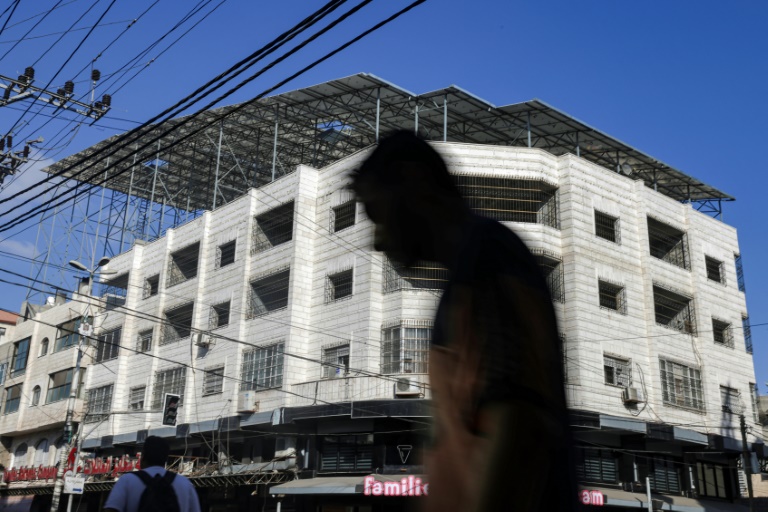
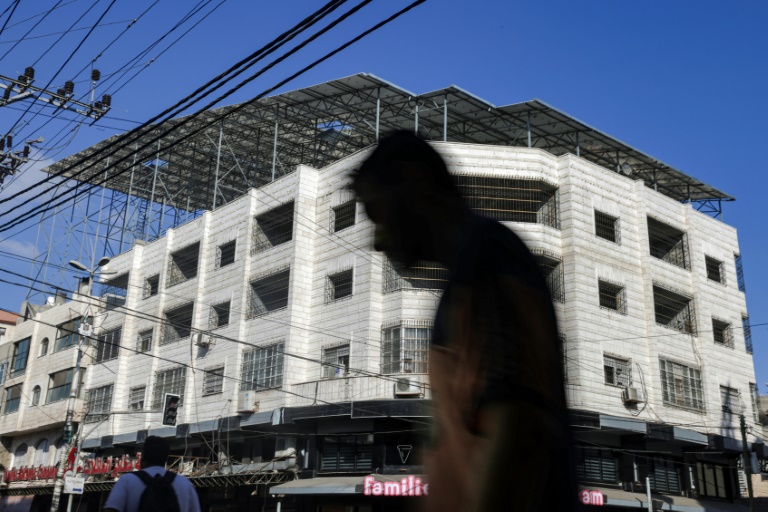
From the rooftops of Gaza City, solar panels now stretch out into the horizon.

Green energy advocates say it is a vision for a global future as the world faces the perils of climate change and rising energy costs.

– Swap to green power –

Gaza bakery owner Bishara Shehadeh began the switch to solar this summer, by placing hundreds of gleaming panels on his rooftop.

“We have surplus electricity in the day,” he said. “We sell it to the electricity company in exchange for providing us with current during the night.”

Solar energy lights up the bright bulbs illuminating the bustling bakery, but the ovens still run on diesel.

“We are working on importing ovens, depending on electrical power, from Israel, to save the cost of diesel,” said Shehadeh.

Both the bakery and the fish farm have relied partially on foreign donors to kick-start their switch to solar, although their owners are also investing their own cash.

But in a poverty-stricken territory where nearly 80 percent of residents rely on humanitarian assistance, according to the UN, not everyone can afford to install renewable energy.

Around a fifth of Gazans have installed solar power in their homes, according to an estimate published in April by the “Energy, Sustainability and Society” journal.

Financing options are available for Gazans with some capital, like Shehadeh, who got a four-year loan to fund his bakery project.

– Import restrictions –

At a store selling solar power kits, MegaPower, engineer Shehab Hussein said prices start at around $1,000 and can be paid in instalments.

Clients included a sewing factory and a drinks producer, which see the mostly Chinese-made technology as “a worthwhile investment”, he said.

Raya al-Dadah, who heads the University of Birmingham’s Sustainable Energy Technology Laboratory, said her family in Gaza has been using simple solar panels that heat water for more than 15 years.

“The pipe is super rusty, the glass is broken… and I just had a shower and the water is super hot,” she said during a visit to the territory.

But Dadah encountered obstacles when she tried to import a more sophisticated solar system for a community project in Gaza, where imports are tightly restricted by Israel and Egypt.  

“Bringing them to the Gaza Strip has proved to be impossible,” she said.

The advanced set-up includes more efficient panels and equipment that tracks the sun’s path.

Such technology is being used by Israeli firms such as SolarGik, whose smart control systems factor in weather conditions and can harness up to 20 percent more energy than standard panels, chief executive Gil Kroyzer told AFP.

Across the frontier in Gaza, in the absence of such high-tech equipment, Dadah relies on the standard panels to power a women’s centre and surrounding homes in the strip’s northern Jabalia area.

Despite the challenges, Dadah said solar energy remains a “brilliant” option for Gaza, with its copious sunlight: “It is really a very promising energy source, and it’s available everywhere”.

Tired of power cuts, blockaded Gaza turns to solar

Palestinians living in the Israeli-blockaded enclave of Gaza have long endured an unstable and costly electricity supply, so Yasser al-Hajj found a different way: solar power.

Looking at the rows of photo-voltaic panels at his beachfront fish farm and seafood restaurant, The Sailor, he said the investment he made six years ago had more than paid off.

“Electricity is the backbone of the project,” Hajj said, standing under a blazing Mediterranean sun. “We rely on it to provide oxygen for the fish, as well as to draw and pump water from the sea.”

The dozens of solar panels that shade the fish ponds below have brought savings that are now paying to refurbish the business, he said, as labourers loaded sand onto a horse-drawn cart.

Hajj said he used to pay 150,000 shekels ($42,000) per month for electricity, “a huge burden,” before solar power slashed his monthly bill to 50,000 shekels.

For most of Gaza’s 2.3 million residents, living under Hamas Islamist rule and a 15-year-old Israeli blockade, power cuts are a daily fact of life that impact everything from homes to hospital wards.

While some Gazans pay for a generator to kick in when the mains are cut — for around half of each day, according to United Nations data — ever more people are turning to renewables.

From the rooftops of Gaza City, solar panels now stretch out into the horizon.

Green energy advocates say it is a vision for a global future as the world faces the perils of climate change and rising energy costs.

– Swap to green power –

Gaza bakery owner Bishara Shehadeh began the switch to solar this summer, by placing hundreds of gleaming panels on his rooftop.

“We have surplus electricity in the day,” he said. “We sell it to the electricity company in exchange for providing us with current during the night.”

Solar energy lights up the bright bulbs illuminating the bustling bakery, but the ovens still run on diesel.

“We are working on importing ovens, depending on electrical power, from Israel, to save the cost of diesel,” said Shehadeh.

Both the bakery and the fish farm have relied partially on foreign donors to kick-start their switch to solar, although their owners are also investing their own cash.

But in a poverty-stricken territory where nearly 80 percent of residents rely on humanitarian assistance, according to the UN, not everyone can afford to install renewable energy.

Around a fifth of Gazans have installed solar power in their homes, according to an estimate published in April by the “Energy, Sustainability and Society” journal.

Financing options are available for Gazans with some capital, like Shehadeh, who got a four-year loan to fund his bakery project.

– Import restrictions –

At a store selling solar power kits, MegaPower, engineer Shehab Hussein said prices start at around $1,000 and can be paid in instalments.

Clients included a sewing factory and a drinks producer, which see the mostly Chinese-made technology as “a worthwhile investment”, he said.

Raya al-Dadah, who heads the University of Birmingham’s Sustainable Energy Technology Laboratory, said her family in Gaza has been using simple solar panels that heat water for more than 15 years.

“The pipe is super rusty, the glass is broken… and I just had a shower and the water is super hot,” she said during a visit to the territory.

But Dadah encountered obstacles when she tried to import a more sophisticated solar system for a community project in Gaza, where imports are tightly restricted by Israel and Egypt.  

“Bringing them to the Gaza Strip has proved to be impossible,” she said.

The advanced set-up includes more efficient panels and equipment that tracks the sun’s path.

Such technology is being used by Israeli firms such as SolarGik, whose smart control systems factor in weather conditions and can harness up to 20 percent more energy than standard panels, chief executive Gil Kroyzer told AFP.

Across the frontier in Gaza, in the absence of such high-tech equipment, Dadah relies on the standard panels to power a women’s centre and surrounding homes in the strip’s northern Jabalia area.

Despite the challenges, Dadah said solar energy remains a “brilliant” option for Gaza, with its copious sunlight: “It is really a very promising energy source, and it’s available everywhere”.

Moroccan nomads' way of life threatened by climate change

In the blistering desert of Morocco, the country’s last Berber nomads, the Amazigh, say their ancient lifestyle is under threat as climate change brings ever-more intense droughts.  

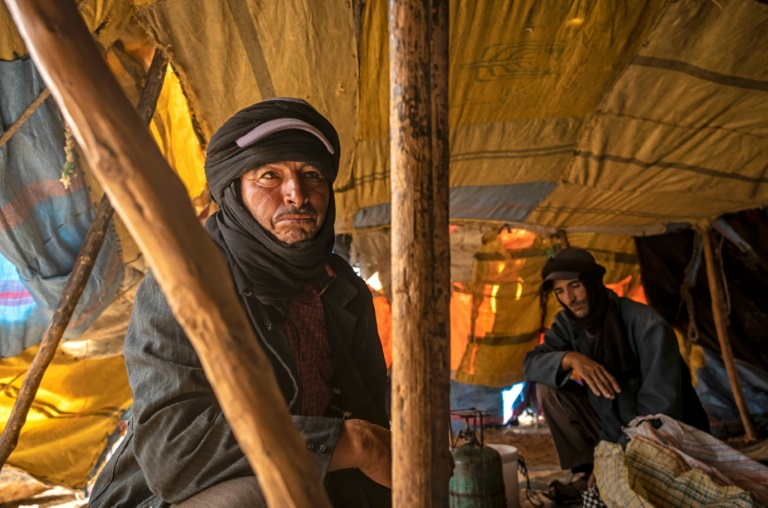
“Everything has changed,” said Moha Ouchaali, his wrinkled features framed by a black turban. “I don’t recognise myself anymore in the world of today. Even nature is turning against us.” 

Ouchaali, an Amazigh man in his 50s, has set up an encampment near a dry riverbed in barren hills about 280 kilometres (174 miles) east of Marrakesh. 

Amid the rocky, arid landscape near the village of Amellagou, he and his family have pitched two black woollen tents, lined with old animal fodder bags and fabric scraps.

One is for sleeping and hosting guests, the other serves as a kitchen.

“Water has become hard to find. Temperatures are going up and the drought is so harsh, but we can’t do much,” said Ouchaali.

His tribe, the Ait Aissa Izem, has spent centuries roaming the country to find food for their animals, but their way of life is steadily disappearing.

According to the last census, just 25,000 people in Morocco were nomadic in 2014, down by two-thirds in just a decade.

“We’re exhausted,” Ouchaali’s 45-year-old wife Ida said emotionally.

“Before, we managed to live decently, but all these droughts, more and more intense, make our lives complicated. Without water we can’t do anything.”

– ‘Last nail in coffin’ –

This year has seen Morocco’s worst drought in four decades.

Rainfall is set to decline by 11 percent and average temperatures set to rise by 1.3 percent by 2050, according to forecasts from the Ministry of Agriculture.

“Nomads have always been seen as a barometer of climate change,” said anthropologist Ahmed Skounti.

“If these people, used to living in extreme conditions, can’t resist the intensity of global warming, that means things are bad.”

The drying up of water resources was “the last nail in the coffin for nomads”, he added.

In easier times, the Ait Aissa Izem would pass the summer in the relatively cool mountain valley of Imilchil, before heading to the area around regional capital Errachidia for the winter.

“That’s ancient history,” Ouchaali said, sitting in his tent and taking a sip of sweet Moroccan tea. “Today we go wherever there’s a bit of water left, to try to save the animals.”

Severe water shortages have even pushed some nomads to take the rare step of taking out loans to feed their livestock, their most vital asset.

“I’ve gone into debt to buy food for my animals so they don’t starve to death,” said Ahmed Assni, 37, sitting by a tiny, almost dried-out stream near Amellagou.

Saeed Ouhada said the difficulties had pushed him to find accommodation for his wife and children in Amellagou, while he stays with his parents in a camp on the edge of the town.

“Being a nomad isn’t what it used to be,” he said. “I’ll keep at it because I have to. My parents are old but they refuse to live in a town.” 

Driss Skounti, elected to represent nomads in the region, said the area used to have around 460 tents. Today, they don’t even add up to a tenth of that number.

– ‘Tired of fighting’ –

Some Moroccan nomads have given up their ancient lifestyle altogether — and not just because of the ever-worsening climate.

“I was tired of fighting,” said Haddou Oudach, 67, who settled permanently in Er-Rich in 2010.

“We’ve become outcasts from society. I can’t even imagine what nomads are going through today.”

Moha Haddachi, the head of an association for the Ait Aissa Izem nomads, said social and economic changes were making a nomadic lifestyle ever-more difficult. 

The scarcity of pastures due to land privatisation and agricultural investment also contributes to the difficulties, he said.

“Agricultural investors now dominate the spaces where nomads used to graze their herds.”

Nomads also face hostility from some villagers, angered by those camping in their region despite officially belonging to other provinces.

A law was passed in 2019 to delineate where nomads and sedentary farmers could graze their animals, but “nobody applies it”, Haddachi said.

Former nomad Oudach is despondent about “this era of selfishness where everyone thinks only of themselves”. 

“It wasn’t always like this, we used to be welcomed everywhere we went,” he said.

Embarking on a life of nomadism offers little to young people.

Houda Ouchaali, 19, says she can’t stand watching her parents “suffering and battling just to survive”.

“The new generation wants to turn the page on nomadism,” she said.

She now lives with an uncle in Er-Rich and is looking for professional training to allow her to “build a future” and escape the “stigmatising gaze that city people often have for nomads”.

Driss Skounti said he had little hope for the future of nomadism.

“Nomadic life has an identity and a tradition steeped in history,” he said, “but is doomed to disappear within 10 years.”

African climate summit opens in DR Congo

Environment ministers from about 50 countries will gather in the Democratic Republic of Congo on Monday for a “pre-COP27” climate summit, with rich nations likely to come under pressure to raise spending to combat climate change.

The talks in the DRC’s capital, Kinshasa, are informal but meant to allow various countries and green groups to take stock of political positions ahead of COP27 — the United Nations climate gathering of world leaders in Egypt next month.

An opening ceremony will take place in the Congolese parliament building in Kinshasa, followed by discussions on mitigating climate change, and providing funding for countries already damaged by global heating and severe weather events. 

Delegates from about 50 countries are expected to attend the talks, including United States climate envoy John Kerry. 

“The emphasis will certainly be on support from industrialised countries to countries in the south,” a Western diplomat recently told AFP. 

The last UN climate summit, COP26 in Glasgow in November 2021, reaffirmed the goal — agreed in Paris in 2015 — of limiting the rise in the Earth’s average temperature to well below 2.0 degrees Celsius above pre-industrial levels and pursuing efforts to limit it to 1.5C.

That goal may already be beyond reach as the Earth’s temperature is already 1.2C higher than before the Industrial Revolution of the 19th century. 

Poorer countries had pushed at Glasgow for a financial mechanism to address losses and damage caused by climate change. 

But wealthier nations — the largest polluters — rejected the call and the participants agreed instead to start a “dialogue” on financial compensation for damages.  

– Climate justice –

Egypt, which is hosting COP27, has made implementing the pledge to curb global heating the priority of the November summit. 

Poorer countries are again likely to remind their richer counterparts of the need to increase financial support. 

The latter have so far failed to deliver on their promise to provide $100 billion a year to help developing countries limit climate change. 

Demands for climate justice were front and centre of a protest in Kinshasa last month, where young Congolese activists chanted slogans and demanded that world leaders take swift action rather than repeat old promises.

The Congolese government is also expected drive home the message that it requires funding to protect its vast rainforests, which act as a carbon sink. 

Around 30 billion tonnes of carbon are stored across the Congo Basin, researchers estimated in a study for Nature in 2016. The figure is roughly equivalent to three years of global emissions.

However, the central African nation in July launched an auction for 30 oil and gas blocs, ignoring warnings from environmentalists that exploiting them could harm ecosystems and release vast amounts of heat-trapping gases. 

One of the poorest countries in the world, the DRC argues that drilling for oil and gas could help diversify its economy and benefit the Congolese people. 

Anti-discrimination laws, voting rights on US Supreme Court docket

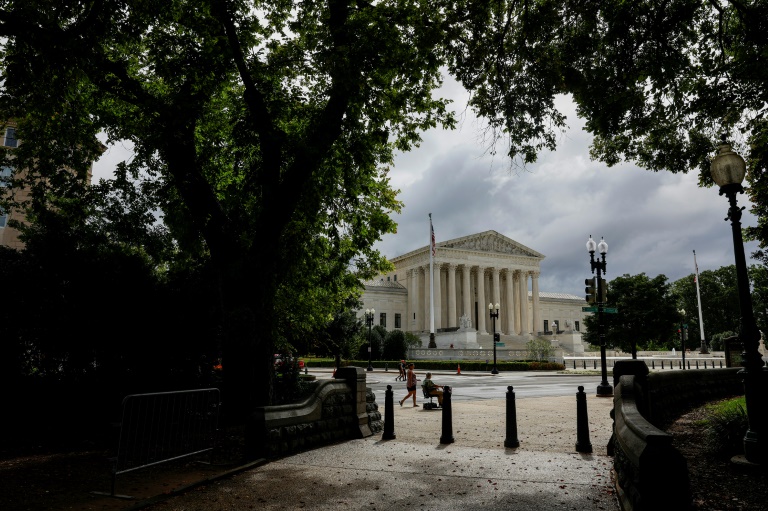
The conservative-dominated US Supreme Court, after quashing abortion access, begins a new term Monday which could bring setbacks to the rights of African Americans and gay couples.

Anti-discrimination laws, voting rights and immigration are among the hot topics on the docket for the nation’s highest court.

For the first time, the more than 230-year-old court will feature an African American woman — Ketanji Brown Jackson, named to the bench by Democratic President Joe Biden.

The liberal Jackson’s arrival will not modify the balance of power on the nine-member court, however.

With six justices — three of whom were nominated by former president Donald Trump, a Republican — conservatives will continue to wield a solid majority.

David Cole, legal director of the American Civil Liberties Union (ACLU), said the last term “saw the court aggressively exercising its newfound conservative power to upend long established precedents.”

“This term, the court appears ready to do so again,” Cole said. “The court is not likely to act modestly or at least is not inclined to act modestly.”

In June, the court struck down the landmark 1973 ruling guaranteeing a constitutional right to abortion, expanded public carry rights for gun owners and curbed the powers of the government agency responsible for environmental protection.

The rulings were welcomed in conservative circles which have accused the court in recent years of engaging in judicial activism when it comes to major social issues.

Ilya Shapiro, director of constitutional studies at the conservative Manhattan Institute think tank, said the court is reversing what he called the excesses of the 1970s.

Shapiro said he expects the court to take aim next at affirmative action policies which allow universities to take race into account in their admissions practices.

The court is to hear arguments on the use of race in deciding who gets to attend Harvard University and the University of North Carolina (UNC).

Harvard and UNC, like many other US institutions of higher education, use race as a factor in trying to ensure a diverse student body and to make up for a legacy of racial discrimination against African Americans and Hispanics.

The court has ruled previously in favor of affirmative action but it has long been in the cross-hairs of the right and its opponents believe the current court will be receptive to their arguments.

– ‘Far-reaching consequences’ –

Another closely watched case, which will be heard by the court on Tuesday, involves the seven congressional districts in the southern state of Alabama and the 1965 Voting Rights Act, which aims to prevent discrimination against African Americans at the polls.

The civil rights legislation allows for the creation of Black-dominated districts to ensure they have representation in Congress.

But it is illegal to restrict their voting power by concentrating Black voters in a single district or by splitting them into multiple districts.

A congressional map drawn up by the Republican-dominated Alabama state legislature provides for only a single Black-majority district although they make up about 25 percent of the population of the state.

The case takes on added significance because Black voters tend to vote overwhelmingly for Democrats.

Another case before the court would give state legislatures more power to regulate federal elections and could have “far-reaching consequences for democracy,” said Sophia Lin Lakin of the ACLU’s voting rights project.

The case could change how federal elections are conducted and give state legislatures “broad unchecked power over federal elections,” Lin Lakin said.

The Supreme Court will also revisit an issue from several years ago, when it ruled in favor of a cake-maker who cited his Christian beliefs in refusing to make a wedding cake for a gay couple.

The ruling in that case was narrow, however, and the court is being asked this time to decide whether a graphic designer who declines to build wedding websites for gay couples is violating anti-discrimination laws.

Between now and June 30, the end of the term, the Supreme Court is also expected to rule on expelling undocumented migrants, the death penalty and adoption of Native American children.

Stay or go? Hard choice for Florida islanders devasted by Ian

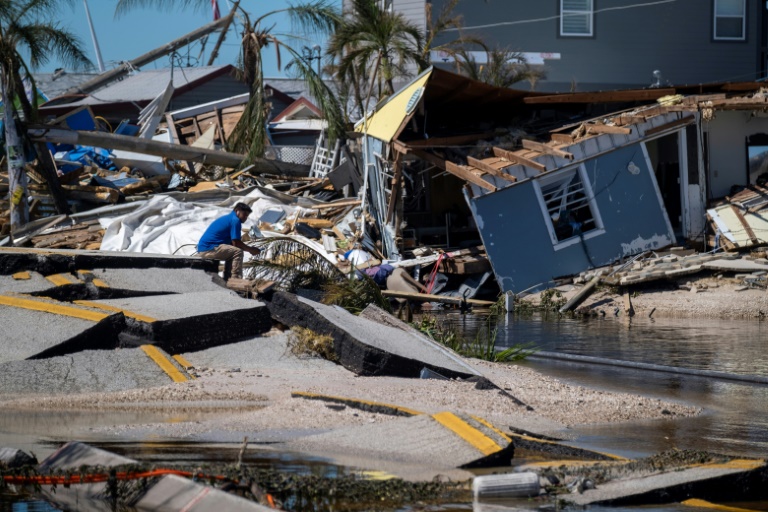
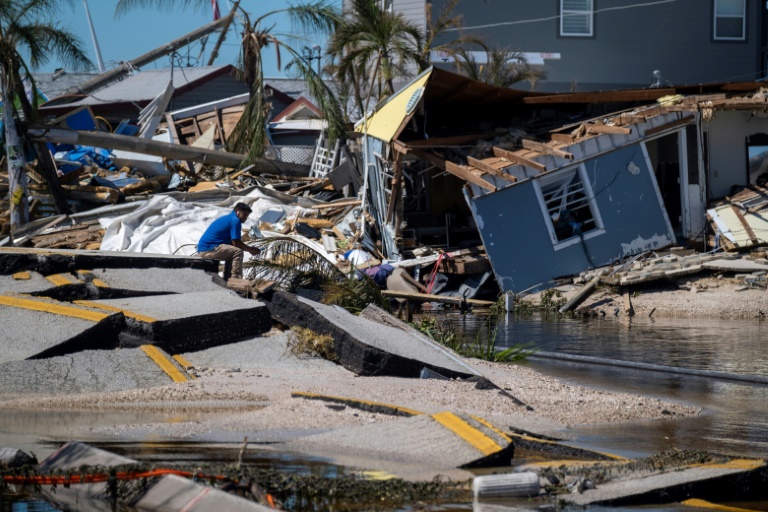
Karen Pagliaro walks down Matlacha’s main street, dodging downed trees, debris and abandoned vehicles, unsure where to go in the small island town cut off after Hurricane Ian damaged bridges linking it to mainland Florida.  

“We feel kind of forgotten,” says the 50-year-old teacher, who lost her home to the storm. “We thought they’d send in help, water and supplies and things, and we were told no, just get off.”

Until Wednesday, Matlacha was a small paradise in southwest Florida.

The fishing village of 800 people across two islets was dotted with colorful wooden houses built around the wide street. It was a place to enjoy the sea, good weather, seafood restaurants and small art galleries. 

The hurricane changed everything. 

Three days after Ian hit, the Coast Guard, firefighters and citizens from nearby towns are still coming by boat to rescue the last residents who were trapped there after refusing to evacuate. 

Other residents, those who did leave the island, are making the journey in the opposite direction from the mainland to check on the damage to their homes. 

Christian Lopez watches the jetty as the emergency services evacuate people — but he has no intention of leaving, despite losing his home.  

“I’d rather stay here than go somewhere else and be on the street. Here at least we have a little roof and we are going to try to fix up the trailer where we live,” says the 25-year-old. 

– ‘I never want to come back’ –

At the other end of Matlacha, the main street is cut off by a huge crevasse that people have to cross thanks to a makeshift bridge made of a metal board.    

Dozens of stunned and weary people walk somberly about, taking in the devastation. Most of them share the same uncertainty of not knowing what to do or where to go. 

“I don’t have a plan,” says John Lynch, sounding resigned. The 59-year-old’s house is sinking into the sea and he is preparing to leave. 

“We’ve been here for 25 years… It’s heartbreaking because this is where we plan on living for the rest of our lives.”  

Karen Pagliaro doesn’t know what she is going to do either. She has nowhere to go. The school where she works is temporarily closed because of hurricane damage. 

What is clear to her is that she wants to return to live in Matlacha.  “It’s our beloved city and we love it here,” she says.  

Near the pier, Jim Bedra doesn’t share that sentiment. The septuagenarian is about to leave town with his wife, Kathy, and their dog, Luna, on a Coast Guard boat.   

Last week he wanted to evacuate the island with Kathy and their 31-year-old son, but the two convinced him to stay where they had lived since 2013.  

He no longer has a home and his voice cracks at the thought. “We are going to stay in a shelter, I imagine,” says Bedra, who wants to return to his safely landlocked home state of Ohio. 

“I never want to come back here,” he says before boarding the boat for the mainland. 

“This is not the retirement we looked for.”

ma/st/bbk

Stay or go? Hard choice for Florida islanders devasted by Ian

Karen Pagliaro walks down Matlacha’s main street, dodging downed trees, debris and abandoned vehicles, unsure where to go in the small island town cut off after Hurricane Ian damaged bridges linking it to mainland Florida.  

“We feel kind of forgotten,” says the 50-year-old teacher, who lost her home to the storm. “We thought they’d send in help, water and supplies and things, and we were told no, just get off.”

Until Wednesday, Matlacha was a small paradise in southwest Florida.

The fishing village of 800 people across two islets was dotted with colorful wooden houses built around the wide street. It was a place to enjoy the sea, good weather, seafood restaurants and small art galleries. 

The hurricane changed everything. 

Three days after Ian hit, the Coast Guard, firefighters and citizens from nearby towns are still coming by boat to rescue the last residents who were trapped there after refusing to evacuate. 

Other residents, those who did leave the island, are making the journey in the opposite direction from the mainland to check on the damage to their homes. 

Christian Lopez watches the jetty as the emergency services evacuate people — but he has no intention of leaving, despite losing his home.  

“I’d rather stay here than go somewhere else and be on the street. Here at least we have a little roof and we are going to try to fix up the trailer where we live,” says the 25-year-old. 

– ‘I never want to come back’ –

At the other end of Matlacha, the main street is cut off by a huge crevasse that people have to cross thanks to a makeshift bridge made of a metal board.    

Dozens of stunned and weary people walk somberly about, taking in the devastation. Most of them share the same uncertainty of not knowing what to do or where to go. 

“I don’t have a plan,” says John Lynch, sounding resigned. The 59-year-old’s house is sinking into the sea and he is preparing to leave. 

“We’ve been here for 25 years… It’s heartbreaking because this is where we plan on living for the rest of our lives.”  

Karen Pagliaro doesn’t know what she is going to do either. She has nowhere to go. The school where she works is temporarily closed because of hurricane damage. 

What is clear to her is that she wants to return to live in Matlacha.  “It’s our beloved city and we love it here,” she says.  

Near the pier, Jim Bedra doesn’t share that sentiment. The septuagenarian is about to leave town with his wife, Kathy, and their dog, Luna, on a Coast Guard boat.   

Last week he wanted to evacuate the island with Kathy and their 31-year-old son, but the two convinced him to stay where they had lived since 2013.  

He no longer has a home and his voice cracks at the thought. “We are going to stay in a shelter, I imagine,” says Bedra, who wants to return to his safely landlocked home state of Ohio. 

“I never want to come back here,” he says before boarding the boat for the mainland. 

“This is not the retirement we looked for.”

ma/st/bbk

Tesla says deliveries increased in Q3

New vehicle deliveries by Tesla increased in the third quarter, beating the previous three months during which its Chinese factory was shuttered for multiple weeks, the US electric automaker announced Sunday.

Between July and September, Tesla delivered a total of 343,380 vehicles around the world, the company led by Elon Musk said in a statement.

That represents an increase of 43 percent over the same period last year, and 35 percent more than the second quarter of 2022.

While the Q3 results show a return to growth for Tesla deliveries, the total number was at the very bottom end of analyst estimates, which were between 343,000 and 370,000.

The company said it was facing headwinds with regard to “vehicle transportation capacity,” which it hoped to resolve with better distribution among its factories — including recently opened sites in Berlin and Austin, Texas.

Wedbush Securities analyst Dan Ives described the quarter as “nothing to write home about” in a note to investors, while the market would likely be “disappointed by the softer delivery number in 3Q.”

“That said, we view this more of a logistical speed bump rather than the start of a softer delivery trajectory,” he added.

Tesla has managed to increase deliveries every quarter since the beginning of the pandemic, with the exception of Q2 this year, when the company was forced to close its Chinese factory.

Tesla also reported an increase in auto output, with 365,923 vehicles produced in the third quarter — 54 percent more than the same period last year, though a pace that would likely prevent it from reaching 1.5 million vehicles total for the year, as Musk had estimated in April.

The company plans to release its full quarterly results on October 19.

Hurricane Orlene headed for Mexico

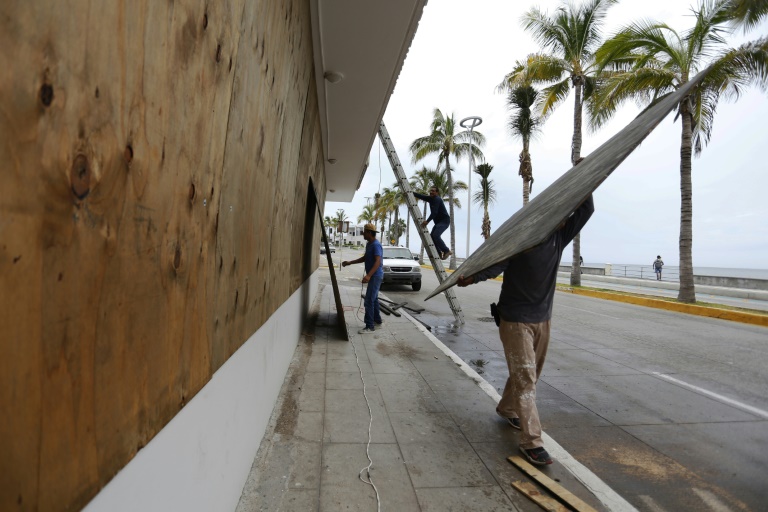
Powerful Hurricane Orlene headed Sunday toward Mexico’s Pacific coast, where it is expected to make landfall on Monday night, the US National Hurricane Center said.

The storm lost some strength as it moved across the water, falling from Category 4 to 3, the agency said.

But it is expected to be a strong hurricane when it passes near or over the Islas Marias archipelago, and remain a hurricane when it reaches southwestern Mexico, the NHC said.

The NHC forecast that the storm would pass over the Islas Marias Sunday night or Monday morning, and reach the mainland by Monday night.

Mexico’s National Water Commission (Conagua) predicted that the storm would be a Category 1 or 2 hurricane by the time it moves onto land.

The storm will generate wind gusts of up to 70 miles (110 kilometers) per hour and waves of up to 16 feet (five meters) on the coasts of Nayarit and Jalisco states, Conagua added, urging the inhabitants of at-risk areas to take refuge in temporary shelters. 

The Ministry of the Navy has closed the ports of Nayarit and Jalisco.

Authorities are keeping a close eye on the storm’s track as they mull whether to evacuate tourists from Mexican beach resorts to temporary shelters, Víctor Hugo Roldan, director of Civil Protection in Jalisco, told the press.

Tropical cyclones hit Mexico every year on both its Pacific and Atlantic coasts, usually between May and November. 

In October 1997, Hurricane Paulina hit Mexico’s Pacific coast as a Category 4 storm, leaving more than 200 dead.

Close Bitnami banner
Bitnami