AFP

Germany builds new gas terminals to succeed Russian pipelines

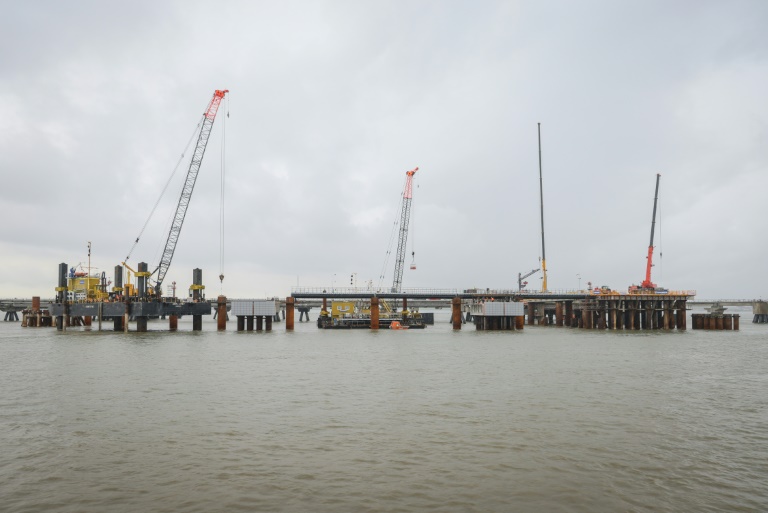
Germany’s most strategically important building site is at the end of a windswept pier on the North Sea coast, where workers are assembling the country’s first terminal for the import of liquefied natural gas (LNG).

Starting this winter, the rig, close to the port of Wilhelmshaven, will be able to supply the equivalent of 20 percent of the gas that was until recently imported from Russia.

Since its invasion of Ukraine, Moscow has throttled gas supplies to Germany, while the Nord Stream pipelines which carried huge volumes under the Baltic Sea to Europe were damaged last week in what a Danish-Swedish report called “a deliberate act.”

In the search for alternative sources, the German government has splashed billions on five projects like the one in Wilhelmshaven.

Altogether the new fleet should be able to handle around 25 billion cubic metres of gas per year, roughly equivalent to half the capacity of the Nord Stream 1 pipeline.

– New platform –

At the site in Wilhelmshaven, the half-finished concrete platform emerging from the sea sprays workers in fluorescent yellow vests with a fine mist.

Back on solid land, a constant stream of lorries delivers sections of grey pipe, which should relay the terminal to the gas network.

LNG terminals allow for the import by sea of natural gas which has been chilled and turned into a liquid to make it easier to transport.

A specialist vessel, known as an FSRU, which can stock the fuel and turn LNG back into a ready-to-use gas, is also hooked up to the platform to complete the installation.

Unlike other countries in Europe, Germany until now did not have an LNG terminal, instead relying on relatively cheap pipeline supplies from Russia.

But since the invasion of Ukraine, Germany has set about weaning itself off Moscow’s gas exports, which previously represented 55 percent of its supplies.

To diversify its sources, secure enough supplies of the fuel and keep its factories working, Berlin has bet massively on LNG to fill the gap left by Russian imports.

Chancellor Olaf Scholz last week signed an agreement with the United Arab Emirates for the supply of LNG, while touring Gulf states in search of new sources.

Renting five FSRU ships to plug into the new terminals has also set Berlin back three billion euros ($2.9 billion).

– Environment –

Following the outbreak of the war in Ukraine, Germany passed a law to drastically speed up the approval process for LNG terminals.

In Wilhelmshaven, the work is coming along rapidly. The terminal should be finished “this winter”, says Holger Kreetz, who heads the project for German energy company Uniper.

The strategic importance of the terminal has seen building work advance surprisingly quickly. “Normally, a project like this takes us five to six years,” Kreetz tells AFP.

The arrival of the new terminal has been welcomed by many residents in Wilhelmshaven, where deindustrialisation has pushed the unemployment rate up to 10 percent, almost twice the national average.

“It’s good that it’s in Wilhelmshaven… it’ll bring jobs,” Ingrid Schon, 55, tells AFP. 

Opposition comes from groups who fear the accelerated timescales for approval and construction could come at a cost to the environment.

Young activists from the group “Ende Gelaende” managed to block the site in Wilhelmshaven for a day in August.

The German environmental organisation DUH said the works would “irreversibly destroy sensitive ecosystems as well as endanger the living space of threatened porpoises”.

The source of the fuel has also been a sore point, with concerns raised that natural gas produced from fracking in the United States could be imported via the new terminal.

Criticism of the project has been dismissed by Economy Minister Robert Habeck, a Green party politician, who has emphasised the importance of “energy security”.

By 2030, the site is set to be converted for the importation of green hydrogen, produced with renewables, which Berlin has backed as part of its energy transition.
Germany builds new gas terminals to succeed Russian pipelines

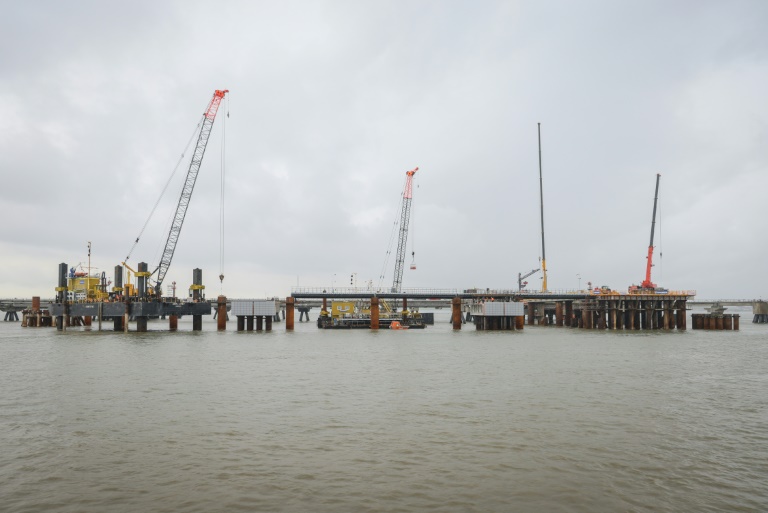
Germany’s most strategically important building site is at the end of a windswept pier on the North Sea coast, where workers are assembling the country’s first terminal for the import of liquefied natural gas (LNG).

Starting this winter, the rig, close to the port of Wilhelmshaven, will be able to supply the equivalent of 20 percent of the gas that was until recently imported from Russia.

Since its invasion of Ukraine, Moscow has throttled gas supplies to Germany, while the Nord Stream pipelines which carried huge volumes under the Baltic Sea to Europe were damaged last week in what a Danish-Swedish report called “a deliberate act.”

In the search for alternative sources, the German government has splashed billions on five projects like the one in Wilhelmshaven.

Altogether the new fleet should be able to handle around 25 billion cubic metres of gas per year, roughly equivalent to half the capacity of the Nord Stream 1 pipeline.

– New platform –

At the site in Wilhelmshaven, the half-finished concrete platform emerging from the sea sprays workers in fluorescent yellow vests with a fine mist.

Back on solid land, a constant stream of lorries delivers sections of grey pipe, which should relay the terminal to the gas network.

LNG terminals allow for the import by sea of natural gas which has been chilled and turned into a liquid to make it easier to transport.

A specialist vessel, known as an FSRU, which can stock the fuel and turn LNG back into a ready-to-use gas, is also hooked up to the platform to complete the installation.

Unlike other countries in Europe, Germany until now did not have an LNG terminal, instead relying on relatively cheap pipeline supplies from Russia.

But since the invasion of Ukraine, Germany has set about weaning itself off Moscow’s gas exports, which previously represented 55 percent of its supplies.

To diversify its sources, secure enough supplies of the fuel and keep its factories working, Berlin has bet massively on LNG to fill the gap left by Russian imports.

Chancellor Olaf Scholz last week signed an agreement with the United Arab Emirates for the supply of LNG, while touring Gulf states in search of new sources.

Renting five FSRU ships to plug into the new terminals has also set Berlin back three billion euros ($2.9 billion).

– Environment –

Following the outbreak of the war in Ukraine, Germany passed a law to drastically speed up the approval process for LNG terminals.

In Wilhelmshaven, the work is coming along rapidly. The terminal should be finished “this winter”, says Holger Kreetz, who heads the project for German energy company Uniper.

The strategic importance of the terminal has seen building work advance surprisingly quickly. “Normally, a project like this takes us five to six years,” Kreetz tells AFP.

The arrival of the new terminal has been welcomed by many residents in Wilhelmshaven, where deindustrialisation has pushed the unemployment rate up to 10 percent, almost twice the national average.

“It’s good that it’s in Wilhelmshaven… it’ll bring jobs,” Ingrid Schon, 55, tells AFP. 

Opposition comes from groups who fear the accelerated timescales for approval and construction could come at a cost to the environment.

Young activists from the group “Ende Gelaende” managed to block the site in Wilhelmshaven for a day in August.

The German environmental organisation DUH said the works would “irreversibly destroy sensitive ecosystems as well as endanger the living space of threatened porpoises”.

The source of the fuel has also been a sore point, with concerns raised that natural gas produced from fracking in the United States could be imported via the new terminal.

Criticism of the project has been dismissed by Economy Minister Robert Habeck, a Green party politician, who has emphasised the importance of “energy security”.

By 2030, the site is set to be converted for the importation of green hydrogen, produced with renewables, which Berlin has backed as part of its energy transition.
Death toll soars after Hurricane Ian devastates Florida

The death toll from Hurricane Ian, one of the most powerful storms ever to hit the United States, soared above 40 Saturday, as President Joe Biden heads to Florida later in the week to survey the devastation.

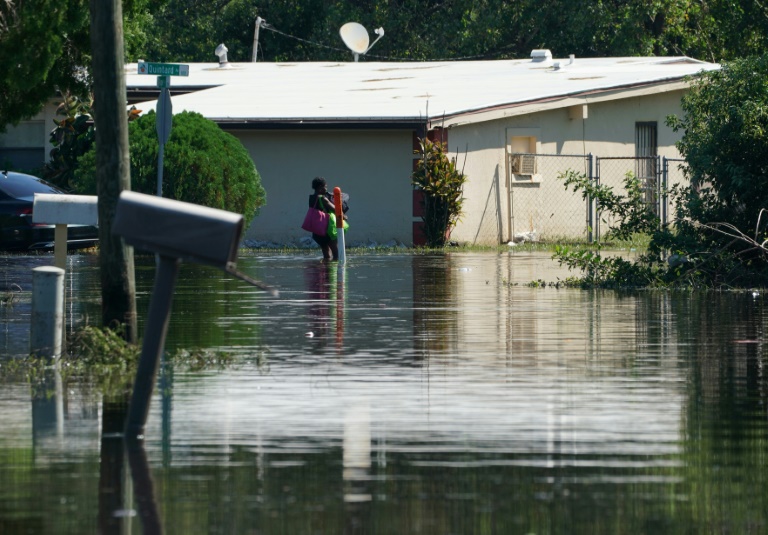
Shocked Florida communities were only just beginning to face the full scale of the destruction, with rescuers still searching for survivors in submerged neighborhoods and along the state’s southwest coast.

Homes, restaurants and businesses were ripped apart when Ian roared ashore as a powerful Category 4 hurricane on Wednesday.

The confirmed number of storm-related deaths rose to 44 statewide, the Florida Medical Examiners Commission said late Saturday, but reports of additional fatalities were still emerging county by county -– pointing to a far higher final toll.

Hard-hit Lee County alone recorded 35 deaths, according to its sheriff, while US media including NBC and CBS tallied more than 70 deaths either directly or indirectly related to the storm.

In the coastal state of North Carolina, the governor’s office confirmed four deaths related to Ian there.

Biden and his wife, Jill, will visit Florida on Wednesday, White House Press Secretary Karine Jean-Pierre tweeted, but the couple will first head to Puerto Rico on Monday to survey the destruction from a different storm, Hurricane Fiona, which struck the US territory last month.

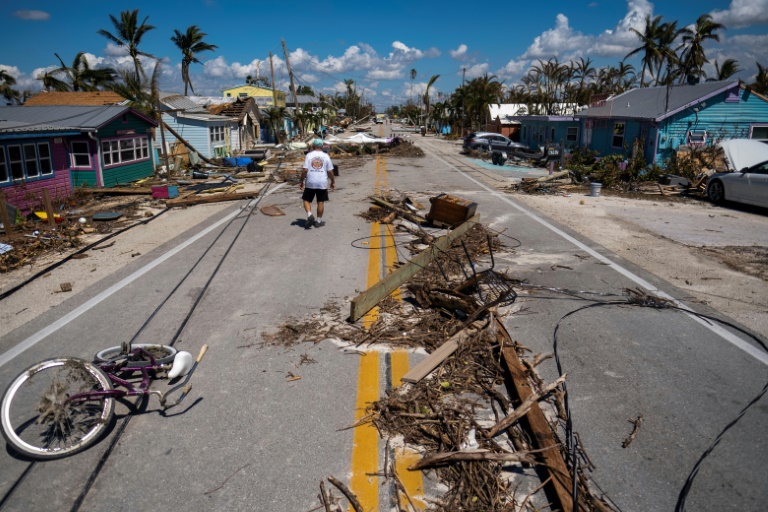
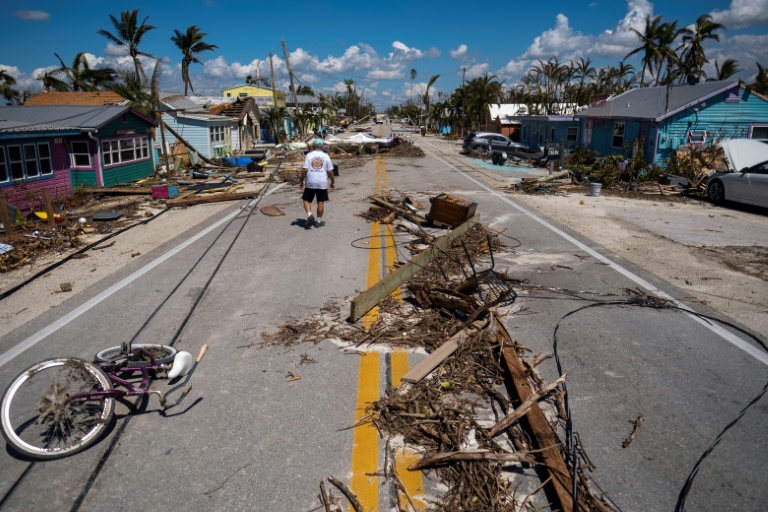
In Florida’s Lee County on Saturday, rescuers and ordinary citizens in boats were still saving the last trapped inhabitants of the small island of Matlacha. Debris, abandoned vehicles and downed trees littered the pummeled hamlet’s main street and surroundings that are dotted by colorful wooden houses with corrugated roofs.

The community, home to about 800 people, was cut off from the mainland following damage to two bridges, and those who fled early were only just beginning to return home to survey the destruction.

Sitting in the shadow of a deserted Matlacha house, Chip Farrar told AFP that “nobody’s telling us what to do, nobody’s telling us where to go.”

“The evacuation orders came in very late,” the 43-year-old said. “But most people that are still here wouldn’t have left anyway. It’s a very blue-collar place. And most people don’t have anywhere to go, which is the biggest issue.”

Sixteen migrants were missing from a boat that sank during the hurricane, according to the US Coast Guard. Two people were found dead and nine others rescued, including four Cubans who swam to shore in the Florida Keys.

More than 900,000 customers remained without power in Florida Saturday night, hampering efforts by those who evacuated to return to their homes to take stock of what they lost. 

In Fort Myers Beach, a town on the Gulf of Mexico coast which took the brunt of the storm, Pete Belinda said his home was “just flipped upside down, soaking wet, full of mud.”

Ian barreled over Florida and into the Atlantic Ocean before making US landfall again, this time on the South Carolina coast Friday as a Category 1 hurricane, with maximum sustained winds of 85 miles (140 kilometers) per hour.

It was later downgraded to a post-tropical cyclone, and it was dissipating over Virginia late Saturday.

More than 45,000 people remained without power across North Carolina and Virginia, tracking website poweroutage.us said Saturday.

CoreLogic, a firm that specializes in property analysis, said wind-related losses for residential and commercial properties in Florida could cost insurers up to $32 billion, while flooding losses could reach $15 billion.

“This is the costliest Florida storm since Hurricane Andrew made landfall in 1992,” CoreLogic’s Tom Larsen said.

– Rescues continue – 

As of Saturday morning, Governor Ron DeSantis’s office said more than 1,100 rescues had been made across Florida.

DeSantis reported that hundreds of rescue personnel were going door-to-door “up and down the coastline.”

Many Floridians evacuated ahead of the storm, but thousands chose to shelter in place and ride it out.

Two hard-hit barrier islands near Fort Myers — Pine Island and Sanibel Island — were cut off after the storm damaged causeways to the mainland.

Aerial photos and video show breathtaking destruction in Sanibel and elsewhere.

A handful of restaurants and bars reopened in Fort Myers, giving an illusion of normalcy amid downed trees and shattered storefronts.

Before pummeling Florida, Ian plunged all of Cuba into darkness after downing the island’s power network.

Electricity was gradually returning, mainly in Havana, but many homes remain without power.

A new storm in the Pacific, Hurricane Orlene, intensified to Category 2 strength off the Mexican coast, where it was forecast to make landfall in the coming days.

Human-induced climate change is resulting in more severe weather events across the globe, scientists say.

Death toll soars after Hurricane Ian devastates Florida

The death toll from Hurricane Ian, one of the most powerful storms ever to hit the United States, soared above 40 Saturday, as President Joe Biden heads to Florida later in the week to survey the devastation.

Shocked Florida communities were only just beginning to face the full scale of the destruction, with rescuers still searching for survivors in submerged neighborhoods and along the state’s southwest coast.

Homes, restaurants and businesses were ripped apart when Ian roared ashore as a powerful Category 4 hurricane on Wednesday.

The confirmed number of storm-related deaths rose to 44 statewide, the Florida Medical Examiners Commission said late Saturday, but reports of additional fatalities were still emerging county by county -– pointing to a far higher final toll.

Hard-hit Lee County alone recorded 35 deaths, according to its sheriff, while US media including NBC and CBS tallied more than 70 deaths either directly or indirectly related to the storm.

In the coastal state of North Carolina, the governor’s office confirmed four deaths related to Ian there.

Biden and his wife, Jill, will visit Florida on Wednesday, White House Press Secretary Karine Jean-Pierre tweeted, but the couple will first head to Puerto Rico on Monday to survey the destruction from a different storm, Hurricane Fiona, which struck the US territory last month.

In Florida’s Lee County on Saturday, rescuers and ordinary citizens in boats were still saving the last trapped inhabitants of the small island of Matlacha. Debris, abandoned vehicles and downed trees littered the pummeled hamlet’s main street and surroundings that are dotted by colorful wooden houses with corrugated roofs.

The community, home to about 800 people, was cut off from the mainland following damage to two bridges, and those who fled early were only just beginning to return home to survey the destruction.

Sitting in the shadow of a deserted Matlacha house, Chip Farrar told AFP that “nobody’s telling us what to do, nobody’s telling us where to go.”

“The evacuation orders came in very late,” the 43-year-old said. “But most people that are still here wouldn’t have left anyway. It’s a very blue-collar place. And most people don’t have anywhere to go, which is the biggest issue.”

Sixteen migrants were missing from a boat that sank during the hurricane, according to the US Coast Guard. Two people were found dead and nine others rescued, including four Cubans who swam to shore in the Florida Keys.

More than 900,000 customers remained without power in Florida Saturday night, hampering efforts by those who evacuated to return to their homes to take stock of what they lost. 

In Fort Myers Beach, a town on the Gulf of Mexico coast which took the brunt of the storm, Pete Belinda said his home was “just flipped upside down, soaking wet, full of mud.”

Ian barreled over Florida and into the Atlantic Ocean before making US landfall again, this time on the South Carolina coast Friday as a Category 1 hurricane, with maximum sustained winds of 85 miles (140 kilometers) per hour.

It was later downgraded to a post-tropical cyclone, and it was dissipating over Virginia late Saturday.

More than 45,000 people remained without power across North Carolina and Virginia, tracking website poweroutage.us said Saturday.

CoreLogic, a firm that specializes in property analysis, said wind-related losses for residential and commercial properties in Florida could cost insurers up to $32 billion, while flooding losses could reach $15 billion.

“This is the costliest Florida storm since Hurricane Andrew made landfall in 1992,” CoreLogic’s Tom Larsen said.

– Rescues continue – 

As of Saturday morning, Governor Ron DeSantis’s office said more than 1,100 rescues had been made across Florida.

DeSantis reported that hundreds of rescue personnel were going door-to-door “up and down the coastline.”

Many Floridians evacuated ahead of the storm, but thousands chose to shelter in place and ride it out.

Two hard-hit barrier islands near Fort Myers — Pine Island and Sanibel Island — were cut off after the storm damaged causeways to the mainland.

Aerial photos and video show breathtaking destruction in Sanibel and elsewhere.

A handful of restaurants and bars reopened in Fort Myers, giving an illusion of normalcy amid downed trees and shattered storefronts.

Before pummeling Florida, Ian plunged all of Cuba into darkness after downing the island’s power network.

Electricity was gradually returning, mainly in Havana, but many homes remain without power.

A new storm in the Pacific, Hurricane Orlene, intensified to Category 2 strength off the Mexican coast, where it was forecast to make landfall in the coming days.

Human-induced climate change is resulting in more severe weather events across the globe, scientists say.

Thousands march in Canada in solidarity with Iran protests

Several thousand people marched in Montreal and other Canadian cities Saturday in solidarity with protests sparked by the death of Mahsa Amini in the custody of Iran’s notorious morality police.

A wave of street violence has rocked Iran since Amini, 22, died days after her arrest for allegedly failing to observe the Islamic republic’s strict dress code for women.

Protests were held across the country for a 15th consecutive night on Friday despite a bloody crackdown that rights groups said has left more than 75 people dead.

Tens of thousands have also come out for solidarity rallies in several Canadian cities, including Vancouver, Toronto and the capital Ottawa.

A protest also took place Saturday in the US capital Washington where hundreds of members of the Kurdish community, some bearing placards calling for regime change in Tehran, gathered outside the White House gates.

In Canada, public broadcaster CBC showed images from Toronto on Saturday of motorists honking their support for demonstrators lining a five-kilometer (three-mile) stretch of road, wearing “Justice for Mahsa Amini” t-shirts and waving Iranian flags on the end of hockey sticks.

In Montreal, several women cut their hair as a crowd of more than 10,000 waved placards that read “Justice” and “No to Islamic Republic,” while chanting “Say her name. Say her name.”

“It was for the Iranian women who are fighting for their freedom, for their lives in Iran,” a 30-year-old expatriate who only gave her name as Sin told AFP after chopping off her long dark locks.

She described cutting off her hair that flowed almost to the middle of her back as “nothing compared to” what women in Iran have endured. 

“This is the least we can do to support my country, my women, my people in Iran who are under repression,” she said.

March co-organizer Nima Machouf, 57, added it was important to “be a voice for people in Iran and carry their message” to the world.

Several demonstrators called for regime change in Tehran, and for Canada to increase sanctions.

Ottawa has already applied sanctions over Iran’s nuclear program and Prime Minister Justin Trudeau announced a new round Monday against dozens of Iranian officials.

Reza, 42, came with his family, including his little girl and echoed the sentiment. “If we remain silent, what will we say to other generations?” he commented.

Venezuela frees 7 Americans in swap for Maduro wife's nephews

Caracas on Saturday freed seven detained Americans — including five oil executives — in exchange for the release of two nephews of Venezuela’s first lady who were jailed in the United States for drug-trafficking.

President Joe Biden issued the announcement that the Americans were on their way home — and a senior official in his administration confirmed shortly afterwards that the US leader had made the “painful decision” to greenlight the prisoner swap in order to secure their freedom.

“Today, after years of being wrongfully detained in Venezuela, we are bringing home Jorge Toledo, Tomeu Vadell, Alirio Zambrano, Jose Luis Zambrano, Jose Pereira, Matthew Heath, and Osman Khan,” Biden said in a statement.

The negotiated release of “two young Venezuelans” held in the United States was confirmed in a near-simultaneous statement by Caracas — whose relations with Washington have been severely strained for years.

While Venezuelan authorities did not name the pair, they were identified by the senior US official as Francisco Flores de Freitas and his cousin Efrain Antonio Campos Flores — both nephews of President Nicolas Maduro’s wife, Cilia Flores.

“As a result of various conversations held since March 5 with representatives of the government of the United States, the release of two young Venezuelans unjustly imprisoned in that country has been achieved,” said the communique from Caracas.

Arrested in 2015 in a US sting operation in Haiti, the cousins were sentenced two years later to 18 years in prison for plotting to smuggle 800 kilos (1,760 pounds) of cocaine into the United States. 

The Venezuelan government says they were framed.

It became clear in negotiations that the release of the two Venezuelans, “sometimes referred to as the ‘narco nephews’ due to their relationship with Nicolas Maduro’s wife, was essential to securing the release of these Americans,” a senior US administration official told reporters.

“The president made a tough decision, a painful decision, to offer something the Venezuelans have actively sought” in the months-long swap negotiations, the official added.

– Oil executives freed –

Five of the seven freed Americans were executives of the Citgo oil corporation, detained in 2017 while on a business trip to the South American country and accused of corruption.

Citgo is the US subsidiary of Venezuela’s state oil company PDVSA.

The Citgo employees — former company president Pereira, along with Vadell, Toledo, and the Zambranos — each had been sentenced to more than 13 years in prison.

The other two Americans freed — Heath and Khan — were arrested separately.

“All seven of these Americans are in stable health,” and Biden has spoken with each of them, the administration official said.

They said the exchange took place Saturday “in a country between Venezuela and the United States.”

“A plane landed from our side, carrying those two — and a plane landed that departed from Venezuela carrying the seven Americans,” the official said.

“And then the passengers departed on different planes from the ones they came in on.”

Biden in his statement vowed his “unflinching commitment to keep faith with Americans held hostage and wrongfully detained all around the world.”

The United States had long contended that its seven nationals were held on spurious charges. State Department spokesman Ned Price referred to them a year ago as “political pawns.”

Relations between the two countries have been at rock-bottom for years. The United States is one of some 60 countries that refused to recognize Maduro as the legally elected president after a widely disputed 2018 election.

But Russia’s invasion of Ukraine — and the pressure it placed on global energy supplies — brought behind-the-scenes efforts to engineer at least a minimal warming with Venezuela, a major oil producer.

A high-level US delegation traveled to Caracas in March to meet with Maduro in talks some analysts saw as a possible turning point, and which Maduro described as “respectful, cordial and diplomatic.”

Following that meeting, Caracas had previously freed two Citgo employees.

On Saturday, the senior administration official said “tough negotiations” led to the Americans’ release. “We’ve been raising their cases with Venezuelans for months now.”

Ukraine forces enter key Russia-annexed town, Zelensky vows to press onward

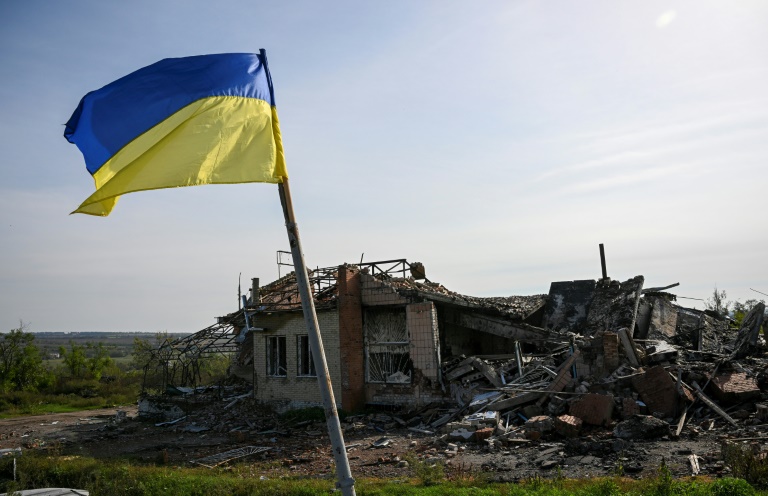
Ukraine said Saturday its forces had begun moving into the key eastern town of Lyman, located in one of the four Ukrainian regions that Russia annexed, with President Volodymyr Zelensky pledging more areas would follow within the week.

The latest development — a feature of Kyiv’s weeks-long counter-offensive against Moscow’s invasion — comes as Germany’s defence minister made a surprise visit to Ukraine, but also amid accusations Russia killed 24 civilians in the eastern Kharkiv region.

The recapture of Lyman — which Moscow’s forces pummelled for weeks to control this spring — would mark the first Ukrainian military victory in territory that the Kremlin has claimed as its own and has vowed to defend by all possible means.

Ukraine’s defence ministry announced its forces were “entering” Lyman in the eastern Donetsk region after the army said it had “encircled” several thousand Russian troops near the town.

The ministry posted a video of soldiers holding up a yellow and blue Ukrainian flag near a sign with the town’s name.

“Throughout this week, more Ukrainian flags have been raised in the Donbas,” Zelensky said in his evening address. “There will be even more in a week.”

Shortly after Ukraine’s announcement on Lyman, Russia’s defence ministry said it had “withdrawn” troops from the town “to more favourable lines”.

With Russian losses mounting, experts have warned that President Vladimir Putin could turn to nuclear weapons to defend territory — an option floated by a Putin ally.

Chechen leader Ramzan Kadyrov said Russia should consider using low-yield nuclear weapons after Moscow’s troops were forced out of a Lyman.

“In my personal opinion, more drastic measures should be taken, up to the declaration of martial law in the border areas and use of low-yield nuclear weapons,” Kadyrov said on his Telegram channel.

Kadyrov governs Russia’s Muslim-majority Chechnya Republic with an iron fist.

The developments came a day after Putin staged a grand Kremlin ceremony celebrating the annexation of the four Ukrainian territories.

In a call with Ukrainian Defense Minister Oleksii Reznikov, Pentagon chief Lloyd Austin condemned what he called the “sham referenda”, according to a readout from his spokesman Saturday, and reiterated “the US will never recognize these illegal and illegitimate attempts at annexation.”

The four territories create a crucial land corridor between Russia and the Crimean Peninsula, also annexed by Moscow, in 2014.

Together the five regions make up around 20 percent of Ukraine, where Kyiv in recent weeks has been clawing back territory.

Elsewhere in the south Saturday, German Defence Minister Christine Lambrecht visited the port city of Odessa.

Kyiv has been urging her country to send battle tanks to aid in its counter-attack, but the German government has so far refused.

– Civilians gunned down –

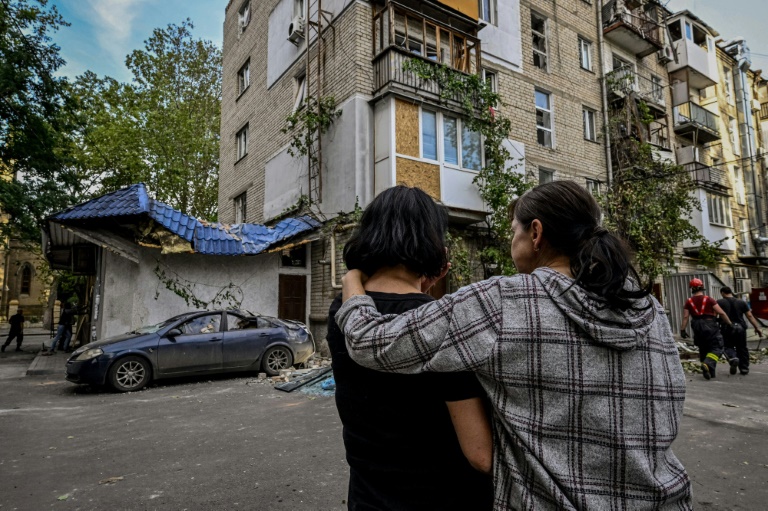
Also on Saturday, Ukrainian officials accused Russia of killing 24 civilians, including 13 children, in an attack on a road convoy near a recently recaptured town in Kharkiv.

Ukrainian troops on Friday had shown AFP reporters a group of vehicles riddled with bullet holes and several corpses in civilian clothes, a short distance east of the recently recaptured town of Kupiansk.

A Ukrainian official said the death toll of a Russian attack on a separate civilian convoy near the city of Zaporizhzhia on Friday had risen to 30 civilians and one police officer killed.

Kyiv also called for the immediate release of the chief of the Moscow-held Zaporizhzhia nuclear power plant, condemning his “illegal detention” by the Russians.

Ihor Murashov was leaving the plant Friday when he was detained and “driven in an unknown direction” while blindfolded, Ukraine’s nuclear agency Energoatom said.

Zaporizhzhia — Europe’s largest nuclear energy facility — has been at the centre of tensions with Moscow and Kyiv accusing each other of strikes on and near the plant, raising fears of an atomic disaster.

– ‘Illegitimate’ annexation –

Following Friday’s annexation, Washington announced “severe” new sanctions against Russian officials and the defence industry, and said G7 allies support imposing “costs” on any nation backing annexation.

Zelensky urged the US-led military alliance NATO to grant his country fast-track membership.

He also vowed never to hold talks with Russia as long as Putin was in power.

NATO chief Jens Stoltenberg slammed the annexation as “illegal and illegitimate” but remained non-committal after Ukraine said it was applying to join the Western alliance.

Turkey said Saturday Russia’s annexation was a “grave violation of the established principles of international law”.

Despite Putin’s warnings prior to the annexation that he could use nuclear weapons to defend the captured territories, Ukraine’s Foreign Minister Dmytro Kuleba said Kyiv would “continue liberating our land and our people”.

Kuleba also said Ukraine brought the annexations to the International Court of Justice and urged the Hague-based court to hear the case “as soon as possible”.

burs/pvh/bfm/mlm

Ukraine forces entering key town in Russia-annexed region

Ukraine said Saturday its forces were entering the key eastern town of Lyman, located in one of the four Ukrainian regions that Russia annexed despite international condemnation.

The recapture of Lyman — which Moscow’s forces pummelled for weeks to control this spring — would mark the first Ukrainian military victory in territory that the Kremlin has claimed as its own and has vowed to defend by all possible means.

Ukraine’s defence ministry announced its forces were “entering” Lyman in the eastern Donetsk region after Kyiv’s army said it had “encircled” several thousand Russian troops near the town.

The ministry posted a video of soldiers holding up a yellow and blue Ukrainian flag near a sign with the town’s name.

Shortly after Ukraine’s announcement, Russia’s defence ministry said it had “withdrawn” troops from Lyman “to more favourable lines”.

Chechen leader Ramzan Kadyrov said Russia should consider using low-yield nuclear weapons after Moscow’s troops were forced out of a Lyman.

“In my personal opinion, more drastic measures should be taken, up to the declaration of martial law in the border areas and use of low-yield nuclear weapons,” Kadyrov said on his Telegram channel.

Kadyrov is in charge of Russia’s Muslim-majority Chechnya Republic which he governs with an iron fist.

The developments came a day after Russian President Vladimir Putin staged a grand ceremony in the Kremlin to celebrate the annexations of four Ukrainian territories.

“I want to say this to the Kyiv regime and its masters in the West: People living in Lugansk, Donetsk, Kherson and Zaporizhzhia are becoming our citizens forever,” Putin said.

US President Joe Biden condemned Friday’s ceremony in Moscow as a “sham routine” and pledged to continue backing Kyiv.

The four annexed territories create a crucial land corridor between Russia and the Crimean Peninsula, annexed by Moscow in 2014.

Together, the five regions make up around 20 percent of Ukraine, where Kyiv in recent weeks has been clawing back territory.

– Civilians gunned down –

On Saturday, Ukrainian officials accused Russia of killing 24 civilians, including 13 children, in an attack on a road convoy near a recently recaptured town in the eastern Kharkiv region.

Ukrainian troops on Friday had shown AFP reporters a group of vehicles riddled with bullet holes and several corpses in civilian clothes, a short distance east of the recently recaptured town of Kupiansk.

A Ukrainian official said the death toll of a Russian attack on a separate civilian convoy near the city of Zaporizhzhia on Friday had risen to 30 civilians and one police officer killed.

Kyiv also called for the immediate release of the chief of the Moscow-held Zaporizhzhia nuclear power plant, condemning his “illegal detention” by the Russians.

Ihor Murashov was leaving the plant Friday when he was detained and “driven in an unknown direction” while blindfolded, Ukraine’s nuclear agency Energoatom said. 

Zaporizhzhia — Europe’s largest nuclear energy facility — has been at the centre of tensions in recent weeks after Moscow and Kyiv accused each other of strikes on and near the plant, raising fears of an atomic disaster.

– ‘Illegitimate’ annexation –

Following Friday’s annexation, Washington announced “severe” new sanctions against Russian officials and the defence industry, and said G7 allies support imposing “costs” on any nation that backs the annexation.

Ukrainian President Volodymyr Zelensky urged the US-led military alliance NATO to grant his country fast-track membership.

He also vowed never to hold talks with Russia as long as Putin was in power.

NATO chief Jens Stoltenberg slammed the annexation as “illegal and illegitimate” but remained non-committal after Ukraine said it was applying to join the Western alliance.

Turkey said Saturday Russia’s annexation was a “grave violation of the established principles of international law”.

Despite warnings from Putin prior to the annexation that he could use nuclear weapons to defend the captured territories, Ukraine’s Foreign Minister Dmytro Kuleba said Kyiv would “continue liberating our land and our people”.

Kuleba also said Ukraine brought the annexations to the International Court of Justice and urged the Hague-based court to hear the case “as soon as possible”.

US National Security Advisor Jake Sullivan said Friday that Washington would announce an “immediate” new weapons shipment for Kyiv next week.

Sullivan also said that, while there is a “risk” of Putin using nuclear weapons, there was no indication he would do so imminently. 

burs/pvh/ah

Rescue efforts continue as Florida takes stock of Hurricane Ian devastation

Shocked Florida communities counted their dead Saturday as the full scale of the devastation came into focus, two days after Hurricane Ian tore into the coastline as one of the most powerful storms ever to hit the United States.

Rescuers were still searching for survivors in flooded neighborhoods and along the state’s southwest coast, where homes, restaurants and businesses were ripped apart as Ian roared ashore as a powerful Category 4 hurricane on Wednesday.

The death toll climbed to 24 on Saturday, according to the Florida Medical Examiners Commission, with some US media reporting it could be three times that. 

Sixteen migrants also remain missing from a boat that sank during the hurricane on Wednesday, according to the US Coast Guard. Two people were found dead and nine others rescued, including four Cubans who swam to shore in the Florida Keys.

More than 1.2 million customers remained without power in Florida Saturday, hampering efforts by those who evacuated to return to their homes to take stock of what they lost. 

“It’s just flipped upside down, soaking wet, full of mud,” resident Pete Belinda said of the home he and his wife share on the lower floor of their daughter’s house in Fort Myers Beach, a town on the Gulf of Mexico coast which took the brunt of the storm.

Ian passed over Florida and into the Atlantic Ocean before making US landfall again, this time on the South Carolina coast on Friday as a Category 1 hurricane, with maximum sustained winds of 85 miles (140 kilometers) per hour.

It was later downgraded to a post-tropical cyclone, and is set to dissipate over Virginia later Saturday.

More than 320,000 people remained without power across North and South Carolina and Virginia, the tracking website poweroutage.us said Saturday.

“We’re just beginning to see the scale of the destruction” in Florida, US President Joe Biden said Friday.

“It’s likely to rank among the worst in the nation’s history,” he said of Ian.

With damage estimates running into the tens of billions of dollars, Biden said it’s “going to take months, years to rebuild.”

“It’s not just a crisis for Florida,” he said. “This is an American crisis.”

CoreLogic, a firm that specializes in property analysis, said wind-related losses for residential and commercial properties in Florida could cost insurers up to $32 billion, while flooding losses could reach $15 billion.

“This is the costliest Florida storm since Hurricane Andrew made landfall in 1992,” CoreLogic’s Tom Larsen said.

– Rescues continue – 

On Friday, the Coast Guard said it had made 117 rescues using boats and helicopters of people trapped in flooded homes.

Governor Ron DeSantis said hundreds of other rescue personnel were going door-to-door “up and down the coastline.”

Many Floridians evacuated ahead of the storm, but thousands chose to shelter in place and ride it out.

Two hard-hit barrier islands near Fort Myers — Pine Island and Sanibel Island — were cut off after the storm damaged causeways to the mainland.

Aerial photo and video show breathtaking destruction in Sanibel and elsewhere.

In Fort Myers Beach, a recreational boat called Crackerjack sat atop a pile of debris like an abandoned toy. A trailer park was blasted away to almost nothing.

A handful of restaurants and bars reopened in Fort Myers, giving an illusion of normalcy amid downed trees and shattered storefronts.

Before pummeling Florida, Ian plunged all of Cuba into darkness after downing the island’s power network.

Electricity was gradually returning, but many homes remain without power.

Human-induced climate change is resulting in more severe weather events across the globe, scientists say — including with Ian.

According to a rapid and preliminary analysis, human-caused climate change increased the extreme rain that Ian unleashed by over 10 percent, US scientists said.

Rescue efforts continue as Florida takes stock of Hurricane Ian devastation

Shocked Florida communities counted their dead Saturday as the full scale of the devastation came into focus, two days after Hurricane Ian tore into the coastline as one of the most powerful storms ever to hit the United States.

Rescuers were still searching for survivors in flooded neighborhoods and along the state’s southwest coast, where homes, restaurants and businesses were ripped apart as Ian roared ashore as a powerful Category 4 hurricane on Wednesday.

The death toll climbed to 24 on Saturday, according to the Florida Medical Examiners Commission, with some US media reporting it could be three times that. 

Sixteen migrants also remain missing from a boat that sank during the hurricane on Wednesday, according to the US Coast Guard. Two people were found dead and nine others rescued, including four Cubans who swam to shore in the Florida Keys.

More than 1.2 million customers remained without power in Florida Saturday, hampering efforts by those who evacuated to return to their homes to take stock of what they lost. 

“It’s just flipped upside down, soaking wet, full of mud,” resident Pete Belinda said of the home he and his wife share on the lower floor of their daughter’s house in Fort Myers Beach, a town on the Gulf of Mexico coast which took the brunt of the storm.

Ian passed over Florida and into the Atlantic Ocean before making US landfall again, this time on the South Carolina coast on Friday as a Category 1 hurricane, with maximum sustained winds of 85 miles (140 kilometers) per hour.

It was later downgraded to a post-tropical cyclone, and is set to dissipate over Virginia later Saturday.

More than 320,000 people remained without power across North and South Carolina and Virginia, the tracking website poweroutage.us said Saturday.

“We’re just beginning to see the scale of the destruction” in Florida, US President Joe Biden said Friday.

“It’s likely to rank among the worst in the nation’s history,” he said of Ian.

With damage estimates running into the tens of billions of dollars, Biden said it’s “going to take months, years to rebuild.”

“It’s not just a crisis for Florida,” he said. “This is an American crisis.”

CoreLogic, a firm that specializes in property analysis, said wind-related losses for residential and commercial properties in Florida could cost insurers up to $32 billion, while flooding losses could reach $15 billion.

“This is the costliest Florida storm since Hurricane Andrew made landfall in 1992,” CoreLogic’s Tom Larsen said.

– Rescues continue – 

On Friday, the Coast Guard said it had made 117 rescues using boats and helicopters of people trapped in flooded homes.

Governor Ron DeSantis said hundreds of other rescue personnel were going door-to-door “up and down the coastline.”

Many Floridians evacuated ahead of the storm, but thousands chose to shelter in place and ride it out.

Two hard-hit barrier islands near Fort Myers — Pine Island and Sanibel Island — were cut off after the storm damaged causeways to the mainland.

Aerial photo and video show breathtaking destruction in Sanibel and elsewhere.

In Fort Myers Beach, a recreational boat called Crackerjack sat atop a pile of debris like an abandoned toy. A trailer park was blasted away to almost nothing.

A handful of restaurants and bars reopened in Fort Myers, giving an illusion of normalcy amid downed trees and shattered storefronts.

Before pummeling Florida, Ian plunged all of Cuba into darkness after downing the island’s power network.

Electricity was gradually returning, but many homes remain without power.

Human-induced climate change is resulting in more severe weather events across the globe, scientists say — including with Ian.

According to a rapid and preliminary analysis, human-caused climate change increased the extreme rain that Ian unleashed by over 10 percent, US scientists said.

Close Bitnami banner
Bitnami