AFP

Asian markets drop again but sterling holds up after recovery

Asian markets sank Friday after another devastating day on US and European trading floors, with inflation continuing to soar and central bankers getting increasingly hawkish in their attempts to bring prices under control.

Sterling, however, managed to hold gains after clawing back more of the huge losses suffered at the start of the week owing to a tax-cutting mini-budget that analysts warned could cause even more pain to the already fragile UK economy.

The pound’s bounce — from a record low of $1.0350 Monday to above $1.11 Friday — came after the Bank of England pledged $71 billion of support to shattered financial markets, fearing that several pension funds could go under.

Britain’s beleaguered currency was given an extra boost by news Thursday that the budget watchdog will provide costings of new Finance Minister Kwasi Kwarteng’s fiscal plan on  October 7, two weeks earlier than initially announced.

“This has helped alleviate some fears within markets given the initial optics of an uncosted large fiscal package,” said National Australia Bank’s Tapas Strickland.

Markets remain concerned about the UK economy and the impact that borrowing tens of billions of dollars will have on interest rates, with observers warning that the Bank of England could announce a 1.5 percentage point hike at its next meeting in November.

Sean Callow, at Westpac Banking Corp, said the pound’s gains this week were “a reminder that currencies are driven by a myriad of factors — it’s clearly not due to any improvement in the outlook for the UK”.

The bank’s cash injection meant it had to put on hold its plan to tighten monetary policy as part of a global effort to fight decades-high inflation.

– Russia worries –

And in a sign of the long road ahead for finance chiefs — and the dour outlook for stocks — data out of several countries including Germany and Belgium this week showed that prices are still rising about 10 percent year-on-year.

In the United States, Federal Reserve officials again reiterated their intention to ramp up rates until they have tamed inflation, even if that means plunging the world’s top economy into recession.

And the case for a fourth successive 0.75 percentage point lift was strengthened by news that first-time unemployment benefit claims fell below 200,000 for the first time since May.

All three main indexes on Wall Street finished deep in the red, with the S&P 500 ending at its lowest level since November 2020.

And Asia picked up the baton.

Hong Kong and Shanghai dropped as data showed China’s manufacturing and services sectors struggled again in September from Covid lockdowns in parts of the country that have battered the world’s number-two economy.

There was also little reaction to news that Beijing would allow some cities to reduce mortgage rates for first-home purchases as it tries to support the property market.

Tokyo, Sydney, Seoul, Singapore, Taipei, Wellington, Manila and Jakarta were also off.

“Risky assets don’t stand a chance of a meaningful rally if the economy continues to show resilience while inflation continues to be significantly above the Fed’s Funds rate,” said OANDA’s Edward Moya.

Market sentiment was also being eroded by rising fears about developments in the Ukraine war, as Russia prepares to annex four occupied regions of its neighbour Friday, with President Vladimir Putin threatening to use nuclear weapons to defend the territories.

– Key figures around 0300 GMT –

Tokyo – Nikkei 225: DOWN 1.7 percent at 25,979.75 (break)

Hong Kong – Hang Seng Index: DOWN 0.2 percent at 17,132.81

Shanghai – Composite: DOWN 0.4 percent at 3,029.26

Pound/dollar: DOWN at $1.1113 from $1.1116 on Thursday

Euro/dollar: DOWN at $0.9807 from $0.9818

Euro/pound: DOWN at 88.27 pence from 88.28 pence

Dollar/yen: UP at 144.70 yen from 144.42 yen

West Texas Intermediate: DOWN 0.1 percent at $81.14 per barrel

Brent North Sea crude: DOWN 0.3 percent at $88.23 per barrel

New York – Dow: DOWN 1.5 percent at 29,225.61 (close)

London – FTSE 100: DOWN 1.8 percent at 6,881.59 (close) 

Asian markets drop again but sterling holds up after recovery

Asian markets sank Friday after another devastating day on US and European trading floors, with inflation continuing to soar and central bankers getting increasingly hawkish in their attempts to bring prices under control.

Sterling, however, managed to hold gains after clawing back more of the huge losses suffered at the start of the week owing to a tax-cutting mini-budget that analysts warned could cause even more pain to the already fragile UK economy.

The pound’s bounce — from a record low of $1.0350 Monday to above $1.11 Friday — came after the Bank of England pledged $71 billion of support to shattered financial markets, fearing that several pension funds could go under.

Britain’s beleaguered currency was given an extra boost by news Thursday that the budget watchdog will provide costings of new Finance Minister Kwasi Kwarteng’s fiscal plan on  October 7, two weeks earlier than initially announced.

“This has helped alleviate some fears within markets given the initial optics of an uncosted large fiscal package,” said National Australia Bank’s Tapas Strickland.

Markets remain concerned about the UK economy and the impact that borrowing tens of billions of dollars will have on interest rates, with observers warning that the Bank of England could announce a 1.5 percentage point hike at its next meeting in November.

Sean Callow, at Westpac Banking Corp, said the pound’s gains this week were “a reminder that currencies are driven by a myriad of factors — it’s clearly not due to any improvement in the outlook for the UK”.

The bank’s cash injection meant it had to put on hold its plan to tighten monetary policy as part of a global effort to fight decades-high inflation.

– Russia worries –

And in a sign of the long road ahead for finance chiefs — and the dour outlook for stocks — data out of several countries including Germany and Belgium this week showed that prices are still rising about 10 percent year-on-year.

In the United States, Federal Reserve officials again reiterated their intention to ramp up rates until they have tamed inflation, even if that means plunging the world’s top economy into recession.

And the case for a fourth successive 0.75 percentage point lift was strengthened by news that first-time unemployment benefit claims fell below 200,000 for the first time since May.

All three main indexes on Wall Street finished deep in the red, with the S&P 500 ending at its lowest level since November 2020.

And Asia picked up the baton.

Hong Kong and Shanghai dropped as data showed China’s manufacturing and services sectors struggled again in September from Covid lockdowns in parts of the country that have battered the world’s number-two economy.

There was also little reaction to news that Beijing would allow some cities to reduce mortgage rates for first-home purchases as it tries to support the property market.

Tokyo, Sydney, Seoul, Singapore, Taipei, Wellington, Manila and Jakarta were also off.

“Risky assets don’t stand a chance of a meaningful rally if the economy continues to show resilience while inflation continues to be significantly above the Fed’s Funds rate,” said OANDA’s Edward Moya.

Market sentiment was also being eroded by rising fears about developments in the Ukraine war, as Russia prepares to annex four occupied regions of its neighbour Friday, with President Vladimir Putin threatening to use nuclear weapons to defend the territories.

– Key figures around 0300 GMT –

Tokyo – Nikkei 225: DOWN 1.7 percent at 25,979.75 (break)

Hong Kong – Hang Seng Index: DOWN 0.2 percent at 17,132.81

Shanghai – Composite: DOWN 0.4 percent at 3,029.26

Pound/dollar: DOWN at $1.1113 from $1.1116 on Thursday

Euro/dollar: DOWN at $0.9807 from $0.9818

Euro/pound: DOWN at 88.27 pence from 88.28 pence

Dollar/yen: UP at 144.70 yen from 144.42 yen

West Texas Intermediate: DOWN 0.1 percent at $81.14 per barrel

Brent North Sea crude: DOWN 0.3 percent at $88.23 per barrel

New York – Dow: DOWN 1.5 percent at 29,225.61 (close)

London – FTSE 100: DOWN 1.8 percent at 6,881.59 (close) 

Kremlin to annex more Ukraine territories at ceremony Friday

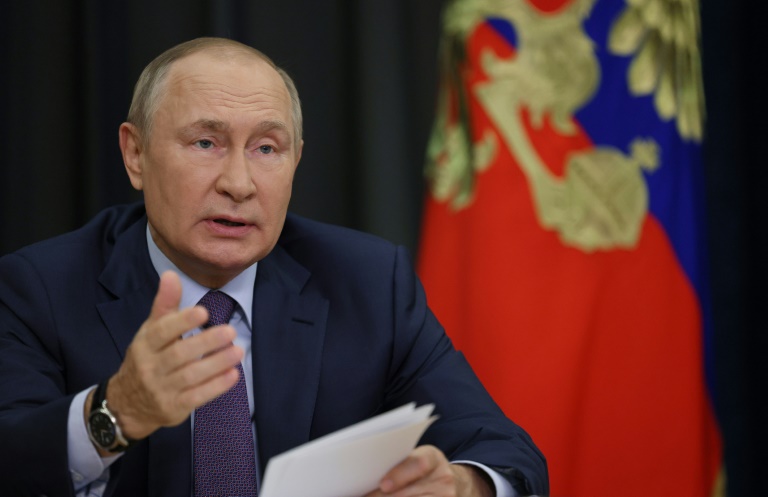
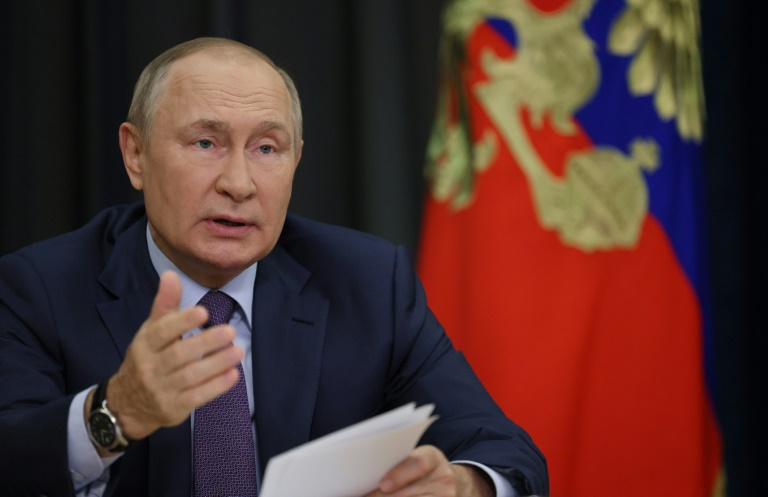
Russia will annex four occupied regions of Ukraine at a ceremony at the Kremlin on Friday, Moscow said, after President Vladimir Putin threatened he could use nuclear weapons to defend the territories.

The Russian leader is expected to deliver a major speech at the event, following referendums held last week in which four Ukrainian regions voted in a landslide to join Russia, but which were dismissed as a sham by the West.

In a presidential decree issued Thursday evening, Putin said he had recognised the independence of Zaporizhzhia and Kherson, paving the way for Moscow to claim the territories.

Russia recognised the independence of the two other regions it is preparing to annex — Donetsk and Lugansk — at the end of February.

“I order the recognition of the state sovereignty and independence” of the regions of Zaporizhzhia and Kherson, located in southern Ukraine, Putin said in the decrees.

Putin’s nuclear threats have not deterred a sweeping Ukrainian counter-offensive, which has been pushing back Russian troops in the east and is on the doorstep of the Donetsk town of Lyman, which Moscow’s forces pummelled for weeks before capturing it this summer.

Putin has blamed the conflict in Ukraine on the West and said simmering conflicts in the former Soviet Union were the result of its collapse.

The rhetoric built on his now-famous phrase that the fall of the USSR was a tragedy, and he has recently suggested Moscow should extend again its influence over the former Soviet region.

– US rejects claims –

The Kremlin-installed leaders of the four regions that pleaded to Putin for annexation this week were gathered in the Russian capital on Thursday, ahead of the ceremony.

Their nearly simultaneous requests came after they claimed residents had unanimously backed the move in hastily organised referendums that were dismissed by Kyiv and the West as illegal, fraudulent and void.

Ukraine said the only appropriate response from the West was to hit Russia with more sanctions and to supply Ukrainian forces with more weapons so they could keep reclaiming territory.

US President Joe Biden said Thursday that “the United States will never, never, never” recognise Russia’s claims on Ukraine’s sovereign territory.

UN Secretary-General Antonio Guterres also rejected the annexation plans, condemning them as “a dangerous escalation”.

“It must not be accepted,” he said.

The UN Security Council will vote at 1900 GMT on Friday on a resolution condemning the referendums, according to France, the council’s current president.

But the resolution — drafted by the United States and Albania and whose exact contents are not yet public — has no chance of passing due to Moscow’s veto power, though it can be presented to the General Assembly after the vote.

Ukraine’s President Volodymyr Zelensky called an “urgent” meeting of his national security council for Friday, his spokesman said, after the Kremlin announced the timing of the annexation ceremony.

The four territories create a crucial land corridor between Russia and the Crimean peninsula, annexed by Moscow in 2014.

Together, all five make up around 20 percent of Ukraine, whose forces in recent weeks have been clawing back ground.

In the south, Ukrainian forces have been wresting back territory near Kherson, and residents of recently recaptured villages described the months spent under Russian occupation.

“They robbed and humiliated us,” 72-year-old Maria Syzhuk said in the village of Vysokopillya, over the dull thuds of artillery from both sides — mostly in the distance, but sometimes a little closer.

Ukrainian troops in particular have been progressing in the eastern Kharkiv region and recapturing territory in Donetsk. Military observers say Kyiv’s forces are close to capturing Lyman. 

–  ‘I don’t want to kill people’ – 

Moscow’s forces are striking back along the entire frontline and officials in Kyiv said Thursday that Russian bombardment had killed three in the Dnipropetrovsk region, killed five in Donetsk and wounded seven in the Kharkiv region.

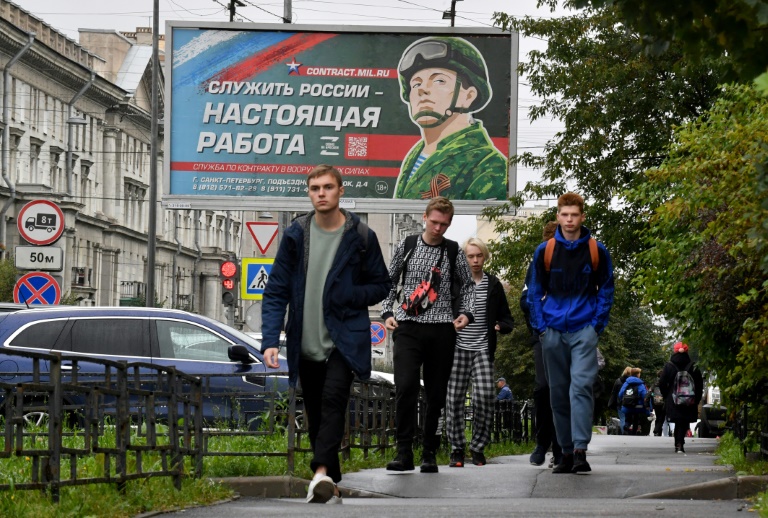
Along with threats to use nuclear weapons, Putin announced a mobilisation of hundreds of thousands of Russians to bolster Moscow’s army in Ukraine, sparking demonstrations and an exodus of men abroad.

Putin on Thursday called for mistakes with the draft to be “corrected”, as discontent grows over the often chaotic conscription push. 

Finland’s Vaalimaa crossing has been flooded with new arrivals recently. Helsinki announced on Thursday it would close its border from midnight to Russians holding European tourism visas for the Schengen zone.

“I just made it through, I don’t know how the others will get through,” Andrei Stepanov, a 49-year-old Russian, told AFP.

On a bright morning in Mongolia’s capital Ulaanbaatar, a young Russian fleeing Moscow’s first military call-up since World War II had a stark answer for why he had left: “I don’t want to kill people.”

“It was very difficult to leave everything behind — home, motherland, my relatives — but it’s better than killing people,” the man in his 20s told AFP, speaking on condition of anonymity.

Belarus was preparing to host 20,000 Russian soldiers, converting warehouses, hangars and abandoned farms into military accommodations, Ukraine’s ministry of defence said on Thursday.

To bolster Ukraine, the United States pledged more money on Thursday, with the Senate approving $12 billion in new economic and military aid as part of a stopgap budget extension.

The European Commission has proposed fresh sanctions targeting Russian exports worth seven billion euros, an oil price cap, an expanded travel blacklist and asset freezes.

Legal marijuana, but Uruguayans still prefer black market

Uruguay was a pioneer in the legalization of recreational cannabis use, a move that helped to push many drug traffickers out of the domestic market.

But a bland and insufficient state supply has meant most consumers still prefer the diversity of the black market.

In 2013, Uruguay became the first country in the world to legalize recreational marijuana use — which came into effect four years later — even permitting its sale in pharmacies.

There are three legal ways for registered users to get hold of marijuana: purchasing it at pharmacies, through home growing for personal use, and by belonging to an official cannabis-producing club.

The most sought after legal method is membership of one of the 249 consumer clubs, which offer a greater variety to their 7,166 members than pharmacies do.

But many clubs have long waiting lists to join as they are limited by law to between 15 and 45 members.

Pulla, the treasurer and technical manager of a cannabis club in Montevideo — who uses a nickname to avoid falling foul of the ban on promoting cannabis use — explained that the waiting list “is an indicator that demand is not satisfied.”

“Many more people want to access the legal market who still cannot,” he said.

There are just over 14,000 registered home growers and another 49,600 people are registered to purchase marijuana at one of the country’s 28 approved pharmacies at around $10 for five grams — below the black market rate.

According to a study by the local IRCCA institute that regulates cannabis, only 27 percent of Uruguayan consumers buy their drugs through approved channels, a figure that reaches 39 percent when taking into account sharing with friends.

– ‘Main objectives met’ –

Joaquin, a cannabis user who purchases on the black market and goes by an alias, explained that one problem with the legal supply is the need to make an appointment at the pharmacy.

The black market is quicker and simpler. You “have a contact, talk to him and in the day, or the next day, coordinate and buy,” he said.

Buying on the black market does not necessarily mean getting involved with dangerous drug traffickers, though.

Organized drug traffickers selling “Paraguayans”, a cheaper quality marijuana imported from nearby Paraguay, represent just 30 percent of the illegal market, says Marcos Baudean, a professor at ORT University and researcher at the Monitor Cannabis project.

“There are many more domestic growers who are simply not registered” but have already overtaken trafficking networks in the sale of cannabis. 

In that respect, “the main objective has been met: people can consume cannabis without needing to be linked with criminal organizations,” said Daniel Radio, secretary general of the National Drug Board.

The perception of the illegal market has also changed.

Agus, 28 and using an alias, said she originally registered to buy cannabis from pharmacies but now acquires it on the black market while growing her own plants despite not being registered.

“I don’t see it as the black market,” she said. “It has good prices for what is sold and you don’t feel like you’re making use of drug trafficking.”

There is “a friend or an acquaintance who passes you a contact from someone who has flowers and sells them.”

Some people simply prefer to avoid registering, even though the information is used only for the study of consumption. 

– Cannabis tourism ‘potential’ –

“The regulation of cannabis has been more effective than repression in terms of the blow to drug trafficking,” explained Mercedes Ponce de Leon, director of the Cannabis Business Hub, a platform charged with developing the drug’s ecosystem in the country.

However, Radio acknowledges that the black market preference of some users demonstrates limits to the current system.

Radio said users tend to be after a higher percentage of THC — tetrahydrocannabinol, the main psychoactive substance in the drug, which is limited to 10 percent in the pharmacy product — or more variety such as variants that produce different psychoactive effects.

“That conspires against the effectiveness of the system,” said Radio.

The government now plans to increase the THC percentage and offer greater variety in pharmacies by the end of the year to attract more recreational consumers to the formal market. 

Legalization, introduced by leftist guerrilla-turned president Jose Mujica, in power from 2010-15, created an industry of medicinal cannabis exports that have brought more than $20 million to Uruguay’s economy since 2019.

Uruguay sells mainly to the United States, Switzerland, Germany, Portugal, Israel, Argentina and Brazil.

Although current center-right President Luis Lacalle Pou insists the legalization move was a mistake, the left-wing opposition wants Uruguay to go even further.

Currently reserved for residents, they want the market to be opened up to tourists.

“It’s a simple formula: if tourism increases, spending increases, employment increases and investments increase. Models like that in California demonstrate the potential” for cannabis tourism, said Eduardo Antonini, an opposition politician and vice-president of the tourism commission in congress.

Other than Uruguay, 15 American states have legalized recreational marijuana use, as well as Canada.

Receding ice leaves Canada's polar bears at rising risk

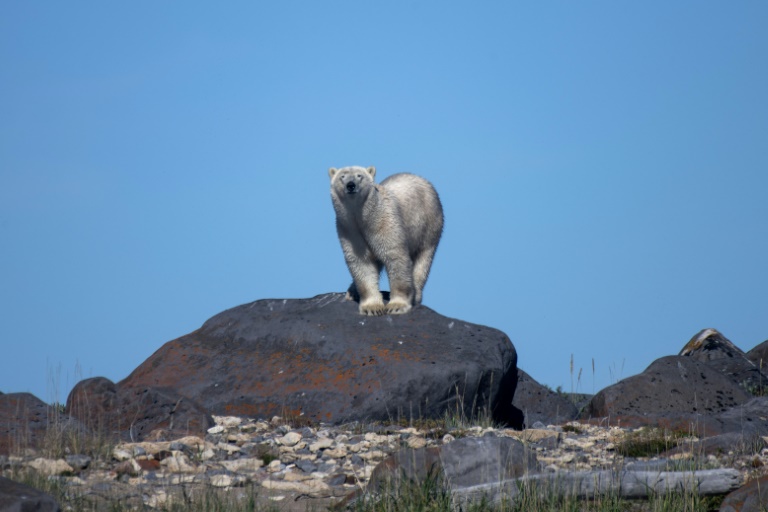
Sprawled on rocky ground far from sea ice, a lone Canadian polar bear sits under a dazzling sun, his white fur utterly useless as camouflage. 

It’s mid-summer on the shores of Hudson Bay and life for the enormous male has been moving in slow motion, far from the prey that keeps him alive: seals.

This is a critical time for the region’s polar bears.

Every year from late June when the bay ice disappears — shrinking until it dots the blue vastness like scattered confetti — they must move onto shore to begin a period of forced fasting.

But that period is lasting longer and longer as temperatures rise — putting them in danger’s way. 

Once on solid ground, the bears “typically have very few options for food,” explains Geoff York, a biologist with Polar Bear International (PBI).

York, an American, spends several weeks each year in Churchill, a small town on the edge of the Arctic in the northern Canadian province of Manitoba. There he follows the fortunes of the endangered animals.

This is one of the best spots from which to study life on Hudson Bay, though transportation generally requires either an all-terrain vehicle adapted to the rugged tundra, or an inflatable boat for navigating the bay’s waters. 

York invited an AFP team to join him on an expedition in early August.

Near the impressively large male bear lazing in the sun is a pile of fishbones — nowhere near enough to sustain this 11-foot (3.5-meter), 1,300-pound (600-kilo) beast.

“There could be a beluga whale carcass they might be able to find, (or a) naive seal near shore, but generally they’re just fasting,” York says.

“They lose nearly a kilogram of body weight every day that they’re on land.”

Climate warming is affecting the Arctic three times as fast as other parts of the world — even four times, according to some recent studies. So sea ice, the habitat of the polar bear, is gradually disappearing.

A report published two years ago in the journal Nature Climate Change suggested that this trend could lead to the near-extinction of these majestic animals: 1,200 of them were counted on the western shores of Hudson Bay in the 1980s. Today the best estimate is 800.

– Summer scarcity –

Each summer, sea ice begins melting earlier and earlier, while the first hard freeze of winter comes later and later. Climate change thus threatens the polar bears’ very cycle of life.

They have fewer opportunities to build up their reserves of fat and calories before the period of summer scarcity.

The polar bear — technically known as the Ursus maritimus — is a meticulous carnivore that feeds principally on the white fat that envelops and insulates a seal’s body.

But these days this superpredator of the Arctic sometimes has to feed on seaweed — as a mother and her baby were seen doing not far from the port of Churchill, the self-declared “Polar Bear Capital.”

If female bears go more than 117 days without adequate food, they struggle to nurse their young, said Steve Amstrup, an American who is PBI’s lead scientist. Males, he adds, can go 180 days.

As a result, births have declined, and it has become much rarer for a female to give birth to three cubs, once a common occurrence.

It is a whole ecosystem in decline, and one that 54-year-old York — with his short hair and rectangular glasses — knows by heart after spending more than 20 years roaming the Arctic, first for the ecology organization WWF and now for PBI.

During a capture in Alaska, a bear sunk its fangs into his leg. 

Another time, while entering what he thought was an abandoned den, he came nose-to-snout with a female. York, normally a quiet man, says he “yelled as loud as I ever have in my life.”

Today, these enormous beasts live a precarious existence.

“Here in Hudson Bay, in the western and southern parts, polar bears are spending up to a month longer on shore than their parents or grandparents did,” York says.

As their physical condition declines, he says, their tolerance for risk rises, and “that might bring them into interaction with people (which) can lead to conflict instead of co-existence.”

– Patrolling the town – 

Binoculars in hand, Ian Van Nest, a provincial conservation officer, keeps an eye out through the day on the rocks surrounding Churchill, where the bears like to hide.

In this town of 800 inhabitants, which is only accessible by air and train but not by any roads, the bears have begun frequenting the local dump, a source of easy — but potentially harmful — food for them.

They could be seen ripping open trash bags, eating plastic or getting their snouts trapped in food tins amid piles of burning waste.

Since then, the town has taken precautions: The dump is now guarded by cameras, fences and patrols.

Across Churchill, people leave cars and houses unlocked in case someone needs to find urgent shelter after an unpleasant encounter with this large land-based carnivore. 

Posted on walls around town are the emergency phone numbers to reach Van Nest or his colleagues. 

When they get an urgent call, they hop in their pickup truck armed with a rifle and a spray can of repellent, wearing protective flak jackets. 

Van Nest, who is bearded and in his 30s, takes the job seriously, given the rising number of polar bears in the area.

Sometimes they can be scared off with just “the horn on your vehicle,” he tells AFP. 

But other times “we might have to get on foot and grab our shotguns and cracker shells,” which issue an explosive sound designed to frighten the animal, “and head onto the rocks and pursue that bear.”

Some areas are watched more closely than others — notably around schools as children are arriving in the morning “to ensure that the kids are going to be safe.”

There have been some close calls, like the time in 2013 when a woman was grievously injured by a bear in front of her house, before a neighbor — clad in pajamas and slippers — ran out wielding only his snow shovel to scare the animal away.

Sometimes the animals have to be sedated, then winched up by a helicopter to be transported to the north, or kept in a cage until winter, when they can again feed on the bay.

Churchill’s only “prison” is inhabited entirely by bears, a hangar whose 28 cells can fill up in the autumn as the creatures maraud in mass around town while waiting for the ice to re-form in November. 

– Planet’s air conditioning –

The fate of the polar bear should alarm everyone, says Flavio Lehner, a climate scientist at Cornell University who was part of the expedition, because the Arctic is a good “barometer” of the planet’s health.

Since the 1980s, the ice pack in the bay has decreased by nearly 50 percent in summer, according to the US National Snow and Ice Data Center.

“We see the more — the faster — changes here, because it is warming particularly fast,” says Lehner, who is Swiss.

The region is essential to the health of the global climate because the Arctic, he says, effectively provides the planet’s “air conditioning.”

“There’s this important feedback mechanism of sea ice and snow in general,” he says, with frozen areas reflecting 80 percent of the sun’s rays, providing a cooling effect.

When the Arctic loses its capacity to reflect those rays, he said, there will be consequences for temperatures around the globe.

Thus, when sea ice melts, the much darker ocean’s surface absorbs 80 percent of the sun’s rays, accelerating the warming trend.

A few years ago, scientists feared that the Arctic’s summer ice pack was rapidly reaching a climatic “tipping point” and, above a certain temperature, would disappear for good.

But more recent studies show the phenomenon could be reversible, Lehner says.

“Should we ever be able to bring temperatures down again, sea ice will come back,” he says.

That said, the impact for now is pervasive. 

“In the Arctic, climate change is impacting all species,” says Jane Waterman, a biologist at the University of Manitoba. “Every single thing is being affected by climate change.”

Permafrost — defined as land that is permanently frozen for two successive years — has begun to melt, and in Churchill the very contours of the land have shifted, damaging rail lines and the habitat of wild species. 

The entire food chain is under threat, with some non-native species, like certain foxes and wolves, appearing for the first time, endangering Arctic species. 

Nothing is safe, says Waterman, from the tiniest bacteria to enormous whales. 

– A summer refuge –

That includes the beluga whales that migrate each summer — by the tens of thousands — from Arctic waters to the refuge of the Hudson Bay. 

These small white whales are often spotted in the bay’s vast blue waters.  

Swimming in small groups, they like to follow the boats of scientists who have come to study them, seemingly taking pleasure in showing off their large round heads and spouting just feet from captivated observers.

The smallest ones, gray in color, cling to their mothers’ backs in this estuary, with its relatively warm waters, where they find protection from killer whales and plentiful nourishment.

But there has been “a shift in prey availability for beluga whales in some areas of the Arctic,” explains Valeria Vergara, an Argentine researcher who has spent her life studying the beluga.

As the ice cover shrinks, “there’s less under the surface of the ice for the phytoplankton that in turn will feed the zooplankton that in turn will feed big fish,” says Vergara, who is with the Raincoast Conservation Foundation.

The beluga has to dive deeper to find food, and that uses up precious energy.

And another danger lurks: Some climate models suggest that as early as 2030, with the ice fast melting, boats will be able to navigate the Hudson Bay year-round.

Sound pollution is a major problem for the species — known as the “canary of the seas” — whose communication depends on the clicking and whistling sounds it makes. 

The beluga depends on sound-based communication to determine its location, find its way and to locate food, Vergara says. 

Thanks to a hydrophone on the “Beluga Boat” that Vergara uses, humans can monitor the “conversations” of whales far below the surface. 

Vergara, 53, describes their communications as “very complex,” and she can distinguish between the cries made by mother whales keeping in contact with their youngsters.

To the untrained ear, the sound is a cacophony, but clearly that of an animated community. Scientists wonder, however, how much longer such communities will last?

Far from the Arctic ice one lonely beluga became lost in the waters of France’s Seine river before dying in August. And in May a polar bear meandered its way deep into Canada’s south, shocking those who discovered it along the Saint Lawrence River.

Hurricane Ian wreaks havoc on Florida, regains steam in Atlantic

Hurricane Ian unleashed “historic” devastation in Florida, leaving a yet unknown number of dead in its wake, officials said Thursday, as the storm regrouped in the Atlantic on a path toward the Carolinas.

The storm, one of the most powerful ever to hit the United States, left hundreds of people in need of rescue, Florida Governor Ron DeSantis said, while warning it was still too early to get a clear picture of how many people had died.

“We absolutely expect to have mortality from this hurricane,” he said at a press conference Thursday evening.

President Joe Biden, after a briefing at FEMA emergency management headquarters in Washington, said “this could be the deadliest hurricane in Florida history.”

The numbers “are still unclear, but we’re hearing reports of what may be substantial loss of life,” he added.

DeSantis said concrete information about casualty numbers could be expected “in the coming days.” 

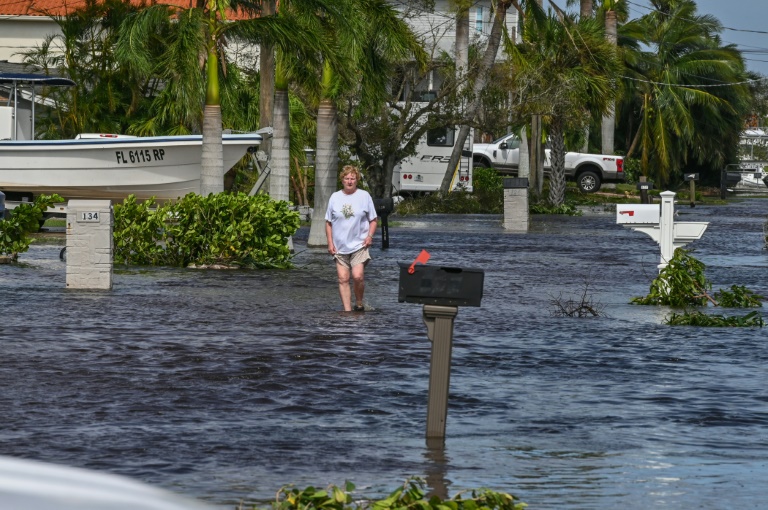
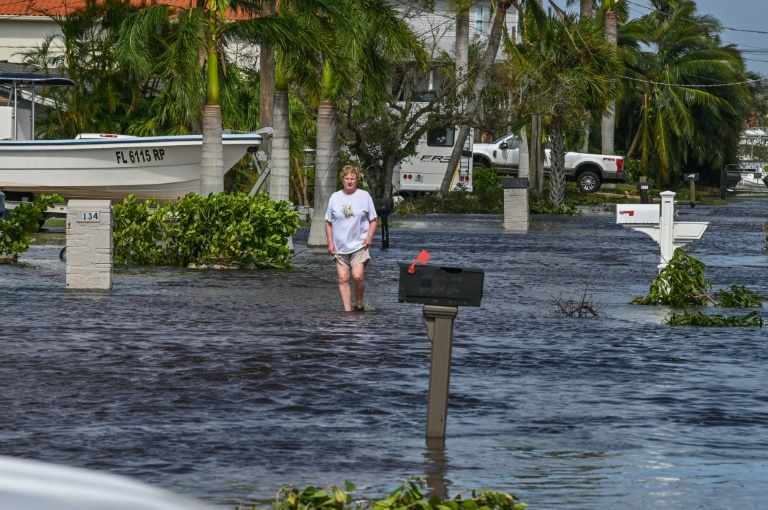
Fort Myers, where Ian made landfall as a powerful Category 4 hurricane on Wednesday, took much of the brunt of the storm, as streets became rivers and sea water poured into houses.

Dozens of boats moored in the marina were sunk while others were tossed on to downtown streets.

Trees were toppled by the howling winds of up to 150 miles per hour (240 kilometers per hour).

Earlier on Thursday, DeSantis described the destruction in the southwest part of the state as a “500-year flood event.”

“We’ve never seen storm surge of this magnitude,” he said.

– ‘Horrifying’ –

Tom Johnson, 54, of Fort Myers had a front row seat to the destruction from his apartment on the second floor of a two-story harbourside building.

“I was scared because I’ve never been through that,” Johnson told AFP. “It was just the most horrifying sounds with debris flying everywhere, doors flying off.”

His home was undamaged but one of his neighbors, Janelle Thil, 42, was not so lucky and had to ask other residents for help after her ground floor apartment began to flood.

“They got my dogs and then I jumped out of the window and swam,” Thil said.

When Thil returned to her apartment after the storm passed, she said she opened the door and “had to wait about five minutes for all the floodwaters to come out.”

“I loved my home,” she said. “But I’m alive and that’s what matters.”

According to DeSantis, the area was also dealing with a water main break, which officials were “working to trouble shoot.”

A US Coast Guard official said helicopter crews were plucking people from the rooftops of homes inundated by floodwaters.

Nine migrants had been rescued from a boat that sank during the hurricane on Wednesday, leaving 18 missing, the Coast Guard said. Among them were four Cubans who swam to shore in the Florida Keys.

– Ian regaining strength –

Ian was downgraded to a tropical storm overnight but the National Hurricane Center (NHC) said it regained Category 1 hurricane strength on Thursday afternoon and issued a hurricane warning for the entire coast of South Carolina and part of North Carolina.

Biden declared a “major disaster” in Florida, a move that frees up federal funding for storm relief.

“We’re continuing to take swift action to help the families of Florida,” he tweeted. “I want the people of Florida to know that we will be here at every step of the way.”

Much of Florida’s southwest coast was plunged into darkness after the storm wiped out power.

Tracking website poweroutage.us said 2.3 million homes and businesses remained without electricity in the so-called Sunshine State late Thursday.

Two barrier islands near Fort Myers, Pine Island and Sanibel Island, popular with vacationers, were essentially cut off when the storm damaged causeways to the mainland.

Sanibel Island got “hit with really biblical storm surge,” DeSantis said, and rescuers were using boats and helicopters to evacuate residents who rode out the storm.

Mandatory evacuation orders had been issued in many areas of Florida ahead of Ian, with several dozen shelters set up.

Airports stopped all commercial flights, and cruise ship companies delayed or canceled voyages.

Before pummeling Florida, Ian plunged all of Cuba into darkness Tuesday after downing the island’s power network.

At least two people died in Pinar del Rio province, state media in the country of more than 11 million reported.

Human activity has caused life-threatening climate change resulting in more severe weather events across the globe.

Hurricane Ian wreaks havoc on Florida, regains steam in Atlantic

Hurricane Ian unleashed “historic” devastation in Florida, leaving a yet unknown number of dead in its wake, officials said Thursday, as the storm regrouped in the Atlantic on a path toward the Carolinas.

The storm, one of the most powerful ever to hit the United States, left hundreds of people in need of rescue, Florida Governor Ron DeSantis said, while warning it was still too early to get a clear picture of how many people had died.

“We absolutely expect to have mortality from this hurricane,” he said at a press conference Thursday evening.

President Joe Biden, after a briefing at FEMA emergency management headquarters in Washington, said “this could be the deadliest hurricane in Florida history.”

The numbers “are still unclear, but we’re hearing reports of what may be substantial loss of life,” he added.

DeSantis said concrete information about casualty numbers could be expected “in the coming days.” 

Fort Myers, where Ian made landfall as a powerful Category 4 hurricane on Wednesday, took much of the brunt of the storm, as streets became rivers and sea water poured into houses.

Dozens of boats moored in the marina were sunk while others were tossed on to downtown streets.

Trees were toppled by the howling winds of up to 150 miles per hour (240 kilometers per hour).

Earlier on Thursday, DeSantis described the destruction in the southwest part of the state as a “500-year flood event.”

“We’ve never seen storm surge of this magnitude,” he said.

– ‘Horrifying’ –

Tom Johnson, 54, of Fort Myers had a front row seat to the destruction from his apartment on the second floor of a two-story harbourside building.

“I was scared because I’ve never been through that,” Johnson told AFP. “It was just the most horrifying sounds with debris flying everywhere, doors flying off.”

His home was undamaged but one of his neighbors, Janelle Thil, 42, was not so lucky and had to ask other residents for help after her ground floor apartment began to flood.

“They got my dogs and then I jumped out of the window and swam,” Thil said.

When Thil returned to her apartment after the storm passed, she said she opened the door and “had to wait about five minutes for all the floodwaters to come out.”

“I loved my home,” she said. “But I’m alive and that’s what matters.”

According to DeSantis, the area was also dealing with a water main break, which officials were “working to trouble shoot.”

A US Coast Guard official said helicopter crews were plucking people from the rooftops of homes inundated by floodwaters.

Nine migrants had been rescued from a boat that sank during the hurricane on Wednesday, leaving 18 missing, the Coast Guard said. Among them were four Cubans who swam to shore in the Florida Keys.

– Ian regaining strength –

Ian was downgraded to a tropical storm overnight but the National Hurricane Center (NHC) said it regained Category 1 hurricane strength on Thursday afternoon and issued a hurricane warning for the entire coast of South Carolina and part of North Carolina.

Biden declared a “major disaster” in Florida, a move that frees up federal funding for storm relief.

“We’re continuing to take swift action to help the families of Florida,” he tweeted. “I want the people of Florida to know that we will be here at every step of the way.”

Much of Florida’s southwest coast was plunged into darkness after the storm wiped out power.

Tracking website poweroutage.us said 2.3 million homes and businesses remained without electricity in the so-called Sunshine State late Thursday.

Two barrier islands near Fort Myers, Pine Island and Sanibel Island, popular with vacationers, were essentially cut off when the storm damaged causeways to the mainland.

Sanibel Island got “hit with really biblical storm surge,” DeSantis said, and rescuers were using boats and helicopters to evacuate residents who rode out the storm.

Mandatory evacuation orders had been issued in many areas of Florida ahead of Ian, with several dozen shelters set up.

Airports stopped all commercial flights, and cruise ship companies delayed or canceled voyages.

Before pummeling Florida, Ian plunged all of Cuba into darkness Tuesday after downing the island’s power network.

At least two people died in Pinar del Rio province, state media in the country of more than 11 million reported.

Human activity has caused life-threatening climate change resulting in more severe weather events across the globe.

Environmental bodies concerned by new UK government's climate comments

Initial comments by British Prime Minister Liz Truss’s conservative government have raised concerns about her climate policy in a country which is increasingly feeling the effects of global warming but is going through an unprecedented energy crisis.

Urged to act in the face of soaring energy prices, the new premier took office in early September and promptly announced a package of measures.

They included the acceleration of North Sea offshore oil and gas exploitation and the freezing of the moratorium on controversial gas fracking.

The UK had in 2019 called a halt to fracking — or hydraulic fracturing, used to release hydrocarbons locked deep underground — due to fears it could trigger earthquakes.

Truss has also refused to impose a windfall tax on oil companies, despite record profits they have been making in recent months.

For environmental campaigners, the introduction last week of a bill to amend or remove hundreds of environmental protection laws inherited from the European Union by the end of 2023 was the last straw.

“Nature is under attack from a raft of dangerous decisions by Government and we know people are furious at the new threats,” said Craig Bennett, chief executive of The Wildlife Trusts.

“Vital legal protections for wildlife are at risk, fossil fuel extraction is being favoured over renewables, and the government is going back on plans to reward farmers for managing land in a nature-friendly way.”

– Climate pioneer –

The months-long drought in parts of the UK, record high temperatures reached this summer and heat-induced fires have all brought home to many British people the future consequences of global warming.

The country is one of the pioneers in Europe in tackling climate change.

Britain became the first country to legally mandate reductions in greenhouse-gas emissions through its 2008 Climate Change Act.

It has also seen a rapid transformation in its energy model, with coal representing only three percent of energy consumed in 2020, compared to 20 percent in 2013.

At the COP26 climate conference last year in Scotland, former prime minister Boris Johnson promised to make the UK the Saudi Arabia of wind power and presented ambitious climate targets, including to phase out petrol and diesel vehicles.

Truss, who succeeded him, has never been perceived as particularly committed to the climate.

But her early decisions have confused even her own camp.

“The new government must not listen to siren calls to row back on environmental commitments when the solutions to the multiple crises we face, from climate to the cost of living, are complementary,” said Chris Skidmore, a Conservative member of parliament and former energy minister.

A cross-party group of pro-environment parliamentarians wrote to Truss in early September asking her to give a firm recommitment to the goal of reaching carbon neutrality.

After she became prime minister, Truss said she was “completely committed to achieving carbon neutrality by 2050”, but she also told parliament she had decided to “re-examine” this objective to ensure it was achieved in a way favourable to the economy and growth.

Doubts about the UK’s future climate policy have also been fuelled by Truss’s decision to appoint Jacob Rees-Mogg as her secretary of state for business, energy and industrial strategy.

– ‘Teetering on the brink’ –

An opponent of onshore wind power, Rees-Mogg has said he wants his constituents to have cheap energy “rather more than I would like them to have windmills”.

He has also warned against “climate alarmism” and recently accused Russian President Vladimir Putin of funding opponents of shale gas in the UK.

His comments have been branded a “a dangerous climate denial” by Ed Miliband, the main opposition Labour Party’s spokesperson on climate change and net zero.

“Putting someone who recently suggested ‘every last drop’ of oil should be extracted from the North Sea in charge of energy policy is deeply worrying for anyone concerned about the deepening climate emergency, solving the cost-of-living crisis and keeping our fuel bills down for good,” environmental pressure group Friends of the Earth said.

“Extracting more fossil fuels is a false solution to the energy crisis. It’s our failure to end our reliance on gas and oil that’s sent energy bills soaring and left us teetering on the brink of catastrophic climate change,” it said.

Rees-Mogg’s appointment “suggests that the Tories have learned nothing after years of incompetence in energy policy”, added Rebecca Newsom of Greenpeace.

The Labour Party, meanwhile, has made the issue of climate change one of its main lines of attack as it approaches the next general election, scheduled for 2025 at the latest.

UK's Royal Mint reveals coin portrait of King Charles III

Britain’s Royal Mint on Friday unveiled the official effigy of King Charles III that will appear on coins following his accession to the throne.

The effigy is the work of British sculptor Martin Jennings and was personally approved by the new king.

The first coins bearing the king’s portrait will be a special £5 coin and a 50 pence coin commemorating the life of Queen Elizabeth II. 

Jennings said his portrait was sculpted from a photograph of the Charles.

“It is the smallest work I have created, but it is humbling to know it will be seen and held by people around the world for centuries to come,” he said.

In line with royal tradition, Charles’s portrait faces to the left, the opposite direction to his late mother.

A Latin inscription surrounding the effigy translates as “King Charles III, by the Grace of God, Defender of the Faith”.

The image of Charles will begin to appear on coins in circulation and on commemorative pieces in the coming months, the Royal Mint said in a statement.

Two new portraits of Elizabeth will feature on the reverse of the commemorative five pound coin.

The Royal Mint has been responsible for depicting monarchs on coins for over 1,100 years since Alfred the Great. 

Elizabeth died on September 8 following a record-breaking 70 years on the throne.

Kevin Clancy, director of the Royal Mint Museum, said late queen had appeared on more coins than any other British monarch.

“Over the coming years it will become common for people to find coins bearing His Majesty and Queen Elizabeth II’s effigy in their change,” he said.

The Royal Mint said historically it had been commonplace for coins featuring the effigies of different monarchs to co-circulate.

“This ensures a smooth transition, with minimal environmental impact and cost.”

There are currently around 27 billion coins circulating in the UK bearing the effigy of Queen Elizabeth II.

“These will be replaced over time as they become damaged or worn and to meet demand for additional coins,” the Royal Mint added.

Meta to freeze hiring to tighten budget: report

Facebook-parent Meta put out word to employees on Thursday that it will freeze hiring to cut costs as it endures tough economic times, The Wall Street Journal reported.

Meta chief Mark Zuckerberg revealed a planned pause in hiring during a weekly all-hands meeting, the Journal reported, saying the move came as the social media titan planned to cut expenses by at least 10 percent.

Meta declined to comment on the report, instead referring AFP to remarks Zuckerberg made in July when the company reported its first quarterly revenue drop and a plunging profit.

Zuckerberg said during an earnings call that teams would shrink in order to “reallocate our energy” as it battled a turbulent economy and the rising phenomenon of TikTok.

Meta had long delivered seemingly endless upward growth, but reported early this year its first decline in global daily users.

“This is a period that demands more intensity, and I expect us to get more done with fewer resources,” Zuckerberg told analysts during an earnings call.

Big tech platforms have been suffering from the economic climate, which is forcing advertisers to cut back on marketing budgets, and Apple’s data privacy changes, which have reduced leeway for ad personalization.

Snap and e-commerce colossus Amazon are among tech firms that have announced workforce cuts this year.

Close Bitnami banner
Bitnami