AFP

Pfizer files for US approval for Omicron booster for kids

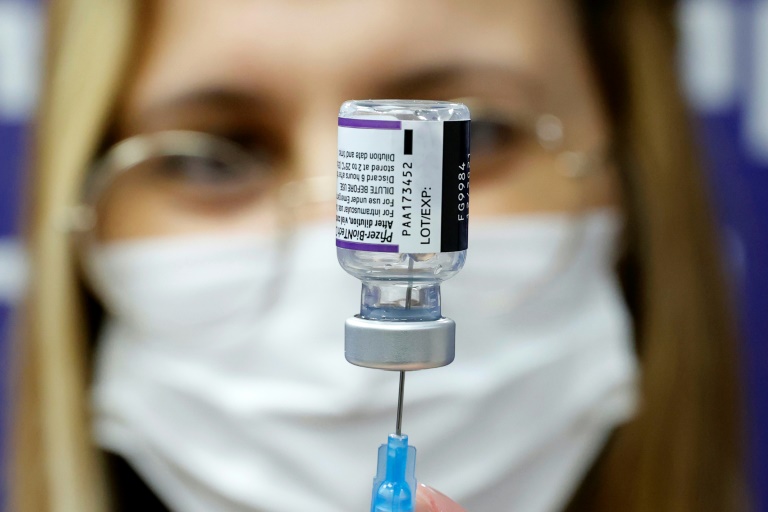
Pfizer and BioNTech have asked United States health officials to authorize their Omicron-targeting Covid booster vaccine for children aged 5 to 11, the companies said Monday.

The companies sent a request for emergency authorization for a 10-microgram dose to the US Food and Drug Administration.

This new generation of anti-Covid vaccines targets both the original strain of coronavirus and the BA.4 and BA.5 lineages, the subvariants of Omicron that are causing more than 90% of infections in the United States. 

If the FDA authorizes the vaccine, the shot will still need another green light from the Centers for Disease Control and Prevention, the country’s main federal health agency, before the first injections can be administered to children.

In the coming days, Pfizer and BioNTech will also file for authorization with the European Medicines Agency, they said.

Even though children have been less affected by Covid-19 than adults, several hundred children aged 5 to 18 have died in the United States since the start of the pandemic, according to CDC figures.

In September, the CDC cleared Omicron-specific versions of the Pfizer-BioNTech vaccine for people over the age of 12 and of the Moderna vaccine for those over 18, paving the way for a booster campaign.

UK's new PM under fire as pound sinks and BoE sounds alarm

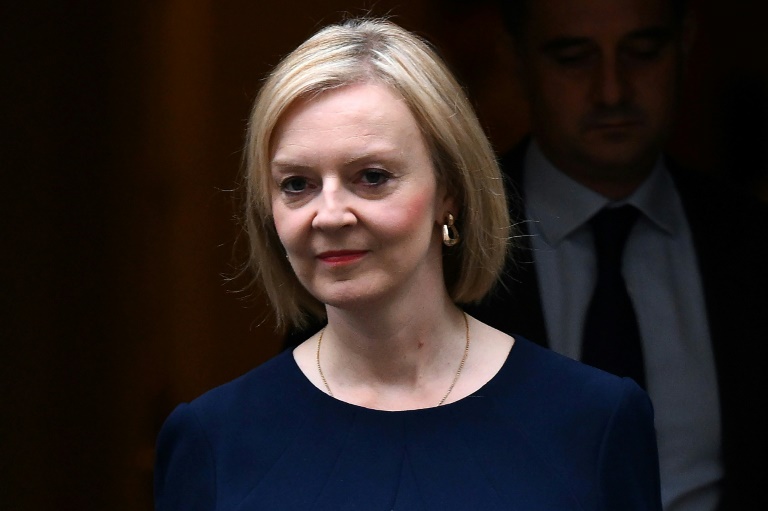
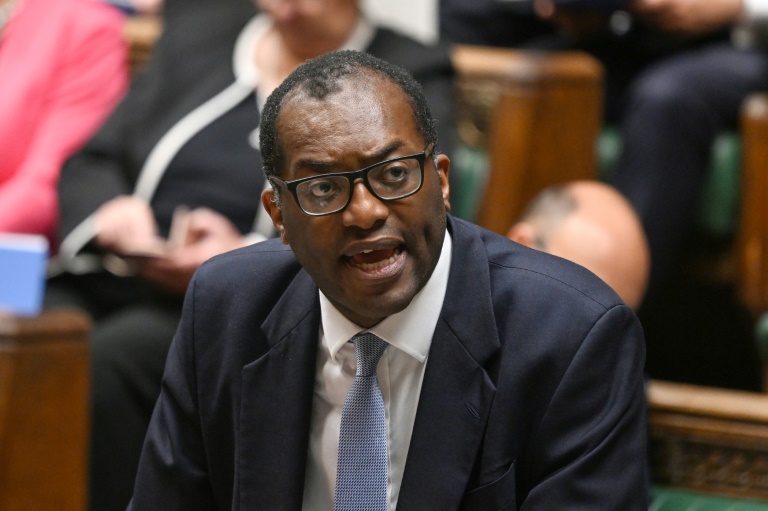
The government of new British Prime Minister Liz Truss on Monday came under pressure after the pound hit a record low against the dollar following a huge tax-cutting budget last week.

In a rare statement issued between its rate-setting meetings, the Bank of England said it was monitoring market developments “very closely”.

The UK central bank said it would “not hesitate to change interest rates by as much as needed” to curb high inflation — hinting at further pain for British households and companies.

But it also signalled that it would wait until its next policy meeting on November 3 before fully assessing the impact of the government’s contentious plans.

The main opposition Labour party lambasted Truss for the plans, which rely on a borrowing splurge and which some economists warn could further fuel inflation.

Addressing the party’s annual conference, Labour finance spokeswoman Rachel Reeves described the situation as a “national emergency”, noting the pound’s slump would send import and borrowing costs sharply higher.

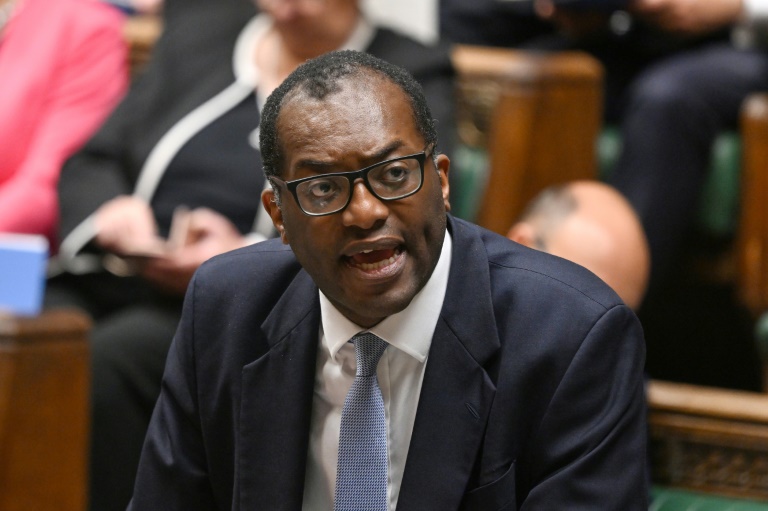
She likened Truss and Chancellor of the Exchequer Kwasi Kwarteng to “two desperate gamblers in a casino chasing a losing run”.

But Downing Street insisted the aggressive plan of tax cuts announced by Kwarteng on Friday — just three weeks into Truss’s first month in office — was essential to kick-start anaemic growth.

The plan will “grow our economy faster than our debts”, Truss’s spokesman said, adding that the government would not comment on market movements destabilising the pound.

In a bid to reassure the markets, the Treasury announced Kwarteng would outline a new “medium-term fiscal plan” on November 23, “including ensuring that debt falls as a share of GDP in the medium term”.

Kwarteng also intends more supply-side reforms to cut red tape in the UK economy, and the fiscal plan will be accompanied by new independent forecasts from the Office for Budget Responsibility, the Treasury said. 

The absence of such forecasts from last Friday’s “fiscal event” has contributed to the sense of alarm on financial markets. 

– Dollar parity looms –

Britain has been facing a cost-of-living crisis with soaring energy prices coupled with inflation and wage stagnation.

On Friday, Kwarteng brought forward a plan to cut the lowest rate of income tax, and reduce the highest to 40 percent from 45 percent.

But investors were spooked by the huge amount of borrowing likely needed for the package, which critics said would benefit the rich far more than the poorest hit by the cost-of-living crisis.

The cost of measures to cap energy prices alone have been calculated at £60 billion ($65 billion) for only six months.

But economists estimate the whole tax package at between £100-200 billion.

The pound on Monday struck an all-time low at $1.0350 before regaining some ground to stand at $1.0706 around 1550 GMT, still perilously close to parity.

– Political fallout –

Without central bank intervention this week, the pound could well fall below dollar parity soon, warned Lee Hardman, analyst at MUFG, Japan’s largest bank.

The Bank of England Thursday raised its benchmark borrowing rate by 0.50 percentage points to 2.25 percent. Markets now believe that the rate could rise two percentage points by November.

Tension between the bank and the Treasury is now “palpable”, added Susannah Streeter, analyst at Hargreaves Lansdown.

Tony Travers, director of the LSE London research group, said Truss and Kwarteng had taken a “major gamble that the radical policies adopted can quickly deliver growth”.

“Many Conservative MPs will be concerned that their party’s poll ratings will be damaged, particularly by the profile of the tax cuts proposed,” he said, ahead of the Tories’ own annual conference next week.

“I would expect pressure from MPs on the prime minister and chancellor to grow sharply in the coming week.”

While the UK’s inflation rate stands at 9.9 percent — the highest in the G7 — the central bank also estimates that the country entered recession during the third quarter.

In new setback, hurricane forces Moon rocket into storage

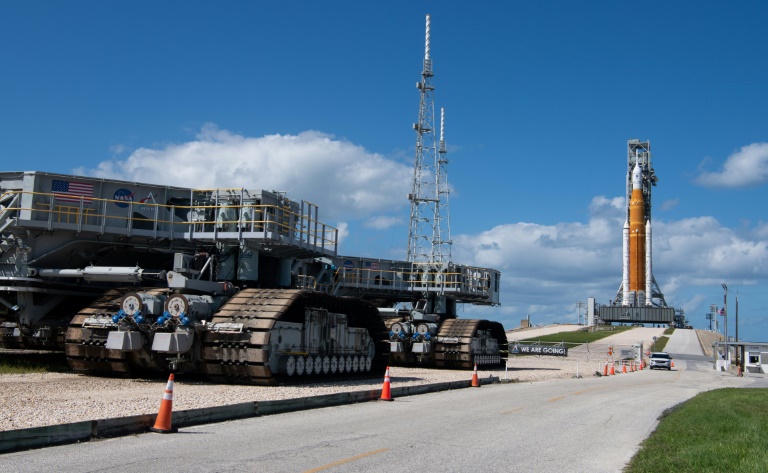
NASA’s Artemis 1 rocket — waiting to blast off on a delayed mission to the Moon — will be rolled back into its storage hangar Monday night, the space agency said, as Florida braces for Hurricane Ian.

The move, to protect the rocket from strong winds and heavy rain forecast for the Kennedy Space Center, will cause further setbacks for the uncrewed Moon mission, which was scheduled to launch last month and has already been pushed back three times.

“After reviewing the forecast for Ian, we will roll our Artemis I vehicle back to the Vehicle Assembly Building tonight,” NASA official Jim Free tweeted. “It was the right and necessary decision to keep our people and hardware safe.”

The decision was “based on the latest weather predictions associated with Hurricane Ian, after additional data gathered overnight did not show improving expected conditions,” the space agency said in a blog.

The operation to move the 98-meter (320-foot) rocket, which is sitting on its launch pad, is set to begin around 11:00 pm (0300 GMT) Monday night, NASA said.

It will be ferried along on a rolling platform moving slowly to avoid damaging the rocket with vibrations. 

Hurricane Ian, which was situated as a Category 1 hurricane southwest of Cuba on Monday, is expected to strengthen as it heads toward Florida through the Gulf of Mexico. 

NASA had waited until the last minute to decide whether to shelter Artemis I in the hope of being able to schedule a take-off attempt just after the storm passed. 

There will now be no opportunity for blast-off within the current launch window, which runs until October 4, and NASA has not indicated when another launch might be attempted.

The next window runs from October 17 to 31, and again from November 12 to 27 — both with some exceptions.

The storage decision represents only the latest setback for Artemis 1, after previous launch attempts were canceled due to the hurricane and a fuel leak. 

This latest Moon mission comes 50 years after the final flight of the Apollo program, with Artemis 1 set to show whether the Orion capsule, situated on top of the rocket, is safe to transport humans back to the Moon’s surface.

In new setback, hurricane forces Moon rocket into storage

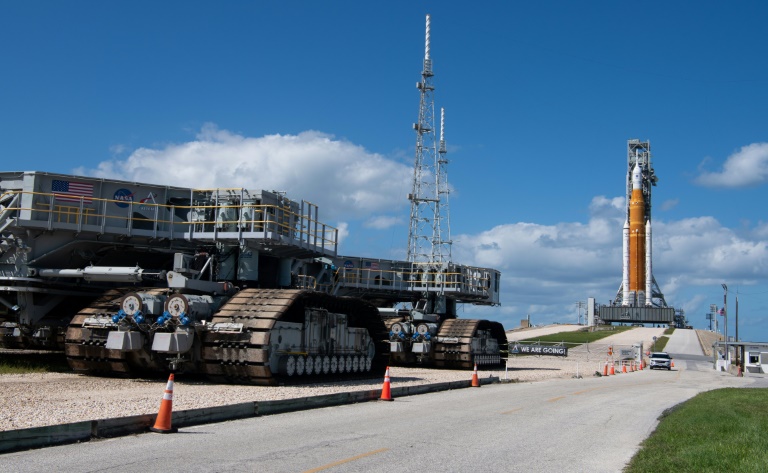
NASA’s Artemis 1 rocket — waiting to blast off on a delayed mission to the Moon — will be rolled back into its storage hangar Monday night, the space agency said, as Florida braces for Hurricane Ian.

The move, to protect the rocket from strong winds and heavy rain forecast for the Kennedy Space Center, will cause further setbacks for the uncrewed Moon mission, which was scheduled to launch last month and has already been pushed back three times.

“After reviewing the forecast for Ian, we will roll our Artemis I vehicle back to the Vehicle Assembly Building tonight,” NASA official Jim Free tweeted. “It was the right and necessary decision to keep our people and hardware safe.”

The decision was “based on the latest weather predictions associated with Hurricane Ian, after additional data gathered overnight did not show improving expected conditions,” the space agency said in a blog.

The operation to move the 98-meter (320-foot) rocket, which is sitting on its launch pad, is set to begin around 11:00 pm (0300 GMT) Monday night, NASA said.

It will be ferried along on a rolling platform moving slowly to avoid damaging the rocket with vibrations. 

Hurricane Ian, which was situated as a Category 1 hurricane southwest of Cuba on Monday, is expected to strengthen as it heads toward Florida through the Gulf of Mexico. 

NASA had waited until the last minute to decide whether to shelter Artemis I in the hope of being able to schedule a take-off attempt just after the storm passed. 

There will now be no opportunity for blast-off within the current launch window, which runs until October 4, and NASA has not indicated when another launch might be attempted.

The next window runs from October 17 to 31, and again from November 12 to 27 — both with some exceptions.

The storage decision represents only the latest setback for Artemis 1, after previous launch attempts were canceled due to the hurricane and a fuel leak. 

This latest Moon mission comes 50 years after the final flight of the Apollo program, with Artemis 1 set to show whether the Orion capsule, situated on top of the rocket, is safe to transport humans back to the Moon’s surface.

Stocks volatile, pound hits record low

Markets seesawed and the British pound took a beating Monday as recession fears brought volatility to the markets.

Having extended losses in morning trading, Frankfurt and Paris edged higher by mid afternoon, only to close the session in the red.

London shares closed flat, paring earlier losses after the pound hit a record low against the dollar on surging fears about the ailing UK economy, before recovering ground.

Further clouding the horizon, the OECD warned the world economy would take a bigger hit than previously forecast next year due to the effects of Russia’s war in Ukraine.

“Volatility reigns supreme in a jittery market environment,” analyst Patrick O’Hare at Briefing.com said.

Wall Street stocks also fell, amid the upheaval in the foreign exchange market.

The pound on Monday struck an all-time low at $1.0350, days after new UK finance minister Kwasi Kwarteng’s inflation-fighting budget.

The Bank of England said it was paying close attention to financial markets and would “not hesitate to change interest rates by as much as needed” to curb inflation.

Economists expressed concerns that last week’s huge tax-cutting budget from the government of new Prime Minister Liz Truss — aimed at helping the recession-threatened economy — could actually spark massive borrowing and further fuel inflation.

“The market’s reactions show that investors have lost confidence in the government’s approach, creating a level of volatility that puts the pound on par with some emerging market peers,” said Fiona Cincotta, a senior analyst at City Index.

“Attention is now turning to the BoE (Bank of England) to step in to support the pound.”

Sterling has struggled in recent years as the UK fails to strike major trade deals following its exit from the European Union.

Prior to Monday’s crash, the pound suffered a series of 37-year lows against the greenback this month on UK recession fears propelled by sky-high inflation.

The euro has additionally come under heavy selling pressure against the dollar in recent months, as the Federal Reserve hikes interest rates more aggressively than the European Central Bank.

The euro struck a new 20-year low at $0.9554 on Monday before recovering.

A day after Eurosceptic populists swept to victory in Italy’s general election, the interest rates on 10-year government bonds hit their highest level for around a decade in France, Germany and Italy.

But the Italian stock market closed higher as markets assessed the future political landscape.

“Time will tell how successful the new government will prove to be but the prospect of some political stability appears to be generating a small relief rally today,” said Craig Erlam, analyst at trading platform OANDA.

Elsewhere, the Moscow stock exchange plunged by 10 percent to its lowest point since Russia began its Ukraine offensive seven months ago as tensions grew across the country over partial military mobilisation.

– Key figures at around 1545 GMT –

Pound/dollar: DOWN at $1.0696 from $1.0852 on Friday

Euro/dollar: DOWN at $0.9627 from $0.9695

Euro/pound: UP at 89.97 pence from 89.28 pence 

Dollar/yen: UP at 144.42 yen from 143.31 yen

London – FTSE 100: UP 0.03 percent at 7,020.95 points

Frankfurt – DAX: DOWN 0.5 percent at 12,227.92

Paris – CAC 40: DOWN 0.2 percent at 5,769.39 

EURO STOXX 50: DOWN 0.2 percent at 3,342.56  

New York – Dow: DOWN 0.6 percent at 29,417.19  

Tokyo – Nikkei 225: DOWN 2.7 percent at 26,431.55 (close)

Hong Kong – Hang Seng Index: DOWN 0.4 percent at 17,855.14 (close)

Shanghai – Composite: DOWN 1.2 percent at 3,051.23 (close)

West Texas Intermediate: DOWN 0.4 percent at $78.42 per barrel

Brent North Sea crude: DOWN 0.5 percent at $85.75 per barrel

burs-bcp/kjm/cdw

Stocks volatile, pound hits record low

Markets seesawed and the British pound took a beating Monday as recession fears brought volatility to the markets.

Having extended losses in morning trading, Frankfurt and Paris edged higher by mid afternoon, only to close the session in the red.

London shares closed flat, paring earlier losses after the pound hit a record low against the dollar on surging fears about the ailing UK economy, before recovering ground.

Further clouding the horizon, the OECD warned the world economy would take a bigger hit than previously forecast next year due to the effects of Russia’s war in Ukraine.

“Volatility reigns supreme in a jittery market environment,” analyst Patrick O’Hare at Briefing.com said.

Wall Street stocks also fell, amid the upheaval in the foreign exchange market.

The pound on Monday struck an all-time low at $1.0350, days after new UK finance minister Kwasi Kwarteng’s inflation-fighting budget.

The Bank of England said it was paying close attention to financial markets and would “not hesitate to change interest rates by as much as needed” to curb inflation.

Economists expressed concerns that last week’s huge tax-cutting budget from the government of new Prime Minister Liz Truss — aimed at helping the recession-threatened economy — could actually spark massive borrowing and further fuel inflation.

“The market’s reactions show that investors have lost confidence in the government’s approach, creating a level of volatility that puts the pound on par with some emerging market peers,” said Fiona Cincotta, a senior analyst at City Index.

“Attention is now turning to the BoE (Bank of England) to step in to support the pound.”

Sterling has struggled in recent years as the UK fails to strike major trade deals following its exit from the European Union.

Prior to Monday’s crash, the pound suffered a series of 37-year lows against the greenback this month on UK recession fears propelled by sky-high inflation.

The euro has additionally come under heavy selling pressure against the dollar in recent months, as the Federal Reserve hikes interest rates more aggressively than the European Central Bank.

The euro struck a new 20-year low at $0.9554 on Monday before recovering.

A day after Eurosceptic populists swept to victory in Italy’s general election, the interest rates on 10-year government bonds hit their highest level for around a decade in France, Germany and Italy.

But the Italian stock market closed higher as markets assessed the future political landscape.

“Time will tell how successful the new government will prove to be but the prospect of some political stability appears to be generating a small relief rally today,” said Craig Erlam, analyst at trading platform OANDA.

Elsewhere, the Moscow stock exchange plunged by 10 percent to its lowest point since Russia began its Ukraine offensive seven months ago as tensions grew across the country over partial military mobilisation.

– Key figures at around 1545 GMT –

Pound/dollar: DOWN at $1.0696 from $1.0852 on Friday

Euro/dollar: DOWN at $0.9627 from $0.9695

Euro/pound: UP at 89.97 pence from 89.28 pence 

Dollar/yen: UP at 144.42 yen from 143.31 yen

London – FTSE 100: UP 0.03 percent at 7,020.95 points

Frankfurt – DAX: DOWN 0.5 percent at 12,227.92

Paris – CAC 40: DOWN 0.2 percent at 5,769.39 

EURO STOXX 50: DOWN 0.2 percent at 3,342.56  

New York – Dow: DOWN 0.6 percent at 29,417.19  

Tokyo – Nikkei 225: DOWN 2.7 percent at 26,431.55 (close)

Hong Kong – Hang Seng Index: DOWN 0.4 percent at 17,855.14 (close)

Shanghai – Composite: DOWN 1.2 percent at 3,051.23 (close)

West Texas Intermediate: DOWN 0.4 percent at $78.42 per barrel

Brent North Sea crude: DOWN 0.5 percent at $85.75 per barrel

burs-bcp/kjm/cdw
US lawmakers in shutdown showdown ahead of midterm elections

US lawmakers negotiated behind the scenes Monday to strike a temporary agreement that would avert a potentially damaging government shutdown, with federal funding due to expire at the end of the working week.

A so-called “continuing resolution” — essentially a stop-gap deal keeping the lights on until mid-December — is likely to include more than $12 billion in military and economic aid for Ukraine.

There will also be cash for resettling Afghan refugees, boosting winter heating allowances for low-income families and providing disaster aid in flooded Jackson, Mississippi.

One roadblock however is a piece of legislation Democrats have pledged to attach to the resolution known as the Energy Independence and Security Act 2022, which has opponents on both sides of the political aisle. 

The act would speed up the nation’s permitting process for energy infrastructure — both for fossil fuel projects and the clean energy initiatives championed by President Joe Biden.

But Republicans aren’t keen on handing Democrats another legislative victory with around 40 days to go until elections that will decide who controls Congress for the remainder of Biden’s first term.

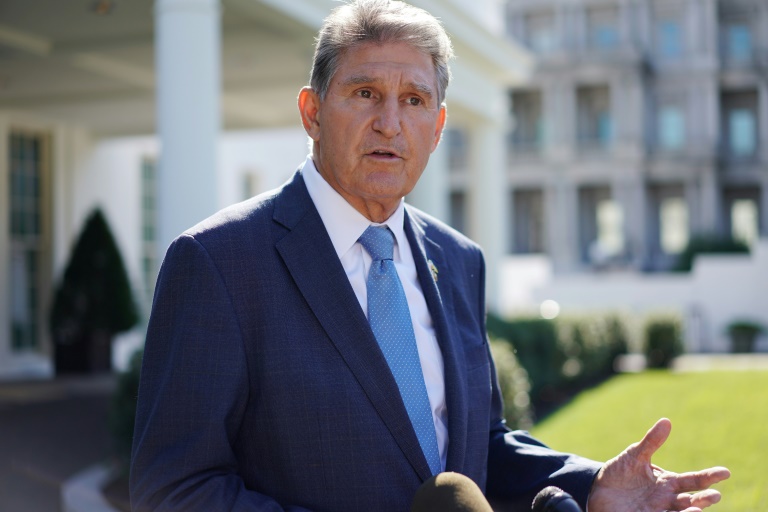
Liberals are also opposed to the text, spearheaded by West Virginia Democrat and fossil fuel magnate Senator Joe Manchin, arguing that it will lead to more oil and natural gas drilling.

Manchin called on both parties to “ignore the toxic ‘all or nothing’ legislative approach that has made it hard to discern what is truly essential for our nation” in an op-ed for The Wall Street Journal on Sunday.

Although prospects for a shutdown always raise pulses as the deadline approaches — the fiscal year ends at midnight on Friday going into Saturday — analysts see such an outcome so close to the election as highly unlikely.

If the energy measure fails in a Senate vote Tuesday, analysts expect it simply to be dropped and for the main vote on government funding to go ahead without it.

House Majority Leader Steny Hoyer has warned members that the chamber will stay in session through Saturday if necessary.

Shutdowns threaten the finances of hundreds of thousands of government workers who risk being sent home without pay as parks, museums and other federal properties close. 

There have been no shutdowns so far under Biden, although his predecessor Donald Trump saw two, including a 35-day shutdown from late 2018 to early 2019 that was the longest in US history.

NASA to deflect asteroid in key test of planetary defense

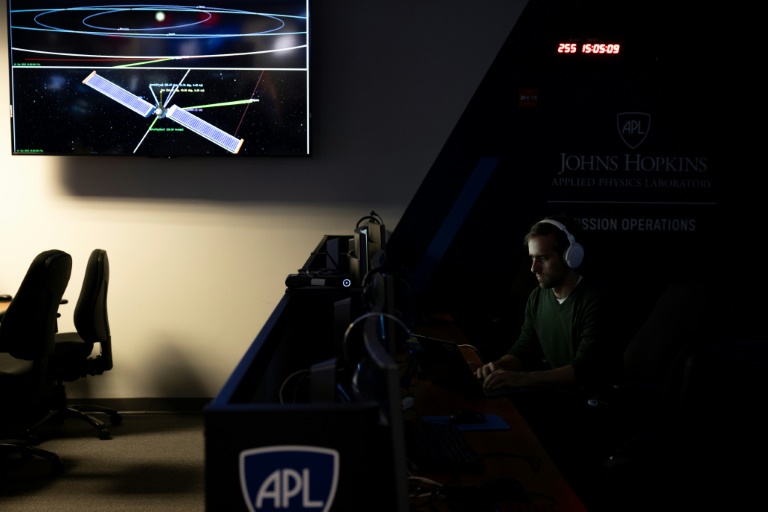
NASA will on Monday attempt a feat humanity has never before accomplished: deliberately smacking a spacecraft into an asteroid to slightly deflect its orbit, in a key test of our ability to stop cosmic objects from devastating life on Earth.

The Double Asteroid Redirection Test (DART) spaceship launched from California last November and is fast approaching its target, which it will strike at roughly 14,000 miles (22,500 kilometers) per hour.

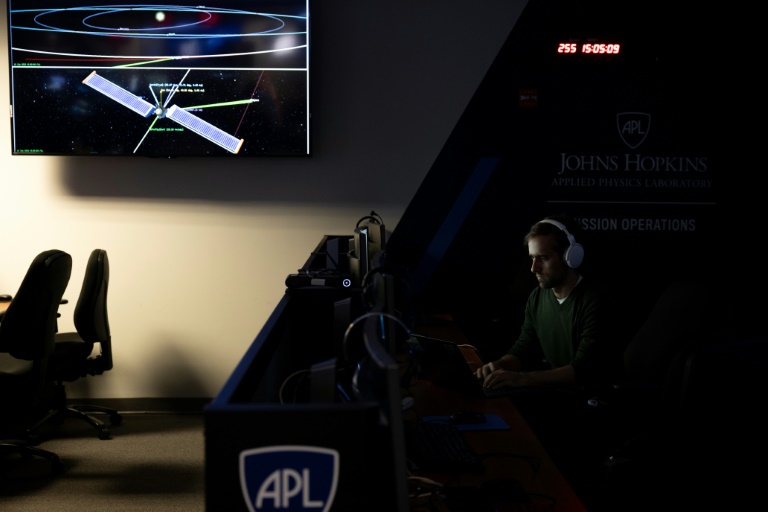
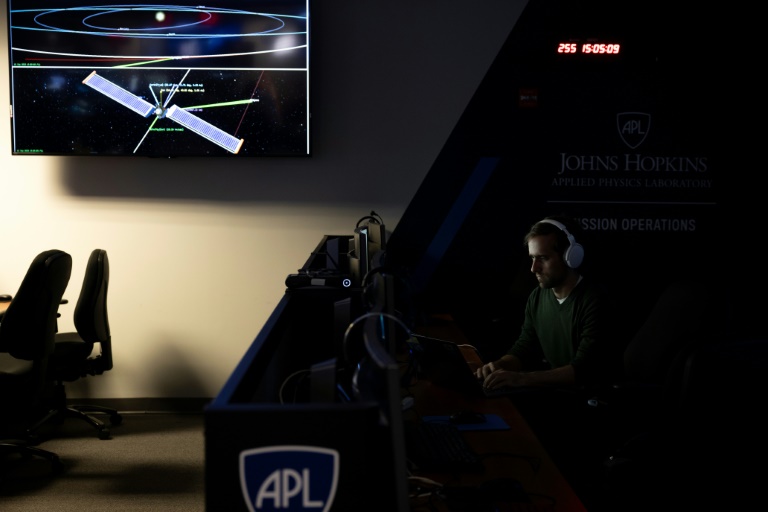
“It’s the final cosmic collision countdown,” tweeted mission control at Johns Hopkins Applied Physics Laboratory in Maryland.

To be sure, neither the asteroid moonlet Dimorphos, nor the big brother it orbits, called Didymos, pose any threat as the pair loop the Sun, passing about seven million miles from Earth at nearest approach.

But NASA has deemed the experiment important to carry out before an actual need is discovered.

If all goes to plan, impact between the car-sized spacecraft, and the 530-foot (160 meters, or two Statues of Liberty) asteroid should take place at 7:14 pm Eastern Time (2314 GMT), viewable on a NASA livestream.

By striking Dimorphos head on, NASA hopes to push it into a smaller orbit, shaving ten minutes off the time it takes to encircle Didymos, which is currently 11 hours and 55 minutes — a change that will be detected by ground telescopes in the days or weeks to come.

The proof-of-concept experiment will make a reality of what has before only been attempted in science fiction — notably in films such as “Armageddon” and “Don’t Look Up.” 

– Technically challenging –

As the craft propels itself through space, flying autonomously for the mission’s final phase, its camera system will start to beam down the very first pictures of Dimorphos.

Minutes later, a toaster-sized satellite called LICIACube, which already separated from DART a few weeks ago, will make a close pass of the site to capture images of the collision and the ejecta — the pulverized rock thrown off by impact.

LICIACube’s pictures will be sent back in the next weeks and months. 

Also watching the event: an array of telescopes, both on Earth and in space — including the recently operational James Webb — which might be able to see a brightening cloud of dust.

Finally, a full picture of what the system looks like will be revealed when a European Space Agency mission four years down the line called Hera arrives to survey Dimorphos’ surface and measure its mass, which scientists can currently only guess at.

– Being prepared –

Very few of the billions of asteroids and comets in our solar system are considered potentially hazardous to our planet, and none are expected in the next hundred years or so. 

But “I guarantee to you that if you wait long enough, there will be an object,” said NASA’s Thomas Zurbuchen. 

We know that from the geological record — for example, the six-mile wide Chicxulub asteroid struck Earth 66 million years ago, plunging the world into a long winter that led to the mass extinction of the dinosaurs along with 75 percent of all species.

An asteroid the size of Dimorphos, by contrast, would only cause a regional impact, such as devastating a city, albeit with greater force than any nuclear bomb in history.

How much momentum DART imparts on Dimorphos will depend on whether the asteroid is solid rock, or more like a “rubbish pile” of boulders bound by mutual gravity — a situation that’s not yet known.

The shape of the asteroid is also not known, but NASA engineers are confident DART’s SmartNav guidance system will hit its target.

If it misses, NASA will have another shot in two years’ time, with the spaceship containing just enough fuel for another pass.

But if it succeeds, the mission will mark the first step towards a world capable of defending itself from a future existential threat.

NASA to deflect asteroid in key test of planetary defense

NASA will on Monday attempt a feat humanity has never before accomplished: deliberately smacking a spacecraft into an asteroid to slightly deflect its orbit, in a key test of our ability to stop cosmic objects from devastating life on Earth.

The Double Asteroid Redirection Test (DART) spaceship launched from California last November and is fast approaching its target, which it will strike at roughly 14,000 miles (22,500 kilometers) per hour.

“It’s the final cosmic collision countdown,” tweeted mission control at Johns Hopkins Applied Physics Laboratory in Maryland.

To be sure, neither the asteroid moonlet Dimorphos, nor the big brother it orbits, called Didymos, pose any threat as the pair loop the Sun, passing about seven million miles from Earth at nearest approach.

But NASA has deemed the experiment important to carry out before an actual need is discovered.

If all goes to plan, impact between the car-sized spacecraft, and the 530-foot (160 meters, or two Statues of Liberty) asteroid should take place at 7:14 pm Eastern Time (2314 GMT), viewable on a NASA livestream.

By striking Dimorphos head on, NASA hopes to push it into a smaller orbit, shaving ten minutes off the time it takes to encircle Didymos, which is currently 11 hours and 55 minutes — a change that will be detected by ground telescopes in the days or weeks to come.

The proof-of-concept experiment will make a reality of what has before only been attempted in science fiction — notably in films such as “Armageddon” and “Don’t Look Up.” 

– Technically challenging –

As the craft propels itself through space, flying autonomously for the mission’s final phase, its camera system will start to beam down the very first pictures of Dimorphos.

Minutes later, a toaster-sized satellite called LICIACube, which already separated from DART a few weeks ago, will make a close pass of the site to capture images of the collision and the ejecta — the pulverized rock thrown off by impact.

LICIACube’s pictures will be sent back in the next weeks and months. 

Also watching the event: an array of telescopes, both on Earth and in space — including the recently operational James Webb — which might be able to see a brightening cloud of dust.

Finally, a full picture of what the system looks like will be revealed when a European Space Agency mission four years down the line called Hera arrives to survey Dimorphos’ surface and measure its mass, which scientists can currently only guess at.

– Being prepared –

Very few of the billions of asteroids and comets in our solar system are considered potentially hazardous to our planet, and none are expected in the next hundred years or so. 

But “I guarantee to you that if you wait long enough, there will be an object,” said NASA’s Thomas Zurbuchen. 

We know that from the geological record — for example, the six-mile wide Chicxulub asteroid struck Earth 66 million years ago, plunging the world into a long winter that led to the mass extinction of the dinosaurs along with 75 percent of all species.

An asteroid the size of Dimorphos, by contrast, would only cause a regional impact, such as devastating a city, albeit with greater force than any nuclear bomb in history.

How much momentum DART imparts on Dimorphos will depend on whether the asteroid is solid rock, or more like a “rubbish pile” of boulders bound by mutual gravity — a situation that’s not yet known.

The shape of the asteroid is also not known, but NASA engineers are confident DART’s SmartNav guidance system will hit its target.

If it misses, NASA will have another shot in two years’ time, with the spaceship containing just enough fuel for another pass.

But if it succeeds, the mission will mark the first step towards a world capable of defending itself from a future existential threat.

NASA to deflect asteroid in key test of planetary defense

NASA will on Monday attempt a feat humanity has never before accomplished: deliberately smacking a spacecraft into an asteroid to slightly deflect its orbit, in a key test of our ability to stop cosmic objects from devastating life on Earth.

The Double Asteroid Redirection Test (DART) spaceship launched from California last November and is fast approaching its target, which it will strike at roughly 14,000 miles (22,500 kilometers) per hour.

“It’s the final cosmic collision countdown,” tweeted mission control at Johns Hopkins Applied Physics Laboratory in Maryland.

To be sure, neither the asteroid moonlet Dimorphos, nor the big brother it orbits, called Didymos, pose any threat as the pair loop the Sun, passing about seven million miles from Earth at nearest approach.

But NASA has deemed the experiment important to carry out before an actual need is discovered.

If all goes to plan, impact between the car-sized spacecraft, and the 530-foot (160 meters, or two Statues of Liberty) asteroid should take place at 7:14 pm Eastern Time (2314 GMT), viewable on a NASA livestream.

By striking Dimorphos head on, NASA hopes to push it into a smaller orbit, shaving ten minutes off the time it takes to encircle Didymos, which is currently 11 hours and 55 minutes — a change that will be detected by ground telescopes in the days or weeks to come.

The proof-of-concept experiment will make a reality of what has before only been attempted in science fiction — notably in films such as “Armageddon” and “Don’t Look Up.” 

– Technically challenging –

As the craft propels itself through space, flying autonomously for the mission’s final phase, its camera system will start to beam down the very first pictures of Dimorphos.

Minutes later, a toaster-sized satellite called LICIACube, which already separated from DART a few weeks ago, will make a close pass of the site to capture images of the collision and the ejecta — the pulverized rock thrown off by impact.

LICIACube’s pictures will be sent back in the next weeks and months. 

Also watching the event: an array of telescopes, both on Earth and in space — including the recently operational James Webb — which might be able to see a brightening cloud of dust.

Finally, a full picture of what the system looks like will be revealed when a European Space Agency mission four years down the line called Hera arrives to survey Dimorphos’ surface and measure its mass, which scientists can currently only guess at.

– Being prepared –

Very few of the billions of asteroids and comets in our solar system are considered potentially hazardous to our planet, and none are expected in the next hundred years or so. 

But “I guarantee to you that if you wait long enough, there will be an object,” said NASA’s Thomas Zurbuchen. 

We know that from the geological record — for example, the six-mile wide Chicxulub asteroid struck Earth 66 million years ago, plunging the world into a long winter that led to the mass extinction of the dinosaurs along with 75 percent of all species.

An asteroid the size of Dimorphos, by contrast, would only cause a regional impact, such as devastating a city, albeit with greater force than any nuclear bomb in history.

How much momentum DART imparts on Dimorphos will depend on whether the asteroid is solid rock, or more like a “rubbish pile” of boulders bound by mutual gravity — a situation that’s not yet known.

The shape of the asteroid is also not known, but NASA engineers are confident DART’s SmartNav guidance system will hit its target.

If it misses, NASA will have another shot in two years’ time, with the spaceship containing just enough fuel for another pass.

But if it succeeds, the mission will mark the first step towards a world capable of defending itself from a future existential threat.

Close Bitnami banner
Bitnami