AFP

UK eyes big TikTok fine over child privacy lapse

Britain on Monday warned it could fine TikTok £27 million ($29 million) over a potential failure to protect children’s privacy on the Chinese-owned video app.

The Information Commissioner’s Office said the social media company “may have processed the data of children under the age of 13 without appropriate parental consent”.

The ICO also found that the short-form video platform may have “failed to provide proper information to its users in a concise, transparent and easily understood way”.

The watchdog has served the group with a notice of intent — which is a legal document that precedes a possible fine — over the possible breach of UK data protection law.

“We all want children to be able to learn and experience the digital world, but with proper data privacy protections,” said Information Commissioner John Edwards.

“Companies providing digital services have a legal duty to put those protections in place, but our provisional view is that TikTok fell short of meeting that requirement.”

In response, TikTok said it disagreed with the ICO’s provisional views and stressed that no final conclusions had been reached.

“While we respect the ICO’s role in safeguarding privacy in the UK, we disagree with the preliminary views expressed and intend to formally respond to the ICO in due course,” TikTok said in a statement.

UK eyes big TikTok fine over child privacy lapse

Britain on Monday warned it could fine TikTok £27 million ($29 million) over a potential failure to protect children’s privacy on the Chinese-owned video app.

The Information Commissioner’s Office said the social media company “may have processed the data of children under the age of 13 without appropriate parental consent”.

The ICO also found that the short-form video platform may have “failed to provide proper information to its users in a concise, transparent and easily understood way”.

The watchdog has served the group with a notice of intent — which is a legal document that precedes a possible fine — over the possible breach of UK data protection law.

“We all want children to be able to learn and experience the digital world, but with proper data privacy protections,” said Information Commissioner John Edwards.

“Companies providing digital services have a legal duty to put those protections in place, but our provisional view is that TikTok fell short of meeting that requirement.”

In response, TikTok said it disagreed with the ICO’s provisional views and stressed that no final conclusions had been reached.

“While we respect the ICO’s role in safeguarding privacy in the UK, we disagree with the preliminary views expressed and intend to formally respond to the ICO in due course,” TikTok said in a statement.

Pound hits record low versus dollar, Italy stocks up after vote

The pound hit a record low against the dollar Monday on surging fears about the ailing UK economy.

Stock markets mostly extended losses and oil prices fell further after last week’s routs that were triggered by growing prospects of a global recession.

However, the Italian stock market climbed as markets assessed Italy’s future political landscape after Eurosceptic populists swept to victory in the eurozone member’s general election.

“The pound’s crash is showing markets have a lack of confidence in the UK and that its financial strength is under siege,” said Jessica Amir at Saxo Capital Markets.

“The pound is a whisker away from (dollar) parity and the situation is going to only worsen from here.”

Economists expressed concerns that last week’s huge tax-cutting budget from the government of new Prime Minister Liz Truss — aimed at helping the recession-threatened economy — could actually spark massive borrowing and further fuel inflation.

The pound on Monday struck an all-time low at $1.0350, days after new UK finance minister Kwasi Kwarteng’s inflation-fighting budget.

Sterling has struggled in recent years as the UK fails to strike major trade deals following its exit from the European Union.

Prior to Monday’s crash, the pound suffered a series of 37-year lows against the greenback this month on UK recession fears propelled by sky-high inflation.

The euro has additionally come under heavy selling pressure against the dollar in recent months, as the Federal Reserve hikes interest rates more aggressively than the European Central Bank.

– Italian stocks –

In stock market trading Monday, Milan’s FTSE MIB rose 0.5 percent to 21,174.60 points.

However the euro struck a new 20-year low at $0.9554.

“Italy is clearly outperforming following the election result,” noted Craig Erlam, analyst at Oanda trading group. 

“Time will tell how successful the new government will prove to be but the prospect of some political stability appears to be generating a small relief rally today.”

Italy took a sharp turn to the right after Giorgia Meloni’s Eurosceptic populist party swept to victory in a weekend general election, putting a one-time Mussolini admirer on course to become the first woman to lead the country.

Meloni’s Brothers of Italy party, which has neo-fascist roots, won 26 percent in Sunday’s election, according to partial results.

It leads a coalition set to win a majority in parliament.

Elsewhere, the Moscow stock exchange plunged 10 percent to its lowest point since Russia began its Ukraine offensive seven months ago as tensions grew across the country over partial military mobilisation.

The benchmark ruble-denominated Moex index sank 10.2 percent to 1,873.55 points in early afternoon trading, dropping below the 1,900 points mark for the first time since the February invasion of neighbouring Ukraine.

– Key figures at around 1215 GMT –

Pound/dollar: DOWN at $1.0721 from $1.0852 on Friday

Euro/dollar: DOWN at $0.9645 from $0.9695

Euro/pound: UP at 89.93 pence from 89.28 pence 

Dollar/yen: UP at 144.30 yen from 143.31 yen

London – FTSE 100: DOWN 0.7 percent at 6,969.77 points

Frankfurt – DAX: DOWN 0.1 percent at 12,273.63

Paris – CAC 40: DOWN 0.1 percent at 5,777.09

EURO STOXX 50: DOWN 0.1 percent at 3,346.93

Tokyo – Nikkei 225: DOWN 2.7 percent at 26,431.55 (close)

Hong Kong – Hang Seng Index: DOWN 0.4 percent at 17,855.14 (close)

Shanghai – Composite: DOWN 1.2 percent at 3,051.23 (close)

New York – Dow: DOWN 1.6 percent at 29,590.41 (close)

West Texas Intermediate: DOWN 1.0 percent at $77.98 per barrel

Brent North Sea crude: DOWN 1.1 percent at $85.17 per barrel

burs-bcp/rfj/kjm

Pound hits record low versus dollar, Italy stocks up after vote

The pound hit a record low against the dollar Monday on surging fears about the ailing UK economy.

Stock markets mostly extended losses and oil prices fell further after last week’s routs that were triggered by growing prospects of a global recession.

However, the Italian stock market climbed as markets assessed Italy’s future political landscape after Eurosceptic populists swept to victory in the eurozone member’s general election.

“The pound’s crash is showing markets have a lack of confidence in the UK and that its financial strength is under siege,” said Jessica Amir at Saxo Capital Markets.

“The pound is a whisker away from (dollar) parity and the situation is going to only worsen from here.”

Economists expressed concerns that last week’s huge tax-cutting budget from the government of new Prime Minister Liz Truss — aimed at helping the recession-threatened economy — could actually spark massive borrowing and further fuel inflation.

The pound on Monday struck an all-time low at $1.0350, days after new UK finance minister Kwasi Kwarteng’s inflation-fighting budget.

Sterling has struggled in recent years as the UK fails to strike major trade deals following its exit from the European Union.

Prior to Monday’s crash, the pound suffered a series of 37-year lows against the greenback this month on UK recession fears propelled by sky-high inflation.

The euro has additionally come under heavy selling pressure against the dollar in recent months, as the Federal Reserve hikes interest rates more aggressively than the European Central Bank.

– Italian stocks –

In stock market trading Monday, Milan’s FTSE MIB rose 0.5 percent to 21,174.60 points.

However the euro struck a new 20-year low at $0.9554.

“Italy is clearly outperforming following the election result,” noted Craig Erlam, analyst at Oanda trading group. 

“Time will tell how successful the new government will prove to be but the prospect of some political stability appears to be generating a small relief rally today.”

Italy took a sharp turn to the right after Giorgia Meloni’s Eurosceptic populist party swept to victory in a weekend general election, putting a one-time Mussolini admirer on course to become the first woman to lead the country.

Meloni’s Brothers of Italy party, which has neo-fascist roots, won 26 percent in Sunday’s election, according to partial results.

It leads a coalition set to win a majority in parliament.

Elsewhere, the Moscow stock exchange plunged 10 percent to its lowest point since Russia began its Ukraine offensive seven months ago as tensions grew across the country over partial military mobilisation.

The benchmark ruble-denominated Moex index sank 10.2 percent to 1,873.55 points in early afternoon trading, dropping below the 1,900 points mark for the first time since the February invasion of neighbouring Ukraine.

– Key figures at around 1215 GMT –

Pound/dollar: DOWN at $1.0721 from $1.0852 on Friday

Euro/dollar: DOWN at $0.9645 from $0.9695

Euro/pound: UP at 89.93 pence from 89.28 pence 

Dollar/yen: UP at 144.30 yen from 143.31 yen

London – FTSE 100: DOWN 0.7 percent at 6,969.77 points

Frankfurt – DAX: DOWN 0.1 percent at 12,273.63

Paris – CAC 40: DOWN 0.1 percent at 5,777.09

EURO STOXX 50: DOWN 0.1 percent at 3,346.93

Tokyo – Nikkei 225: DOWN 2.7 percent at 26,431.55 (close)

Hong Kong – Hang Seng Index: DOWN 0.4 percent at 17,855.14 (close)

Shanghai – Composite: DOWN 1.2 percent at 3,051.23 (close)

New York – Dow: DOWN 1.6 percent at 29,590.41 (close)

West Texas Intermediate: DOWN 1.0 percent at $77.98 per barrel

Brent North Sea crude: DOWN 1.1 percent at $85.17 per barrel

burs-bcp/rfj/kjm

Six people killed in Philippine typhoon

The strongest typhoon to hit the Philippines this year left at least six people dead, authorities said Monday, after heavy rain and fierce winds battered the country’s most populous island.

Typhoon Noru toppled trees, knocked out power and flooded low-lying communities as it swept across Luzon on Sunday and Monday.

There have so far been no reports of widespread severe damage to buildings from the storm, which hit the country as a super typhoon. 

Five people suffered minor injuries and several others are missing, disaster officials said.  

“I think that we may have gotten lucky at least this time, a little bit,” President Ferdinand Marcos Jr told a briefing with disaster agencies.

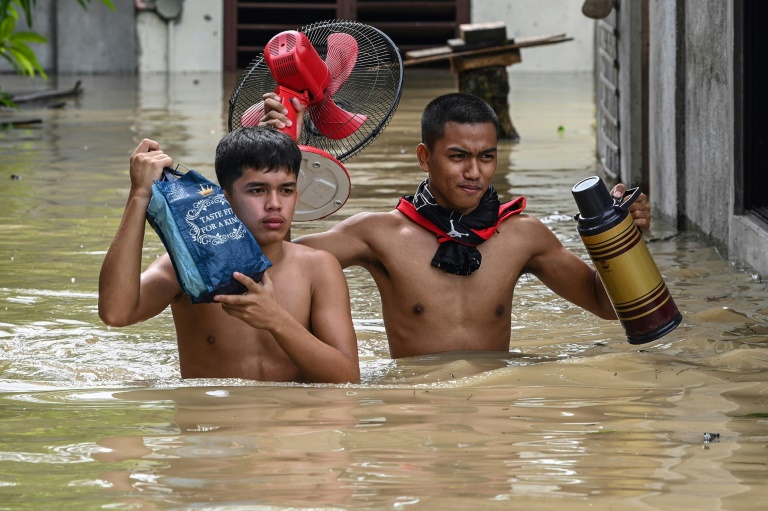
Five rescuers were killed after they were sent to help flooded residents in San Miguel municipality in Bulacan province, near the capital Manila.

Lieutenant-Colonel Romualdo Andres, chief of police in San Miguel, said the rescuers were wading through floodwaters when a wall collapsed, sending them into the fast current.

“Our house was swept away by the flood, it’s gone,” said Willie Ortega, 59, in San Miguel. “We weren’t able to save anything, even the rice to eat, none.”  

An elderly man died after he was hit by a landslide in Burdeos municipality on the Polillo Islands, part of Quezon province, where the storm made landfall, said Garner Jimenez from the local civil defence office.

The Philippines is regularly ravaged by storms, with scientists warning they are becoming more powerful as the world gets warmer because of climate change.

Noru smashed into the archipelago nation on Sunday after an unprecedented “explosive intensification” in wind speeds, the state weather forecaster said earlier.

It made landfall about 100 kilometres (62 miles) northeast of Manila, before weakening to a typhoon as it crossed a mountain range, coconut plantations and rice fields.

More than 74,000 people were evacuated from their homes before the storm hit, as the meteorology agency warned heavy rain could cause “serious flooding” in vulnerable areas and trigger landslides.

But on Monday, there was no sign of the widespread devastation many had feared, as the storm moved over the South China Sea towards Vietnam.

State weather forecaster Ana Laurel said Noru brought less rain and moved faster compared to other destructive typhoons that have hit the Philippines.

“It all depends on the interplay of the weather systems. Each typhoon has its own characteristics,” Laurel explained.

Aerial footage taken during Marcos’s inspection flight over central Luzon showed rivers that were swollen or had burst their banks, and patches of farmland under water.

Officials estimate about 141 million pesos ($2.4  million) worth of crops were damaged.

National disaster agency spokesperson Rafaelito Alejandro described the storm’s impact as “very minimal”. 

Marcos said preparations for the storm helped. 

“You might think that we overdid it. There is no such thing as overkill when it comes to disasters,” he said.

– ‘The wind was whistling’ – 

The Polillo Islands bore the brunt of Noru with storm surges blamed for flooding coastal communities.

“The wind was whistling and it had heavy rains,” said Ervin Calleja, a 49-year-old teacher in Burdeos municipality.

Ferocious winds ripped off roofs and brought down large trees. Some crops were wiped out.

“Here at the town centre all banana trees were flattened, 100 percent,” said Liezel Calusin, a member of the civil defence team in Polillo municipality. 

“We still have no electricity, but the phones are working.”

In Banaba village near Manila, Terrence Reyes fled his riverside home with his family and neighbours as floodwaters rose during the storm. 

They returned home Monday to find their belongings sodden and caked in mud.

“We just have to throw them away and start over again,” Reyes, 25, said. 

The Philippines — ranked among the most vulnerable nations to the impacts of climate change — is hit by an average of 20 storms every year.


Ian strengthens to Category 1 hurricane as it nears Cuba: NHC

Tropical storm Ian has strengthened into a Category 1 hurricane as it nears western Cuba, the US National Hurricane Center (NHC) said on Monday.

“Ian becomes a hurricane,” the NHC said in an advisory, warning that “additional rapid strengthening is expected today.”

The storm was moving northwest toward Cuba and the Cayman Islands with maximum sustained winds of 75 miles (120 kilometers) per hour, the NHC said.

It added that western Cuba was expected to bear the brunt of the storm on Monday when it could be hit by “significant wind and storm surge impacts.”

People in the US state of Florida were also preparing for the storm’s imminent arrival, with the NHC issuing a hurricane watch for the state’s west coast, including Tampa Bay.

On Sunday, Florida’s Governor Ron DeSantis declared a state of emergency in all 67 counties as officials scrambled to prepare for the storm. 

“Expect heavy rains, strong winds, flash flooding, storm surge and even isolated tornados,” DeSantis told reporters on Sunday.

The governor urged residents to stock up on food, water, medicine and fuel and to prepare for power outages.

DeSantis activated 2,500 National Guard members to help with the effort.

Authorities in several Florida municipalities, including Miami, Fort Lauderdale and Tampa, began distributing free sandbags to residents to help them protect their homes from the risk of flooding. 

President Joe Biden approved emergency aid to 24 counties in Florida through the Federal Emergency Management Agency (FEMA).

“It’s never too early to prepare,” Tampa Mayor Jane Castor tweeted.

– Fiona’s wake –

The Caribbean and parts of eastern Canada are still counting the costs of powerful storm Fiona, which tore through the region last week.

Fiona claimed seven lives as it roared through the Caribbean at the start of a week of havoc.

When it arrived in eastern Canada, the storm packed intense winds of 80 miles (130 kilometers) per hour, bringing torrential rain and waves of up to 40 feet (12 meters).

Canadian authorities have now confirmed two deaths caused when Fiona tore into Nova Scotia and Newfoundland as a post-tropical cyclone early Saturday.

Prince Edward Island authorities on Sunday confirmed the death of one person while officials in Newfoundland said they found the body of a 73-year-old woman believed to have been swept from her home. She was apparently sheltering in her basement when waves broke through.

“The devastation is immense,” Nova Scotia Premier Tim Houston told reporters. “The magnitude of the storm is incredible.”

Storm surges swept at least 20 homes into the sea in the town of Channel-Port aux Basques, on the southwestern tip of Newfoundland.

Mayor Brian Button described “a total war zone” in the coastal community. 

Around 200 residents had been evacuated before the storm hit.

“Some people have lost everything, and I mean everything,” Button told CBC News.

Ian strengthens to Category 1 hurricane as it nears Cuba: NHC

Tropical storm Ian has strengthened into a Category 1 hurricane as it nears western Cuba, the US National Hurricane Center (NHC) said on Monday.

“Ian becomes a hurricane,” the NHC said in an advisory, warning that “additional rapid strengthening is expected today.”

The storm was moving northwest toward Cuba and the Cayman Islands with maximum sustained winds of 75 miles (120 kilometers) per hour, the NHC said.

It added that western Cuba was expected to bear the brunt of the storm on Monday when it could be hit by “significant wind and storm surge impacts.”

People in the US state of Florida were also preparing for the storm’s imminent arrival, with the NHC issuing a hurricane watch for the state’s west coast, including Tampa Bay.

On Sunday, Florida’s Governor Ron DeSantis declared a state of emergency in all 67 counties as officials scrambled to prepare for the storm. 

“Expect heavy rains, strong winds, flash flooding, storm surge and even isolated tornados,” DeSantis told reporters on Sunday.

The governor urged residents to stock up on food, water, medicine and fuel and to prepare for power outages.

DeSantis activated 2,500 National Guard members to help with the effort.

Authorities in several Florida municipalities, including Miami, Fort Lauderdale and Tampa, began distributing free sandbags to residents to help them protect their homes from the risk of flooding. 

President Joe Biden approved emergency aid to 24 counties in Florida through the Federal Emergency Management Agency (FEMA).

“It’s never too early to prepare,” Tampa Mayor Jane Castor tweeted.

– Fiona’s wake –

The Caribbean and parts of eastern Canada are still counting the costs of powerful storm Fiona, which tore through the region last week.

Fiona claimed seven lives as it roared through the Caribbean at the start of a week of havoc.

When it arrived in eastern Canada, the storm packed intense winds of 80 miles (130 kilometers) per hour, bringing torrential rain and waves of up to 40 feet (12 meters).

Canadian authorities have now confirmed two deaths caused when Fiona tore into Nova Scotia and Newfoundland as a post-tropical cyclone early Saturday.

Prince Edward Island authorities on Sunday confirmed the death of one person while officials in Newfoundland said they found the body of a 73-year-old woman believed to have been swept from her home. She was apparently sheltering in her basement when waves broke through.

“The devastation is immense,” Nova Scotia Premier Tim Houston told reporters. “The magnitude of the storm is incredible.”

Storm surges swept at least 20 homes into the sea in the town of Channel-Port aux Basques, on the southwestern tip of Newfoundland.

Mayor Brian Button described “a total war zone” in the coastal community. 

Around 200 residents had been evacuated before the storm hit.

“Some people have lost everything, and I mean everything,” Button told CBC News.

NASA to deflect asteroid in key test of planetary defense

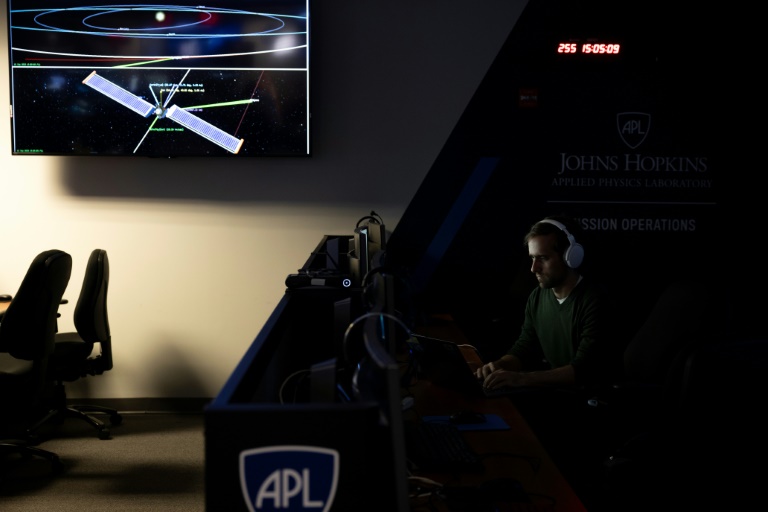
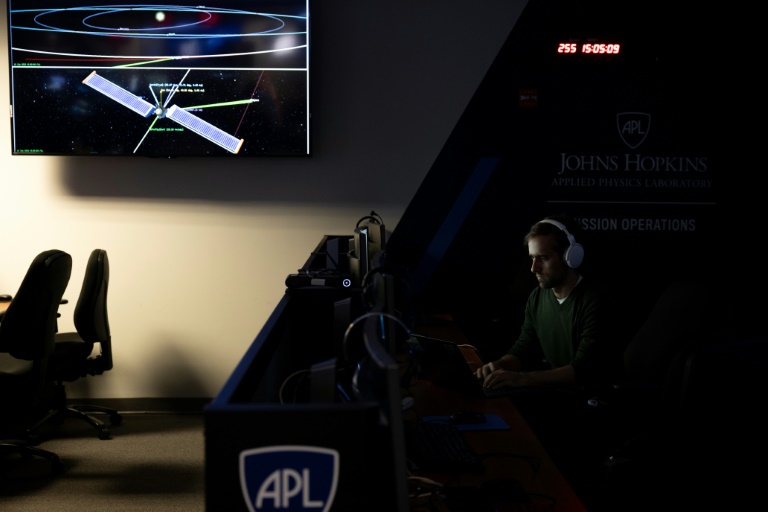
NASA will on Monday attempt a feat humanity has never before accomplished: deliberately smacking a spacecraft into an asteroid to slightly deflect its orbit, in a key test of our ability to stop cosmic objects from devastating life on Earth.

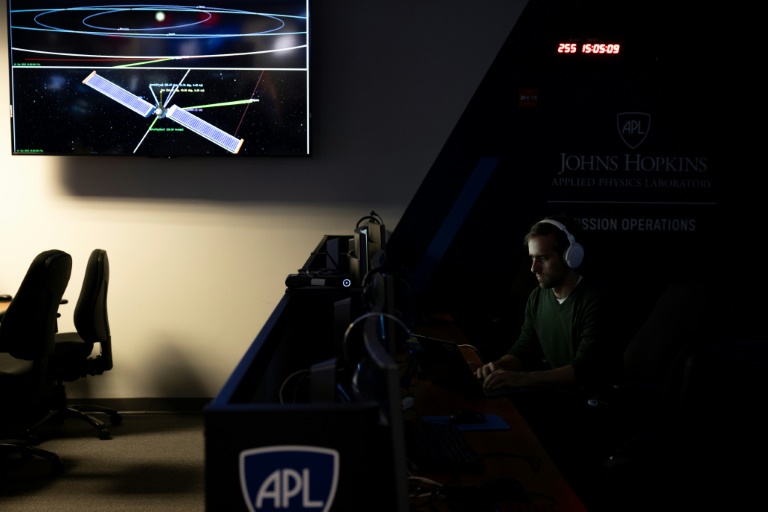
The Double Asteroid Redirection Test (DART) spaceship launched from California last November and is fast approaching its target, which it will strike at roughly 14,000 miles (22,500 kilometers) per hour.

To be sure, neither the asteroid moonlet Dimorphos, nor the big brother it orbits, called Didymos, pose any threat as the pair loop the Sun, passing about seven million miles from Earth at nearest approach.

But NASA has deemed the experiment important to carry out before an actual need is discovered.

If all goes to plan, impact between the car-sized spacecraft, and the 530-foot (160 meters, or two Statues of Liberty) asteroid should take place at 7:14 pm Eastern Time (2314 GMT), and can be followed on a NASA livestream.

By striking Dimorphos head on, NASA hopes to push it into a smaller orbit, shaving ten minutes off the time it takes to encircle Didymos, which is currently 11 hours and 55 minutes — a change that will be detected by ground telescopes in the days that follow.

The proof-of-concept experiment will make a reality of what has before only been attempted in science fiction — notably films such as “Armageddon” and “Don’t Look Up.” 

– Technically challenging –

As the craft propels itself through space, flying autonomously for the mission’s final phase, its camera system will start to beam down the very first pictures of Dimorphos.

Minutes later, a toaster-sized satellite called LICIACube, which separated from DART a couple of weeks earlier, will make a close pass of the site to capture images of the collision and the ejecta — the pulverized rock thrown off by impact.

LICIACube’s pictures will be sent back in the weeks and months that follow. 

Also watching the event: an array of telescopes, both on Earth and in space — including the recently operational James Webb — which might be able to see a brightening cloud of dust.

Finally, a full picture of what the system looks like will be revealed when a European Space Agency mission four years down the line called Hera arrives to survey Dimorphos’s surface and measure its mass, which scientists can only guess at currently.

– Being prepared –

Very few of the billions of asteroids and comets in our solar system are considered potentially hazardous to our planet, and none are expected in the next hundred or so years. 

But “I guarantee to you that if you wait long enough, there will be an object,” said NASA’s Thomas Zurbuchen. 

We know that from the geological record — for example, the six-mile wide Chicxulub asteroid struck Earth 66 million years ago, plunging the world into a long winter that led to the mass extinction of the dinosaurs along with 75 percent of all species.

An asteroid the size of Dimorphos, by contrast, would only cause a regional impact, such as devastating a city, albeit with greater force than any nuclear bomb in history.

How much momentum DART imparts on Dimorphos will depend on whether the asteroid is solid rock, or more like a “rubbish pile” of boulders bound by mutual gravity, a property that’s not yet known.

The shape of the asteroid is also not known, but NASA engineers are confident DART’s SmartNav guidance system will hit its target.

If it misses, NASA will have another shot in two years’ time, with the spaceship containing just enough fuel for another pass.

But if it succeeds, Chabot said, the mission will mark the first step towards a world capable of defending itself from a future existential threat.

NASA to deflect asteroid in key test of planetary defense

NASA will on Monday attempt a feat humanity has never before accomplished: deliberately smacking a spacecraft into an asteroid to slightly deflect its orbit, in a key test of our ability to stop cosmic objects from devastating life on Earth.

The Double Asteroid Redirection Test (DART) spaceship launched from California last November and is fast approaching its target, which it will strike at roughly 14,000 miles (22,500 kilometers) per hour.

To be sure, neither the asteroid moonlet Dimorphos, nor the big brother it orbits, called Didymos, pose any threat as the pair loop the Sun, passing about seven million miles from Earth at nearest approach.

But NASA has deemed the experiment important to carry out before an actual need is discovered.

If all goes to plan, impact between the car-sized spacecraft, and the 530-foot (160 meters, or two Statues of Liberty) asteroid should take place at 7:14 pm Eastern Time (2314 GMT), and can be followed on a NASA livestream.

By striking Dimorphos head on, NASA hopes to push it into a smaller orbit, shaving ten minutes off the time it takes to encircle Didymos, which is currently 11 hours and 55 minutes — a change that will be detected by ground telescopes in the days that follow.

The proof-of-concept experiment will make a reality of what has before only been attempted in science fiction — notably films such as “Armageddon” and “Don’t Look Up.” 

– Technically challenging –

As the craft propels itself through space, flying autonomously for the mission’s final phase, its camera system will start to beam down the very first pictures of Dimorphos.

Minutes later, a toaster-sized satellite called LICIACube, which separated from DART a couple of weeks earlier, will make a close pass of the site to capture images of the collision and the ejecta — the pulverized rock thrown off by impact.

LICIACube’s pictures will be sent back in the weeks and months that follow. 

Also watching the event: an array of telescopes, both on Earth and in space — including the recently operational James Webb — which might be able to see a brightening cloud of dust.

Finally, a full picture of what the system looks like will be revealed when a European Space Agency mission four years down the line called Hera arrives to survey Dimorphos’s surface and measure its mass, which scientists can only guess at currently.

– Being prepared –

Very few of the billions of asteroids and comets in our solar system are considered potentially hazardous to our planet, and none are expected in the next hundred or so years. 

But “I guarantee to you that if you wait long enough, there will be an object,” said NASA’s Thomas Zurbuchen. 

We know that from the geological record — for example, the six-mile wide Chicxulub asteroid struck Earth 66 million years ago, plunging the world into a long winter that led to the mass extinction of the dinosaurs along with 75 percent of all species.

An asteroid the size of Dimorphos, by contrast, would only cause a regional impact, such as devastating a city, albeit with greater force than any nuclear bomb in history.

How much momentum DART imparts on Dimorphos will depend on whether the asteroid is solid rock, or more like a “rubbish pile” of boulders bound by mutual gravity, a property that’s not yet known.

The shape of the asteroid is also not known, but NASA engineers are confident DART’s SmartNav guidance system will hit its target.

If it misses, NASA will have another shot in two years’ time, with the spaceship containing just enough fuel for another pass.

But if it succeeds, Chabot said, the mission will mark the first step towards a world capable of defending itself from a future existential threat.

NASA to deflect asteroid in key test of planetary defense

NASA will on Monday attempt a feat humanity has never before accomplished: deliberately smacking a spacecraft into an asteroid to slightly deflect its orbit, in a key test of our ability to stop cosmic objects from devastating life on Earth.

The Double Asteroid Redirection Test (DART) spaceship launched from California last November and is fast approaching its target, which it will strike at roughly 14,000 miles (22,500 kilometers) per hour.

To be sure, neither the asteroid moonlet Dimorphos, nor the big brother it orbits, called Didymos, pose any threat as the pair loop the Sun, passing about seven million miles from Earth at nearest approach.

But NASA has deemed the experiment important to carry out before an actual need is discovered.

If all goes to plan, impact between the car-sized spacecraft, and the 530-foot (160 meters, or two Statues of Liberty) asteroid should take place at 7:14 pm Eastern Time (2314 GMT), and can be followed on a NASA livestream.

By striking Dimorphos head on, NASA hopes to push it into a smaller orbit, shaving ten minutes off the time it takes to encircle Didymos, which is currently 11 hours and 55 minutes — a change that will be detected by ground telescopes in the days that follow.

The proof-of-concept experiment will make a reality of what has before only been attempted in science fiction — notably films such as “Armageddon” and “Don’t Look Up.” 

– Technically challenging –

As the craft propels itself through space, flying autonomously for the mission’s final phase, its camera system will start to beam down the very first pictures of Dimorphos.

Minutes later, a toaster-sized satellite called LICIACube, which separated from DART a couple of weeks earlier, will make a close pass of the site to capture images of the collision and the ejecta — the pulverized rock thrown off by impact.

LICIACube’s pictures will be sent back in the weeks and months that follow. 

Also watching the event: an array of telescopes, both on Earth and in space — including the recently operational James Webb — which might be able to see a brightening cloud of dust.

Finally, a full picture of what the system looks like will be revealed when a European Space Agency mission four years down the line called Hera arrives to survey Dimorphos’s surface and measure its mass, which scientists can only guess at currently.

– Being prepared –

Very few of the billions of asteroids and comets in our solar system are considered potentially hazardous to our planet, and none are expected in the next hundred or so years. 

But “I guarantee to you that if you wait long enough, there will be an object,” said NASA’s Thomas Zurbuchen. 

We know that from the geological record — for example, the six-mile wide Chicxulub asteroid struck Earth 66 million years ago, plunging the world into a long winter that led to the mass extinction of the dinosaurs along with 75 percent of all species.

An asteroid the size of Dimorphos, by contrast, would only cause a regional impact, such as devastating a city, albeit with greater force than any nuclear bomb in history.

How much momentum DART imparts on Dimorphos will depend on whether the asteroid is solid rock, or more like a “rubbish pile” of boulders bound by mutual gravity, a property that’s not yet known.

The shape of the asteroid is also not known, but NASA engineers are confident DART’s SmartNav guidance system will hit its target.

If it misses, NASA will have another shot in two years’ time, with the spaceship containing just enough fuel for another pass.

But if it succeeds, Chabot said, the mission will mark the first step towards a world capable of defending itself from a future existential threat.

Close Bitnami banner
Bitnami