AFP

UN chief wants 'action' to address climate loss, damage payments

The United Nations chief said Wednesday it was time for “meaningful action” on the issue of compensation for damage wrought by the climate crisis, especially in developing countries.

Ahead of the forthcoming COP27 UN climate summit in Egypt, Secretary-General Antonio Guterres and Egyptian President Abdel Fattah al-Sissi — the latter appearing by video link — co-hosted a meeting of world leaders for “frank exchanges” on climate action.

“My messages were stark,” Guterres told reporters at the UN General Assembly following the meeting.

“On the climate emergency: The 1.5-degrees limit is on life support –- and it is fading fast,” he said, referring to the Paris accord goal of limiting long-term warming to 1.5C above pre-industrial levels. 

“You have all seen the appalling images from (flooding in) Pakistan. This is happening at just 1.2 degrees of global warming, and we are headed for over three degrees.” 

He called on governments to tackle “four burning issues” between now and COP27: greater ambition to keep the 1.5C possible; meeting financial commitments to the developing world; increasing support for adaptation measures, and the issue of “loss and damage.”

This last point has become a critical area in climate negotiations. It concerns damage already caused by multiplying extreme weather events, which neither the measures to mitigate global warming nor those to adapt to its impacts have been able to prevent. 

Developing nations argue that historic polluters have a moral imperative to pay for the loss and damage, but the idea was shot down by rich nations at COP26, who offered only to start talking about the issue at COP27.

A few days ago, the group of least developed countries meeting in Dakar once more pushed on the issue, calling for the establishment of a “funding mechanism” to deal with the damage caused by global warming.

“I hope COP27 in Egypt will take it up, as a matter of climate justice, international solidarity and building trust,” said Guterres.


Embattled Suns owner Sarver to sell NBA club

Phoenix Suns owner Robert Sarver, banned for a year and fined $10 million by the NBA for racist and misogynist remarks and workplace bullying, said Wednesday he will sell the team.

Following the punishments imposed last week, NBA players union executive director Tamika Tremaglio called for Sarver to be banned for life, and NBA stars LeBron James and Chris Paul declared the penalties too light.

Major sponsor PayPal said it would not renew its deal with the team if Sarver were still involved, and Suns vice chairman Jahm Najafi called for Sarver to resign.

“In our current unforgiving climate, it has become painfully clear… whatever good I have done, or could still do, is outweighed by things I have said in the past,” Sarver said in a statement.

“For those reasons, I am beginning the process of seeking buyers for the Suns and (Women’s NBA) Mercury.”

Sarver’s decision was welcomed by NBA commissioner Adam Silver as well as Sarver’s co-owners and the NBA Players’ Association.

“I fully support the decision by Robert Sarver to sell the Phoenix Suns and Mercury,” Silver said in a statement. “This is the right next step for the organization and community.”

Added NBPA president CJ McCollum: “We thank Mr. Sarver for making a swift decision that was in the best interest of our sports community.”

Silver had said when the sanctions were announced that he didn’t think the violations rose to the level of forcing Sarver, the Suns managing partner, to sell the club, as was done in 2014 with former Los Angeles Clippers owner Donald Sterling over racist remarks.

Los Angeles Lakers superstar James, a four-time NBA Most Valuable Player, had said the league “got this wrong” with that decision.

On Wednesday, he tweeted his approval that Sarver will sell.

“I’m so proud to be a part of a league committed to progress!” James said.

In announcing the sale, Sarver declared it “the best course of action for everyone”.

Sarver was banned and fined after a 10-month probe into his 18-year tenure at the Suns.

The NBA had commissioned the investigation in the wake of a damning ESPN report on the club’s “toxic” work environment.

Investigators found that Sarver “engaged in conduct that clearly violated common workplace standards, as reflected in team and League rules and policies”.

“This conduct included the use of racially insensitive language; unequal treatment of female employees; sex-related statements and conduct; and harsh treatment of employees that on occasion constituted bullying,” their report said.

– Courage to come forward –

Investigators, from the law firm of Wachtell, Lipton, Rosen & Katz, said multiple witnesses told them Sarver’s aggressive behavior often seemed intended “solely to provoke a reaction from employees — to embarrass them or assert dominance over them.”

Sarver said Wednesday he thought the one-year suspension would give him time to “focus, make amends and remove my personal controversy from the teams that I and so many fans love.”

Amid the ongoing criticism, however, he decided that he didn’t want to be “a distraction.”

Suns Legacy Partners, the group that manages the Suns and Mercury, said the decision was “in the best interest of the organization and community.”

The group acknowledged the “courage of the people who came forward” and said Sarver’s departure was only part of the task of reshaping the work environment of the franchise.

“While we are proud of our progress and the culture of respect and integrity we are building, we know there remains work to do and relationships to rebuild,” their statement said.

US jury orders Meta to pay $174.5 mn for violating patents

A US jury on Wednesday ordered Meta to pay $174.5 million for violating live-streaming patents developed by a US Army veteran seeking to fix shortcomings in battlefield communications.

A trial in Texas federal court ended with jurors deciding that “live” features at Facebook and Instagram used technology patented by Voxer, a company co-founded by Tom Katis, legal documents showed.

“We believe the evidence at trial demonstrated that Meta did not infringe Voxer’s patents,” a company spokesperson said in response to an AFP inquiry.

“We intend to seek further relief, including filing an appeal.”

Katis had reenlisted in the army after the September 11, 2001 attacks in the United States and served as a Special Forces communications sergeant in Afghanistan, court filings said.

When his combat unit was ambushed in Kunar province, he felt that the systems for coordinating reinforcements, medical evacuations and more “were ill-suited for time-sensitive communications with multiple groups in a highly disruptive environment,” the complaint said.

“Mr. Katis and his team began developing communications solutions in 2006 to remedy these shortcomings,” his lawyers said.

“The new technologies enabled transmission of voice and video communications with the immediacy of live communication and the reliability and convenience of messaging.”

Facebook approached San Francisco-based Voxer about potential collaboration after it launched a Walkie Talkie app in 2011, but no agreement was reached, according to legal documents.

Instead, the lawsuit argued, Facebook went on to launch Facebook Live and Instagram Live, incorporating Voxer technology into the features.

US jury orders Meta to pay $174.5 mn for violating patents

A US jury on Wednesday ordered Meta to pay $174.5 million for violating live-streaming patents developed by a US Army veteran seeking to fix shortcomings in battlefield communications.

A trial in Texas federal court ended with jurors deciding that “live” features at Facebook and Instagram used technology patented by Voxer, a company co-founded by Tom Katis, legal documents showed.

“We believe the evidence at trial demonstrated that Meta did not infringe Voxer’s patents,” a company spokesperson said in response to an AFP inquiry.

“We intend to seek further relief, including filing an appeal.”

Katis had reenlisted in the army after the September 11, 2001 attacks in the United States and served as a Special Forces communications sergeant in Afghanistan, court filings said.

When his combat unit was ambushed in Kunar province, he felt that the systems for coordinating reinforcements, medical evacuations and more “were ill-suited for time-sensitive communications with multiple groups in a highly disruptive environment,” the complaint said.

“Mr. Katis and his team began developing communications solutions in 2006 to remedy these shortcomings,” his lawyers said.

“The new technologies enabled transmission of voice and video communications with the immediacy of live communication and the reliability and convenience of messaging.”

Facebook approached San Francisco-based Voxer about potential collaboration after it launched a Walkie Talkie app in 2011, but no agreement was reached, according to legal documents.

Instead, the lawsuit argued, Facebook went on to launch Facebook Live and Instagram Live, incorporating Voxer technology into the features.

IAEA, Western powers air growing worries on Ukraine nuclear plant

The UN nuclear watchdog and Western powers voiced alarm Wednesday over the safety of Ukraine’s Zaporizhzhia atomic power plant as Kyiv accused Russia of new shelling.

The strike by Russian “terrorists” damaged a power line at the facility, forcing a brief launch of emergency generators, Ukrainian nuclear operator Energoatom said on Telegram.

But it said radiation levels remained normal.

Rafael Grossi, director of the UN’s International Atomic Energy Agency (IAEA), renewed his warning of “playing with fire” at the plant.

“The situation is still getting worse and we can’t wait for something regrettable to happen,” Grossi said at United Nations headquarters in New York.

“I’ve proposed technical parameters to give the necessary protection to this installation,” he told reporters after a meeting led by French President Emmanuel Macron.

Grossi said he had met in New York with Russian Foreign Minister Sergei Lavrov on Wednesday and was speaking later with Ukraine’s top diplomat Dmytro Kuleba.

But he acknowledged the lack of progress in his recommendation of a security zone around the plant.

“Demilitarizing is an objective but for now it’s about protecting the plant,” Grossi said.

Ukrainian President Volodymyr Zelensky, in a video address Wednesday to the UN General Assembly, warned that Russian President Vladimir Putin has turned the Zaporizhzhia plant “into a target,” something he said should raise profound alarm worldwide.

“Russian radiation blackmailing is something that should concern each and every one of you, because none of you will find a vaccine against radiation sickness,” he said.

In a joint statement, top diplomats from powers including the United States, France, Britain and Germany said they had “grave concern” over Ukraine’s nuclear facilities.

They laid out seven “indispensable pillars” for nuclear safety including that safety and security systems “remain fully functional at all times.”

Energoatom called for “more resolute actions” against Russia, saying that even “the presence of IAEA inspectors does not stop” them.

Europe’s largest atomic facility was seized by Russian troops in March, and shelling around it has spurred calls from Kyiv and its Western allies to demilitarize areas around nuclear plants in Ukraine.

Early in the war, there was fighting around Chernobyl in the north, where an explosion in 1986 left swaths of the surrounding territory contaminated.

Putin has warned of “catastrophic” consequences of fighting there, leading Ukraine to charge that Moscow is using the security of Zaporizhzhia as blackmail.

Russia was accused on Monday of bombing a third nuclear plant, Pivdennoukrainsk, in the southern Mykolaiv region.

Pressure grows after World Bank chief dodges climate questions

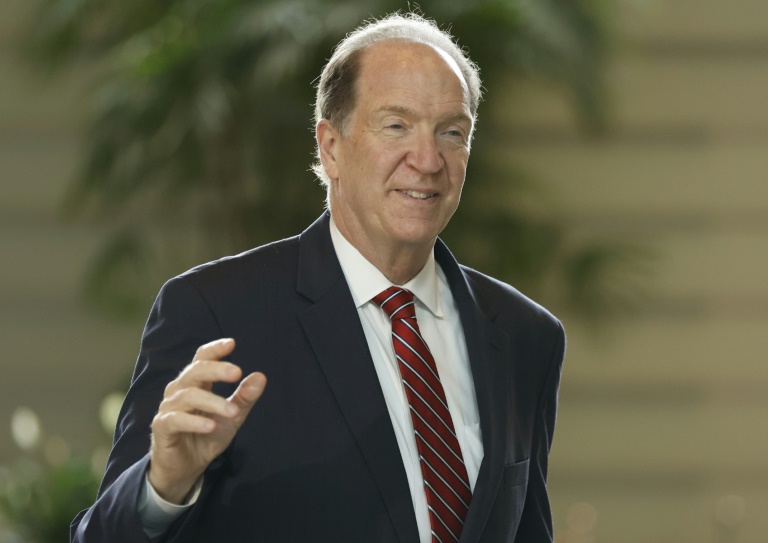
Climate groups called Wednesday for the World Bank’s president to be removed after he refused multiple times to say if he believed man-made emissions contributed to global warming.

Activists have previously called for David Malpass to resign or be removed for what they say is an inadequate approach to the climate crisis.

The head of the World Bank is traditionally an American while the other big international lender in Washington, the IMF, tends to be European. Malpass is a veteran of Republican administrations in the United States and was appointed in 2019 while Donald Trump, who famously and repeatedly denied the science behind climate change, was president.

The chorus against Malpass grew louder after his appearance Tuesday at a New York Times conference on climate finance.

Asked by a journalist to respond to former US vice president Al Gore’s claim that he was a climate denier, Malpass said that some of his critics “may not know what the World Bank is doing.” He boasted that its climate funding is “by far the biggest” among international financial institutions.

After another attempt failed to get a straight answer, the journalist, David Gelles, said: “Let me just be as clear as I can: Do you accept the scientific consensus that the man made burning of fossil fuels is rapidly and dangerously warming the planet?”

Malpass again pointed to the World Bank’s work on the issue, at which point multiple people in the audience shouted: “Answer the question!”

“I don’t even know. I’m not a scientist,” responded a clearly frustrated Malpass.

The Big Shift, a consortium of climate groups, called Wednesday for the World Bank’s board to remove Malpass over the comments.

“For the World Bank to maintain any shred of decency Malpass cannot remain as President,” said Tasneem Essop, executive director of the Climate Action Network, a Big Shift member group.

A separate group of activist organizations said they would on Thursday unveil a banner at the World Bank’s headquarters in Washington that reads: “The World Bank Group is Run by a Climate Denier.”

Malpass’s term ends in 2024 and he can only be removed by a vote of the World Bank’s board.

Climate groups have called on President Joe Biden to up the outside pressure.

Biden’s climate change envoy, former US secretary of state John Kerry, declined during an appearance at the same Times event to comment on Malpass’s future, saying “that’s the president’s decision.”

The World Bank declined to comment on the situation when reached by AFP.

Pressure grows after World Bank chief dodges climate questions

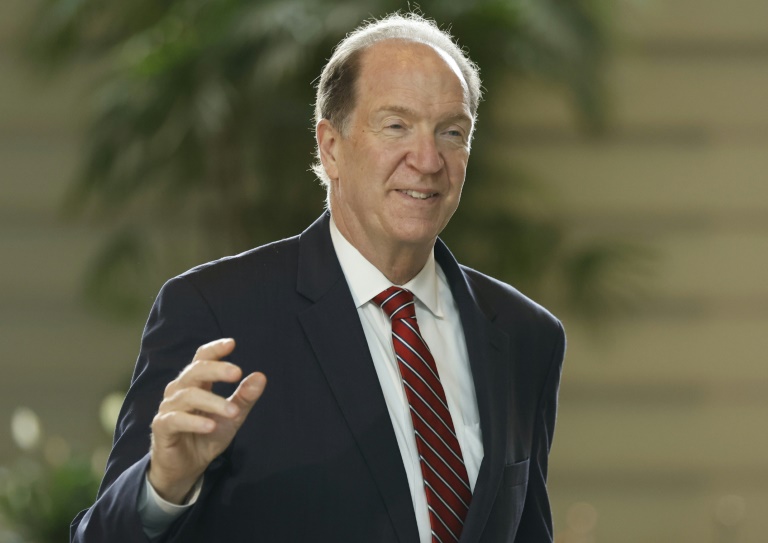
Climate groups called Wednesday for the World Bank’s president to be removed after he refused multiple times to say if he believed man-made emissions contributed to global warming.

Activists have previously called for David Malpass to resign or be removed for what they say is an inadequate approach to the climate crisis.

The head of the World Bank is traditionally an American while the other big international lender in Washington, the IMF, tends to be European. Malpass is a veteran of Republican administrations in the United States and was appointed in 2019 while Donald Trump, who famously and repeatedly denied the science behind climate change, was president.

The chorus against Malpass grew louder after his appearance Tuesday at a New York Times conference on climate finance.

Asked by a journalist to respond to former US vice president Al Gore’s claim that he was a climate denier, Malpass said that some of his critics “may not know what the World Bank is doing.” He boasted that its climate funding is “by far the biggest” among international financial institutions.

After another attempt failed to get a straight answer, the journalist, David Gelles, said: “Let me just be as clear as I can: Do you accept the scientific consensus that the man made burning of fossil fuels is rapidly and dangerously warming the planet?”

Malpass again pointed to the World Bank’s work on the issue, at which point multiple people in the audience shouted: “Answer the question!”

“I don’t even know. I’m not a scientist,” responded a clearly frustrated Malpass.

The Big Shift, a consortium of climate groups, called Wednesday for the World Bank’s board to remove Malpass over the comments.

“For the World Bank to maintain any shred of decency Malpass cannot remain as President,” said Tasneem Essop, executive director of the Climate Action Network, a Big Shift member group.

A separate group of activist organizations said they would on Thursday unveil a banner at the World Bank’s headquarters in Washington that reads: “The World Bank Group is Run by a Climate Denier.”

Malpass’s term ends in 2024 and he can only be removed by a vote of the World Bank’s board.

Climate groups have called on President Joe Biden to up the outside pressure.

Biden’s climate change envoy, former US secretary of state John Kerry, declined during an appearance at the same Times event to comment on Malpass’s future, saying “that’s the president’s decision.”

The World Bank declined to comment on the situation when reached by AFP.

Pressure grows after World Bank chief dodges climate questions

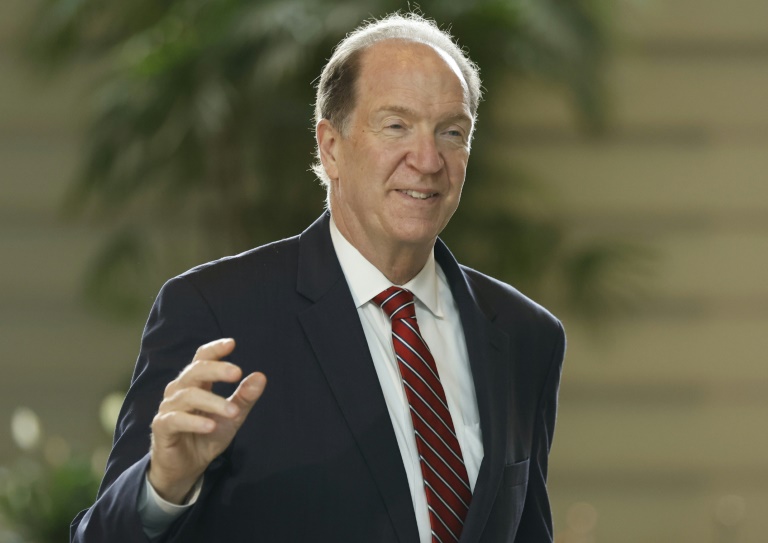
Climate groups called Wednesday for the World Bank’s president to be removed after he refused multiple times to say if he believed man-made emissions contributed to global warming.

Activists have previously called for David Malpass to resign or be removed for what they say is an inadequate approach to the climate crisis.

The head of the World Bank is traditionally an American while the other big international lender in Washington, the IMF, tends to be European. Malpass is a veteran of Republican administrations in the United States and was appointed in 2019 while Donald Trump, who famously and repeatedly denied the science behind climate change, was president.

The chorus against Malpass grew louder after his appearance Tuesday at a New York Times conference on climate finance.

Asked by a journalist to respond to former US vice president Al Gore’s claim that he was a climate denier, Malpass said that some of his critics “may not know what the World Bank is doing.” He boasted that its climate funding is “by far the biggest” among international financial institutions.

After another attempt failed to get a straight answer, the journalist, David Gelles, said: “Let me just be as clear as I can: Do you accept the scientific consensus that the man made burning of fossil fuels is rapidly and dangerously warming the planet?”

Malpass again pointed to the World Bank’s work on the issue, at which point multiple people in the audience shouted: “Answer the question!”

“I don’t even know. I’m not a scientist,” responded a clearly frustrated Malpass.

The Big Shift, a consortium of climate groups, called Wednesday for the World Bank’s board to remove Malpass over the comments.

“For the World Bank to maintain any shred of decency Malpass cannot remain as President,” said Tasneem Essop, executive director of the Climate Action Network, a Big Shift member group.

A separate group of activist organizations said they would on Thursday unveil a banner at the World Bank’s headquarters in Washington that reads: “The World Bank Group is Run by a Climate Denier.”

Malpass’s term ends in 2024 and he can only be removed by a vote of the World Bank’s board.

Climate groups have called on President Joe Biden to up the outside pressure.

Biden’s climate change envoy, former US secretary of state John Kerry, declined during an appearance at the same Times event to comment on Malpass’s future, saying “that’s the president’s decision.”

The World Bank declined to comment on the situation when reached by AFP.

NASA says delayed Moon rocket passed fueling test

NASA said Wednesday it had successfully trialed the fueling process for its new rocket, after technical issues a few weeks ago halted two attempts to get the behemoth off the ground and headed towards the Moon.

“All of the objectives that we set out to do we were able to accomplish today,” said Charlie Blackwell-Thompson, launch director of the program called Artemis 1.

The unmanned mission hopes to test the new 30-story SLS rocket as well as the unmanned Orion capsule that sits atop it, in preparation for future Moon-bound journeys with humans aboard.

The last attempt in early September to launch NASA’s most powerful rocket yet had to be aborted because of a leak while its cryogenic fuels — liquid hydrogen and oxygen — were being pumped into the rocket’s tanks.

Repairs were carried out and Wednesday’s test involved filling those tanks again.

Though a small hydrogen leak was detected during the test, NASA engineers were able to get it under control.

Last week NASA said it is now aiming for September 27 as the next date for liftoff. October 2 was set as a backup date.

“Teams will evaluate the data from the test, along with weather and other factors, before confirming readiness to proceed into the next launch opportunity,” NASA said.

Asked about the timing of the next launch attempt, Blackwell-Thompson declined to comment, though she said she was “extremely encouraged by the test today.”

US officials are also keeping a close eye on Hurricane Fiona’s trajectory off the coast in the Atlantic.

For the September 27 date to be possible, NASA must receive a waiver to avoid retesting the batteries on a detonation system used to destroy the rocket if it strays uncontrollably off course.

The next mission, Artemis 2, would take astronauts to the Moon without landing on its surface, while the third — set for the mid-2020s — would see the first woman and person of color on lunar soil.

NASA wants to build a lunar space station called Gateway and keep a sustained presence on the Moon to gain insight into how to survive very long space missions, ahead of a mission to Mars in the 2030s.

Global Fund raises $14.25 billion to end HIV, TB and malaria

The Global Fund to Fight AIDS, Tuberculosis and Malaria raised $14.25 billion Wednesday at a donor conference led by US President Joe Biden, as decades of progress against the diseases are set back by Covid.

It was the highest amount ever pledged for a multilateral health organization — but fell far short of the ambitious goal of $18 billion after the United Kingdom and Italy said their announcements would come later.

The Global Fund was created in 2002, bringing together governments, multilateral agencies, civil society groups and the private sector. Funding cycles last three years.

“What’s happened today is actually an unparalleled mobilization of resources for global health,” said Global Fund executive director Peter Sands, adding he expected Britain and Italy to make their pledges in due course.

“Thank you all for stepping up, especially in a challenging global economic environment, and I ask you, keep it going,” urged Biden. 

Among countries, the United States pledged the highest amount, $6 billion, followed by France with 1.6 billion euros, 1.3 billion euros by Germany, $1.08 billion by Japan, Can$1.21 billion by Canada and 715 million Euros by the European Union.

The Gates Foundation pledged $912 million.

The $18-billion goal was based on getting back on track to end AIDS, TB and malaria by 2030, recovering ground lost during the Covid pandemic and saving 20 million lives over the next three years.

The target was 30 percent more than that raised during the organization’s sixth and most recent replenishment, hosted by President Emmanuel Macron of France in 2019, which raised a then-record $14 billion.

Camille Spire, president of the French non-profit AIDES, told AFP that when the UK and Italy make their pledges, the sum would still be unlikely to reach the original goal.

“While some are counting their pennies, some are counting the dead,” she said, adding she was “angry” and the outcome would mean fewer screening campaigns than had been hoped for, fewer treatments, less funding for community health centers and less strengthening of health systems.

There was also criticism within the UK. Shadow foreign secretary David Lammy tweeted the delay in pledging “will slow the fight against AIDS, TB and malaria and damage the UK’s national interest.”

– Signs of recovery – 

The fund estimates it has reduced the death toll from AIDS, TB, and malaria by 50 percent, saving more than 50 million lives over the past two decades.

Last year, it warned that the Covid pandemic was having a devastating impact on its work, leading to declining results across the board for the first time in its history.

It said in its latest report, however, that the massive resources it had pumped into countering the downturn had paid off and “recovery is underway” against all three diseases.

The Global Fund provides 30 percent of all international financing for HIV programs, 76 percent of funding for TB, and 63 percent of funding for malaria.

Its other areas of focus include improving the resilience of local health systems, and raising funds against Covid-19.

According to US law, the country cannot provide more than one-third of funding for the Global Fund — a limit that serves as a matching challenge to other nations to double the American pledge.

Close Bitnami banner
Bitnami