AFP

Global Fund seeks $18 billion to end HIV, TB and malaria

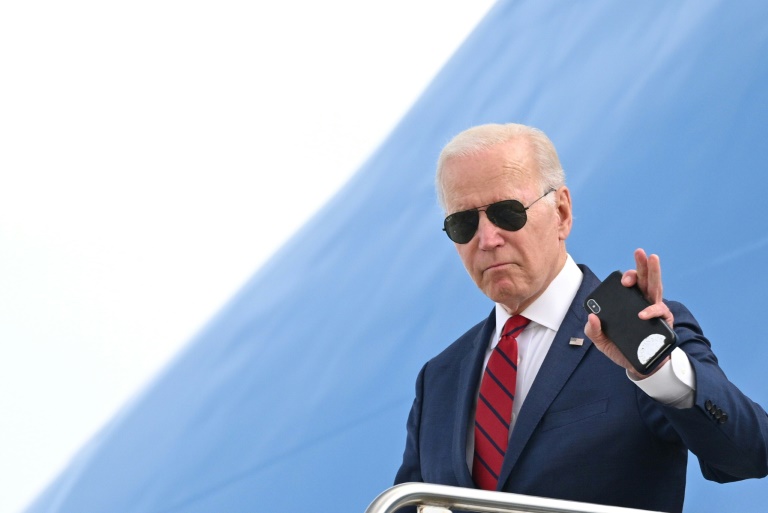
The Global Fund to Fight AIDS, Tuberculosis and Malaria on Wednesday sought to raise at least $18 billion at a donor conference led by US President Joe Biden, as decades of progress against the three diseases are set back by Covid.

It is the highest ever “replenishment” goal set by the organization, which brings together governments, multilateral agencies, civil society groups and the private sector.

“Setbacks are not destiny,” USAID administrator Samantha Power told attendees. “We have the knowledge, the tools, and in the Global Fund, the right mechanism to regain ground and continue our push to end these diseases. What we need is the will.”

Before the event, Global Fund spokeswoman Francoise Vanni told AFP she was encouraged by early pledges — including $6 billion from the United States, 1.3 billion euros from Germany and $1.08 billion from Japan — that had brought the fund “about halfway” to its target.

“There’s a lot at stake, and the $18-billion target is very much based on getting back on track to end AIDS, TB and malaria by 2030, recovering ground lost during the Covid pandemic and saving no less than 20 million lives over the next three years,” she said.

The amount is 30 percent more than that raised during the organization’s sixth and most recent replenishment, hosted by President Emmanuel Macron of France in 2019, which raised a then-record $14 billion.

The Global Fund was created in 2002, with new funding cycles usually every three years.

World Health Organization head Tedros Adhanom Ghebreyesus highlighted how life expectancy in Japan was 84 years, while in Lesotho it was just 50 years. 

“Much of that difference is due to the fact that HIV, TB and malaria still kill millions in the poorest communities of the poorest countries,” he said.  

“Thanks in large part to the Global Fund, these diseases kill half as many people now as they did 20 years ago. That’s quite a progress. However, those gains are at risk.”

– Signs of recovery – 

Last year, the Global Fund warned that the pandemic was having a “devastating” impact on its work, leading to declining results across the board for the first time in the fund’s history.

But it said last week that the massive resources it had pumped to counter the downturn had paid off and “recovery is underway” against all three diseases.

For example, the number of people dying from TB rose for the first time in a decade in 2020, when it caused an estimated 1.5 million deaths, making it the world’s second-biggest infectious disease killer behind Covid.

But the Global Fund, which provides 76 percent of all international financing for fighting TB, said the programs had shown signs of recovery last year.

Similarly, the number of people provided with HIV prevention services rose again after dropping in 2020, reaching 12.5 million people worldwide, the organization said. The fund provides nearly a third of all international financing to battle HIV.

Interruptions in health services during the pandemic also extracted a heavy toll on the battle against malaria, sending deaths soaring 12 percent in 2020, to an estimated 627,000.

But the Global Fund said a rapid scale-up of programs had allowed them to bounce back, with some 280 million suspected cases tested and 148 million cases treated last year.

Per an act of Congress, the United States cannot provide more than one-third of funding for the Global Fund — a limit that serves as a matching challenge to other nations to double the American pledge.


Twitch curbs gambling streams as addiction fears mount

Twitch on Wednesday announced a ban on sites that stream unlicensed roulette, dice, or slots games as the platform is hit with concerns about getting users hooked on gambling.

The decision by the Amazon-owned company to tighten its policy beginning October 18 comes after a popular streamer scammed fans and peers out of money to fuel what he claimed was a gambling addiction.

“Gambling content on Twitch has been a big topic of discussion in the community,” Twitch, known for live streaming of video games, said in a tweet.

Twitch already bans links or referral codes to sites that feature slots, roulette or dice games, but some users have gotten around that by live streaming play, the platform said.

Streaming of most gambling games will be barred, though it will continue to allow websites that focus on sports betting, fantasy sports, and poker, Twitch said.

Popular Twitch personalities such as Pokimane have called for the platform to ban gambling, and a tweet by Pokimane repeating that message had more than 316,000 likes as of Wednesday.

Meanwhile, a #TwitchStopGambling hashtag has gained traction at Twitter.

A streamer using the handle ItsSliker posted a video over the weekend saying that he had borrowed money from friends and colleagues on Twitch, lying about his reasons but really using it for gambling.

“This is the epitome of a gambling addict,” ItsSliker said in the video.

Twitch curbs gambling streams as addiction fears mount

Twitch on Wednesday announced a ban on sites that stream unlicensed roulette, dice, or slots games as the platform is hit with concerns about getting users hooked on gambling.

The decision by the Amazon-owned company to tighten its policy beginning October 18 comes after a popular streamer scammed fans and peers out of money to fuel what he claimed was a gambling addiction.

“Gambling content on Twitch has been a big topic of discussion in the community,” Twitch, known for live streaming of video games, said in a tweet.

Twitch already bans links or referral codes to sites that feature slots, roulette or dice games, but some users have gotten around that by live streaming play, the platform said.

Streaming of most gambling games will be barred, though it will continue to allow websites that focus on sports betting, fantasy sports, and poker, Twitch said.

Popular Twitch personalities such as Pokimane have called for the platform to ban gambling, and a tweet by Pokimane repeating that message had more than 316,000 likes as of Wednesday.

Meanwhile, a #TwitchStopGambling hashtag has gained traction at Twitter.

A streamer using the handle ItsSliker posted a video over the weekend saying that he had borrowed money from friends and colleagues on Twitch, lying about his reasons but really using it for gambling.

“This is the epitome of a gambling addict,” ItsSliker said in the video.

US Fed raises key interest rate as recession fears mount

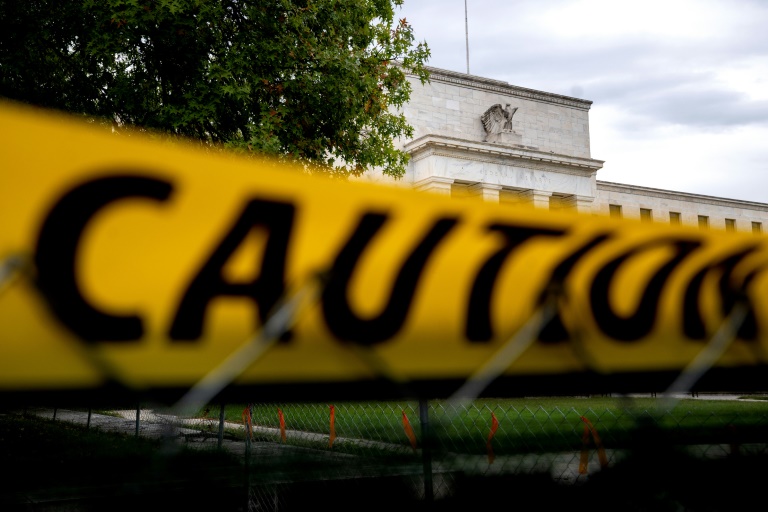
The Federal Reserve raised the key US interest rate again Wednesday and said more hikes are coming as it battles soaring prices — an aggressive stance that has raised fears of a recession.

It was the third consecutive increase of 0.75 percentage point by the Fed’s policy-setting Federal Open Market Committee (FOMC), continuing the forceful action to tamp down inflation that has surged to the highest in 40 years.

The increase takes the policy rate to 3.0-3.25 percent, and the FOMC said it “anticipates that ongoing increases… will be appropriate.”

Soaring prices are putting the squeeze on American families and businesses and have become a political liability for President Joe Biden, as he faces midterm congressional elections in early November.

But a contraction of the world’s largest economy would be a more damaging blow to Biden, to the Fed’s credibility and the world at large.

Federal Reserve Chair Jerome Powell has made it clear that officials will continue to act aggressively to cool the economy and avoid a repeat of the 1970s and early 1980s, the last time US inflation got out of control.

It took tough action — and a recession — to finally bring prices down in the 1980s, and the Fed is unwilling to give up its hard-won, inflation-fighting credibility.

The Fed’s quarterly forecasts released with the rate decision Wednesday show FOMC members expect a sharp slowdown with US GDP growth of just 0.2 percent this year, but a return to expansion in 2023, with annual growth of 1.2 percent.

Powell’s press conference after the meeting will be closely scrutinized for clues on how much more he thinks the Fed will have to do before it declares victory in the inflation fight.

FOMC members see further rate hikes this year and next, with no cuts until 2024.

– Doubts, pressure –

Economist Diane Swonk of KPMG warned the central bank will come under increasing pressure, especially if unemployment begins to rise, and Fed officials “will become political pinatas.”

While the FOMC noted continued “robust” job gains in recent months and low unemployment, the forecasts project the jobless rate will rise to 4.4 percent next year and hold around that level through 2025.

Powell and other central bankers have been sending the same message: An economic downturn is better than continued high inflation given the pain that would inflict, especially on those least able to withstand it.

Inflation is a global phenomenon amid the Russian war in Ukraine on top of global supply chain snarls and Covid lockdowns in China, and other major central banks are taking action as well.

Many economists say at least a short period of negative US GDP in the first half of 2023 will be needed before inflation starts coming down.

Despite a welcome drop in gasoline prices at the pump in recent weeks, the disappointing consumer price report for August showed widespread increases. 

The FOMC statement said noted the “broader price pressures” beyond food and energy, and stressed that officials are “strongly committed to returning inflation to its 2 percent objective.”

The Fed has front-loaded its rate hikes, cranking up the benchmark lending rate four times this year, including two straight three-quarter-point hikes in June and July.

The aim is to raise the cost of borrowing and cool demand, and it is having an impact: The housing market has slowed as mortgage rates have surged.

“The irony here is that just as the Fed is ratcheting-up the anti-inflation rhetoric to fever-pitch, the forces needed to drive down inflation over the next year are now in place,” said Ian Shepherdson of Pantheon Macroeconomics.

US stocks turned negative following the announcement.

US Fed raises key interest rate as recession fears mount

The Federal Reserve raised the key US interest rate again Wednesday and said more hikes are coming as it battles soaring prices — an aggressive stance that has raised fears of a recession.

It was the third consecutive increase of 0.75 percentage point by the Fed’s policy-setting Federal Open Market Committee (FOMC), continuing the forceful action to tamp down inflation that has surged to the highest in 40 years.

The increase takes the policy rate to 3.0-3.25 percent, and the FOMC said it “anticipates that ongoing increases… will be appropriate.”

Soaring prices are putting the squeeze on American families and businesses and have become a political liability for President Joe Biden, as he faces midterm congressional elections in early November.

But a contraction of the world’s largest economy would be a more damaging blow to Biden, to the Fed’s credibility and the world at large.

Federal Reserve Chair Jerome Powell has made it clear that officials will continue to act aggressively to cool the economy and avoid a repeat of the 1970s and early 1980s, the last time US inflation got out of control.

It took tough action — and a recession — to finally bring prices down in the 1980s, and the Fed is unwilling to give up its hard-won, inflation-fighting credibility.

The Fed’s quarterly forecasts released with the rate decision Wednesday show FOMC members expect a sharp slowdown with US GDP growth of just 0.2 percent this year, but a return to expansion in 2023, with annual growth of 1.2 percent.

Powell’s press conference after the meeting will be closely scrutinized for clues on how much more he thinks the Fed will have to do before it declares victory in the inflation fight.

FOMC members see further rate hikes this year and next, with no cuts until 2024.

– Doubts, pressure –

Economist Diane Swonk of KPMG warned the central bank will come under increasing pressure, especially if unemployment begins to rise, and Fed officials “will become political pinatas.”

While the FOMC noted continued “robust” job gains in recent months and low unemployment, the forecasts project the jobless rate will rise to 4.4 percent next year and hold around that level through 2025.

Powell and other central bankers have been sending the same message: An economic downturn is better than continued high inflation given the pain that would inflict, especially on those least able to withstand it.

Inflation is a global phenomenon amid the Russian war in Ukraine on top of global supply chain snarls and Covid lockdowns in China, and other major central banks are taking action as well.

Many economists say at least a short period of negative US GDP in the first half of 2023 will be needed before inflation starts coming down.

Despite a welcome drop in gasoline prices at the pump in recent weeks, the disappointing consumer price report for August showed widespread increases. 

The FOMC statement said noted the “broader price pressures” beyond food and energy, and stressed that officials are “strongly committed to returning inflation to its 2 percent objective.”

The Fed has front-loaded its rate hikes, cranking up the benchmark lending rate four times this year, including two straight three-quarter-point hikes in June and July.

The aim is to raise the cost of borrowing and cool demand, and it is having an impact: The housing market has slowed as mortgage rates have surged.

“The irony here is that just as the Fed is ratcheting-up the anti-inflation rhetoric to fever-pitch, the forces needed to drive down inflation over the next year are now in place,” said Ian Shepherdson of Pantheon Macroeconomics.

US stocks turned negative following the announcement.

Bankers warn of toll on US consumers from prolonged inflation

Higher interest rates and grinding inflation are likely to begin taking a higher toll on US consumers who have so far mostly managed to remain in healthy financial shape, bank CEOs told a congressional panel Wednesday.

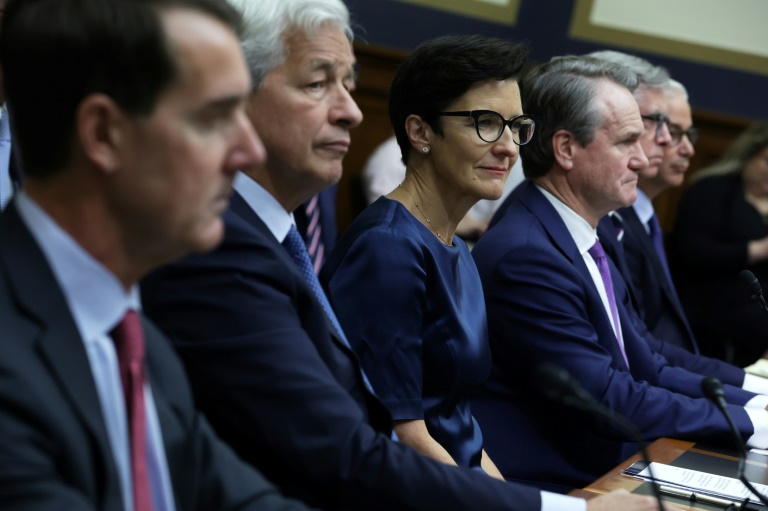
The heads of the largest US banks warned in particular that low-income households face duress, as they appeared at a lengthy hearing before the House Financial Services Committee ahead of the Federal Reserve’s announcement of an interest rate hike of three-quarters of a point.

“It’s early days still in terms of seeing the impact of high interest rates on the consumer in the States,” said Citigroup Chief Executive Jane Fraser. “Fortunately, they entered this period with pretty strong balance sheets.”

Fraser warned of “greater stress” for consumers with low credit ratings, predicting a drop in savings rates and “tougher times ahead” in general.

Remarks on the economy were interspersed as bankers navigated politically charged questions on climate change, President Joe Biden’s regulatory policies, executive leadership diversity and other topics.

Andy Cecere, chief executive of US Bancorp, said that while savings rates remain above pre-pandemic levels, they have “stabilized” the last three months after growing consistently for the prior 18 months.

“The things that people are spending money on have changed substantially from discretionary to non-discretionary items like food and gas,” Cecere told the panel.

“It’s appropriate that we’re very focused on inflation, because again, it is most harmful for those who afford it the least.”

JPMorgan Chase Chief Executive Jamie Dimon said American consumers are in “rather good shape” with low debt levels in a strong jobs market.

But Dimon said the economy faces an uncertain course, with only a “small chance” of a soft landing to the Fed’s monetary tightening policy.

Dimon said there was also a chance of a “mild recession” as well as a “harder recession, noting that in light of the war in Ukraine and the drag on food and energy supply, “there’s a chance it could be worse.”

“And I think policy makers should be prepared for the worst,” Dimon added.

Bankers warn of toll on US consumers from prolonged inflation

Higher interest rates and grinding inflation are likely to begin taking a higher toll on US consumers who have so far mostly managed to remain in healthy financial shape, bank CEOs told a congressional panel Wednesday.

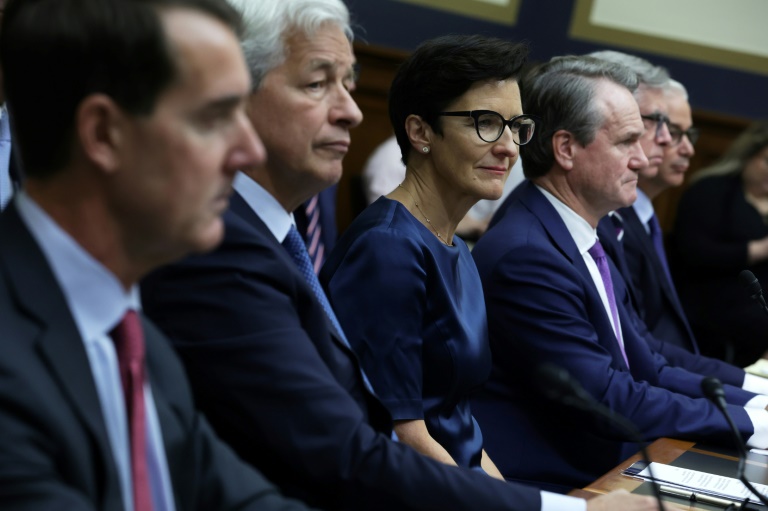
The heads of the largest US banks warned in particular that low-income households face duress, as they appeared at a lengthy hearing before the House Financial Services Committee ahead of the Federal Reserve’s announcement of an interest rate hike of three-quarters of a point.

“It’s early days still in terms of seeing the impact of high interest rates on the consumer in the States,” said Citigroup Chief Executive Jane Fraser. “Fortunately, they entered this period with pretty strong balance sheets.”

Fraser warned of “greater stress” for consumers with low credit ratings, predicting a drop in savings rates and “tougher times ahead” in general.

Remarks on the economy were interspersed as bankers navigated politically charged questions on climate change, President Joe Biden’s regulatory policies, executive leadership diversity and other topics.

Andy Cecere, chief executive of US Bancorp, said that while savings rates remain above pre-pandemic levels, they have “stabilized” the last three months after growing consistently for the prior 18 months.

“The things that people are spending money on have changed substantially from discretionary to non-discretionary items like food and gas,” Cecere told the panel.

“It’s appropriate that we’re very focused on inflation, because again, it is most harmful for those who afford it the least.”

JPMorgan Chase Chief Executive Jamie Dimon said American consumers are in “rather good shape” with low debt levels in a strong jobs market.

But Dimon said the economy faces an uncertain course, with only a “small chance” of a soft landing to the Fed’s monetary tightening policy.

Dimon said there was also a chance of a “mild recession” as well as a “harder recession, noting that in light of the war in Ukraine and the drag on food and energy supply, “there’s a chance it could be worse.”

“And I think policy makers should be prepared for the worst,” Dimon added.

Trump, children sued for 'incredible' fraud in New York

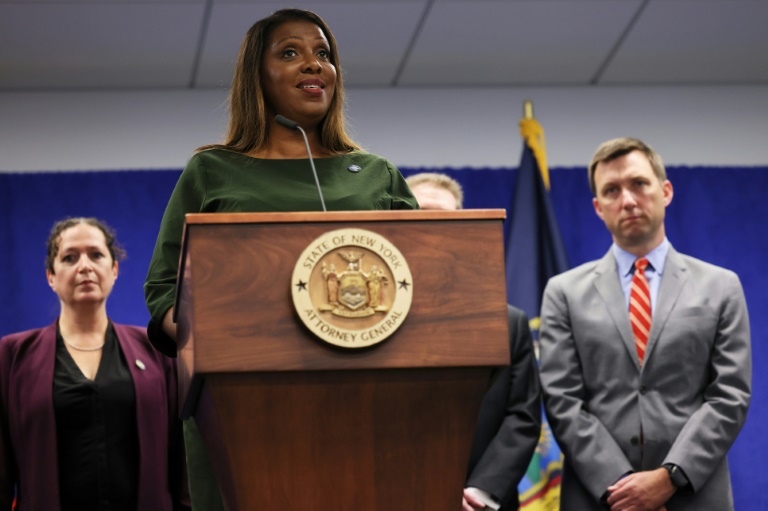
Donald Trump and family members lied to tax collectors, lenders and insurers for years in a scheme that routinely misstated the value of his properties to enrich themselves, according to a suit filed by New York’s attorney general on Wednesday.

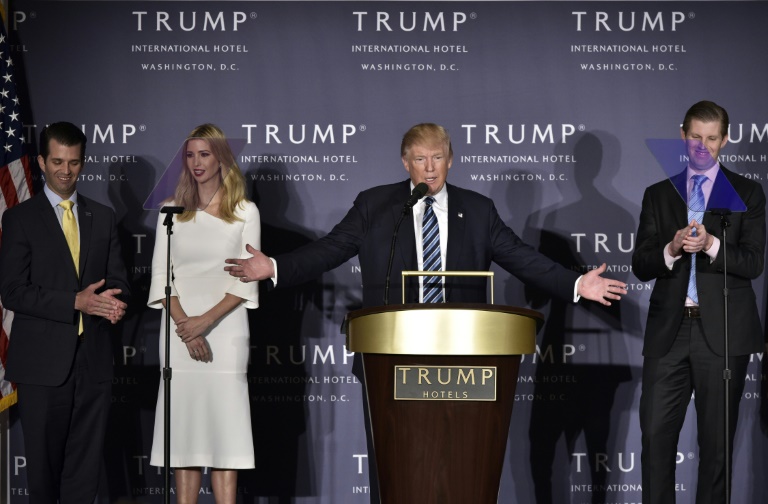
Top state prosecutor Letitia James said that with the help of his children and others at the Trump Organization, the former president provided fraudulent statements of his net worth and false asset valuations “to obtain and satisfy loans, get insurance benefits, and pay lower taxes.”

“In short, he lied to gain massive financial benefits for himself.”

The sweeping investigation is one of many criminal, civil and congressional probes into Trump, who is eyeing another run for the White House in 2024.

Trump repeated his oft-used defense that the suit is “another witch hunt” against him, while his spokesperson denounced it as a political move by Democrats against the Republican businessman.

James’ office requested that the former president pay at least $250 million in penalties — a sum she says he made from the fraud — and that his family be banned from running businesses in the state. 

She also urged that Trump along with his children Donald Trump Jr, Eric Trump and Ivanka Trump be barred from purchasing property in the state for five years.

“The very foundation of his purported net worth is rooted in incredible fraud and illegality,” James said in a statement.

Referring the title of Trump’s book “The Art of Deal,” she said that “Mr. Trump thought he could get away with the art of the steal, but today, that conduct ends.”

– ‘Staggering’ overvaluations –

James said her office, which lacks authority to file criminal charges, was making a criminal referral to the US Justice Department as well as the Internal Revenue Service based on the three-year investigation.

The lawsuit filed with the New York State Supreme Court includes allegations that Trump’s annual financial statements for at least a decade “grossly inflated” property values across his assets — from his Mar-a-Lago resort in Florida to Manhattan’s Trump Tower — to a “staggering” degree.

He did so to obtain favorable loans with lower interests and premiums, said James, who is running to be re-elected to her post in November.

Her office counted that Trump and his associates put out more than 200 false and misleading valuations of assets.

The suit details tactics used by Trump and his associates, saying they would represent that he had cash on hand when he didn’t, change valuation properties wildly, and use “objectively false numbers to calculate property values” including at his famous triplex on Fifth Avenue.

Among the alleged crimes was also valuing 12 rent-stabilized units at market rate in his Trump Park Avenue property — inflating the value by 65 times, James said.

“White collar financial crime is not a victimless crime,” James said.

“When the well-connected break the law to take in more money than they are entitled to, it reduces resources available to working people, to regular people, to small businesses and to all tax payers.”

James’ lawsuit requests that a judge appoint an independent authority to monitor the Trump Organization’s financial practices, and remove the Trumps from their own family business.

– Web of investigations –

New York authorities have been probing Trump and his family business since 2018, when the Manhattan district attorney opened a probe into the then-president who has long vied to present himself as a self-made billionaire.

James’ civil inquiry began the next year, after Trump’s former lawyer gave testimony that indicated the company had engaged in misconduct.

The DA’s criminal probe has not resulted in any charges as of yet.

Last month Allen Weisselberg, the Trump Organization’s long-time finance chief, pleaded guilty to tax fraud and agreed to testify at an upcoming criminal trial of the former US president’s real estate company.

He is to serve five months in prison contingent on his testifying truthfully at the October criminal trial of the Trump Organization on tax fraud charges, the Manhattan District Attorney Alvin Bragg said last month.

FBI agents separately searched Trump’s palatial Mar-a-Lago residence in Florida on August 8 and seized official documents marked “Top Secret,” “Secret” and “Confidential.”

Trump is also facing legal scrutiny for his efforts to overturn the results of the November 2020 election and over the January 6, 2021 attack on the US Capitol by his supporters.

The legal woes of former US president Donald Trump

New York state’s attorney general Letitia James filed a civil suit on Wednesday against Donald Trump and three of his children, accusing them of business fraud.

It was the latest development in multiple civil, criminal and congressional probes into the former US president.

The 76-year-old Trump is also being investigated for his role in last year’s US Capitol attack, his efforts to overturn the 2020 presidential election, and the stashing of classified documents at his Mar-a-Lago residence.

Here are some of the key investigations weighing on the one-term president as he eyes a third run for the White House in 2024:

– Capitol assault –

A series of explosive hearings by the House of Representatives panel probing the attack on the US Capitol by Trump supporters on January 6, 2021 offered a roadmap for potentially charging the ex-president with a crime.

The lawmakers leading the hearings presented their case that Trump knew he lost the 2020 presidential election to Joe Biden, yet pressed his claims of fraud and ultimately brought his supporters to Washington for a rally that ended with a violent assault on Congress.

The House select committee also uncovered evidence of alleged misconduct by Trump leading up to the insurrection, including his attempt to co-opt government departments into his bid to overturn the election.

The lawmakers’ work is separate from a criminal probe that the Justice Department has launched into the unrest and the events leading up to it.

Besides the legal ramifications, an unprecedented prosecution of a former chief executive would likely cause a political earthquake in a country already starkly divided along partisan Democratic and Republican lines.

– ‘Find’ the votes –

Trump is being investigated for pressuring officials in the southern swing state of Georgia to overturn Democrat Joe Biden’s 2020 victory — including a now-infamous taped phone call in which he asked the secretary of state to “find” enough votes to reverse the result.

Fulton County’s top prosecutor Fani Willis has assembled a special grand jury that could see Trump facing conspiracy charges connected to election fraud and interference.

Willis has already amassed significant testimony from members of Trump’s inner circle, including his former personal lawyer, ex-New York mayor Rudy Giuliani.

– The Trump Organization –

The civil suit filed by James, the New York state attorney general, against Trump and three of his children — Donald Trump Jr, Ivanka Trump and Eric Trump — accuses them of overvaluing multiple assets to secure loans and then undervaluing them to minimize taxes.

James is seeking $250 million in penalties as well as banning Trump and his children from serving as executives at companies in New York.

The attorney general is also seeking to bar Trump and his company, The Trump Organization, from purchasing property in the state for five years.

She also said her office was making a criminal referral to the US Justice Department and the Internal Revenue Service.

Trump denounced the suit as “another Witch Hunt by a racist Attorney General.”

– Raid on Florida residence –

An FBI search of Trump’s palatial Mar-a-Lago home in Florida in August turned up classified documents taken to his estate when he left office in January 2021.

The raid, which was personally approved by US Attorney General Merrick Garland, was triggered by a review of classified records that Trump finally surrendered to authorities in January this year — after months of back and forth with the National Archives.

The Justice Department began investigating after the 15 boxes were found to contain national defense information, including 184 documents marked as confidential, secret or top secret.

The FBI, in the affidavit used to justify the raid, said it was conducting a criminal investigation into “improper removal and storage of classified information” and “unlawful concealment of government records.”

The search warrant said the probe was also related to “willful retention of national defense information,” an offense that falls under the Espionage Act, and potential “obstruction of a federal investigation.”

A “special master,” a retired New York judge, has been appointed to screen the seized files for privileged materials.

Who wants to go to the moon? Europe names astronaut candidates

The European Space Agency announced a team of seven astronauts on Wednesday to train for NASA’s Artemis mission to the moon — but only one will have the chance to become the first European to walk on the lunar surface.

The candidates — France’s Thomas Pesquet, Britain’s Tim Peake, Germany’s Alexander Gerst and Matthias Maurer, Italy’s Luca Parmitano and Samantha Cristoforetti, and Denmark’s Andreas Mogensen — have all completed at least one mission on board the International Space Station.

Between them, the team has the equivalent of 4.5 years in orbit and 98 hours of spacewalking, ESA communications head Philippe Willekens told journalists at the International Astronautical Congress in Paris.

Three of the astronauts will be selected to go to the Lunar Gateway, a planned station that will orbit the moon.

But only one will set foot on the moon by the end of the decade. At some point, the ESA will have to decide which of the seven candidates will get to go.

“We’re all candidates and what matters is to go there as a team,” Pesquet told reporters at the event in Paris.

“Look, we’re all wearing the same shirt,” he added. Pesquet, Gerst, Maurer and Parmitano all attended wearing a navy blue polo shirt with ESA and Artemis logos.

Cristoforetti had to video call in from space, where she is currently onboard the ISS after becoming the first European woman to embark on a spacewalk outside the station in July.

Mogensen also spoke over video as he prepares for his own tour onboard the ISS.

– ‘Something inspiring for Europe’ –

The launch of the first Artemis mission, which is uncrewed and aims to test out a new rocket system and Orion capsule, has been delayed several times due to technical glitches including a fuel leak. NASA is now targeting September 27 for launch.

The next mission, Artemis 2, will take astronauts to the Moon without landing on its surface, while the third — aiming to launch in 2025 — will see the first people set foot on the moon since 1972.

The ESA is providing the European Service Module on the Orion capsule.

“During this decade, three ESA astronauts will fly to the Lunar Gateway — our permanent station we’re building around the moon,” David Parker, ESA’s director of human and robotic exploration, told AFP.

“And if all that goes well, by the end of this decade we’ll be ready to send the first European astronaut to the moon,” he added.

Putting a European on the moon would be “something inspiring for Europe, a strong signal to say that ‘here we are, taking our place in the space world, in a cooperative way’,” Pesquet said.

“With a European on the moon, I hope that a united Europe will become more of a reality that it is today,” Maurer said.

Despite deep divisions between Russia and the West over Moscow’s war in Ukraine, on Wednesday a US astronaut and two Russian cosmonauts blasted off to the ISS on a Russian-operated flight.

Close Bitnami banner
Bitnami