AFP

Afghanistan frees American in exchange for Taliban ally

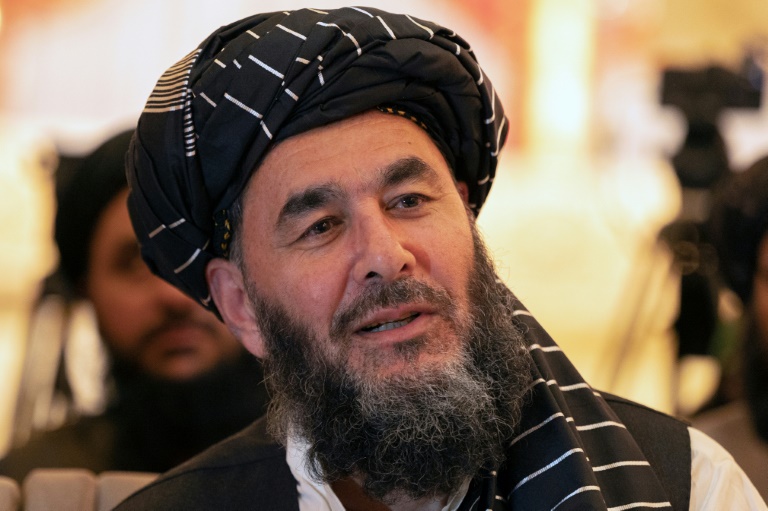
An American navy veteran detained in Afghanistan since 2020 was released in exchange for a Taliban ally imprisoned in the US for heroin smuggling, US and Afghan officials announced Monday.

The Taliban government freed Mark Frerichs, a navy veteran who was working as a civil engineer on construction projects in Afghanistan when he was detained 31 months ago.

The US government meanwhile released Bashar Noorzai, a former regional strongman who was sentenced to life imprisonment in a US court 17 years ago for smuggling large amounts of heroin.

“After long negotiations, US citizen Mark Frerichs was handed over to an American delegation and that delegation handed over (Noorzai) to us today at Kabul airport,” Afghan Foreign Minister Amir Khan Muttaqi said at a press conference.

“We are happy that at Kabul International Airport, in the capital of Afghanistan, we witnessed the wonderful ceremony of one of our compatriots returning home.”

Frerichs meanwhile flew to Doha, a US official said, adding that he was “in stable health.”

“Today, we have secured the release of Mark Frerichs, and he will soon be home,” President Joe Biden said in a statement.

“Bringing the negotiations that led to Mark’s freedom to a successful resolution required difficult decisions, which I did not take lightly,” he said.   

– Hero’s welcome –

Noorzai was welcomed with a hero’s fanfare by the government of the newly-styled Islamic Emirate of Afghanistan (IEA). Photos show he was greeted by masked Taliban soldiers bearing floral garlands.

“If the IEA had not shown its strong determination, I would not have been here today,” Noorzai said.

“My release in exchange for an American will be a source of peace between Afghanistan and Americans.”

Noorzai is the second Afghan inmate released by the United States in recent months. In June, Assadullah Haroon was released after 15 years of detention in the United States’ notorious Guantanamo Bay prison.

Haroon was accused of links to Al-Qaeda but languished without charge for years at the US detention centre in Cuba, after his arrest in 2006 while working as a honey trader.

Afghan security analyst Hekmatullah Hekmat said Noorzai’s release was a “major achievement” for Kabul’s new rulers.

“The Taliban can tell their foot soldiers and Afghans that they are able to bring back their people held by opposition groups,” he told AFP.

Muttaqi said the homecoming of Noorzai marks the beginning of a “new chapter” in relations between Afghanistan and the United States.

– ‘Non-negotiable’ –

For Washington Frerichs’ release was a priority issue to resolve after US forces withdrew from Afghanistan in August 2021 following the Taliban’s seizure of power.

The United States and allies have refused to recognise the new government, with Washington repeatedly telling the Taliban that they will have to “earn” legitimacy.

Biden had warned in January that the Taliban must release Frerich “before it can expect any consideration of its aspirations for legitimacy.”

Noorzai, a militia commander, once fought with US-backed mujahideen forces against the Soviet occupation of Afghanistan and was a close associate of the Taliban’s late founder Mullah Omar.

While he held no official position, Noorzai had “provided strong support including weapons” for the Taliban in the 1990s, Taliban government spokesman Zabihullah Mujahid told AFP on Monday.

After travelling to the United States in 2005 he was arrested, accused of running a “worldwide narcotics network.” When released he had served 17 years of a life sentence in a federal prison.

– Delayed by Zawahiri killing –

Biden, who spoke to Frerichs’ family ahead of the release, did not mention the deal involved.

But a senior Biden administration official said that the president okayed the swap in June after the Taliban made clear they wanted Noorzai in exchange for Frerichs’ freedom.

Granting Noorzai clemency and returning him would “not materially change” the situation for Americans or the state of the Afghan drug trade, the US official said.

The official said the deal was delayed as Biden ordered the drone strike that killed Al-Qaeda leader Ayman al-Zawahiri in his Kabul residence on July 31.

Immediately after that, Washington quickly resumed pressure on Kabul for the exchange, warning them not to harm Frerichs and that a release could “begin to rebuild trust,” the official said. 
Rate hikes: a double-edged sword for central banks

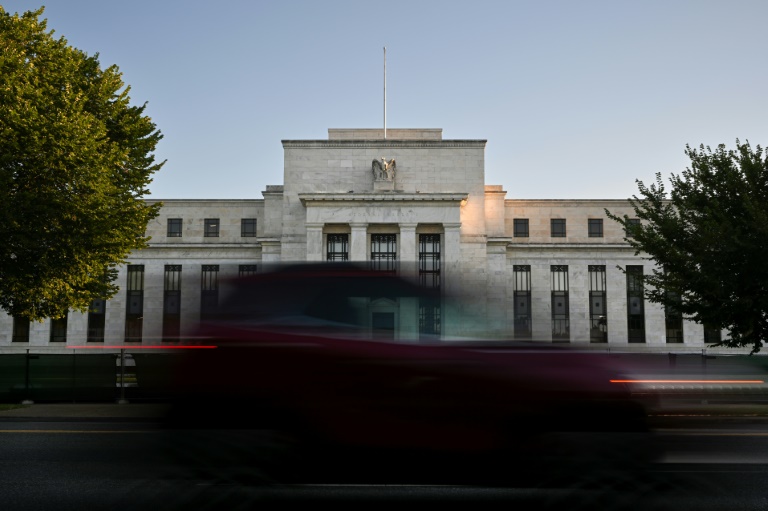
Central banks worldwide are using aggressive interest rate hikes to lasso galloping inflation, at the risk of pulling down the global economy with it.

The US Federal Reserve and its counterparts in Europe and most emerging economies have been raising rates this year as consumer prices have soared to decades-high levels.

While higher rates aim to tame runaway inflation by slowing economic activity, they can cause a recession if borrowing costs become too steep for businesses and individuals.

“It reminds me what used to happen in the Middle Ages: bloodletting,” Nobel laureate economist Joseph Stiglitz told AFP, referring to the belief at the time that patients could be cured from illnesses by making them bleed.

“When they let out the blood, the patient didn’t recover, usually, unless a miracle happened. And so they let out more blood and the patient got sicker and sicker,” Stiglitz said.

“I am afraid that central banks will do the same thing now,” he warned.

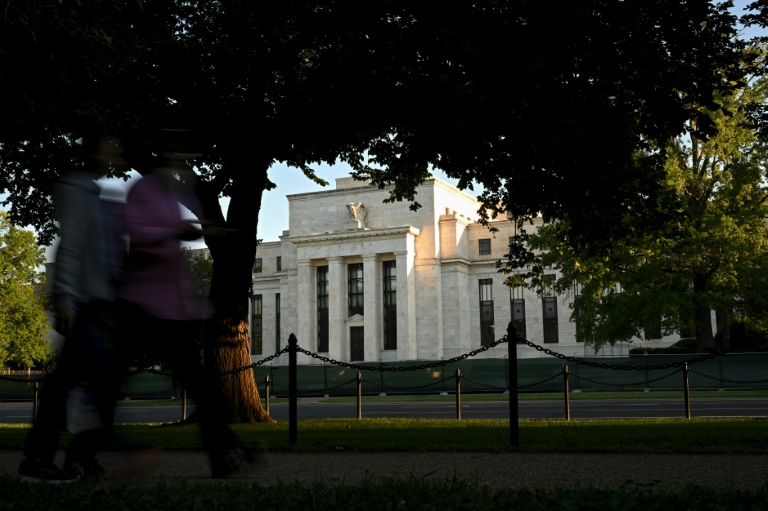
The Federal Reserve will announce its latest monetary policy decision on Wednesday, with investors fearing that after two straight rate increases of 0.75 percentage points, the bank could go for a full point this time.

The Bank of England and its peers in South Africa, Sweden and Switzerland are also expected to continue to tighten their monetary policies at their own meetings this week.

– ‘Transitory’ no more –

Consumer prices began to rise due to bottlenecks in supply chains as companies struggled to keep up with a pick-up in demand after economies began to emerge from Covid lockdowns.

After repeatedly describing inflation as “transitory” last year, the Federal Reserve and the European Central Bank changed their tune this year as Russia’s invasion of Ukraine caused energy and food prices to soar.

Central banks have since raised hikes in an almost synchronised way, raising concerns that their late and aggressive reactions could now do more harm than good.

“Did the economy really need this to slow down?” said Eric Dor, director of economic studies at the IESEG school of management in France.

“Inflation itself caused activity to slow down,” Dor said. “Households are losing their purchasing power, wages increases are lower than the inflation rate and (inflation) put a brake on consumption.”

ECB President Christine Lagarde acknowledged the possible hit to the economy last week.

“Will it cause a little loss of growth? It’s possible,” she said Friday at a conference in Paris. “It is a risk that we have to take after weighing it well.”

Earlier this month, US Treasury Secretary Janet Yellen said there is “certainly a risk” of an economic downturn.

But she noted the US job market is “exceptionally strong” with nearly two vacancies for every worker looking for a job.

– ‘Wrong prescription’ –

The United States is still haunted by the spectre of inflation that lasted for almost a decade in the 1970s and 1980s.

A World Bank report released last week said a worldwide slowdown accompanied by tighter monetary policies could trigger a global recession next year, with sharp declines in emerging and developing countries in particular.

While economists debate whether the cure for inflation might be worse than the disease, some disagree over the reasons behind the soaring prices.

Stiglitz said demand is not the cause.

“Central banks around the world are pretending or acting as if it was demand that created inflation,” he said, noting that higher rates will neither produce more energy nor food or help ease the global supply chain crisis.

“Using a recipe for the wrong diagnosis is getting the wrong prescription,” he said, adding that higher rates will raise the cost of making the investments needed to relieve the bottlenecks and raise rents in the United States.

Ukraine conflict may hike long-term grain prices 7%: study

Russia’s invasion of Ukraine may cause long-term grain prices to rise seven percent, according to a study on Monday showing how expanded production elsewhere to compensate would lead to higher greenhouse gas emissions.

Russia and Ukraine are global breadbaskets, together exporting about 28 percent of the world’s wheat supply.

Russia’s blockade of Black Sea ports and sanctions on Moscow have caused short-term price surges and triggered fears of an acute hunger crisis. 

Researchers in the United States and Uruguay modelled the likely impact of the conflict on wheat and maize prices over the coming 12 months, looking at a variety of scenarios.

One model found that if Russian grain exports were halved and Ukrainian exports significantly reduced during that time, maize would be 4.6 percent more expensive and wheat 7.2 percent more expensive — even assuming that other exporters could step in and fill the shortfall. 

They said the price increase would persist as long as exports remained restricted.

To close the supply gap, the study found that other major producers would need to expand their grain growing areas significantly. 

Were all grain exports from Ukraine to cease, Australia would need to expand its wheat area by 1 percent, China by 1.5 percent, the European Union by 1.9 percent and India by 1.2 percent, according to the model.

This land-use change would lead to just over a billion tonnes of additional carbon dioxide equivalent added to the atmosphere, according to the study published in Nature Food. 

“The cropland expansion resulting from the war in Ukraine is occurring at the expense of more carbon emissions,” said lead author Jerome Dumortier, a researcher at the O’Neill School of Public and Environmental Affairs in Indianapolis, US.

United Nations chief Antonio Guterres warned in July that Russia’s invasion of Ukraine had combined with the lingering trade impacts of Covid-19 to create an “unprecedented global hunger crisis”.

Figures from the UN’s Food and Agriculture Organization show food prices are currently more than 10 percent higher than they were a year ago. 

Although Moscow and Kyiv reached an agreement in July to resume some grain exports, there are fears that the conflict could lead to years of elevated food prices. 

Dumortier said that it was not currently clear whether other grain producers were able to meet global demand, meaning prices could rise even further than predicted in the models. 

“There are drought conditions in South America, Europe, and China, and export restrictions from various countries,” he told AFP. 

“Given those hinderances to full adjustment, commodity prices may be higher than what is estimated in the paper.”

Ukraine conflict may hike long-term grain prices 7%: study

Russia’s invasion of Ukraine may cause long-term grain prices to rise seven percent, according to a study on Monday showing how expanded production elsewhere to compensate would lead to higher greenhouse gas emissions.

Russia and Ukraine are global breadbaskets, together exporting about 28 percent of the world’s wheat supply.

Russia’s blockade of Black Sea ports and sanctions on Moscow have caused short-term price surges and triggered fears of an acute hunger crisis. 

Researchers in the United States and Uruguay modelled the likely impact of the conflict on wheat and maize prices over the coming 12 months, looking at a variety of scenarios.

One model found that if Russian grain exports were halved and Ukrainian exports significantly reduced during that time, maize would be 4.6 percent more expensive and wheat 7.2 percent more expensive — even assuming that other exporters could step in and fill the shortfall. 

They said the price increase would persist as long as exports remained restricted.

To close the supply gap, the study found that other major producers would need to expand their grain growing areas significantly. 

Were all grain exports from Ukraine to cease, Australia would need to expand its wheat area by 1 percent, China by 1.5 percent, the European Union by 1.9 percent and India by 1.2 percent, according to the model.

This land-use change would lead to just over a billion tonnes of additional carbon dioxide equivalent added to the atmosphere, according to the study published in Nature Food. 

“The cropland expansion resulting from the war in Ukraine is occurring at the expense of more carbon emissions,” said lead author Jerome Dumortier, a researcher at the O’Neill School of Public and Environmental Affairs in Indianapolis, US.

United Nations chief Antonio Guterres warned in July that Russia’s invasion of Ukraine had combined with the lingering trade impacts of Covid-19 to create an “unprecedented global hunger crisis”.

Figures from the UN’s Food and Agriculture Organization show food prices are currently more than 10 percent higher than they were a year ago. 

Although Moscow and Kyiv reached an agreement in July to resume some grain exports, there are fears that the conflict could lead to years of elevated food prices. 

Dumortier said that it was not currently clear whether other grain producers were able to meet global demand, meaning prices could rise even further than predicted in the models. 

“There are drought conditions in South America, Europe, and China, and export restrictions from various countries,” he told AFP. 

“Given those hinderances to full adjustment, commodity prices may be higher than what is estimated in the paper.”

Before dawn, a British pub in Washington honors the queen

The Queen Vic pub in Washington opened its door at 5:30 am, and was soon pouring its first vodka Bloody Marys and Pimm’s Cup to a bar full of homesick Brits and American fans of the royal family.

A crowd of about 30 people trickled into the bar in the US capital starting before dawn for a gathering that mixed solemn mourning for the queen with the unusual treat of a pre-work Monday morning drink.

Several women marked the occasion by wearing long dresses and elegant hats, while other customers wore dark shirts and ties, or a more casual look of shorts and soccer jerseys.

“This is a huge deal, the loss of the queen, and we wanted to mark her funeral and show respect,” said Julie Muir, 41, a British-American citizen whose family comes from Watford, north of London.

“My family follows the royals religiously. Sometimes it is about the drama and problems between them.

“But today it is all about this wonderful woman, her life, her service and bidding her farewell,” she said as the funeral was broadcast on large televisions behind the bar.

– ‘The Queen’s Tipple’ –

The pub was granted a special permit to serve alcohol early, offering a “Queen’s Tipple” made of Dubonnet, Beefeater gin and a slice of lemon — reportedly the late monarchy’s favorite drink.

“Many people have been surprised by their own reactions to her death and by their feelings of loss,” said pub proprietor Roneeka Gordon, who was born in Liverpool.

“We wanted to create a space for those who are mourning to watch the funeral with like-minded people. We hope traditional British food and beers give our guests an extra feeling of comfort.”

Wearing a sharply-pressed US Navy uniform, DeLorean Forbes, 26, a military judge advocate, tucked into a full English breakfast of sausages, bacon, eggs, fried toast, mushrooms, tomatoes and beans.

“This was just a once-in-a-lifetime opportunity and I wanted to be here with British friends,” he said, sticking to coffee before heading to work.

“My mother is a big  fan of monarchy. I really admire the beauty of today’s ceremony, and the pomp and circumstance. I value the alliance between our countries and, as a navy man, I am pleased to see the British navy pulling the coffin.”

The Queen Vic, named after the British monarch who reigned for 63 years until her death in 1901, opened 12 years ago and serves ales including London Pride and Bombardier, alongside fish and chips, and bangers and mash at a location 10 minutes’ drive from the US Capitol.

“It is not often I have a drink at this time,” said neighborhood resident and American citizen Jen Barrie, wearing boots decorated with Union Jack flags. “It is just amazing to see and hear the funeral. I told my husband to drop the kids off at school today.”

Lebanon currency hits new low, sparking protests

The Lebanese pound fell to a new low against the US dollar on the black market Monday as a severe economic downturn has sparked bank hold-ups by angry depositors and anti-government protests.

Recent weeks have seen a spate of incidents in which people armed with real or toy guns held up banks to demand access to their frozen savings, only to be celebrated as folk heroes.

Amid the turmoil, the pound plunged to 38,600 against the greenback on Monday, according to websites monitoring the exchange rate, a record low for the beleaguered currency.

For decades, the Lebanese pound was pegged at 1,507 to the dollar, meaning that it has lost around 95 percent of its black market value since 2019.

At the Justice Palace in Beirut on Monday, dozens stormed through a metal gate outside to protest the detention of two people over last week’s bank hold-ups.

Elsewhere, activists angered by Lebanon’s deep economic crash blockaded roads in the capital and in the northern port city of Tripoli. 

A financial crash widely blamed on government corruption and mismanagement has caused the worst economic crisis in Lebanon’s history.

Lebanese banker Saeb El-Zein said the pound’s decline was due to a rising demand for dollars on the black market following the government’s decision to lift state subsidies, including on fuel. 

– ‘Slow progress’ –

With four out of five Lebanese now living in poverty according to the United Nations, the country has been desperately seeking a bailout from the International Monetary Fund.

An IMF delegation arrived in Lebanon on Monday to follow up on the implementation of the reforms it demands, following a staff-level agreement in April on a $3 billion loan programme.

“There’s been slow progress in implementing some of the critical actions that we think are required to move forward with a programme,” IMF spokesman Gerry Rice said last week.

Amid the painful crisis, Lebanese depositors have been locked out of their foreign currency savings by banking controls that have gradually tightened since 2019.

Banks have in the past been targeted in street protests, often leaving their windows and ATMs smashed. 

Now, many frustrated depositors, unable to transfer or withdraw their dollar deposits, have resorted to desperate bank heists to free their money.

Lebanon saw at least seven such hold-ups last week, five of them on a single day.

As a result, Lebanese banks sealed their doors on Monday as part of a three-day closure due to the mounting security concerns.

Switzerland signs contract for 36 US fighter jets

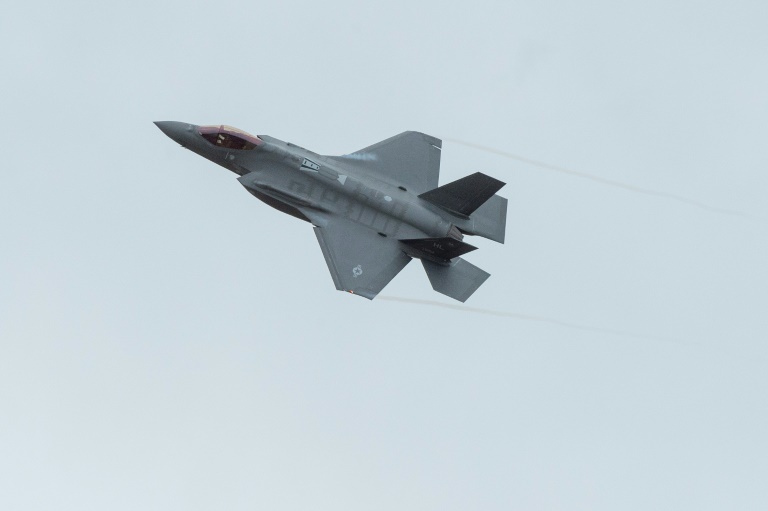
Switzerland signed a controversial contract on Monday to buy 36 US F-35 stealth fighter jets at a cost of more than six billion francs ($6.2 billion). 

“National Armaments Director Martin Sonderegger and the Swiss F-35A Program Manager Darko Savic signed the procurement contract on 19 September 2022 at armasuisse in Bern,” said armasuisse, the country’s arms procurement agency.

“With this, the procurement of 36 F-35A is contractually agreed,” it added.

The selection of the F-35 by the Swiss government in June 2021 sparked some controversy, particularly in light of the cost-overruns of the fighter programme in the United States.

But a Swiss parliamentary investigation did not call into question the selection of the fighter.

The Swiss government and parliament also short-circuited holding a referendum on the plane’s purchase despite enough signatures being collected to put the issue to voters, saying there was not enough time to do so before manufacturer Lockheed Martin’s offer expires.

But Swiss voters had already narrowly approved in September 2020 spending six billion Swiss francs to replace the country’s fleet of ageing F/A-18 Hornets and F-5 Tigers.

The F-35s will be delivered between 2027 and 2030.

Switzerland joins a growing number of European countries which have opted for the stealth multi-role combat aircraft, including Belgium, Britain, Denmark, Finland, Italy, Greece, Germany, the Netherlands, Norway, and Poland.

Kremlin dismisses mass burial discoveries as 'lies'

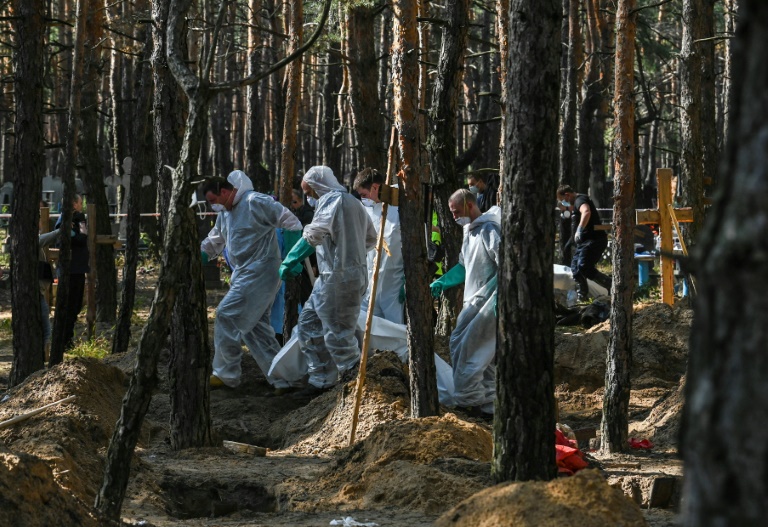
The Kremlin on Monday denied its forces were responsible for large-scale killings in east Ukraine and accused Kyiv of fabricating its discoveries of mass graves in recaptured territory.

In the latest incident spurring fears of an atomic emergency, Ukraine said that Russian rockets landed precariously close to a nuclear power station in southern Ukraine.

Ukraine recaptured Izyum and other towns in the east this month, crippling Kremlin supply routes and bringing fresh claims of Russian atrocities with the discovery of hundreds of graves — some containing multiple bodies.

“These are lies,” Kremlin spokesman Dmitry Peskov told reporters on Monday. Moscow, he said, “will stand up for the truth in this story.”

Fighting in the northeast has raged and AFP journalists heard artillery exchanges in frontline Kupiansk on Monday, as traumatised civilians headed out of the town now mainly in the hands of Ukrainian forces.

The streets were strewn with broken glass, spent cartridge casings and the discarded remains of ration packs issued by both forces. 

Most of the fire is outgoing, with Ukrainian tanks and artillery targeting Russian positions on the west side of the town, over a mess of broken bridges. A column of smoke rose in the distance. 

At the entrance to the town, cowering from the sounds of Ukrainian tank shells passing overhead towards Russian lines, civilians gathered to hitch rides or join buses to head out into safer Ukrainian territory. 

“There’s been no light, no electricity, for a week. No water,” said a 49-year-old former policeman who gave his name only as Ruslan.

– ‘Lost a lot of blood’ –

Russian-backed authorities in east Ukraine said a “punitive” strike by Kyiv’s forces had killed more than a dozen people and wounded more in the separatist stronghold of Donetsk.

The rebel head of the region claimed the strike was “deliberate” and said it would “not go unpunished.”

A court in the neighbouring rebel-region of Lugansk sentenced an employee of the Organization for Security and Cooperation in Europe to 13 years for leaking military secrets.

Ukrainian civilians in the recaptured northeast region of Kharkiv have recounted months of brutality under Russian occupation.

In Kupiansk, Mykhailo Chindey, told AFP he had been tortured on suspicion of supplying targeting coordinates to Ukrainian forces.

“One person was holding my hand and another one was beating my arm with a metal stick. They were beating me up two hours almost every day,” he told AFP. 

“I lost consciousness at some point. I lost a lot of blood. They hit my heels, back, legs and kidneys,” he said.

Ukraine’s nuclear energy agency, Energoatom, said Russia struck the Pivdennoukrainsk nuclear power plant overnight, with a “powerful explosion” just 300 metres (985 feet) from its reactors.

The strike damaged more than 100 windows at the station, but the reactors were not damaged, Energoatom said, publishing photos of glass shattered around blown-out frames.

It also released images of what it said was a two-metre-deep crater from where the missile landed. No staff were wounded, it said.

– ‘Russia endangers the whole world’ –

Attacks around nuclear facilities in Ukraine have spurred calls from Ukraine and its Western allies to de-militarise surrounding areas.

Europe’s largest atomic facility — the Zaporizhzhia nuclear plant in Russian-held territory in Ukraine — has become a hot spot for concerns after tit-for-tat claims of attacks.

The UN’s atomic agency deployed a monitoring team to the site in early September after new fighting.

Early in the February invasion, fighting erupted around Chernobyl in the north, where an explosion in 1986 left swathes of the surrounding territory contaminated.

“Russia endangers the whole world. We have to stop it before it’s too late,” President Volodymyr Zelensky said early Monday.

French President Emmanuel Macron this month urged Vladimir Putin to withdraw Russian heavy weapons from Zaporizhzhia. The Russian leader cautioned against potential “catastrophic” consequences of fighting there.

The Mykolaiv region in southern Ukraine, where the Pivdennoukrainsk plant is located, is close to the front line of of a Ukrainian counter-offensive in the south.

Kyiv’s forces have clawed back territory near Mykolaiv, nearing the strategically important hub of Kherson.

Russian forces have continued to shell Ukrainian-held towns near the front lines.

burs-jbr/jm

Markets struggle ahead of another Fed rate hike

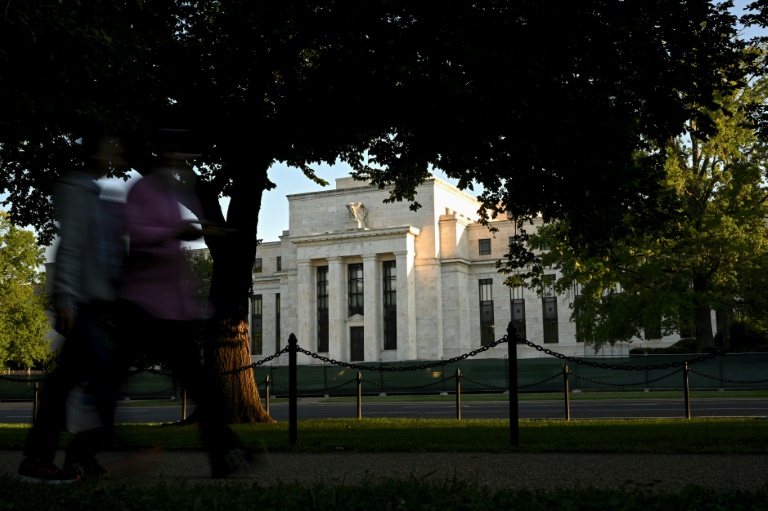
Stock markets dropped again Monday, extending last week’s rout as investors brace for another big rate hike by the US Federal Reserve that they fear could drag down the global economy.

Wall Street opened lower, with the Dow dropping 0.6 percent.

The Paris CAC 40 and Frankfurt DAX were down in afternoon trading while Asian indices mostly closed lower. London was closed for the funeral of Queen Elizabeth II. 

“Traders are worried that they are going to hear more hawkish stance from central banks this week” which would “cut economic activity further,” AvaTrade analyst Naeem Aslam told AFP.

The Fed will announce its latest monetary policy decision on Wednesday as it seeks to tame decades-high inflation.

With recent data showing US inflation rooted at four-decade highs, investors are increasingly pessimistic about the outlook for the global economy.

Central banks raise interest rates to cool inflation, but higher borrowing costs also slow down economic activity.

Disappointing US inflation figures last week unnerved traders and ramped up bets for a third successive 0.75-percentage-point rise, while some have predicted a whole percentage point move.

Policymakers, including Fed chairman Jerome Powell, have repeatedly said their ultimate aim is to bring inflation under control, even if that means sending the economy into recession.

“We’re expecting a sharp interest rate increase and therefore a clear signal against galloping inflation,” said Tim Emden, an independent market analyst.

Patrick O’Hare at Briefing.com said that a good question is why stock markets are still falling when they already took a wallop last week on the prospect of higher interest rates triggering an economic slump.

“The reason being is that the market doesn’t have a comforting sense where the end rate will be, how long the end rate will remain the end rate, and how low earnings estimates will go,” he said.

The Bank of England and its peer in Japan are also holding key meetings this week, with the pound and the yen feeling the pressure from a strong dollar.

– Yen under pressure –

Asian equity investors continued the selling on Monday.

Hong Kong closed down one percent, even after reports that the city’s government was considering ending mandatory hotel quarantine for incoming travellers.

Shanghai was also down despite news that megacity Chengdu was ending a two-week Covid-19 lockdown that saw 21 million people affected.

Tokyo was closed for a holiday.

The prospect of more big Fed rate hikes is also keeping the dollar at multi-decade highs against its major peers, with the yen feeling most of the pressure as the Bank of Japan refuses to tighten policy.

The Japanese unit last week hit a fresh 24-year low of 144.99 to the dollar, though it has bounced slightly after comments from BoJ officials that signalled they were ready to intervene to provide support.

Oil prices tumbled around three percent despite the news out of Chengdu as demand fears are fuelled by the growing fear of recession around the world.

“The market’s growth concerns, meanwhile, are being fed by the inverted yield curve and are manifesting themselves in the commodities market,” O’Hare said.

An inverted yield curve is the unusual situation where short-term interest rates are higher than long-term interest rates, and is often a signal of an impending recession.

– Key figures at around 1330 GMT –

New York – Dow: DOWN 0.6 percent at 30,722.56

EURO STOXX 50: DOWN 0.7 percent at 3,499.78

Frankfurt – DAX: DOWN 0.3 percent at 12,707.24

Paris – CAC 40: DOWN 1.0 percent at 6,015.85

London – FTSE 100: Closed for queen’s funeral

Hong Kong – Hang Seng Index: DOWN 1.0 percent at 18,565.97 (close)

Shanghai – Composite: DOWN 0.4 percent at 3,115.60 (close)

Tokyo – Nikkei 225: Closed for holiday

Pound/dollar: DOWN at $1.1369 from $1.1423 on Friday

Euro/pound: UP at 87.79 pence from 87.00 pence 

Euro/dollar: DOWN at $0.9983 from $1.0018

Dollar/yen: UP at 143.45 yen from 142.91 yen

West Texas Intermediate: DOWN 3.5 percent at $81.81 per barrel

Brent North Sea crude: DOWN 2.7 percent at $88.67 per barrel

Markets struggle ahead of another Fed rate hike

Stock markets dropped again Monday, extending last week’s rout as investors brace for another big rate hike by the US Federal Reserve that they fear could drag down the global economy.

Wall Street opened lower, with the Dow dropping 0.6 percent.

The Paris CAC 40 and Frankfurt DAX were down in afternoon trading while Asian indices mostly closed lower. London was closed for the funeral of Queen Elizabeth II. 

“Traders are worried that they are going to hear more hawkish stance from central banks this week” which would “cut economic activity further,” AvaTrade analyst Naeem Aslam told AFP.

The Fed will announce its latest monetary policy decision on Wednesday as it seeks to tame decades-high inflation.

With recent data showing US inflation rooted at four-decade highs, investors are increasingly pessimistic about the outlook for the global economy.

Central banks raise interest rates to cool inflation, but higher borrowing costs also slow down economic activity.

Disappointing US inflation figures last week unnerved traders and ramped up bets for a third successive 0.75-percentage-point rise, while some have predicted a whole percentage point move.

Policymakers, including Fed chairman Jerome Powell, have repeatedly said their ultimate aim is to bring inflation under control, even if that means sending the economy into recession.

“We’re expecting a sharp interest rate increase and therefore a clear signal against galloping inflation,” said Tim Emden, an independent market analyst.

Patrick O’Hare at Briefing.com said that a good question is why stock markets are still falling when they already took a wallop last week on the prospect of higher interest rates triggering an economic slump.

“The reason being is that the market doesn’t have a comforting sense where the end rate will be, how long the end rate will remain the end rate, and how low earnings estimates will go,” he said.

The Bank of England and its peer in Japan are also holding key meetings this week, with the pound and the yen feeling the pressure from a strong dollar.

– Yen under pressure –

Asian equity investors continued the selling on Monday.

Hong Kong closed down one percent, even after reports that the city’s government was considering ending mandatory hotel quarantine for incoming travellers.

Shanghai was also down despite news that megacity Chengdu was ending a two-week Covid-19 lockdown that saw 21 million people affected.

Tokyo was closed for a holiday.

The prospect of more big Fed rate hikes is also keeping the dollar at multi-decade highs against its major peers, with the yen feeling most of the pressure as the Bank of Japan refuses to tighten policy.

The Japanese unit last week hit a fresh 24-year low of 144.99 to the dollar, though it has bounced slightly after comments from BoJ officials that signalled they were ready to intervene to provide support.

Oil prices tumbled around three percent despite the news out of Chengdu as demand fears are fuelled by the growing fear of recession around the world.

“The market’s growth concerns, meanwhile, are being fed by the inverted yield curve and are manifesting themselves in the commodities market,” O’Hare said.

An inverted yield curve is the unusual situation where short-term interest rates are higher than long-term interest rates, and is often a signal of an impending recession.

– Key figures at around 1330 GMT –

New York – Dow: DOWN 0.6 percent at 30,722.56

EURO STOXX 50: DOWN 0.7 percent at 3,499.78

Frankfurt – DAX: DOWN 0.3 percent at 12,707.24

Paris – CAC 40: DOWN 1.0 percent at 6,015.85

London – FTSE 100: Closed for queen’s funeral

Hong Kong – Hang Seng Index: DOWN 1.0 percent at 18,565.97 (close)

Shanghai – Composite: DOWN 0.4 percent at 3,115.60 (close)

Tokyo – Nikkei 225: Closed for holiday

Pound/dollar: DOWN at $1.1369 from $1.1423 on Friday

Euro/pound: UP at 87.79 pence from 87.00 pence 

Euro/dollar: DOWN at $0.9983 from $1.0018

Dollar/yen: UP at 143.45 yen from 142.91 yen

West Texas Intermediate: DOWN 3.5 percent at $81.81 per barrel

Brent North Sea crude: DOWN 2.7 percent at $88.67 per barrel

Close Bitnami banner
Bitnami